Owlets!

Fluffy, feathery, floofy owlets have hatched! Two were born on Sunday, the third on Monday. Tiny and fragile, they’re covered with fine, white down; it’s hard to believe that these helpless little creatures will grow into fierce hunters.
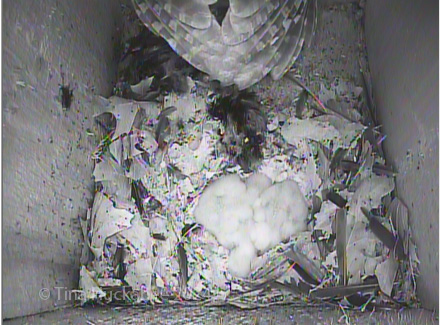
Mama’s tail feathers fill the top of the photo. The dark splotch just below are the remains of a bird or rat–I can’t quite tell; food tends to shift around a bit. You’ll notice the scattering of feathers amoung the nesting material.

Uptown Girl is an attentive parent and Shy Guy is now perched in the oak tree, very near the nest box. His job is to protect the nestbox and hunt for his family. He’s delivered a couple of rats and at least one bird, (sob, I think it was a Carolina Wren), as meals for mama and babies. Eastern Screech Owls enjoy a varied diet, which is one reason why they’re so successful in urban areas. Meals range from insects to earthworms, toads and frogs, rodents and birds.

In the weeks that the female was in the nest box awaiting her bundles of joy, she slept quite a bit. Now, she’s more active, with nearly non-stop feeding and cleaning of the chicks. She and the chicks do have some quiet, restful moments throughout the day and often, the chicks are nestled under mama’s warm, feathered body. When the chicks are awake, I’m enjoying their peep-peep songs, such sweet little sounds, though probably indication hunger. Mama continues to trill during the day.

Early in the mornings (about 6AM) when I first check the owl cam, she’s not usually in the box, though she typically returns shortly afterward. Just before sundown, she goes out, but only briefly. As the chicks grow, her absences from the box will become longer and more frequent, as she’ll also hunt; it’ll take two adults to feed these hungry, growing chicks.

It feels weirdly invasive to watch these beautiful animals in their intimate family life, but it’s fascinating to observe the preparation for and parenting of their offspring. Though a few days since the segue from eggs to chicks, the chicks have grown and in a month’s time, they’ll fledge. Their development, supervised by their parents’ excellent training, will continue in more natural settings, less observable by human eyes.

Critter B & B

With a new camera installed and functional, we’ve recently observed our Eastern Screech Owl nest box host a variety of critters, some that we didn’t want to see in the box.

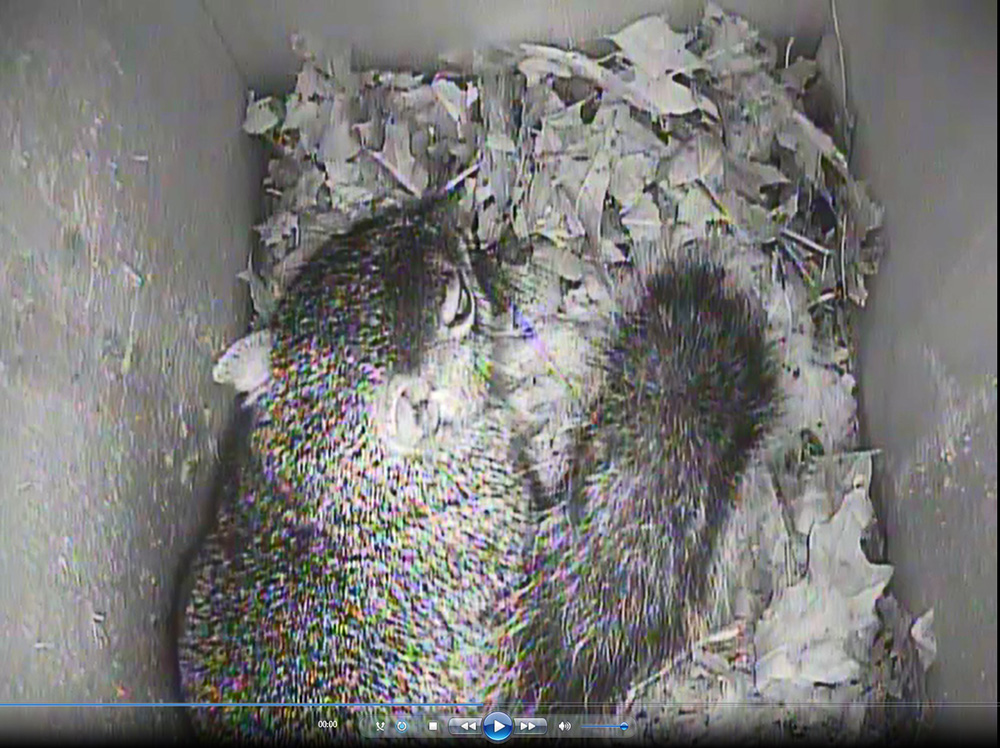
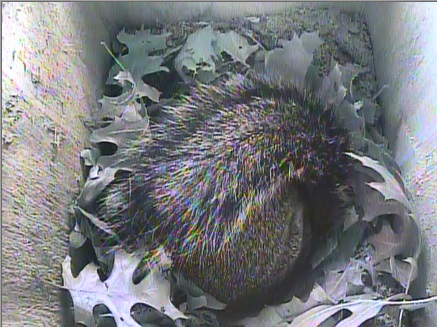
Even with the cuteness of two little rats curled up together, the view of them snoozing away in the nest box did not thrill us. So, after they vacated, we closed the box for a few days.

After we reopened the nest box for business, other rats, or maybe the same ones–they all look alike to me–have come and gone over these past few weeks. Fortunately, none hung around for any length of time. 

Then, it was the rat relatives who nosed in for some naps,

…and private time away from noisy neighborhood Blue Jays. 

For the last week, in the wee early morning hours, just at sunrise, I’ve witnessed an Eastern Screech Owl, Megascops asio swoop to the box for inspection. She’d perch at the entrance hole, sit a bit, then climb in for a look-see. Usually, she flew back to a neighbor’s tree to spend her day. Today, she climbed in and stayed in the box for the day.

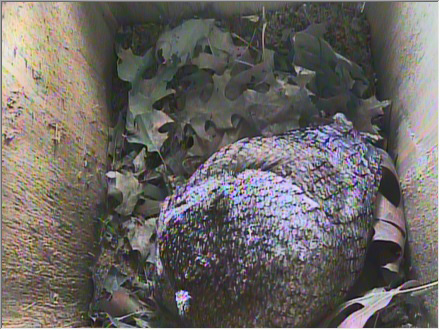
I’m not sure she’s thrilled with my oohing and aahing but she didn’t dart back into the box out of fear or annoyance, only lazily turned to look at me, squinting in the cheery afternoon sun. I’m glad she’s not threatened by my presence. 

I’m pretty sure this is the same female that we’ve hosted in the box for the last few years. She loves to be outside, perched in trees, even after the sunrise. I call her Uptown Girl. Her mate is Shy Guy and so far, I haven’t seen him. These two have successfully brooded chicks for the past two to three years. Last year, shortly before the eggs were to hatch, the nest box was raided, probably by a fox. After they abandoned our box, I discovered that they’d settled in a neighbor’s tree. I watched for several weeks and was rewarded by watching two fledglings learn to fly successfully under the careful tutelage of their parents. I hope they survived summer and have found their own territory and mates, ready to raise families.

It’s never a sure thing that the owls will stick around, or be safe. A juvenile Great Horned Owl has been in our neighborhood this winter and raccoons and foxes are always a danger to eggs and nestlings. I wish this female and her mate good things in their future. 

Eastern Screech, Settling In

When we returned during the first week of January from our European travels, our Eastern Screech Owl, Megascops asio, nest box was open and ready for residents.

It was surrounded by lovely autumn foliage, though shortly after this photo was taken, the leaves went brown and dropped. This is a new box, as the older one was no longer functional. The fancy slide for the door that The Hub engineered is so we can easily close the box after the chicks fledge and the owls vacate, or, at the beginning of owl nesting season, to prevent squirrels or opossums from squatting in the box. We also installed a new camera (some wiring is visible at the bottom, left of the box). With that new camera we saw that a squirrel had filled the box with leaves, prepping the box as her nest for some babies. I feel sorry for evicting the squirrel by pulling out the leaves, but we built the box for owls, not squirrels. I had observed an owl in the box before we left in mid-December, but that doesn’t always mean that she’ll settle in for nesting.

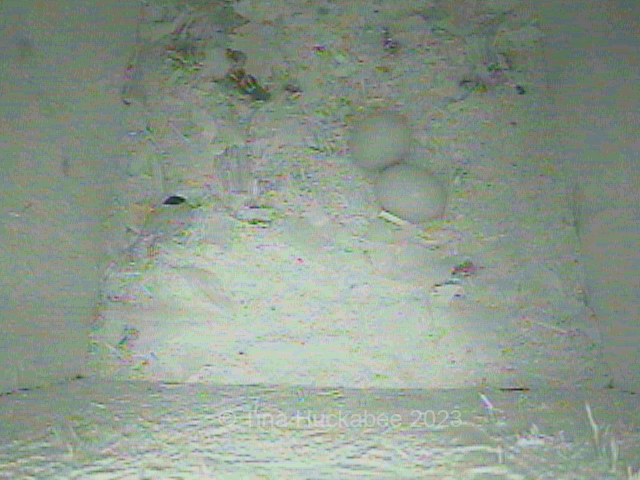
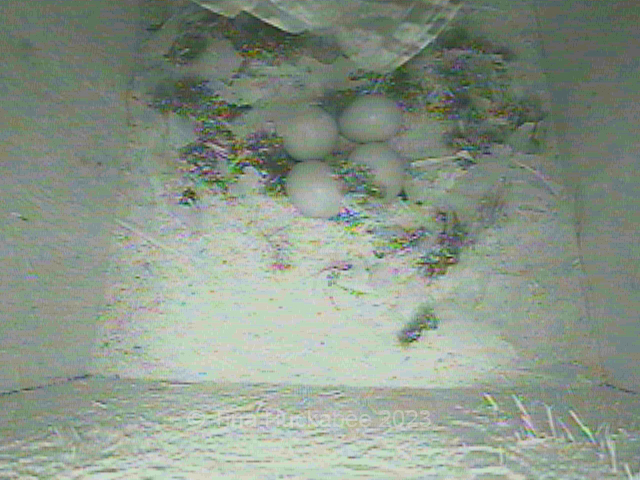
But settle in she did, within a day or two of removing the squirrel’s leaves. Shortly thereafter, this little egg appeared:

…and two days later, another,

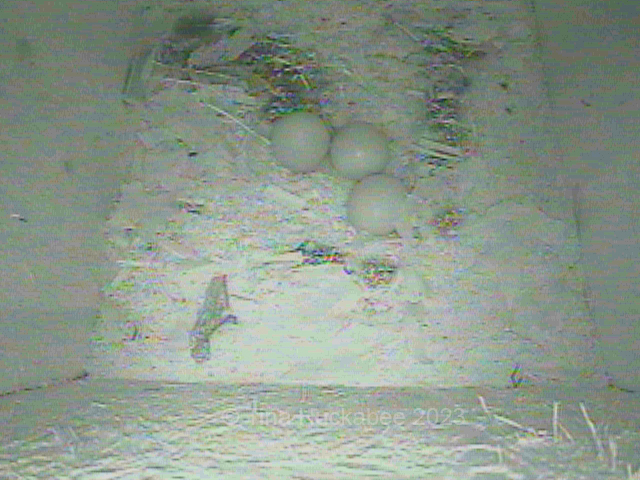
…then another,

…finally, a fourth.

Note the swish of Mom’s tail feathers at the top of the photo.

Wow! This couple got busy, probably in late November; I had no idea that breeding action had commenced. This is the earliest that a Screech Owl couple has ever started their breeding season in my garden. In past years, I observed their courtships during January and February, watching them meet at sundown, woo and canoodle, then fly off together to hunt for the night.

And as I write that, it sounds voyeuristic and maybe even a little creepy.

The fact is that the best time to observe these elusive nighttime birds is during their courting and the raising of their chicks. This season, I missed the first part of that fascinating process. Typically after courting Mama resides in the box in February, laying her eggs during in March; chicks fledge between late April and mid-May. Dad will hunt and provide food for the whole family, until the chicks are nearly old enough to leave the nest box, when Mama joins him in the hunts. This couples’ early nesting is new in our Screech Owl experience, but is within the time frame of owl procreation here in Texas.

If I’m out at the right moment around sundown, I’ll see Mama swoop out of the box for a quick piddle-n-poo break. I imagine she takes a few breaks during the night, but she’s on the nest nearly full time now–those eggs need to stay warm and cozy. Dad has been harder to observe this year; I’m pretty sure he’s holed up in my back neighbors’ large elm tree, but it’s likely he moves around from place to place. I’ve only spied him once, at sundown, when he flew to the nest box, then to the nearby Mountain Laurel tree. Mama dashed out to met him, both perching briefly in the laurel; I lost sight of them after that.

Eastern Screech Owls are amazing hunters, but they’re also vulnerable to larger predators like Great Horned Owls (we have a pair in our neighborhood), accidents with automobiles, and poisons laid out for rodents which impact the food chain. All I can hope is that this couple remain safe and healthy, and are able to raise their chicks to adulthood.