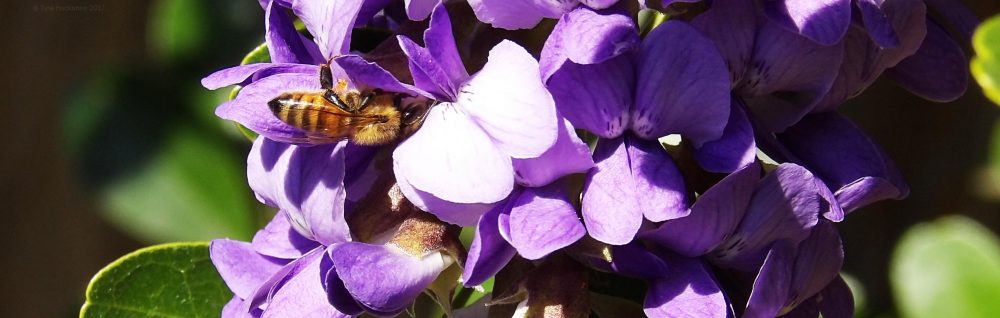
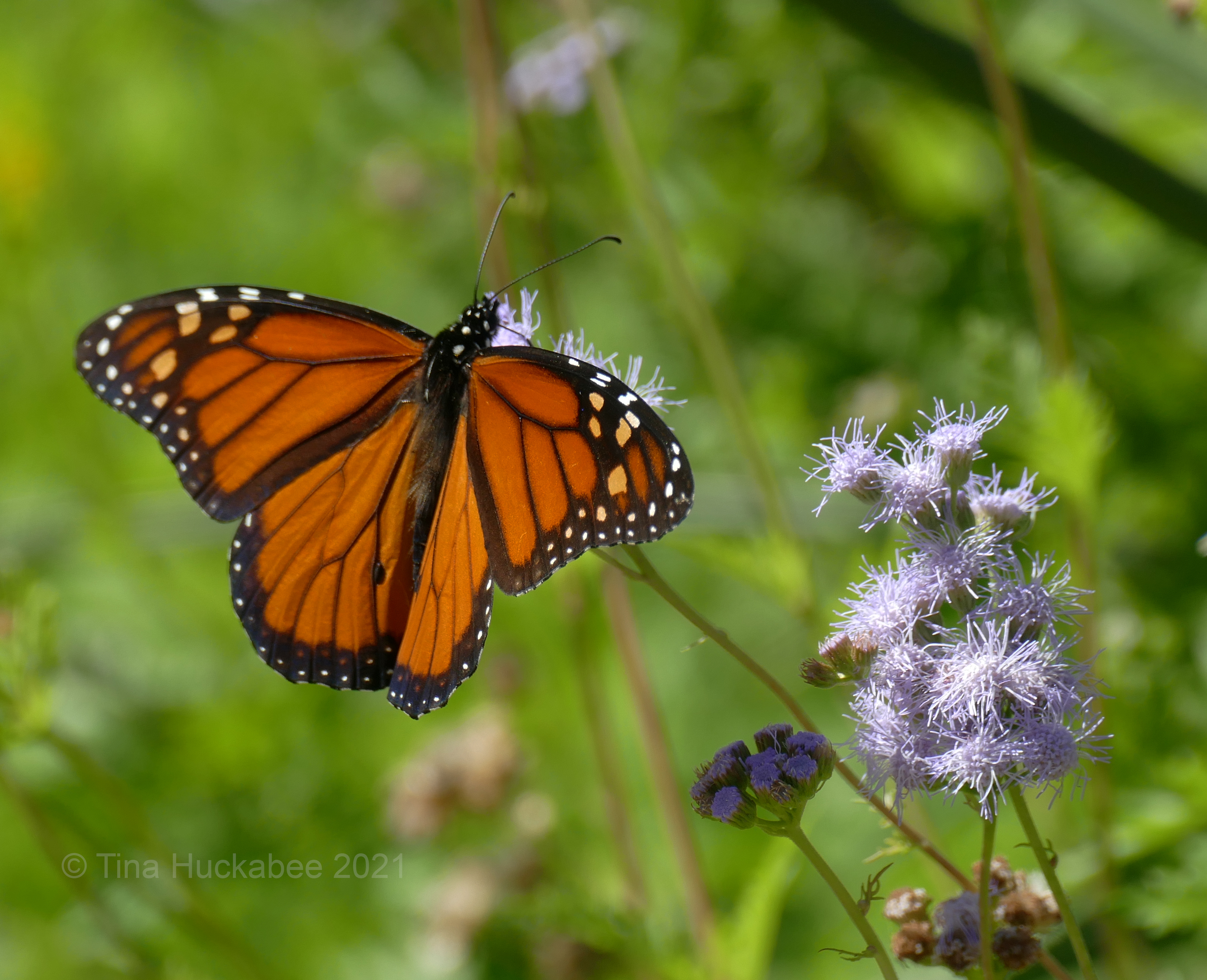
Sightings of migrating Monarch butterflies, Danaus plexippus, have been few and far between this autumn. I’ve observed one or two, here and there, the burnished beauties’ wafting through my garden, wings wide open, brightened honey-colored by the sun’s rays. By late September and early October, despite ongoing drought and heat, some of the Monarchs’ favorite blooms were in full, flowering mode, ready and waiting for brief visits from the passing butterflies.
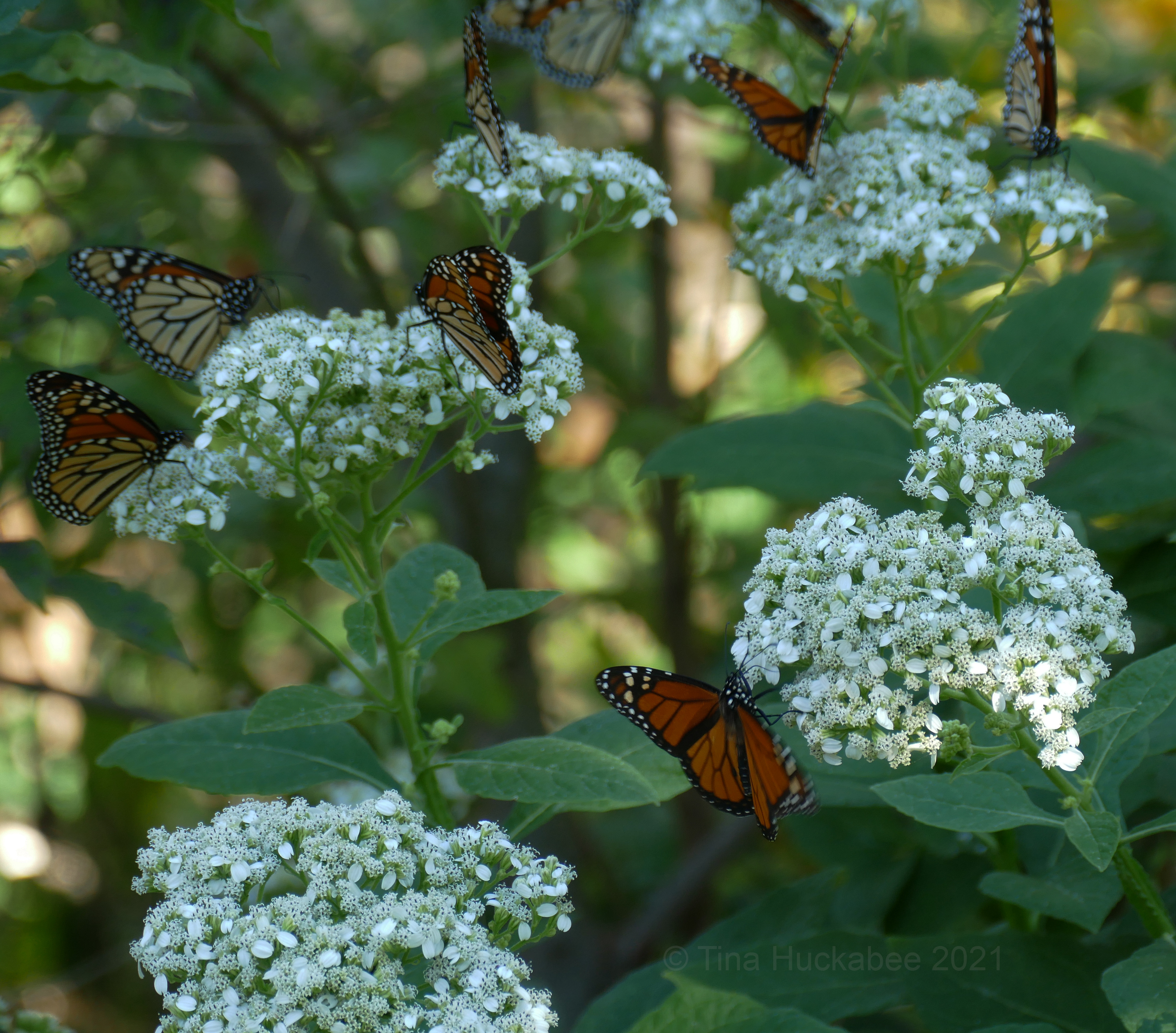
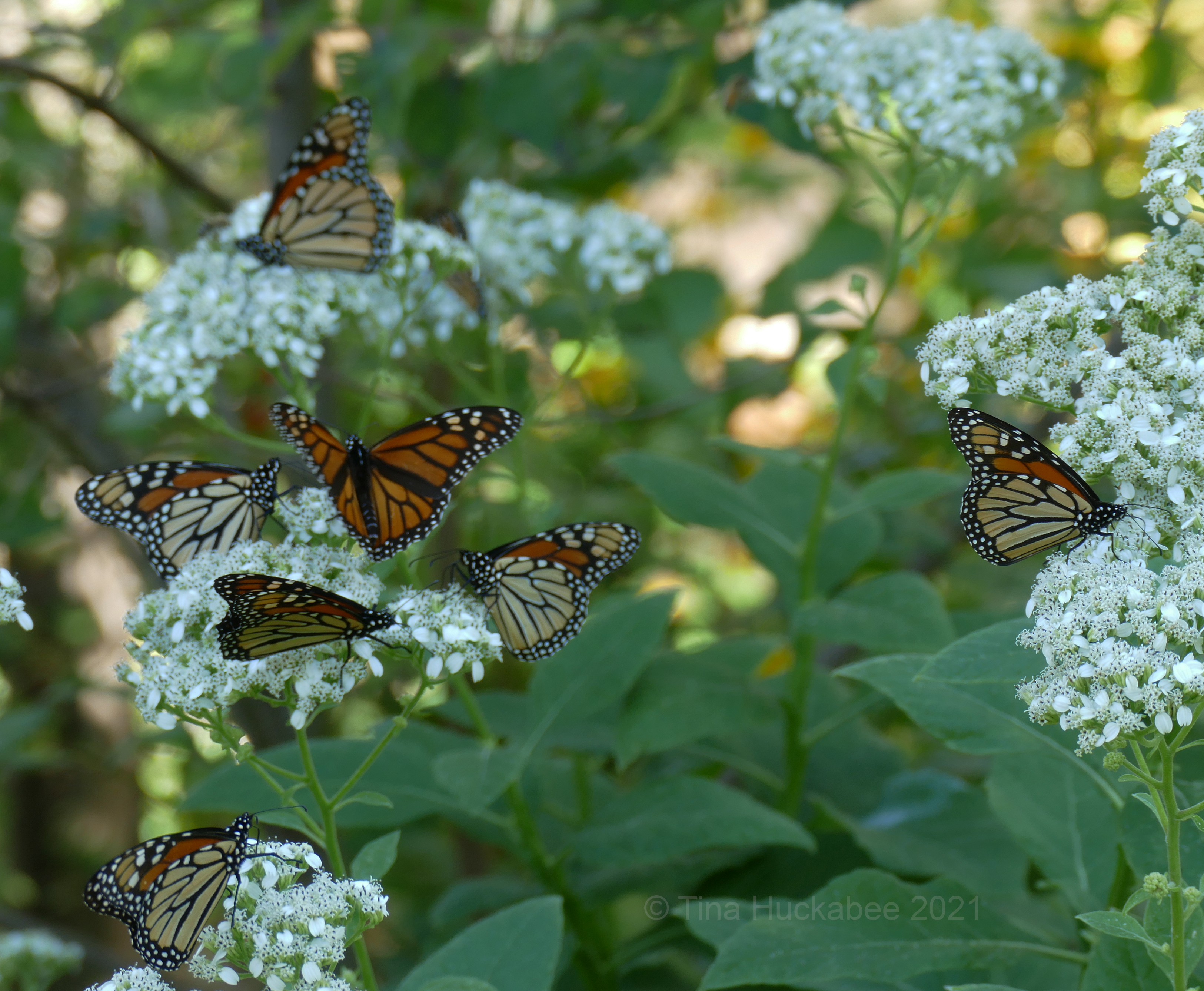
Frostweed, Verbesina virginica is always a favorite.

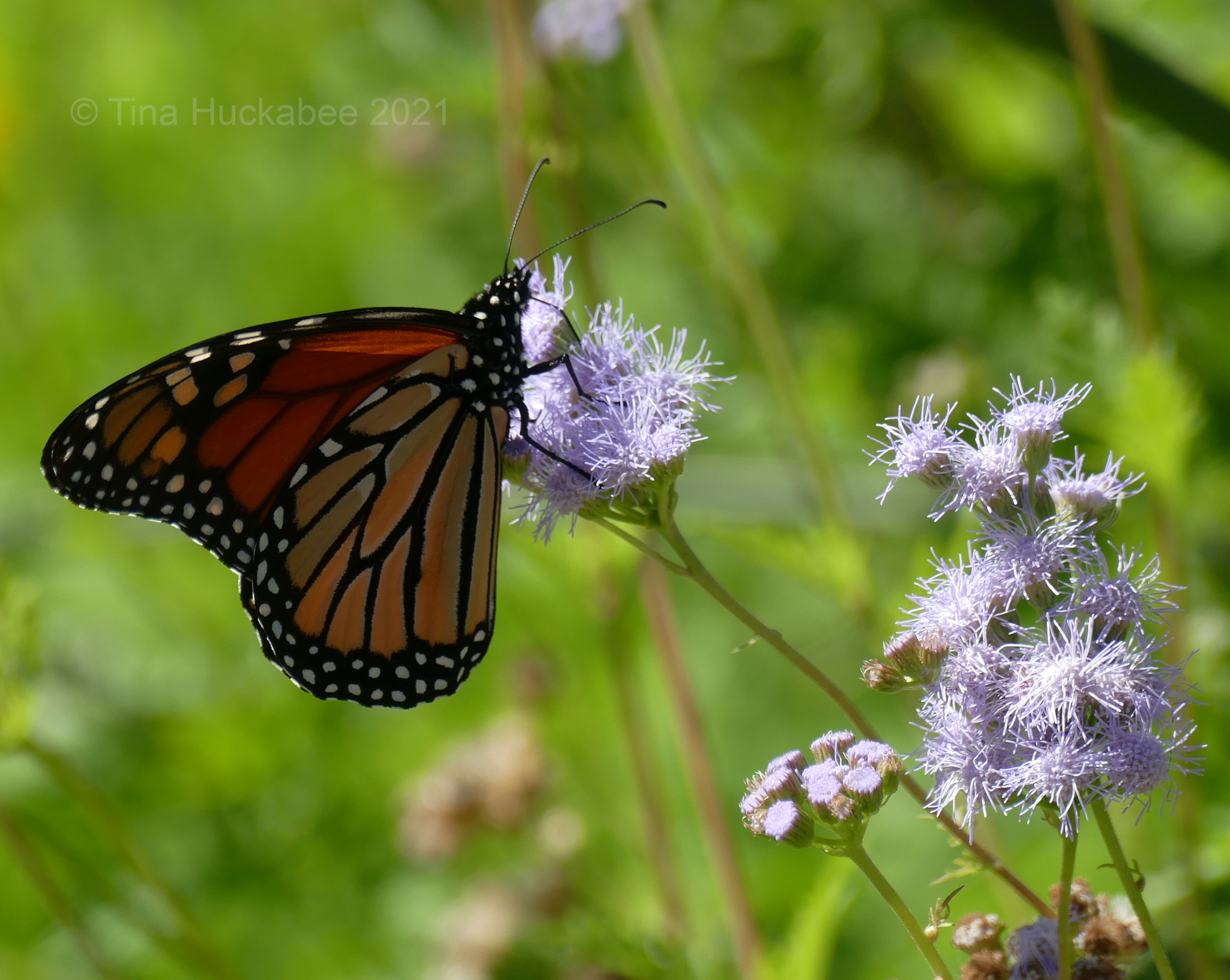
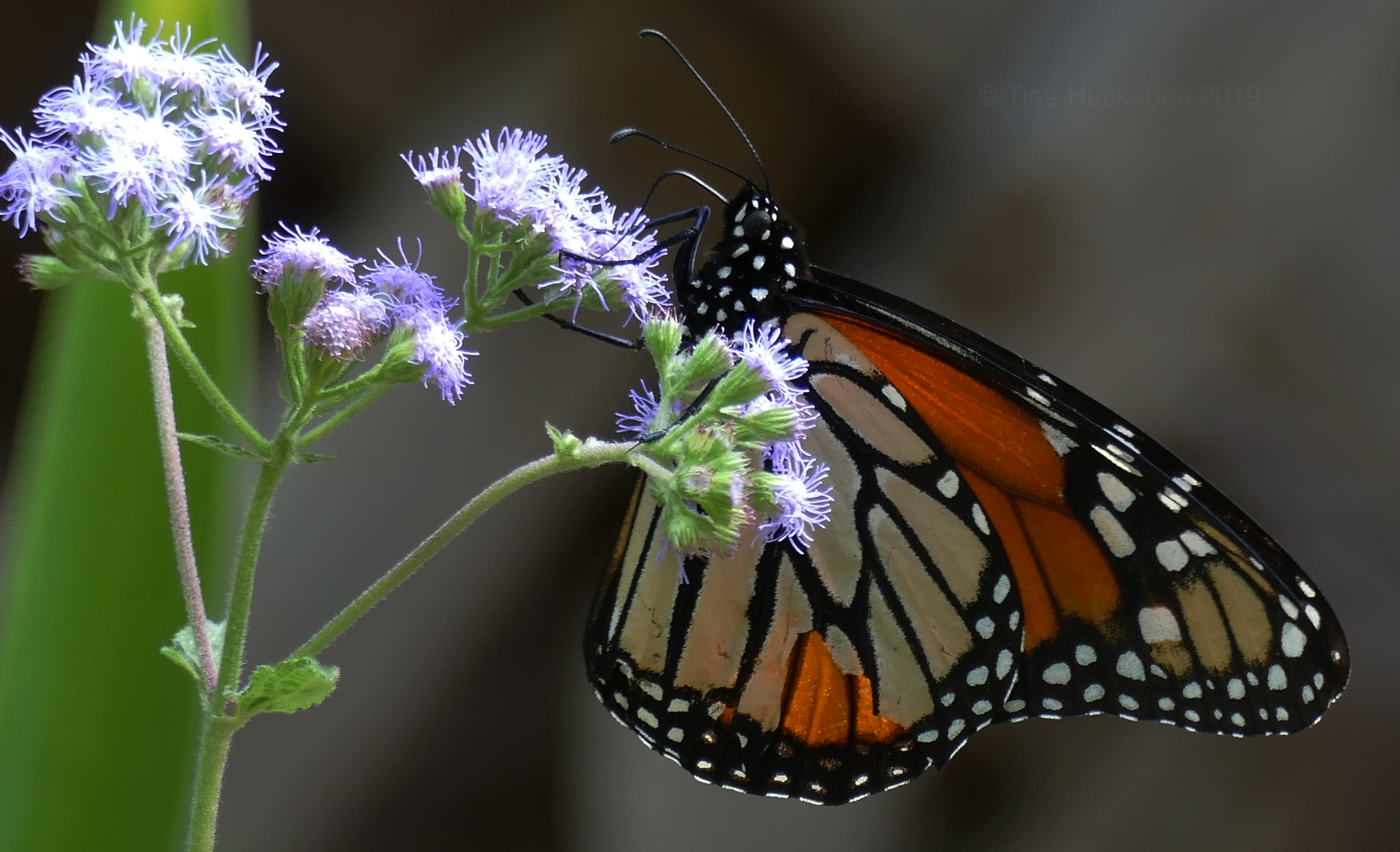
Gregg’s Mistflower, Conoclinium greggii, is another autumn blooming Monarch magnet.

Pollinators, including Monarchs, love Turk’s Cap, Malvaviscus arboreus var. drummondii.
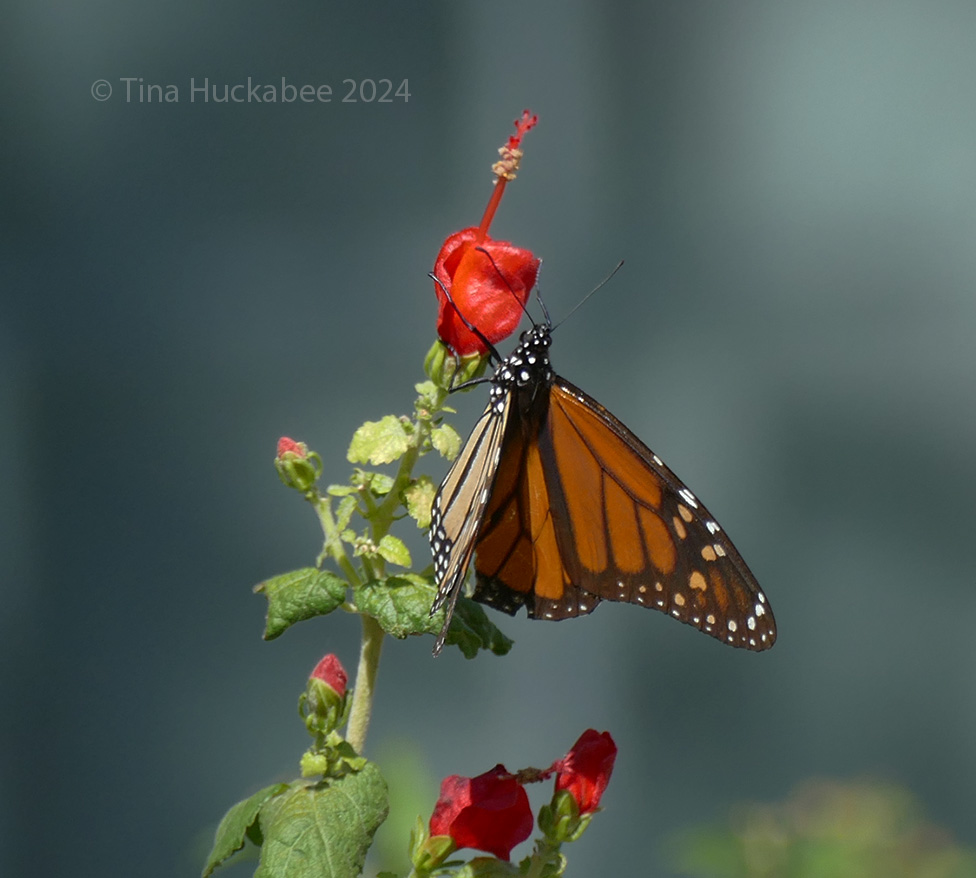
Though it was heartening to see the Monarchs, a few passing through doesn’t suggest a migrating group.
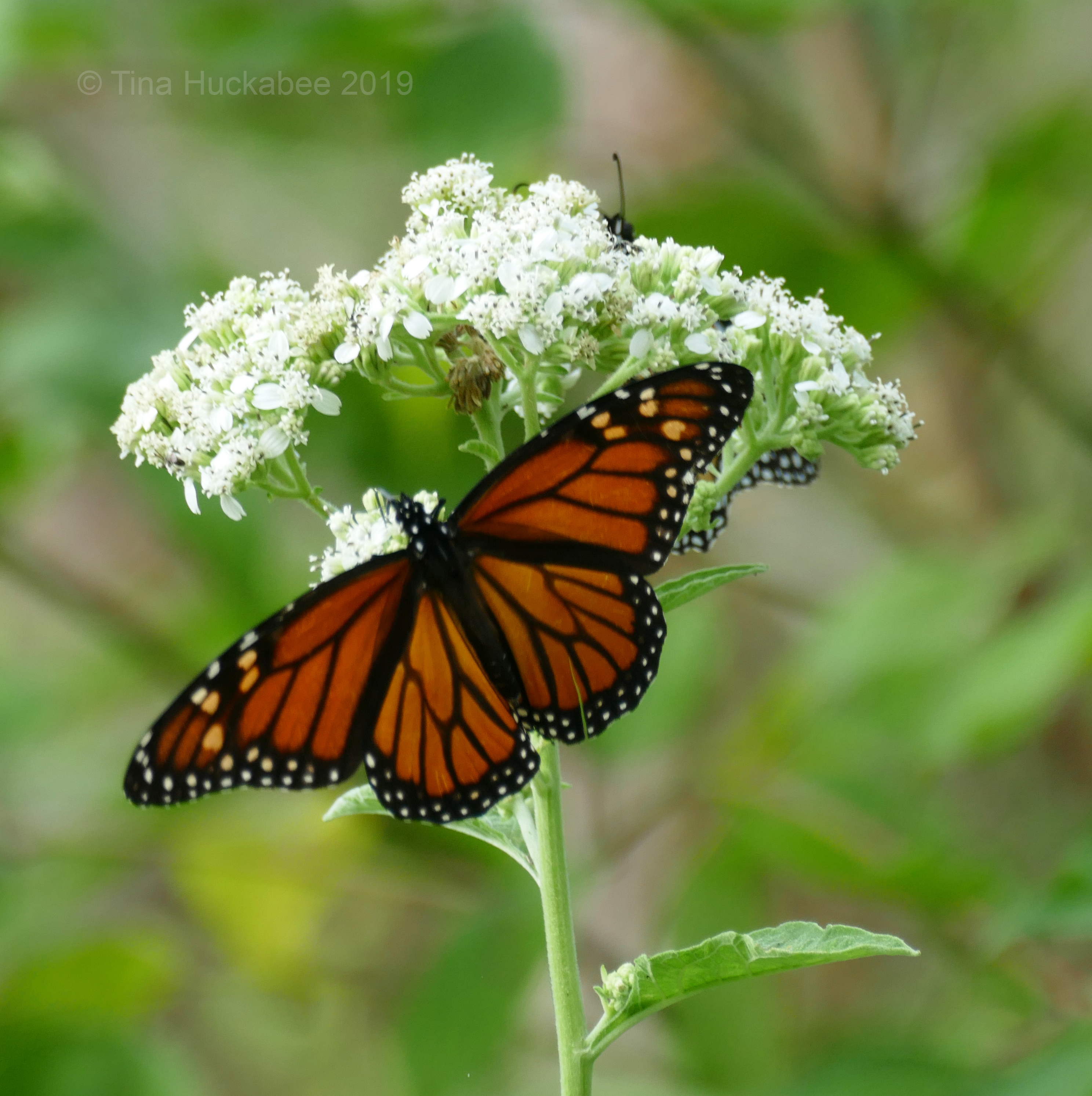
That changed a wee bit this past last week. For a couple of days, I counted 14-15 Monarchs working the graceful flowers of my Mexican Orchid Tree, Bauhinia mexicana.

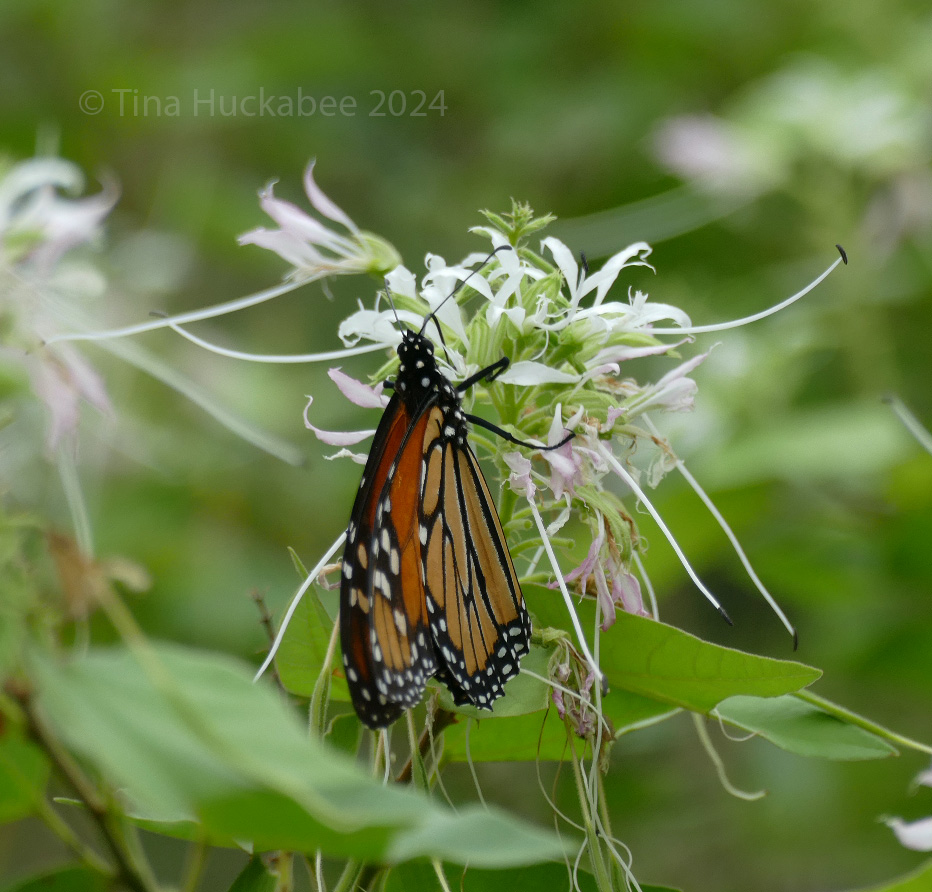
Here, there’s one in the foreground and two in the background; there’s also a little dab of umber in the left background. That brown beauty is a Queen, Danaus gilippus, a cousin to the Monarch.
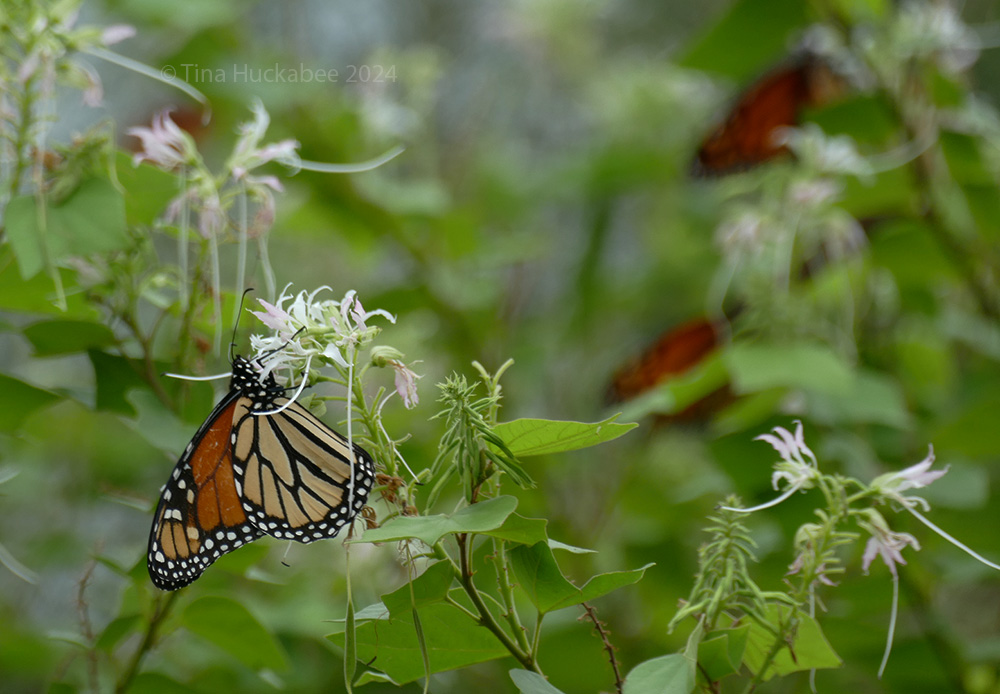
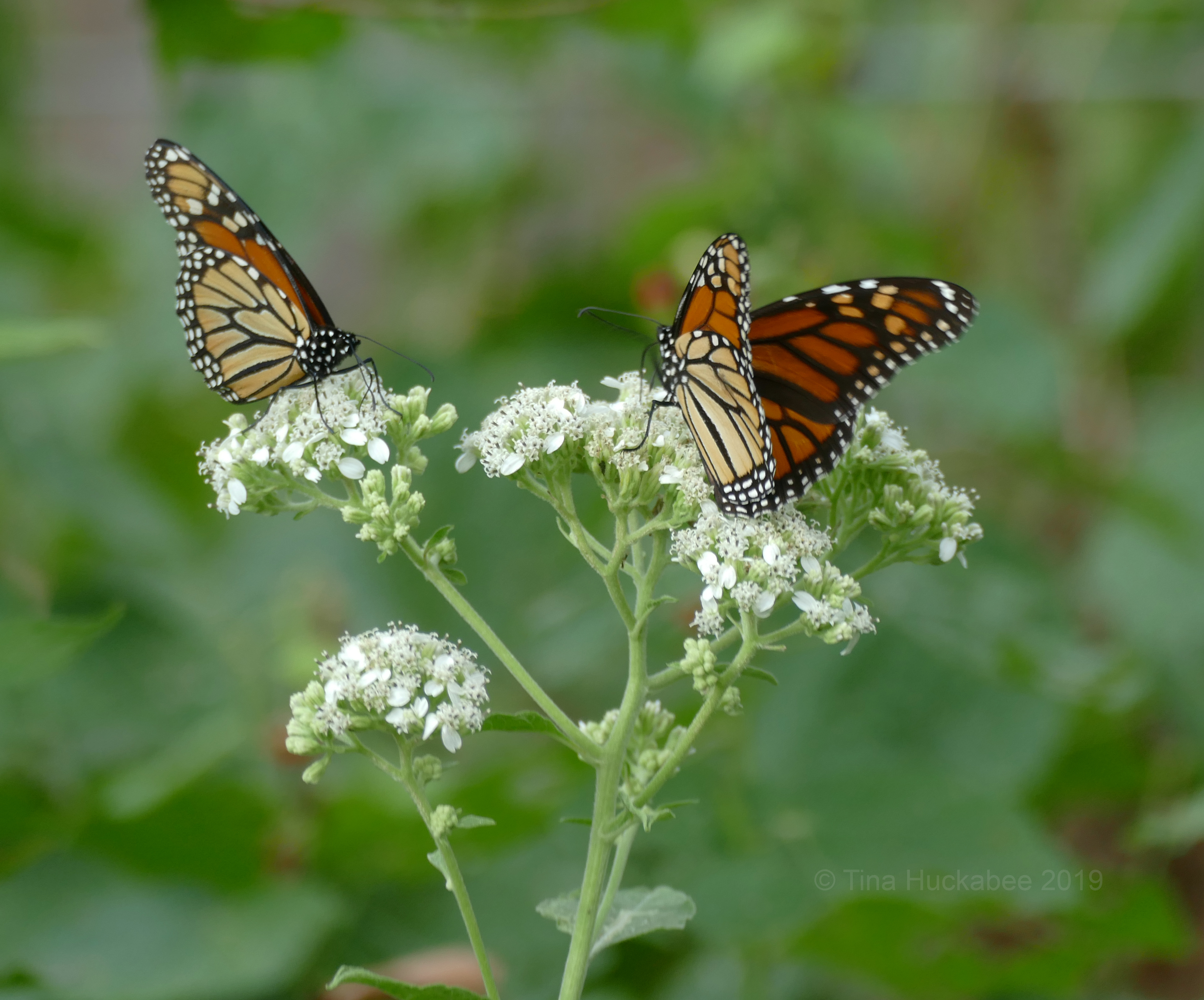
These two Monarchs worked the orchid tree flowers, while in the blurry background, False Willow or Poverty Weed, Baccharis neglecta, hosts its own party of pollinators. The willow attracts many native bees, honeybees, and some of the small skippers. It’s alive with movement.
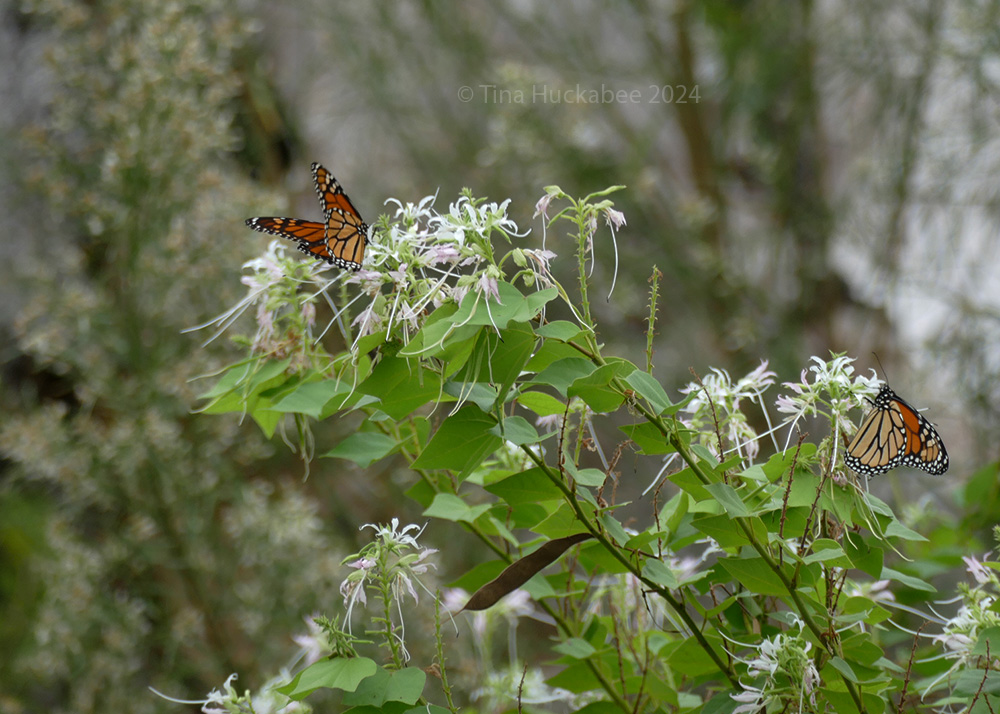
I probably should have shot a video of the fluttering butters rather than trying to capture photos. The darned things continually moved from bloom to bloom and when they were bored with that, played hide-n-seek behind the ungulate-shaped foliage. I’d focus on one or two, then whoosh, they wing out of the camera’s sight. It was nigh impossible for this picture-taker to capture the glorious activity around the flowers.
This small group, welcome though it was, doesn’t come close to the numbers of Monarchs that have graced my garden in the past. But given the survival challenges that Monarchs face, I am pleased that there were so many for a day or two, and that I had ready for them nectar-rich food sources. Recent research has suggested that the migrating Monarchs are losing the will to migrate, due to a host of factors. For more information about this sad, but perhaps evolutionary trend, check out this article from Texas Butterfly Ranch.
I’m not sure if the group I observed constitutes a flutter of butterflies–a term that refers to a mass of butterflies, but I do love the use of the term flutter, along with the other words used for butterfly gangs, like the following: a flight of butterflies, a kaleidoscope of butterflies, a rainbow of butterflies, a shimmer of butterflies, a swarm of butterflies, and a wing of butterflies.
Many or one, Monarchs are a joy to witness, a balm for the soul.










 My Gardener Says...