After Dinner Drink?

On a recent evening my back garden was honored with a visit from this immature Cooper’s Hawk, Astur cooperii, who spent time at one of my bird baths. The bird sat and surveyed its surroundings,

…took thirsty dives into the water,

…and with beak pointed to the sky, gulped, gulped, gulped, enjoying a cool water drink at the end of a day.

At first, I assumed he’d landed looking for dinner, but the squirrels were somewhat active (not directly under the hawk’s beak, but nearby) and birds were around, though giving this formidable predator its space. Cooper’s Hawks typically hunt birds, but I’ve witnessed one catch a squirrel. A successful predator will hunt whatever is available and catch-able.

I wouldn’t want to be on the catching end if these things–would you?

Given the hawk’s lack of interest in a meal and its focus on the water bowl, I wondered if this one had dined earlier, in some other venue, and was in my garden for its after dinner drink.

The hawk sat, sipped, looked around and eventually hopped to the opposite side of the water bowl. This young Cooper’s has a regal form: bright, intelligent eyes, glorious plumage, and a dignified figure.
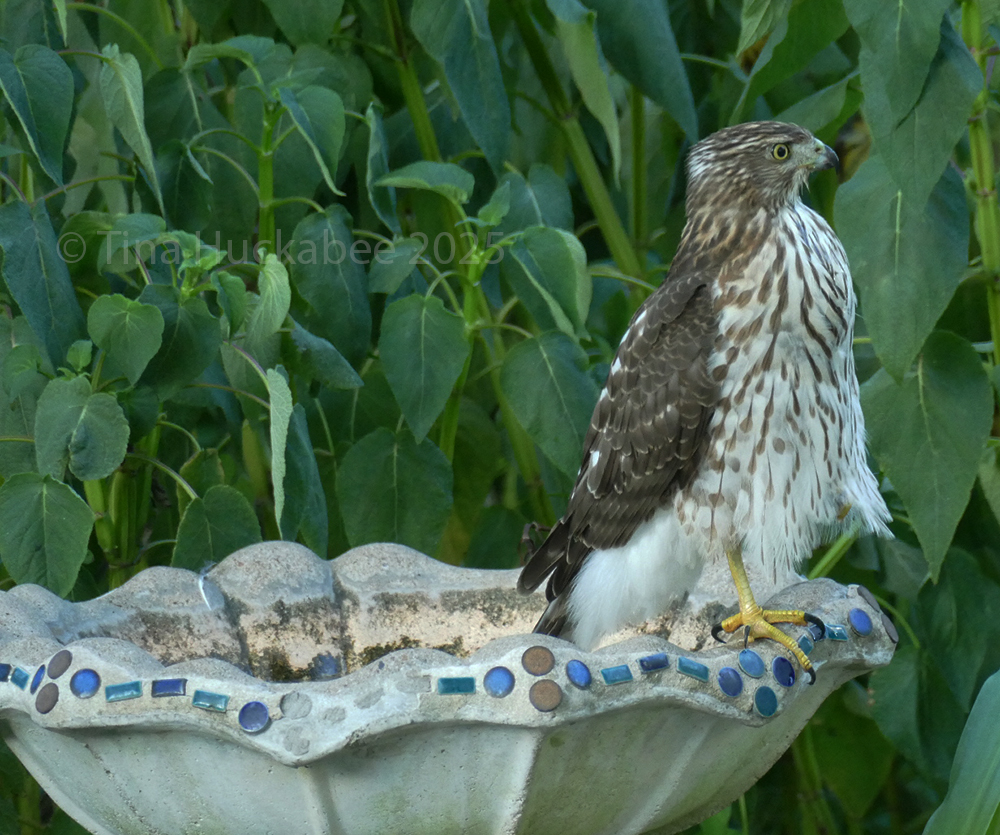
My favorite photo of this half hour of hawk watching is this one.
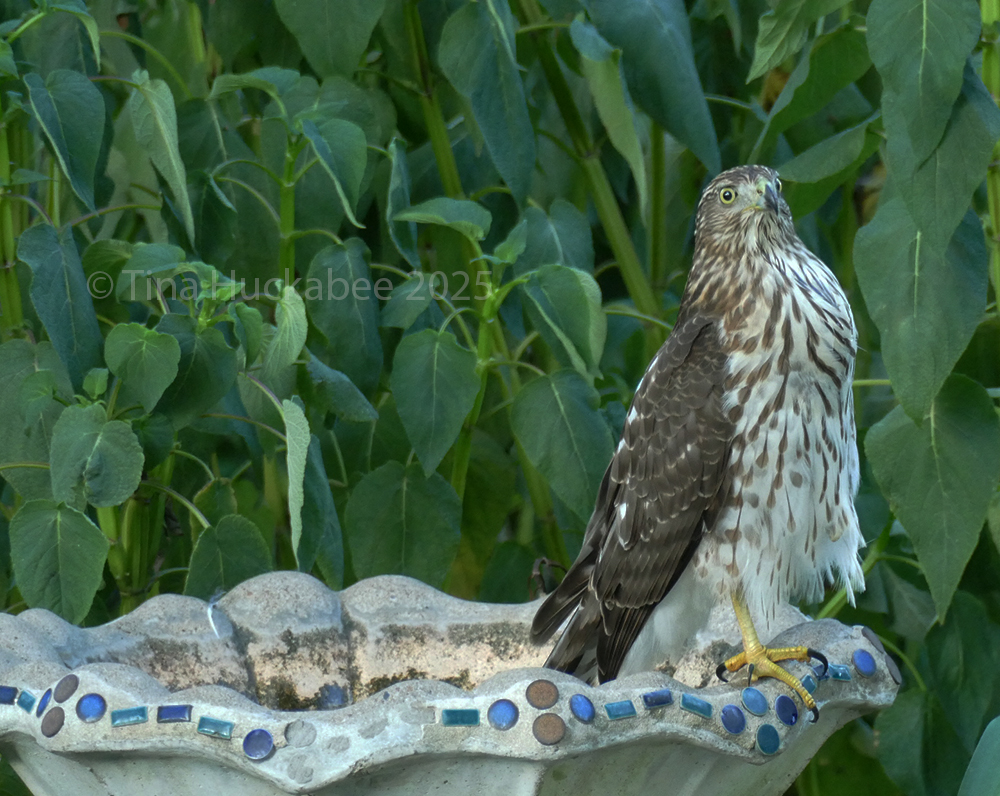
The hawk has a I meant to do that! look on its face. Maybe it took a page out of the White-winged Dove book and pooped in the water? Or perhaps it belched a bit and was embarrassed? Do hawks belch? Do hawks get embarrassed?

Shortly afterwards, my hawk buddy winged to the overhead utility wires behind my property and then onward to its perch for the night.

I love to spy on the flitty birds in my garden, both migratory and resident. They’re quick, agile, easily hidden in the foliage and a triumph when I get a good look and photograph. That said, it’s rewarding and so much easier to watch and appreciate a bigger bird. It’s truly a gift when one lands and spends time resting in the garden.
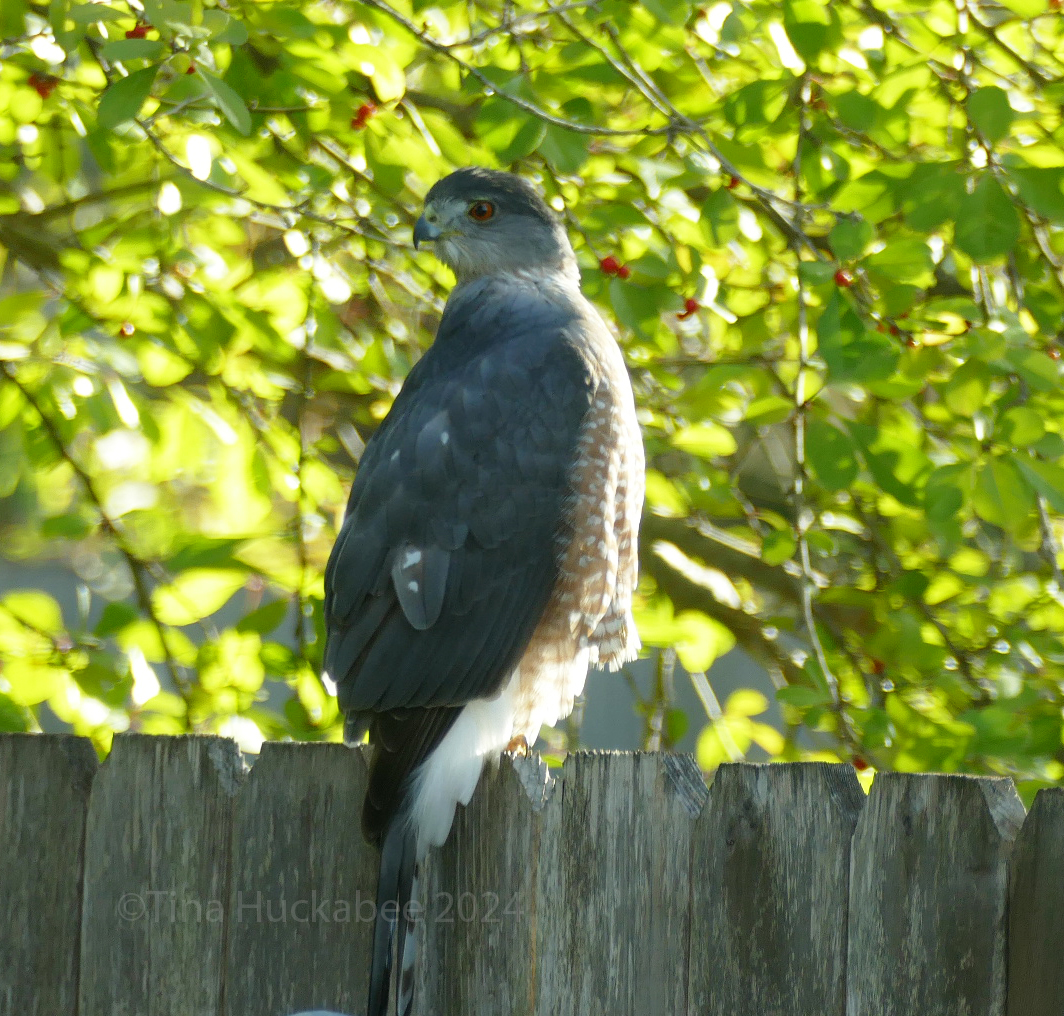
Bird on a Fence

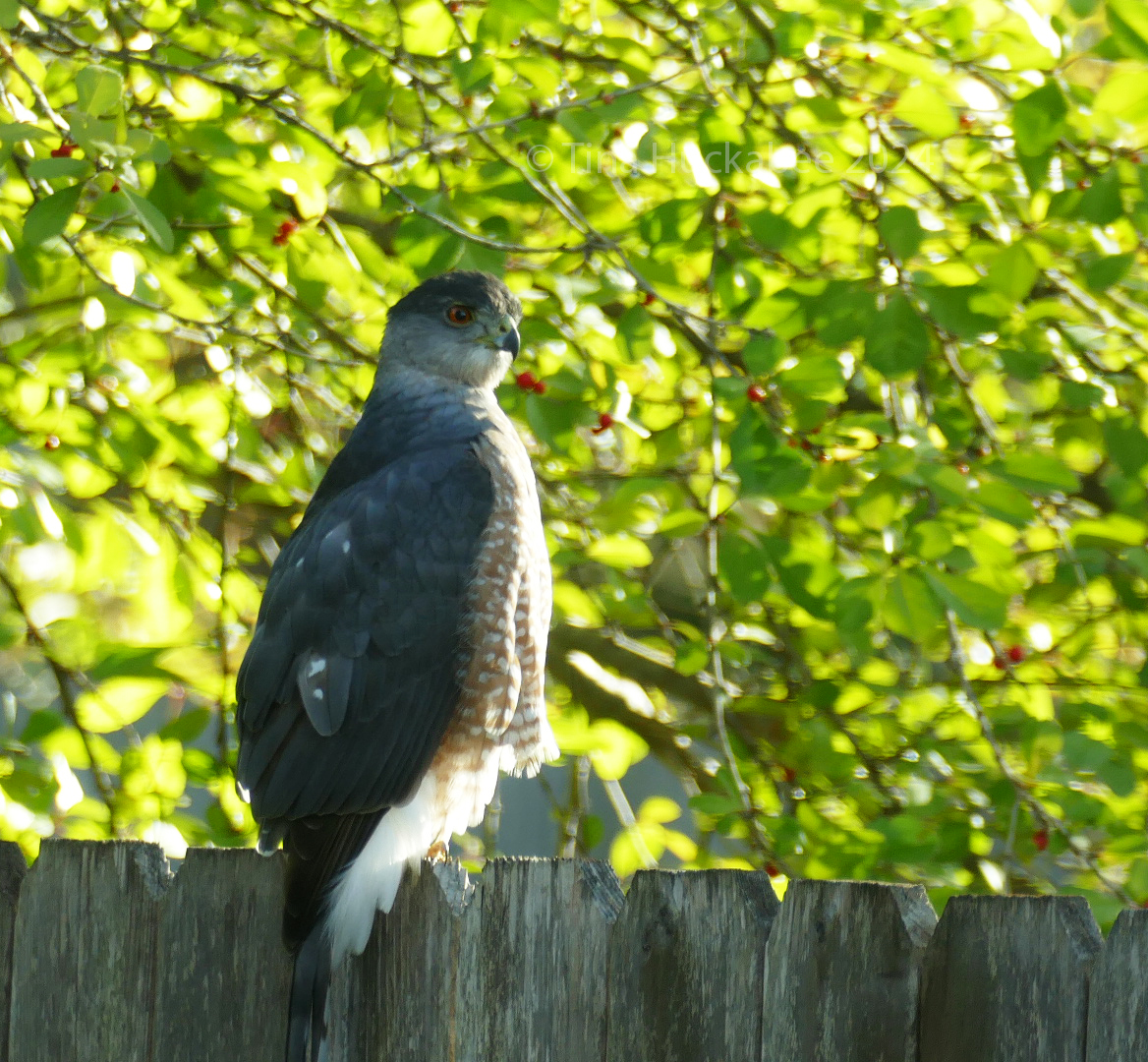
Seemingly relaxed, I can only guess that this adult Cooper’s Hawk, Astur cooperii, was content after a morning breakfast. Its presence rendered the other birds quiet for a time.

The hawk perched for some time on the fence, occasionally preening, mostly observing. A few times, its gaze focused just below where it sat, and I hoped that some curious Carolina Wren wasn’t in the hawk’s field of vision.

Eventually the Cooper’s hawk flew off, rested and ready for its next round of hunting. So it is for wildlife: survival is paramount, relaxation a rare gift.

Big and Little

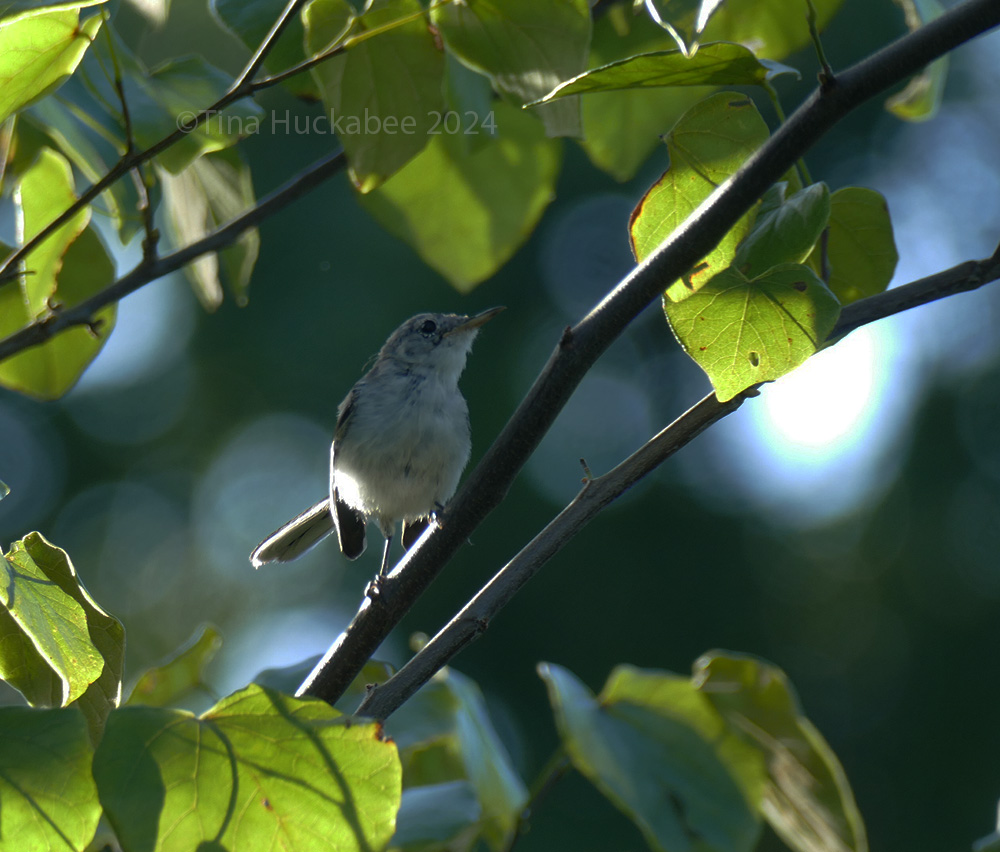
It’s always a pleasure to spot an unusual bird in the garden. Recently, I spied this tiny cutie, as it flitted and flashed between shrubs and trees, remaining immobile for only brief periods.

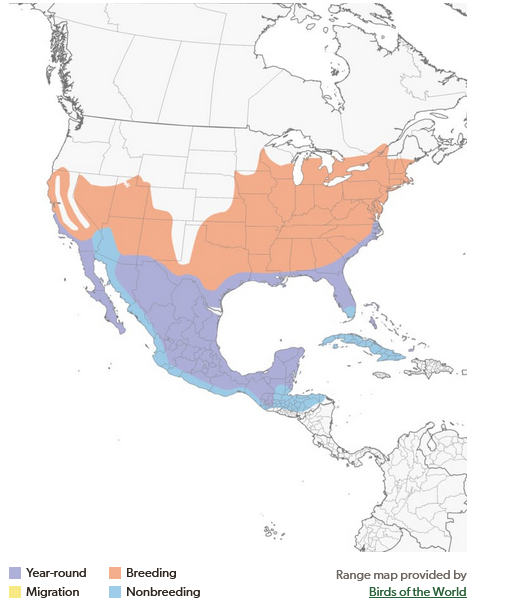
Though a rare sighting in my garden, this Blue-grey Gnatcatcher, Polioptila caerulea, isn’t out of its normal range. My garden sits in the orange area (breeding range), near the border with the purple (year-round range) area in Cornell’s map of gnatcatcher range.

I’ve seen gnatcatchers in the garden on two other occasions, years apart. Maybe they’re in my garden more than I realize or observe, as they’re tricky to identify, being diminutive speed demons, hiding in the bramble of bushes.

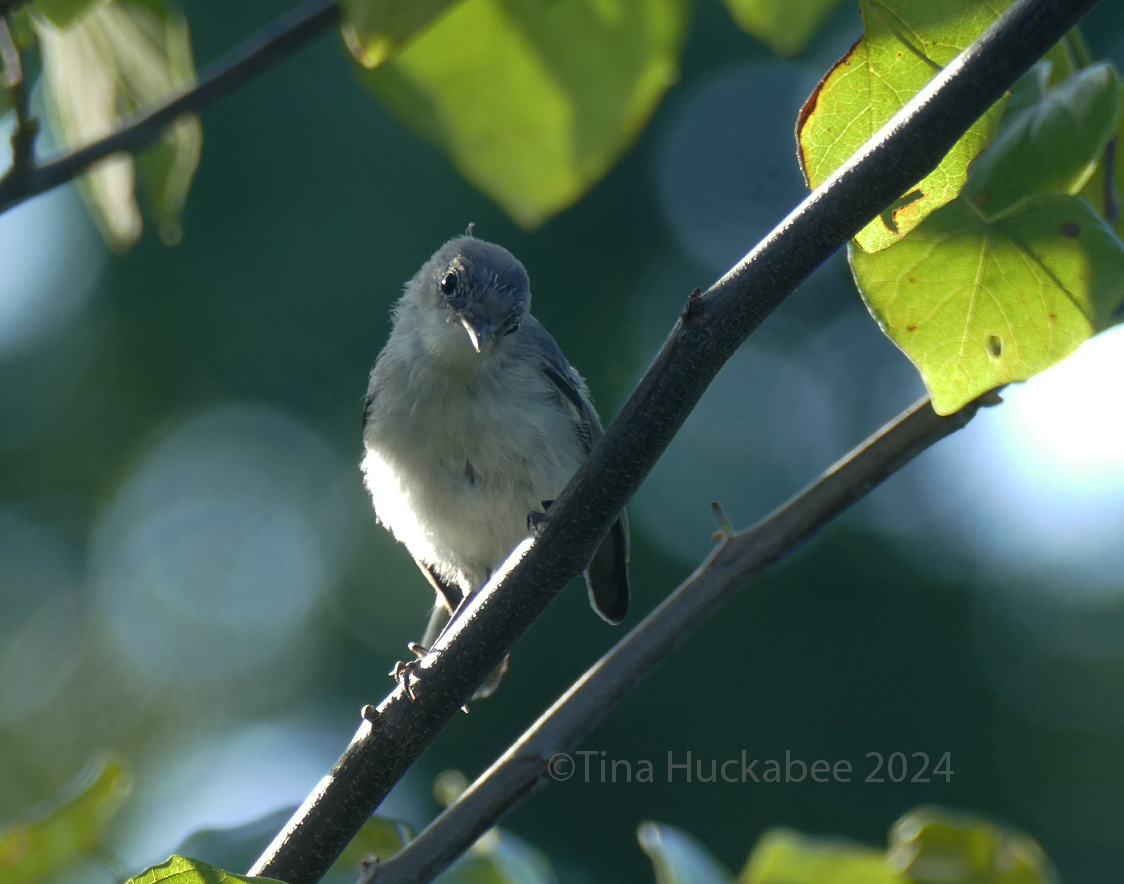
This one was on a rapid-fire feeding frenzy, zipping from shrub to shrub to tree, looking for insects and spiders, the gnatcatchers’ main sources of food. It perched a few times in my Red Bud tree, just long enough for me to say ‘hi’ and catch some shots of the catcher.

My last sighting was this aerodynamic pose in the second before the teeny gnatcatcher belted away, no doubt in pursuit of a yummy munchie.

The gnatcatcher is a little bird, but big birds are also around, and they’re usually predators hunting for prey. If you’re squeamish about seeing a predator with its prey, you’ll want to move on to your next gardening blog or bit of political news.

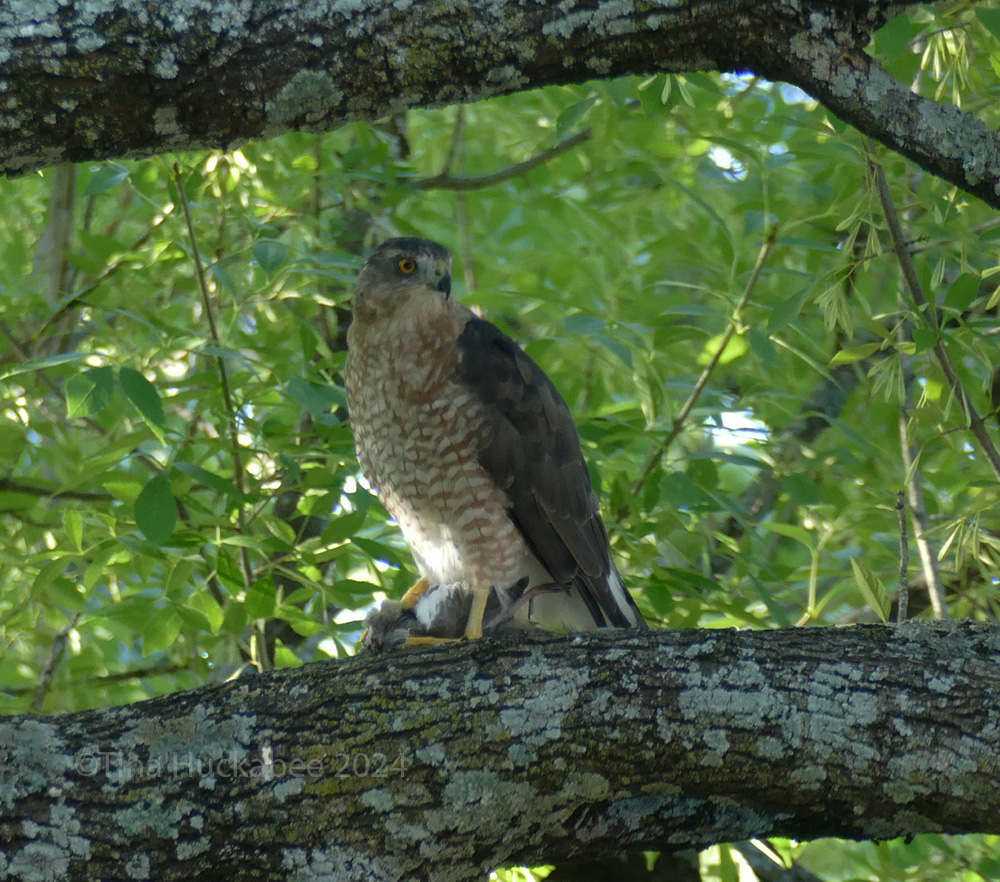
This handsome juvenile Cooper’s Hawk, Accipiter cooperii, was upsetting the Blue Jays and a bunch of other birds as it sat in my SIL’s garden early one morning. I snapped a couple of photos just before it flew off, but didn’t see it clutching its breakfast, an unlucky White-wing Dove, until I downloaded my photos.

Bird breeding season is just about completed; chicks have passed the fledgling stage and have matured to juveniles. Like this young hawk, they’re learning to fend for themselves. Next up in the backyard birding world is fall migration; it’s already started, but will peak in September/October. In my garden, I don’t see as many migratory birds in the fall as I do in spring, but maybe this year will be different. Either way, safe travels to the migrants and continued growth and learning for the neighborhood birds.