A Lone Lily

While heavy rain in Central Texas has produced horrific tragedy in certain areas, it’s also filled our reservoirs and my garden has benefited as well. Before the wet arrived, I’d returned from a trip to New Mexico, thrilled that my unwatered Texas garden looked so lush after time spent in a beautiful, but more arid, landscape. Then the rain came and the lush garden doubled-down on foliage and bloom production. This mid-July, flowers are flourishing and pollinators are beside themselves with the abundance.

Along with the floriforous summer perennials, this lone Hill Country Rain lily, Cooperia pedunculata, popped up recently amongst some Mexican Feathergrass, Nassella tenuissima. I purchased bulbs some years ago, planting them deep in the dirt, as the front garden offered little hope for enough sun to make the plants happy. There were blooms for a time, then there weren’t; it’s been a few years since rain lilies were a part of my garden.

I’m fairly sure this lily is the C. pedunculata, because I remember the bulbs being labeled Zephyranthes drummondii–which is a synonym. These sweet flowers appear after significant rain along urban and rural roadsides and patches of undisturbed land. They bloom, then set their charcoal, papery seeds, which are dropped forthwith or carried by the breezes to other places. Their stems retreat to the soil, new stalks with their single blooms reappearing at some later date, after another rainfall.

In a recent post profiling his stunning photos of rain lilies, Steve of Portraits of Wildflowers asked, in response to my comment about his photos, if I’d ever gathered seeds of this flower. The answer is ‘yes’ and I suspect that this recent lily gift is the result of one of the seeds from years ago. I don’t recall planting a bulb in this spot, though it’s possible that I did, but I do recall scattering seeds in the back garden.

I’ll let the seeds from this flower mature, and when ready, I will–with intention–scatter them, though most likely in my front garden, rather than the shadier back garden.

I might also buy more bulbs. Is it possible to have too many rain lilies gracing a newly rained-on garden?

Surprise Lilies

Each gardening season, after the first drenching rain in August or September, I’m always surprised to see the Oxblood Lily, Rhodophiala bifida, pop up in varying spots. An introduced plant, the Oxblood Lilies have naturalized in parts of Texas and are common dots of crimson in lawns and gardens here in Austin and other parts of Central Texas. Its stalks, or scapes, rise up from the Earth (overnight as best I can tell!), buds developing atop and flowers opening with a brilliant flourish within a day or so. I have groups of these delights and they will bloom, not all at once, but with a continuing presence, for a month or so. Foliage arrives after the blooms fade, elegant in form and rich in color, remaining green throughout the winter months.

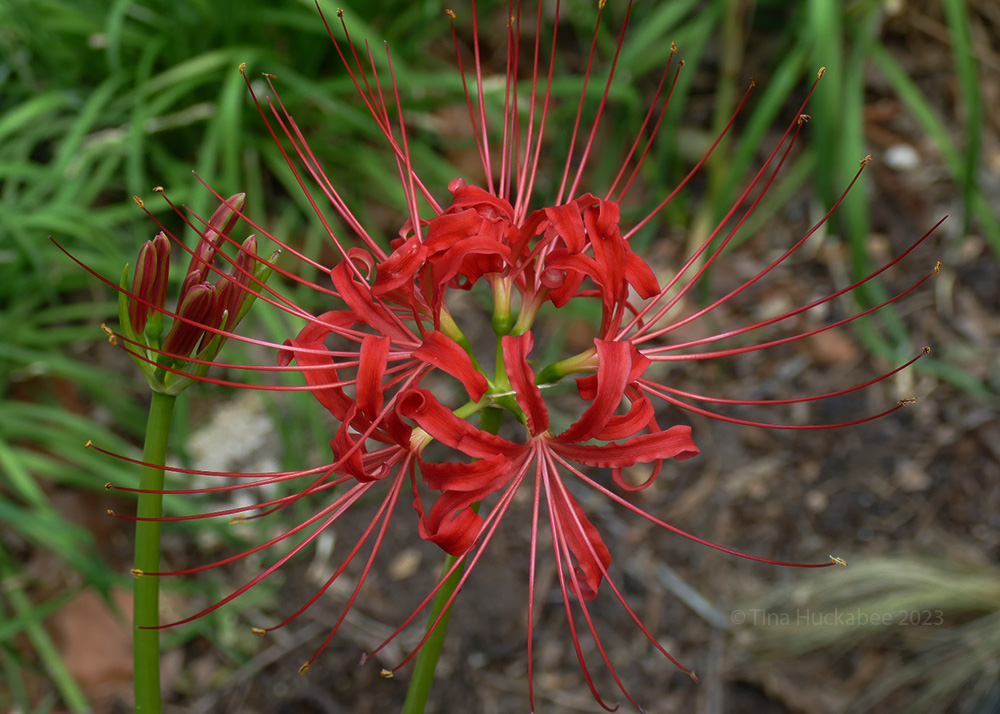
A complementary and competing red beauty is the Red Spider Lily, Lycoris radiata. Not quite as prolific or common as the Oxbloods, these stunning blooms are head-turners just the same. A native of the Far East, Red Spider Lilies have been a traditional fall bulb in southern gardens for generations. Their petals are slightly ruffled and curl charmingly; spidery stamens reach out and up, well beyond the petals. The stalks upon which these red spider flowers rest grows to about twelve inches in height. Leaves of red spider lilies are slender gray-green with a stripe down the middle and the foliage clump provides a grassy accent during the winter months.

I say that I’m surprised when these lilies show up, but of course, I’m not, not really. I planted the bulbs and even in the most droughty of years, I always enjoy the sight of few Oxbloods and Spiders when they show up, popping with vibrancy. In wet years, the show is spectacular. That red!

What has surprised me this week is the appearance of this Hill Country Rain Lily, Cooperia pedunculata.

I’m fairly sure that this is the native rain lily, as I remember buying bulbs for my back garden at least 10 years ago. The lilies never did much; only a few blooms graced the garden and those were in the year after I planted the bulbs. After that, they were no-shows. My back garden was shady (still is in areas) and I’ve always assumed that’s why the lilies didn’t thrive. These lilies respond to rain, but they require full sun. In full sun places the lilies grow, bloom, and spread with abandon. Flourishing along roadsides, they create a white blanket in the days after rain, gently moving with breezes.

Parts of my back garden are now sunnier and at least one Rain Lily bulb is rewarding that newly found light by emerging and flowering after last week’s luscious rain.

Such a pretty thing! Creamy and simple, the lily has three petals and three sepals. A veil of yellow draws admirers to its center. The scape is fleshy like those of its lily cousins. I wonder if the original lily bulbs that I planted seeded out, as I don’t recall planting in the particular spot this lily has chosen. I’m not complaining, any lily is more than welcome, wherever it might turn up. I’ll let this specimen seed out and spread the seeds in other areas of my garden. As well, a trip to a local nursery to purchase some bulbs wouldn’t be amiss!

Not all surprises in the garden are welcome, but when lilies are the surprise, they are well worth waiting for.