The Mob is Back

On roughly an every-other-year-schedule, Cedar Waxwings show up in droves during January, remaining in Central Texas through March. On a daily basis they visit my pond by the dozens, even hundreds. Gregarious birds, it’s rare to see a waxwing alone. They’re always with their besties, swooping in to bathe and drink, rushing upwards to safety when some unknown event triggers their (apparently very sensitive) flight mechanisms.

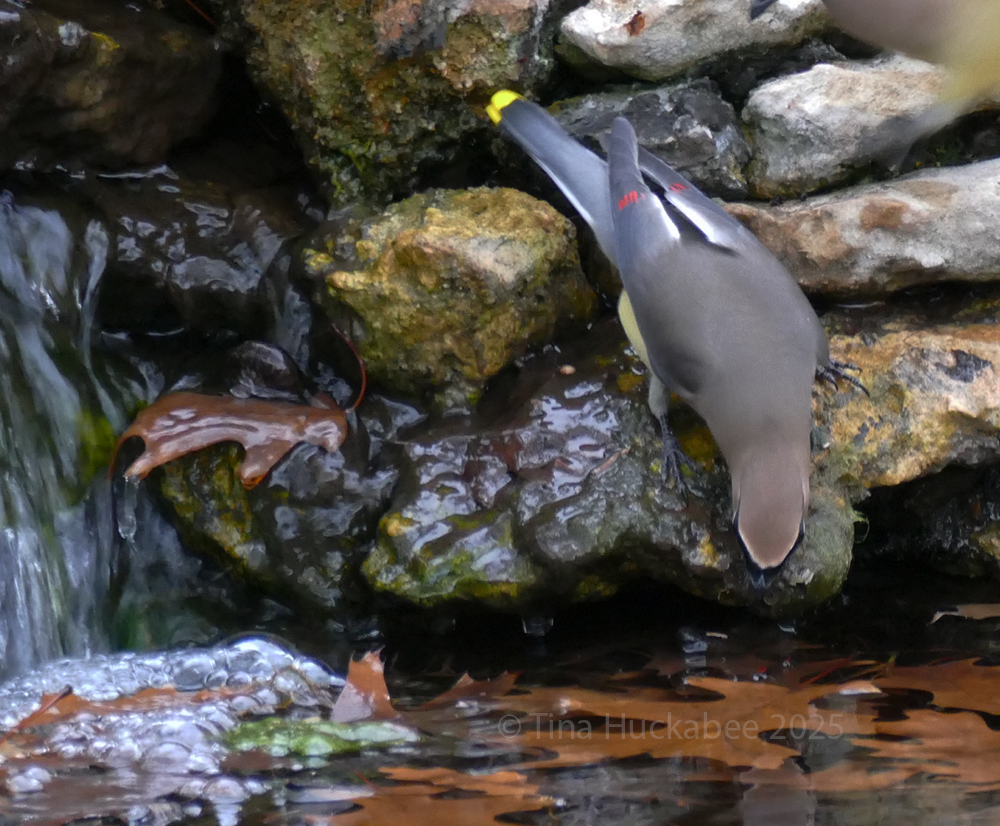
This Cedar Waxwing, Bombycilla cedrorum stayed still long enough for me to observe and snap a photo, posing to show its good side.

It dipped and drank, gracefully exhibiting the signature waxwing yellow tail feather ends and red wing feather tips. Cedar Waxwings are stunningly beautiful birds.
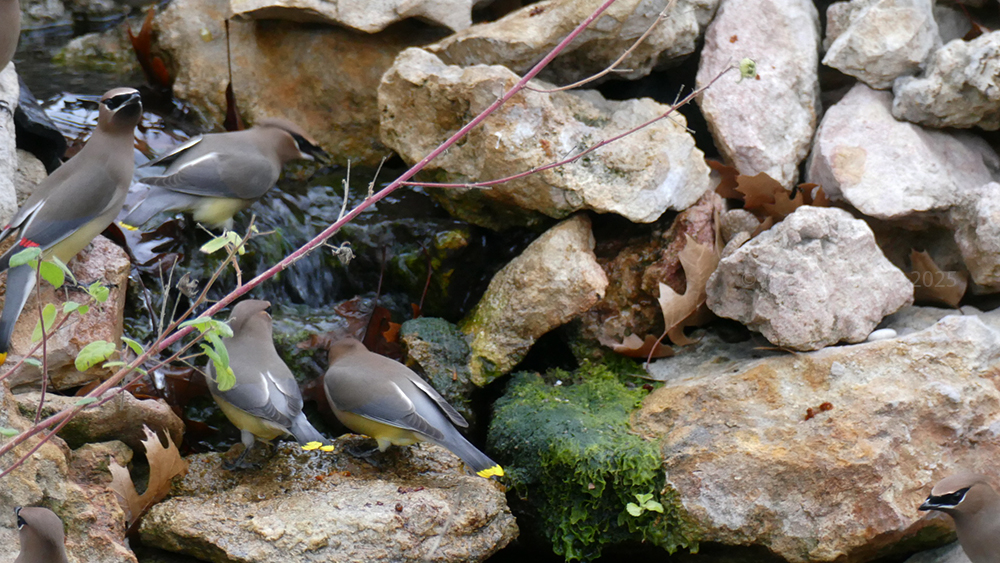
I felt lucky to grab a photo with a small group, none of which fuzzily winged from the frame just as I snapped the shot. Thanks, birds!
While the waxwings certainly enjoy the pond and visit it throughout their winter vacation here in Austin, the most important thing they get from my garden are fruits from various plants. This waxwing is aiming to pluck a ripe, red berry from my Possumhaw Holly, Ilex decidua.

I couldn’t get a perfect photo of a waxwing eating a berry; either the berry was smeary or the bird was smeary. At least in this shot, it’s obvious that the bird is leaning down for a bite of berry.

Within an afternoon or two, these cheeky birds, with assists from a couple of Blue Jays and Mockingbirds, stripped the tree of its fruits for this year. I’m sorry to see the pretty berries no longer decorating the tree, but I’m pleased that my garden provided a favorite food for these lovely birds. There are still red fruits on my non-native Burford Holly, Ilex cornuta, but one day soon, the waxwing mob will descend for a communal nosh and those berries will be history–just like the Possumhaw fruits.

I love seeing these charming birds in my garden, with one exception: berry bird poop on the patio, chairs, plants, rocks…

Garbage in, garbage out, I guess.

Pond Party

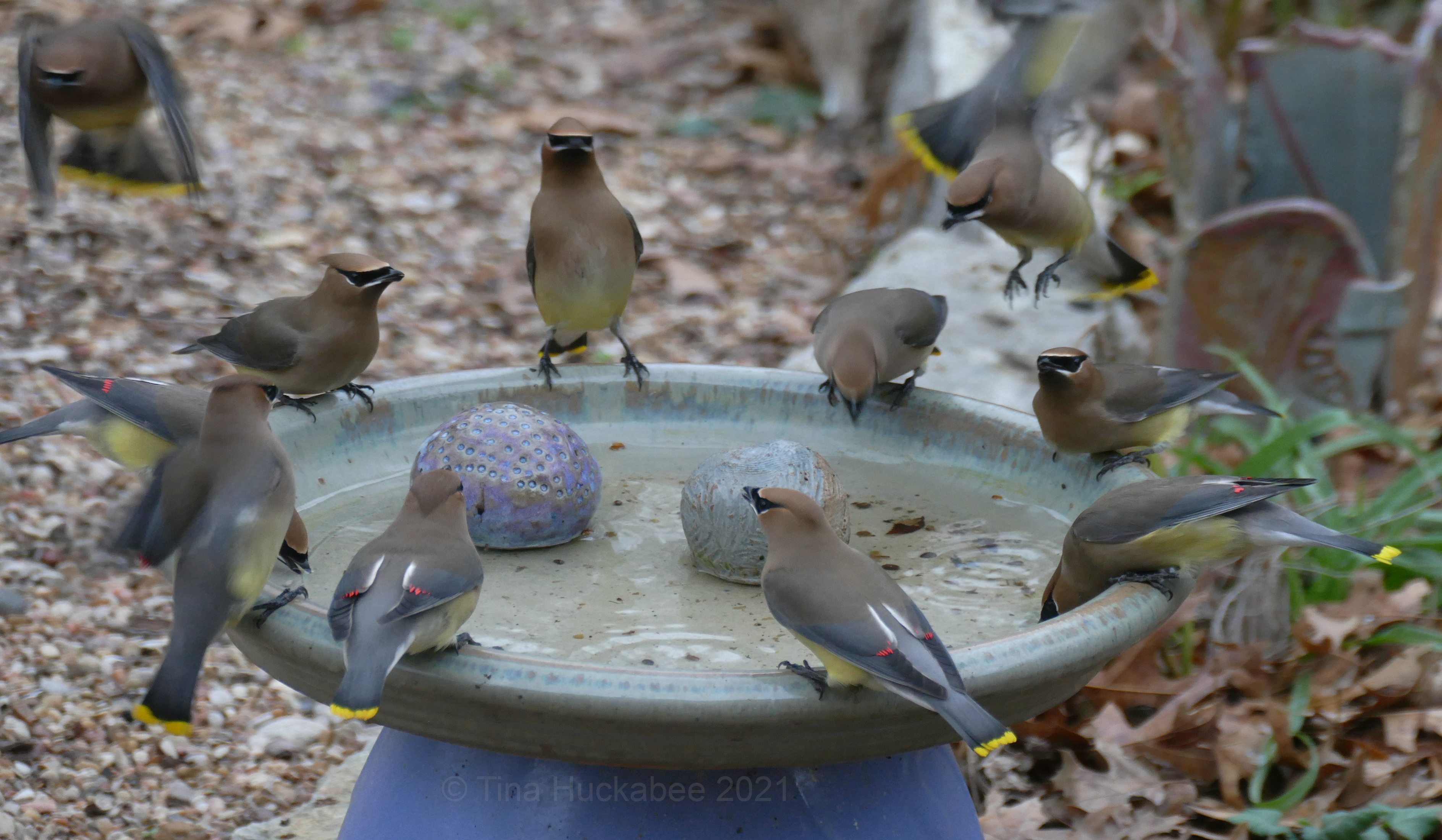
It’s time for a party in the pond! At least the Cedar Waxwings, Bombycilla cedrorum, think so.

On a roughly every-other-year cycle, these winter migratory birds swoop into the garden, always as part of a large group. They gab, preen, and fluff in the trees, and splash and sip at the pond.

The second bird from the right looks like it might be sticking out its tongue. In fact, like many birds, waxwings scoop their beaks into water, then lift their heads to swallow. The photo simply captured the scoop-with-tongue-engaged-before swallowing.

Cedar Waxwings are beautiful birds and a joy to observe. Their plumage is soft beige with blue-grey shading, complemented by a buttery yellow tummy. Wing tips are dabbed in brilliant red in one spot and sunny yellow in another. A jaunty black mask completes their avian dress, highlighting bright eyes with a dramatic dash of white eye liner. The mask suggests a mischievous, rakish look. Sociable and flighty, it’s rare to see one waxwing on its own, though it does happen. They usually fly and perch in large groups, singing together with high-pitched calls. I usually hear them before I see them and I love that sound.

The tail feathers of Cedar Waxwings are tipped in bright yellow, except on some birds whose tail tips are orange. If a young waxwing eats enough berries from a non-native honeysuckle species, its tail tip will be orange, rather than the typical yellow. Orange-tipped waxwings were first seen in the 1960s and are fairly common. In the photo below, you can see the tail feather of a bird (or more accurately, part-bird…) to the left. Its companion has the “normal” yellow. I think both are fetching.

Cedar Waxwings will pop in for group visits and splashes in the baths for the next month or so. Then, they’ll wing their way northward to their breeding grounds in northern U.S. and southern Canada. I hope to see Cedar Waxwings in their breeding area one day, but until then, they’re most welcome to enjoy their winter vacations at my home.

A Drop in the Bucket

Tuesday was a day of Cedar Waxwings.  Wing-loads of waxwings swooped into my garden, water features drawing them in for bathing, trees available for perching.

There were so many birds, it was almost overwhelming. These photos don’t tell the compete story–it was hard to get clear photos with so much activity–but they will give you an idea of the bunches of birds who bathed.

As I’m only adequate with a camera, clear group shots were challenging–at best. These birds rarely sit still and take off en masse when spooked by the slightest movement. I took most photos from indoors through *somewhat* clean windows, rather than becoming the cause of their frights and flights. When Cedar Waxwings visit, sidling outdoors, no matter how stealthily, elicits winged energy upwards and outwards from the garden.

Whoosh! Swoosh!!

So many waxwings…

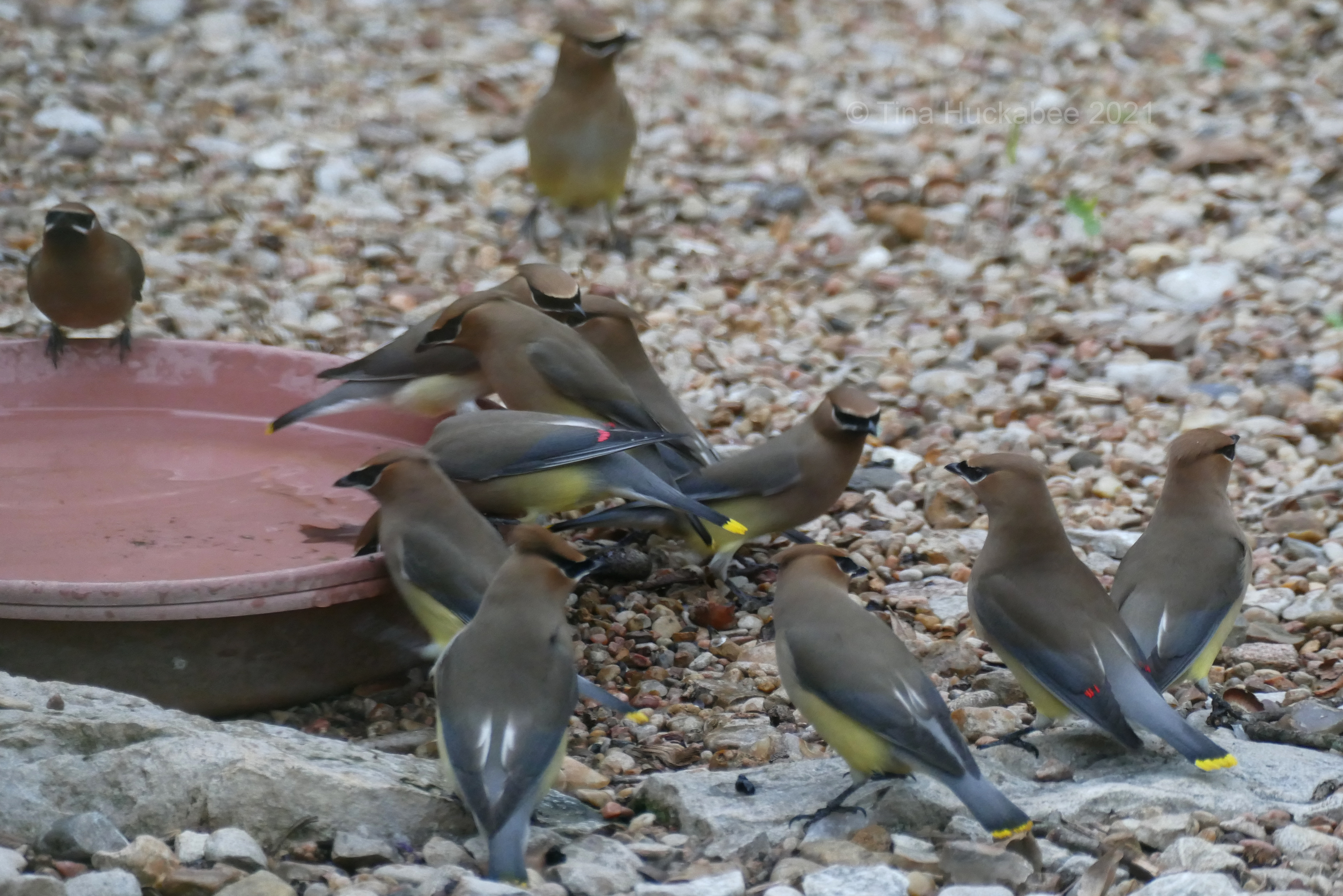
Like many before them, the waxwings enjoyed the planter saucer for bathing and sipping.

The saucer, originally intended for my dog, mostly performs as a bird bath these days, with occasional slurping by racoons and opossums. Tuesday, it was all birds, all day.

In another part of the garden, this crowd awaited the arrival of Dear Leader.

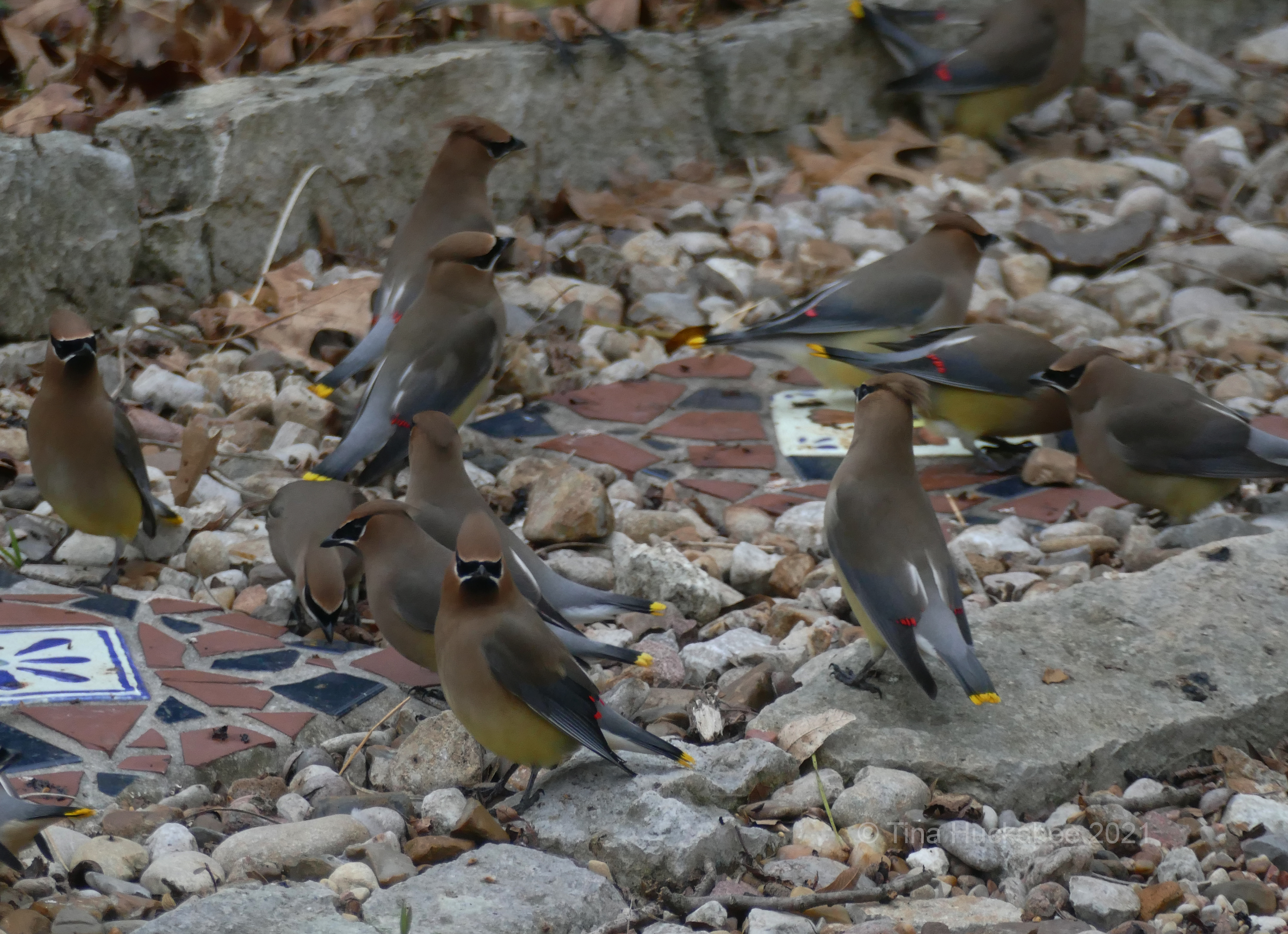
Along a walkway,

…this bunch milled about, waiting for their turns,

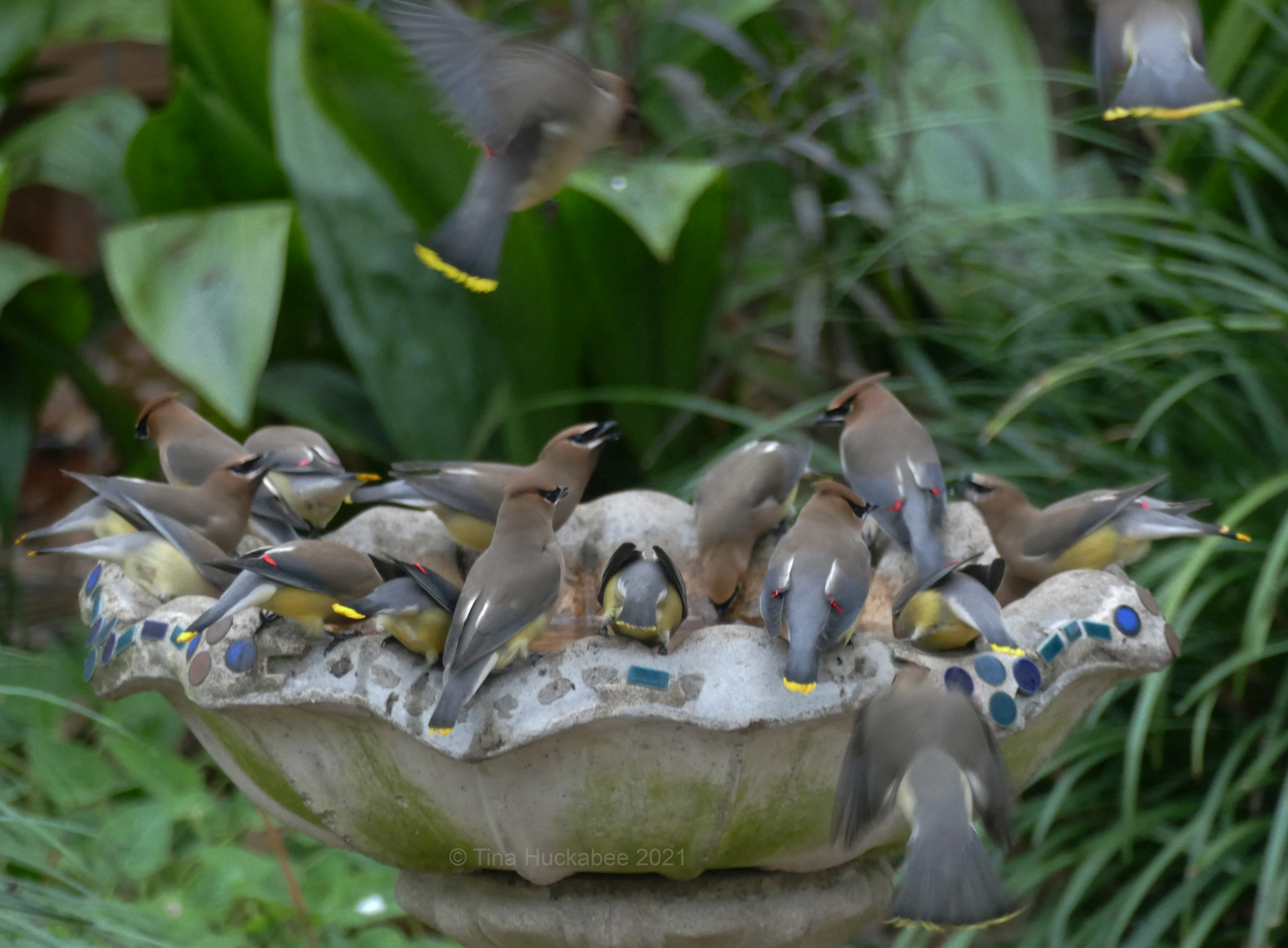
…at this popular wet bar.

Tuesday was a wild day in the garden. Hundreds of these beauties descended on my garden, on and off throughout the morning–hanging out in trees, winging to the waters for swigs and splashes, and mingling with their mates.

Quiet moments happened.

Bird poop happened.

Cedar Waxwings will stay in Central Texas through mid-spring, munching fruit, seeking showers, and socializing with one another. Besides their visits to the popular water features, I expect that their next target in my garden will be the ripe berries on the Burford Holly.

When they come for the berries, I’ll get my hat!