This past Wednesday morning I was privileged to observe two baby Bewick’s Wrens, Thryomanes bewickii, fledge from their protected abode into the big, wide world of my garden and the neighborhood beyond. During the previous weeks it’s been a true pleasure to watch the parents, one after another, bring bits of limbs and grass into the nestbox, and later, provide nummies for their chicks.
This parent is ready to leave the nestbox after a birdie door dash delivery.
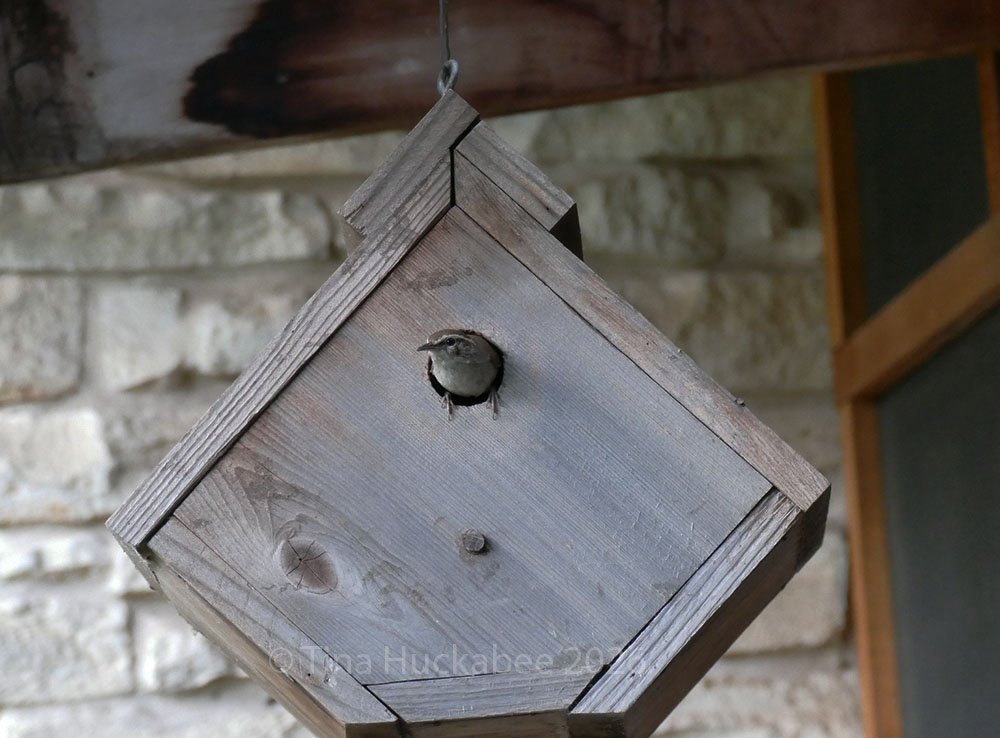
Bewick’s Wrens aren’t the prettiest of birds, as they’re coloring is muted in tan and grey. But they are some of the cutest little things, with their light “eyebrows” and tiny, energetic selves.
An unknown something sits in the parent’s beak, ready for hungry chicks,
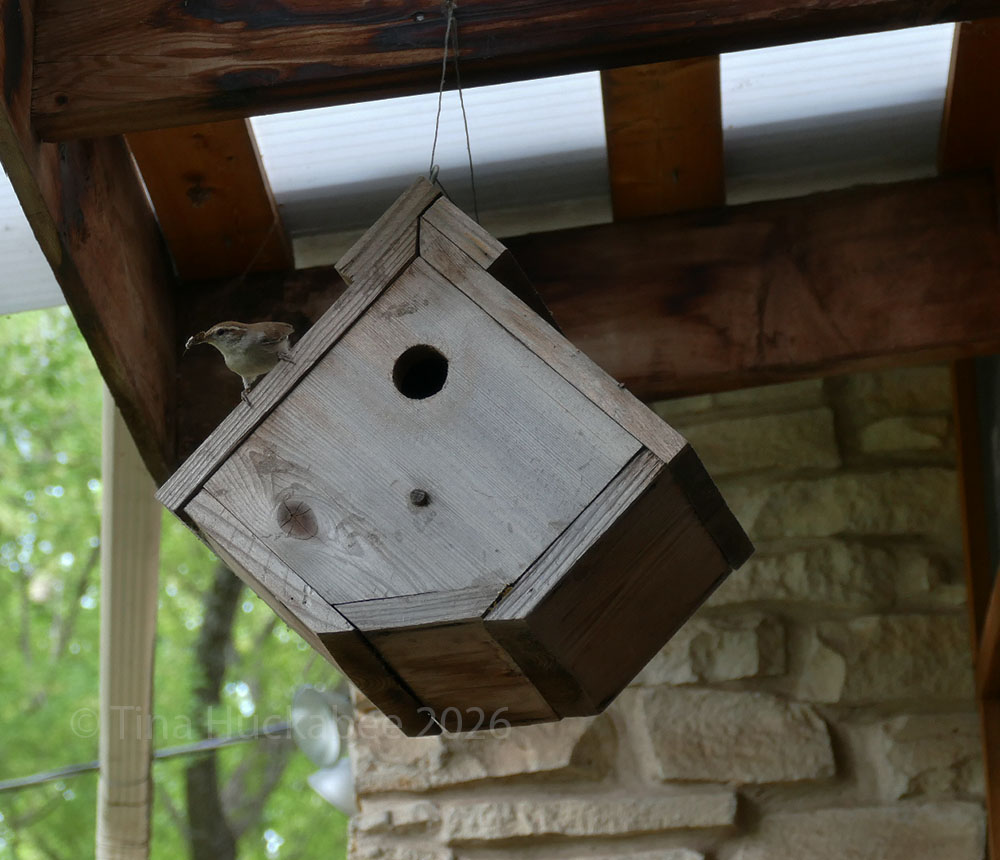
…and at another feeding time, something different for mealtime.
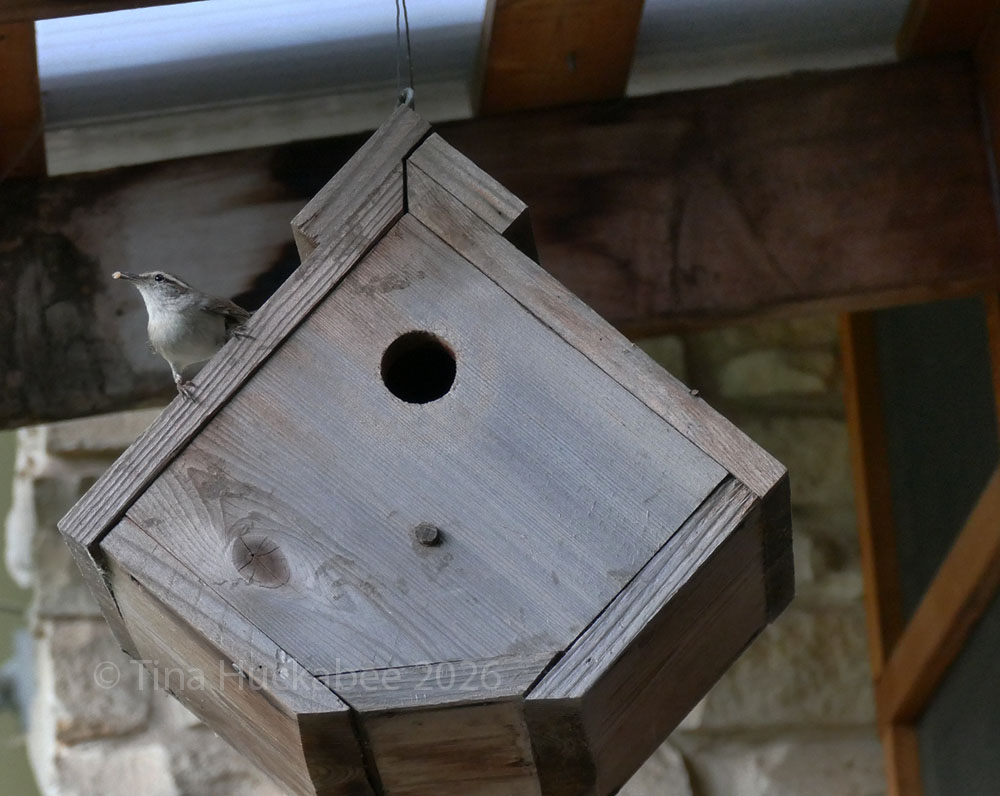
Often, one of the parents would land at the hole of the nest box and peer in. It didn’t necessarily bring food, but apparently wanted to check on the kids, like any good parent.
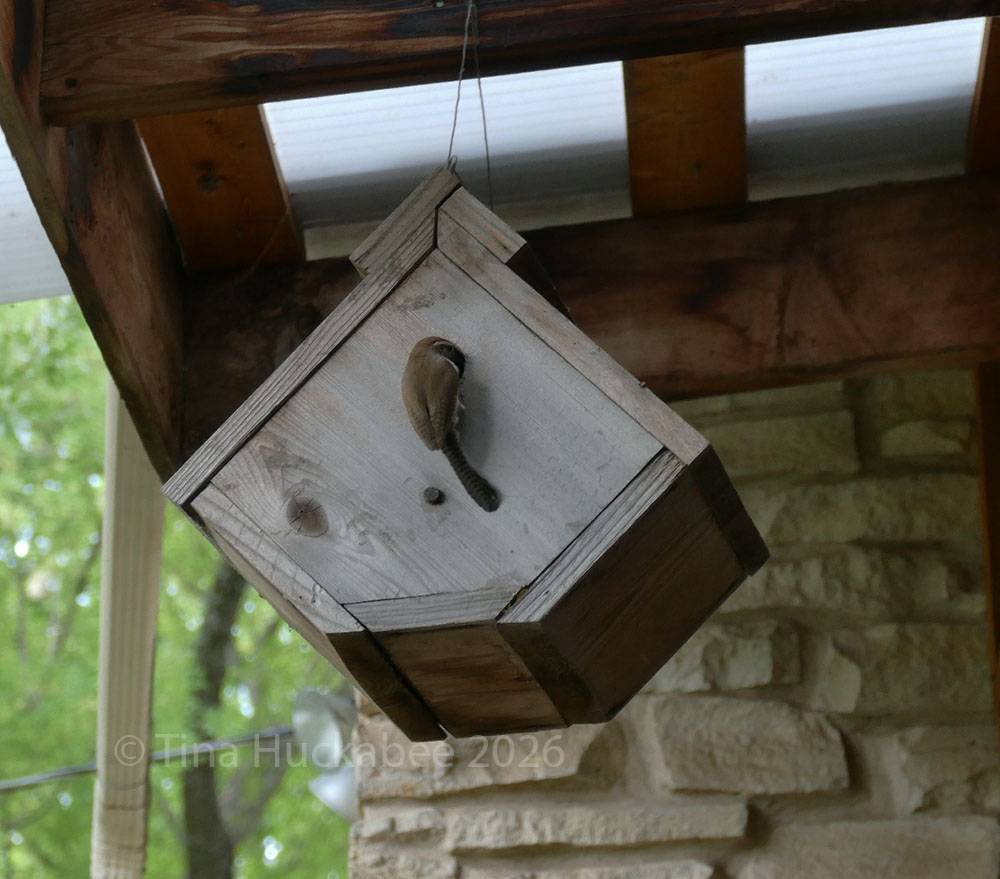
I like the S curve of this parent’s form, just before take-off to find more food for the babies.
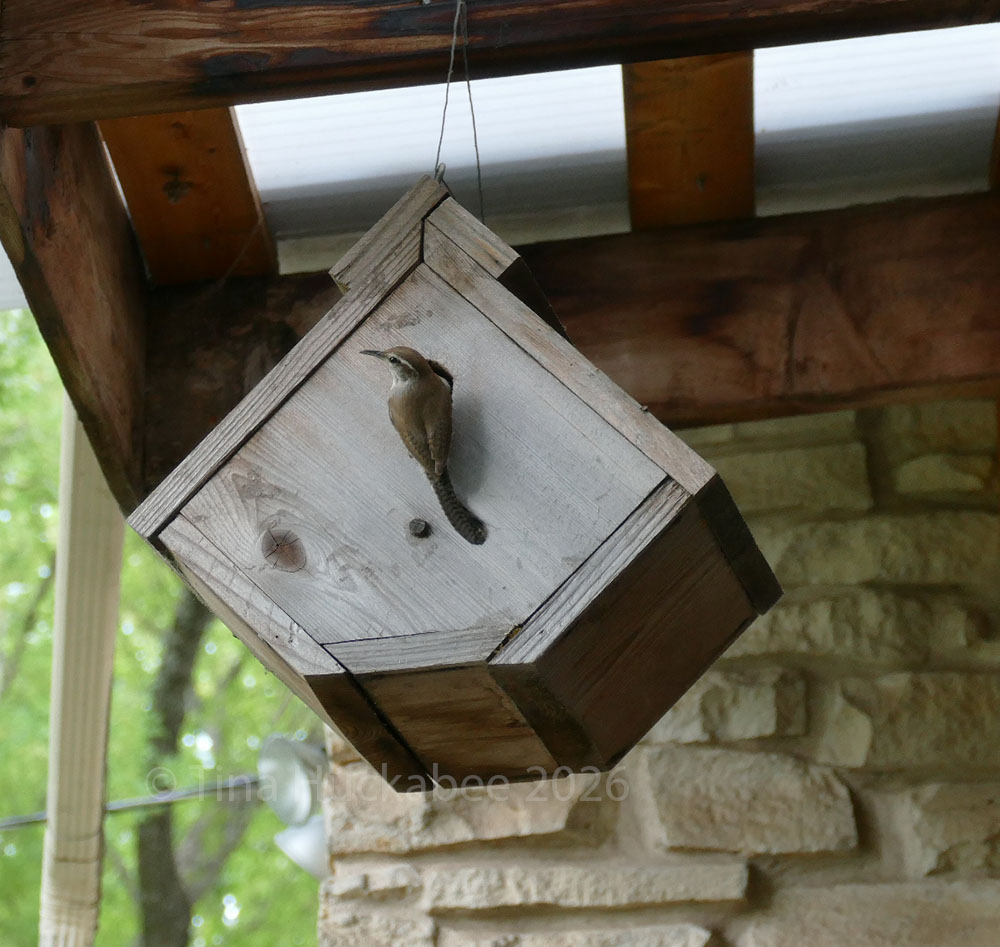
Each morning at sunrise, once it was clear that the chicks had hatched, the parents took turns bringing food offerings to their offspring and that work lasted the whole day. Sometimes the treat was a safflower seed or a small blob of suet from feeders in my garden, most other times, insects were the choice de moment. The parents worked tirelessly to bring food for their little ones in an impressive demonstration of shared parental responsibilities. A couple of times, toward the end of a day, I’d spy an adult wren perched somewhere, sitting and resting, probably worn out from the ongoing care of its young ones.
Until the last day, the chicks were quiet in the nestbox until they heard or felt the parent land on the box. At that point, lots of sweet baby cheep cheep commenced, the chicks voicing their hunger and readiness to eat. On the day that I witness the two young wrens leave the nestbox, there was constant chatter from the box, until there were no more chicks in residence.
I had just walked into the catio, when I realized that one of the parents was atop the nestbox, while a little head–a smaller, exact replica of the parent’s–was at the nestbox window. The little wren belted out with great confidence, flitting upwards and out of my sight. A bit later, I realized that another chick was at the window, but this one was reticent about joining its sibling and parents. I watched for about 15 minutes, the chick poking its head out, looking around, making efforts to perch at base of the hole as if ready for flight, only to lose confidence and disappear back into the box. The chick repeated this pattern several times. Eventually, it gathered enough gumption and plunged out of the box, winging upwards, lightly touching the overhang of the catio roof on its way out, and then on to a Turk’s Cap limb at the back of the garden where I lost sight of the newest garden resident. Of course, I’m kicking myself that I didn’t grab my camera during that time, but I didn’t want to miss a minute of this little one’s entrance into the world. Sometimes it’s more rewarding to simply observe.
I saw two chicks exit the nest box, but there certainly could have been one or two more that left before I came on to the wrens-leaving-home show. For the rest of that day, there was a constant tsch tsch tsch of adult Bewick’s Wrens, no doubt giving the newest garden inhabitants advice about their wider, more complicated home: Look both ways before you fly to the tree! Be careful in that shrub! Don’t eat that, it’s bad for you! Eat this, it’s good for you! Watch out for the Blue Jays, they’re obnoxious bullies! That weird human is going to want to take pics of you, steer clear of her!
I’ve definitely seen the adults, but I’m not sure I’ve actually seen any chicks. I wish them well; the world certainly benefits with more wrens in it, I think. They are darling little birds with big personalities and glorious songs.


 My Gardener Says...