It’s always a pleasure to spot an unusual bird in the garden. Recently, I spied this tiny cutie, as it flitted and flashed between shrubs and trees, remaining immobile for only brief periods.
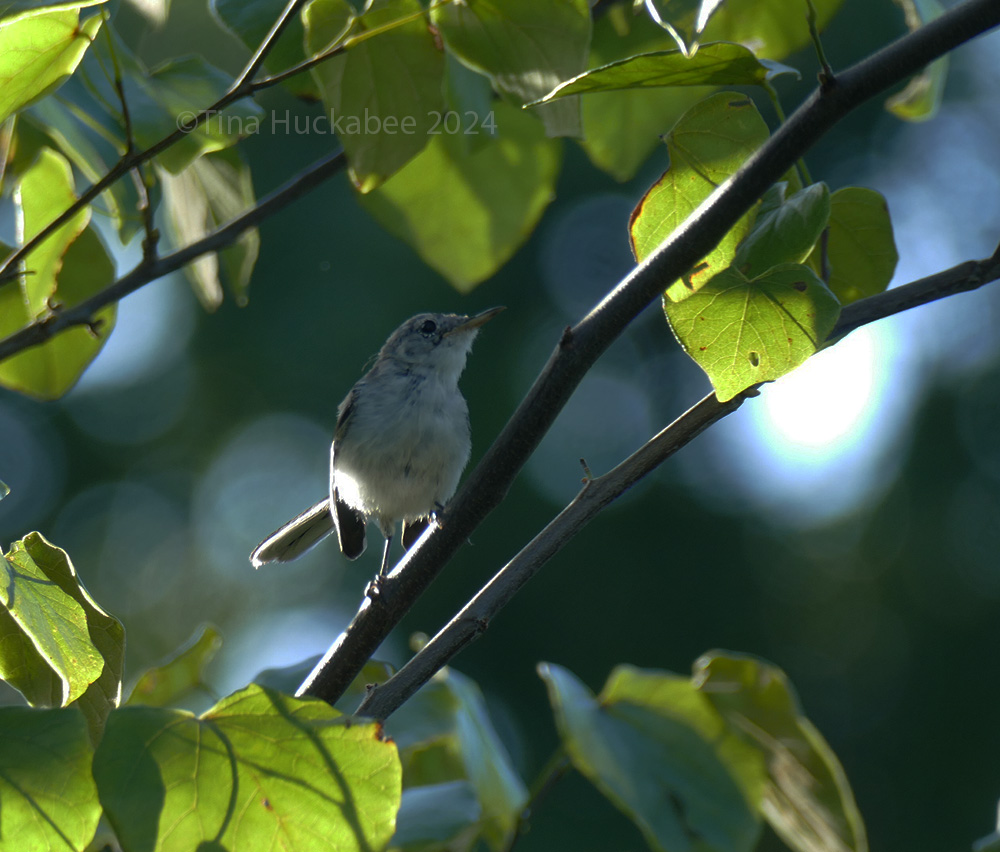
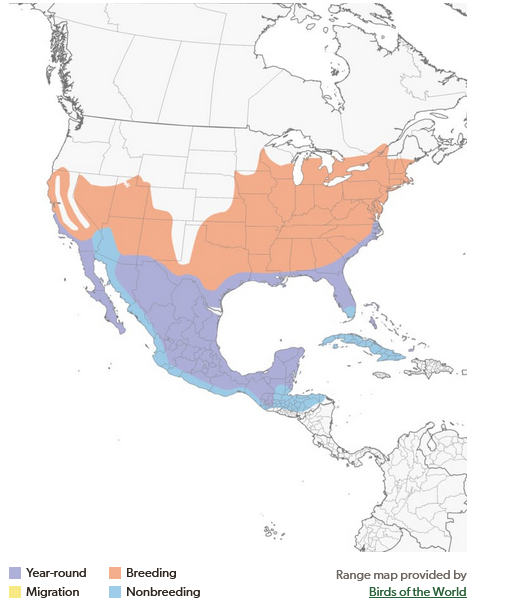
Though a rare sighting in my garden, this Blue-grey Gnatcatcher, Polioptila caerulea, isn’t out of its normal range. My garden sits in the orange area (breeding range), near the border with the purple (year-round range) area in Cornell’s map of gnatcatcher range.
I’ve seen gnatcatchers in the garden on two other occasions, years apart. Maybe they’re in my garden more than I realize or observe, as they’re tricky to identify, being diminutive speed demons, hiding in the bramble of bushes.
This one was on a rapid-fire feeding frenzy, zipping from shrub to shrub to tree, looking for insects and spiders, the gnatcatchers’ main sources of food. It perched a few times in my Red Bud tree, just long enough for me to say ‘hi’ and catch some shots of the catcher.
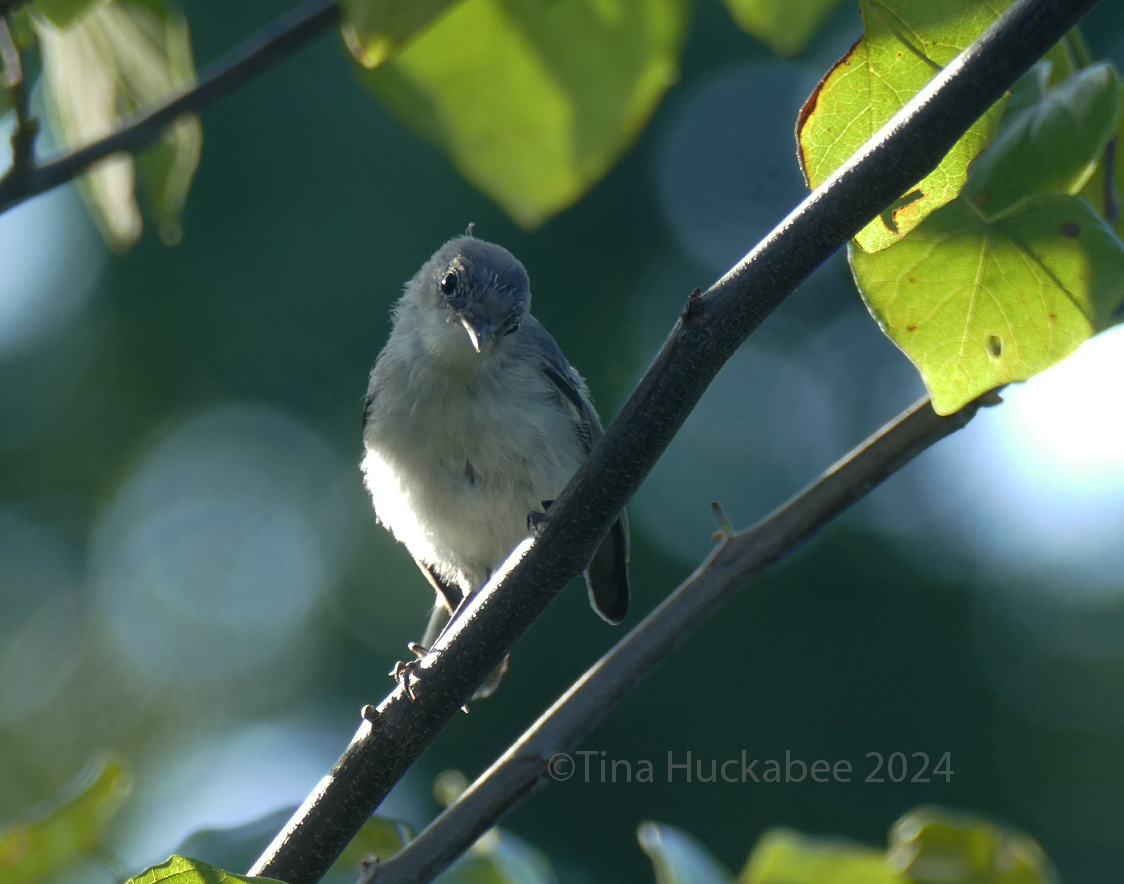
My last sighting was this aerodynamic pose in the second before the teeny gnatcatcher belted away, no doubt in pursuit of a yummy munchie.

The gnatcatcher is a little bird, but big birds are also around, and they’re usually predators hunting for prey. If you’re squeamish about seeing a predator with its prey, you’ll want to move on to your next gardening blog or bit of political news.
This handsome juvenile Cooper’s Hawk, Accipiter cooperii, was upsetting the Blue Jays and a bunch of other birds as it sat in my SIL’s garden early one morning. I snapped a couple of photos just before it flew off, but didn’t see it clutching its breakfast, an unlucky White-wing Dove, until I downloaded my photos.
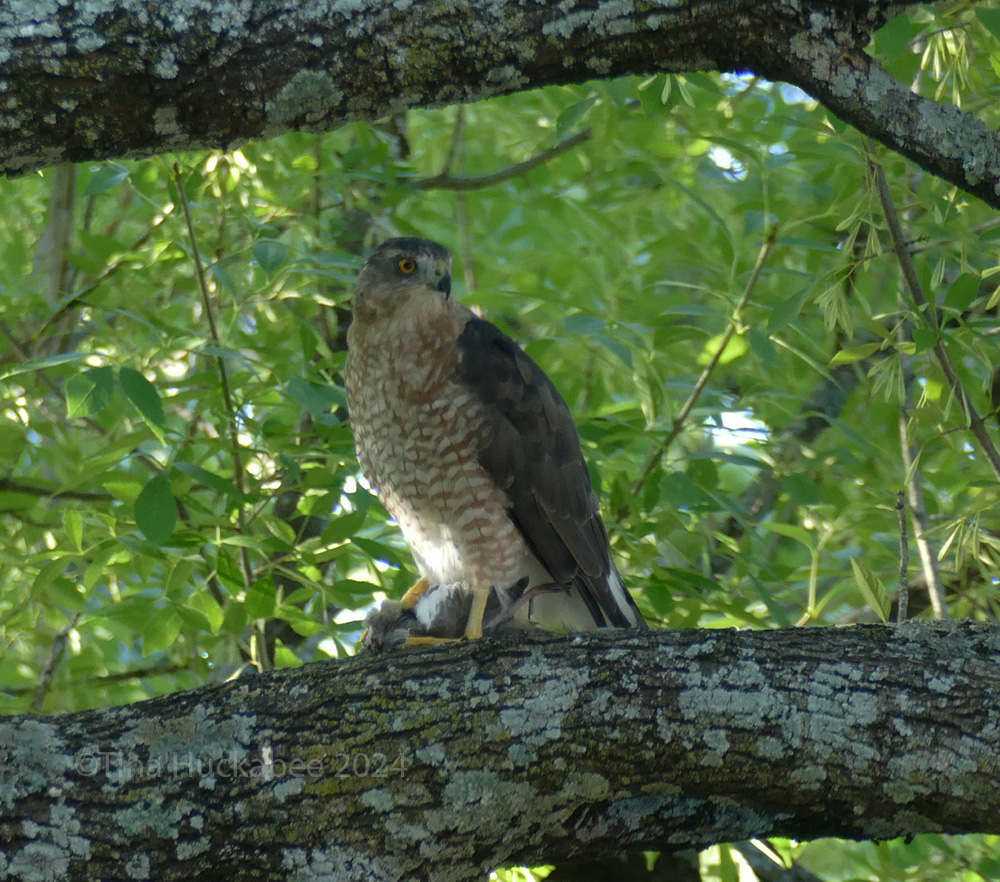
Bird breeding season is just about completed; chicks have passed the fledgling stage and have matured to juveniles. Like this young hawk, they’re learning to fend for themselves. Next up in the backyard birding world is fall migration; it’s already started, but will peak in September/October. In my garden, I don’t see as many migratory birds in the fall as I do in spring, but maybe this year will be different. Either way, safe travels to the migrants and continued growth and learning for the neighborhood birds.


 My Gardener Says...