Unknown's avatar

About Tina

I’ve gardened in Austin, Texas (zone 8b) since 1985. I garden with low maintenance, native and well-adapted non-native plants to conserve water and reduce workload. I also choose plants which attract wildlife to my gardens. I’ve completed the Travis County Master Gardener and Grow Green program (through the city of Austin). I’ve volunteered for a number of public and private gardens, as well as consulted and designed for private individuals. Formerly, I managed Shay’s Green Garden at Zilker Botanical Gardens and Howson Library Garden for the City of Austin. My garden is a certified Monarch Waystation and a Wildlife Habitat.I blog about my garden adventures at: https://mygardenersays.com/ I love blooming things and the critters they attract. Tina Huckabee

After Dinner Drink?

On a recent evening my back garden was honored with a visit from this immature Cooper’s Hawk, Astur cooperii, who spent time at one of my bird baths. The bird sat and surveyed its surroundings,

…took thirsty dives into the water,

…and with beak pointed to the sky, gulped, gulped, gulped, enjoying a cool water drink at the end of a day.

At first, I assumed he’d landed looking for dinner, but the squirrels were somewhat active (not directly under the hawk’s beak, but nearby) and birds were around, though giving this formidable predator its space. Cooper’s Hawks typically hunt birds, but I’ve witnessed one catch a squirrel. A successful predator will hunt whatever is available and catch-able.

I wouldn’t want to be on the catching end if these things–would you?

Given the hawk’s lack of interest in a meal and its focus on the water bowl, I wondered if this one had dined earlier, in some other venue, and was in my garden for its after dinner drink.

The hawk sat, sipped, looked around and eventually hopped to the opposite side of the water bowl. This young Cooper’s has a regal form: bright, intelligent eyes, glorious plumage, and a dignified figure.
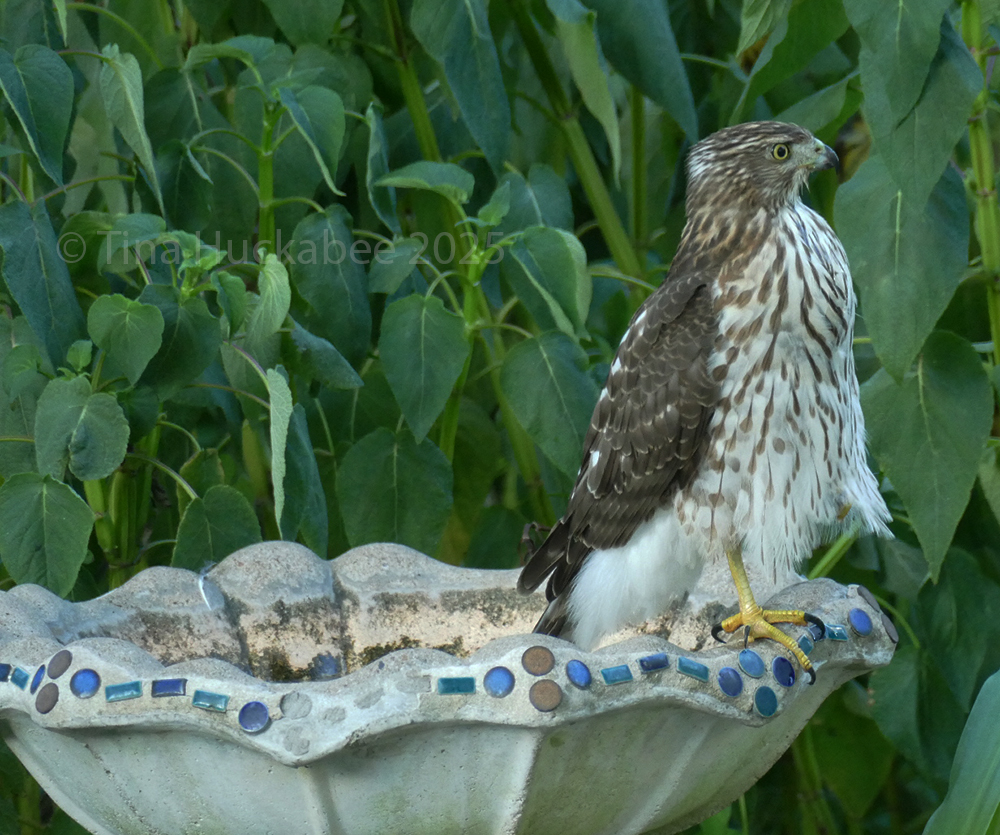
My favorite photo of this half hour of hawk watching is this one.
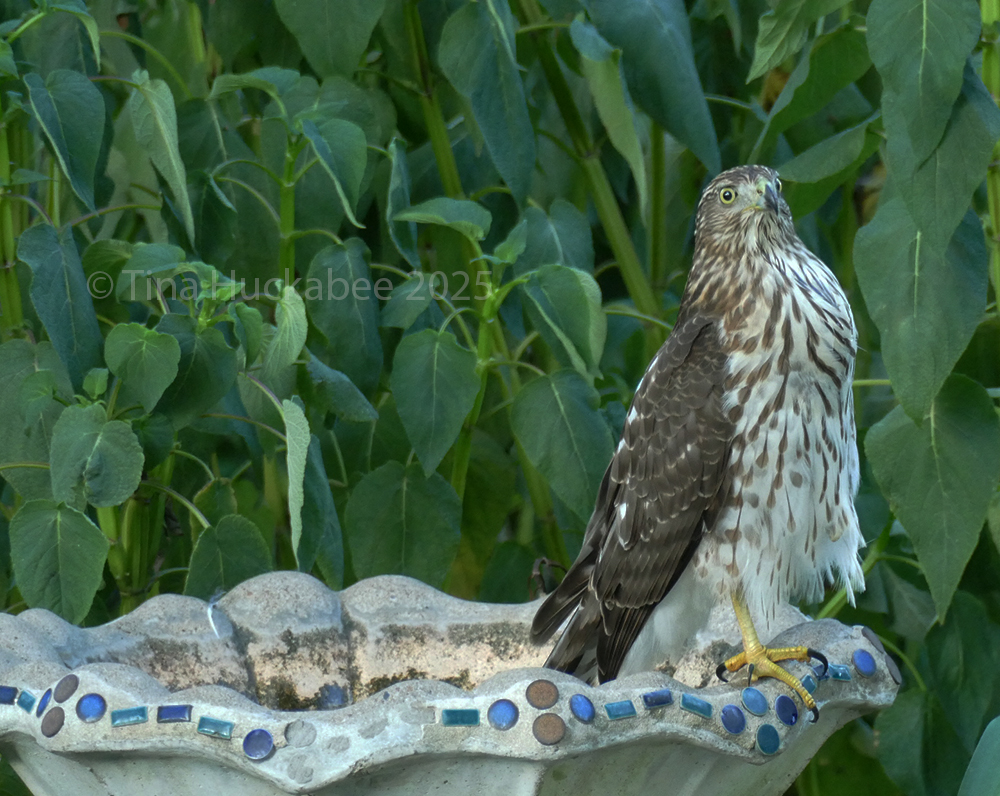
The hawk has a I meant to do that! look on its face. Maybe it took a page out of the White-winged Dove book and pooped in the water? Or perhaps it belched a bit and was embarrassed? Do hawks belch? Do hawks get embarrassed?

Shortly afterwards, my hawk buddy winged to the overhead utility wires behind my property and then onward to its perch for the night.

I love to spy on the flitty birds in my garden, both migratory and resident. They’re quick, agile, easily hidden in the foliage and a triumph when I get a good look and photograph. That said, it’s rewarding and so much easier to watch and appreciate a bigger bird. It’s truly a gift when one lands and spends time resting in the garden.

Orange You Glad It’s There?

I didn’t put the orange slices out for the squirrel. I’d seen a gorgeous, migrating male Baltimore Oriole a little while before and placed a hurried set of sweet, juicy orange slices on the fruit feeder in hope of luring him and other oriole buddies to my garden.

Instead, I got this guy, slurping the sugary stuff.

Naturally, I didn’t see the oriole again, but this stretchy, agile acrobat nibbling at the treat was a sight. I can’t blame him for wanting a syrupy snack (I’m known for having a sweet tooth), and if the oriole moved on, the squirrel might as well enjoy his afternoon treat.

Une Petite Fleur

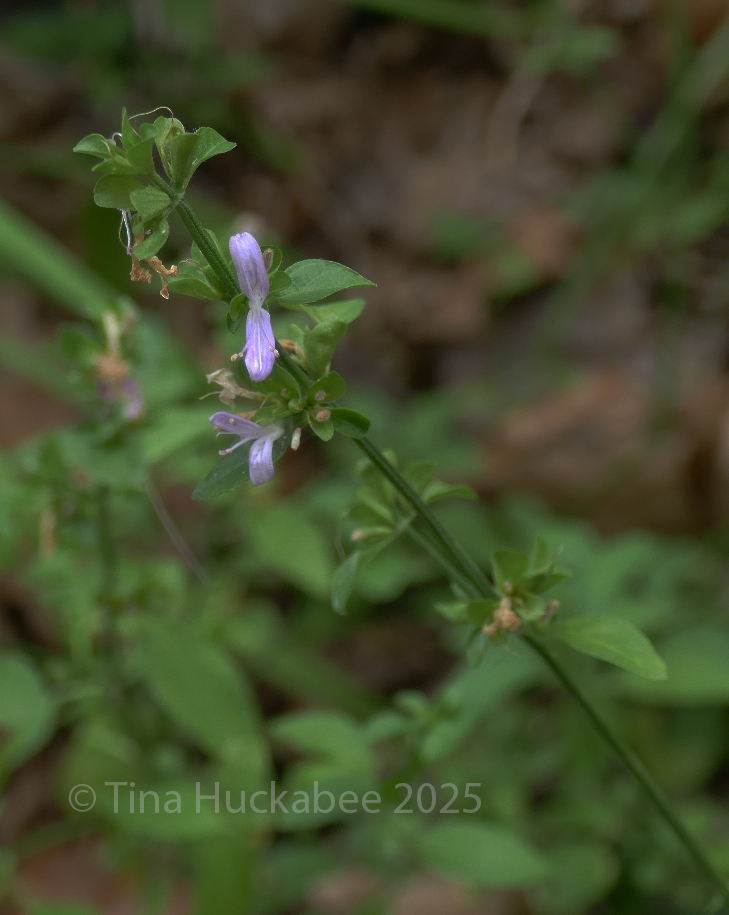
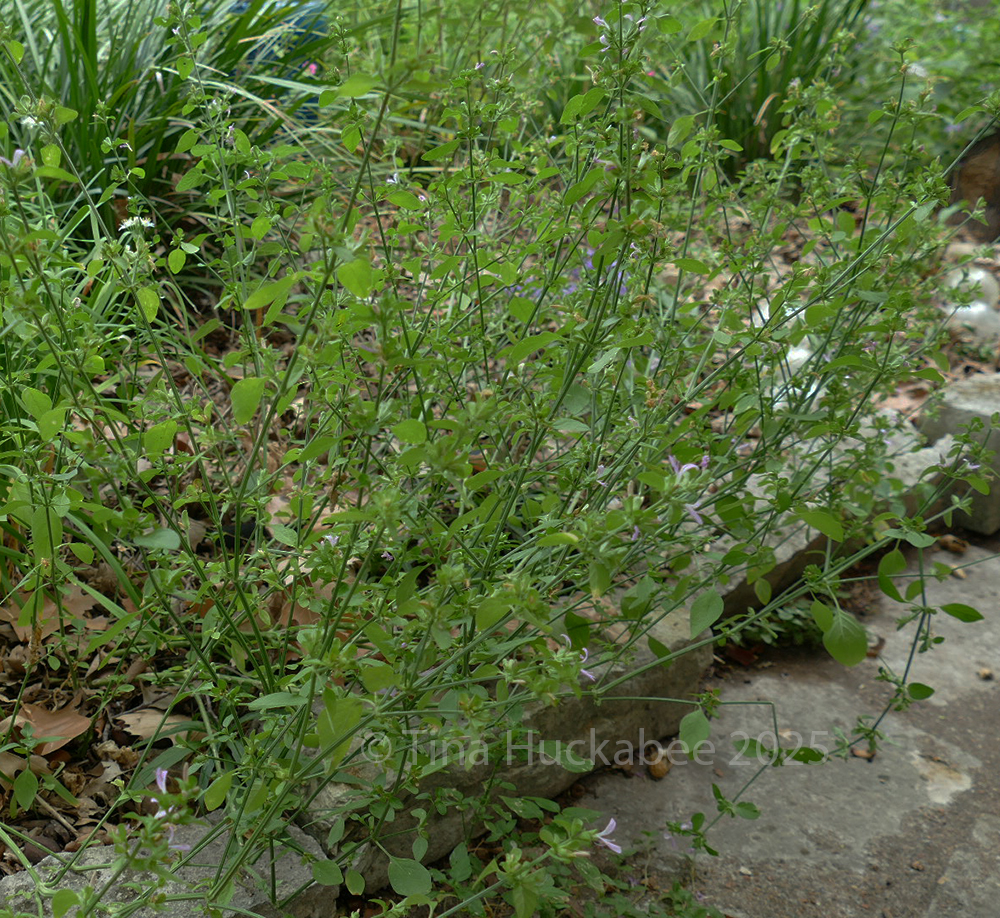
A small perennial graced with tiny flowers appeared some years ago in my garden. The plant is airy in form, only about 18 inches tall and 12 to 18 inches wide.

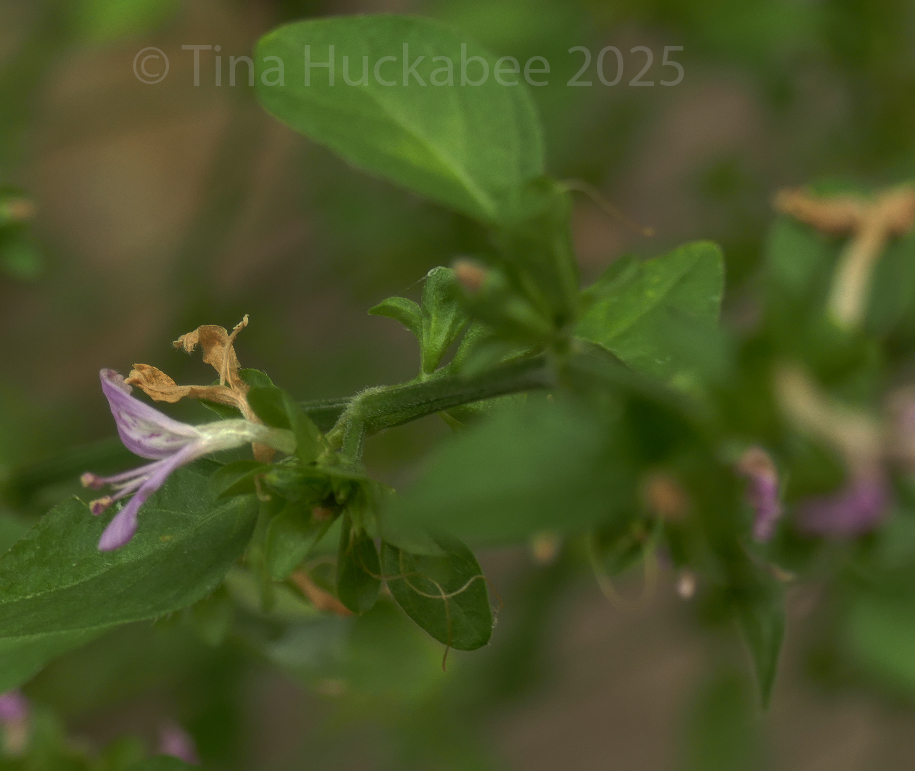
It took me a while to discover the identity of this petite pretty, but as I researched, the form of the bloom familiar to me, that recognition niggled deep in the recesses of my brain: I knew I’d seen a plant with a similar flower. I finally realized that the lavender lovely was structured like the flowers of a Mexican plant I grew at the time, the Mexican Hummingbird Bush, Dicliptera suberecta. The form of that flower pointed me to its genus and after some sleuthing, I identified the sweet native plant, Branched Foldwing, Dicliptera brachiata.

Branched Foldwing flowers in late summer during the hottest time of year, continuing into October as things cool off. I’ve only seen honeybees nectaring at the blooms, but I wouldn’t be surprised to see skippers or small native bees visit. The Texan crescent butterfly relies on this plant as its host and it’s a butterfly that I routinely see in my garden, especially in spring and early summer.

Clearly, little spiders set up their nets in the structure of the foldwing too, no doubt to ensnare critters smaller than themselves.

There are several individual plants currently in bloom in my back garden. Each are in a shade/part shade area; the foldwing doesn’t want to fry in the Texas sun.

Branched Foldwing has been a welcomed, though not planned, gift in my garden. Perhaps the original plant was given by a nice bird or small mammal after having munched a wee seed, then winged or ambled their way through the garden–the rest a history of the critter’s digestive system. Branched Foldwing is not a plant that nurseries carry as it’s small and unobtrusive, with only tiny, not-too-showy flowers. I appreciate its contribution to my shady space–a simple, but lovely little addition.