Not this sort of cow pen! (Though they look quite content.)
Nor this kind of cow pen–which is apparently a maternity pen. I didn’t know there was such a thing and judging from the look on this cow’s face, neither did she!
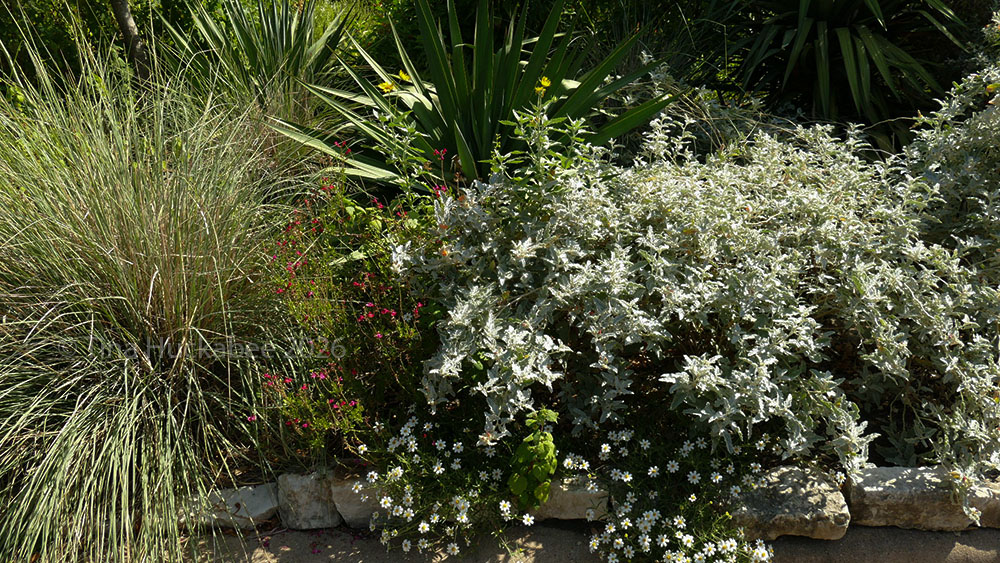
This is the kind of Cowpen I’m talking about–the flowery kind! Check out a couple of yellow daisy flowers bobbing above the grey-foliaged shrub and just in front of the yucca.
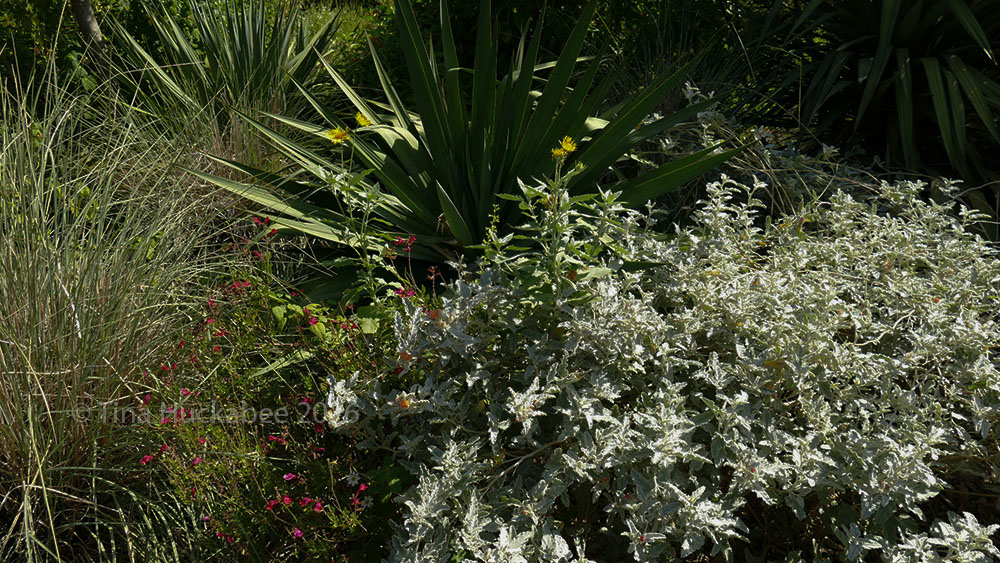
These are two Cowpen Daisy, Verbesina encelioides, plants that I popped into the ground in late May or early June. On a drippy day I walked Duke the Dog, poop bag in one hand, leash in the other and came across two seedlings tossed on the wet sidewalk in front of a neighbor’s house–where she grows scads of Cowpen Daisies. This was during the late spring/early summer rainy period, oh-so long ago. Sigh. I imagine the gardener tossed them as she weeded, maybe earlier that morning, as the seedlings looked fresh. I picked up the two abandoned plants and finished my walk with the dog-on-the-leash, the poop-bag-in-hand, and carefully cradled Cowpens.
I planted the seedlings in the front of my front garden, watered a couple of times, and promptly forgot about the garden newbies. Later in summer, I thought I’d lost them. But here they are, all grown up and ready to bloom!
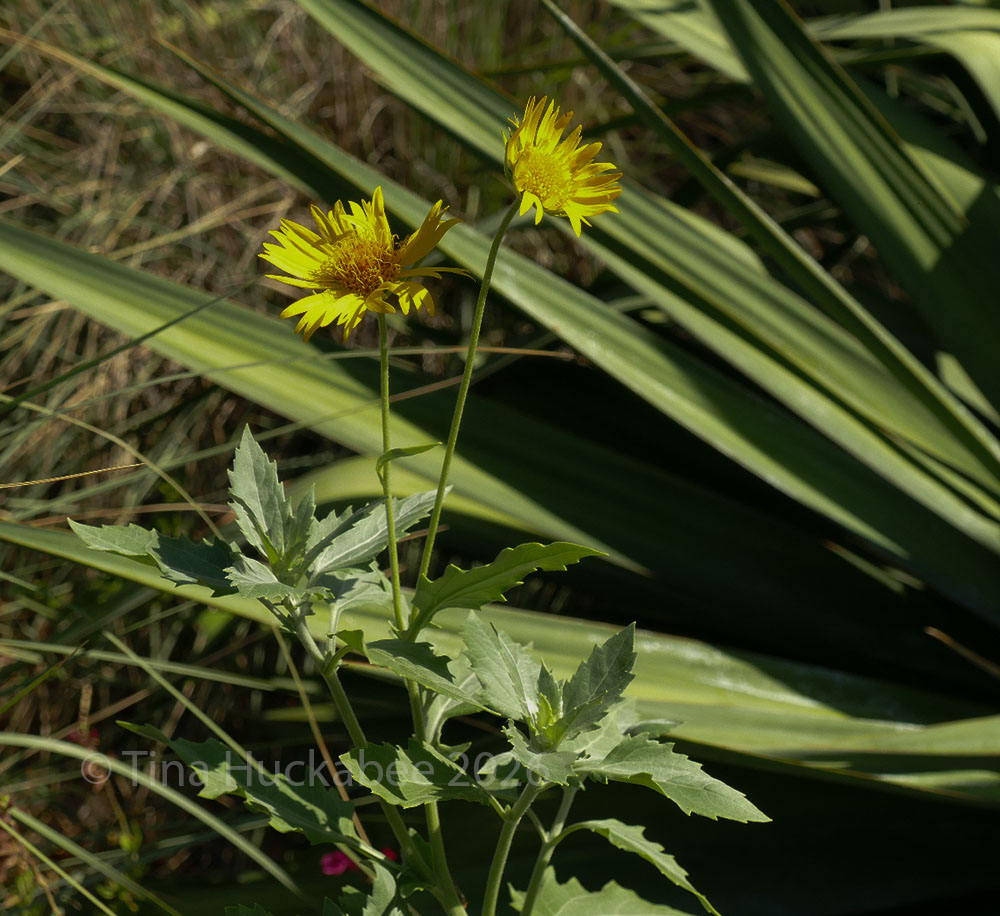
Cowpen Daisies are native to a wide range of the Continental US and are an annual plant. Being annuals, they grow from seed, flower during the growing season and set seed, then die in the winter. The fallen seeds germinate in the ground during the next spring, grow, flower, and die, thus continuing the cycle. The neighborhood school is just across the street from the Cowpen house and I can attest that these wildflowers seed out prolifically–like so many other native wildflowers. The school garden now grows quite a few Cowpen Daisies without assistance from students or adult volunteers.
I have two individual plants now, but that number will at least double by next year. Many of my natives re-seed joyfully, so this doesn’t scare me, but will entail weeding out unwanted seedlings. Who knows–perhaps next year, during a rainy period, I’ll be tossing out extra seedlings and someone will pick them up for their garden!
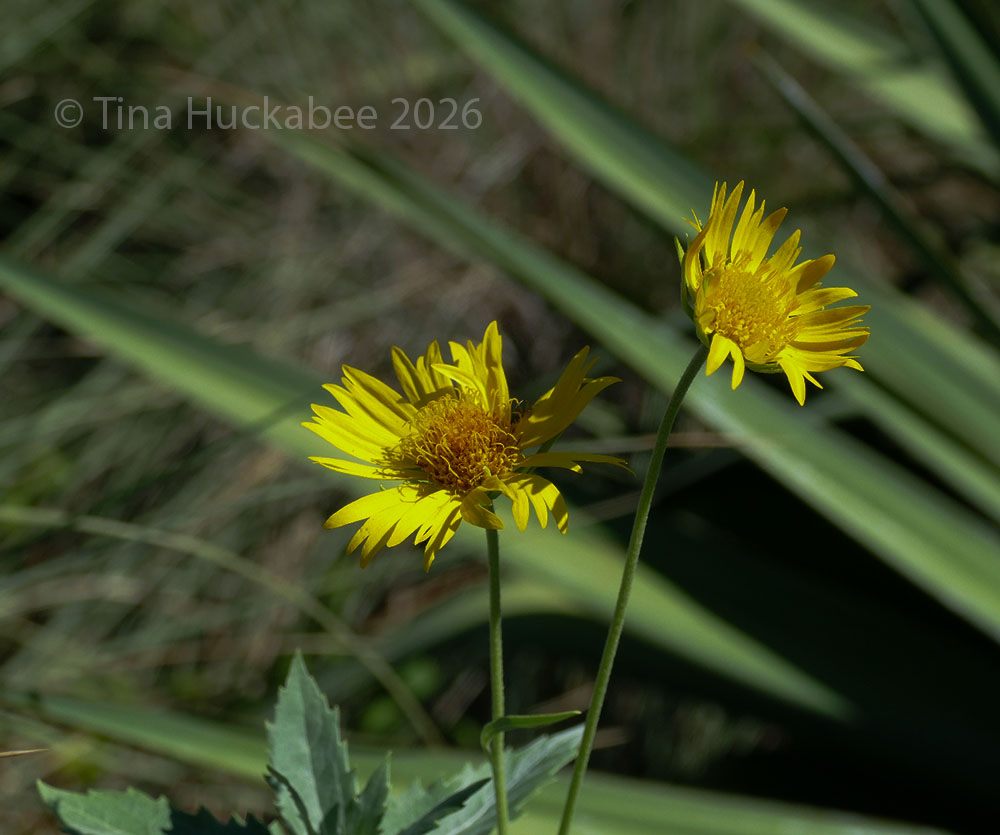
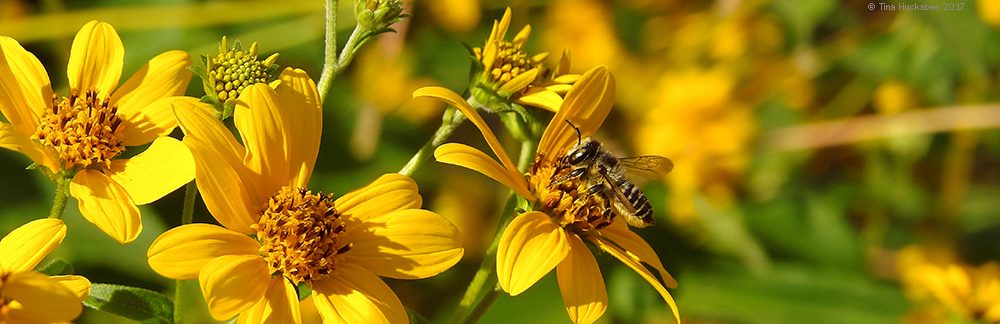
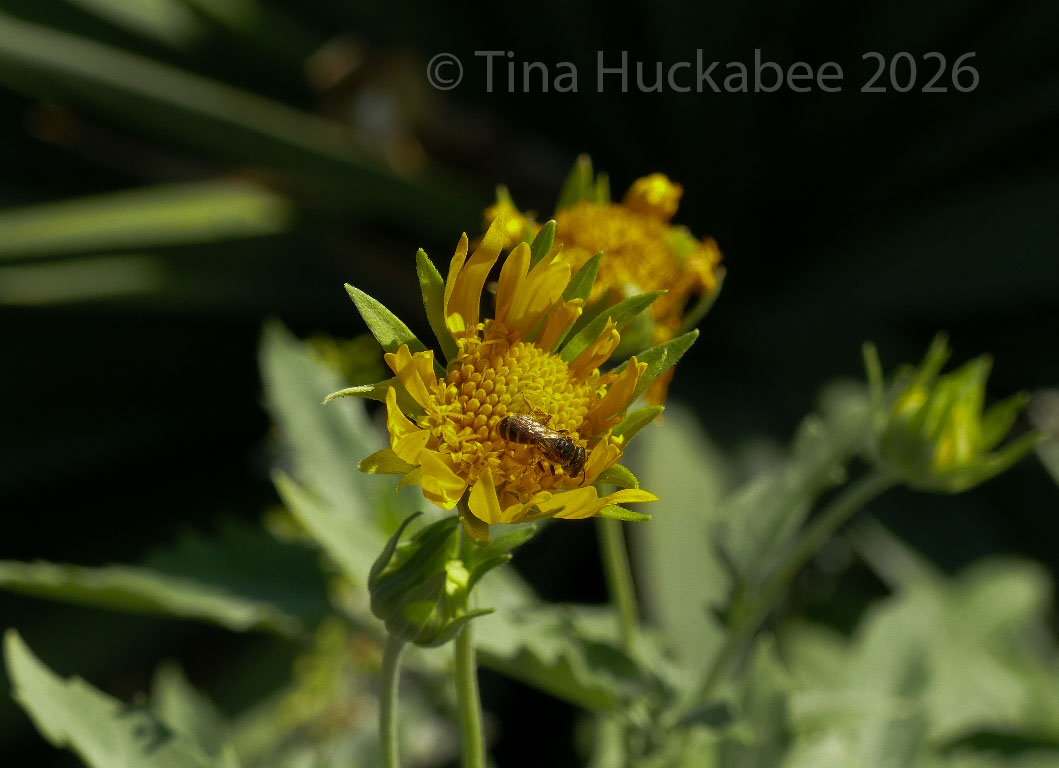
Cowpen foliage is attractive with a nice grey-green tint and interesting serration around the edges of the leaves. Cowpens like the soil dry and the sun at its fullest. The Lady Bird Johnson Wildflower Center indicates that Cowpens are especially important for butterflies, but what I’ve observed are a variety of native bees working these blooms.
My best guess is that this little bee is an Oil-collecting bee, or Melittidae.
These two Cowpens fit nicely in their new garden community. For now, they’re a bit overwhelmed, but once they get going with more of their kind, the pops of pretty foliage and sunny daisies will complement the native grasses and shrubs.


A sharp-eyed find.
LikeLike
A lucky one!
LikeLike
It’s a beauty and I love the story about how you came to adopt your seedlings! 🙂
LikeLike
One never knows what can be found on the ground!
LikeLiked by 1 person
Glad you were able to rescue them. Hope they are prolific!
LikeLike
I think prolific will probably be an understatement. I let you know next year!
LikeLike
Another name for this plant is (or at least used to be) skunk-daisy. As Ellen D. Schulz wrote in her Texas Wild Flowers in 1928: “The flower is most easily distinguished from other yellow daisies by the disagreeable odor of the flowers and foliage.” I wonder if that’s what the “cowpen” in the common name is intended to convey.
LikeLike
The LBJWC link says these three names are the common ones: Cowpen Daisy, Golden Crownbeard, Butter Daisy. I’ll take a whiff when I’m next out and check if they’re stinky!
LikeLike
“At least double” may be an understatement. Your post led me to call a hill country friend to ask if hers were doing well this year. Suffice it to say she has a surfeit of cowpen daisies! Every year she battles them, trying to keep them out of her other flower beds. I have a photo somewhere of the pen where her neighbor keeps a donkey; there’s no cow in with it, but there are plenty of cowpen daisies!
LikeLike
Haha–I think you’re probably correct about that–those cowpens do get around! I will show no mercy. 🙂
LikeLiked by 1 person
Good for you for picking up your neighbor’s discarded flowers, Tina. It always makes me happy when a plant shows us that it likes the spot we picked for it by thriving and spreading.
May your cowpens return and multiply next year!
LikeLike
I think their multiplying is probably ‘in the bag’ as they say. I’ll pull up what I don’t want and enjoy what I keep!
LikeLiked by 1 person
Those are soo beautiful- what a happy flower!
LikeLike
Daisy flowers are always happy, I think. Didn’t Meg Ryan say that in “You’ve Got Mail” ? 🙂
LikeLike
It’s great to hear you’ve introduced cowpen daisies to your yard! I did the same in 2017/2018 after hurricane Harvey brought wonderful August rains (what a concept) to the Austin area. That fall, they were blooming all over Hornsby Bend and were covered with butterflies, so I collected seeds. I’ve since learned they’re a host plant for the beautiful bordered patch butterfly. Sure, they spread prolifically, but are easy to pull out (when small), and I’ve never noticed an unpleasant smell. I welcome them, and the butterflies, each year!
LikeLike
I’m thrilled that you’re so happy with the cowpens, Maggie! I know they seed out, but as you said, they’re not hard to pull up and that’s the bulk of my gardening–pulling up seedlings from the prolific native plants I grow. I’m also happy to hear that they’re such good pollinator plants. I haven’t been keeping an eye on my two plants as much as I should, but there is usually something fluttering around them when I do pay attention.
LikeLike