It’s been good, this summer of 2024, with less extreme heat and drought than summers of the past decade. With only brief flirtations of over 100 F (searing, but of relatively short duration), plus bouts of welcomed rain in between, the garden and its inhabitants have flourished. August is always hot, dog-days and such, but pollinators are in their prime, busily working the hot August blooms.
My last post profiled the emergence of newly adult Black Swallowtail butterflies from my garden’s supply of the host plant, fennel. I also grow White-veined Dutchman’s Pipe, Aristolochia fimbriata, which is an excellent host plant for the Pipevine Swallowtail, Battus philenor.
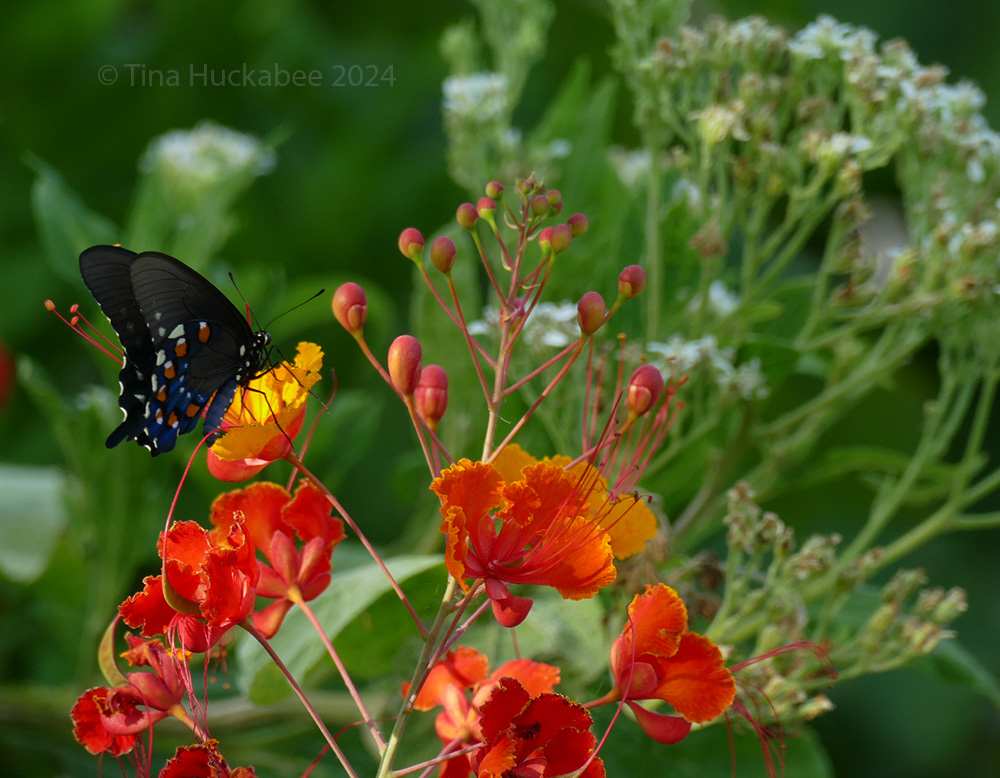
This beauty drifted from flower to flower, settling on a fiery Pride of Barbados for this nectaring session. The snowy Frostweed in the background also saw visits from the Pipevine.
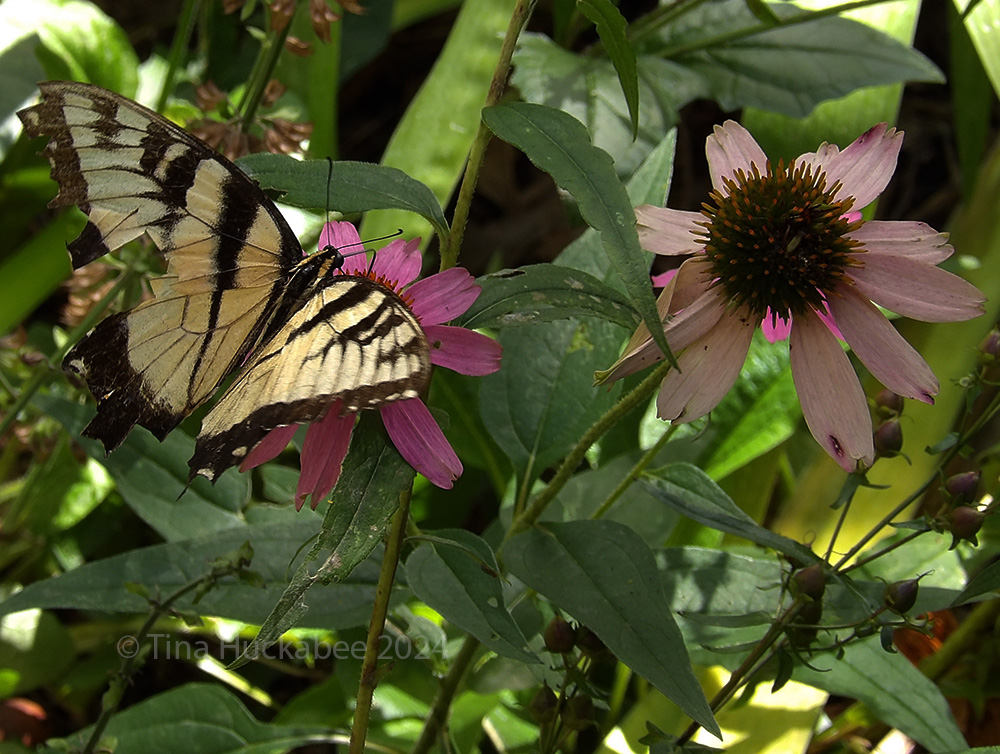
Spring bloomers are nearly done and those that are hanging on into late summer are tired, much like this cluster of Purple Coneflower, Echinacea purpurea. Their weariness didn’t lessen the attraction for a Tiger Swallowtail, Papilio glaucus, though. It sipped, then flit–as butterflies will–before moving on to its next snack.
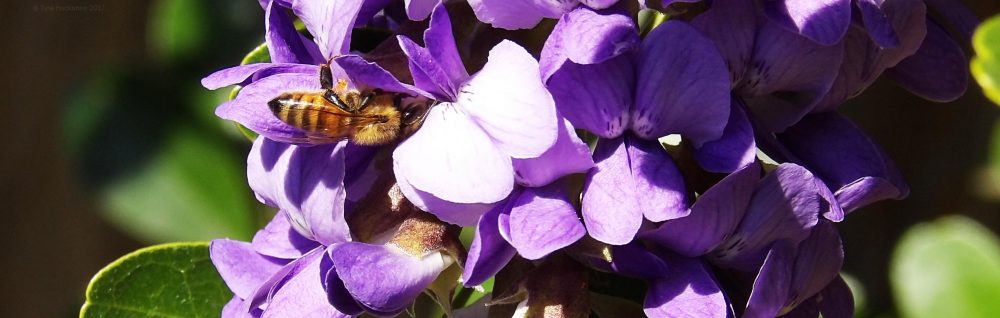
Most of the sunny summer sunflowers are spent, having segued from providing rich nectar and plenty of pollen, to offerings for birds and mammals in the form of seeds. There are a few flowers open for pollinator business and our honeybees never miss a trick when it comes to open flowers.

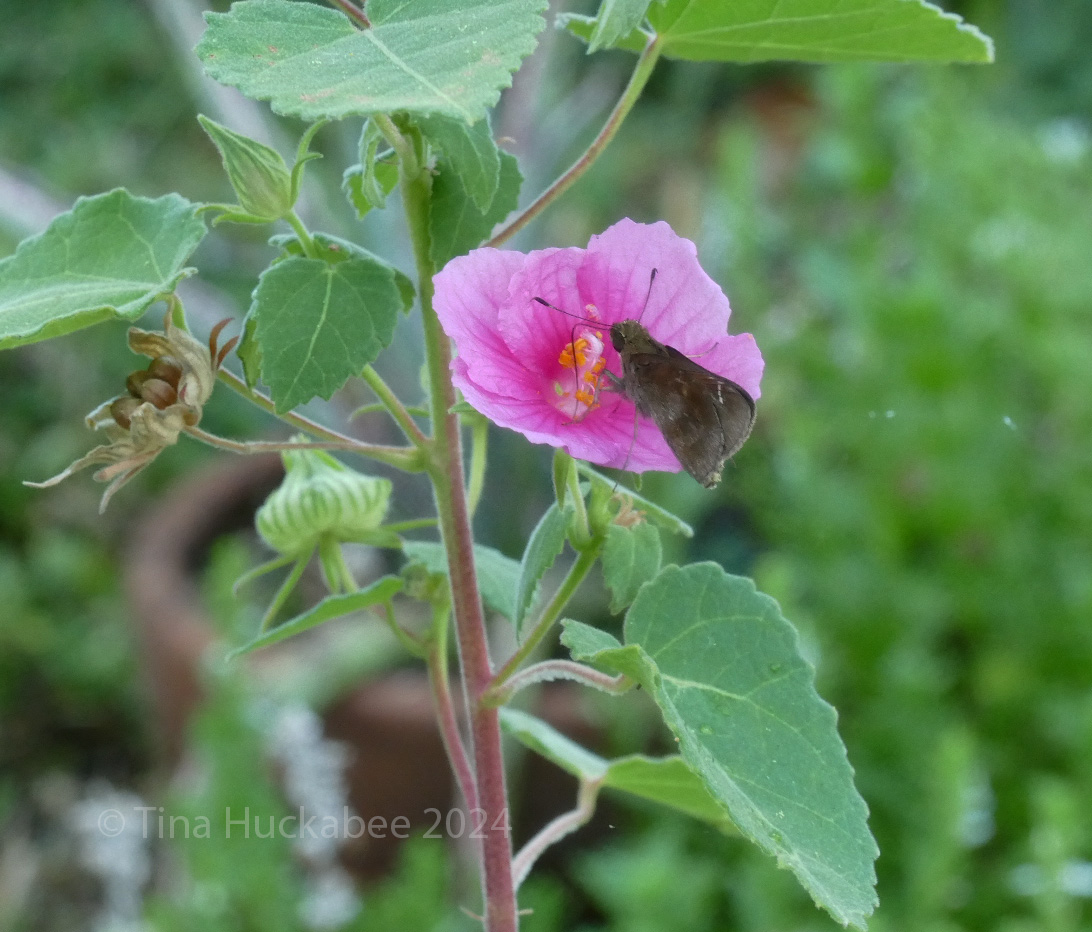
My Rock Rose, Pavonia lasiopetala, shrubs have flowered non-stop since early May. A garish, Barbie-pink bloom, some gardeners don’t care for the flowers, but I love this plant, as do a wide variety of pollinators, like this Gray Hairstreak, Strymon melinus,
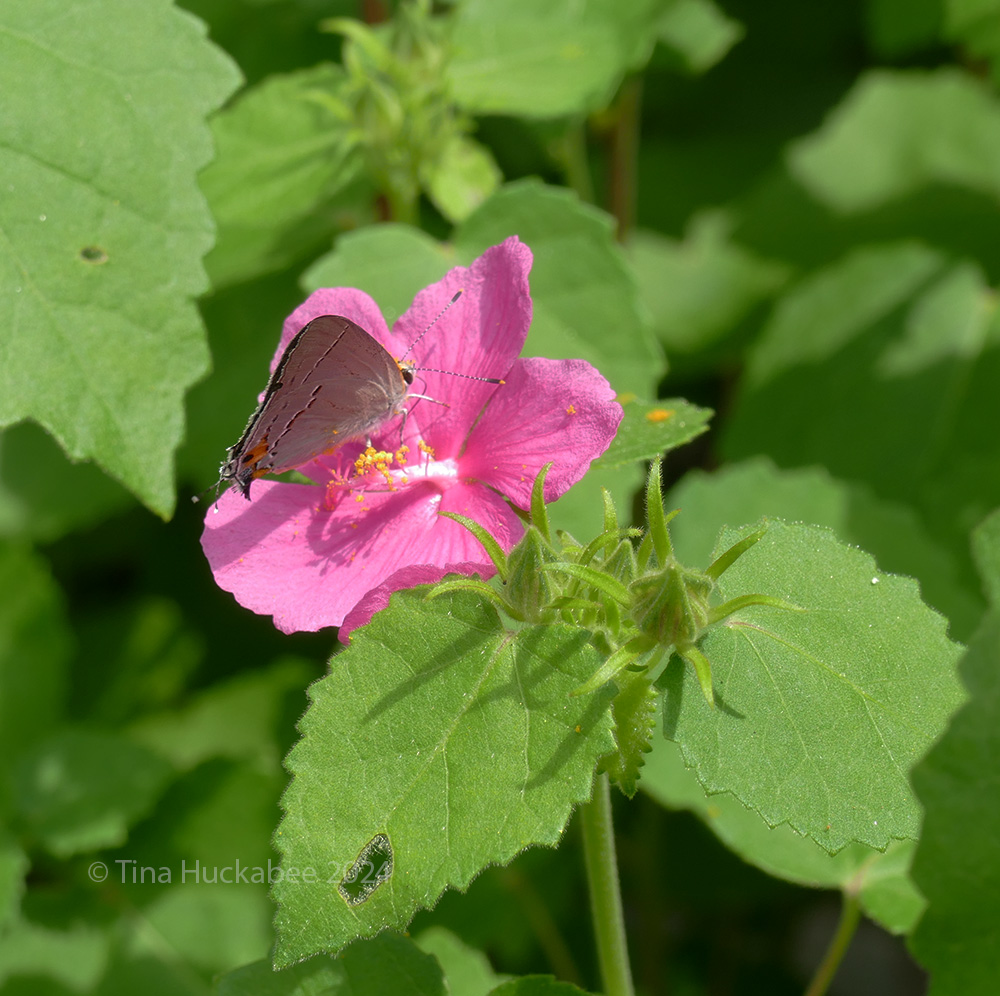
…and this Clouded Skipper, Lerema accius.
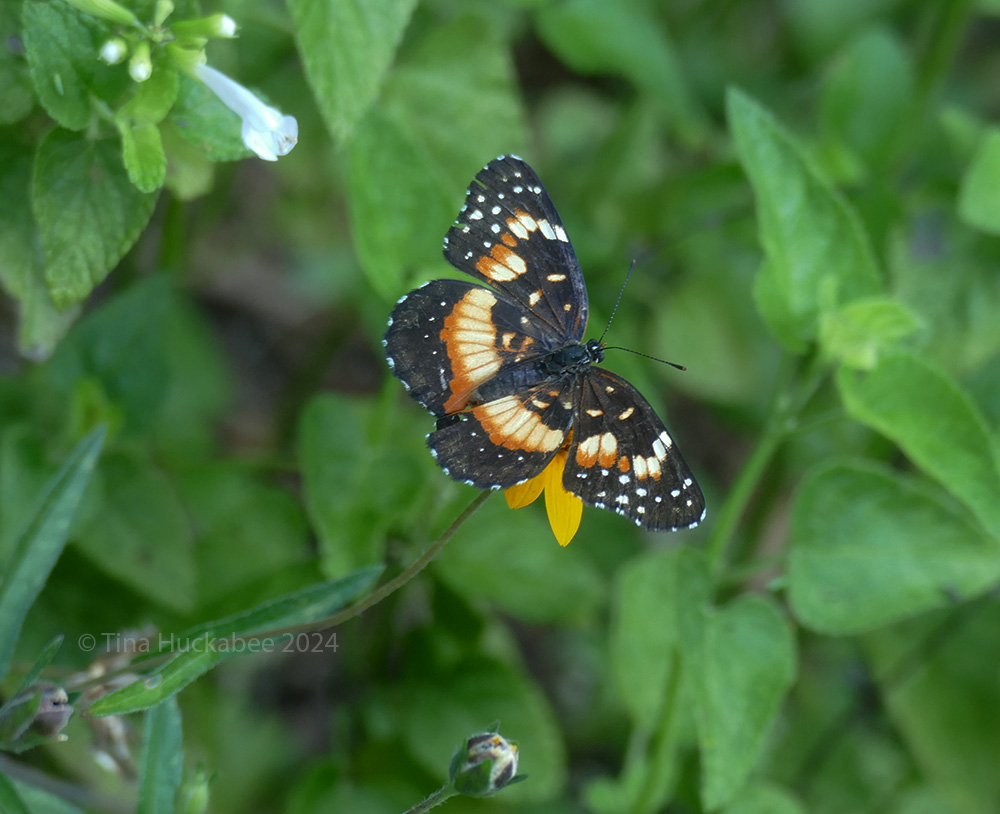
Bordered Patch, Chlosyne lacinia, are everywhere this latter part of summer! Since I grow many plants in the Aster family, these cuties have plenty of host plant material to nurture their young into adulthood. The adults, like many butterfly species, will nectar on scores of flowers. The garden is a win for this showy winged thing!
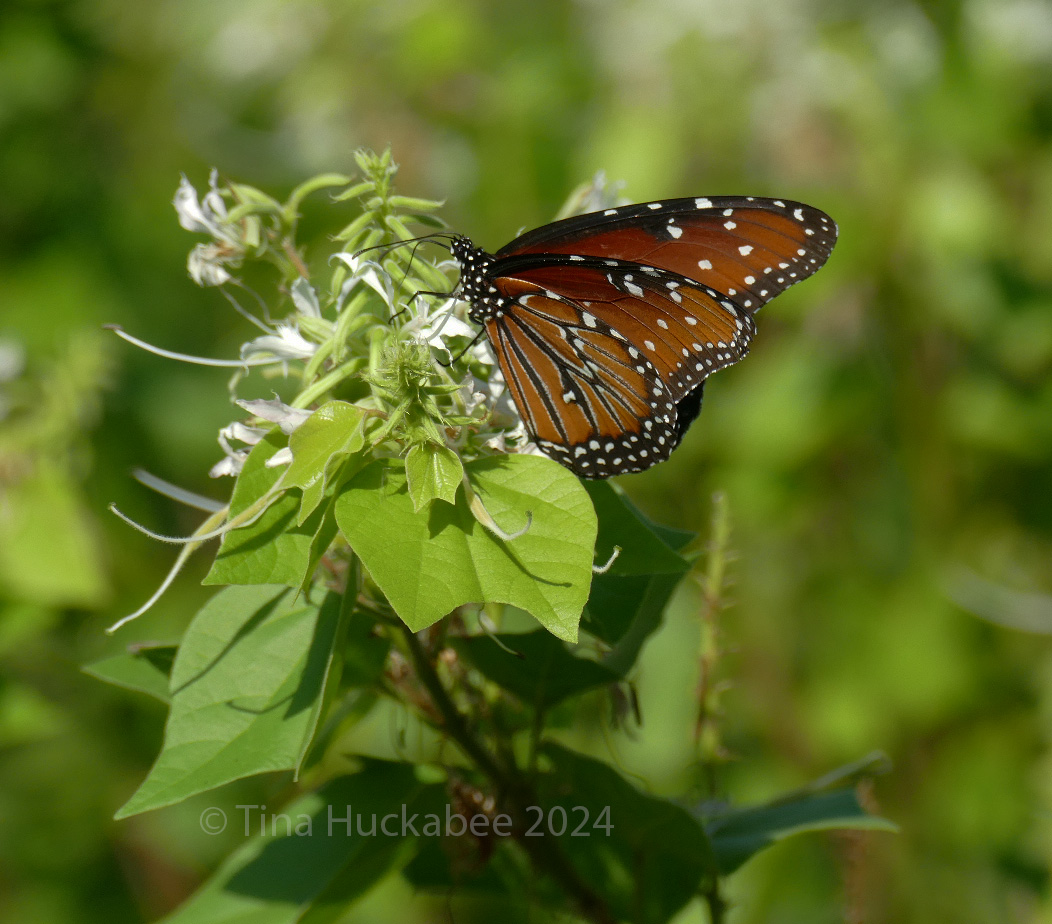
Recently, Queen butterflies, Danaus gilippus, have re-appeared in spades after an early summer lull. This one, along with several of its look-alike buddies, enjoyed the bounty of the Mexican Orchid tree blooms.
A cousin butterfly, one single Monarch butterfly, also visited my garden. I only spotted it for one day; I assume it’s an early migrant, headed to its winter quarters in Mexico. In the next months, I will see more of both kinds of butterflies as autumn approaches.
Summer brings breeding hummingbirds to Central Texas, and the females and juveniles remain until serial cool fronts encourage the tiny birds southward. There’s a good deal of zooming and chasing happening now, territorial disputes that are entertaining, but frustrating to photograph.
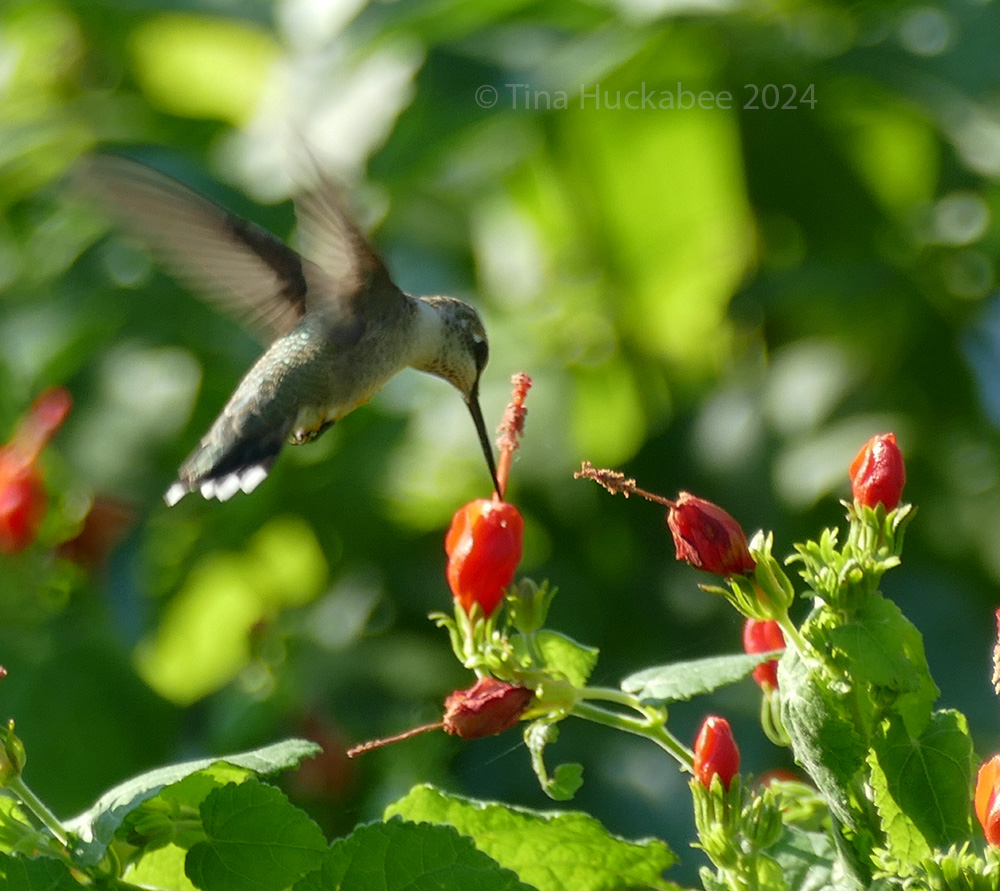
This female Black-chinned Hummingbird, Archilochus alexandri, stopped to re-fuel with some Turk’s Cap, Malvaviscus arboreus var. drummondii. Stopped is not the correct word; maybe slowed down is a better description of the hovering motion as it fed from the crimson cap.
Busy as the pollinators are, buzzing, flying, or floating through the garden, sometimes pollinators need a rest.

As September is just around the corner, summer is rapidly closing its oven doors. Oh sure, there are warm days ahead–plenty of those to come–but days are shorter, rain chances are greater, and the first cool fronts, fleeting though they are, are merely weeks away. The garden, the gardener, and the wildlife will appreciate the changes that the season brings.
 My Gardener Says...
You have a nice variety of butterflies. I seemed to have more in the late winter and early spring than now. We have had a few quick showers and most of the rain has been skirting around us. Our hurricane damage is not totally cleaned up yet. It is hard to get workers.
LikeLike
We seem to have gobs of the skippers in spring and the larger butterflies show up in summer and fall. I’ve been grateful for the rain, hate the skeeters, but love what rain does to the garden! I hope you’re able to get your work finished; it’s hard when there is such a shortage of folks for work.
LikeLiked by 1 person
Your comment worked! Hope it continues.
LikeLike
Thank you for sharing your garden’s August bounty, Tina, and its wonderful pollinators. Your photos are beautiful and I learned a lot about your flowers and their visitors.
LikeLike
Thank you, Tanja! I should really spend more time with the camera in the garden, but early morning and evening are the best times to take photos and also my busiest times of the day!
LikeLiked by 1 person
I can relate, Tina. I tend to take far more photographs at other places than our garden, but there is an entire world just outside our doorstep!
LikeLiked by 1 person
Every so often I’ve seen butterflies and bees visiting flowers that to me seemed way past their prime or even dried out. Apparently those insects have a different standard from the one that determines what people find attractive in a flower.
Here’s to impending fall. And how about the downpour we had two days ago?
LikeLike
I’ve noticed that too; I guess the pollinators know more than we do. I loved the rain the other night/morning. The ground is still wet! Do you remember the last time we had an August that was so pleasant?
LikeLike
No, I don’t. When I opened my front door this morning the air didn’t even feel oppressive, the way it had been for a couple of weeks. Usually I don’t expect a tiny let-up like that till mid-September.
(Yesterday WP wouldn’t take my comment, so I sent it by replying to the e-mailed version of your post. That apparently also accounts for the misconstruing of my two apostrophes.)
LikeLiked by 1 person
What a great collection of butterflies in your garden, I’m not at all jealous! Love the Bordered Patch, never heard of it before.
LikeLike
There’s an abundance, that’s for sure and typically, autumn is the best time for butterflies in my garden. The Bordered Patch is a striking butterfly. It really stands out the garden with that combo of colors. And it’s not a big one, either, only a little over 1 inch wing span.
LikeLiked by 1 person
That black against the red-orange is stunning!
LikeLike
It is really beautiful–very striking with those colors.
LikeLiked by 1 person
Lots of beautiful flutter-butts in your garden, Tina. 🙂 I’ve not seen a Bordered Patch before, it’s quite pretty. Wonderful captures!
LikeLike
Flutter-butts! I like it! Thanks, there were plenty that were too quick for me.
LikeLiked by 1 person
I’ve only seen one bordered patch ever; they are beautiful creatures. I saw my first Queen of the fall last weekend; at least, I think it was a Queen. It absolutely refused to stop fluttering from one spot to another, so I had only glimpses. I’m hoping to see more swallowtails in the coming weeks, or at least Gulf Fritillaries. In past weeks, the whites and sulphurs have been everywhere.
We’ve been having some rain at last, and it certainly has relieved the heat. It seems strange to be hoping for rain so soon after Beryl and the flooding rains that followed, but two weeks of searing heat will bake out the moisture pretty quickly. The benefit? Not one mosquito when I was out last weekend, even around the marshes. On the other hand, I’d forgotten about chiggers — to my great regret!
LikeLike
I didn’t realized that the Bordered Patches are so unusual. They’re pretty common here, some years more than others, but I’ve always had them in the garden.
The Queens become more common as we move into fall; I’ve had quite a few recently, it’s always nice to have them. The Gulf Fritillaries are also making a seasonal come back.
Congrats on no skeeters, but a big ‘BOO’ to chiggers!
LikeLiked by 1 person