March of the Butter Butts: Wildlife Wednesday, March 2020

‘Butter Butt’ is the affectionate nickname given by birders to the songbird, Yellow-rumped warbler, Setophaga coronata.  I’ve been fortunate to host at least one Yellow-rumped warbler each winter for the past few years.  These attractive warblers, muted in color when I see them in winter, are widespread throughout North America.  My home in Central Texas is in the middle of their geographically wide migratory path; many  overwinter here.
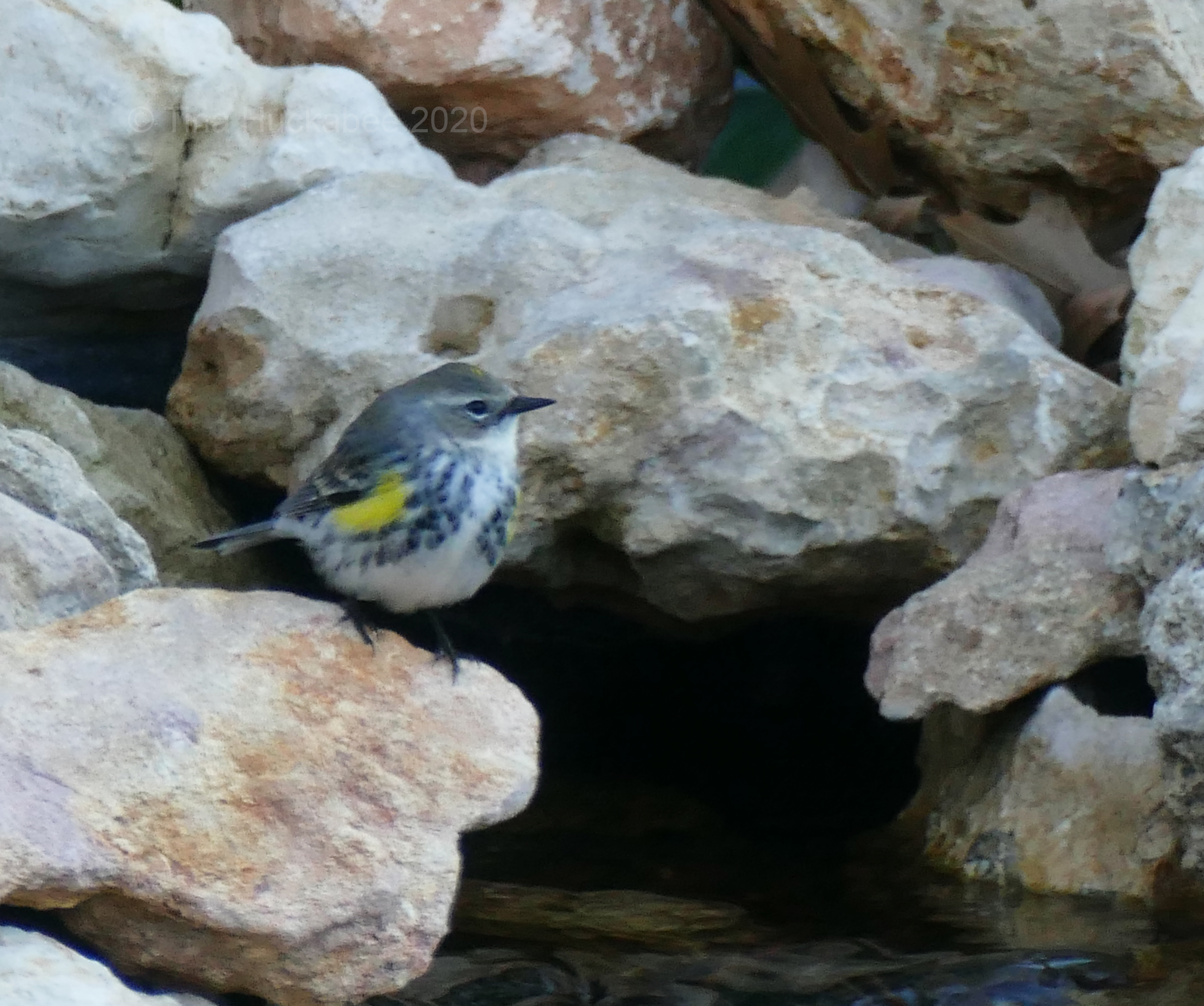
“My” little Butter Butt–and I think it’s the only one this winter–is a female, a member of the “Myrtle” subspecies.  There are two subspecies of Yellow-rumps:  “Myrtle”  warblers, from the eastern half of North America and “Audubon’s” warbler, from western areas.  The primary distinguishing features between the two subspecies are that the male Myrtle has a white throat and black mask across the eyes, while the Audubon’s throat is yellow and has no black mask.  There are other differences too, mostly in amount of white between the males and females on the wings and faces.

I’ve identified my Yellow-rump as female.  She lacks the black mask across the eyes that a male Myrtle Yellow-rump warbler wears.  Even without the mask and the bold coloring, she’s still very cute.

When Butter Butts molt (in late spring) their coloring is quite dramatic. You can see  photos of these beauties in their finest feathered forms, here.   Even without the dramatic breeding colors, I think this little bird qualifies as a head-turner in the looks department.
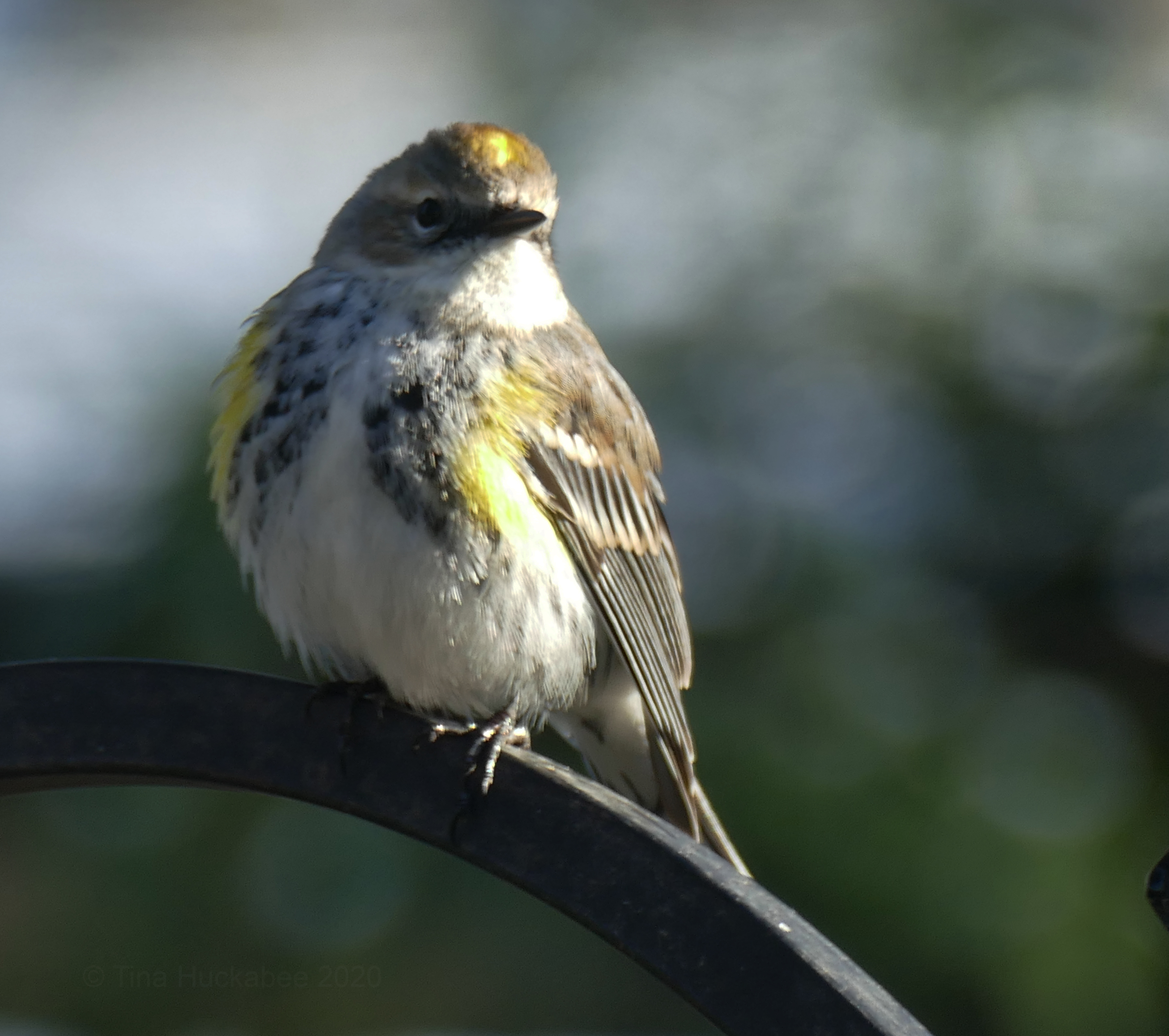
I typically see her at the suet feeder, or bathing in the bog area of the pond.  Plus she frequently forages along the ground in the garden; I have no clue what she noshes under the plants.  Seeds?  Insects?  Probably both!  Yellow-rumped warblers enjoy the widest menu choices of any warbler species.  They eat a huge variety of insects, gleaning those with their pointed beaks from trees and snatching with expertise during flight.  These warblers stand alone–maybe I should say they digest alone–with their consumption of bayberry and wax myrtle berries; no other warblers digest those two berry species.  Ornithologists believe that Yellow-rumps ability to eat the two widely available berries allows them to overwinter farther north than most other warblers. 

I’ve observed scads of little songbirds flitting in my trees and always assumed they’re eating parts of leaves or spring flowers with pollen, and maybe, some insects. But in observing this Yellow-rump as she hops along the limbs and darts through the leaves, it’s clear that she’s focused on insects, rather than nibbling at vegetation for her meals.  Ms. Yellow-rump is a bundle of energy, constantly in movement:  up, down, and all around.   I haven’t witnessed any bug-munching, but most afternoons when I look for her, she’s there, in the trees, hunting for protein.

According to Cornell Lab of Ornithology, Yellow-rumps forage on the outside branches of trees and along those limbs in the bottom third of the tree.  That’s exactly where I’ve noticed my warbler and thank goodness for that!  She’d be even more difficult to observe if higher up in the trees.

In winter, Yellow-rumped warblers spend their time in mixed arboreal landscapes–those areas with plenty of trees and fruit-bearing shrubs, like parks and urban gardens, all good habitats brimming with the needed munchies.  In their breeding areas, far north from Central Texas, they concentrate on insect eating, but easily switch to fruits, if available.  Yellow-rumps nest in coniferous trees, the female building the chicks’ homes along branches.  Both parents feed the chicks, which fledge within two weeks.  They grow up so fast!

These hardy warblers are adaptable, which is why their populations are relatively stable.  That said, it’s always a good when gardeners plant for birds:  native plants are best to provide berries and seeds, to provide cover for protection, and to provide a rich, diverse garden habitat.   Also, habitats free of insecticides is a must, since many birds (not only warblers) require insects for themselves and their offspring.
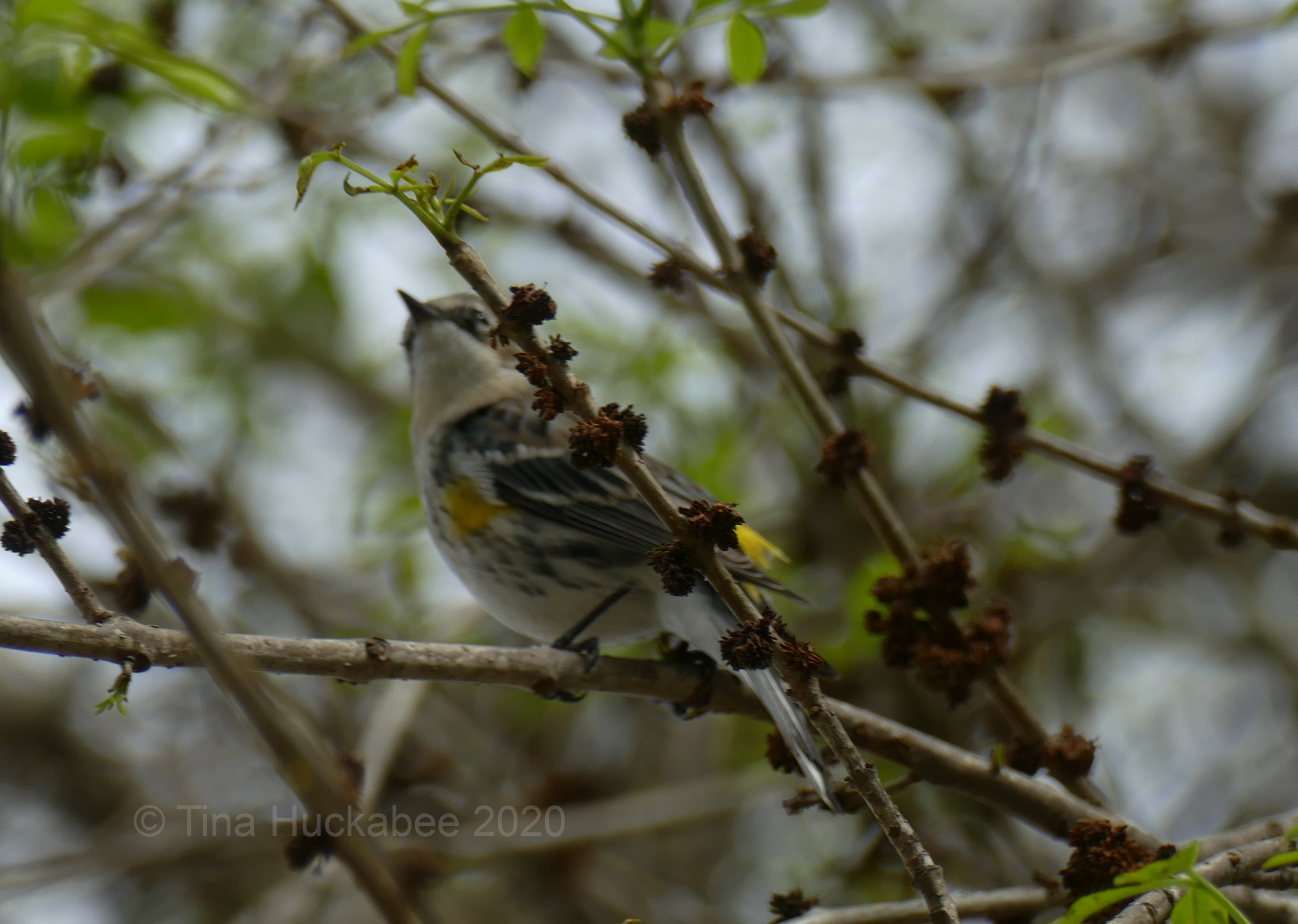
 

And there it is–the famous, often talked about, but only briefly glimpsed–yellow rump!
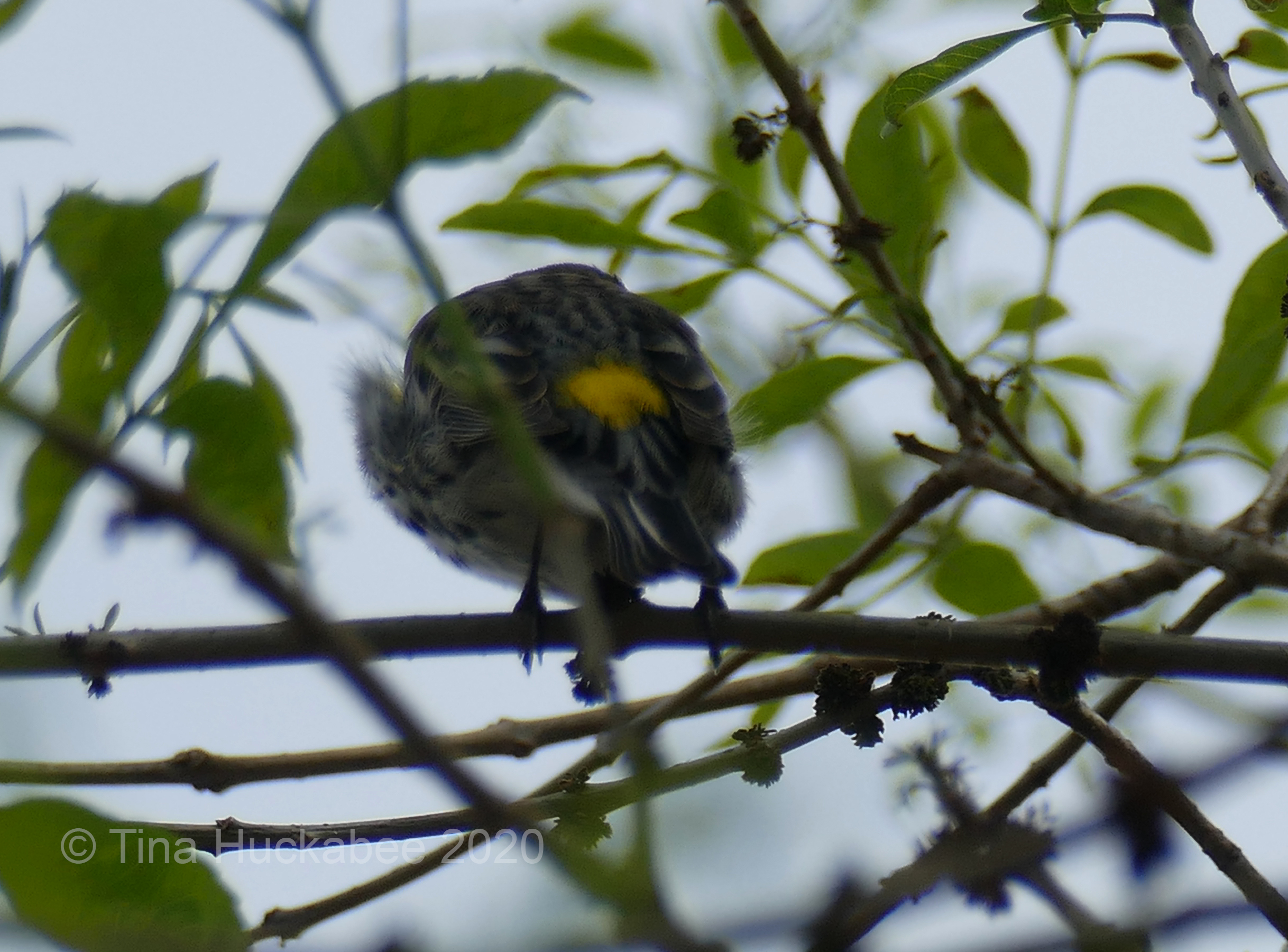
The flash of that bodacious booty is easily visible–at the correct angle, with tail feathers up–as they bop around the ground or zoom through trees, but catching these busy birds to photograph their famous bums is a little trickier. It requires patience and some good luck.

For more great information on this charming songbird, check out the Cornell Lab of Ornithology or Audubon’s site on the Yellow-rumped Warbler.

What wild things are in your garden?  Please share and leave a link when you post a comment–and happy spring and wildlife gardening!

February is for Wildlife Lovers: Wildlife Wednesday, February 2020

Virginia is for Lovers is a long-time advertising slogan used to appeal to tourists interested in visiting Virginia and it’s apparently been a successful one.  My riff on that slogan is February is for Wildlife Lovers in celebration of Wildlife Wednesday during this month where love and pairdom is paramount: a month of hearts and chocolates–and the birds and the bees–though for our purposes here, it’s the birds and the butterflies.

February is the month when human couples send flowers, share candy and/or make reservations at absurdly expensive and noisy restaurants.  But some of my backyard birds are also busy in the art of love, or at least, in the art of settling down to the business of wooing, mating, and preparing for a family of winged things.

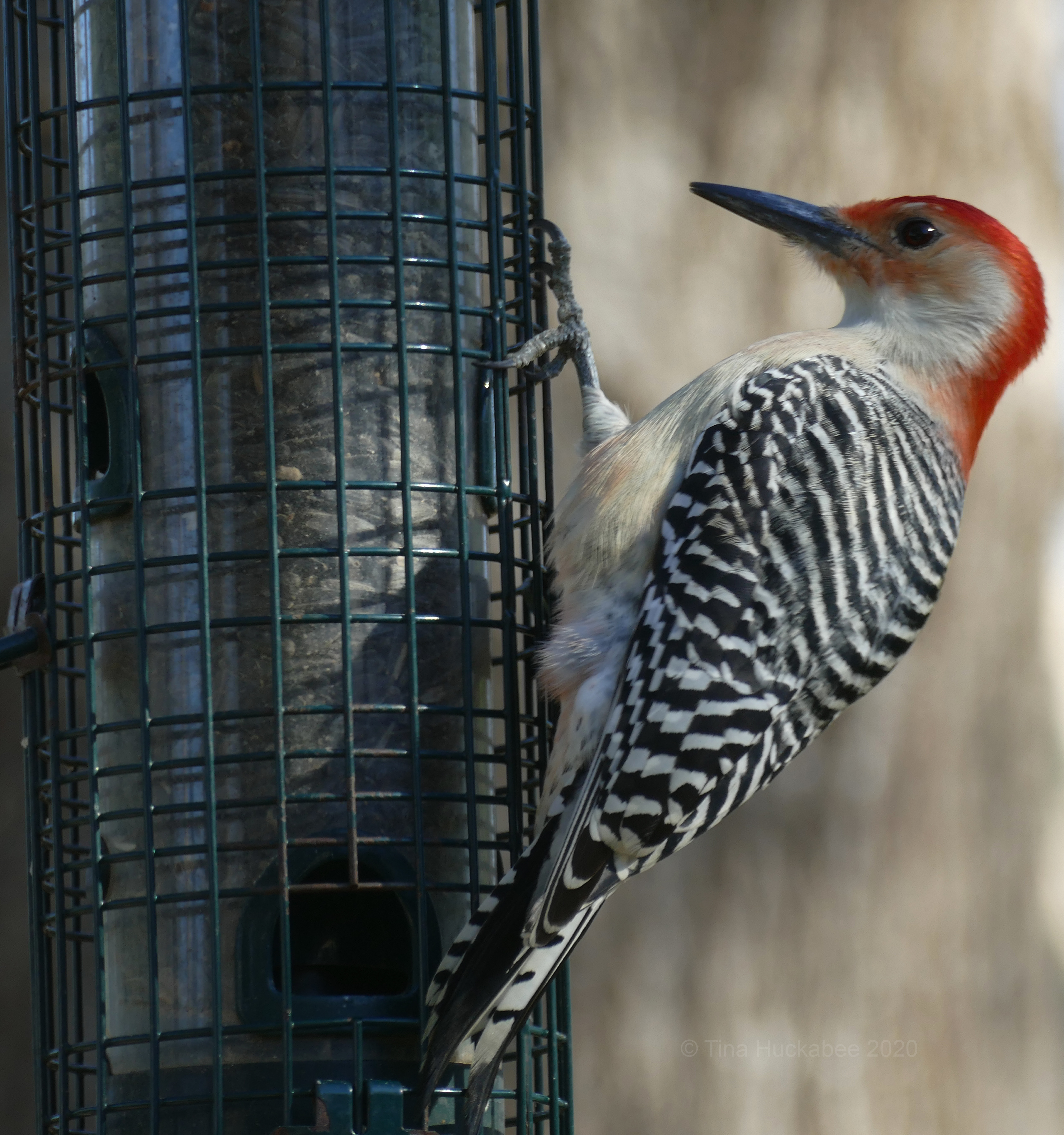
I typically see either the male or the female Red-bellied WoodpeckerMelanerpes carolinus, but I rarely see both partners on the same day.    A couple of weekends ago, that paradigm changed, the female visiting first, in the tree.

It’s not a classically well-framed shot, but I love the stink-eye that she looks like she’s giving me.   Red-bellied eye-rolling is about to commence!

After moving up along a main branch of my Red oak tree, she fluttered down to the black-oiled sunflower feeder for a quick snack.  The female Red-bellies have little-to-no blush of red on their bellies and their splash of head red starts toward the back of their heads, extending down the nape of their necks.


A short while later, a handsome woodpecker chap visited the same tree and feeder.

“Did ya get a good shot of my rosy, woodpeckier chest?”

With more red on his face, head, and belly, he’s a brightly patterned catch.  I assume these two comprise the same couple who raised two clutches of junior woodpeckers last year.  Red-bellied woodpeckers are monogamous and each share in nest building and chick raising.   The males choose the nesting site, starting the pecking work on the hole;  if the female accepts the offer and the site, she and her partner finish the construction together:  the couple that builds together, stays together!   Red-bellies are known to use the same tree for their nests, but build a new nesting hole for each new set of eggs.


At about the time that the Red-bellied couple visited, I enjoyed a similar sighting of both a female, then male Downy Woodpecker, Dryobates pubescens, again on the same day.   The female has no red on her cute little head, but she’s adorned in snazzy black and white on her head, wings and back, with a lovely white tummy.

The male Downy has a dab of red atop his head, accompanied by similar-to-his mate black and white patterned feathers.  Like the Red-bellies, the Downies are monogamous and both partners parent offspring.  Last spring I enjoyed the privilege of watching Daddy Downy teach his little one how to flit from tree-to-feeder, then back again.  Daddy birds rock!

I look forward to a new set of woodpecker kids in the neighborhood.  The Red-bellied Woodpeckers nested in my neighbor’s tree–the one that my SIL now owns–and I’m certain that my SIL will enjoy watching these charmers as they build the nesting hole(s) and once again, become parents.

I don’t know where the Downy Woodpeckers nest.  They fly in a northwesterly direction from my back garden, but I don’t know what tree, or trees, they’ve chosen to secure their little ones in past breeding seasons.

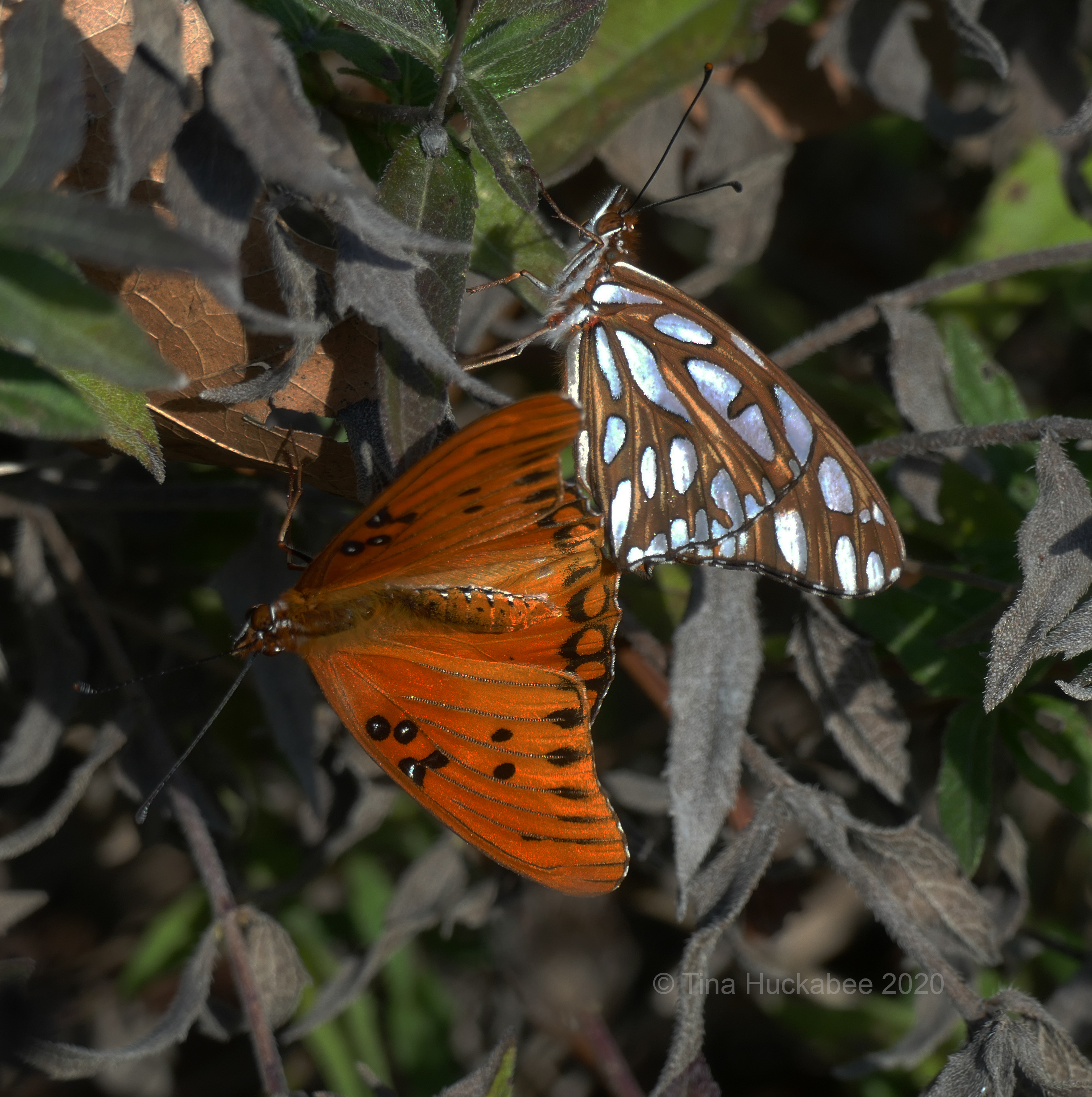
More pairing is underway with the mating of Gulf Fritillary butterfliesAgraulis vanillae.  Butterfly wooing is quieter than bird wooing and mostly involves undulating flight patterns between the partners, who then rest somewhere as they seal the deal.

Due to our mild winter, there are active butterflies and not only Gulf Fritillaries, though they’re clearly in breeding mode with egg laying to follow.  While I’d like to have some hard freezes (this month–NOT in March!), I haven’t at all objected to butterflies during this typically drab time of year.  There are still some flowers for nectaring and my passion vine–the nursery for Gulf Fritillary caterpillars–is green and able to provide sustenance for the larvae, given that a hard freeze hasn’t yet killed it to the ground.

The breeding season for birds, butterflies, bees–and heck, everything else–is about to begin.  It’s a time that gardeners can provide food, in the form of seeds and fruits, and with diverse choices of plants, as well as water and cover.  If your garden is welcoming to wildlife, you can sit back and observe remarkable events in your garden:   you’ll enjoy watching the wildlife lovers and their offspring and you’ll become a wildlife lover.

Please leave a link to your post when you comment here and happy wildlife gardening!

New Digs: Wildlife Wednesday, January 2020

Another trip around the sun is completed, the calendar page has turned, and 2020 is here.   In this darkest season, my garden still enjoys some blooming, hosts a few insects flitting, and cheers with plenty of native and wintering birds feeding, calling, and singing.  I’ve begun winter pruning, though with a only few light freezes under the garden’s belt, many plants aren’t yet dormant.

My garden is a full-on wildlife habitat.  Most of the garden provides something for someone:  seeds and fruits, nectar and pollen, cover and protection, and plenty of nesting material. In my garden, water is provided and chemicals are avoided. Other than maintenance and occasional revamping of a garden space due to loss of light or some other environmental shift, my garden flutters and hums (thanks for the phrase, Anna!) with busy wildlife and minimal effort.

I live in a fairly typical American urban neighborhood.  For most of my years here, especially after I transformed the standard issue, turf-centered landscape into the vibrant, native plant-focused wildlife habitat that it is now, my garden served as the lone example of a urban habitat planted with something other than grass, a tree or two, and a couple of evergreen foundation plants.  Though most house dwellers stick with their sterile, water-hogging grass and turf remains the dominate landscape feature, more gardens have appeared, utilizing pollinator plants and native grasses, along with pathways to enjoy the beauty that the gardens provide.  Our neighborhood also now boasts a gorgeous and well-planted community garden; kudos to the many volunteers and neighborhood leaders who made that happen.  These steps toward more diverse gardens and landscapes is a solid and positive trend, even if it’s been at a slower pace than I would prefer.

Baby garden steps.

Since we moved into our home in 1985, we’ve enjoyed a nice relationship with a kind neighbor.  She’s been retired most of the years we’ve lived in our house.  She saw us bring home our babies, as we saw her with visiting grandchildren.  She would chat with me in my garden, complimenting its beauty and peace, though I believe she thought me a garden nut.

She’s not wrong there.

When I’d offer to plant for her or change something in her landscape, she would decline, declaring her yard was exactly as she wanted it.  The neighbor aged, but preferred to stay in her well-loved home for as long as possible.  But suddenly in early November, she told me she was moving to a town in the Texas Hill Country where her daughter lives.

Prior to this unsurprising news, she and I had discussed the inevitability of her moving “some day” and I asked her to let me know when she decided that it was time to move.  My sister-in-law (going forward, SIL), The Hub’s big sister, might be interested in purchasing a one-level home, rather than remaining in her lovely, two-story condominium with its dangerously steep stairs.  Many phone calls later, with a minimum of wrangling and negotiating, legal papers duly signed and the check for purchase delivered, my SIL is the three-week long proud owner of this charming home.

Isn’t it cute?  And guess who will garden it?!

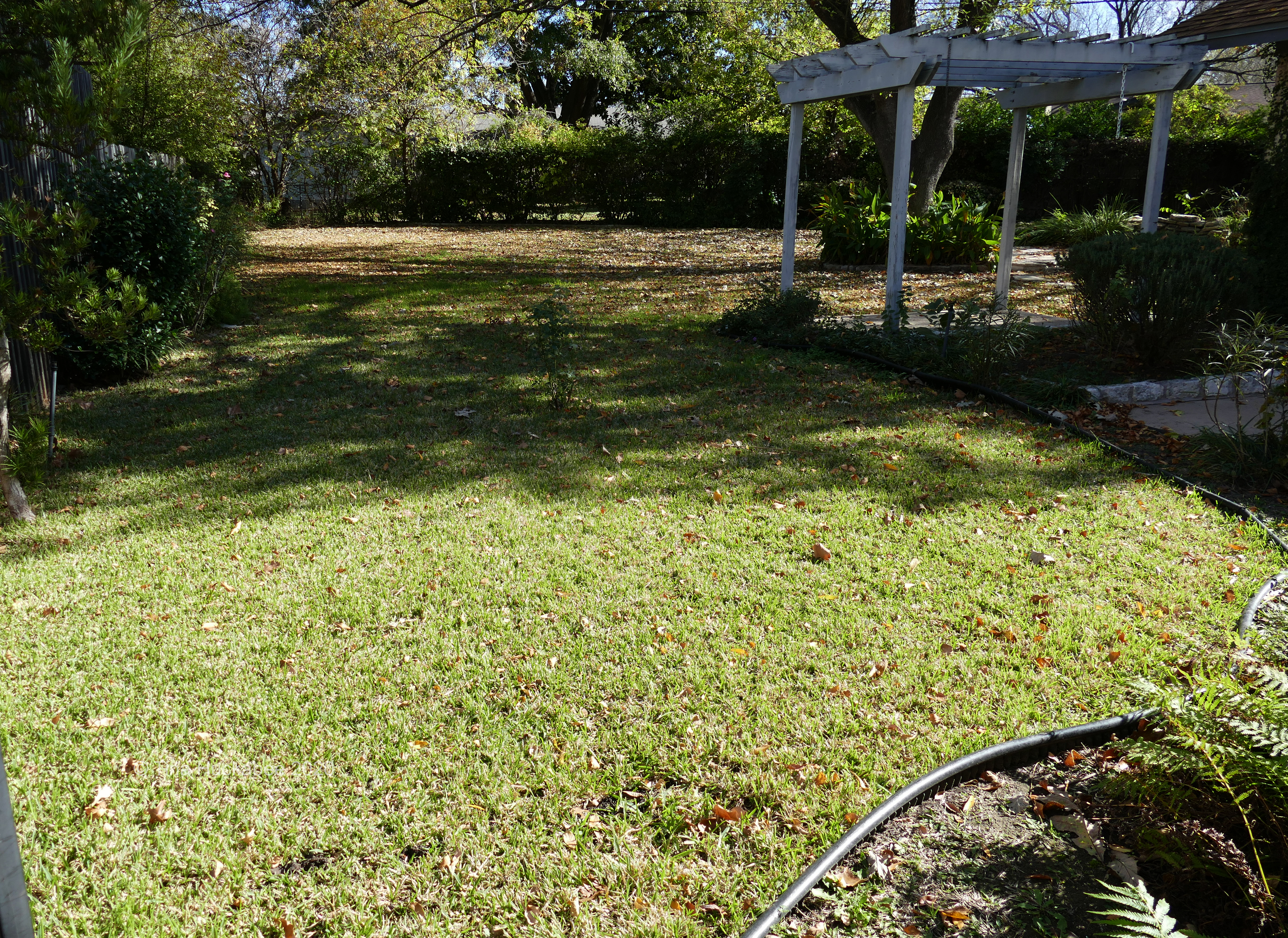
Just look at all that grass and visualize instead something more diverse: color and texture varied, interesting in form and beckoning to wildlife.   In my gardener’s mind, I  already see pollinator plants blooming in shrubs and perennials of many colors and graceful native grasses sparkling in spring green and swaying in autumn breezes.  This garden transformation will be a long-term project; afterall, it took me years to “complete” my garden–and no garden is ever really complete.  Plus, this is a much larger lot than my own slice of the Earth and I’m no kid these days, as my achy knees will confirm!

I hope I’m up to this gardening task.

I’ve already planted the small bed that borders the front porch (first photo), though mulching is on the to-do list.  We’ve agreed to lay mulch between our homes, as there’s plenty shrub action on either side of the border.


Stepping through her iron gate and into the back yard–someday garden–reveals a huge space, opening the imagination to all sorts of possibilities, no doubt accompanied by sore muscles and a stiff back.


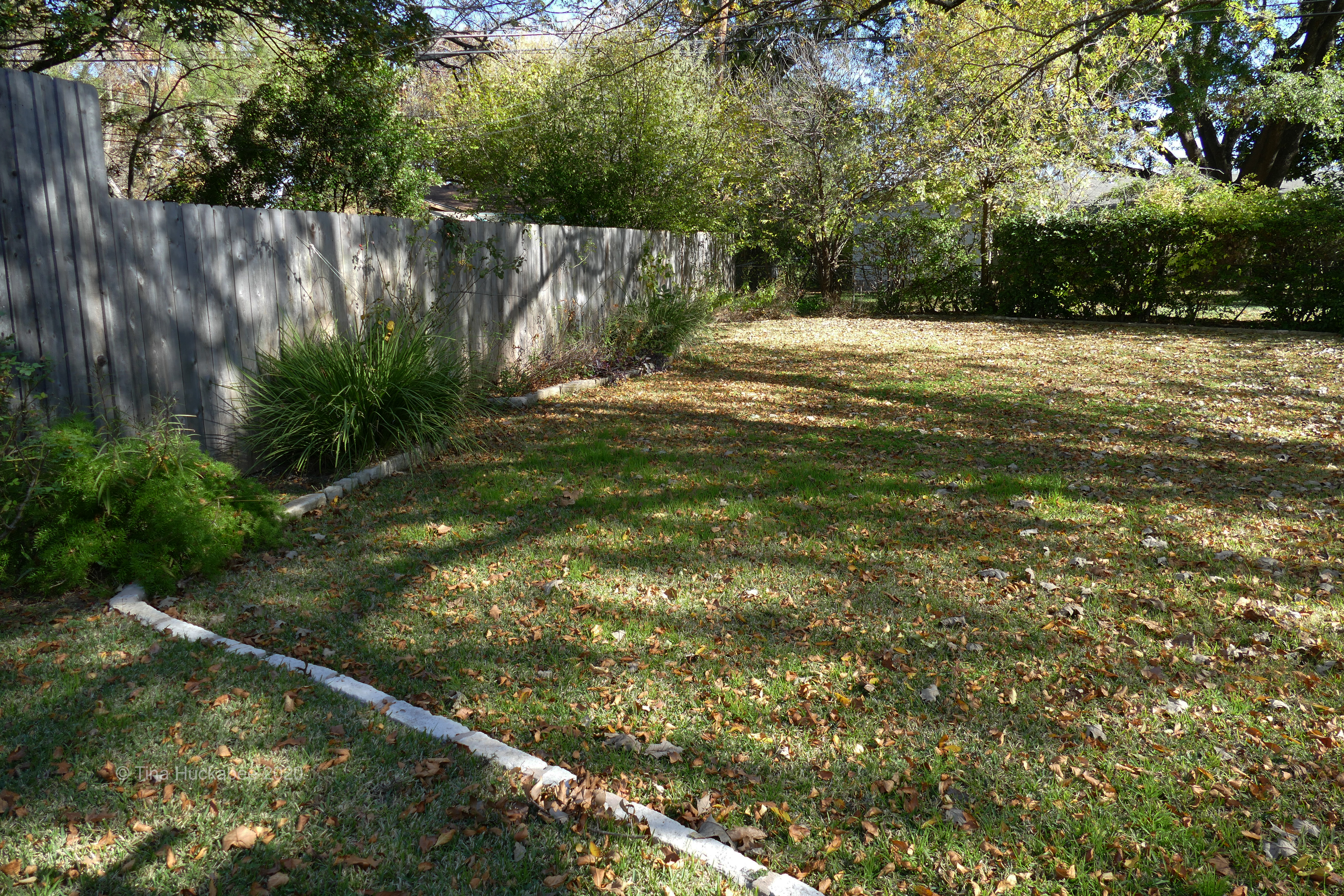
This fence between our properties is about three years old and some of “my” plants have already migrated over and under the wall, settling in for the flower show.

Trust me, I’ll add plenty more.

As is typical in most American landscapes, the layout of this property relegates the actual gardens to narrow, small areas–for shrubs, perennials, bulbs, and ground-covers–with the starring role given to the expansive swaths of turf. As a general rule, a well-designed garden places larger plants toward the back, with shorter plants in front.  The narrow beds allotted on this property will be the signature challenge to its wildlife habitat transformation :  transplanting the smaller, original specimens with newer, larger specimens of wildlife-friendly shrubs, native grasses, and understory trees,  then re-planting the smaller plants toward the front of the beds.


In the center of the back yard towers an aging Arizona ash tree.  Someday, it will be gone, but for now, it provides glorious shade in summer and plenty of perching opportunities for birds, including the many Screech Owls that have nested in our owl nesting box, which sits in our Shumard red oak tree, about 60 to the left of the photo.

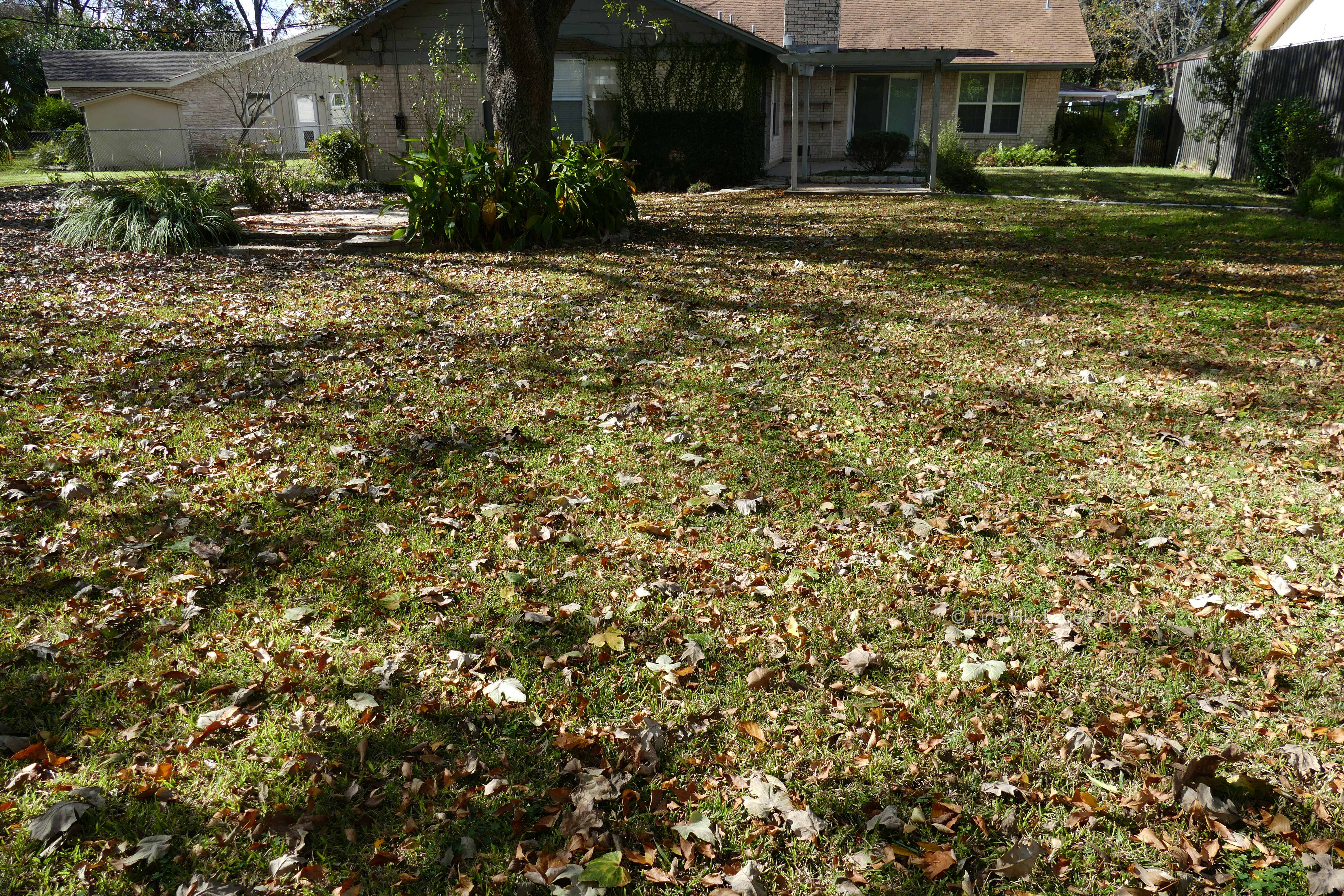
Here’s a view from the back of the property toward the rear of the house.


Another view, this one is toward the opposite neighbors’ house, and you see that  between SIL’s property and those neighbors, stands a chain link fence.

Maybe vines (blackberries, pretty please!) will grow there one day as the fence is in full sun, all year-round.  There’s talk about planting some fruit trees in that section of the lot, taking advantage of life-giving full sun.

Weee!   Meyer lemons!  Peaches!  Plums!

Oh dear.  Perhaps it’s best I don’t get carried away…

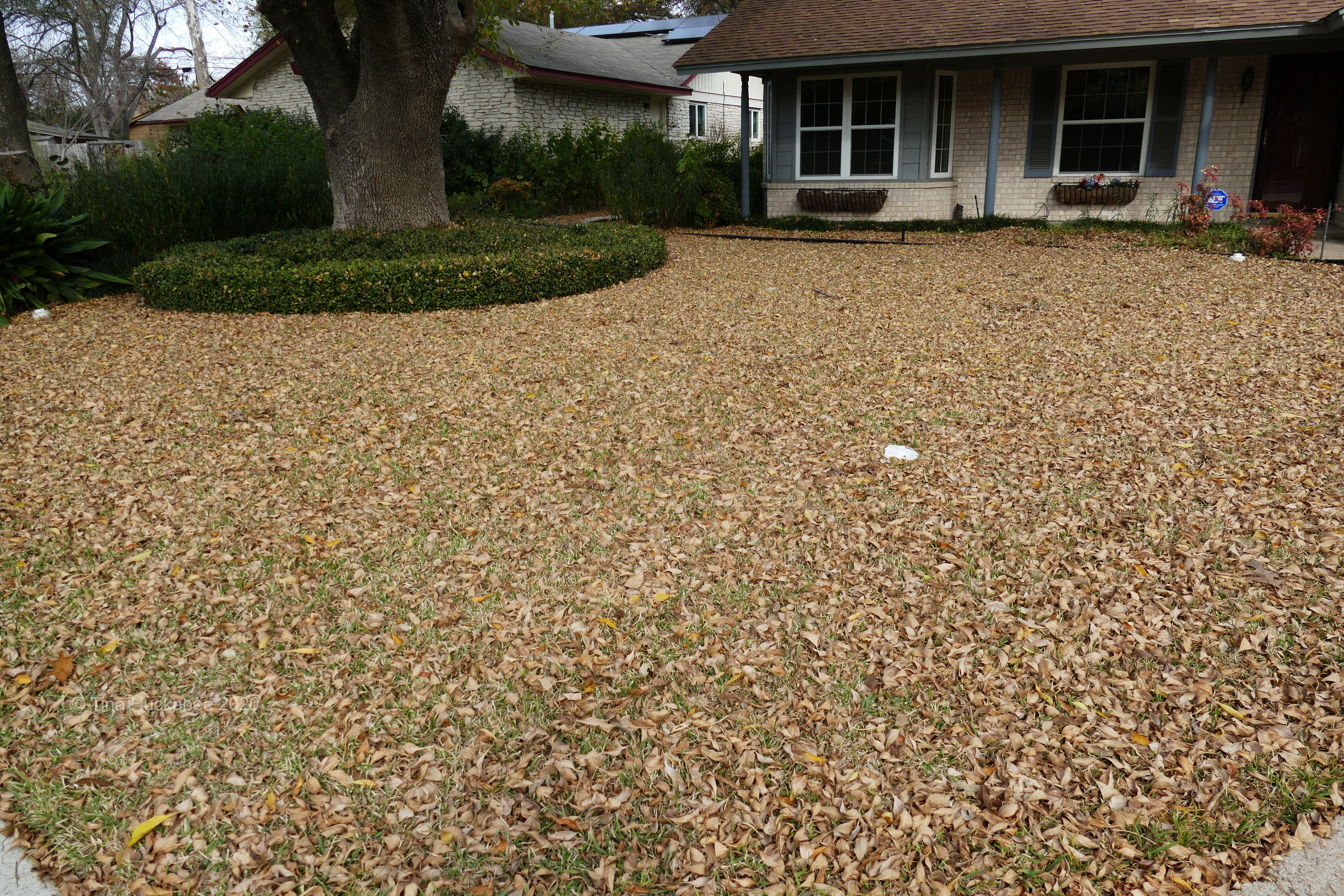
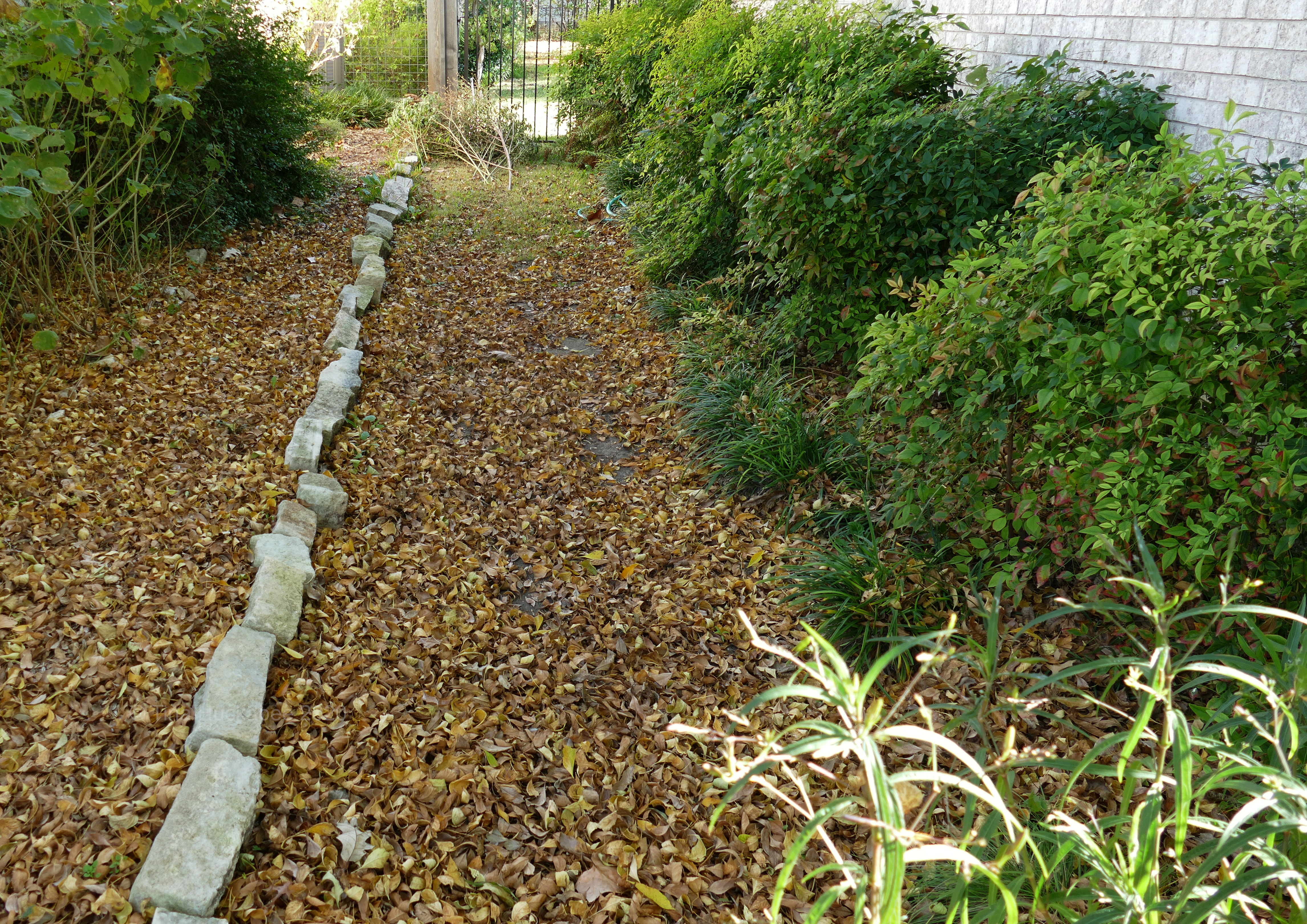
Fallen leaves drift to the grass from a stunning native Bur oak tree in the southeast corner of SIL’s lot.  During the growing season, this corner is quite shady because of that Bur oak;  ferns are lush and happy there and in time, other shade-loving perennials will feel right at home, too. In autumn, the leaves cover the grass; they’re huge!  SIL is planning to hire an eco-friendly lawn company who uses electric equipment rather than gas-powered and who mulches leaves, rather than bagging for pick-up.


My former neighbor installed a small pond about 25 years ago under the shade of the ash tree.  My SIL is an avid backyard birder (Yay!  Another bird nut!) and she’s already set up her feeding stations in this spot.  In fact, since moving in, she’s already bested me in bird watching: she observed two Ruby-crowned KingletsRegulus calendula, at her pond to my one. 

SIL will clean out her pond in late winter, adding more rocks so that the birds have an easier time accessing the water for bathing.  It should be an excellent spot for the birds to congregate–and be watched.


I miss our former neighbor and still half-expect to see her amble out her front door toward me with that wry grin on her face, both of us understanding that a quirky conversation will ensue.  I wish her well in her final years; she’s in her mid-80’s, but still active and I hope that continues.  That said, I’m happy to have my SIL next door; we’ve always gotten along well–she’s a sweety–and I know she’ll be a great neighbor.  As well, she has an appreciation of gardens and gardening and understands the importance of biodiversity in the urban environment.  With her new digs comes exciting opportunities to dig:  to develop a welcoming environment for birds, mammals, reptiles, and insects and to create set of unique gardens full of plants providing color, form, interest–for all.

While there was no actual wildlife in this post, I’m interested in reading about the wildlife you enjoyed in your garden.  If you wish, please leave a link to your wildlife gardening post when you comment here about your wildlife garden happenings–and happy wildlife gardening.