Today is the first Wednesday of the month and time to appreciate the critters who live in our gardens, adding beauty and life while sustaining pollination and seed distribution. Birds, bees, and butterflies are always welcome visitors, but others contribute their threads to the wildlife fabric of the garden. October is typically a glorious month in Austin, Texas and this past month was exemplary in things weather and garden related.
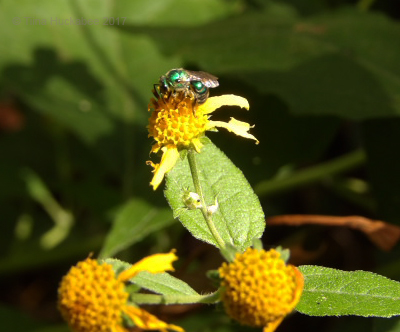
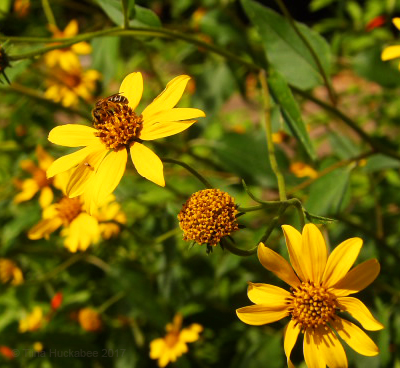
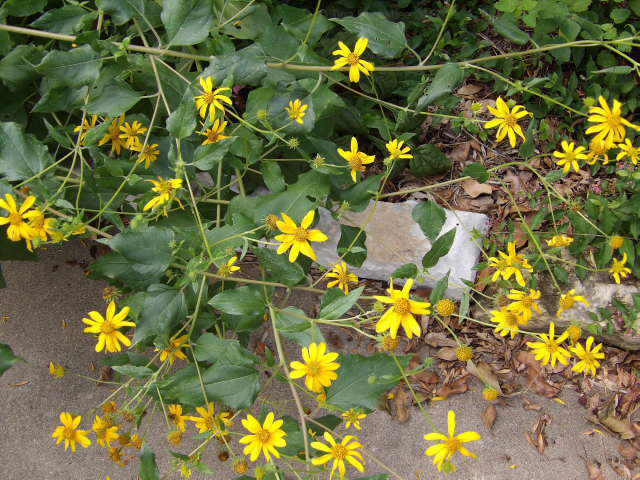
Masses of fall blooming perennials have spurred pollinator activity. Native bees, active most of the growing season, have been all over obliging blooms. This Green Sweat Bee, Halictidae, and its metallic buddies have reveled in the Plateau goldeneye, Viguiera dentata, flowers.

Looks like someone munched the petals before Ms. Bee arrived, but ragged, clearly nibbled-on petals don’t slam the brakes on pollen and nectar gathering.

Caught in flight!
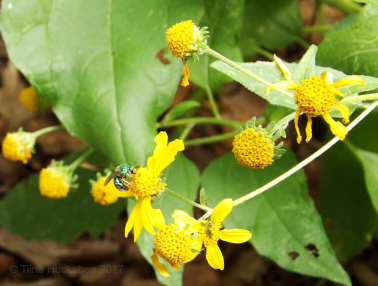
Proboscis deep in bloom.
Small Striped Sweat Bees, Halictidae, also favor the goldeneye blooms.

No photos as evidence, but I’m observing these yellow and brown ladies busily filling nest holes in a bee hotel affixed on my back patio.
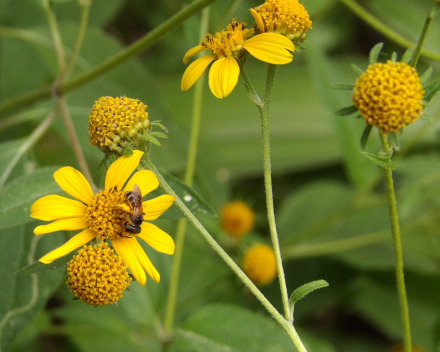
Horsefly-like Carpenter bees, Xylocopa tabaniformis, always abundant in my garden, are slowing down as the light is changing and temperatures are cooling, but they’re still buzzing the blooms and drilling wood for nests.

This bee rocks pollen-filled corbiculae. One wonders how they fly, so loaded with pollen.
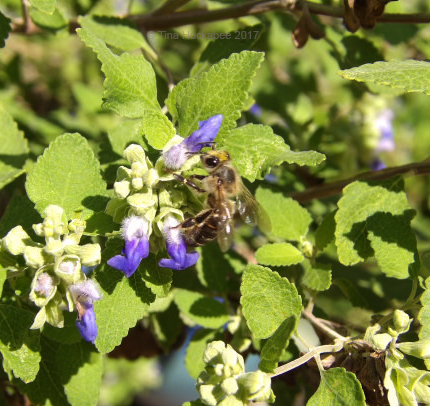
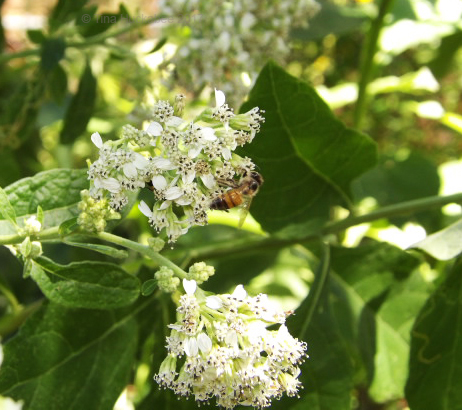
Honeybees never miss pollinating action and are in full honeyflow mode. The back garden is awash with the fragrance of honey.

This girl is enjoying the bounty of Shrubby blue sage (Salvia ballotiflora).
Birds are always a thing in the garden and recently I’ve glimpsed an Eastern Screech Owl and heard its territorial trills; the owls are year-round residents in the neighborhood, though elusive during summer months. Also, the local hawks are more active, swooping through the trees and scattering birds at will. In addition to the year-round residents, winter avian Texans–“snowbirds”–are arriving to shake things up a bit. This past weekend I spotted a pair of Ruby Crowned Kinglets and an Orange Crowned Warbler. Last year, those two kinds of birds, as well as others, spent late autumn, winter, and early spring in my garden.
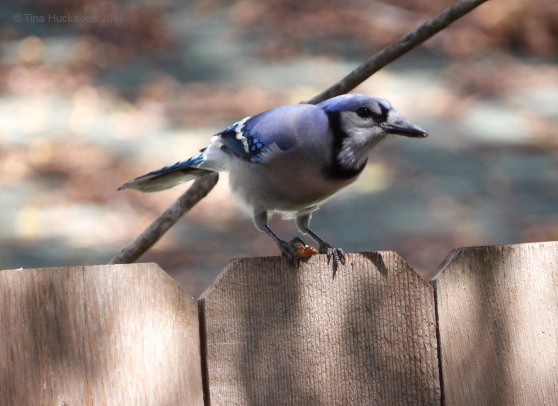
One of the regulars, this Blue Jay, Cyanocitta cristata, wrangled with an oak acorn for several minutes. I thought he might consume the whole thing while perched on the fence, but he eventually placed the pecked remains of the acorn in his beak and took off for a more private place to finish his meal.

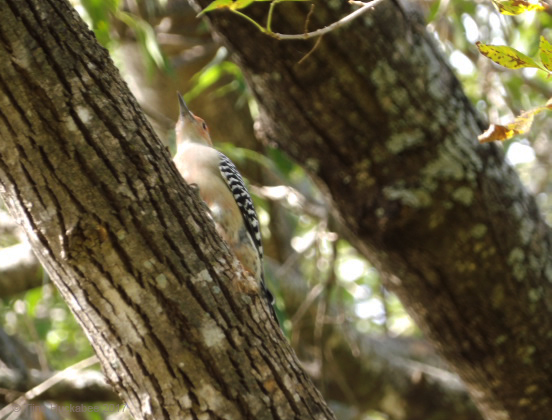
The Red-bellied Woodpecker, Melanerpes carolinus, wears a striking red-head, but it’s the blush on the belly for which this cheeky bird is named. That bit of blush is just barely visible in this shot. I usually hear, rather than see these birds, but they are common where I live and they will visit the garden, especially once the suet is out for the taking. In my neighborhood, there are several nesting pairs.

For the record, there is a Red-headed Woodpecker, also a year-round resident, who has a very red-head, which you can see here. I’ve never seen this species in my garden.
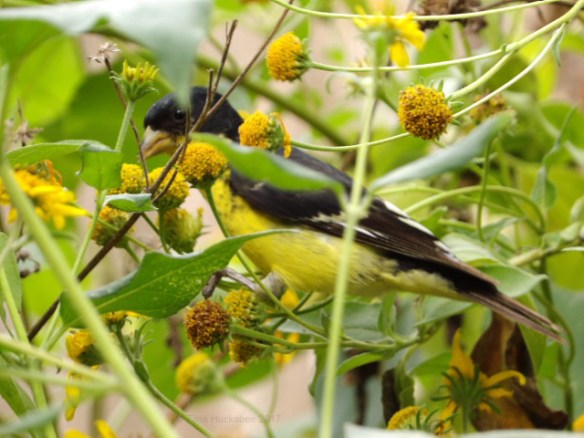
As goldeneye blooms fade, seeds develop and the finches move in for the munching. This male Lesser Goldfinch, Spinus psaltria, snacks on seeds amid the blooms, spent blooms, and foliage. His mate was there as well, but harder to see and photograph. These little birds are around year-round visitors, but only appear depending upon on what seeds are available in the garden. Lesser Goldfinches and American Goldfinches prefer the seeds of native plants.
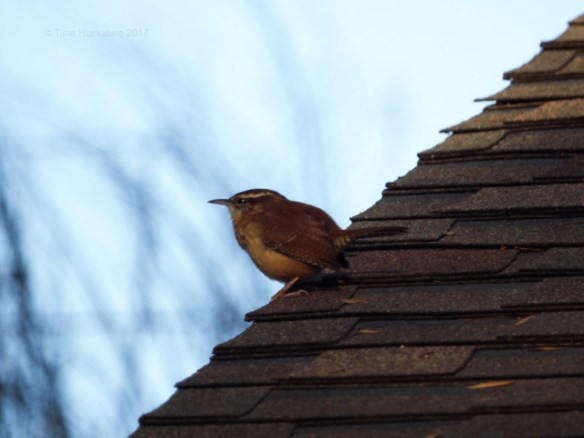
Carolina wrens, Thryothorus ludovicianus, serenade the neighborhood regularly; this one stationed himself on a neighbor’s rooftop early one morning.
Butterflies and moths also decorate the October garden. Most seasons there are plenty of Giant Swallowtail butterflies, Papilio cresphontes, but this year they haven’t been as numerous. I watched this one nectaring at Turkscap, Malvaviscus arboreus var. drummondii. The top-most bloom is visible behind the head of the butterfly; proboscis is unseen, no doubt engaged. 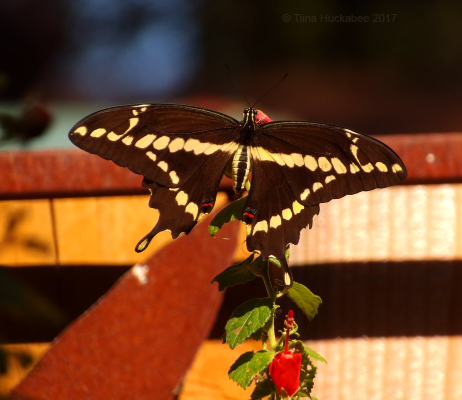
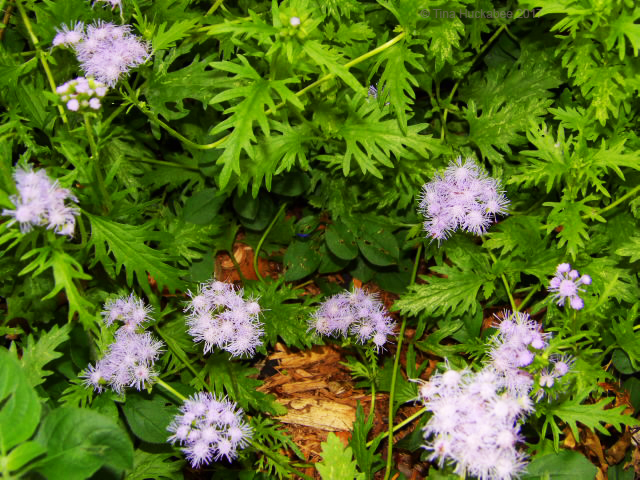
I’ve often seen this little winged-thing, especially in late summer/early autumn, but finally identified it as a Spotted Beet Webworm Moth, Hymenia perspectalis. The other flower it prefers is the Blue mistflower, Conoclinium coelestinum.

This petite Reakirt’s Blue (Hemiargus isola), is another pollinator savoring the nectar of the Plateau goldeneye.

The underwings are neutral in color–females darker, so I think this is a male. The upperwing is where the blue is visible. Alas, this one wouldn’t open long enough for me to catch its lovely shading.

Sharing a bloom with a honeybee!
The Pipevine Swallowtail butterflies, Battus philenor, are daily visitors. I don’t grow the host plant, pipevine, but I know that several neighbors have the plant in their gardens. Thanks neighbors!

Nectaring from a Frostweed (Verbesina virginica).
Like the Reakirt’s Blue, this Long-Tailed Skipper, Urbanus proteus, showcases a beautiful blue coloring on its upper wings. This one wouldn’t model that for me though, preferring to feed–wings up–on the Shrubby blue sage blooms. A common, large skipper living in a wide geographic range, I usually observe them only in the autumn months.

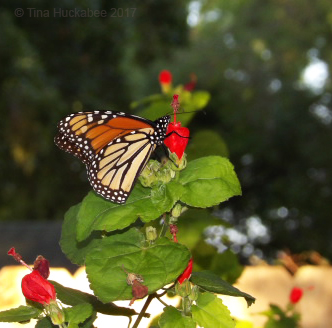
Monarchs! The magnificent, migrating Monarch butterflies, Danaus plexippus, graced my garden as they made their way to Mexico for winter.
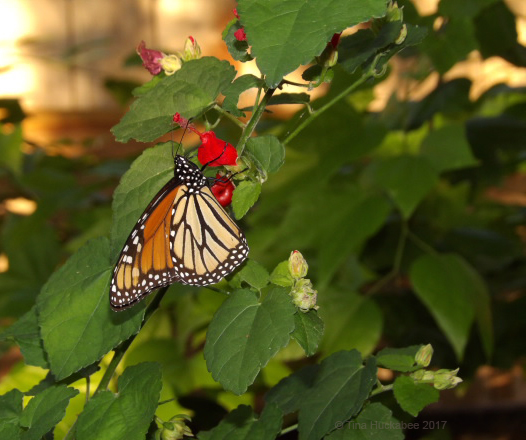
A female on a Turkscap.
It’s apparently been a good year for these beleaguered insects–thank goodness! I’ve read that because of unusually warm temperatures in Canada and the north central parts of the U.S during early to mid October, that a bonus hatching of adults occurred–an “extra” generation of Monarchs. That’s an odd thing and while Monarch enthusiasts are happy about those “extras,” it remains doubtful that they can migrate south quickly enough to escape the cold temperatures which have finally arrived, and make it safely to Mexico before the mountain wintering site becomes too cold. Additionally, those concerned with the abnormally warm northern temperatures recognize the long-term negative affects of climate change and how it is impacting this species of butterfly.
I’m still seeing a few Monarchs, but I think the mass of them are already south of Central Texas.

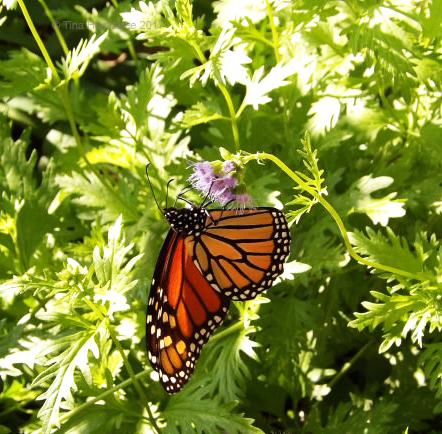
Another female on a Gregg’s mistflower (Conoclinium greggii).
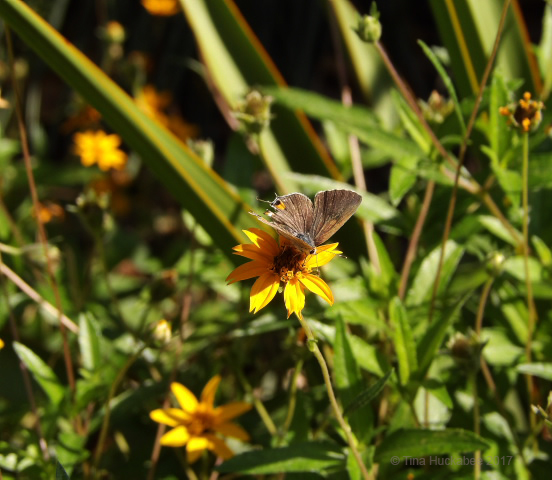
The charming Gray Hairstreak, Strymon melinus, flutters through my garden all summer. Usually, I see this,

Resting on the leaf of Shrubby blue sage after much sipping and flitting.
…wings up (well, down in the above photo!), with only the undersides visible. While that’s certainly fun and I never complain at seeing a butterfly in action, it’s nice when they spread their wings out–just long enough for a shot:

This one relishes the flowers of Zexmenia (Wedelia acapulcensis var. hispida).
Rarely has a day passed when a Painted Lady, Vanessa cardui, hasn’t been in attendance. Preferring flowers in the Asteraceae family, I can only guess that this one is in its happy place while nectaring on a Frostweed.

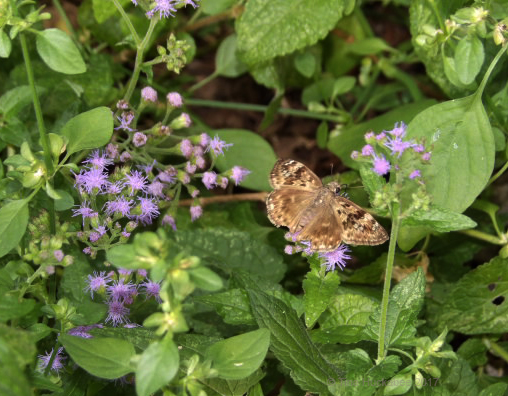
The Blue mistflower, Conoclinium coelestinum, isn’t quite the butterfly magnet that its cousins, Gregg’s mistflower, Conoclinium greggii or White mistflower, Ageratina havanensis, are, but this Horace Duskywing, Erynnis horatius, isn’t complaining about what the lovely blue blooms offer.

It wasn’t just the three B’s (bees, birds, butterflies) in my garden that were interesting; there were plenty of other contributing critters to appreciate. A Carolina Mantis, Stagmomantis carolina, hung out on the screen of a bedroom windows one weekend afternoon. Fascinating predators, they hunt and eat a variety of insects and have been known to catch hummingbirds!
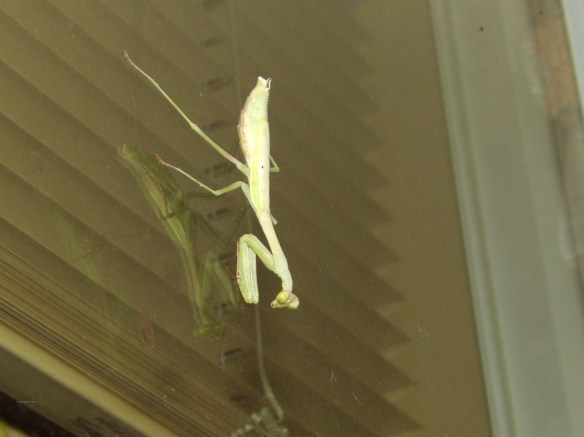
That afternoon, this mantis missed some easy hunting, as she was on the window not facing the honeybee hives we checked, causing the bees to stir up a bit. Had she been on the other window, our lost bees would be her gained meal. No matter, as the size of this mantis suggests she’s had plenty to eat–honeybees, and all sorts of other insects.
A Green anole lizard, Anolis carolinensis, gives me the stink-eye while deciding whether he wants to be green or brown. I’ve seen lots of babies recently, but this one was larger than a baby, though not fully grown.

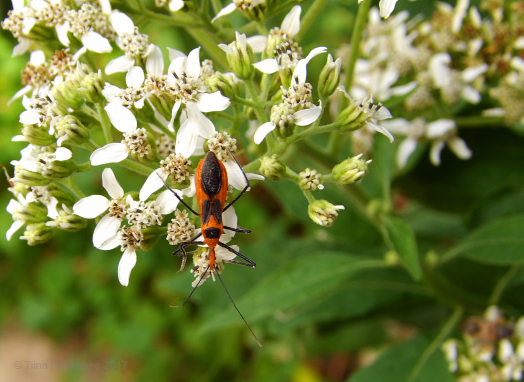
Ready for Halloween, this Milkweed assassin bug, Zelus longipes, dresses the part!

An insect predator of aphids, houseflies and others smaller than itself, the assassin bug also enjoys a drink of nectar from Frostweed.
Yet another seasonal icon, I observed this large spider hanging outside my kitchen window over the course of a couple of days. I never got a good look at her–she skittered away whenever I approached, but I saw she bundled a few honeybees in her snare.
I’ll just call her Biggus spiderus–and leave it at that!

I’ve seen several examples of this insect from time-to-time.
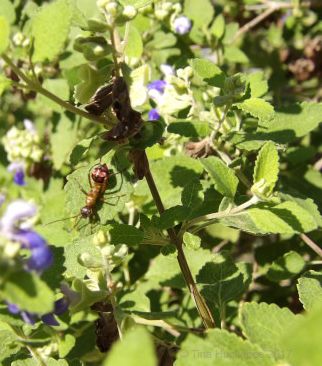
It may be a Broad-headed Bug, but this nymph looks like it should be called a Broad-butted Bug!
I always assumed it was some sort of ant, but couldn’t find anything in my go-to resources that matched. I finally uploaded this photo and description of the mystery insect to the fine folks at BugGude.net. A nice bug person responded with an identification of a nymph Broad-headed Bug, Family Alydidae, the adults of which I’ve seen aplenty in my garden. When I looked at the photos, the Broad-headed bugs looked like types of Leaf-footed bugs, Family Coreidae, which, as it happens, they were once classified with. Broad-headed bugs are now classified in their own group.
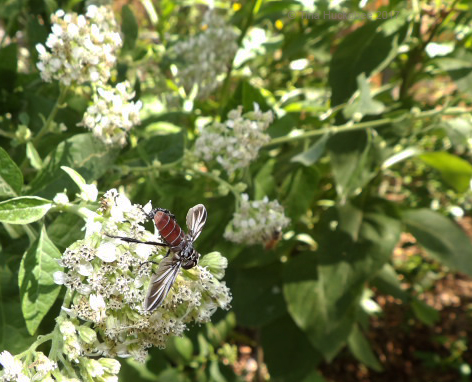
One last mystery comes in the form of this handsome fella that I watched working Frostweed blooms. It looks like a fly, but my search for an identification proved fruitless. I uploaded this photo to BugGuide, but I haven’t received an identification yet, so this one is unknown and unnamed for now. Any ideas out there?

This insect crawled from bloom to bloom. It certainly possesses a fine set of wings, though.
Celebrating lots of life in the garden for Wildlife Wednesday, I hope your garden is full of wildlife happenings and reaping autumn bounty. Please share your wildlife stories for this past month and remember to leave your link when you comment.
Good wildlife gardening to you!















 My Gardener Says...