The wildflowers in my central Texas garden are screaming SPRING, and this week, May 1-7, is National Wildflower Week, so claimed with the purpose of celebrating the beauty and practicality of planting and nourishing native wildflowers alongside roads and in home and commercial gardens. Wildflowers define place, as they are specific to region, and besides the beauty that wildflowers add to the world, they serve another noble purpose: to provide food and cover for endemic wildlife.

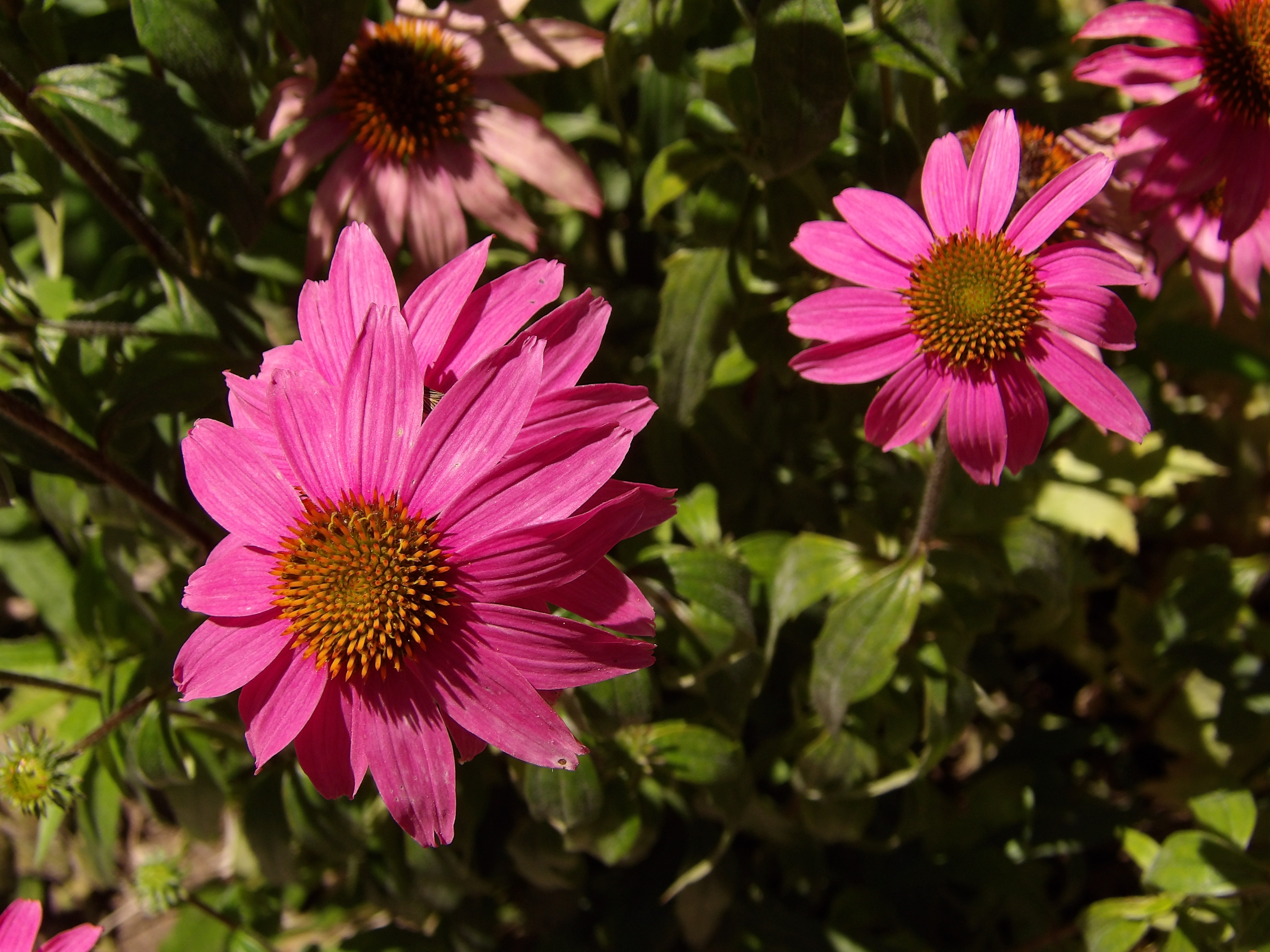
Gulf Fritillary butterfly (Agraulis vanillae) nectaring at a Purple coneflower (Echinacea purpurea). Yellow Zexmenia (Wedelia acapulcensis var. hispida) pops in the background, while Mexican feathergrass (Nassella tenuissima) waves in the breeze behind.
Wildflowers are easy to grow because they belong where they grow. Encroaching urbanization, modern agricultural practices, and the use of non-native, invasive plants threaten native wildflowers and the spaces where they thrive. You can help lessen that threat to North America’s bountiful natural legacy by growing wildflowers in your garden. They are simple, elegant, and practical plant choices for home gardeners. Most wildflowers germinate easily by seed and many locally owned nurseries carry container grown wildflowers. If you want to grow wildflowers by seed, use seed packets that contain specifically named seeds that are native to your region. Not only will you get the best results for your seedy efforts, but you’ll be a partner in the restoration of the magnificent endemic flora–wherever you may live in North America.

Red Admiral (Vanessa atalanta) at Purple coneflower.
Check out the Lady Bird Johnson Wildflower Center’s website for excellent information on wildflowers and native plants. Good native wildflower seed sources include, but are not limited to: Native American Seed, Prairie Moon Nursery, and Wildseed Farm.
I’ve grown native plants and wildflowers in my modest urban garden for more than 20 years. Conditions have changed and interests evolved, but I’ve never regretted the transition from a garden of turf and non-native plants to one utilizing native Texas plants and wildflowers. They’re a snap to grow and fetching to behold. Unlike many non-native plants, natives are tough and stand up to the challenging soil and capricious weather patterns of Central Texas.
The following is a smattering of wildflowers and native shrubs that are currently abloom in my garden this 2017 National Wildflower Week.
This perennial wildflower, Engelmann’s daisy, Engelmannia peristenia, blossoms in clusters, complementing its deeply lobed foliage.

A prolific spring to early summer bloomer, it’s also a favorite for many native bees like this metallic sweat bee.

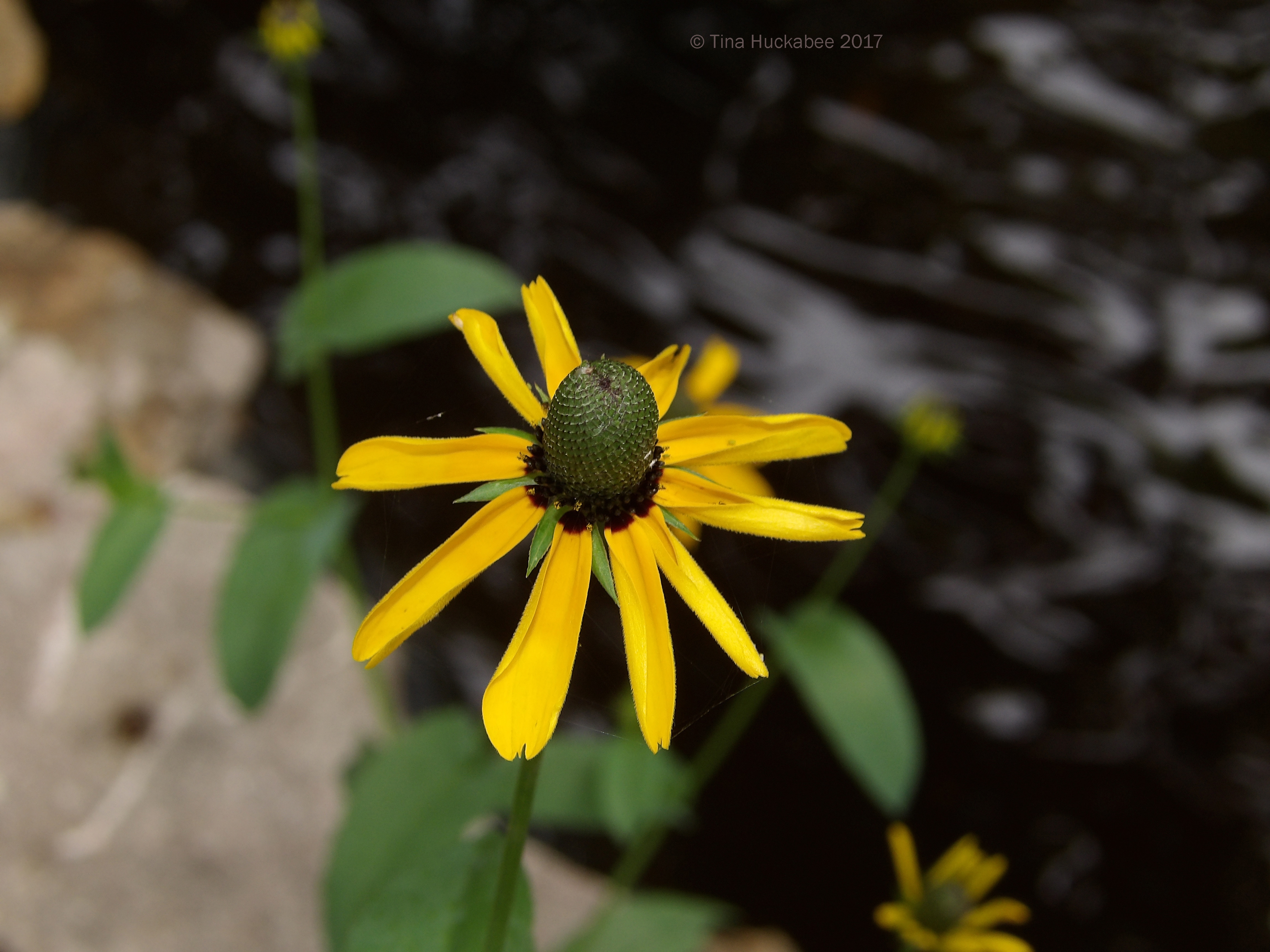
A gloriously re-seeding annual wildflower, the Clasping coneflower, Dracopis amplexicaulis, blooms precariously by the pond.
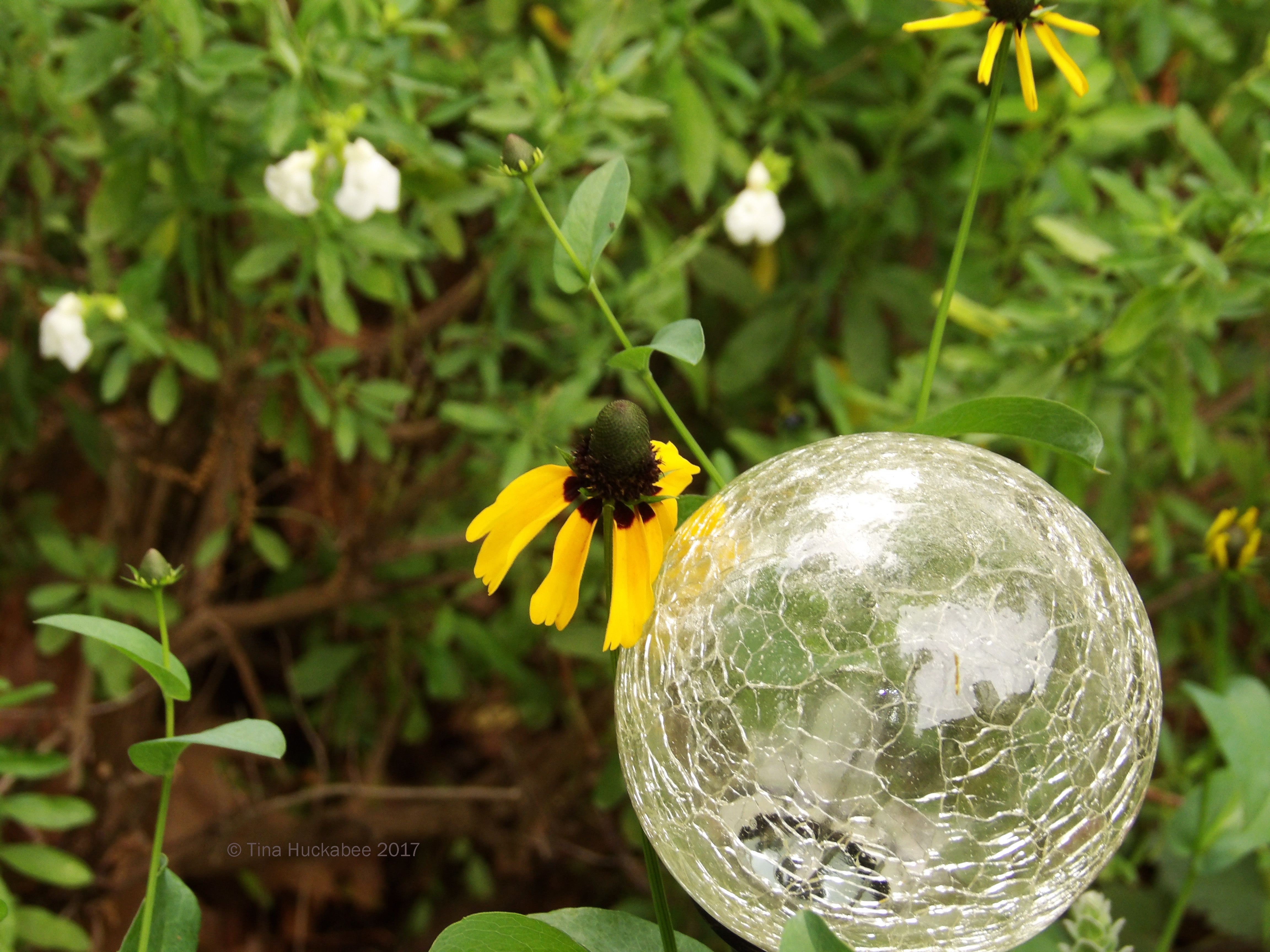
These cheery wildflowers mingle with other spring beauties. Another Clasping coneflower cuddles with a solar lamp, while creamy-bloomed native Autumn sage, Salvia greggii sparkles in the background.
Here, the Clasping accompanies the Purple. Further afield, red Autumn sage blooms.

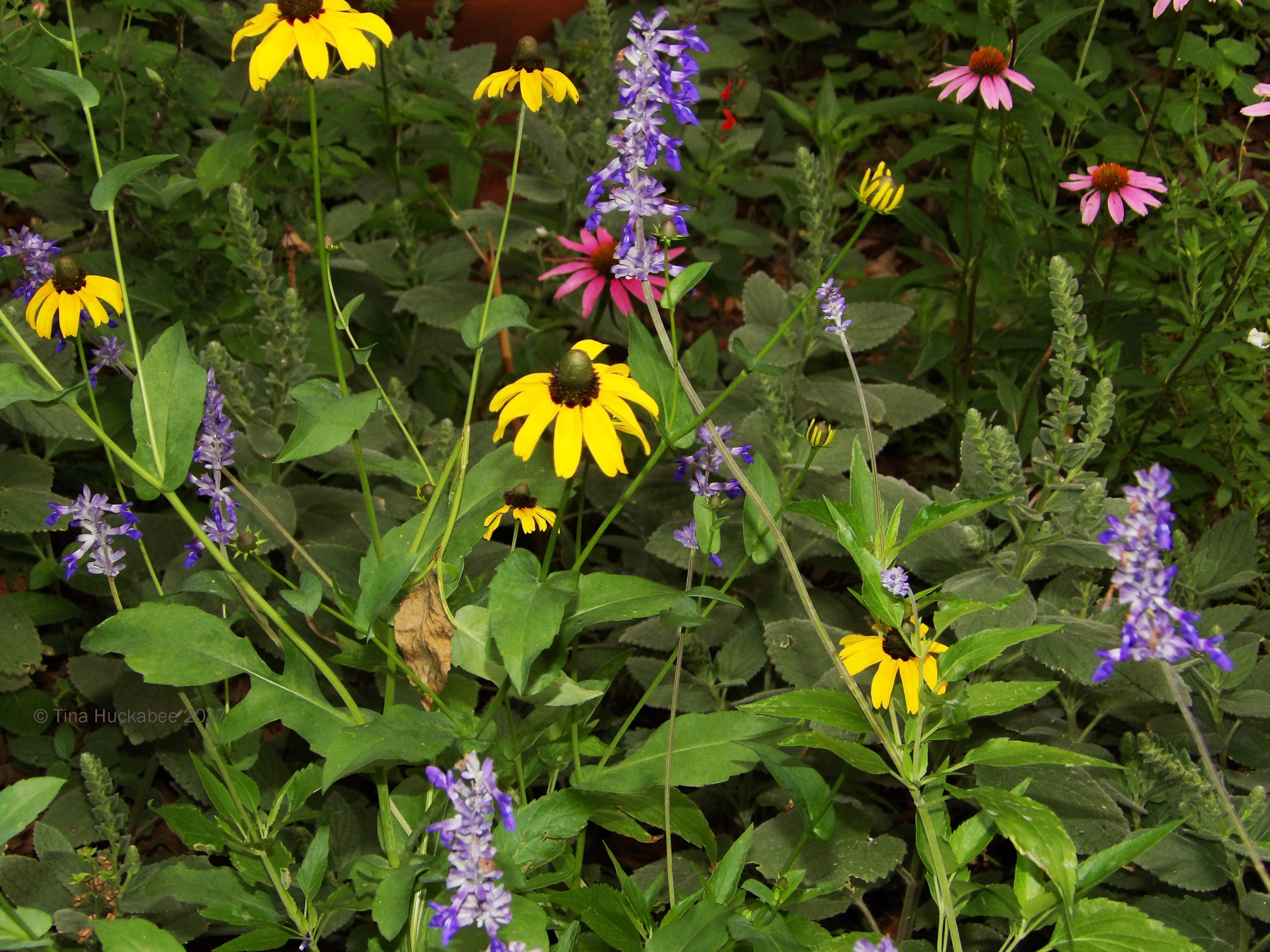
Henry Duelberg sage, Salvia farinacea ‘Henry Duelberg’, cools a hot wildflower color combo of Purple and Clasping coneflowers. Henry the wildflower was found in an old Texas cemetery by plantsman, Greg Grant. It’s easily propagated by seed and readily available in various sized containers in nurseries.
Other spring wild things, like dainty, shade-loving White avens, Geum canadense,

…and the aftermath of its blooms, quiet the garden.

Toward the end of its spring show, wildflower Wild red columbine, Aquilegia canadensis.
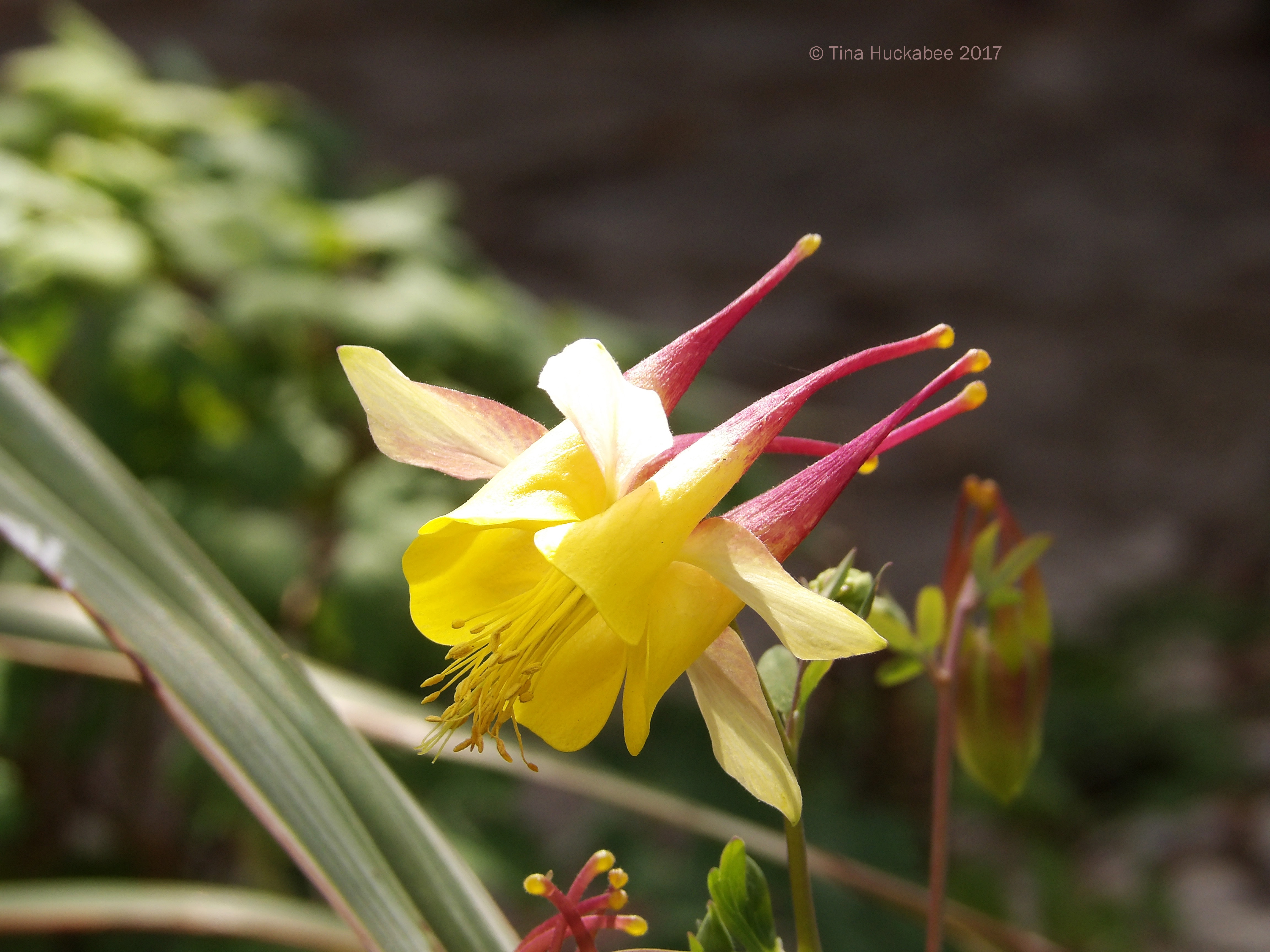
…and its spring partner, Gulf penstemon, Penstemon tenuis, are fading and will make way for those who enjoy the heat of summer.

Just beginning its long summer-fall bloom period is the Tropical sage, Salvia coccinea.

Red blooming

White blooming
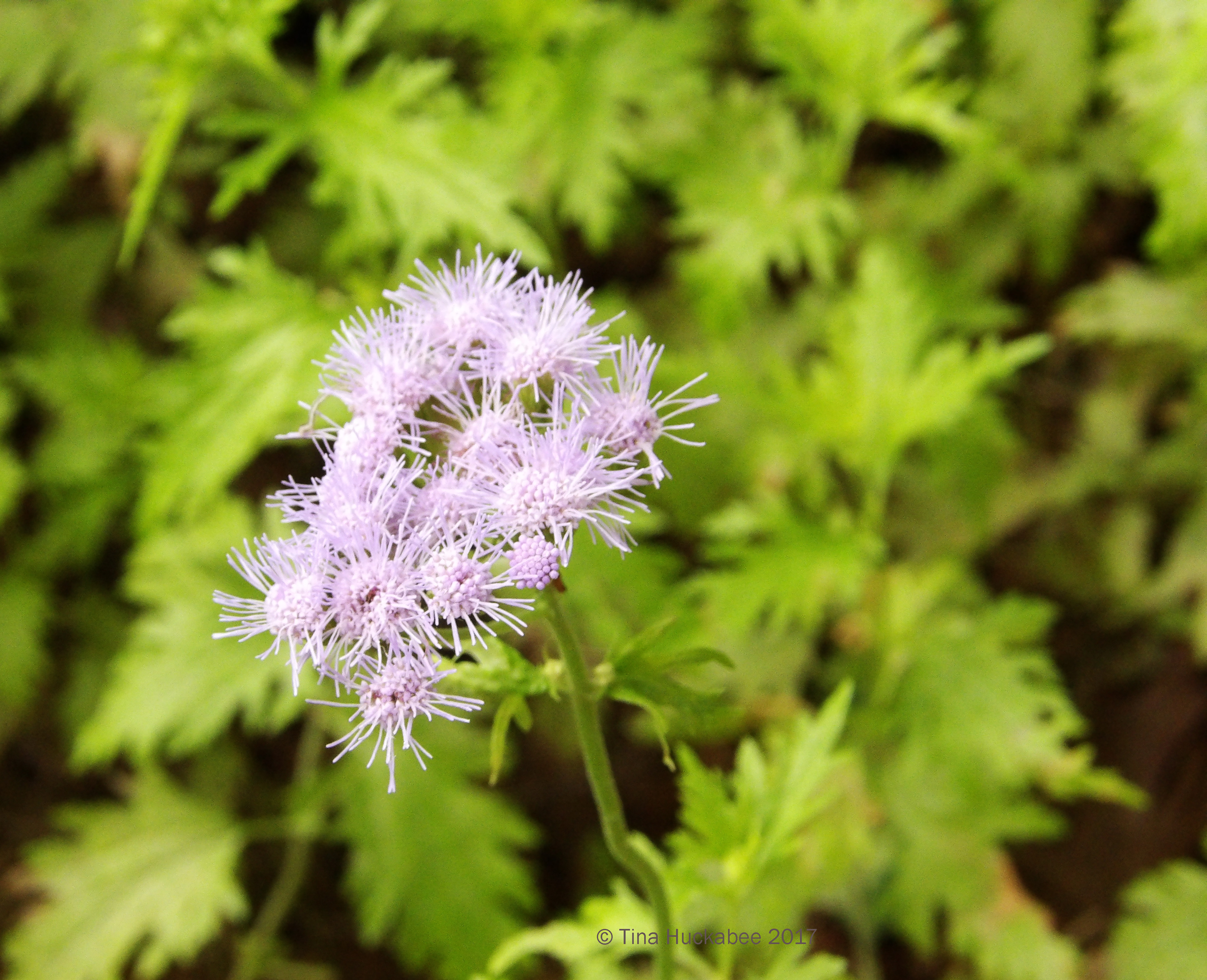
Favoring late summer and fall when it blooms in earnest for multitudes of busy butterflies, this Gregg’s mistflower, Conoclinium greggii, displaying its blooming fuzz in a season not its own, shows it has contracted wildflower spring fever.
More wildflower blues in the garden– another Henry Duelberg sage,

…and lavender-blue Heartleaf skullcap, Scutellaria ovata.
Here, the Heartleaf fronts a late summer flowering wildflower, Drummond’s ruellia, Ruellia drummondiana,

…and here, it fronts Purple coneflower and another fall blooming wildflower, Plateau Goldeneye, Viguiera dentata.

Heartleaf is a wildflower perennial which acts as a winter, spring and early summer groundcover. It fills the garden with drifts of grey foliage topped with striking, lavender-hued, pollinator-friendly bloom spikes. Heartleaf skullcap is an excellent landscape plant.

Native plants and wildflowers certainly combine well with hardy non-natives like iris, day lilies and roses. Though this post is to remind and encourage gardeners to grow local, that doesn’t mean that beloved non-natives are necessarily poor choices as long as they’re not damaging, by being invasive, to the local environment.

The sweet Caldwell pink roses (at right) are the only non-natives in this shot.
These spring examples are a few of the North American native plants and wildflowers that I grow. The trickiest aspect of having these lovelies in my garden is deciding what to do with the many seedlings they produce. No worries–I’ve given scads away and they’re propagating happily in new homes, giving joy to their gardeners and sustenance to their fauna!
You too can grow wildflowers–they work, they’re beautiful, they’re easy.

Happy National Wildflower Week–buy some, trade some, plant some!








 My Gardener Says...