Foliage and Bird

It was a sprinkling of snowy Four O’Clock flowersMirabilis jalapa, that caught my eye one evening, not too long before sundown.  My two Four O’Clock plants (the other one blooms a stunning hot pink) are pass-alongs from a gardener and former blogger.  This old-timey, Southern garden addition-by-way-of-Central and South America, is a night bloomer and grows from a fleshy root which can become quite large.  The creamy flowers brighten a shady area close near my pond;  the flowers open in late afternoon, bloom all night, and close by late morning.  

But it was the metal bird, standing in a diversity of foliage, that resonated as a garden story.  Even though I planted this crew, I didn’t recognize just how different the various leaf forms are and how well they complement one another as they mature. 

Sometimes, it’s challenging to see consciously what will be as a garden evolves.

Clockwise from top left, the blue-tinged Soft-leaf Yucca, Yucca recurvifolia, sits next to the tropical green foliage of the Four O’Clock.  To its right, another grey-blue foliage plant, Drummond’s Ruellia, Ruellia drummondiana, serves as backing for three individuals of strappy, stripy Carex phyllocephala ‘Sparkler’ sedge–and that’s where the quirky bird perches.  A couple of iris straps and dangles of autumnal seeds of Inland Sea Oats, Chasmanthium latifolium complete the oddball group.

The Drummond’s Ruellia and ‘Sparkler’ sedges will grow and will require management: the ruellia will need pruning and the ‘Sparklers’ transplanting.  Maybe the bird will  migrate elsewhere.

For now, the group is simpatico and the gardener is pleased.

It was Anna’s own lovely foliage photo which reminded me of my foliage and bird.  Check out her Wednesday Vignette for garden happenings.
That Branch

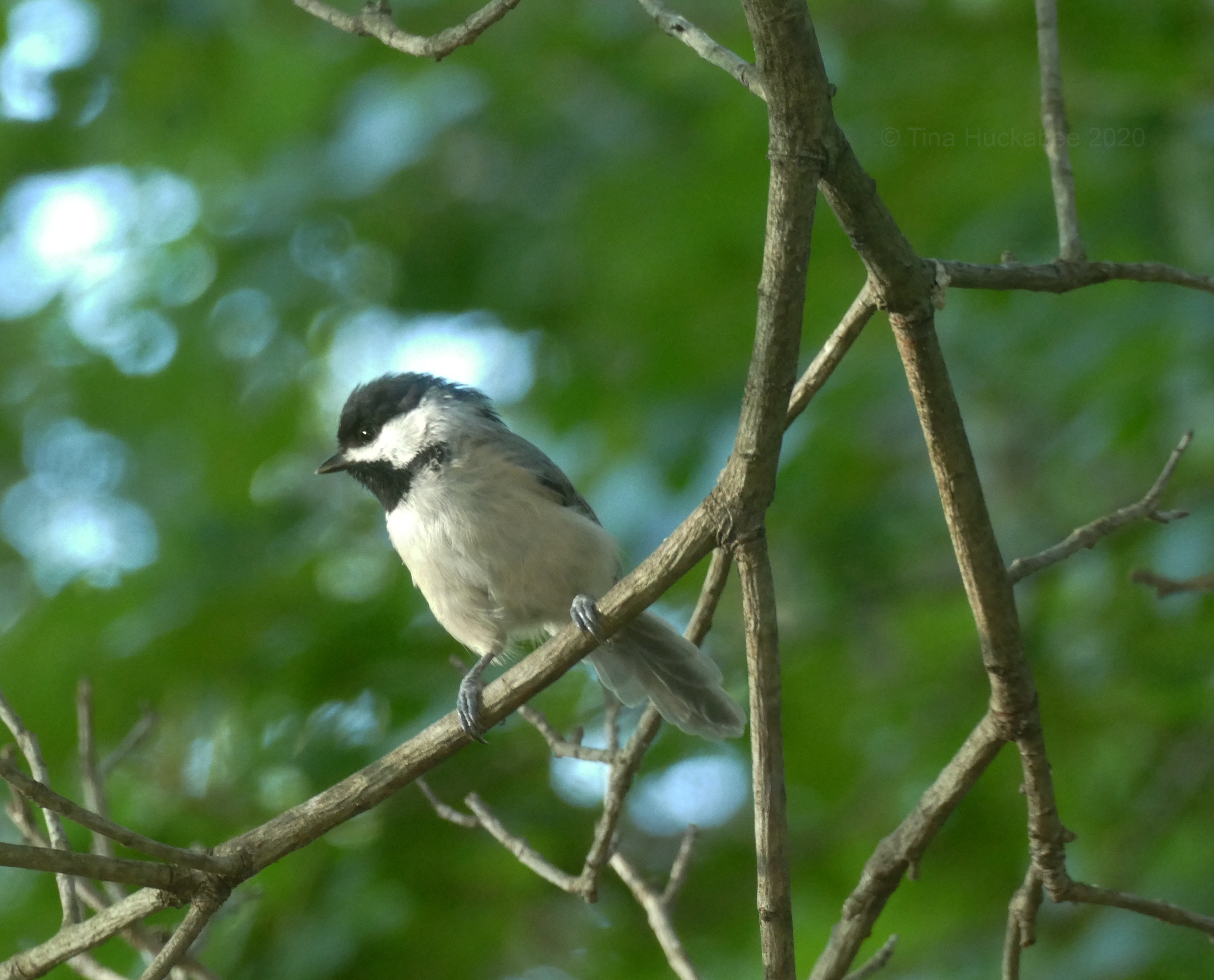
Sometimes I look at that dead branch and wonder why I haven’t pruned it back to the  major limb that’s actually alive.  The branch belongs to a Red Tip Photinia which I planted decades ago when I was a newby gardener and knew next-to-nothing about gardening in Central Texas.  It sits near a back corner of my house and I’ve kept it because it provides evergreen coverage for the many birds who visit: those who’re migrating through and the neighborhood birds who’re making the rounds to feed, drink, and rest.  That’s why I keep the Photinia, but why the dead branch?

This is why.

Carolina Chickadee (Poecile carolinensis)

The branch is perfectly suited for a quick dash to or from the feeder: feeding birds snatching a snack, then retreat to the large shrub to nosh.  Sometimes the birds prefer the foliaged parts, sometimes, they’re content to perch in the open.

What I’ve learned in the decades since I plopped the Photinia into the ground is that the perfectly coiffed “yard” is not an inviting home or welcoming place for birds, bees, butterflies and other critters.  My goals in gardening have changed from those early days and I prefer plants, or plant parts, that are useful for those critters who live among us critters.

The branch will eventually break, either from a heavy wind or rain, or just because–but I won’t bring it down.  I’ll leave it for the birds until events require them to find another place to park.  

I’m happy to link today with Anna at her lovely Flutter and Hum and Wednesday Vignette; pop on over to enjoy garden stories. 

Drummond’s a Cure for the Dog Days

During these August days, these hot days, these dog days of summer, I relish the relative cool of my garden.  Here in Texas, morning is best–quiet, fresh, uncooked. It’s been hot, more hot than what once passed for August hot.  Fortunately, my garden remains green and lush, with sprinklings of color–some warm, some cool–all welcome.

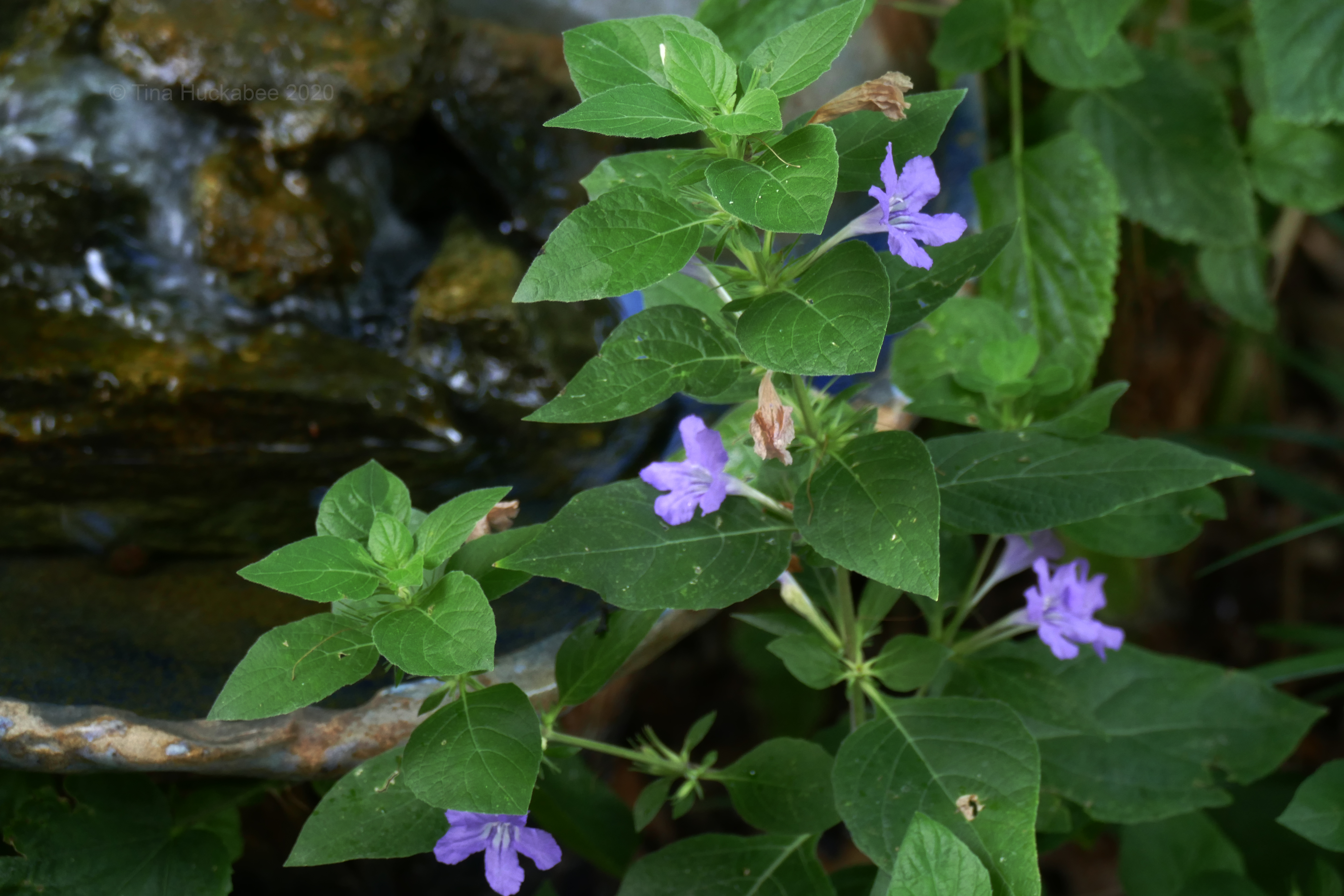
Drummond’s Ruellia, Ruellia drummondiana, is a star in the garden, especially at this time of year.

This native summer blooming wildflower which came from seeds collected some years ago, were let loose to live: they germinated and have produced many generations.  They’re happy wherever they set root, or wherever I transplant the emergent seedlings. Drummond’s bloom sporadically in late spring and early summer, but ramp up in July, reaching the zenith of their beauty just as our “real” heat kicks in and kicks ass.  Well, kicks my ass, anyhow.  The Drummond’s Ruellia?  They’re just fine and dandy: no wilting, no complaining.  The hotter it is, the better they bloom.

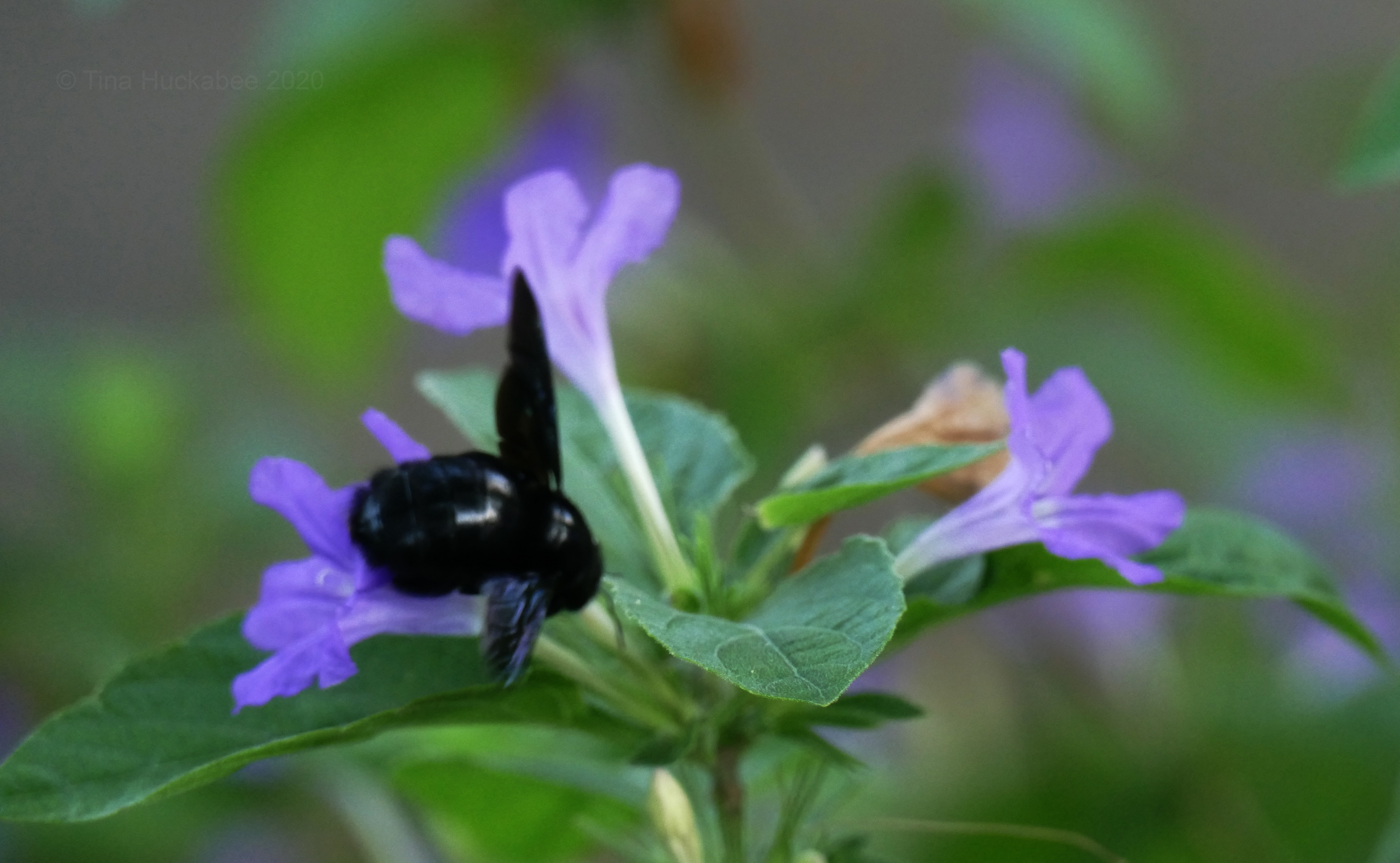
Visited by several kinds of native bees, honeybees, and some small skippers, the ruellias are hosts for pollination parties.  This ruellia is also the host plant for the Common buckeye, Junonia coenia, though that butterfly isn’t particularly common in my garden.  I grab my camera when I see one.

The plant produces flowers in pretty purple, each individual flute opening for just one day.  At the end of the bloom life, tissue-paper petals form, preparing for seeds and new blooms.

Drummond’s Ruellia is a great shade/part-shade plant and perfect for my shady place.  

Linking today with Anna at her lovely Flutter and Hum and Wednesday Vignette; pop on over to enjoy other garden stories.