A Fab Fritillary

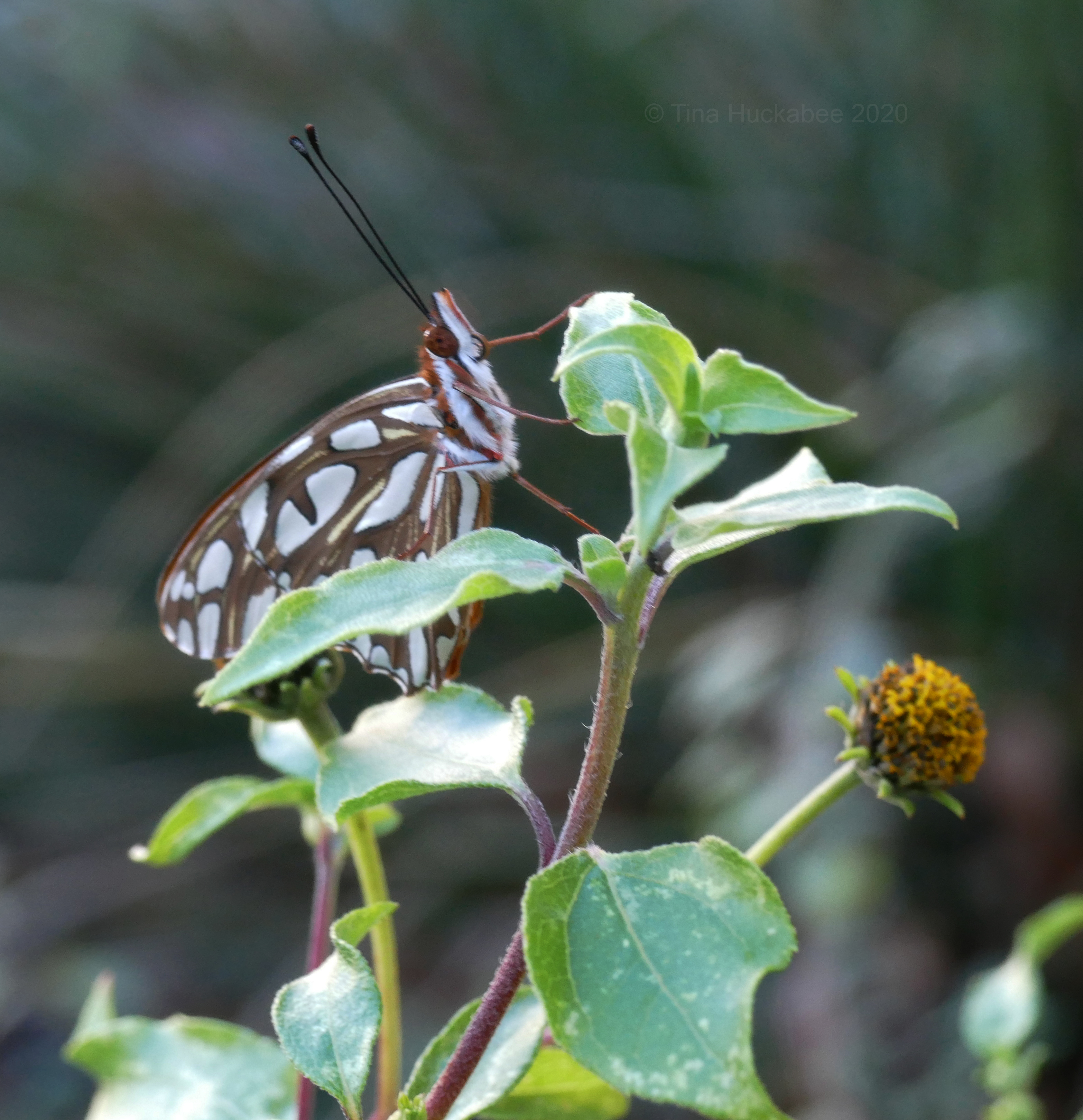
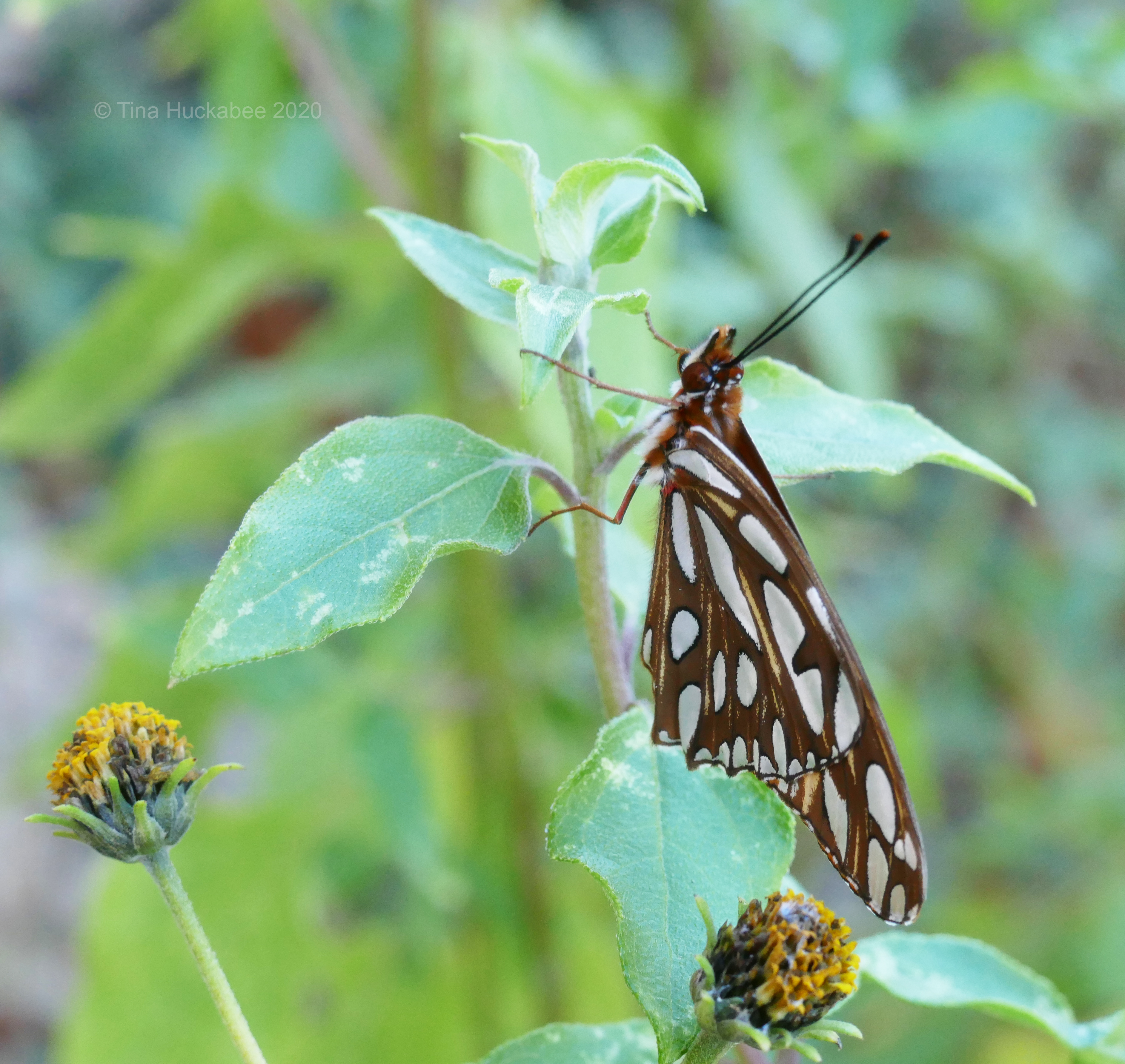
Standing tall and proud, this Gulf FritillaryAgraulis vanillae, is a butterfly master and commander.  

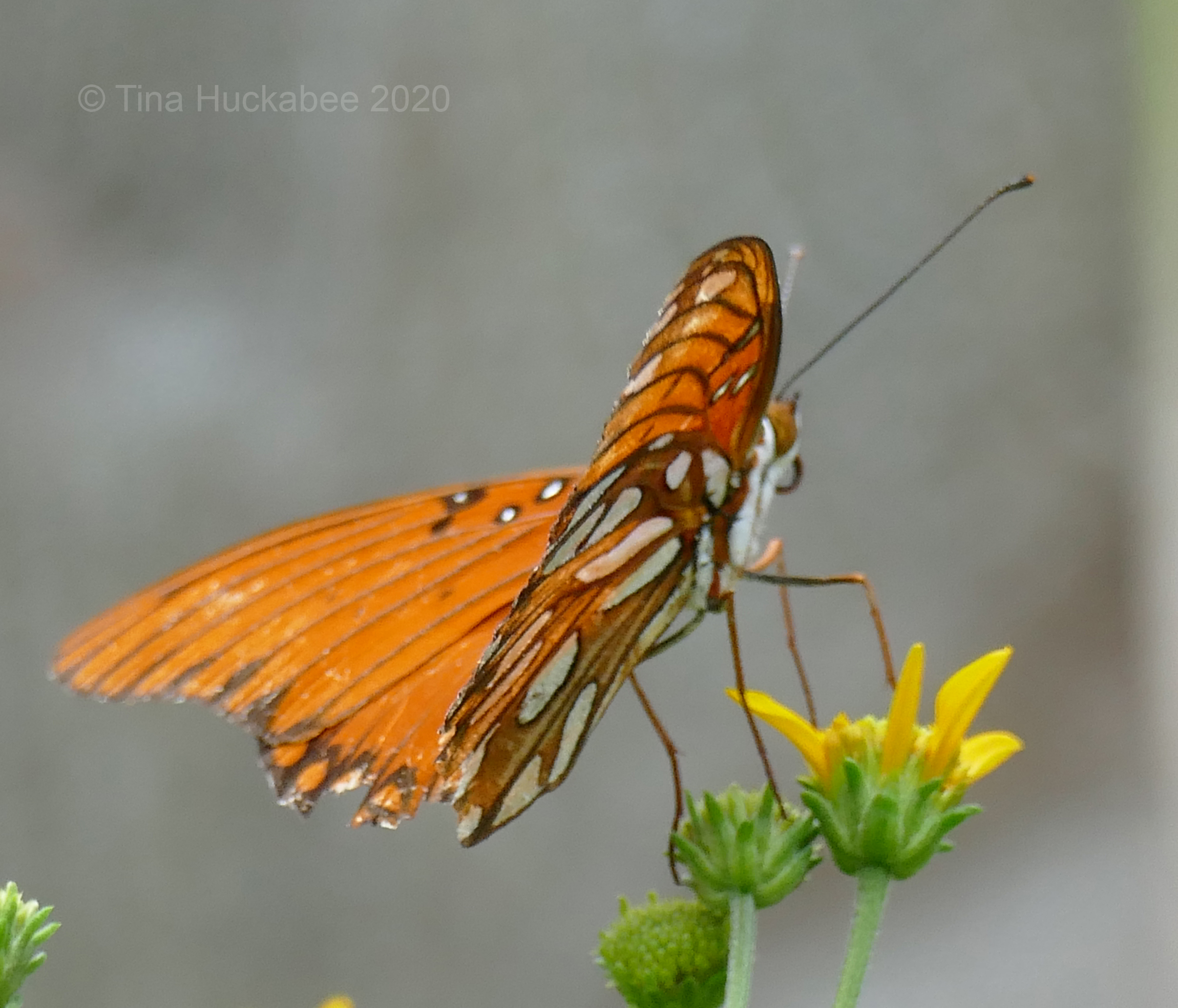
At a different angle, this wings-up wanderer rested early one chilly morning, taking a rare break in its constant search for food and a mate.  Breezy north gusts rendered tricky, this capturing of the butterfly’s calm. 

Nevertheless, it posed, still and quiet, for the shot.

The bloom has-beens in the photos are those of Plateau goldeneye, Viguiera dentata, a member of the Aster, Asteraceae, family of plants, a favorite nectar source for adult Gulf Fritillaries.

I didn’t witness this particular butterfly nectaring that particular morning, but there are plenty of adult Gulf Fritillaries in my garden right now, resting on plants, and also flying and nectaring.   On warm afternoons this one and its kin are working the remaining blooms of Plateau goldeneye, Tropical sage, Salvia coccinea, and occasionally, Forsythia sage, Salvia madrensis. 

This past season there was a dearth of these dearies.  Eventually, I figured out that the juvenile stage of the butterfly (caterpillars or larvae) were being parasitized by the local wasps, a common butterfly predator.  At some point, the cycle shifted: too few of the larvae, in turn, decreased the population of the wasps.  Without the interference of the wasps, the butterfly larvae completed their cycle: they morphed, mated, and once again, adults are in the garden.

I’m not complaining.   It’s lovely to see the orange beauties decorating the garden in January.

My Blue Passionflower vine, Passiflora caerulea, currently looks a mess because there are, or recently have been, larvae munching on the leaves.   The adults which have emerged will likely remain active until we get a hard freeze, if that happens. And even if that happens, it’s a guarantee that some, if not most, of the butterflies will weather the freeze in fine form, ready to rebound in spring.

Butterflies are, or should be, part of a garden’s vignette, so today, I’m joining with Anna and her Wednesday Vignette.  Pop over to Flutter and Hum for other garden vignette and musings of various sorts.

Breakfast Buddies?

With rain in the forecast, yesterday morning was a good time to get down and dirty in the garden–both mine and my sister-in-law’s.  Living in a somewhat arid climate, I take advantage of the wet stuff from the sky to dig and plant.  For my garden, it was about clearing out some Barbados cherry, Malpighia glabra, which colonizes with verve, and for my sister-in-law’s garden, it was transplanting those rogue bits of shrub-with-root to a new home:  to grow, be beautiful, and provide cover and fruit for birds, and nectar and pollen for pollinators.

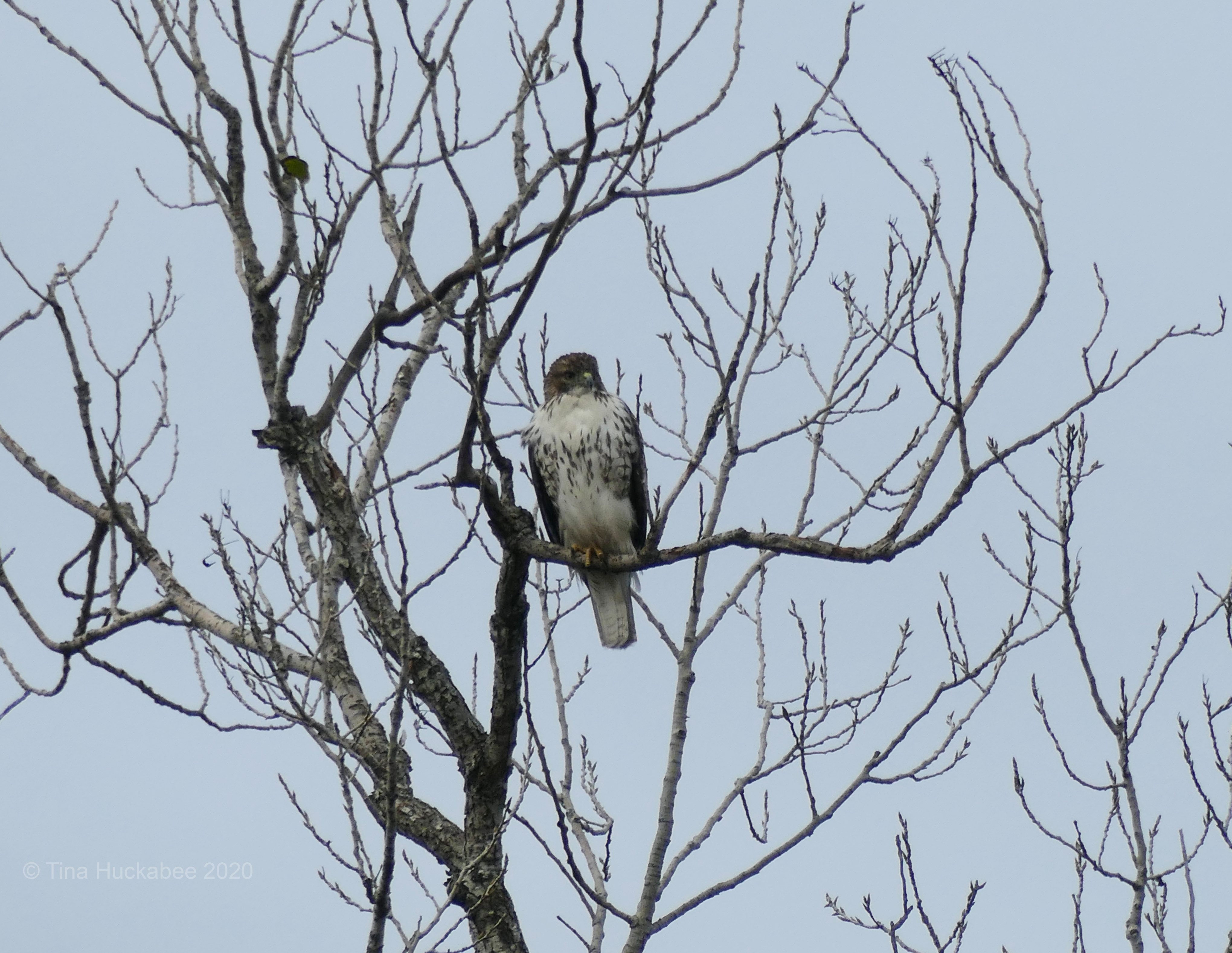
I was out early, not too long after sunup, mulling the day ahead, when I spotted our neighborhood Red-tailed HawkButeo jamaicensis, high up in a winter-bared tree.

The tree sits on a property belonging to the street adjacent to mine;  I don’t know whether it’s a front or back garden tree, but it’s at some distance from my front garden.  For this once, I wish my camera owned just a little more scope moxie.

Still, it’s not a bad shot.

As I aimed my lens at the hawk, a gaggle of Great-tailed Grackles, Quiscalus mexicanus, fluttered onto another set of branches.  Grackles are chatty and gregarious; perhaps they wanted to keep the hawk company on this grey morning?  Or maybe they  wanted to share tips on the best places for breakfast?

My guess?  They wanted to watch her–like a hawk!

I soon got to work:  back and forth from my garden to my SIL’s, I excised the mini-shrubs, checking the roots’ viability, then chucking those which passed the test into the bin.  I dragged that bin to SIL’s garden, where I proceeded to dig and plant, allowing new starts to this valuable native plant.  As I moved from her garden to my own, I noticed that the hawk kept sentry in the tree, sometimes with company, sometimes alone.  She moved a couple of times, but mostly preened and observed, feathers ruffling in the morning breeze, intelligent eyes watchful.

Eventually, a Blue JayCyanocitta cristata, settled in, just below the hawk.  The hawk and the jay hung out.  What do two birds talk about?  Did you sleep okay last night? What did you have for breakfast?  Do you have any friends or relatives I can eat?

After about two hours of my work and the hawk’s perch, she was gone from the tree when I finished.

As far as I am aware, no bird ate breakfast and no bird was breakfast.

Please check out Anna’s at Flutter and Hum for garden–and other–musings.

From Fog to Sun

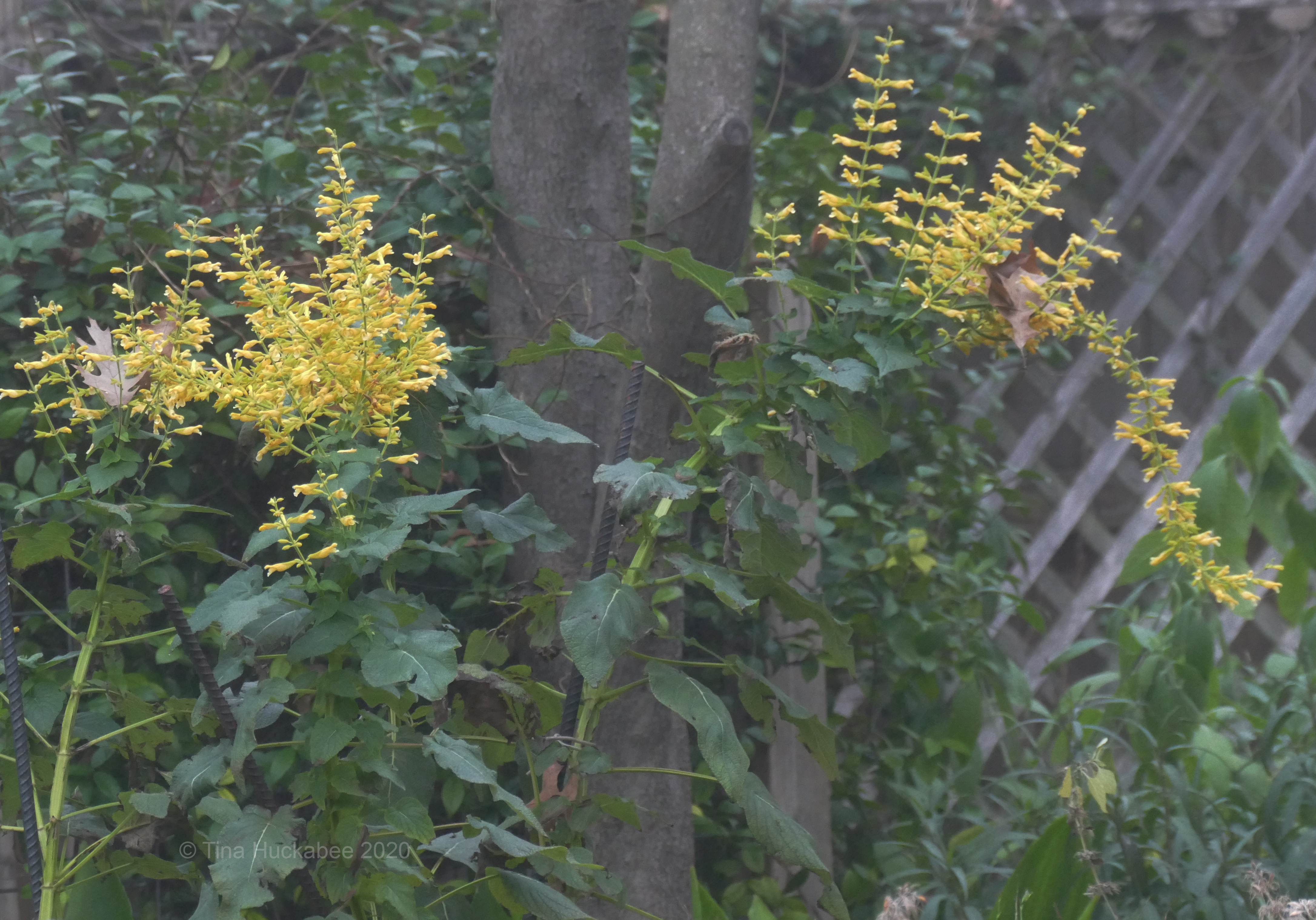
On this gloppy, drippy, foggy morning, the late-blooming Forsythia sage, Salvia madrensis, appears hesitant in its commitment to yellow.  I took several shots, frustrated that the camera lens wasn’t capturing the proper hue of this plant, even if it rocked a yellow vibe in the garden.  Was the lens as fogged as the air?  Was the photographer as fogged as the lens?  Was more coffee needed, or perhaps, another day’s rest from a bout of flu? (Yes, I did get a flu shot in October.  Alas!)

I neglected to prune the branches of the sage in mid-to-late summer, so the branches are floppy. Notice the rebar which follows the line of the tree? My lame attempt to keep the sage in some form of upright.

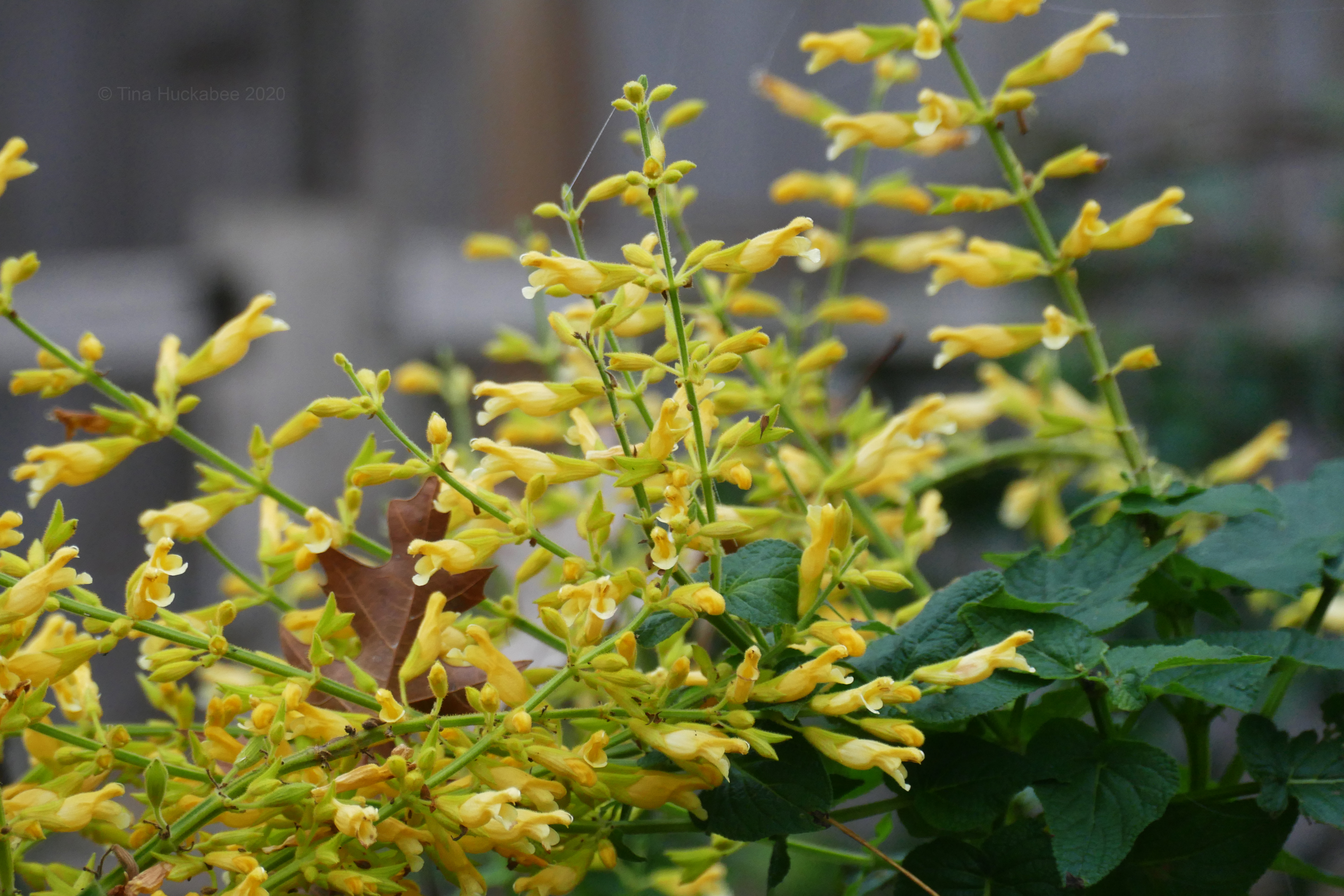
A ramble down the pathway and a halt at the plant delivers the answer: at close up view, the plant loses the veiled dullness that the distant shot suggested.  Instead, the foliage is defined and fresh, the masses of late-season, post light-freeze blooms their normal rich butter-yellow.  As long as no fog impedes, either in the atmosphere or in the flu-addled brain of the gardener, the S. madrensis retains its happy demeanor, providing a welcome counterpoint to the dark of winter.

The lush salvia flowers, situated in whirls along the terminal ends of long branches, shout look at us!  In mid-January, with only a few bare frosts under the garden’s belt, there are scattered blooms in my garden; nothing dramatic, just a few pops of red, yellow, and white, but enough to give the honeybees something to snack on during bee-friendly weather.  S. madrensis is bloom royalty this January, granting a sunny focal point in my back garden, and appreciated for its beauty, no matter what the weather conditions.

S. madrensis hits its flowering stride starting in late October, blooming until there is a mid-20s freeze.  Who knows when–or if–that will happen this year.
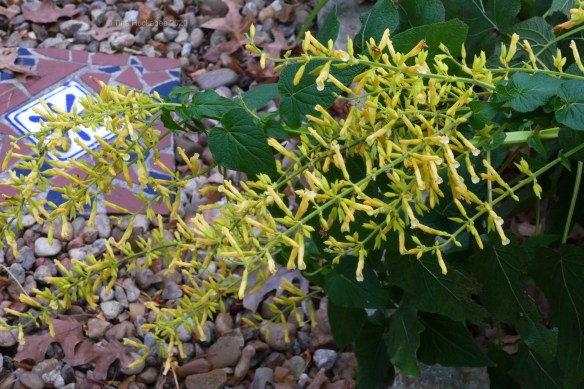
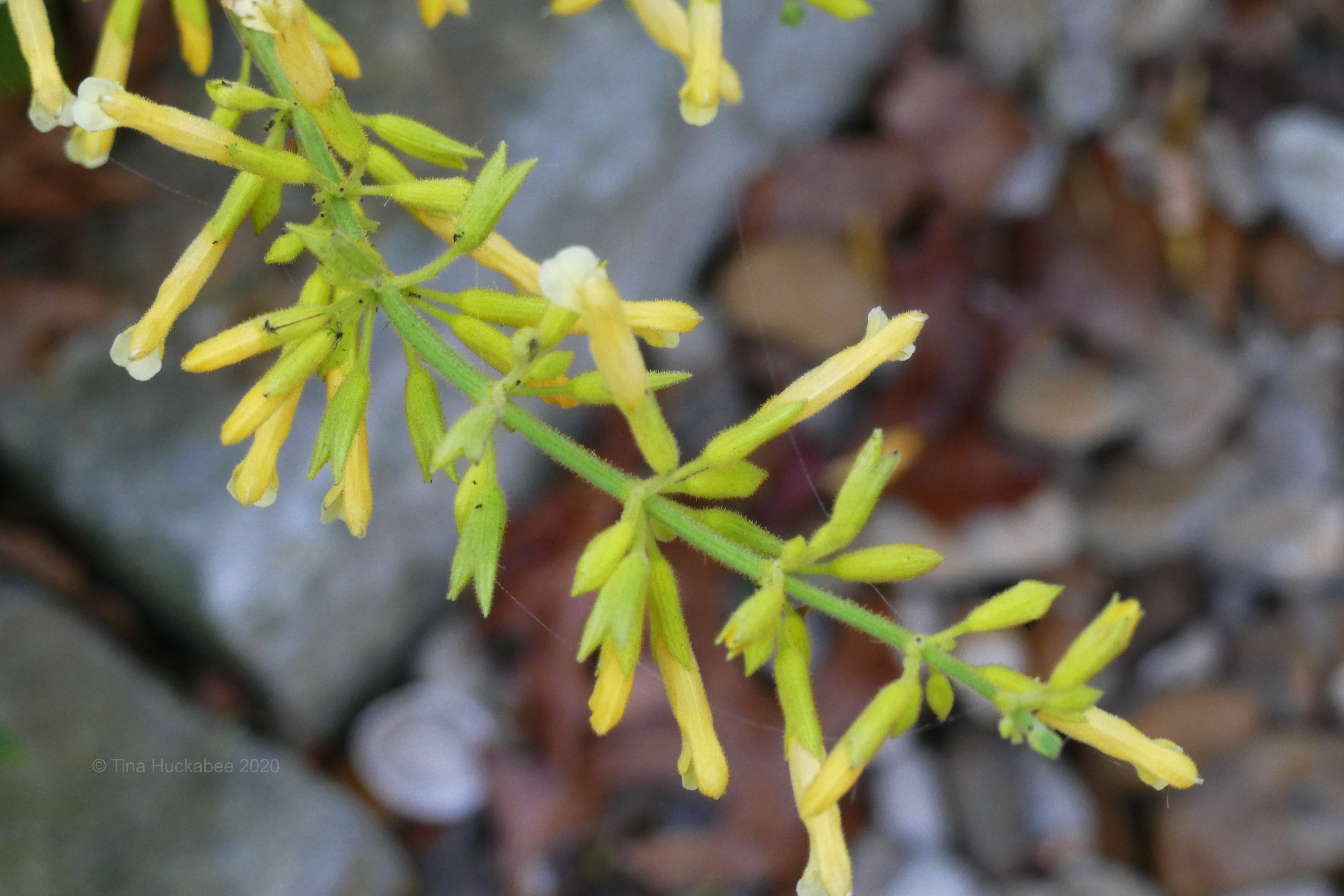
This cluster of blooms flops toward the pathway, almost–but not quite–impeding a walker.

My cluster of this native to the Sierra Madre Mountains of Mexico is a passalong from a friend and I’ve grown it for about 5 years.  Its common name, Forsythia sage, is so applied because the clusters of yellow are reminiscent of spring blooming forsythia, a common plant grown in much of North America (and elsewhere), though as far as I’m aware, it’s only in the northern third of Texas where forsythia thrives.  Until I traveled to Oregon to visit my son when he was in college, I’d never seen forsythia in real time–only in photos.

Foliage of S. madrensis is attractive in summer. Where mine is planted, its slightly blue-grey foliage stands unique among its truer green neighbors. I’ve noticed that this sage requires extra water during our hottest time of year (more than most of my plants), but that’s easily remedied because it’s planted along a pathway and situated between several bird baths, so I employ the hose in that area on a weekly basis and extra drinks of water are delivered.

In August, along with some other autumn bloomers, I prune the S. madrensis branches by one-third to one-half, but for whatever reason, this year I didn’t get around to that chore.  As a result, once the blooms burst forward, the branches drooped downward.  I chastised myself with the garden adage that if you have to stake, it’s too late to stake.  But stake I did (which you can see in the first photo) and that’s allowed most, though not all, of the branches to remain at attention (rather than flopping along the ground, annoying other plants) and proudly displaying their sunshine blooms, thus brightening the garden.

The main pollinator of S. madrensis are now dormant for winter: the Horsefly-like Carpenter beeXylocopa tabaniformis.  Interestingly, I don’t recall ever seeing honeybees at these blooms, but I have seen butterflies–just not recently.
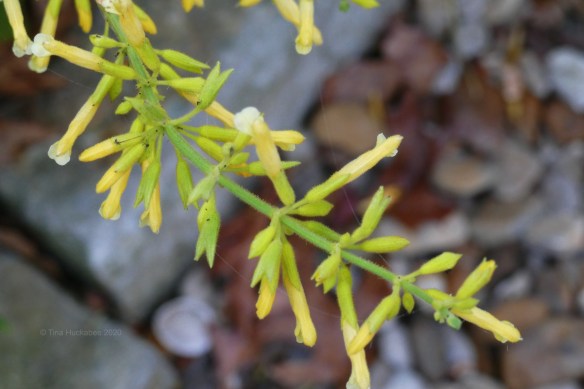
Even with our (so far) mild winter, the grey gloom and short days remind me that appreciation of good health and garden beauty are paramount–and the joyful blooms of S. madrensis go along way to make that happen.

In celebration of my Central Texas, zone 8b blooms–and all others–I’m joining in today with Carol of May Dreams Garden and her Garden Bloggers’ Bloom Day–I really need to do this more often!   As well, Wednesday is always a good day for garden ditties, so I’m also joining with Anna of Flutter and Hum and her Wednesday Vignette.  Check out both these beautiful blogs for gardening insights.