Bees, Birds, Butterflies: Wildlife Wednesday, November

Today is the first Wednesday of the month and time to appreciate the critters who live in our gardens, adding beauty and life while sustaining pollination and seed distribution.  Birds, bees, and butterflies are always welcome visitors, but others contribute their threads to the wildlife fabric of the garden. October is typically a glorious month  in Austin, Texas and this past month was exemplary in things weather and garden related.

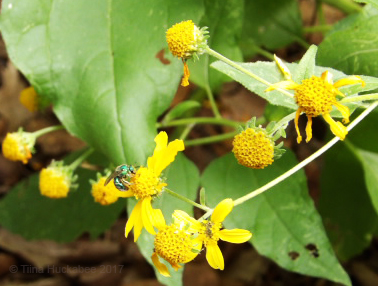
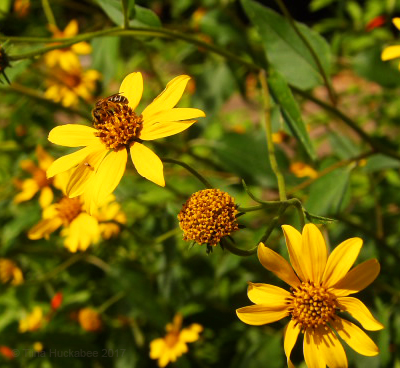
Masses of fall blooming perennials have spurred pollinator activity.  Native bees, active most of the growing season, have been all over obliging blooms. This Green Sweat BeeHalictidae, and its metallic buddies have reveled in the Plateau goldeneye, Viguiera dentata, flowers.
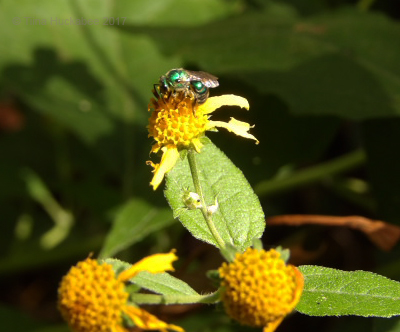
Looks like someone munched the petals before Ms. Bee arrived, but ragged, clearly nibbled-on petals don’t slam the brakes on pollen and nectar gathering.

Caught in flight!
Proboscis deep in bloom.


Small Striped Sweat BeesHalictidae, also favor the goldeneye blooms.
No photos as evidence, but I’m observing these yellow and brown ladies busily filling nest holes in a bee hotel affixed on my back patio.


Horsefly-like Carpenter bees, Xylocopa tabaniformis, always abundant in my garden, are slowing down as the light is changing and temperatures are cooling, but they’re still  buzzing the blooms and drilling wood for nests.

This bee rocks  pollen-filled corbiculae.  One wonders how they fly, so loaded with pollen.


Honeybees never miss pollinating action and are in full honeyflow mode.  The back garden is awash with the fragrance of honey.
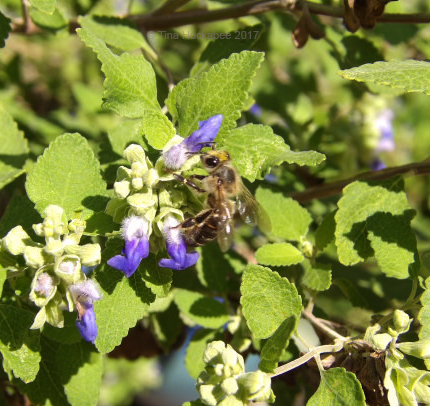
This girl is enjoying the bounty of Shrubby blue sage (Salvia ballotiflora).


Birds are always a thing in the garden and recently I’ve glimpsed an Eastern Screech Owl and heard its territorial trills; the owls are year-round residents in the neighborhood, though elusive during summer months.  Also, the local hawks are more active, swooping through the trees and scattering birds at will.  In addition to the year-round residents,  winter avian Texans–“snowbirds”–are arriving to shake things up a bit.  This past weekend I spotted a pair of Ruby Crowned Kinglets and  an Orange Crowned Warbler.  Last year, those two kinds of birds, as well as others, spent late autumn, winter, and early spring in my garden.

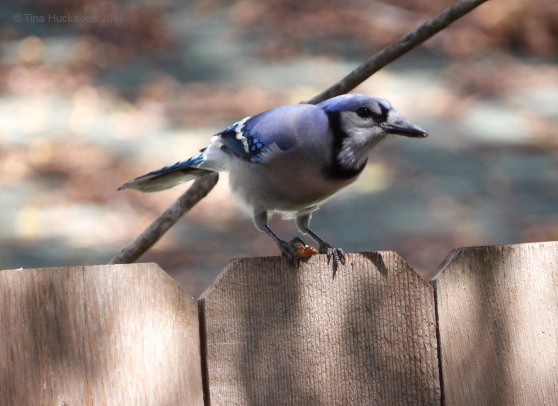
One of the regulars, this Blue JayCyanocitta cristata, wrangled with an oak acorn for several minutes.  I thought he might consume the whole thing while perched on the fence, but he eventually placed the pecked remains of the acorn in his beak and took off for a more private place to finish his meal.
 

The Red-bellied Woodpecker, Melanerpes carolinus, wears a striking red-head, but it’s the blush on the belly for which this cheeky bird is named.  That bit of blush is just barely visible in this shot.  I usually hear, rather than see these birds, but they are common where I live and they will visit the garden, especially once the suet is out for the taking.  In my neighborhood, there are several nesting pairs.
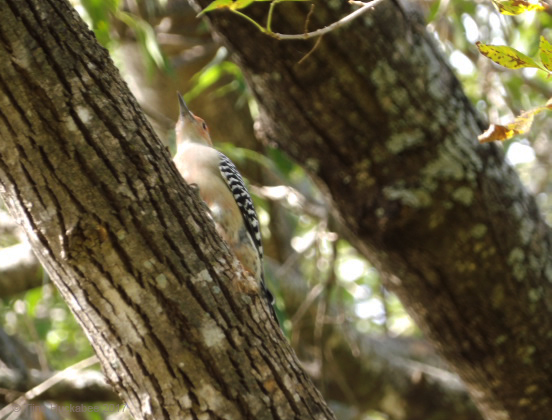
For the record, there is a Red-headed Woodpecker, also a year-round resident, who has a very red-head, which you can see here.  I’ve never seen this species in my garden.

As goldeneye blooms fade, seeds develop and the finches move in for the munching.  This male Lesser GoldfinchSpinus psaltria,  snacks on seeds amid the blooms, spent blooms, and foliage.  His mate was there as well, but harder to see and photograph.  These little birds are around year-round visitors, but only appear depending upon on what seeds are available in the garden.  Lesser Goldfinches and American Goldfinches prefer the seeds of native plants.

Carolina wrensThryothorus ludovicianus, serenade the neighborhood regularly; this one stationed himself on a neighbor’s rooftop early one morning.


Butterflies and moths also decorate the October garden.   Most seasons there are plenty of  Giant Swallowtail butterflies, Papilio cresphontes, but this year they haven’t been as numerous.  I watched this one nectaring at Turkscap, Malvaviscus arboreus var. drummondii.  The top-most bloom is visible behind the head of the butterfly; proboscis is unseen, no doubt engaged. 


I’ve often seen this little winged-thing, especially in late summer/early autumn, but finally identified it as  a Spotted Beet Webworm MothHymenia perspectalis.  The other flower it prefers is the Blue mistflower, Conoclinium coelestinum. 


This petite Reakirt’s Blue (Hemiargus isola), is another pollinator savoring the nectar of the Plateau goldeneye.

The underwings are neutral in color–females darker, so I think this is a male. The upperwing is where the blue is visible. Alas, this one wouldn’t open long enough for me to catch its lovely shading.

Sharing a bloom with a honeybee!


The Pipevine Swallowtail butterflies,  Battus philenor, are daily visitors.  I don’t grow the host plant, pipevine, but I know that several neighbors have the plant in their gardens.  Thanks neighbors!

Nectaring from a Frostweed (Verbesina virginica).


Like the Reakirt’s Blue, this Long-Tailed SkipperUrbanus proteus, showcases a beautiful blue coloring on its upper wings.  This one wouldn’t model that for me though, preferring to feed–wings up–on the Shrubby blue sage blooms.  A common, large skipper living in a wide geographic range, I usually observe them only in the autumn months.


Monarchs!  The magnificent, migrating Monarch butterflies, Danaus plexippus,  graced my garden as they made their way to Mexico for winter.
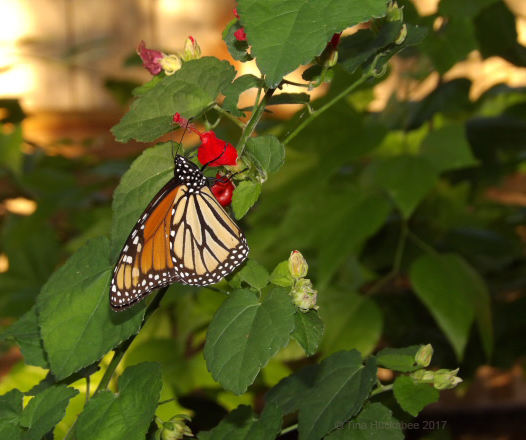
A female on a Turkscap.

It’s apparently been a good year for these beleaguered insects–thank goodness!  I’ve read that because of unusually warm temperatures in Canada and the north central parts of the U.S during early to mid October, that a bonus hatching of adults occurred–an “extra” generation of Monarchs.  That’s an odd thing and while Monarch enthusiasts are happy about those “extras,” it remains doubtful that they can migrate south quickly enough to escape the cold temperatures which have finally arrived, and make it safely to Mexico before the mountain wintering site becomes too cold.  Additionally, those concerned with the abnormally warm northern temperatures recognize the long-term negative affects of climate change and how it is impacting this species of butterfly.

I’m still seeing a few Monarchs, but I think the mass of them are already south of Central Texas.

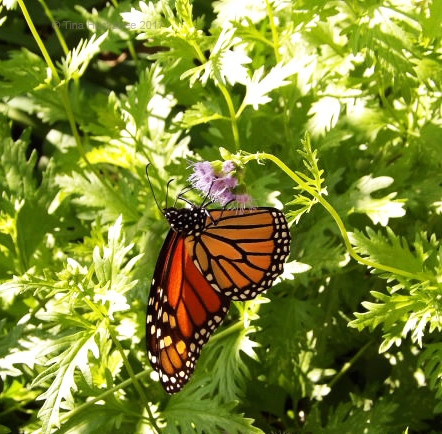
Another female on a Gregg’s mistflower (Conoclinium greggii).


The charming Gray HairstreakStrymon melinus, flutters through my garden all summer.  Usually, I see this,

Resting on the leaf of Shrubby blue sage after much sipping and flitting.

…wings up (well, down in the above photo!), with only the undersides visible.  While that’s certainly fun and I never complain at seeing a butterfly in action, it’s nice when they spread their wings out–just long enough for a shot:

This one relishes the flowers of Zexmenia (Wedelia acapulcensis var. hispida).


Rarely has a day passed when a Painted Lady, Vanessa cardui, hasn’t been in attendance.  Preferring flowers in the Asteraceae family, I can only guess that this one is in its happy place while nectaring on a Frostweed.


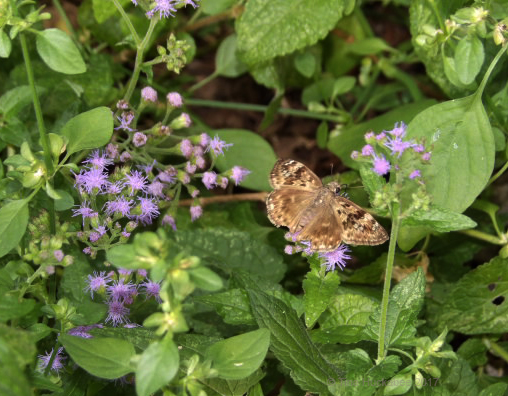
The Blue mistflower, Conoclinium coelestinum, isn’t quite the butterfly magnet that its cousins, Gregg’s mistflower, Conoclinium greggii or White mistflower, Ageratina havanensis, are, but this Horace DuskywingErynnis horatius, isn’t complaining about  what the lovely blue blooms offer.
 

It wasn’t just the three B’s (bees, birds, butterflies) in my garden that were interesting; there were plenty of other contributing critters to appreciate.  A Carolina MantisStagmomantis carolina,  hung out on the screen of a bedroom windows one weekend afternoon.  Fascinating predators, they hunt and eat a variety of insects and have been known to catch hummingbirds!

That afternoon, this mantis missed some easy hunting, as she was on the window not facing the honeybee hives we checked, causing the bees to stir up a bit. Had she been on the other window, our lost bees would be her gained meal.  No matter, as the size of this mantis suggests she’s had plenty to eat–honeybees, and all sorts of other insects.


Green anole lizardAnolis carolinensis, gives me the stink-eye while deciding whether he wants to be green or brown.  I’ve seen lots of babies recently, but this one was larger than a baby, though not fully grown.


Ready for Halloween, this Milkweed assassin bugZelus longipes, dresses the part!

An insect predator of aphids, houseflies and others smaller than itself, the assassin bug also enjoys a drink of nectar from Frostweed.


Yet another seasonal icon, I observed this large spider hanging outside my kitchen window over the course of a couple of days.  I never got a good look at her–she skittered away whenever I approached, but I saw she bundled a few honeybees in her snare.

I’ll just call her Biggus spiderus–and leave it at that!


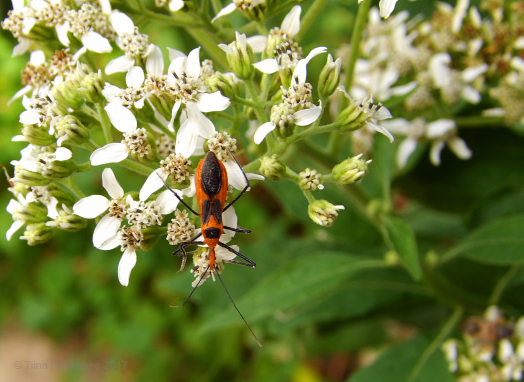
I’ve seen several examples of this insect from time-to-time.

It may be a Broad-headed Bug, but this nymph looks like it should be called a Broad-butted Bug!

I always assumed it was some sort of ant, but couldn’t find anything in my go-to resources that matched.  I finally uploaded this photo and description of the mystery insect to the fine folks at BugGude.net.  A nice bug person responded with an identification of a nymph Broad-headed Bug, Family Alydidae, the adults of which I’ve seen aplenty in my garden.  When I looked at the photos, the Broad-headed bugs looked like types of Leaf-footed bugs, Family Coreidae, which, as it happens, they were once classified with.   Broad-headed bugs are now classified in their own group.


One last mystery comes in the form of this handsome fella that I watched working Frostweed blooms.  It looks like a fly, but my search for an identification proved fruitless.  I uploaded this photo to BugGuide, but I haven’t received an identification yet, so this one is unknown and unnamed for now.  Any ideas out there?
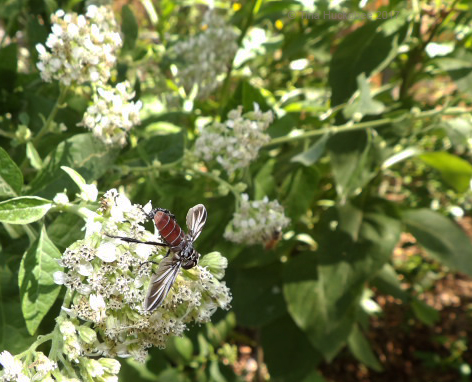
This insect crawled from bloom to bloom.  It certainly possesses a fine set of wings, though.

Celebrating lots of life in the garden for Wildlife Wednesday, I hope your garden is full of wildlife happenings and reaping autumn bounty. Please share your wildlife stories for this past month and remember to leave your link when you comment.

Good wildlife gardening to you!


Hot Plot, Cool Critters: Wildlife Wednesday, August

Despite summer’s heat as daily fixture of life,  the garden and its critters go about their business of growing and blooming, nectaring and seed-eating.  I swelter in the garden, but revel in observing the abundance of wild activity.  Welcome to Wildlife Wednesday, marked on the first Wednesday of each month and celebrating the wild things in our gardens and wherever we meet them.

The garden currently enjoys no shortage of Horsefly-like Carpenter beesXylocopa tabaniformis.  They are the most numerous, and active, of the native bees that I see; they are earliest at work in the morning and the last to clock-out in the evening.

This one demonstrates nectar-stealing, so no pollination here, but she’s slurping up the good stuff for her larvae and herself.

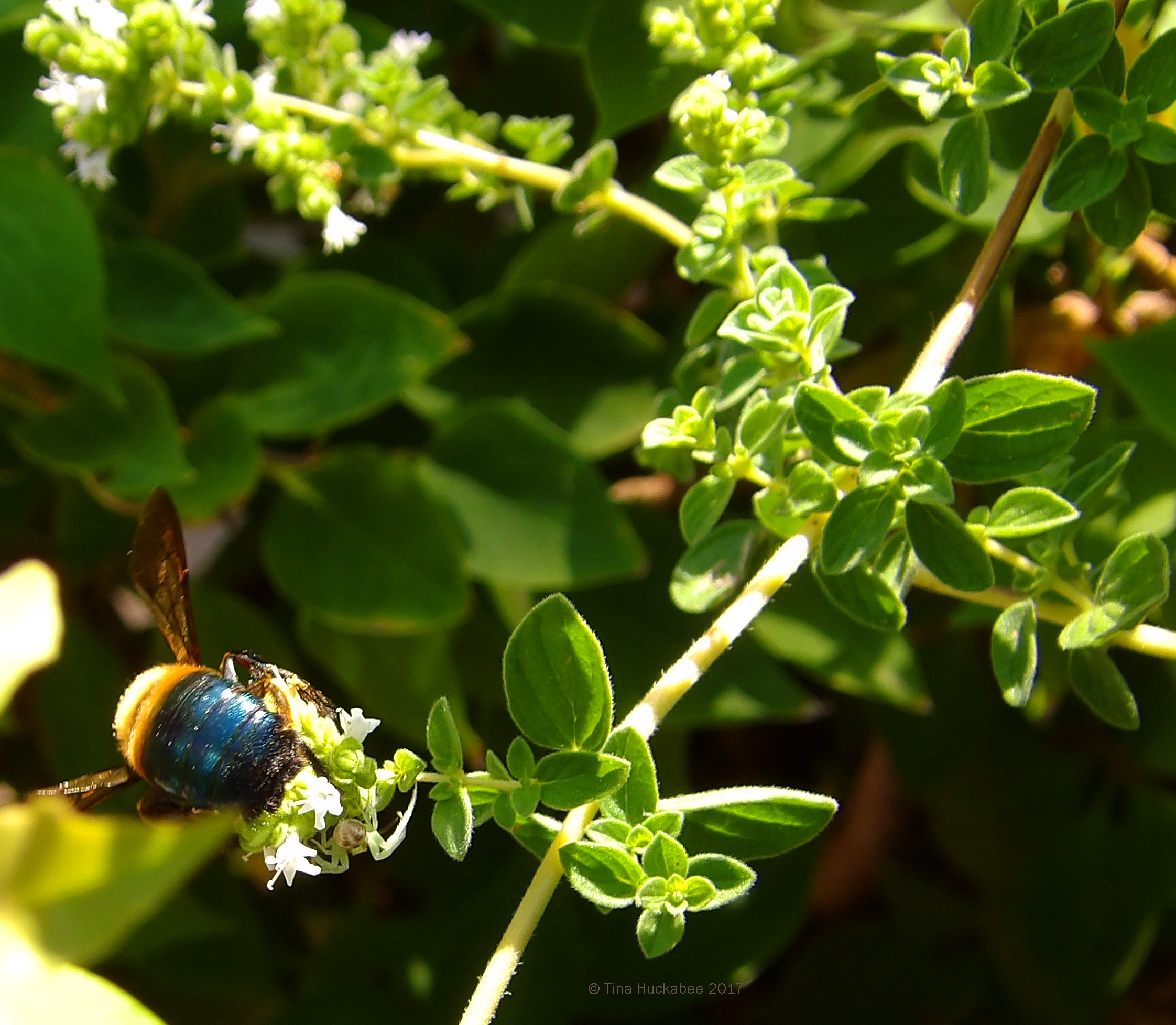
While taking my elderly dog for his outdoor breaks, I’ve noticed the popularity for blooming oregano among pollinators.  The petite, clustered blooms attract a variety of pollinators–huge and tiny, colorful and plain.  I was especially pleased to witness visits from both a male and female Eastern Carpenter BeeXylocopa virginica, a relative of X. tabaniformis.


The white face indicates a male bee.

Considered common here in Central Texas, I haven’t seen this species often and am happy to welcome this new-to-my-garden visitor.

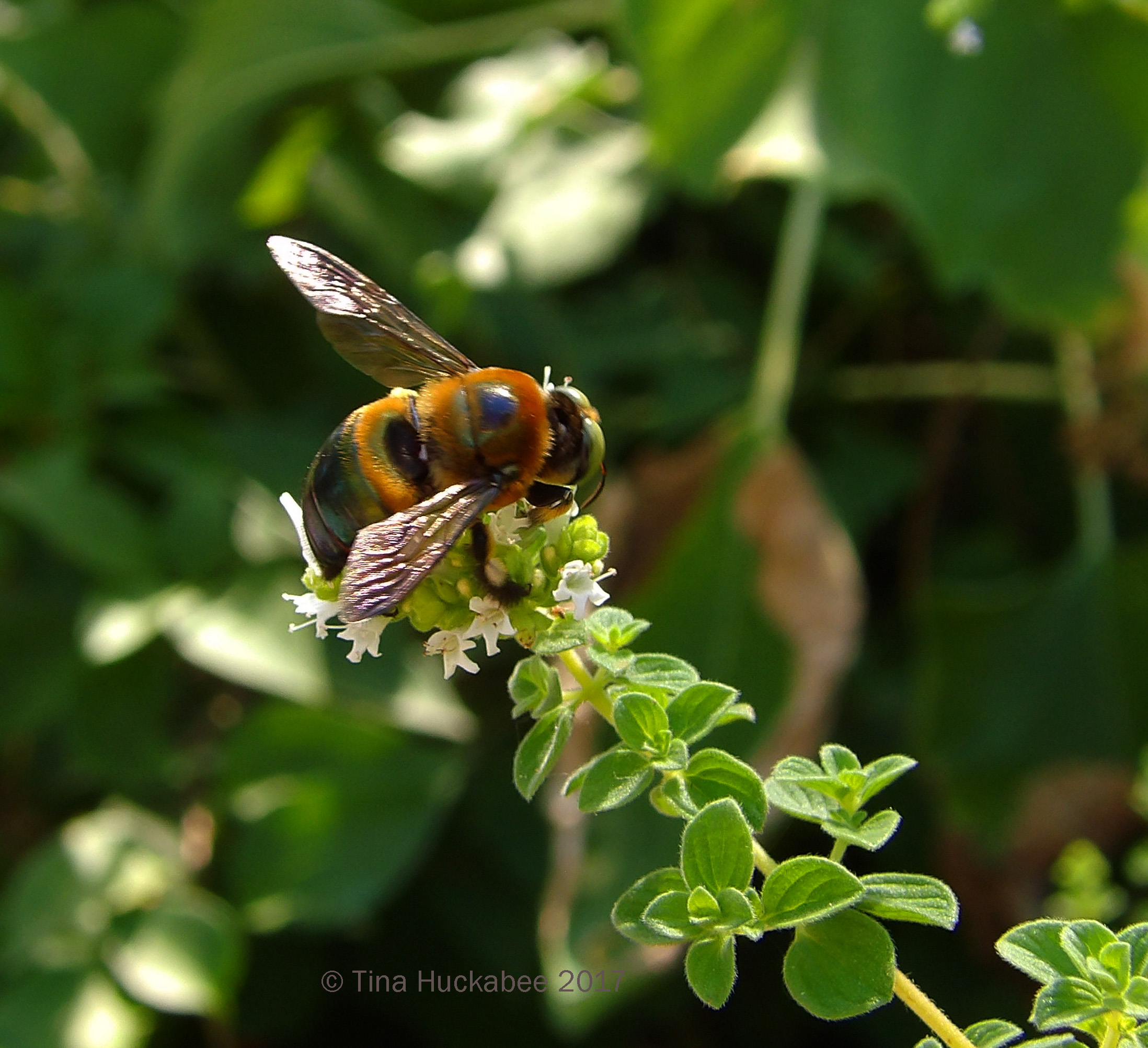
His lovely back side, wings aloft.

The sun was spot-on as I photographed mid-afternoon–normally a problematic time of day for photos–but I think the bright light beautifully illuminates his subtle coloring.

He and his female friend also visited Turk’s cap and Shrubby Blue sage blooms as well, but both favored the oregano flowers.

I grow two oregano plants (and also, two basil plants) in my herb garden:  one of each for me to snip from and not allowed to flower, the others left to bloom for the bees and butterflies.

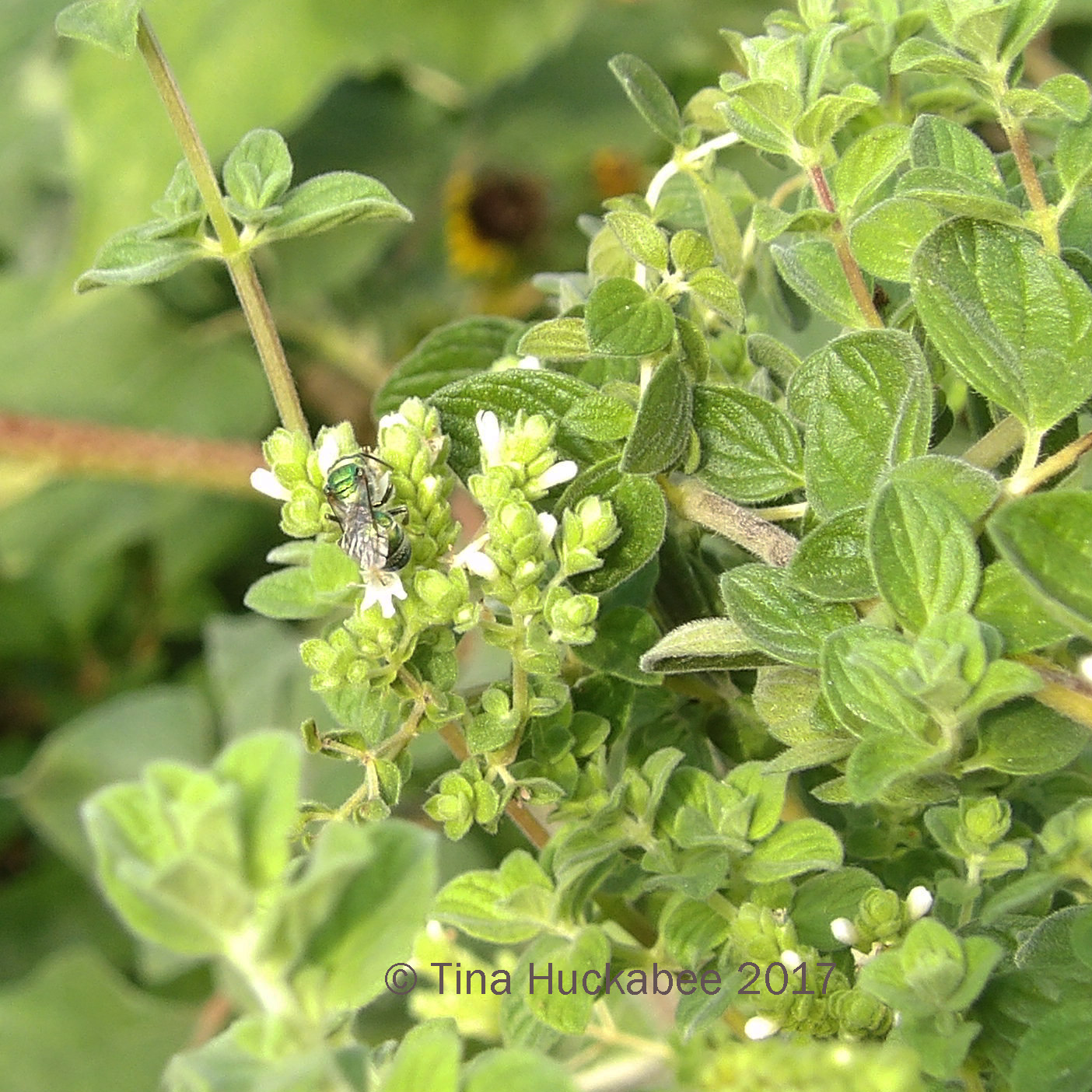
Another spectacular pollinator who works the oregano blooms is this stunning green metallic bee, which I believe is a Sweat beeAugochloropsis metallica.

I saw this bee (these bees?) several different times, and like the Eastern Carpenter, she nectars at several plants. But her favorite meal is found at the little oregano flowers.

The Texas July sunshine highlights her stunning coloring and glittery presence.

A two-fer in this shot with the sweat bee sharing space and food with a honeybee. The honeybees are regular customers of the oregano flower buffet and are always buzzing around the oregano.

Ms. Metallica plays peek-a-boo, while Ms. Honeybee gets to it!

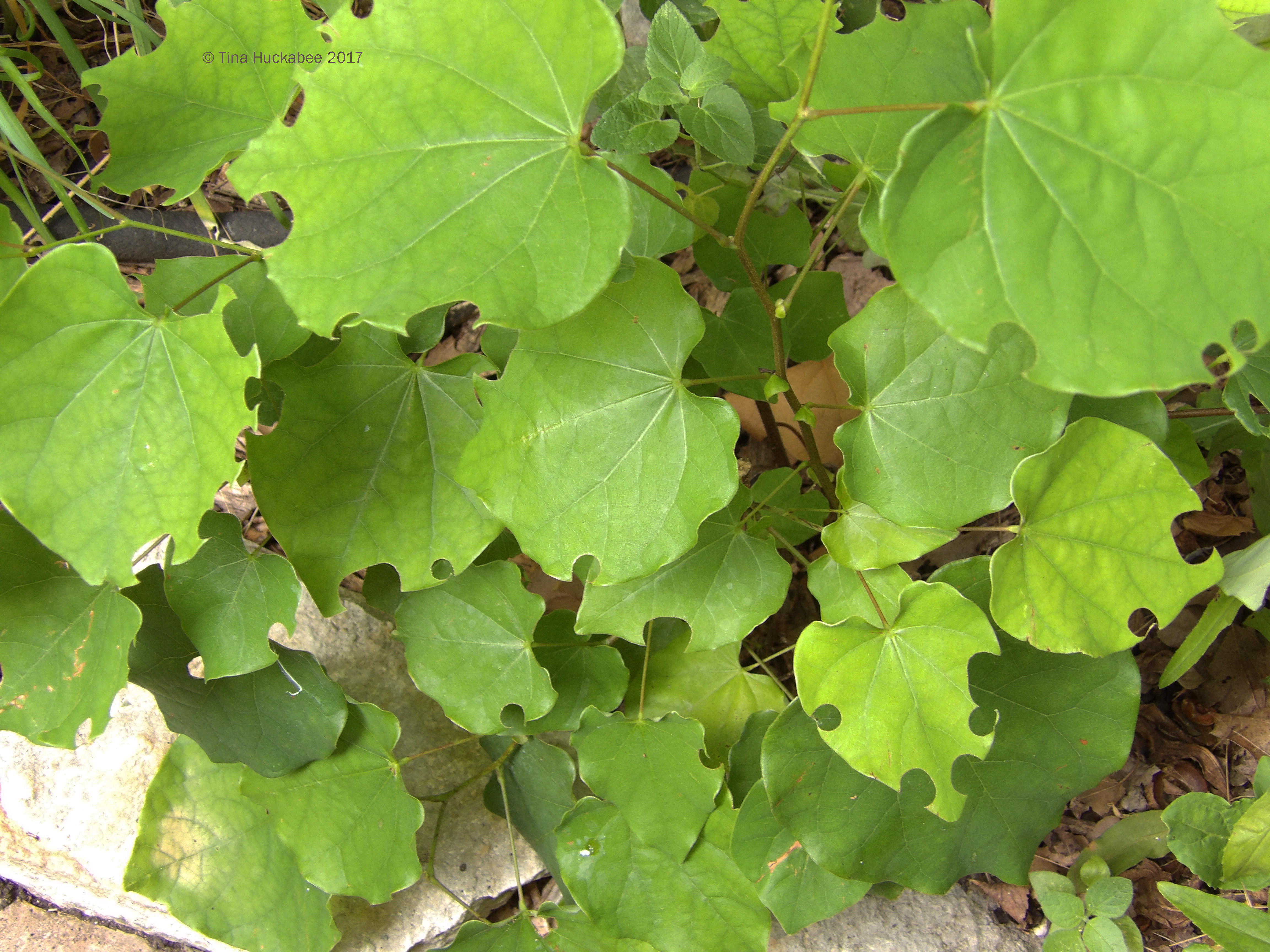
These scalloped leaves show cutter bee activity, though I haven’t actually seen them munching away.  The females carve round holes, or partial holes, in leaves, then mix the leaf component with pollen and mud.  The bees use the mixture in their nurseries as a stuffing to protect eggs and feed larvae.

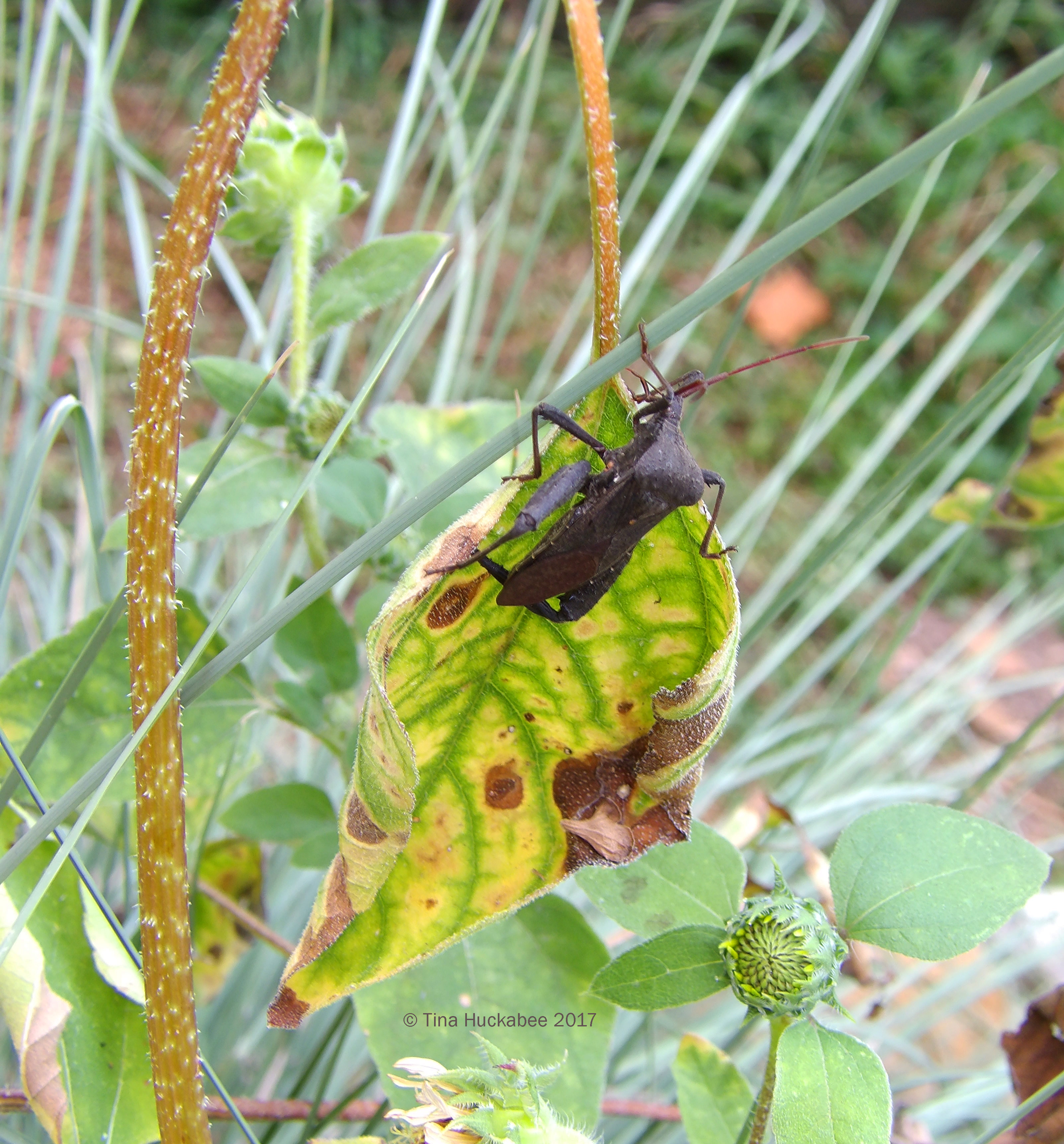
I spied this Leaf-footed bugAcanthocephala terminalis,  along the beam of a blackberry vine-enveloped trellis.  I thought he might strike a manly pose for me; instead, he skittered behind a leaf, glancing once to check if I was still there.

I was.

Later, he flopped down onto a sunflower leaf, which looks worse for wear, either from the doings of a sucking insect (maybe our leaf-footed friend?), or perhaps, just the heat. I like to watch these insects.  They’re shy and avoid confrontation, but can apparently deliver a wallop of a sting if need-be.  I maintain a respectful distance and hope they don’t damage too many leaves.

They don’t.

Dragons and damsels are back and it’s murder and mayhem in the garden, carried out with swift efficiency by these predatory beauties. This sparkly jewel of a Neon Skimmer, Libellula croceipennis, is a fixture in the garden when resting and an aerial acrobat as he hunts mosquitoes.  And I’m just fine with that.

His bright coloring indicates a male. His mate wears a muted orange, not quite as dazzling.

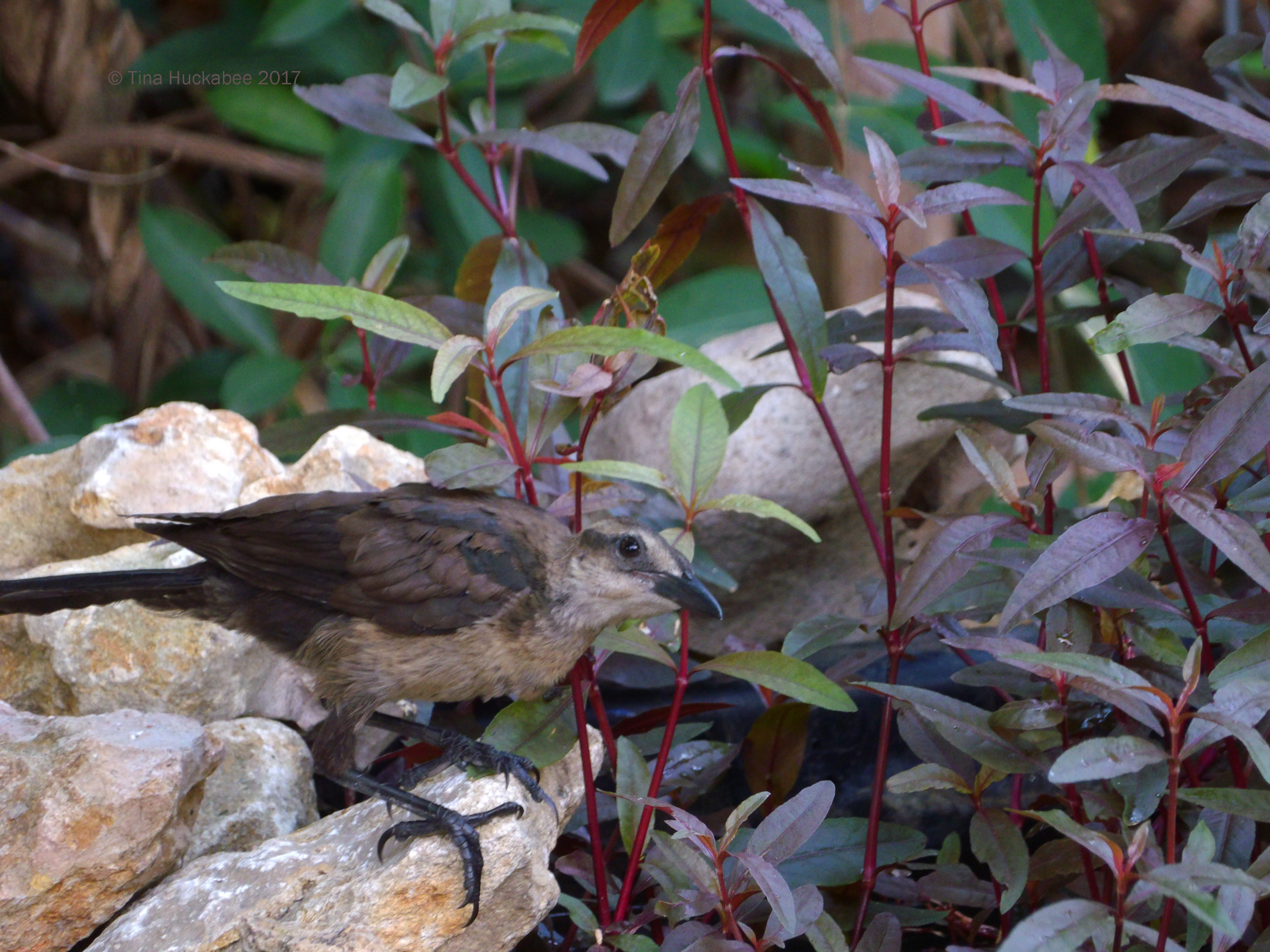
Resident birds while away the summer months, munching seeds and insects, and cooling off in bird baths and at the pond.  This female (or juvenile?) Great-tailed Grackle, Quiscalus mexicanus,  contemplates a dip in the waterfall. Grackles and Blue Jays are consummate bird bathers.

Before they plop into the water to bathe or sip from its flow, many birds perch on the rocks and take advantage of the cover provided by the Ruby Red-runner plant which accompanies the flowing water into the pond.

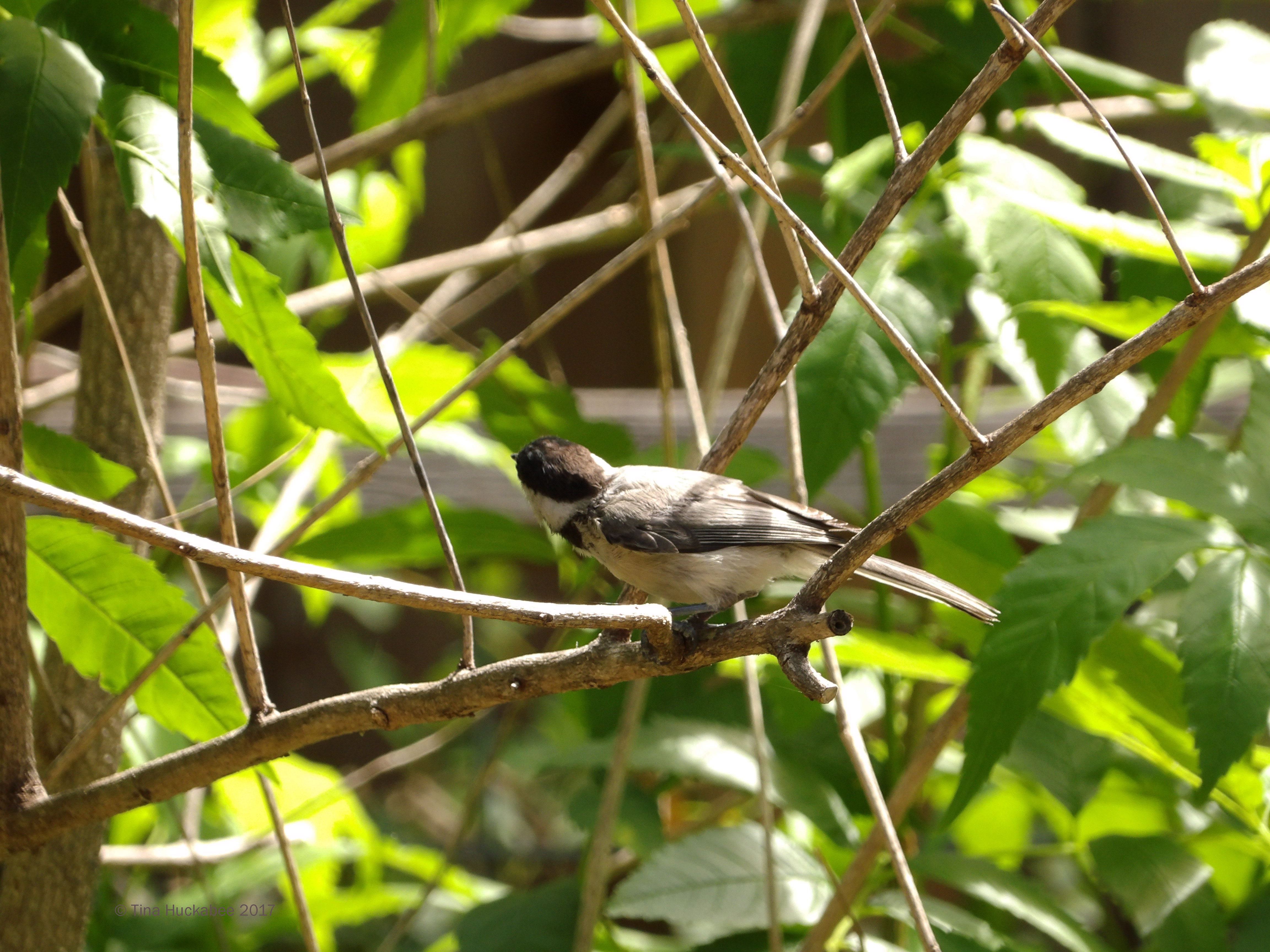
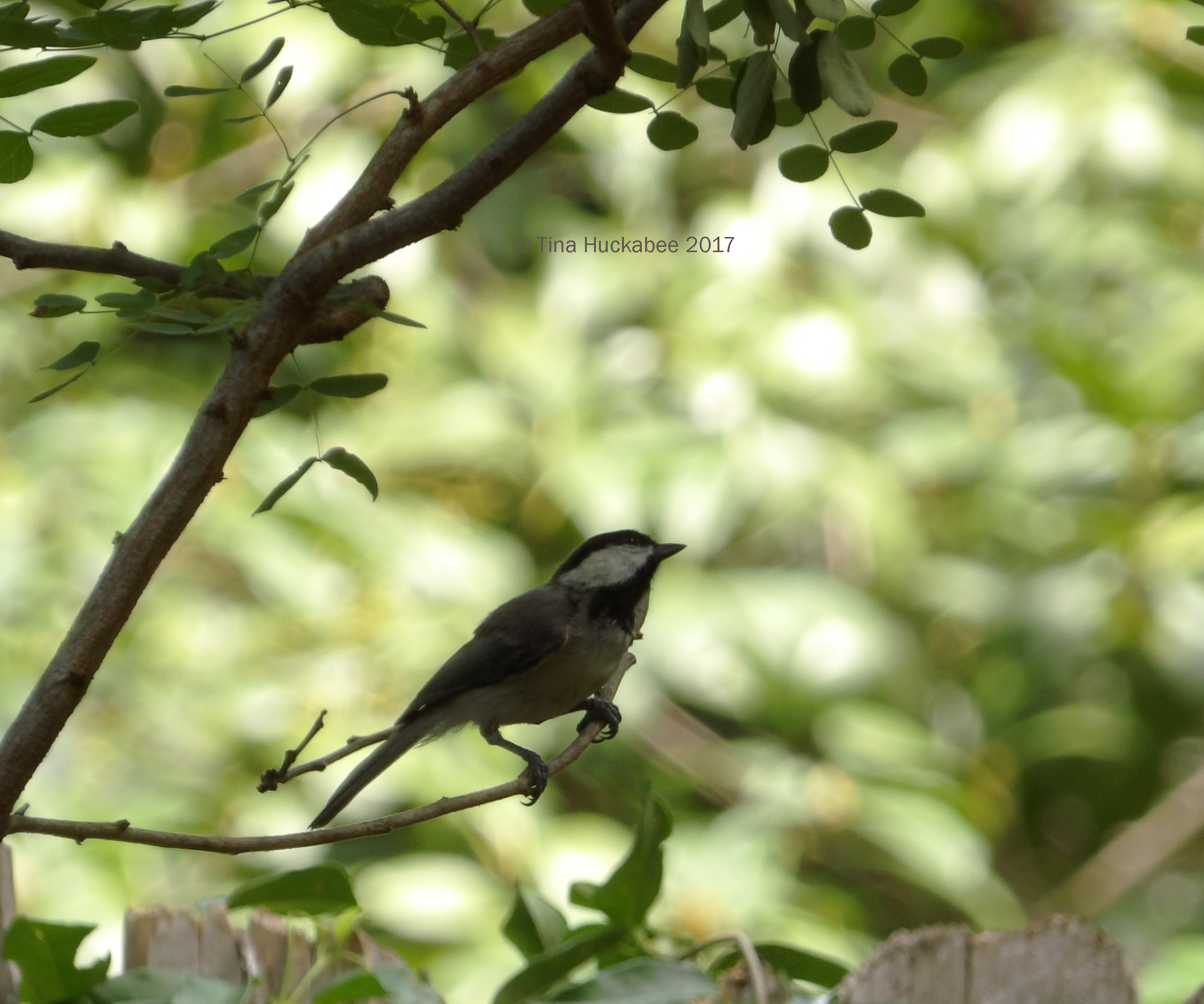
This Carolina Chickadee, Poecile carolinensis,  steadfastly refused to look my way as it perched just above the waterfall.

After winter, I didn’t prune the  Yellow BellsTacoma stans entirely so that the birds could enjoy a safe place in which to perch and watch their surroundings.

Still, he could have given me a thrill and glanced my way.  I was able to catch a slightly better look at his cute face only after he flew to a different location.

The Chickadees are year-round residents in Central Texas and regular visitors in my garden.  We placed nest boxes for them, the Carolina Wrens, and the Black-crested Titmice, but had no takers–the nest boxes sit abject and empty.  All summer I’ve watched as each of these parents showed their offspring the avian ropes: sipping from the baths and pond, noshing from the feeder and plants, and teaching the how-tos of safely traversing the trees. They’re content to visit my garden, but not move in. I have no idea where they nest, I just know it’s not in my garden.

While pruning early one morning, I spied this resting moth, a Melipotis perpendicularis.

I know that I’ve seen this kind of moth before, though Austin Bug Collection says that this moth is not common.  Perhaps I grow its host plant, though I didn’t find information about that.

Whatever you grow and whomever visits or resides in your garden, please post your wildlife happenings for this past month. If you don’t have wildlife in your garden, it’s easy to plant for them and provide a welcoming home: they’re entertaining, beautiful, and necessary for a well-rounded garden. When you comment on my post, please remember to leave a link to your Wildlife Wednesday post so readers can enjoy a variety of garden wildlife observations.

Happy wildlife gardening!

A Bird Tail

I adore Grackles.

You ask: what is a Grackle?–double-checking the header on your screen, because you were planning to peruse a gardening blog, but now you think you accidentally clicked on a blog about outer-space aliens.

The Grackle is a type of bird and the kind I know best and chuckle at is the Great-tailed Grackle, Quiscalus mexicanus.  My resident (or recently resident) Grackle is no longer of the great-tailed variety.

IMGP9531.new

He’s done lost his tail!

Not all the Grackles have lost their tails, but this one has and he appears…unbalanced.

I keep expecting him to topple over because he is so lacking in tail feathers.  Would he topple beak first?  Beak-first, he would be thus impaled by his beak in the soil of the garden or perhaps along one of the cracks in the limestone patio.  But if the toppling came butt-side, well, he’d just look silly, sitting there without his tail feathers, skinny legs splayed and gnarly claws up in the air.

IMGP9498.new

Where are his tail feathers?  Those fine, fanned feathers probably fell victim to molting which occurs this time of year to many bird species.  (As an aside, when I check out the molting bird photos posted by bird enthusiasts on Facebook’s Birds of Texas group, I’m horrified at the  lack of pulchritude that formerly gorgeous birds, like Northern Cardinals, display. Molting birds are not pretty birds–they may be very nice birds and very interesting birds, but they are not attractive birds.)  For the record, my Northern Cardinals remain gorgeous.

And my Grackle–great-tailed or not–is still attractive, though he does appear molty in other parts of him besides his lack of tail–note his tatty head feathers.   Molting notwithstanding, one can appreciate the beautiful iridescence of his coloring–lovely black,  but so much more in blue and purple sheen.  His bright, discerning eyes suggest intelligence and cunning.

IMGP9513.new

IMGP9489.new

Grackles are clever birds, adjusting to myriad environments and increasing their range in North America because of their adaptability.  Native to Mexico, they’ve expanded their range throughout the 20th century and into the 21st.  They thrive in urban environments: pooping on cars, careening in front of those same cars along some roads, and squawking, squeaking, and beeping with conviction and importance,  especially in early morning and as they gather in groups just before sundown.   Grackles are omnivores–they’ll eat anything and I really mean anything.  Cheeky birds, they’re also fun to watch. When I still had turf that needed mowing, Grackles always accompanied me as I dutifully completed my chore, because while mowing, I flushed out crickets and other insects for their dining pleasure. Grackles were good companions in that despised homeowner’s responsibility. And there is no better show than watching a Grackle guy wooing a Grackle gal–it’s the stuff of urban legend.

I suppose if observed in flocks, queued-up along utility lines or strutting (and they do strut) around the parking lots of grocery stores, waiting for dropped, or better yet, spilled items, they can be disconcertingly…mob-like.  Grackles are loud and raucous–part of their charm, I think, and they’re big birds, too.  They could be considered slightly intimidating, as they single-mindedly scrounge for seeds, insects, or bits of dropped take-out.  They’re vociferous, but harmless–just always on the make for a snack.

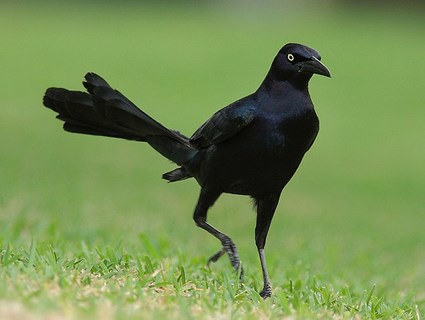
My less-than-great-tailed Great-tailed Grackle will eventually grow his tail again. He’ll look like this one, perched high in my American Sycamore tree in April: sunning, stunning, and regally showing off for the ladies. And look at that great tail!

IMGP6198.new

Or check out this photo courtesy of Cornell Lab of Ornithology.  This has to be a definitive Great-tailed Grackle photo: a cocky, confident, Grackle-about-town.

© Kaustubh Deshpande, TX, Dallas, May 2009

This guy,

IMGP9489.new

…who could be the same guy in the Sycamore photo, will once again be a lovely specimen of an avian figure as autumn and winter arrive and when the courting season approaches. The more Grackles, the merrier, or at least funnier and noisier, the garden.

A worthwhile read for an amusing, and sweetly touching, homage to the Great-tailed Grackle, check out this article from Texas Monthly, by John Nova Lomax:  Eight Reasons Grackles Are Awesome

Grackles really are awesome.