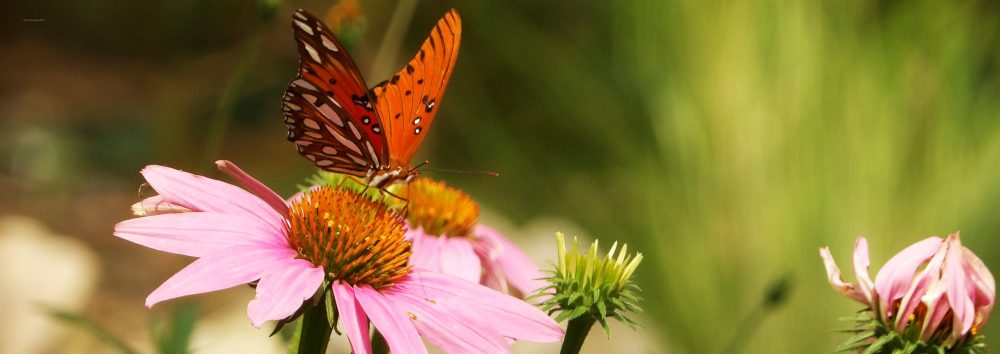
September is over, fall migration through Texas is underway, and in my gardens? Well, it’s the usual wildlife suspects who rule the roost. Hummingbirds gave great performances prior to their leaving; they entertained the gardener, paid attention to the flowers, and fueled up for their long flights. They are now off to winter in lovely, warm Mexico. Here’s wishing them plenty of tropical blooms, while the rest of North America chills out.
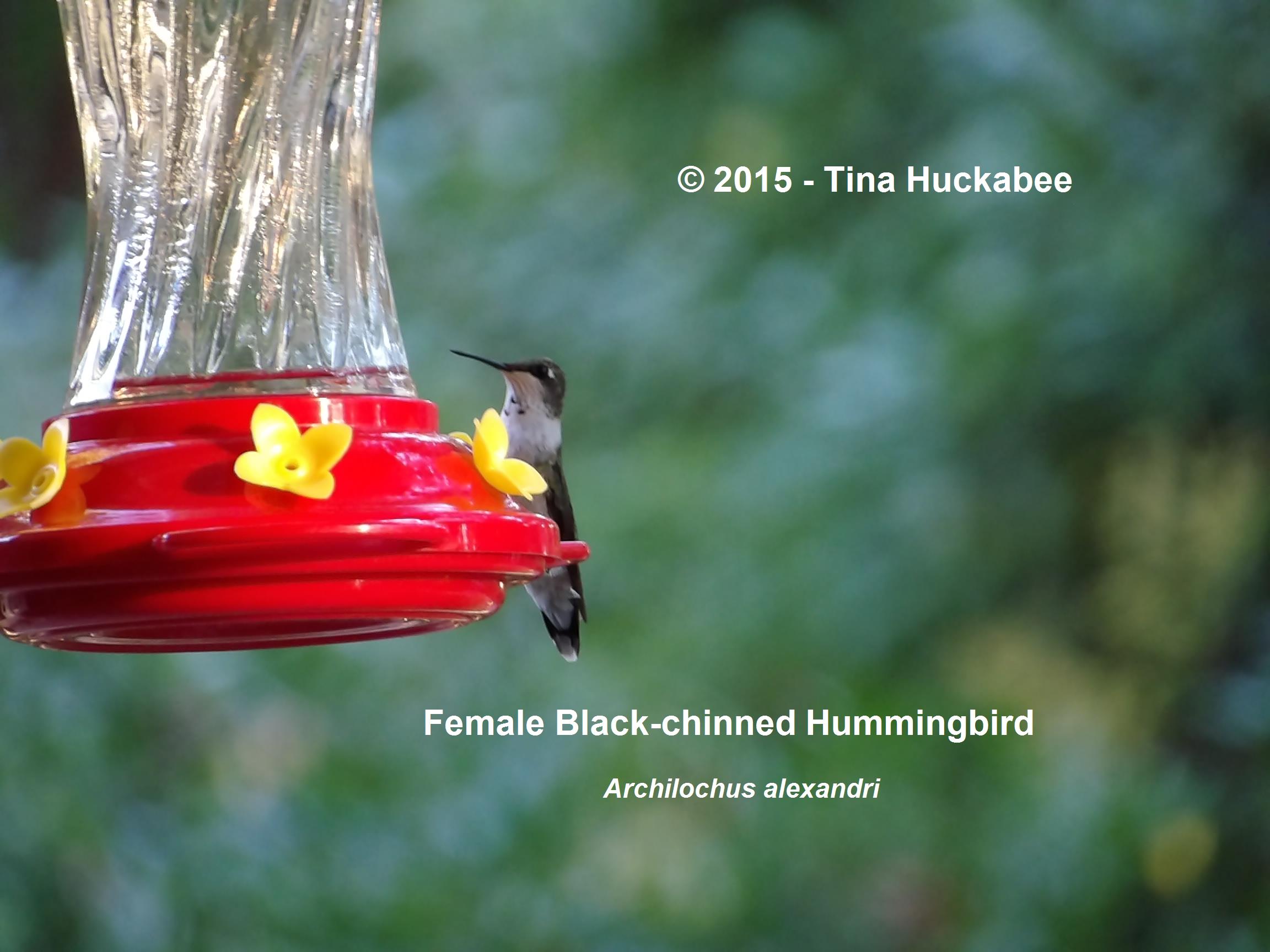

In September’s Wildlife Wednesday, I mentioned that a mottled and probably molting adolescent male Northern Cardinal, Cardinalis cardinalis, was a regular visitor to my garden. I poked fun at him because he looked so rangy and awkward–the geeky teen of the backyard bird world.
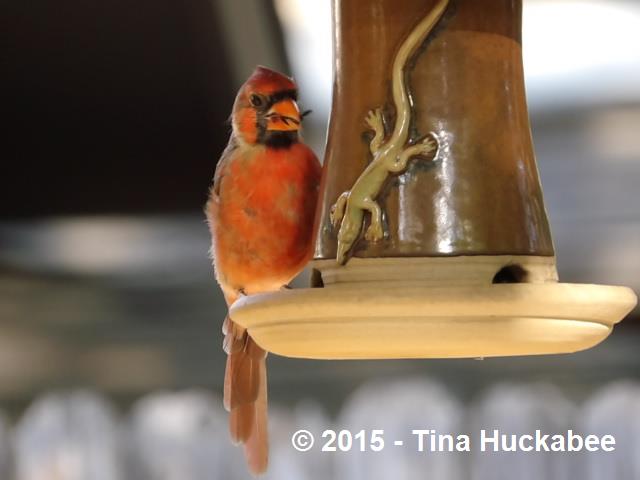
Well, shame on me. I read this article about how tough molting is on birds and specifically as they undergo the preformative molt of the adolescent to adult feathers. I raised a teen male to young adulthood and remember much angst (mine) and crankiness (his) during his human “molting”. I guess I should have been more understanding and sympathetic about the changes the juvenile bird was undergoing. Sir Young Cardinal still hangs out, munching sunflower seeds from the feeder, molting, but less molty and, I believe, dressed more cardinal-like.
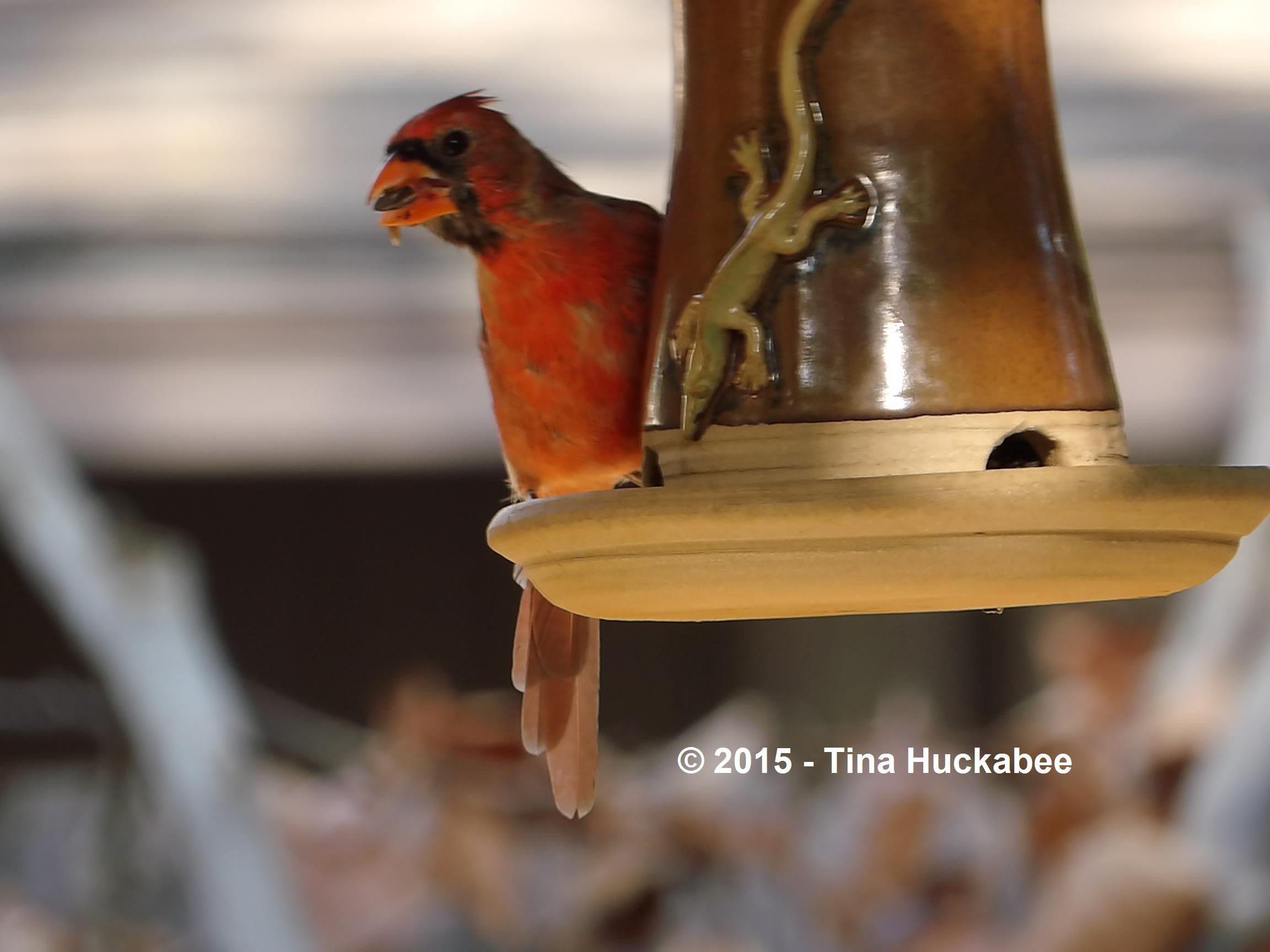
Maybe it’s the better camera–my good one is out of the camera hospital. Nonetheless, Young Cardinal on his way to scarlet beauty.
This adult male glances to the left,

…then to the right,

…and looks like he’s keeping claws crossed that the nutty gardener can’t see him perched on the shrub.
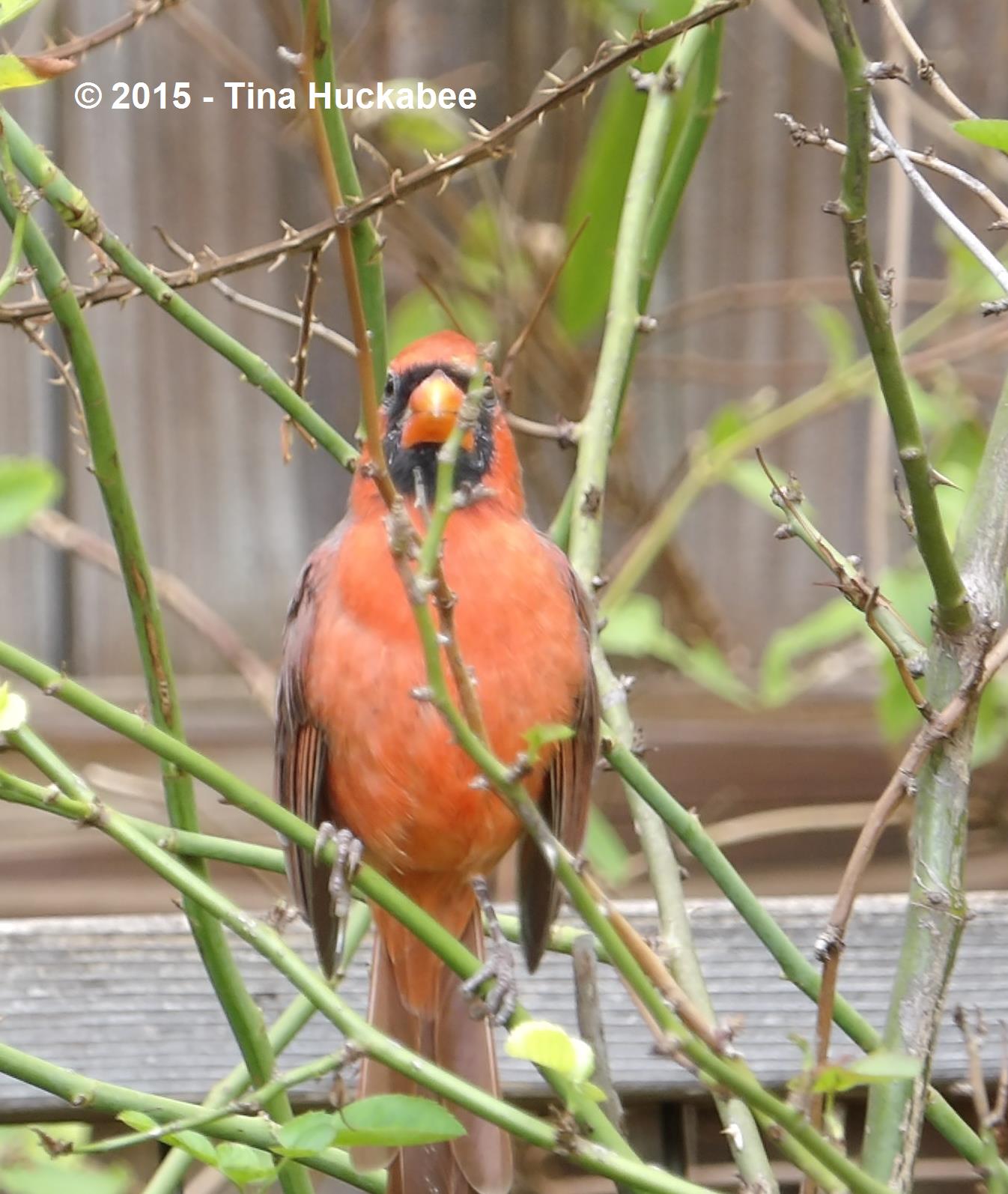
Maybe if I hold my wings really tight, she won’t see me.
There are plenty of birds at the sunflower buffet, like this Carolina Chickadee, Poecile carolinensis.
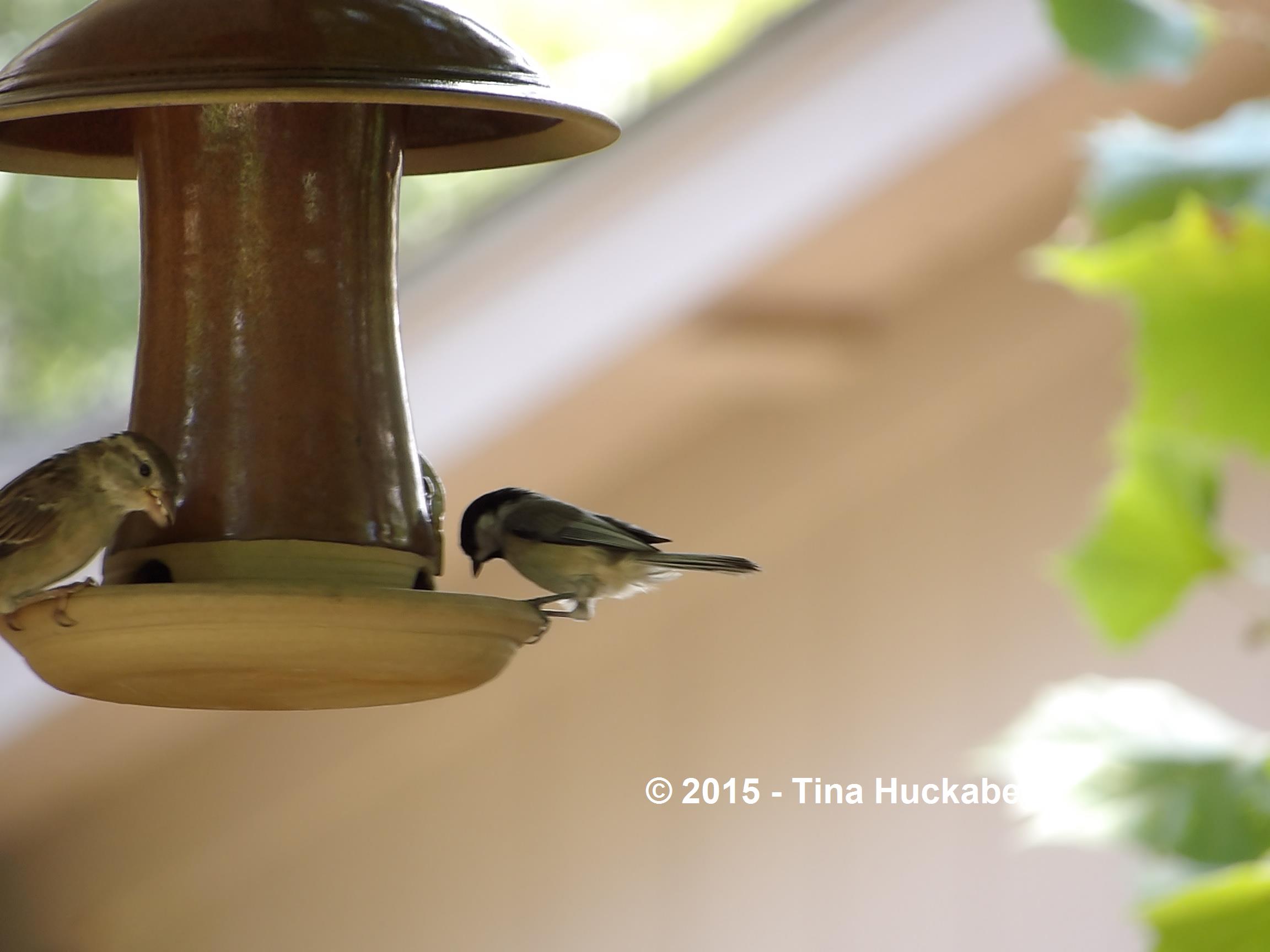
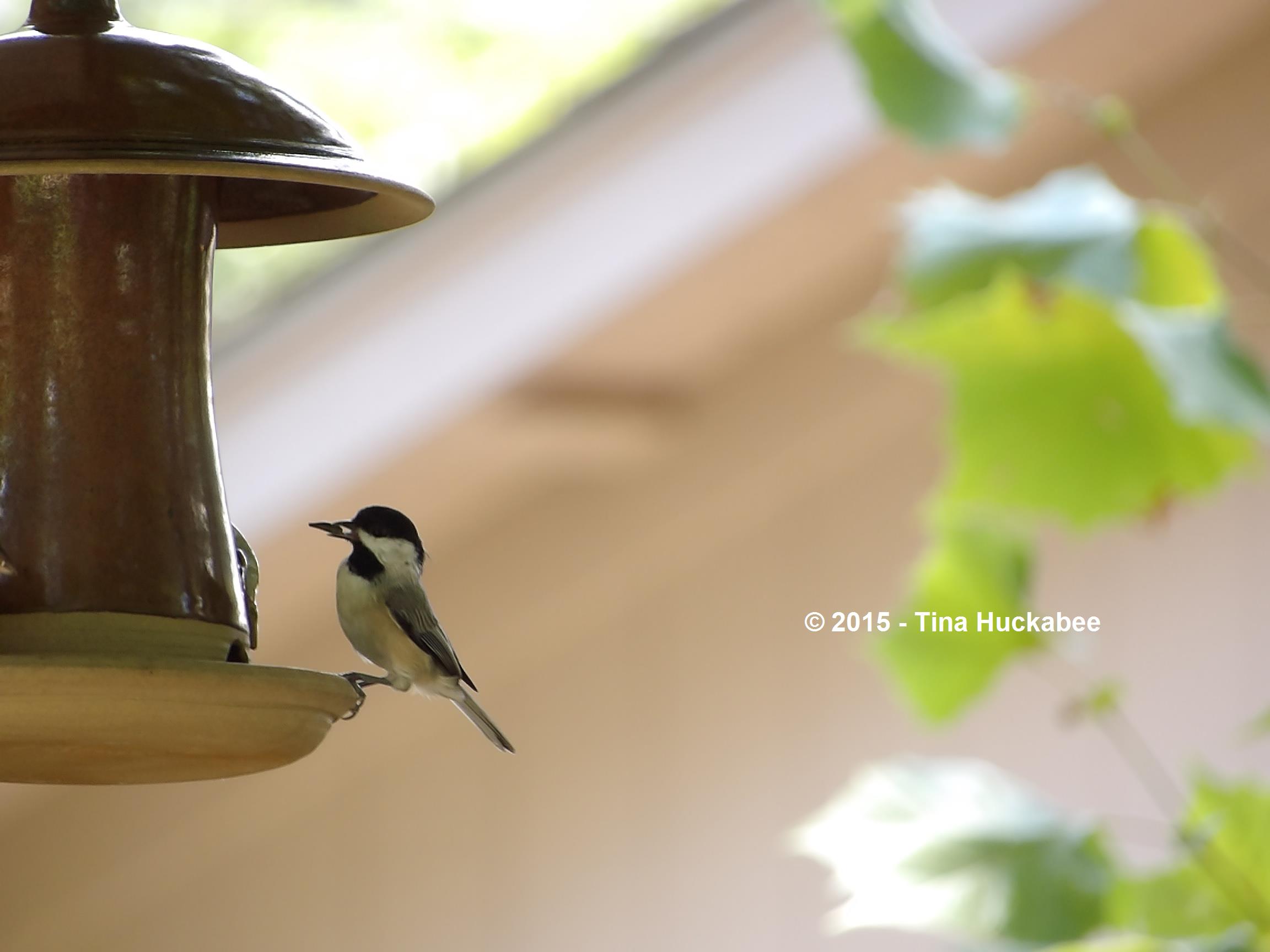
I’m especially fond of the Carolina Chickadee; there is a mated pair that nests near, though not in, my gardens. They appear in concert with a pair of Black-crested Titmice, though there are no photos of either of that pair for this month. Both species have sweet verbalizations and I usually hear them before I see them. That’s often how it is with birds.
Raucous and beautiful Blue Jays like this one, are also regular visitors to my garden and feeder.
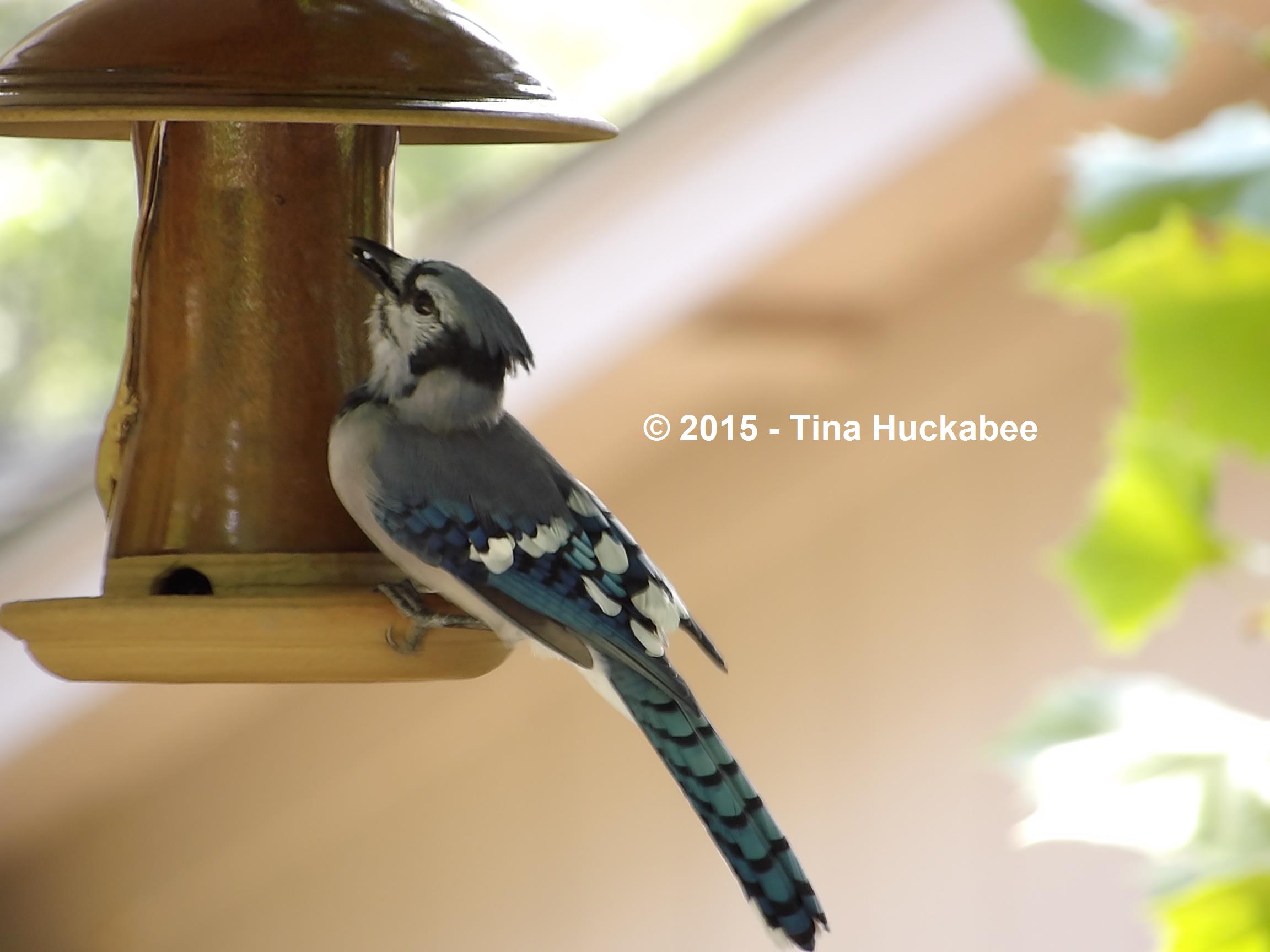
Most evenings at sundown a group of them protest loudly at what I suspect is one or two Eastern Screech Owls perched in a neighbor’s tree. I haven’t seen the owls, but have heard them on occasion in the last month or so. The Blue Jays make lots of noise, but in the end they flap away for the night, returning to sound alarm(s) next day-and also, to eat at the feeder.
There should be more and varied birds through my garden in the next few weeks as they migrate southward. Already I’ve seen several warblers flitting in the verge, though capturing by camera is tricky. With good luck and some patience, I will have some success this month–to observe, to learn about, and to share for next month’s Wildlife Wednesday.
As for the insects, there are plenty of those and that’s mostly a good thing for the garden. This Milkweed Bug, Oncopeltus fasciatus, is not such a beneficial bug in the garden, but apparently doesn’t do that much damage to the leaves of Milkweed or Asclepias, plants.
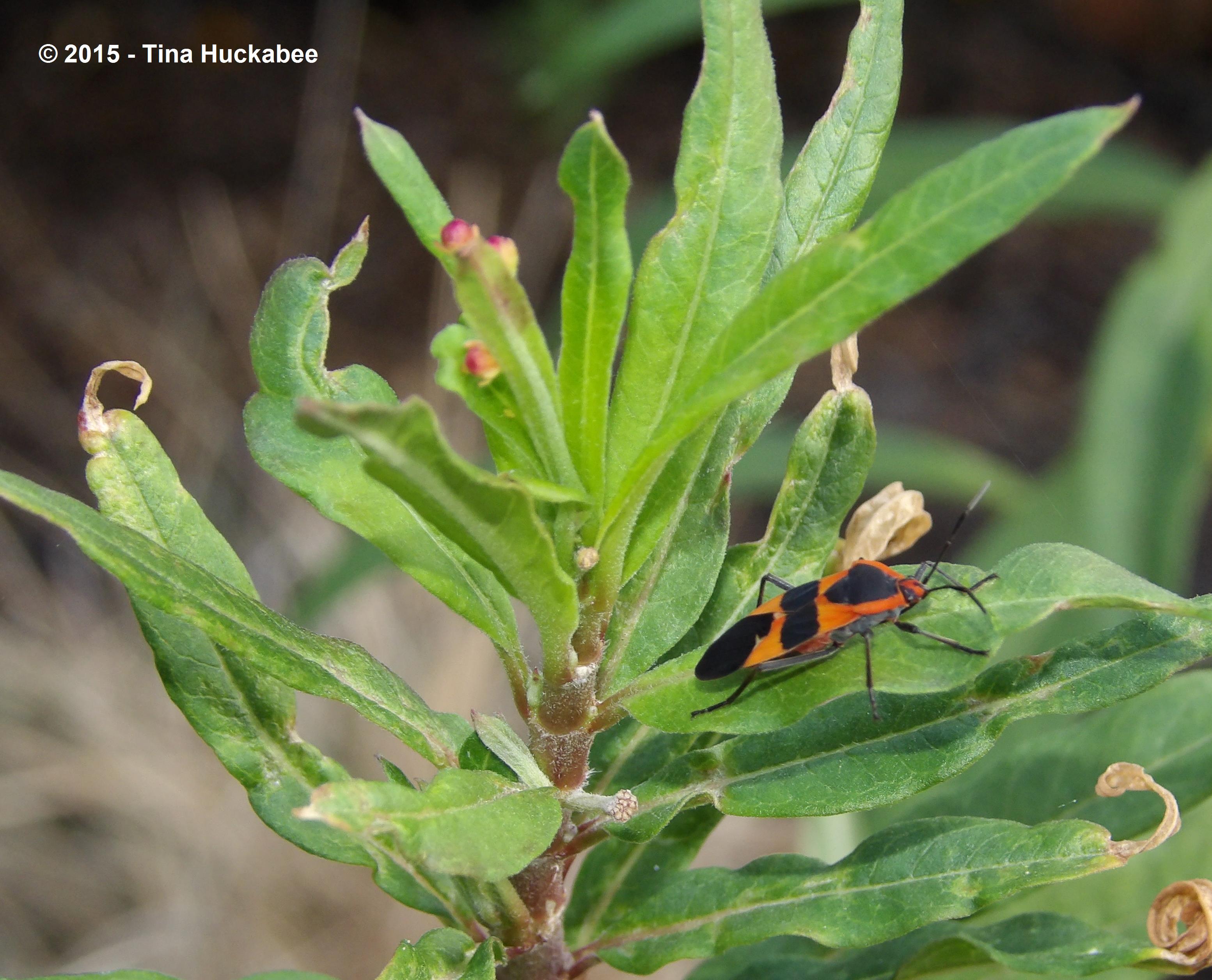
There were quite a few earlier in the summer, but their numbers have dwindled.
Butterflies and moths are making a comeback since we enjoyed a bit of rain not long ago. I’ve seen this Hackberry Emperor, Asterocampa celtis, sunning herself several times recently.
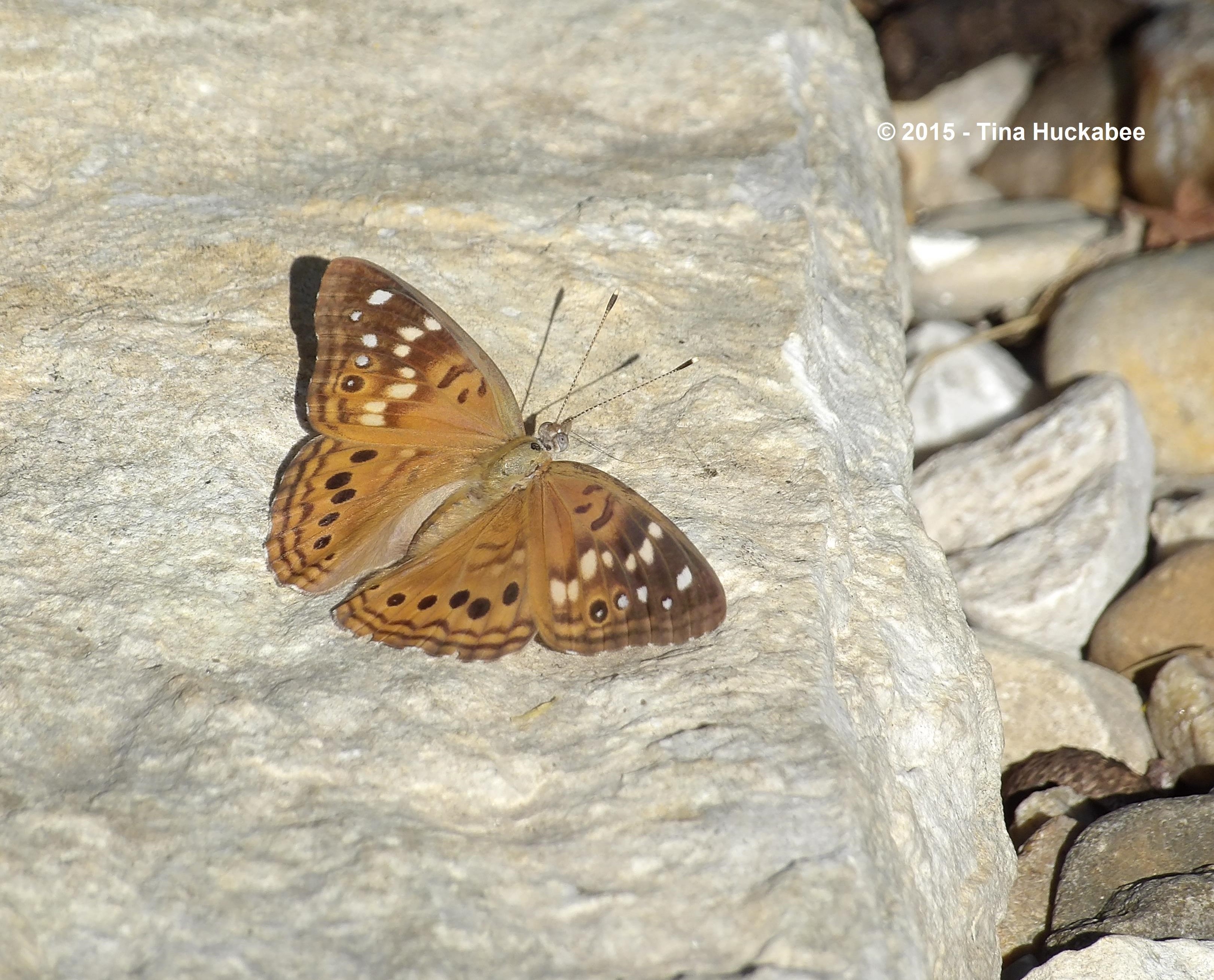
A good thing too, because this species flies so fast that I’ve never taken a clear photo of one around the garden, only in pathways as they bask and allow garden paparazzi to photograph their sunbathing. Hackberry Emperors feed on dung and sap, so they don’t visit flowers. The host plant for this butterfly is the much-maligned Texas native tree, Hackberry, Celtis laevigata. A member of the Elm family, this is the tree that everyone loves to hate, myself included. But Hackberry an excellent wildlife plant–providing berries that many birds species eat and hosting the nursery for this pretty butterfly.
A Pipevine Swallowtail, Battus philenor, posed for me one afternoon with a backdrop of Columbine foliage.
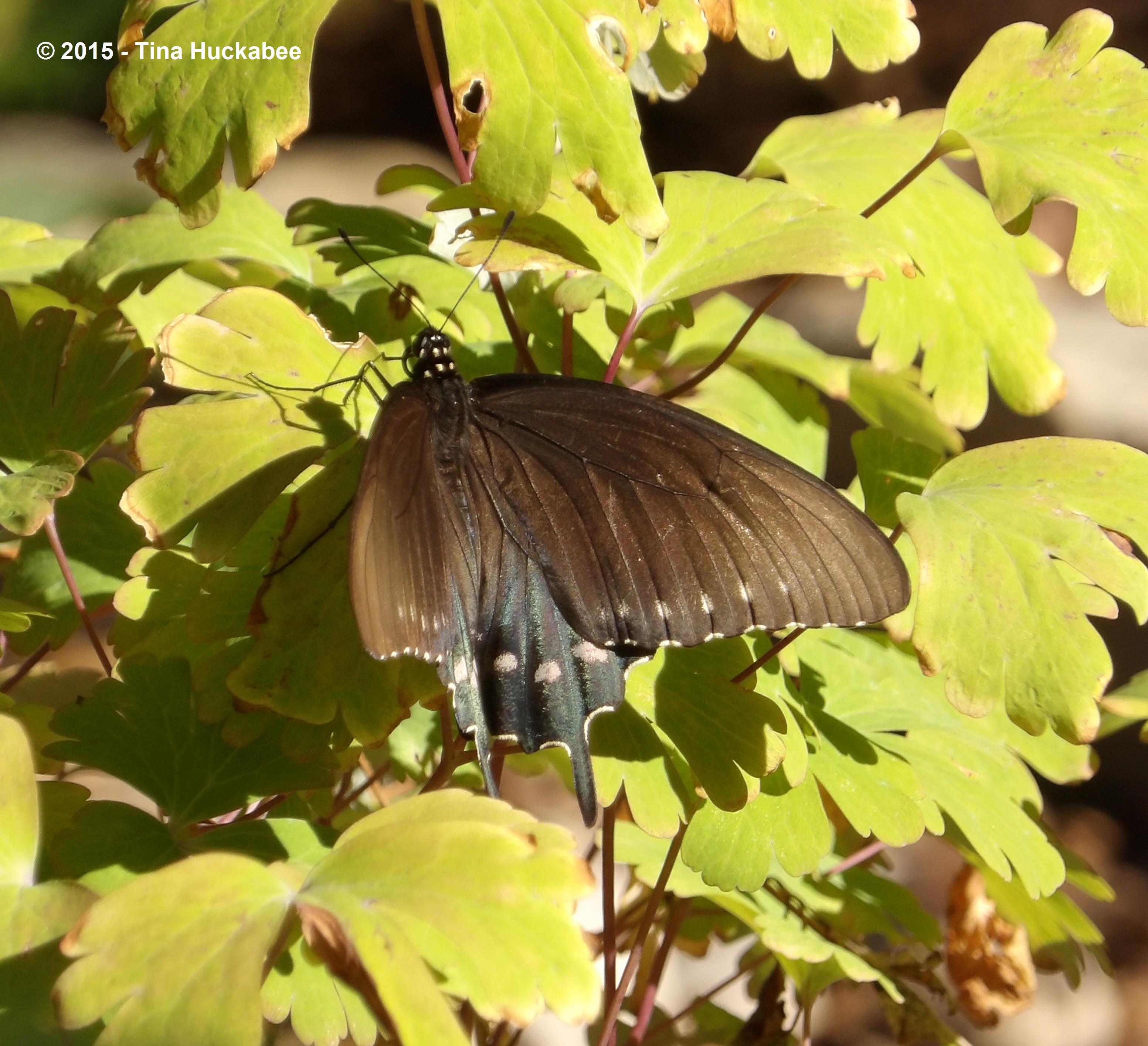
I often see one fly high through the garden when I’m outside in late afternoon. The host plant for this beauty is pipevine, which I don’t grow (why not??), but I know there are several specimens in a neighbor’s garden–maybe that’s where this one grew up.
This Great Leopard Moth, Hypercompe scribonia, rested on the trunk of my Shumard Oak one afternoon.


I see the larval form of this polka dot wonder throughout the summer months, but of course never think to get a shot for a blog post. Large and fuzzy, the caterpillar is attractive enough, though I’m not sure much can beat the stunning pattern of the adult.
Eastern Black Carpenter bees, Xylocopa virginica, Southern Carpenter Bees, Xylocopa micans, have nectared at and pollinated Henry Duelberg Sage, Salvia farinacea ‘Henry Duelberg’,
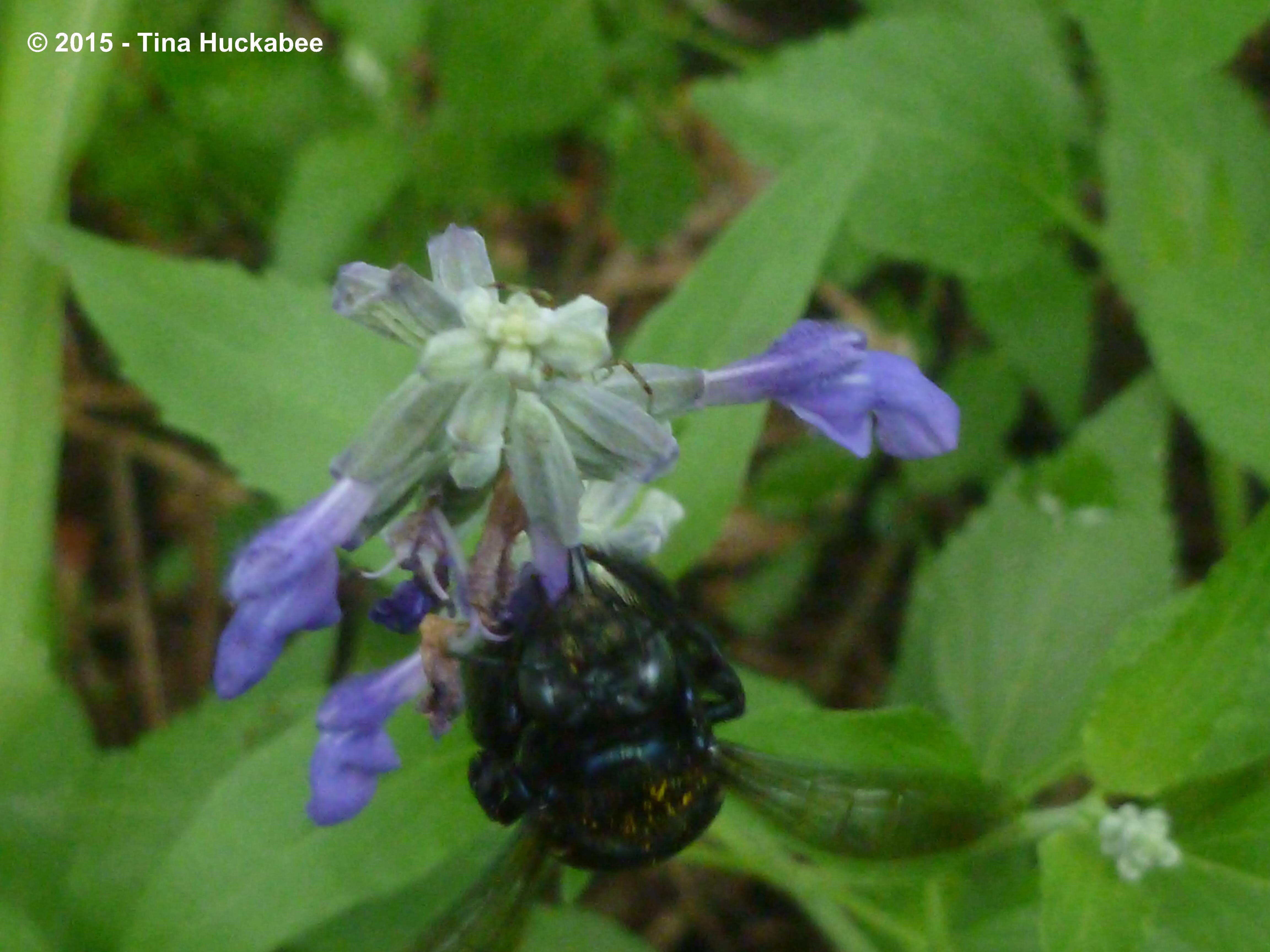
…and Drummond’s Wild Ruellia, Ruellia drummondiana,

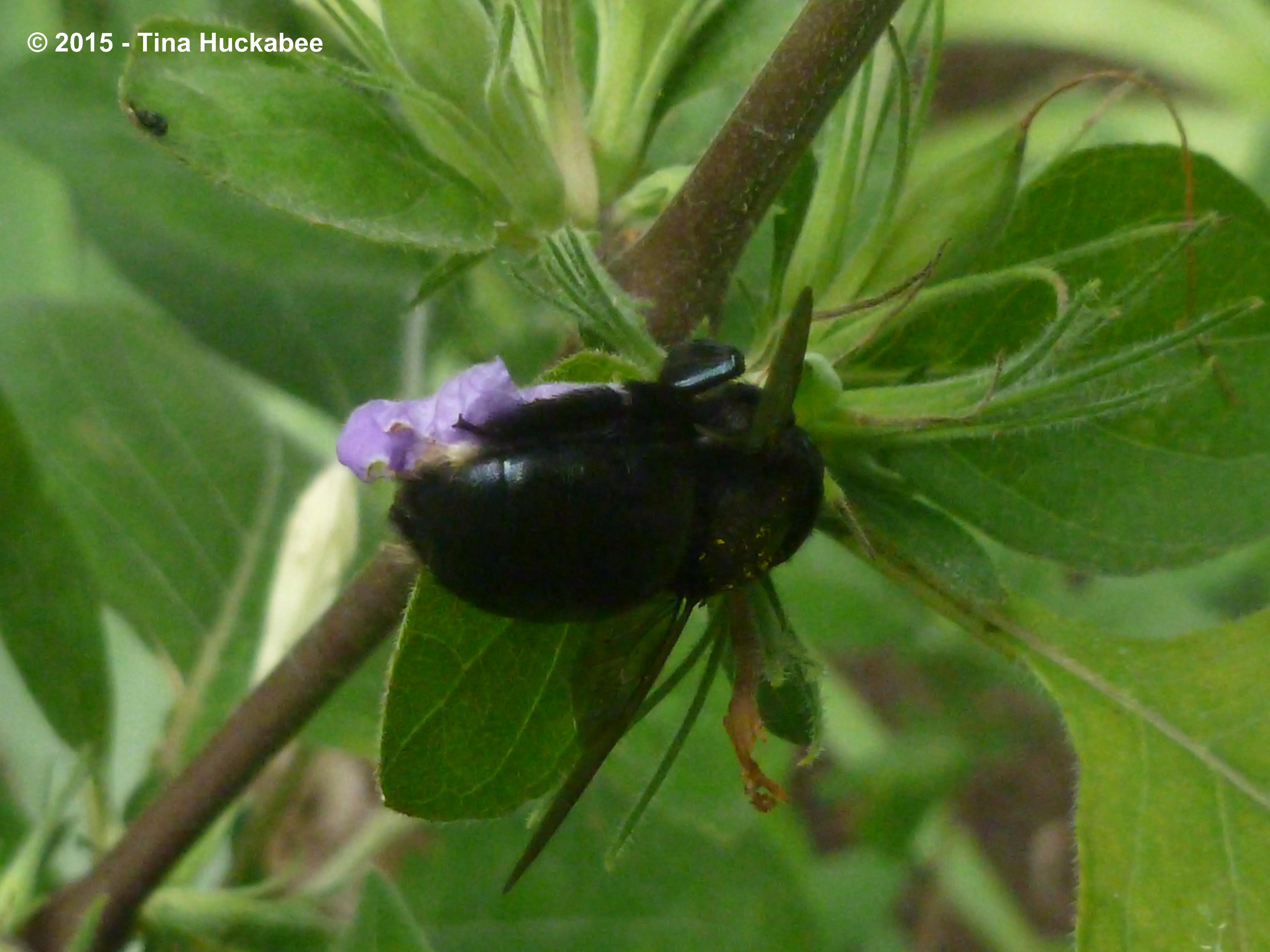
…as well as other flowers for weeks now.* There are many Horsefly-like Carpenter bees, Xylocopa tabaniformis, buzzing the flowers, too, like this one on a white Tropical Sage, Salvia coccinea.
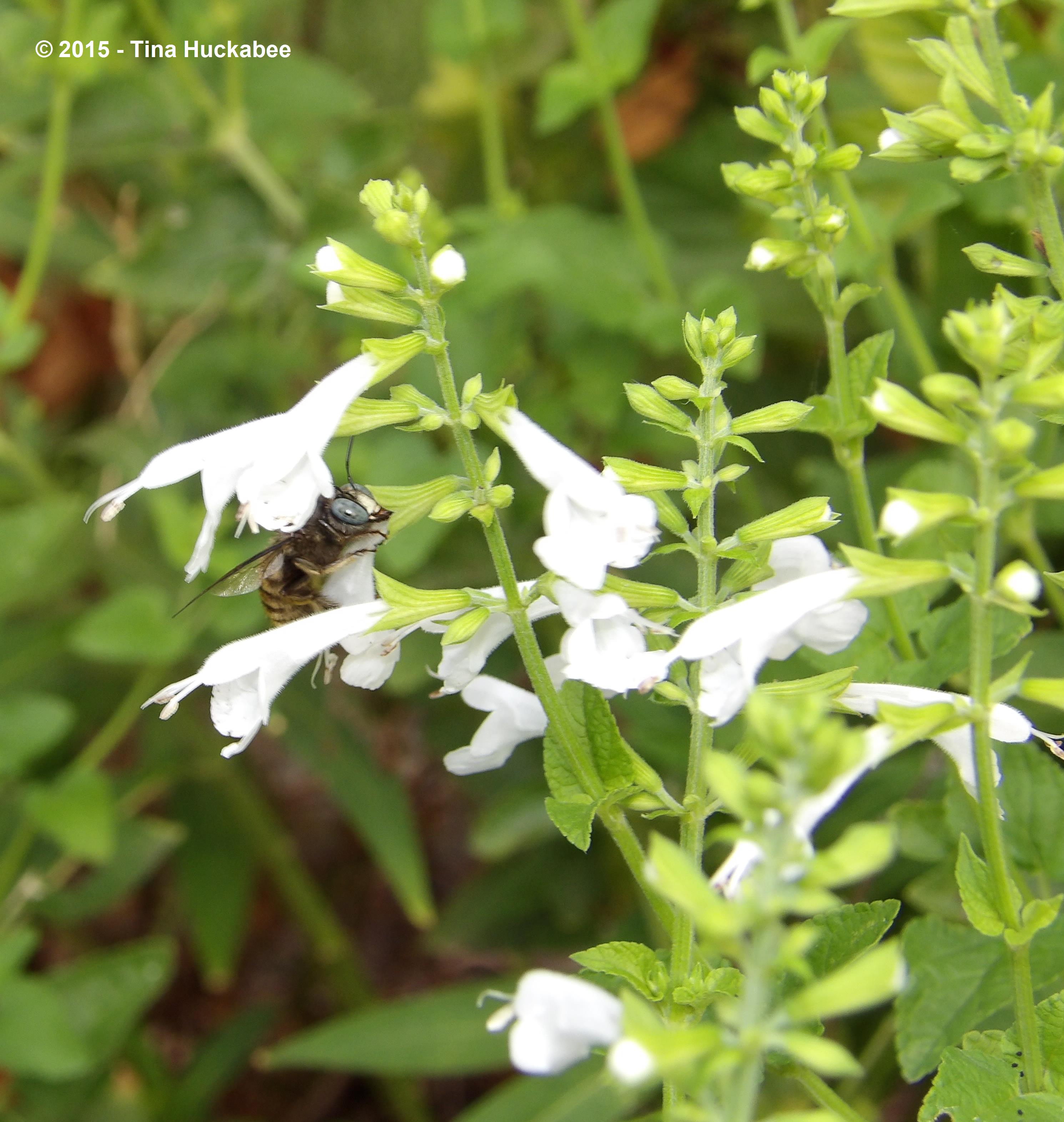
My garden is currently in full, fall bloom and those many flower choices are keeping the honey and native bees are quite busy. Pollinate away, girls!!
The Paper Wasp, Polistes exclamans, sips at the bird bath.

The Neon Skimmer, Libellula croceipennis, surveys for prey.

The Green Anole, Anolis carolinensis, glares at the annoying camera lady.

And the squirrel? He/she relaxes after a tough afternoon of stealing birdseed and wrecking my container plants in the effort of burying treasures for winter snacks.

Scamp! Let’s make that plural–Scamps! I don’t recall ever having so many in the garden and never have they been so destructive. The Fuzzy-tailed Devils will not leave the container plants alone. To dissuade their digging, I’m sprinkling cayenne pepper on a daily basis–not on the squirrels, mind you, just the plants. And I’m yelling at them a lot. Not the plants, just the squirrels.
Squirrels are part of the ecosystem, though an annoying part, and they provide lots of entertainment for the cats.
And that’s about it for this wildlife gardener. So what wild thangs are in your garden? Please post for October Wildlife Wednesday–share the rare or mundane, funny or fascinating, beneficial or harmful critters you encounter. When you comment on my post, please remember to leave a link to your Wildlife Wednesday post so readers can enjoy a variety of garden wildlife observations.
Happy wildlife gardening!
*I misidentified the carpenter bee originally and now believe that the bees I’m observing are Southern Carpenter bees.*












 My Gardener Says...