Tree Following, March 2015: What’s In A Name

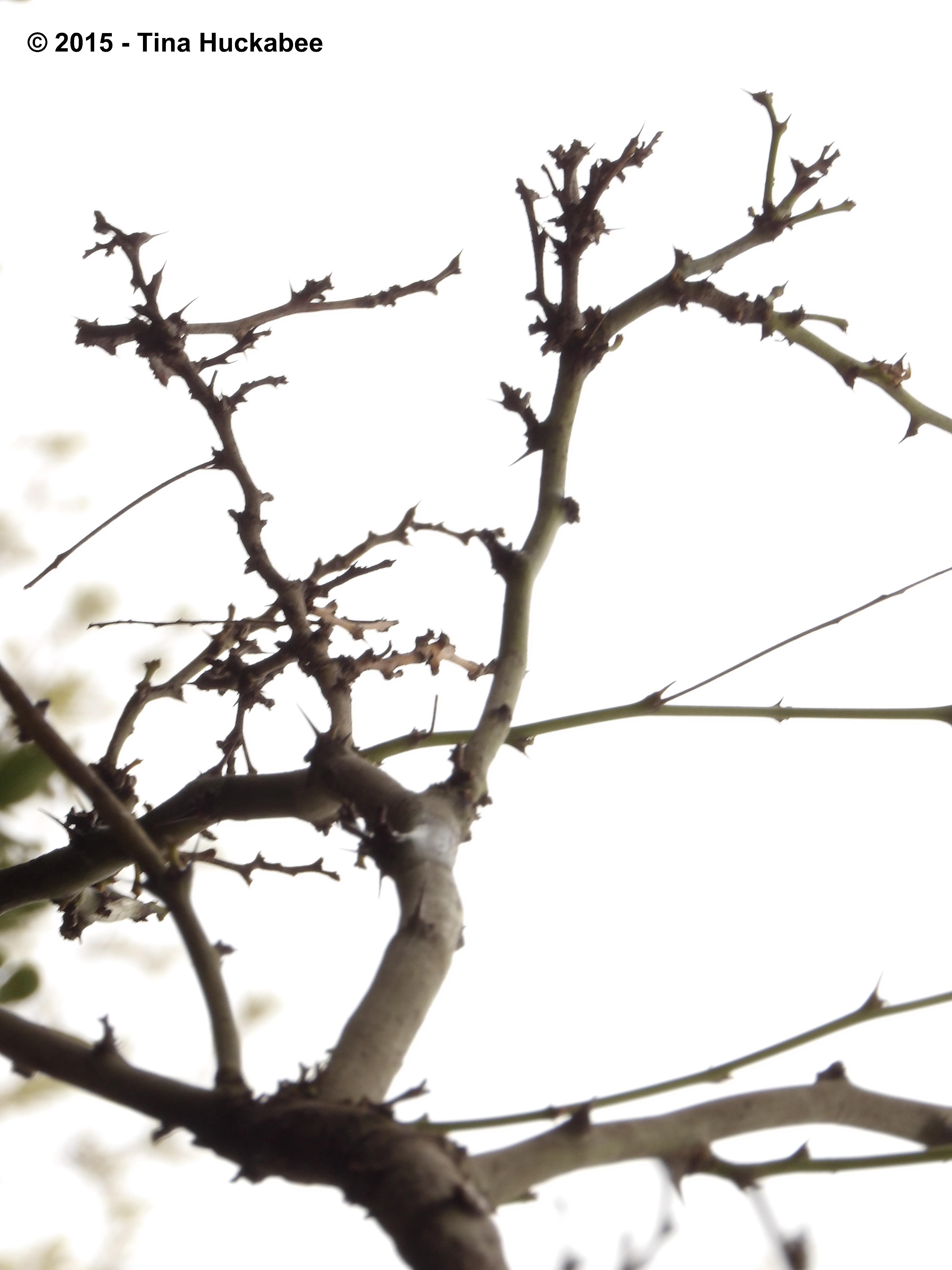
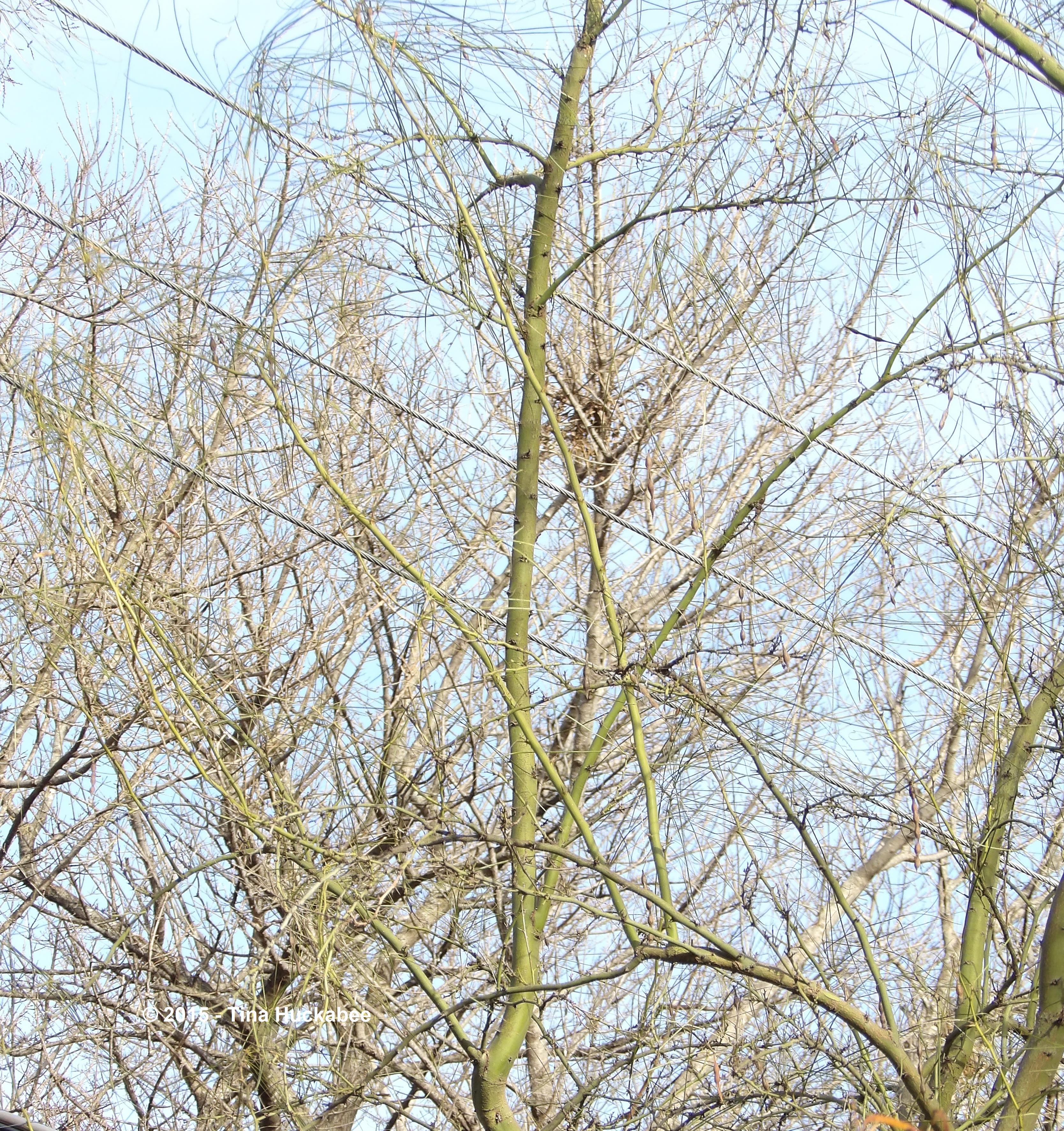
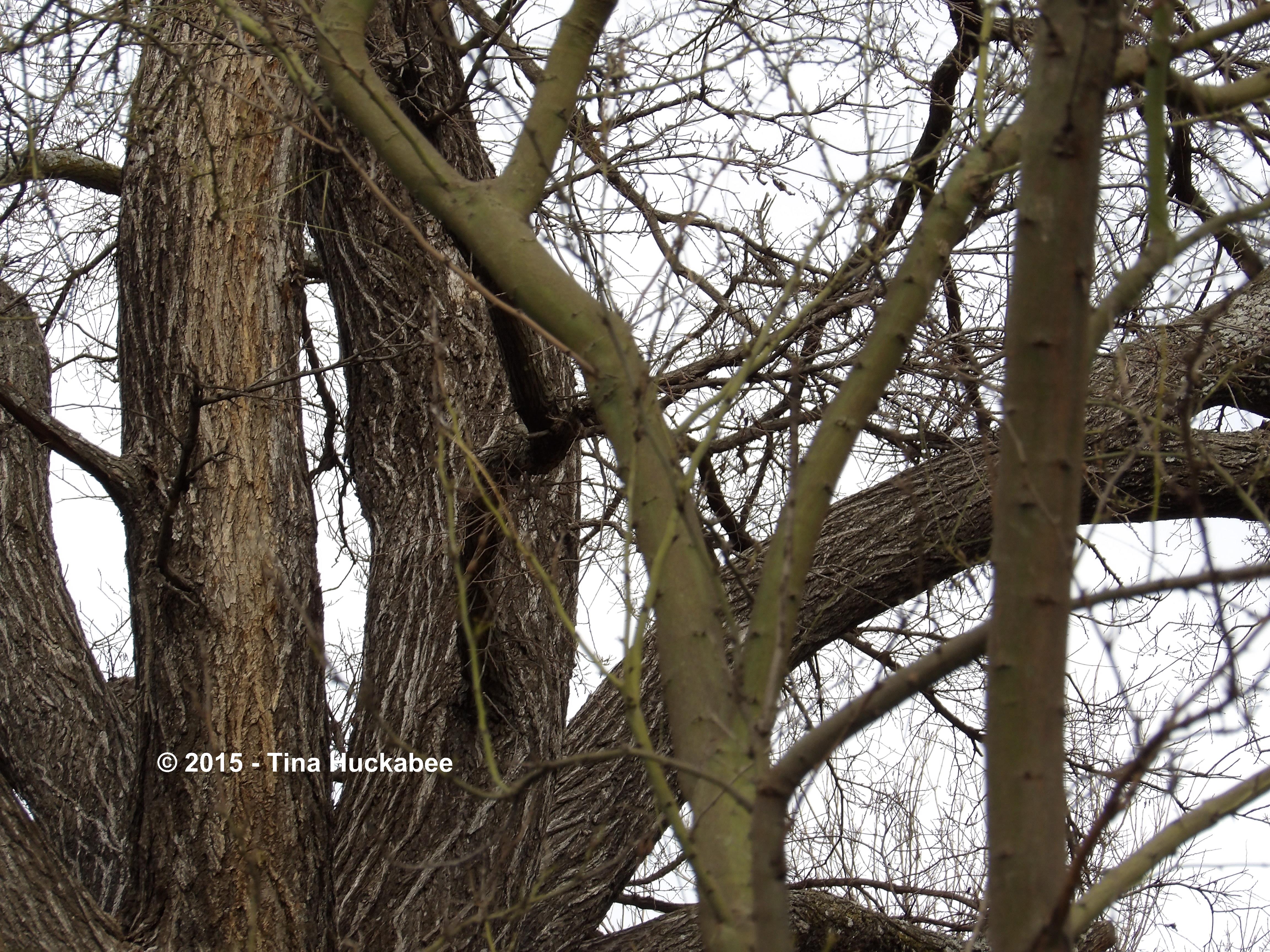
Thanking Lucy at Loose and Leafy for hosting Tree Following, there’s nothing new to report about the physical state of my lovely Retama, Parkinsonia aculeata.   February proved chilly, though not in any record-breaking way like so much of the United States, but cold enough that the Retama still sleeps.

IMGP5864.new

Cold birds, like this White-winged Dove, continue perching on sleepy limbs.IMGP5875.new
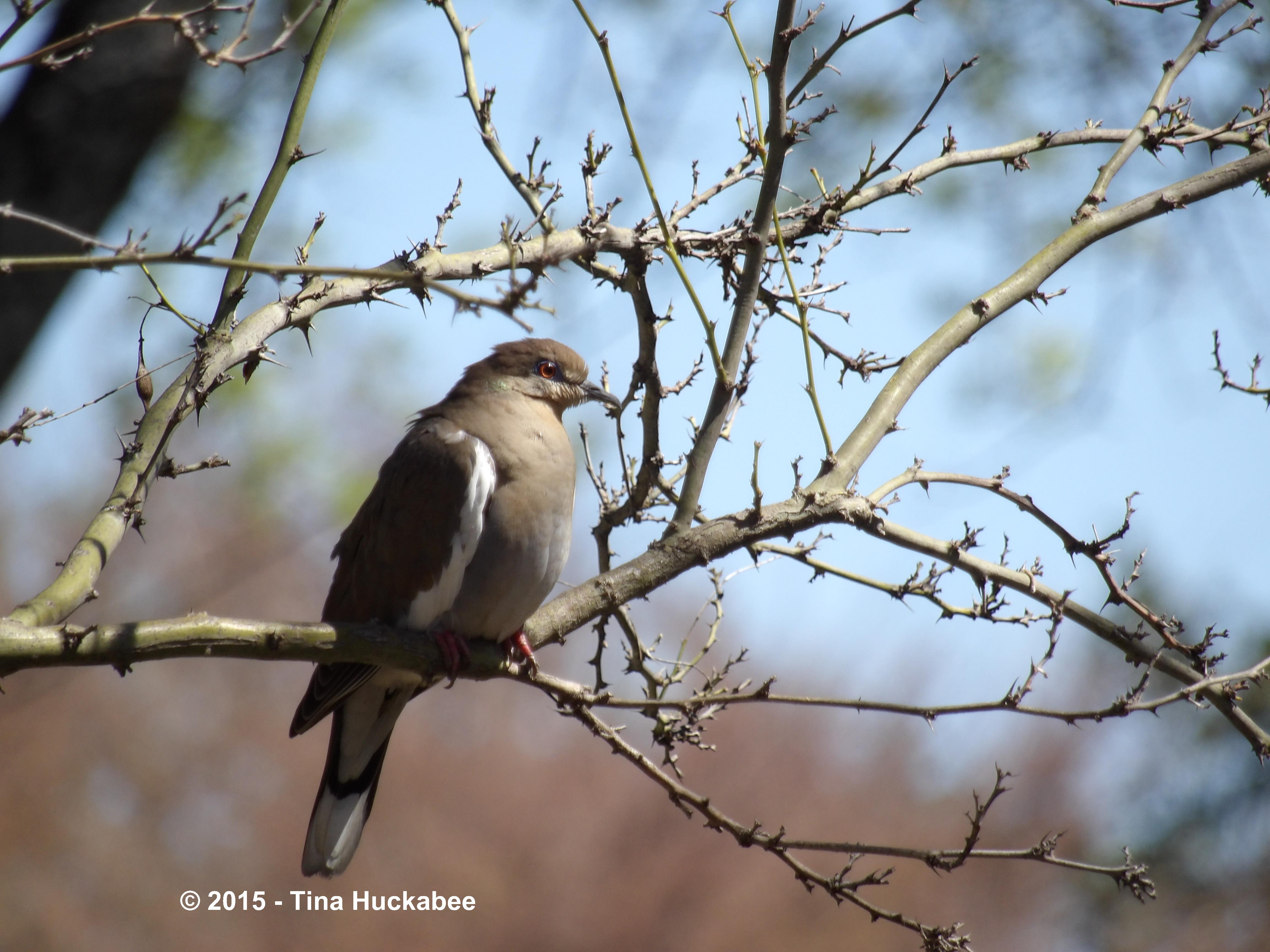
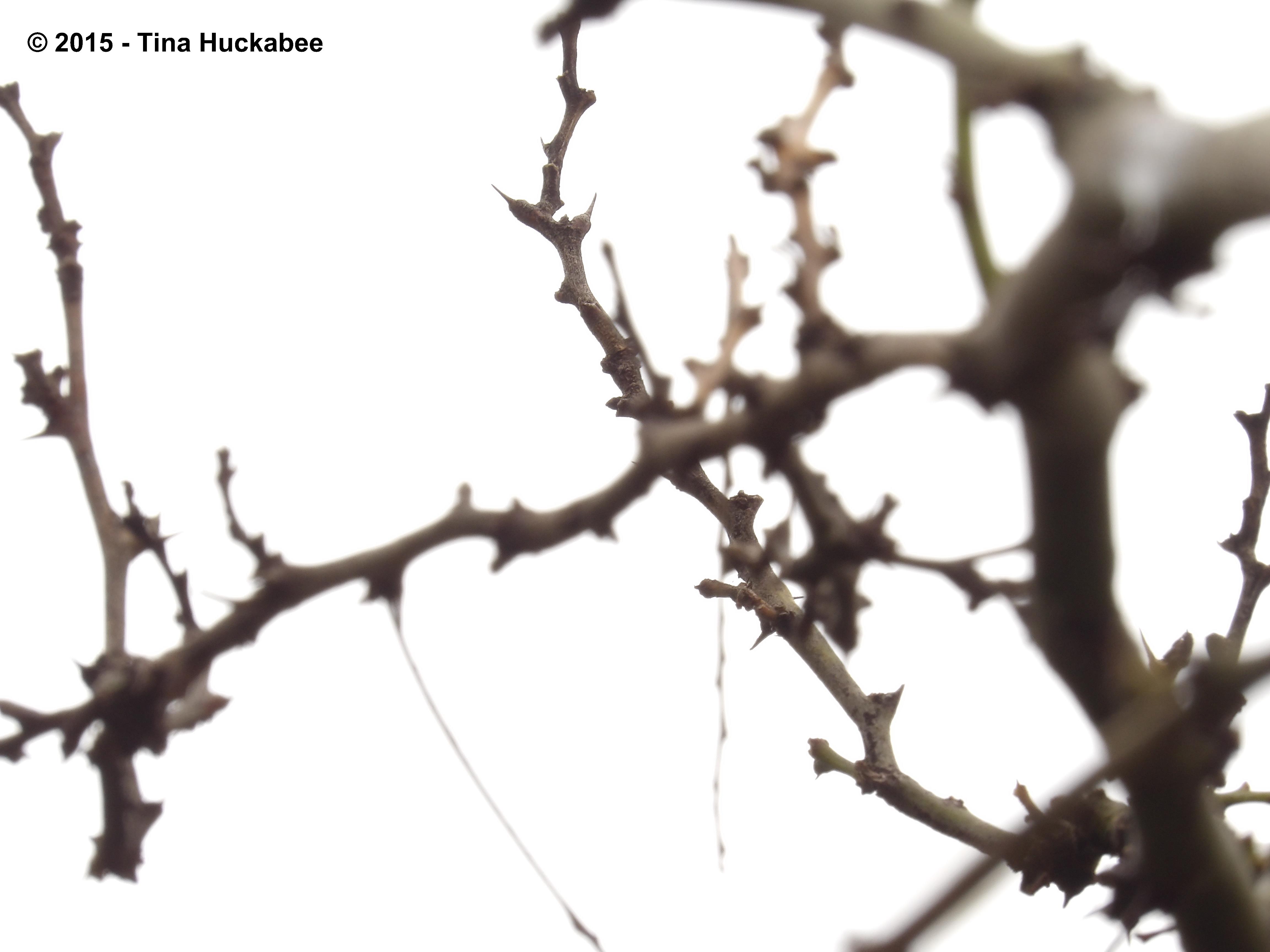
No swelling or emerging buds exist.

IMGP5866.new IMGP5868.new

Last year’s seed pods, a few anyhow, dangle, undropped and unsprouted. IMGP5871.new

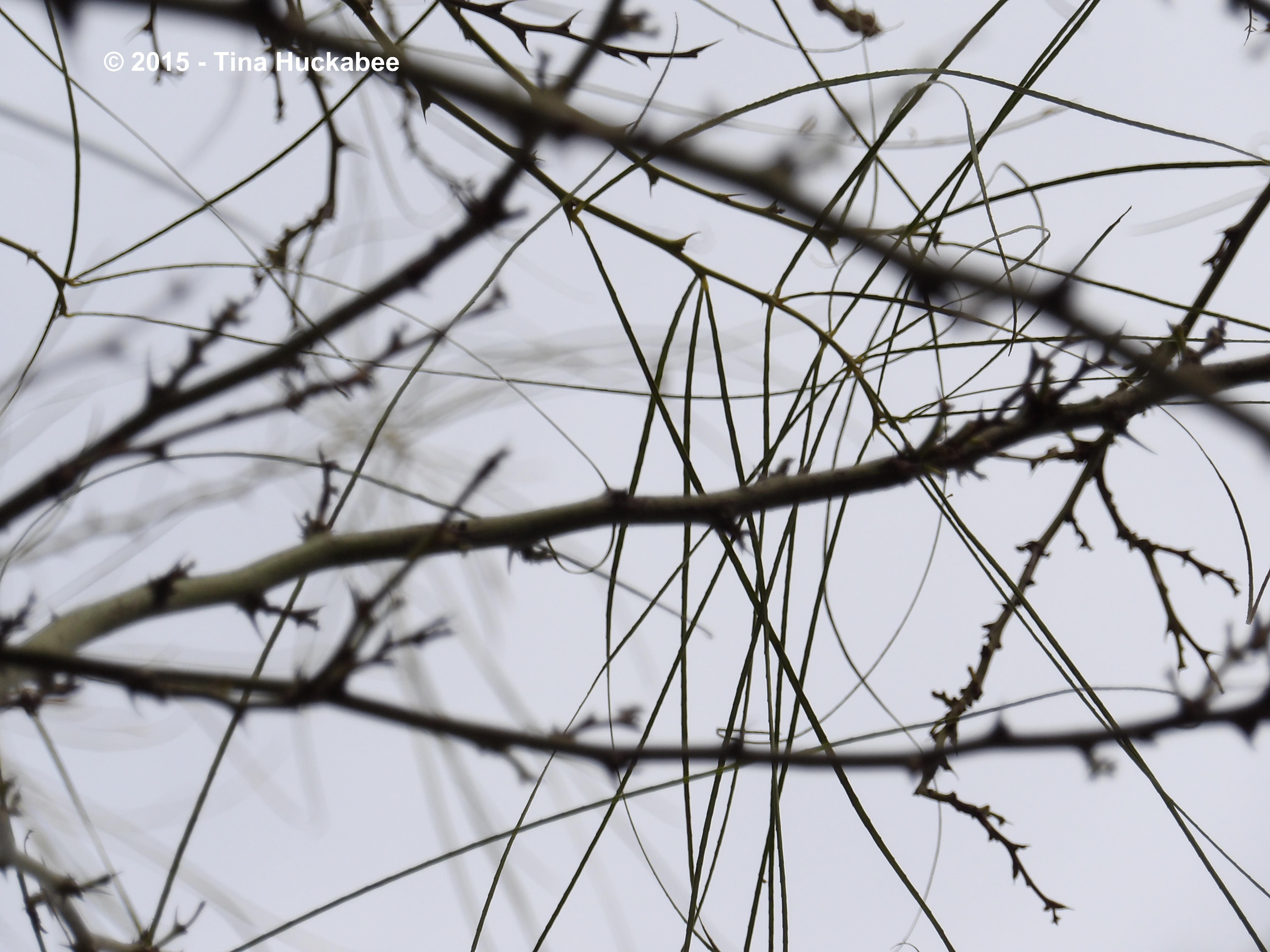
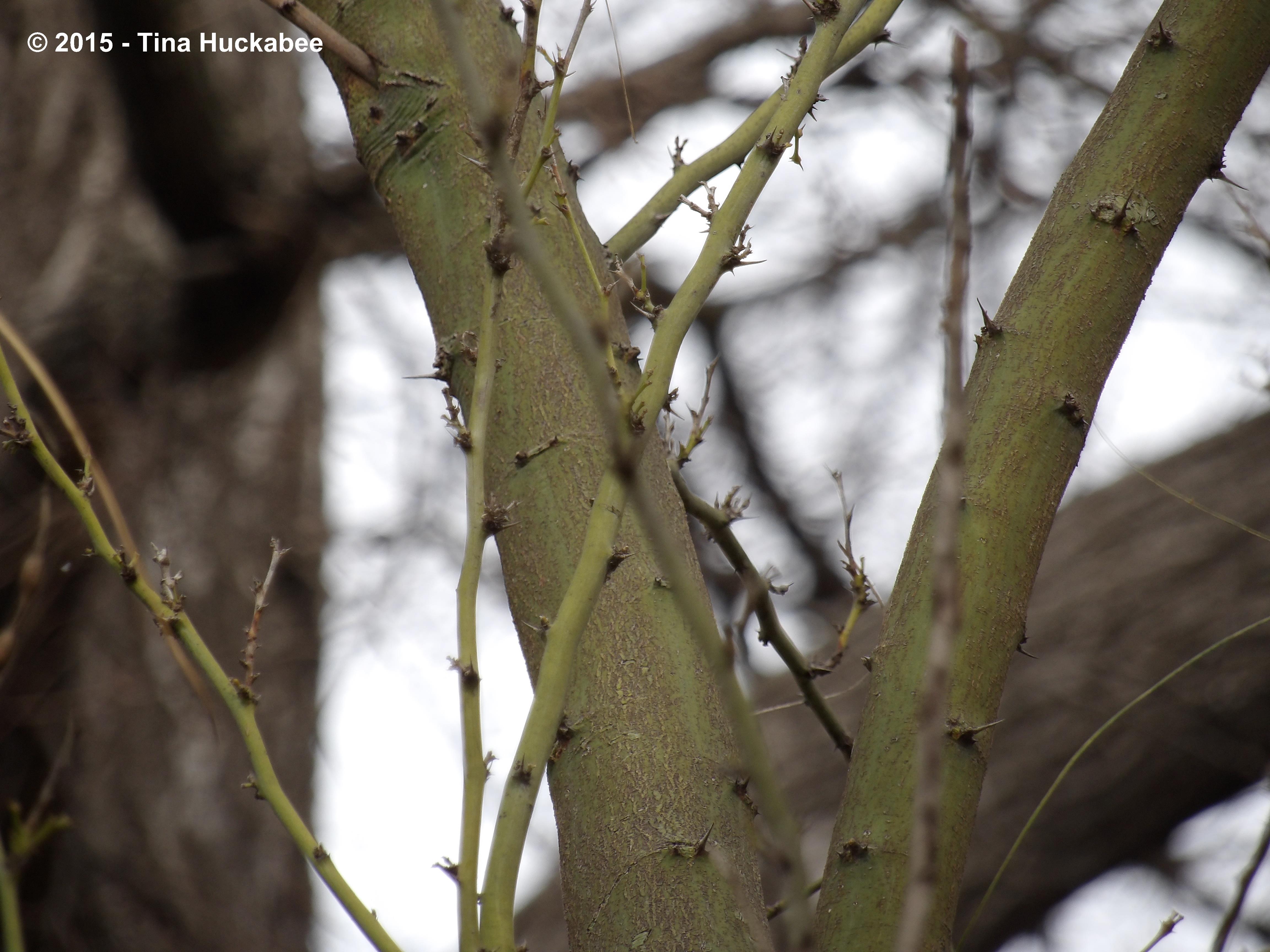
The trunk and many branches remain green, as is the way of the Retama, continuing the chlorophyll  function that the tree is known for, especially during drought periods. Those nasty thorns,

IMGP5882.new …which prick and poke this gardener from time to time, are healthy and prominent. One of the common names for P. aculeata is Jerusalem Thorn, though not because of these sharp fiends,

IMGP5883.new …but rather because the English name is an adulteration of the Italian/Spanish word girasol, which means sunflower, or turning toward the sun. ‘Sunflower’ or girasol is an appropriate name as the the Retama requires full sun exposure for its growing and blooming best, and the spring, summer, autumn flowers are brilliant yellow, though not of the sunflower or aster (Asteraceae) variety.  The legume fruits in the earlier photo are evidence that P. aculeata is a member of the Fabaceae or Pea, family of plants.

I’ve always called this tree Retama, but my mother referred to it using another of its common monikers, Palo Verde, which is also spelled Paloverde, from the Spanish, ‘green wood’.  In reading about this great tree, I’ve discovered  many other names for it. The Lady Bird Johnson Wildflower Center lists a total of six names for P. aculeata:  Retama, Paloverde, Mexican Palo Verde, Jerusalem Thorn , Horsebean, Lluvia de Oro.

IMGP5884.new

In this link from the World Agroforestry Centre, I found loads information about Retama, including a long list of names from around the world for this indigenous North American tree.  Similar to most plants, not everyone calls P. aculeata by the same common name.  That’s one of the interesting side stories with horticulture:  as plants are globally distributed, the vernacular of plant names adopts a linguistically provincial flavor.  Often, names are descriptive (‘green wood’/Paloverde) and many common plant names are quite charming and poetic.   This excerpt from the section about names from the Agroforestry Centre’s article lists an array of common names in numerous languages used for P. aculeata.

Amharic (filfile,Ye eyerusalem eshoh); Arabic (sessaban,sesaban);
Bengali (balati kikar); Bislama (shewina); Creole (madame naiz,madame
yass); Dutch (boonchi strena); English (wonder tree,Mexican palo
verde,blue palo verde,takataka tree,Barbados flower fence,Jerusalem
thorn,horsebean,hardbean); French (epine de Jerusalem,arrête-
bouef,genet epineux); German (Stacheliger Ginsterßaum); Gujarati
(bawal,kikar,rombawal); Hindi (adanti,sima tumma,vilayati babul,vilayati
kikar); Indonesian (adjao kase); Italian (Ginestra spinosa); Spanish
(aroma extranjera,capinillio,capinillo,cina-cina,acacia de los
masones,bayahonda blanca,palo de rayo,sulfato,sauce
guajiro,retama,pinos japonés,pino japonés,junco
marino,paloverde,espino,mataburro,lluvia de oro,acacia de agüijote,pauji);
Swahili (mkeketa); Tigrigna (shewit hagai); Trade name (Jerusalem thorn);
Yoruba (hanson sessaban)
IMGP5877.new

 .

Where’s my Retama??  Funnily enough, what I call P. aculeata isn’t mentioned in the English section of the names, but it is listed in the Spanish, because retama is Spanish for ‘broom’.  I used Google translator to check out the meanings of many of these words and I was surprise at how many had ‘broom’ in the translation, though not at all surprised at how many use ‘thorn(y)’ in the meanings.  My favorite name for P. aculeata is the Spanish, Lluvia de oro, which translates as ‘rain of gold’.  If you’ve ever seen a Retama in full, glorious bloom and some, or many, of those blooms have dropped to the ground, lluvia de oro certainly tells that story beautifully.
IMGP5880.new
I fear I’m too cranky and set-in-my-ways to change what I routinely call this plant, so Retama it remains for me.  Maybe I should call it by its scientific name, Parkinsonia aculeata?  That’s a mouthful of words, but from where is that name gleaned?  The Parkinsonia part of the equation honors the British botanist, John Parkinson, who lived from 1567-1650.  While Parkinson was an important gardener and introduced new plants to England in his lifetime, he did not “discover” the genus of trees which bear his name.  The naming of the New World plant genus, Parkinsonia, commemorates Parkinson’s life and horticultural contributions.  The species term, aculeata, derives from the Latin, aculeatus, meaning ‘sting or prickle’.  As one who’s been dinged on the head more than once by those thorns, yes, I agree that it’s aptly named.
IMGP5885.new
I’m not always a conscientious practitioner of proper name usage for plants, but it’s a good idea for gardeners to familiarize themselves with scientific/botanical names.  The example of my followed tree, the Retama, is a good one–at a minimum, there are 50 different common names for this one little tree: Parkinsonia aculeata.
 P1030904.new
Head over to Loose and Leafy and read about other trees from their admirers and followers.

Tree Following: Retama in February

Welcome to February Tree Following hosted by Lucy at Loose and Leafy where trees are followed by curious gardeners.  This is my fourth month to follow my tree-of-choice, the Retama, Parkinsonia aculeata.

On a clear day, if I turn my head at the right angle,  I fantasize that it’s spring or summer and all is green and leafy in my corner of the world.

IMGP5200.new

Though it’s been a mild winter here in Austin, Texas, it’s still winter–gloom, wet, not green, not lush.  However, the Retama is still attractive and always interesting.

IMGP5159_cropped_3336x3545..new

All the tiny leaflets dropped from the tree, though (as evidenced in the photo above) there are still some stalks left. Not many, but a few, like bristles at the end of brushes, remain at the top of the tree.

IMGP5140.new

Had there been a deeper freeze, those would be kaput, too.  There are some on the ground,IMGP5125.new

…along with other un-raked leaves.

IMGP5126.new

Yes, I am behind in my gardening chores.

The Retama is a lovely tree in winter.

IMGP5159_cropped_3336x3545..new

The beautiful smooth bark remains green in winter and during severe drought  to photosynthesize for the tree.

IMGP5161.new IMGP5122.new

Retama is native to Texas and Mexico, but is an introduced species in many places of the world. There are traditional communities that have learned the value of Retama in treatments of various ailments, like those in the Brazilian study I wrote about in December’s Tree Following post.  The  Brazilian study confirmed the anti-diabetic properties of Retama, which had been understood by residents for many years. Approximately one-fourth of the world’s population (about 1.42 billion human beings) relies on traditional medicines, rather than synthetic ones.  In India, where Retama is an introduced species, scientists have also studied the Retama for its medicinal uses.   In an article published in 2010 in the International Journal of Pharma Sciences and Research,  that gorgeous evergreen bark of Retama was studied as a basis for “pharmacognostical standards.”  (Don’t fret, I had to look up the meaning of that word:  it’s a study in pharmacology dealing with the components of medicinal compounds derived from plants.) The scientists studied for taste and color, as well as exposure to various chemicals and concluded that P. aculeata, aka, Retama, possesses compounds that are generally valuable against degenerative diseases.

IMGP5123.new

IMGP5124.new

In another study, published in 2011 in Asian Journal of Plant Sciences, Indian scientists studied the various parts of the Retama tree which have been used in traditional remedies. The leaf possesses antibacterial, anti-diabetic, and anti-malarial  properties and treats rheumatism; the flowers as well also treat rheumatism.  The stem and fruits (seeds) of the Retama treat fevers and malaria.   Additionally, rat studies indicated that parts of the Retama showed evidence of contraceptive qualities and pregnant women are advised not to ingest stem, leaves and flowers, as spontaneous miscarriage may occur.

This particular article also mentioned that separate studies suggest that the roots of Retama may resist certain heavy metal soil pollution, thus it may be a good plant to grow in polluted soils.

IMGP5138.new

It’d be nice to simply not  pollute soils.

The more I learn about my Retama, the more impressed I am at this great little tree.  I thought it was just another pretty face, but it has so many talents.

And, there’s more Retama where that came from:  I found a seedling this past month,IMGP5128.new

…which will be dug up and gifted to a neighbor this weekend.

Many thanks to Lucy and check out Loose and Leafy for more tree trivia.

IMGP5156_cropped_3386x3723..new

Foliage Day, December 2014

I’ve profiled foliage from my garden in the past, but I’m going to hang out with the Europeans today by joining with Christina and her beautiful blog,  Creating my own garden of the Hesperides, as she hostesses Garden Bloggers’ Foliage Day for December 2014.

Folks who’ve relocated to Austin, Texas have complained to me (usually in  whiny voices), there’s no fall color here.  That gets my “Texan” up a bit, because we do enjoy autumn color in Central Texas, at home and all around.

IMGP2938.new Lovely fall foliage.

IMGP2940.newThe color evolution happens later than in other parts of the Northern Hemisphere, closer to the actual start date for winter.  Additionally, the turn of foliage is gradual, beginning in November, peaking in late November/early December, and typically finishing by New Year’s Day.  It’s not a dramatic foliage show, loud and boisterous like you’d think something in Texas would be.  Instead, the change is gradual, subtle, and gentle.

IMGP2937.new

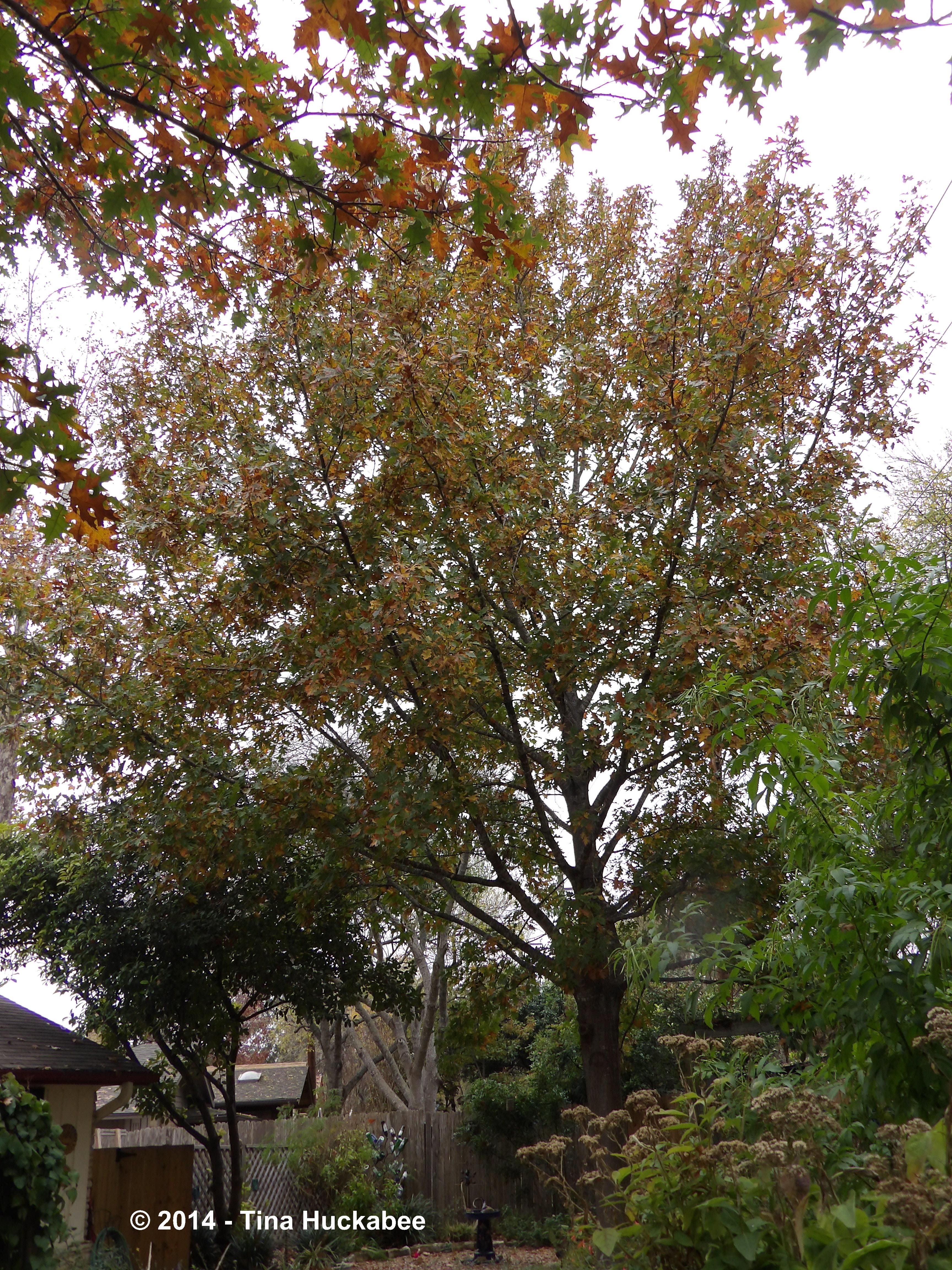
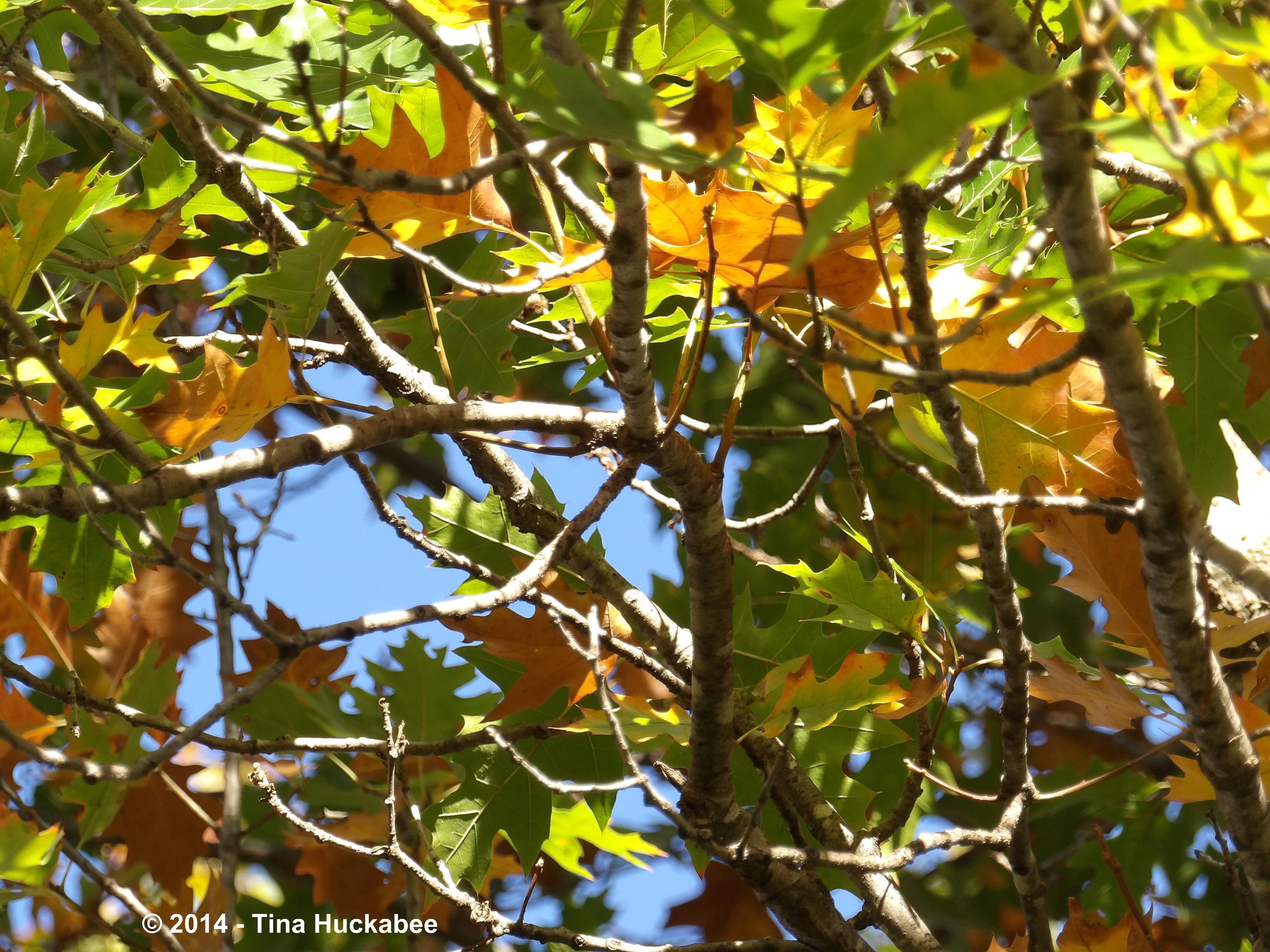
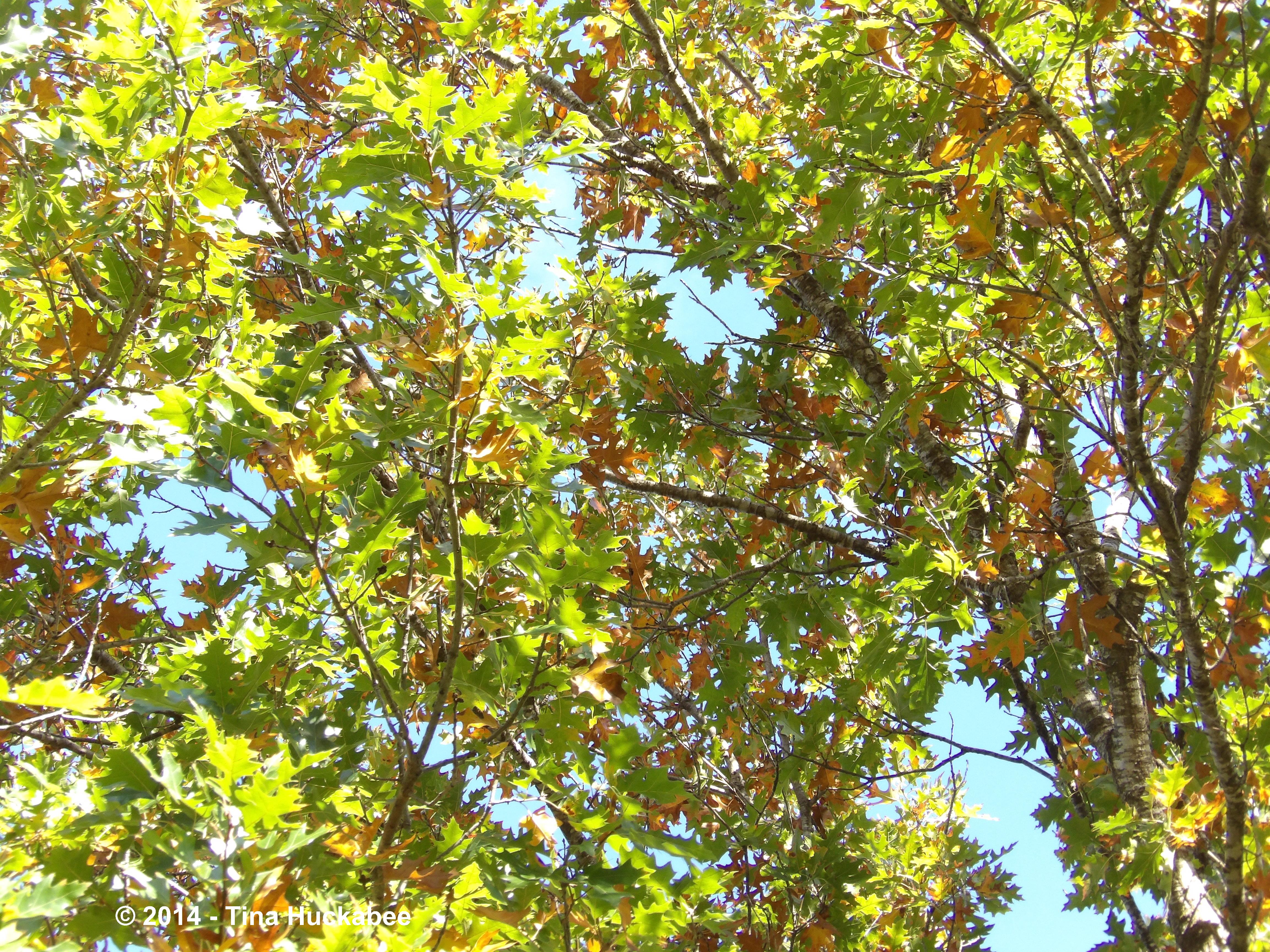
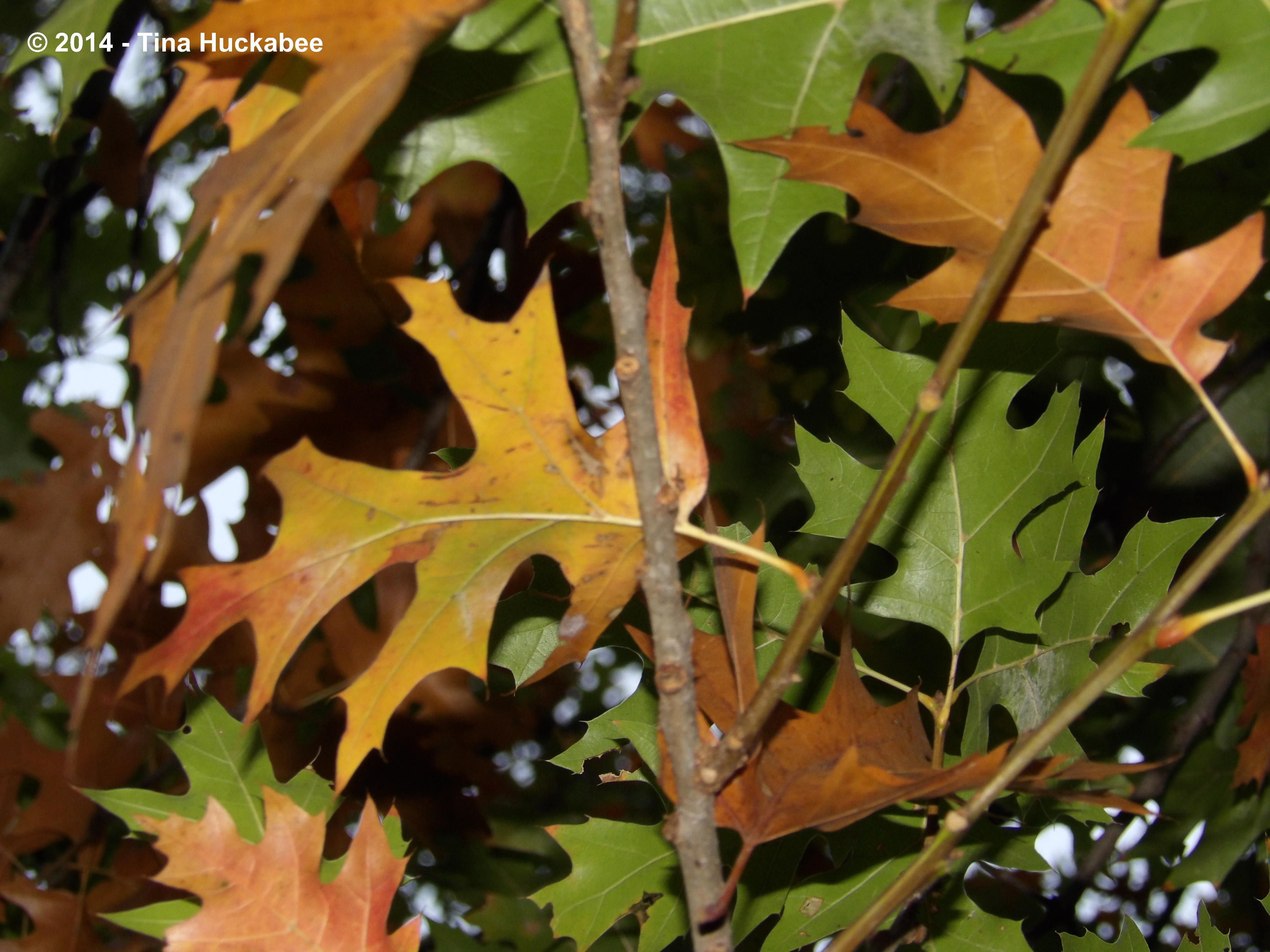
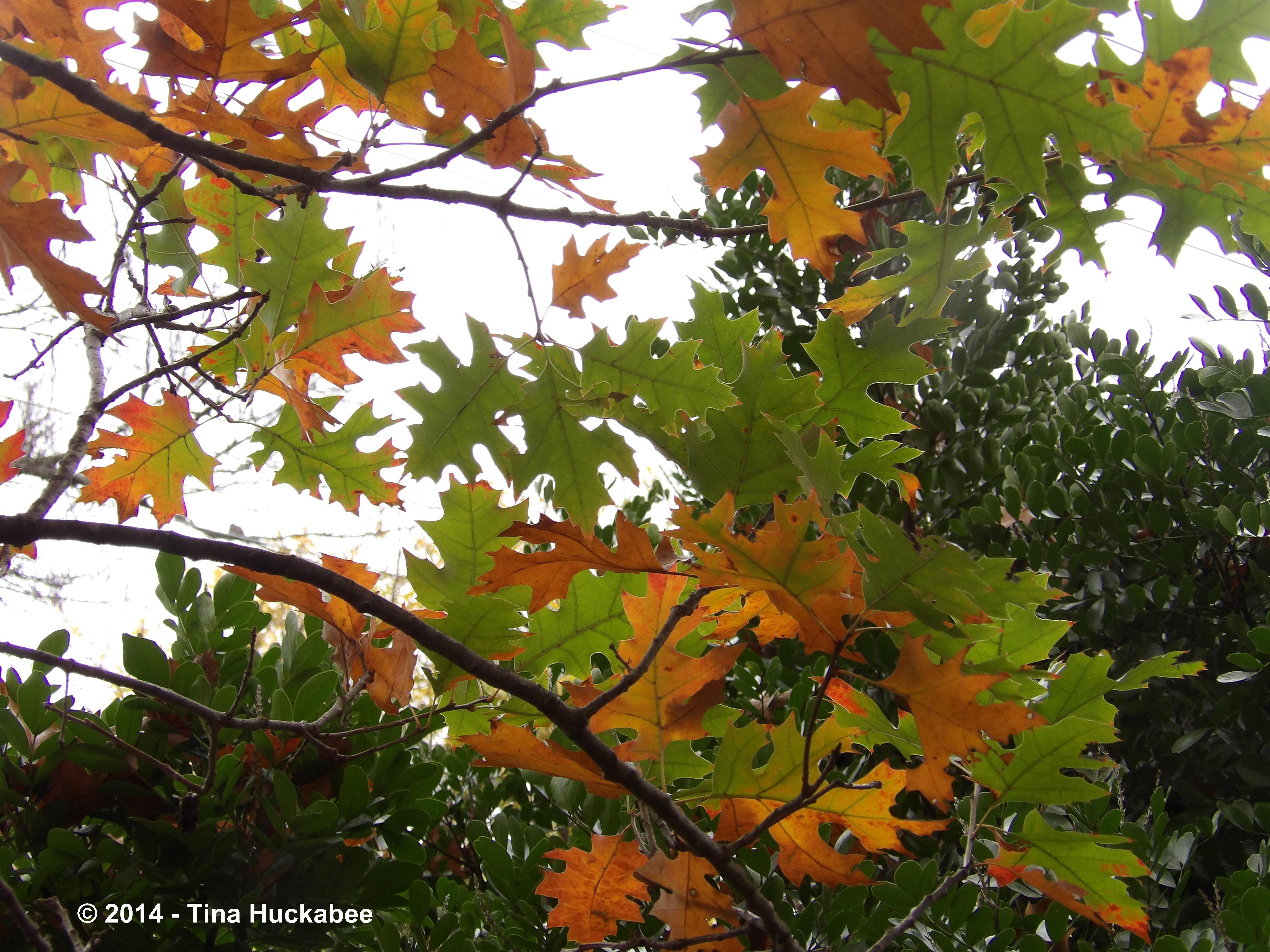
In my gardens, the two Shumard OakQuercus shumardii, trees extend their color change over many weeks.

IMGP3124.new IMGP3191.new

There are several species of oak trees in Texas that are commonly referred to as “Red” oak.  I’m guilty of misnaming the two major arboreal specimens in my back garden as “Red” oaks.  In fact, both are Shumard  Oaks.

IMGP3034.newIMGP3033.new

Gorgeous trees, I appreciate their many attributes: the shade they cast in summer, the cover and food provided for the many birds and other wildlife who visit or make these trees home, and the fall foliage mosaic (albeit in December) that these two trees provide.

IMGP2967.new

IMGP2968.new

IMGP3122.new

IMGP3139.new

IMGP3140.new

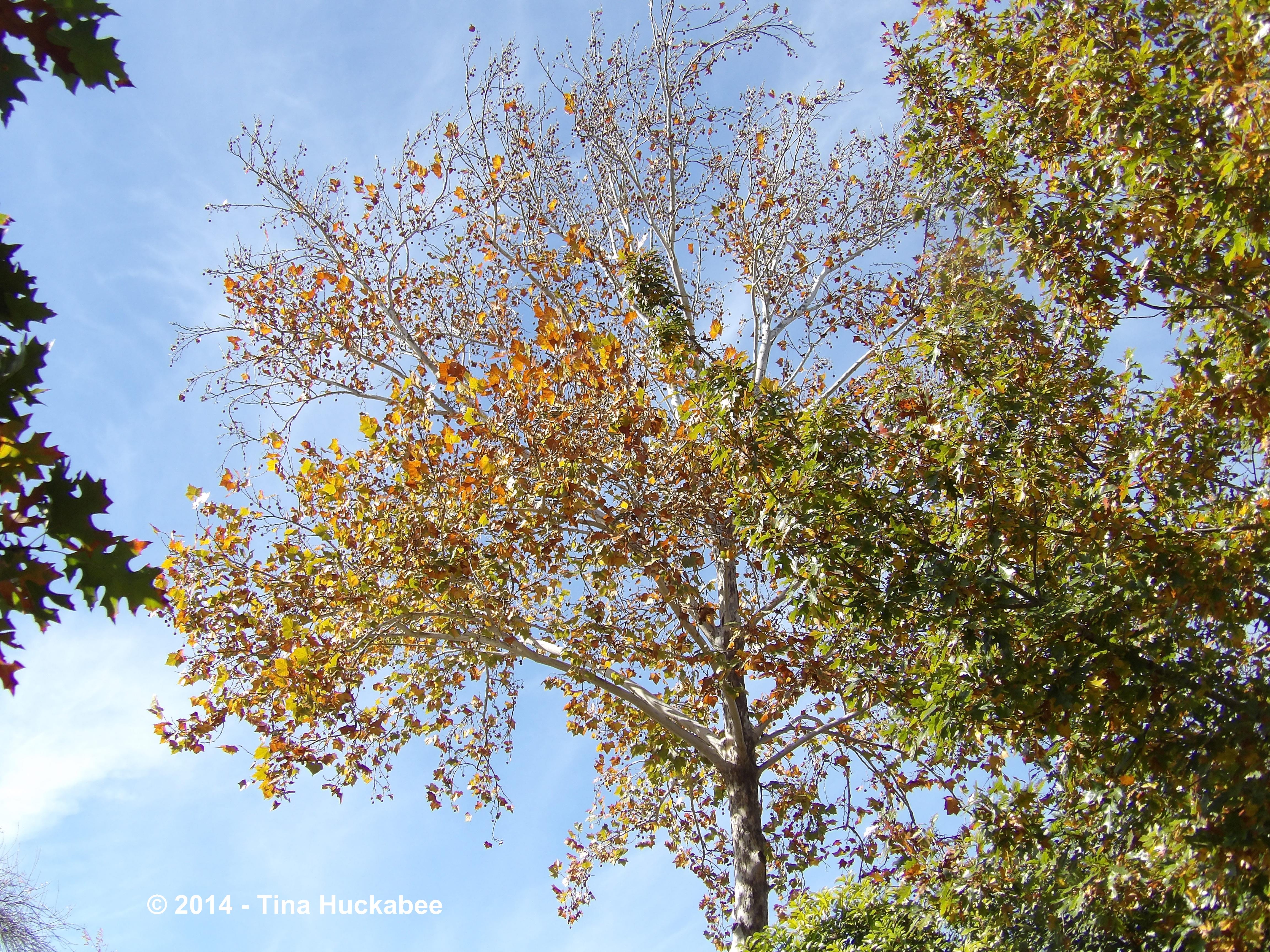
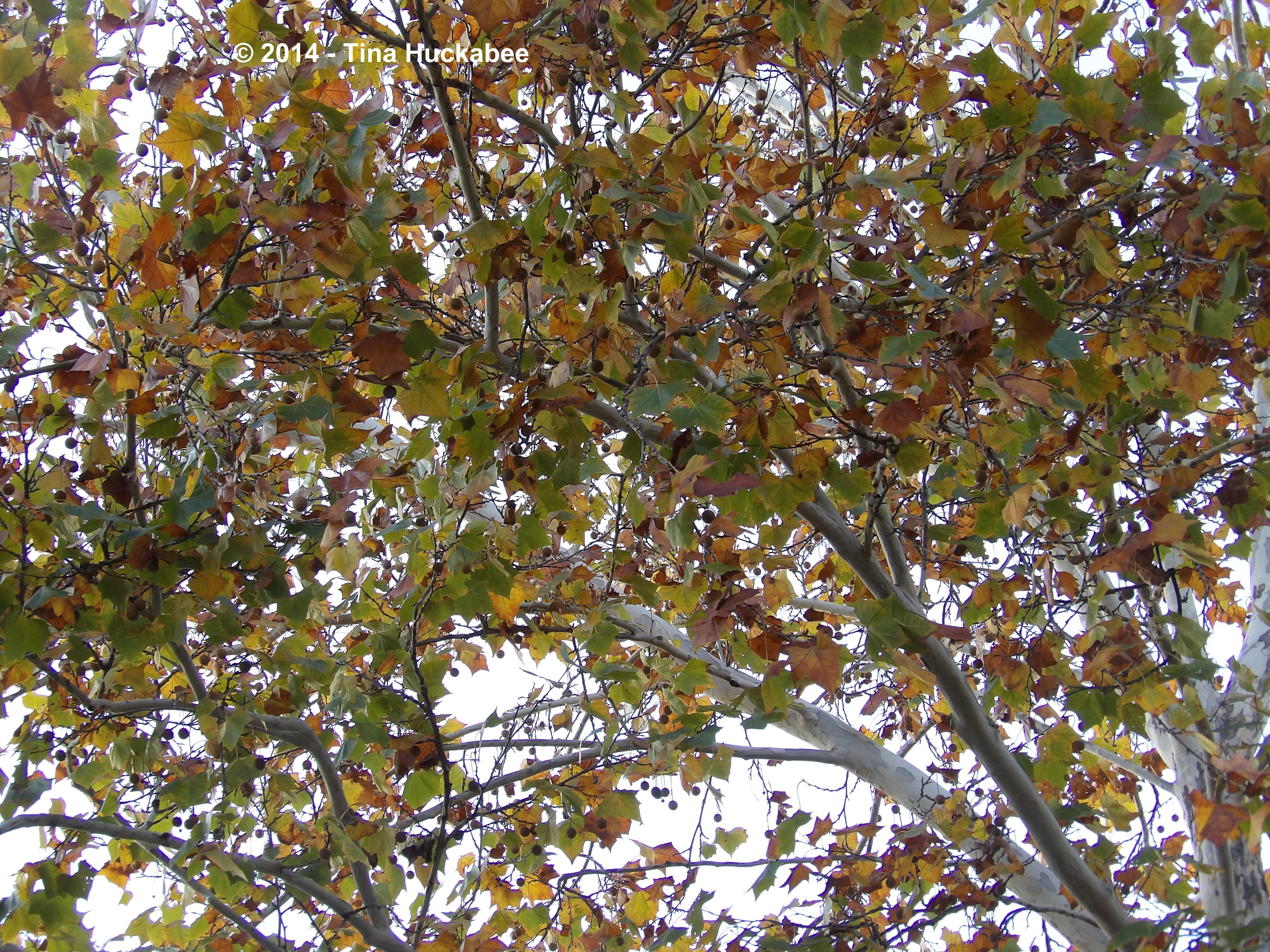
Another tree residing in my realm, though probably not one I would have planted on my own, is the American Sycamore, Plantanus occidentalis.IMGP3153.new

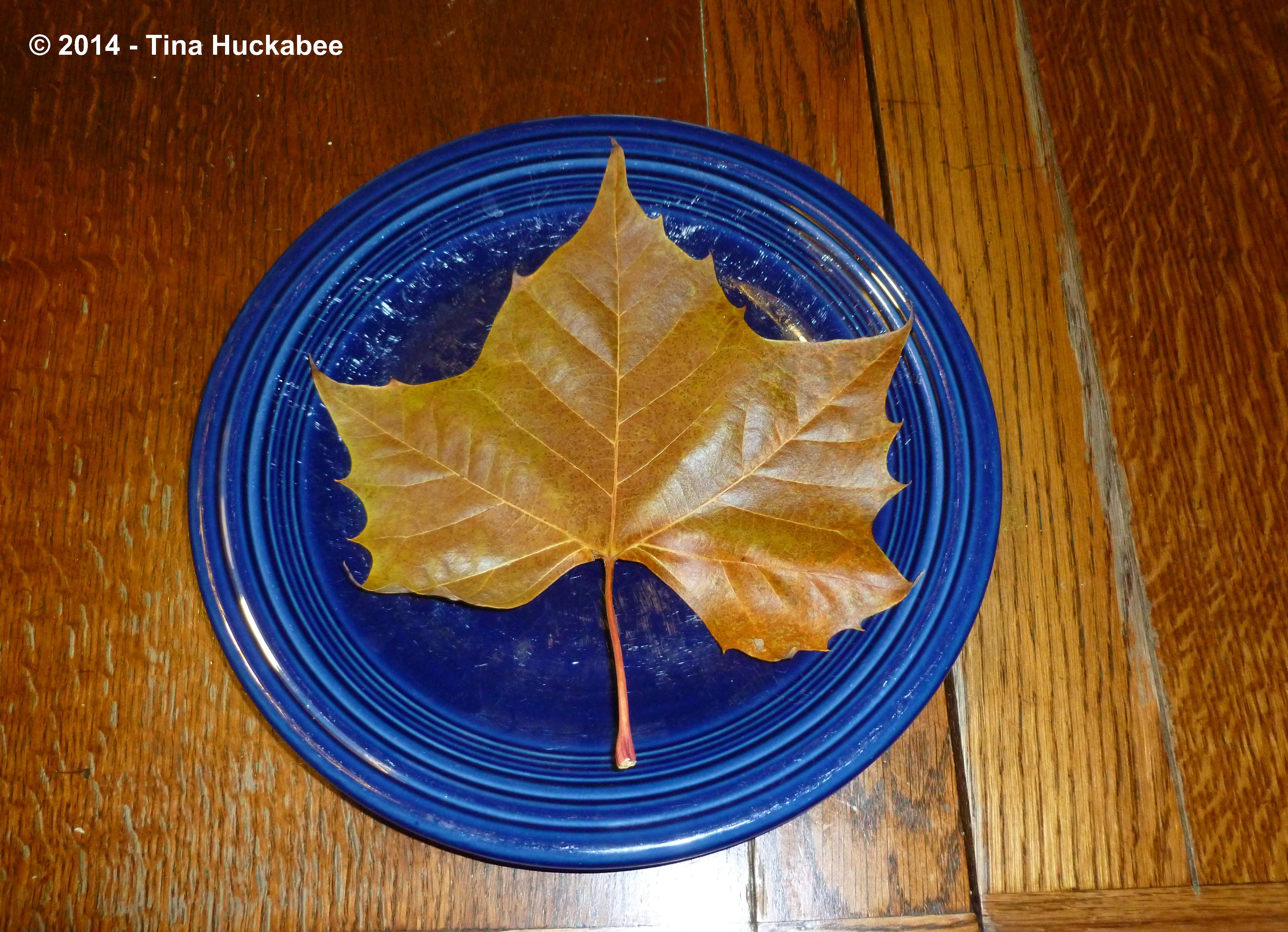
I don’t hate this tree, but it’s a bit water thirsty for Central Texas–it’s naturally found along stream banks and bottomlands which hold moisture from floods, and that’s not where my home resides.  The tree was established when I bought my home and I wouldn’t remove a mature tree, so it’s remained as a major shade source for my gardens. Aside from its struggles during dry periods (drought-stress causes defoliation), the leaves are thick and big.

20111231_7_cropped_4401x3184..new Really big.

Awkward and especially messy in the garden, the leaves don’t break down in any reasonable amount of time. Here you can see a small sampling of Sycamore leaf litter.

IMGP3208.new There are points during late December when all that is visible in certain parts of my gardens are those dinner plate-sized leaves. A garden is not so nice when those huge leaves obscure everything in it!  Sycamore leaves are too large and thick to leave in the garden (for this OCD gardener), or to place, as is, into the compost.  They mat together, forming a barrier against moisture, thus slowing the composting process.

But in the tree, especially during the seasonal change,  Sycamore foliage is quite lovely.

IMGP3043.new IMGP3119.new

IMGP3118.new

Fluttering in the breeze, in an array of colors,

IMGP3155.new

IMGP3044.new…the leaves are resplendent against the blue sky.

Once the leaves drop and I’ve vacuumed and shredded them, dumped them directly into my compost bin and/or onto the gardens as mulch, the spherical seed pods decorate the tree throughout winter.  In spring, the seed balls explode, releasing feathery seeds aloft in the wind.

On the ground, foliage also makes its presence known.  Floating in the bird baths, IMGP3190.new


…accompanying the bee hives,

IMGP3152.new

…and blanketing the gardens and pathways.  Here, the brown oak leaves combine with the stalks of the RetamaParkinsonia aculeata. 

IMGP2969.new

A bit upwards from the ground sit perennials which also sport fabulous foliage this GBFD. The colorful foliage of the Ruby Red Runner, Alternanthera hybrid, which is part of the biological filtering system of my pond, is eye-catching.IMGP3120.new

Tiny floral gomphrena puffs accompany the plum leaves. Ruby Red Runner provides foliage interest nearly year round; a hard freeze will render this plant dormant.

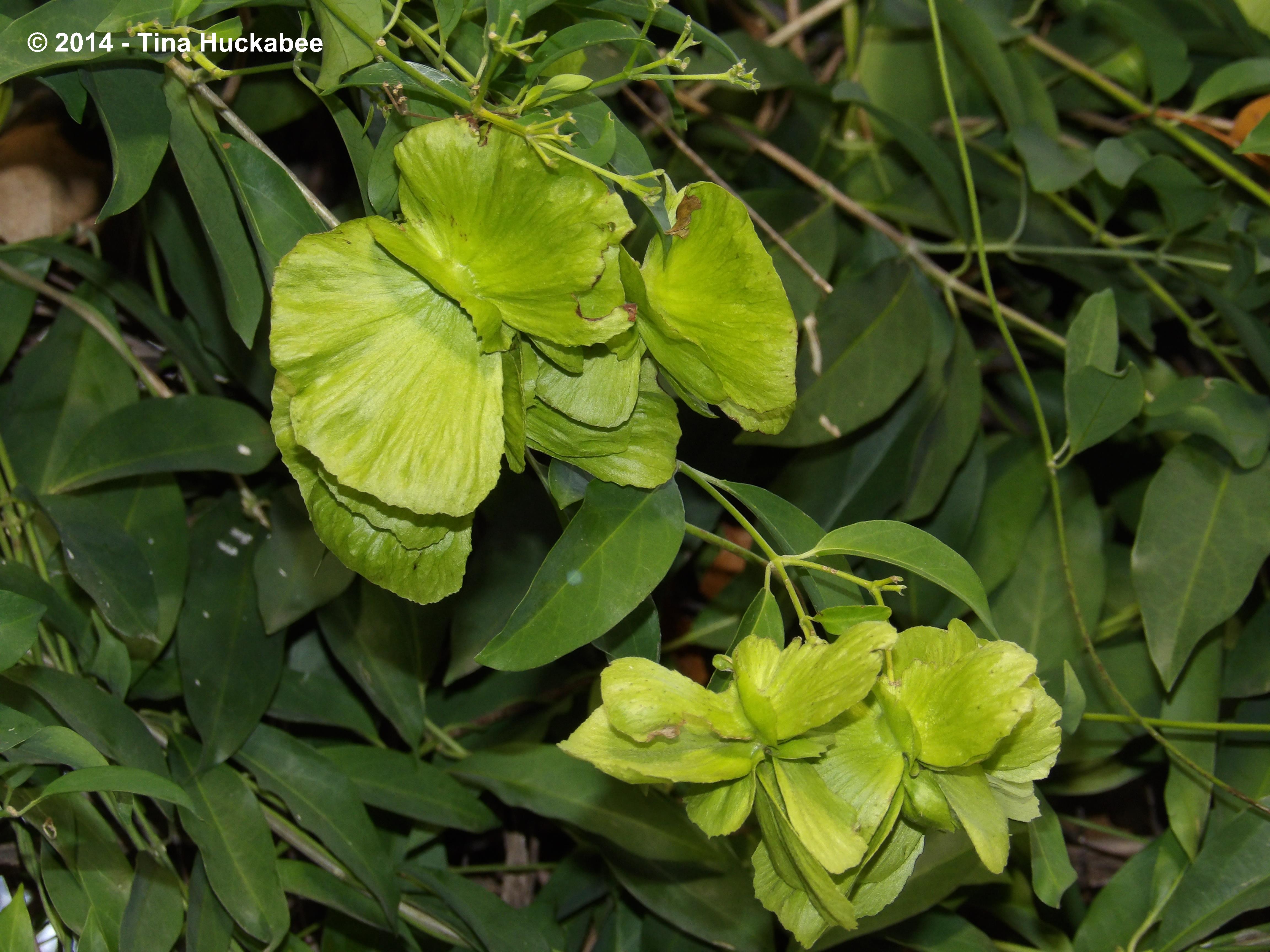
The Butterfly VineMascagnia macroptera, showcases lush green foliage and fascinating chartreuse seed pods which resemble butterflies, thus the common name for this native plant to Mexico and southwards.

IMGP3125.new IMGP3126.new

Currently, none of the seed pods are the rusty-brown they eventually become, but it’s quite a picture when there are differently pigmented “butterflies” resting on the vine.

Firebush, Hamelia patens. speckles after frost damage to its foliage,

IMGP3143.new IMGP3144.new

…but  I like it.  No blooms remain on this heat-loving, native-to-Florida.  Once we have a killing freeze, it will be dormant until late spring.

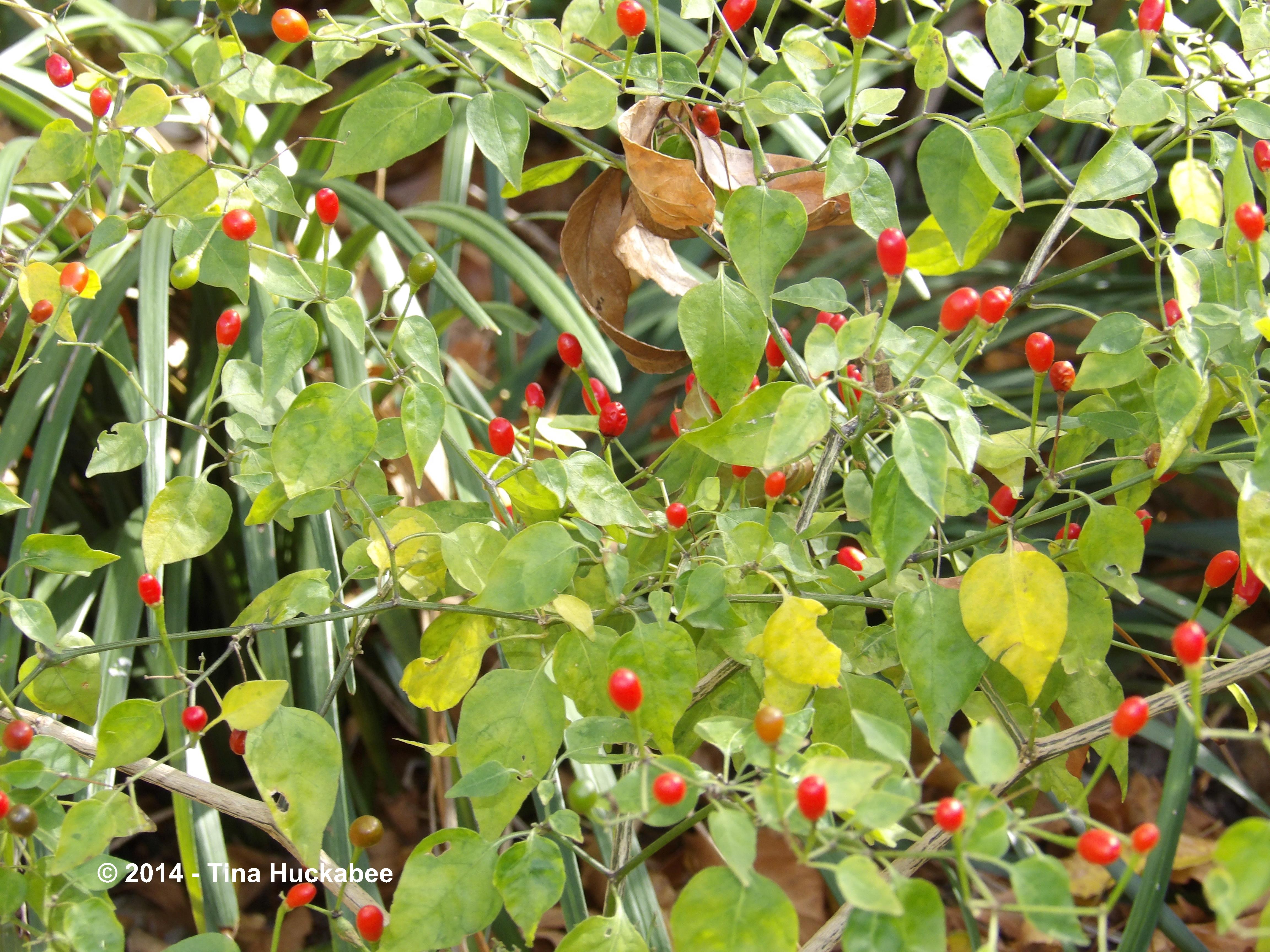
Lastly, the Chile Pequin, Capsicum annuum (var. glabriusculum) adds major hotness to the garden.

IMGP3146.new

Pepper hotness, that is.  A beautiful, shade-tolerant and deciduous (in most winters) shrub, many birds (and my husband) favor these chile peppers, the only truly native chile pepper in Texas.  Here, it’s  accompanied by Yarrow, Achillea millefolium.

IMGP3148.new

Such a lovely plant for this time of year.  Who says we don’t have seasonal foliage color in Texas??

For foliage celebrations from around the world, visit Creating my own garden of the Hesperides for GBFD!

IMGP3183.new