Bits of Blooms

Celebrating a bit of bloomin’ for April and I’m loving my back garden’s bloomin’ bits.

IMGP7014.new

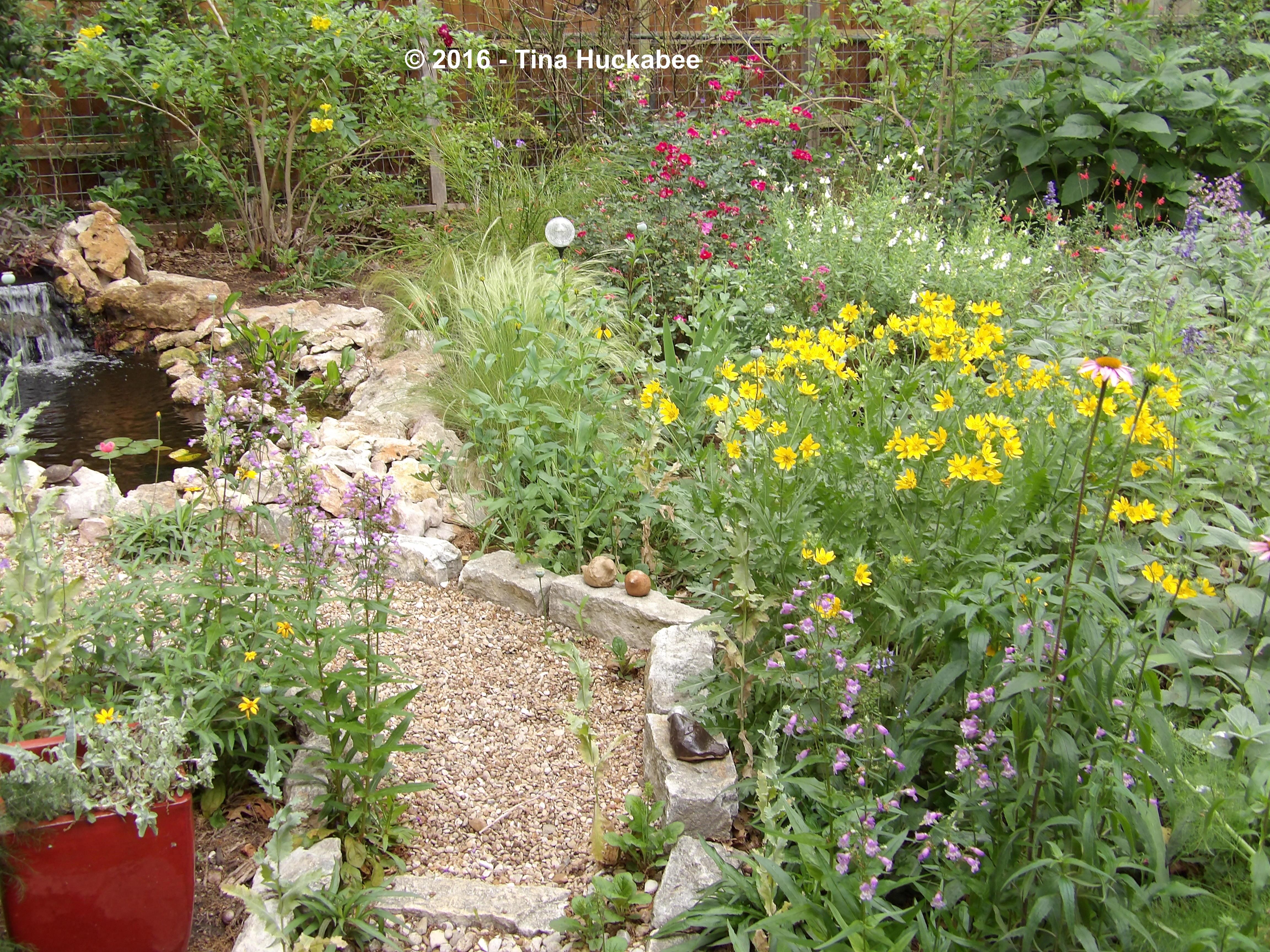
The fuchsia bloom spike of Hill Country penstemon (Penstemon triflorus) is almost drowned out by the loud red of the Martha Gonzales roses.

I was attempting shots of busy native and honey bees–no joy there– but the shrubs and flowers posed beautifully and smiled winningly for the camera. The yellow Engelmann’s or Cutleaf Daisy, Engelmannia peristenia began blooming in full force during the past couple of weeks.

IMGP7021.new

It’s a good perennial  to accompany the pond path with its sparkly daisies that flower from April to July and its year-round, attractive evergreen foliage.
IMGP7326.new


Nearby, Gulf Coast Penstemon,  Penstemon tenuis are also at full-bloom speed.

IMGP7020.new

IMGP7044.new

Honeybees are particularly fond of this native penstemon and I’ve also seen a variety of native bees working the blooms as well.

IMGP7048_cropped_3692x2471..new


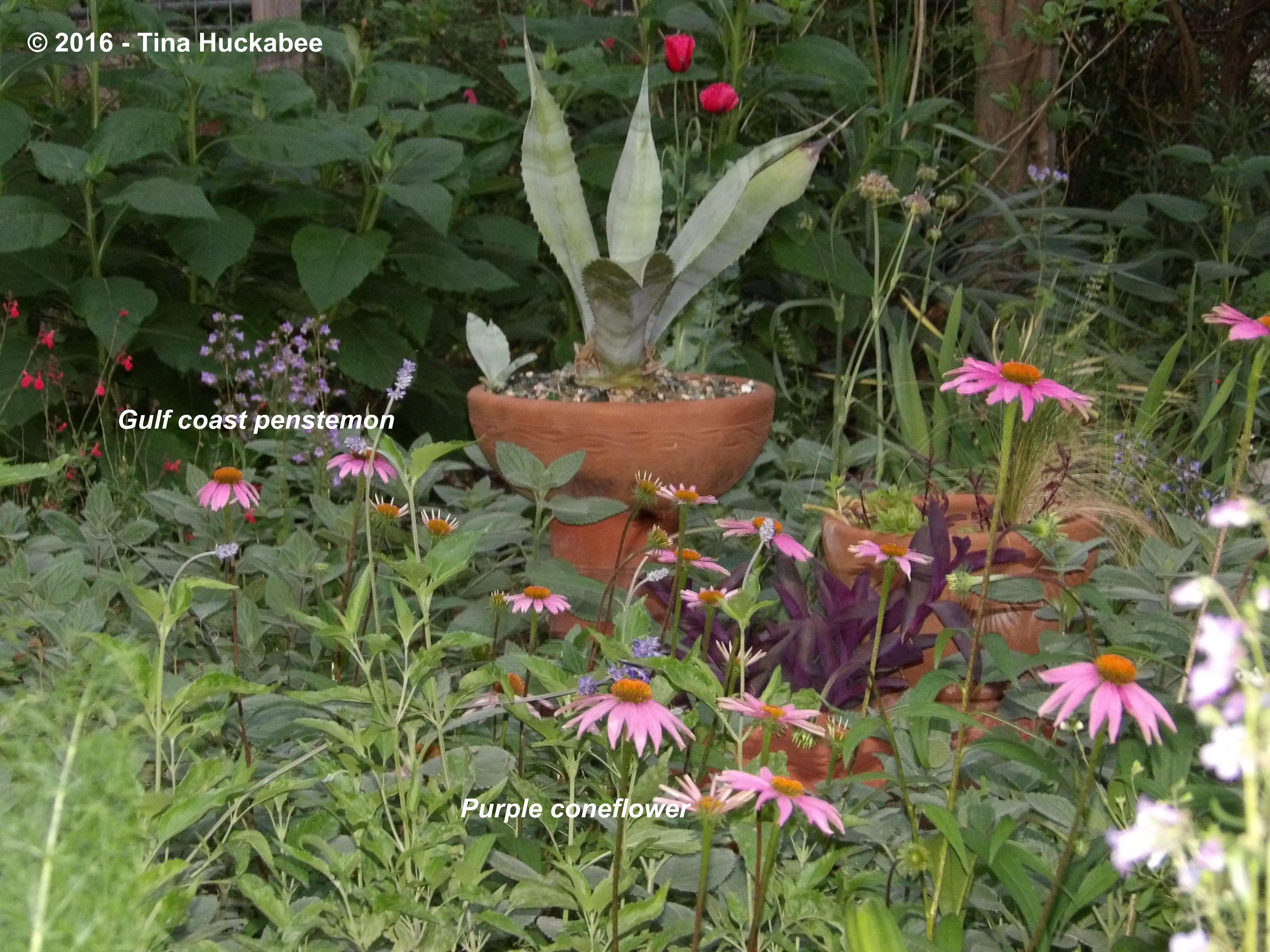
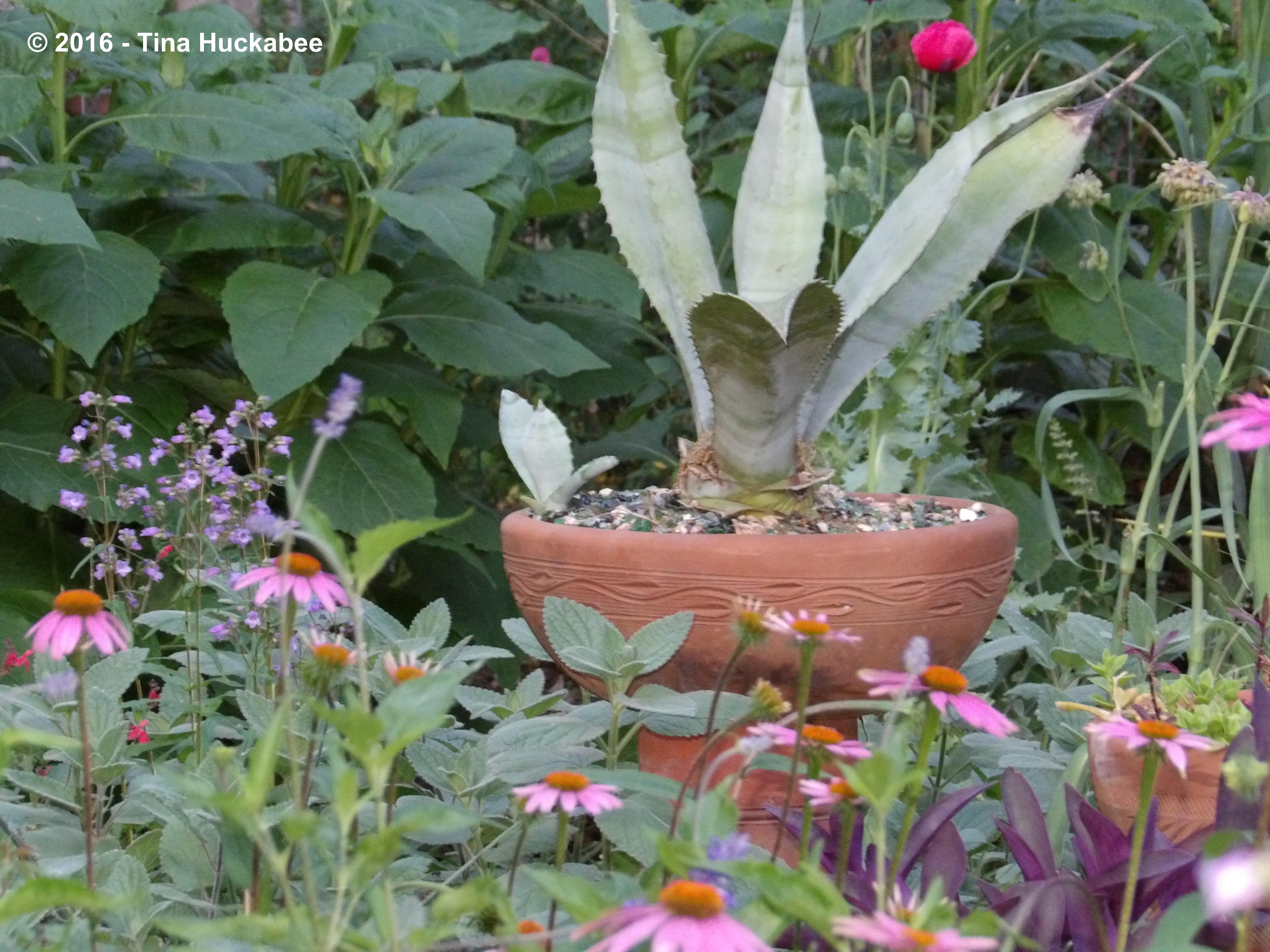
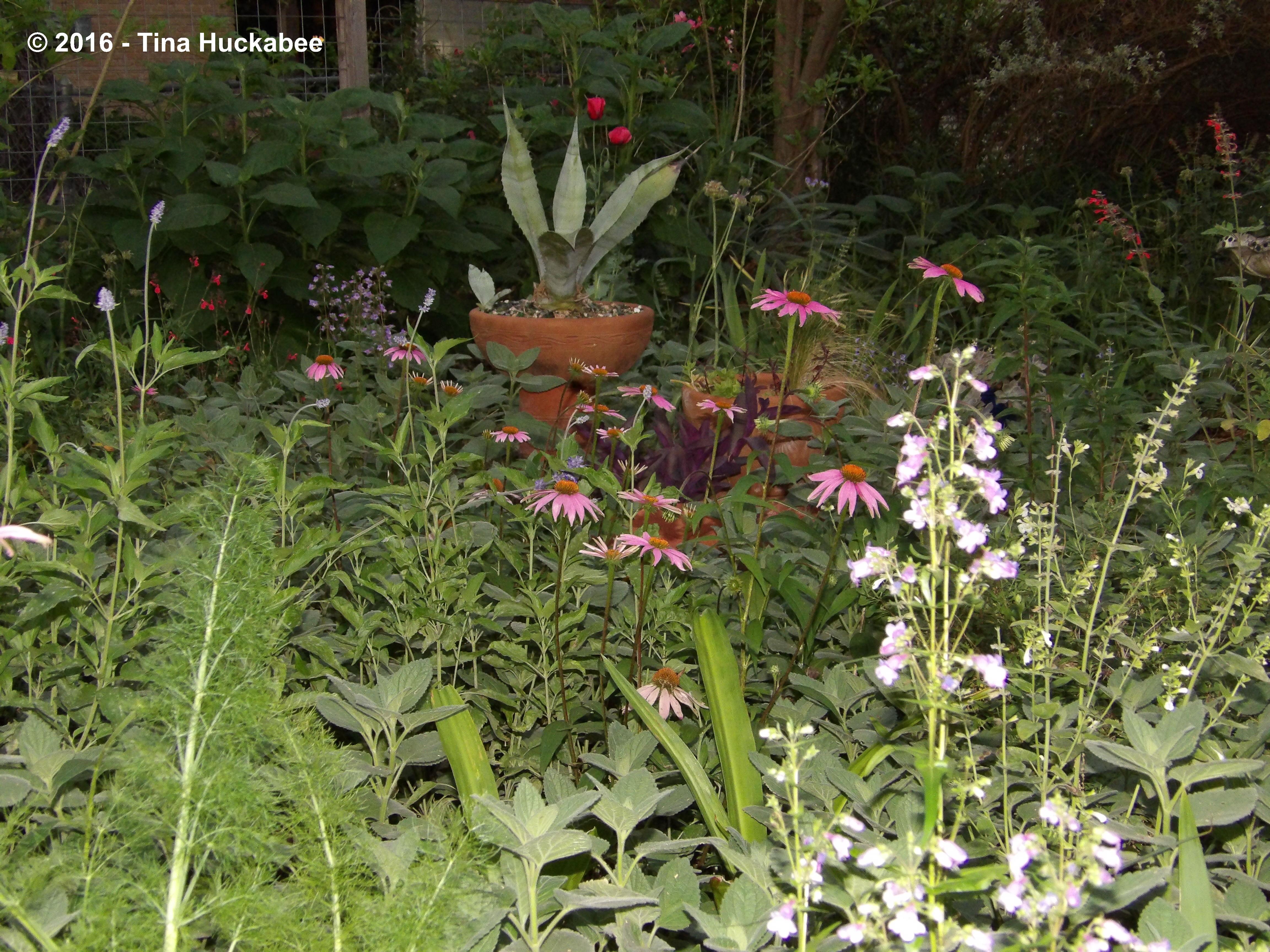
This small area of the large back garden receives decent sunshine for much of the growing season.  The potted American century plant, American agave oversees  blooming perennials and shrubs during spring, summer and fall.
IMGP7016.new

IMGP7015.new

Purple coneflower (Echinacea purpurea), grey foliaged, not-yet-in-bloom Heartleaf skullcap (Scutellaria ovata), and Gulf Coast penstemon front the potted agave, while a stand of autumn blooming Frostweed (Verbesina virginica) serve as its backdrop.


These unknown variety of Amaryllis came from my mother’s garden.
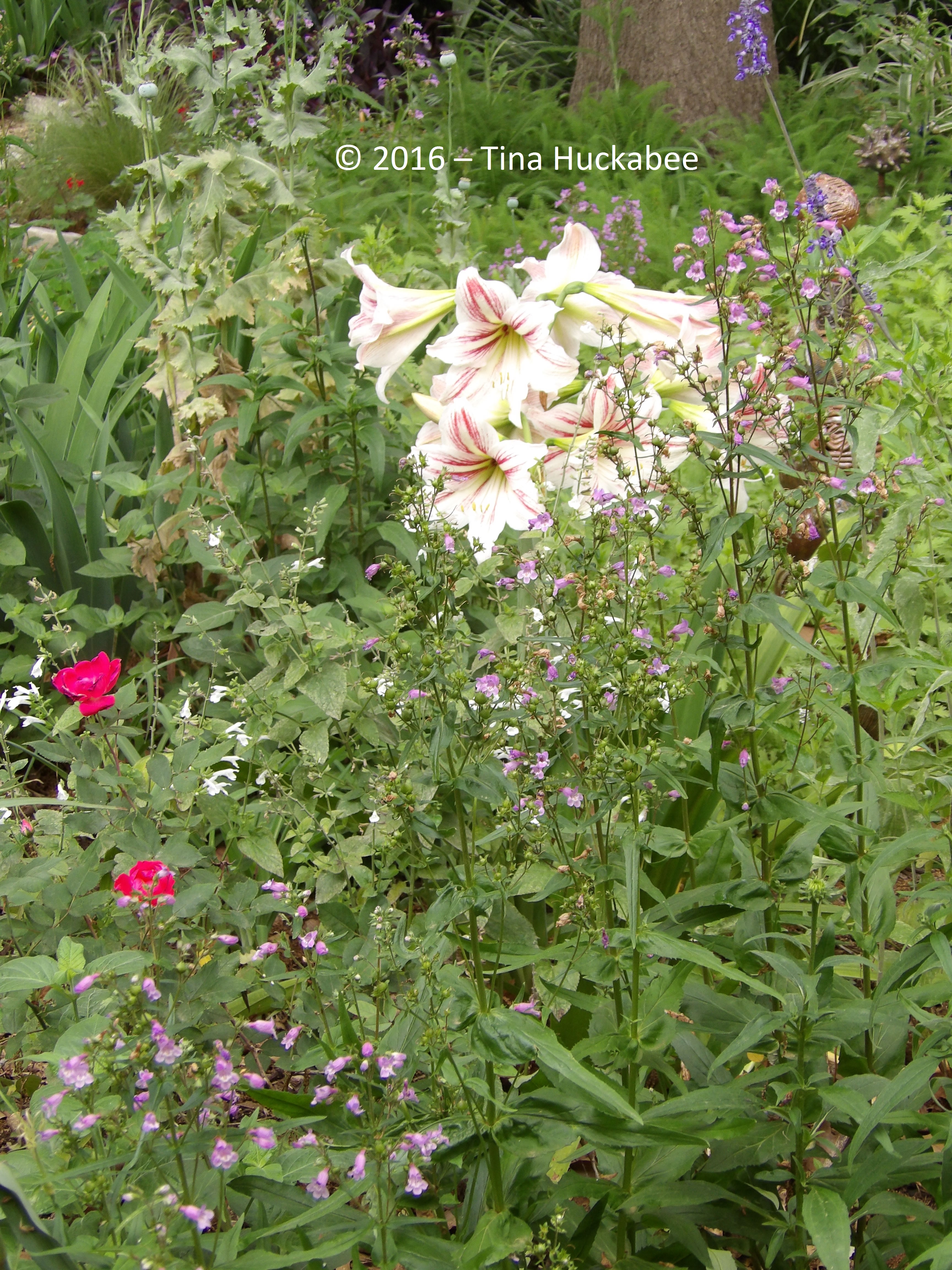
My mother’s Amaryllis grows with Gulf Coast penstemon, Knock-out roses, and poppies.

The Amaryllis don’t attract pollinators (that I’ve noticed) but they evoke fond memories of my mother, who was an avid gardener and who loved flowers of all kinds.

IMGP7026.new

IMGP7027.new

In her last garden, she mixed her amaryllis with blue-bloomed PlumbagoPlumbago auriculata  and it was a stunning combination.

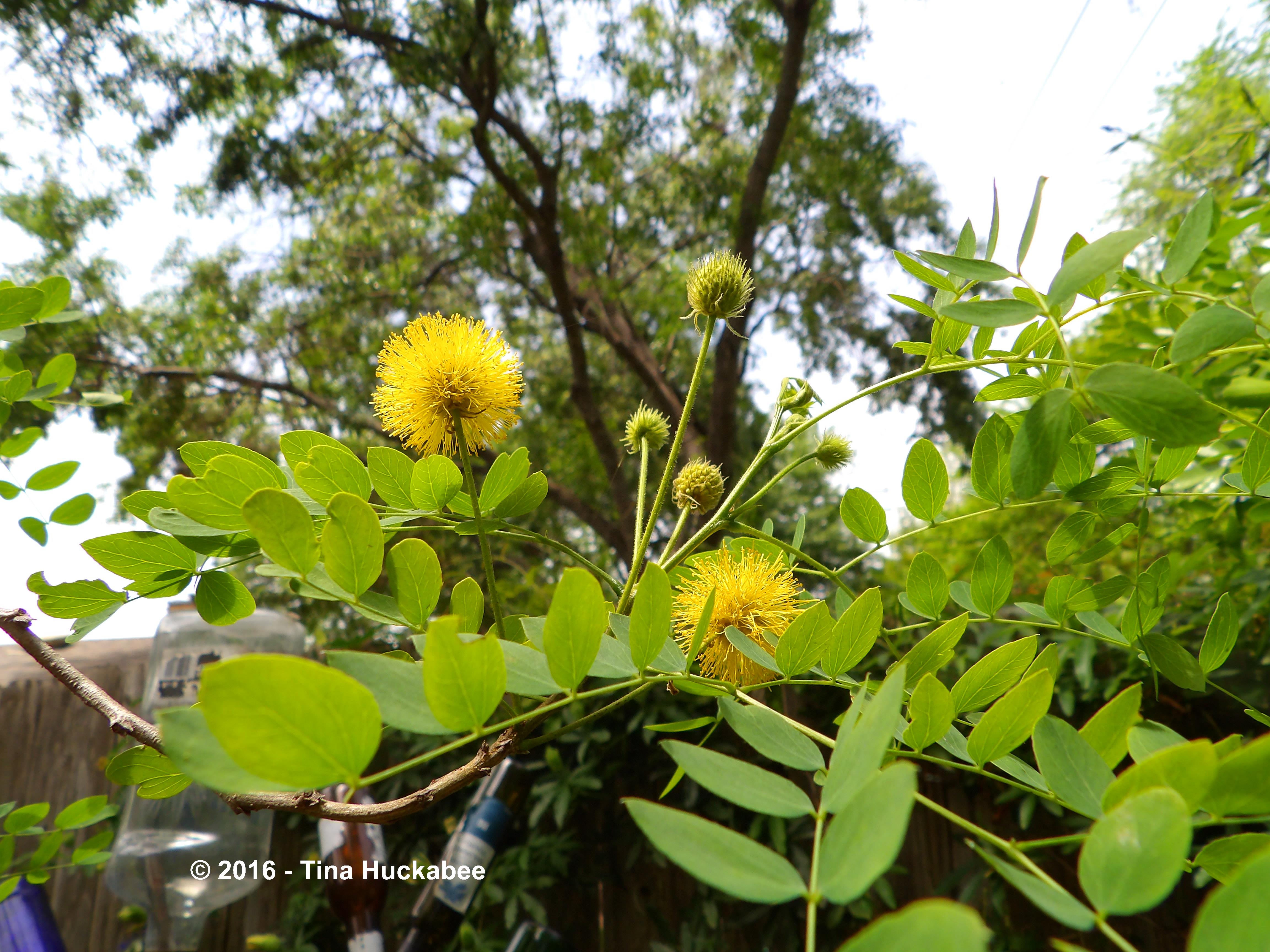
In searching for a small tree to add some height to a narrow part of my garden, I chose Goldenball leadtree,  Leucaena retusa.  I think it was a good decision!
IMGP7034.new

IMGP7035.new

The yellow-puff balls charm the gardener while feeding bees and butterflies throughout April.  Goldenball leadtree is an airy, open little tree and thrives in part-shade.

I’m pleased with my April garden and thank Carol at May Dreams Garden for hosting this monthly bloom frenzy known as Garden Bloggers’ Bloom Day.  Join in and share your garden pretties, then click over to her lovely blog to see and learn about blooms from many places.
Twining Vining

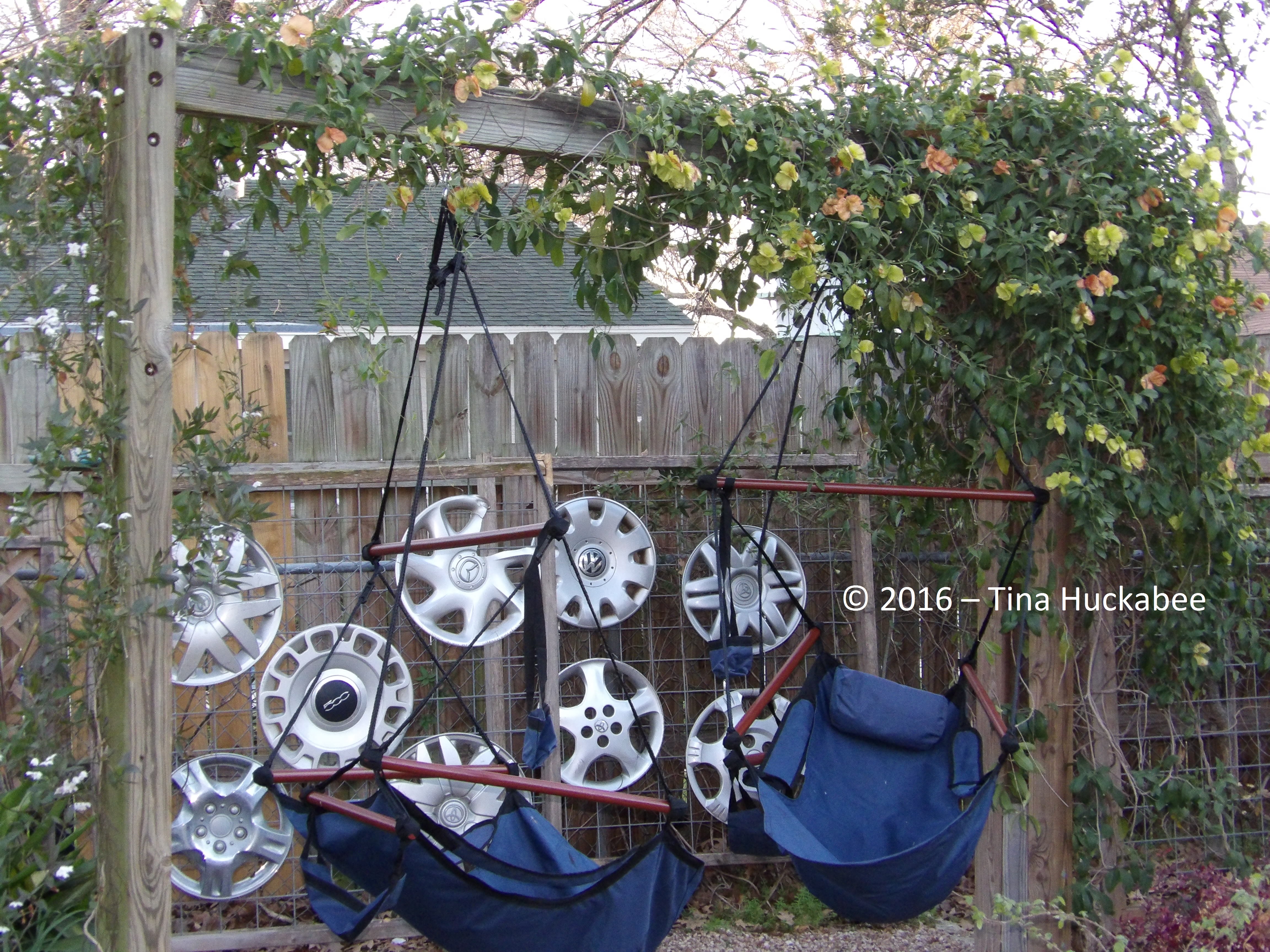
As winter seems a no-show this year here in Austin, Texas, there are plenty of  greens, partial greens, as well as blooms in my garden this February.  Two of the green things twine along this swing beam, which we built long ago for a playscape, but was re-purposed into an adult weekend snoozing spot.

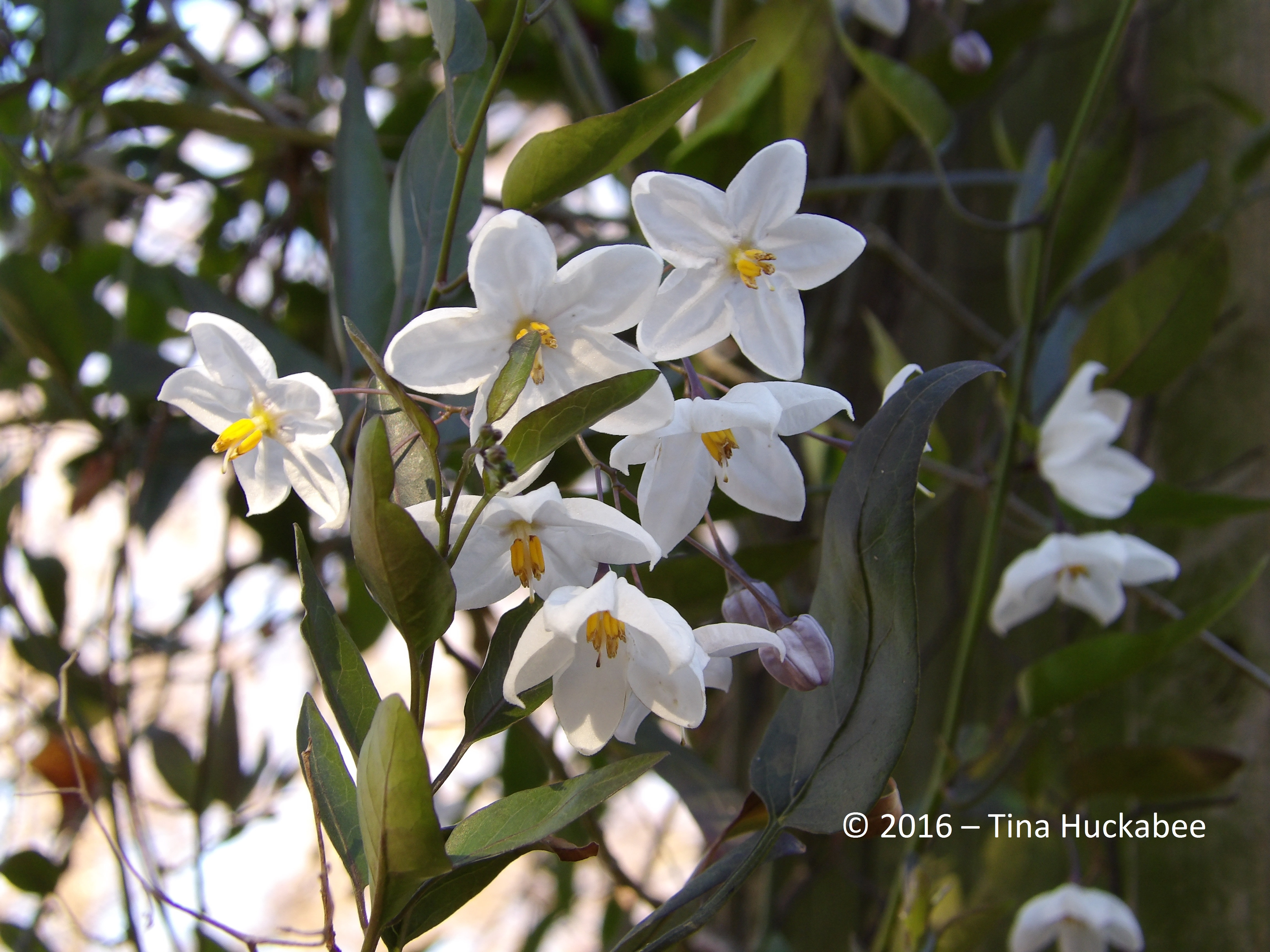
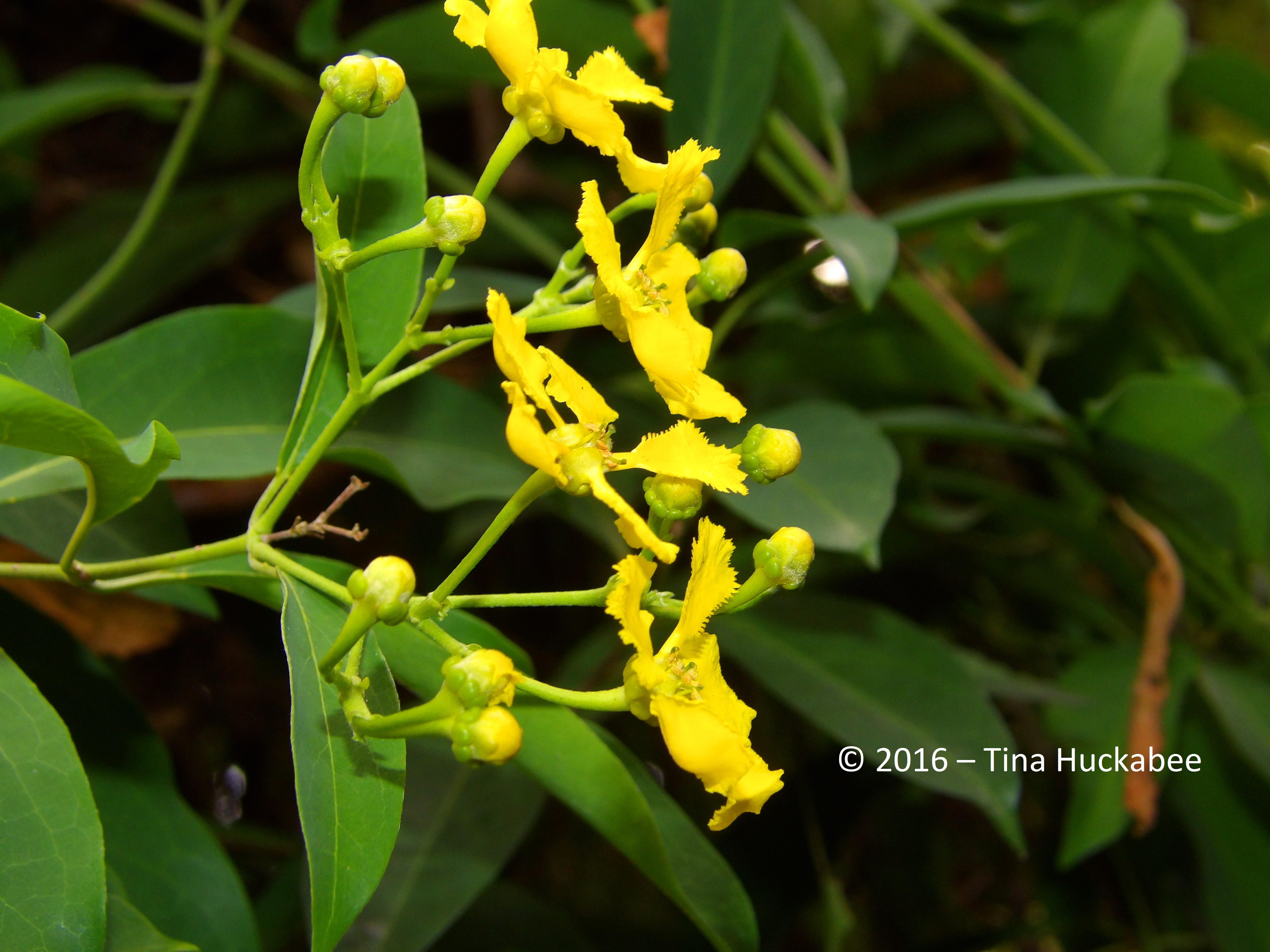
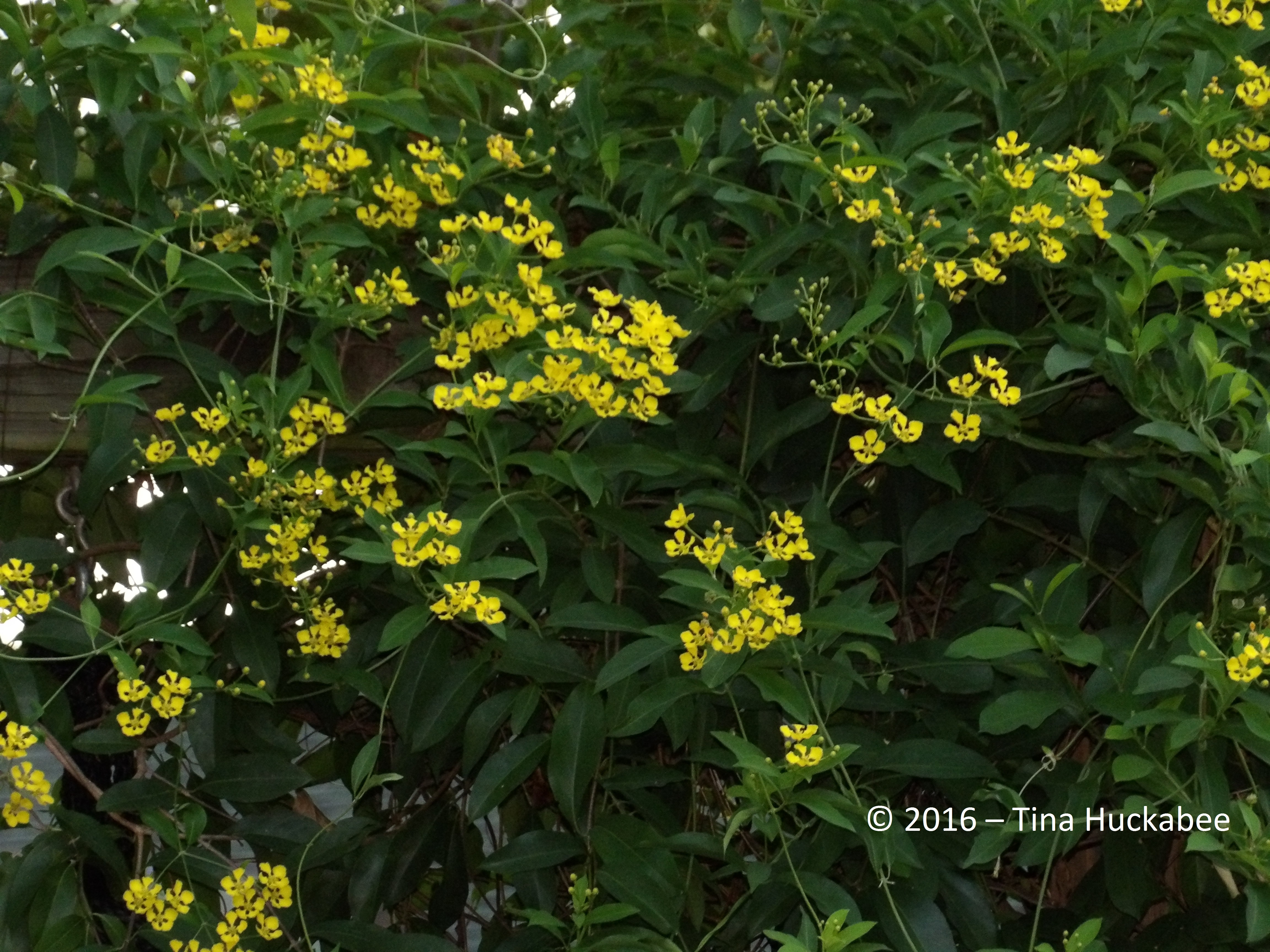
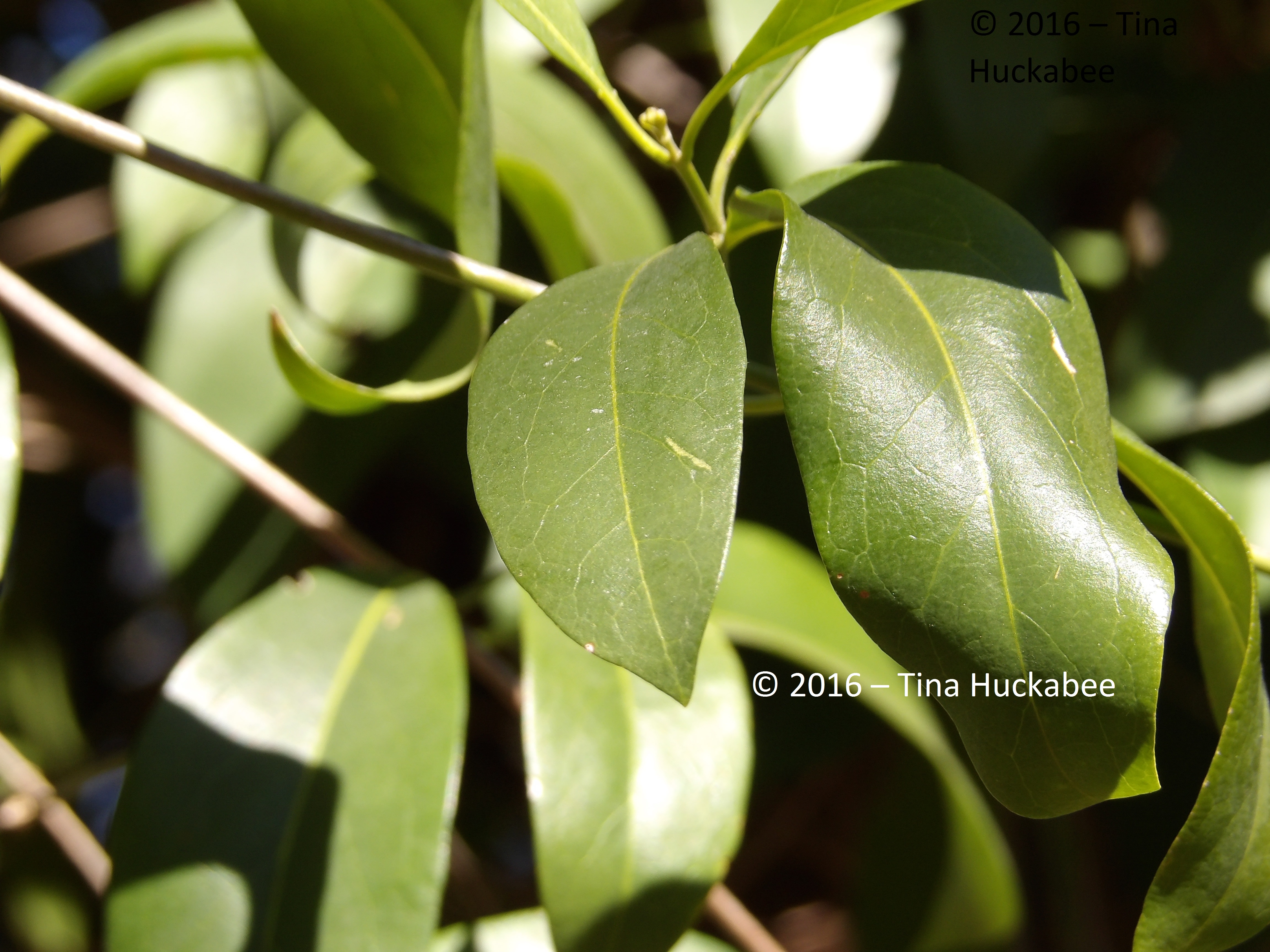
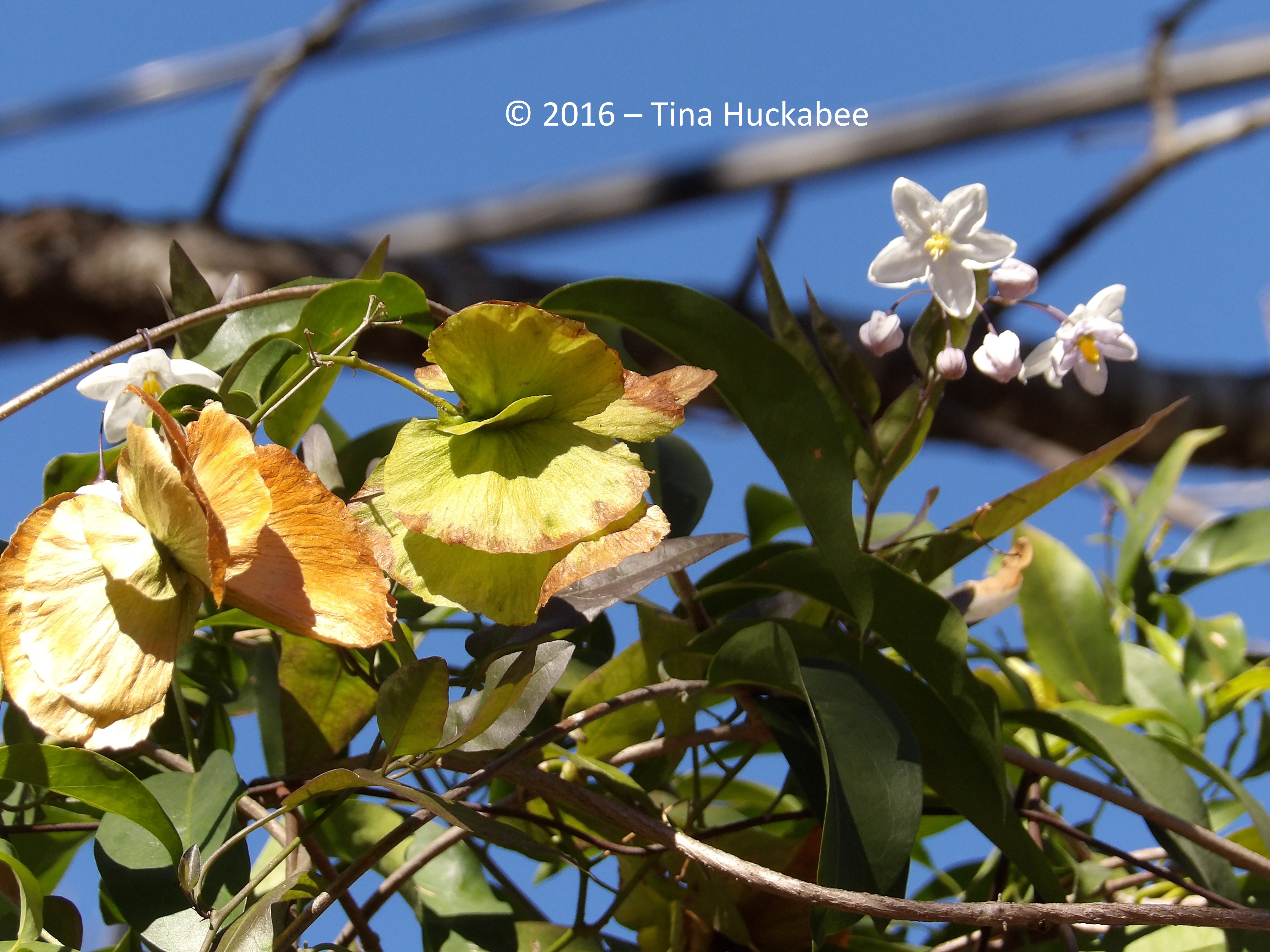
The vines draping the frame are Potato VineSolanum laxum on the left side, and Mexican Butterfly VineMascagnia macroptera,  on the right.

The Potato Vine is at its blooming best in fall, winter, and spring.  Our summers are too toasty and dry for the blooms to peek out, though the foliage remains green year-round.

A dainty vine, it doesn’t get too big or full and never requires pruning.

Once freezing temperatures arrive, the foliage develops a lovely burgundy blush. My garden hasn’t seen anything more than a glancing freeze this year, so the foliage coloration is more subtle this February.

The peduncle, receptacle, and calyx mirror the plum purple in the foliage.

The warm color provides a nice contrast to the winter white of the petals.

Conversely, the Mexican Butterfly Vine is vigorous grower and bloomer.   Like the Potato Vine, it is a tough and water-wise addition for any Southwest garden.

The strands of the vine grow continuously and I frequently weave them into the full parts of the plant, like errant bits of hair needing tucking behind an ear.

While not flowering now, clusters of bright yellow blooms grace this plant during summer and fall.

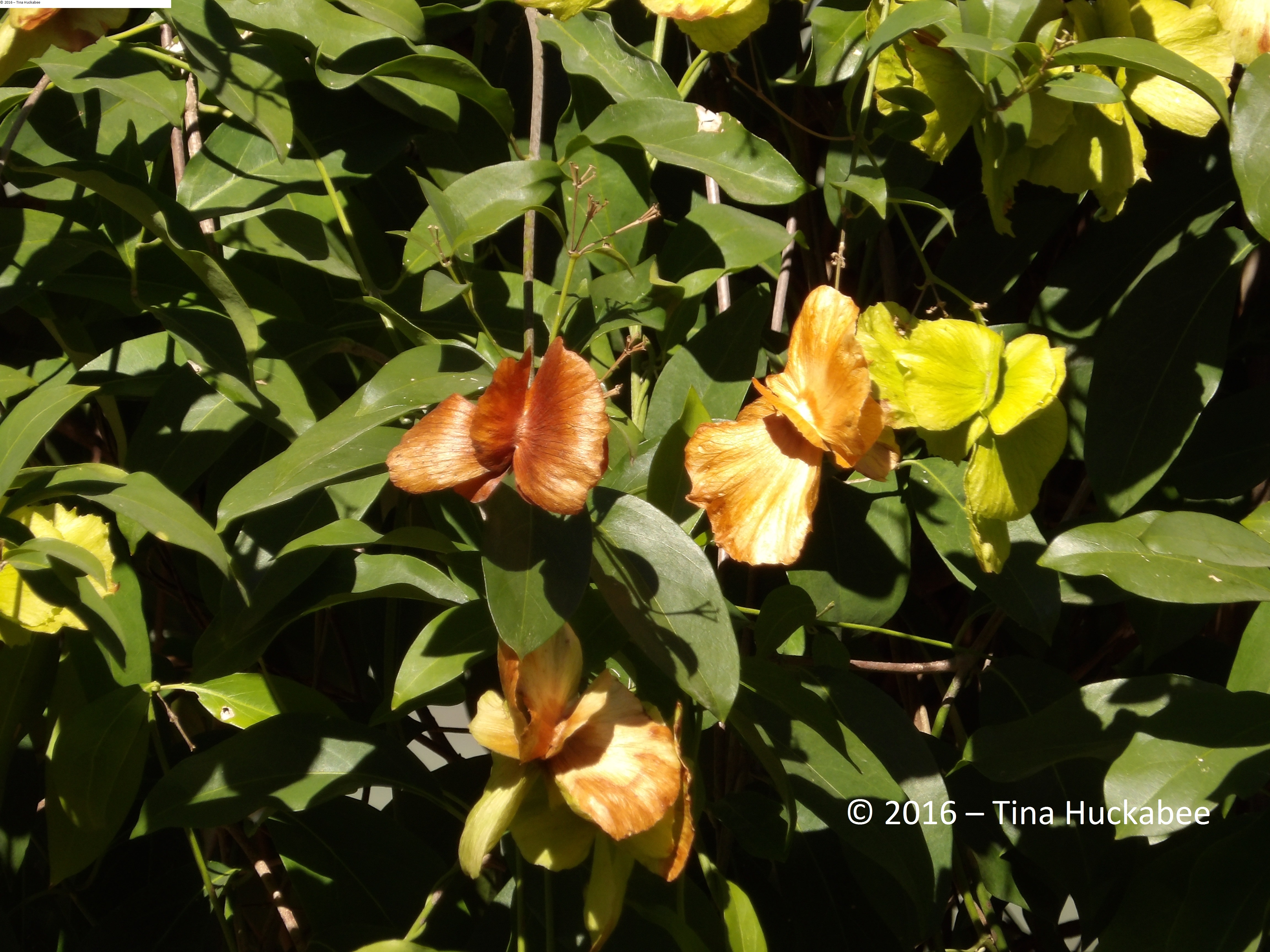
Once the blooms are spent, the seed pods develop into chartreuse “butterflies,”  which eventually become rich honey brown “butterflies.”

The vine appears to host multitudes butterflies, resting amongst the lush foliage.

For obvious reasons, Mexican Butterfly Vine is a fun vine to grow in the garden, real butterflies or not!

I planted the vine about 10 years ago.  The trunk shows its age and twisty nature.

Most winters, the foliage of Mexican Butterfly Vine remains green, though it freezes back completely when we endure temperatures cold enough–well into the 20’s–and for a length of time.  Even when knocked back completely by a hard freeze, it returns from its roots without fail.

Both Mexican Butterfly Vine and Potato Vine are no-fuss and low-water needs vines, and provide year-round interest and beauty.

Thanks to Carol at May Dreams Gardens for hosting her celebration of blooms for Garden Bloggers’ Bloom Day  and also to Pam at Digging for profiling the beauty of foliage with Foliage Follow-up.  Please visit each lovely blog to see blooms-n-foliage in gardens from many places.

Bloom Day, November 2014–Dodged the Frozen Bullet

After a chilly week and our first real touch of winter, there are still blooms in my gardens. Lucky gardener!  Lucky pollinators!  I live in central Austin and those supposedly in the know predicted our temperature would fall to the high 20’s by early Friday morning.  Well there was no freeze for me and mine.  Outlying areas received their first freeze, but much of  Austin was spared–this time. To celebrate those lucky blooms, I’m joining with Carol at May Dreams Gardens for November Garden Blogger blooms.

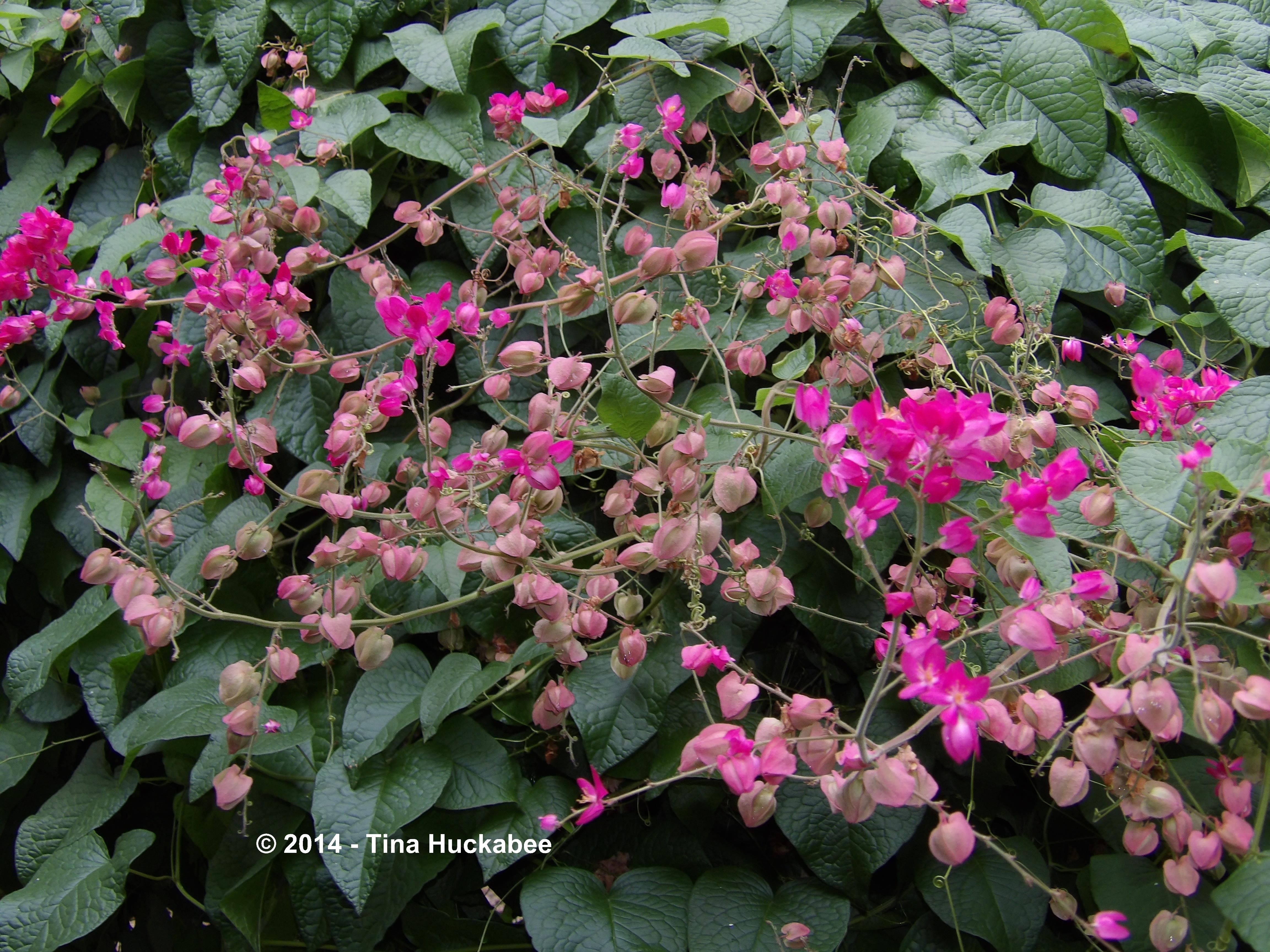
The Coral Vine, Antigonon leptopus, bloomed its signature fuchsia necklace  rather late this year.

IMGP1604.new

Now with colder temperatures and shorter days, the blossoms are fading on the vine.IMGP2341.new

I think my honeybees will miss this favorite nectar source.

The native Texas CraglilyEcheandia texensis,  still blooms, IMGP1507.new

IMGP2343.new

IMGP2344.new

…though it’s going to seed. One patch blossoms in tandem with the blue Henry Duelberg SageSalvia farinacea,’Henry Duelberg’.

IMGP1978.new

A freeze would have quickly ended that pretty pairing.

Rock RosePavonia lasiopetala, sports flowers this November and that’s unusual–they normally stop production by late October.IMGP2383.new

IMGP2362.new

IMGP2360.new

Heavy with seed, I’ll expect more of these lovelies in seedling form next year.  Any takers?

And GoldeneyeViguiera dentata?  It just won’t quit.  This most photogenic of flowers, has bloomed since September.

IMGP2379.new IMGP2381.new

This is one of my two last blooming Goldeneye plants.

IMGP2531.new

The Goldeneye plants in the back garden bloomed first, then set seed and were followed by others throughout my gardens, each individual plant taking turn at adding cheeriness and wildlife goodness to the world.  I’m glad these hardy natives have planted themselves all over my gardens.  Bees, butterflies, birds, as well as this gardener, enjoy and appreciate a long season with these pretties.

IMGP2387.new

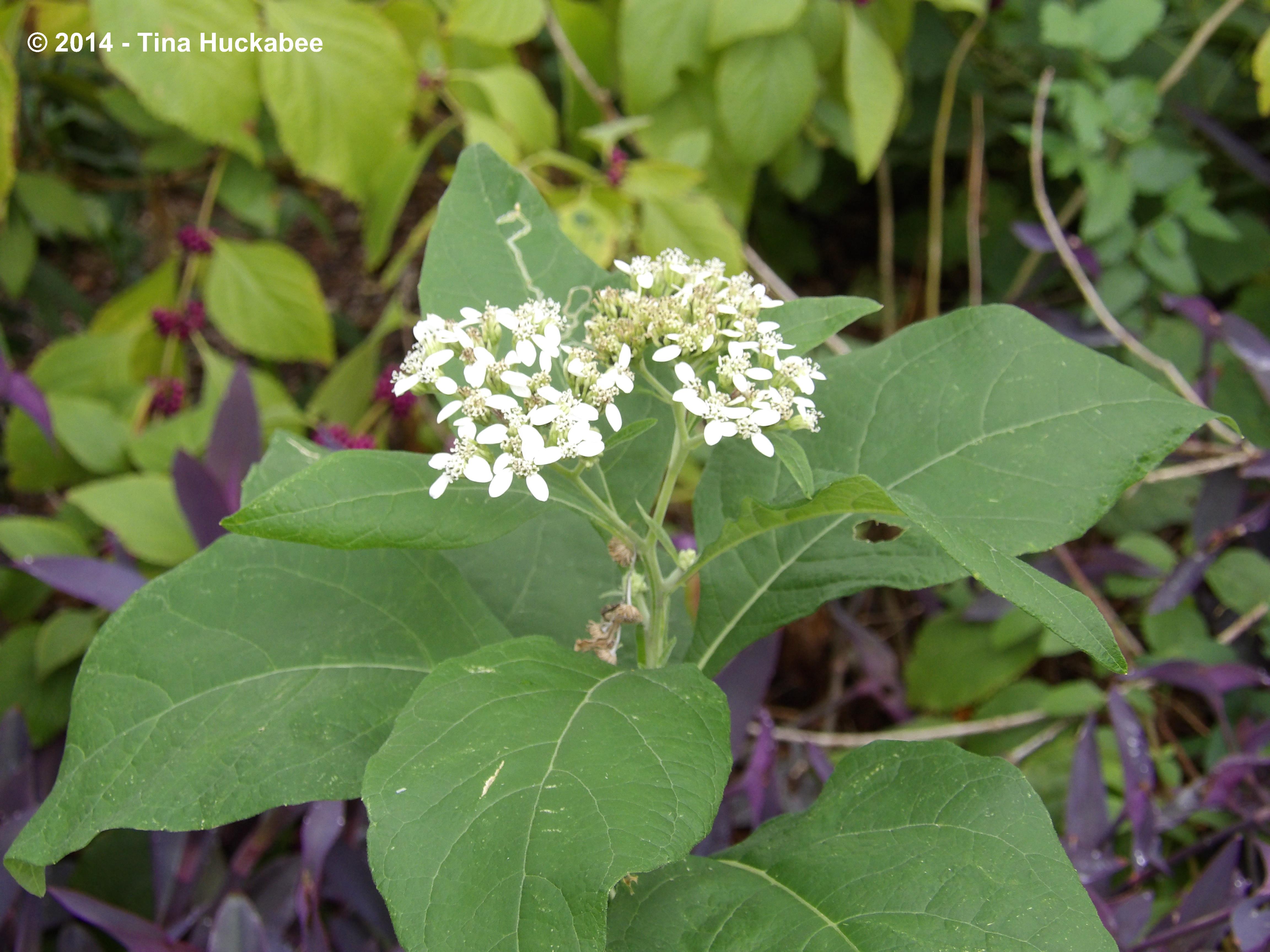
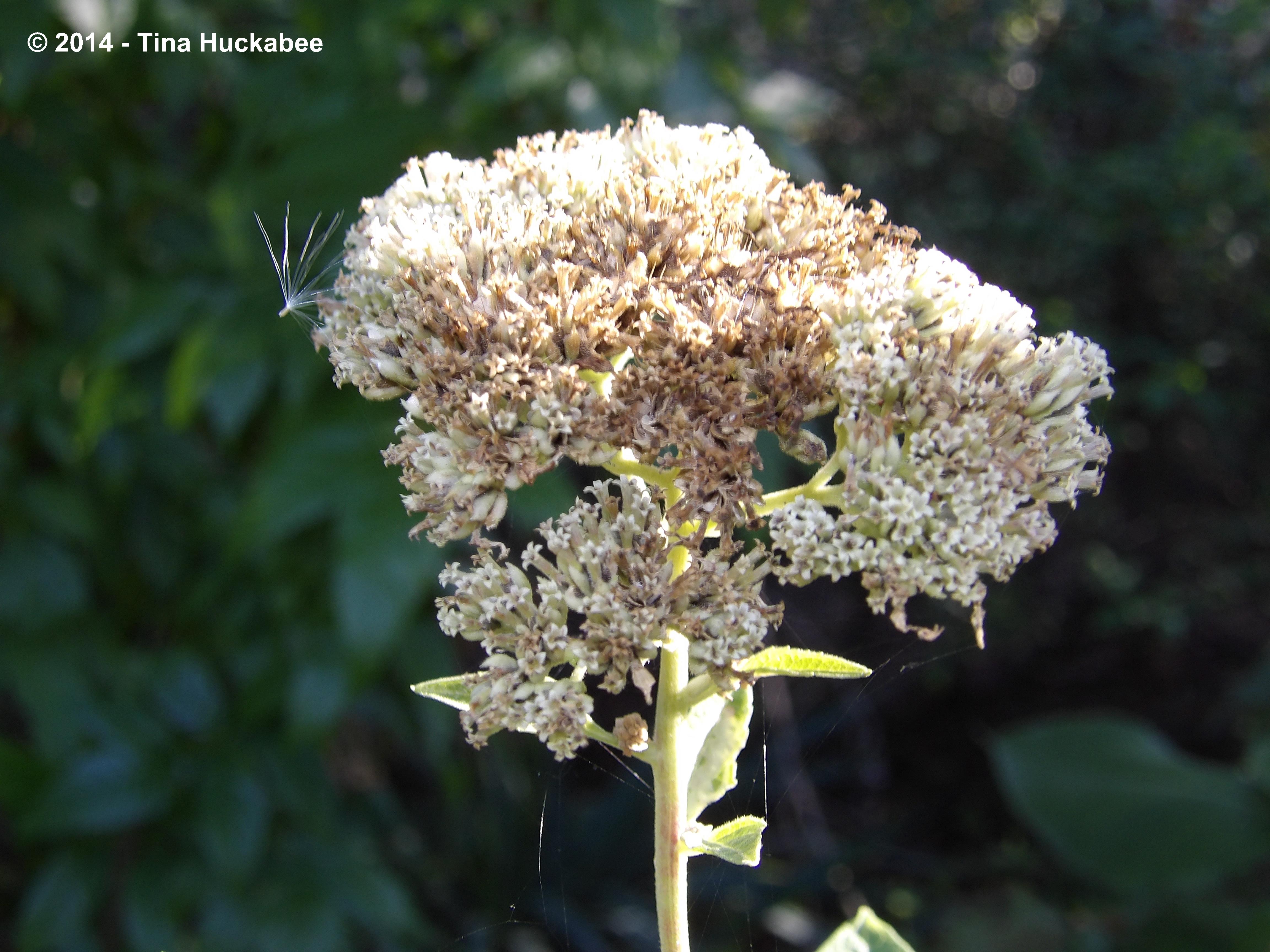
The last FrostweedVerbesina virginica, is in flowering mode.

IMGP2384.new

While most of that species are setting seed.

IMGP2469.new

A few Turk’s CapMalvaviscus arboreus, still bloom.

IMGP2394.new

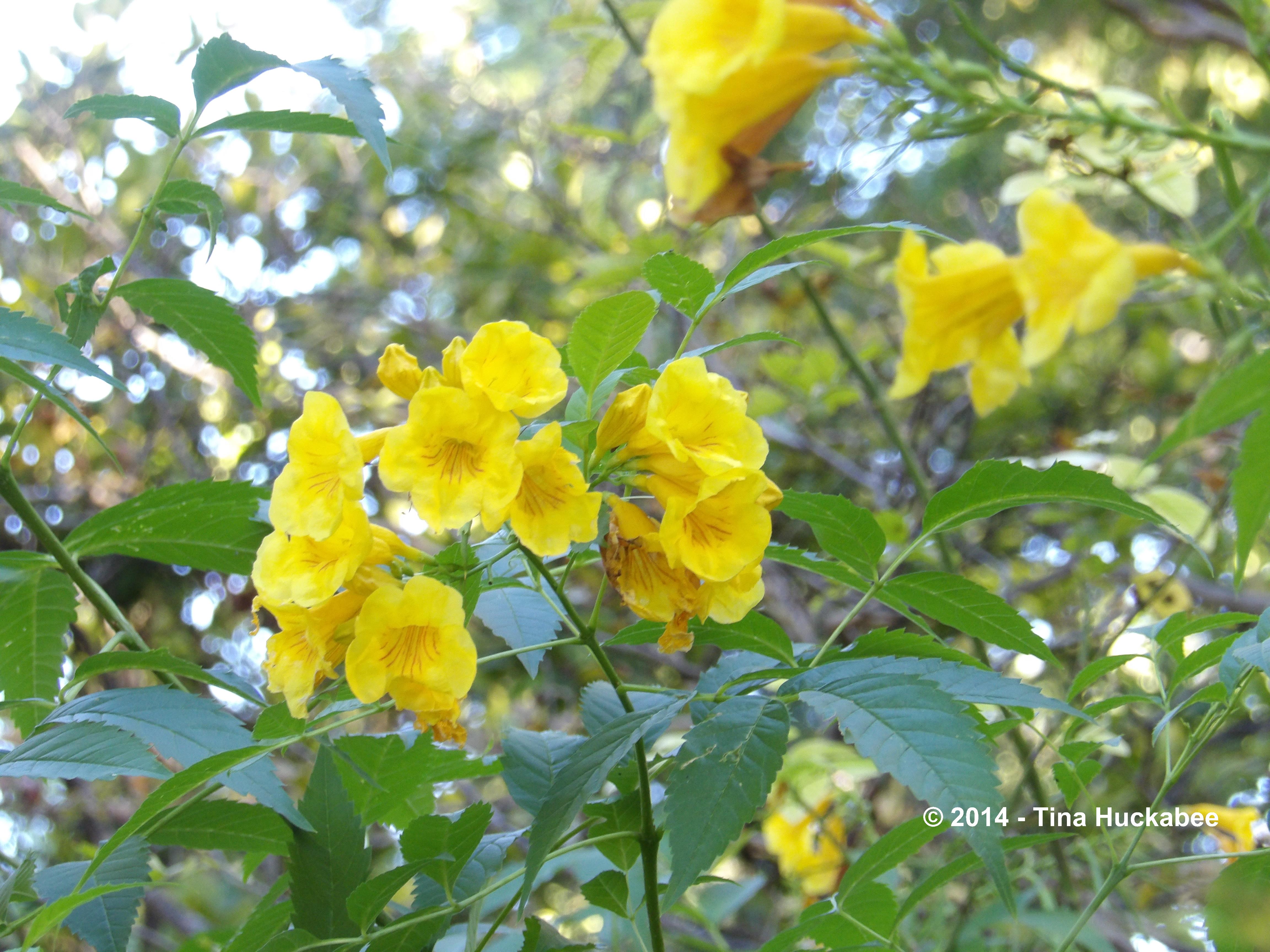
Yellow BellsTecoma stans, ‘Esperanza’, are available for passing bees and butterflies.
IMGP2467.new IMGP2471.new

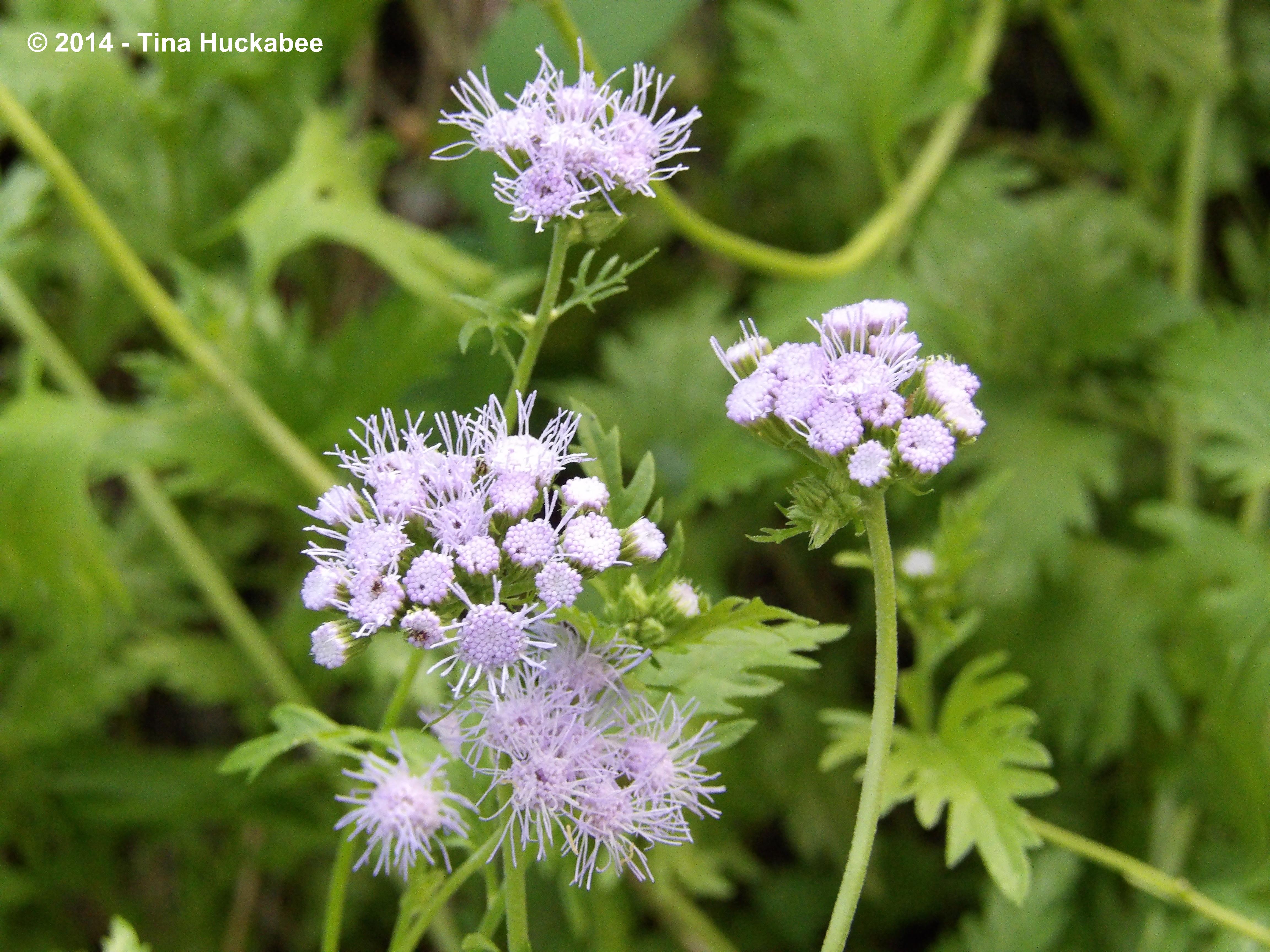
Blue MistflowerConoclinium coelestinum,

IMGP1475.new

and Gregg’s MistflowerConoclinium greggii, 

IMGP1555.new

IMGP1560.new

…are toward the end of their season.  A true freeze will force the blue blooms into a tawny fluff, ready for dormancy.

Red YuccaHesperaloe parviflora, blossoms on its long bloom spike until a hard freeze.

IMGP2364.new

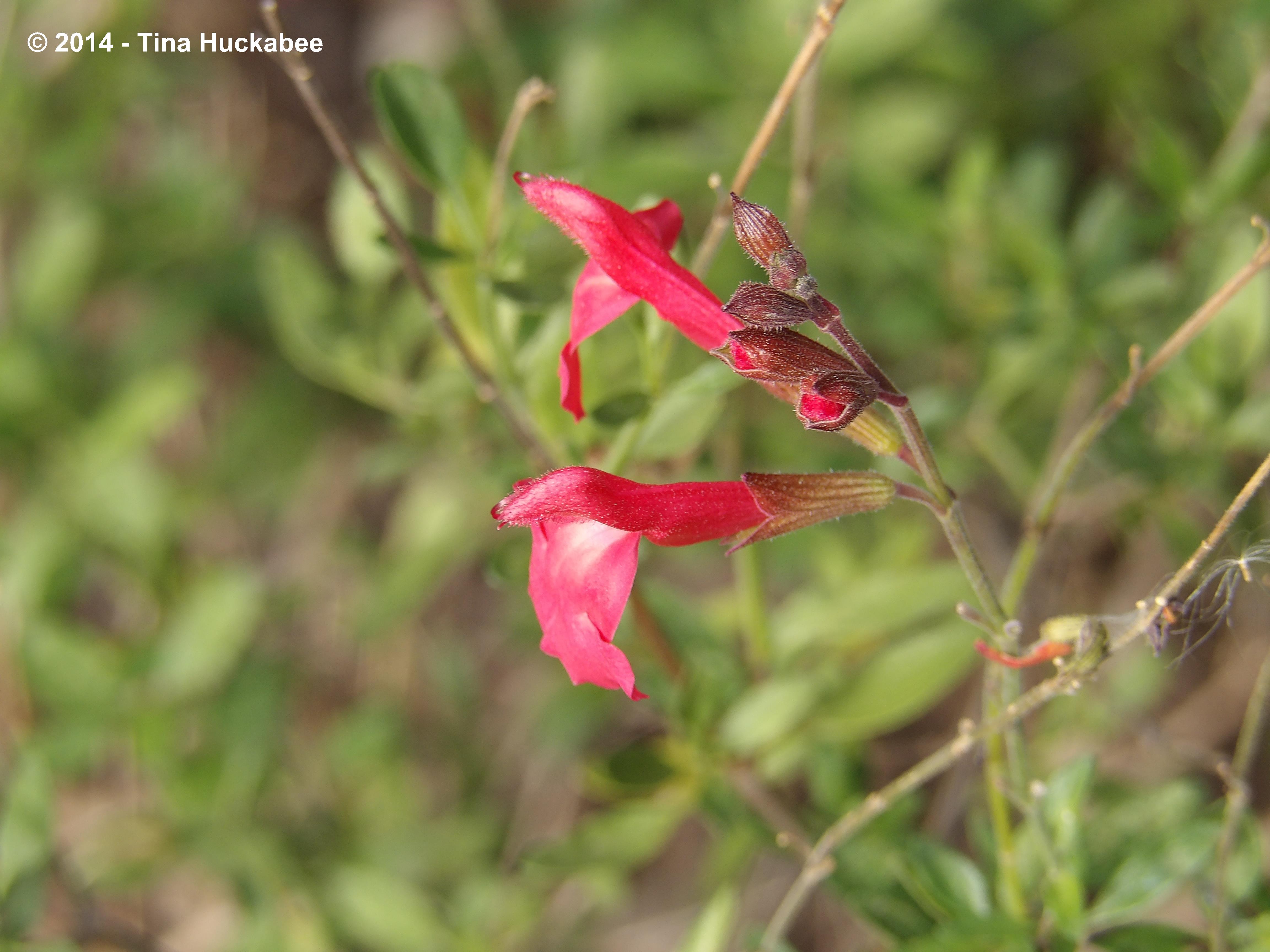
This hasn’t been a banner year for my salvia species.  They’ve bloomed, but not regularly nor as fully as usual.  But they aren’t quite ready to close up shop, so bloom they will until it’s just too chilly and dark.  Salvia like this red Tropical SageSalvia coccinea,

IMGP2354.new

…and this Purple Sage, S. greggii x mycrophylla,

IMGP2560.new

…and this red Autumn SageS. greggii, 

IMGP2611.new

…and another,

IMGP2614.new

…and this coral Autumn Sage.

IMGP2612.new

They’re determined, if not prolific.

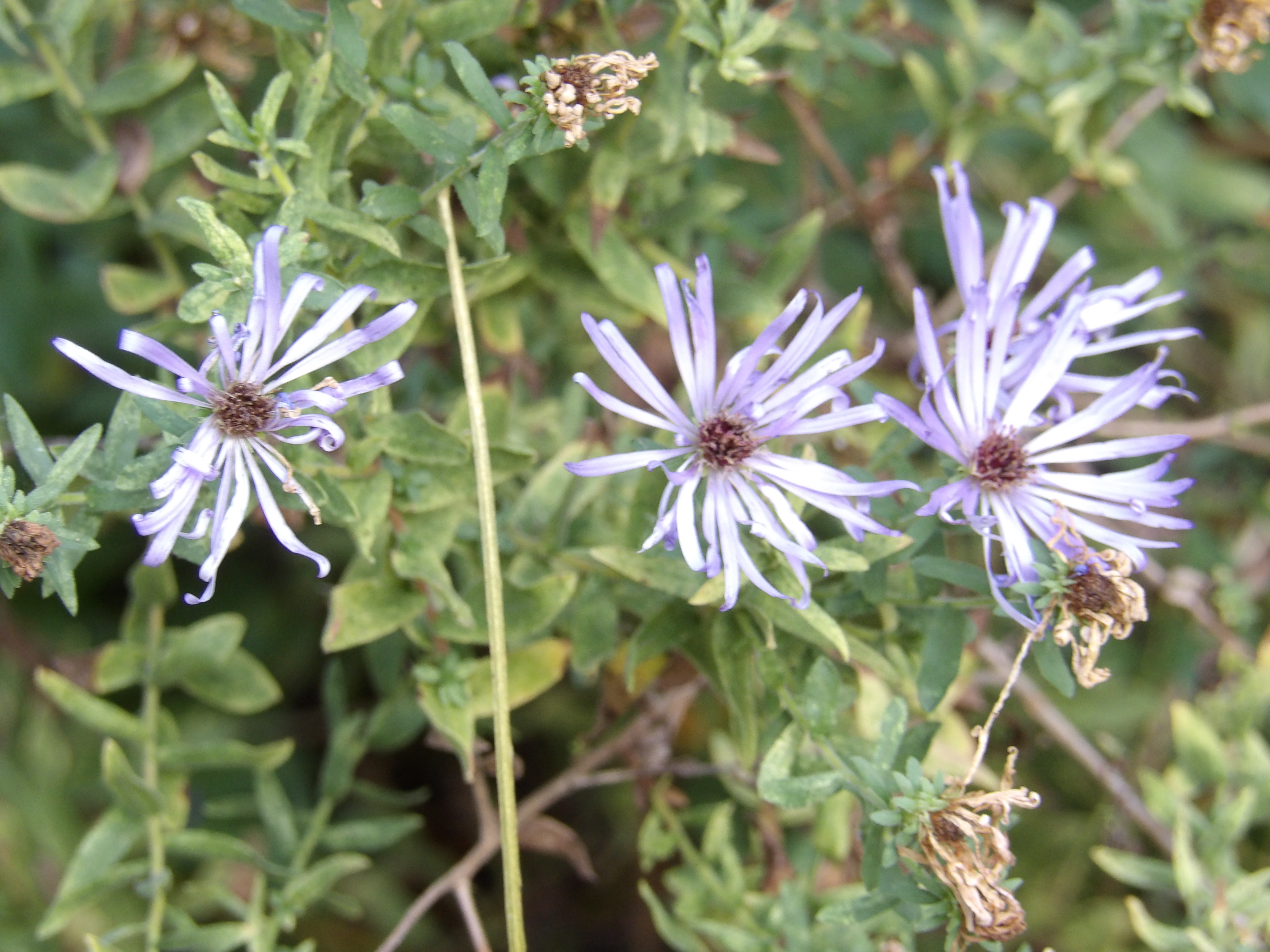
The remains of Fall AsterSymphyotrichum oblongifolium, are tired of blooming and ready for seeding themselves.

RICOH IMAGING

When I thought there would be freezing temperatures, I cut the last of the fall blooms of Purple ConeflowerEchinacea purpurea and Tropical Sage and did this:

IMGP2616.new

As well, I cut a few Goldeneye and basil and did this:

IMGP2590.new

I’m not much for cut flowers in the house (I much prefer a garden full of blooms), but they are nice when it’s gloomy outside. I guess November in my garden and my house is not so barren after all!

Pop on over to May Dreams Garden and enjoy a show of November blooms from all over