This is a bird feeder.

Left, American Goldfinch (Spinus tristis); right, House Finch (Haemorhous mexicanus)
This is also a bird feeder.
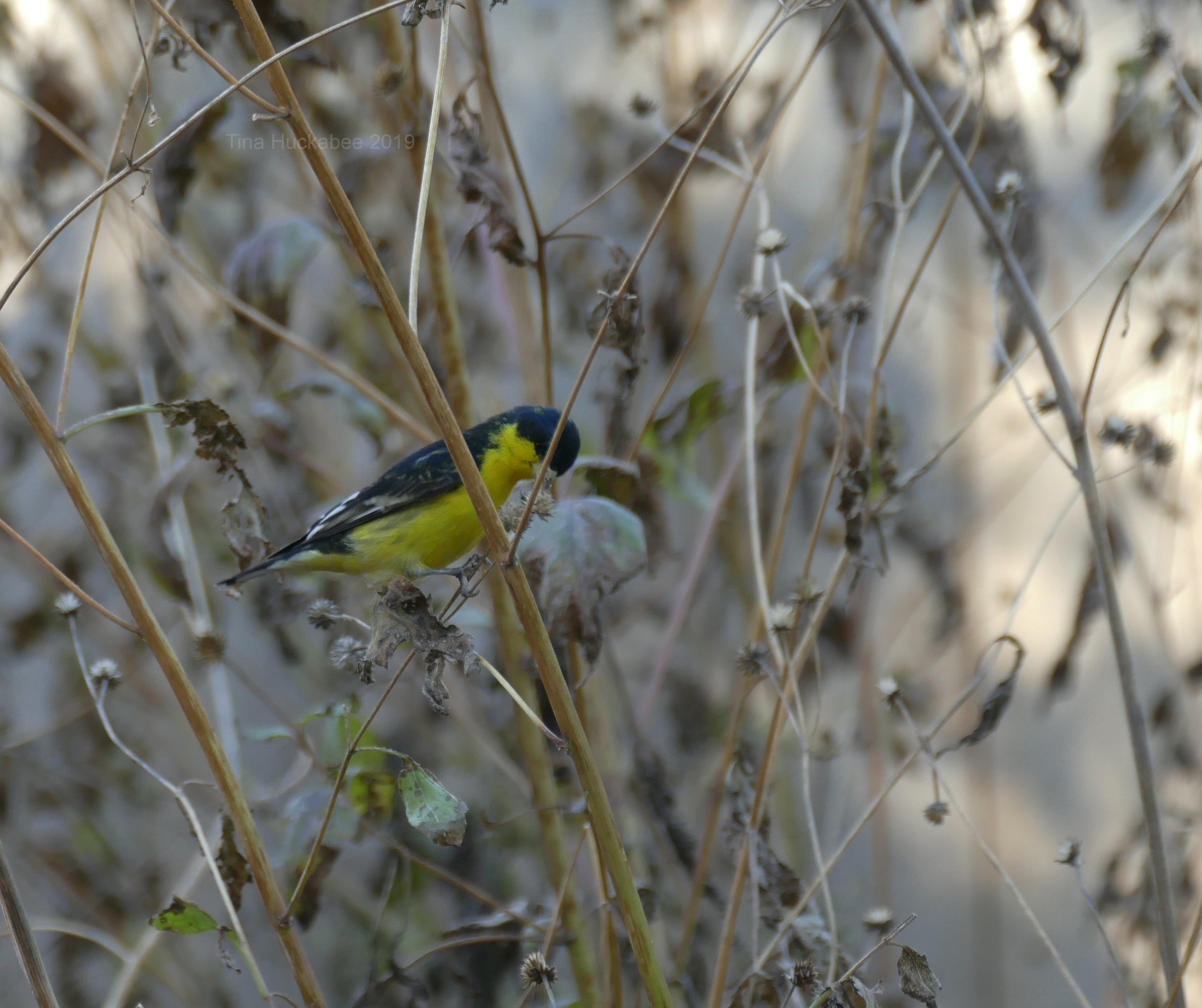
Lesser Goldfinch (Spinus psaltria)
The first feeder, purchased at Wild Birds Unlimited, is filled with black oiled sunflowers, and many birds, not just the two in the photo, love the seeds. It’s a popular dining establishment in my back garden. The second feeder is courtesy of two native plants (Frostweed, Verbesina virginica, and Plateau goldeneye, Viguiera dentata), both of which bloomed during summer and autumn, and have since been rendered dormant by a couple of light freezes. I’ve pruned neither this winter because these plants, and others in my garden, are currently providing meals, cover, and (eventually) nesting material for a number of bird species.
In the past 50-70 years, the paradigm for home garden beauty has been the swath of green turf, augmented with hedged, tidy, and typically non-native, evergreen shrubs lining the foundation of a home. Additionally, spots of decorative flowers, dictated by season, are popped into designated beds. At the end of a season, those flowers are unceremoniously ripped out and replaced by a new batch of bloomers. The bedding flowers, often sterile, are cultivars which are mass-produced for their beauty to the human eye, rather than for any importance to pollinators, birds, and other endemic wildlife. This garden model is high maintenance, requiring frequent irrigation and chemical intervention to feed the thirsty and hungry plants. Herbicides and pesticides often partner with the chosen plants because problematic insects thrive in landscapes which rely on non-native plants. This garden mode certainly enjoys a kind of beauty: it’s neat, with colors and textures that are controlled, expected, and predictable.
But I find this–a native plant, post-freeze, crinkly of leaves and tawny in color, providing a wintering American Goldfinch food and cover–an exemplar of garden beauty.


I know many people prefer the neat hedge, loud bedding colors, and trim lawn over the bare bramble of limbs, “dead” foliage, and spiky seed heads that define native plants in winter. But wildlife–birds, insects, reptiles, and mammals–require native seeds and decaying plant material that nature provides; it’s a process that is part of the seasonal norm and is how living, self-sustaining environments evolved. The symbiotic relationship between a plant and its animal or insect mark both biological balance and eternal beauty.
While growing wildflowers, and native trees, shrubs, and perennials never entirely disappeared from home garden practices, the native plants movement has enjoyed a renaissance in recent decades. This back-to-native plants movement has bolstered wildlife in urban areas. As urban areas encroach into and limit wild spaces, native plant additions to home and commercial gardens serve as a respite for wildlife. Yes, non-native plants can provide food, but fauna benefits most when the flora it evolved alongside is present.

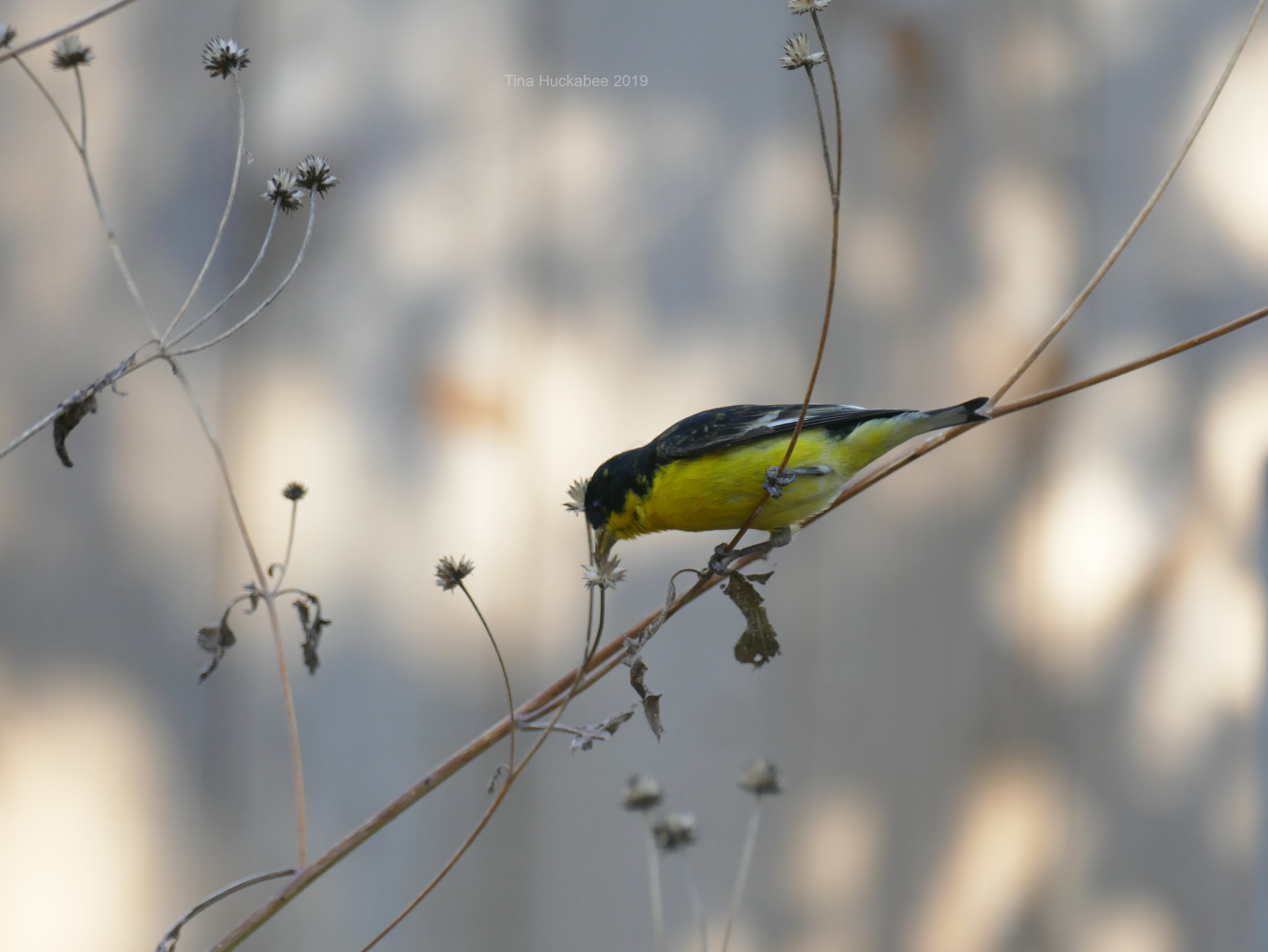
Not a great photo, but I like the stair step of the three male Lesser Goldfinches. They and several buddies were all over this collection of dormant Frostweed and Plateau goldeneye.
While it may look “messy” to the human eye, dormant plants, with their prickly sticks and complex seeds, are a boon to birds. I don’t prune my garden messy until late in winter, the exact wacking-back dependent on the unique the weather pattern of a particular winter-into-spring. I also pay close attention to whether there are any birds feeding at the plants. Once the plants are bird-free and days have lengthened and warmed, pruning time in my garden has arrived.
Both the American and Lesser Goldfinches are migrants who overwinter here in Austin, Zone 8b. They travel in groups from available seeds source to available seed source, in a sort of avian progressive meal train. Flocks will flit and nosh in my garden one day, and be gone to another gardening establishment the next. Some stick around to snip insects from the trees and shrubs, bathe in the pond’s bog or bird baths, and eat seeds, either from the feeder or the plants.

Other wintering birds, like this Orange-crowned Warbler, Oreothlypis celata, are daily visitors to a variety of plants in my garden. This female (I think!) enjoys the seed from a dormant Frostweed. During the blooming seasons, it serves as a rich buffet for many kinds of pollinators; in winter the seedheads splay on strong limbs, high enough to protect tiny bird diners.

The Orange-crowned also regularly stops at the suet feeder. Purchased suet (like mine) or the homemade kind is nutritious for birds in winter, as it provides needed fat.

It’s not only migratory birds who enjoy plants or suet, but also residents. The year-rounders, like this Carolina Chickadee, Poecile carolinensis, regularly partake of the suet offering. In my warm climate, I only hang the suet feeder from late October to April, or at the latest, early May. Central Texas summers are far too hot for suet–it becomes rancid quickly.

I’m not against feeding birds, but I aim to plant at least some of what they’ve been eating for millenia, and pair that with supplementary sources. I’m pleased to offer both.
Achieving a wildlife friendly garden doesn’t require radical changes, nor does it have to be all wild. With relatively simple modifications, gardeners can easily transform their gardens to wildlife habitats; even a formal garden can serve as a wildlife habitat, with some thoughtful plant choices and particular plant practices. Choosing native plants (when available) over introduced species, and leaving plants to their natural state are key drivers to the goal of a wildscape. Birds and mammals nibble from natives and utilize limbs and leaves for nesting and cover, so deadheading and over-pruning should be limited. Available water sources, some leaves and limbs left in discreet areas to decay naturally over time, and eliminating chemicals from the garden are all equal good wildlife gardening for restoring a healthy ecosystem for our wild brethren–and ourselves. The National Wildlife Federation and your local Native Plant Society are great resources in the how-tos of creating a wildlife habitat.
Roughly 40% of Americans feed birds and we do it for a variety of reasons. Those who study birds suggest that for people, feeding birds is a simple and satisfying way to connect with the natural world. Audubon Society and Cornell Lab of Ornithology both suggest that bird lovers exercise caution in what they feed birds and where feeders are placed. Development of aggressive behaviors, deformities caused by poor nutrition, diseases passed through contaminated feeders, and dependence on humans as food sources are all serious concerns in the long-range interests for birds. Because the plight of birds is precarious, certainly for some more than others, it’s wise to learn about the birds who live in or travel through your region, and then make appropriate food choices. For interesting information about how feeding birds impacts their populations, read these two articles, one by the Audubon Society and the other by Cornell Lab.
All that said, it is fun to watch birds and part of the watching is the feeding.

“Three little finches, sittin’ on a feeder….” Okay, it doesn’t quite have the same ring as the original ditty.
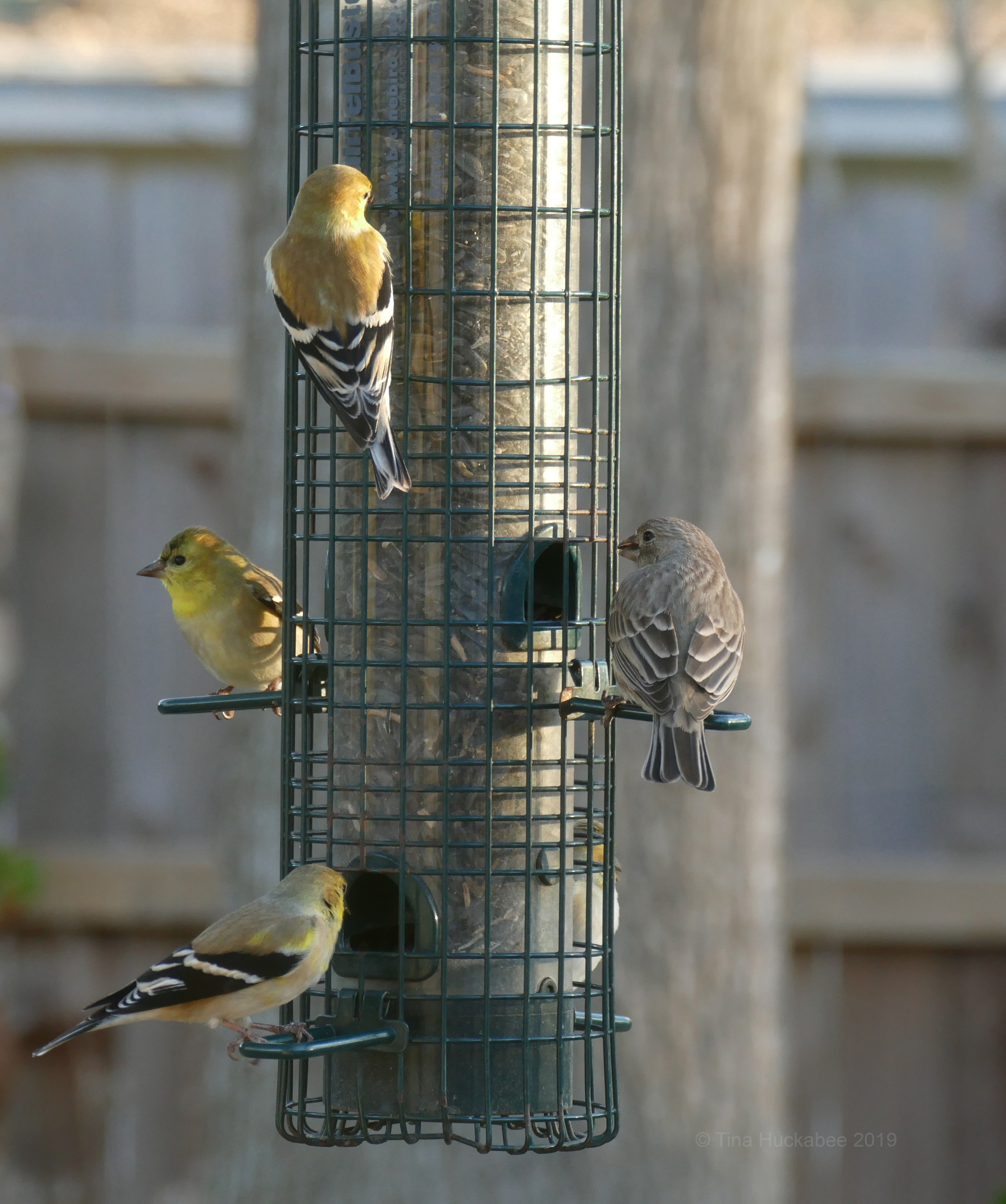
Share, and share alike! Three wintering male American Goldfinches dine with a resident female House Finch.
For myself, it was a love of Texas native plants that led to an appreciation of the wildlife that followed those plants.
If you plant them, they will come.
Minor tweaks to the traditional 20th century better-living-through-chemicals garden practices will change your garden, your perspective on your part of the Earth, and will lead to new learning and adventures in the garden.

I like birds, so much so that I’ve added a section to my menu bar which will link you, dear reader, to past (and future!) articles about birds in my garden. Enjoy!
What’s in your wild February garden? Please leave a link to your Wildlife Wednesday post when you comment, and happy wildlife gardening!





 My Gardener Says...