As days pass, there’s no slowing down for emerging buds, unfolding ferns, and greening up of the garden. In these climate changing times with weird to mild winters, it’s no longer normative for February to be Central Texas’ coldest month of the year, hosting regular hard freezes with mild days in between. Instead, chilly–not freezing–days are interspersed with warm, April/May-like temperatures. Non-native plants like irises and introduced trees gear up for growing with the surplus of balmy days, but if a hard freeze rears its icy head, those non-native plants struggle with the unexpected cold. So far, my native plants are “weathering” the weird fairly well.
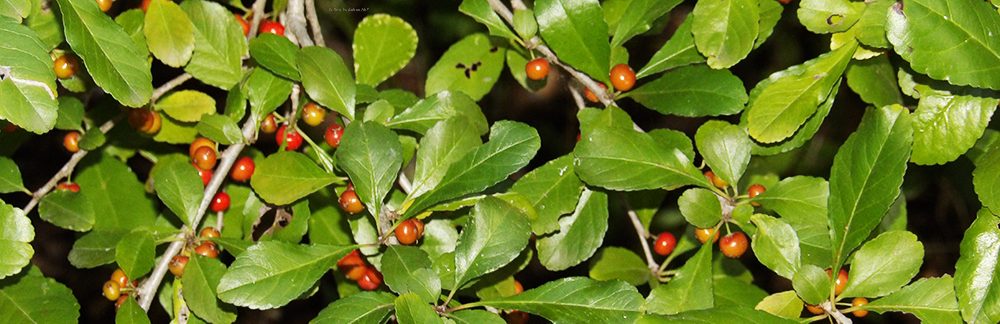
Alongside older leaves which never bothered to drop, emerged new growth is appearing on a young Rough-leaf Dogwood tree, Cornus drummondii. A beautiful, small native tree, it grows well in shade and is a known wildlife winner.

My older Rough-leaf dogwood, a gift from a fellow Austin-area garden blogger (Thanks, Deb!) has grown, grown, grown. No longer is it a stick with some other sticks coming out the sides, it’s now a real tree (paraphrasing Pinocchio). New foliage has recently become noticeable, dotting limbs up and down the tree.

Last weekend, I transplanted a well-established Leatherleaf mahonia, Mahonia bealei, from my full-sun front garden to my mostly shady back garden. After half of an Arizona ash tree was damaged in 2017 during Hurricane Harvey rains, the front garden now receives significantly more sun than it did in the mahonia’s early days. The poor thing was suffering foliage burn during the long summer months; sun fried leaves dropped, causing stress for the shrub. The mahonia should be happier in my back garden where it will live in dappled shade and that’s the environment this mahonia species likes.
I hope it survives the transplant; it’s an early bloomer–great for hungry pollinators– and a tough, attractive shrub. I’ll need to remember to water regularly during July, August, and probably, in September.
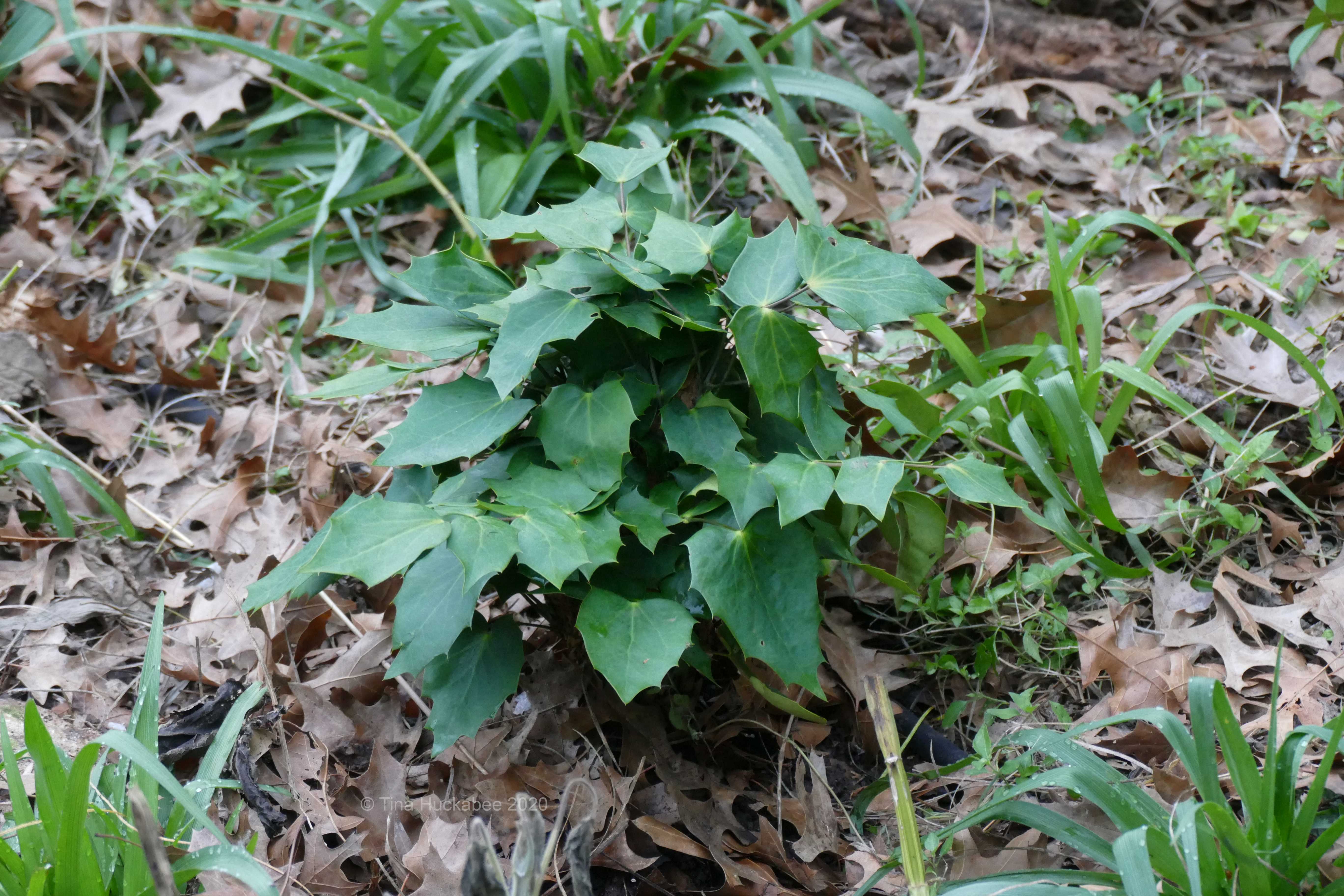
I like this picture of green, with varying textures.
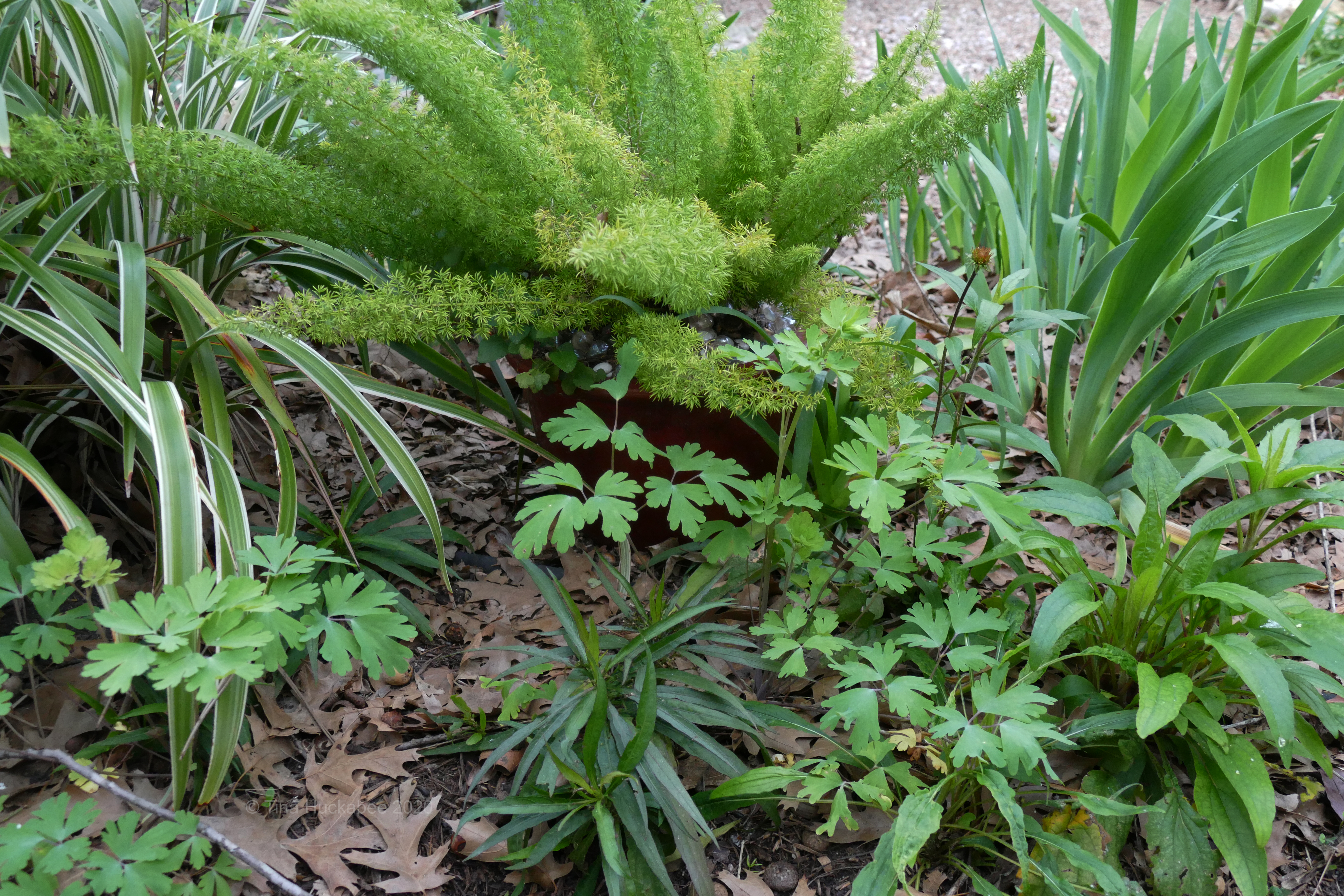
At the right of the photo, are straps of iris, unknown variety; in the center-front, the foliage of native columbine pair nicely with Katie’s dwarf ruellia. Back-center, you see a crimson pot topped with the foliage of fuzzy, bright green Foxtail fern. To its left, another tough non-native, Dianella. The Dianella tasmanica ‘Variegata’ is a great plant for our long, hot growing season, but oh so tender when the cold winds blow. I have 5 groups of this plant–I love it–but it’s also the only plant that I must cover when the temperatures take a deep-dive, well below freezing. So far in this non-winter winter, the Dianella have remained green, white, and stripey, with no need for covering.
Last winter, I notice a seedling of Texas Mountain Laurel, Sophora secundiflora, nestled at the edge of a clump of amaryllis that my mother gave me years ago. I’m leaving the Mountain Laurel, but where it’s situated, it will eventually grow large enough block the view of the pond from my kitchen and living room window. Yikes! That’s not going to work, but I don’t have the heart to pull it, but pull it out I must. Eventually.
The amaryllis straps should be dormant, but they’re not. Thanks mild winter! Behind these two plants, grows another group of Dianella.

I’ve grown this Mexican orchid tree, Bauhinia mexicana for about 10 years. Until the past two years, the tree regularly lost its leaves in winter frosts. This year and last, it’s had practice at becoming reliably evergreen. I like the foliage and the tiny song birds really like the foliage, but I would prefer more winter, fewer leaves.

The long-views demonstrates the greening of my back garden. To be fair, it’s not only that winters are warmer that encourages more garden green, but that I’ve planted more shade appropriate plants–many of which are evergreen, no matter the winter–to better adjust this garden’s transformation from a full sun space, to a mostly shade situation.
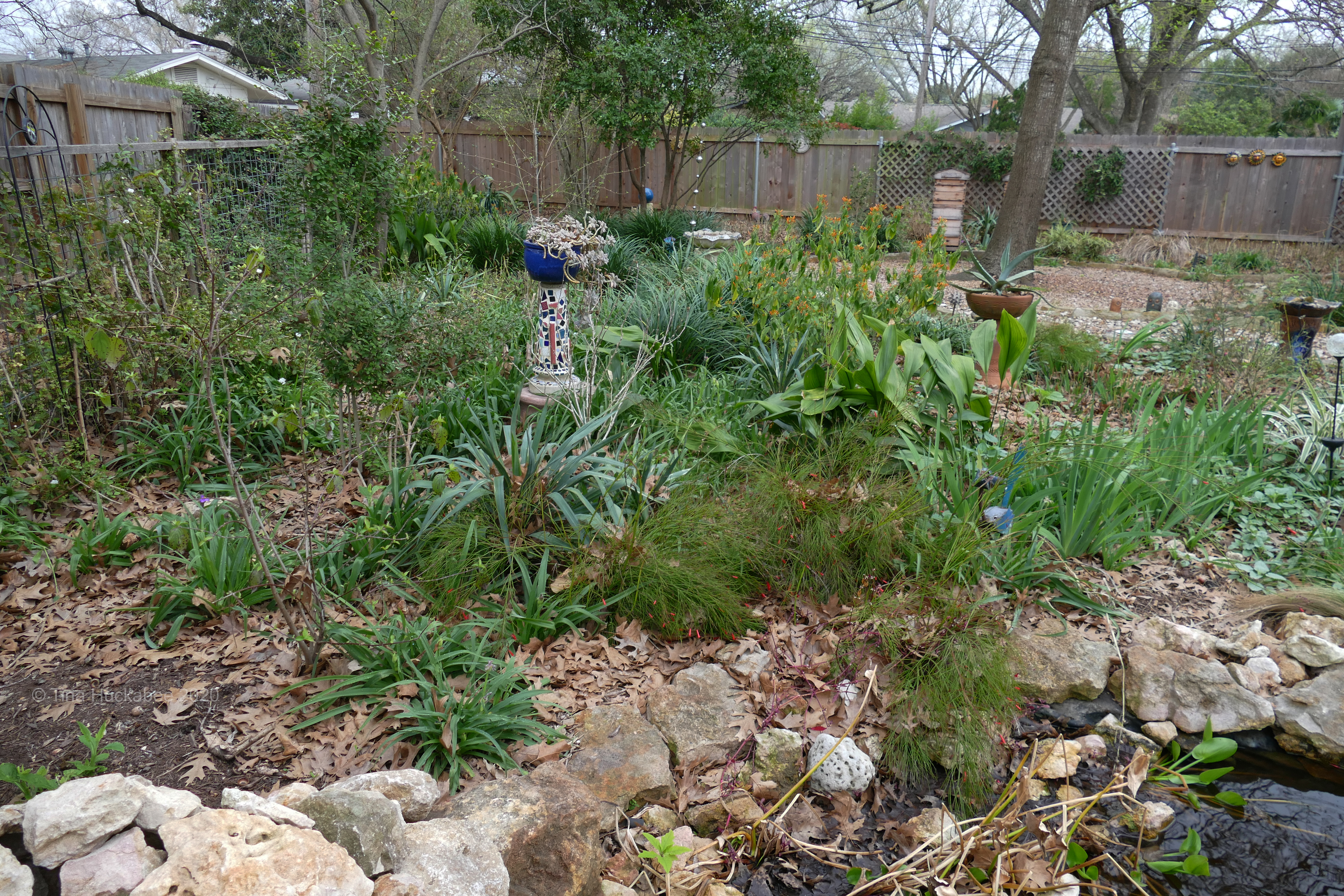
Looking southeast. My sister-in-law’s garden is just over the fence.

A northwesterly view.

The long view, again, looking southeast.
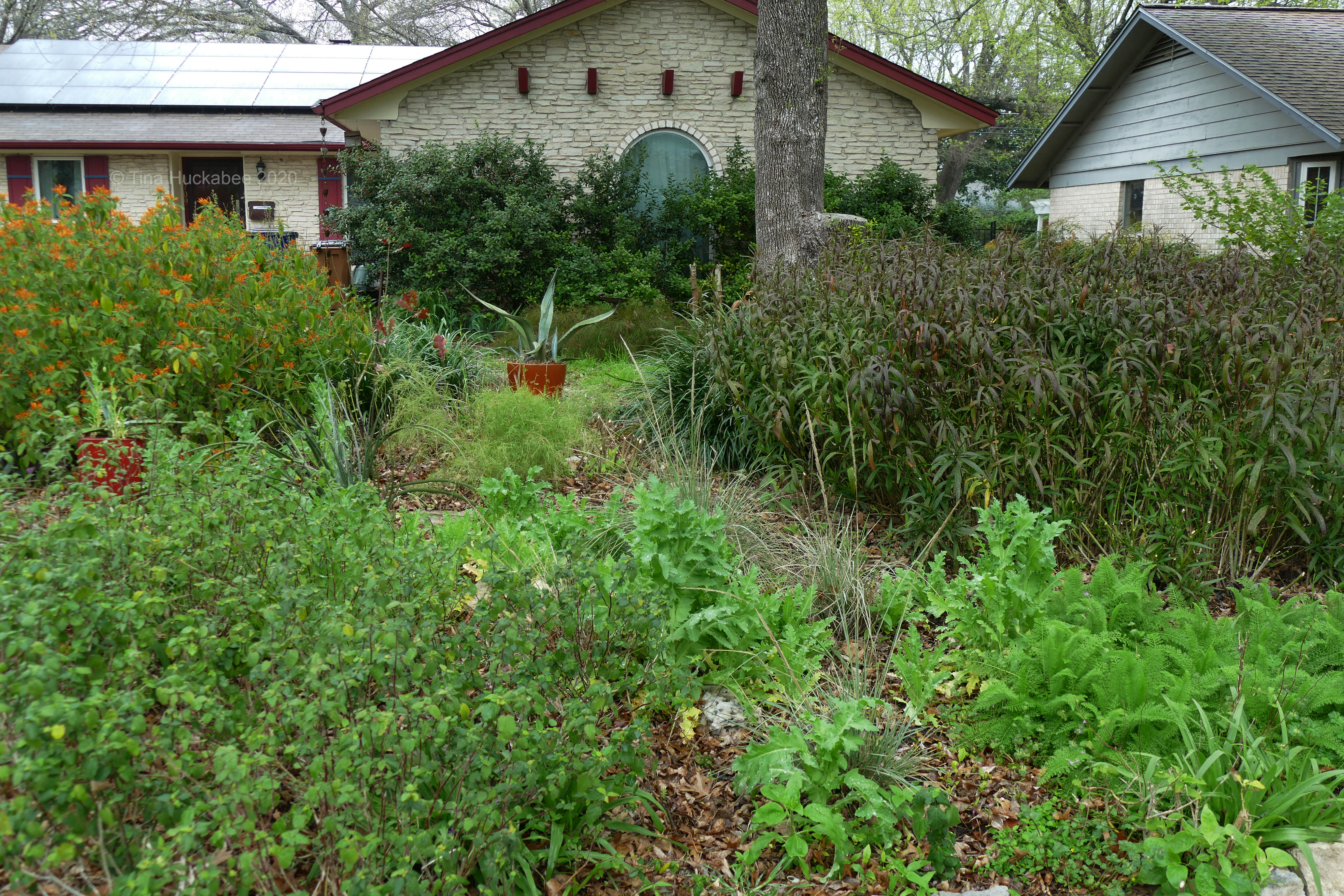
Greening, along with some other coloring, is also a winter thing in my front garden.

Iris blooms have emerged and will open…soon.
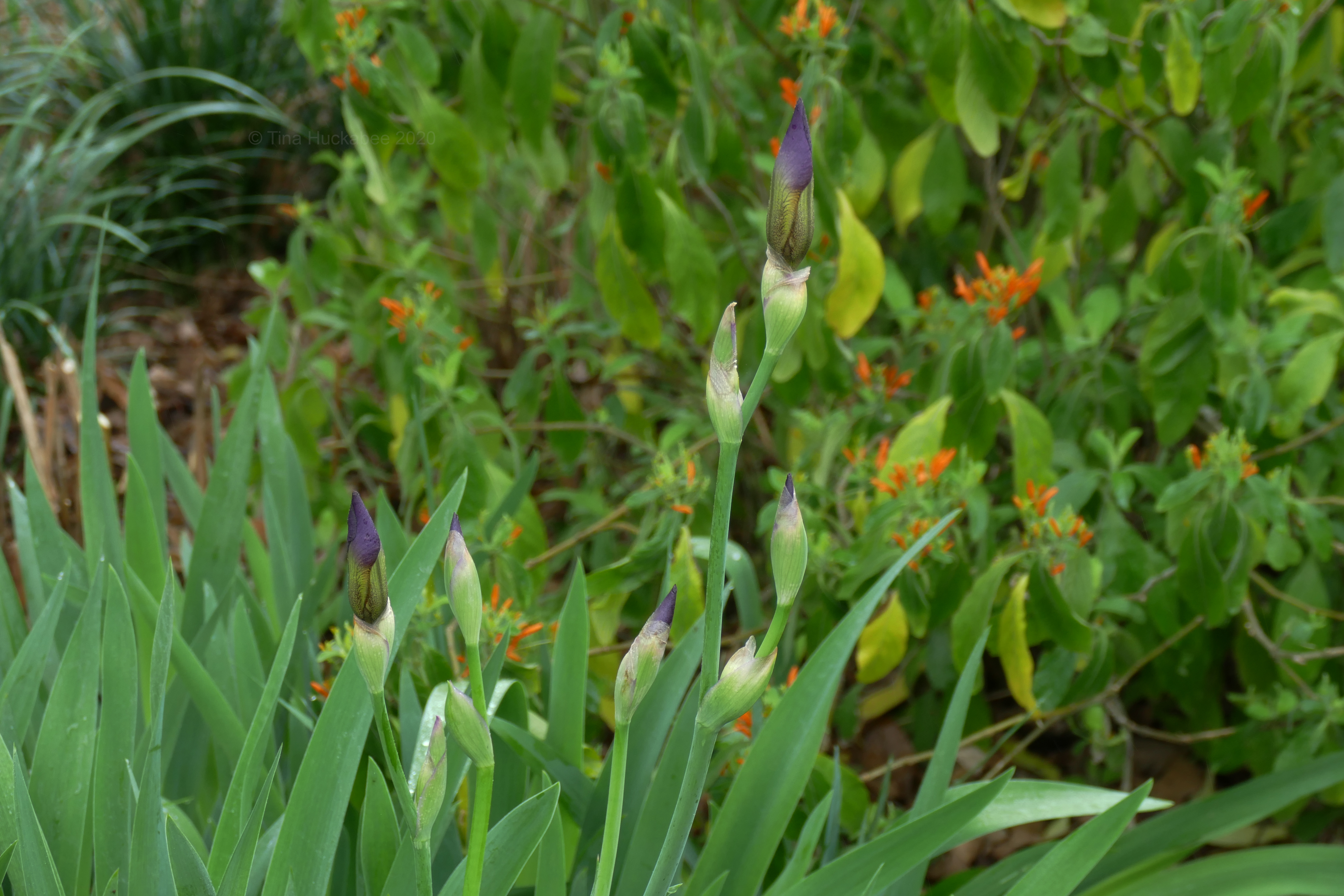
Ugh, if there’s a hard freeze in late February or in March, the blooms will be mush. That happened last year: a mild winter, then a hard, hard freeze during the first week of March. Most of my individual iris plants had produced stalks and along those stalks sat a minimum of 6-8 blooms each. I clipped as many irises as I was able, so that the blooms would happen, rather than losing all to the freeze. Exhibit A:

Exhibit B:

Every glass and ceramic container I owned was filled with irises. EVERY ONE. While it’s nice to have cut flowers in the house, I’d rather leave–and see–flowers outside. So, stay away, hard freeze(s)!!
In past years, this sitting area would be less lush, more barren. This winter, green is queen and blooms…are blooming. Firecracker/Coral plant, Russelia equisetiformis, (bottom left in photo), has produced its tubular red-orange flowers all winter.

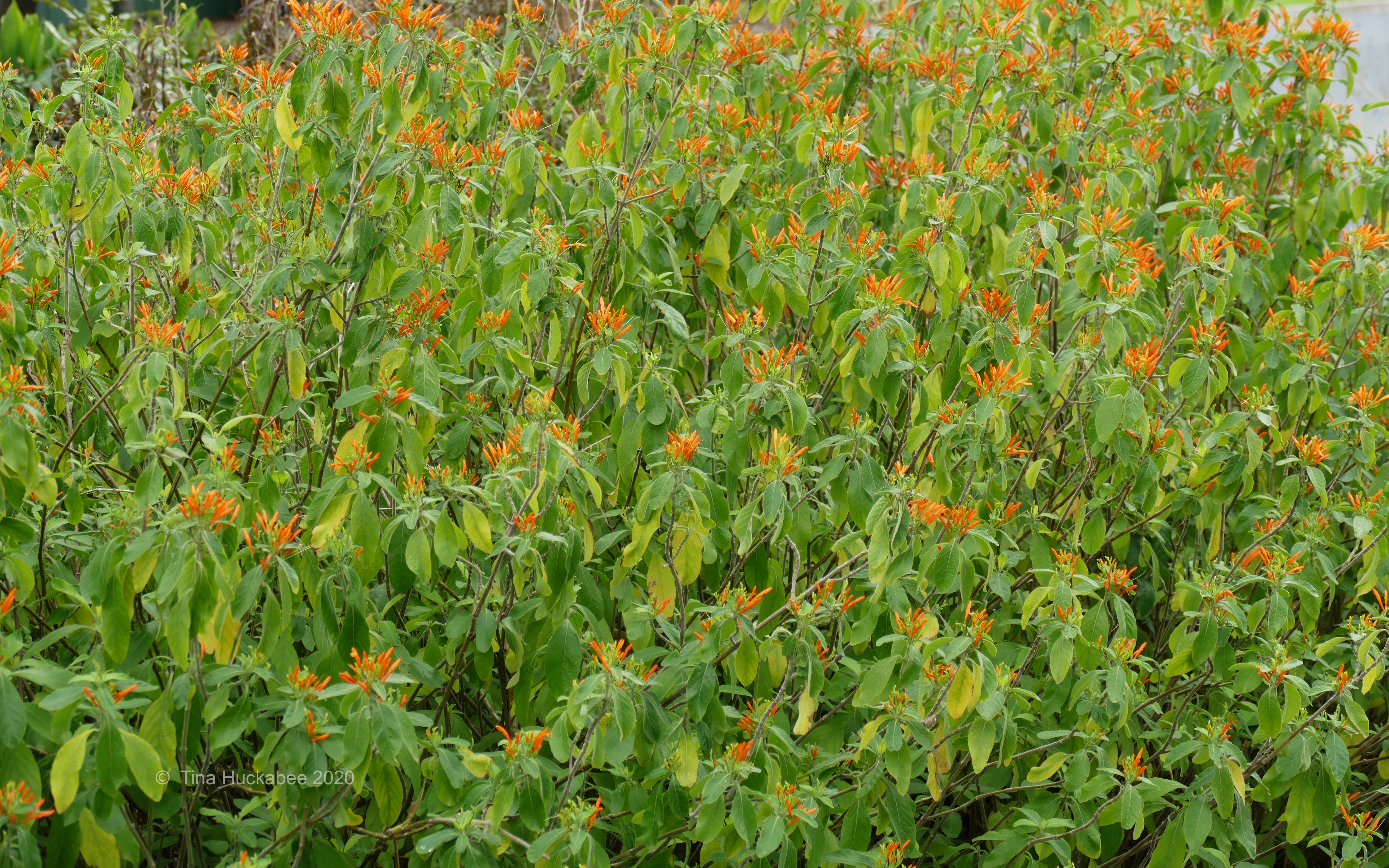
Back when winters were normal, the Mexican honeysuckle, Justicia spicigera (far left in photo) would be frozen and by now, pruned to the ground; ditto the bronze foliaged Ruellia ‘Chi Chi’ (center-right in the photo).
We live in a new climate paradigm and must adjust and adapt; we’ve waited too late to mitigate these early impacts of climate change. In my own garden, the best I hope for is utilizing native plants as much as possible because of their evolutionary partnership with the capricious Texas weather patterns, without–and with–the onslaught of our changing climate. Going forward, I accept that non-native plants, even those which have been reliable, will be less so. Milder, greener winters, early springs, searing summers, and delayed autumns are here. Now.




 My Gardener Says...