Splayed and Twisted

Splayed and twisted describes so much of life at the moment, but in the garden, splayed and twisted are often normal happenings.

The scarlet and gold fluted flowers of Coral honeysuckle, Lonicera sempervirens, span outwards and downwards, trumpeting their beauty and wildlife value.  Each await visits from their pollinator partners.

Some of the cheekier visitors steal nectar, rather than fulfilling pollinator expectations.  

Nevertheless, I’m certain that eventually native bees, butterflies, moths, or birds will happen by to sip the good stuff from the tubular openings and carry pollen grains to parts unknown.


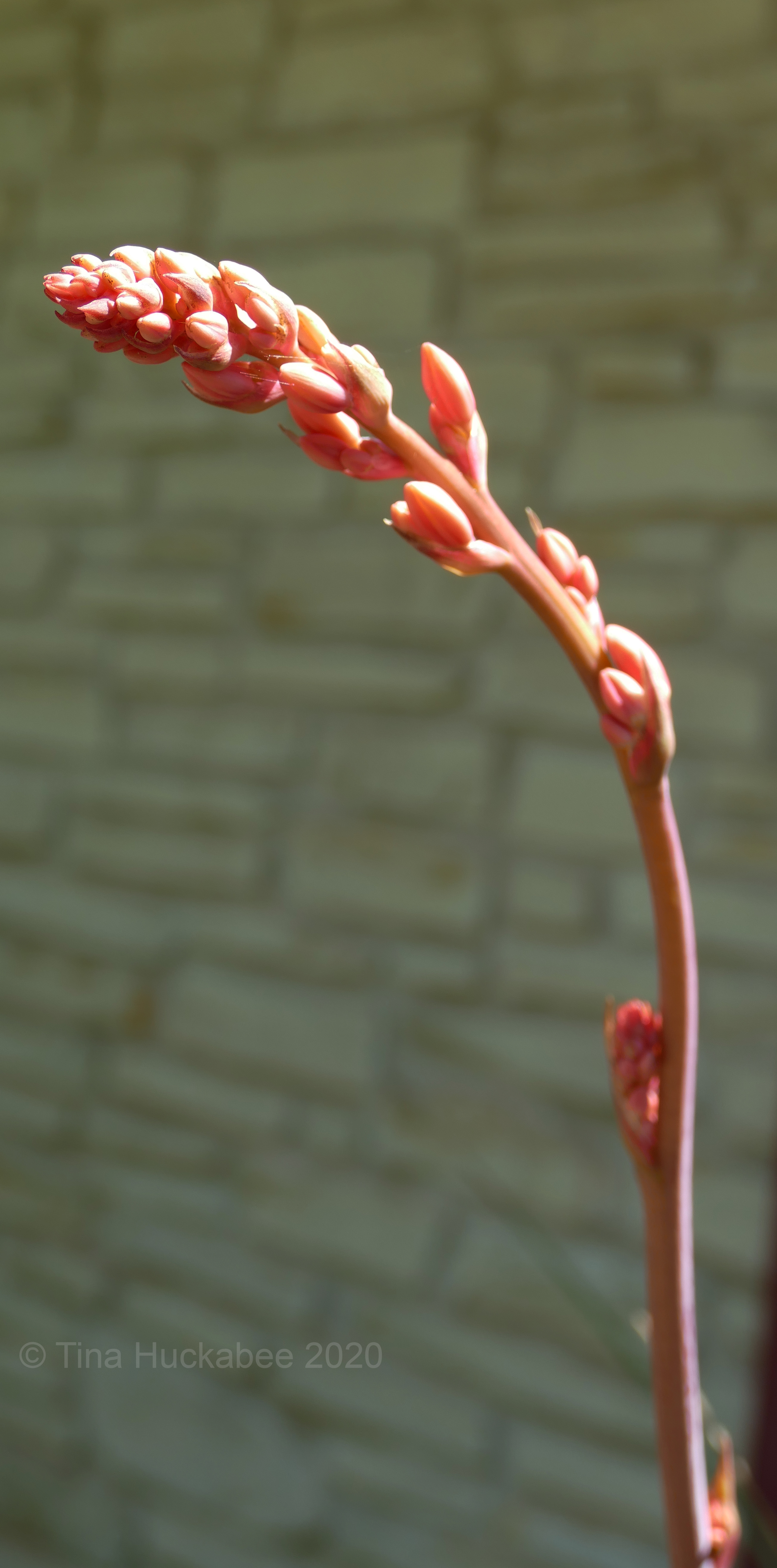
I grow several Red yucca, Hesperaloe parviflora, plants and all are pushing up their bloom stalks, daily and at a rapid pace, for this season’s bloom show.  This one is reaching for the clouds, but hampered by its twisted ways.  

Just beginning its push skyward,  the curvy anomaly, known as fasciation, has kicked in. It’s unknown why stems occasionally go wavy-gravy or flowers turn into two-headed floral freaks, but it happens.  It’s not a big deal in the plant world, because fasciation isn’t generally indicative of a spreading disease event or a genetically inferior plant.  When the weird wonder occurs in the garden on a stem or flower head, it’s easily remedied by pruning out the botanical boo-boo.  Or the gardener may leave it, as an acknowledgement of life’s vicissitudes. 

I don’t plan to prune this stalk because even if it doesn’t grow-up straight or arched like its sibling stalks, pollinators (with the possible exception of hummingbirds) will find the flowers.  Aside from Red yucca’s beauty to my eyes, the attraction to pollinators is the reason these perennials have a place in my garden. 

The curvy one’s neighbor, an offshoot of the same mother plant, has grown about 4 feet tall.  Single blooms, arrayed along the stalk, will soon open.
 

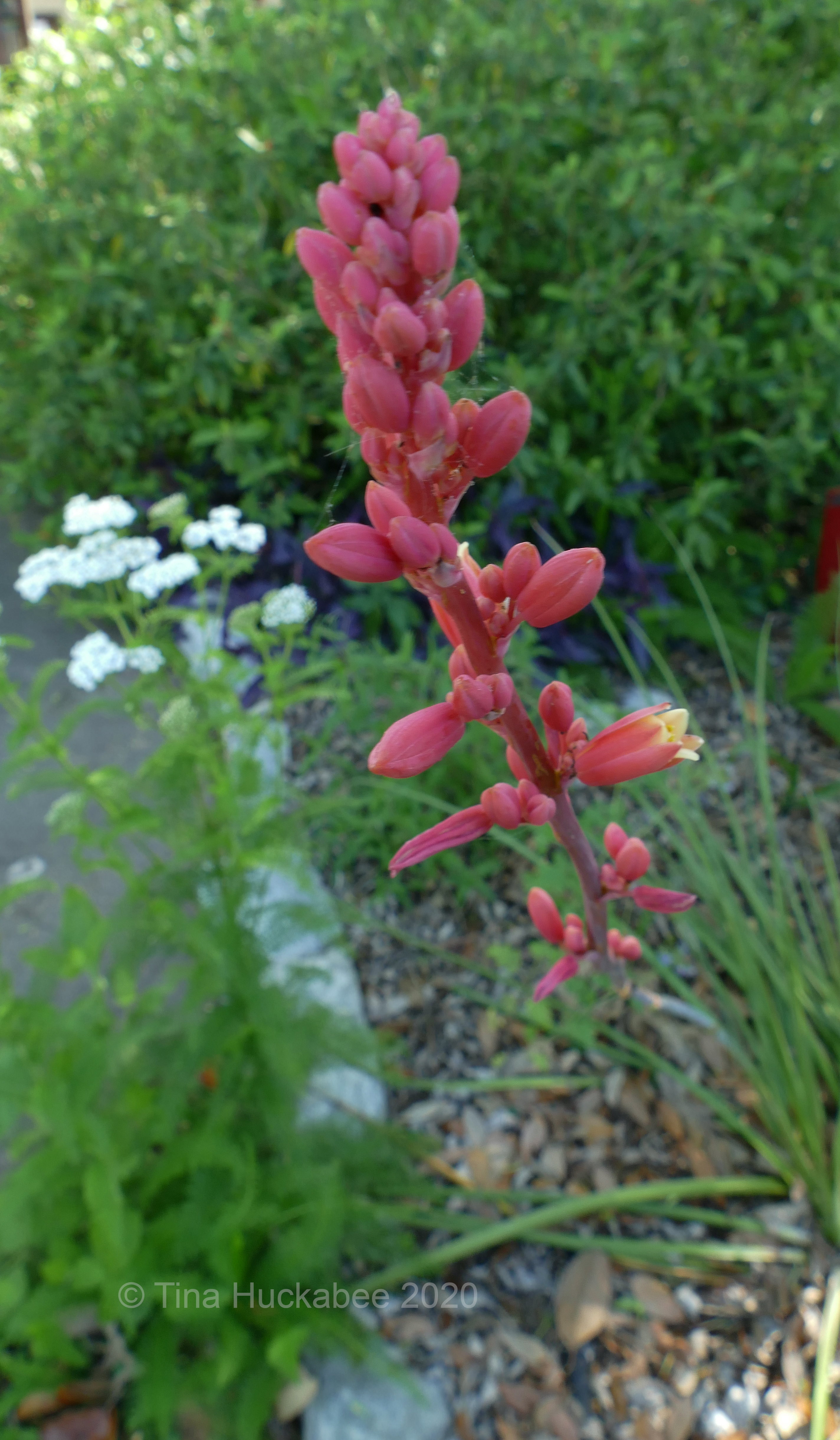
In a different part of the garden, another of the same species is bursting at its petals with salmon-hued goodness, ready for the winged-things to feed from.
The garden provides surprises, mostly good, always fascinating.  

I’m  joining in with Anna for Wednesday Vignette, check out her lovely Flutter and Hum for garden stories–the funny, the weird, the wonderful.  Also, it’s April Bloom Day!  So Carol’s gorgeous May Dreams Garden celebrates blooms –pop over to enjoy  blooms from many places.
Snails Made Me a Liar

 There’s something bucolic about snails.  Often depicted darling in children’s literature and artwork, snails are usually portrayed as positive thematic characters in toddlers’ pillows and young ones’ stuffed toys.   Snails are cute:  silly looking and alien-like, seemingly unobtrusive and retiring, in most humans they don’t arouse fear (like honeybees) or disgust (like rats).  Maybe it’s the Fibonacci-like swirl of their shells–graceful and elegant–that appeals.  Perhaps it’s the quirky, squishy body and wiggly antennae, alert and upright, searching, almost comedic, that gives the creatures great charm. 

 A few posts back, I commented that snails are in my garden, never causing much damage, just oozing along, mostly minding their own business.  I regretted the times I’ve accidentally crushed them.

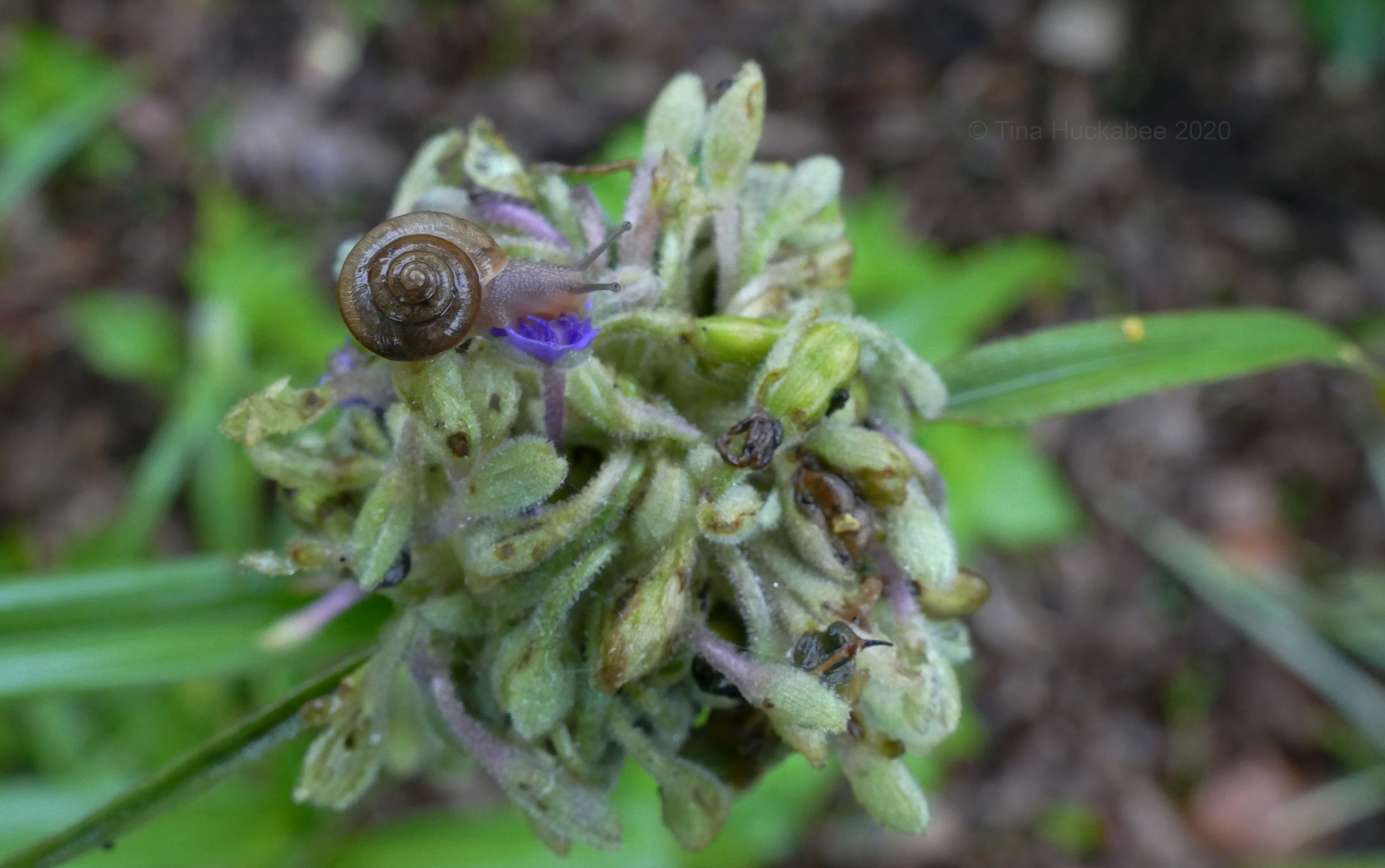
Not long after that post, I caught this one sipping from the open blossom of a Spiderwort.  It looks kind of sweet, doesn’t it?  A crafty sort could use the scene as a needlepoint subject or embroidery project.

Was this little garden creature sipping the morning dew?  Or was it eating the blossom?

Oh dear, that might change the dynamics for the plant.  Turns out, snails are causing some damage in my garden this spring. 

Grrr.

My unknown variety of amaryllis, the bulbs given to me long ago by my mother, have been the dining choice of at least one of these slimy beasts.  

Varmint!

Nasty varmint!  (Note the change in tone toward the snail.) There it is, snug in its corner booth, chowing down on my flower!

The cluster of open blooms is functioning, they’ve all opened up, as they will in spring, then snails moved in and did what snails do–eat, eat, poop.  Sigh. 

The amaryllis only bloom once–now–and won’t again until next year.  I’ve railed against the snails, called them bad names, and fantasized about squishing the lot of them.  In the end, I should have noticed their activities and acted more quickly.  After all, it’s not like I’m gone from the house much these days.

It’s done and no use in crying over munched petals; there are certainly more important considerations in the world, and even in my garden.  It’s a good lesson for me and no doubt, one that I will  learn again, in a different situation.  For now, I need to find my hiking boots and, um, get to work. 

Joining with Anna’s Wednesday Vignette.  Pop over to her lovely Flutter and Hum and check out garden happenings elsewhere.  

Worms to Wings

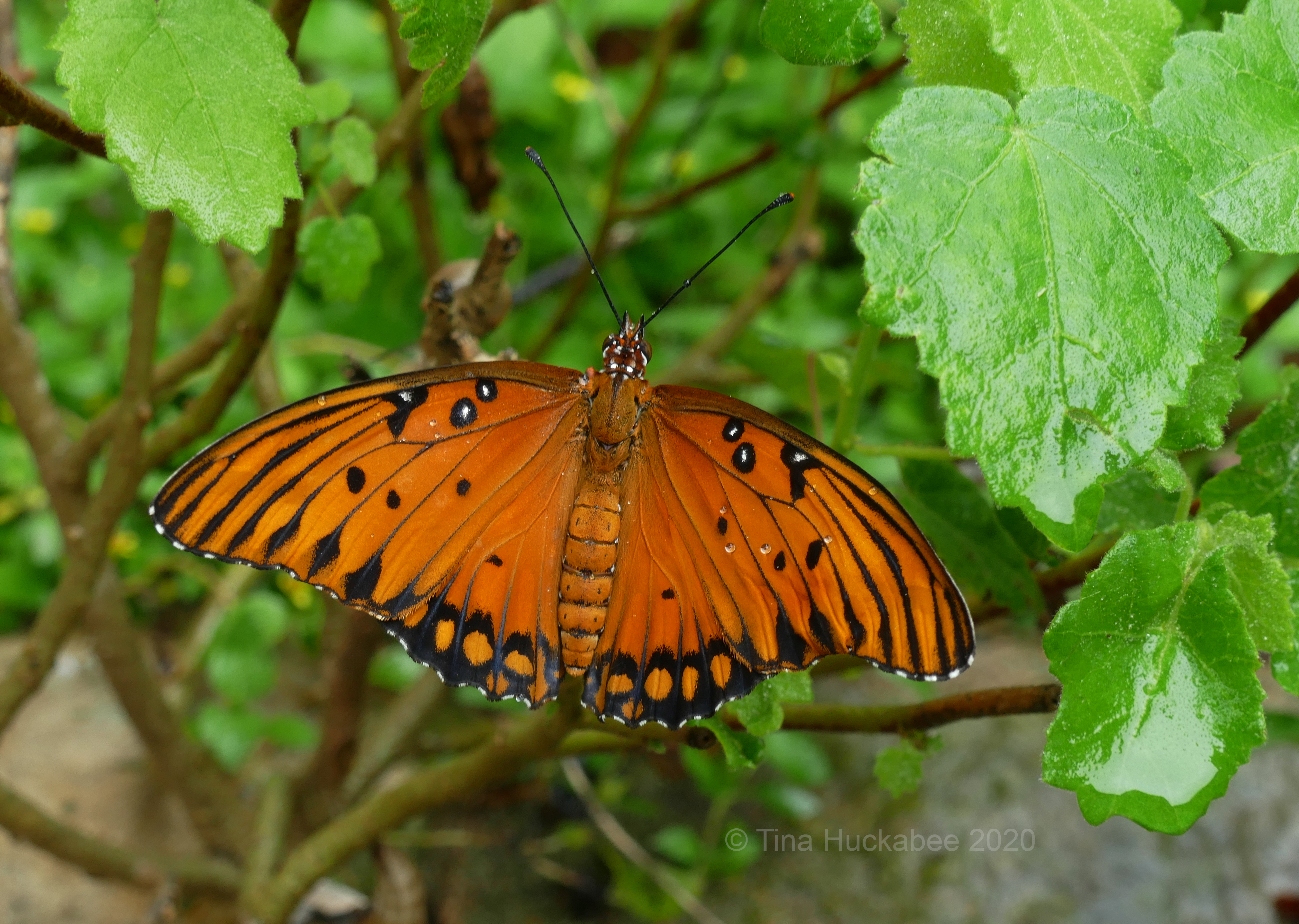
In past months, I’ve reported about the Gulf FritillaryAgraulis vanillae, butterflies and their procreation through the fall/winter months.  Recently they’ve intensified production of their population.  Many caterpillars, like this one, are currently feeding on my Common Passion flower vine, Passiflora caerulea.

Feeding voraciously means that caterpillars grow. And grow.  Eventually, they’re so big that they must find a place to be, to attach, to sequester themselves in place to prepare for their adult life of winging among the flowers. 

I wonder how a caterpillar decides where to stop, spin its anchor, and begin its process?  

Near to the caterpillar-munched vine, hang individuals–former caterpillars, future butterflies–in varying stages of metamorphosis.  

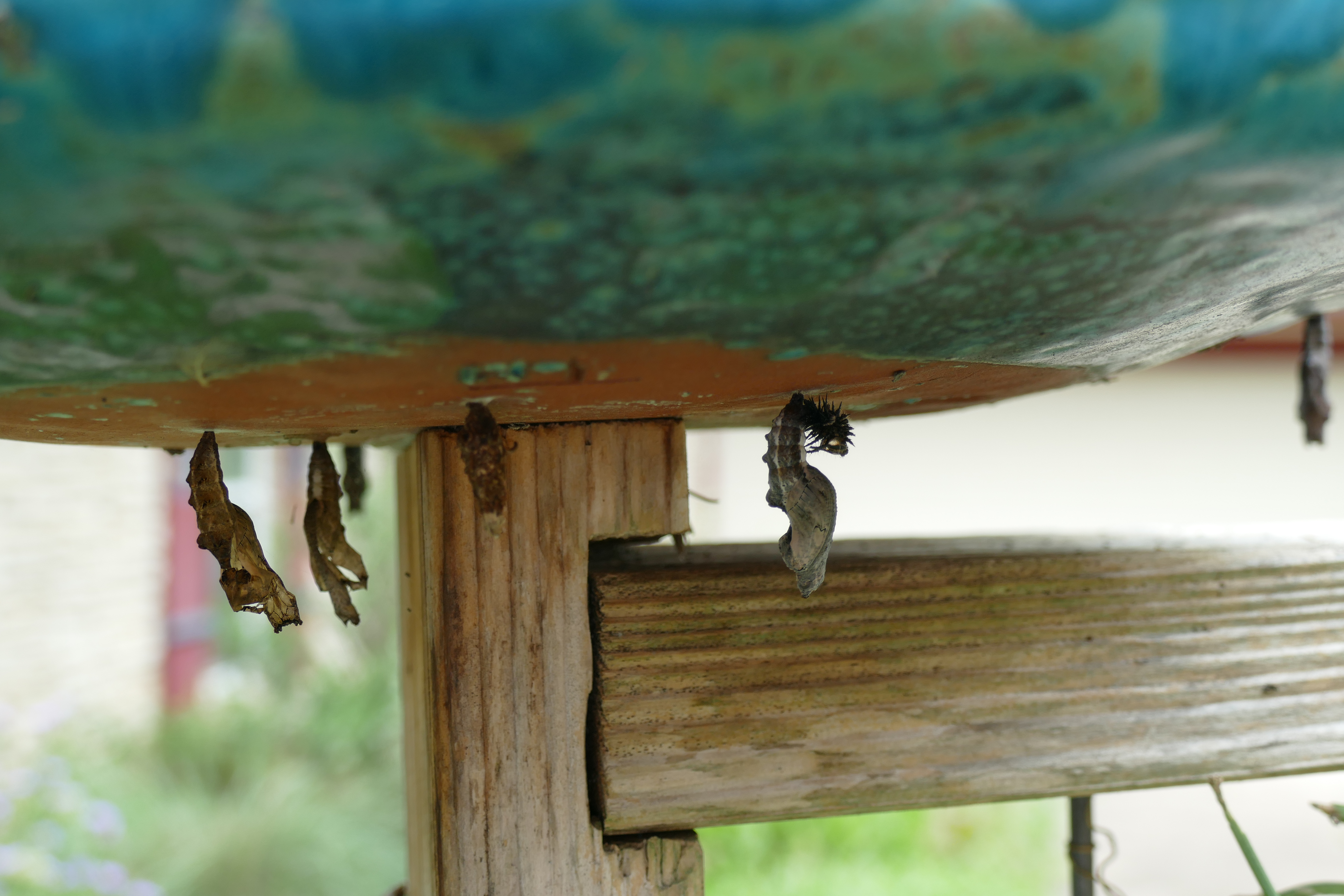
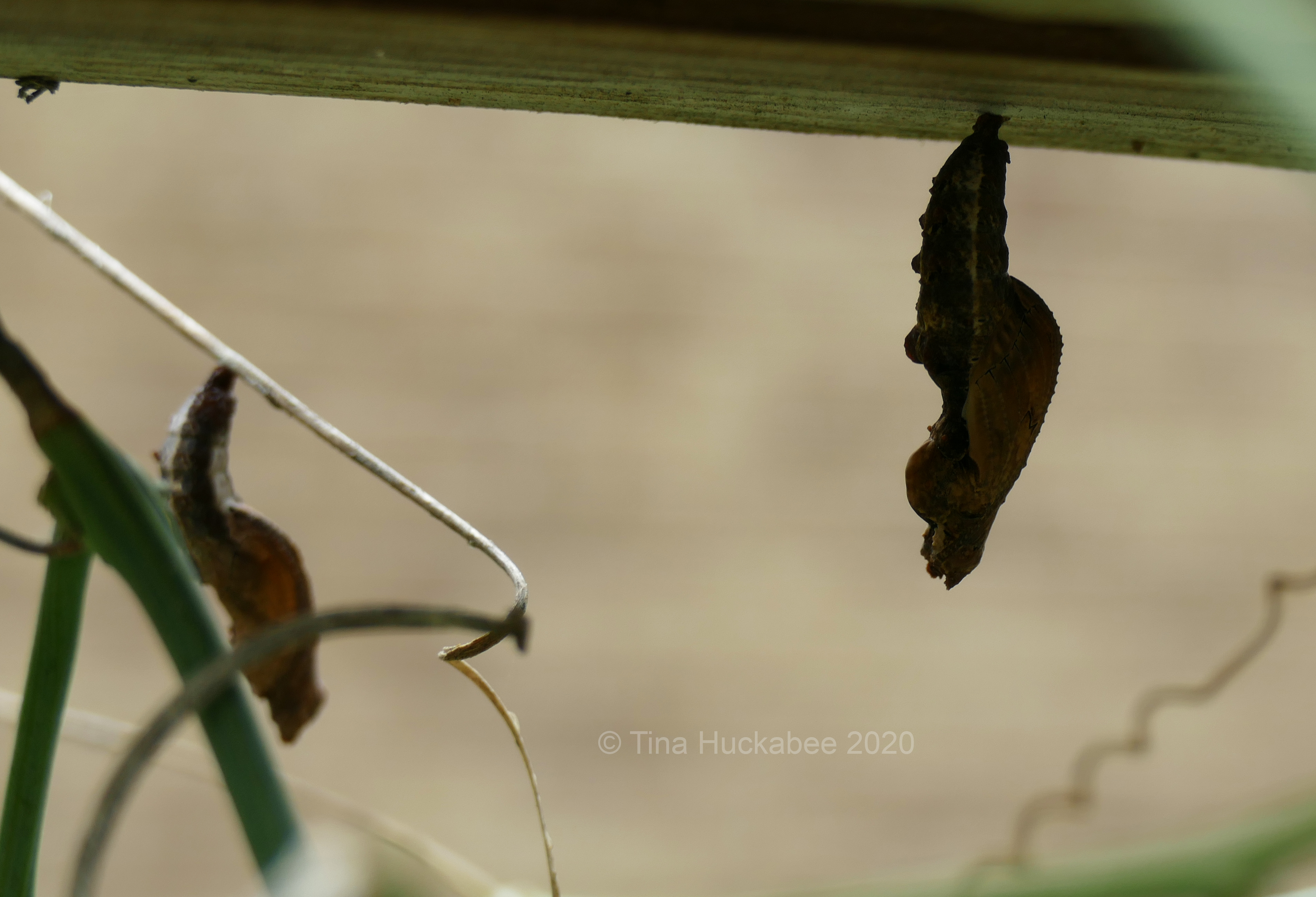
In the above shot, the two at far left are empty, having disgorged their winged adults,  who are now presumably out-and-about, nectaring and finding mates–and not necessarily in that order.  The blurred ones in the distance hang solemnly while important chemical work happens within their protective walls. The one in the center is probably a newby chrysalis;  some of the spiny qualities of the former caterpillar are still attached, not yet sloughed off. The caterpillar leftovers on that chrysalis reminds me of one of those intricate, odd hats donned for horse races and other such fancy events that I’m unlikely to ever attend.

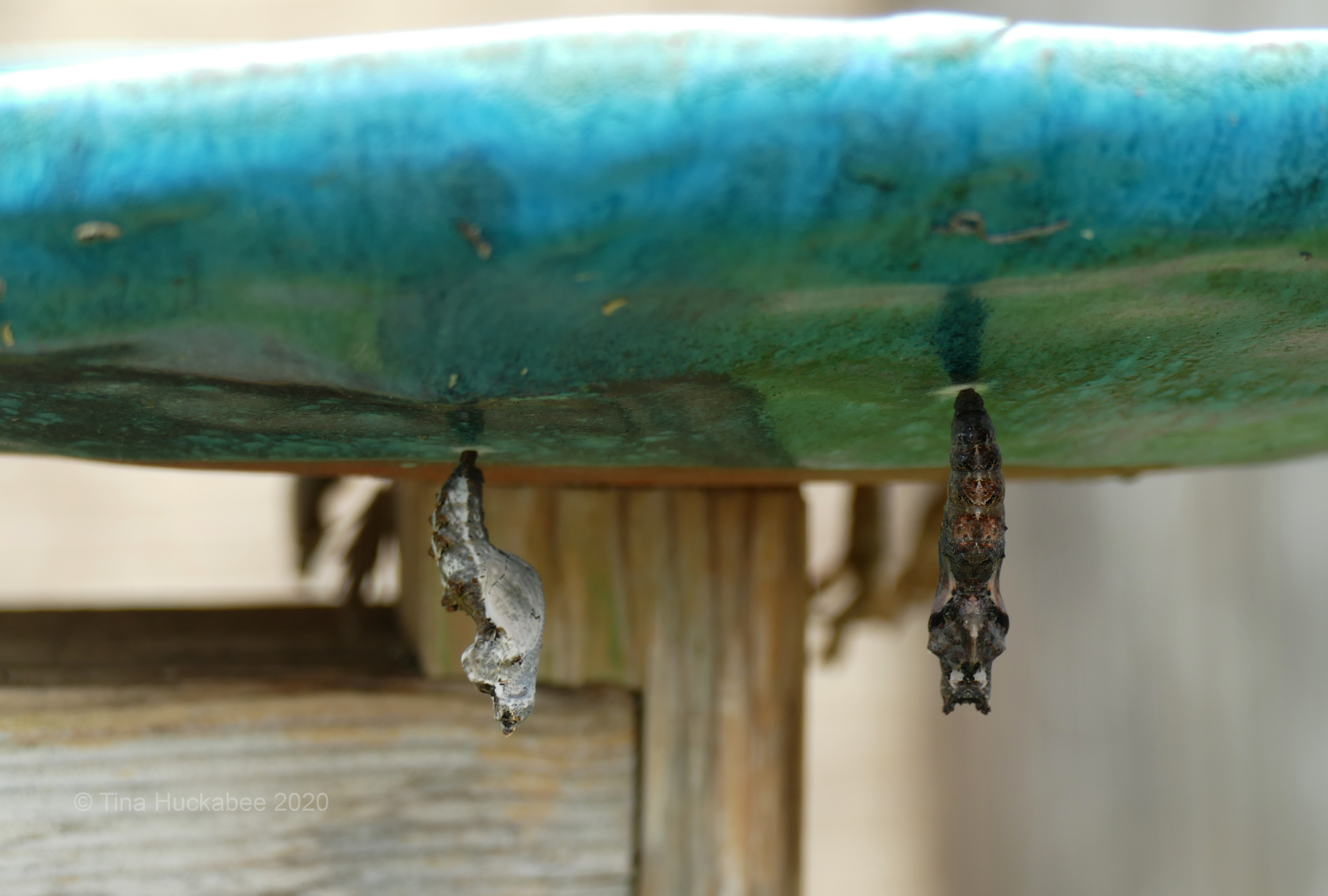
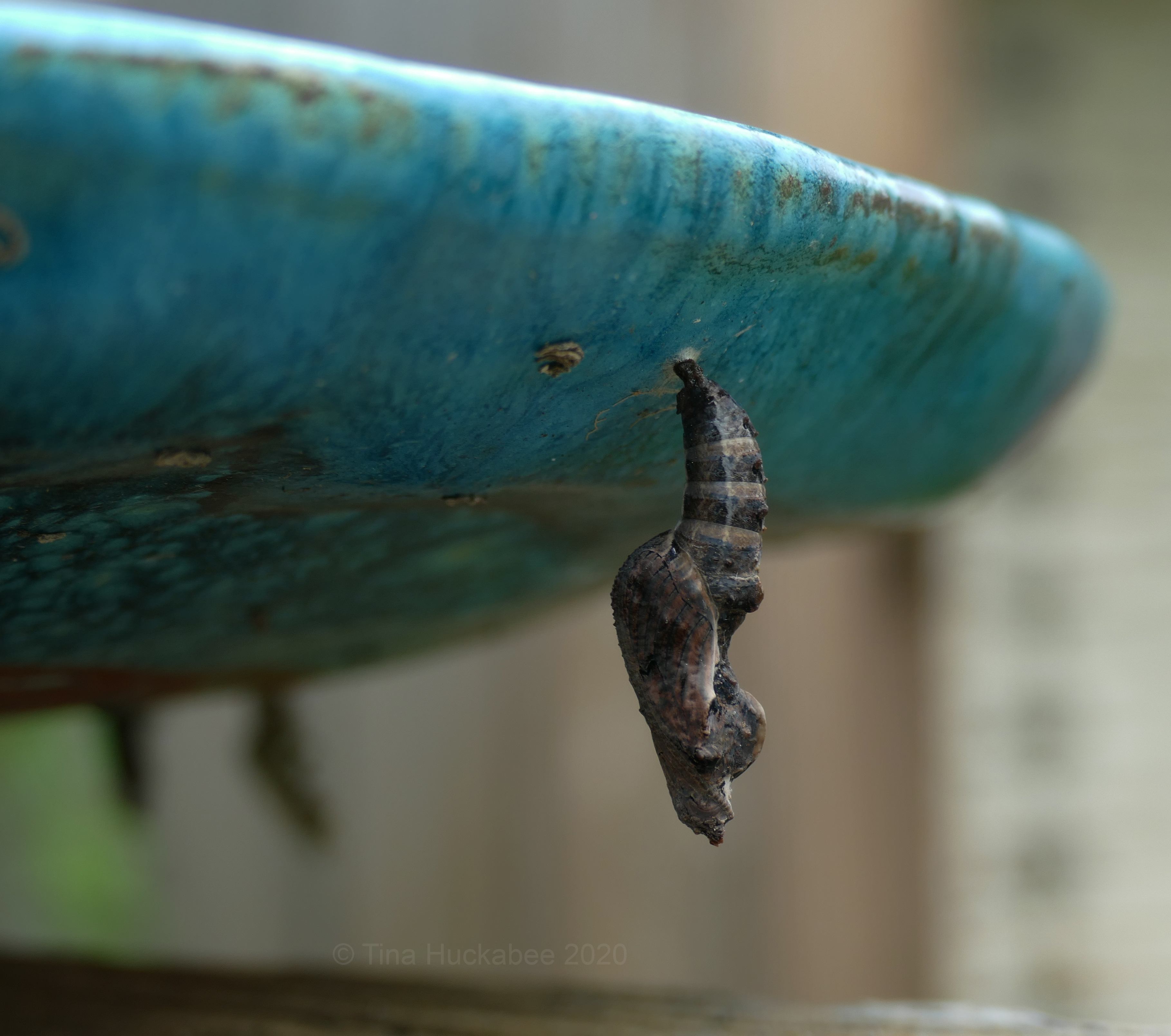
Bat-like visages, butterfly chrysalises are often hard to spot and that’s best for the survival of the insects during the vulnerable morphing stage.  In the case of this little colony, there were quite a few attached to the underside of relatively flat ceramic bird bath, which sits atop a trellis post (hosting the passion vine) and at my eye-level.  It’s an obvious choice for a morphing spot, safe from prying eyes, except for the gardener’s, who doesn’t view them as a meal.


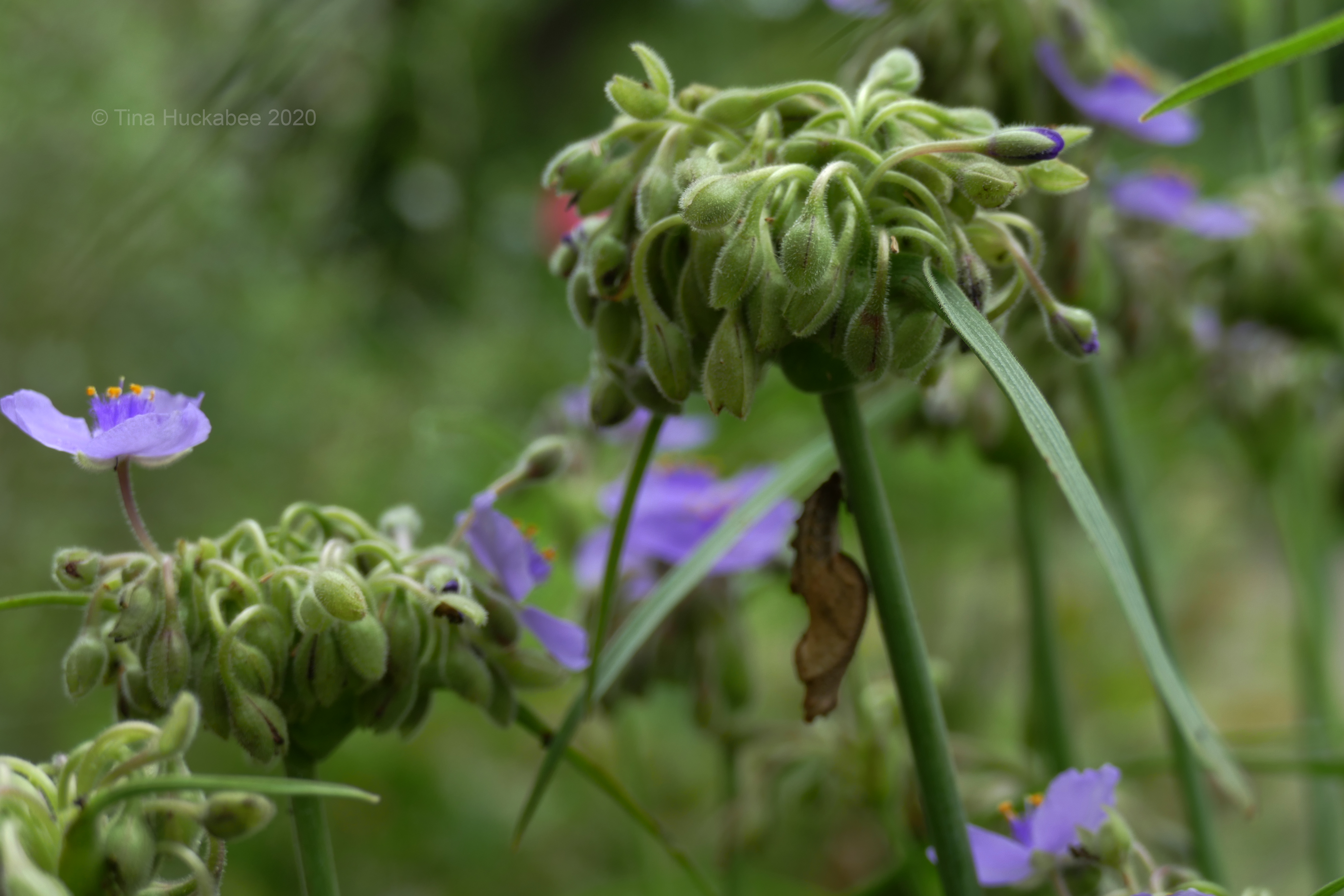
In these past days, I’ve been extra careful as I deadhead this spring’s magnificent crop of Spiderwort, which are wrapping up their flowering and ramping up their seed production.  I’ve got plenty of Spiderwort, thank-you very much, and they must be pruned so that there aren’t scads more next spring.  I look twice before I snip, so that the evolving critters attached may continue their journey.

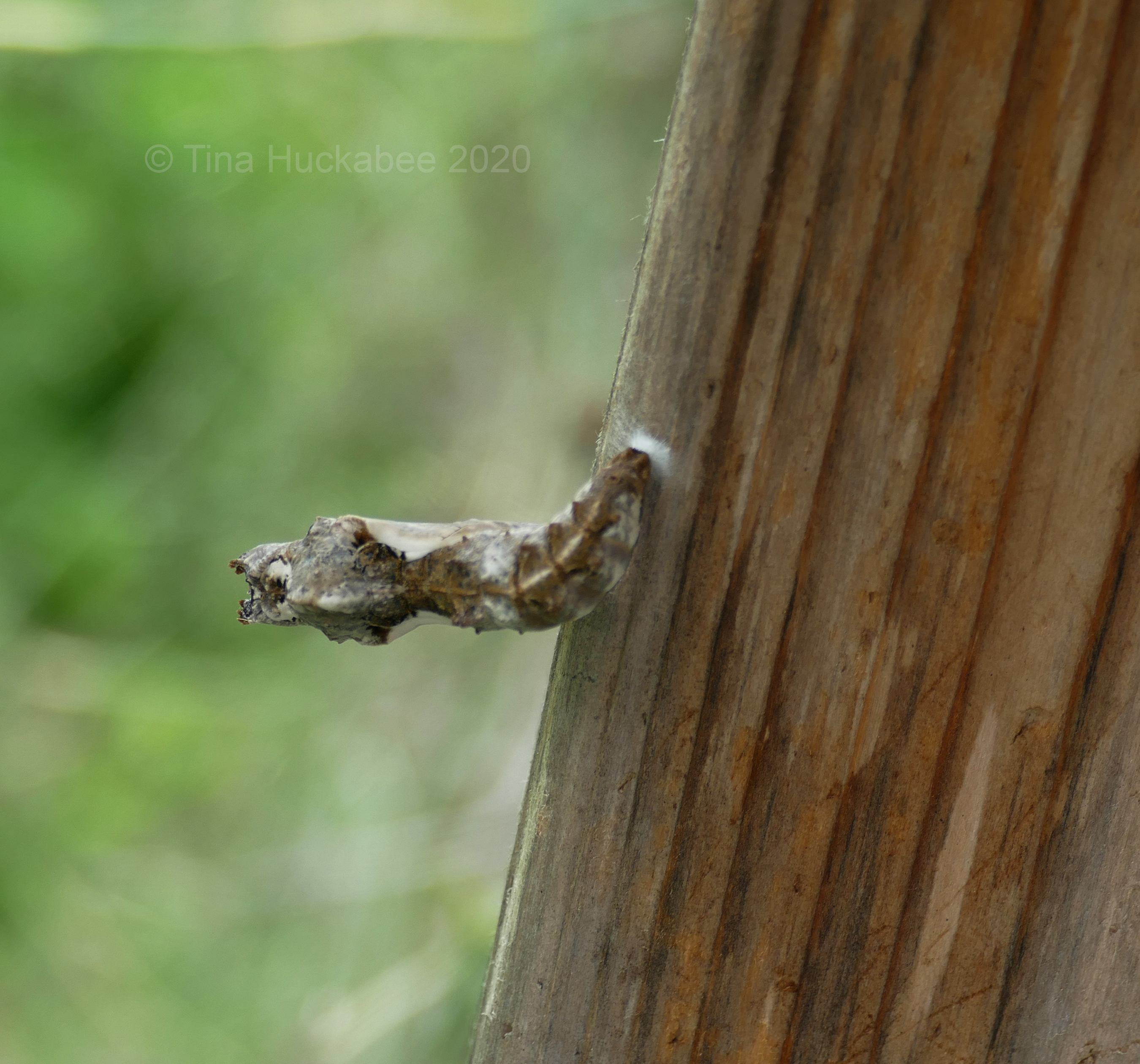
There’s always the comedian in the crowd, too.  What was this one thinking?  Maybe it was attempting prove that she/he could hold it for the duration of its transformation.   

Just beyond that perpendicular, yoga-like position, one hangs from a different human construction, its neighbor connected to a stem.  Both content, hopefully safe. 


I don’t know which I prefer:  to observe (usually over the course of a few days) as a caterpillar morphs to a chrysalis, 

…or to bear witness when the new form emerges, or has just emerged.

Both are awesome.


If I were a butterfly, this is where I would choose my rebirth,

…if for no other reason than to add beauty to the garden. 


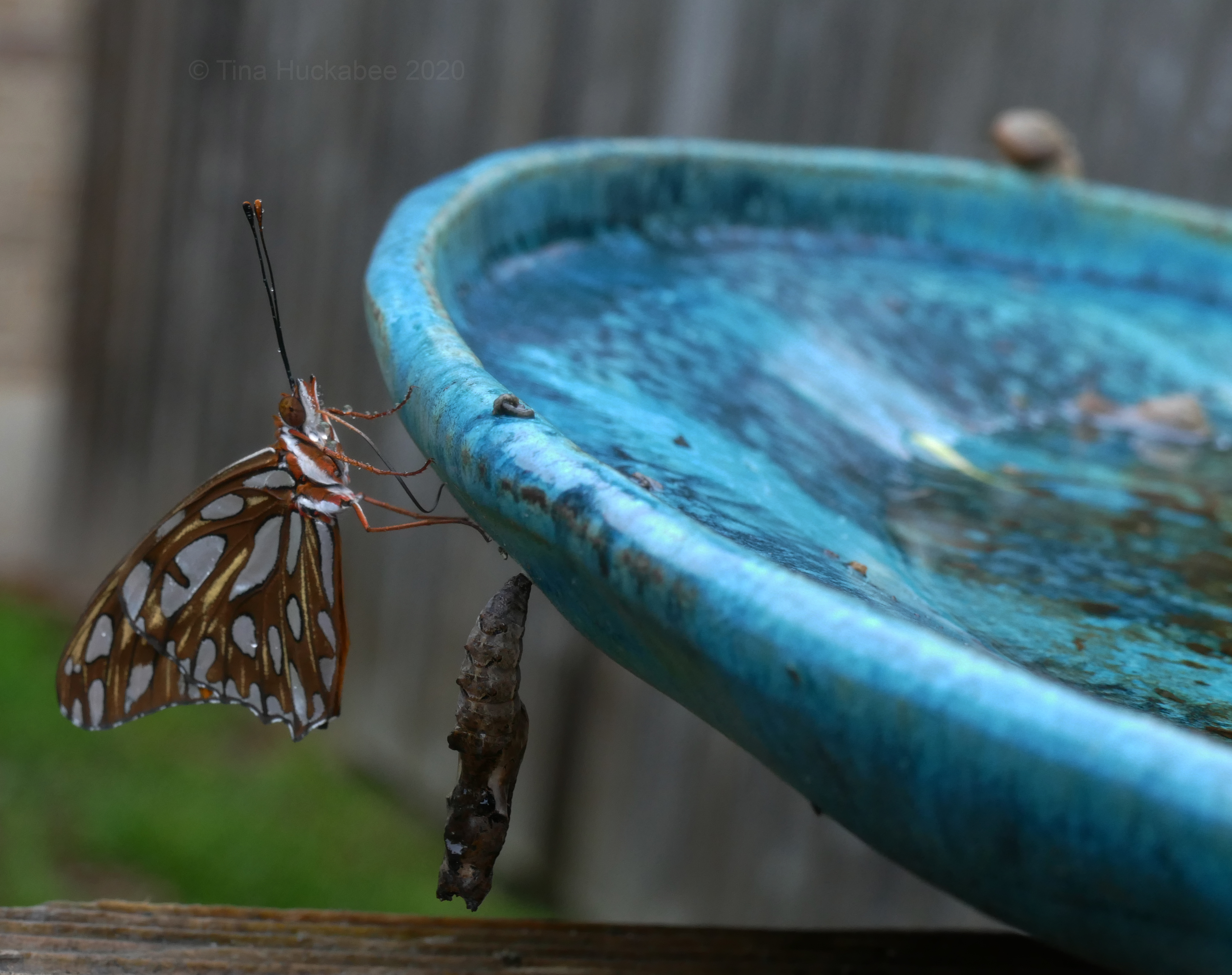
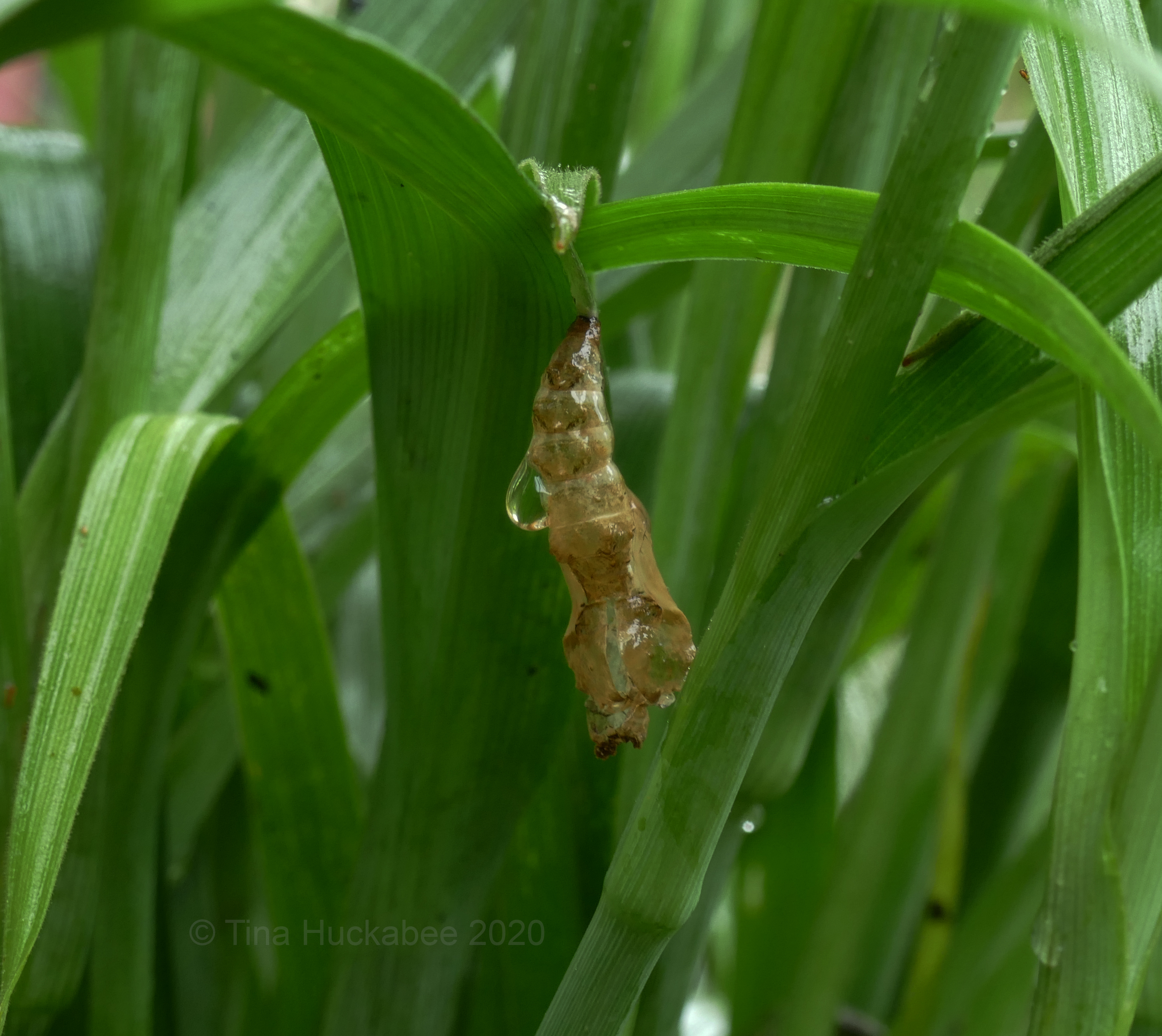
This chrysalis, nearby to both butterflies and empty, was probably the temporary home for one of the butterflies as it transformed from worm to wings. 

Chrysalises, still and quiet as we see them, but churning with change and alive with possibilities, are remarkable salutes to the continuation of life and acceptance of situation.