The third week of October is Texas Native Plant Week.
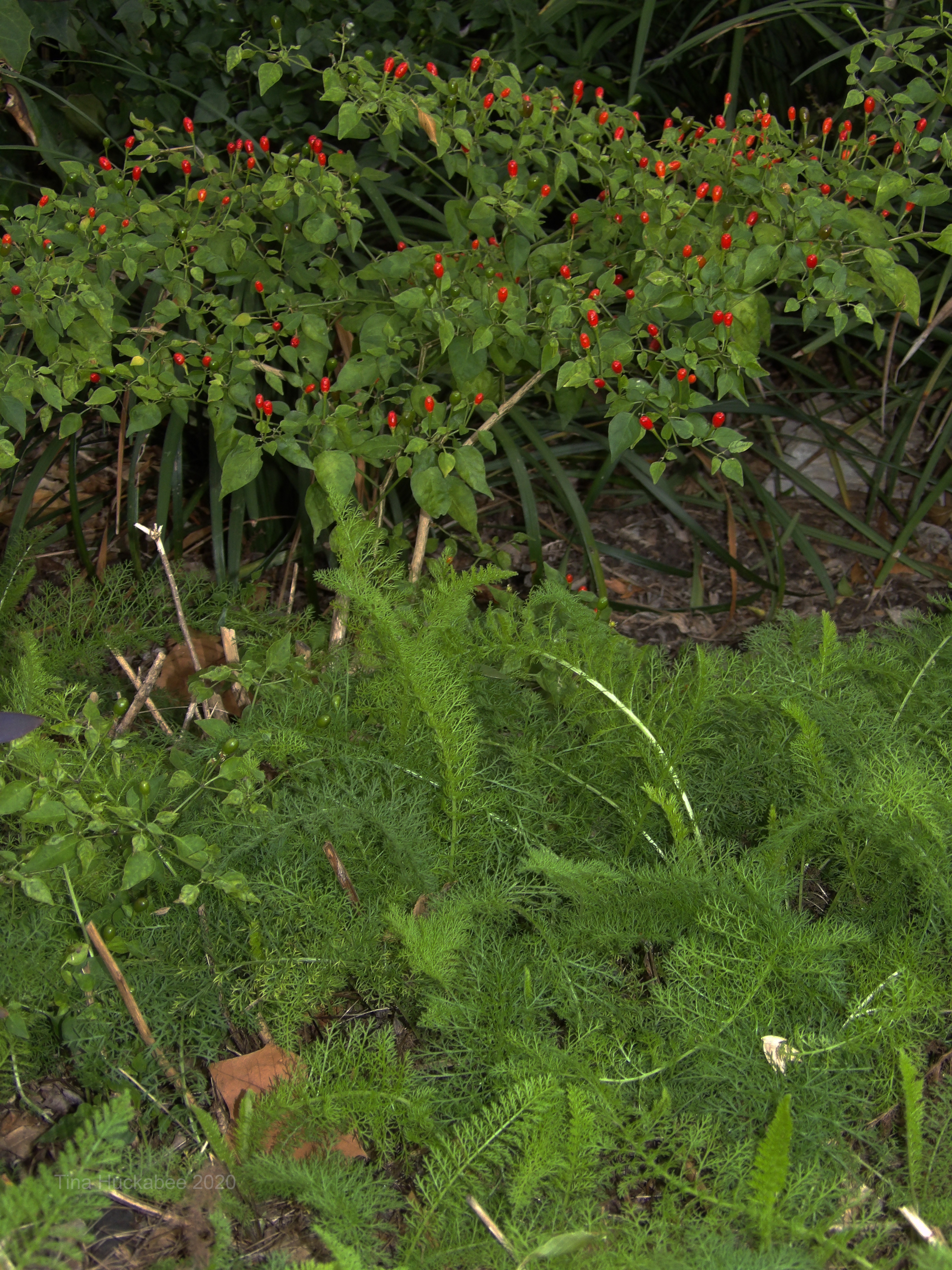
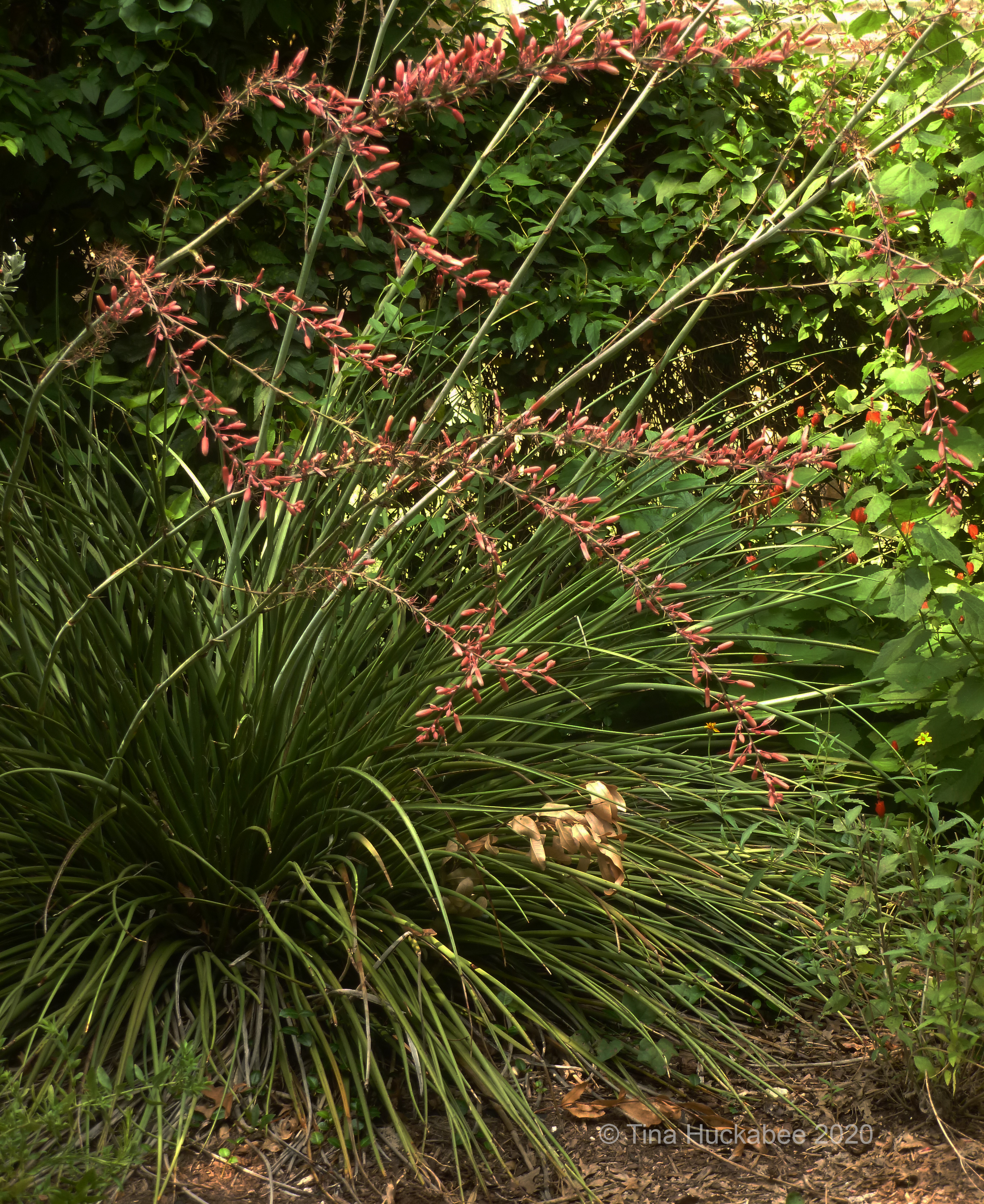
Chile pequin Capsicum annuumRed yucca, Hesperaloe parvifloraFull photo of Red yucca
If you’ve discovered the beauty and practicality of utilizing native plants–in Texas or elsewhere–every day is a celebration of native plants. Using native plants in home gardens is a no-brainer: they’re easy to grow, lovely, and fit where you live.
In spring:
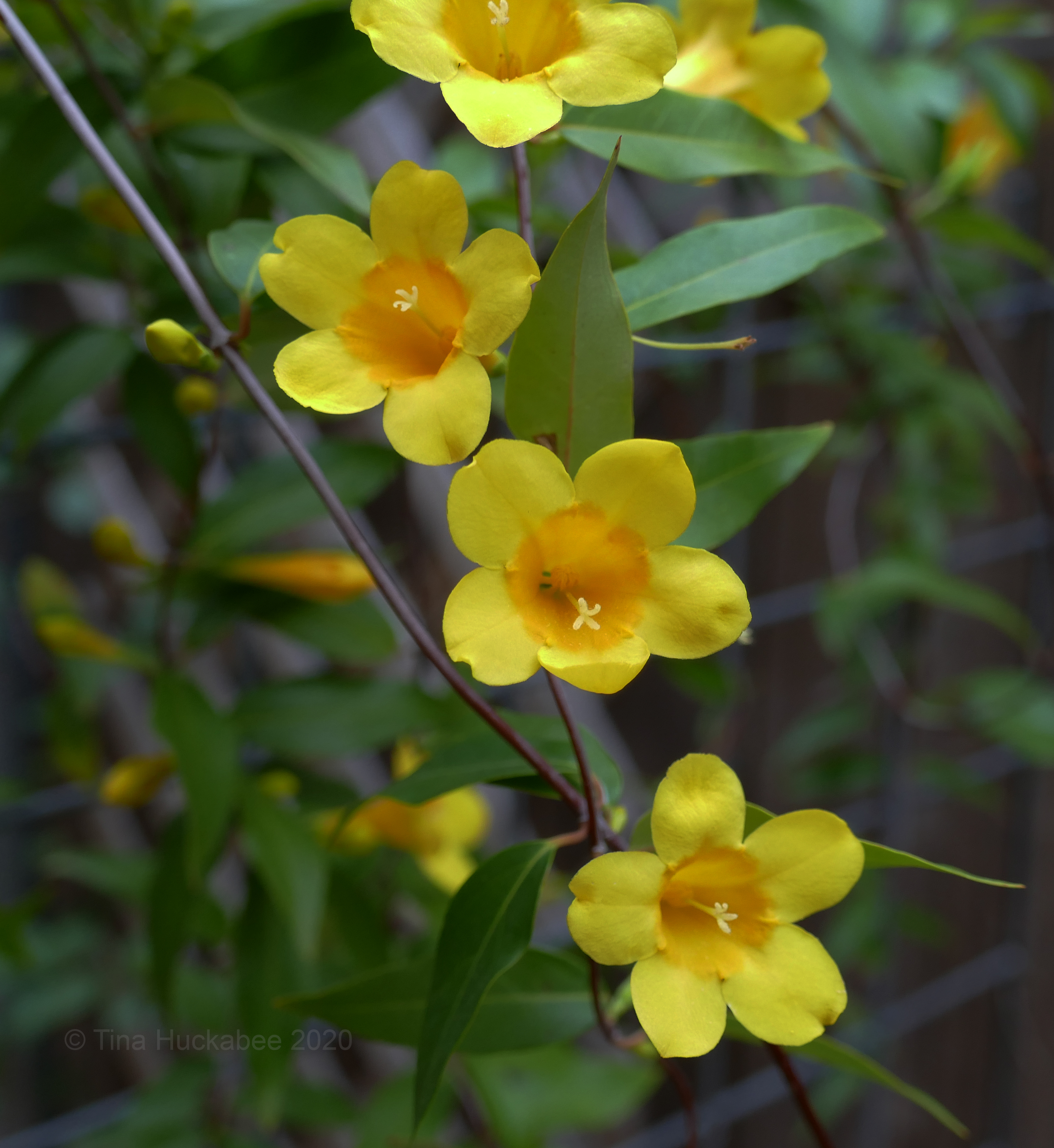
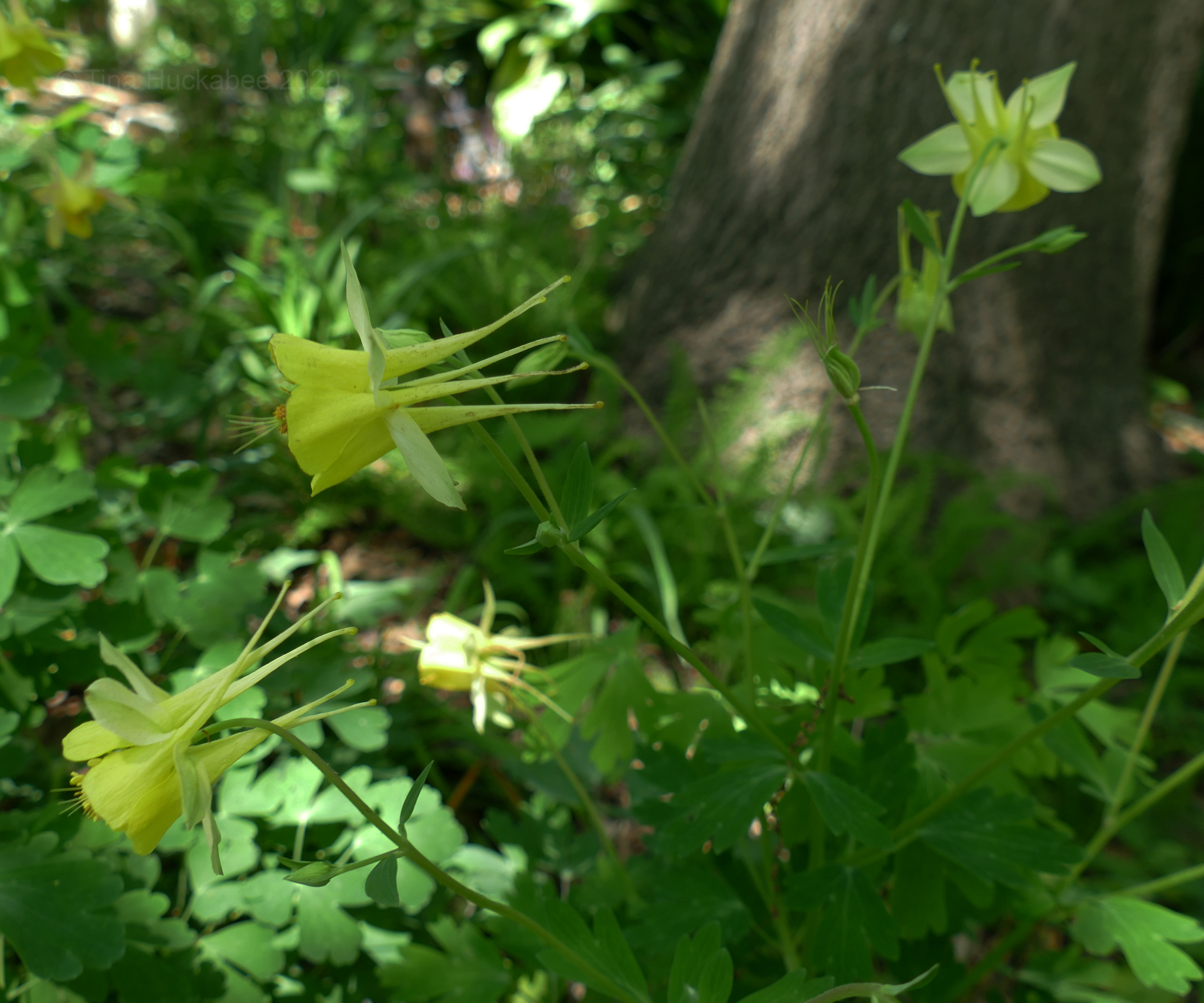
Carolina jessamine, Gelsemium sempervirensSpiderwort, Tradescantia sp.Yellow columbine, Aquilegia chrysanthaAquilegia sp. (hybrid of A. chrysantha and A. canadensis)
Or summer:
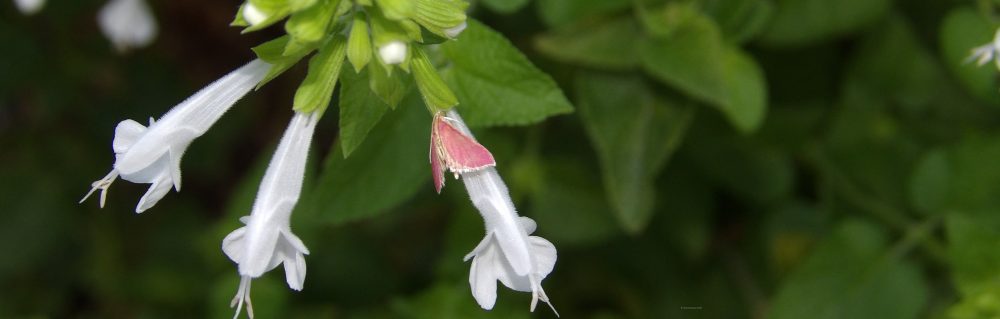
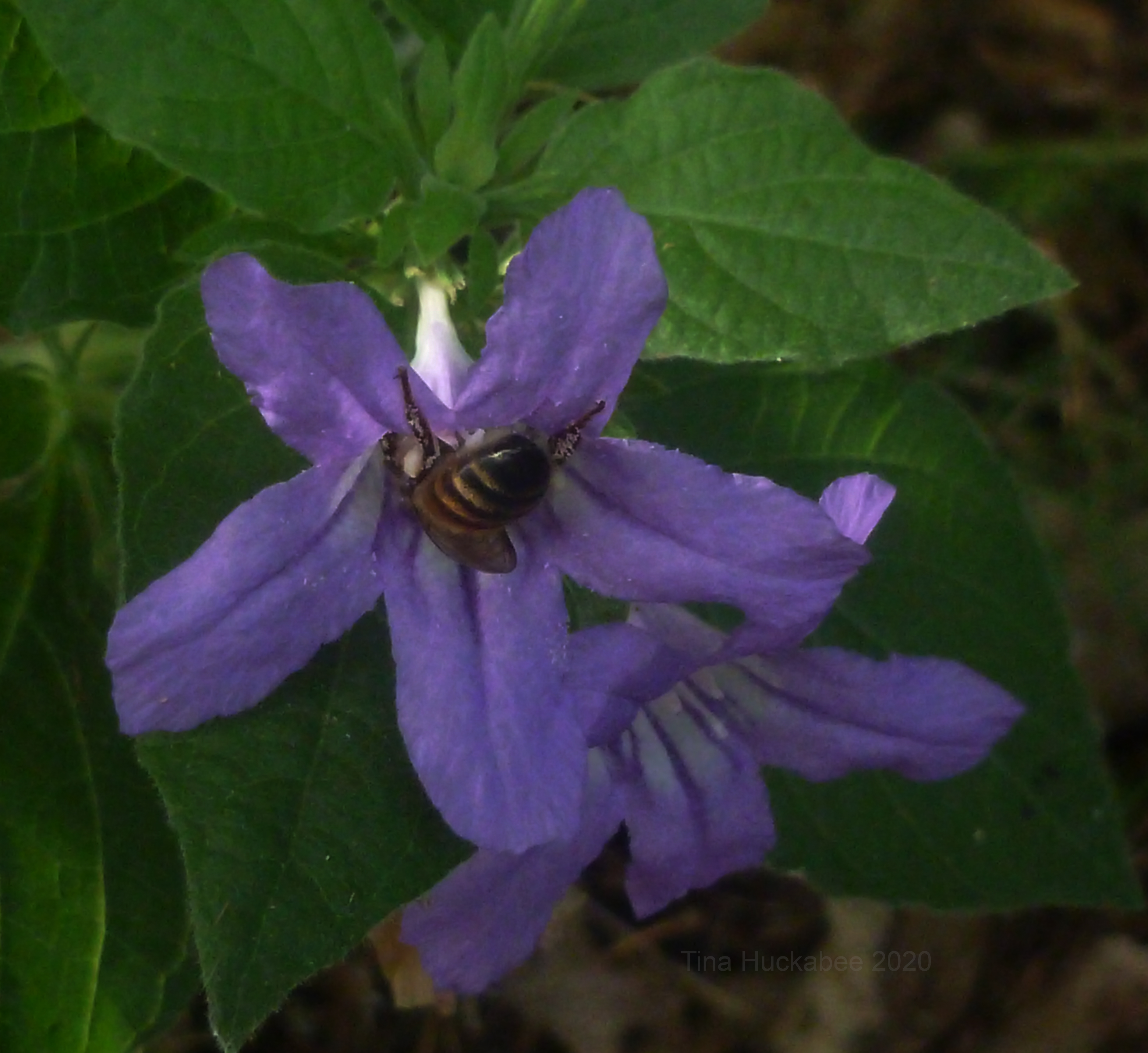
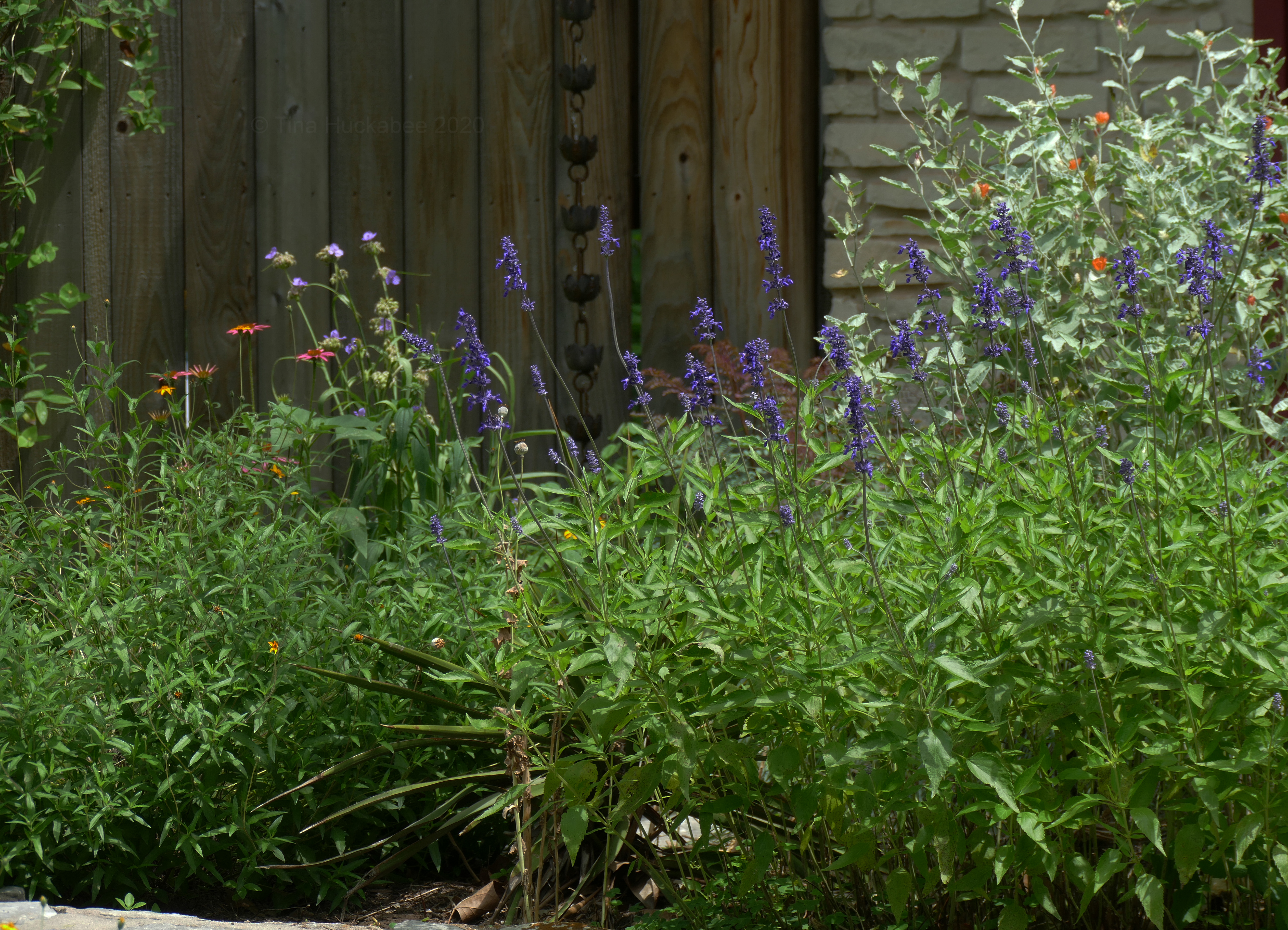
Drummond’s ruellia, Ruellia drummondianaAnd a group of Drummond’s ruelliaTropical sage, Salvia coccinea (White) with accompanying dragonflyPurple coneflower, Echinacea purpurea with nectaring Funereal Duskywing, Erynnis funeralisYarrow, Achillea millefolium(left to right) Purple coneflower, Zexmenia, Twistleaf yucca, Henry Duelberg sage, Globe mallowBig red sage, Salvia pentstemonoides with Southern Carpenter bee, Xylocopa micansRock rose, Pavonia lasiopetala with resting Horsefly-like Carpenter bee, Xylocopa tabaniformis
In autumn:
Rock rose with nectaring Little Yellow, Pyrisitia lisaTexas craglily, Echeandia texensis with accompanying Horsefly-like Carpenter beeGregg’s mistflower, Conoclinium greggii with nectaring Grey Hairstreak, Strymon melinusPlateau goldeneye, Viguiera dentata, with honeybee
In winter:
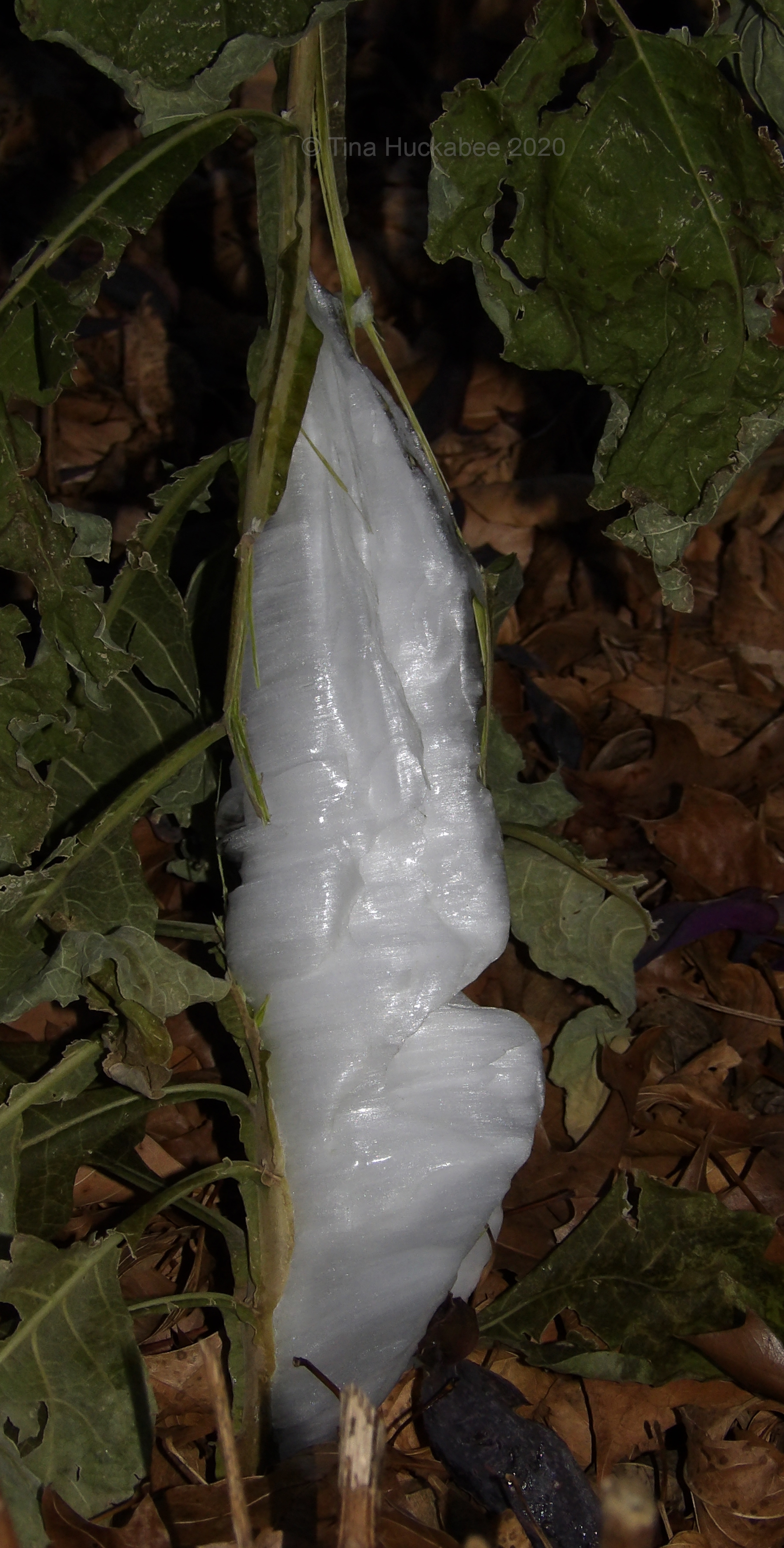
Frostweed, Verbesina virginica after the first freeze of the seasonPossumhaw holly, Ilex decidua
Whether its flowers–annuals and perennials–trees, groundcovers, or grasses, native plants exist and flourish in every region and all seasons. Native plants and seeds are readily available from many local nurseries and online sources. With native plants, your garden will be dynamic, reflecting your particular geography and imparting a sense of place. Additionally, native plants support native wildlife, and a garden is never so alive as when pollinators, birds, reptiles and mammals are at home.
Here in Central Texas, zone 8b, we’re enjoying our second spring, so called because the native annuals and perennials burst out with a bevy of blooms, celebrating the end of the hot season and the return of the cool.
And how cool are these lovelies? Gregg’s mistflower, Conoclinium greggii, are native to the southwest–Arizona, New Mexico and Texas. A mostly autumn blooming groundcover, established plants produce a smattering of blooms during spring and summer. During months when the fuzzy blooms are on hiatus, the stars of this plant are the palmate, light green leaves. The combination of the lavender-blue blooms and the cheery green leaves gladdens this gardener’s heart.
This time of year, you’d be hard-pressed to find a mistflower group who doesn’t host a remarkable variety of pollinators, they’re all over these pretty blooms. That also gladdens this gardener’s heart.
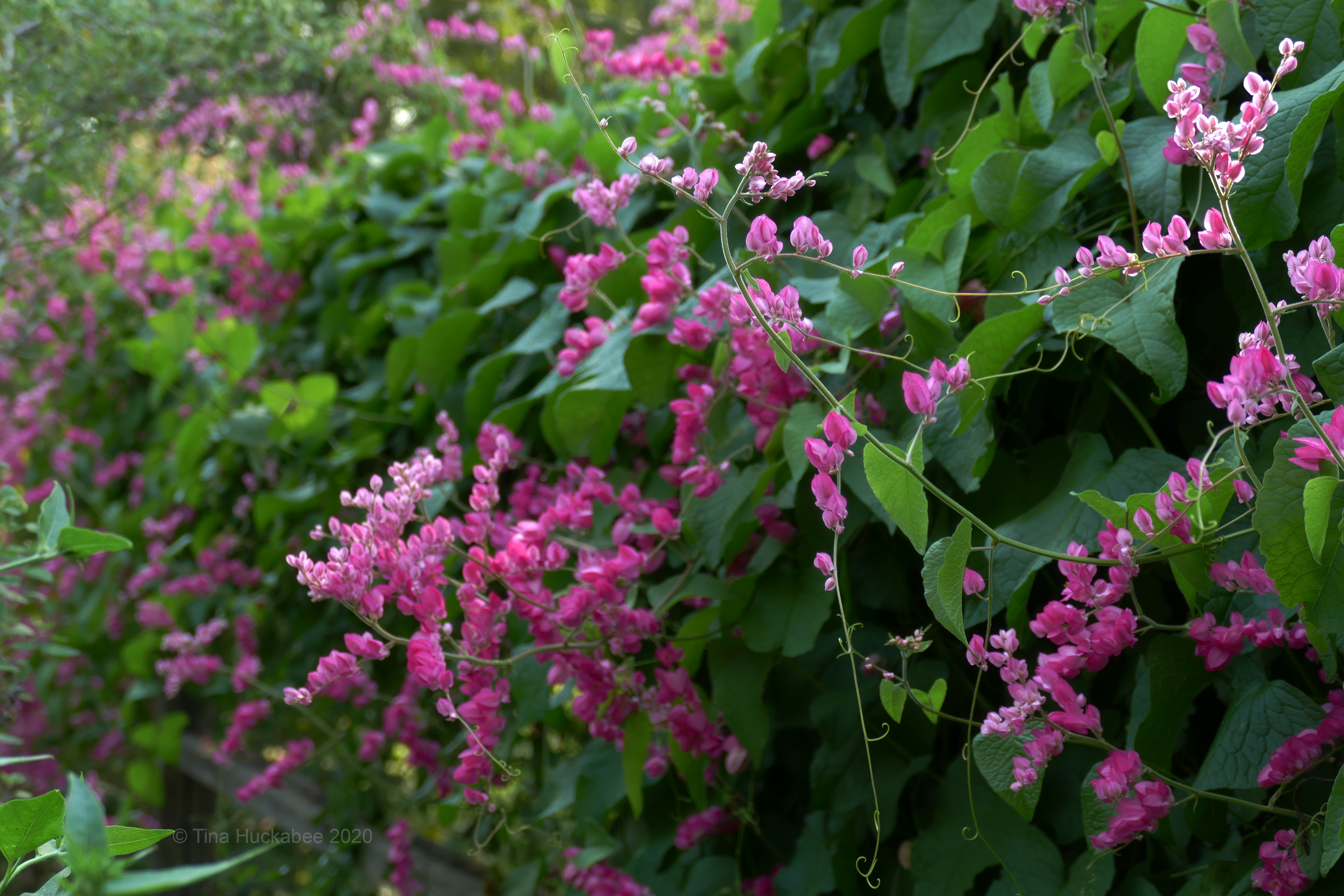
Coral vine, Mexican creeper, Antigonon leptopus, is an old-fashioned vine, resplendent in dripping pink in the latter part of summer and well into the fall months.
I’ve grown this vine in my garden for many years. It resided in the back garden. It returned after winter each spring, climbing up and over a trellis during during the growing season, until that spot became too shady. About 3 years ago, I moved the hefty root to my front garden, where the vine receives ample sun. The vine is happy here, as are the honeybees, small native Perdita bees, and various butterfly types.
I love this vine and am comfortable with it where I garden, but Coral vine is designated as an invasive species here in Texas (click on the link above for more information) and so should be grown with caution and attention to nearby areas. I wouldn’t plant Coral vine if I lived near a greenbelt or natural area, because it’s known to seed out and once it is in a uncontrolled area, it can spread and displace native plants, which is never a good thing. In my years of hosting this vine, I’ve only seen 2 or 3 seedlings that germinated at the base of the plant. I’ve never seen birds nibble at any seeds, so I plan to keep it where it is–pink and pretty and full of the good stuff for bees and other pollinators.
The happy faces of Fall aster, Symphyotrichum oblongifolium, arrive along with cooler temperatures–which makes everyone happy. These cheery, lavender asters don’t bloom for long, maybe 2 weeks in total. I have several groups of them, each of which bloom with slightly different times, so in my garden, the aster show lasts through much of October. For the rest of the growing season, the plant grows as a low shrub/ground cover with attractive, diminutive leaves. In winter, a hard freeze will knock back most of the foliage, leaving an evergreen rosette until new spring growth.
Another pollinator magnet, the asters always have plenty of nectaring business and often host rarely seen winged things. This Syrphid fly (?) is unknown to me; the closest ID I could find is Hoplitimyia constans. I’ll continue looking for an identification and update if I find a match. It’s a handsome critter, no doubt.
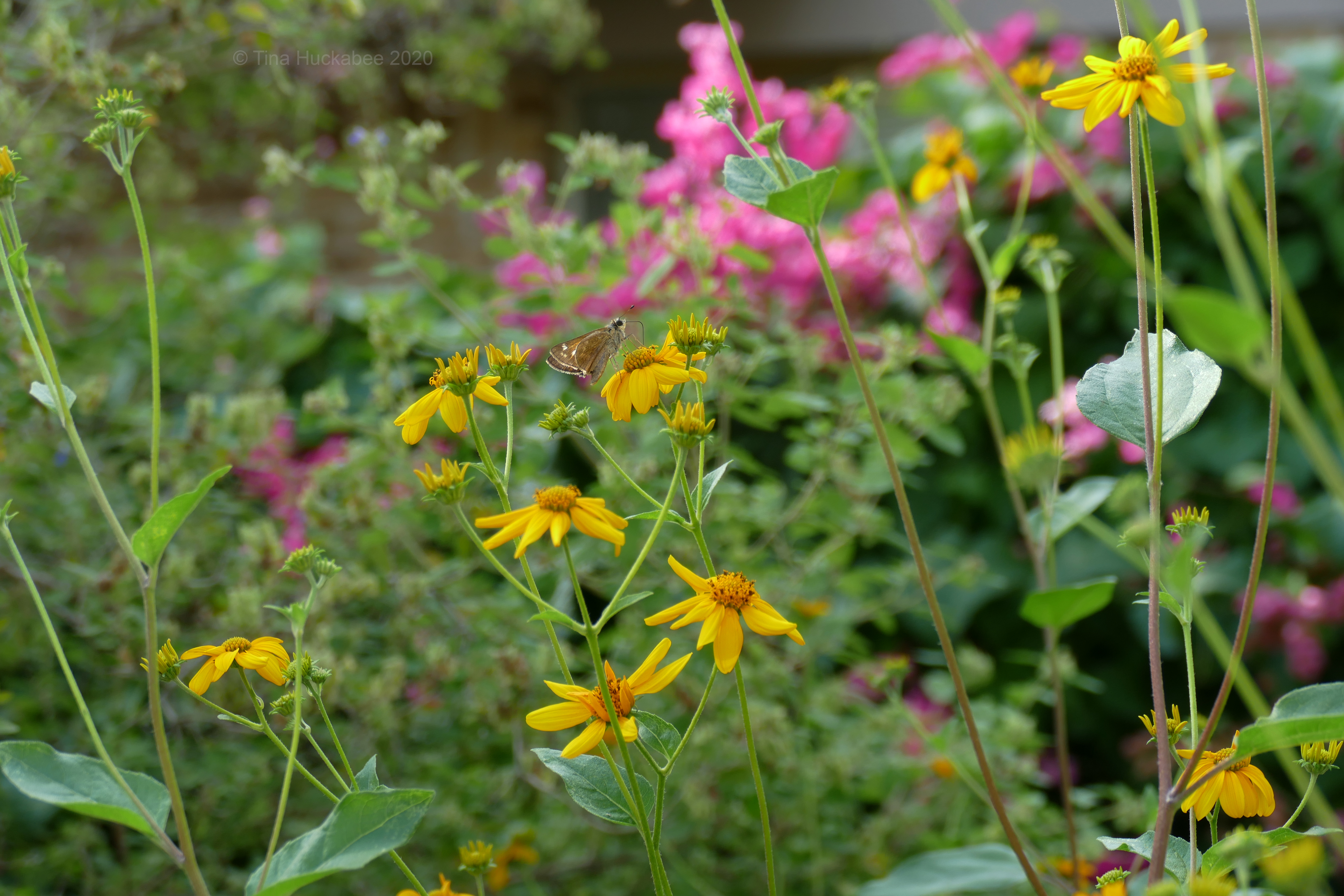
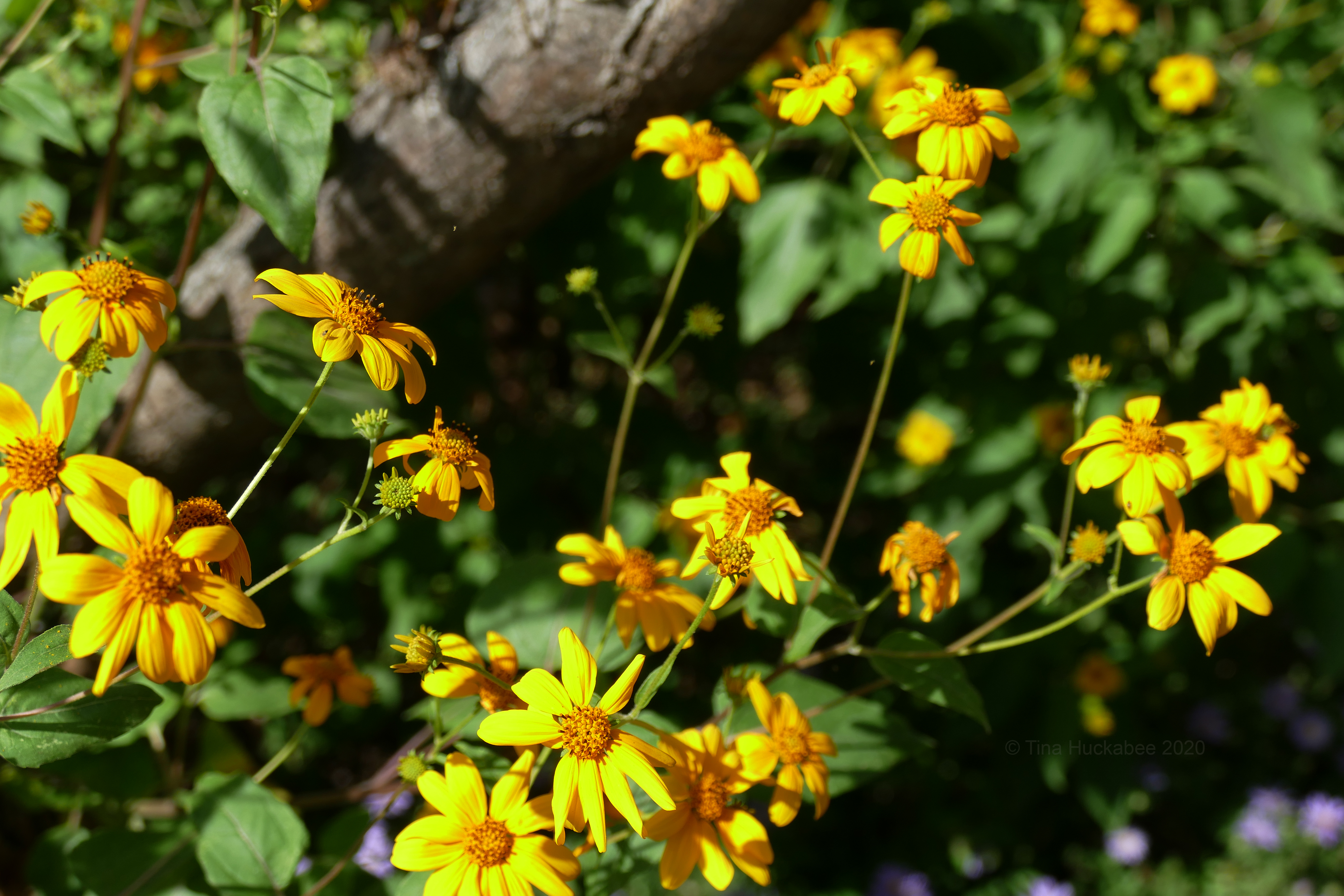
Sunshiny Plateau goldeneye, Viguiera dentata, is another native perennial, seeding out with abandon and rocking its yellow vibe with verve. Bees, butterflies, and gardeners all love this member of the Asteraceae family. I just realized that 3 of the 4 plants profiled for this post belong to this prolific family. Aster plants are garden stars!
Goldeneye volunteers pop up in my garden and depending upon where they land, I keep–or not. There are so many, I don’t mind tossing out a few. Well, I don’t mind too much. Goldeneye individuals grow tall, so I make some (rather) lame attempts at control, pruning it back a couple of times during summer. But once the fall rains arrive and Goldeneye send forth their end-of-season stems, gloriously topped with dabs of sunny delight, I don’t mess with them.
I stand, admire, and don some sunglasses.
In a work/storage area, I let these seed out, grow up, and have at it! The bees and butterflies love this buffet of pollen-n-nectar. The fun doesn’t end when the blooms end, because wrens and finches of various sorts swoop in for the seeds, assuring a good crop of Goldeneye for the next year.
There are always more Goldeneye.
Happy spring! Happy autumn! Happy blooms! Join in celebrating blooms along with Carol at May Dreams Garden and gardening friends. Pop over to appreciate blooms from many places.
Hat trick: three successes of the same kind, especially consecutive ones within a limited period.
Three honeybees, working the glorious goodness of Frostweed, Verbesina virginica, focused only on their goal of nectar gathering, offered zero attention–no buzzes, no curious fly-bys–to the human with three eyes as she bumbled through the garden.
This time of year, the second spring of Central Texas, when autumn perennials burst forward in floral song, after the hot summer and before winter’s chill, it’s not at all challenging to find pollinator hat tricks working varieties of lush perennials, which dispense both food and beauty, necessities for hearts and souls. Change is palpable: shorter days, cooler temperatures, and optimism for the future.
Linking with Anna and the lovely Wednesday Vignette, it’s all about telling garden stories.













 My Gardener Says...