October is the month for mistflowers in my garden. I grow three different ones, two of them closely related.My original mistflower is the Blue mistflower, Conoclinium coelestinum.
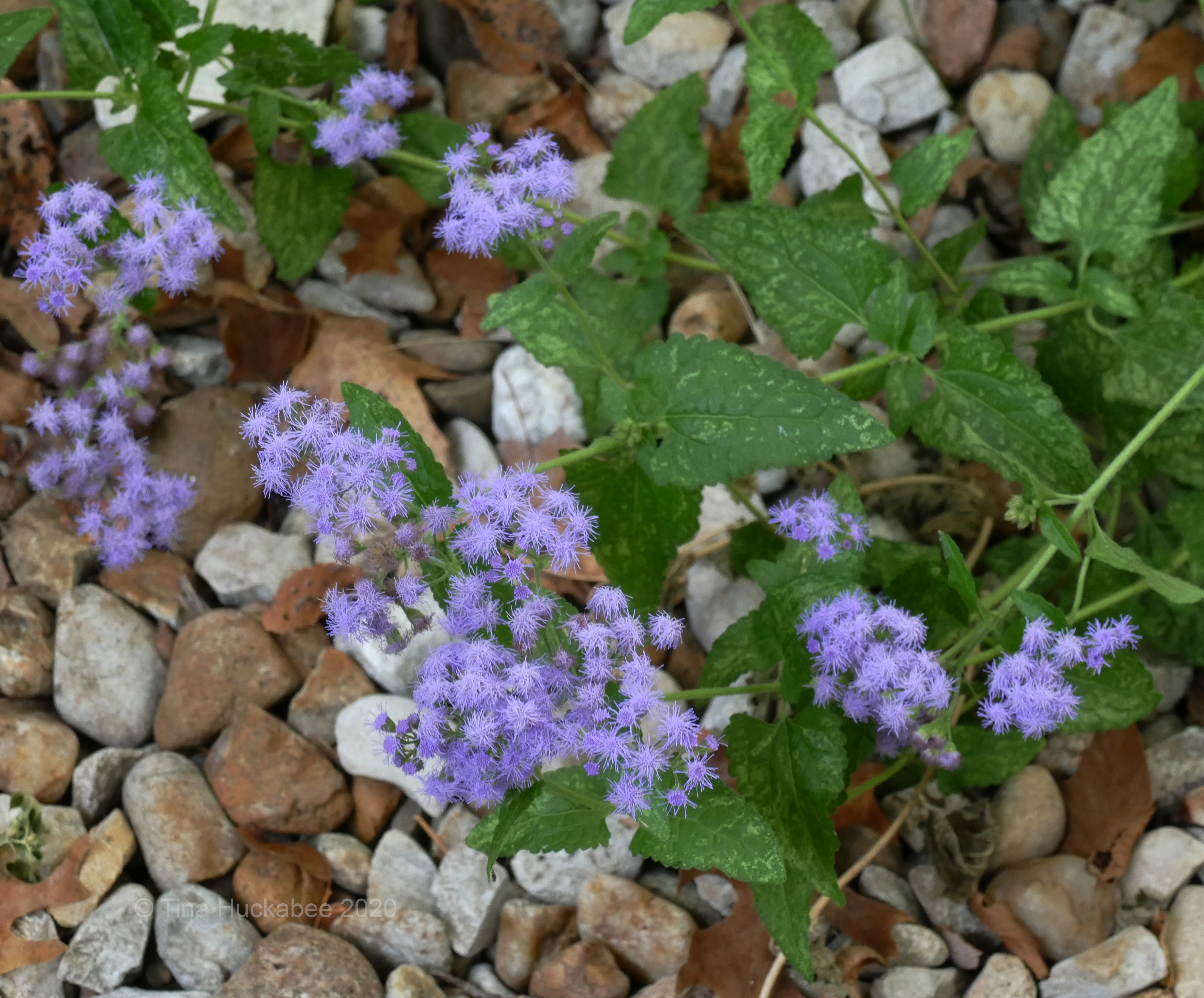
My first experience with this plant was a four-inch pot, purchase 20-ish years ago. It spread with joy and bloomed gorgeously many an October, until deep shade forced its move to a different spot along this pathway. As this second area has become shadier, it’s time for another move. Soon, I’ll pull the strands up by their roots and transplant the lot to my SIL’s garden. That said, the Blue mistflower has grown and bloomed in this less than ideal situation, perhaps not like it should, but enough to satisfy.
Blue mistflower blooms are a rich purple-blue, its leaves slightly scalloped and triangular shaped.
My other Conoclinium is Gregg’s mistflower, Conoclinium greggii, happily grows in one of my rare full sun spots. I planted this group from a one gallon pot a year ago and it has thrived.
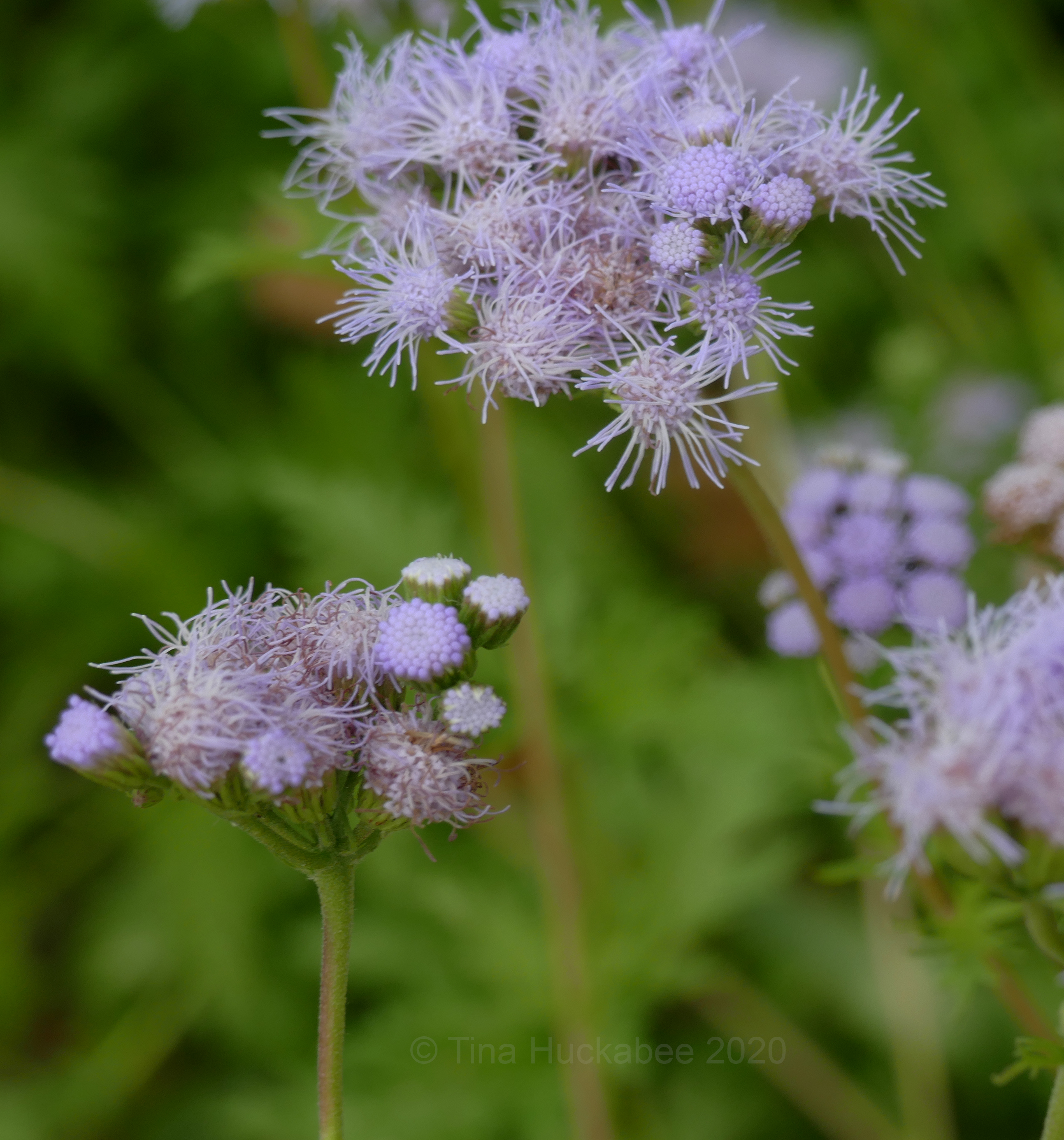
The Gregg’s blooms boast a lighter shade of lavender-blue–more lavender than blue, I think. The foliage is bright green with a pinnate leaf structure. I admire the foliage and even when not blooming, this mistflower is an attractive groundcover.
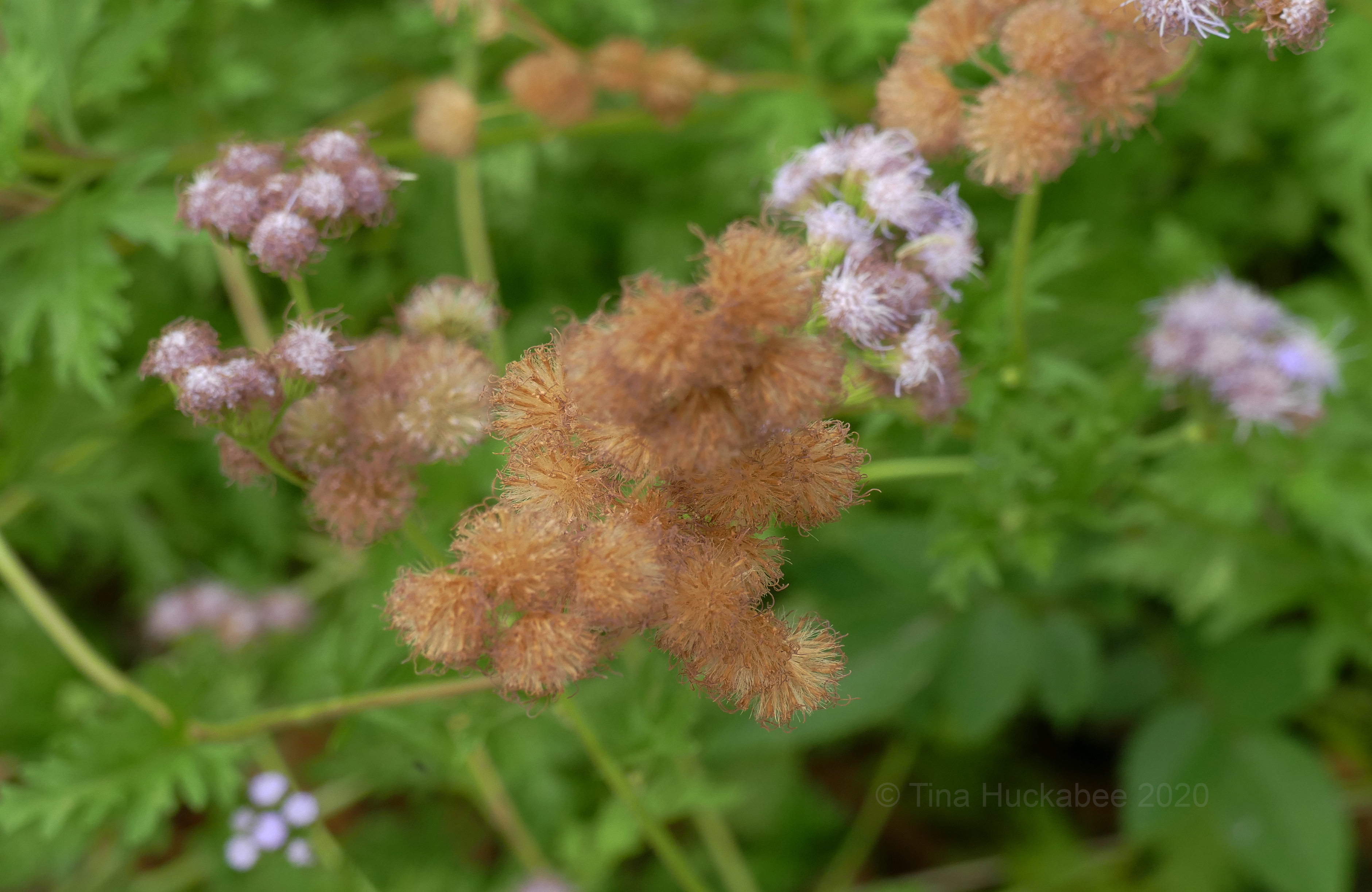
The spent blooms turn to toasty puffs as they mature, or once a freeze ends the blooming.
Mistflower blooms are fuzzy and feathery.
The lighter Gregg’s,
…the darker Blue.
Mistflowers bloom primarily in autumn, but pop out a few flowers throughout spring and summer. These plants are groundcovers, drought tolerant (Gregg’s more than Blue) and dormant in winter. I prefer the Blue mistflower–the color is divine–but pollinators prefer the Gregg’s.
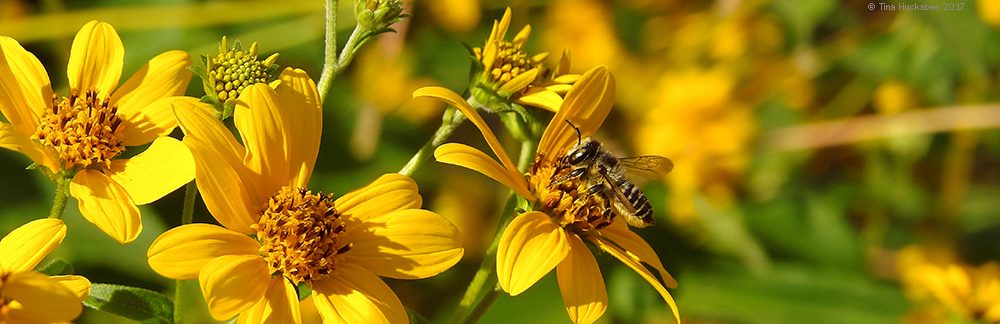
Unknown fly-type enjoying some of Gregg’s nectar.Unknown wasp (I think it’s a wasp…) on Gregg’s flowers. Any ideas who this character is?
There are other “mistflower” plants, several in shrub form, but these two blue-hued mists are well-worth growing. Gregg’s mistflower grows in Texas, Arizona, and New Mexico. Blue mistflower enjoys a much wider range throughout the United States.
You won’t tell a sad tale with either of these mistflowers!
I live in a region with nearly year-round gardening. Summer is hot–that’s a given–and winter is chilly, punctuated by hard freezes–sometimes rainy, sometimes dry. Spring and autumn are delightful, even when spring ends earlier than I’d like and autumn arrives way after it’s due. These pleasant months are the best times to be outdoors and in the garden; I’d suspect that many Texas native plants agree.
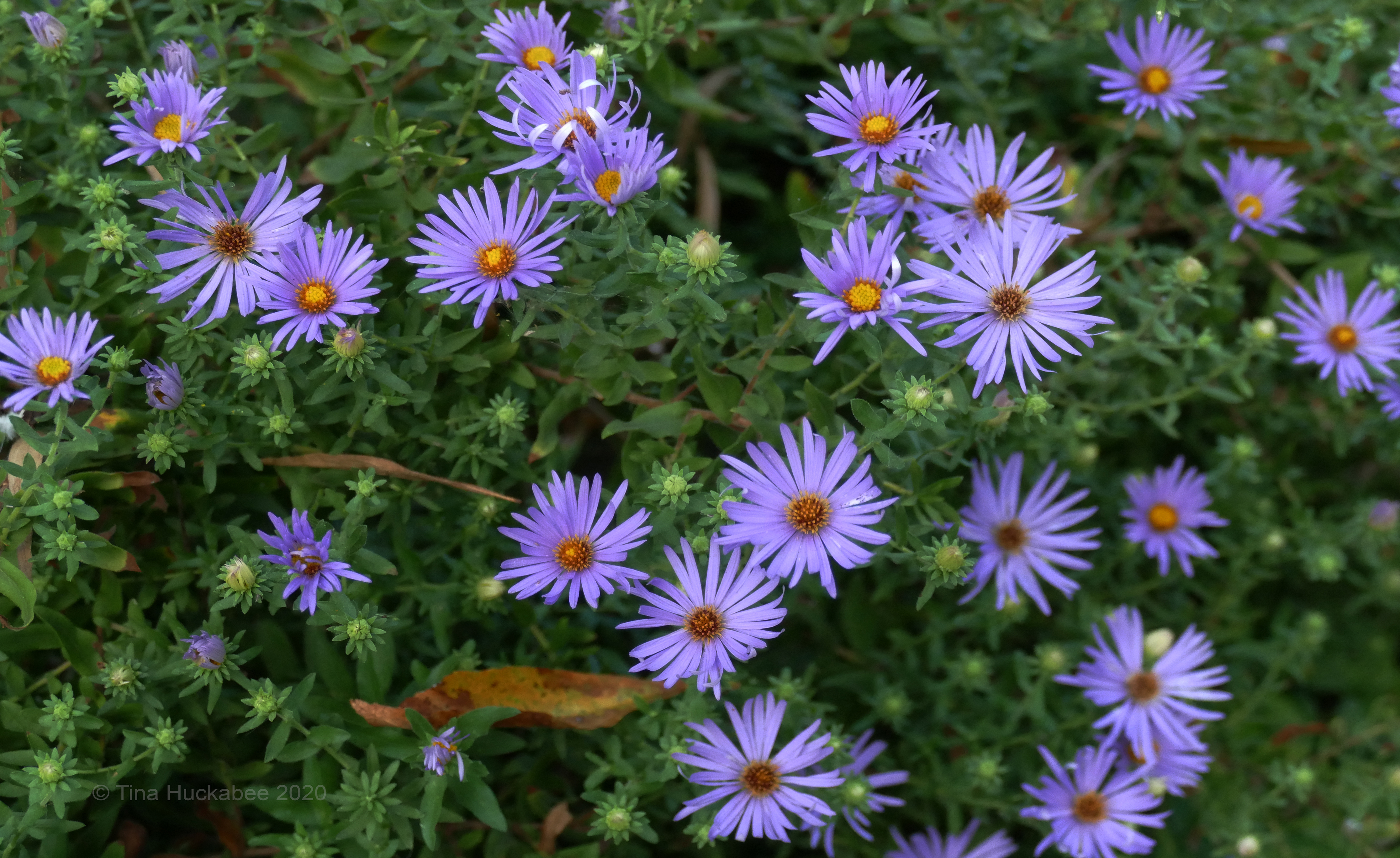
Perennials in the Asteraceae family are common, but well-worth having. These cheerful Fall aster, Symphyotrichum oblongifolium, bloom for 2-3 weeks and I always look forward to their lavender display.
I like Fall aster even when it doesn’t bloom, but how can you not grin when you see these charmers?
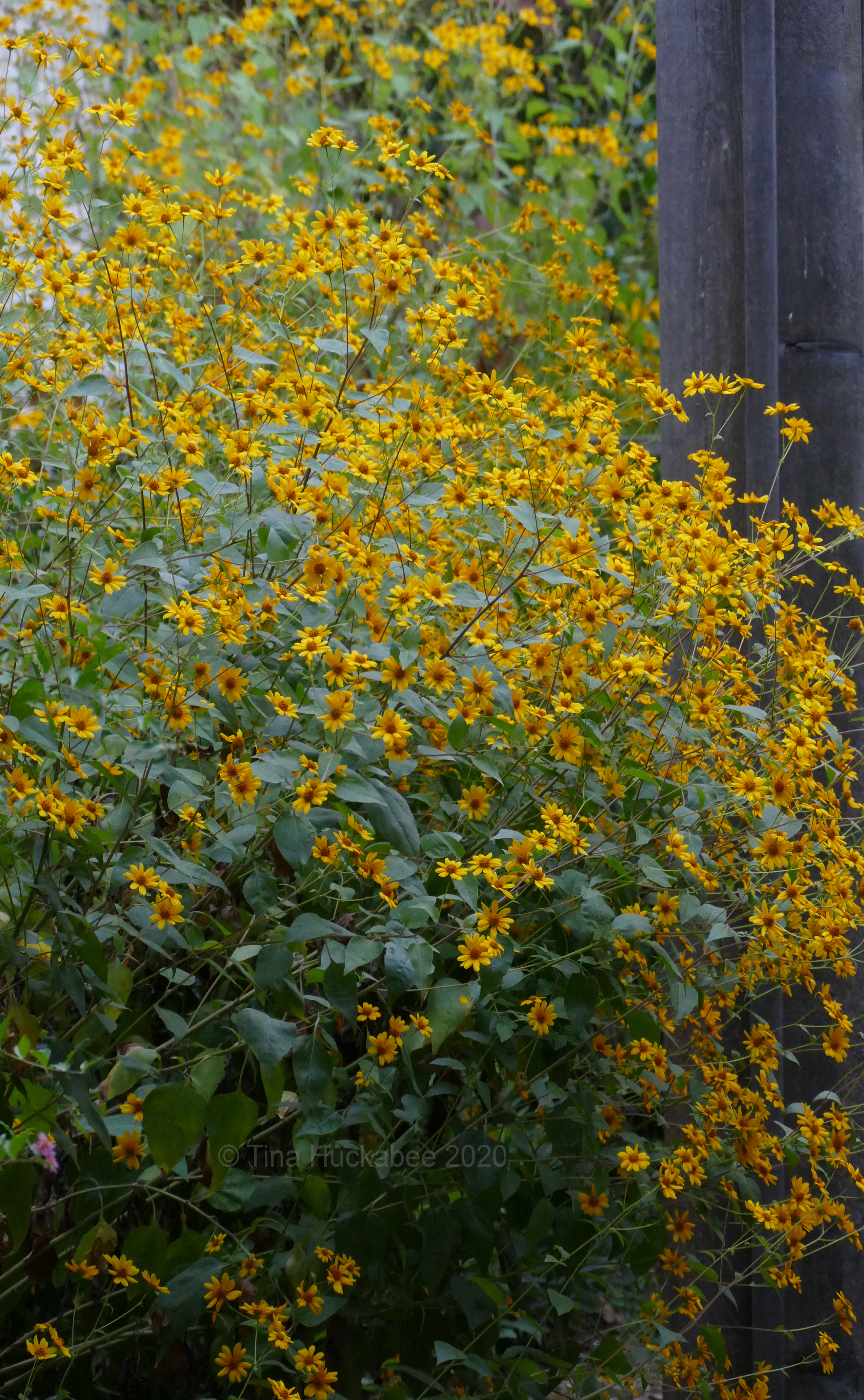
This combination of blooming perennials and shrubs provides interest for the gardener and food and cover for birds and insects. The background shrub is Barbados cherry, Malpighia glabra. Its subtle pink blooms are barely visible in the photo, outshined by its more colorful companion blooms. White blooms atop the leggy stalks of Frostweed, Verbesina virginica and the red hibiscus-like flowers of Turk’s cap, Malvaviscus arboreous are worthy competitors for attention to the lemony-yellow daisies of Plateau goldeneye, Viguiera dentata.
More Goldeneye to brighten your day.
It’s not just flowers that add to autumn’s beauty, but native grasses are at their peak during this time. My garden is a shady one and I only have a few spots of truly full sun and therefore, limited room for the stunning native grasses that grow well here in Central Texas. Native grasses need the blast of the Texas sun to shine! But this Big muhly, Muhlenbergia lindheimeri, sits in one of those sunny places. It’s a gorgeous plant–even in winter–but in autumn, its fluffy panicles sway gracefully in the breezes.
The muhly is photobombed by a couple of branches of native Turk’s cap (left and front). The pinks in the background belong to the non-native Coral vine.
Be still my beating heart, I love this plant. I’m now growing several in my front garden (the back is too shady to host these sun lovers). This is the oldest of the bunch and I think by next year, the youngsters will be just as impressive.
A different specimen from the one above.
Another Goldeneye/Frostweed vignette benefits from the addition of Inland sea oats, Chasmanthium latifolium.
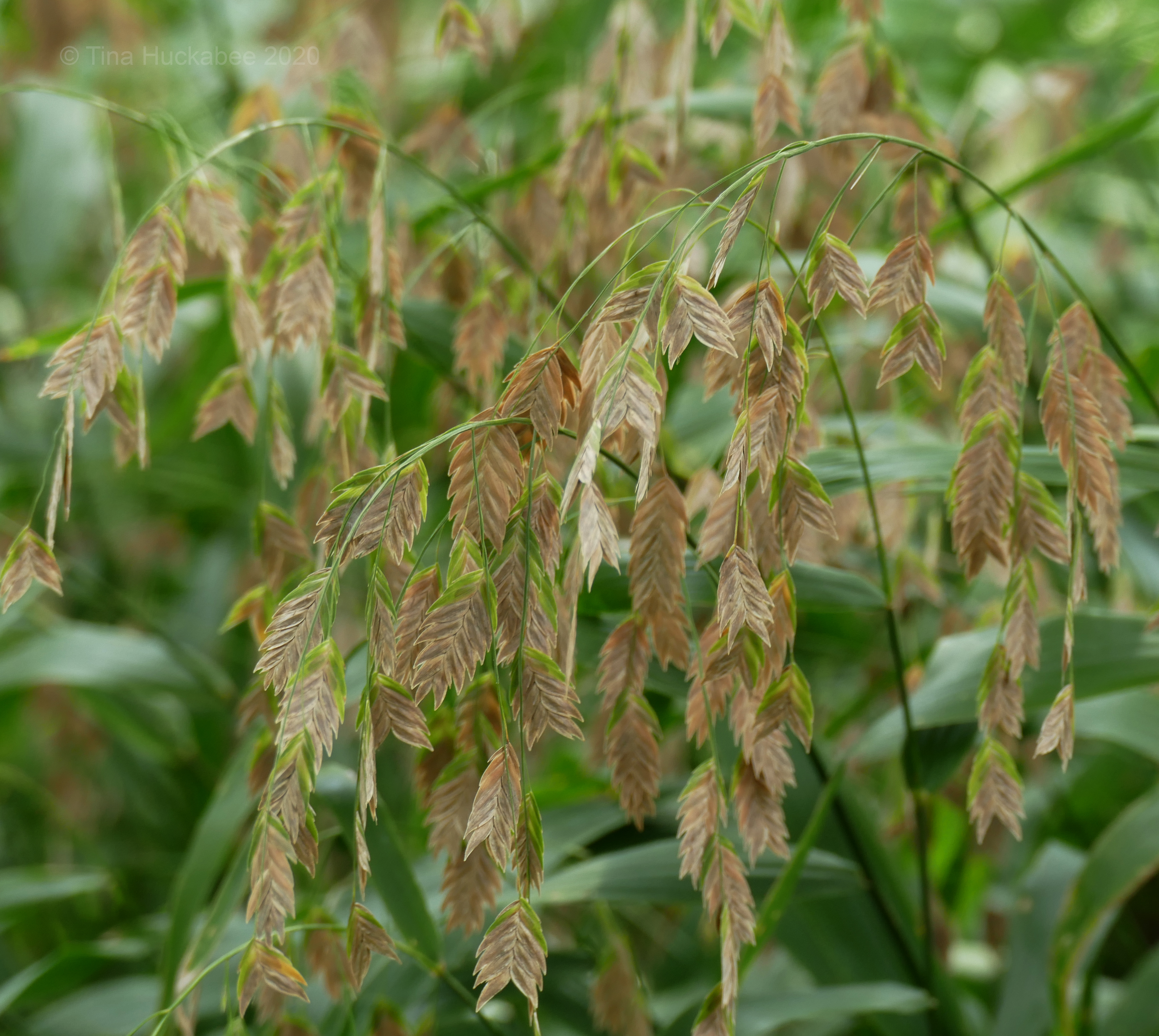
Inland sea oats are excellent grassy perennials for shade. The “oats” are chartreuse in spring, deepening their green during summer, turning tan in autumn. I think that the group in the above photo turns toasty earlier because it receives more sun. This group below, growing in my back garden and in significantly more shade, still retains some of its green highlights; eventually, they’ll all turn to a warm tawny until pruning, just before spring.
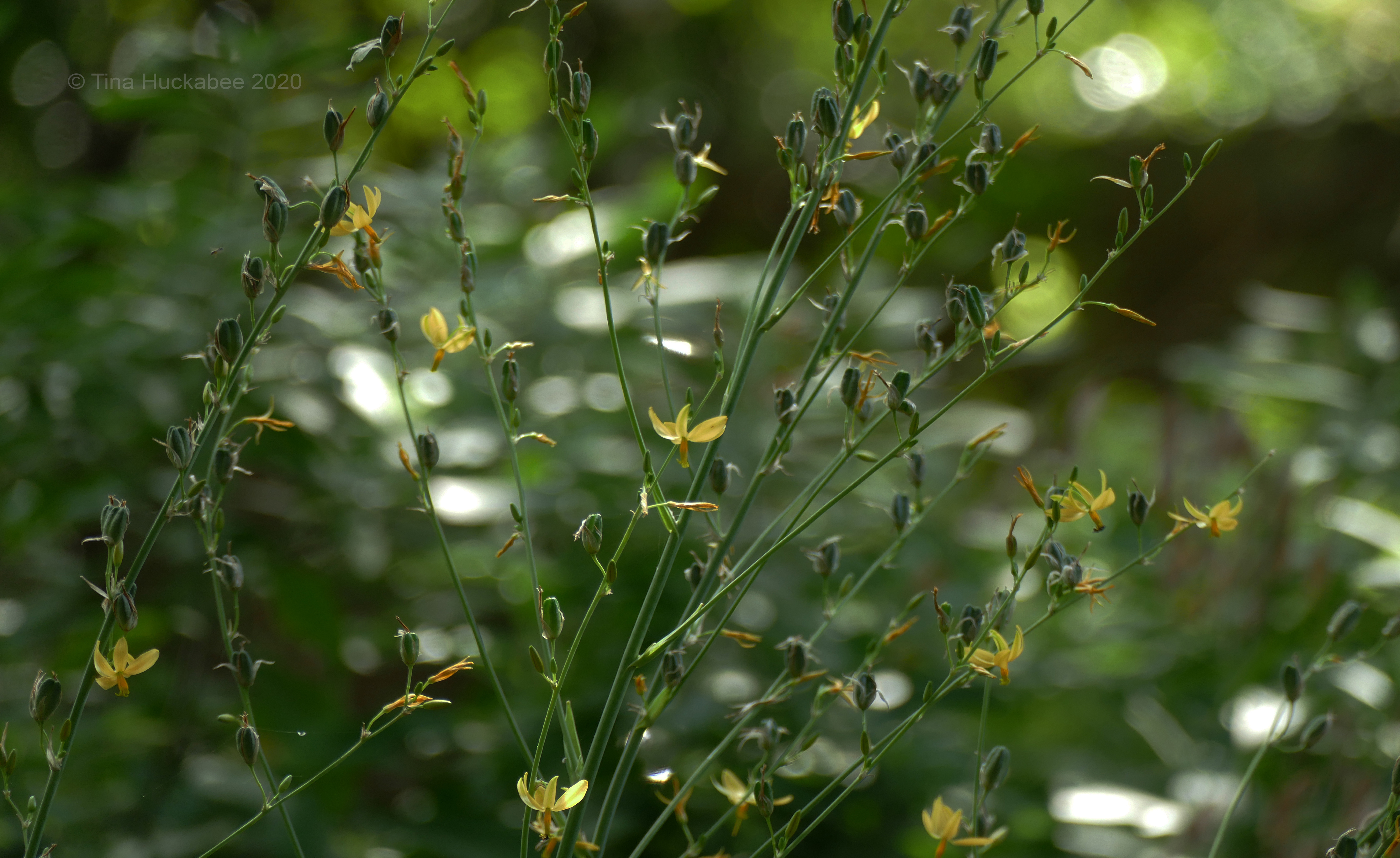
Texas craglily, Echeandia texensis, is a less common garden perennial than the others I’ve profiled, though available in some local nurseries. I purchased mine from Barton Springs Nursey years ago and mine have spread somewhat by seed, but I’ve also separated the fleshy roots into new individual plants.
The lovely flowers, alternately posed on tall bloom spikes, are small, orange-yellow and lily-like. Texas craglily is a member of the Liliaceae family.
The base of the plant is grassy, with fleshy foliage and despite its delicate appearance, a tough and drought-tolerant perennial. From its grassy base which appears in late spring and provides lush green throughout summer, the plant sends up bloom stalks in September, blooming until November. An elegant plant, the bloom stalks move with the wind, flowers and seed pods in almost constant motion.
This week marks Texas Native Plant Week, a celebration of the native plants of our regions. Texas is a big place with a wide range of topography and weather patterns, but there’s something for every garden, plants that will please every gardener. Native plants, Texan or otherwise, are must-haves for any garden. They’re easy to grow, they belong where they grow, and they nurture endemic wildlife. In the bigger picture, most regions enjoy a wide palette of gorgeous and valuable native plants: trees, shrubs, perennials and annuals, grasses and succulents. No matter where you garden and call home, if you haven’t tried growing natives, give it a whirl! You’ll be amazed at their beauty and ease.
As it’s Texas Native Plants Week, I thought I’d contribute a photo which profiles a few of the lovely native plants in my garden, as well as a seasonal piece of garden art which has highlighted the front garden this fall.
Clockwise, starting from the bottom left of the photo: the winter rosettes of Big red sage, Salvia pentstemonoides and moving upwards, the pink blooming shrubs, Rock rose, Pavonia lasiopetala. Behind those, peeks out white blooming Tropical sage, Salvia coccinea paired with some spikey foliage of a Red yucca, Hesperaloe parviflora, plus three, second year Big muhly grasses, Muhlenbergia lindheimeri. The two yellow spots of sunshine in the background come in the form of Plateau goldeneye, Viguiera dentata and their frothy, cloud-like companions are Frostweed, Verbesina virginica. Lastly, the diminutive daisies dancing at the bottom right are Blackfoot daisy, Melampodium leucanthum.
Native plants are beautiful, easy to grow, and reflect the place where you live–in Texas, or elsewhere. Native plants evolved alongside their companion critters and so attract and nurture pollinators, birds, and wildlife of all kinds and sorts.
Native plants bring a garden to life.
I’m linking with Anna, in Oregon, for Wednesday Vignette. Additionally, I’d like to give a nod and a link to OregonFlora, a gorgeous website profiling the native plants of Oregon. This site gives information about where native plants of Oregon are found, how to use them in home gardens, and lots of other valuable information for anyone interested in native plants. This site and the work related, is headed by my friend, Dr. Linda Hardison with her Oregon State University team.












 My Gardener Says...