A Brighter Shade of Yellow

As I looked out my windows on Snowy Sunday several weeks ago, I spied a visitor at the peanut feeder who wasn’t the usual yellow of an Orange-crowned Warbler, Leiothlypis celata. The new-to-me bird sported a brighter shade of yellow and belly streaking, reminiscent of the Orange-crown. The Pine Warbler is a lifer bird for me! Meet Mr. Pine Warbler, Setophaga pinus.
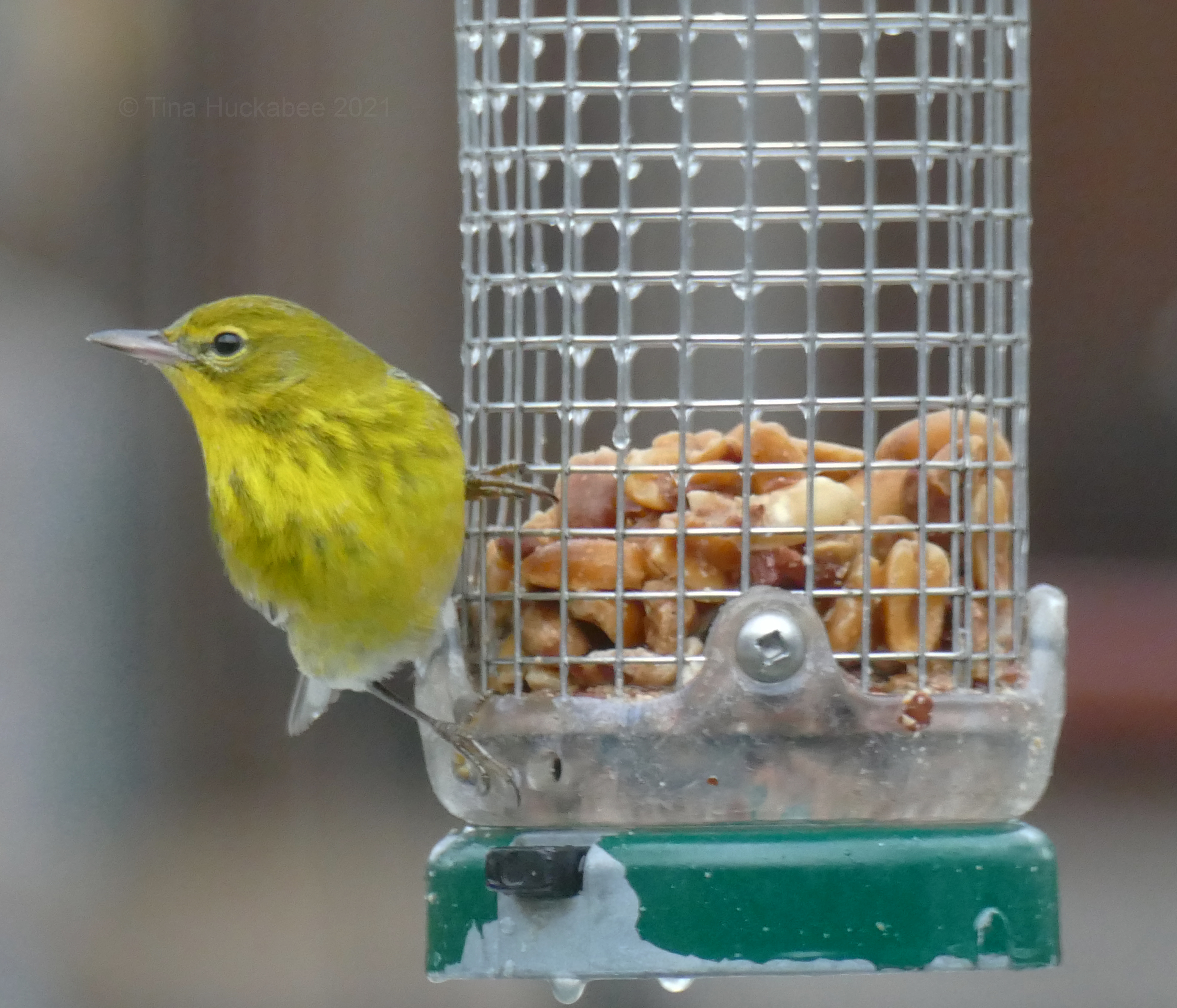
Pine Warblers spend their winters mostly in east and north Texas (as well as along the southeastern part of the US), but are rare birds here in Central Texas. Throughout their range, Pine Warblers prefer to hang out in pine trees which are found readily East Texas. While I haven’t seen the Pine Warbler at all this past week, for about ten days, he frequented the peanut, suet, and sunflower seed feeders.
According to Cornell’s site, Pine Warblers exhibit different digestive traits, depending upon their usual food sources. Those who eat mostly seeds have larger gizzards (where the hard-coated food is crushed) and require a longer time for digestion and those who primarily feed on fruit tend to develop longer intestines and digest more quickly. I’m guessing this handsome male is of the first variety, rather than second, because of his interest in what my feeders supply.
Until recently, I’d never seen a Pine Warbler in flesh and feathers, but I recognized him immediately. I’ve seen plenty of Pine Warbler photos posted on social media by bird-crazy Texans who live north and east of where I live. Reading birders’ posts and studying their often stunning photos has been a great learning tool for my backyard birding interest.

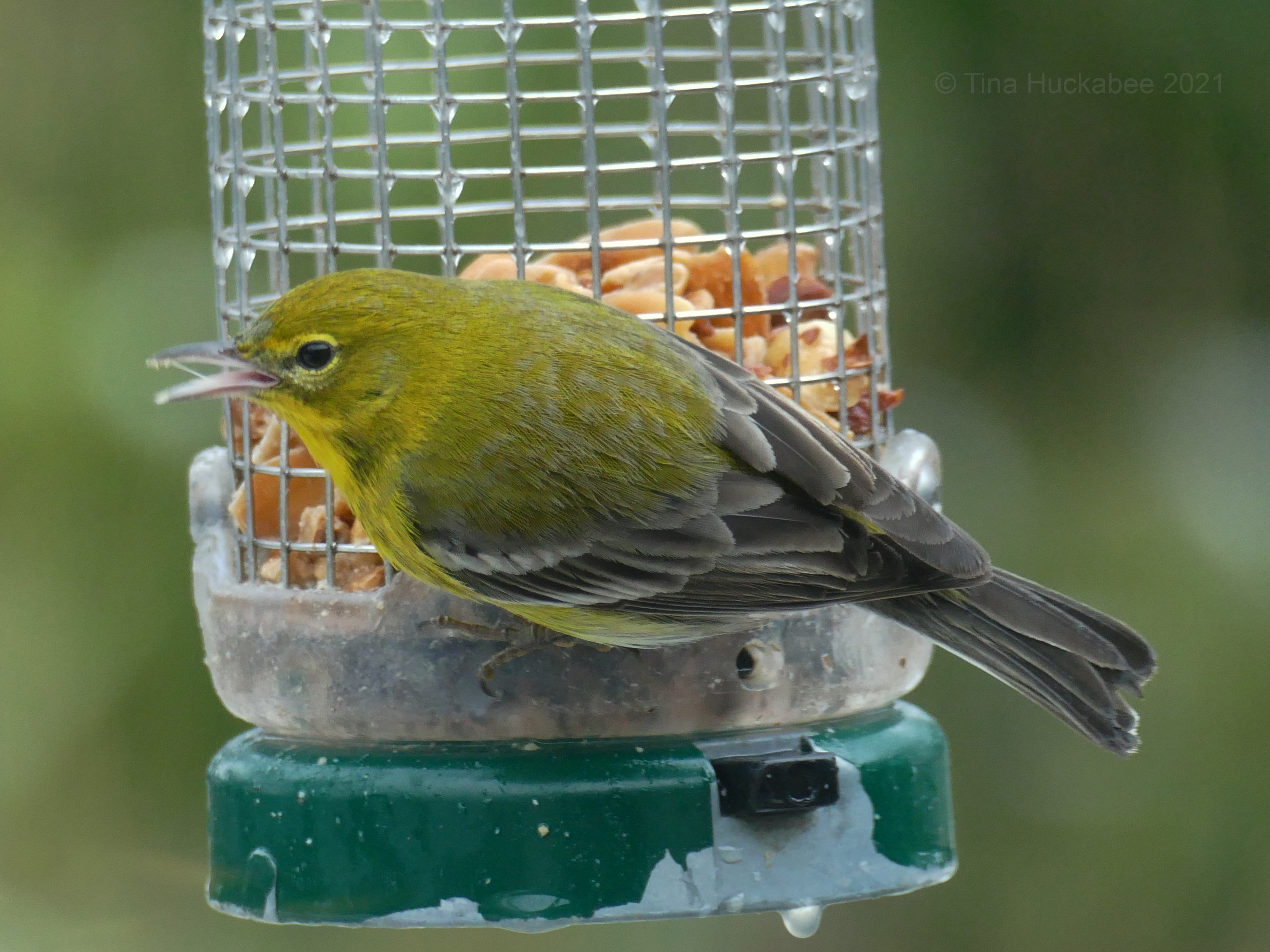
Are you charmed by this stare-n-glare face ? I am, even if he doesn’t look too pleased with the photographer.
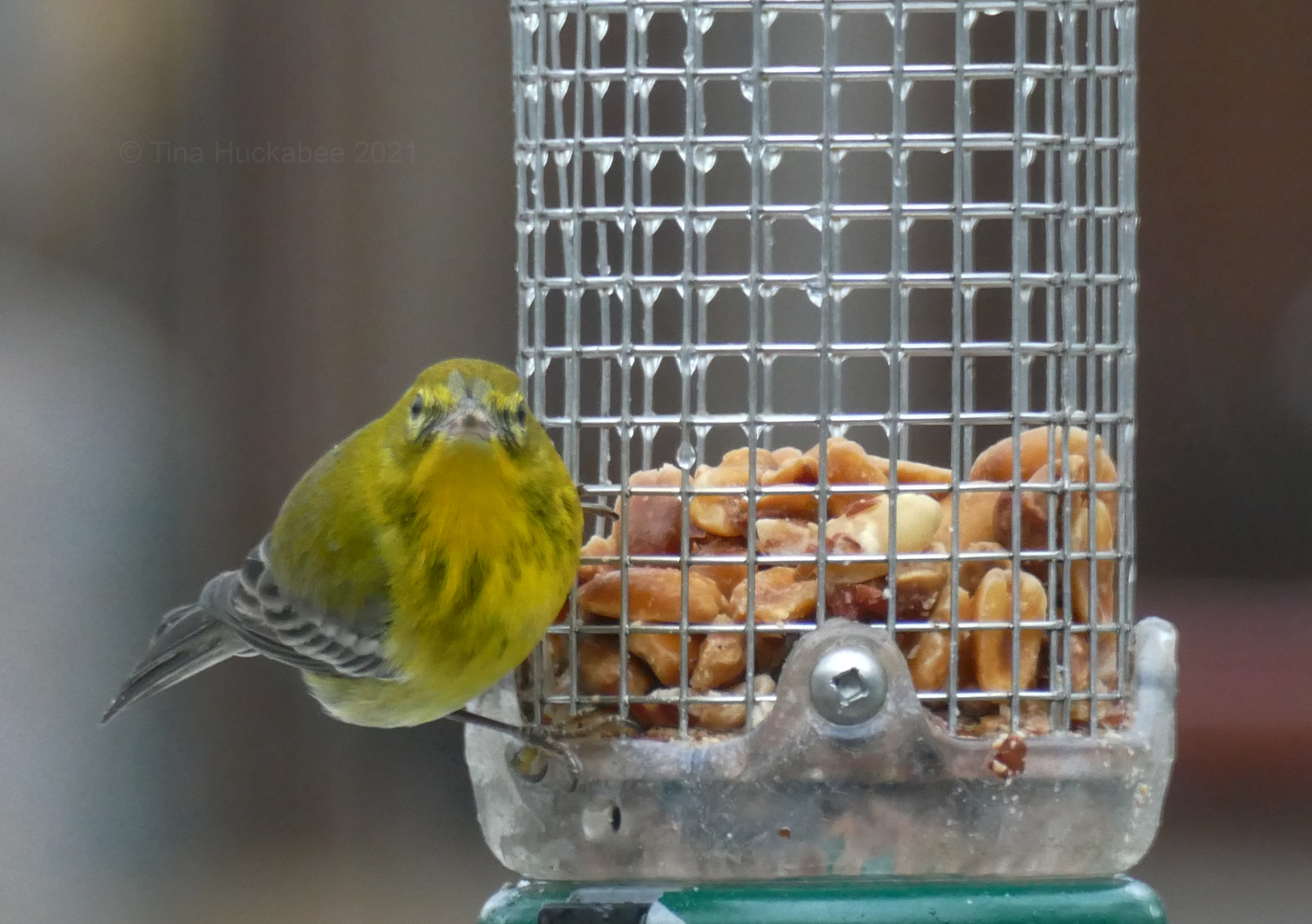
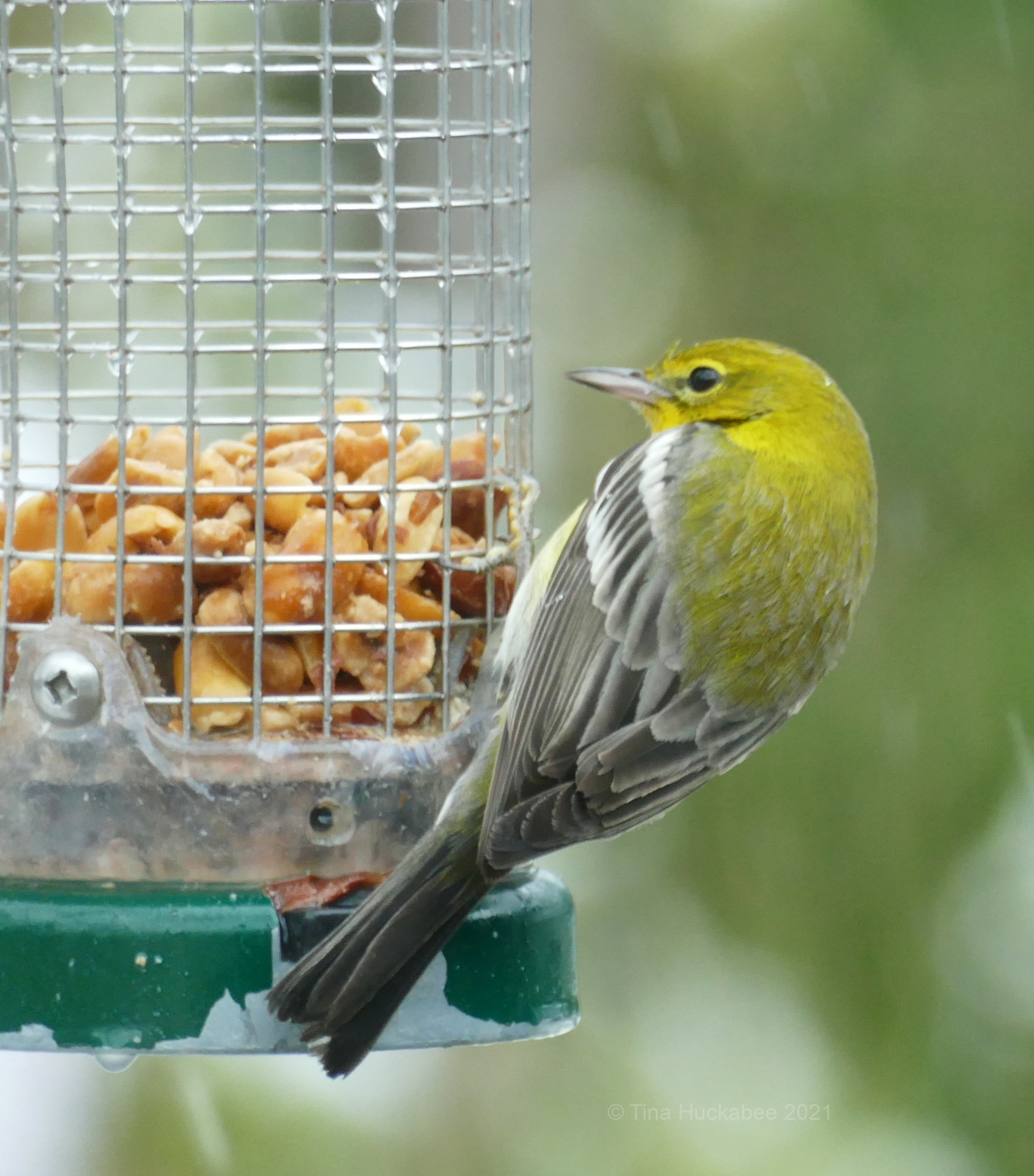
What a good-lookin’ guy! Cheery plumage, streaked with grey on the belly, echoes grey coloring on the back and wings, and is highlighted by winsome white wing bars. He’s a well-dressed bird.
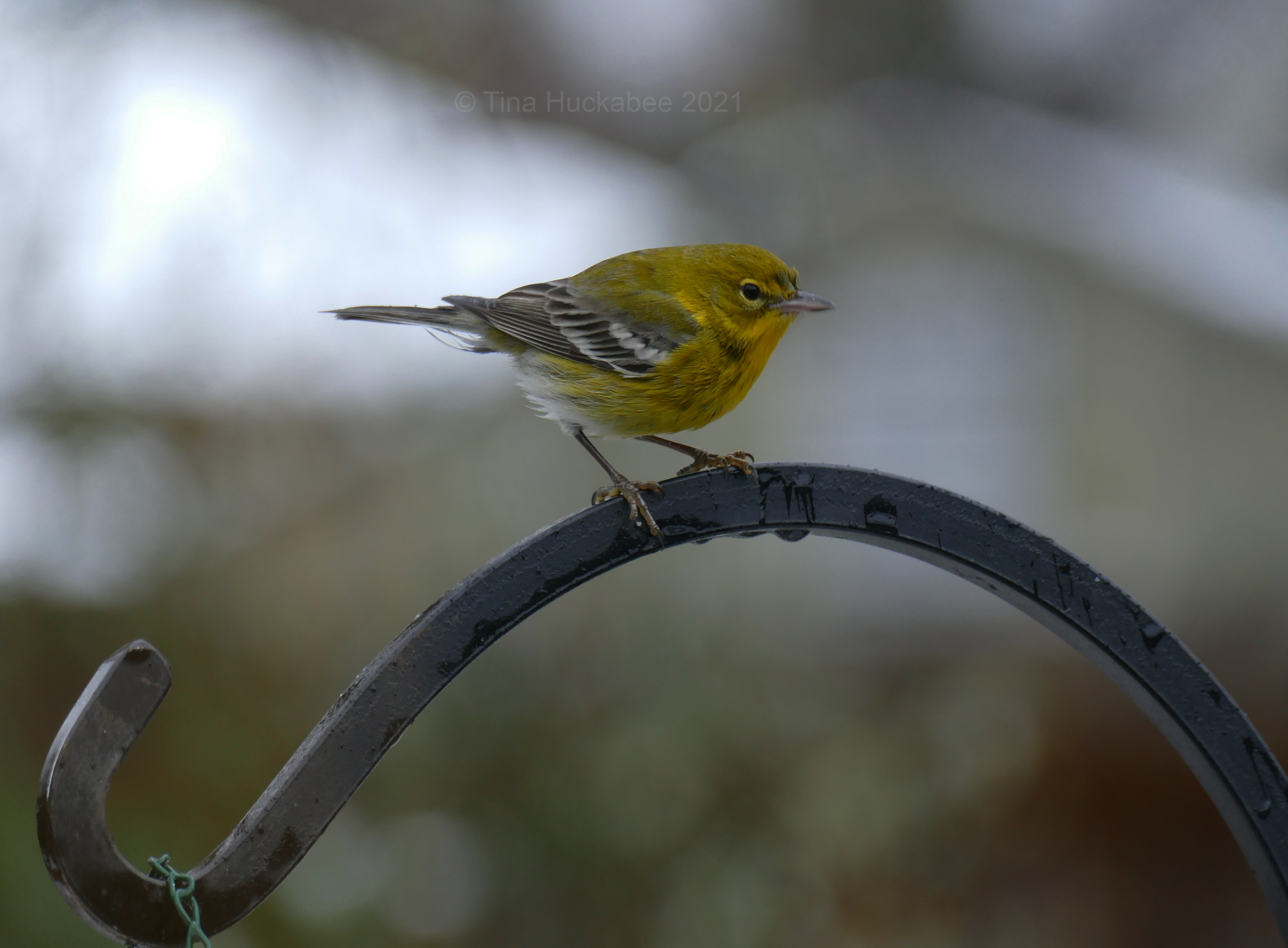
Pine Warblers are related to Yellow-rumped Warblers (‘Butter butts’) and, like previously mentioned, at a quick glance, look similar to Orange-crowned Warblers; both species winter in my garden every year. Maybe in the future, the Butter Butts and Orange-crowns will put out a good word to wintering Pines and encourage more of these sweet warblers to wing their way to my garden.

No Fairy Ring Here

A single mushroom emerged recently from a bed of winter-evergreen Yarrow, Achillea millefolium. For those who subscribe to the supernatural, this one individual, minus a crew of encircled colleagues, might disappoint. With just this one, there is little hope (or dread) of otherworldly happenings.

For myself, the ‘shroom was serendipitous. I don’t often see mushrooms in my garden and typically, they appear in warmer, muggier times of year, not in cold, dry January. That being said, it hasn’t been all that cold this January and with some added damp-to-wet stuff, I guess a mushroom popping-up its spongy self from the ground shouldn’t be too surprising.

I think this particular fairy rest-stop is a Deer mushroom, Genus Pluteus. which is common throughout North America. According to iNaturalist, this mushroom grows on roots and the roots of Yarrow might make a substantial foundation for a mushroom.

For more garden stories, natural or supernatural, check out Anna’s Wednesday Vignette

And beware of fairy circles!

Looking Left

Winter warblers are part of my garden’s life. Several come each day, sometimes for water, mostly for food. On our snowy day, two weeks in the past, the two most loyal of the seasonal visitors braved the snowflakes and ate their fill.

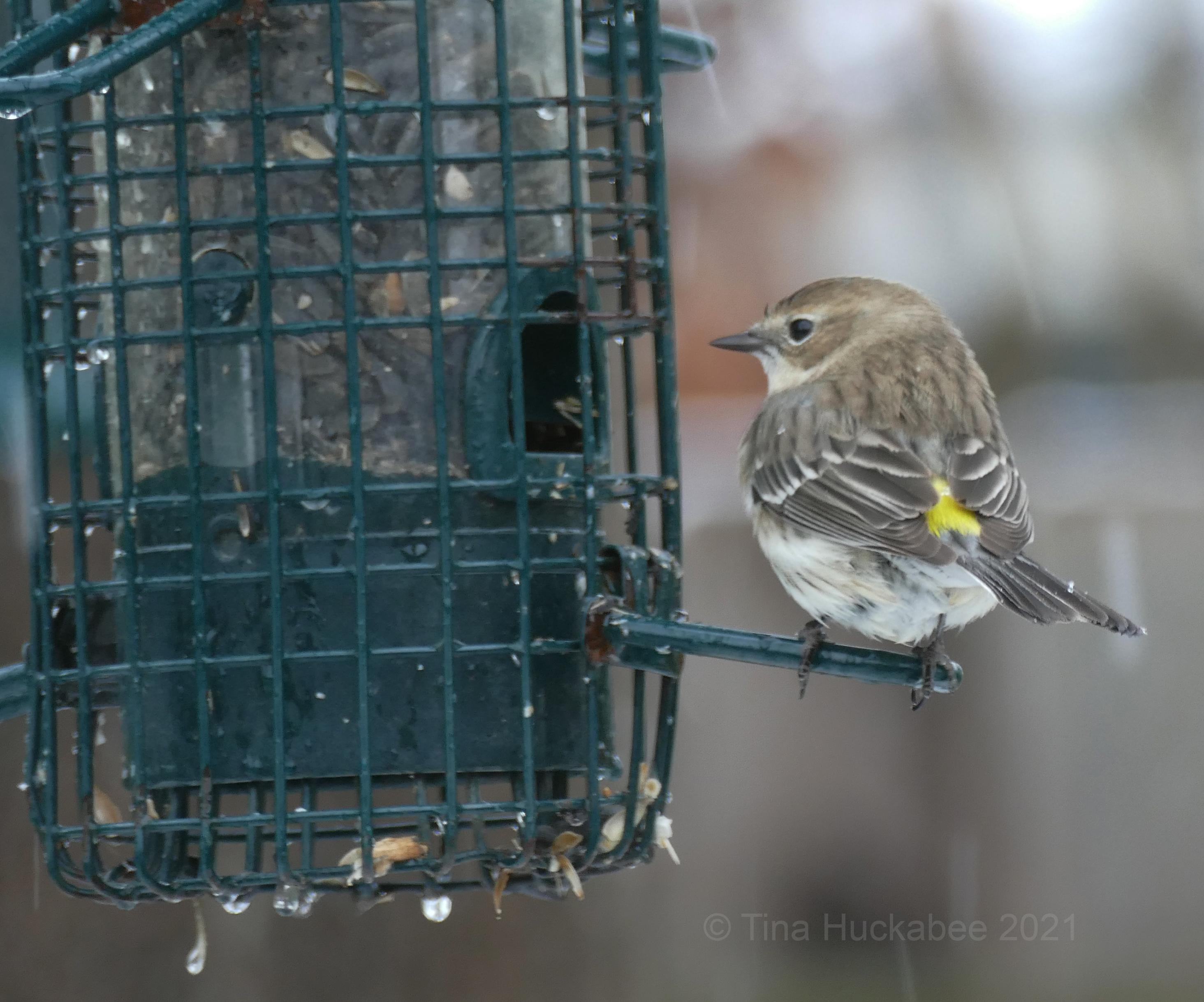
This female Yellow-rumped Warbler, Setophaga coronata, typically gleans from the ground or forages through the gardens, scouring flagstone pathways for seed and such. On that snowy day, I caught her at the black-oiled sunflower feeder, a food dispensary she rarely visits. She also avoids showing off her yellow rump, but it was on full display that day.

I catch glimpses of her butter butt, typically as she flits away in flight because she’s spooked by my presence, or when she’s in partnership with the White-winged Doves and their noisy fluttering to the trees.

That snow day presented a bit of yellow cheer in the form of a warbler’s rump.

My other consistent warbler guest is a female Orange-crowned Warbler, Leiothlypis celata. Like the Yellow-rumped, she’s here for winter, enjoying a ready supply of available food in a relatively safe environment. On that snow day, I spied her throughout the garden: on the ground, in the tree, at the suet and the peanuts.

At one point, she landed on what remains of an old rose bush, searching for who-knows-what from slender, thorned stems, sometimes hanging upside-down as she nibbled and noshed. Then she sat, still and quiet, looking left, facing north.

Indoor commitments prevented my enjoying and exploring the rare snowfall as much as I might have liked, but the birds in my neighborhood were active in the snow, more than usual it seemed. I watched them continue their lives, accepting conditions, unrelenting in activities, focusing on their survival work.