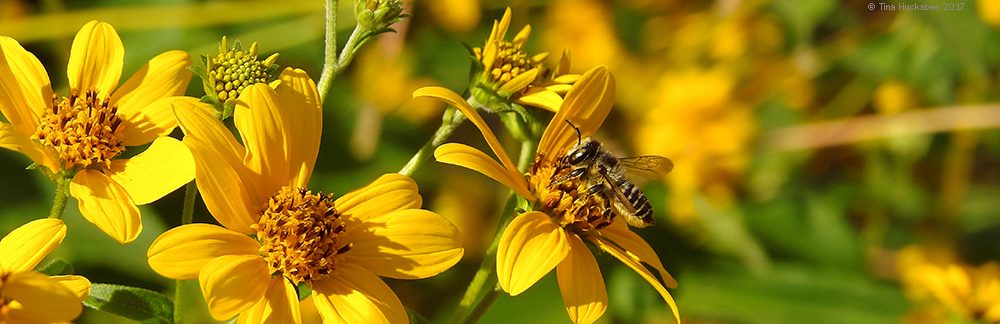
Metamorphosis

More than a collection of color and collaboration of texture and form, a garden is the base for life. Providers of pollen, donators of nectar, and deliverers of foliage, plants are foundational partners for biodiverse ecosystems. Insects, as well as other wildlife, are direct beneficiaries of the botanical bounty, frequently repaying that bounty with their own pollination and reseeding gifts.

This green gathering of groundcovers all serve as fuel for others in my garden’s seasonal story.
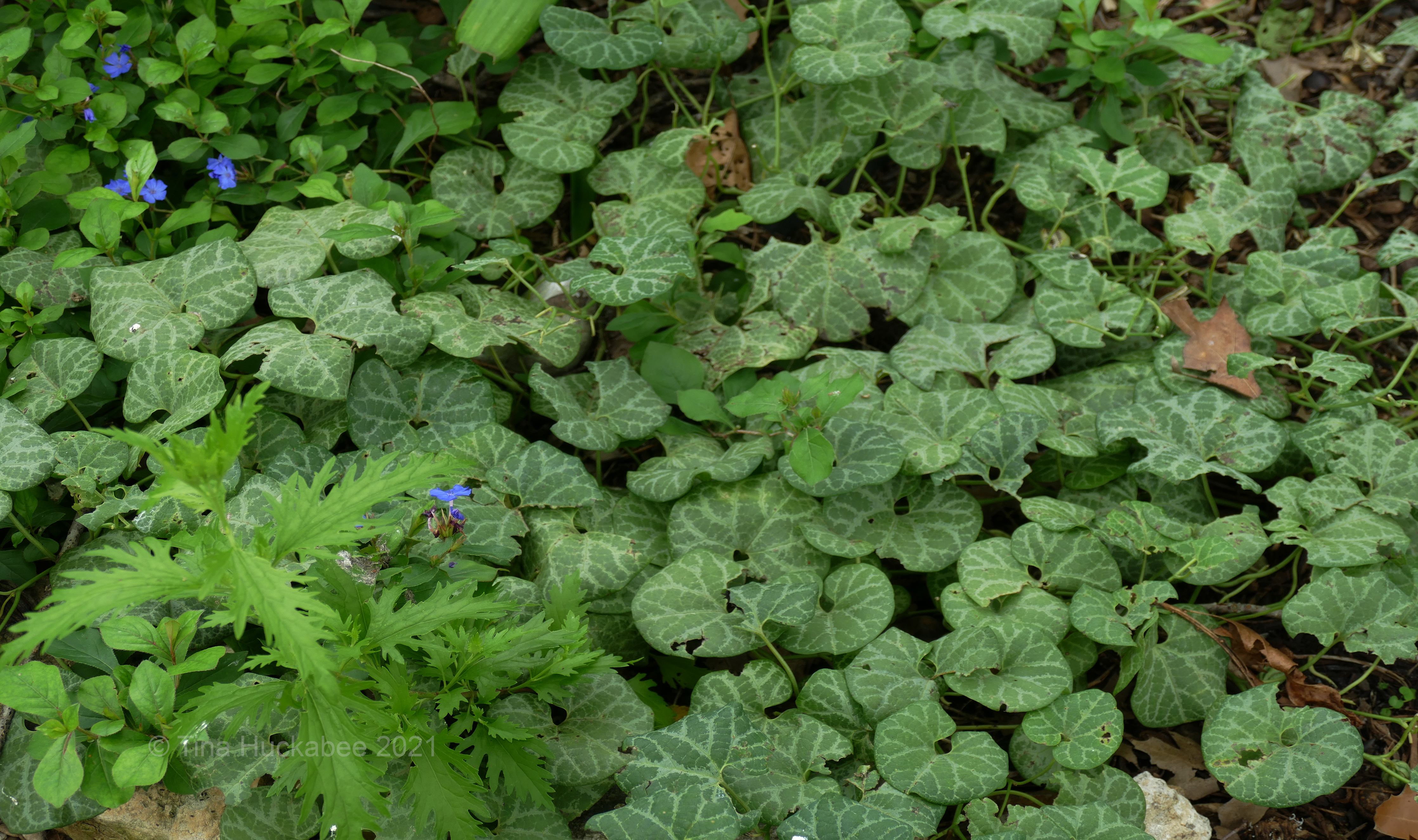
The plant with the petite sky-blue flowers is a Leadwort plumbago, Ceratostigma plumbaginoides. It meanders through several areas of my garden, dollops of blue attracting small native sweat bees. The bright green, lobed foliage at bottom left of the photo belongs to Gregg’s mistflower, Conoclinium greggii, which is currently not blooming. Its fuzzy, lavender-blue blooms will be available for the late summer/autumn migrating monarchs, as well as for a wide variety of other butterflies and bees. The groundcover with the charming clam-shell, variegated leaves–the majority plant in this particular group–is a White-veined Dutchman’s Pipe, Aristolochia fimbriata, a common non-native host plant for the Pipevine Swallowtail butterfly, Battus philenor.

Alongside some dainty pops of blue on the plumbago, the White-veined pipevine feeds Pipevine caterpillars, like the chubby fella below. This year I have enough of the pipe vine that the cats haven’t completely denuded it as they munch their way to adulthood, but they certainly have eaten plenty of leaves to the stems.

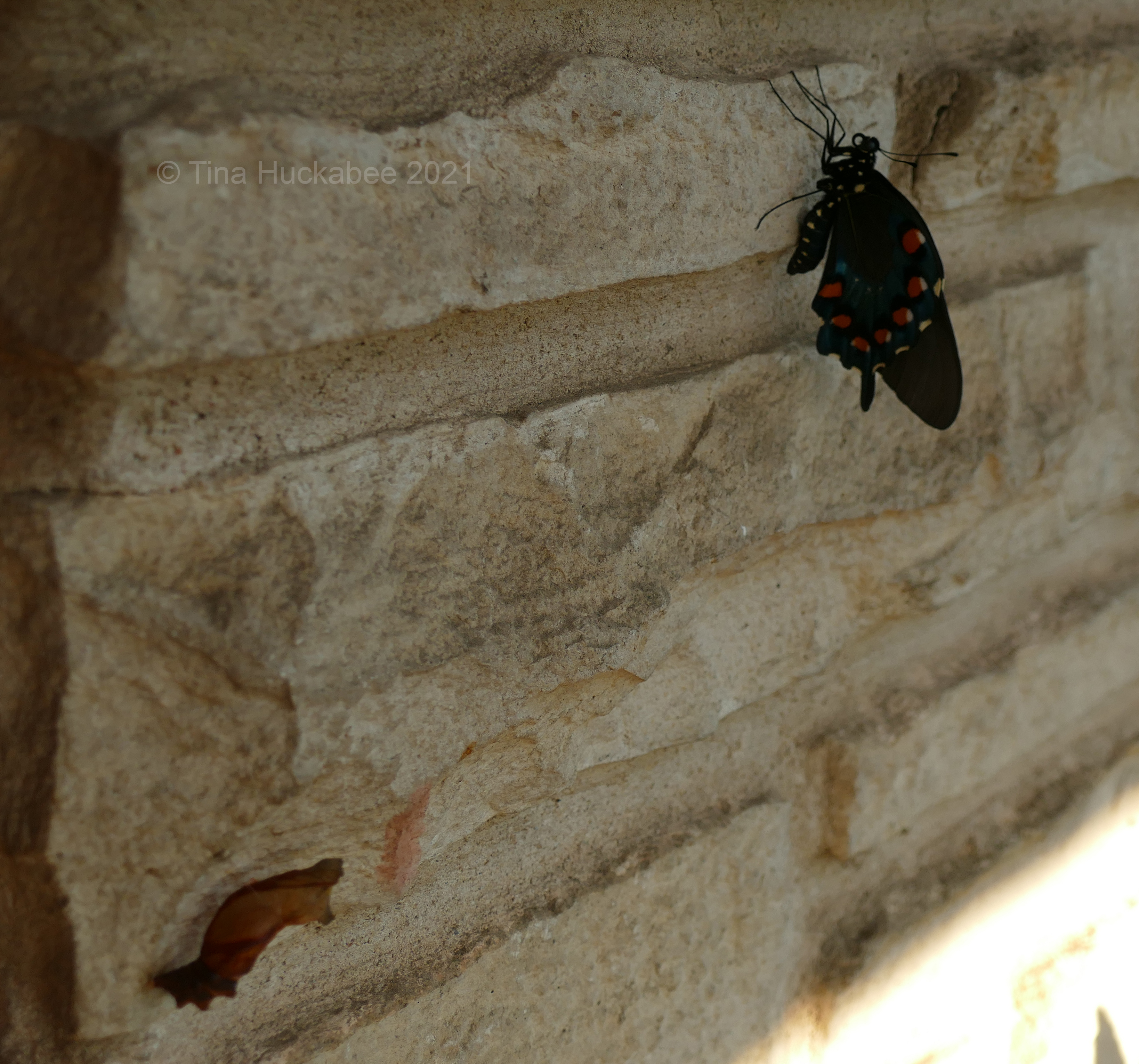
Once the caterpillars eat their fill and morph through their various instars, they follow their chemical signals and settle in a place to metamorphize into a different form of themselves. This one strung itself to the limestone just outside the frame of my back door. It traveled far from its feeding place to get to this spot and I wonder: why here, adjacent to the door? It’s an open spot. potentially vulnerable to predators, less hidden than on a plant, like a stem or an under-leaf. Chrysalises are much better camouflaged in the garden than attached to an open wall. Nevertheless, the caterpillar was resolute in its choice, working to moor itself there on its journey to a new, winged self.

The caterpillar also chose to begin changing during a stormy 48 hours; it strung its string, but remained in the J formation through that cooler, wetter period.

In time, the chemical changes happened, the chrysalis formed, and it remained stationary–though not static–for almost two weeks. The chrysalis emitted light and color as it transitioned, sometimes golden, sometimes green, sometimes dark, but always a little different from the day before.

I missed the debut of the adult, having overslept a bit during the premier morning; butterflies emerge with the sun’s rise; gardeners, not always. At 8am, it was there, drying its wings, waiting for the right time to take flight.
The butterfly did fly later that morning, though I’m not convinced it was entirely ready. I bumbled out the door, focused on some back garden chore, and the startled insect winged its way off of the limestone and over the garden, the remaining drops of its successful chemistry experiment scattering in the sunlight.
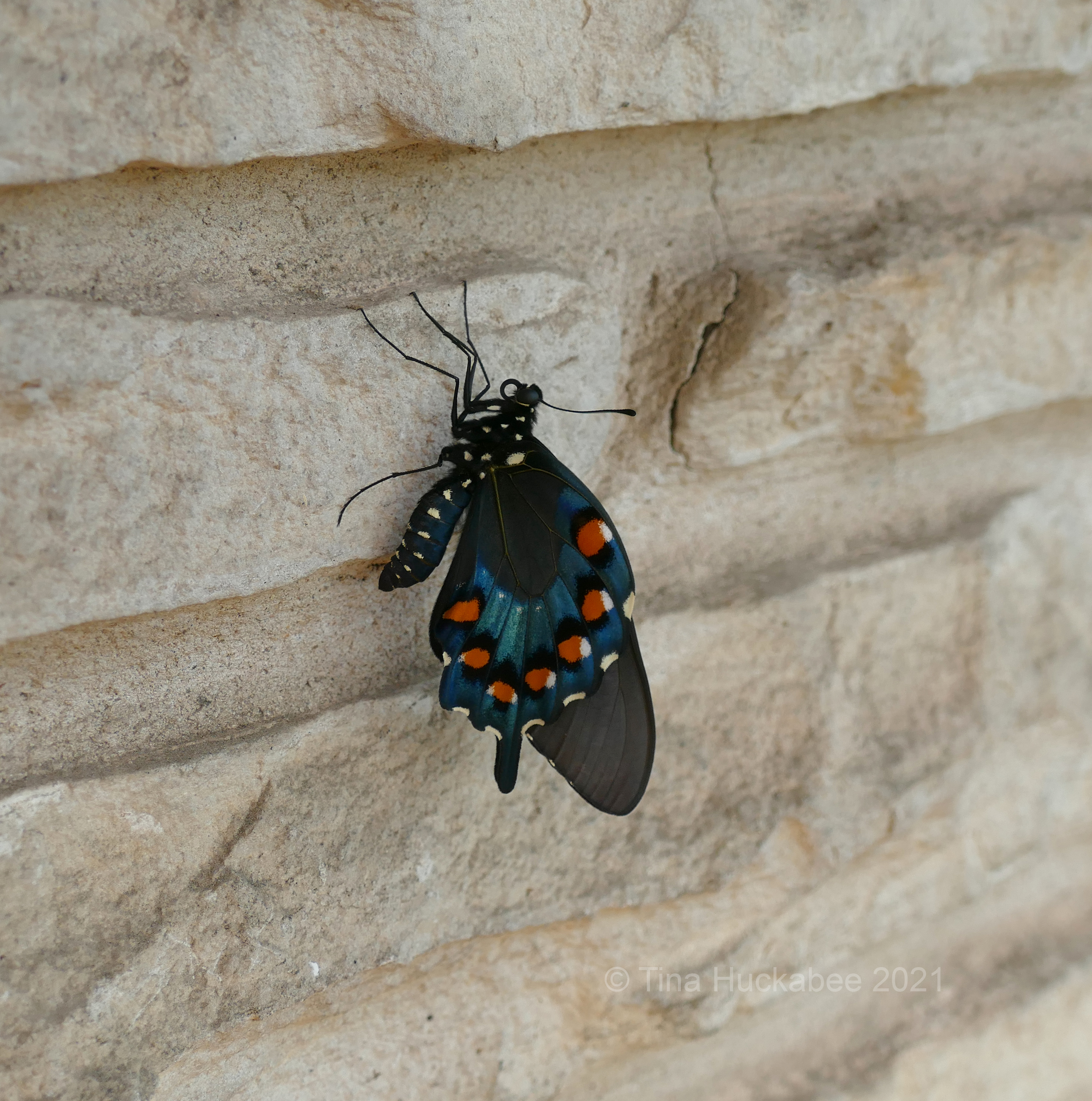
I’ve left the shell of the transmutation in place, the remnant of caterpillar observable in form, the memory of brilliant butterfly in warm, gauzy colors.

The Big Move

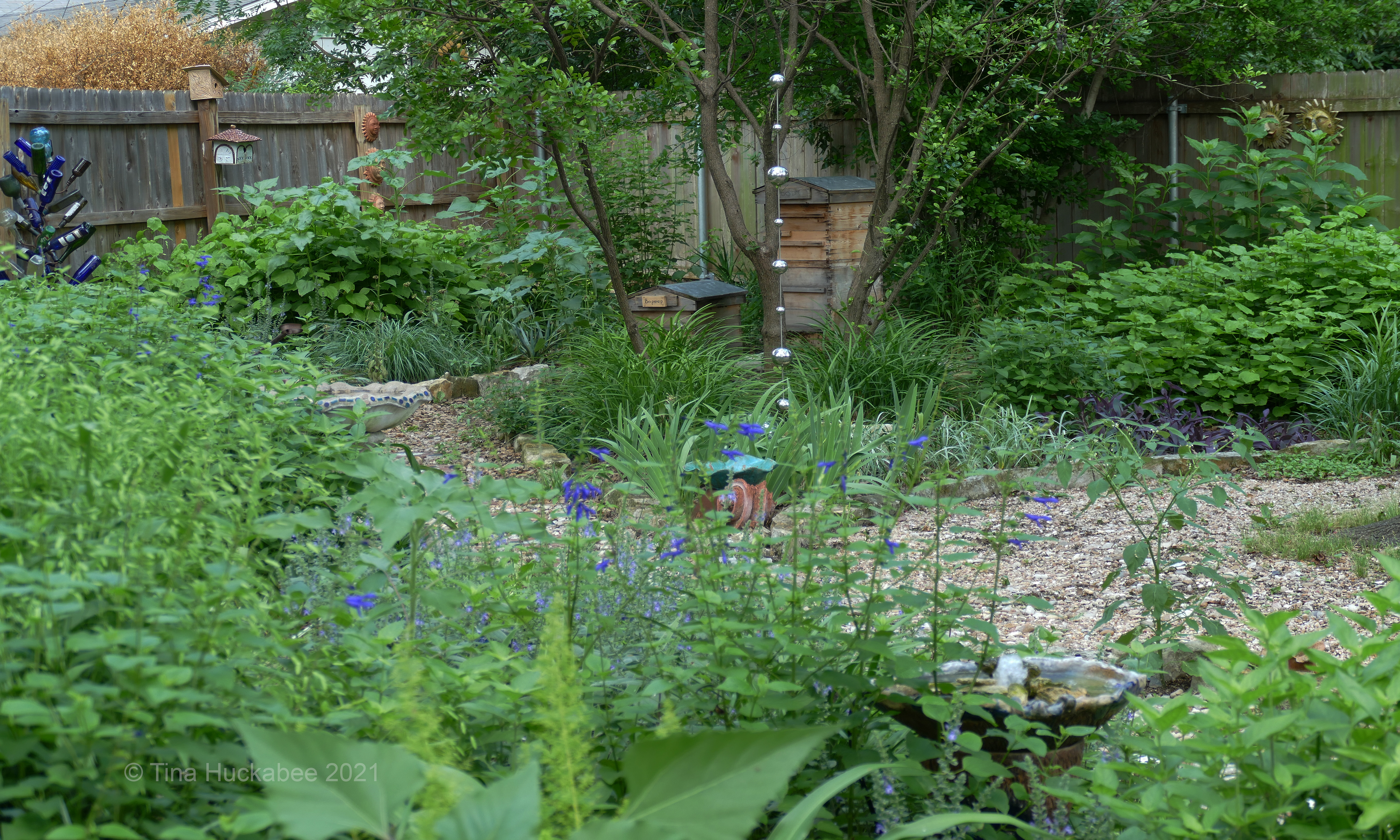
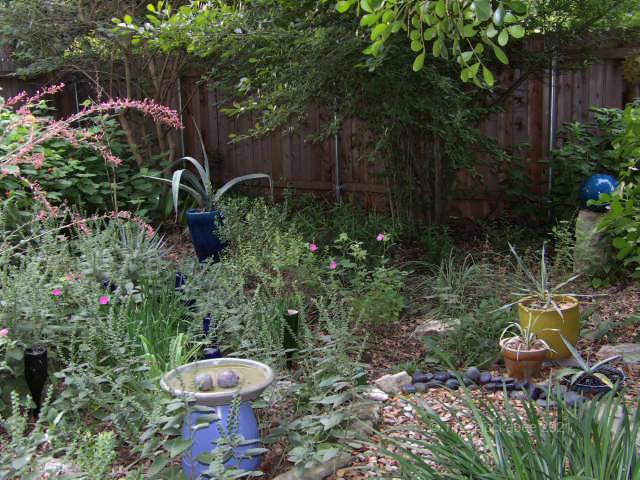
My back garden forms an odd, pie-shaped situation and for the past decade, has become increasingly shady, especially in the back corner section of the garden.

These two photos are several years old and most of what is blooming in the shots either no longer exists or doesn’t bloom due to the shady conditions. Some bloomers here include Turk’s caps, with their summer tiny, twirled flowers, a Mexican Honeysuckle bush, whose orange flowers appear when the mood strikes, a leaning Frostweed which blossoms as it reaches for autumn sun, and a few small, shade-tolerant perennials and grasses. This darkened corner is best suited for foliage and, as of March, the beehives.

When Bee Daddy built the Langstroth hives five years ago, I see-sawed about which would be a better spot for the two hives: in the back, shady corner, a generally out-of-the-way spot, or in one of the opened graveled sections of the main part of my back garden.

.

I opted for the main area of the garden, and while that wasn’t a mistake–it was easy to work around the hives and they received some nice bits of sun–I’ve come to accept that it’s better to have the bees tucked in a part of the garden where no one but yours truly ventures.

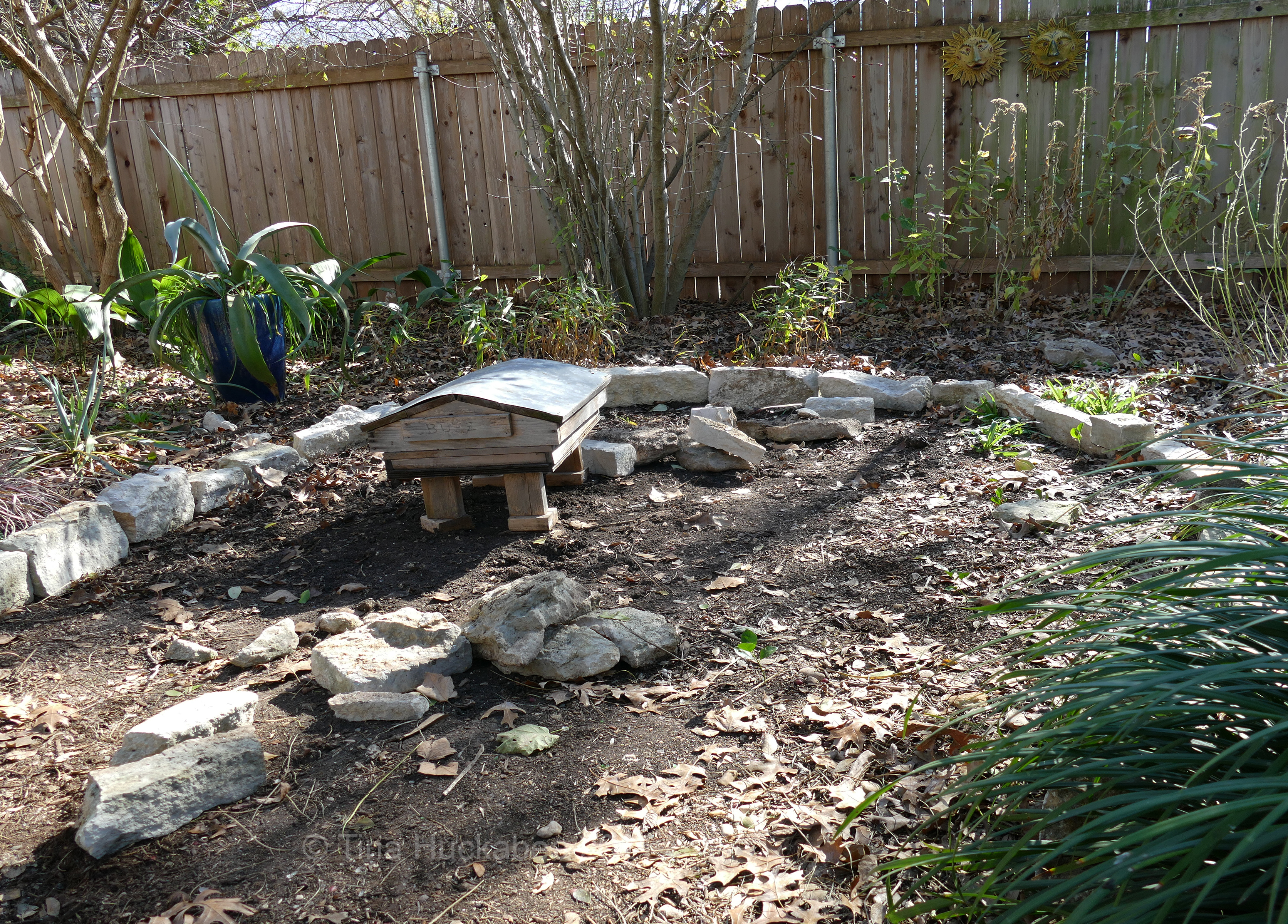
In autumn, I decided to move the hives to the back section of my garden. Really, it was only one hive that needed moving, because Buzz absconded last spring, the hive sitting empty for the year. Picking up and transporting Buzz’s truncated hive–base and roof–was a snap. In the new beehive spot, I also expanded the limestone border between the negative space and the garden, enlarging the beehive area a bit. I intended to mulch or gravel, but February’s snow storm and the months-long cleanup which followed, plus a bum back to boot, rendered that segment of the project incomplete before the two colonies of bees moved in, Woody in March, the new one in April. I added a few more shade-tolerant grasses to the garden itself.

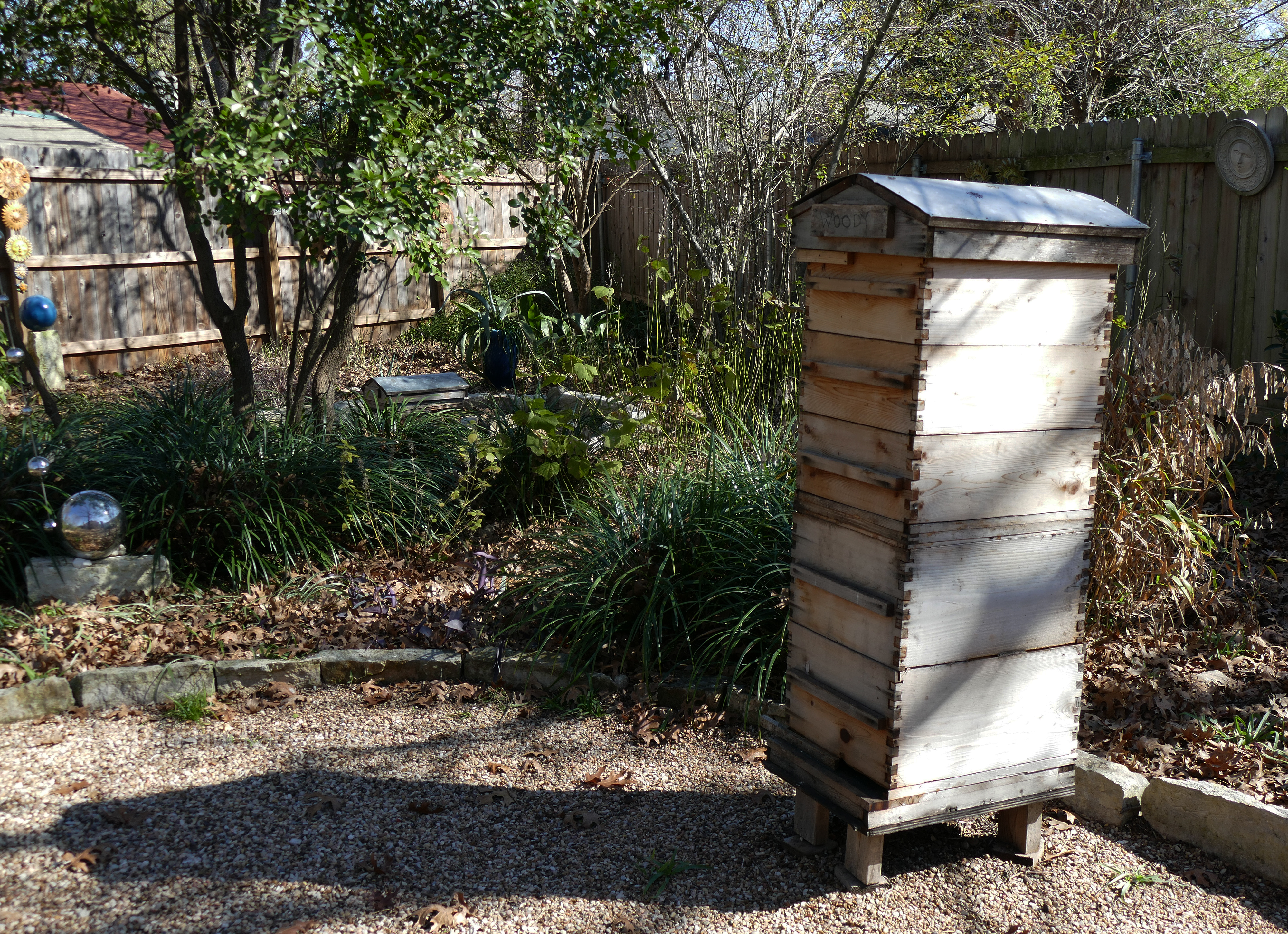
In this photo, taken in January, you can see short little Buzz sitting all alone in its new cul-de-sac of the neighborhood, while tall, stout Woody, remains in the original spot.

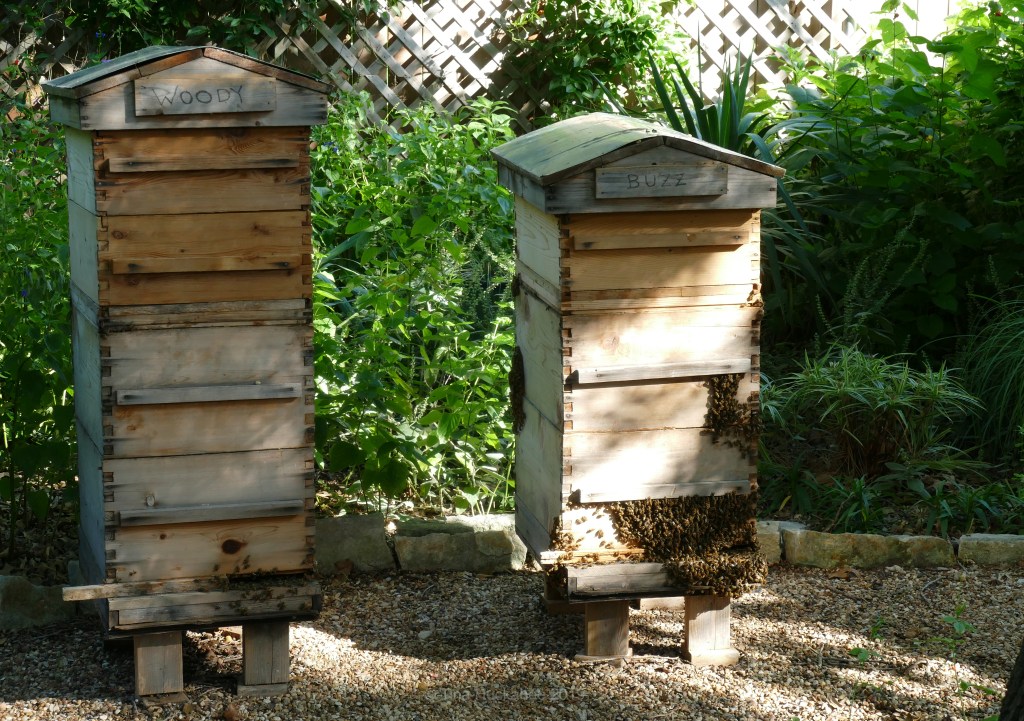
There are about 17 feet between the two hives. Our plan was to suit up and smoke Woody sometime after the first couple of winter freezes, then move Woody 2 to 3 feet a day for 5 to 6 days. It’s best not to move bee colonies more than a few feet at a time because bees use visual clues and pheromone signals to exit the hive and return. If hives are moved too far, too quickly, bees are lost.

After the move, the two hives would then sit side-by-side in their shady, corner garden. I knew that as we moved Woody, we’d need to traipse across some plants, but accepted that the few evergreen plants bothered wouldn’t be particularly damaged. The awful February storm made one thing easier: all my perennials, even the so-called “evergreens” were knocked back completely. So after I pruned all the plants to the ground that were in the hive’s pathway, it was time to move Woody.

What fun.

The big move progressed reasonably well for the first 4 or 5 days. The hive is ponderous and awkwardly tall with its two brood boxes and two honey boxes. Bee Daddy did most of the “heavy lifting” while I skootched the hive along, keeping it vertical. The last day was, for whatever reason, the worst. It was chilly, which should have made it easier because the bees are slower in cold weather, but it took us longer to get the hive set and leveled in its new place. When working the hives, I wear a full bee suite, with veil, and Bee Daddy wears jeans, boots, and a jacket with a veil. As we were finishing up, Bee Daddy’s bum fired up in pain; he realized that he’d forgotten to put a belt on his jeans and, well, you can guess what happens when the jacket rides up, the jeans slip down, and bees find a way into clothes and onto bare skin.

Poor Bee Daddy.

Ouch! Itch!

In April, we hived a new colony and renamed the hive Bo-Peep. If you’re familiar with Pixar’s ‘Toy Story’ franchise, you’ll know who Bo-Peep and Woody are–a great pair!

Drat! I wish I’d had the time to mulch before we moved the hives. The weeds are going to drive me nuts this growing season!

Both hives are thriving. We continue to feed sugar water to Bo-Peep, as she’s still combing out the frames, but she’s almost done so the supplemental feeding will end soon. Bo’s queen is laying eggs and she appears to be off to a good start in colony life. Soon (we should have already done it!), we’ll remove one of the two full honey boxes from Woody and add an empty one for them to fill during the course of the blooming season. Then we’ll have another gallon or more of honey to process; we already have an embarrassment of riches in that category.

From both a garden aesthetic and a practical positioning, I’m glad the hives are in the back of the garden. The bees don’t care where their hives sit as long as there is plenty of nectar and pollen available, and honey to make and hoard.

In our subsequent hive checks, Bee Daddy hasn’t once forgotten to put on a belt! Lesson learned!

Me and My Shadow

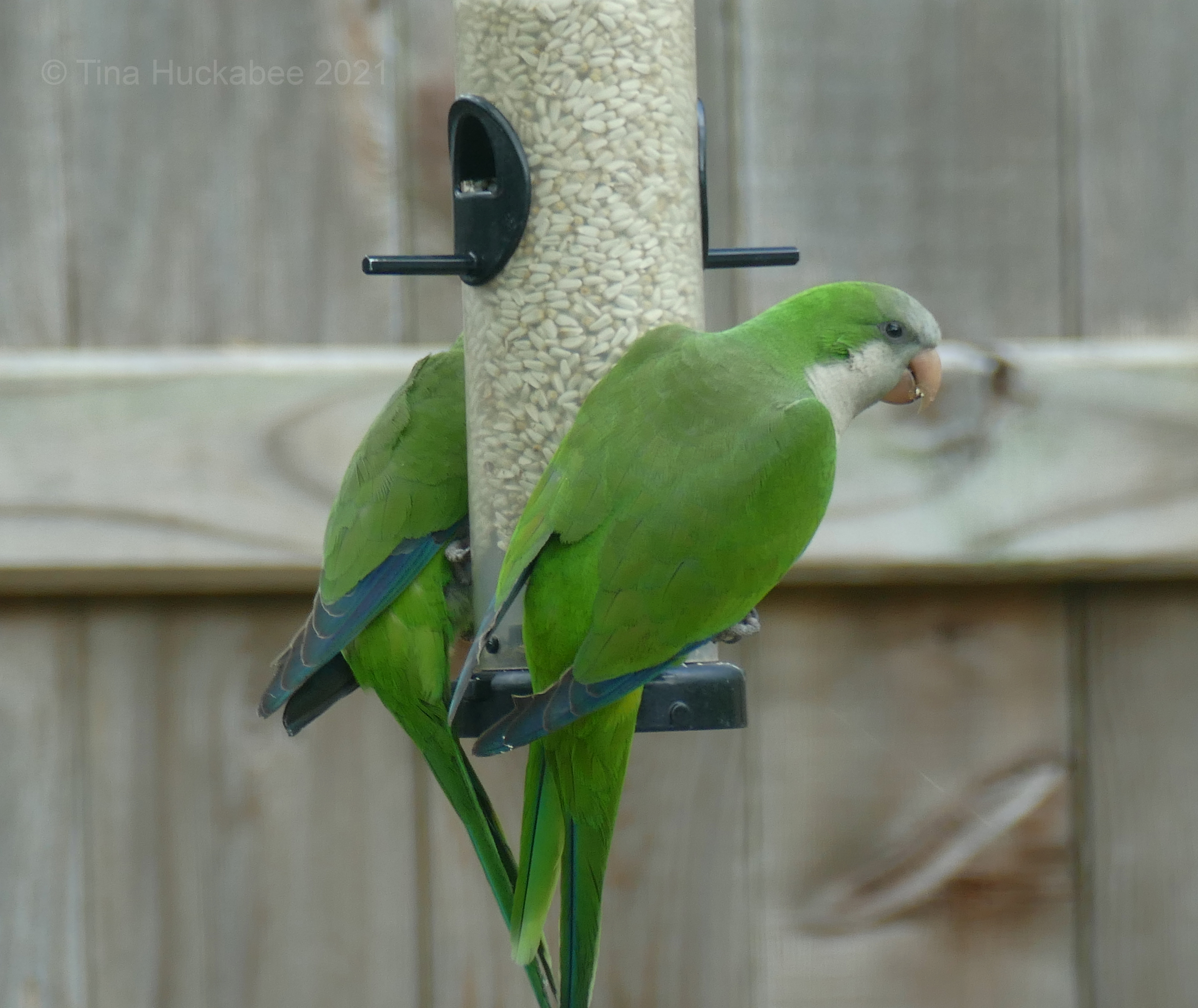
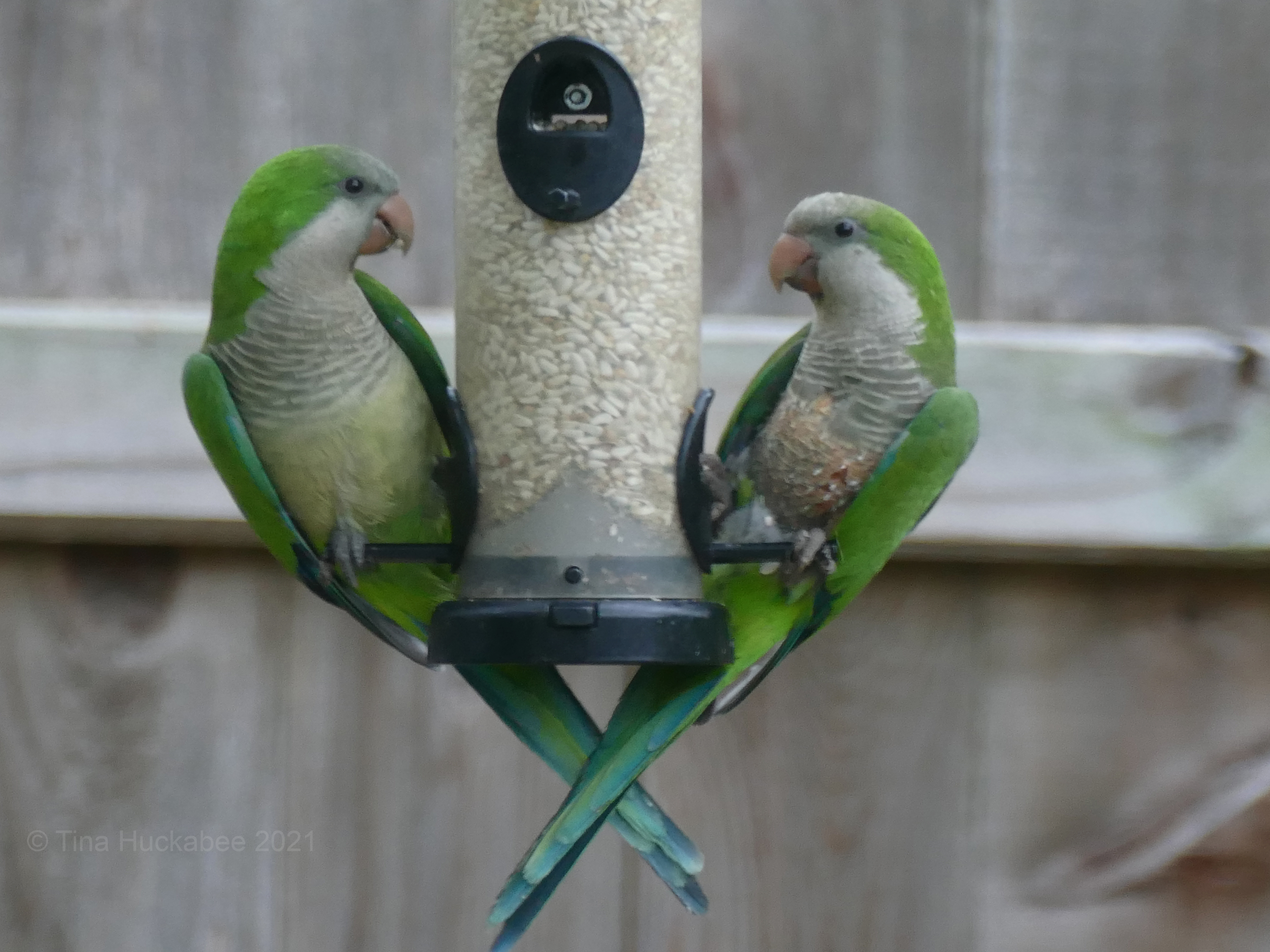
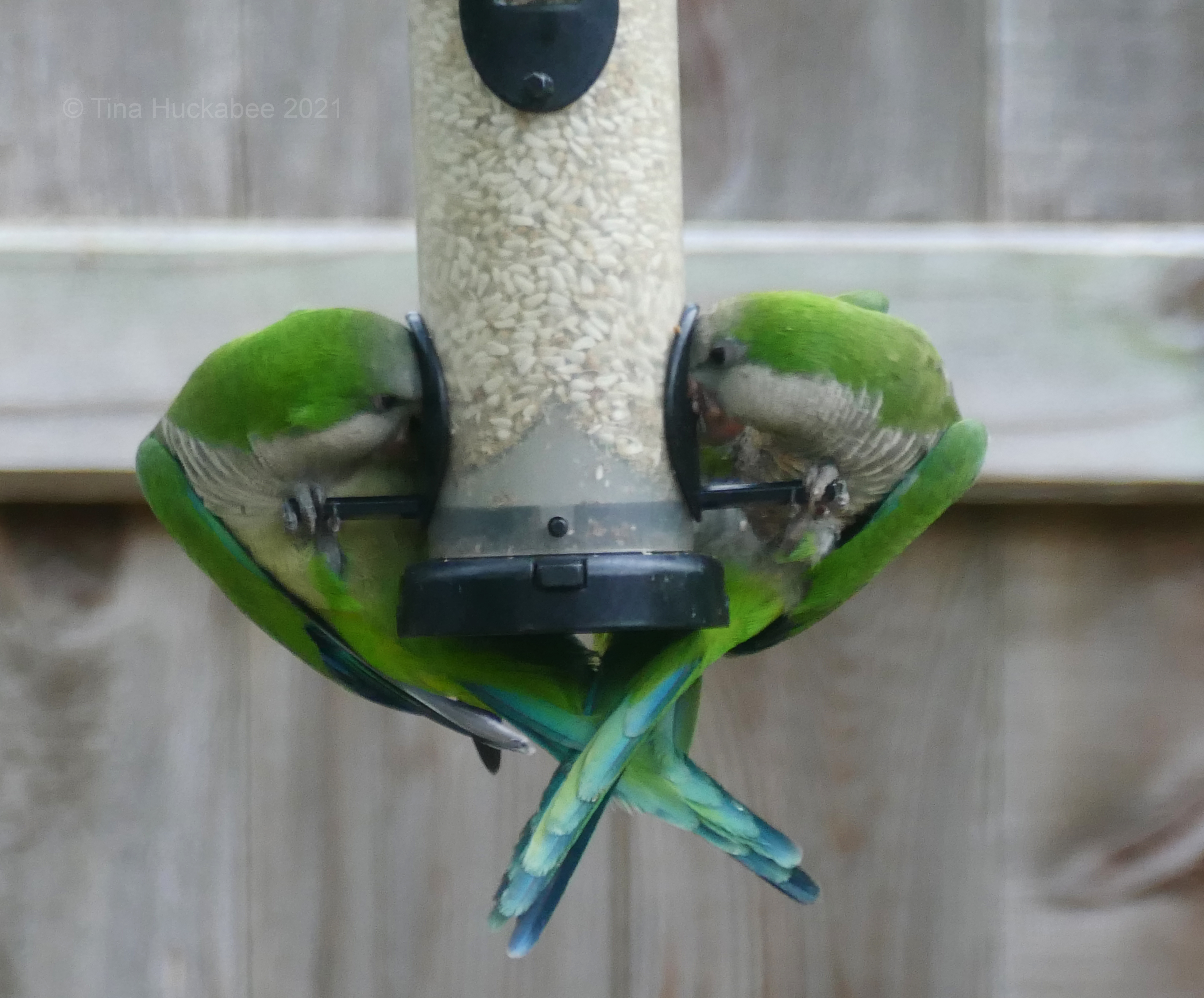
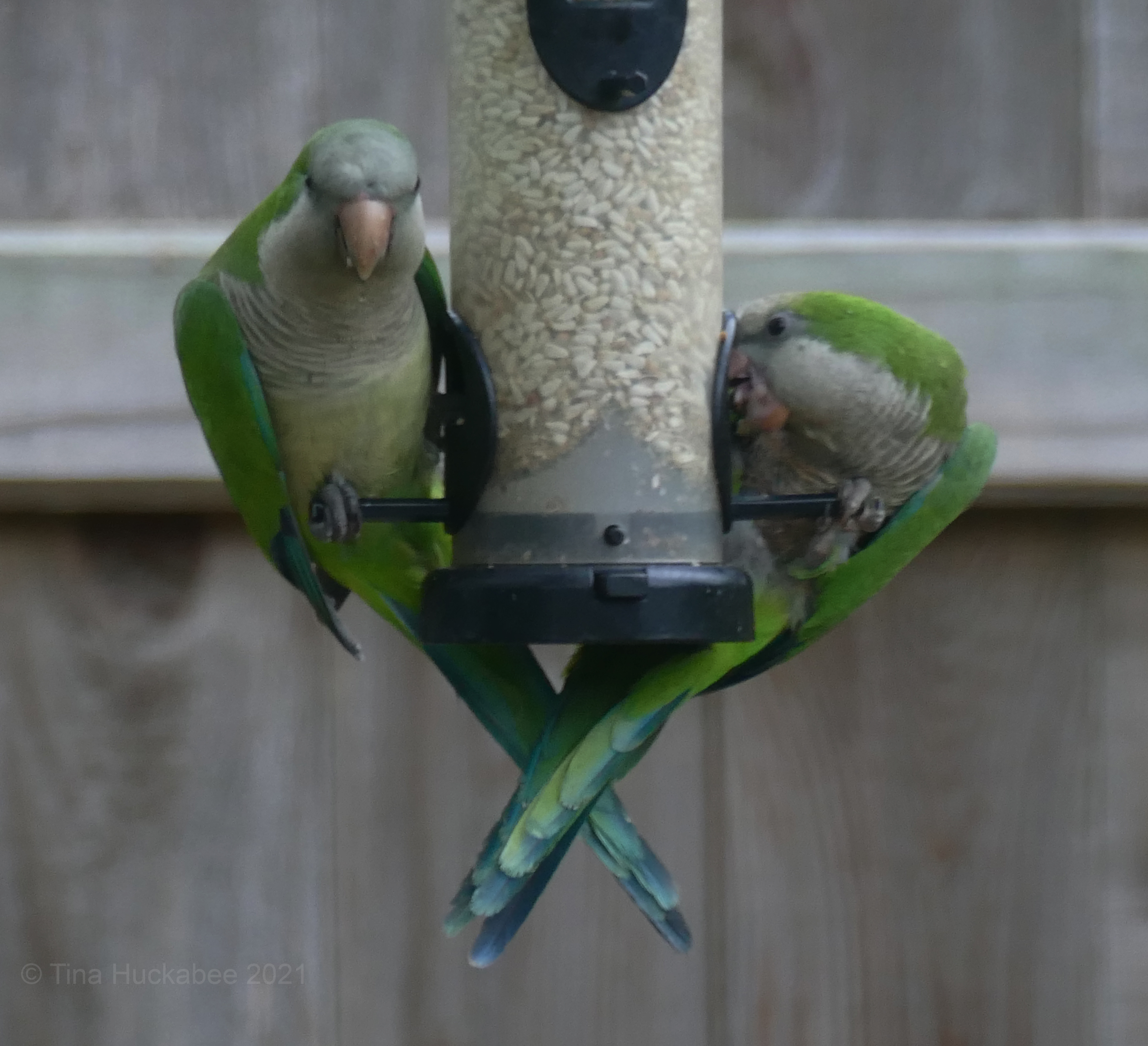
Monk Parakeets are stopping by daily for some nibbles, usually favoring the safflower feeder. It’s a pair (mates?) and so fun to watch.

Parakeet performance art at its finest!

Beautiful green and blue birds, monks aren’t native to Central Texas, but instead, are descendants of released or escaped pets and they’ve thrived in this region for decades, creating colonies, feeding alongside other birds, and cawing loudly as they swoop around town in small groups. As far as I’m aware, they’re not destructive to any native species, but occasionally Austin Energy (Austin’s electric provider) pulls down the parakeets’ huge and impressive nests from the top of utility poles. The nests sometimes catch fire (electric wires!) and are clearly a hazard for both birds up top and beasts below.

I usually hear them more than see them, as their calls are loud and raucous, but they’re welcome to pop by for snacks. They certainly add a splash of color to the garden.