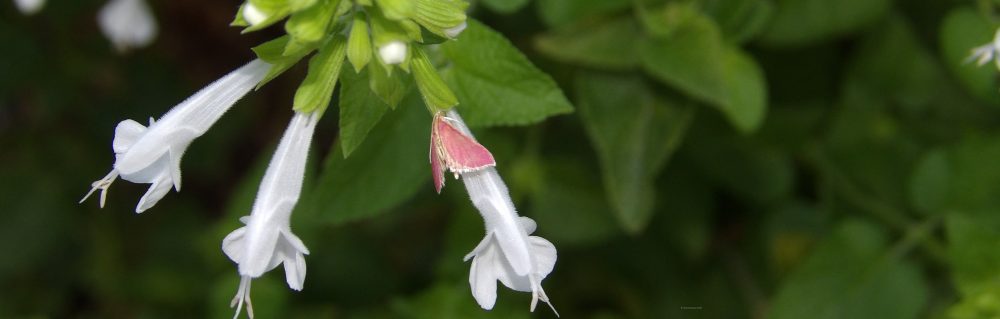
Recently, the Hub and I spent time in the Hill Country area of Texas. One of the highlights of this mini road trip, and on an especially gorgeous day, we hiked at Lost Maples State Natural Area. Located about 3 hours drive from our home in Austin and located in the Edwards Plateau ecoregion, the state park showcases a “lost” isolated cluster of Uvalde Bigtooth Maples, Acer grandidentatum, recognized for their spectacular fall color. We were too early this year to enjoy the foliage fanfare, but with cooling large trees and shady under-story growth, paired with steep, rocky inclines which challenges hikers, and textured, limestone cliffs with attending pools, as well as plenty of blooming and berrying native flora, the park is stunning even without the color bonus.

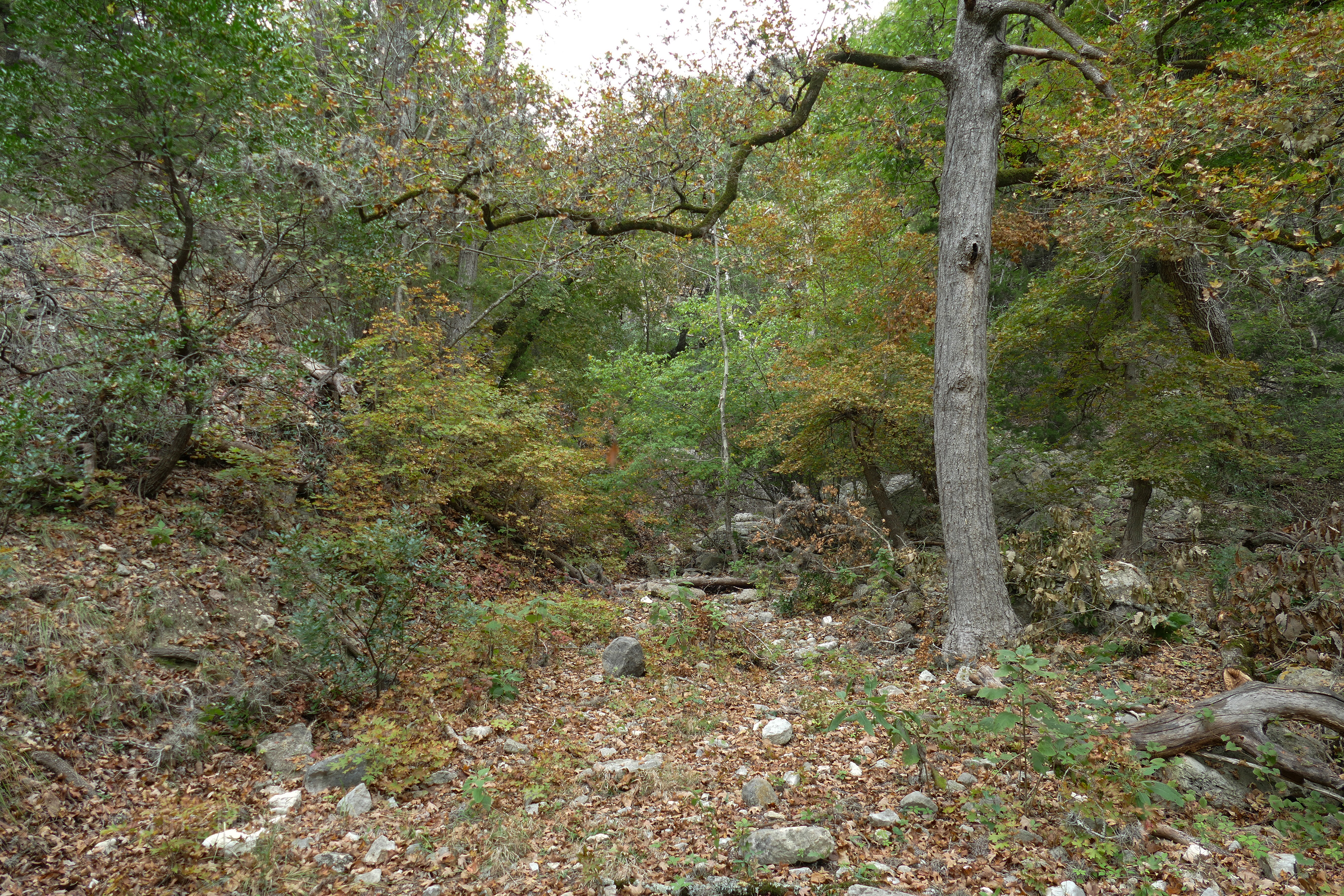
Golden highlights from American Sycamores provided a suggestion of autumn, but might have come from summer’s end scorching, rather than autumn’s cooling and waning light.
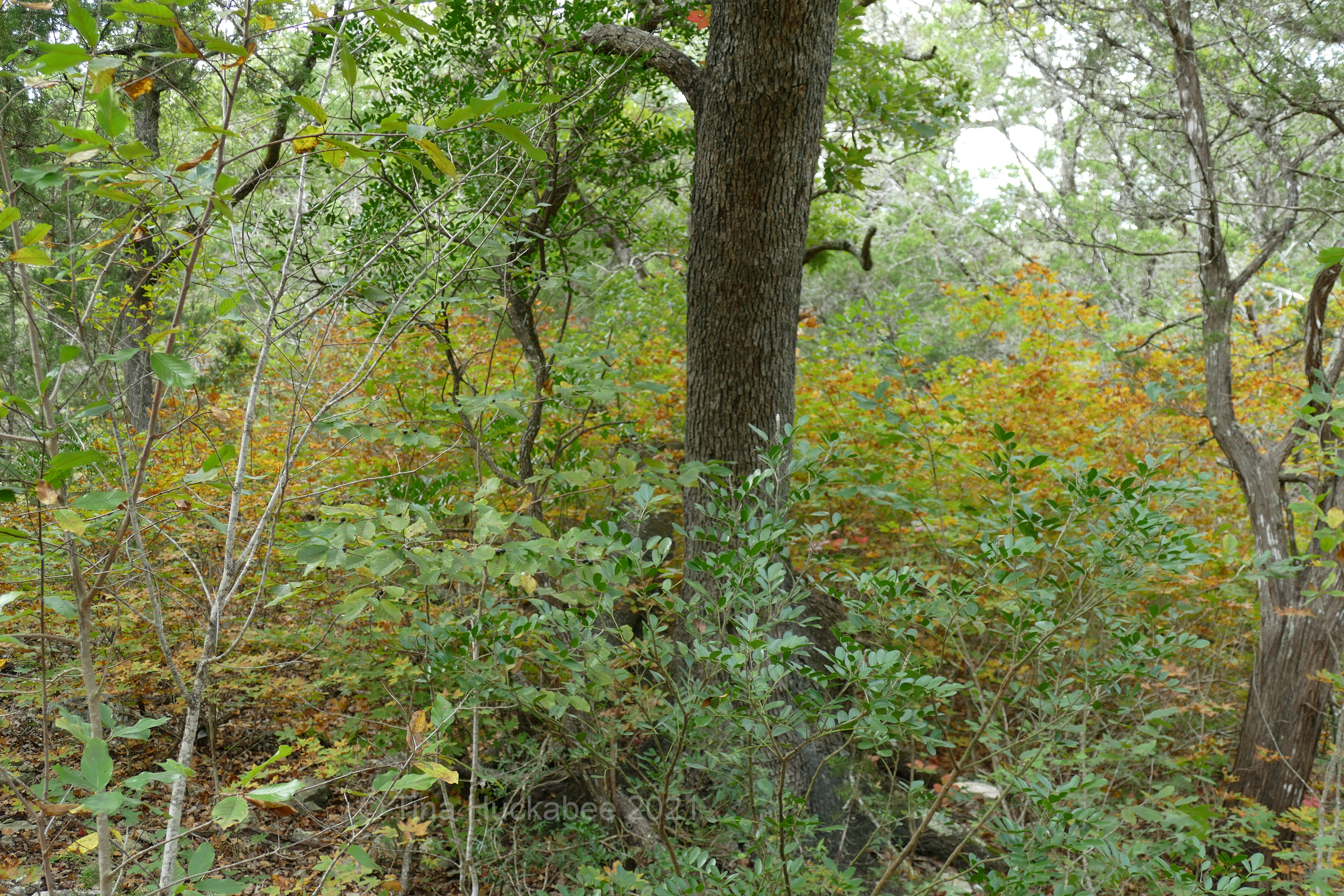
One of the striking things to me was the beauty of the American Sycamores in the area. I saw some of the tallest, most robust that I’ve ever seen, as well as slender, graceful saplings. Topped by their yellow-to-green leaves, the white bark bisects the colorful brush; ivory lines, vertical and zig-zag, contrast in geometric form with the leafy backdrop.

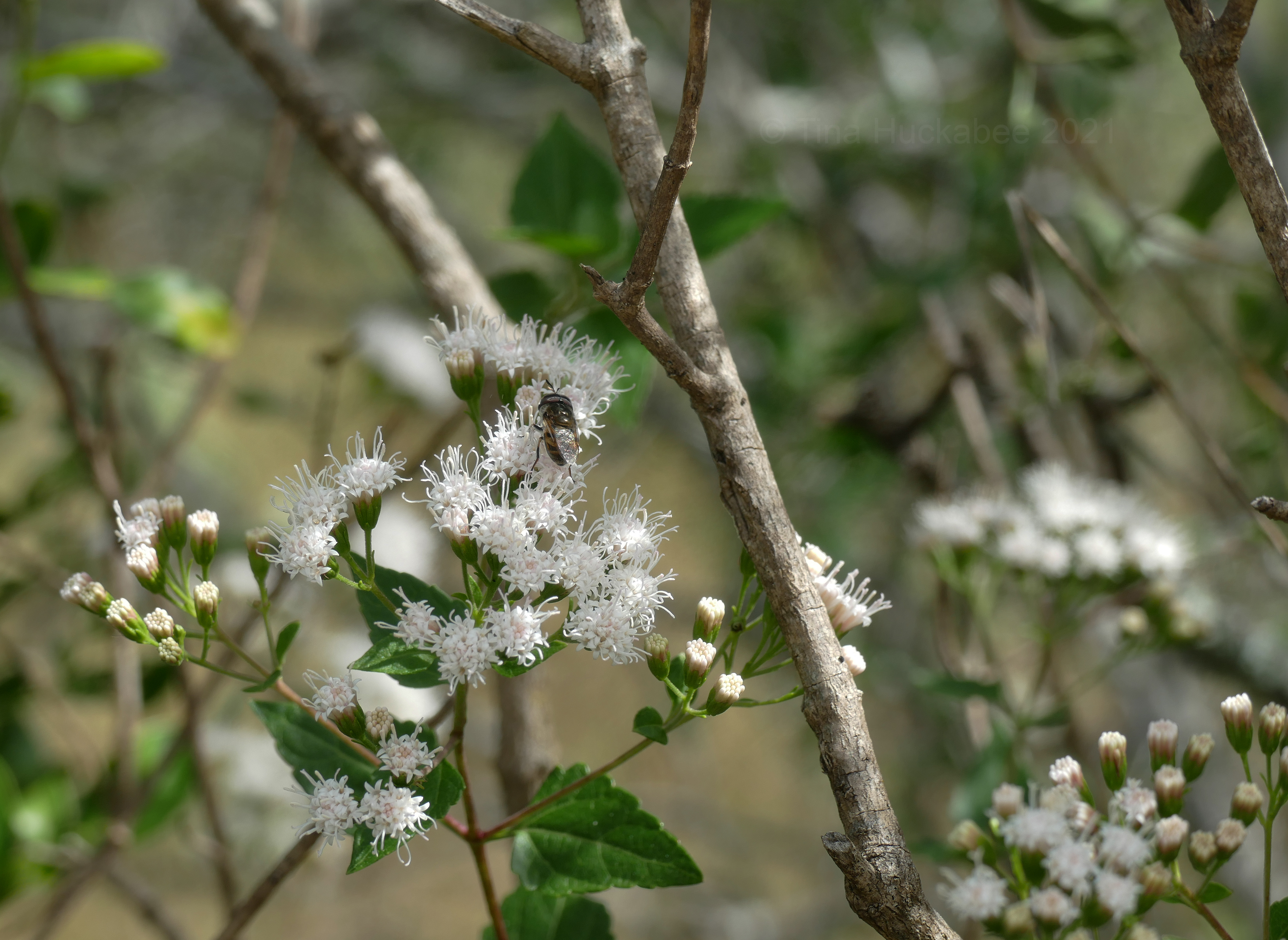
It was a full day of hiking and some segments of the trails were rigorous. As always when I venture into natural areas, I enjoyed seeing many plants that I grow in my own garden thriving in their true, native habitat. Along with early (and somewhat limited) autumn red provided by Virginia Creeper and a smattering of maple leaves, and the golden-green foliage of sycamores, fall flowers were generous, providing sprinkles, and sometime splashes, of red, white, and yellow, tempered by some blues.
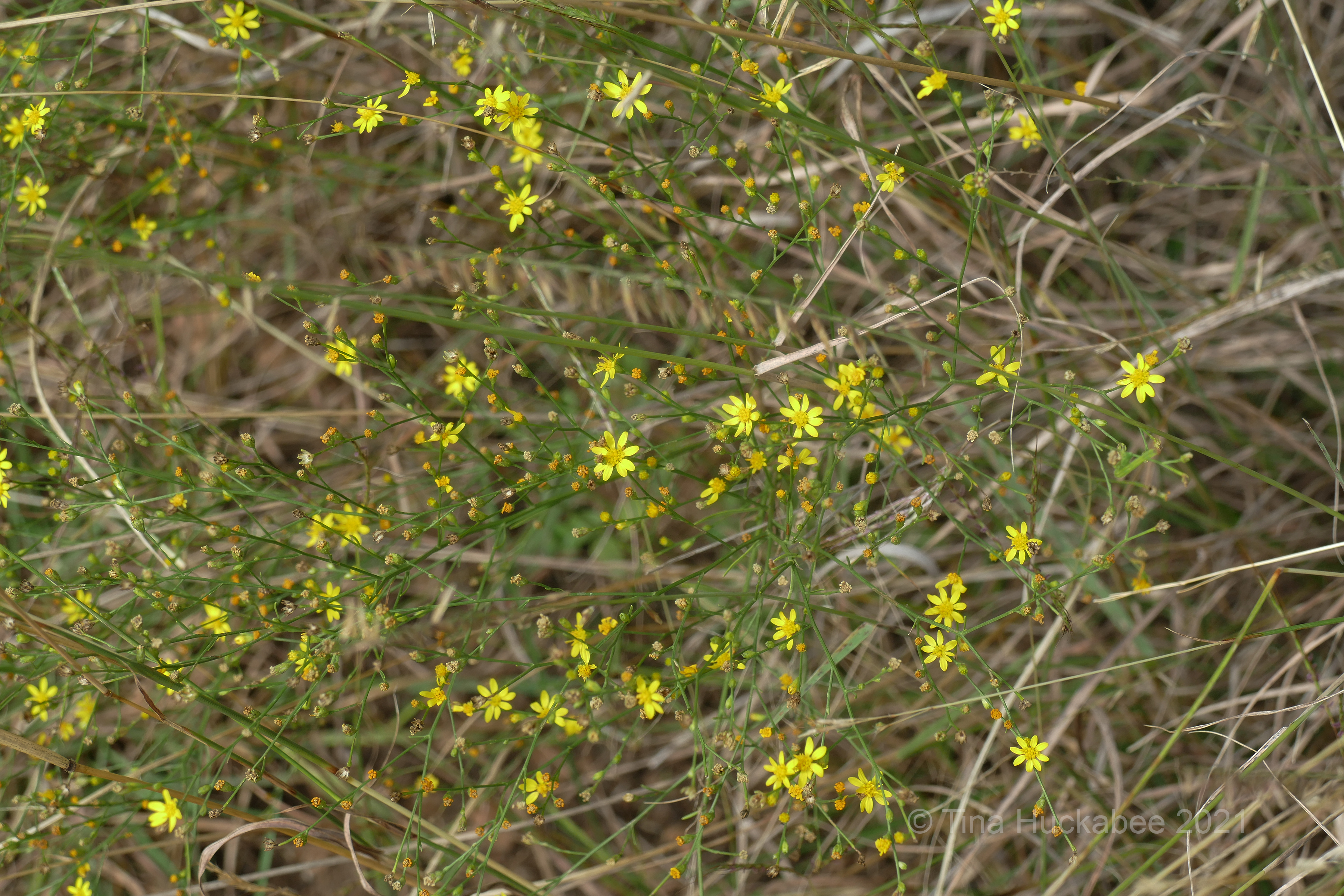
Native grasses were in full sway, as well. Big Bluestem and Little Bluestem were especially lovely, having come into their burnished beauty with fluffy, toasty and creamy seed heads.
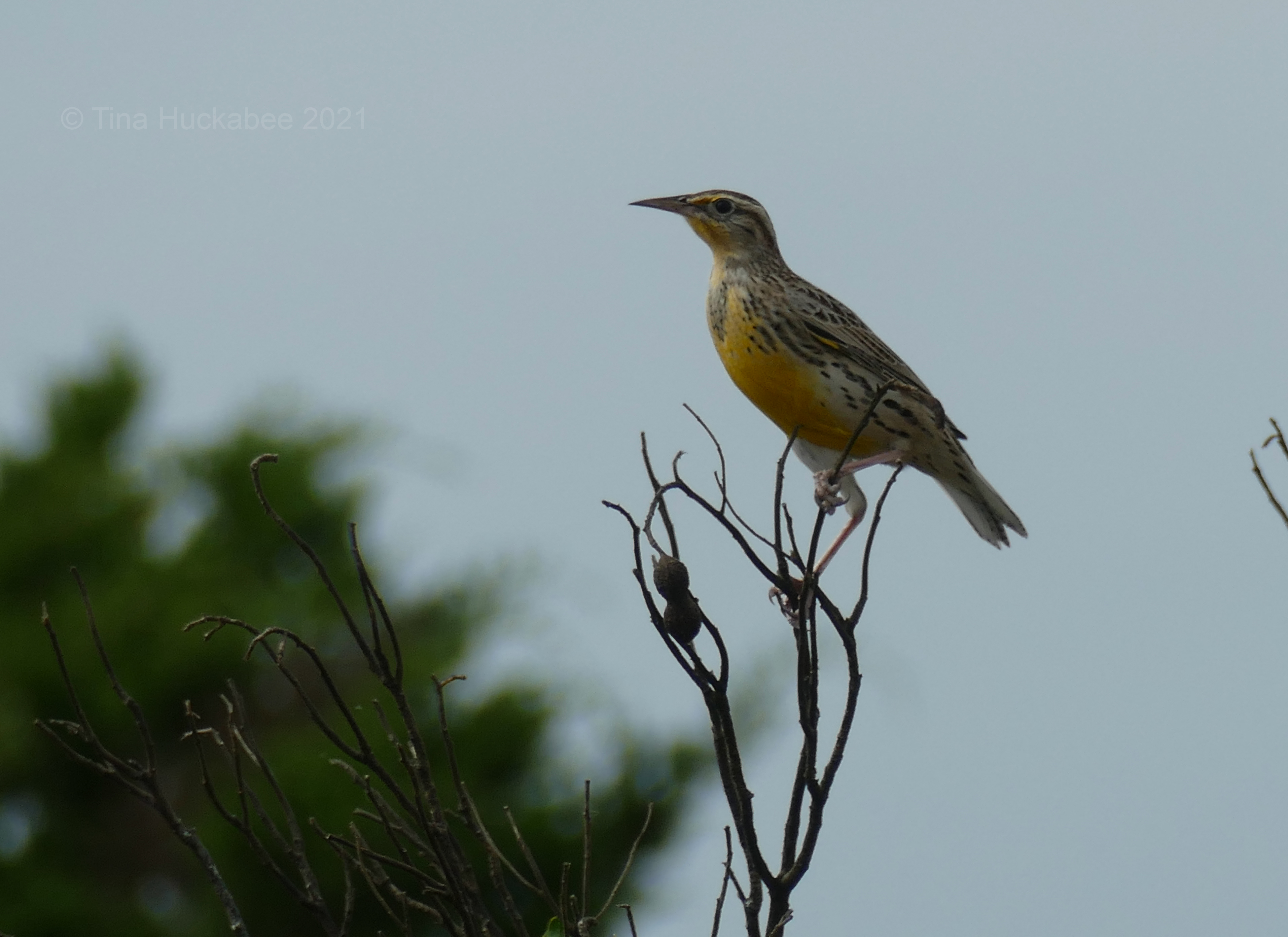
Lost Maples is notable for its good bird watching, especially during migratory periods. We heard lots of twittering, mostly of the Carolina Chickadee and Titmouse variety, as well as some invisible twittering that I couldn’t identify by sound and song. Some of the usual suspects who live in this part of the world, glorious Northern Cardinals and noisy Ravens, were common. I was thrilled to see a Western Meadowlark, Sturnella neglecta. In birder-talk, that’s a lifer for me. Cornell lists this area as non-breeding, but my Merlin app suggested Meadowlarks are rare in the park. I imagine some part of its migration, coupled with a good source of yummy insects enticed this handsome bird to the open area.
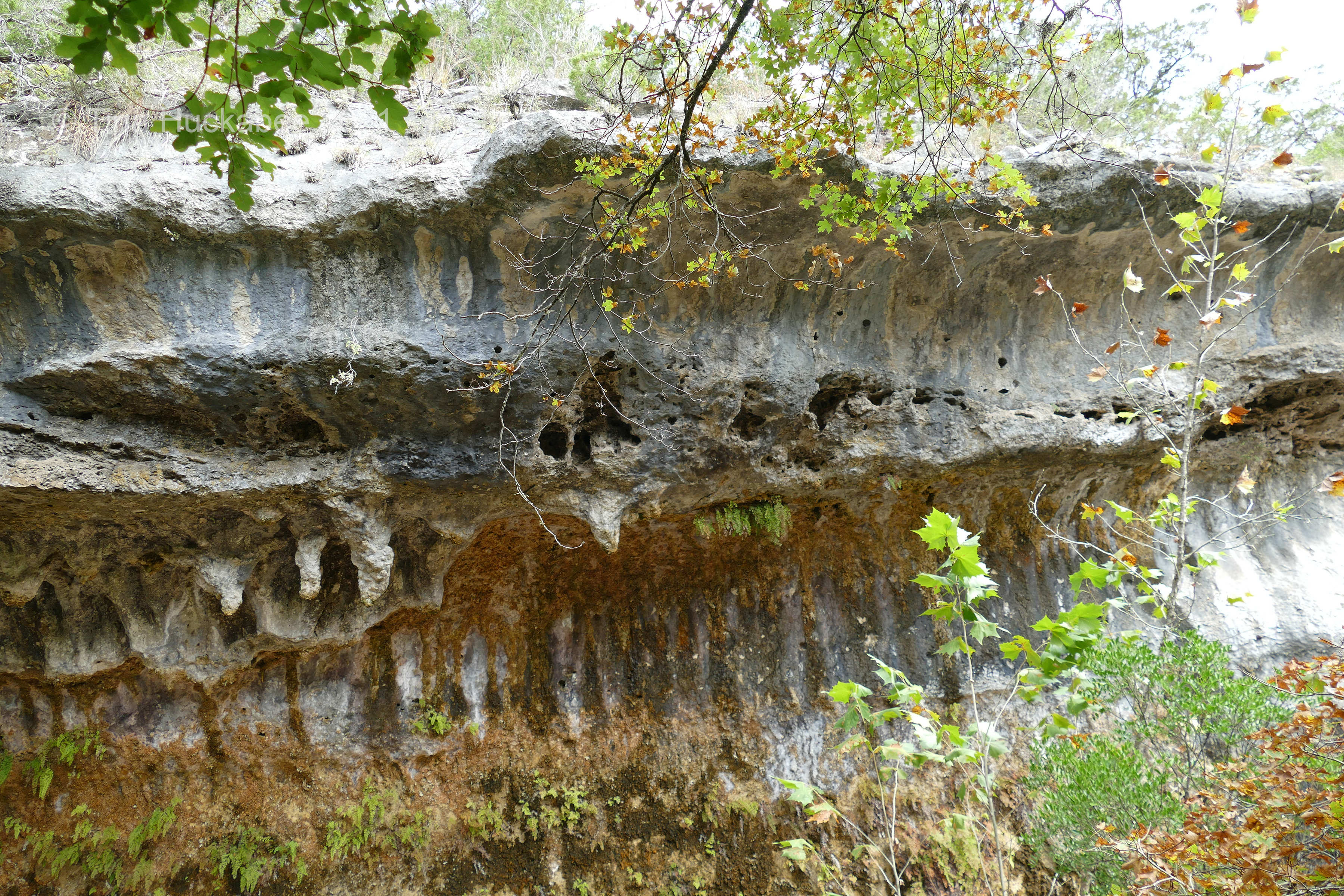
Limestone rock is a fixture (pun intended) in this area, as it is throughout Central Texas. As we hiked, we passed by a number of stunning limestone outcroppings, many of which have developed travertine stalactites over the centuries as rain water has seeped through the porous limestone.
The best known rock outcropping is named Monkey Rock. Do you see it?

I especially like that King/Queen Monkey is flanked by sentinel young American Sycamores.
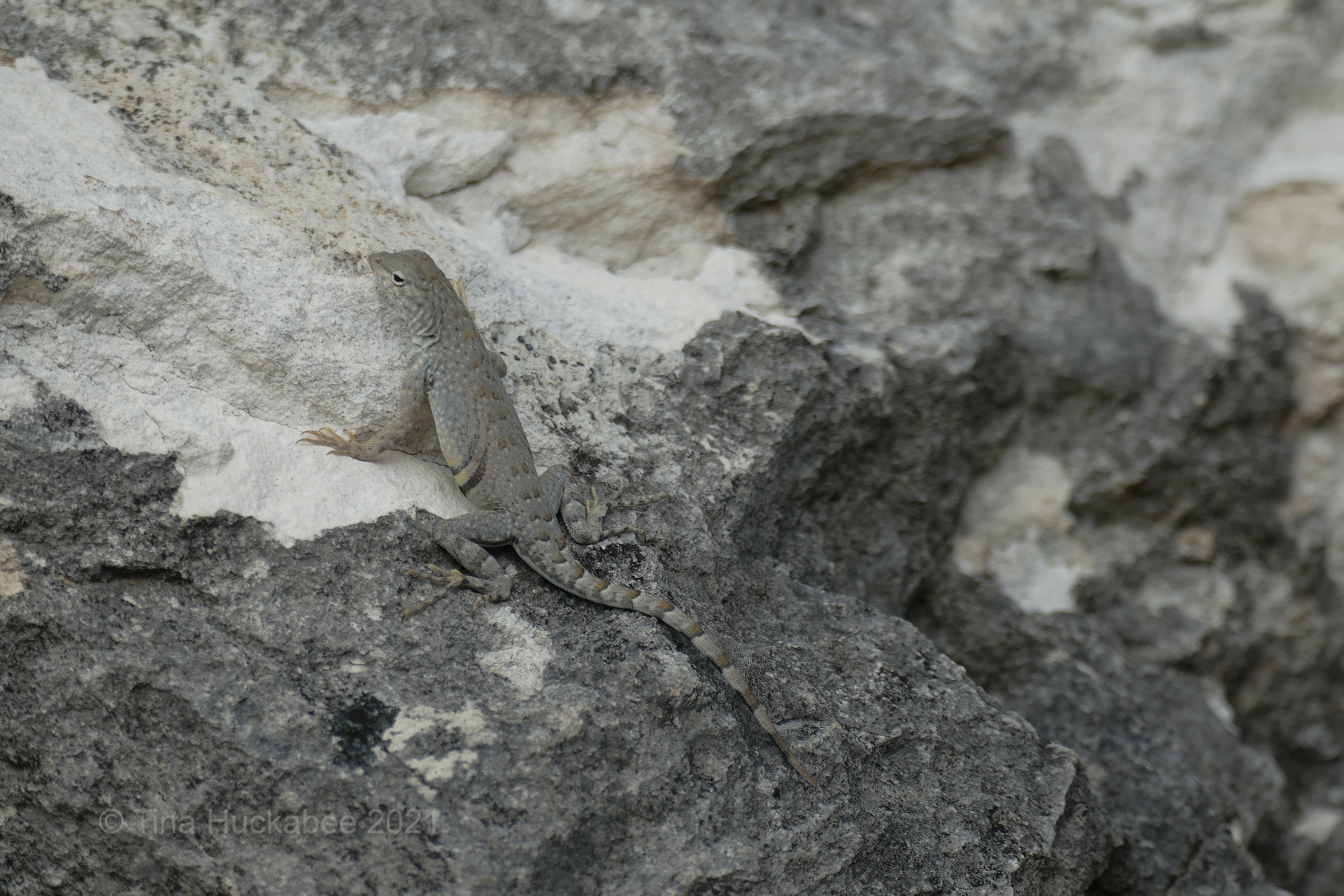
Throughout the day we occasionally heard scurrying in the brush, but of course, it’s always hard to see what dashes away to safety in the undergrowth when humans bumble by. This Greater Earless Lizard, Cophosaurus texanus, while well-camouflaged, was visible to us on part of the trail that was rocky. It remained mostly in place for long enough to catch a photo, and eyed me warily. The handsome critter was patient. Even though we saw the lizard, it’s obvious how well it fits into its environment and how a predator might miss this fella.
The upper part of the Sabinal River, once named Arroyo de la Soledad, courses gently through the park and is fed by smaller creeks, lending its own defining efforts to the land and rock formations. Ferns are happily growing along many of these pools.
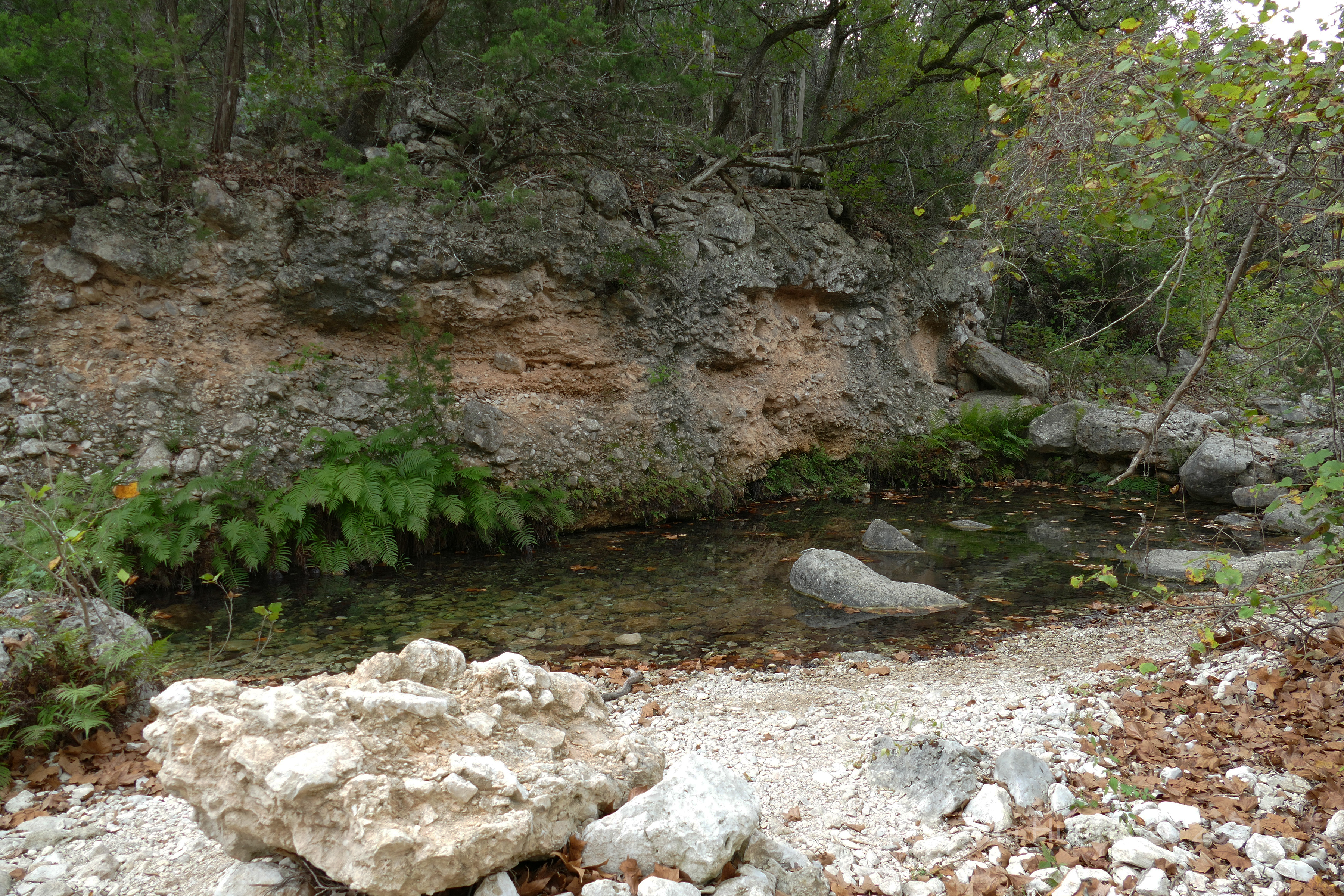

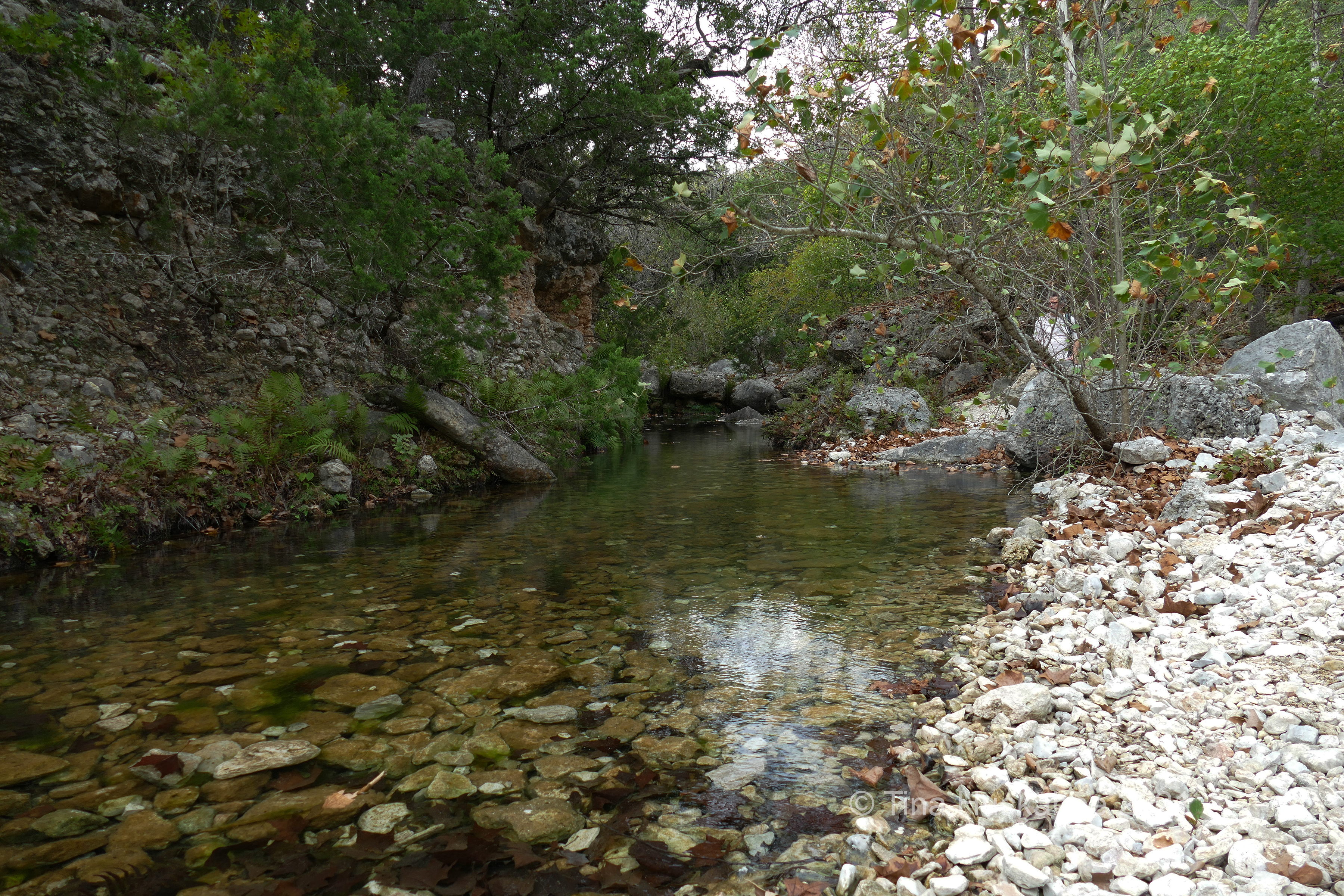
Until this recent trip, I’d never been to Lost Maples and I’m not sure why I waited so long to visit. I’d love to see the autumn colored leaves at some point, but this is a place that I plan to see in other times of the year. It’s an place of great beauty and rich diversity in both flora and fauna.










 My Gardener Says...