My nice, big brother, Chad, sent me a photo of a hummingbird at his Turk’s Cap in Corpus Christi.
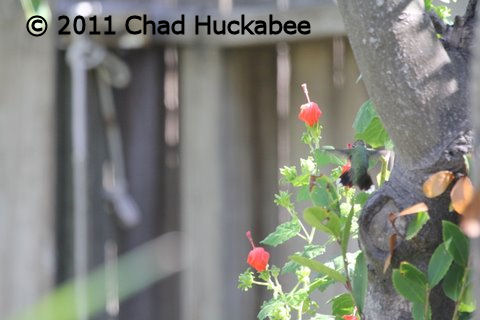
See, I told you that hummers love Turk’s Cap!
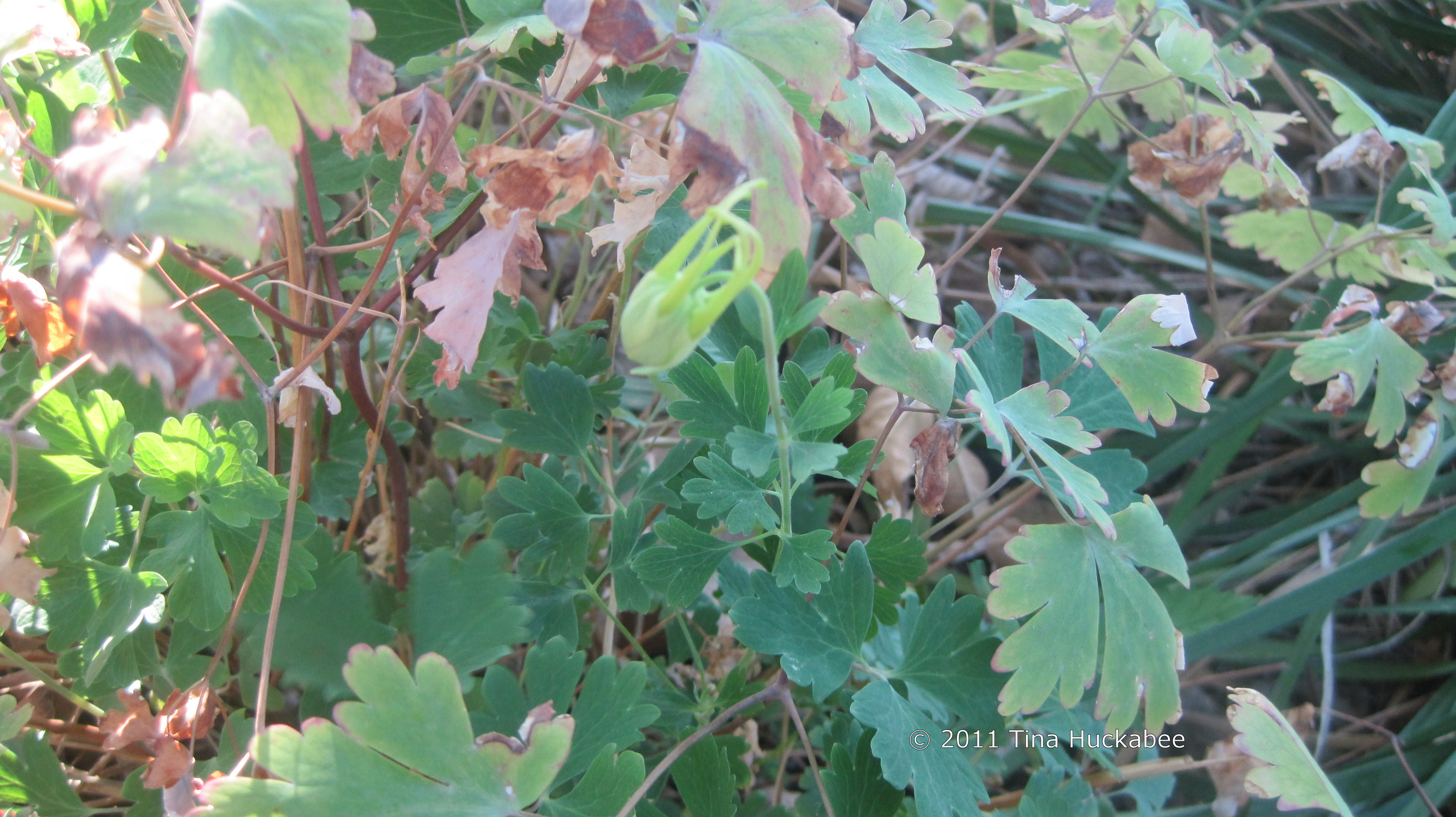
I mentioned how tough Turk’s Cap is in my first post about this plant. When my children were little and they wanted to play ball sports in our driveway, I cringed. The ‘fill-in-the-blank’ balls wreaked havoc on my shrubs and flowers. (Note: basketball/soccer ball plus Columbine does not have a positive outcome–at least not for the Columbine!) When we placed a basketball hoop beside the driveway, I needed to plant something that wouldn’t break very time the kids played outside. Years before, I had planted Barbados Cherry, (Malpighia glabra), along the side of the driveway as a hedge and it had proved sturdy against the ravages of playtime. We placed the hoop stand about 4-5 feet to the right of the Barbados Cherry and on the other side was St. Augustine grass. I wanted to plant something in addition to the Barbados Cherry and chose Turk’s Cap because I knew that the Turk’s Cap would withstand the bounces of balls and so it did.

The balls (and children) that careened into the Turk’s Cap never damaged the plants, other than a few blooms that were knocked off of their stems. The children and Barbados Cherry weren’t damaged either. Additionally, Turk’s Cap and Barbados Cherry work nicely together, especially when both plants bloom simultaneously, the pink of the Barbados Cherry and the red of the Turk’s Cap and also when they bear their respective red fruits, which birds love.
There are a few negative qualities to Turk’s Cap:
If you plant Turk’s Cap, be certain that where you plant it, is where you want it. While it’s easy to transplant as a seedling, transplanting an established stand is VERY hard on the back, arms, legs and sweat glands. Also, be sure to give Turk’s Cap plenty of room to spread. It grows.
This year I’ve noticed that the Turk’s Cap leaves are getting munched more than I’ve noticed in the past.
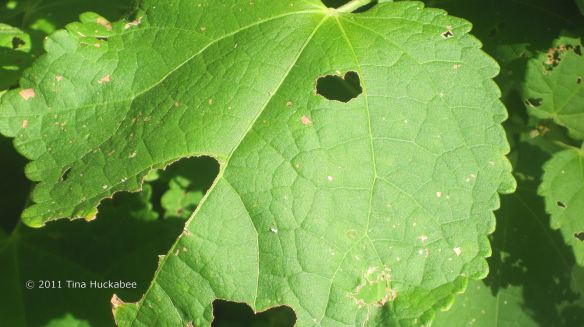
Maybe this happens every year and I’ve not noticed before. I think I’m more aware of the hole-y leaves because so many other plants suffered sun burn this year. If this is a quality that you find objectionable, then it’s something you should consider before you plant Turk’s Cap. I don’t particularly mind a few dings in leaves and given the long bloom cycle and fabulous performance of this plant, I still think Turk’s Cap is a beautiful addition to any garden.
Because Turk’s Cap is deciduous, it’s wise to plant it with evergreen plants so that there is something interesting happening during Turk’s Cap’s off-season. Rock Rose (Pavonia lasiopetala), is lovely with Turk’s Cap,

and these plants share the same bloom time (late spring, summer, early fall).
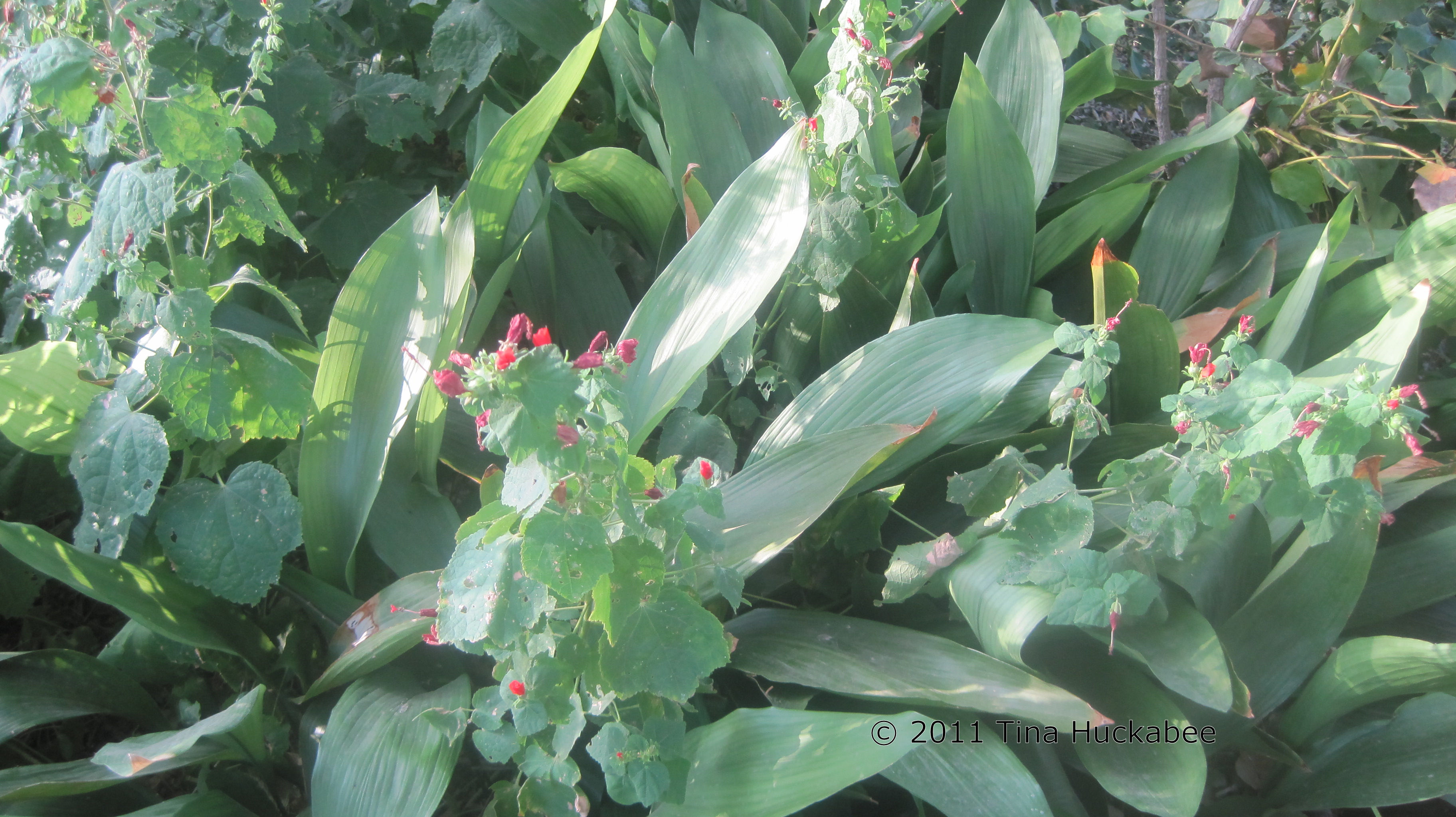
Turk’s Cap and Cast Iron Plant are good companions,
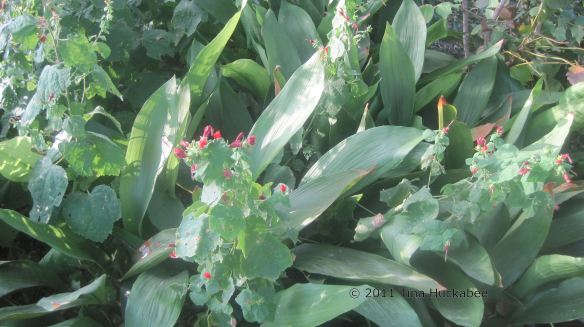
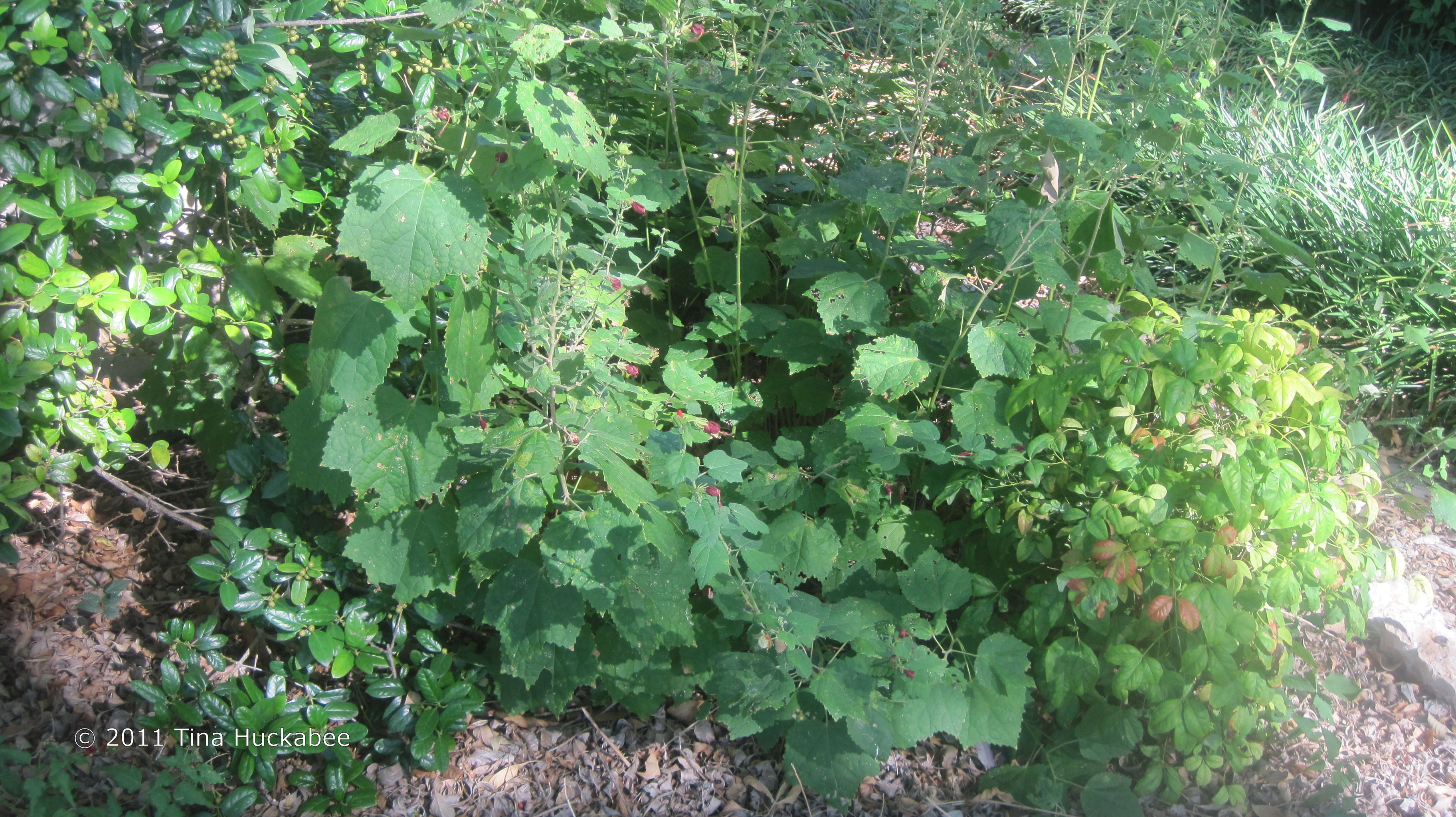
and the non-berrying ‘Nana’ Nandina works well too.

I’m NOT a proponent of planting most forms of Nandina. Never, ever, ever plant the Nandina shrubs which produce berries. Those Nandina are invasive plants to most areas of Texas and are on all the “NO-NO” lists. Don’t plant them! However, the small Nandina shrub, usually known as a ‘Nana’, is an acceptable plant because it doesn’t produce berries and therefore won’t spread. It’s also a tough, xeric plant. This plant sports a nice burgundy to red color in the winter and that’s why I like it paired with Turk’s Cap. The photo above was taken recently, and the ‘Nana’ (on the right in the photo) is not particularly interesting. But when the Turk’s Cap is dormant during winter, the little ‘Nana’ will be appealing because of the vibrant color of its leaves.
The other plant is this photo (on the left) is the non-native, evergreen Burford Holly, (Ilex cornuta ‘Burfordii’). It showcases beautiful red berries in the winter, until the cedar waxwings arrive to dispense with the berries–usually in one afternoon.
I could talk about Turk’s Cap further, but I have a life. If you grow this plant, you know what I’m talking about. If you don’t, go buy one today (from your locally owned, independent nursery), and try it. You’ll love Turk’s Cap.




 My Gardener Says...