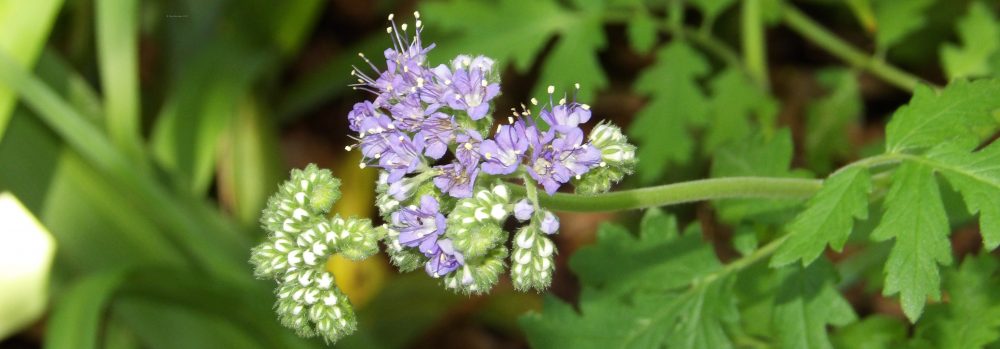
Mistflower Palooza

Aah, fall!  We glory in cool breezes, soft light (well, okay, light in Texas is rarely “soft”), and  the resurgence of the perennial bloom cycle.  Additionally, fall blooming plants burst out dramatically, a reminder of our two temperate growing seasons in Central Texas.  One of the best of the bloomers in late summer/fall is the in the Aster family.  Conoclinium  boasts three great plants which  are readily available at  independent nurseries and for the first time ever, I have all three mistflowers residing in my gardens.  Two of these perennials are ground covers, one is a shrub.

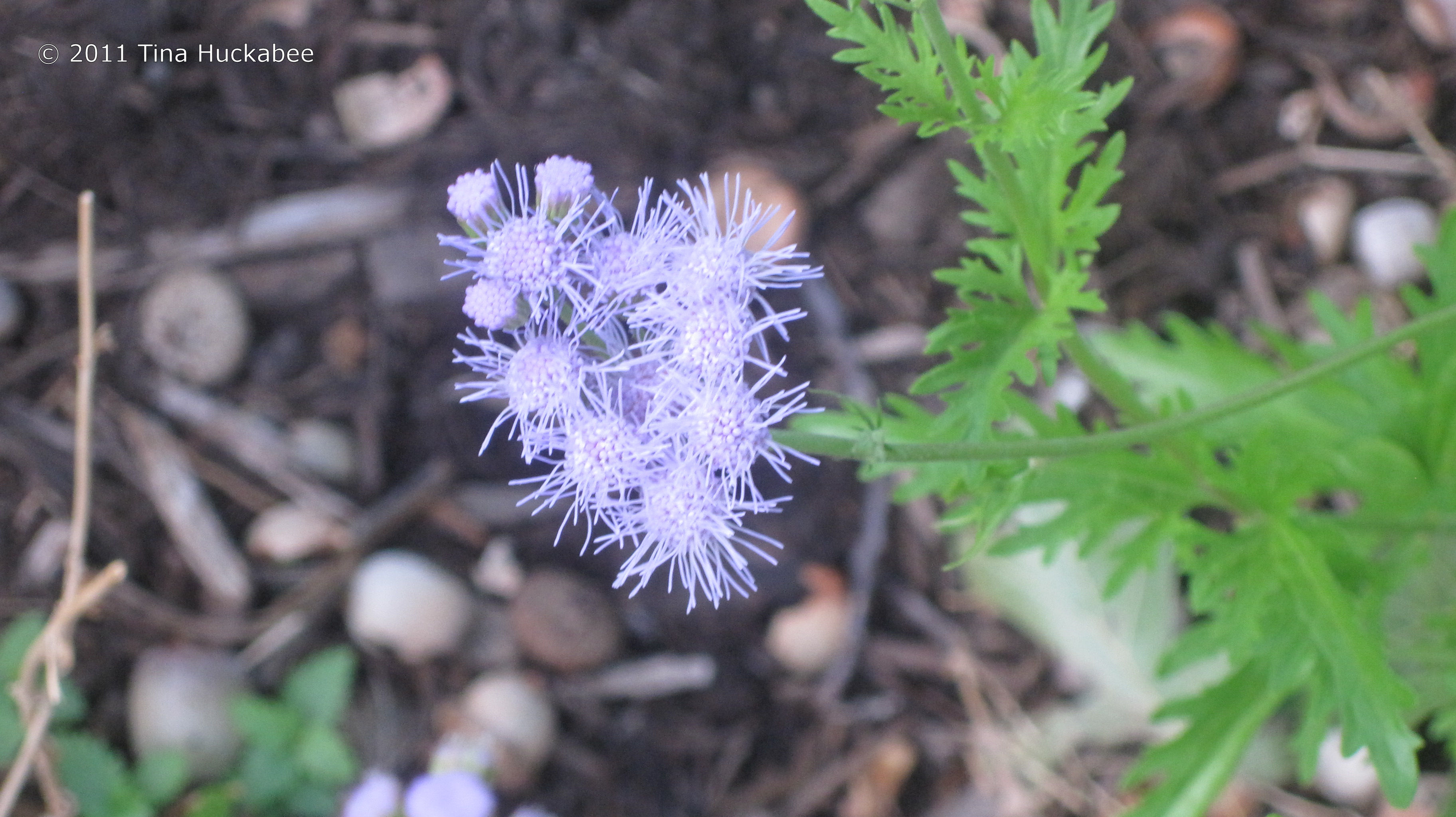
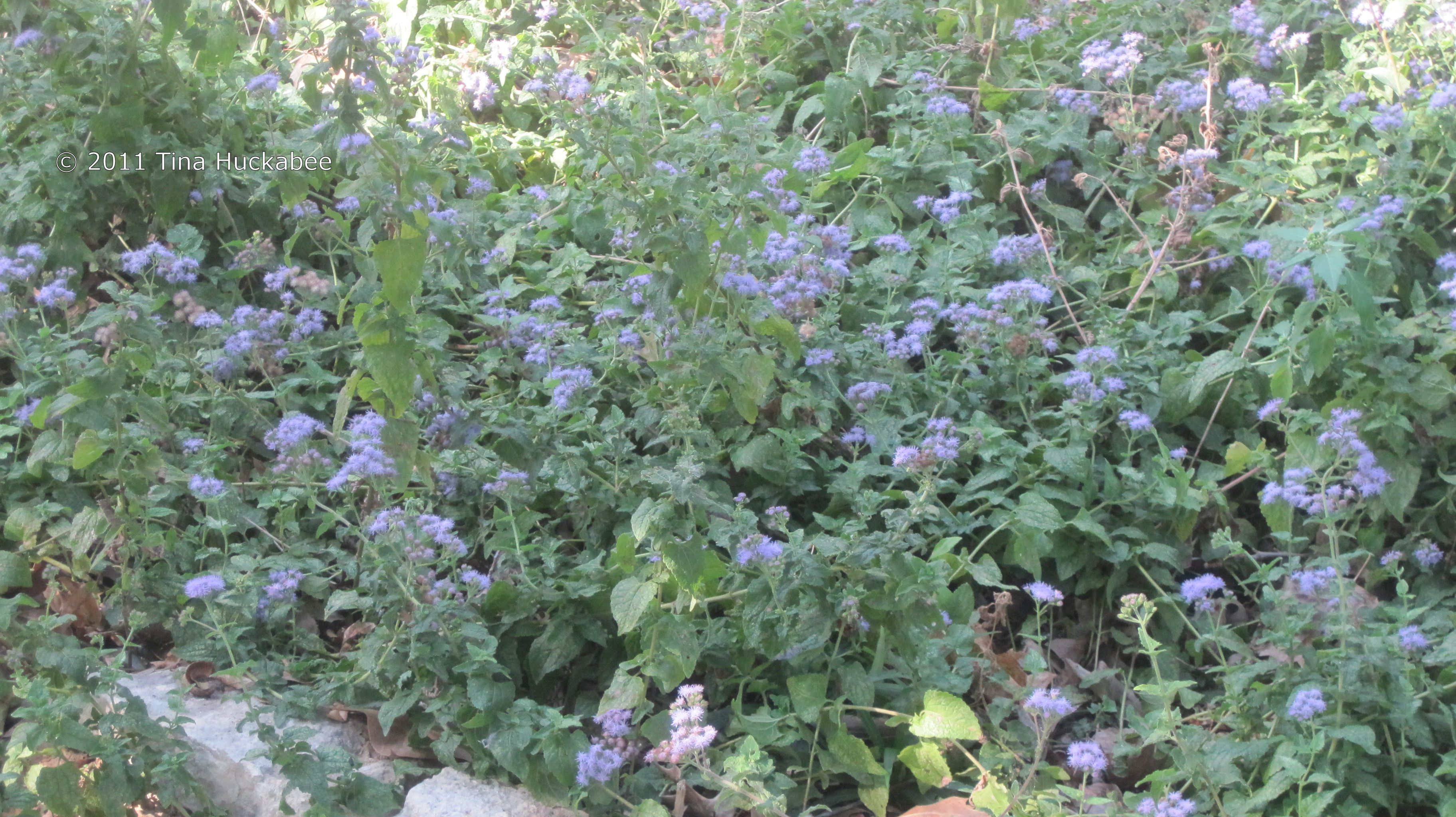
For years, I’ve grown the Blue Mistflower (Conoclinium coelestinum).
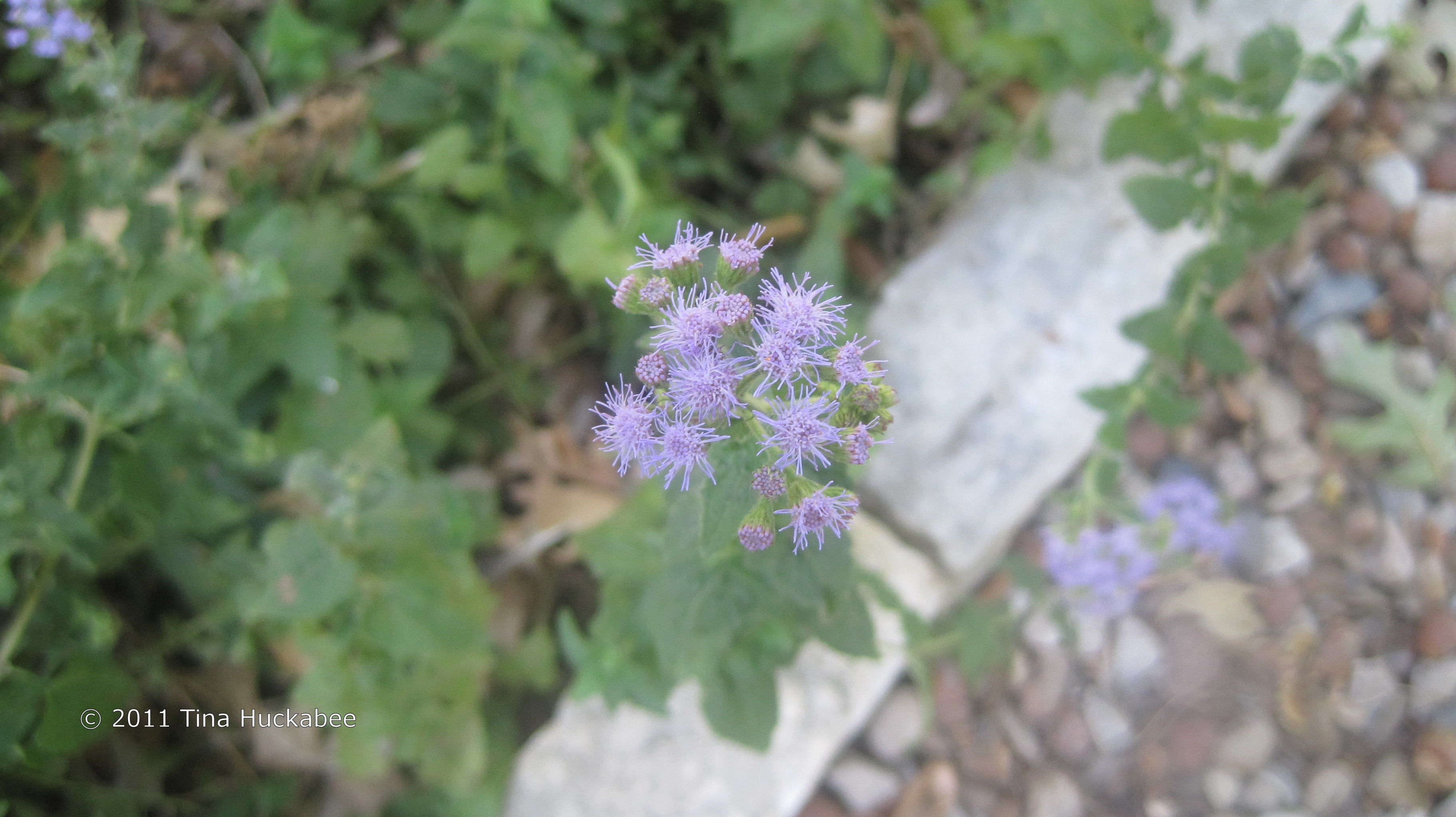
I adore blue flowers and this has long been a favorite of mine.  I bought a four-inch pot twelve or thirteen years ago and planted it in a back corner of my gardens. About three  years ago, it didn’t come back from winter with the vigor usually displayed. For various reasons,  I decided to move the remaining sprigs-with-root to a new perennial bed so that this  mistflower would border a walkway.  The color doesn’t translate well in these photos, but it’s a beautiful deep blue-purple,

All mistflower blooms are fuzzy, puffy and unusual looking.

Blue Mistflower begins blooming in August-September, depending upon rainfall. But, it is at its zenith of beauty in October.

After the first hard freeze, the blooms turn a warm, toasty brown. I’ll usually prune the remains to the ground in late winter and new green sprouts emerge in late spring.  It can be spready, so it’s a great pass-a-long plant–just yank a sprig out of the ground, with some root and share.

Personally, I’ve always found this mistflower easy to transplant.  A year ago, as I was expanding an existing bed, I pulled up five sprigs-with-roots and planted them.

These three survived the Summer From Hell and I expect this area to be lush with mistflower by this time next year.

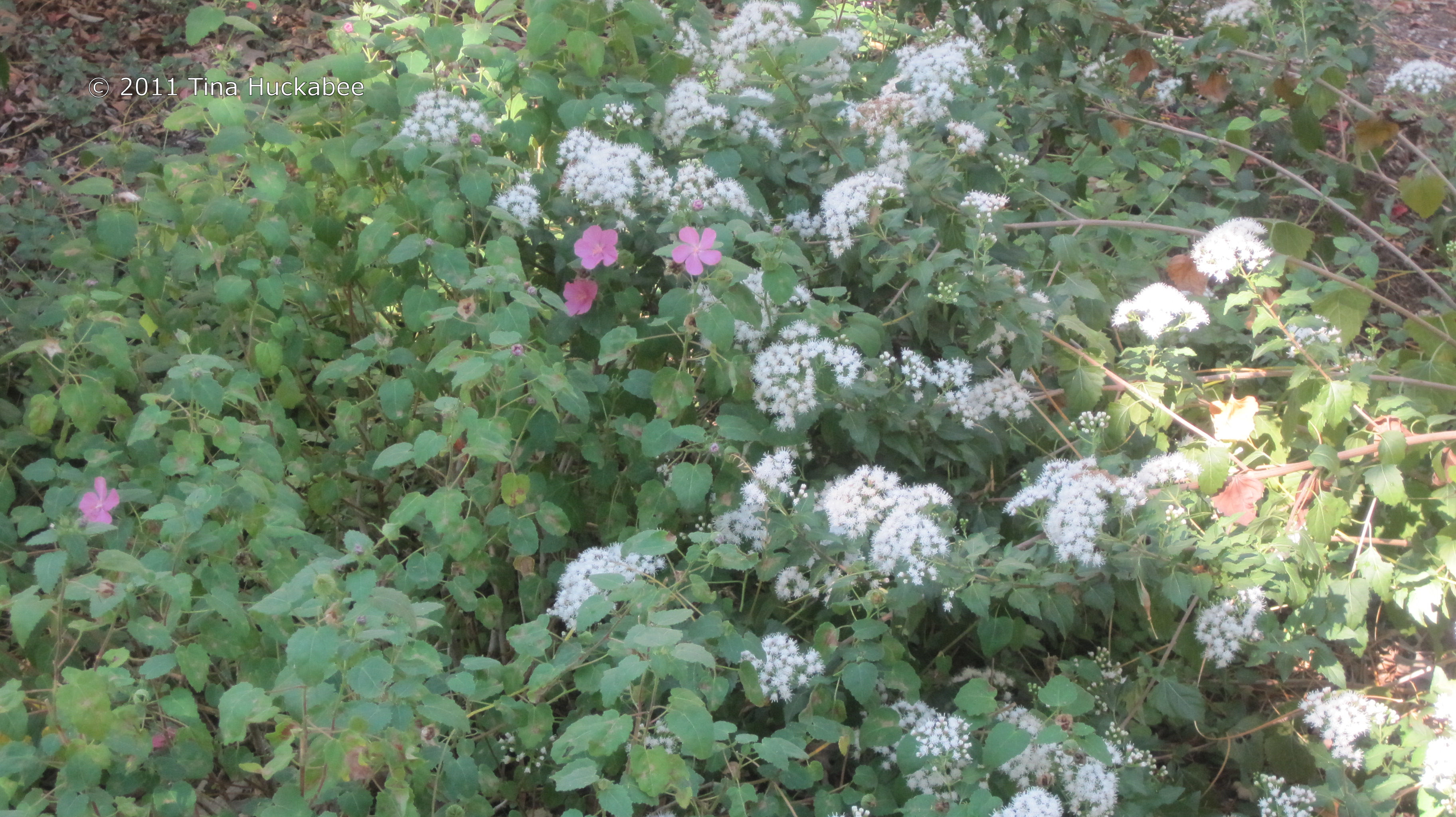
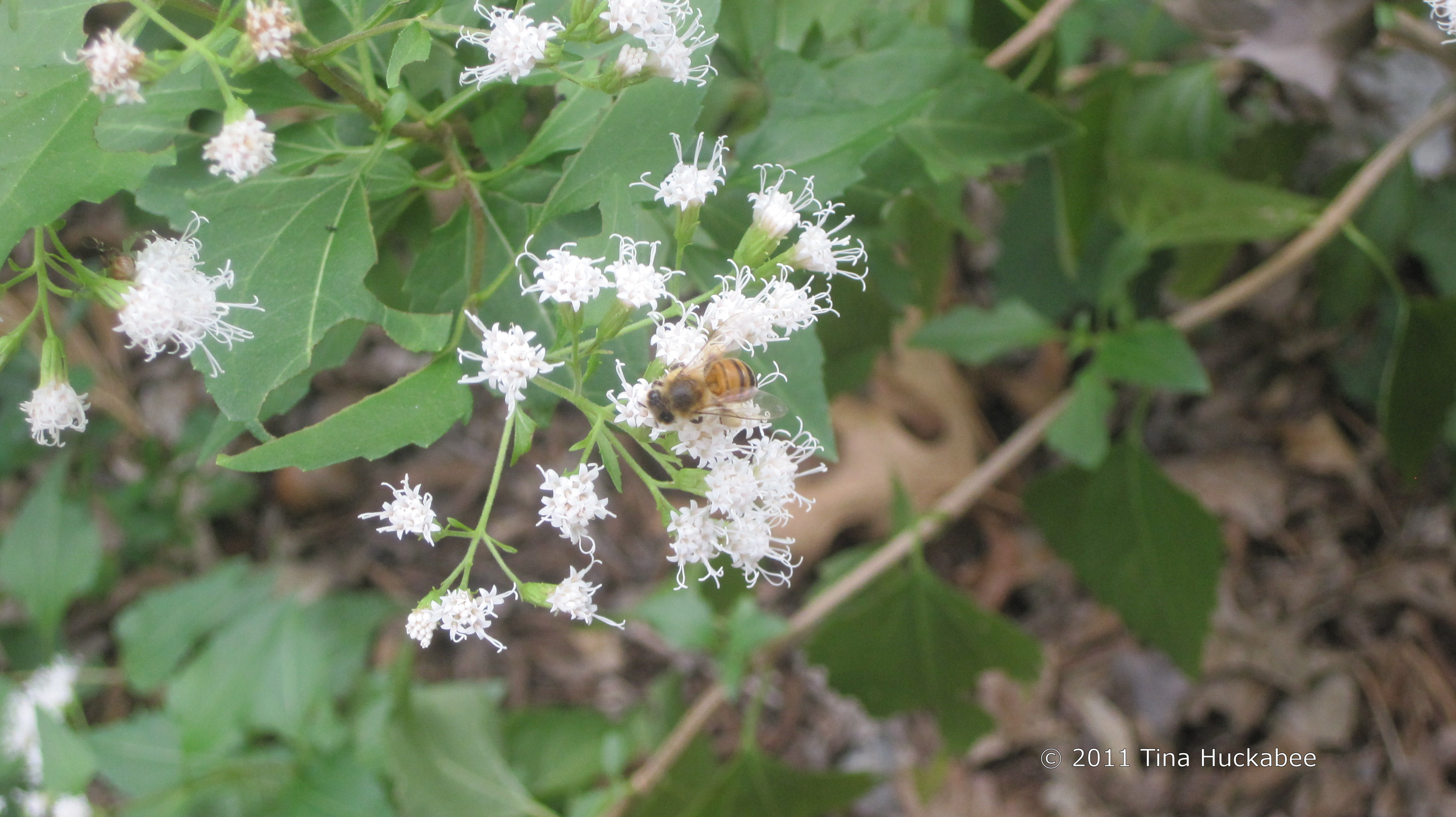
The newest mistflower addition to my gardens is the White Mistflower (Ageratina havanensis).  The blooms are fragrant–they smell like vanilla to me. This plant is more shrub-like, rather than the Blue Mistflower ground cover.

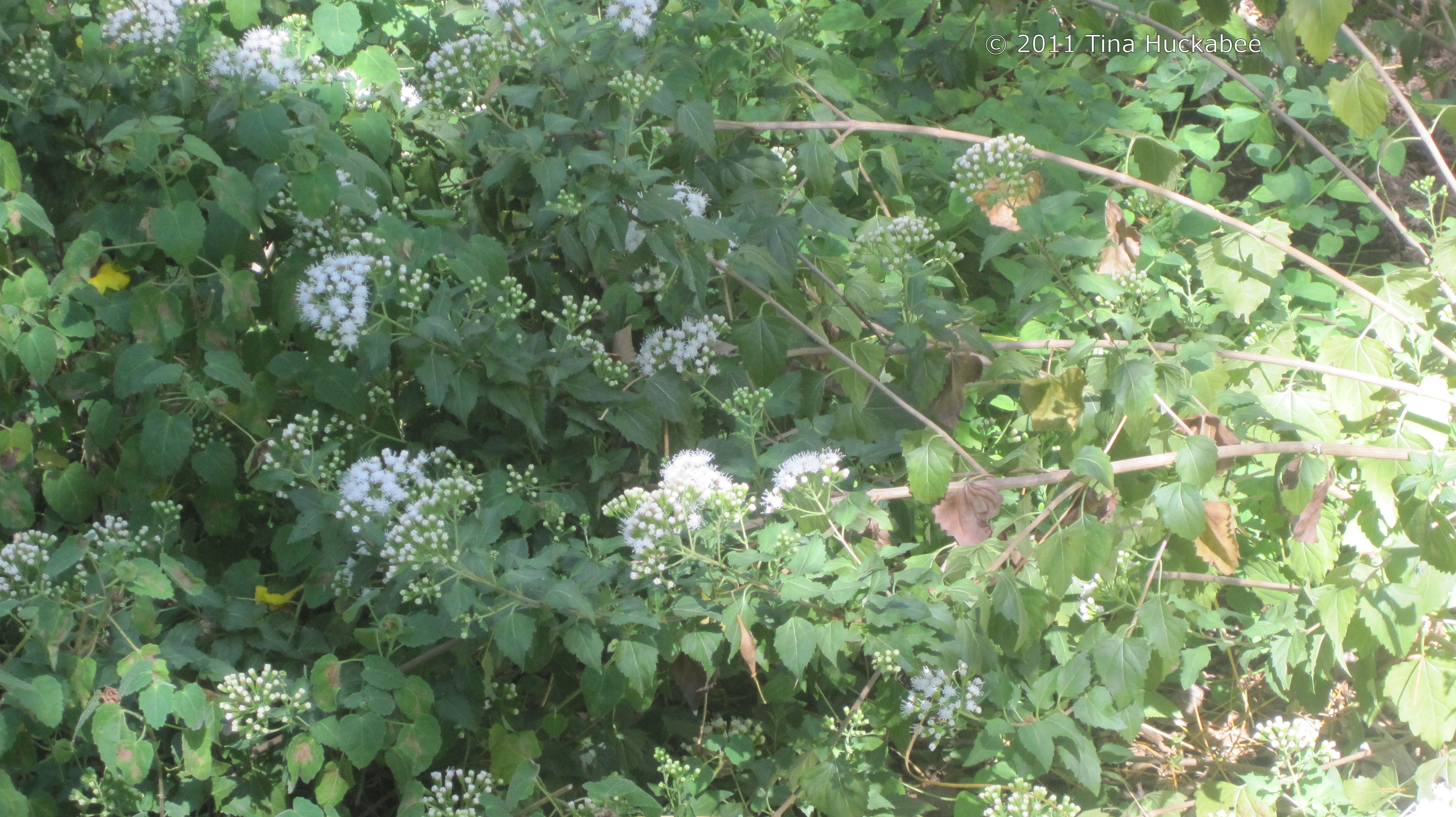
I planted this one about a year and a half ago, it bloomed last year and is even lovelier this year, especially as it happily mingles with Rock Rose (Pavonia laseopetala). The white blooms are especially pretty when contrasted with other bright colors.
Another mistflower common in Austin area gardens is the Gregg’s Mistflower (Conoclinium greggii). Like the Blue Mistflower, it’s a ground cover that dies after a freeze and returns in the spring.  Also like the Blue, it spreads and (at least for most gardeners), is easy to transplant. The color is a lighter blue than the Blue Mistflower and the leaves are bright green and palmated.
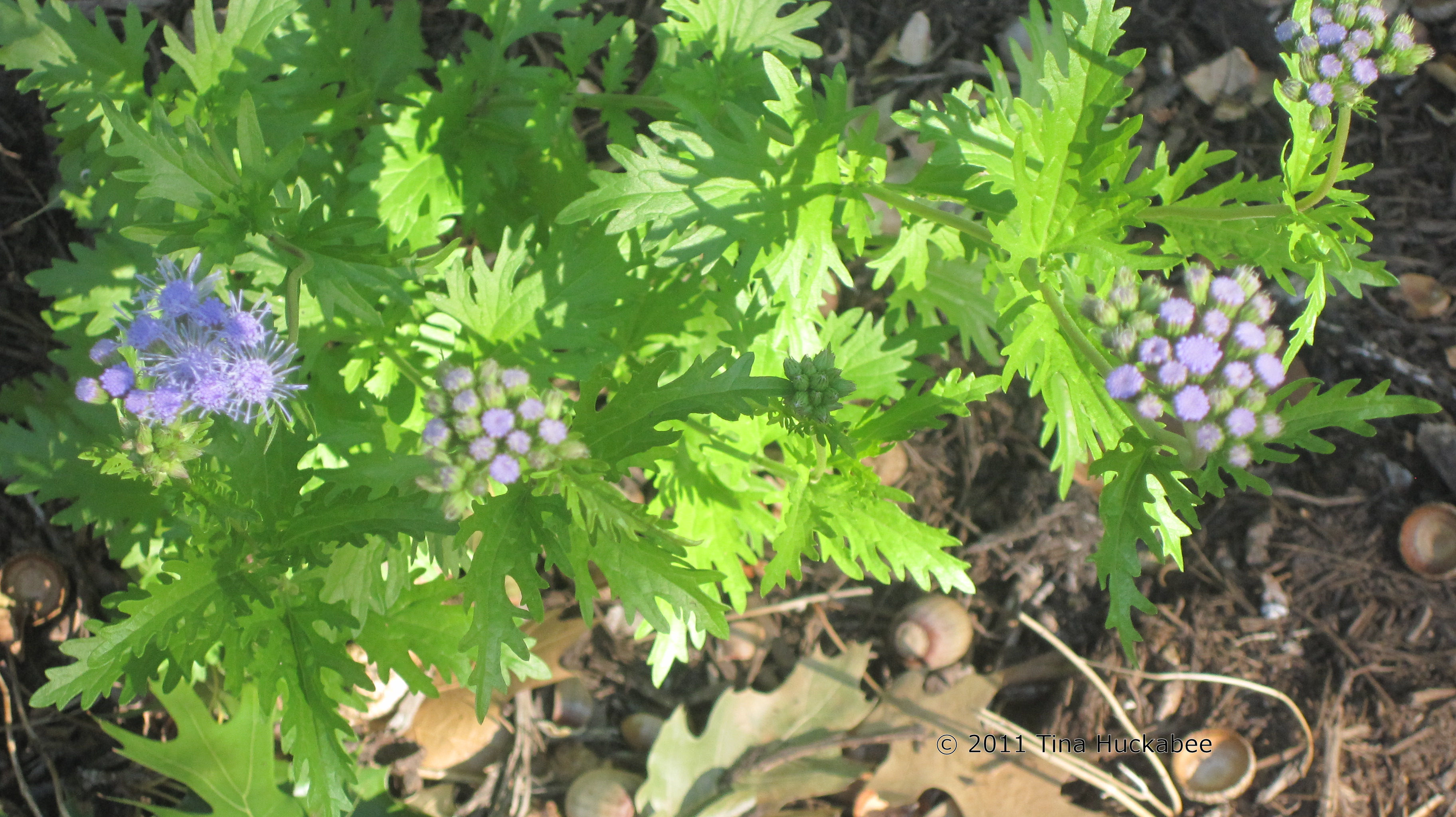
Unlike every other gardener in Austin, I’ve never had much luck with these guys.  Years ago, I planted a four-inch pot–it died.  Last fall, I bought two, four-inch pots–both died in the freezes of January/February.  Sigh.   A nice friend gave me  some sprigs-with-root this summer, so, ever the optimist, I planted.

The sprigs are blooming and doing well.  I’ll see how this little group fares over the coming winter–I dearly hope each sprig survives.  The Gregg’s Mistflower isn’t my favorite, but it is favored by the butterflies, (especially the Queen), when we have them.

All three mistflower species are deciduous in the winter and have low to moderate water needs. These plants attract butterflies and bees and are beautiful additions to any perennial garden.

Mistlfowers are also very tough plants.  I hiked at Hamilton Pool Nature Preserve in early September and of the two plants that I saw blooming, one was a Gregg’s Mistflower.  After the Summer From Hell and the exceptional drought that Central Texas is experiencing, to see a plant bloom without rainfall or irrigation is a testament to its durability.
The beauty of mistflower speaks for itself.

Waiting For Muhly

How many Octobers have I waited, in hopes, to see if the Gulf Muhly (Muhlenbergia capillaris) in my gardens  will show off the beautiful and graceful seed heads that arise from the grass, gossamer and veil-like?  How many Octobers waiting to see if my Gulf Muhly would look like those  that I see in commercial landscapes or others’ (Growing Optimism) personal gardens?    How many times have I transplanted my Gulf Muhly in the spring, after disappointing no-show plumes, only to wait a year or more to see if this spot in the garden is the right spot.  I can’t say.

Finally, I think I have the right (two) spots.  Yipee!!!

I love Gulf Muhly.  When I see this beautiful grass in October, it takes my breath away.  The color (a pinkish-purple) is lovely, rich and unusual and the “bloom,” which are actually tiny seeds borne on very thin spikes, is feathery and soft.  It’s a sensual plant.  As a single plant, it’s lovely.  Planted in mass?  Stunning!  Mostly, I’ve admired Gulf Muhly from afar, because I  have too much shade/part shade on my property and I’ve opted for longer blooming plants in the few areas which receive full sun.  Gulf Muhly is best in full sun and requires a bit more water than many of the plants that I grow.

My landscape has changed in the last couple of years, so last year (fall 2010),  I moved two in a back area which receives the blasting sun in the summer.

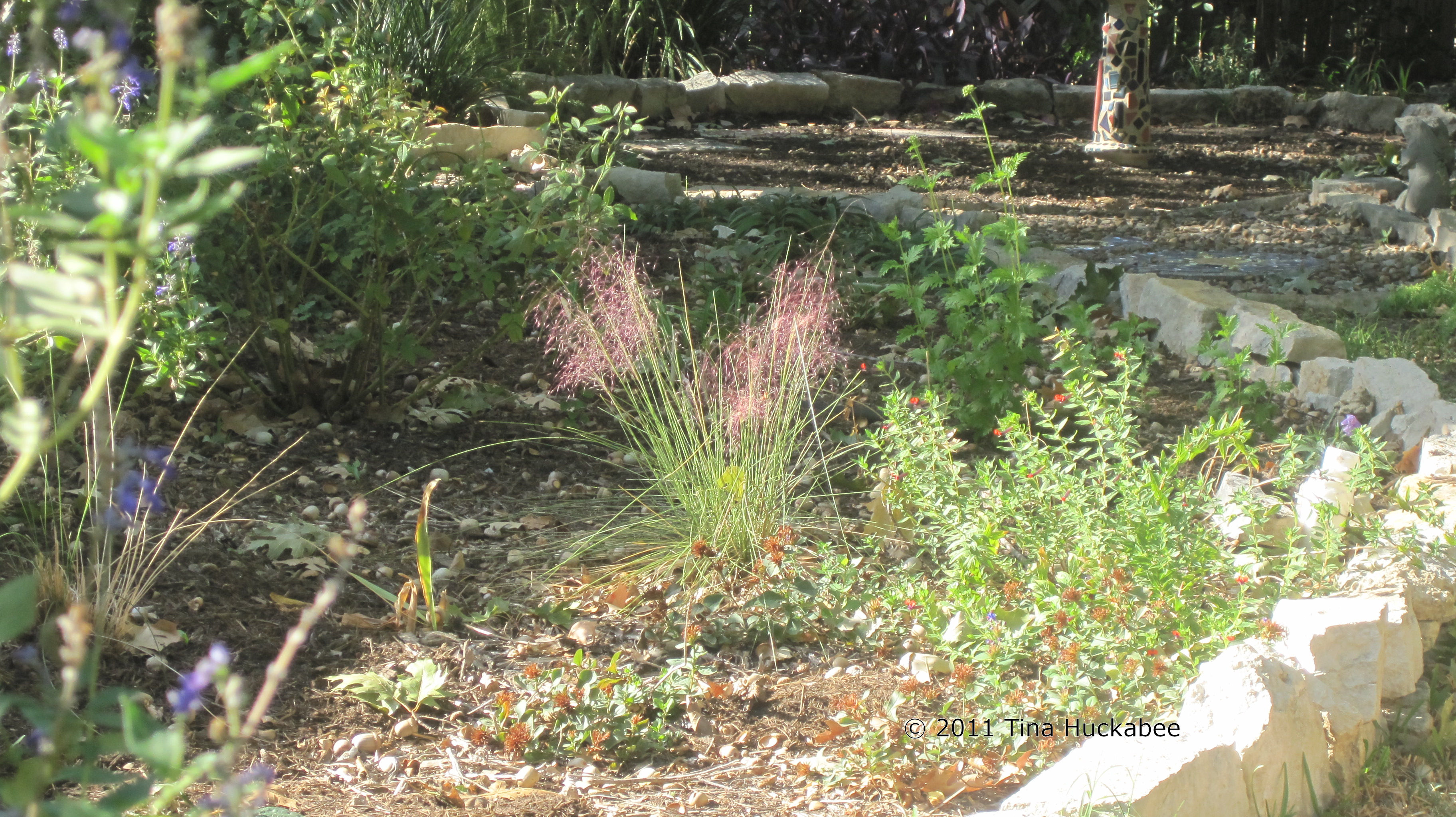
Originally, I had three, but lost one over the Summer From Hell.  The other two are doing well and in just the last two days, put on their fabulous bloom spikes.

I know, you can barely see the signature pink-purple seed heads–they look spindly compared with  other Gulf Muhly around Austin, but I’m tickled to have anything.  It will take another 2-3 years to reach maturity and real be show-stoppers.   But finally, I’ll  have a nice display of this beautiful plant in the back of my garden.

I also moved this one at about the same time last year.

Wow!  Enough plumage to achieve a back-lit effect from the west sun!  I can die now.

The little spikes to the left are another Gulf Muhly that I moved two weeks ago.  It’ll be next year before I see anything from this plant.  But in 2 or 3 years?  Oh, I can’t wait!

Most of the year, Gulf Muhly is an attractive grass–light green and full.  Generally, it’s a tough plant, with higher water needs than some of the other native grasses.  In October (or so), those magnificent spikes appear and it’s unrivaled in beauty.  It sways in the breeze and when the sun is behind the plant, it glows.  As the seeds develop, the seed heads turn a soft light brown.  Still lovely.  After the first hard freeze, the plant is dormant until spring.
This Gulf Muhly lover lives for the October show.

And the wait is worth it.

Et Tu, Salvia Roemeriana?

At the Green Garden in Zilker Botanical Gardens this past week, I was leading a group from Keep Austin Beautiful and as we were touring the gardens, I noticed a blooming Cedar Sage (Salvia roemeriana).

There are only one or two boom spikes on these Cedar Sage at Zilker, but in spring, this plant is full of brilliant red blooms.

As with the Columbine of my last post, this plant is a spring/early summer bloomer.  Personally, I’ve only had Cedar Sage bloom from March into June–I’ve never seen it bloom this late in the growing season.  According to the NPIN:Plant Database page on Cedar Sage, the plant blooms during the spring and summer.

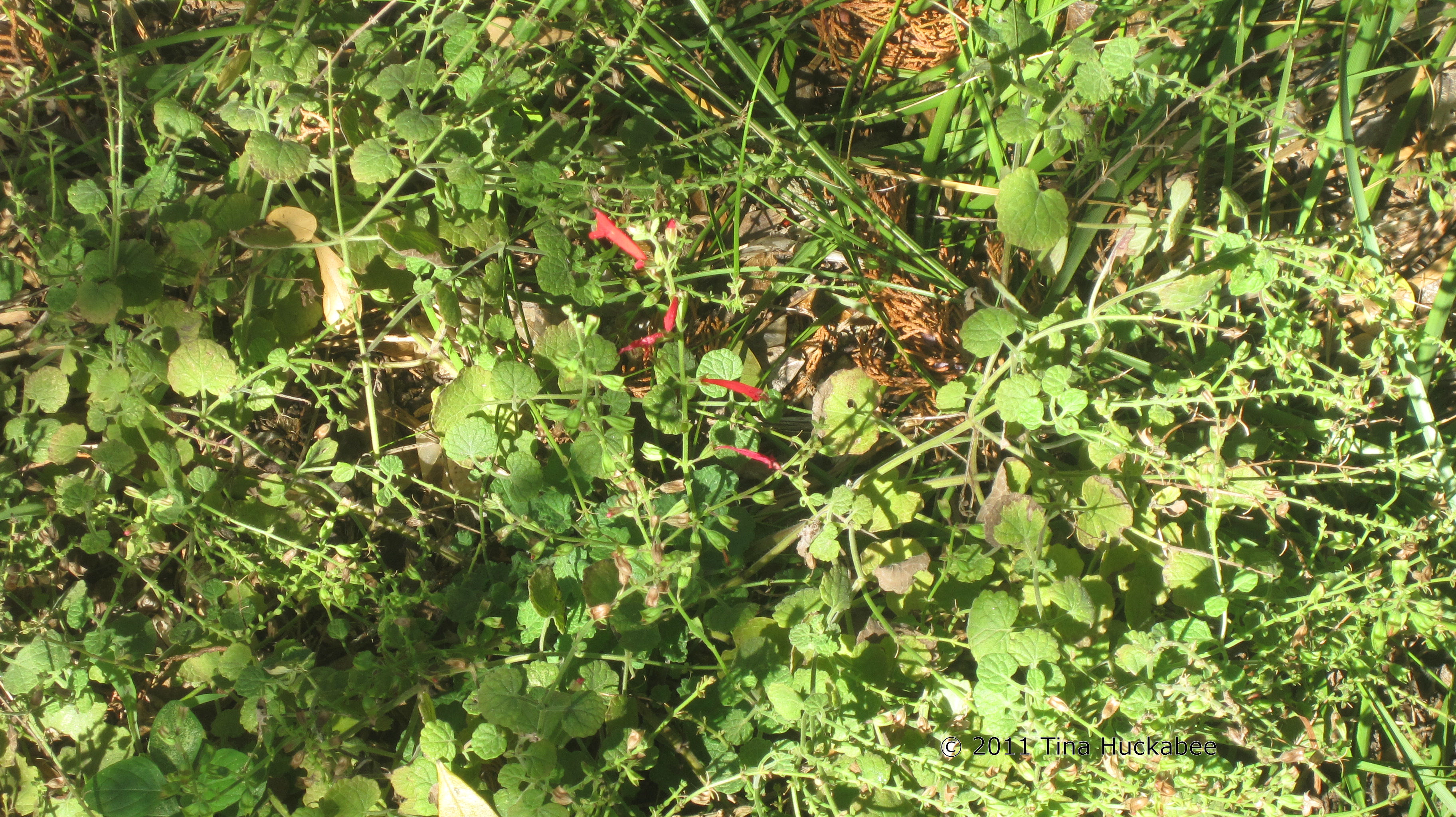
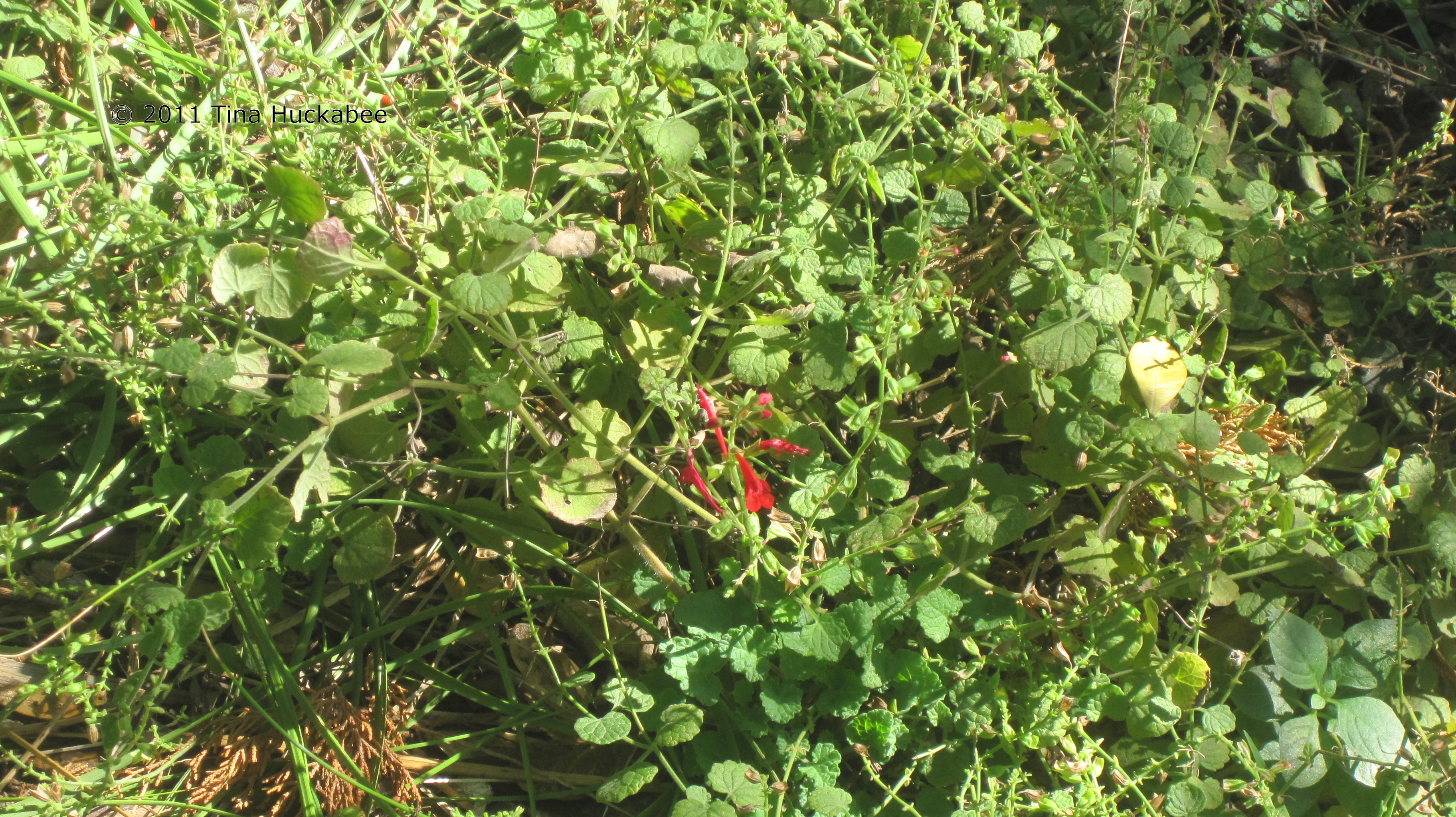
This is what my Cedar Sage looks like, accompanied by acorns and prematurely fallen oak leaves.  Not quite as exciting…

The Cedar Sage in the Zilker Gardens receives regular water and maybe that, coupled with the deluge of two weeks ago, spurred the bloom cycle.   My Cedar Sage only get water when I remember. Still, for there to be any blooms on Cedar Sage in October is not something I’ve seen before.

Pam from Digging and Jenny from Rock Rose commented after my Columbine post that they’ve seen other spring bloomers currently in bloom around Austin.

After the hot and dry summer of 2009 (not as bad as summer 2011), I observed an Anacacho Orchid Tree (Bauhinia lunarioides) loaded with gorgeous blooms. The page from the NPIN: Plant Database about Anacacho Orchids states that this plant blooms in spring and “sometimes after heavy summer/fall rains.”

Perhaps the extremity of our current weather patterns, (warm/dry springs, very hot/very dry summers and limited rain in the fall), cause more occurrences of the formerly “rare” blooming cycles of early season bloomers during the fall months.

In any case, it’s a treat to enjoy these lovely blooms again this year.