Adventures with bees!
Or, crisis in Bee-ville.
As of this writing, I’m not sure which of those I’m experiencing. What I’m understanding about beekeeping is that there’s much to learn. And like gardening, one learns more from mistakes than from successes.
I’m also beginning to trust my instincts.
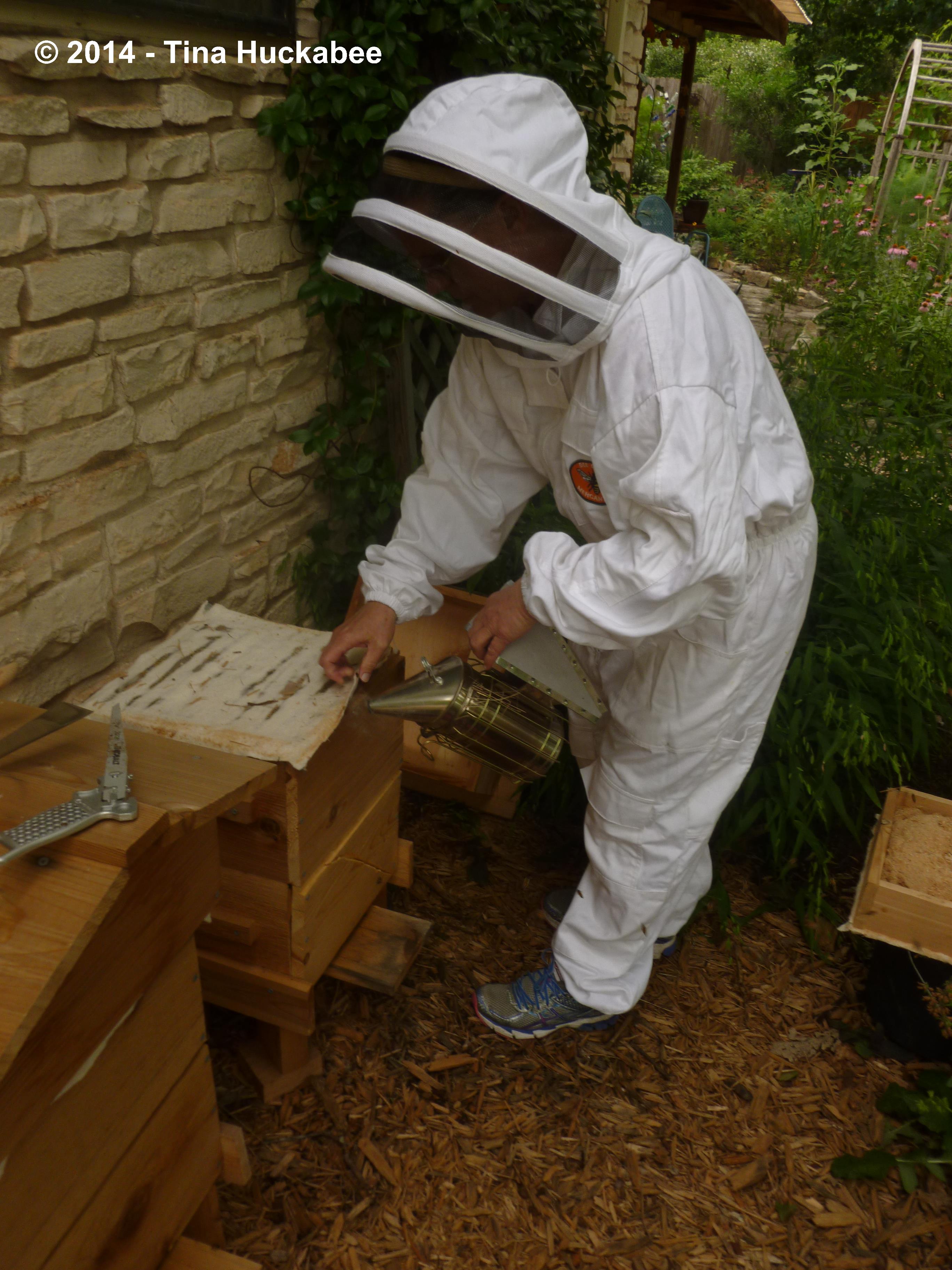
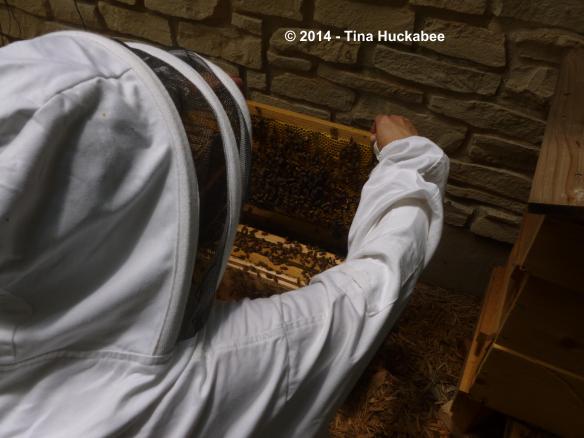
When we open the hives, there’s so much to keep track of. We look for eggs, brood, number of drone cells, queen, capped and uncapped honey. We’re doing all of this as quickly and efficiently as possible, while recording our observations. We smoke the bees continually to keep them calm–the little buggers sting! There are an array of tools (brush, hive tools, saw) to keep track of, all while perspiring profusely in a hot, hot, hot bee suit.
Sometimes, this beekeeper’s head wants to explode!
In early June, we performed a routine check of our hives. We were leaving town for two weeks and regular hive checks are mandatory in beekeeping.
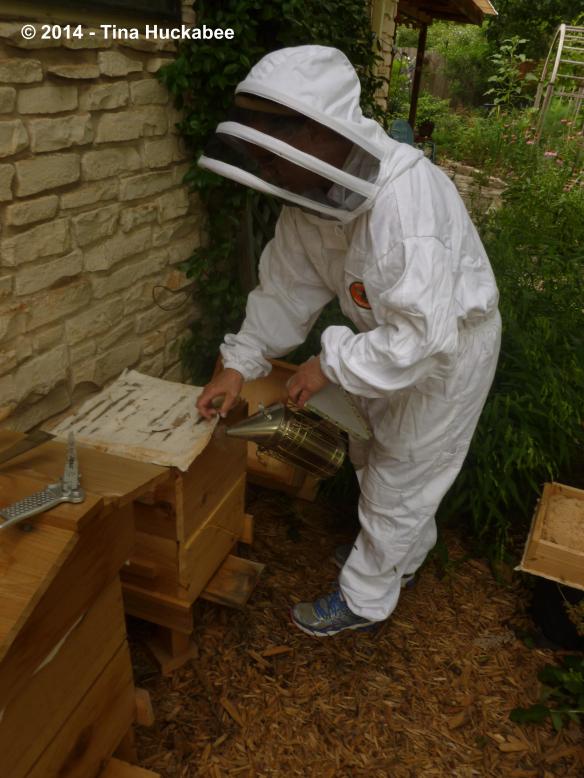

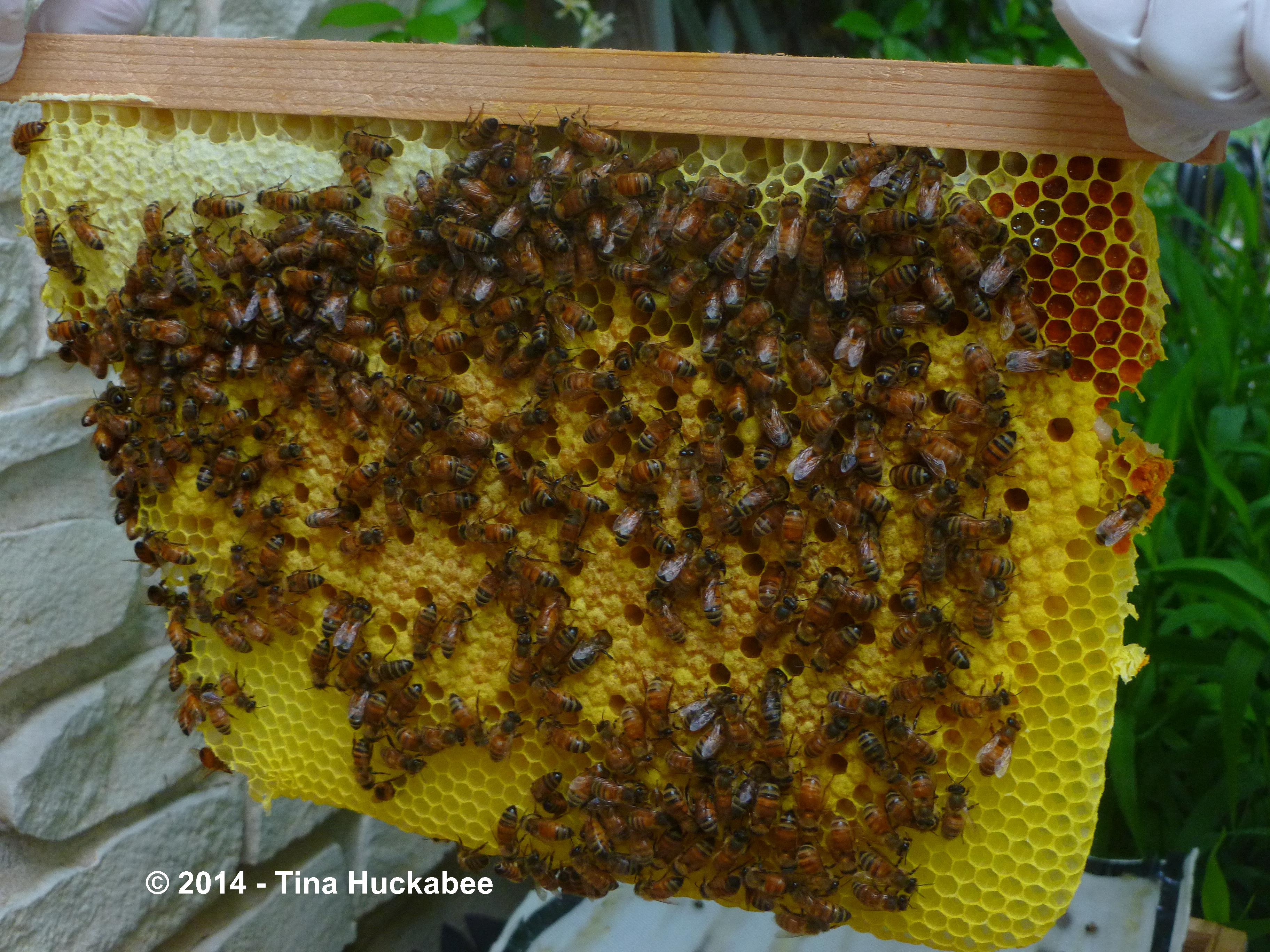
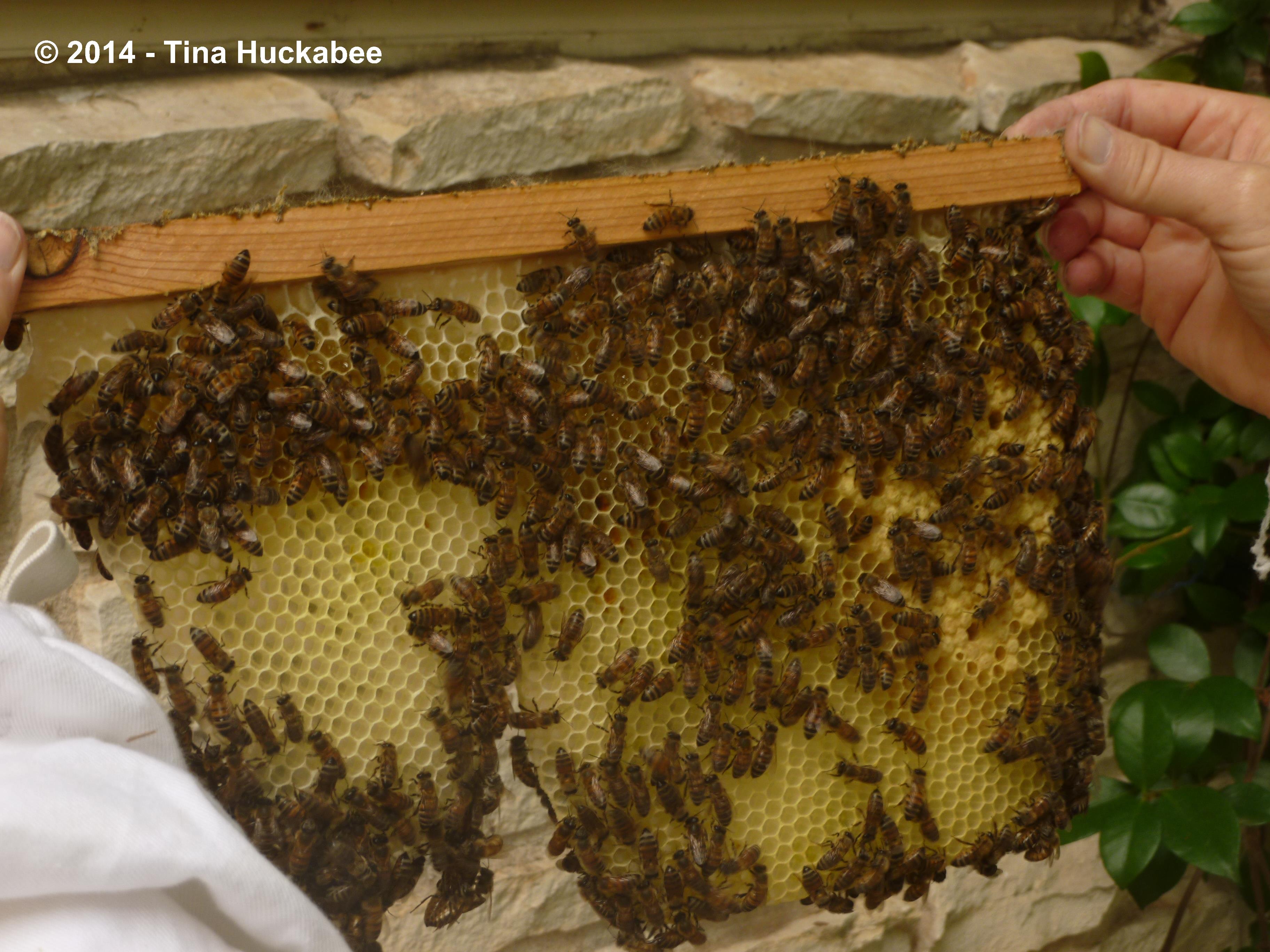
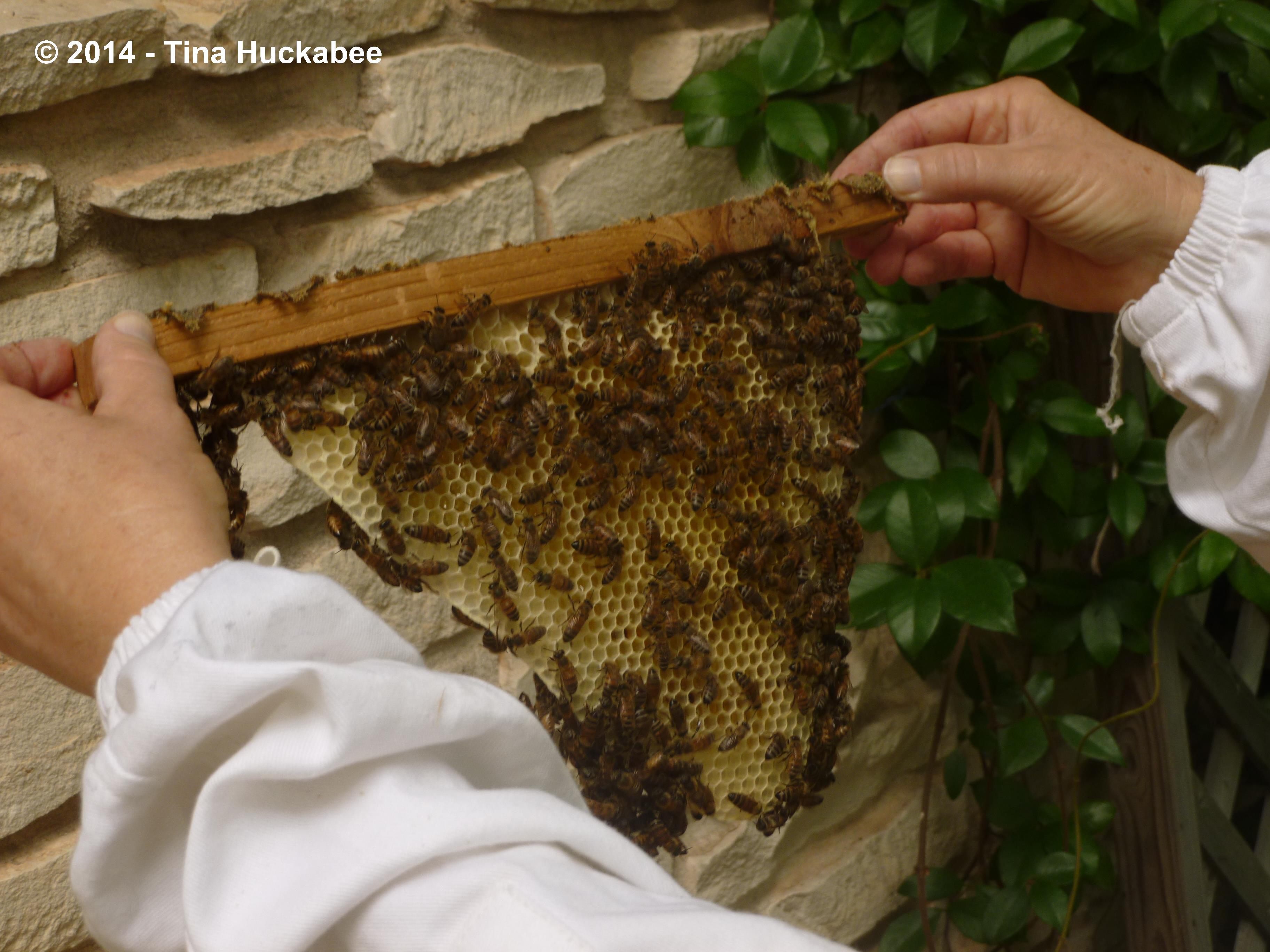
As we removed bars with comb, we noticed that instead of the comb having a full, normal shape,
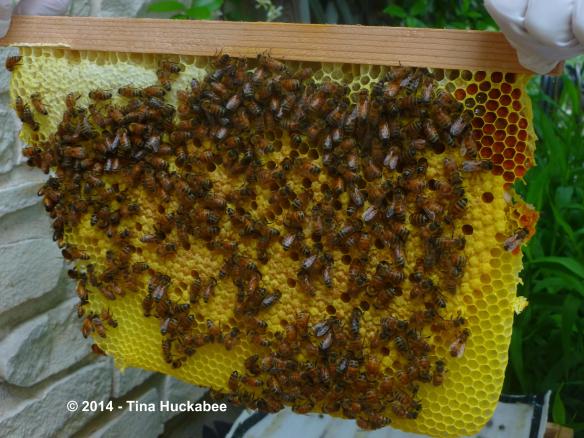
several of the combs in both hives were indented at the bottom,

or skewed to the side.

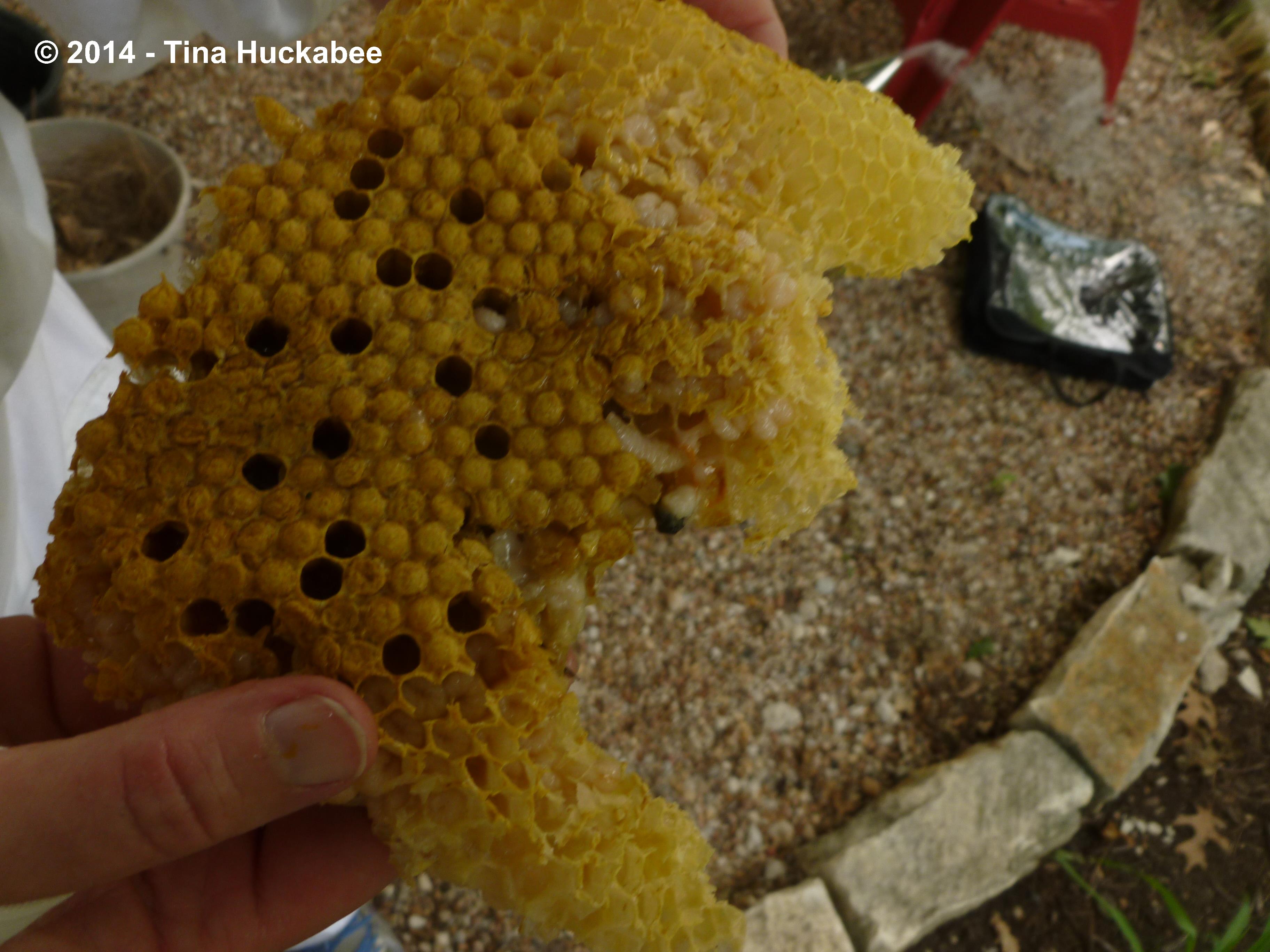
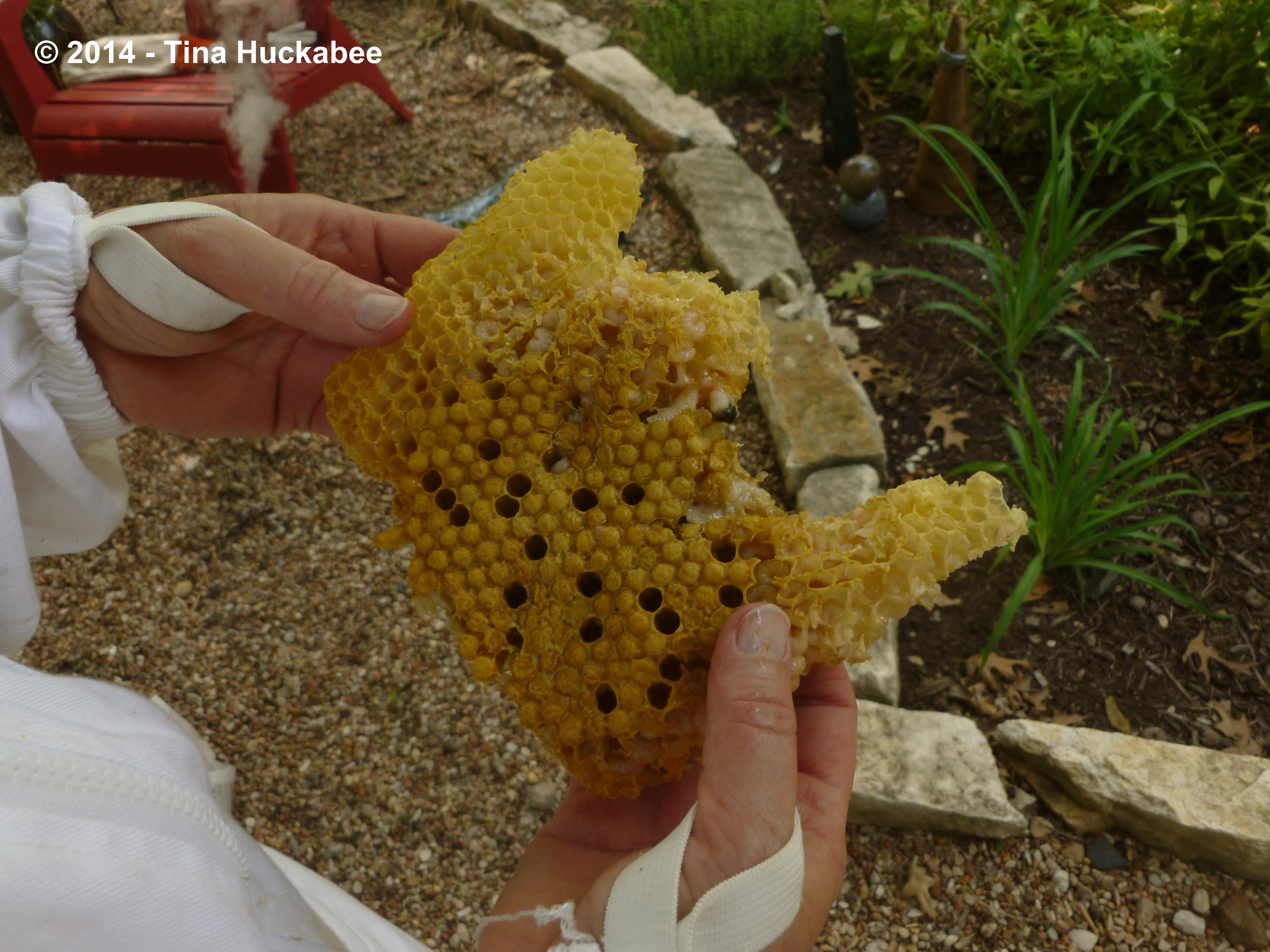
We realized that the bees had built cross comb in both hives. Cross comb is comb built perpendicular to the main direction of comb in the hive.

Turns out, bees have a thing about gravity and if the hive is tilted back ever so slightly and is not level, bees are more likely to build cross comb. Sure enough, our hives weren’t quite level. So I placed a bit more mulch underneath the feet of the hives to level the hives,

and that problem was resolved.
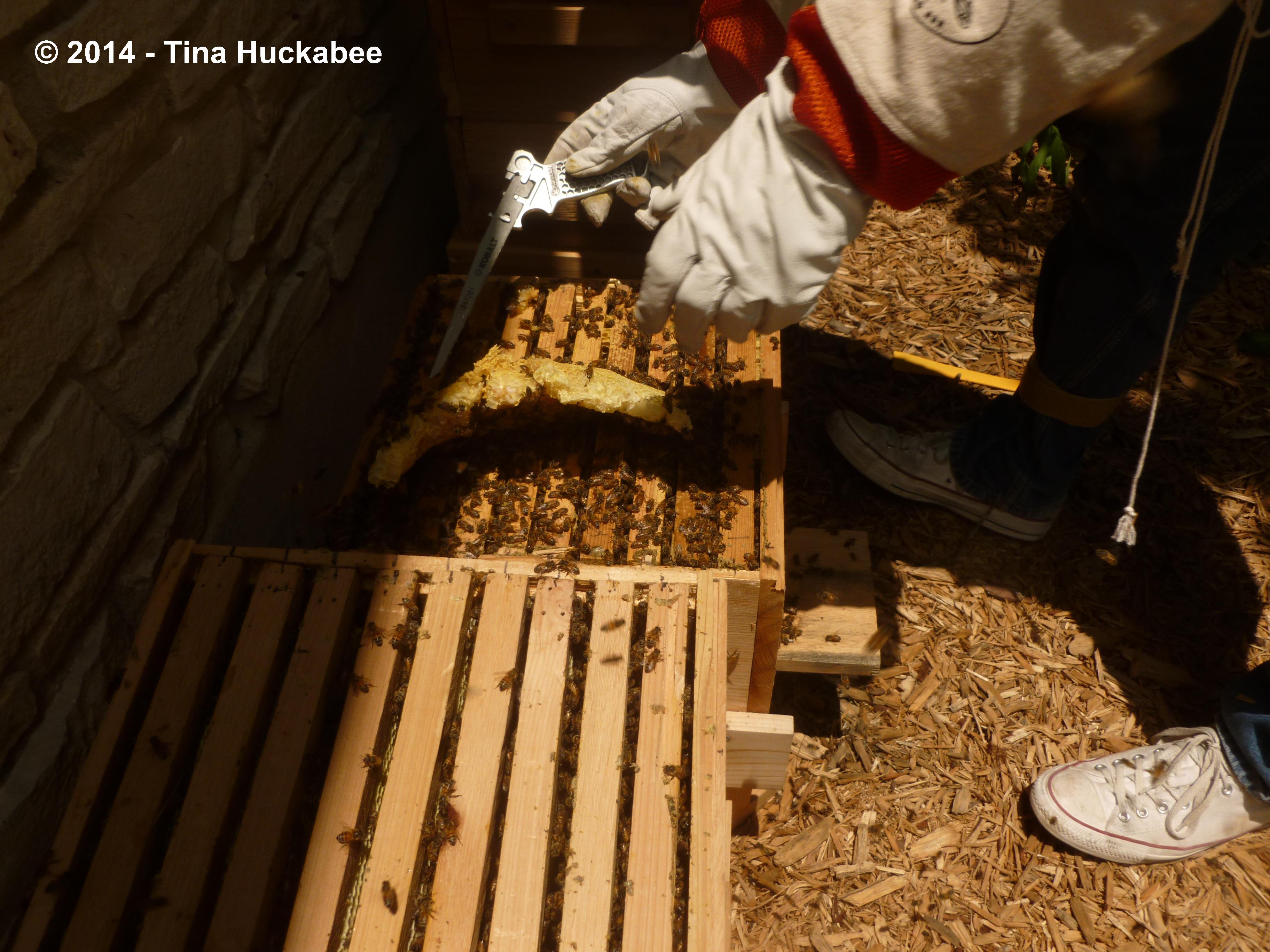
Because it’s best (for the beekeeper, anyway) to encourage the bees to build comb in an organized manner, we were told to cut out the cross comb–which we did.


As good beekeepers, we followed beekeeping protocol. Honestly though, given our problems now, I regret that decision.
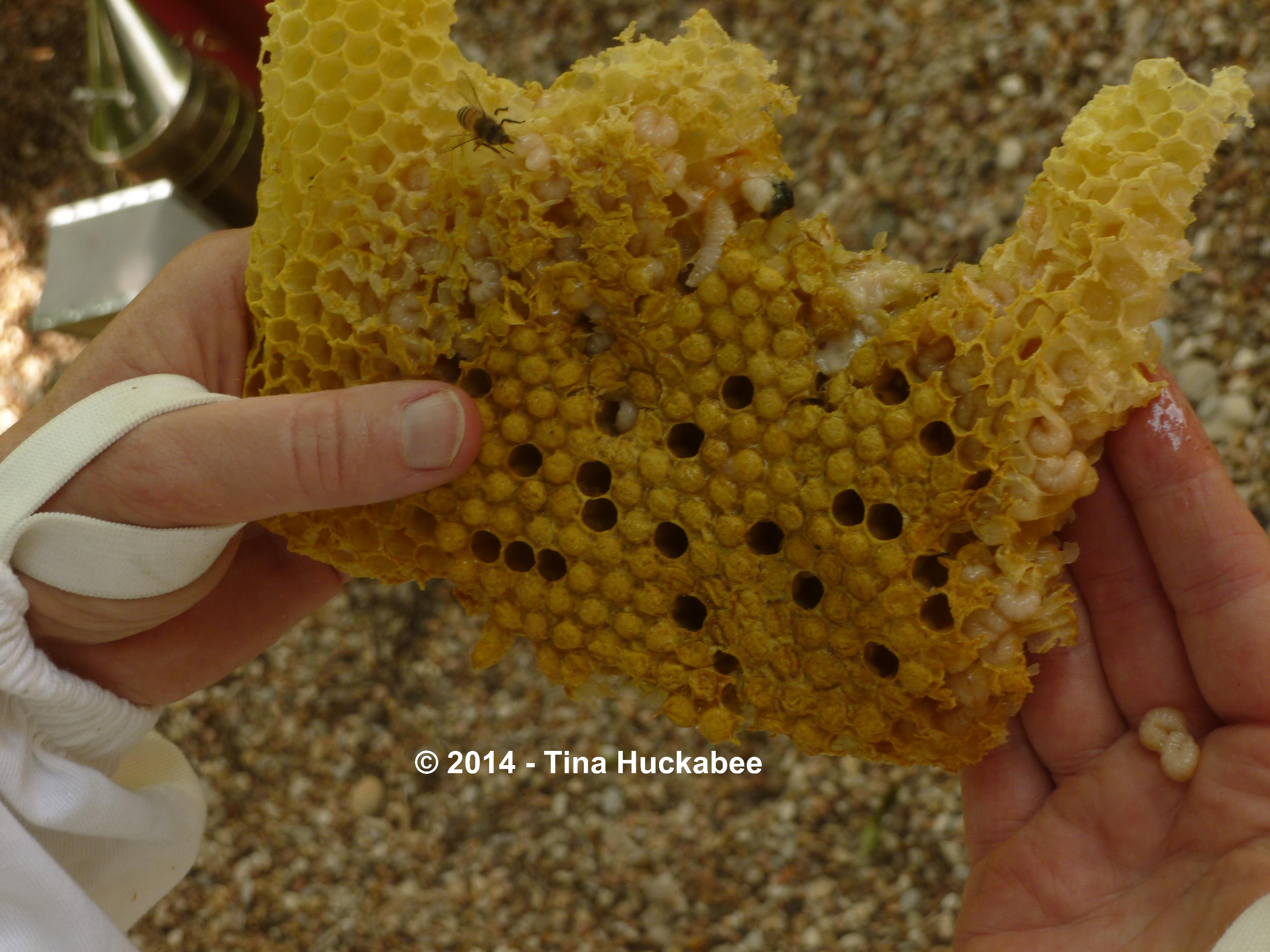
I felt badly about removing the cross comb. There were lots of capped and uncapped white larvae in that comb which we removed and therefore destroyed.


 Capped and uncapped larvae denote developmental stages. The eggs are laid in the cells of comb, larvae develop and grow, then at a certain point the cell is capped. The bees develop on a specific timetable into either workers, drones, or queens and eventually the adult bee emerges from the cell.
For the next few days after the hive check and before I left for my trip, I noticed that the bees were different–more aggressive and not the same sweet little girls I was accustomed to. I was stung multiple times and they were not keen on tolerating me anywhere near the hives, which was unusual. Bees are driven by pheromones. Their development, job in the hive and hive identification are all pheromone-based and the queen is the epicenter of that pheromone universe. I’ve learned that when a queen dies and the pheromone levels are dropping, the hive can become cantankerous.
Menopausal bees, if you will.
I understand that.
Fast-forward three weeks later and another hive check. Before I continue, I should explain that we’ve named our hives: Scar (for obvious reasons), on the right and Mufasa, on the left.

That will make telling the story slightly easier.
And confirm to you that I’m completely wackadoo.
We opened both hives and noticed several oddities. There was no brood in Scar and only a little capped brood in Mufasa. No fresh eggs or larvae in either hive.
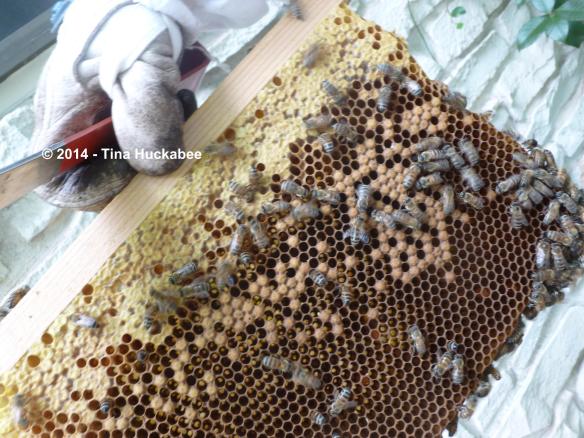
There was lots of plain comb,
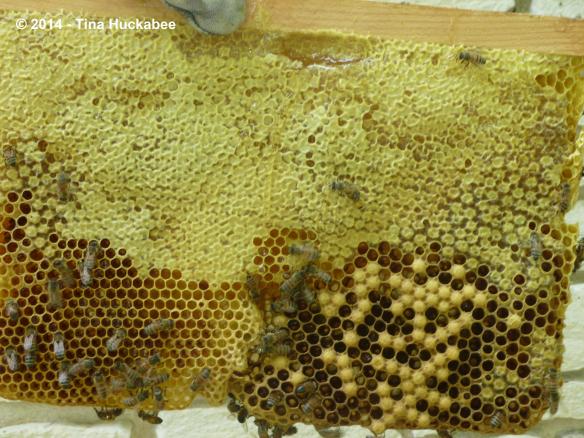
comb loaded with honey,
and comb with budding queen cells.
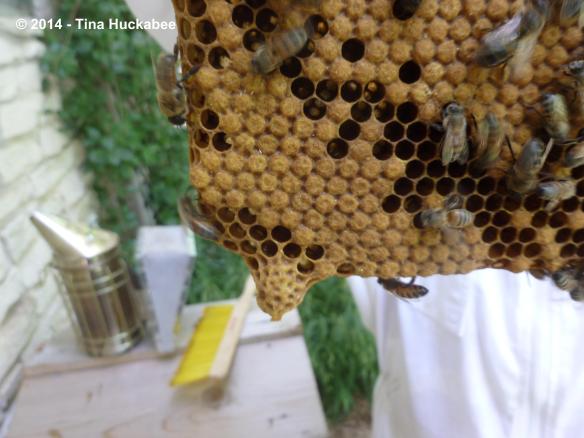
That’s concerning because it means the bees are attempting to create their own queen. That’s not necessarily bad, but given the other evidence of no queen activity, that could spell doom for the hives. By now I was convinced that we had no queen, definitely in Scar, possibly in Mufasa.
I won’t bore you with the details, but I sent queries to an Austin Beekeeping Association and to BeeWeaver about what we observed in the hives and the possible injury to or death of our queen(s). Additionally, our hives were a bit overcrowded with nine frames, rather than the normal eight, so moving drawn comb in and out of tight quarters increased the likelihood of injuring bees, including the queens. Bees are killed every time we hive check and it is possible that we killed the queen(s), either by removing a bar with comb, or setting it back in the hive or when we cut out the cross comb.
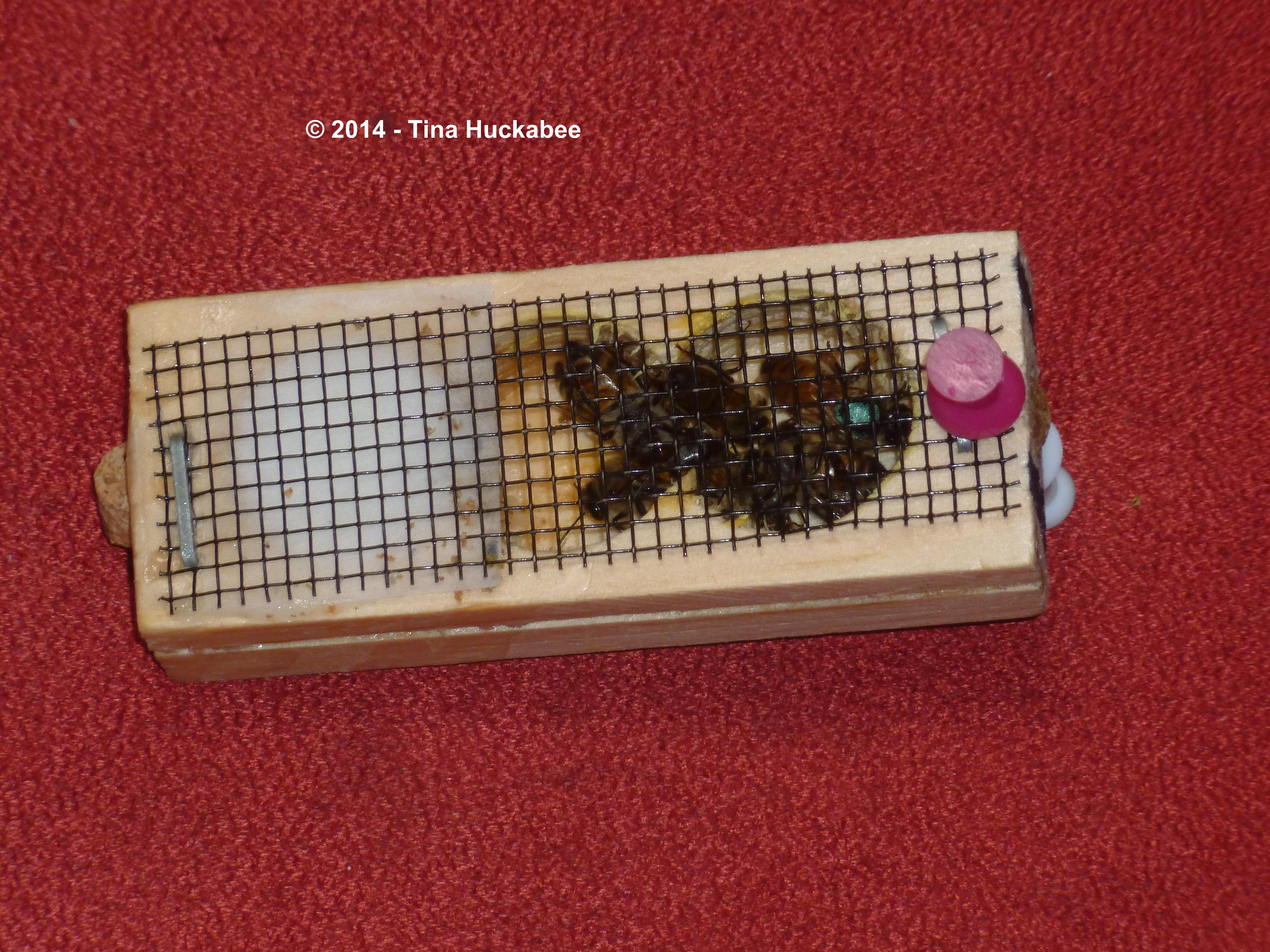
All advice to us was to wait a week or so and check again. A week later, I checked and still there was no new brood. I sent photos to BeeWeaver and they agreed that it was time to get a new queen for Scar–which fortunately I was able to do immediately since BeeWeaver’s home office is about 10 minutes from where I live. I brought home Scar’s new queen (marked with a green dot) and her attendants,

and re-queened Scar on July 1.
I’ve checked both hives since and Scar’s queen is out of her queen cage and I think there’s some new brood, though I’ll know for certain next week. But there’s no brood at all in Mufasa and for bureaucratic reasons, I can’t get a queen for Mufasa until next week. Last week, my gut told me to get a new queen for both hives, but I deferred to those with more experience and only re-queened one hive.
I now regret that decision.
I knew something was amiss after the early June hive check and I felt that both of my hives needed new queens last week, even though others recommended re-queening only one of the hives. I don’t generally operate on woo-woo, emotional factors. I’m an adherent to science, fact and reason. But I dearly wish I’d followed my instincts with this glitch in my beekeeping.
Time will tell whether my hives survive.
The mistakes we’ve made are the mistakes of novice beekeepers: building hives that are out of the ordinary, overcrowding the boxes with the placement of one-too-many bars in each, (perhaps) removing the drawn comb too quickly when checking the hives, not acting immediately when we suspected that there was something wrong with our queens.
The biggest mistake though, was not trusting ourselves.
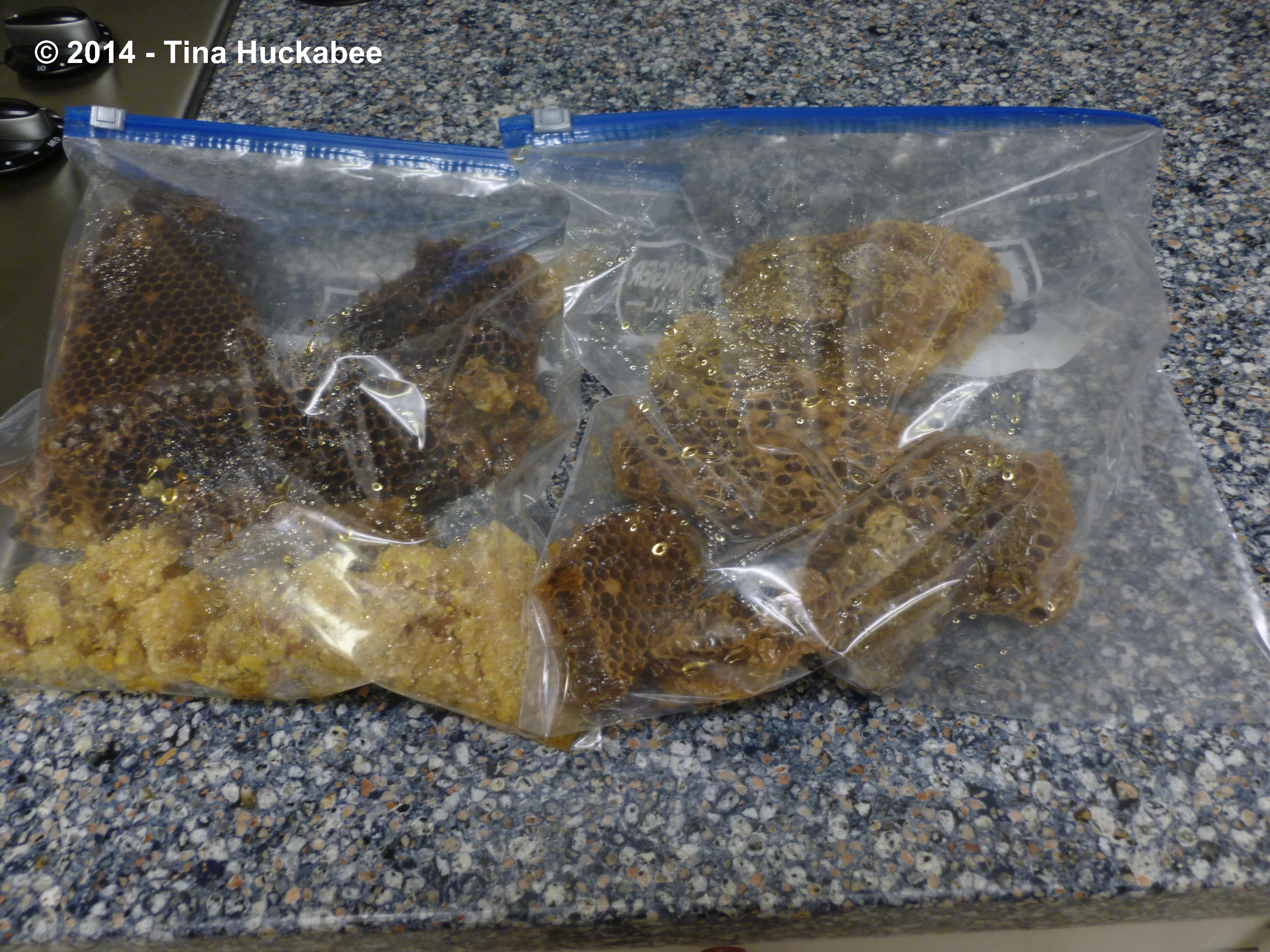
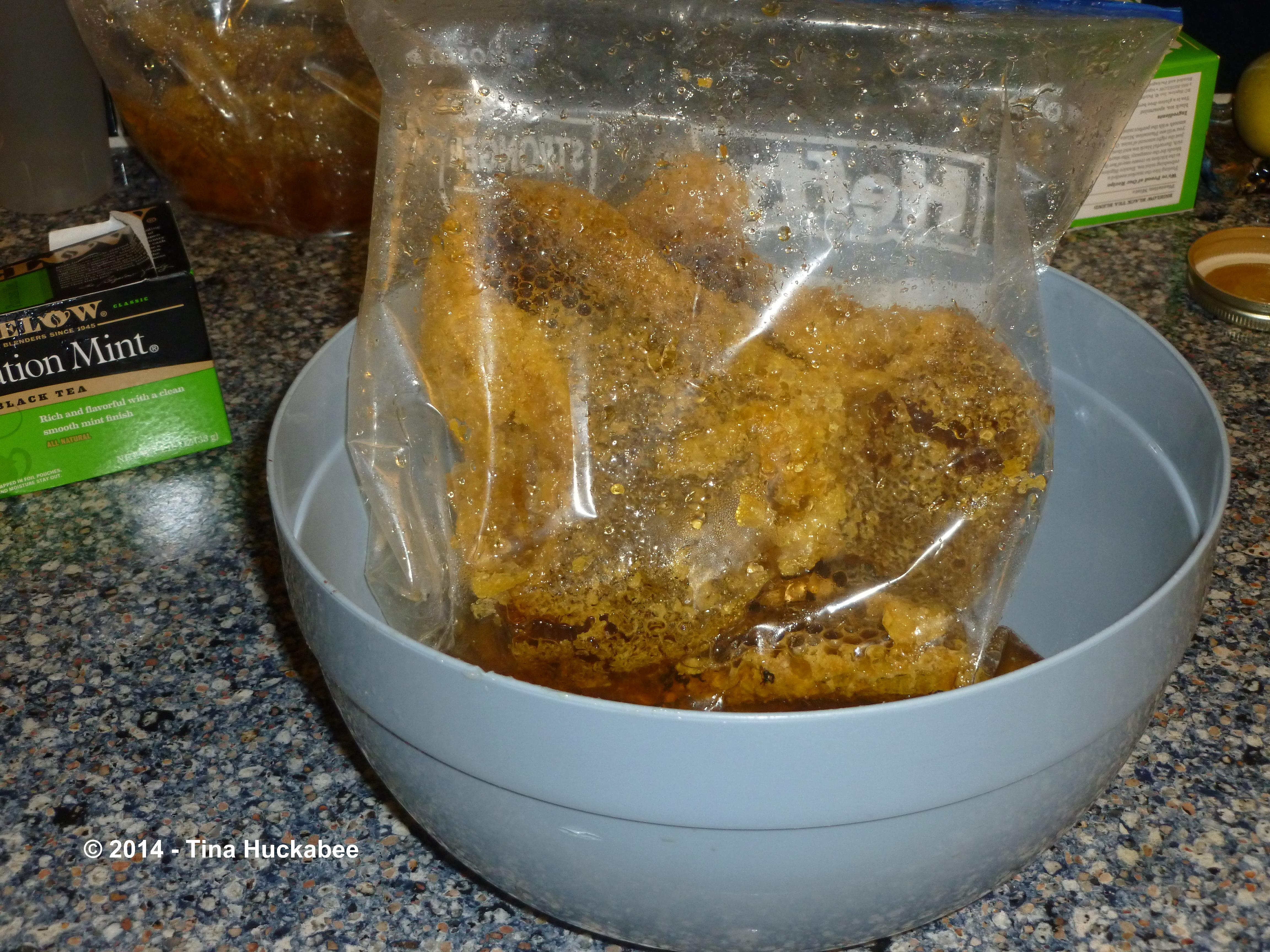
The one positive from this experience, hard lessons aside, is that we extracted honey! I hadn’t planned to retrieve honey from my hives this year, but we decided to remove one bar from each box to alleviate crowding and the bars we removed were those full of honey!
More about that next time.