Welcome to the September 2014 edition and third time ’round for Wildlife Wednesday. This little blogging meme, hosted by yours truly, enjoys participants who appreciate the presence of those who “make” their gardens: the feathery, flighty, creepy, and crawly among us.
In any garden worth its compost, the aesthetic appeal to humans is trumped by what that garden provides for wildlife. If a garden isn’t sustaining a variety of wildlife, it’s not much of a garden. There are choices available for most homeowners to assist the declining-in-alarming-numbers wildlife. In most situations, it’s as easy to choose a native or non-invasive berrying shrub that provides essential nutrients for migrating birds in the autumn or spring as it is to choose a shrub that doesn’t berry. Native blooming perennials or annuals are attractive, hardy substitutes in place of flowering, but sterile, bedding plants which don’t provide sustenance for pollinators. As habitat is damaged and destroyed due to human encroachment, I believe we have a moral obligation to provide respite in our gardens for bees, butterflies, birds, amphibians, reptiles and all other assorted creatures we share our natural space with. As responsible land stewards, we surely don’t want to leave to our children and grandchildren a silent spring. We should play a part in healing our world, one appropriate plant-choice at a time. Knowledgeable, passionate gardeners can encourage neighbors and friends, as well as nurseries and growers, to practice sustainable choices: to plant, sell, and produce environmentally and regionally appropriate landscape plants which benefit wildlife.
Lecture over.
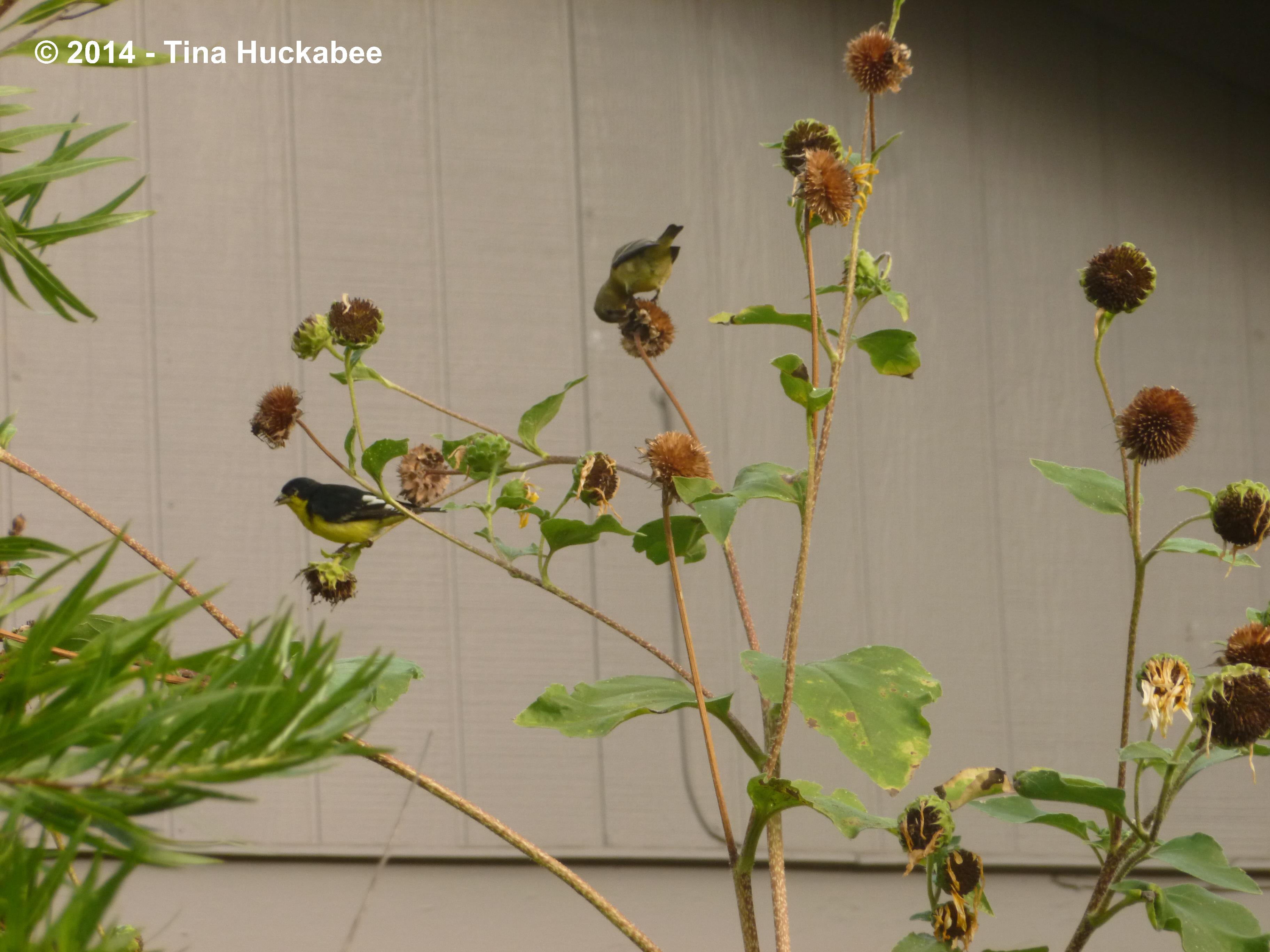
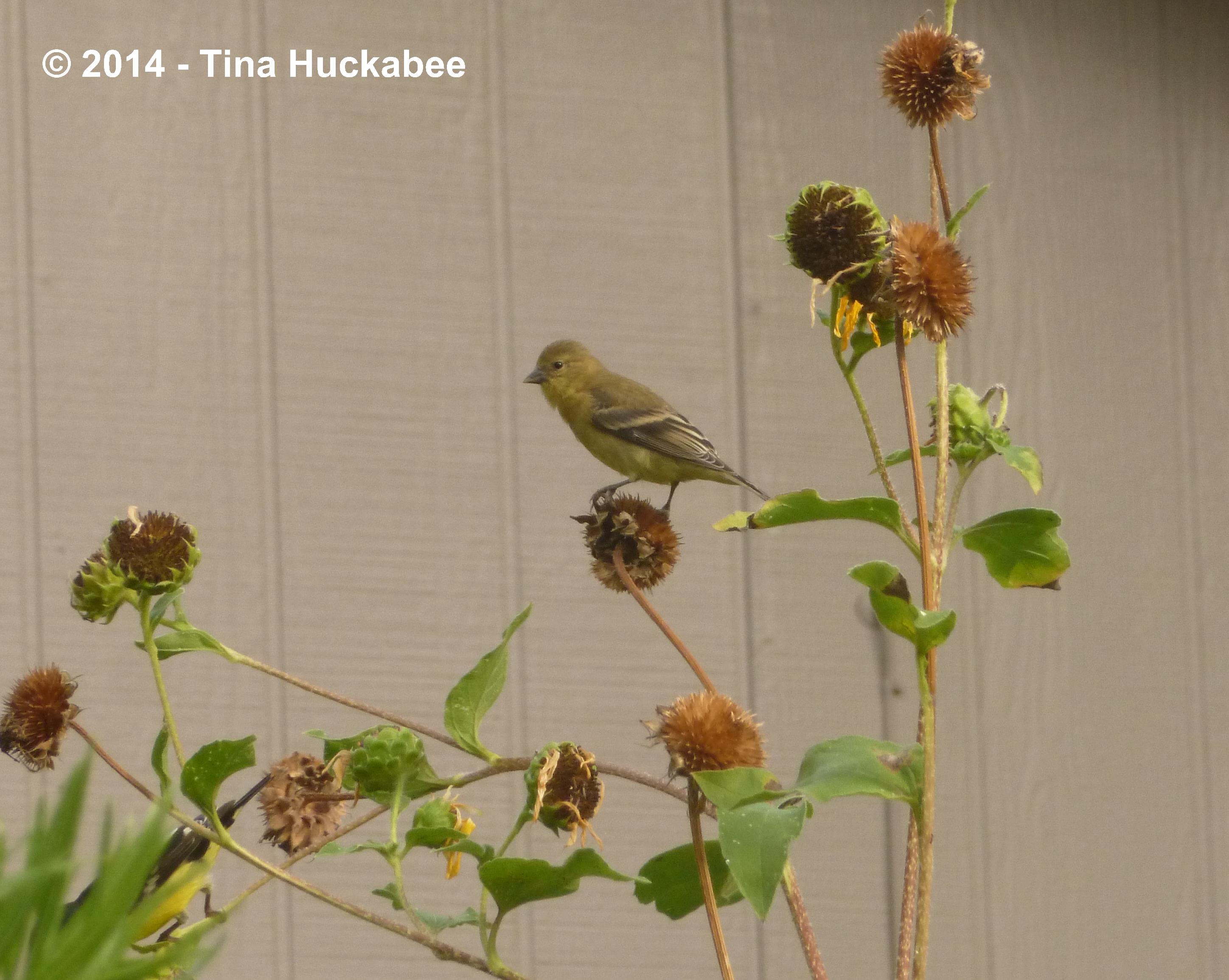
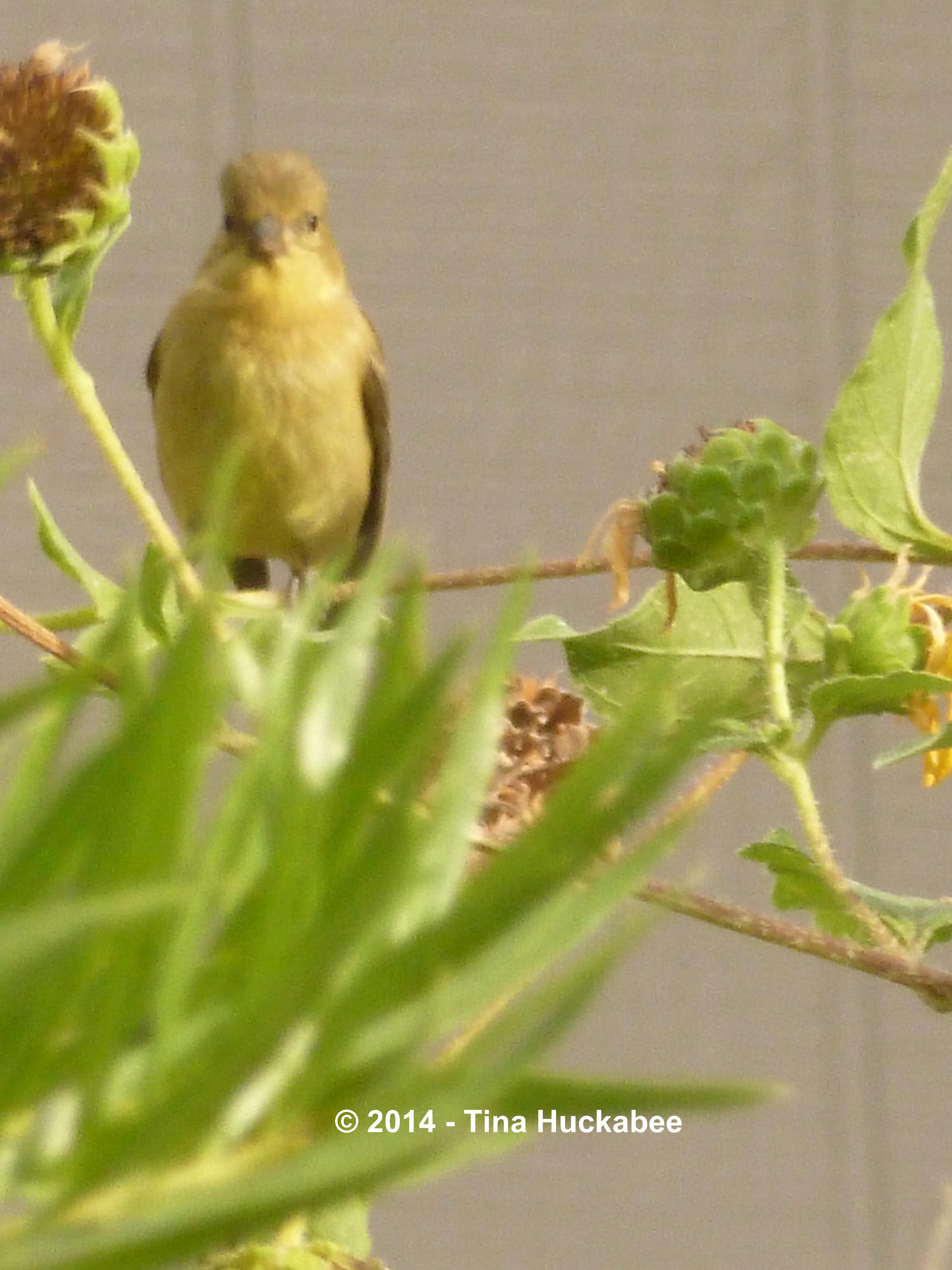
During this past hot, August, my garden has seen plenty of critter action. For all of July and through August, the Lesser Goldfinch, Carduelis psaltria, have gorged on the the seeds of the non-native sunflowers that grow to ridiculous heights.
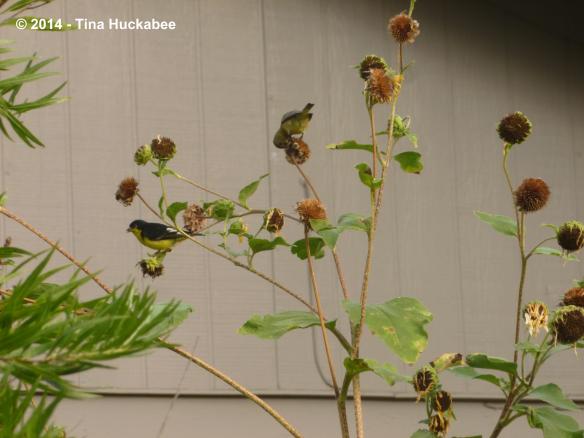
This group of one male and a couple of females,
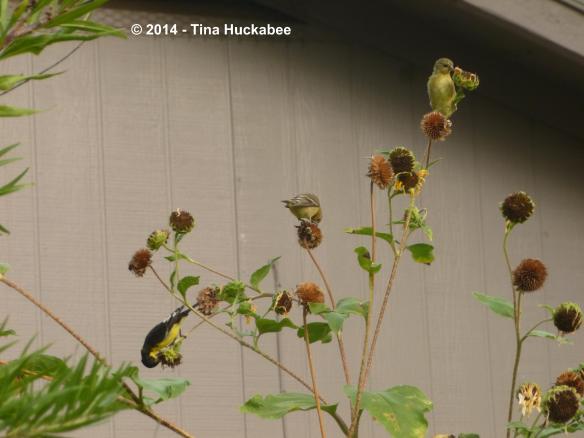
…tolerated my presence. They were too busy chattering and munching to be annoyed with my photo taking.

These pretty little birds visit my gardens on and off through the seasons and have for years, but I always thought they were American Goldfinches, Spinus tristis. They were yellow and black and teensy, so they must be American finches, right? Not so! I’ve learned something new this month–not American, but Lesser. How about that!
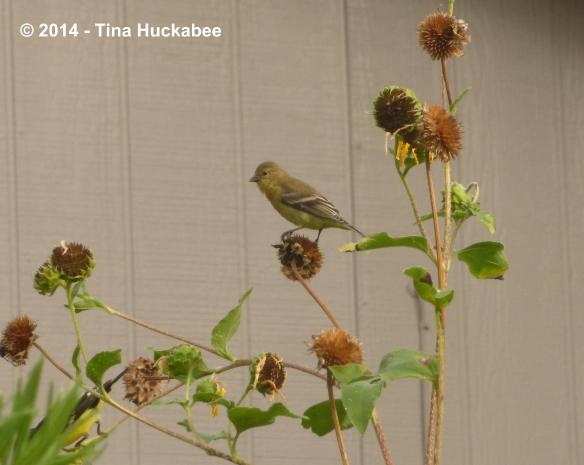
I guess it’s here that I launch into my Steven Colbert voice and say: Well, if they’re not American, they can only be Lesser.
Yuk.

Other birds visited the sunflowers as well this past month, like the House Finch, Haemorhous mexicanus , but the Lessers were the undisputed benefactors of the sunflower seed buffet. I’ve since pruned most of those lanky sunflowers because the seeds are gone–all gobbled up, digested and distributed throughout the neighborhood. (Thank you, finches!) I still catch sight of the tiny Lessers feeding on my Zexmenia, Wedelia hispida, and in the next couple of months they’ll be all over the Goldeneye, Viguiera dentata, as it hits its bloom time, with seed production to follow. It’s easy to attract finches–simply plant flowers from the Asteraceae (aster) family (which include any type of sunflower), Echinacea, or any “disk” flowers, in your gardens. Finches local to your region will show up at seed-time, twittering, chittering and devouring the seeds of those blooms.

I wrote about viewing a cicada who exited his last molt early one morning. I just loved the sight of this bejeweled creature, clinging to his old, wrinkly skin, but striking in his new, colorful wardrobe.

I decided that this guy (gal?) was a Tibicen resh, though my identification could be off. I assume he’s dead by now (they don’t live long in their adult, mating stage), but I’m sure he lived life to its fullest and there will be more cicadae to follow.
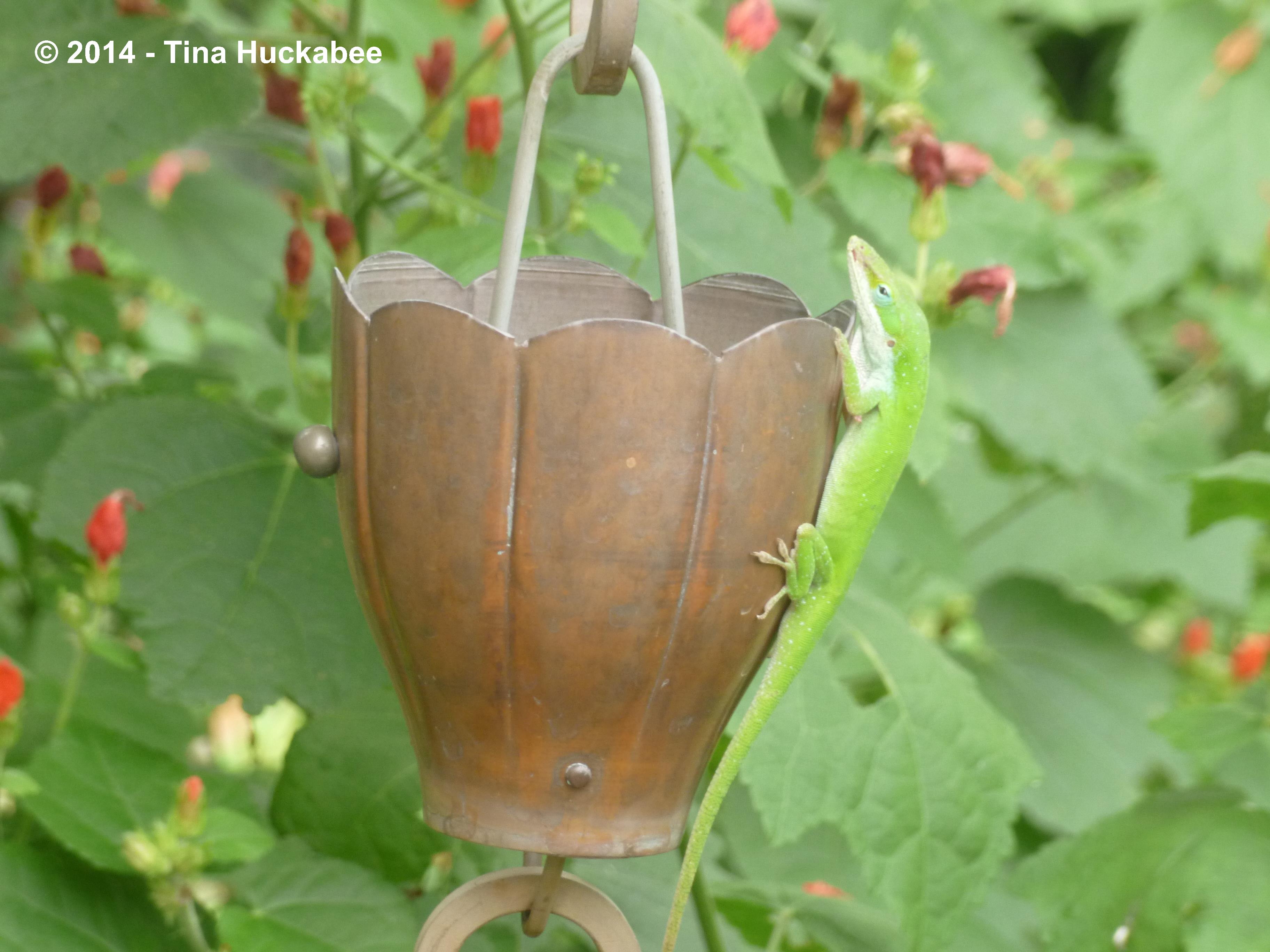
For the first time in a couple of years, there are lots of dragonflies and damselflies in my gardens. Belonging to the Odonata order of insects, I’m learning that they are tricky to identify and that there are quite a variety in the Austin area. My pond is the primary garden feature that attracts these beautiful and otherworldly looking creatures, but they cruise all over my property, dipping, diving, landing and lending their unique energy to the gardens.
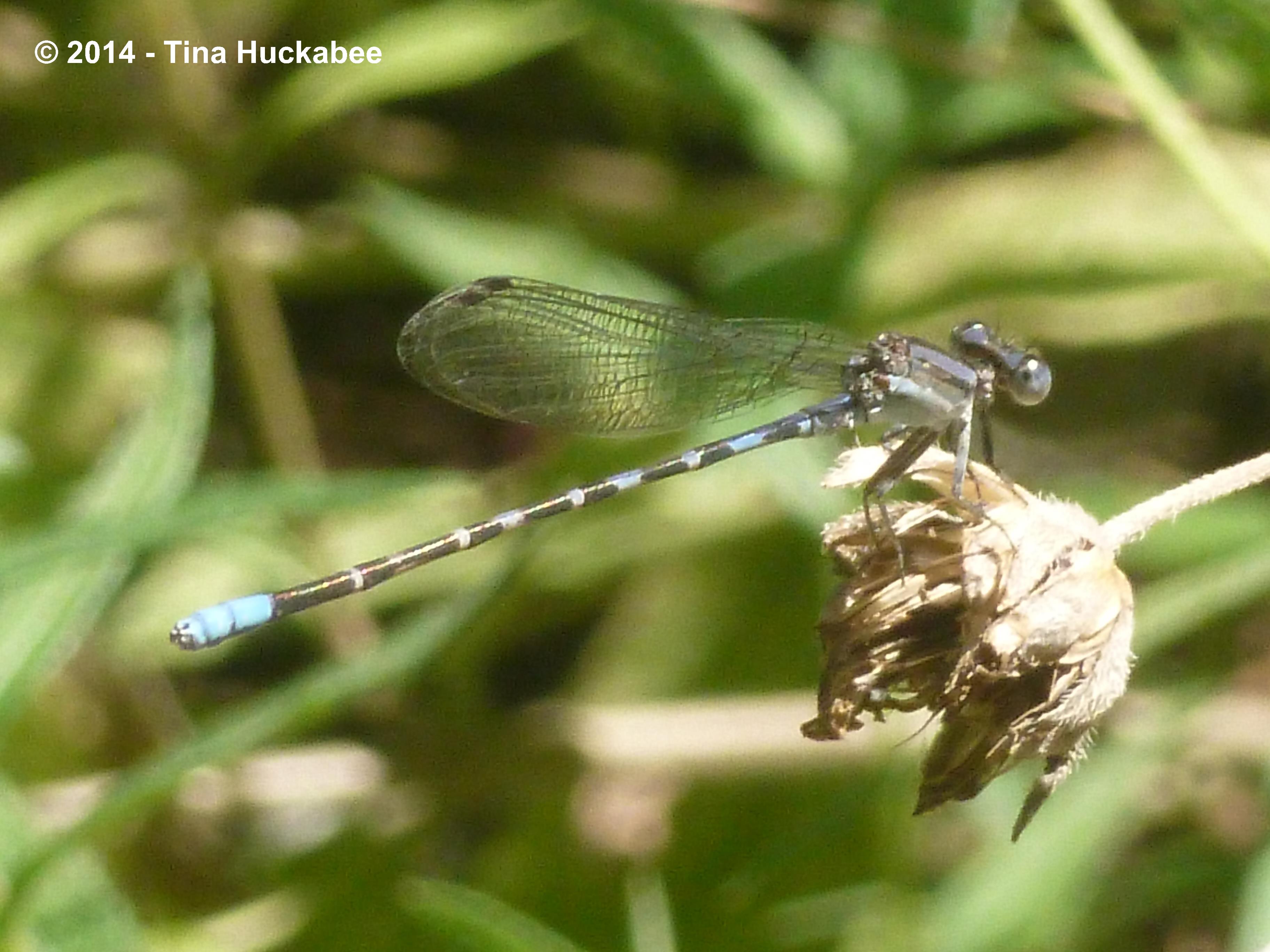
I observed this bug-eyed beauty for a time one hot, sunny afternoon.

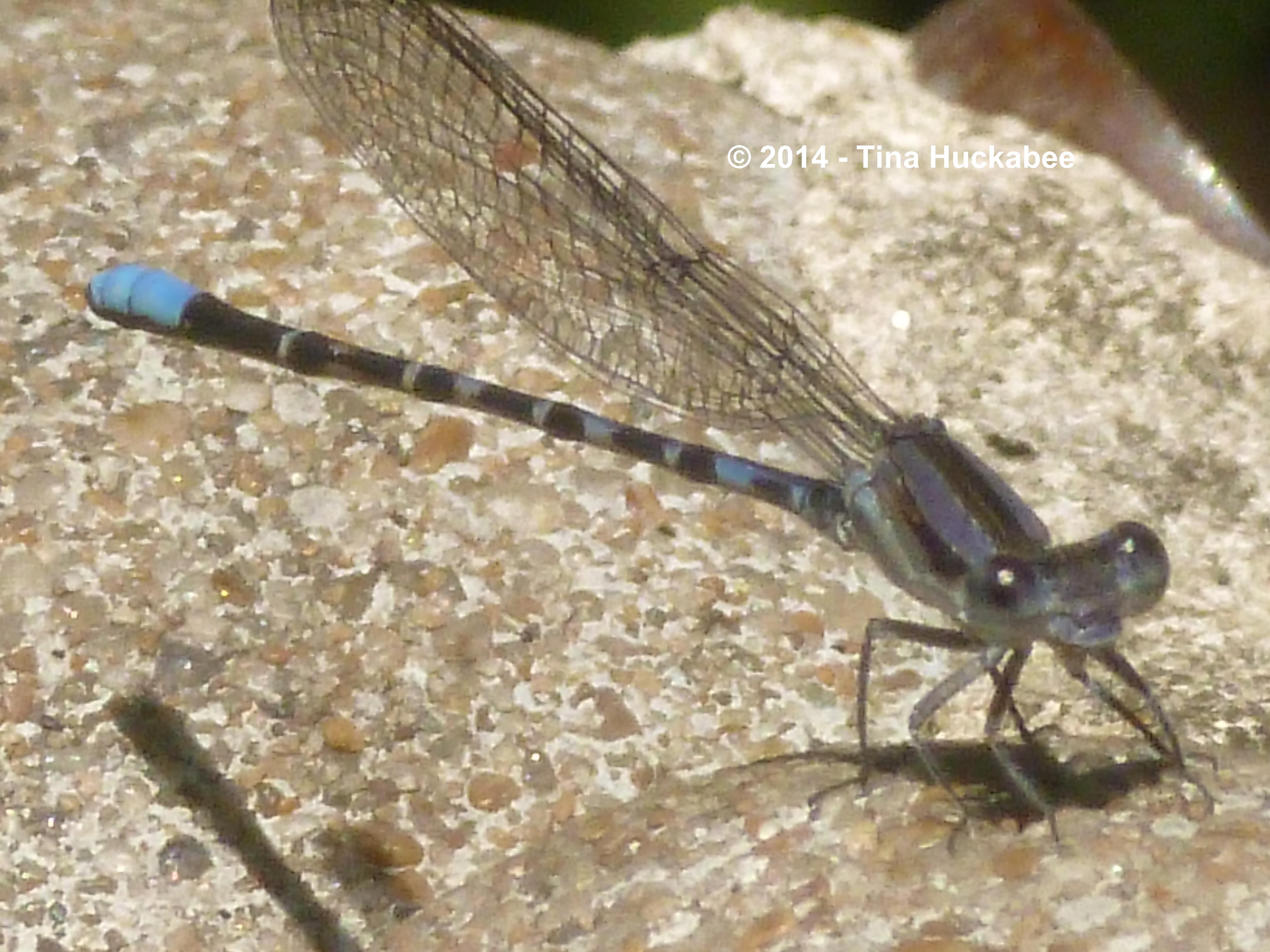
A Blue-ringed Dancer, Argia sedula, I thought maybe he wanted to chat me up, as he darted from Pavonia seed pod,

…to the edge of my cement bird bath, showing off his gorgeous coloration for me and his nimble flying skills with each little trip.

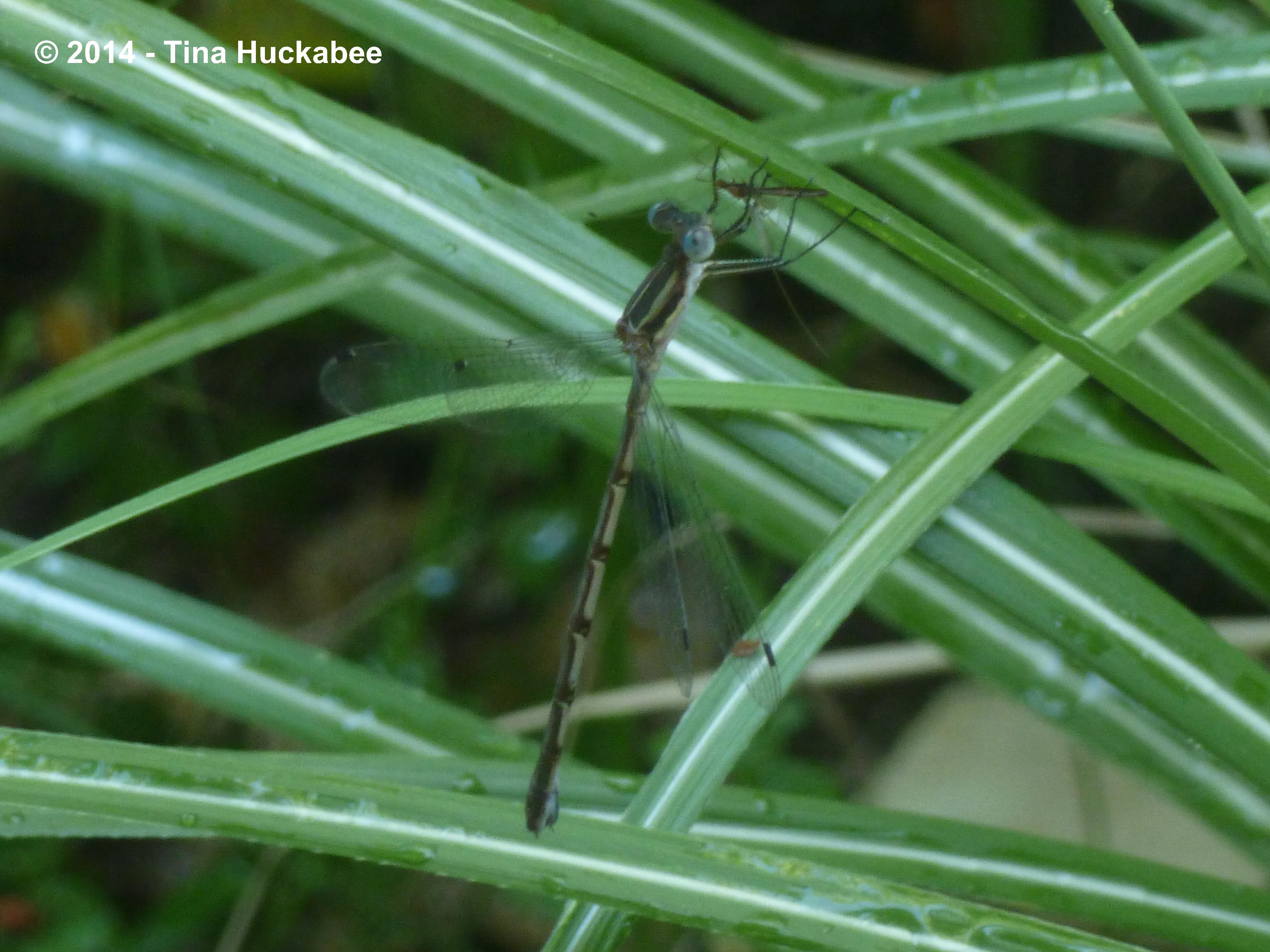
Shortly afterwards, I spied another damselfly. I think this is a Blue-striped Spreadwing, Lestes tenuatus.
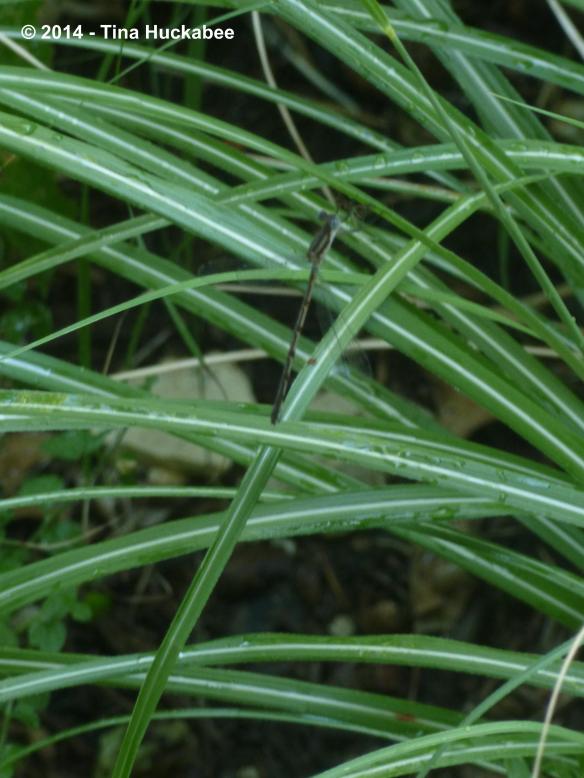
One of the excellent sites I use to identify the common-to-Austin garden insects is a local one, Valerie’s Austin Bug Collection. In the explanation about the Blue-striped Spreadwing, the information suggested that the females have slightly brown wings and that’s the feature used for identification.
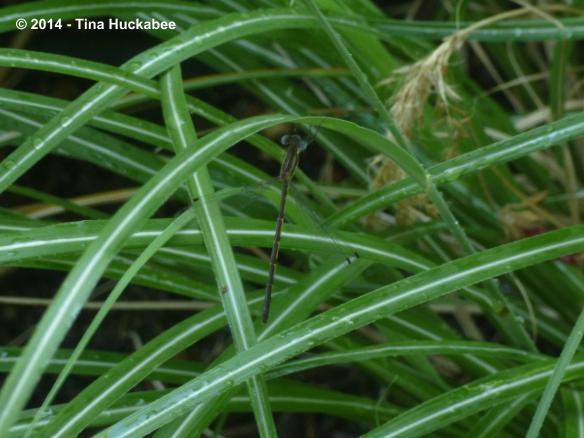
It was almost sundown when I saw her darting around the foliage of an ‘Adagio’ Miscanthus, Miscanthus sinensis ‘Adagio’. When I downloaded the photos to my computer that I realized she was in the middle of dinner,
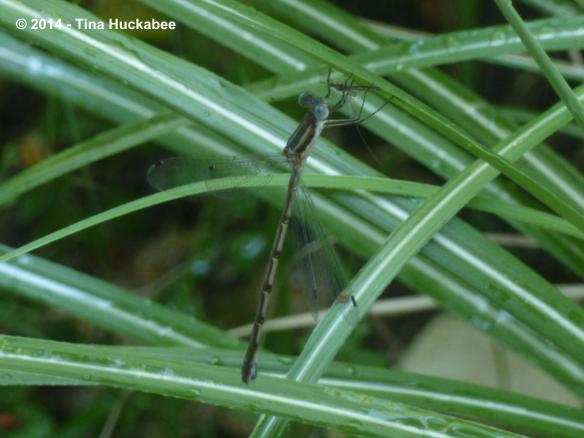
…can you see it? She’s chowing down on another damselfly! At least, that’s what her meal of choice looks like to me, but I’m not about to attempt a naming of that tiny morsel–it takes me long enough to identify the larger, more distinct insects. I hope that Ms. Spreadwing enjoyed her repast. Apparently, damselflies are carnivorous, subscribing to the philosophy of, if you’re smaller than I am, you’re fair game for hunting.
Posing prettily is another of the Odonata, a male Blue-eyed Darner. Aeshna multicolor.
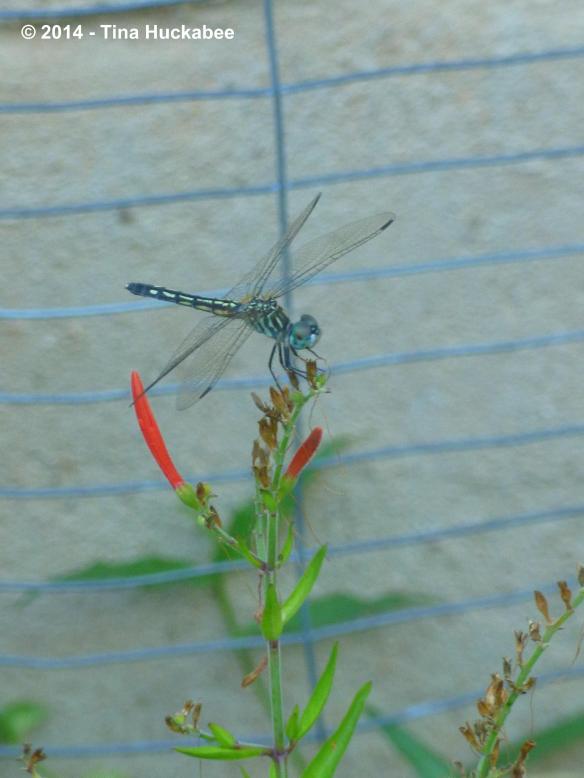
I think these are the most stunning of the dragons and damsels who regularly visit my gardens.
Lastly, it’s always good to throw a little sex into a story, just to spice things up a bit.
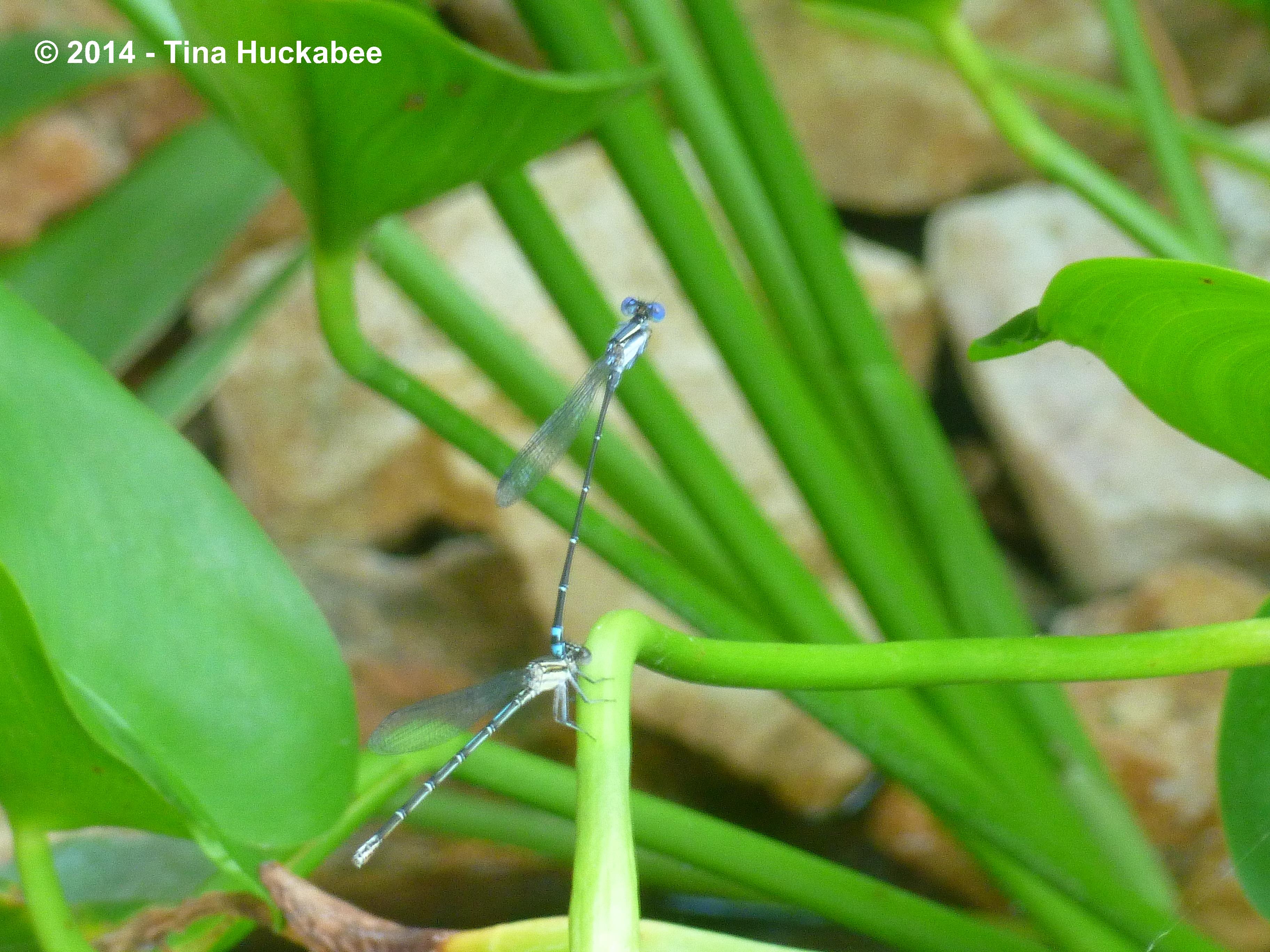
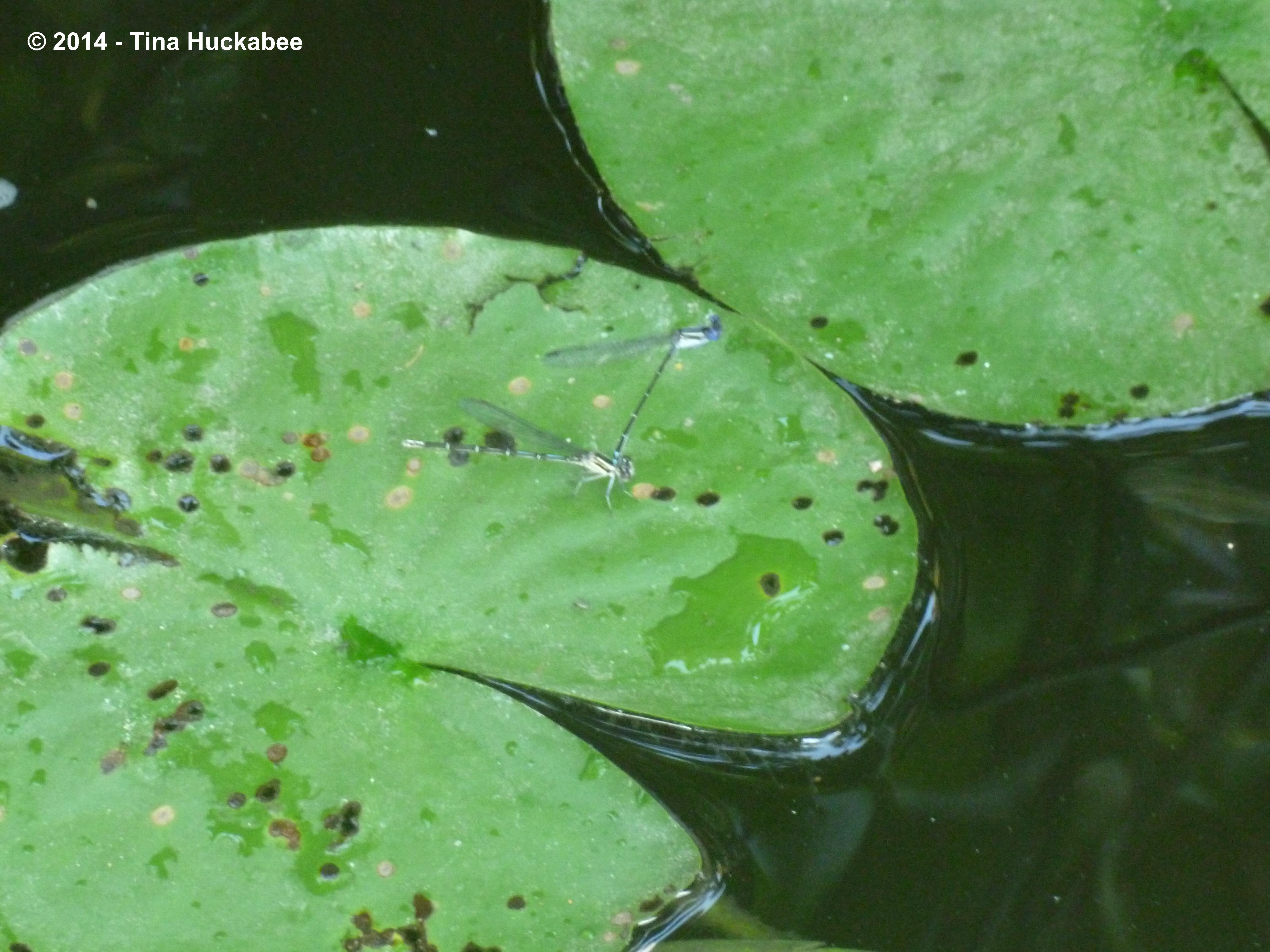
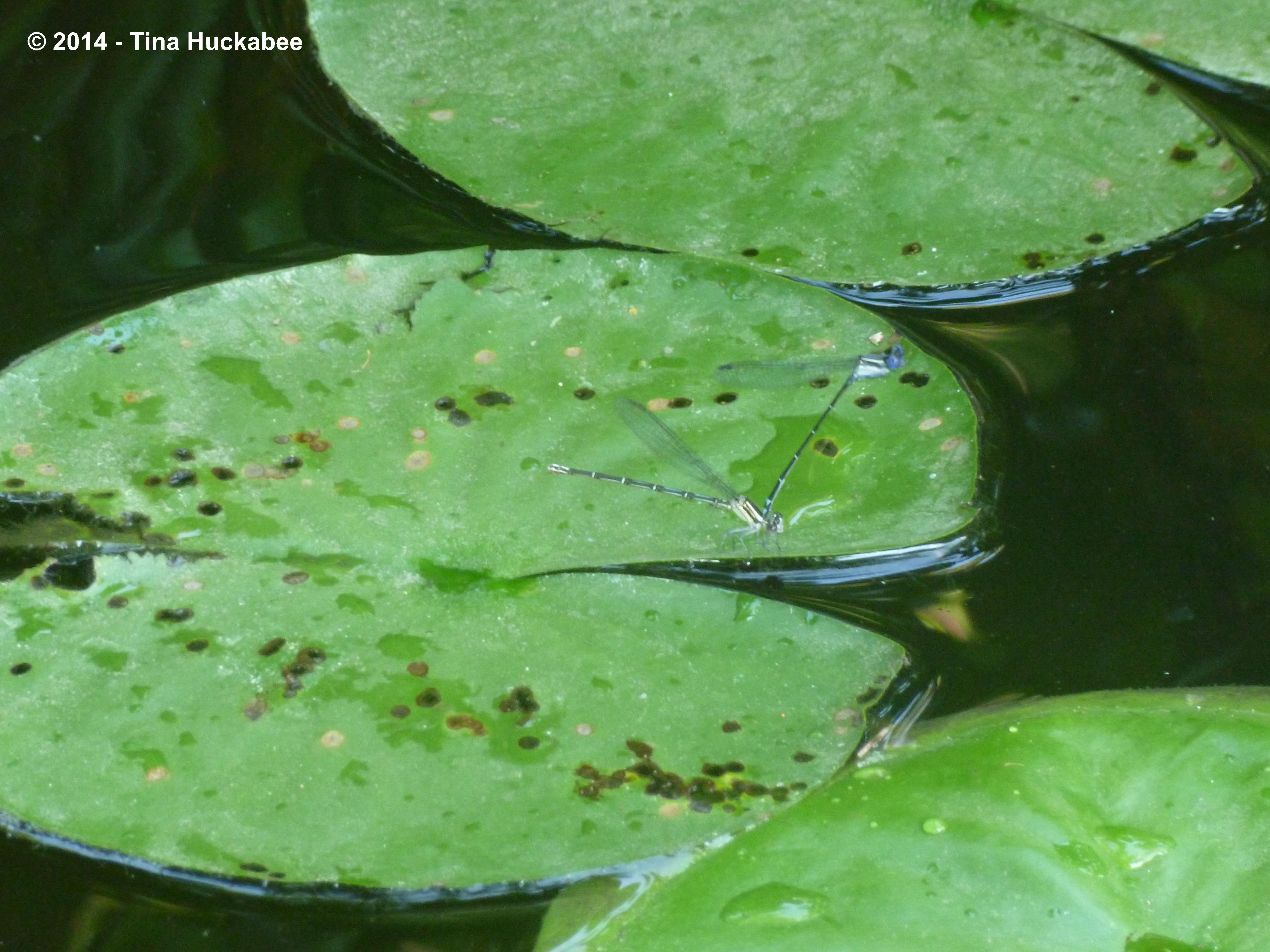
These two mating damsels, Dusky Dancers, Argia translata, weren’t coy about their pond procreation.
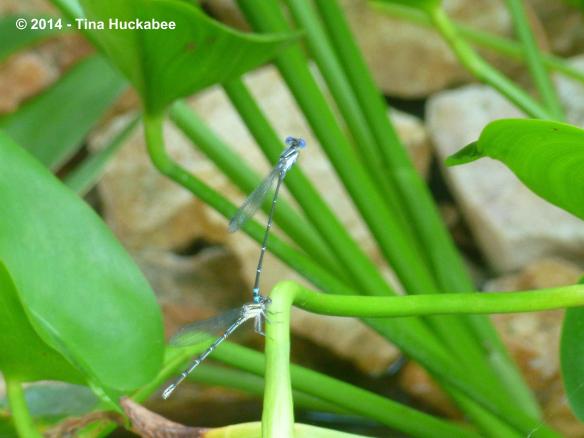
Damselfly mating requires acrobatic ability meant only for the young–and insectivore. The male transfers his sperm to the tip of his abdomen (the long, skinny thing) where it is stored until needed.

When canoodling commences, he clasps onto his partner, BEHIND HER EYES (yes, you read that right!). His lady then curls her abdomen forward to receive the sperm, thus making a “wheel position” for mating.
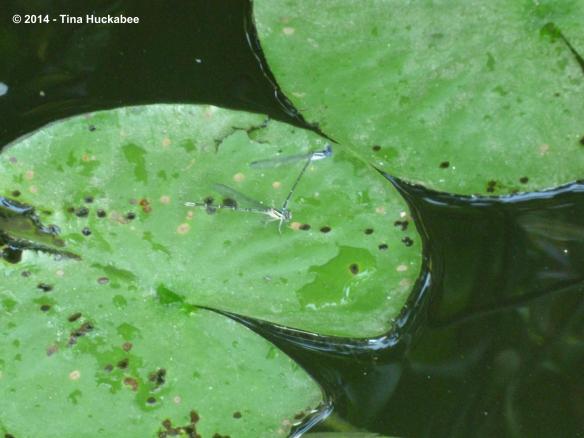
Wow! They can fly like this! They can land like this! They can hang out on lily pads like this!
I’ll leave the rest to your imagination.
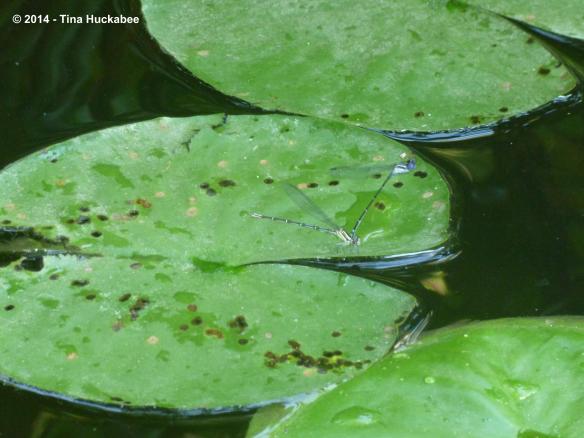
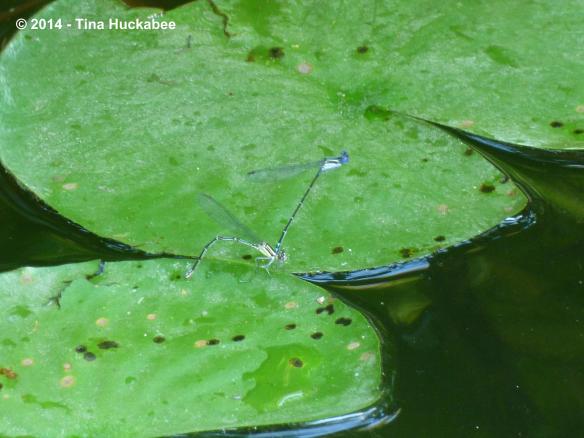
I don’t know if these two love-damsels were inexperienced or young, but they never quite got the “wheel” part of the equation–at least not while I was watching.
Maybe that was part of the problem.
Late summer was great for wildlife viewing and I look forward to the autumn months. I enjoy lots of wildness in my gardens and I’m sure you do too. Please join in posting about the wild visitors to your gardens for September Wildlife Wednesday. Share the rare or mundane, funny or fascinating, beneficial or harmful critters you encounter. When you comment on my post, leave a link to your post for Wildlife Wednesday so we can all enjoy a variety of garden wildlife observations.
Happy Wildlife Wednesday and good wildlife gardening!