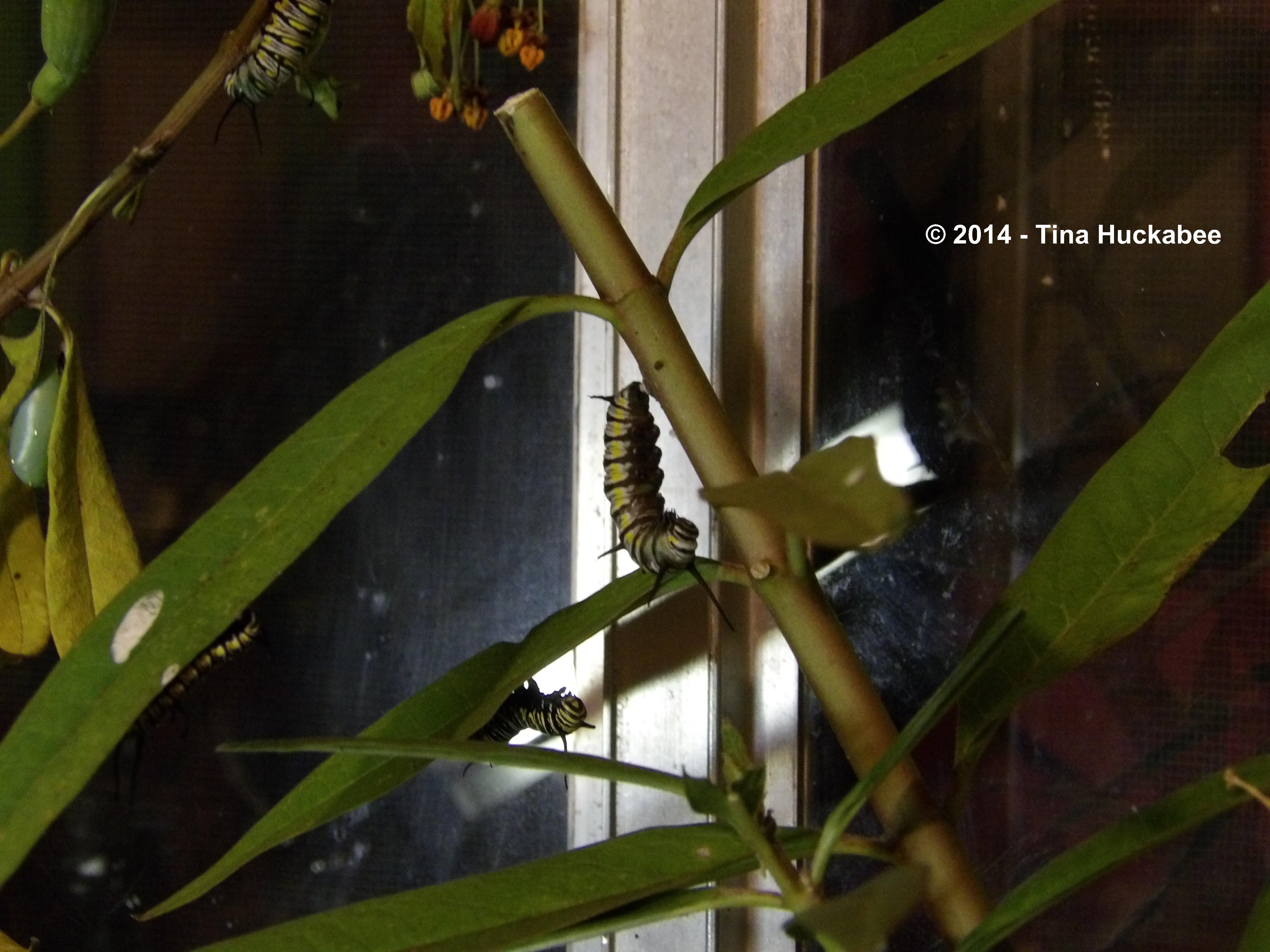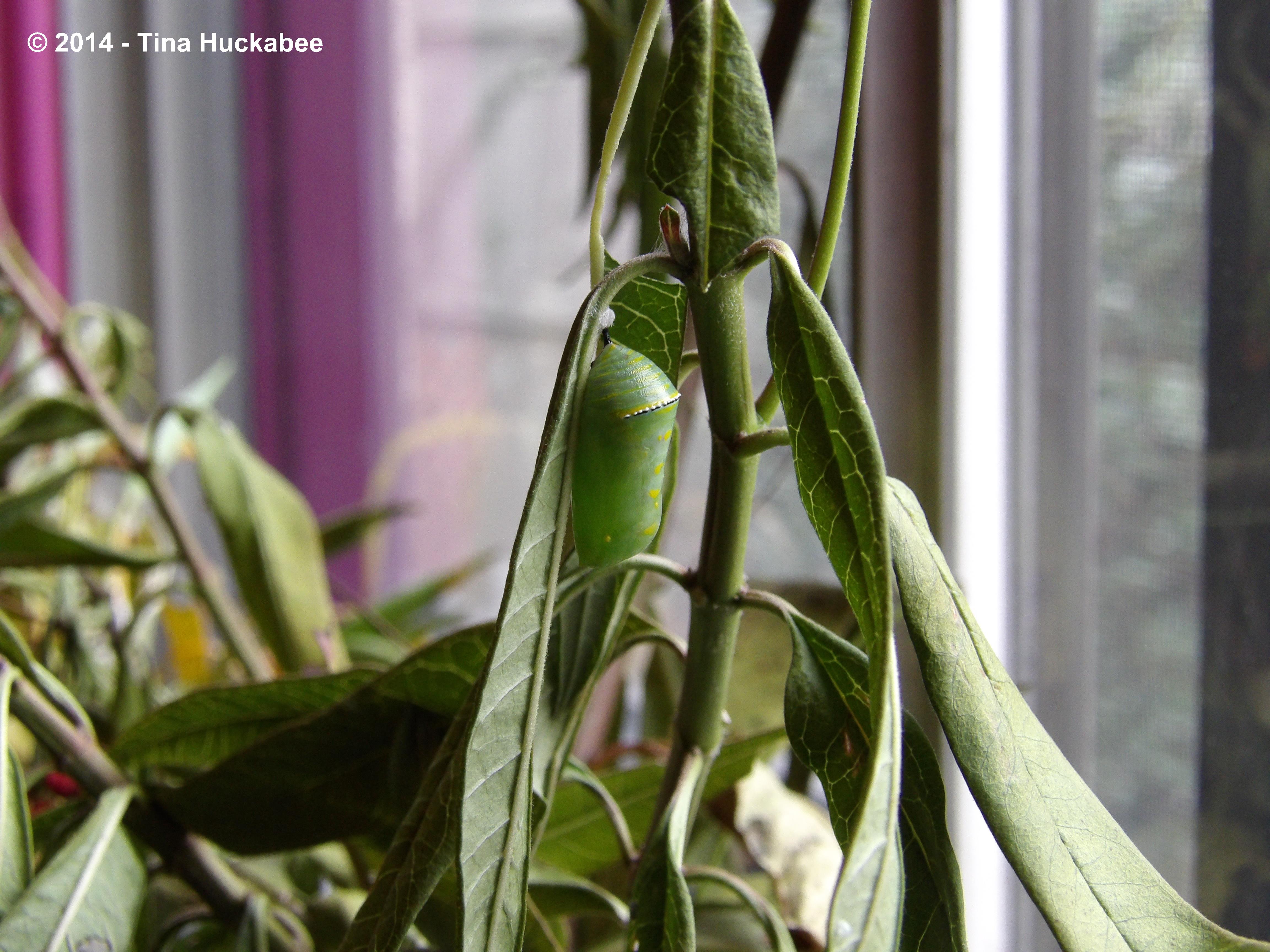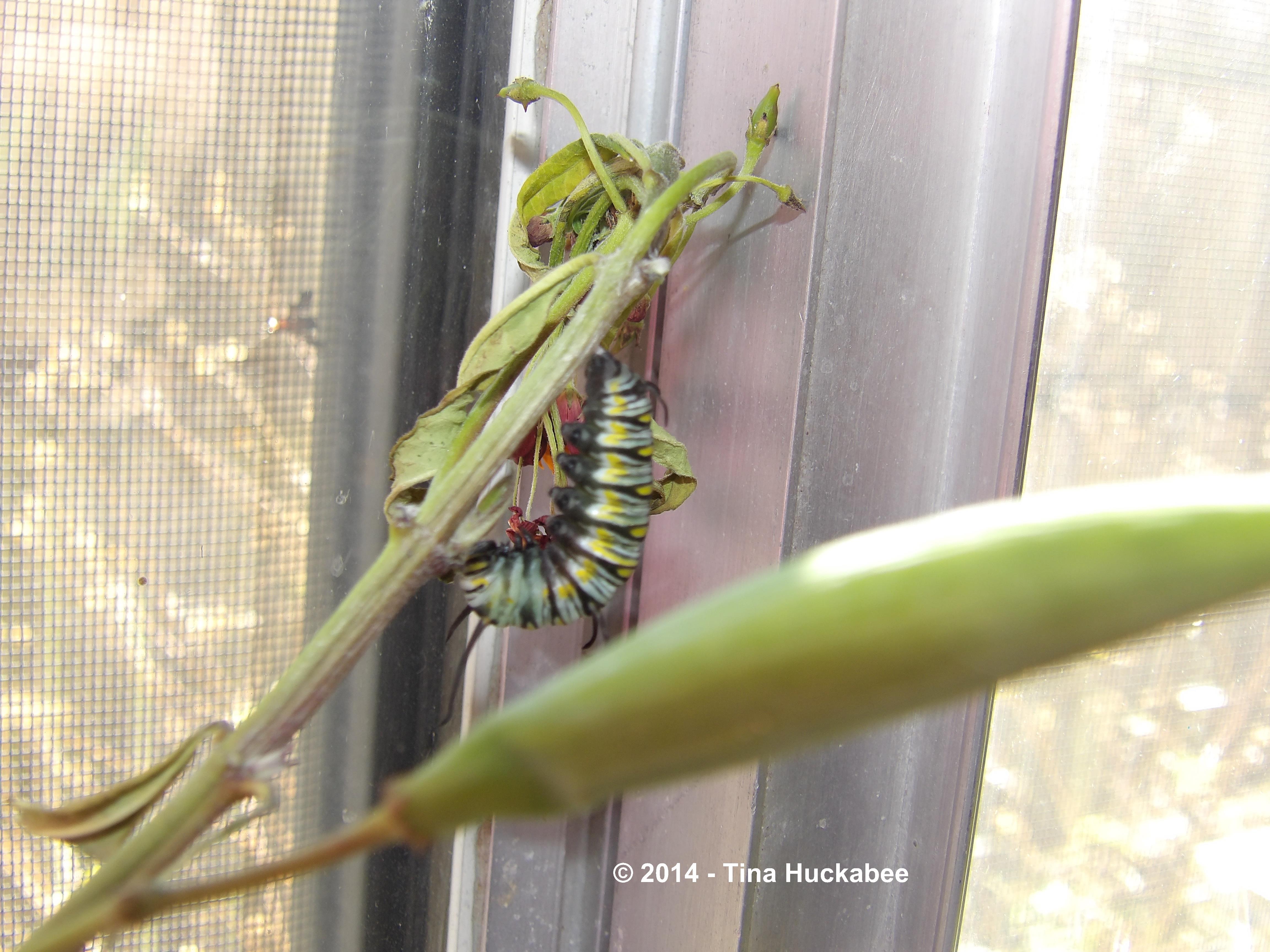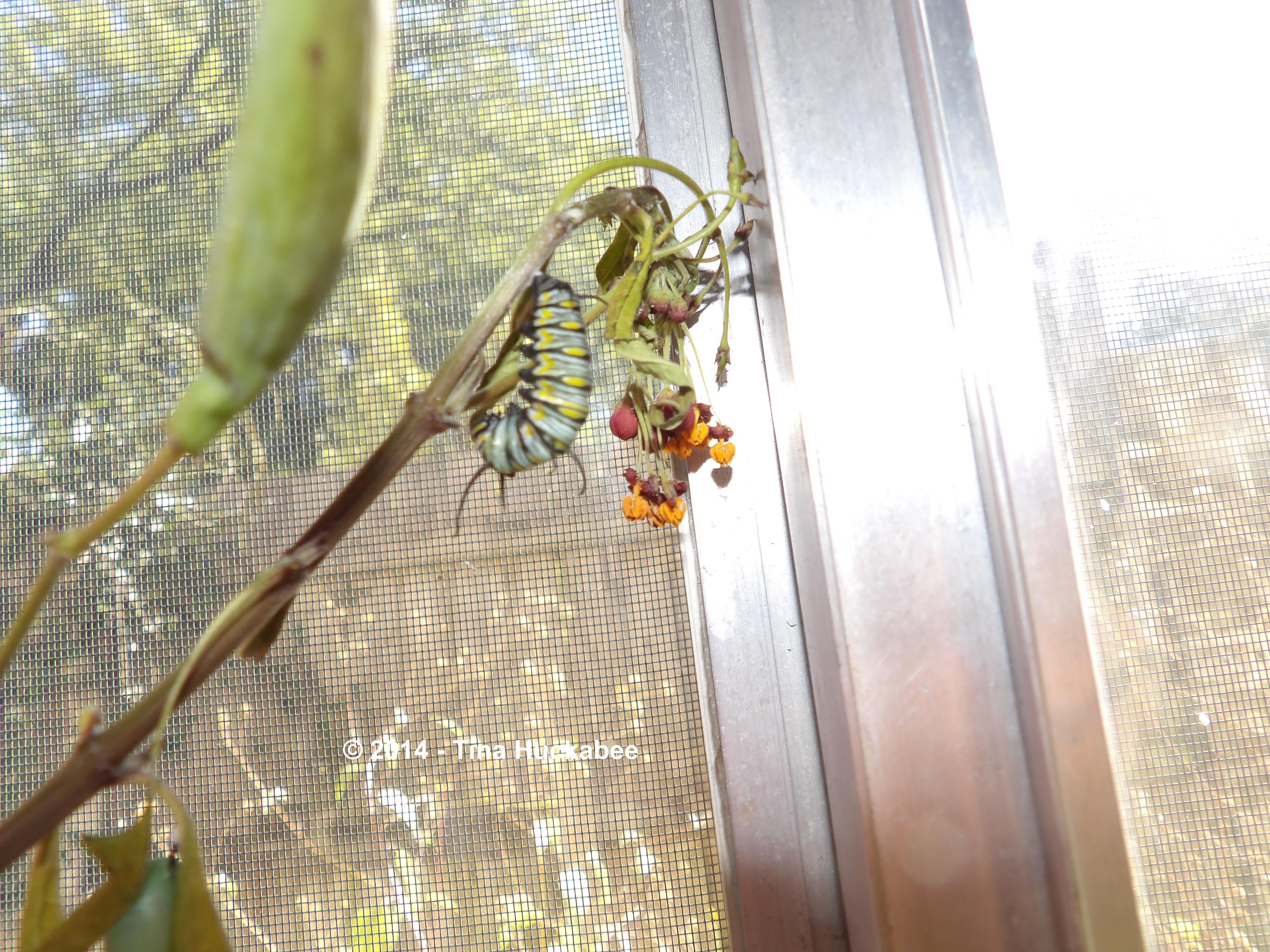
Wildlife Wednesday, November 2014

I should call this month’s post: what you notice when you bother to pay attention.  The reason I started Wildlife Wednesday was (unselfishly)  to promote planting and gardening for wildlife and (selfishly) to improve my own observation, identification, and photographic skills.  One thing I’ve learned is just how much wildlife actually resides in my gardens that I hadn’t fully appreciated.  I wasn’t oblivious to the myriad of creepy, crawly, flitty pollinator/seed distributor-types, but I didn’t notice them all that much.  Bees?  Oh sure, they’re in the garden, but don’t ask me to tell the difference between species.  The birds were easy to identify, as long as they were colorful or in some other way caught my eye. All those little brown/gray/tan things?  They were just “twitty birds” to me.  Butterflies, because of their obvious beauty, were much easier to discern, but I didn’t necessarily observe and identify moths or the many little skippers out there, which are important pollinators, along with the most beautiful butterfly. I’m still more likely to be aware of the conspicuous; sometimes, that’s all I have time or patience for.  But in these past few months, in focusing my observations on life-beyond-the-plants, I’m amazed at what I’ve seen that I wasn’t aware of.  I have grown to value, even more than before, the abundant diversity residing in my patch of the Earth.

I must have spent fifteen minutes attempting to get a decent photograph of this pollen-heavy leafcutting bee,

IMGP0964.new

..as it worked the blooms of a Henry Duelberg Sage.  At least I think it’s a leafcutting bee, which is categorized as a Megachile species.   I was more fascinated at how this little bee moved around, so laden  with pollen.  At one point she rested along the stem.

IMGP0954_cropped_3709x2742..new

Just afterwards, she lumbered away in flight, her corbiculae, which I like to call pollen pantaloons, loaded with valuable cargo.  Honestly, I wasn’t sure she could fly, she was carrying so much pollen.  But fly she did.

Throughout this blooming fall, I’ve seen many individuals of this species of Tachinid fly at blooming plants, like Frostweed.

IMGP1062.new

The first of these flies that I saw was at a distance and  I assumed it was some sort of black bumblebee.  Upon closer inspection,

IMGP1072.new

…it had that definite fly look about it. Those huge eyes!  And don’t you just love those hairs sticking out of its abdomen?

IMGP1065.new

Interestingly, I’ve observed these flies exclusively on the Frostweed and White Mistflower blooms–both white flowers, though I couldn’t find any information that suggests they prefer white blooms.

Of course, I must brag about my little honeybees,

IMGP1790_cropped_3806x3346..new IMGP1569.new

…as they work flowers for the benefit of the hive(s).

Throughout October, I’ve seen several types of hover fly species in the gardens.  The Common Oblique Syrphid, Allograpta obliqua, is remarkably photogenic.

IMGP1634.new

IMGP1639.new

This little “flower fly” is a beneficial garden resident as it sips nectar in its adult stage and controls aphids in its larval stage, as a little green worm.  Beautiful to look at and valuable for gardens,

IMGP1641.new

…they’re good garden partners.

And of course, no parade of October-in-Austin insect photos are complete without a bevy of butterfly images.  The Monarchs, Danaus plexippus,  have been daily visitors through most of October, nectaring on favorites like the Gregg’s Mistflower.

IMGP2001.new

A relative of the Monarchs,  the QueenDanaus gilippus, also prefers Gregg’s Mistflower,

IMGP2057.new

…as does the American Painted LadyVanessa virginiensis,

IMGP2060_cropped_3415x3078..new IMGP2086.new

IMGP2079.new

…as does the Mournful DuskywingErynnis tristis.  

IMGP2090_cropped_3433x3253..new IMGP2095_cropped_3783x3133..new

I guess the garden lesson demonstrated here is that Gregg’s Mistflower is a must-have wildlife attracting plant.  It’s pretty, too.

Common in Austin, the Pipevine SwallowtailBattus philenor,  is a high, strong flyer. Though this one,

IMGP2202.new

IMGP2205.new

…looks a little worse for wear.  It was nice to see him one sunny afternoon, because I haven’t enjoyed many of his kind visiting my gardens this year.

As we head into cooler temperatures, the various dragon and damselflies will be dormant. I spied this beauty, a Springwater Dancer,  Argia plana, sunning himself on the rocks which border my pond.

IMGP2101_cropped_3663x3225..new

He may be the last one I see this autumn, but I’m sure he and his Odonata brethren will return next spring to grace my gardens.

I think this little insect is a sweat bee of the Halictidae family.  He/she was busily working a Goldeneye bloom. Small bloom, smaller bee.  I thought that I would definitely find a photo and identifying information for this critter, but didn’t locate information which gives me total confidence on my identification. I’ll have to take a guess on this one.

IMGP2151.new

But it’s an example of what you notice when you pay attention.  Unobtrusive and small, I might not have seen this native bee (of whatever variety) if I wasn’t looking for wild visitors.

This Blue-gray GnatcatcherPolioptila caerulea, was hopping around in my Retama tree one Sunday afternoon as I attempted to photograph a Tufted titmouse.

IMGP1600_cropped_3327x2926..new

The Gnatcatcher is apparently a summer resident in Central Texas, before migrating south, but I don’t know that I’ve ever seen one before.

IMGP1601_cropped_3788x2940..new

More than likely I have seen a Gnatcatcher, but relegated it to the category of “generic neutral-colored bird,” which I’m afraid I sometimes do.   My bad.

IMGP1602_cropped_2829x3170..new

He’s another example of what you notice when you pay attention.  And I never did get a decent photo of a Tufted titmouse.

This American RedstartSetophaga ruticilla, visited and this is the best shot I could manage. IMGP1652_cropped_2695x3304..new

The photo is poor quality, in part because I was so excited to find a bird that I’d never seen (I need to work on that breathe deep and focus thing), but also because he was flitty and flighty in his movements.  Then my dog waddled near to where the bird was.  Then the cat decided to stroll in the general vicinity of Mr. Redstart.  Well, he’s no fool and he flew away. Migratory through Central Texas, on his way to Central and South America for winter, I saw him a little later in an oak tree, but it was late and he just wouldn’t cooperate for a photo.  After looking at photos of both the male and female Redstarts, I believe I observed a female mid-month working her way among my perennial shrubs.   Alas, no photo of her either.

The Lesser Goldfinches, Spinus psaltria, descended on the Goldeneye as the flowers went to seed.

IMGP1968_cropped_2940x3332..new

IMGP2065_cropped_3290x3341..new

They were around for a week or two, making themselves at home.

IMGP2062_cropped_3046x3359..new

I haven’t seen them in about two weeks.  I live on the edge of their year round habitat, but it’s possible the visiting crew headed south.  I did read that they tend to move around quite a bit.  I still have Goldeneye seeding out;  I wish the Lessers would stop by for some meals.

And I’m always amaze at the noise the petite Carolina WrenThryothorus ludovicianus, makes.

IMGP2200.new

This little guy is a common bird in my gardens and packs a wallop of sound from that tiny body.  This fellow was singing away just after sunrise.

Lots happened in my garden during October and I’m sure yours also hosted plenty of wild action. Please join in posting about the wild garden visitors for November Wildlife Wednesday. Share the rare or mundane, funny or fascinating, beneficial or harmful critters you encounter. When you comment on my post, please remember to leave a link to your Wildlife Wednesday post so we can enjoy a variety of garden wildlife observations.

IMGP1808.new

IMGP2098.new

Good wildlife gardening to you!

Trav’lin Monarchs

As of this past weekend, migrating Monarchs are gone from my gardens.  We received our strongest cold front of the season and like other winged migrators, Monarchs hitch a ride on those strong winds heading southward. I did visit the Lady Bird Johnson Wildflower Center over the weekend and saw busily nectaring Monarchs there–maybe those were some that left my garden a day or two before.  While the Monarchs’ migratory patterns and their winter habitat are seriously threatened, causing concern for the future of this North American species, I was gratified to host Monarchs in my gardens over the past few weeks. Every afternoon, there were several,

IMGP1157.new …sipping and sharing with other pollinators.

IMGP1160.new IMGP1166.new

The perennials in my gardens cooperated, supplying blooms galore for the Monarchs’ winter needs.  They especially enjoyed the blooms of the Frostweed, Verbesina virginica.

IMGP1167.new IMGP1169.new

Any migration worth its mileage will have both males and females along for the adventure. How do you know whether it’s a boy Monarch or a girl Monarch?  The male Monarchs tend to have thinner wing veins than females, therefore are lighter in color. More easily observed though are the black spots on the hind wings which have pheromones which attract the ladies.  Can you see the black spot in this photo?

IMGP1995.new

It’s located on  the underside of the hind wing, just above where the “B” for the label is.


In this photo with wings spread, the gentleman’s black spots are to the left of the label.

IMGP1997.new

This Monarch, dining on nectar of the Gregg’s MistflowerConoclinium greggii, 

IMGP2007.new …is female.  As is the one below, sipping on a  Blue MistflowerConoclinium coelestinum.

IMGP2111.new

There are no discernible spots on either, so they are female.  Read here and here for a couple of excellent tutorials on sexing Monarchs.

I wish good travels to the Monarchs out there and safe harbor in the mountains of Mexico. I’ll await your return in the spring, with blooms ready to help continue your remarkable life cycle.

IMGP1170.new


Decisions, Decisions

Resting on a cushion of snowy white Frostweed blooms, this Green Anole, Anolis carolinensis, can’t decide:

IMGP1519.new

…should I be green?

IMGP1523.new

…or brown-ish?

IMGP1525.new

Noticeable in his rather mottled confirmation, he should skedaddle to someplace safe where he won’t become a morsel for some passing bird. Or cat.

Even in this indecisive state, I’m certain that he’d want to remind that Wildlife Wednesday is next Wednesday, November 5th. My gardens enjoy lots of wildness and I’m sure your garden does too. Please join in posting about the wild garden visitors for November Wildlife Wednesday. Share the rare or mundane, funny or fascinating, beneficial or harmful critters you encounter. When you comment on my post, please remember to leave a link to your Wildlife Wednesday post so we can enjoy a variety of garden wildlife observations.

Happy Wildlife Wednesday and good wildlife gardening!