Bloom Day, November 2014–Dodged the Frozen Bullet

After a chilly week and our first real touch of winter, there are still blooms in my gardens. Lucky gardener!  Lucky pollinators!  I live in central Austin and those supposedly in the know predicted our temperature would fall to the high 20’s by early Friday morning.  Well there was no freeze for me and mine.  Outlying areas received their first freeze, but much of  Austin was spared–this time. To celebrate those lucky blooms, I’m joining with Carol at May Dreams Gardens for November Garden Blogger blooms.

The Coral Vine, Antigonon leptopus, bloomed its signature fuchsia necklace  rather late this year.

IMGP1604.new

Now with colder temperatures and shorter days, the blossoms are fading on the vine.IMGP2341.new

I think my honeybees will miss this favorite nectar source.

The native Texas CraglilyEcheandia texensis,  still blooms, IMGP1507.new

IMGP2343.new

IMGP2344.new

…though it’s going to seed. One patch blossoms in tandem with the blue Henry Duelberg SageSalvia farinacea,’Henry Duelberg’.

IMGP1978.new

A freeze would have quickly ended that pretty pairing.

Rock RosePavonia lasiopetala, sports flowers this November and that’s unusual–they normally stop production by late October.IMGP2383.new

IMGP2362.new

IMGP2360.new

Heavy with seed, I’ll expect more of these lovelies in seedling form next year.  Any takers?

And GoldeneyeViguiera dentata?  It just won’t quit.  This most photogenic of flowers, has bloomed since September.

IMGP2379.new IMGP2381.new

This is one of my two last blooming Goldeneye plants.

IMGP2531.new

The Goldeneye plants in the back garden bloomed first, then set seed and were followed by others throughout my gardens, each individual plant taking turn at adding cheeriness and wildlife goodness to the world.  I’m glad these hardy natives have planted themselves all over my gardens.  Bees, butterflies, birds, as well as this gardener, enjoy and appreciate a long season with these pretties.

IMGP2387.new

The last FrostweedVerbesina virginica, is in flowering mode.

IMGP2384.new

While most of that species are setting seed.

IMGP2469.new

A few Turk’s CapMalvaviscus arboreus, still bloom.

IMGP2394.new

Yellow BellsTecoma stans, ‘Esperanza’, are available for passing bees and butterflies.

IMGP2467.new IMGP2471.new

Blue MistflowerConoclinium coelestinum,

IMGP1475.new

and Gregg’s MistflowerConoclinium greggii, 

IMGP1555.new

IMGP1560.new

…are toward the end of their season.  A true freeze will force the blue blooms into a tawny fluff, ready for dormancy.

Red YuccaHesperaloe parviflora, blossoms on its long bloom spike until a hard freeze.

IMGP2364.new

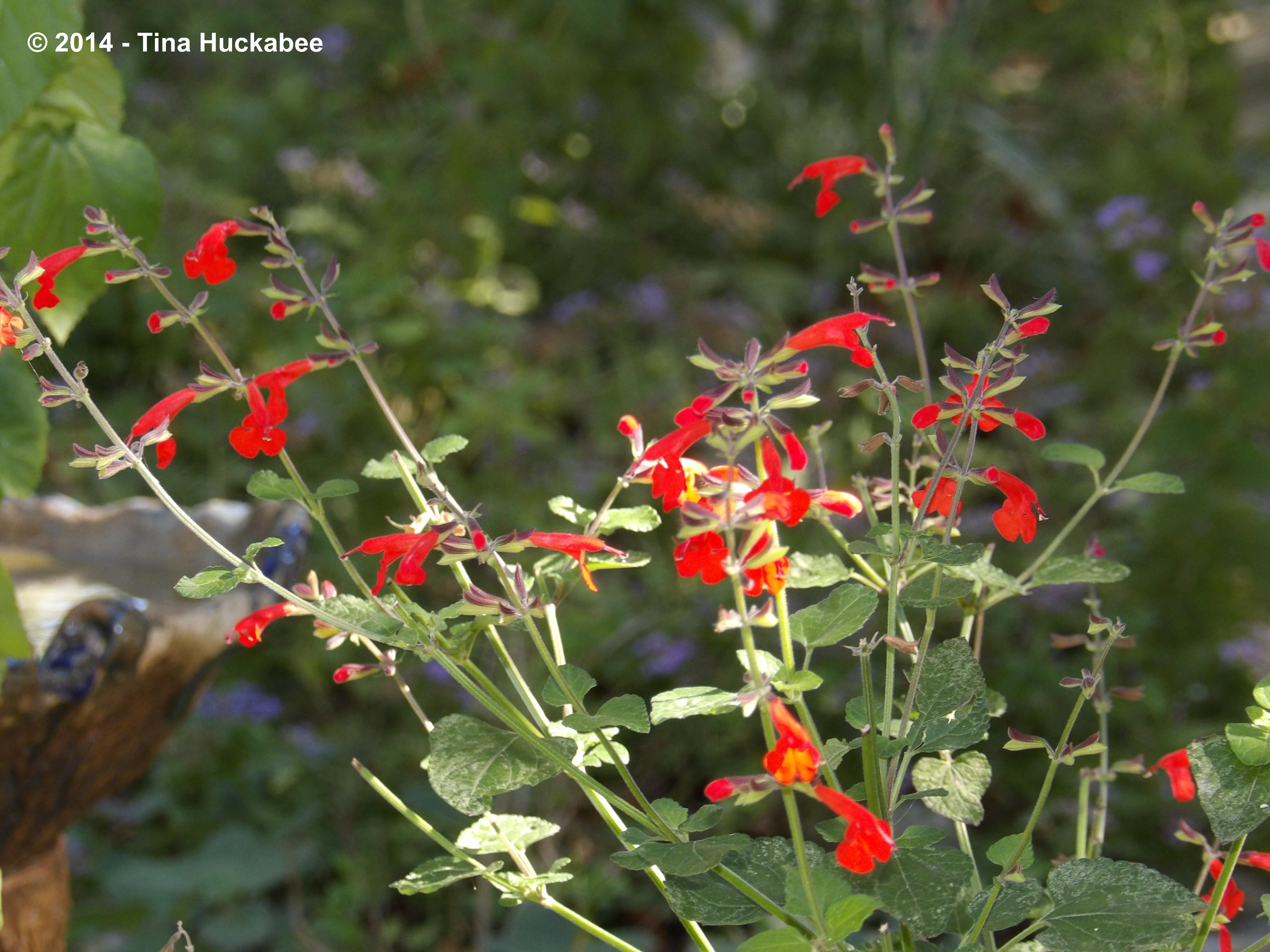
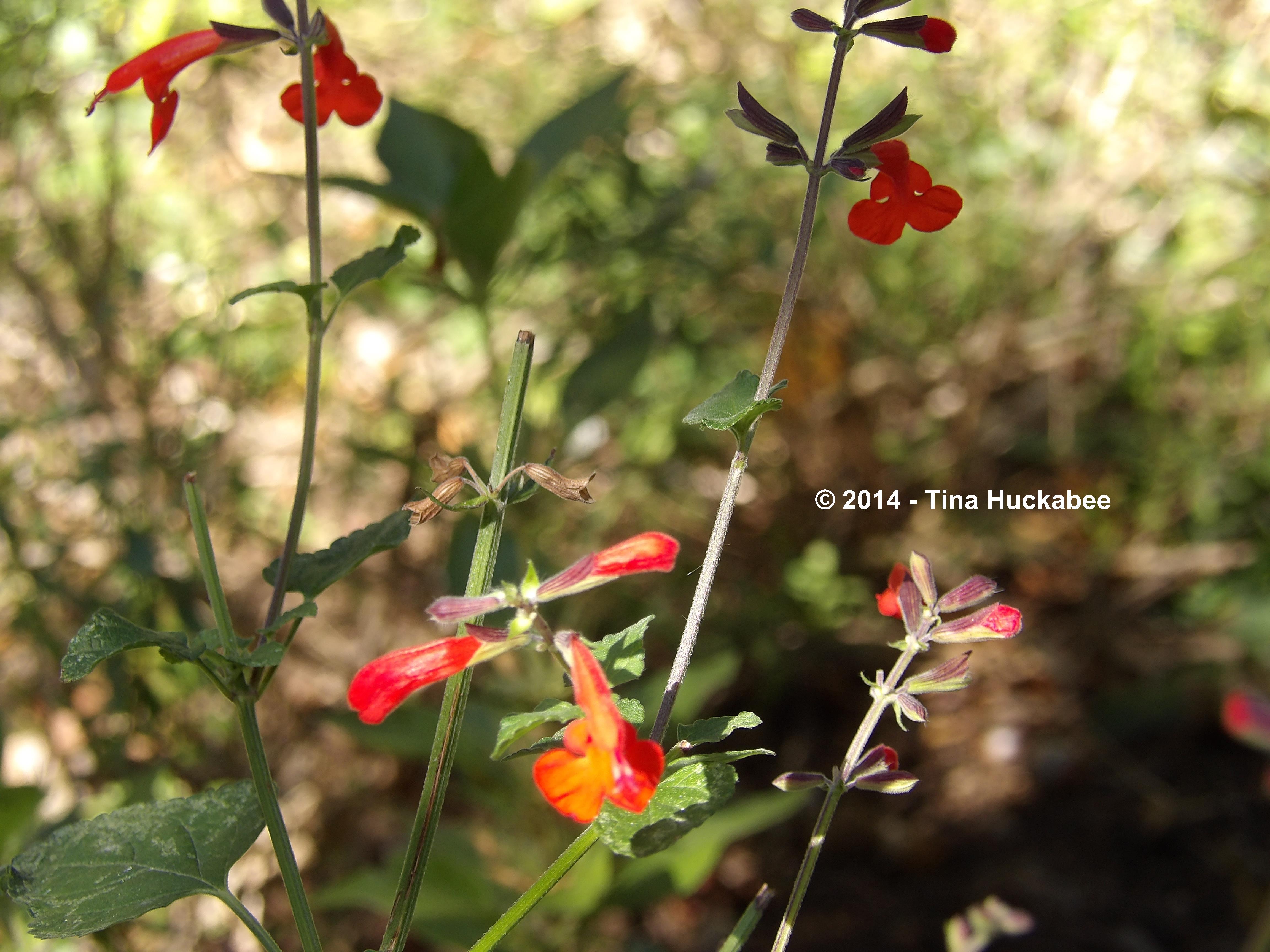
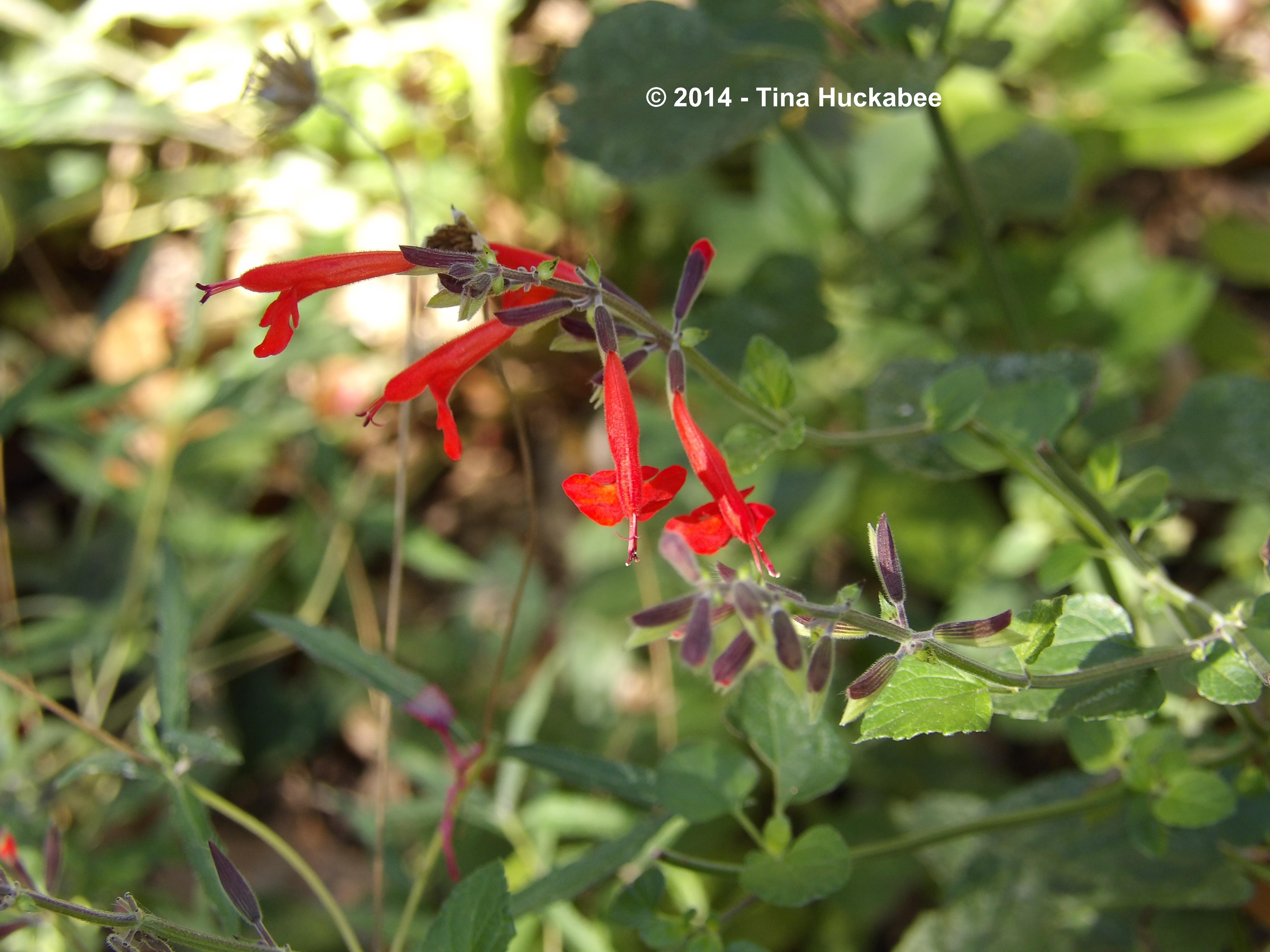
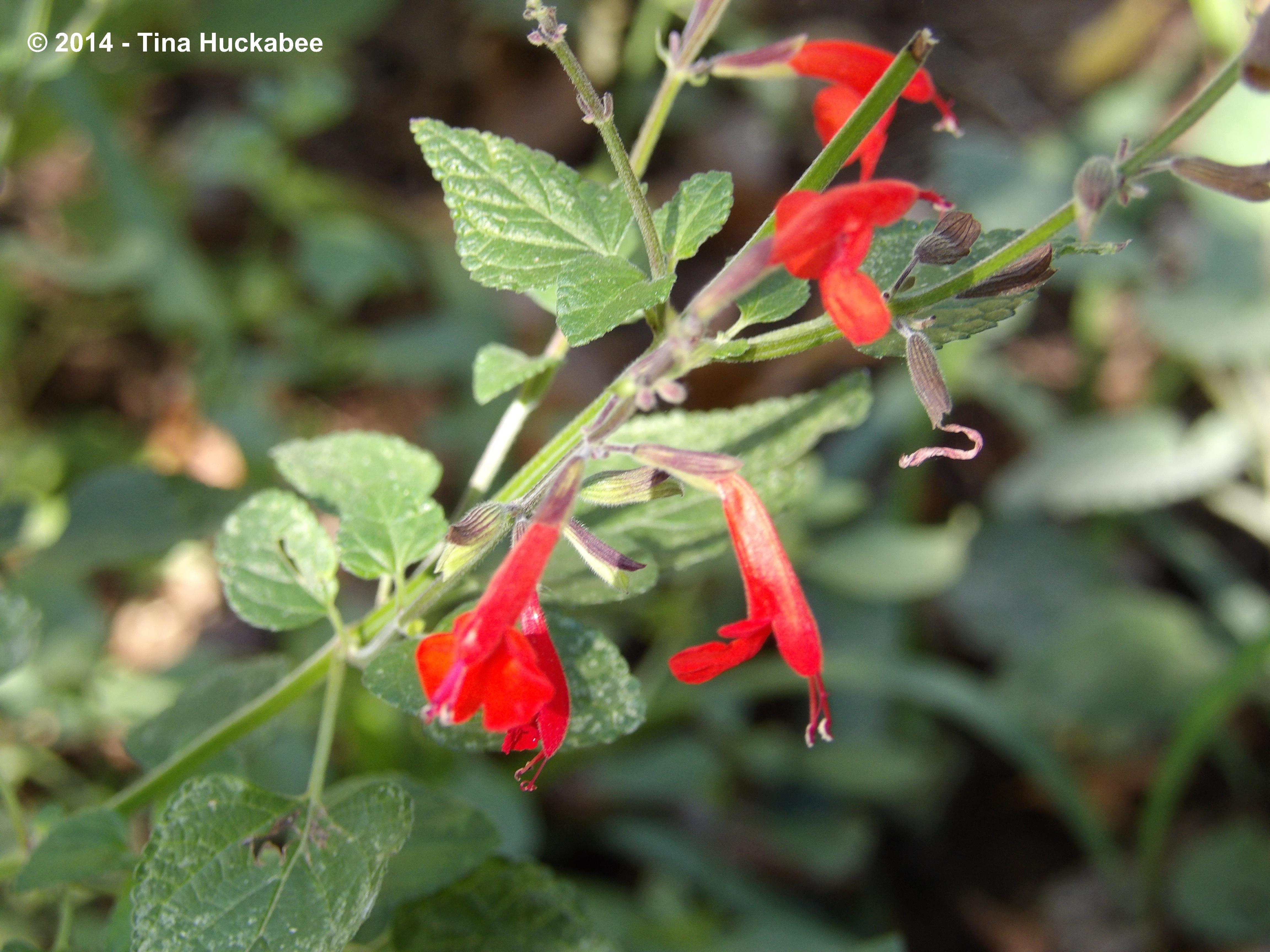
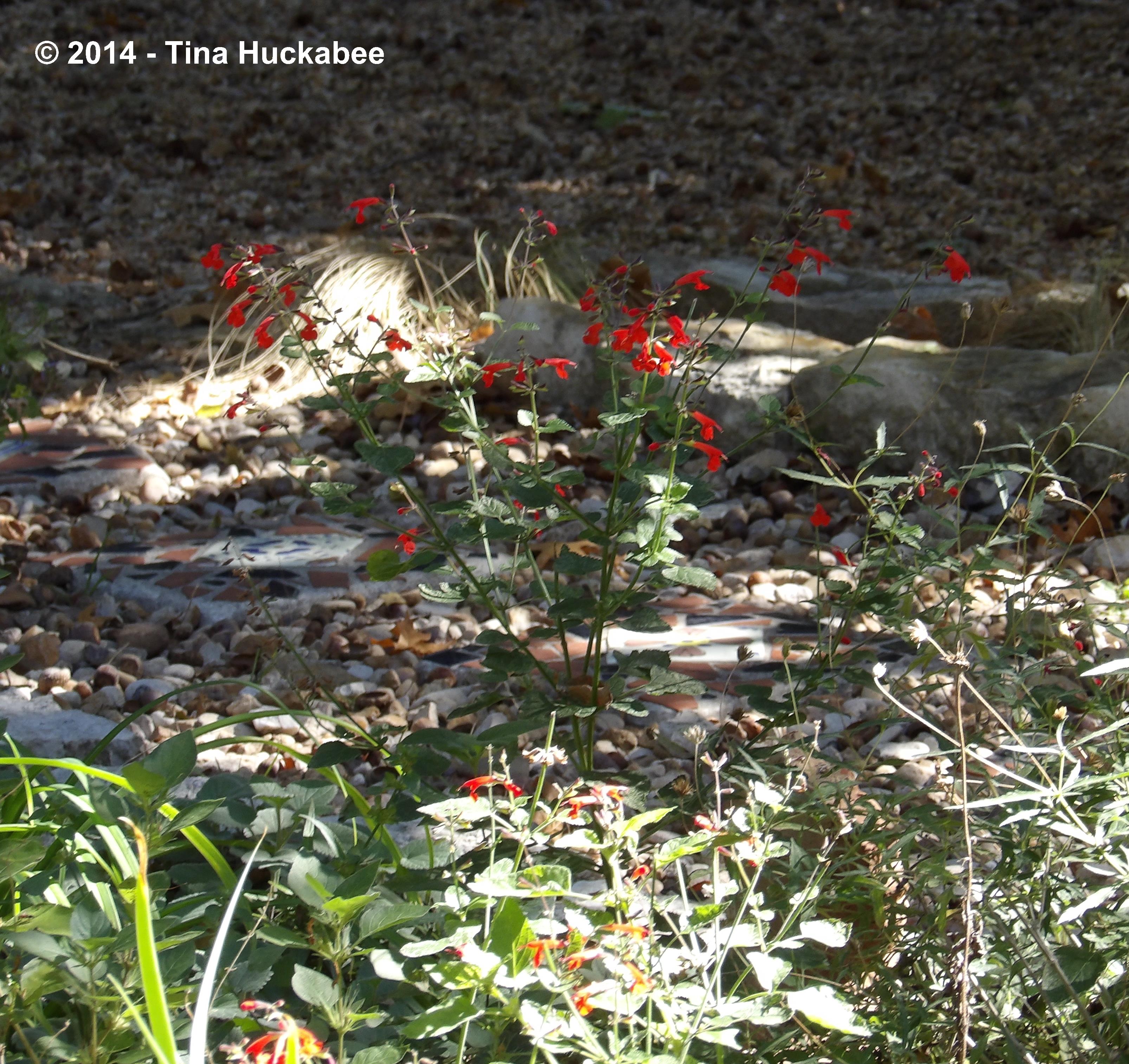
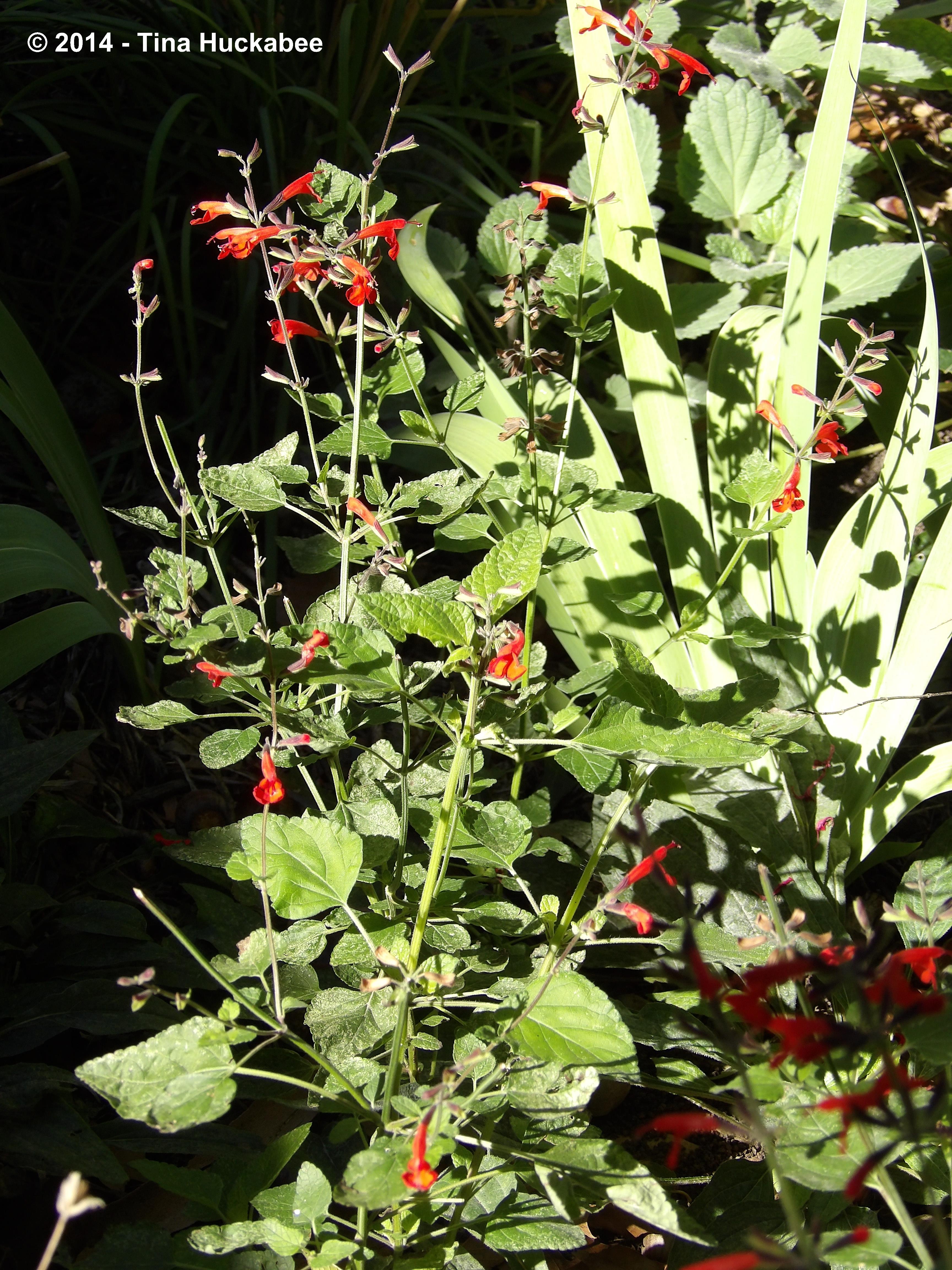
This hasn’t been a banner year for my salvia species.  They’ve bloomed, but not regularly nor as fully as usual.  But they aren’t quite ready to close up shop, so bloom they will until it’s just too chilly and dark.  Salvia like this red Tropical SageSalvia coccinea,

IMGP2354.new

…and this Purple Sage, S. greggii x mycrophylla,

IMGP2560.new

…and this red Autumn SageS. greggii, 

IMGP2611.new

…and another,

IMGP2614.new

…and this coral Autumn Sage.

IMGP2612.new

They’re determined, if not prolific.

The remains of Fall AsterSymphyotrichum oblongifolium, are tired of blooming and ready for seeding themselves.

RICOH IMAGING

When I thought there would be freezing temperatures, I cut the last of the fall blooms of Purple ConeflowerEchinacea purpurea and Tropical Sage and did this:

IMGP2616.new

As well, I cut a few Goldeneye and basil and did this:

IMGP2590.new

I’m not much for cut flowers in the house (I much prefer a garden full of blooms), but they are nice when it’s gloomy outside. I guess November in my garden and my house is not so barren after all!

Pop on over to May Dreams Garden and enjoy a show of November blooms from all over


Bee Mama Missive: Honey Flow, Honey!

My honeybees have been busy bees this autumn. They’re all over the fall blooming perennials like Goldeneye, Viguiera dentata,

IMGP1530.new

IMGP1538.new

...and Frostweed, Verbesina virginica.

IMGP0972.new

And let’s not forget how much the honeybees (and everyone else, it seems) work the Blue Mistflower, Conoclinium coelestinum.

IMGP1615.new

As well, honeybees adore the blooms of Coral Vine, Antigonon leptopus.

IMGP1413.new

When I walk into the back garden, day or night,  the fragrance of honey drifts from my hives.  Mmmm.  Breathe deep. That honey-strong fragrance indicates that there is a honey flow happening and it’s been going on for a while.  Honey flow occurs when there are blooms galore and plenty of nectar to gather and honey is busily bee-ing made.

Recently, we checked both hives and Scar’s three boxes are full of comb and honey.P1060815.new

IMGP2325.new

IMGP2327.new

Mufasa has been the weaker of the two hives, but its two boxes were also full of comb and honey and ready for a third box.  So we prepared another set of top bars for Mufasa’s third box. We melted down some frozen comb from the July honey extraction,

IMGP2025.new IMGP2024.new

…to add to the bars. This little track of wax will help the girls start their comb-building.

IMGP2027.new

Before adding the third box to Mufasa, we sneaked a peek to assure that all is well. The comb in Mufasa’s second box is heavy with honey and larvae.

IMGP2334_cropped_2903x3322..new

However, If you look closely,IMGP2337.new

…you can see how the comb is undulated–sort of wavy-gravy kinda comb,IMGP2339.new

…not neat, tidy and vertical comb aligned with the bars as it’s supposed to be.

This, dear readers, is an example of poor beekeeping management.  In early September, while checking Mufasa, one of the combs broke off of the bar.  Unfortunately with the Warre type hives that we built, this easily happens.    I made the beekeeper’s executive decision to place the broken comb back into the box, as best I could, rather than removing the comb and the honey.  If it was earlier in the growing season, I would have removed the comb and extracted honey and the bees would simply rebuild–after all, that’s what they do. But the latest broken comb incident occurred late in our growing season and I didn’t want to take honey from the bees.  So, I dropped the comb in, knowing that they wouldn’t repair it as perfectly as it was originally built. Given that our beekeeping  goals are not so much about the production of honey for us, but for the bees themselves, it’s a reasonable decision to make.

Assuming our hives survive winter, my best amateur guess is that there will be honey left over and we’ll extract it then, along with the wonky comb. With our Warre hives, when we take honey, we have to take comb too, as there is no straightforward way to extract the honey without crushing the comb.  It’s simply how the design works. Next spring, the hive will have the whole growing season to rebuild and restock their honey stores.

We added the third floor to Mufasa a couple of weeks ago and when recently checked, the bees completed two bars with comb and honey.   That’s fine and expected; they’ll build more comb over time.

RICOH IMAGING

I’ve continued observing a few Small Hive beetles in both hives, which you can read about here, but not many and not every time I check.   When I opened Mufasa this past week, I saw and killed what looked like two Wax Moth larvae.  Well, I knew they would invade eventually.  I opened both hives and didn’t see any webbing that is indicative of a mass infestation of the Wax Comb moth. Whoop!  But I am popping Mufasa’s top off most days to check–just in case.  In one of the articles I read about the Wax Comb moth, the author suggested that if the beekeeper kills the moth larvae, then drops the dead larvae into the hive, it teaches the bees to kill the larvae as invaders.  I have my doubts about that particular management practice, but that’s what I did–not because I’d read to do that, but because I was grossed out and offended to see the two larvae crawling along Mufasa’s hive.

Bee Mama is protective of her little bees.

We’ll  thoroughly check both hives at least one more time before true winter sets in.   Both hives have plenty of honey stores (fingers crossed) for the winter and we’ll see how they fare.

The bees continue their work.  Foraging,IMGP1082.new

….pollinating,IMGP1620.new

…sipping at their local watering hole,IMGP2443.new

….and being bees.

IMGP1535_cropped_3562x3138..new

Tree Following: Texas Retama in November 2014

I’m happy to participate for the first time with Lucy and her Tree Following meme which is celebrated on the 7th of every month on Loose and Leafy blog.    I discovered this charming gardening meme while researching garden blogging memes and it appeals to me.  I relish the idea of a month-to-month, year-long study of a particular garden subject through its seasonal and gardening changes.

So, my tree for the coming year will be–drumroll please–the Retama, Parkinsonia aculeata, which is living happily in my garden in Austin, Texas, USA.

IMGP2315.new

My Retama is situated in a moderate-sized urban garden, flanked on its right by a large, native Red Oak tree and a smaller native Mountain Laurel tree and on its left by a non-native Crepe Myrtle (which belongs to the back neighbor).   Also and unfortunately, during the coming year of Retama-watching, we’ll have to tolerate the unattractive electric lines which span unceremoniously across the back of my property and will  appear in many of the Retama photos.

IMGP2297.new

Yuck.  I don’t see those lines when I stroll my garden, gazing admiringly at the Retama or other garden pretties,  but I certainly notice them in photographs.

I just want you to know that I know the lines are there.

IMGP2314.new

We’ll cover the basics today, accompanied by some November Retama photos. The Retama,  Paloverde,  Mexican Palo Verde, Jerusalem thorn, and  Lluvia de Oro is a native-to-Texas tree with many names, it seems.  Its native range is Central Texas, west to Arizona and southward to South America.  It’s a small tree, usually 15-20 feet tall, with airy foliage and yellow bloom clusters in the summer months.

Silhouetted against a gray sky, its foliage and branch forms are graceful and elegant.

IMGP2318.new

IMGP2298.new

The bright green, tiny leaves are borne along a pair of stalks, opposite one-another.

IMGP2302.new

IMGP2307.new

The fine foliage gives a feathery, soft appearance to the tree.  The Retama is deciduous, but the bark remains green, even during winter.

IMGP2305.new

The bark is completely green when the tree is young, developing a layering of textured orangy-brown bark as the tree ages, though the green bark remains a characteristic feature.  The bark reminds me of the outer layer of cantaloupe.

IMGP2306.new

Thorns grow along the branches,

IMGP2310.new

…and yes, those thorns hurt when the gardener bumps against them while working around the tree.  Which I’ve done.  Numerous times.

IMGP2311.new

Ouch!

The seed pods are typical legumes, which makes some sense as this tree is in the Pea (Fabaceae) family.

IMGP2309_cropped_3147x3304..new

The blooms are gone on my Retama as it is well into autumn, with shorter days and cooler temperatures.   But the tree remains attractive and useful for the birds, like this migrating Blue-gray Gnatcatcher.

IMGP1603_cropped_3037x2903..new

The tree is a favorite of many birds.

Retama.

When I was growing up, my mother called it Palo Verde.  I’m not quite sure why I don’t use that moniker for this beautiful tree, but by whatever name it’s called, Retama is lovely and unusual and I look forward to studying it more closely this next year.

Thanks to Lucy for hosting Tree Following–please pop over to Loose and Leafy and check out trees being followed from all over the world.