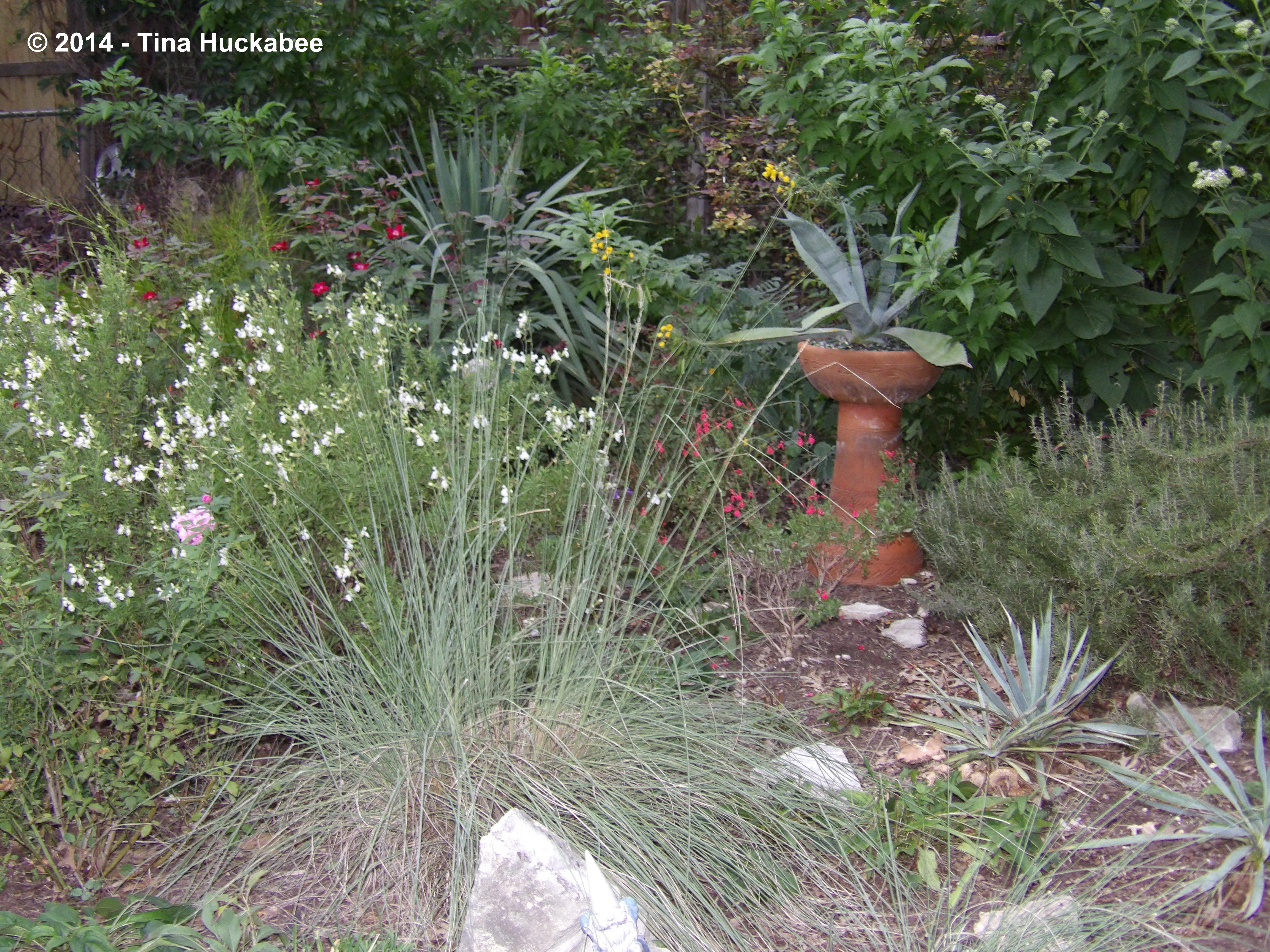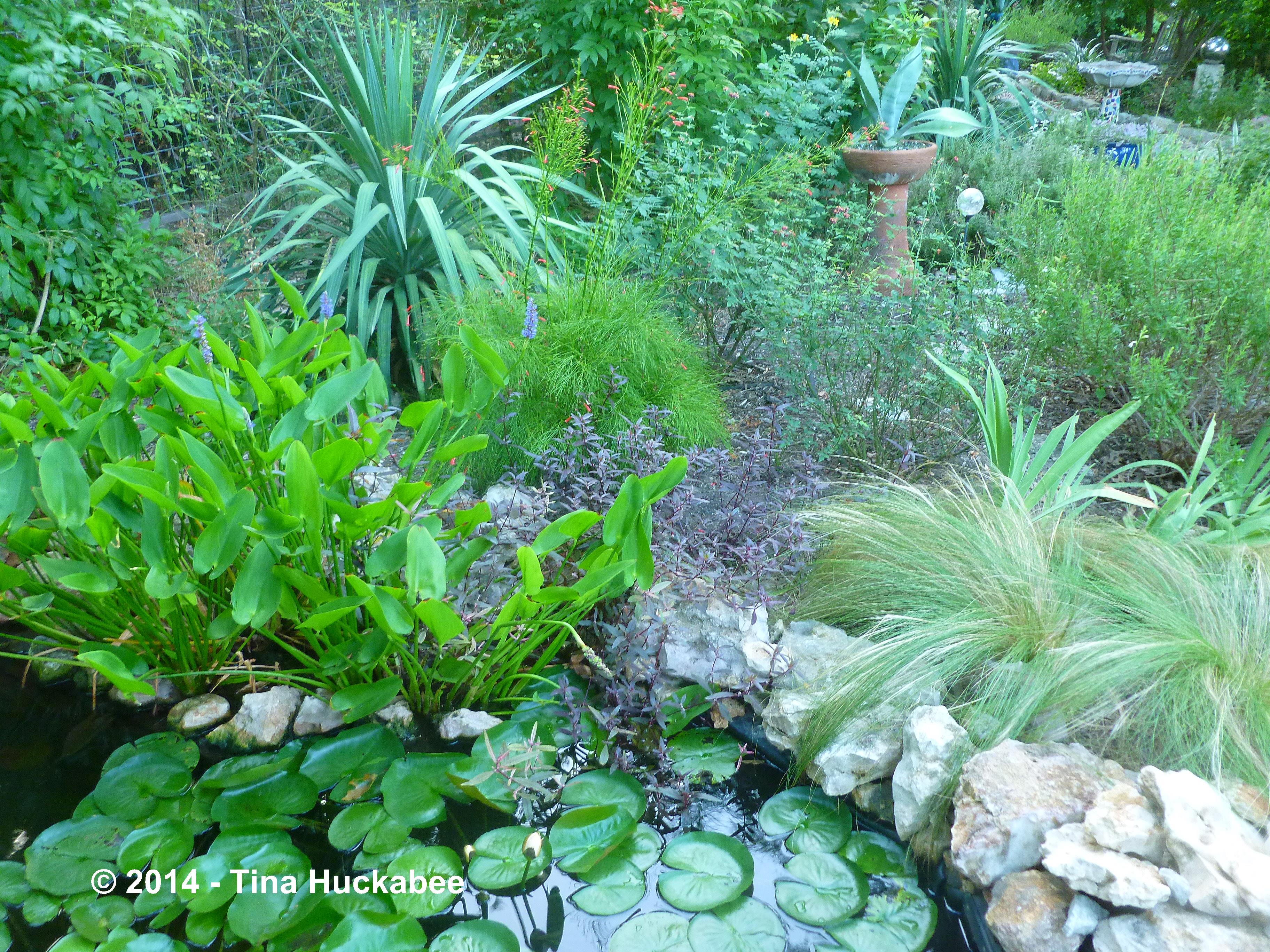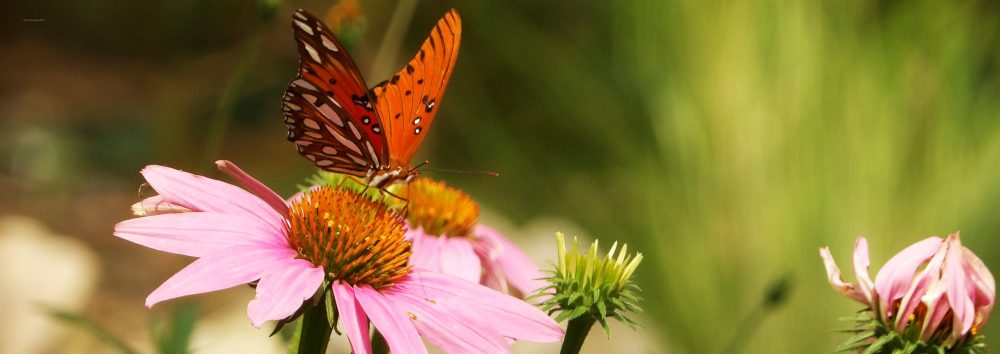
Foliage Day, December 2014

I’ve profiled foliage from my garden in the past, but I’m going to hang out with the Europeans today by joining with Christina and her beautiful blog,  Creating my own garden of the Hesperides, as she hostesses Garden Bloggers’ Foliage Day for December 2014.

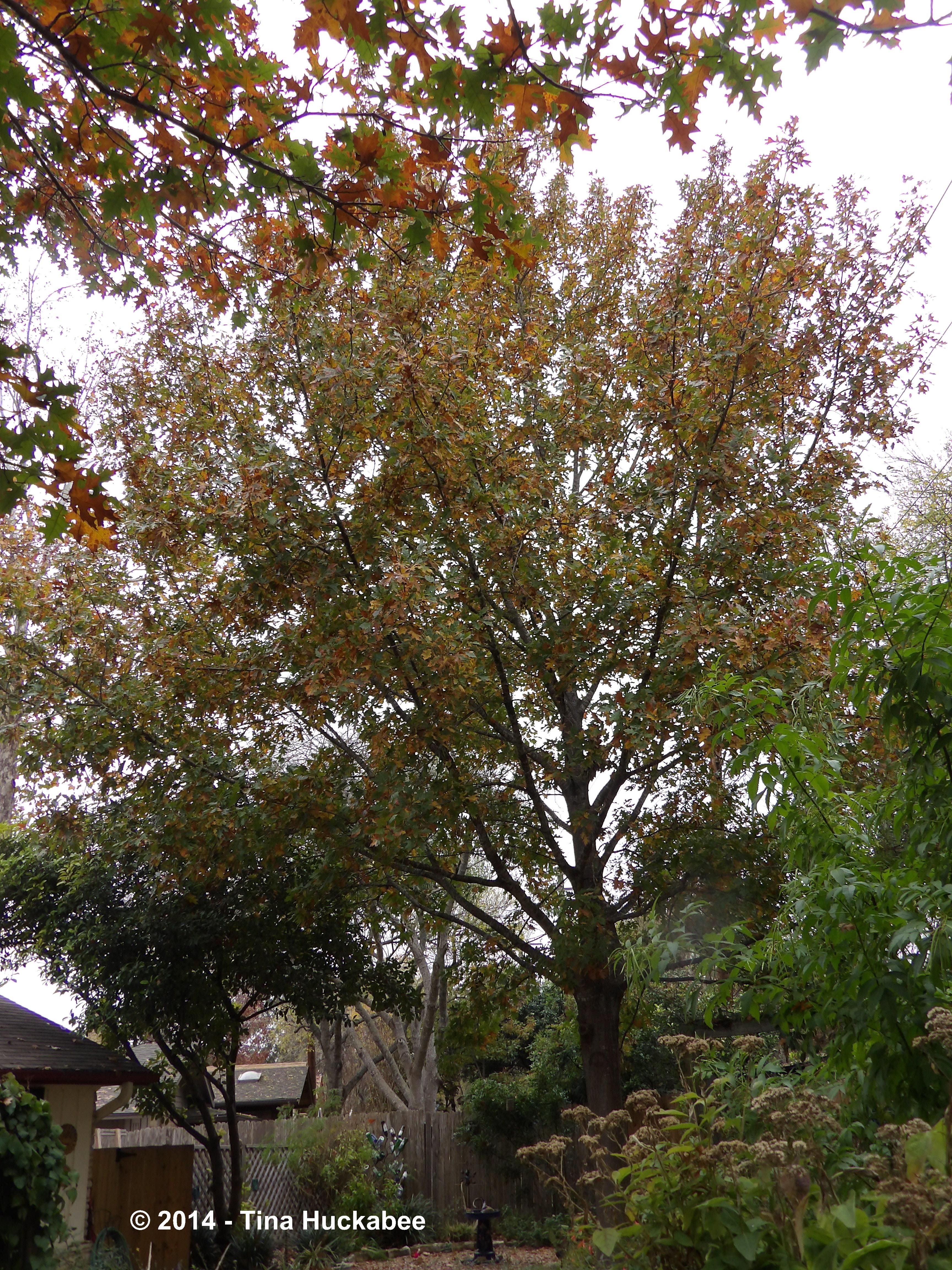
Folks who’ve relocated to Austin, Texas have complained to me (usually in  whiny voices), there’s no fall color here.  That gets my “Texan” up a bit, because we do enjoy autumn color in Central Texas, at home and all around.

IMGP2938.new Lovely fall foliage.

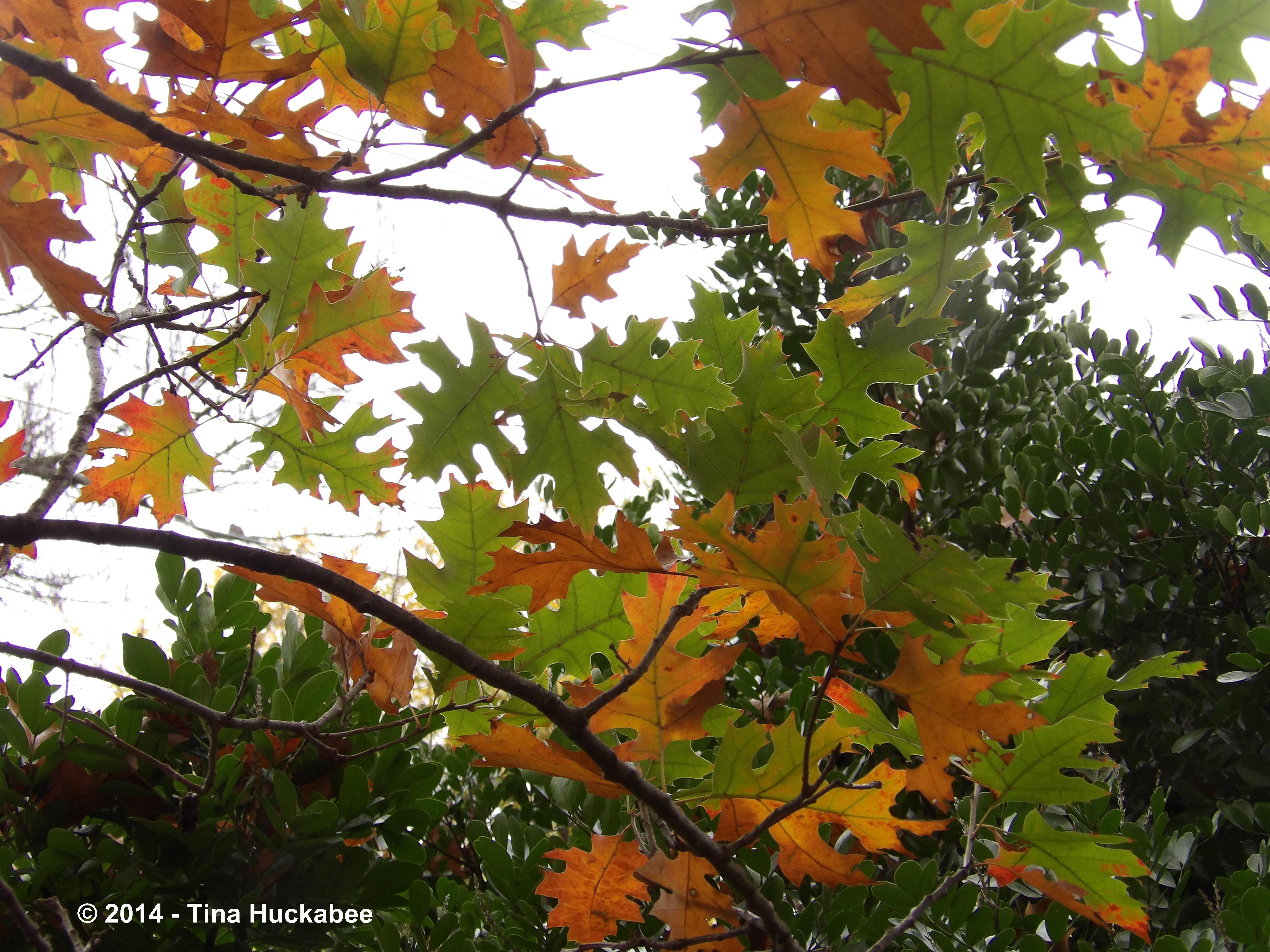
IMGP2940.newThe color evolution happens later than in other parts of the Northern Hemisphere, closer to the actual start date for winter.  Additionally, the turn of foliage is gradual, beginning in November, peaking in late November/early December, and typically finishing by New Year’s Day.  It’s not a dramatic foliage show, loud and boisterous like you’d think something in Texas would be.  Instead, the change is gradual, subtle, and gentle.

IMGP2937.new

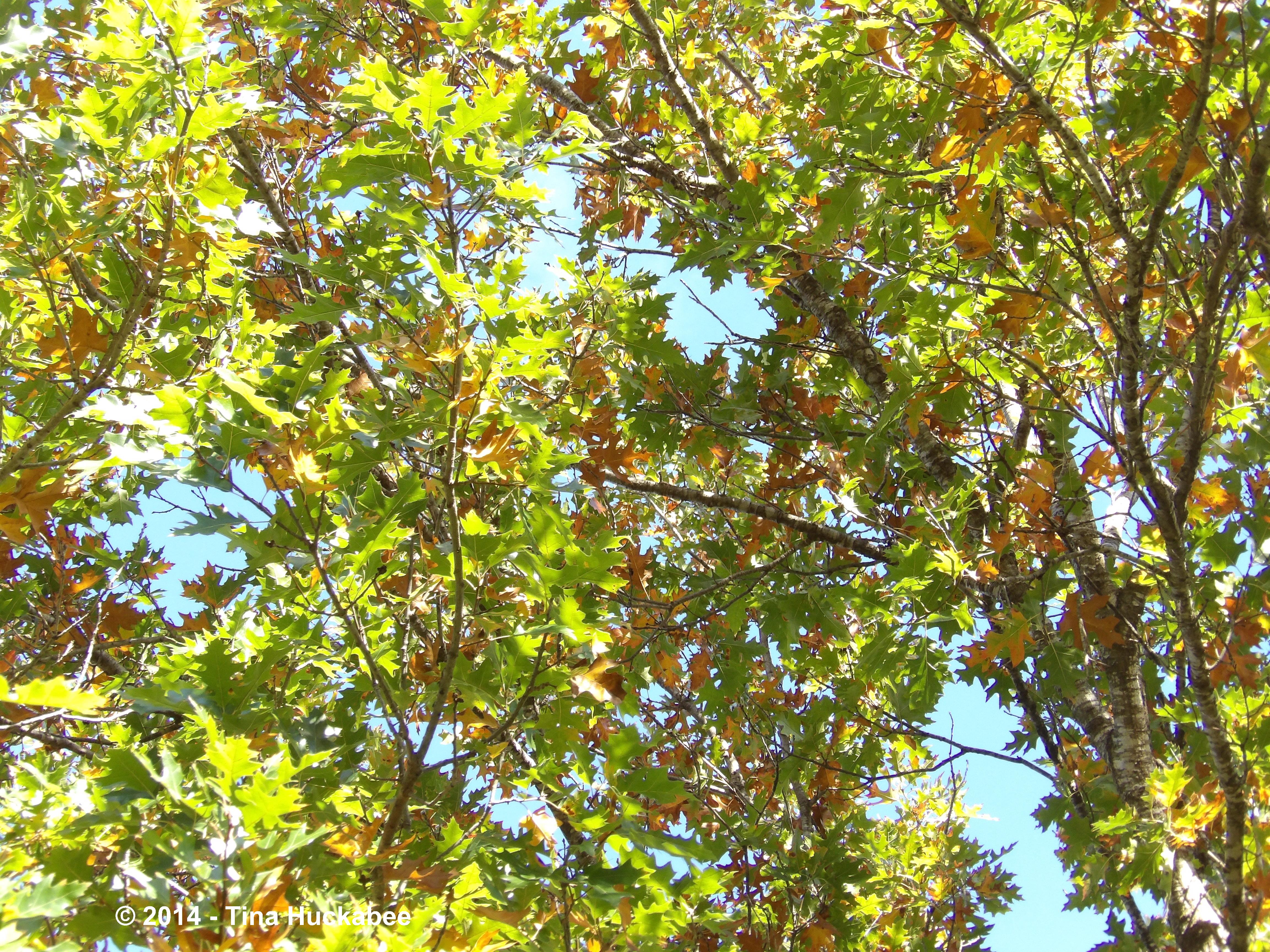
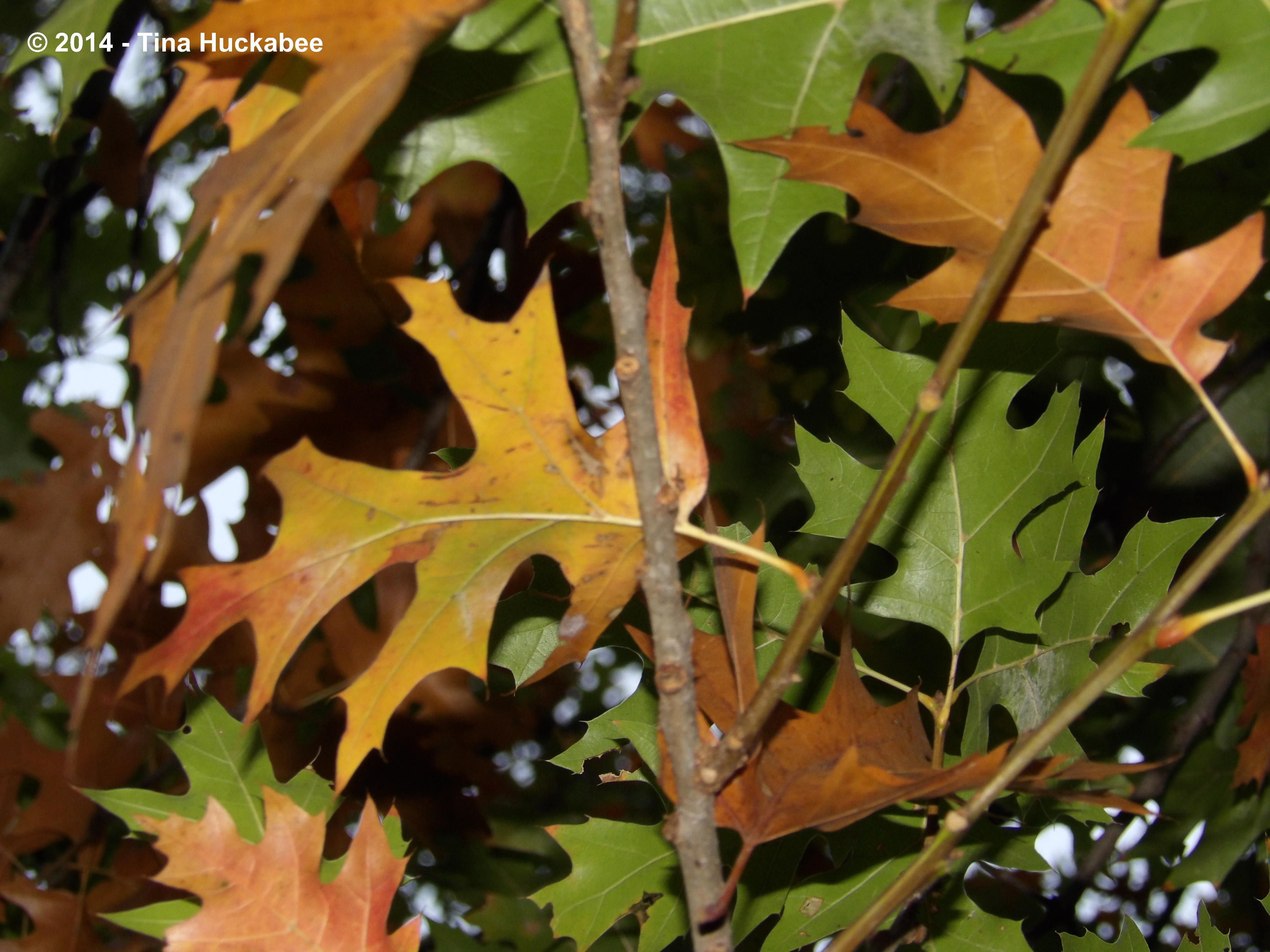
In my gardens, the two Shumard OakQuercus shumardii, trees extend their color change over many weeks.

IMGP3124.new IMGP3191.new

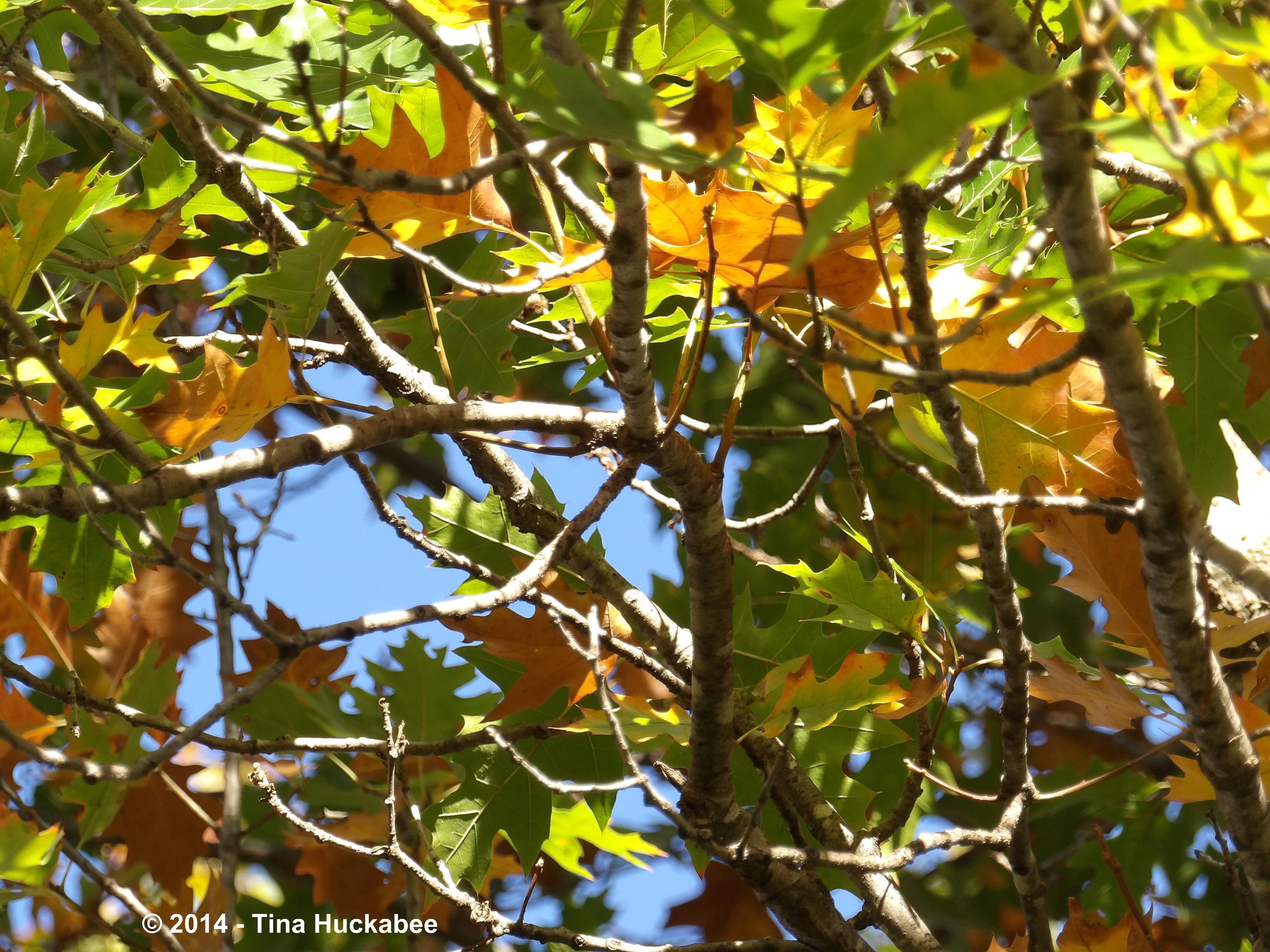
There are several species of oak trees in Texas that are commonly referred to as “Red” oak.  I’m guilty of misnaming the two major arboreal specimens in my back garden as “Red” oaks.  In fact, both are Shumard  Oaks.
IMGP3034.newIMGP3033.new

Gorgeous trees, I appreciate their many attributes: the shade they cast in summer, the cover and food provided for the many birds and other wildlife who visit or make these trees home, and the fall foliage mosaic (albeit in December) that these two trees provide.
IMGP2967.new

IMGP2968.new

IMGP3122.new

IMGP3139.new

IMGP3140.new

Another tree residing in my realm, though probably not one I would have planted on my own, is the American Sycamore, Plantanus occidentalis.IMGP3153.new
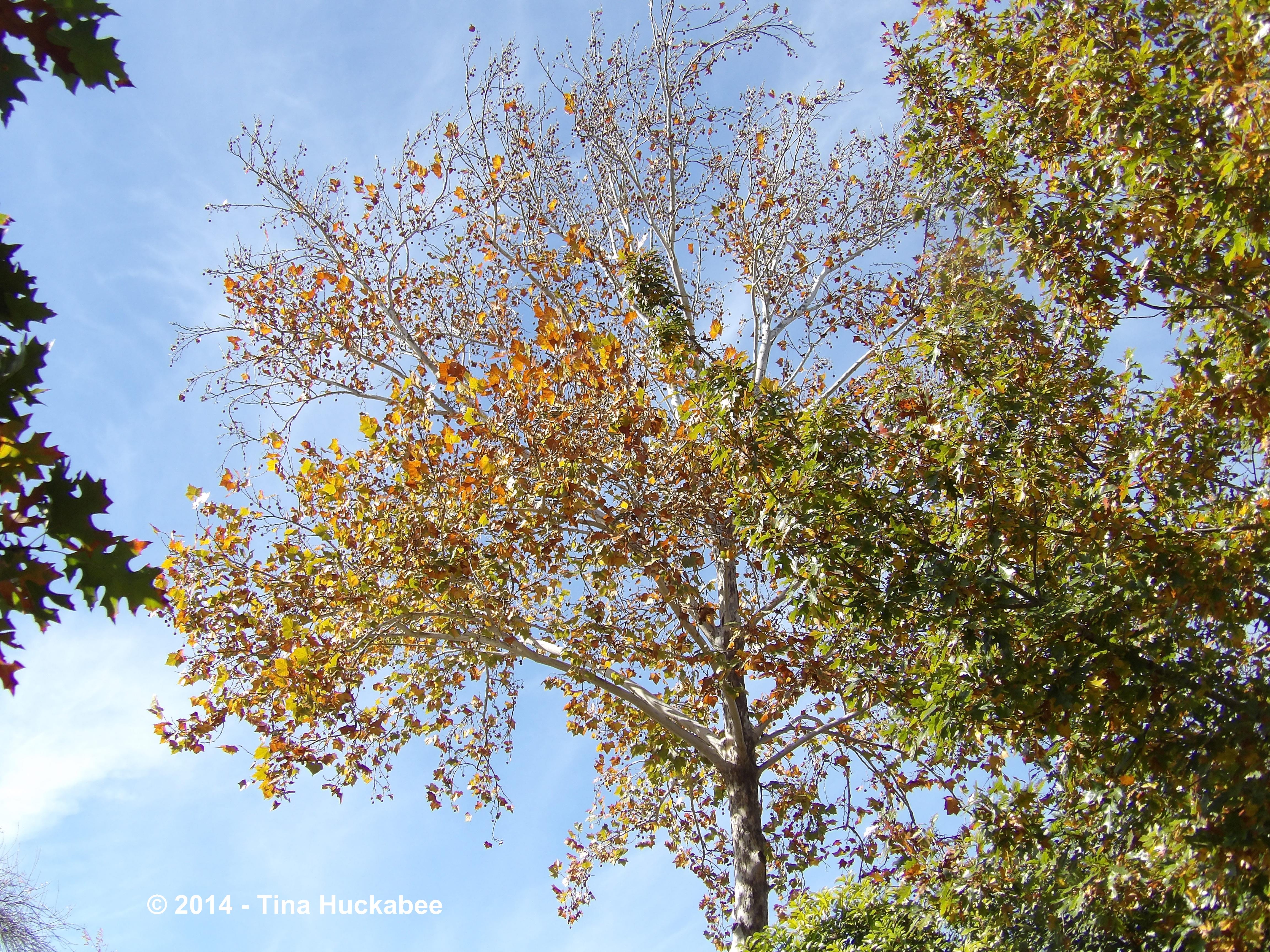
I don’t hate this tree, but it’s a bit water thirsty for Central Texas–it’s naturally found along stream banks and bottomlands which hold moisture from floods, and that’s not where my home resides.  The tree was established when I bought my home and I wouldn’t remove a mature tree, so it’s remained as a major shade source for my gardens. Aside from its struggles during dry periods (drought-stress causes defoliation), the leaves are thick and big.
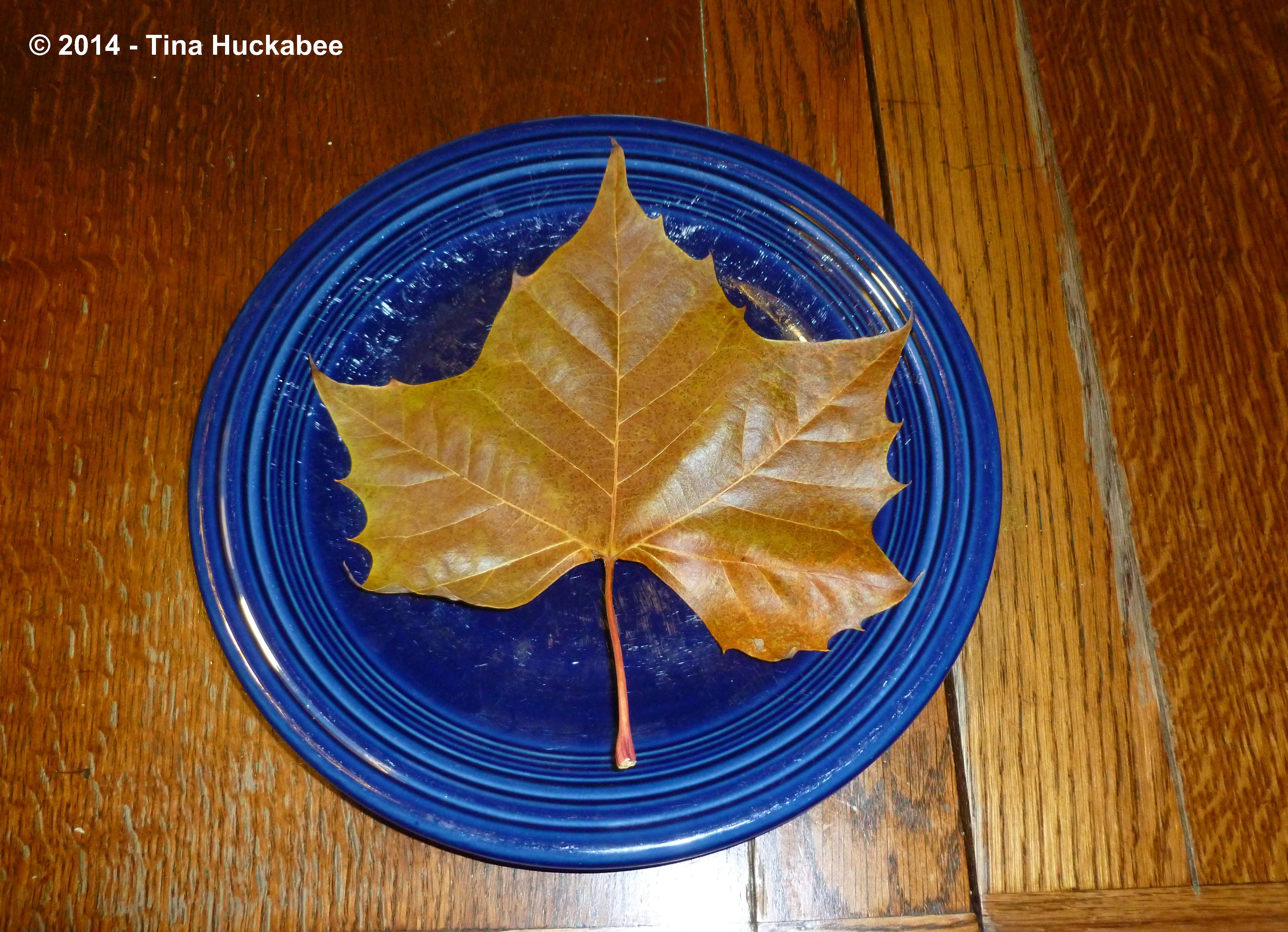
20111231_7_cropped_4401x3184..new Really big.

Awkward and especially messy in the garden, the leaves don’t break down in any reasonable amount of time. Here you can see a small sampling of Sycamore leaf litter.

IMGP3208.new There are points during late December when all that is visible in certain parts of my gardens are those dinner plate-sized leaves. A garden is not so nice when those huge leaves obscure everything in it!  Sycamore leaves are too large and thick to leave in the garden (for this OCD gardener), or to place, as is, into the compost.  They mat together, forming a barrier against moisture, thus slowing the composting process.

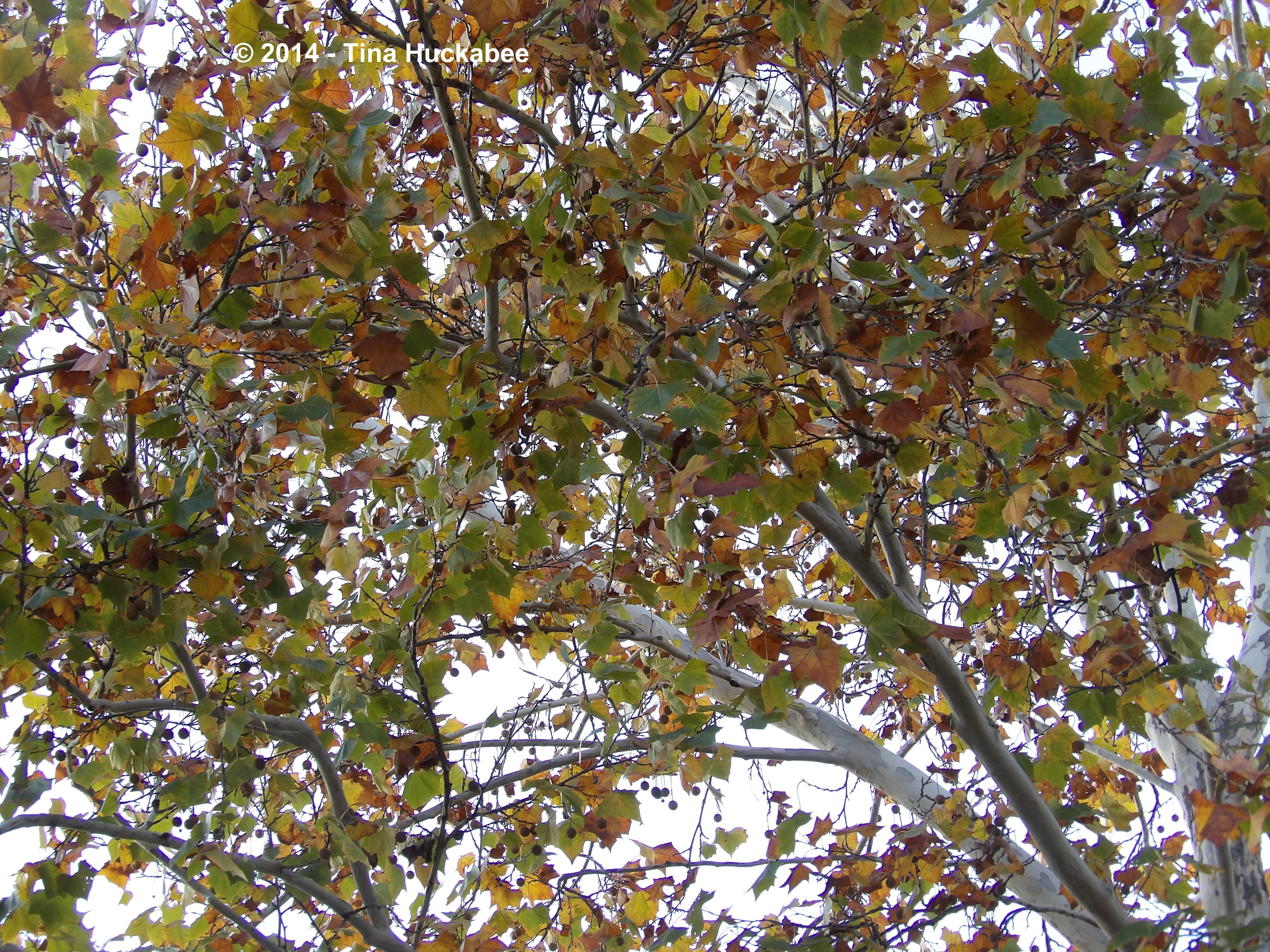
But in the tree, especially during the seasonal change,  Sycamore foliage is quite lovely.

IMGP3043.new IMGP3119.new

IMGP3118.new

Fluttering in the breeze, in an array of colors,

IMGP3155.new

IMGP3044.new…the leaves are resplendent against the blue sky.

Once the leaves drop and I’ve vacuumed and shredded them, dumped them directly into my compost bin and/or onto the gardens as mulch, the spherical seed pods decorate the tree throughout winter.  In spring, the seed balls explode, releasing feathery seeds aloft in the wind.

On the ground, foliage also makes its presence known.  Floating in the bird baths, IMGP3190.new


…accompanying the bee hives,

IMGP3152.new

…and blanketing the gardens and pathways.  Here, the brown oak leaves combine with the stalks of the RetamaParkinsonia aculeata. 

IMGP2969.new

A bit upwards from the ground sit perennials which also sport fabulous foliage this GBFD. The colorful foliage of the Ruby Red Runner, Alternanthera hybrid, which is part of the biological filtering system of my pond, is eye-catching.IMGP3120.new

Tiny floral gomphrena puffs accompany the plum leaves. Ruby Red Runner provides foliage interest nearly year round; a hard freeze will render this plant dormant.

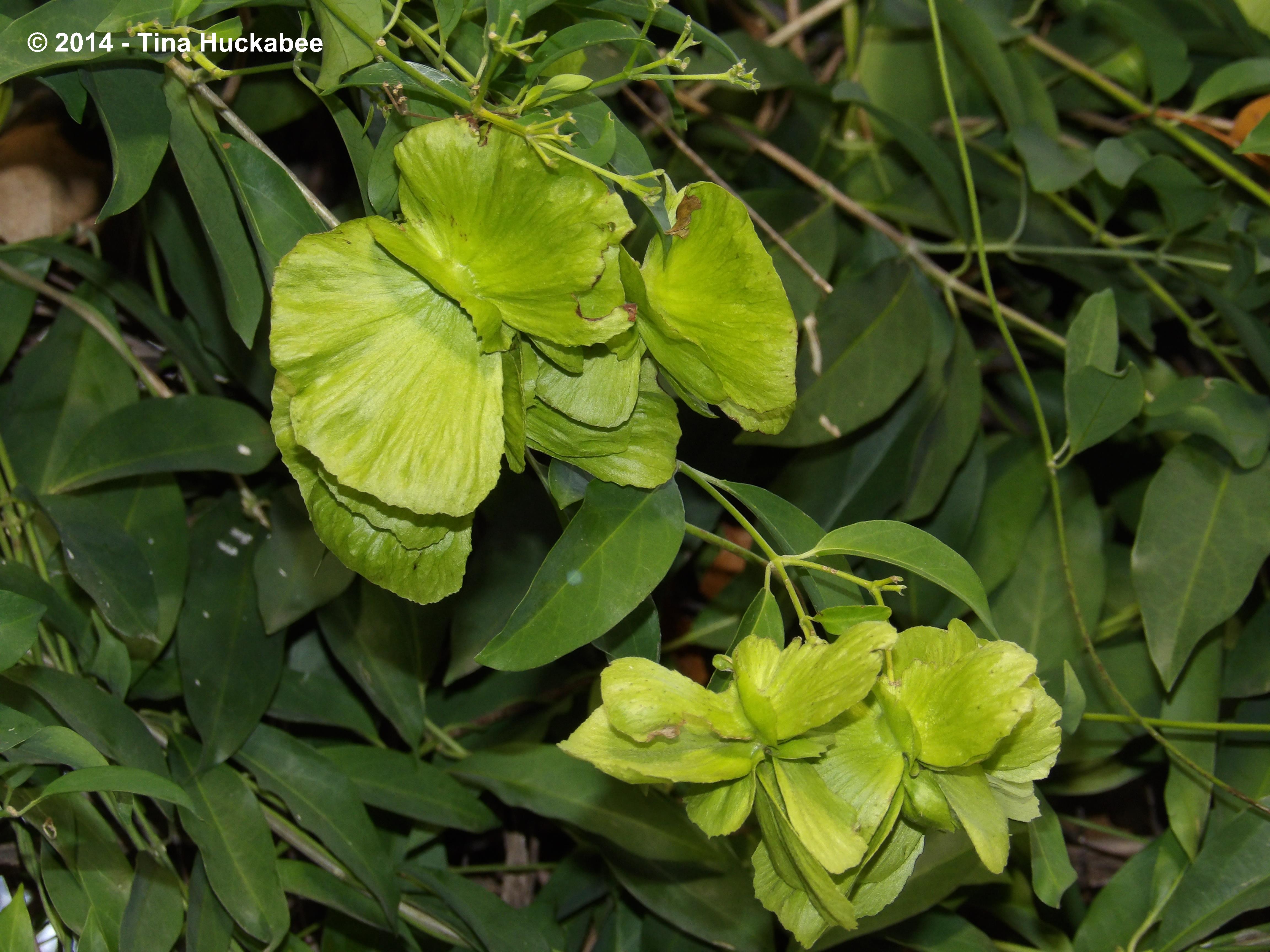
The Butterfly VineMascagnia macroptera, showcases lush green foliage and fascinating chartreuse seed pods which resemble butterflies, thus the common name for this native plant to Mexico and southwards.

IMGP3125.new IMGP3126.new

Currently, none of the seed pods are the rusty-brown they eventually become, but it’s quite a picture when there are differently pigmented “butterflies” resting on the vine.

Firebush, Hamelia patens. speckles after frost damage to its foliage,

IMGP3143.new IMGP3144.new

…but  I like it.  No blooms remain on this heat-loving, native-to-Florida.  Once we have a killing freeze, it will be dormant until late spring.

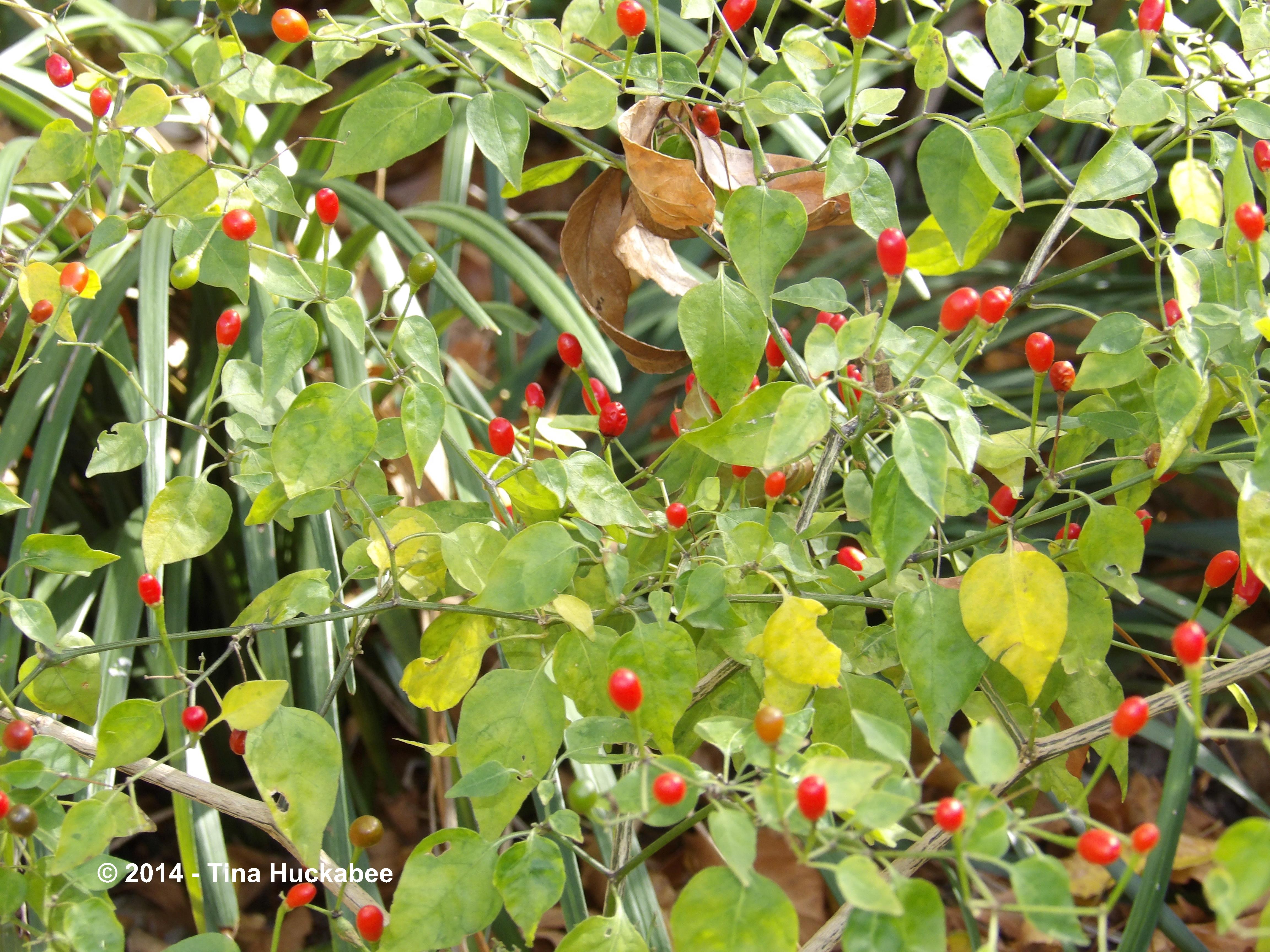
Lastly, the Chile Pequin, Capsicum annuum (var. glabriusculum) adds major hotness to the garden.
IMGP3146.new

Pepper hotness, that is.  A beautiful, shade-tolerant and deciduous (in most winters) shrub, many birds (and my husband) favor these chile peppers, the only truly native chile pepper in Texas.  Here, it’s  accompanied by Yarrow, Achillea millefolium.

IMGP3148.new

Such a lovely plant for this time of year.  Who says we don’t have seasonal foliage color in Texas??

For foliage celebrations from around the world, visit Creating my own garden of the Hesperides for GBFD!
IMGP3183.new

Bloom Day, December 2014

Celebrating blooming things with Carol of May Dreams Gardens on this last Garden Bloggers’ Bloom Day of 2014, I’d like to share some currently flourishing flowers from my gardens.  It’s been mild here in Austin, Texas, though a few light frosts have come our way, none were significantly cold enough to dampen the blossoming spirit.

Wonderful native perennials continue strutting their blooming stuff late this growing season. Two native salvia species are providing nice nectar sources for passing bees and butterflies and a color show for the resident gardener.   The Tropical SageSalvia coccinea, 

IMGP3068.new …brightens the garden with its scarlet blooms, while Henry Duelberg salviaSalvia farinacea, ‘Henry Duelberg’ provides spikes of blue.

IMGP3062.new

IMGP3065.new


Planted near to those two perennials is a group of  Texas Craglily, Echeandia texensis.  

IMGP3086.new There are few blooms left, but many seed pods readying for future golden lily loveliness.

Some of my GoldeneyeViguiera dentata, still bloom. IMGP3053.new

IMGP3054.new IMGP3055.new

I don’t really think I need to add anything to that!  These individuals face west and receive the warmth of the afternoon autumn sun.

A few Turk’s Cap, Malvaviscus arboreus, flowers grace the gardens as well.

IMGP3057.new I don’t recall ever seeing this plant bloom so late before–I’m not complaining.

Native to areas west of Texas, but not specifically Austin, is the Globe Mallow, Sphaeralcea ambigua.   

IMGP3051.new IMGP3099.new

In my gardens it’s a reliable cool season bloomer–at least through the beginning of summer.  The one mature Globe Mallow in my gardens is beginning a nice bloom production and that’s likely to happen throughout winter.

IMGP3101.new

There are always a few Purple Coneflowers, Echinacea purpurea, charming the gardens. This one is planted with an unknown variety of basil-in-bloom,IMGP3046.new

IMGP3047.new

…which I’d know the name of if I’d bothered to keep the tag.  Ahem.

And here, Coneflower is partnered with the equally sweet Four-nerve Daisy or Hymenoxys, Tetraneuris scaposa.

IMGP3049.new IMGP3050.new

I love native Texas plants.

As for the non-natives, well, they’re pretty cool, too.  The Firecracker or Coral PlantRusselia equisetiformis, requires a hard freeze to knock it back.

IMGP3059.new Obviously that hasn’t happened yet.

IMGP3063.new

IMGP3064.new

I feel good about this plant–it has such a tropical look, but in reality it’s water-wise and tolerant of the cooler season.

Roses are responding in kind to our temperate December by blossoming again. Whoop!

IMGP3107.new

IMGP3108.new

Glorious in vibrant red are these blooms of the Old Gay Hill rose.

Finally, the Potato VineSolanum laxum, has entered its bloom time.  This vine twines up one side of my swing beam and blossoms primarily in the cool months here in Austin. It’s a timid vine in my garden, never growing too large.    I forget about it during our long, warm  growing season–it’s there, but unimpressive. Once the temperatures cool, its lovely clusters of dainty, creamy-bell flowers provide interest for my honeybees, still foraging on warm afternoons.

IMGP3128.new

IMGP3131.new

Enjoy whatever blooms you have–indoors or out.  Then check out the many bloom posts by visiting May Dreams Gardens.


Irrigation SNAFU

You can’t pick your neighbors.  

A pithy statement, to be sure.  While it might be true, another saying I’d like to introduce–Friends don’t let friends over water–also appeals to me.  I don’t live in a neighborhood that is particularly, um, progressive in the realm of home gardening. Especially for  a neighborhood in a region which is experiencing severe drought conditions.  Each of the mostly sterile, water-wasting landscapes throughout my neighborhood showcases a blank slate of water-guzzling St. Augustine lawn as the major “garden” feature and many are situated in full Texas sun. These properties require loads of mowing, edging, fertilizing, and irrigating.

There are a couple of folks who understand the value of home gardening and landscaping as a low-maintenance, water-conserving, perennial and wildlife friendly endeavor, but not many.

And I don’t live next door to either of those folks.

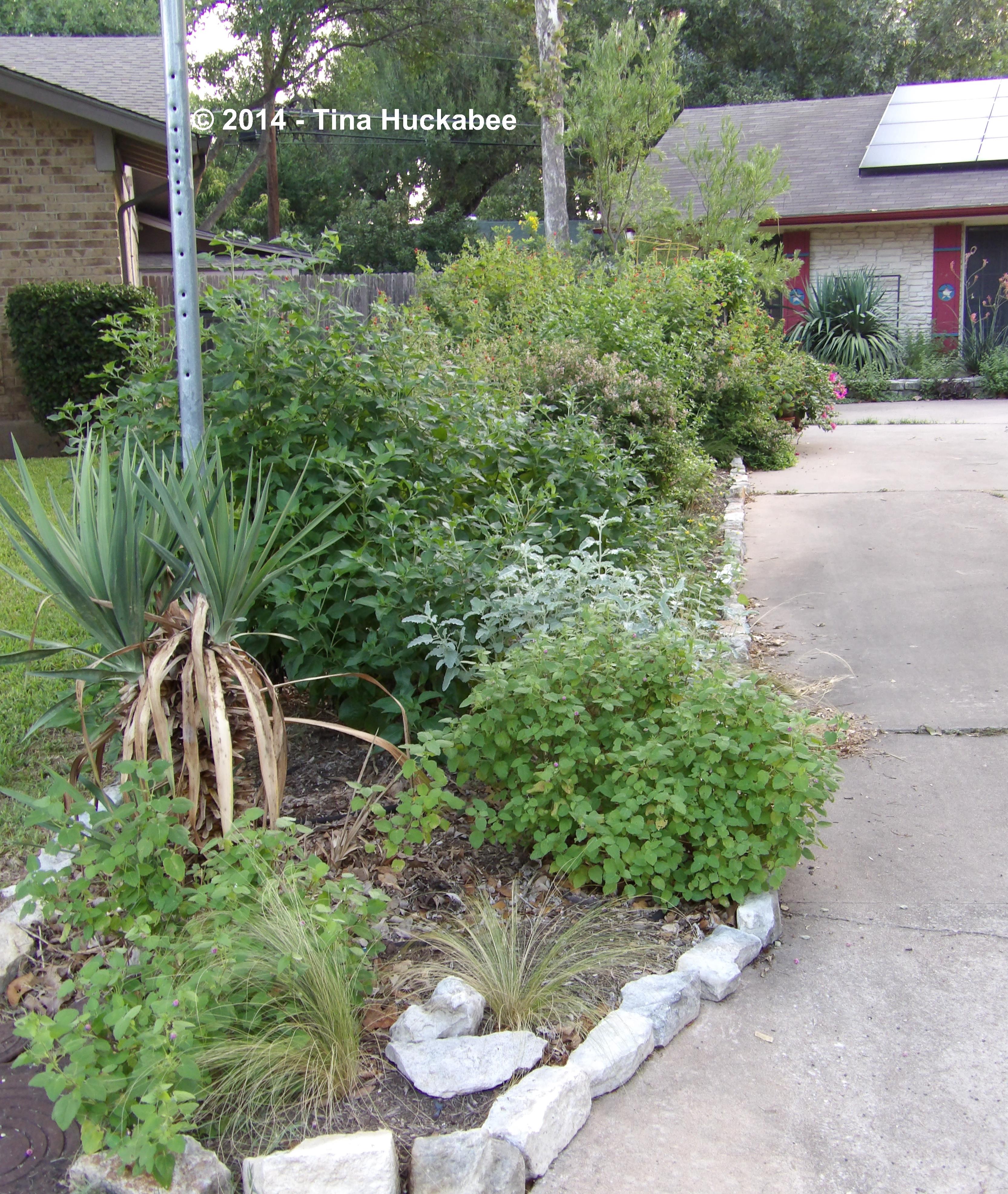
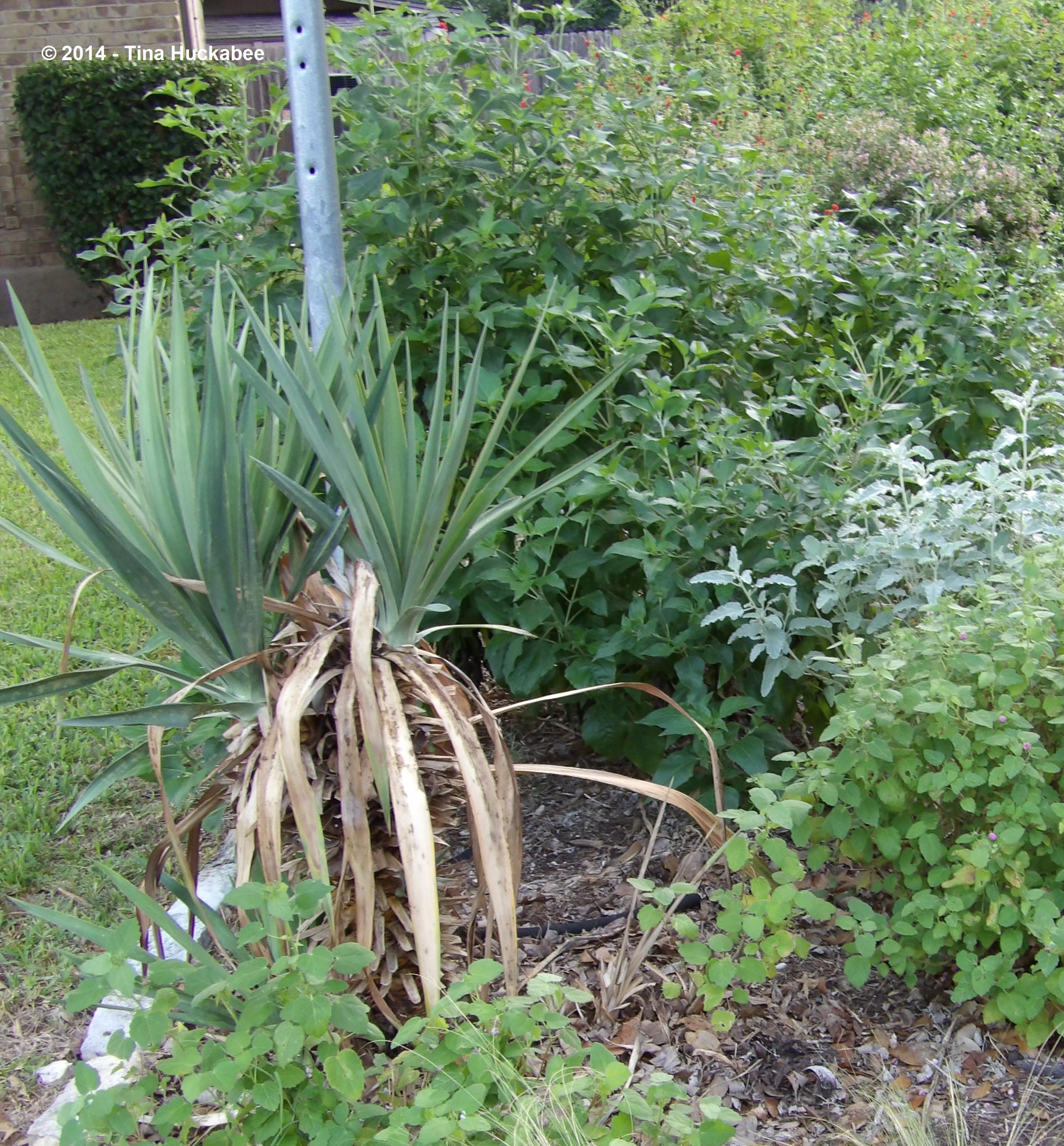
This is the result of over watering a Soft-leaf Yucca,Yucca recurvifolia, compliments of a neighbor who is an enthusiastic St. Augustine lawn waterer.

IMGP0515_cropped_3330x3944..new

Beginning in early August, this poor thing developed spots on its straps, which quickly spread, rendering each strap a mottled mess, which then died.  I couldn’t figure out what the cause of the diseased foliage was, but I pruned the disfigured and dying foliage, strap by strap.

IMGP0516_cropped_2562x2759..new

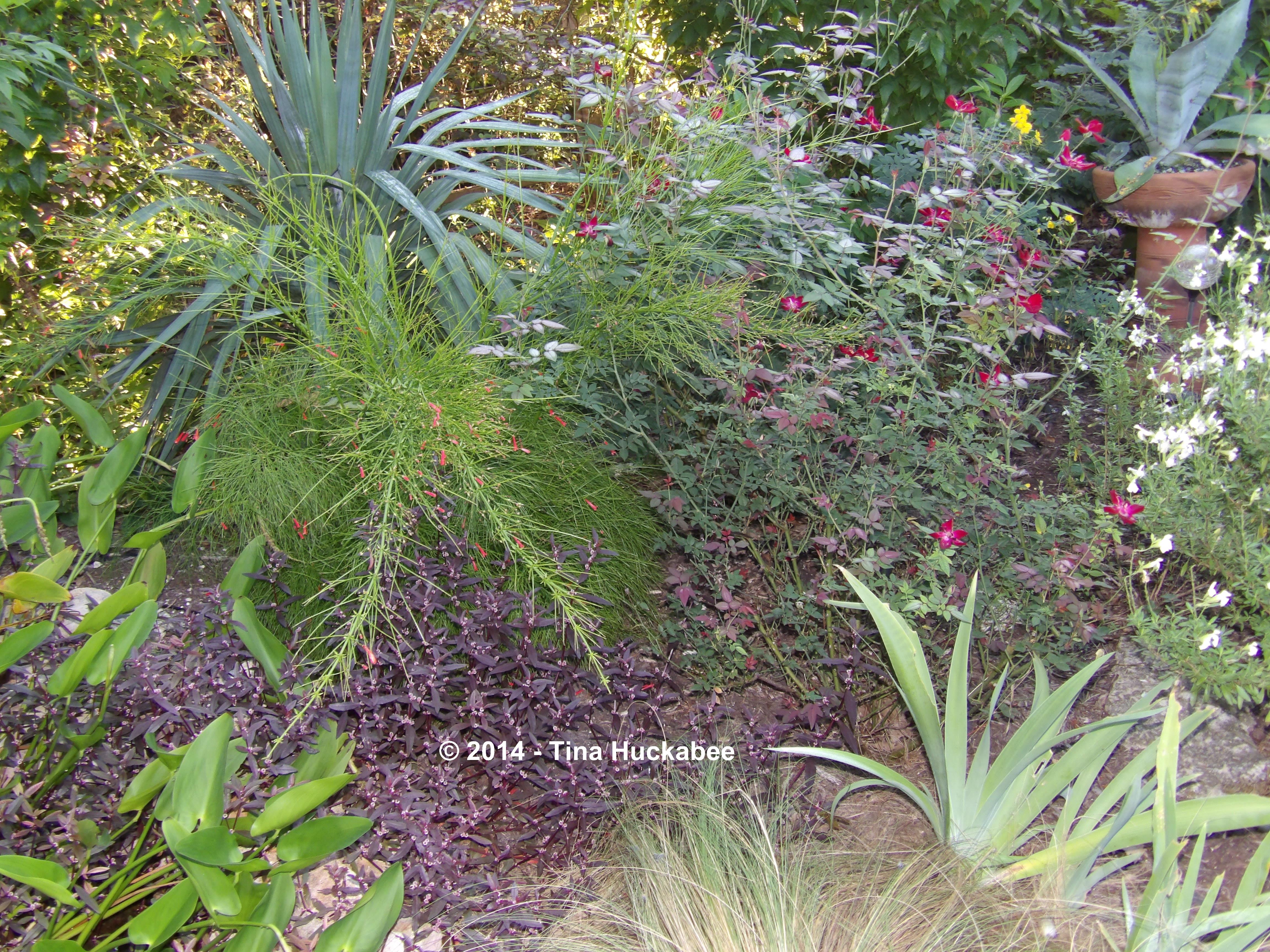
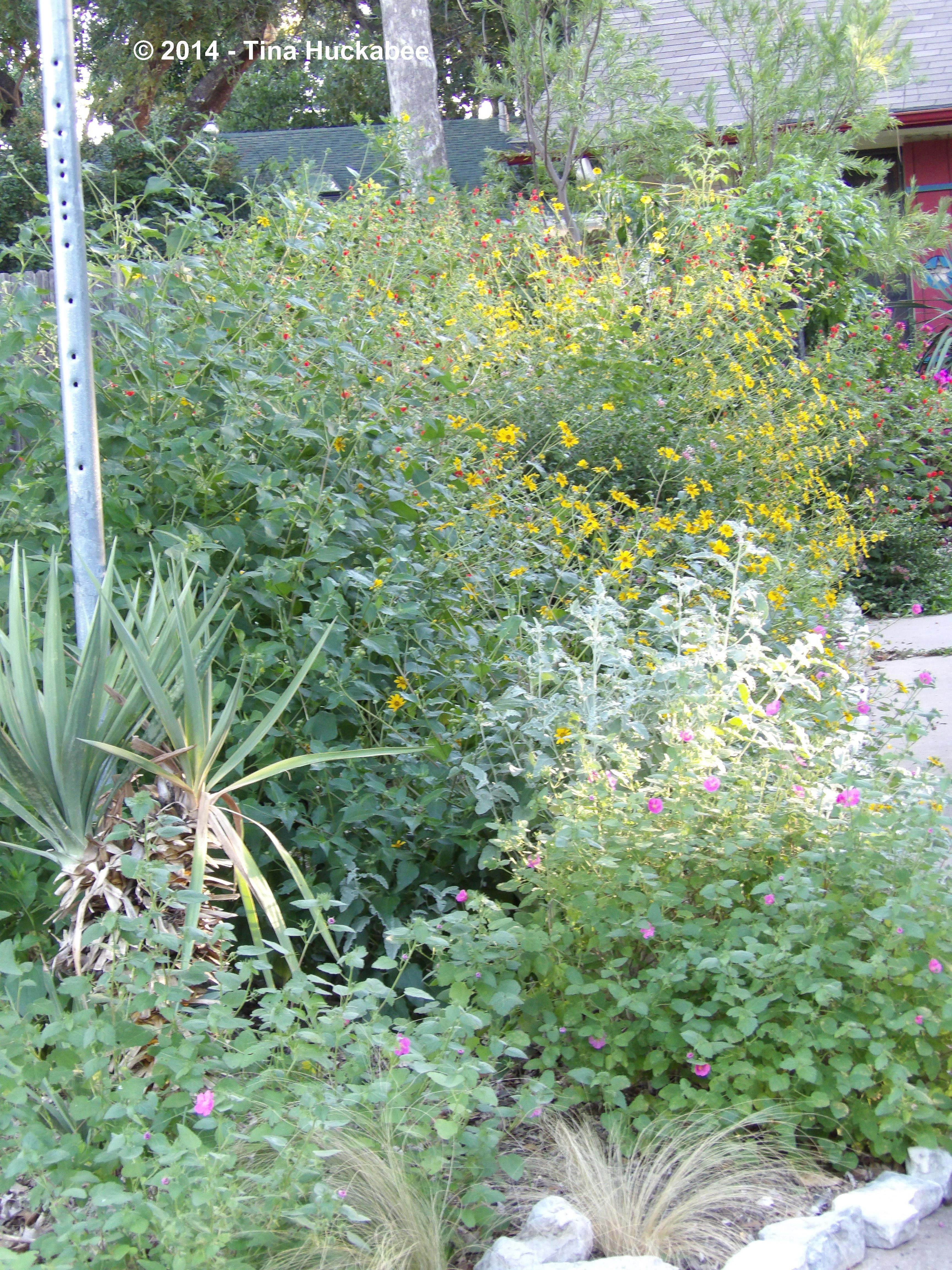
Damage from an insect infestation?  I searched and couldn’t find any offenders. Some sort of disease of Soft-leaf Yucca?    Always a possibility, though literature doesn’t suggest this species has any real disease problems.  Additionally,  I have eight other Soft-leaf Yucca plants thriving in my gardens, from full sun,

IMGP1199_cropped_4415x3142..new

…to deep shade,

IMGP3042.new

…and everything in between.

IMGP0519_cropped_3318x4221..new

IMGP0874.new

There were and are no disease issues with any of those other yuccas.   The only variable with the sickly yucca that differed from the others was the weekly irrigation courtesy of  the neighbor.  I don’t water often–primarily my gardens are watered only with rain.  I pruned the mottled and dead foliage in hopes of stopping the necrosis and eventually the yucca sported a tree-like shape which was fun and quirky. I thought the yucca might survive.

IMGP1047.new


One morning though, I  found a rotted and toppled-over yucca.IMGP1752_cropped_3622x3410..new

Yuck-ah.

IMGP1753.new

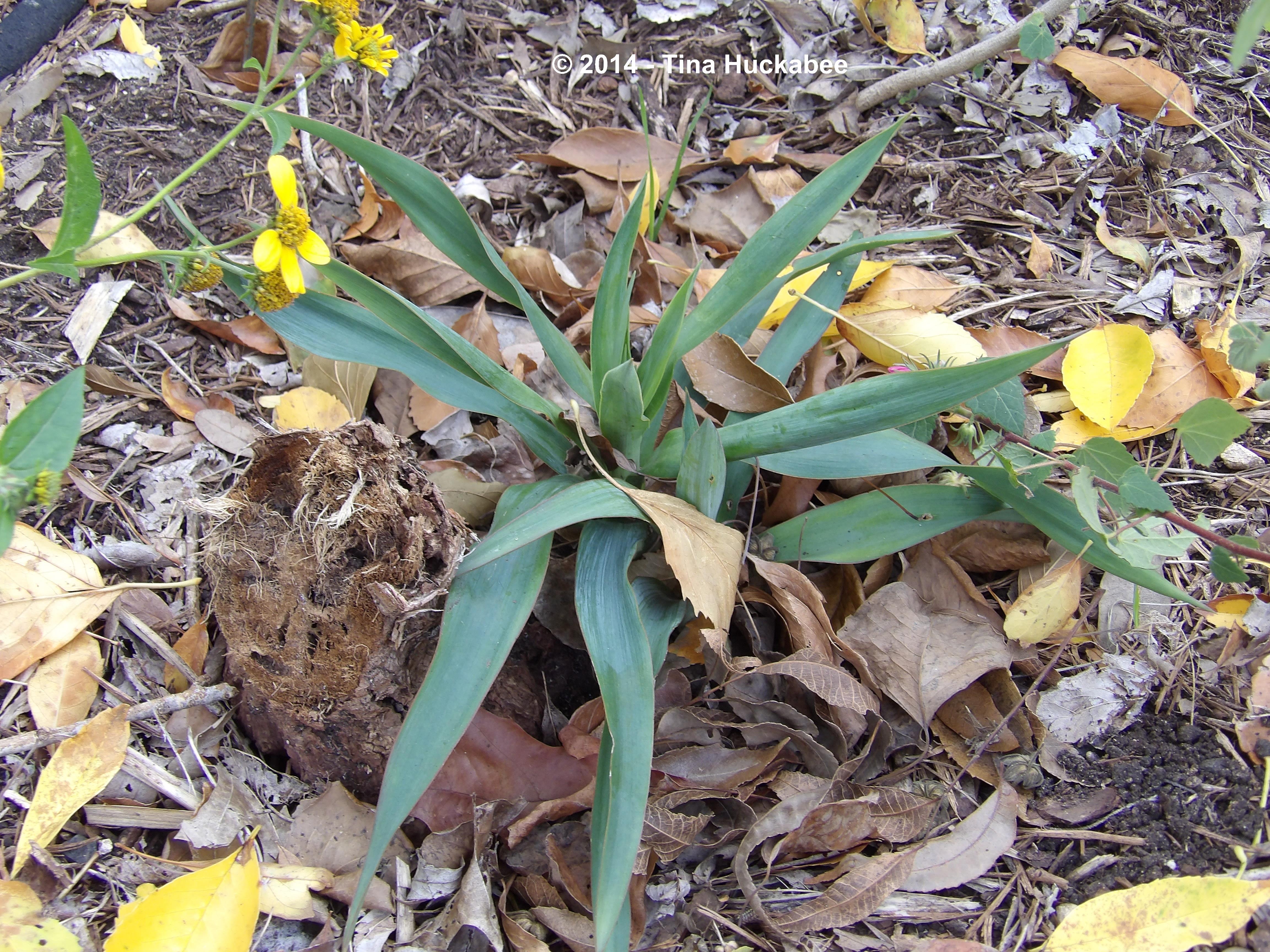
Well, there wasn’t much I could do, except to cut my losses, or rather, the yucca, toss the mess into the yard waste can and stand there, hands on hips mulling my next step.  I considered digging up the whole root, but alas, the yucca root is too large for that.  Of course it is.  It’s a xeric plant and its xeric-ness comes from the massive root system, really a type of rhizome, that the mature plant develops.  Also, there were pups growing,

IMGP1754.new

…and rather than disturb them, I left the yucca root in place with its new, seemingly healthy growth.

My neighbor, Mr. I-Gotta-Water-Every-Week-No-Matter-What, watered his St. Augustine grass.  Every week!  You could set your clock by his schedule. I couldn’t really complain because he watered on his assigned day, during the accepted hours, and though more water than necessary ran down the curb, it wasn’t horrible. Trust me, I’ve seen worse.   What I didn’t realize during those months was that the yucca was probably watered every week. I never thought to check if his overhead sprinkler was watering my garden, which borders his property.  Because of its massive root, the yucca doesn’t require much irrigation.  Once I connected the rotted yucca with weekly summer irrigation, I realized the cause of the once-healthy yucca’s demise. The hardy Soft-leaf Yucca had received much too much water for its needs.

I should add that Y. recurvifolia is not native to Texas, but to the Southeastern part of the U.S.  I doesn’t mind a little irrigation from time-to-time, but certainly doesn’t like wet feet or require regular watering.

That’s why I plant what I plant–so that I don’t need to water often.  There are many benefits to using native and well-adapted, drought-tolerant plants in a home garden, and conserving water is certainly at or near the top of that list. But the prevalence of St. Augustine grass, especially in full sun and as a primary landscape feature, is not a regionally appropriate choice for Texas.  To look good, it requires more water than should be wasted on a landscape.

I left the little pups that were emerging,IMGP3038.new

…and they’ve grown.  I’ll talk to my neighbor next summer to explain why I don’t want extra water on my garden.  With our lakes (the prime water source for Austin and surrounding areas) down to about 30% capacity and heading toward a historic low, he might not be able to water anyway because of tighter water restrictions.

His grass will struggle with those restrictions, but my gardens will continue to blossom and boom.

IMGP0861.new

And my yuccas and other xeric plants, will be happy.

P1070033.new