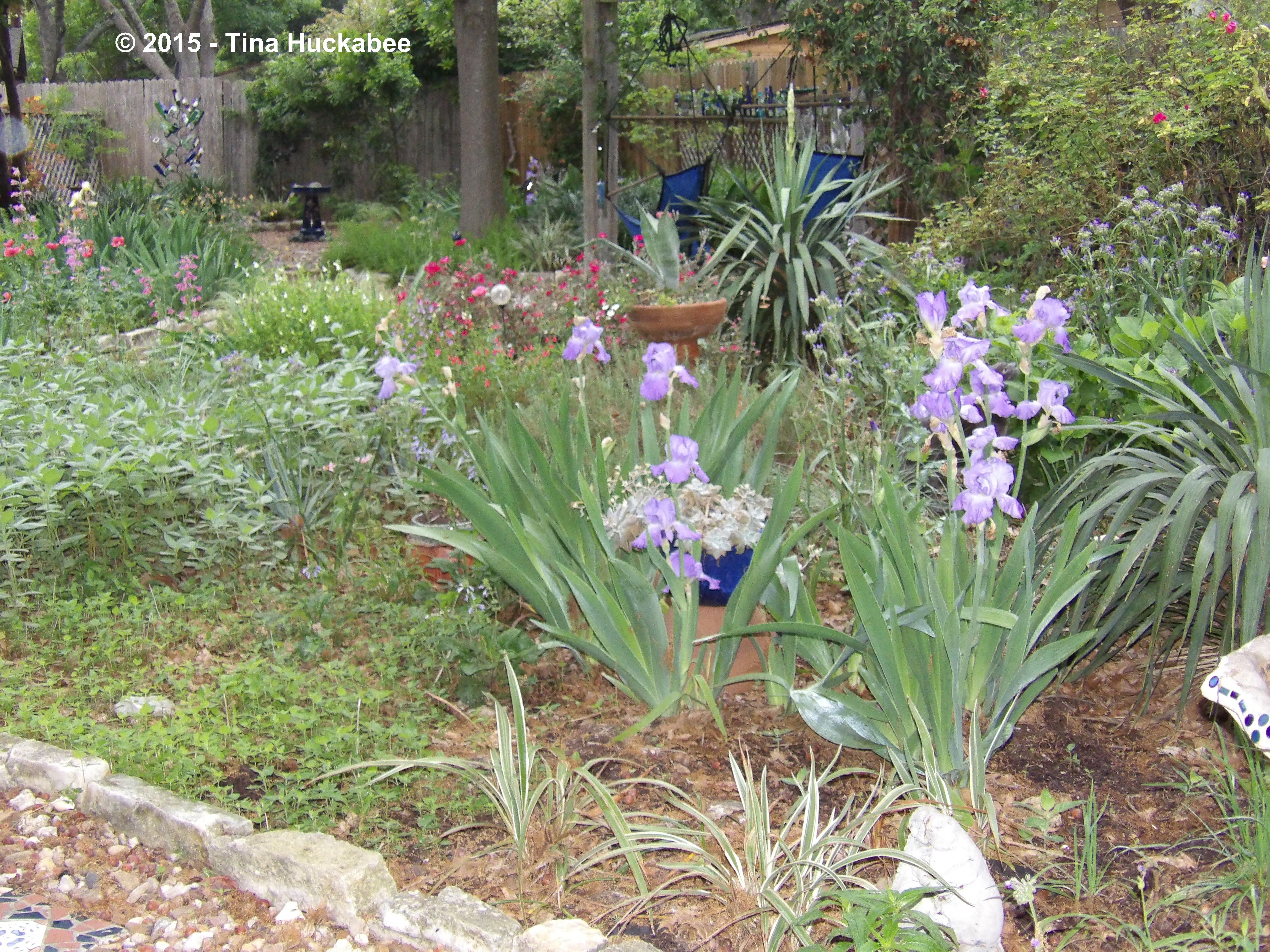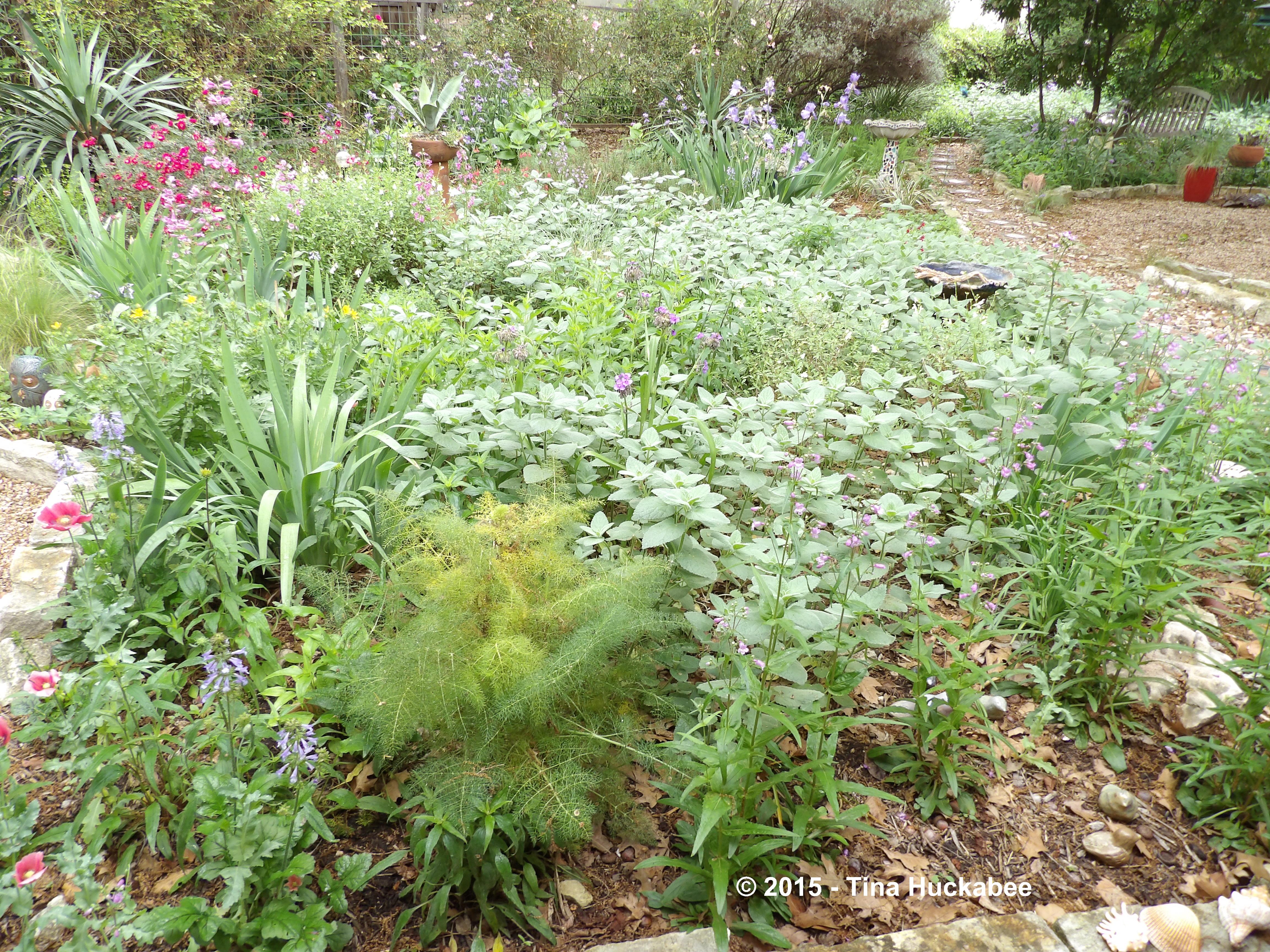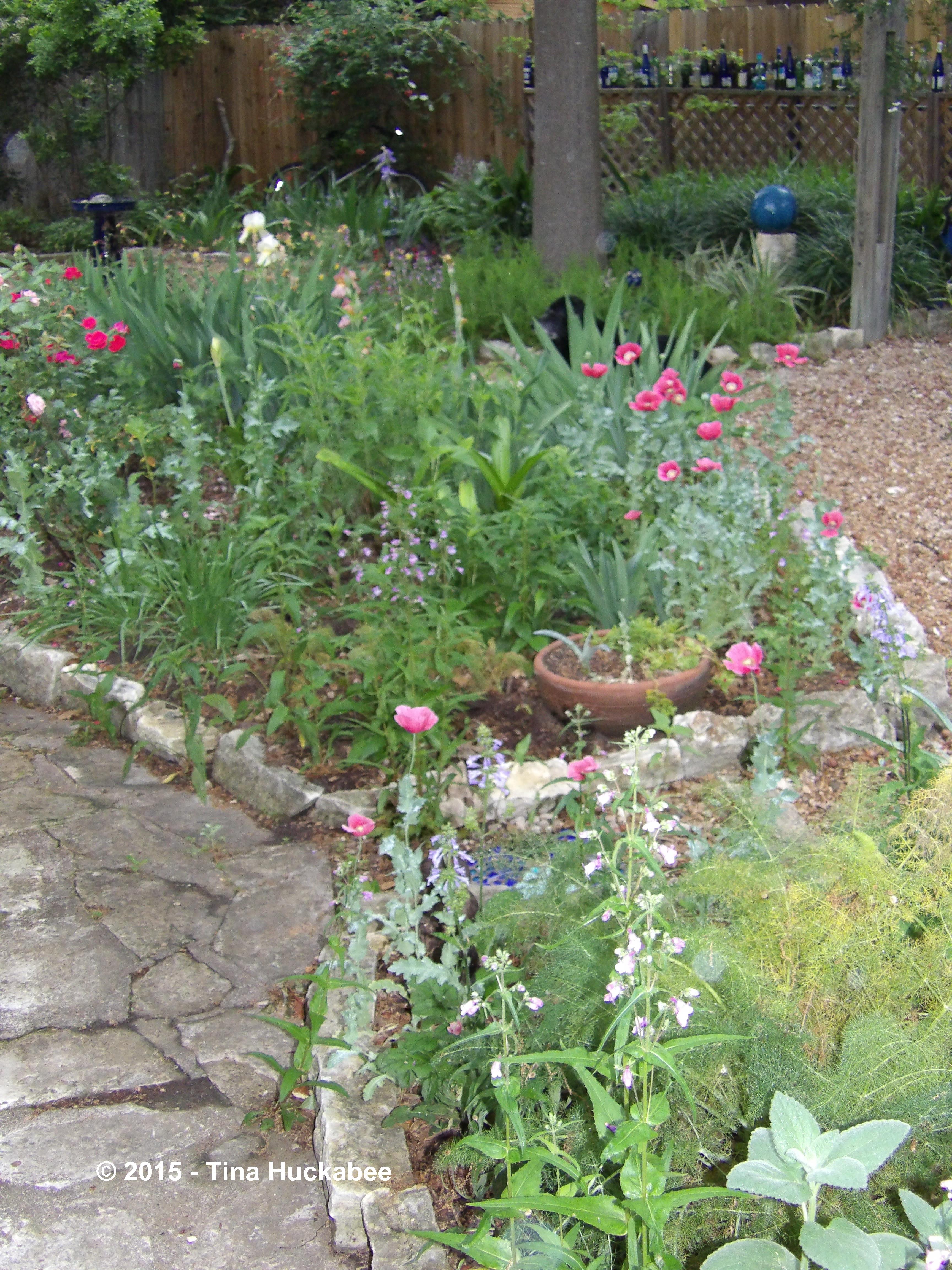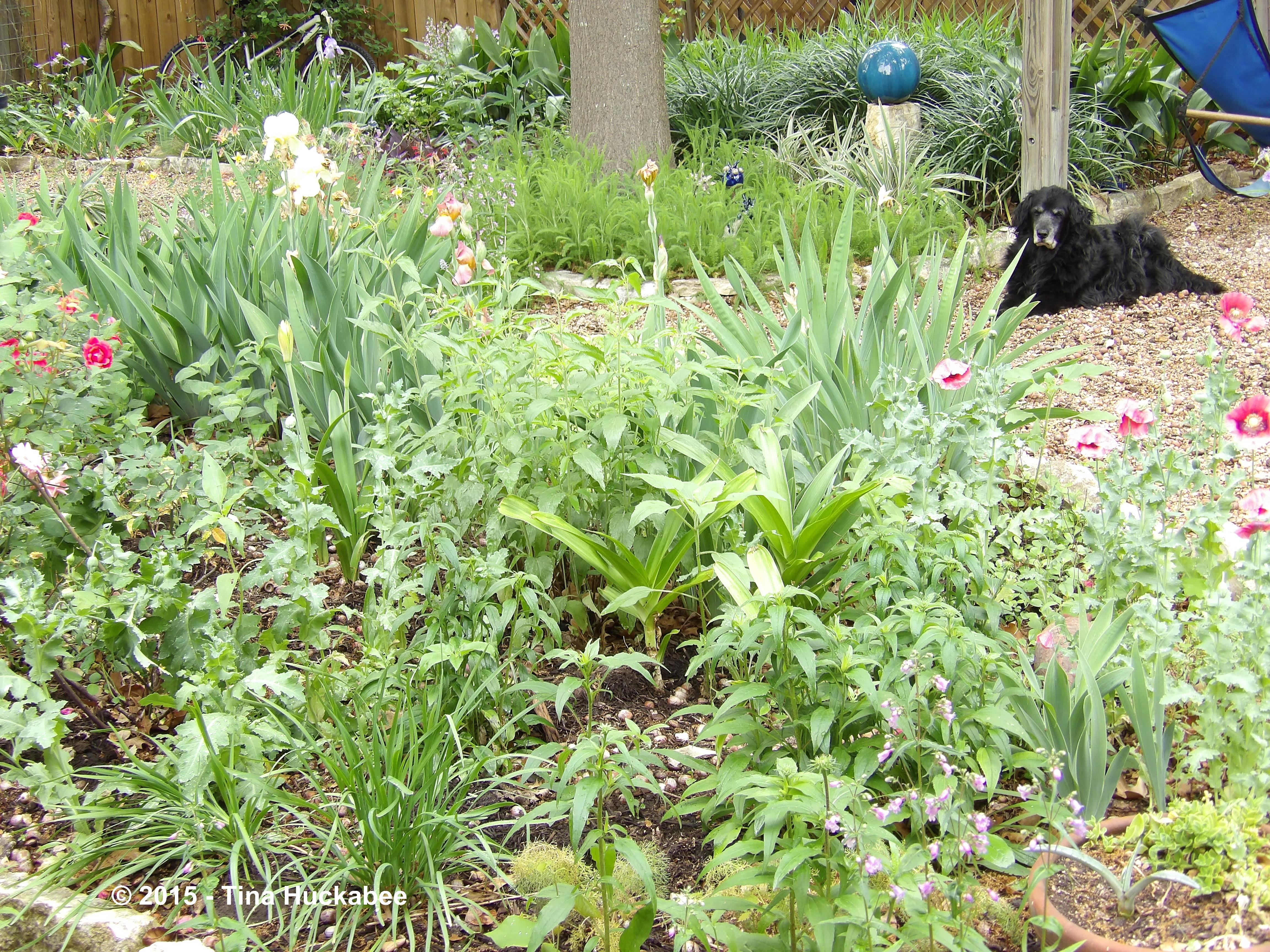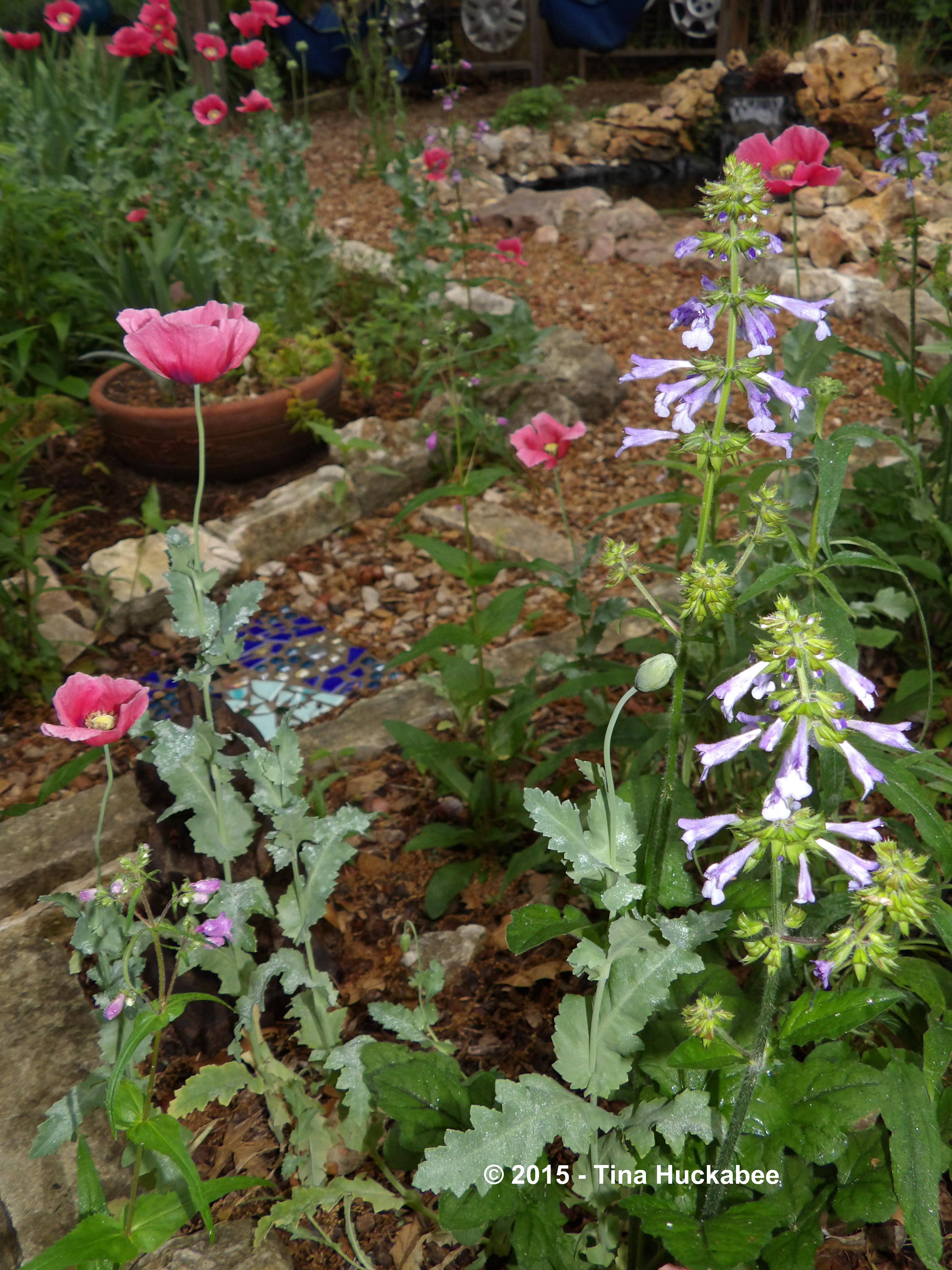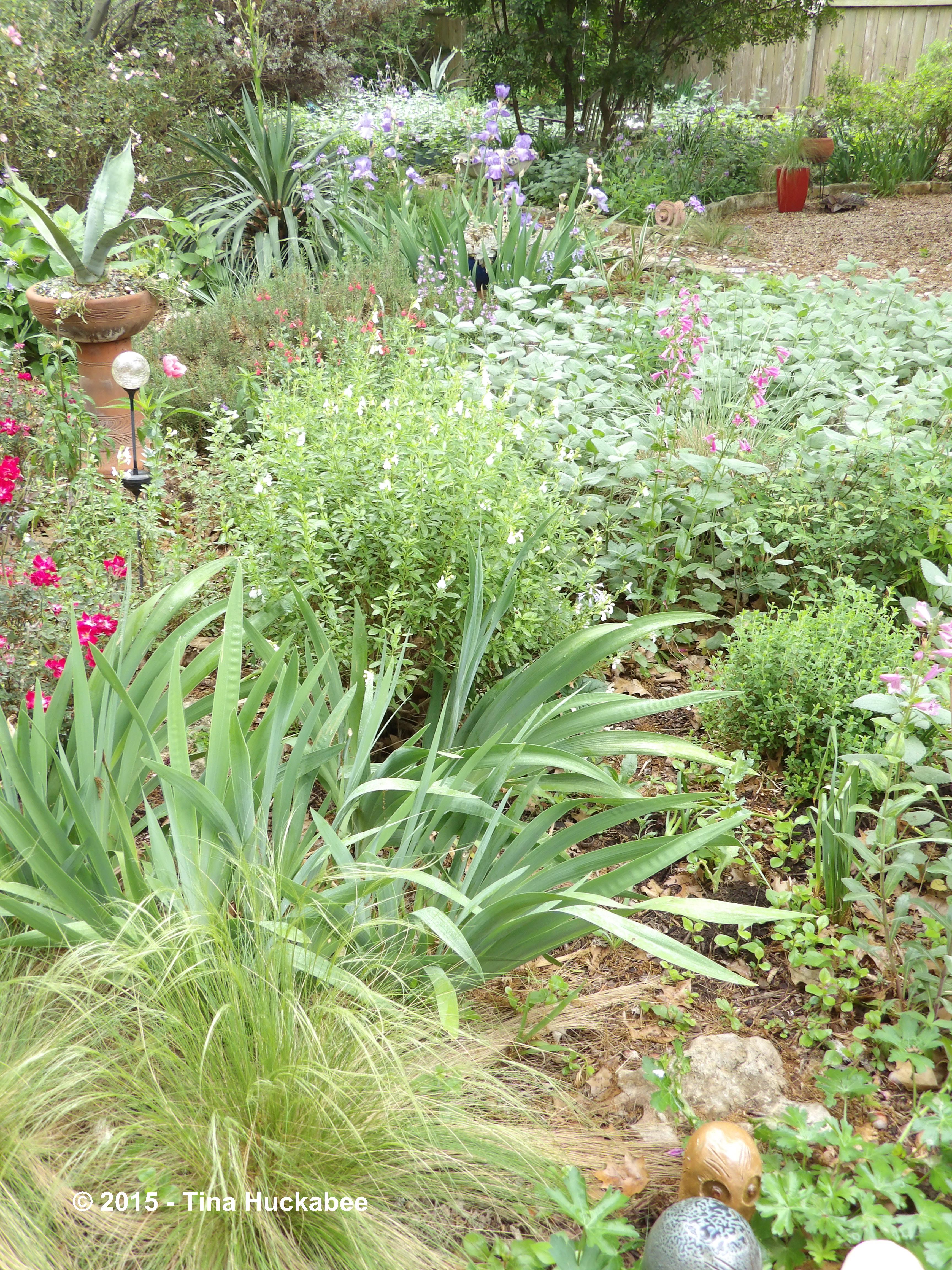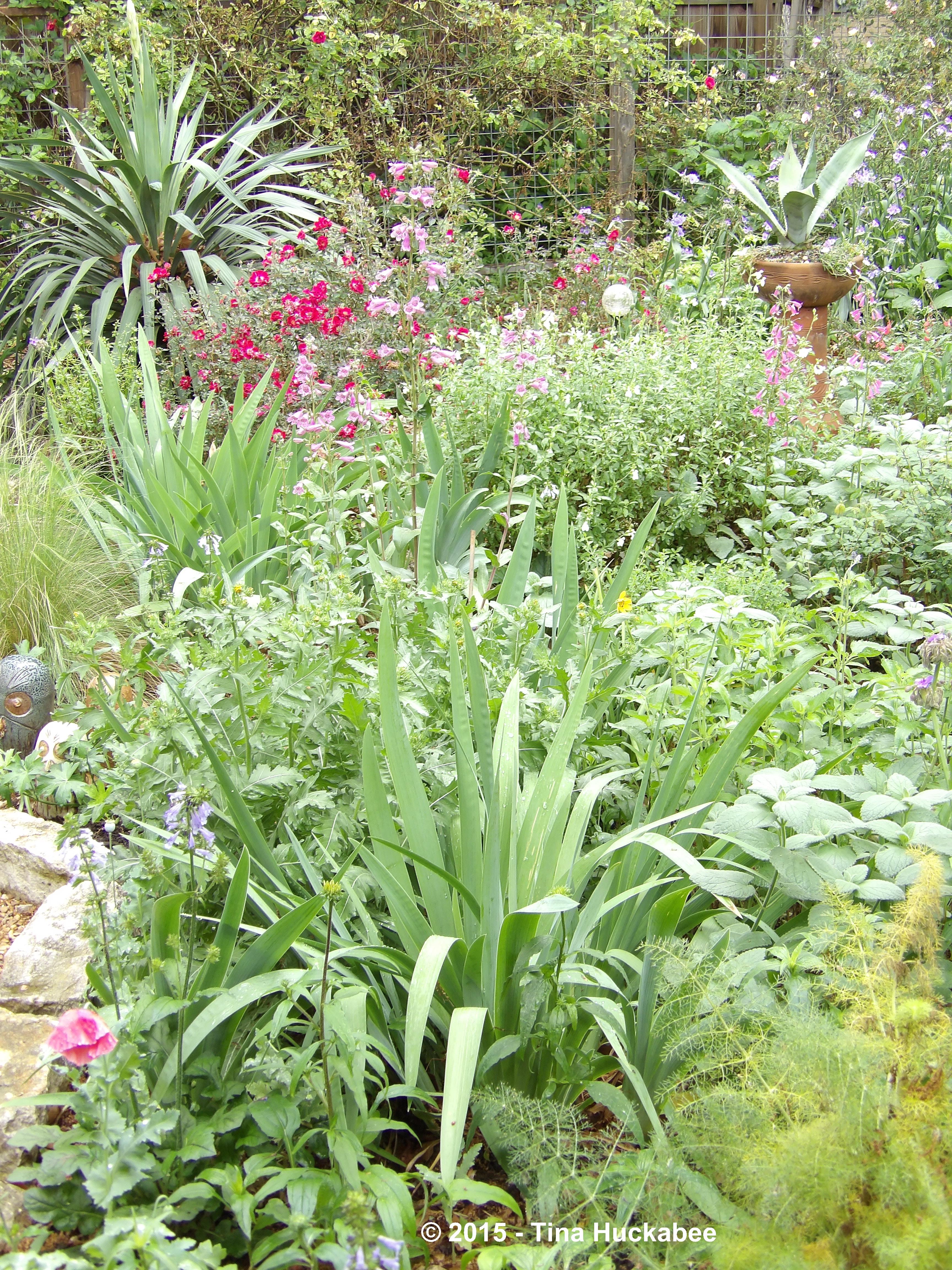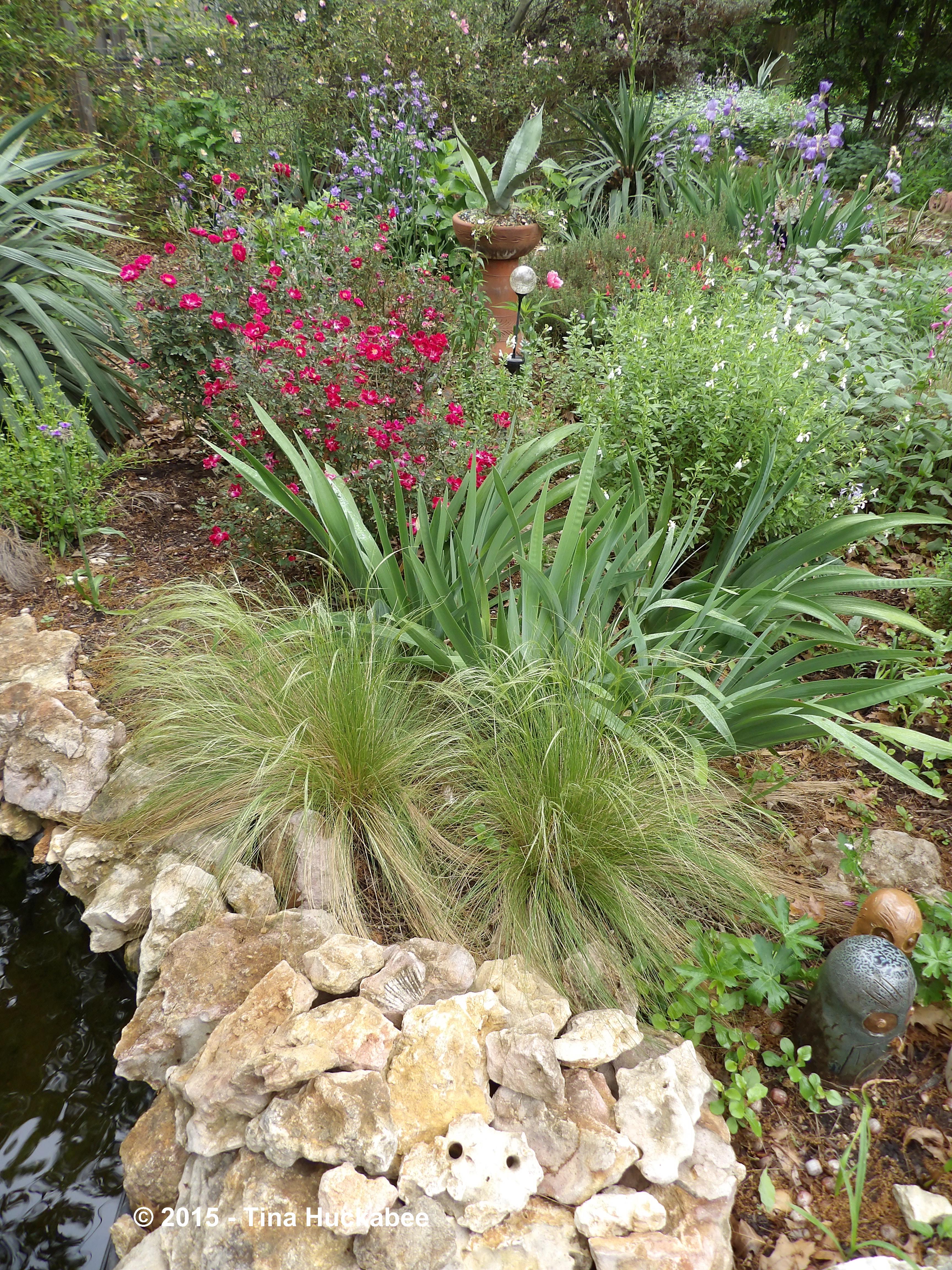
Spring Vignettes

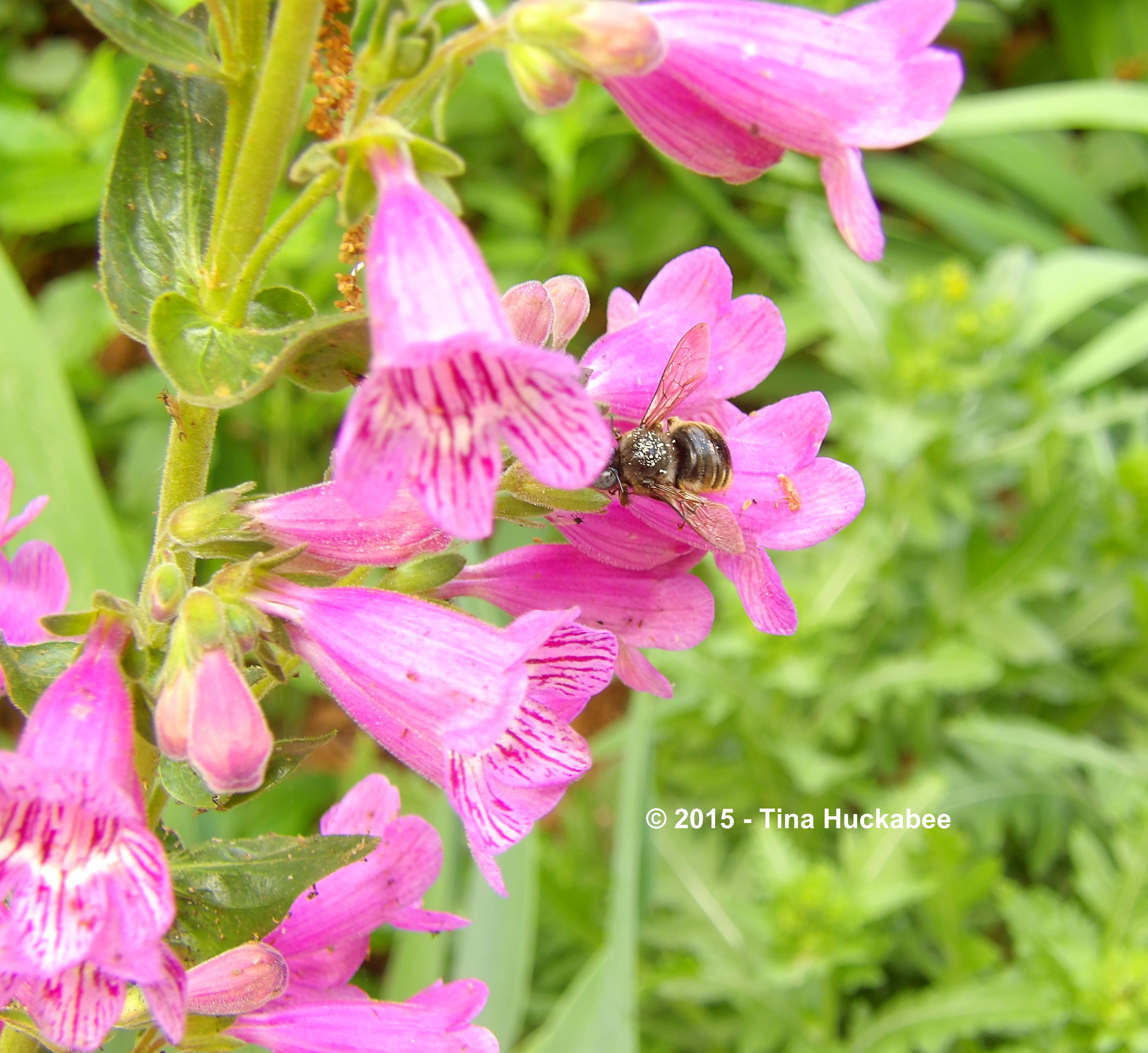
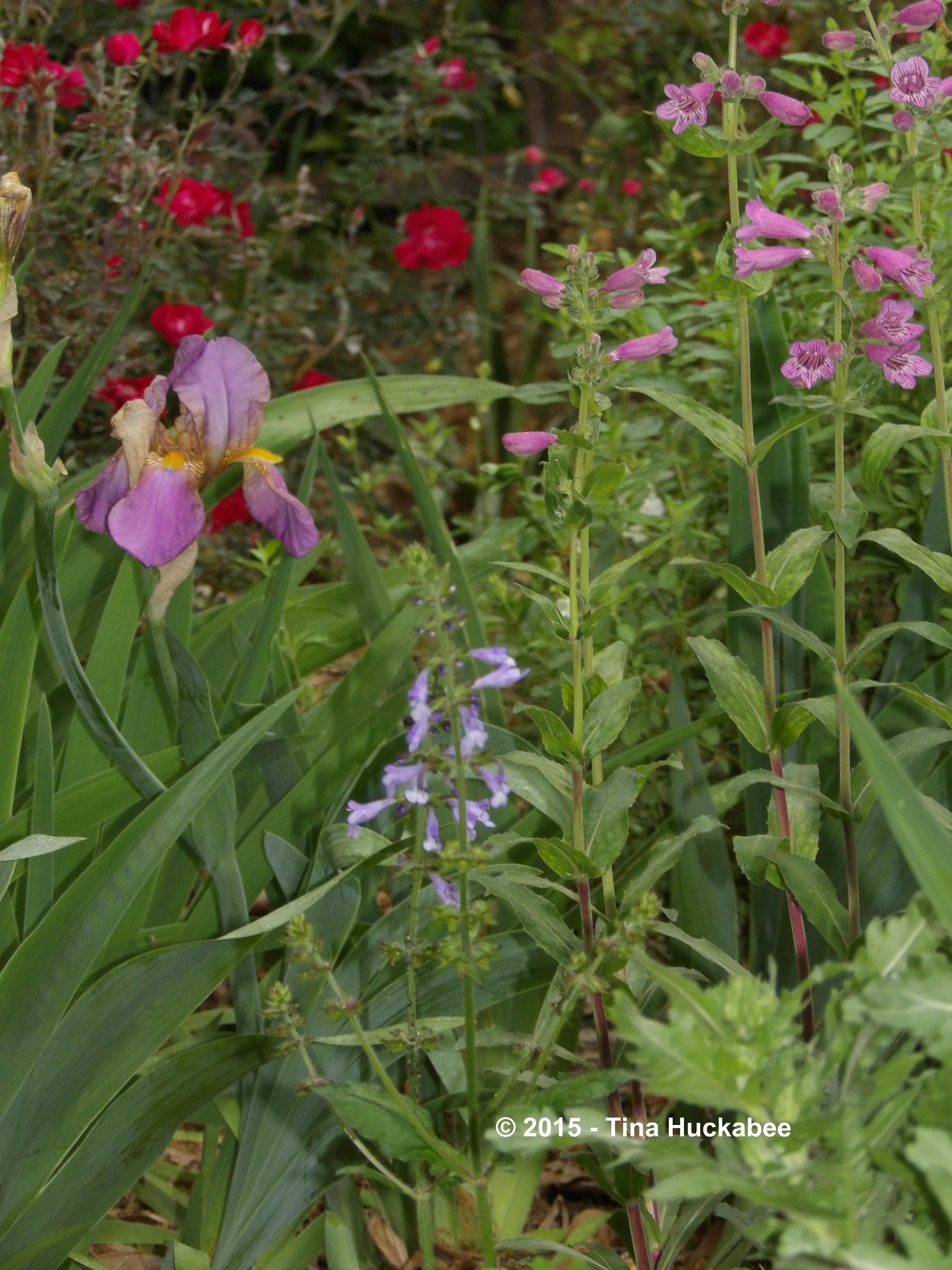
As my interest in and experimentation with photography evolves, I find that I am engrossed in the process of photography in macro mode.  It’s the profile of the bee in flight with clearly defined grains of pollen and fine hairs on which that pollen attaches or the intricacies of the parts of flowers–pistil, anther, pollen, petal, taken in a wisp of breeze, that rivet and challenge me these days. Bee_cropped_3414x2746..new
I am a novice and have a lot to learn. I harbor no ambitions beyond improving this new hobby and skill.  I don’t currently own a macro lens and don’t know that I’ll invest in one. However, I accept every photo session as a tutorial in translating what I see, or think I see, to the still and silent screen.
IMGP6977.new

Regardless of my current focus on photography (and ceramics, but that’s another conversation), I am, first and always, a gardener.  My garden reflects an avid interest and deep affection for plants and their animal partners, as well as a sense of personal space and expression. My garden is an established one–I’ve gardened in this allotment for well over 20 years.  Whew! That’s a long time.  That space isn’t static though–not one bit.  I wish I had better visual records of my garden through the years, but alas, I don’t.  You’ll just have to trust me when I say that my garden, like any is alive and breathing, has evolved and adapted over the years in response to changing conditions, plant preferences, gardener whimsy and sometimes, gardener impatience.

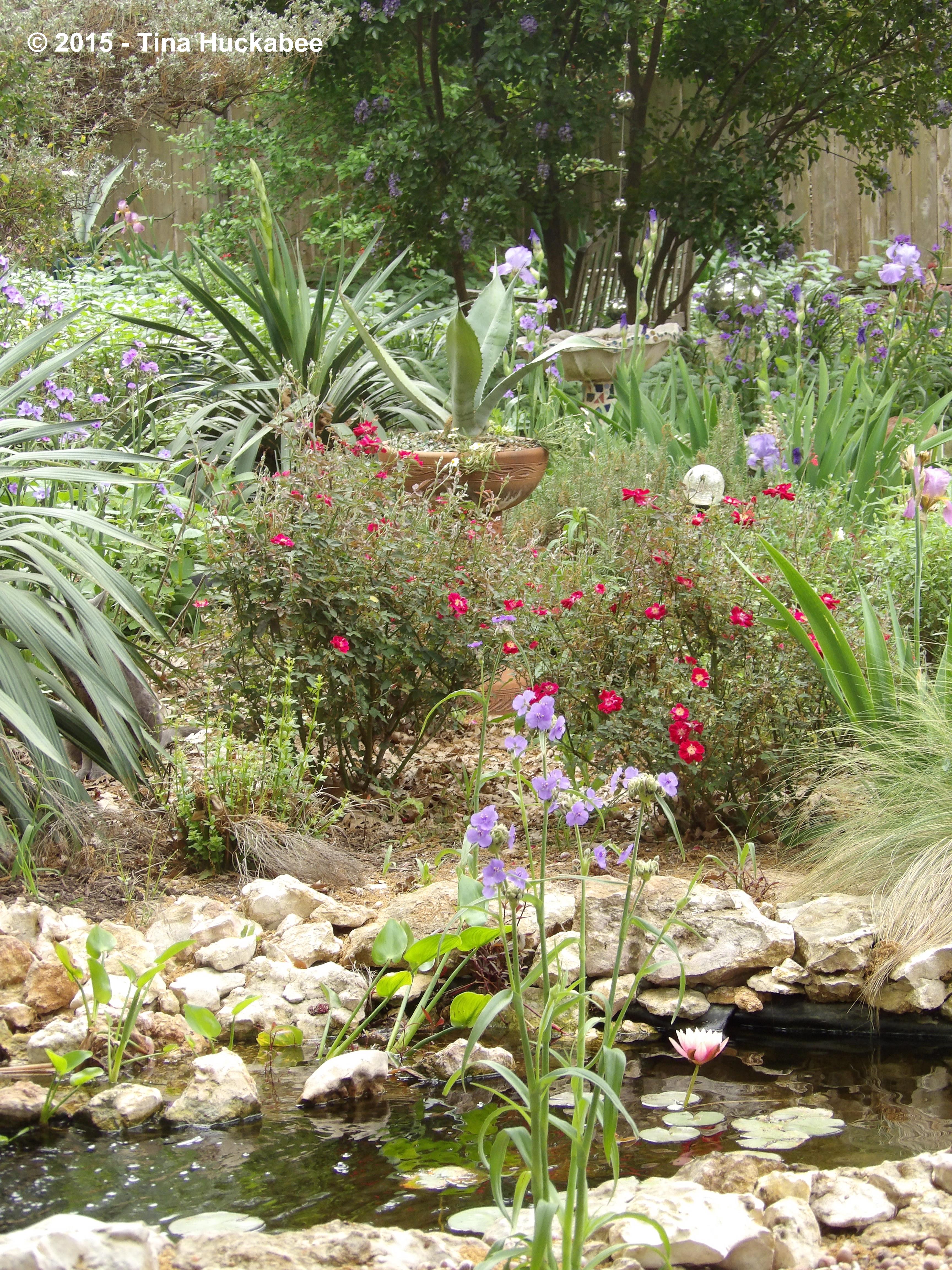
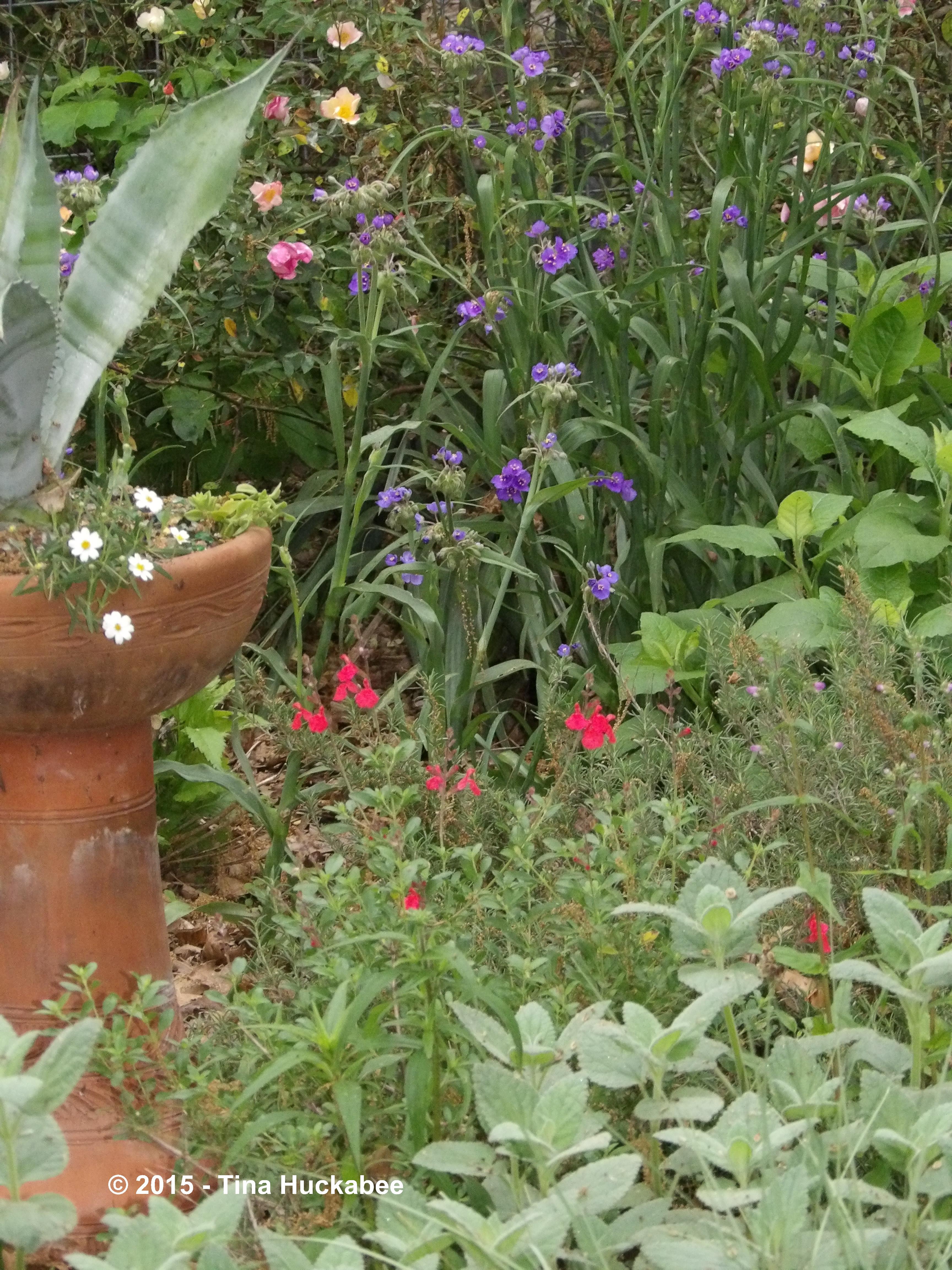
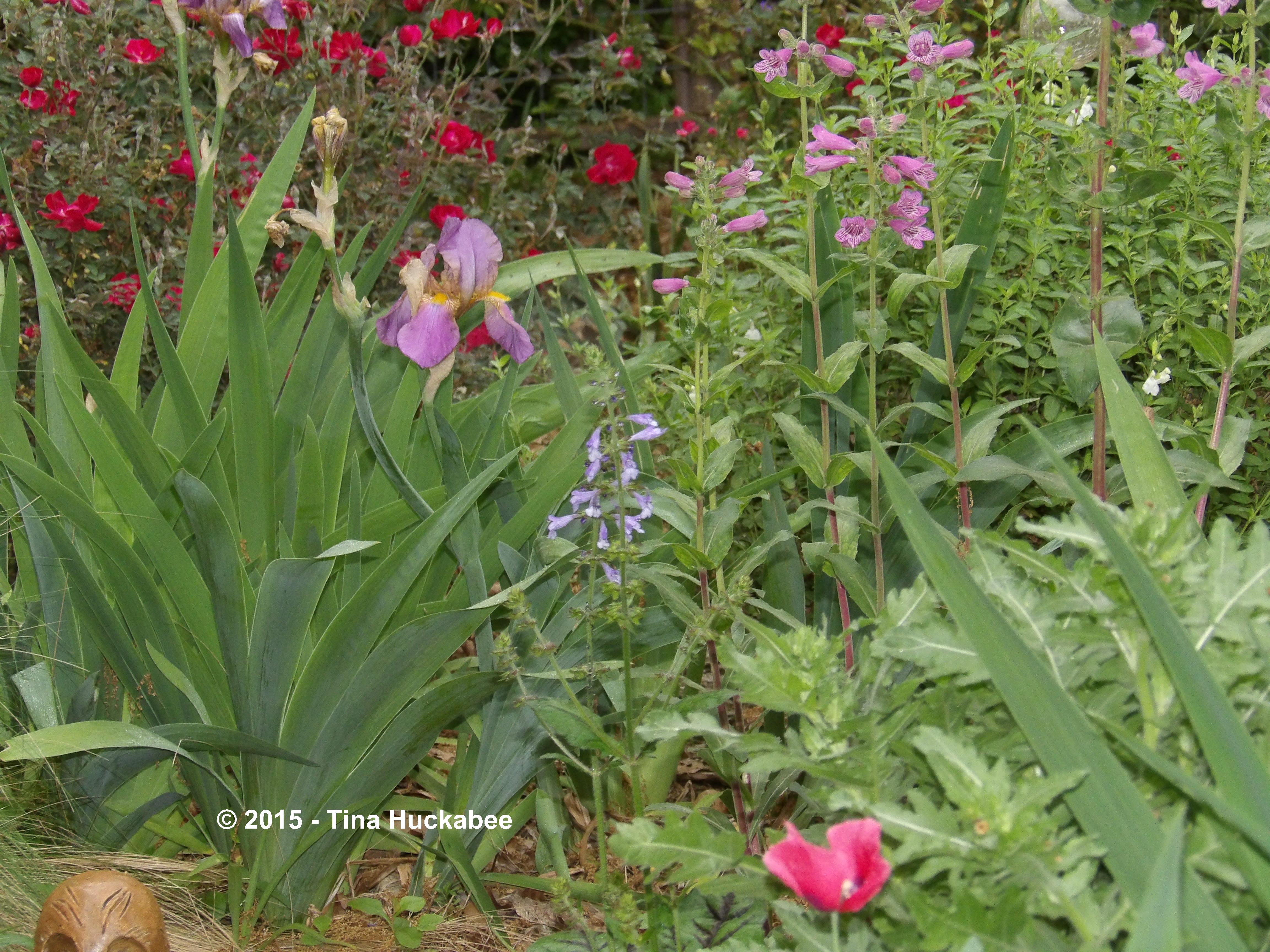
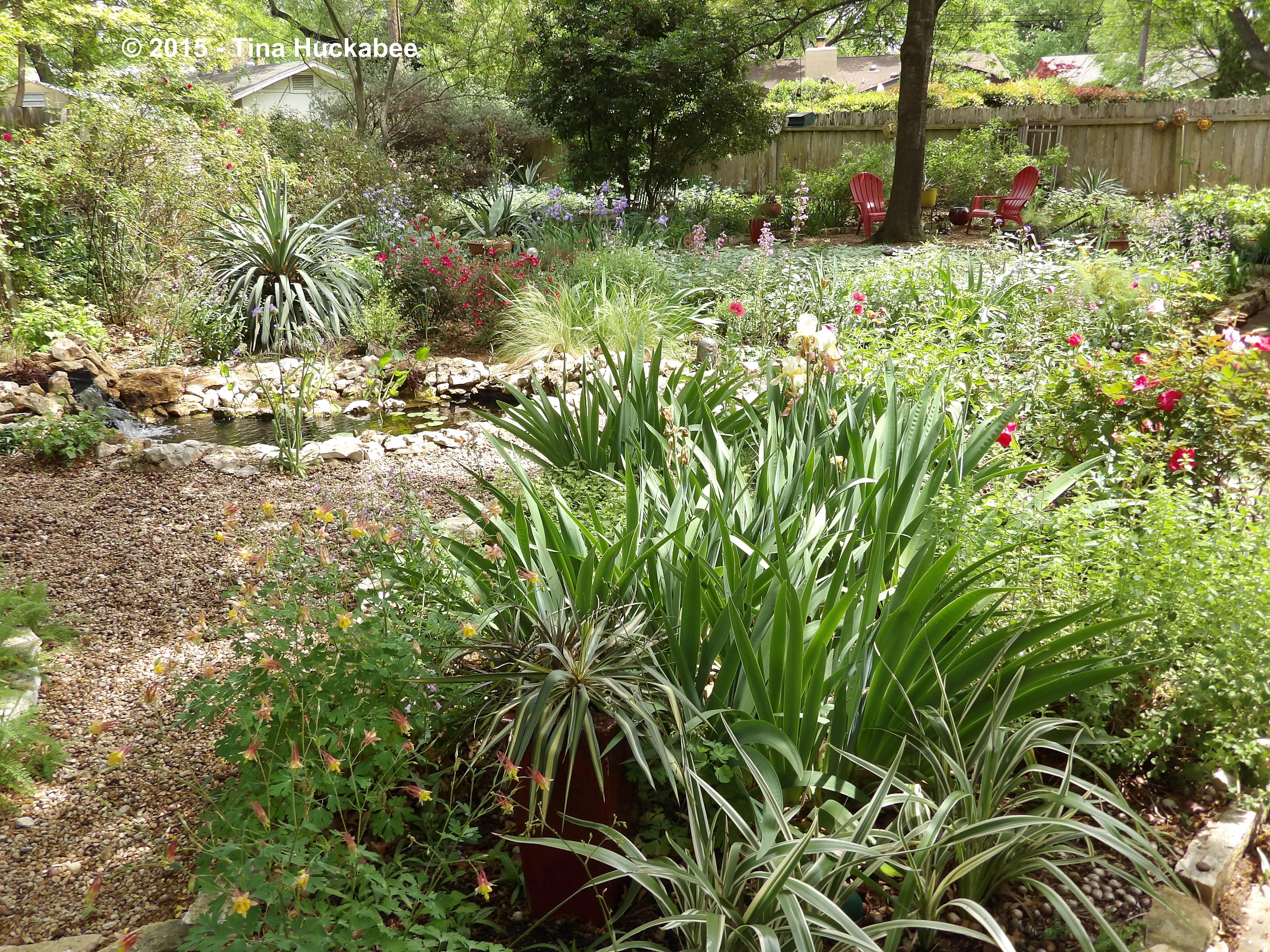
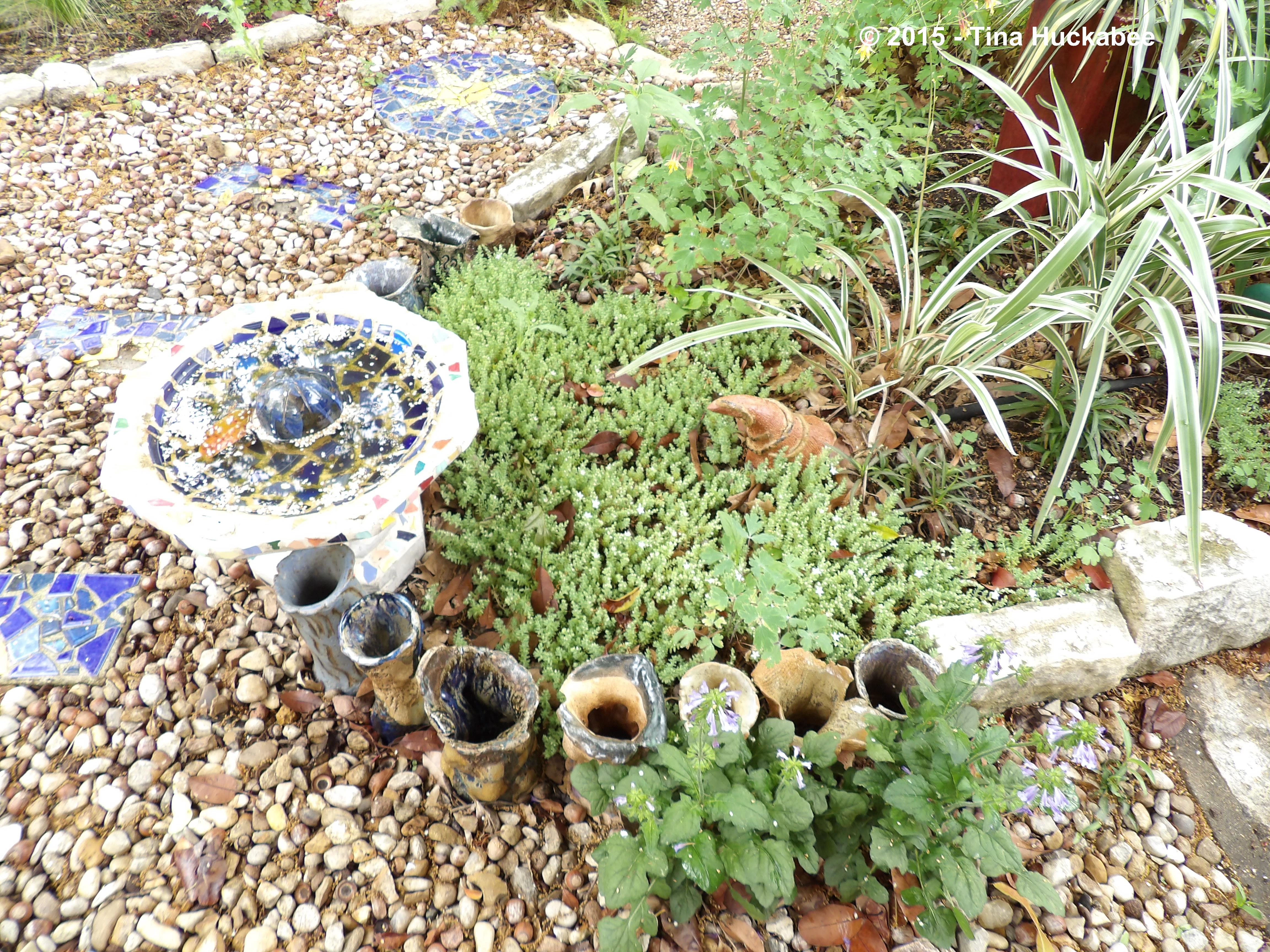
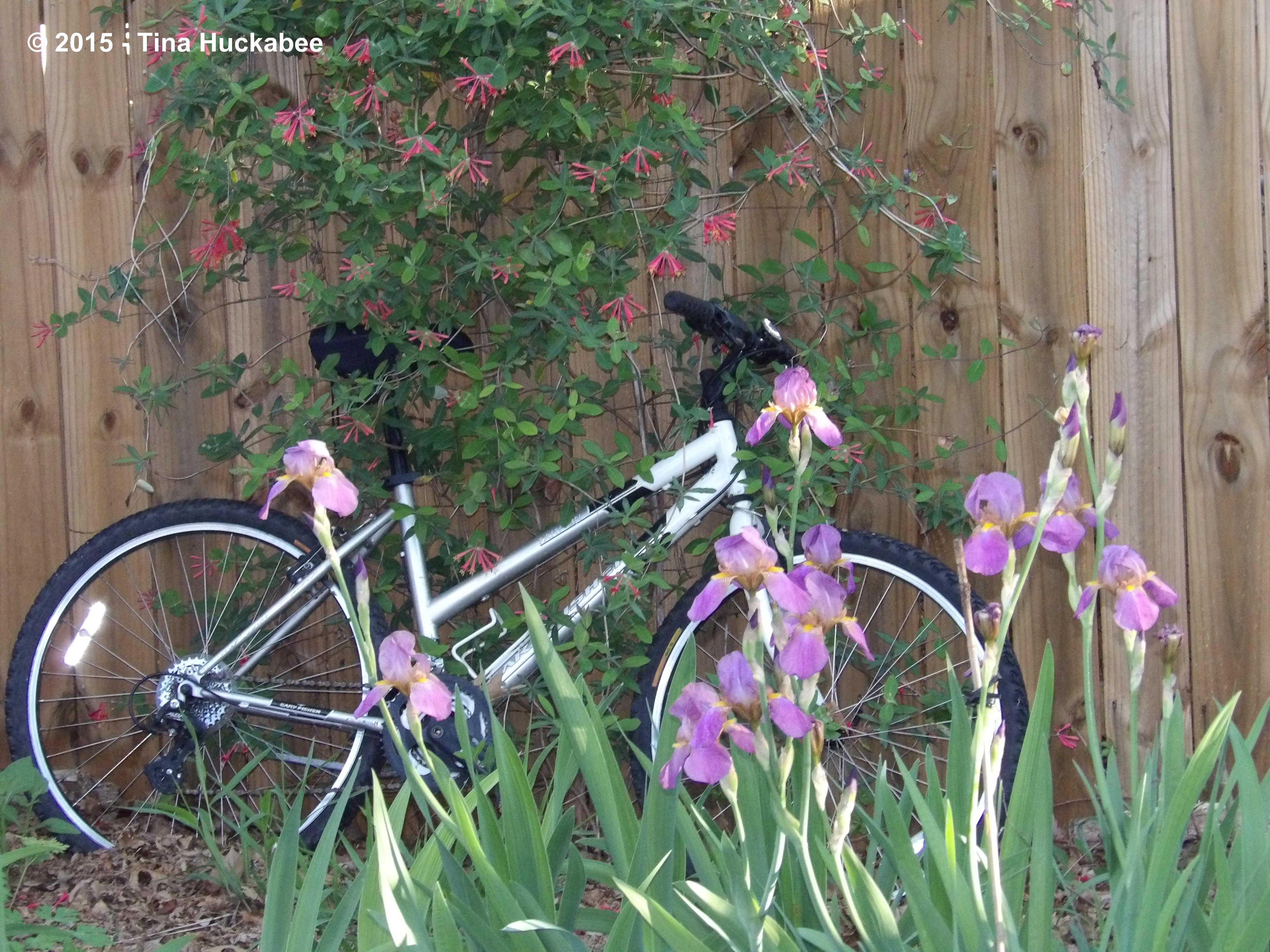
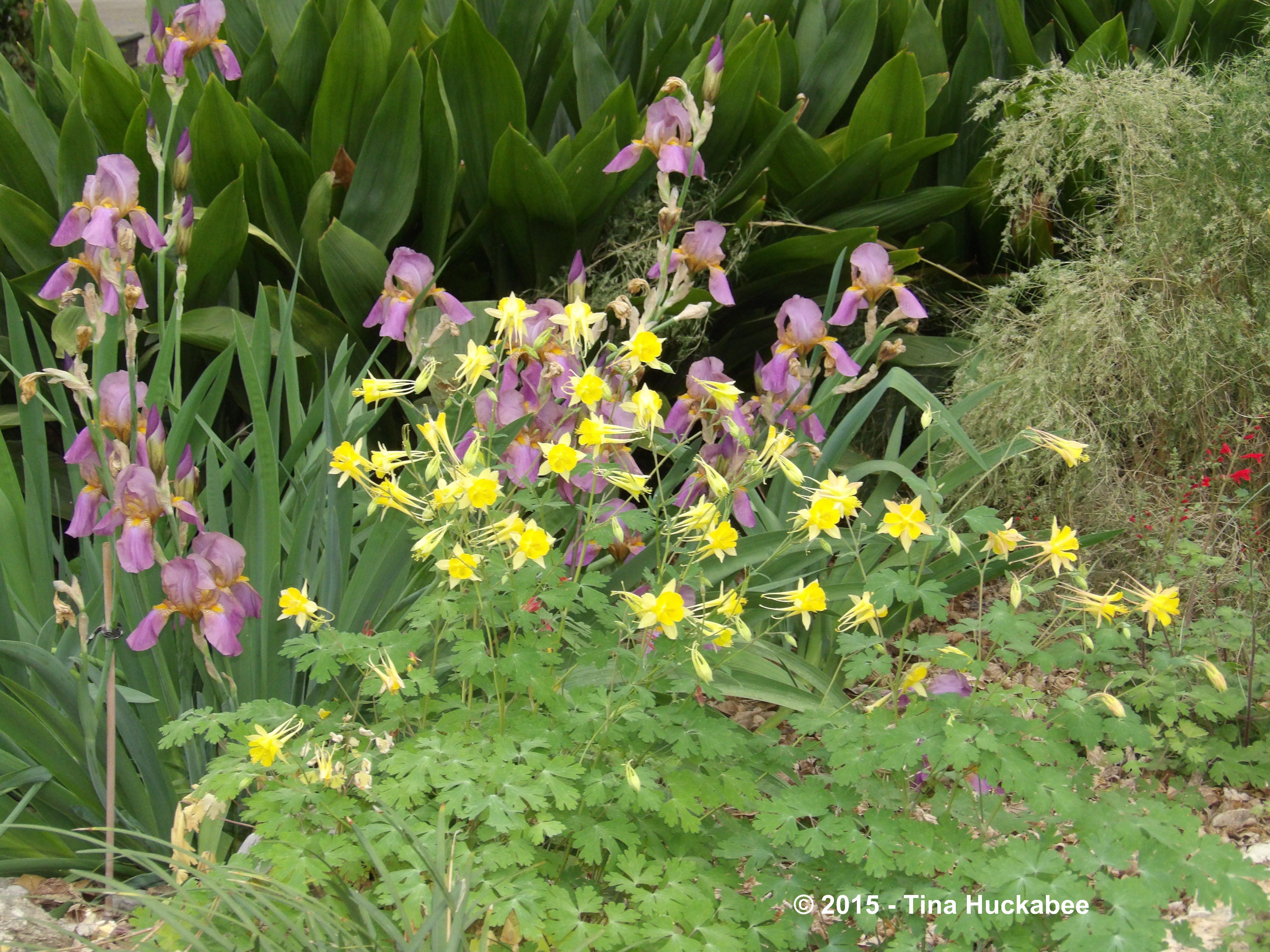
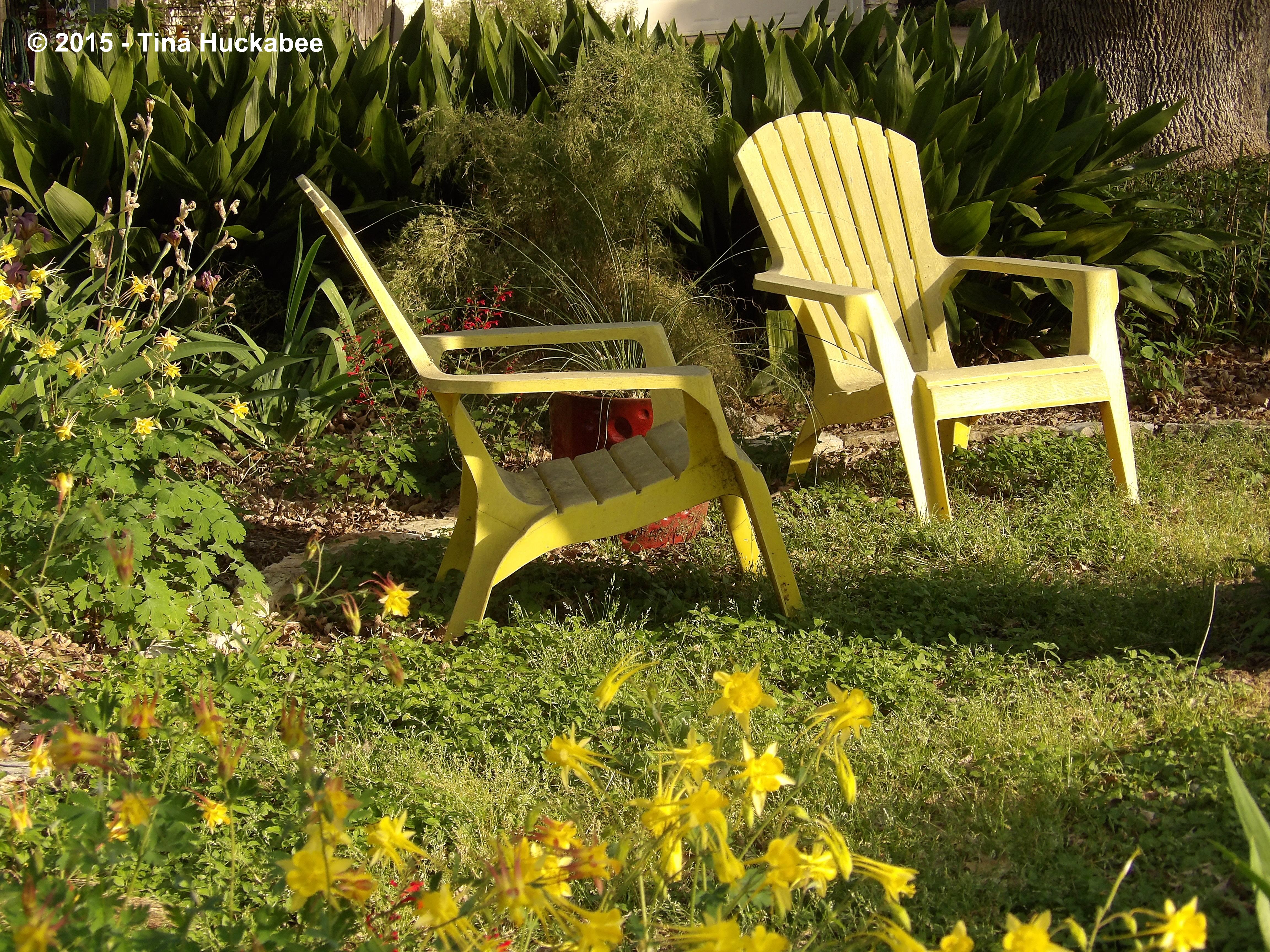
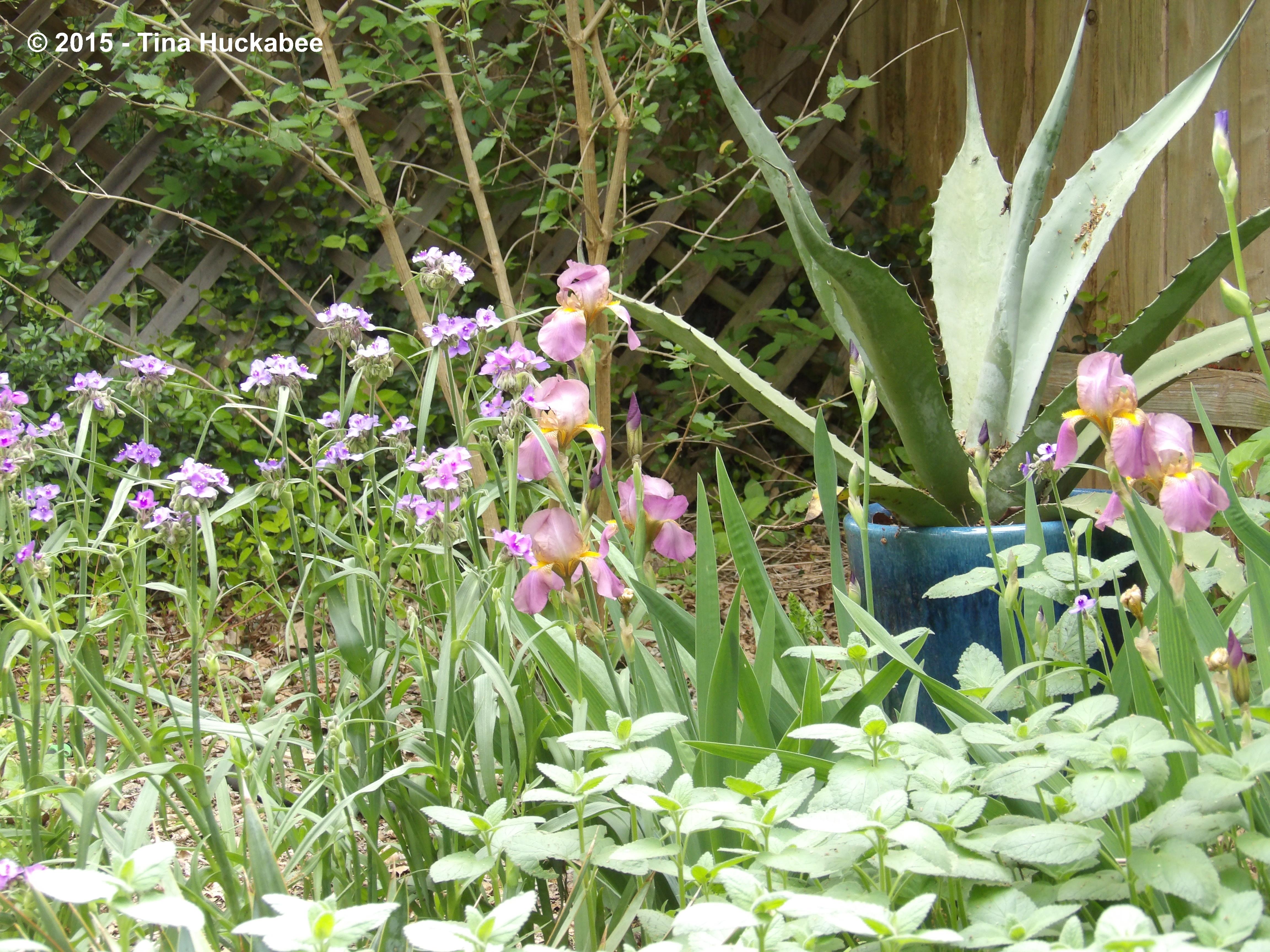
Because of my passion for plants and their workings, in short, a plant geekiness, I don’t often take photos of my gardens in full shots. I favor selection of subject, not always the full palette. But this bountiful spring, I see my garden with its perennials abloom and mementos in place, not differently, but in its entirety: lush, growing, and life-sustaining.   Come and take a virtual walk with me this lovely spring day to see a garden created by someone who loves her plants-n-critters.  Mine is an attempt to heal a small part of the world by primarily working with what belongs here: a collaborative-effort garden between the gardener and her surroundings.

The back garden,
AzurePot.new

PerennialPath.new

IMGP7270.new

IMGP7243.new

AsherShot.new

IMGP7252.new

LongShotToAzurePot.new

CornerShot.new

IMGP7272.new

PondBank.new

BirdbathAgave.new

IMGP6979.new

BackyardFull.new

CeramicsShot.new

IMGP6637.new


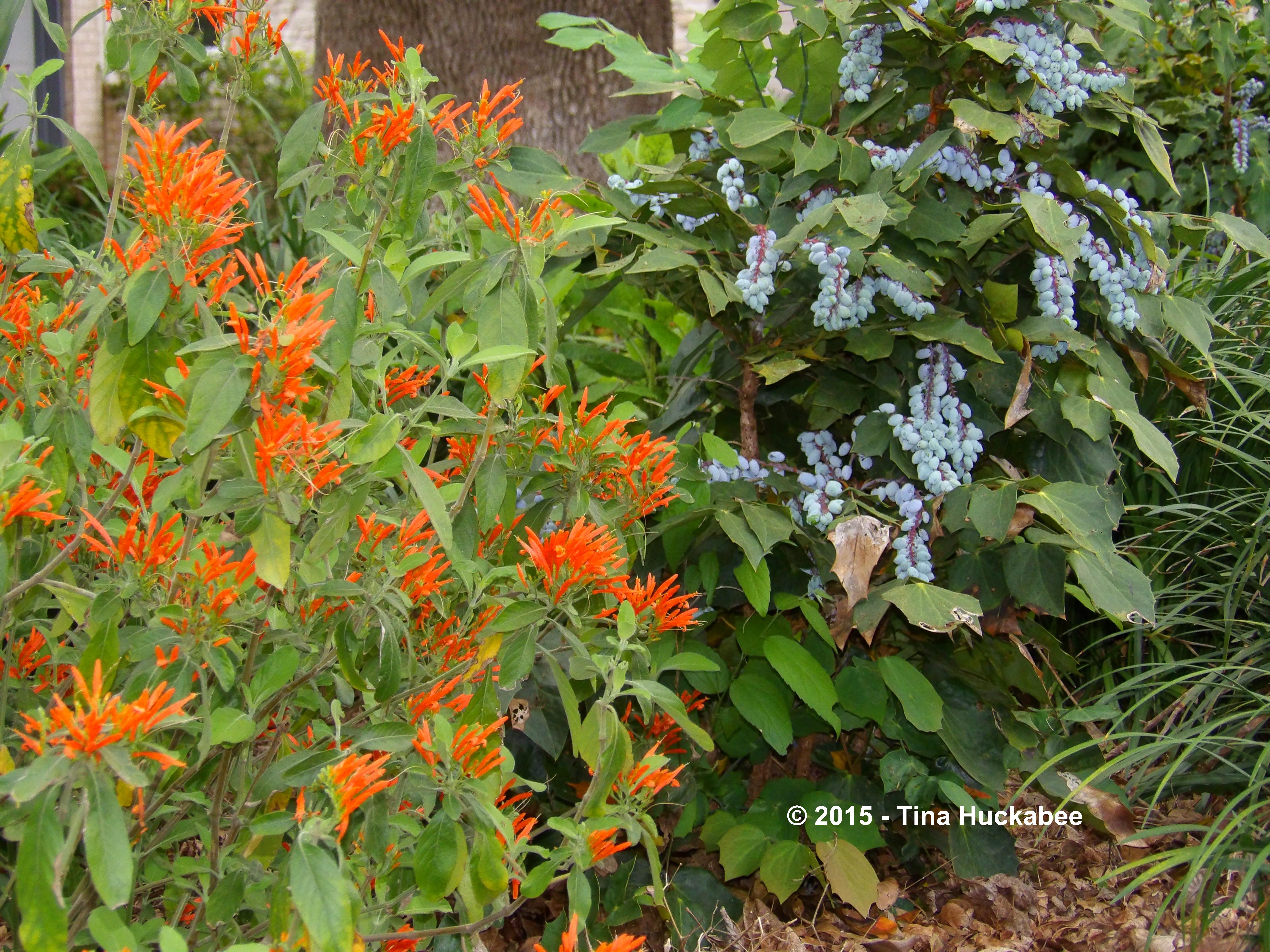
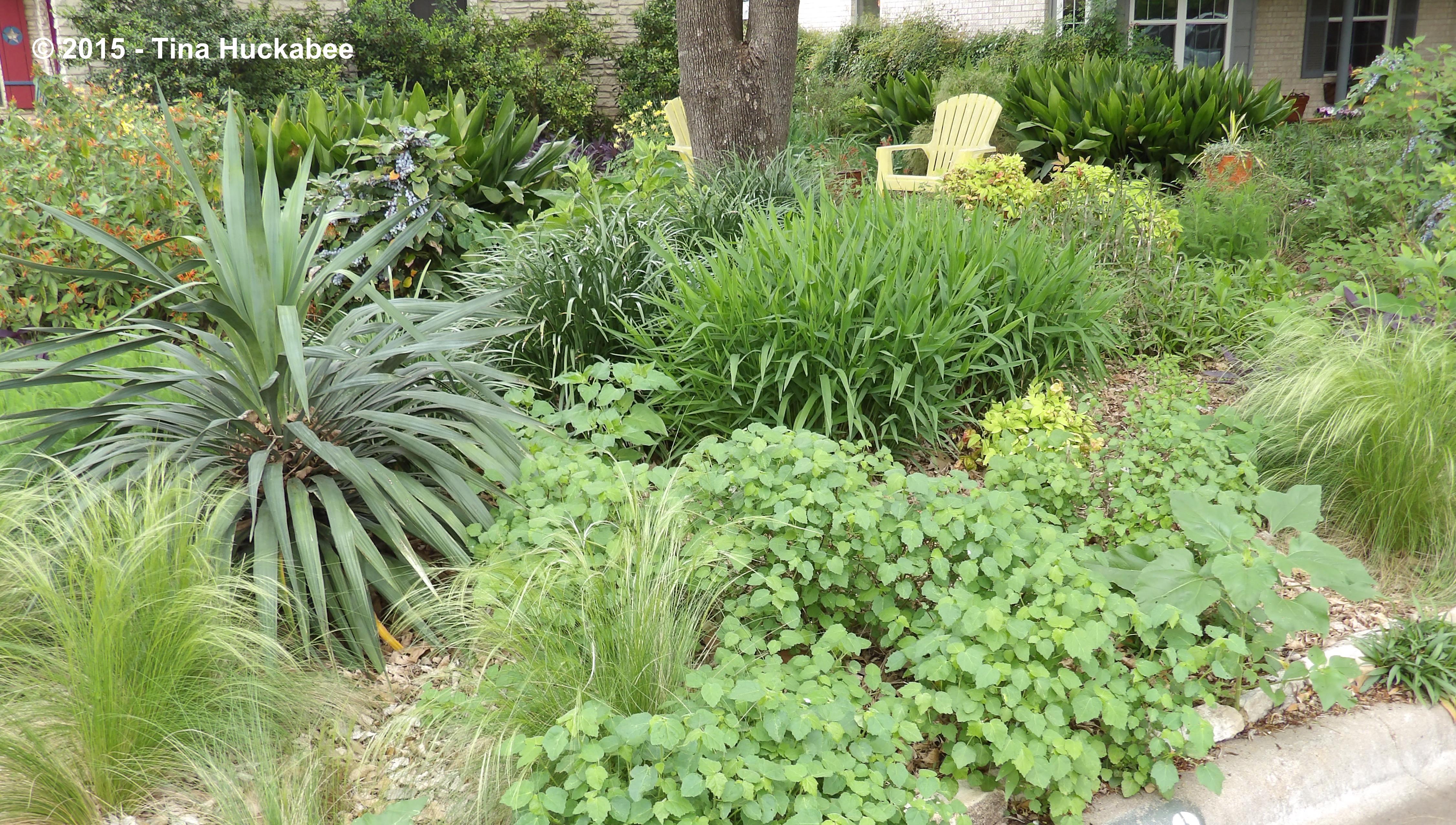
...and the front garden, where I rarely take photos.
IMGP6959.new

ColumbinesIrisFront.new

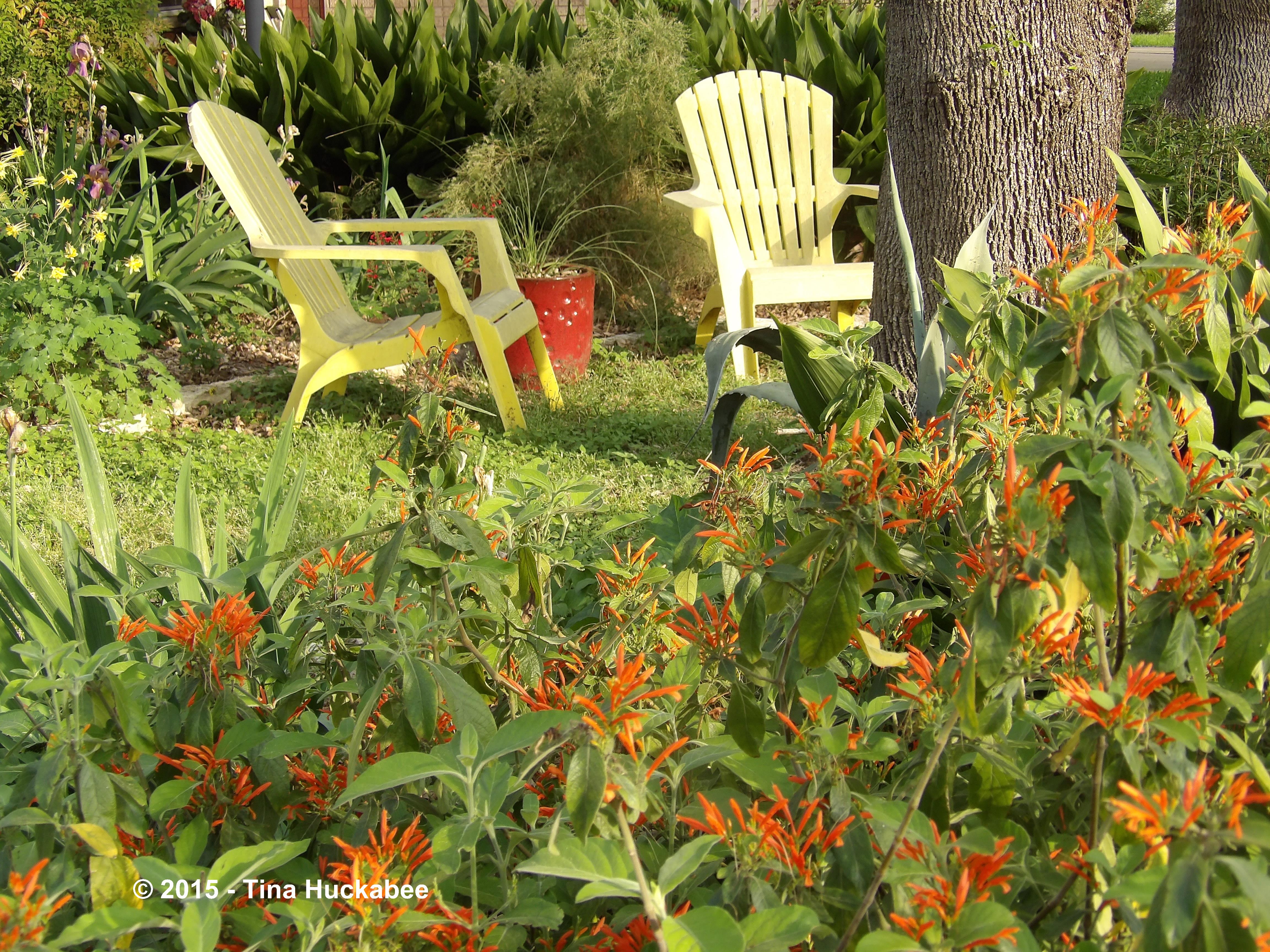
YellowChairsandColumbines.new

YellowChairsMexicanHoneysuckle.new

It’s not a stylish or designed garden.  It’s just a garden.
IMGP7274_cropped_4506x2553..new

But it’s my garden.


Can She Build Cabinets?

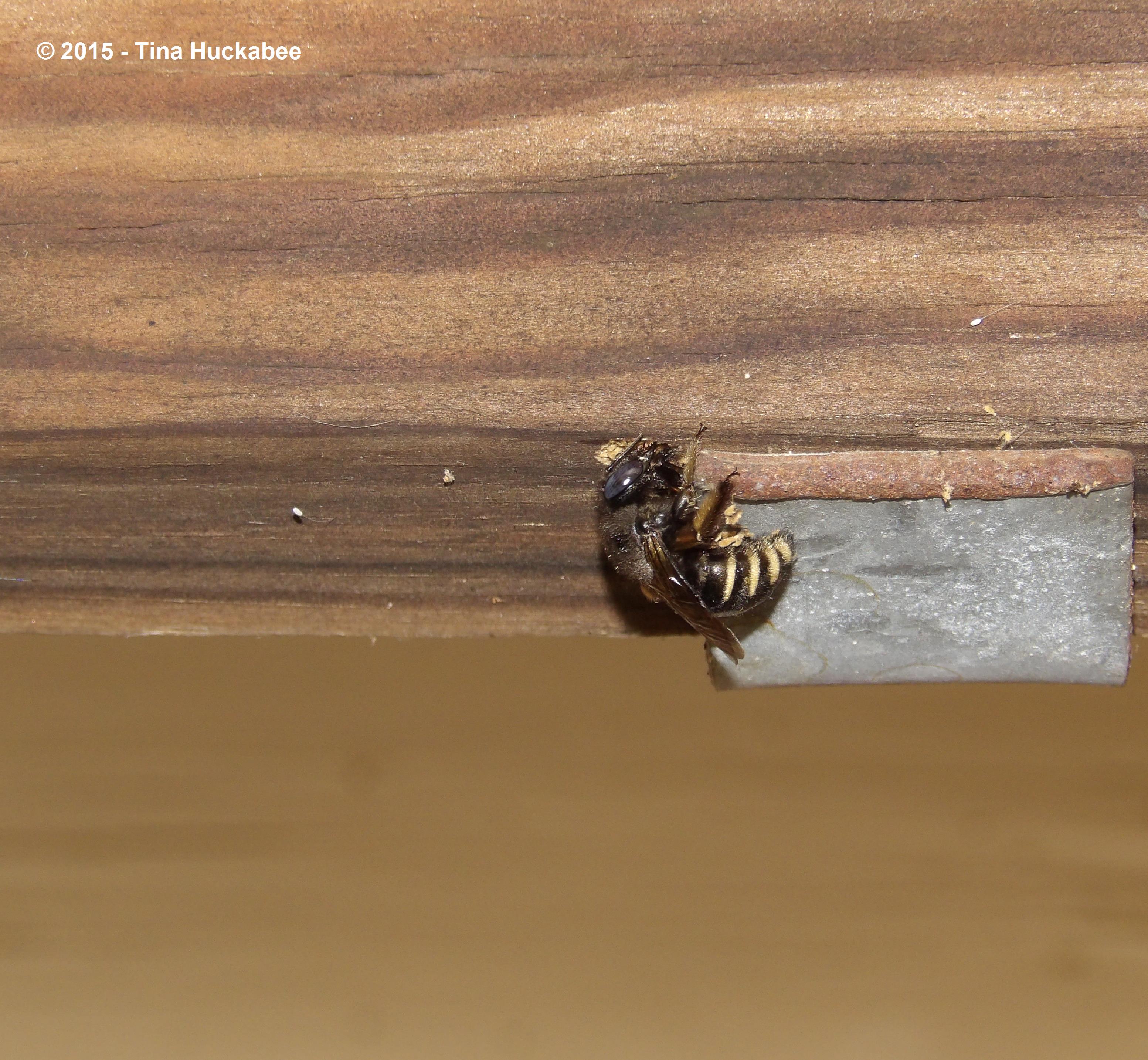
While taking care of some long-neglected chores on my back patio recently, I had the opportunity to watch a Horsefly-like Carpenter Bee, Xylocopa tabaniformis (parkinsoniae?), drill into the wood frame of the covered porch. Grateful that she distracted me from a responsibility I didn’t much want, I watched her zoom to, from, and around her target building site. IMGP6703.new

She examined other potential nesting spots along the woodwork, but returned again and again,

IMGP6708_cropped_3442x3170..new …to the spot that she intended, for a particular moment in time, to become a nest for her youngins’.

IMGP6706.new IMGP6707_cropped_3092x2626..new

I love these bees, but they are hard to photograph.  While solitary bees in their living habits,  I find them quite social and gregarious.   They buzz around me almost every time I enter my garden and I find them chasing each other around plants, in a comical Apidae version of hide-n-seek.  Obviously that is territorial protective behavior, but fun to watch. While not shy about buzzing me, they have never been, in the least, aggressive.

I certainly can’t say the same thing for my beloved honeybees–and I have the welts to show for it.

I was able to get good photos of Ms. Horsefly-like Carpenter Bee because she was intent upon her woodworking and not zooming hither and thither, as is typical of this bee species.IMGP6712_cropped_3106x2867..new

This Carpenter bee species is especially cute:  sporting pretty blue eyes and cool racing-strips along the sides of their abdomens, they’re common pollinators in my gardens.

IMGP7001_cropped_3742x3433..new

Regardless, it took me a long time to correctly identify this particular species of bee.

I can easily get the racing-stripes in photo-form,

IMGP7026_cropped_3456x3124..new …but have yet to successfully photograph a bee head-on, to profile those baby-blues.

Most photos are blurred visions of bee action.

IMGP7006.new

I watched this bee in the morning, then had to leave for the day.  When I came home that evening,IMGP6715_cropped_3336x2544..new

…I saw two holes, the larger is the one she worked on while I watched and a smaller one, to its right.  It doesn’t look like she finished her carpentry with either.  Or perhaps, she decided that the neighbor with the camera is just too nosy.

Maybe she found a more suitable home and a quieter neighborhood in this old wood.IMGP6759.new

I spied her, or another, buzzing around, clearly interested in this piece of real estate.  A nest hole made by native bees might look like this hole.

IMGP6663.new

And this,IMGP6758.new

….is what I found in the back of that selected piece of wood. The wood shavings suggest that somebody is creating a nesting site. I carefully picked up the rotting log and looked at the back of it–there she is!  Mamma Carpenter Bee!IMGP6994_cropped_2544x3681..new

Racing stripes visible in the depth of the hole, is she crooning to her eggs, singing sweet  buzzy-bee lullabies ?  More than likely, she’s packing pollen in the hole for her larvae to snack on once hatched.   I’m leaving the nursery alone–Ms. Horsefly- like Carpenter Bee and her progeny don’t need me bugging them.

Maybe after she’s completed her motherhood responsibilities, I could hire her for some carpentry work?  There are a couple of holes in the frame of my back patio cover….


Tree Following, April 2015: Leafy Greens

It’s time once again to follow up on my tree, the Retama, Parkinsonia aculeata, and to participate with Lucy and her Tree Following meme at Loose and Leafy.  This past  month started chilly and slowly with little tree action by the Retama.

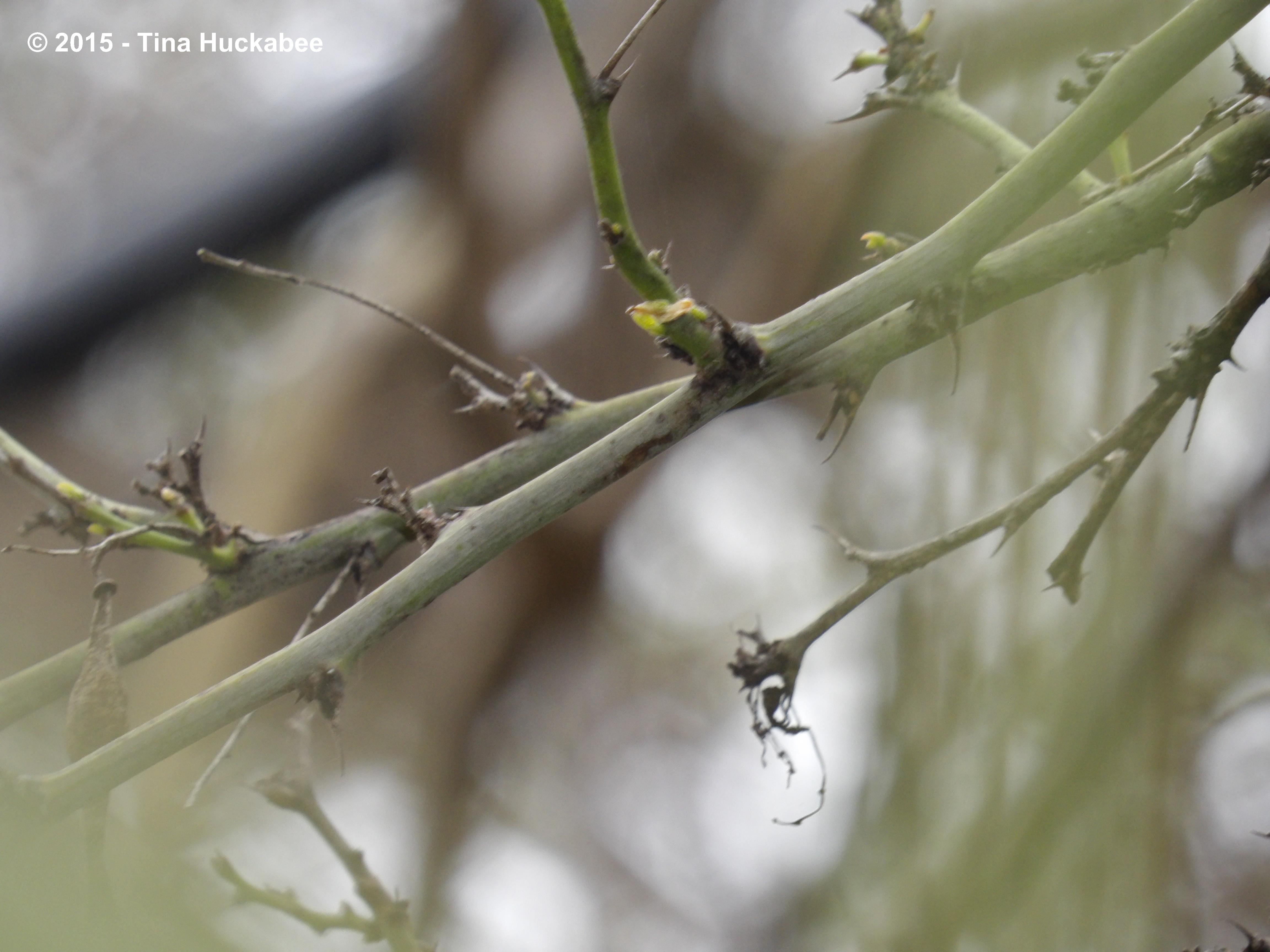
As always, a lovely specimen in the garden with its elegant form and green bark,IMGP6341.new

….the Retama stood in this past month as a silent sentinel, awaiting  its particular breath of spring.

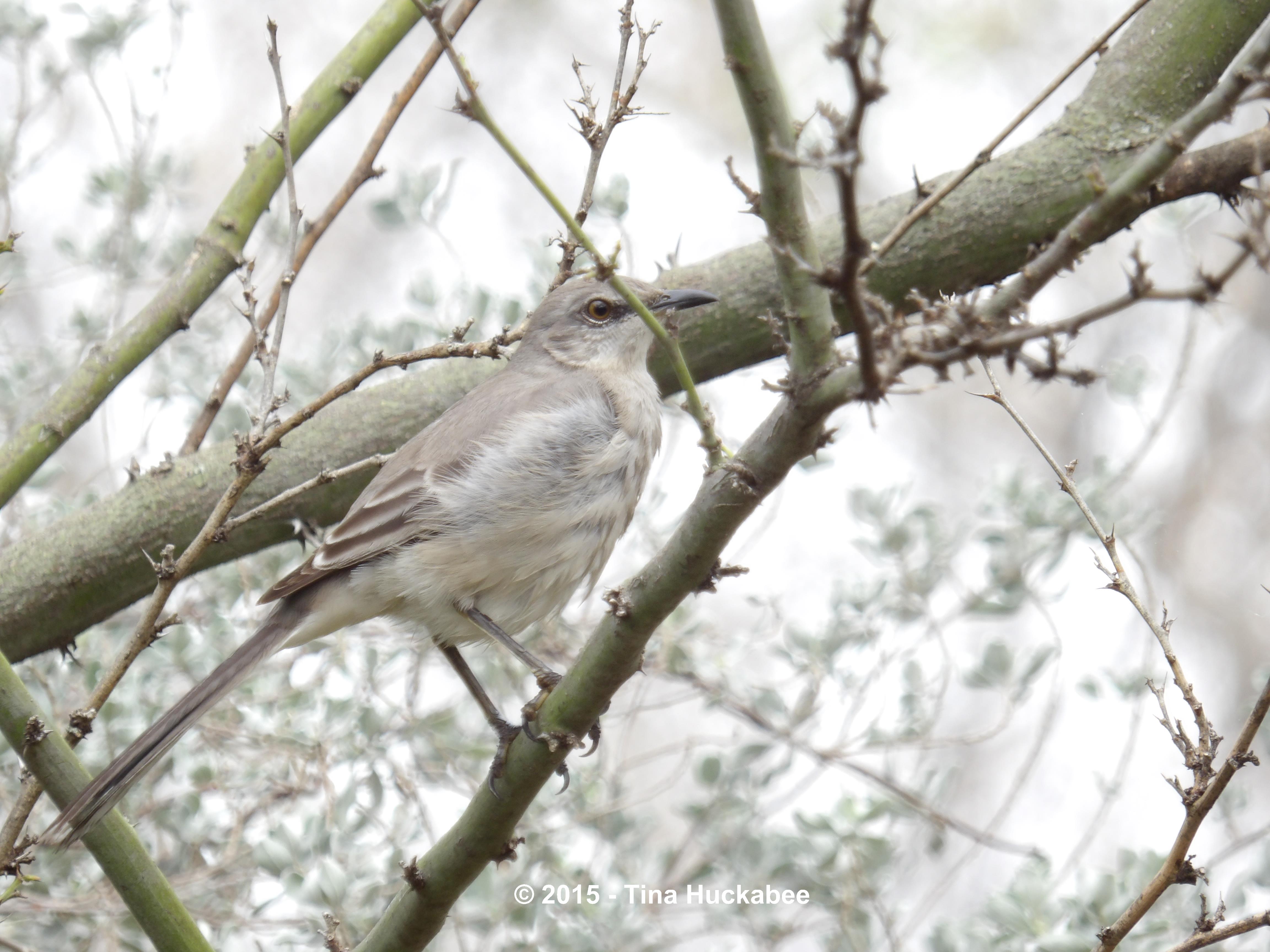
Continuing its role as a favorite bird perch,

IMGP6185.new

…this Northern Mockingbird, Mimus polyglottos, surveyed his realm and sung for me on a grey, cold day, early in March.IMGP6190.new

IMGP6193.new

In the last couple of weeks though,

IMGP6611.new IMGP6615.new

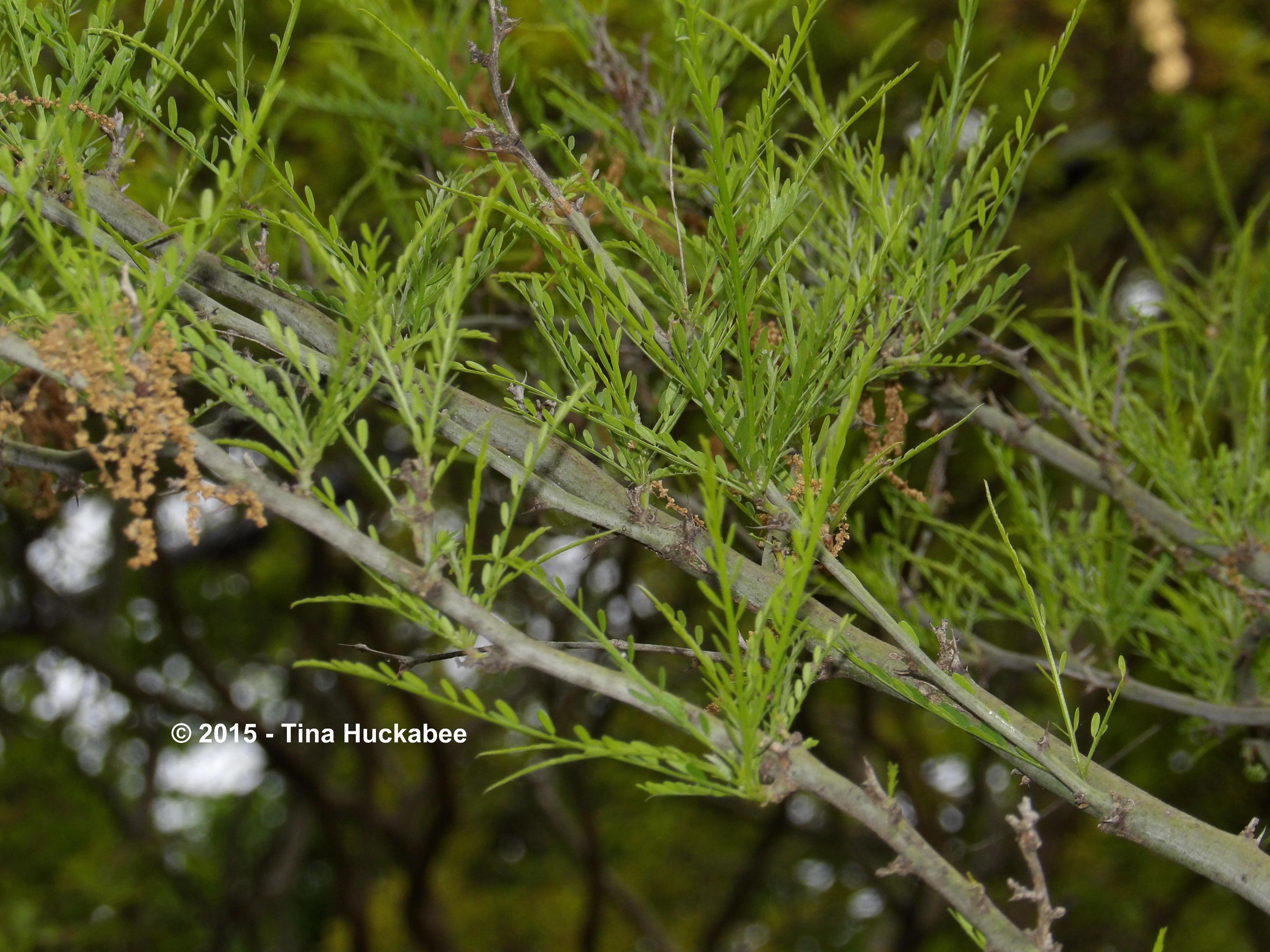
…a transformative change for the Retama.  It’s leafy greens all around! IMGP6741_cropped_4484x2871..new

IMGP6757.new

Welcome to spring, a new growing season for Retama, and a hearty huzzah for newby foliage!

IMGP6859.new

IMGP6940.new