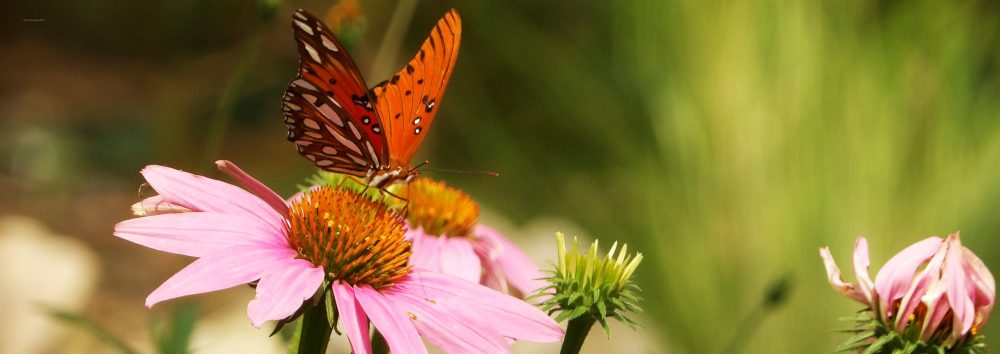
The girls are at it again! Buzzing, foraging,
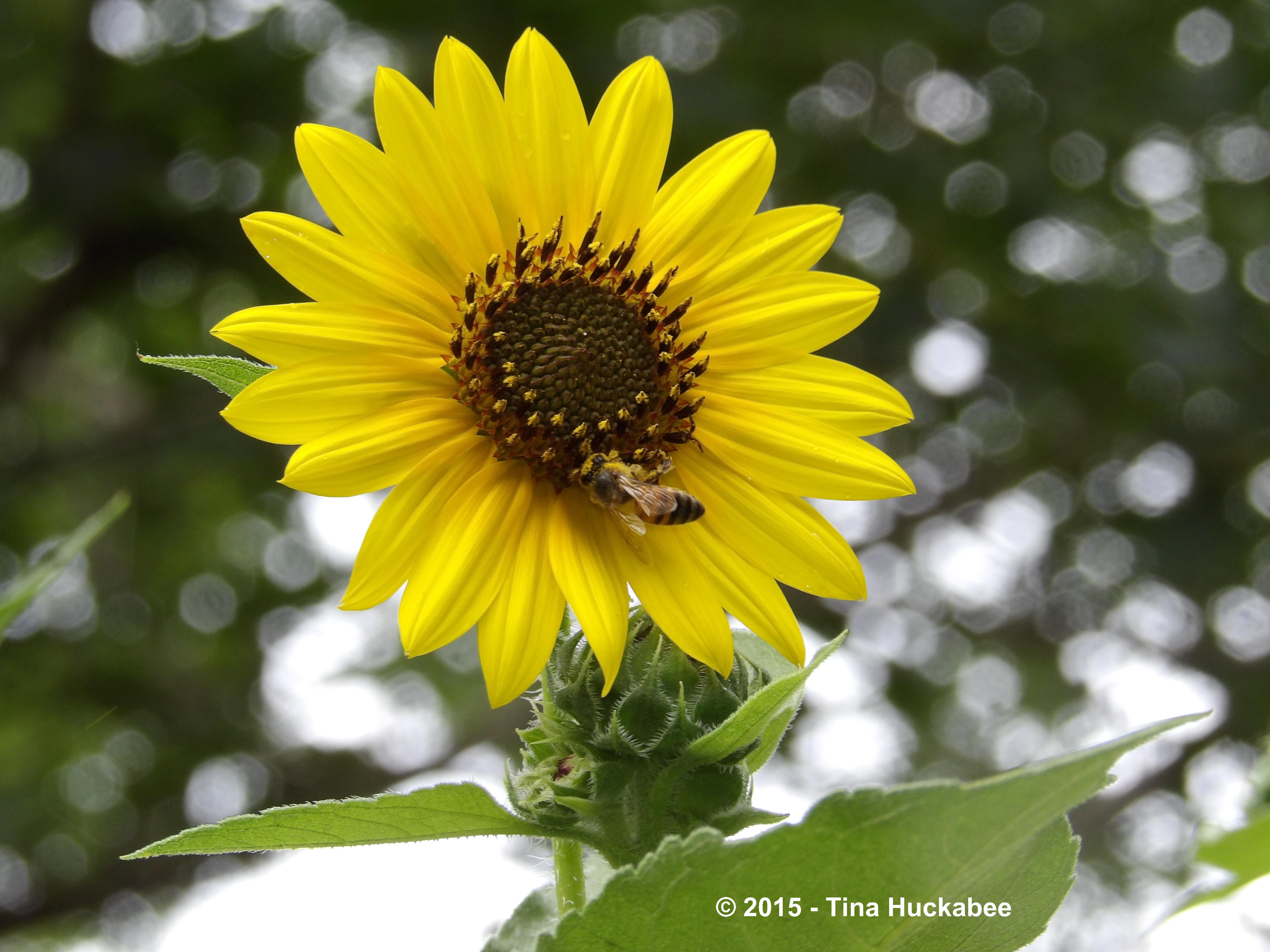
…occasionally stinging (only when I invade their space), and making masses of ooey, gooey, delicious honey.
Not long ago, in response to the bees filling up their second boxes and working diligently on combing out their third boxes, Bee Daddy and I decided that it was time to extract some honey from the hives, giving the ladies a bit more elbow room to do their bee thing.
We checked both Mufasa and Scar and all seems well.
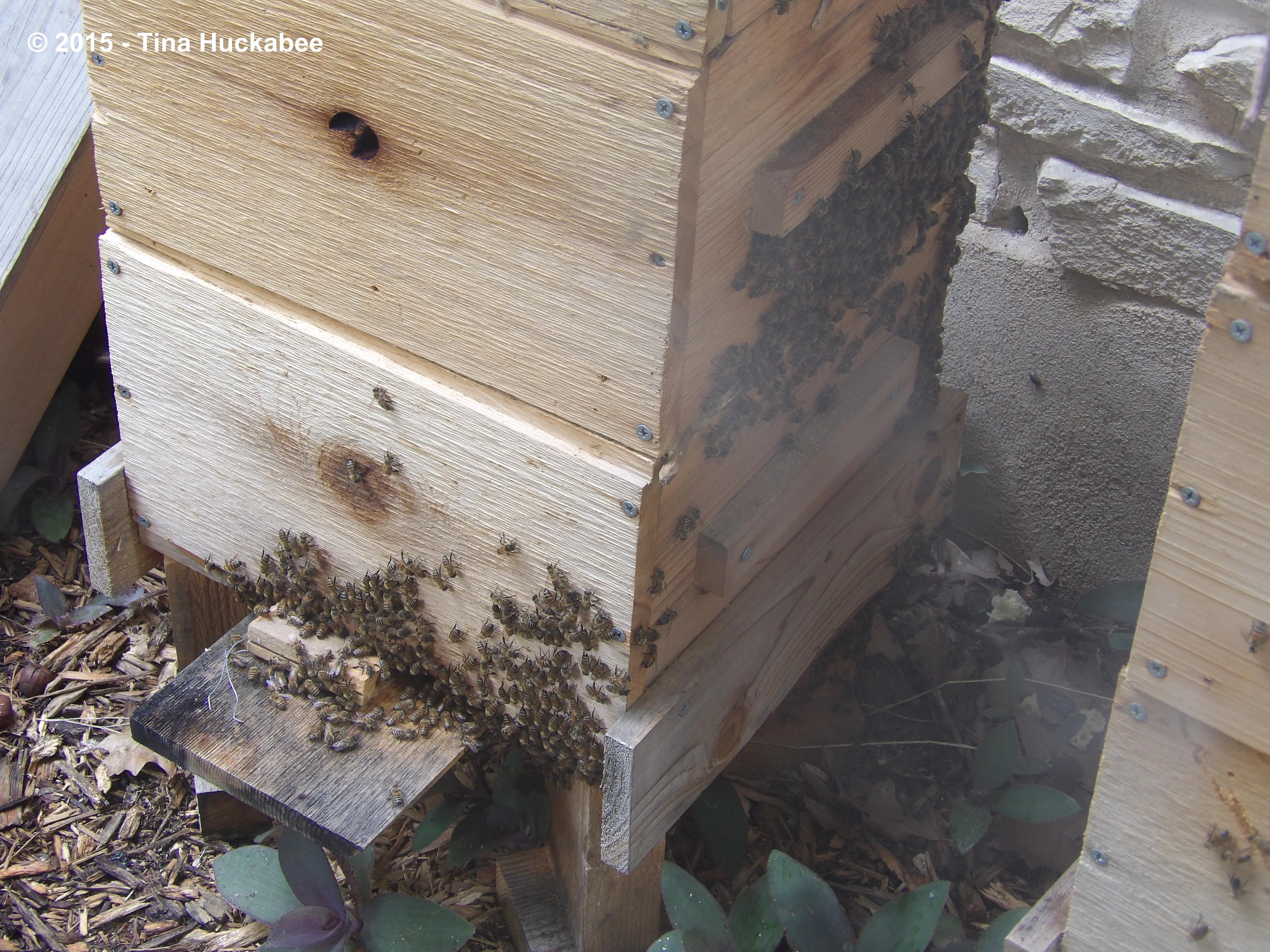
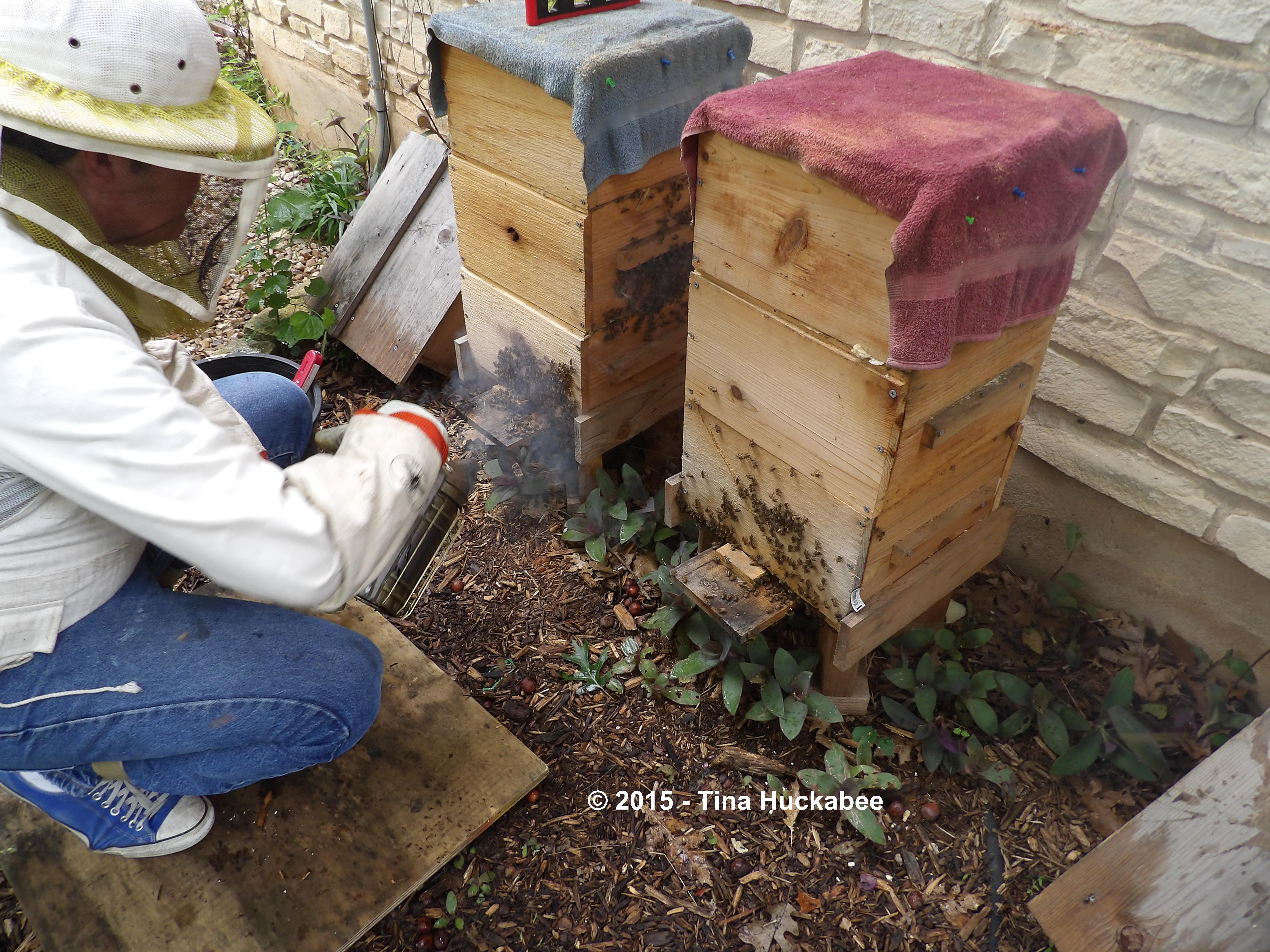
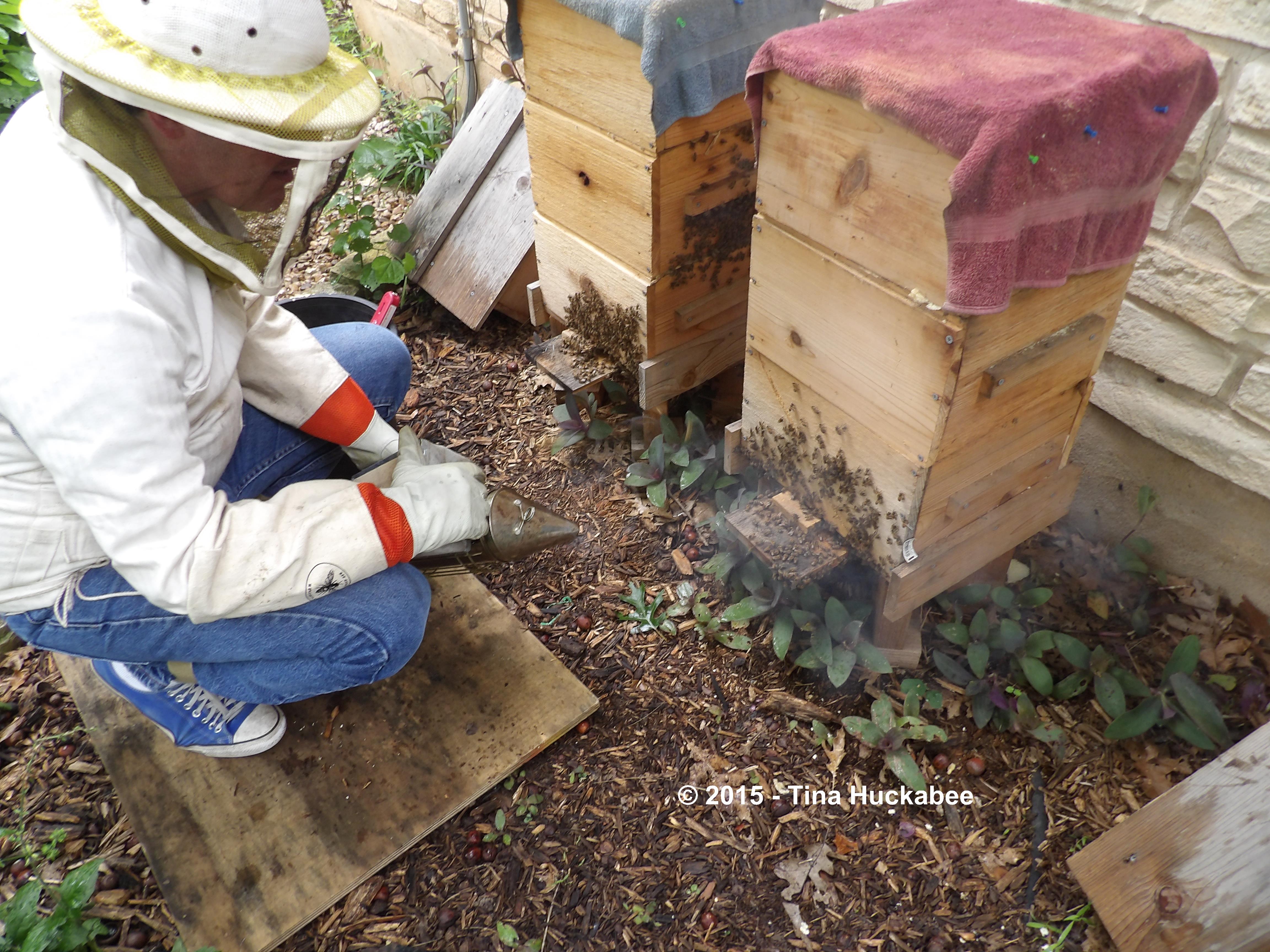
In fact, they’re growing quite a bit this summer; lots of capped brood and squishy larvae in all sizes. Both queens are laying eggs out the wazoo for the next generation of workers and this generation of workers are moving the honey production (and everything else they do) right along.
However….
See these dark, round beetles on the side of the box and scattered amongst the bees on the top?
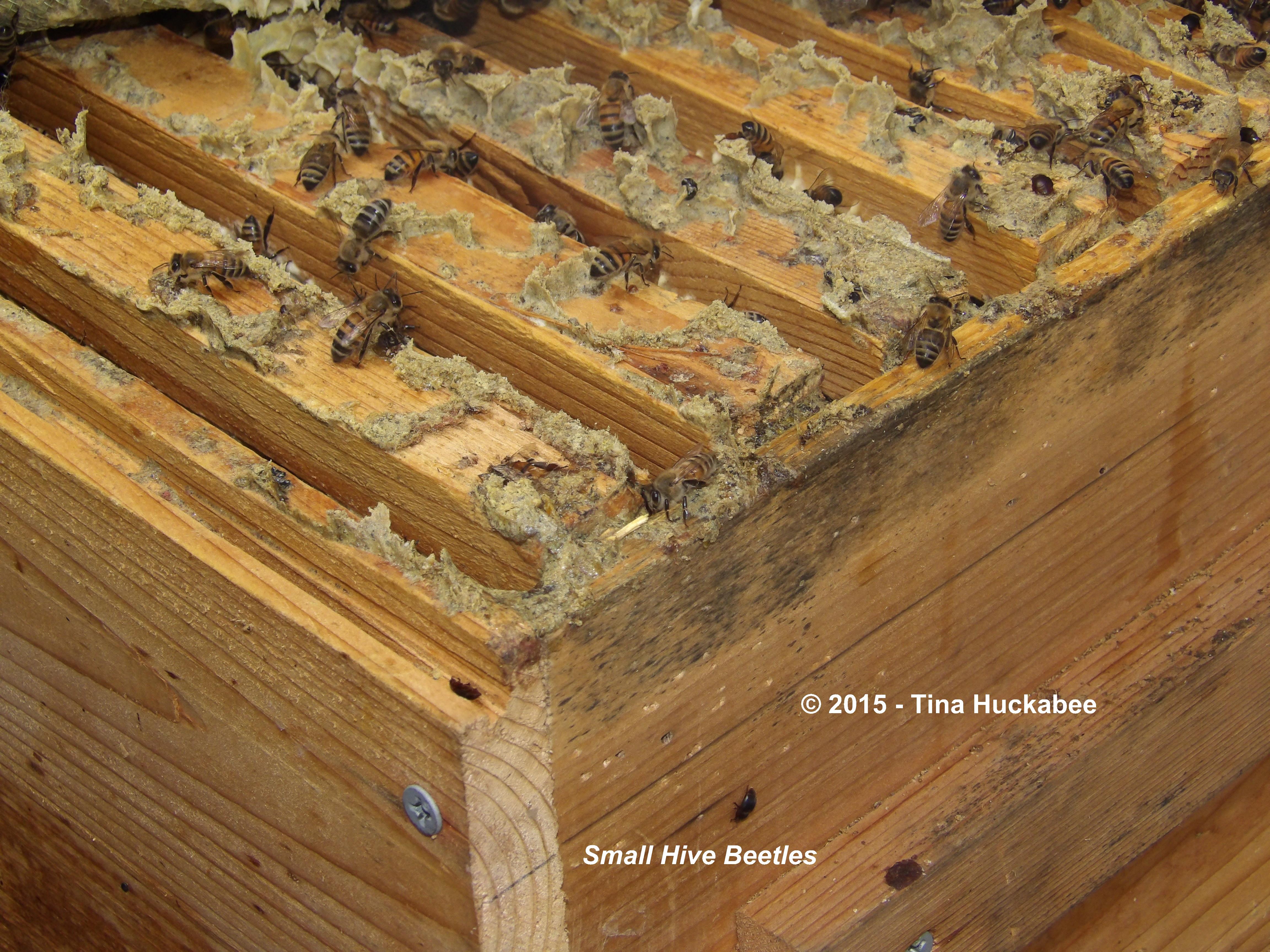
They’re Small Hive Beetles, Aethina tumida, an invasive pest of honeybees and scourge of honeybee keepers. They were obviously skedaddling away as we smoked and opened the hives. I didn’t even see them in the photo until I was placing the copyright, but the devils were there, planning their evil takeover of the hives. I’ll be posting more about them another day, but I just wanted you to get a good look at these bad bugs. BAD BUGS!!
We opened the hives in late June,
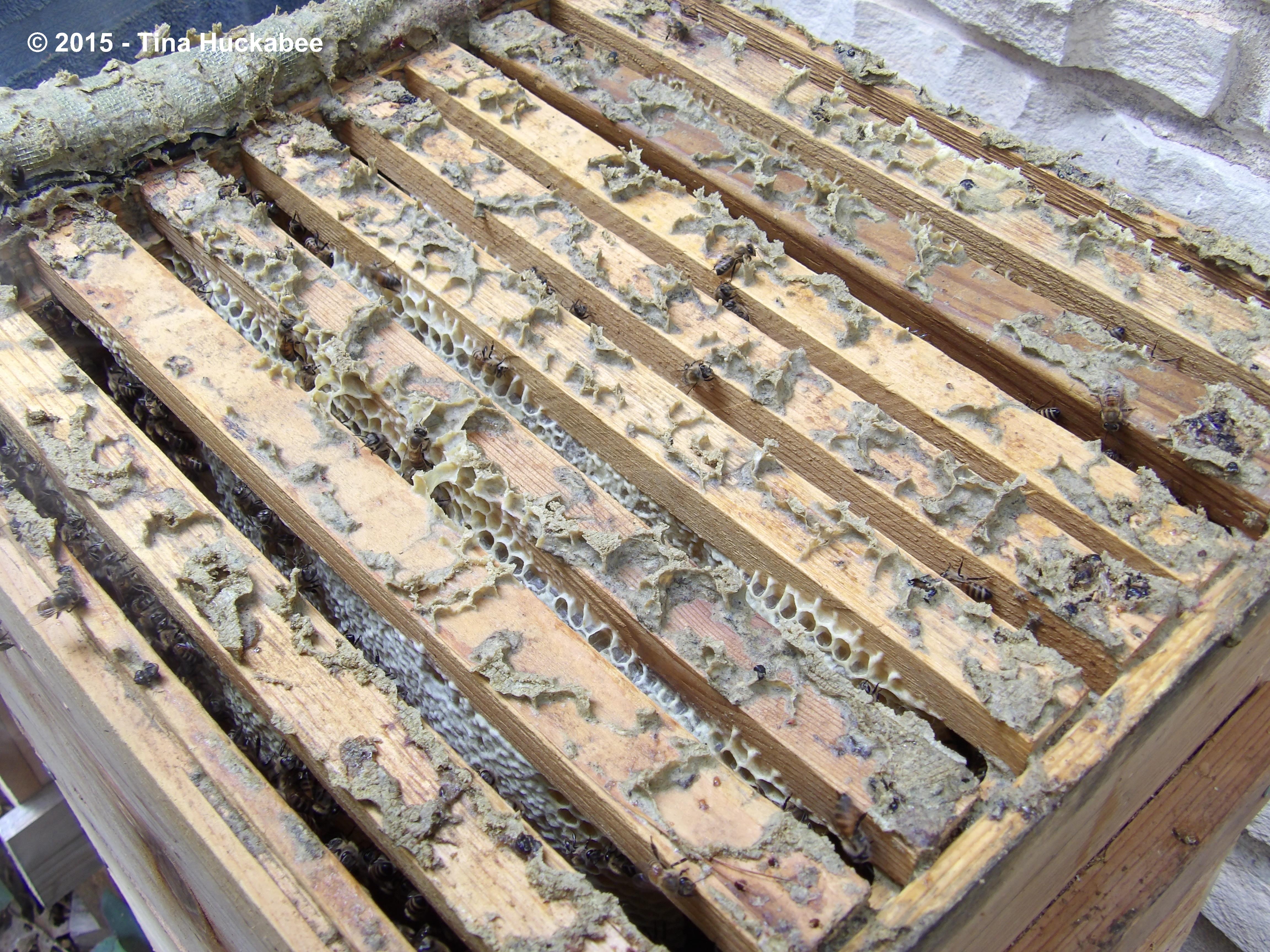
…and saw lots of bee activity and comb galore.
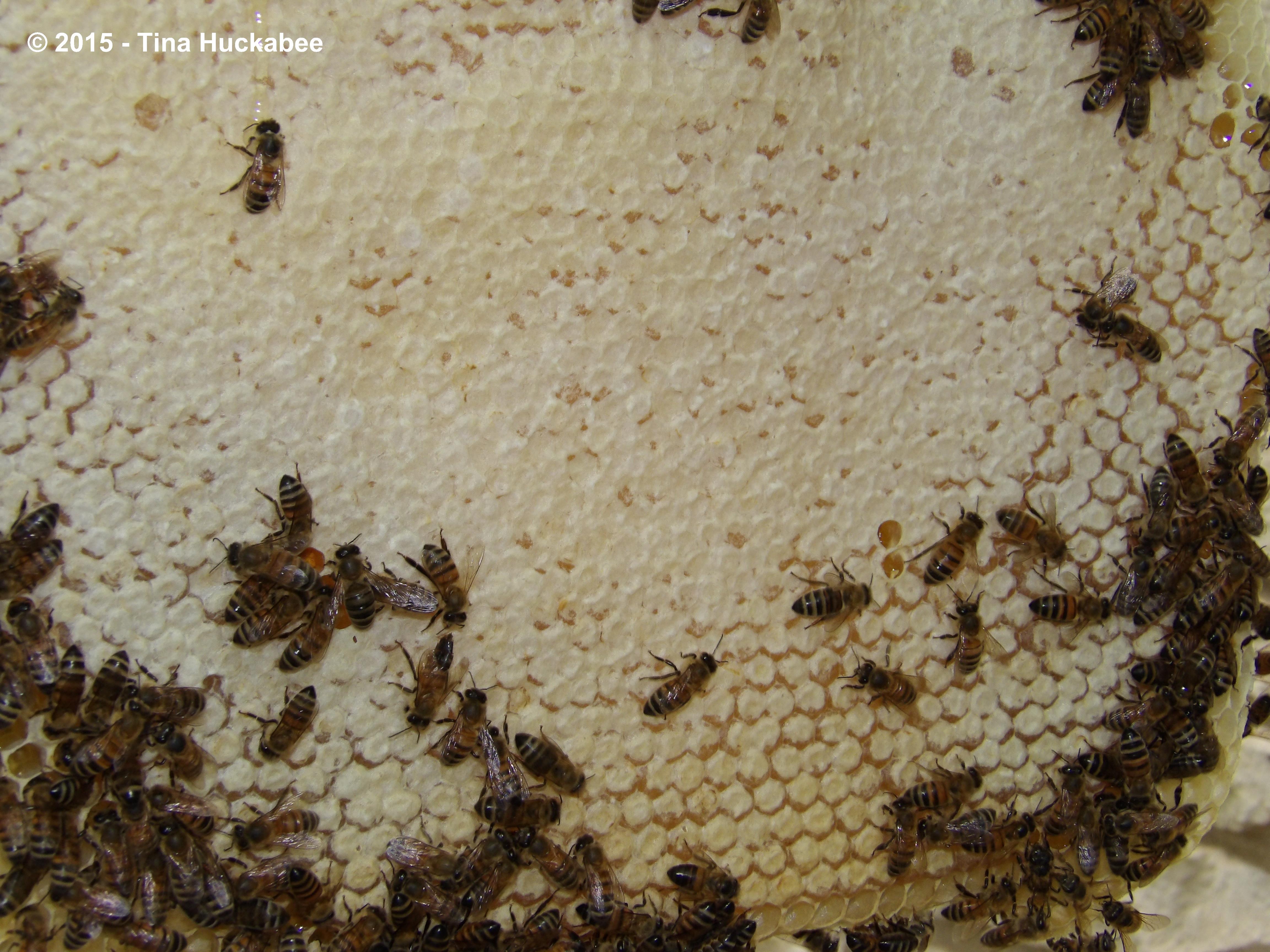
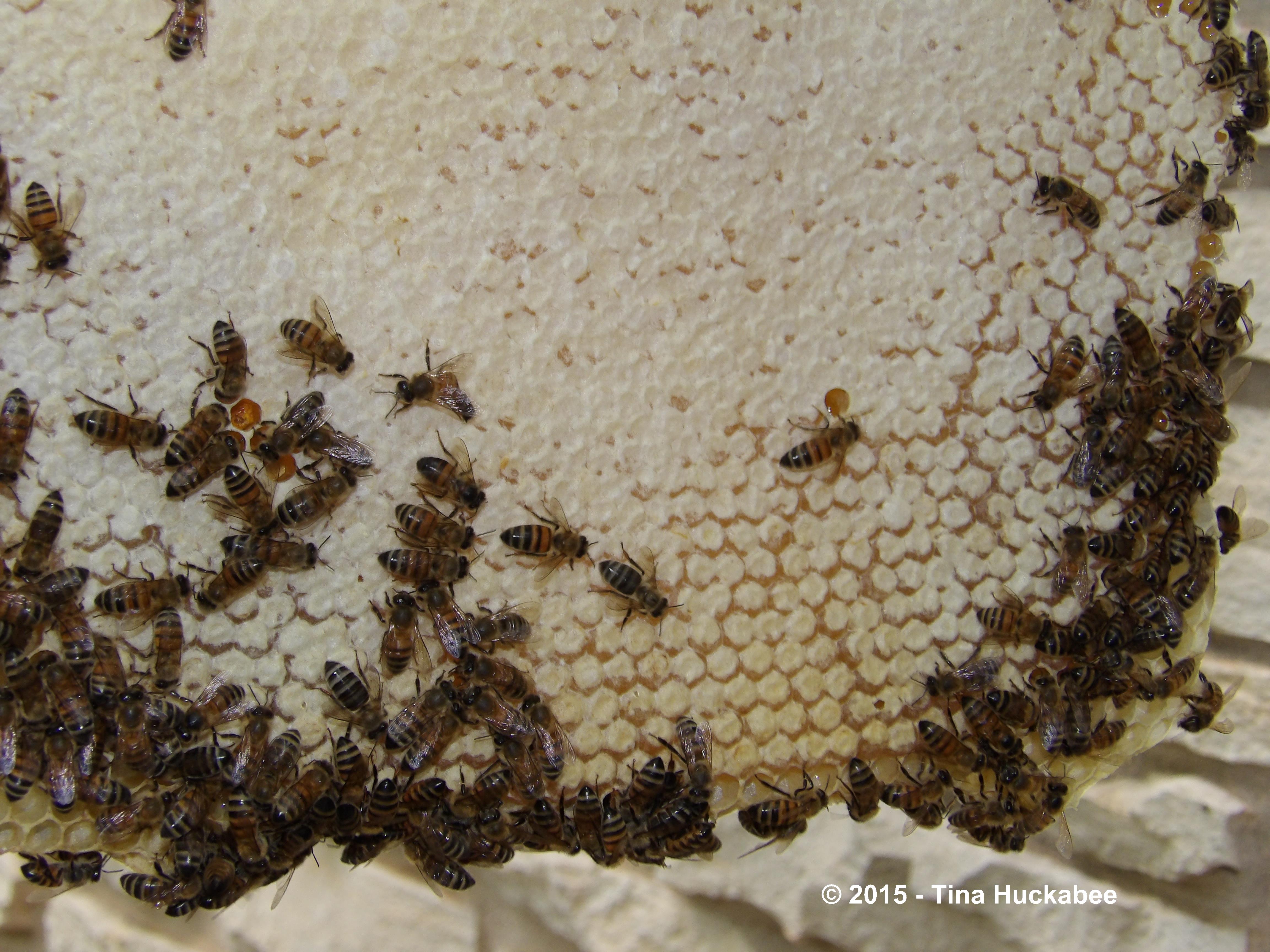
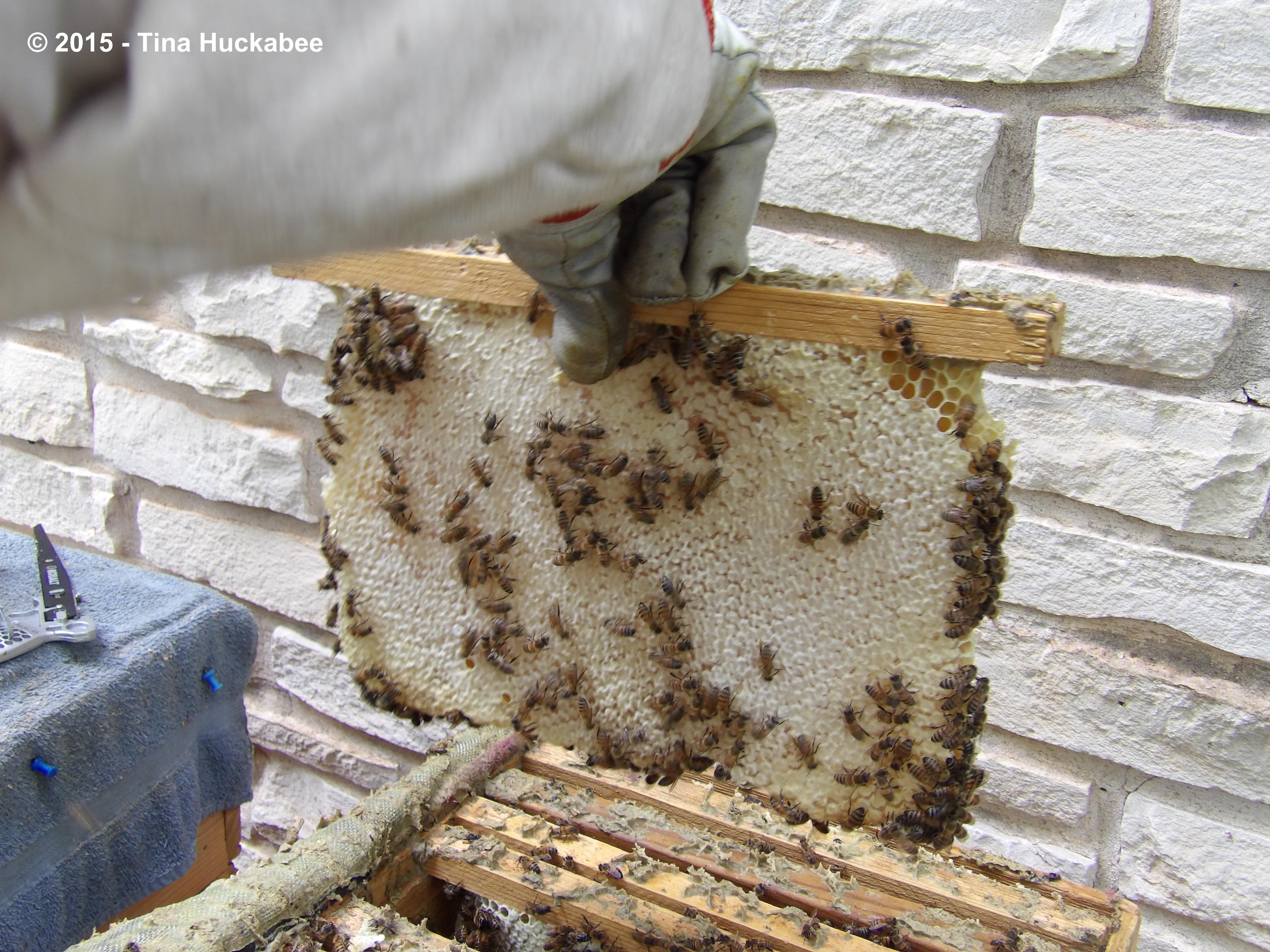
Gorgeous, honey-filled comb! I’m hungry.
When we extract, we always leave some full comb and rearrange the bars so that there’s one full bar with comb adjacent to another bar without full comb, in a checkerboard fashion. This gives the girls room to maneuver and work on combs throughout the box. The checkerboard also allows us easier access when checking the hive.
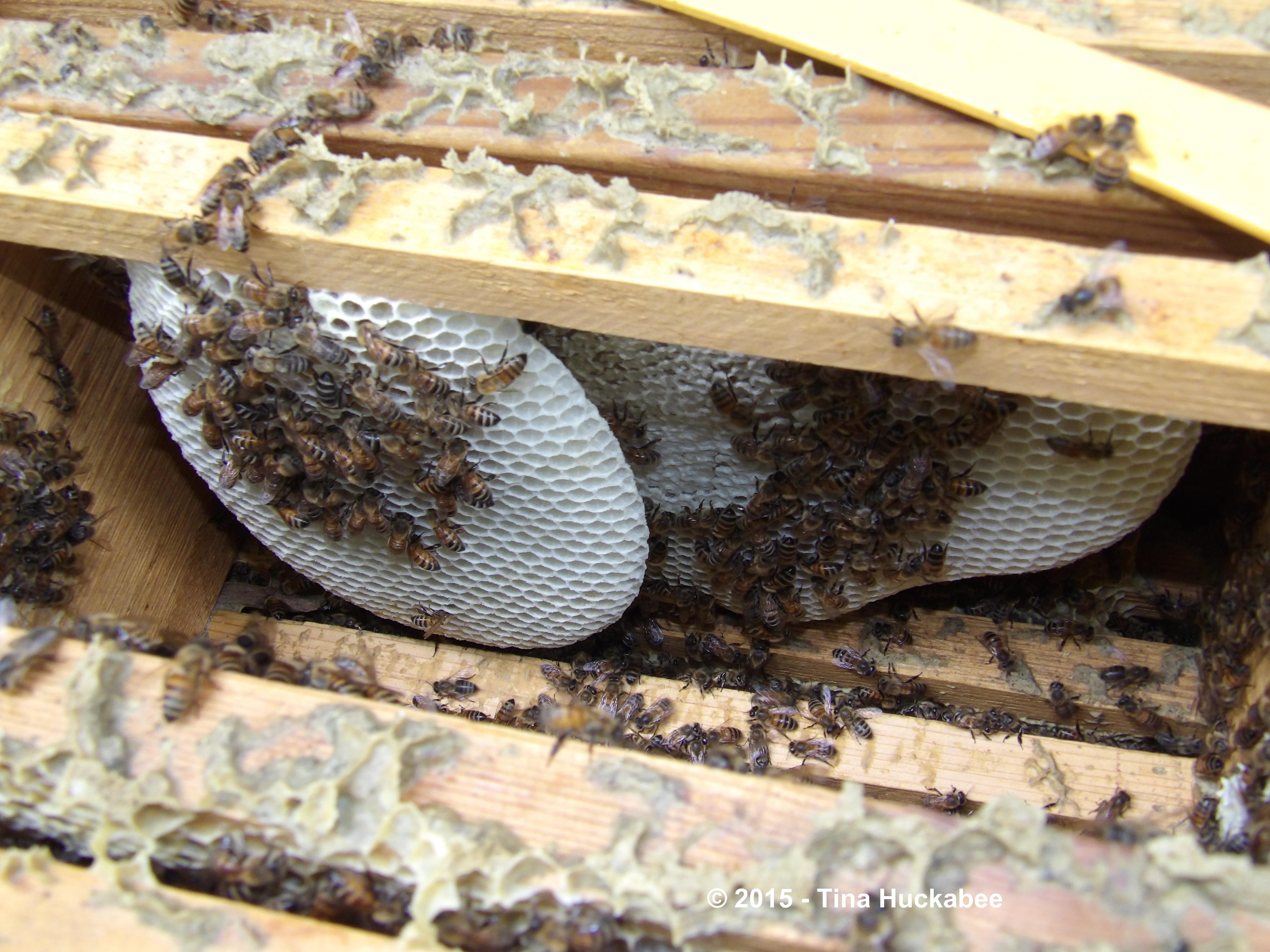
Because our Warre hives use top bars and no frames, our bees make interesting comb at times.
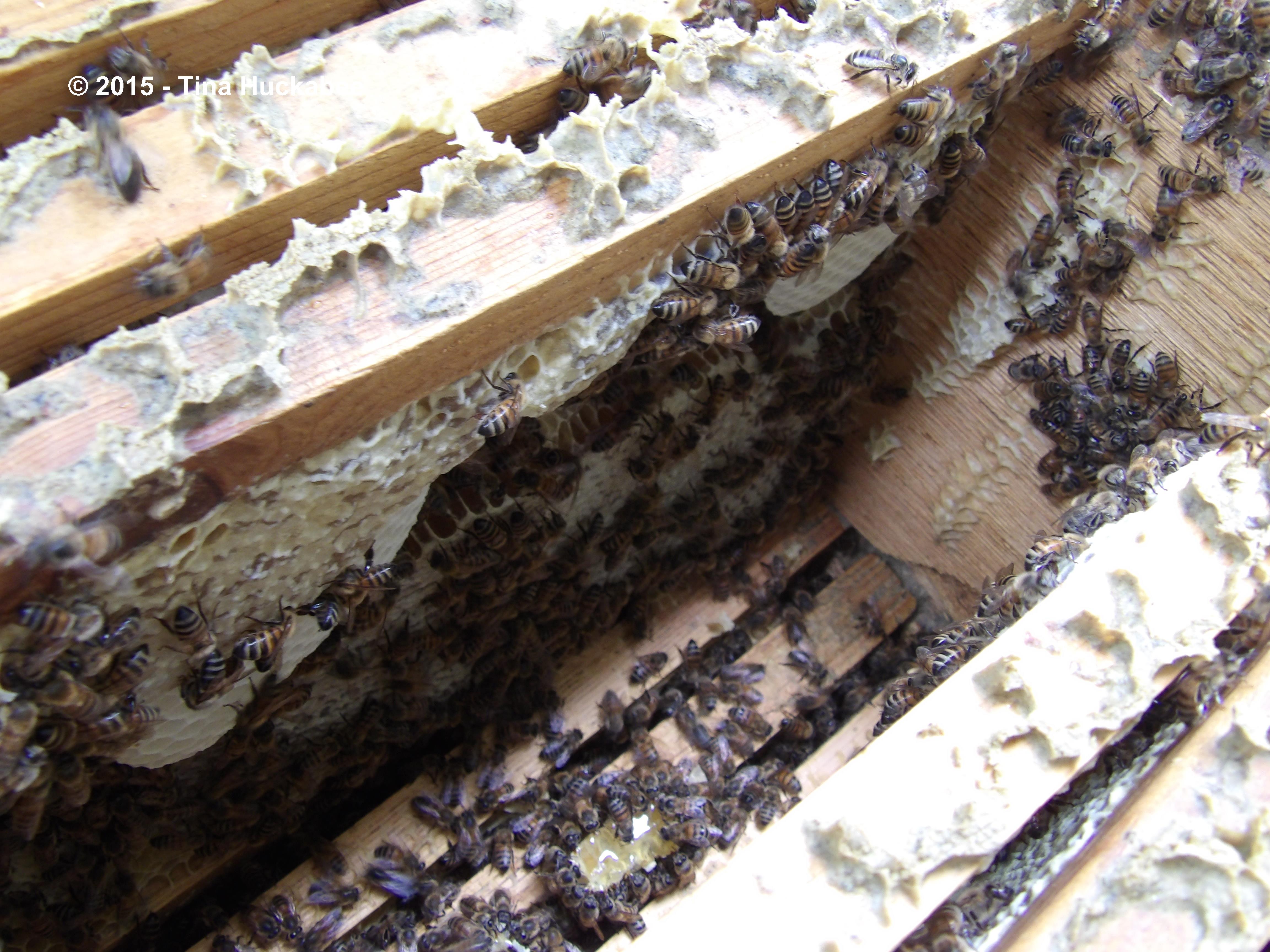
This comb looks like the girls just came out of geometry class after learning how to make circles, and wanted to practice and show off their new skills.
Extracting comb is messy. When I do it, anyhow. This time, some honey spilled. These gals went down in a goo of glory.
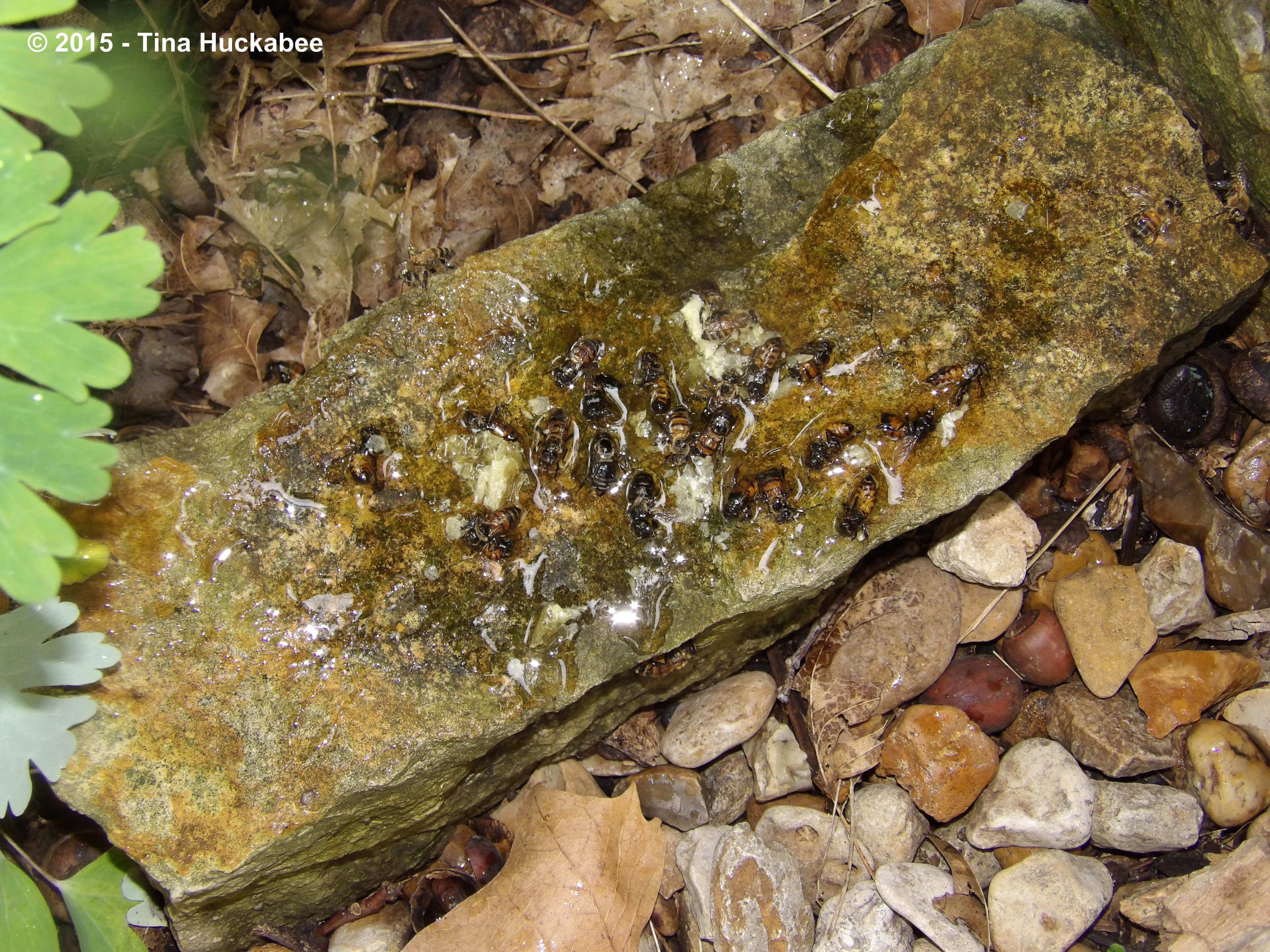
A few bees went for it and, well, a sad end, but what a way to go!
As I gain experience with this beekeeping nonsense, I wised up and rather than cutting the comb and stuffing it into resealable bags, covering myself and everything else in honey, I’m now using reusable plastic containers.
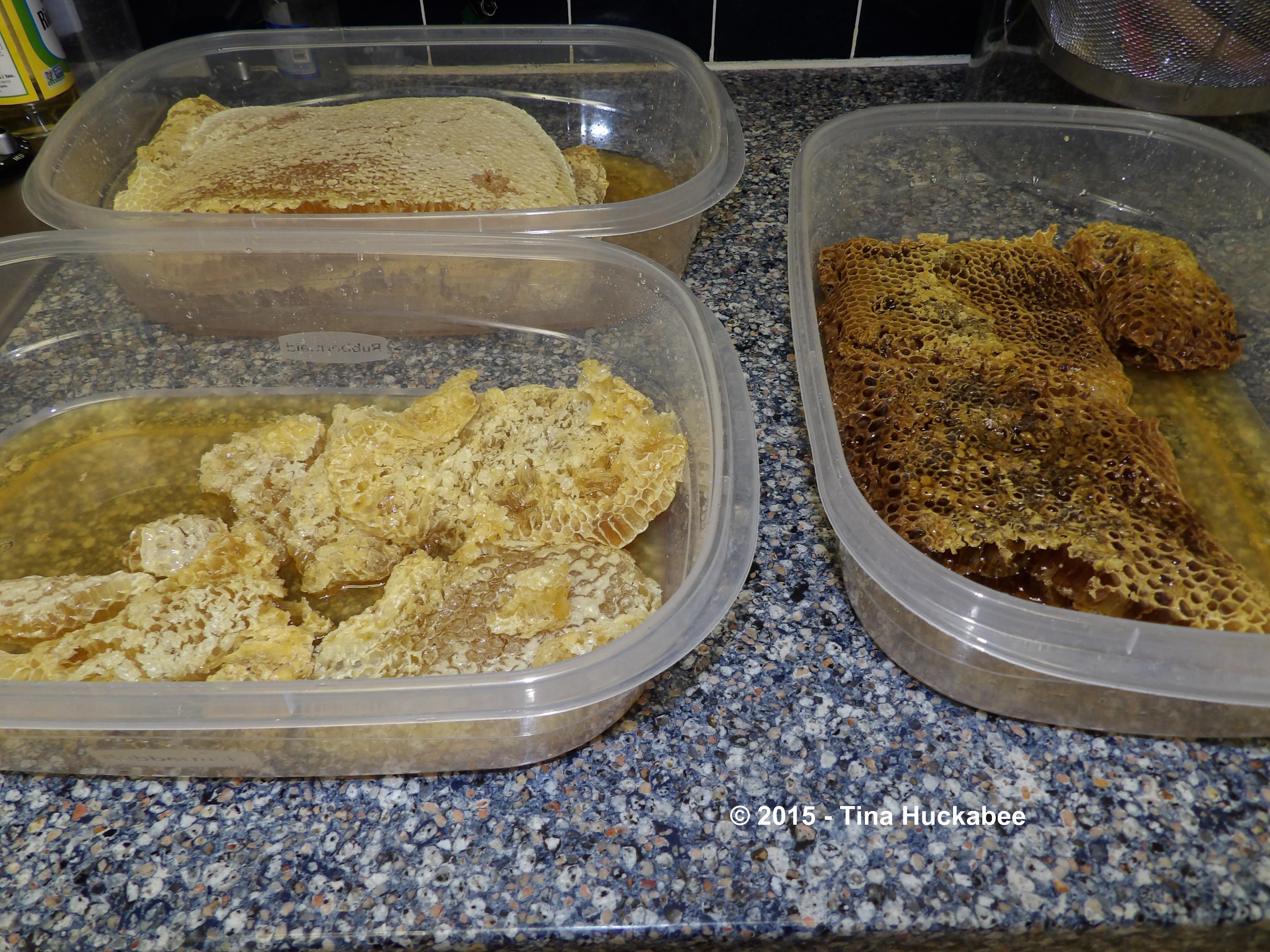
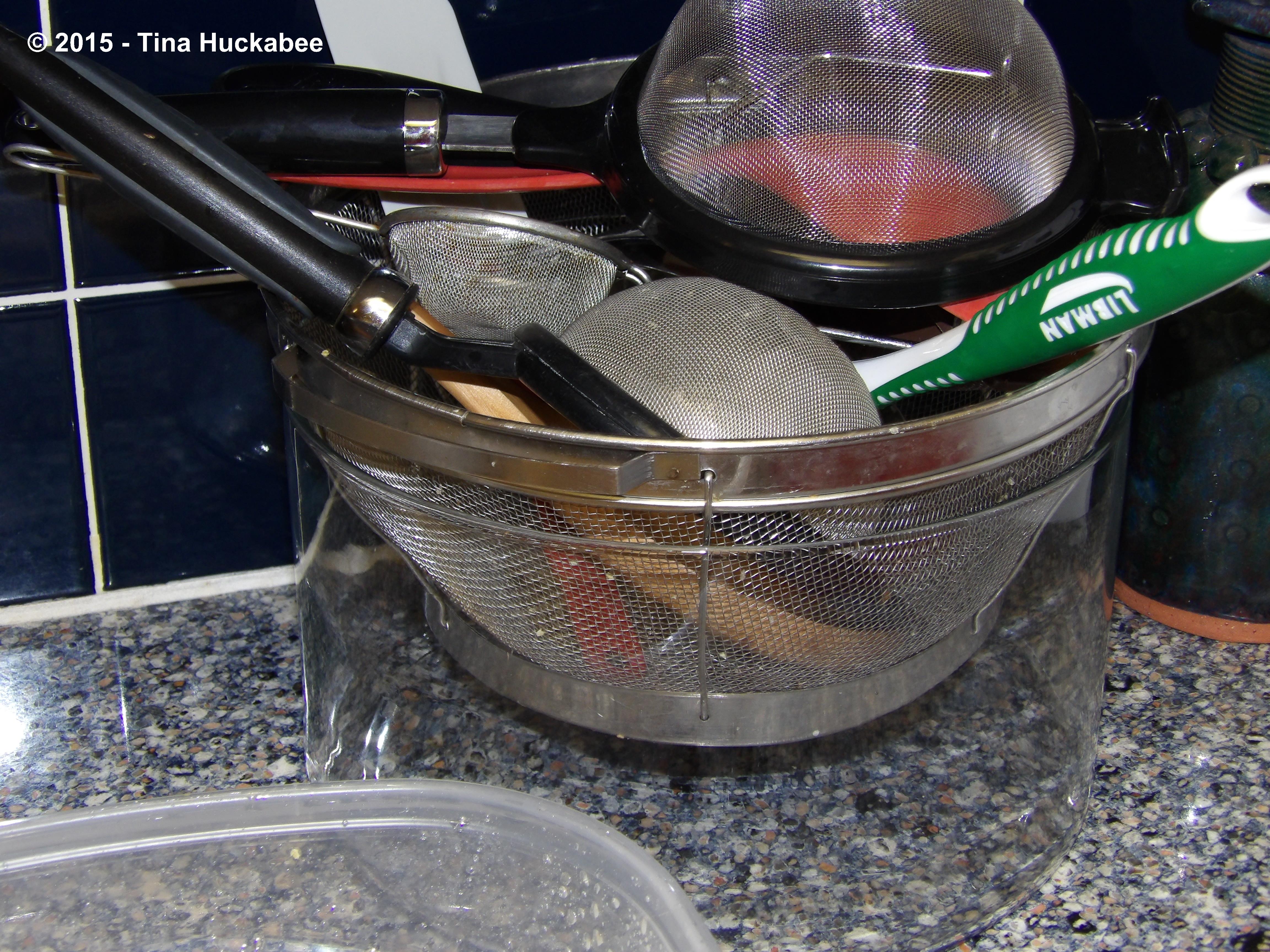
Duh. I don’t know why I didn’t think of that before, but my life is now easier on extraction days. Equipment readied,
…and here’s the final product. Ta da!! We extracted just under one gallon of honey.
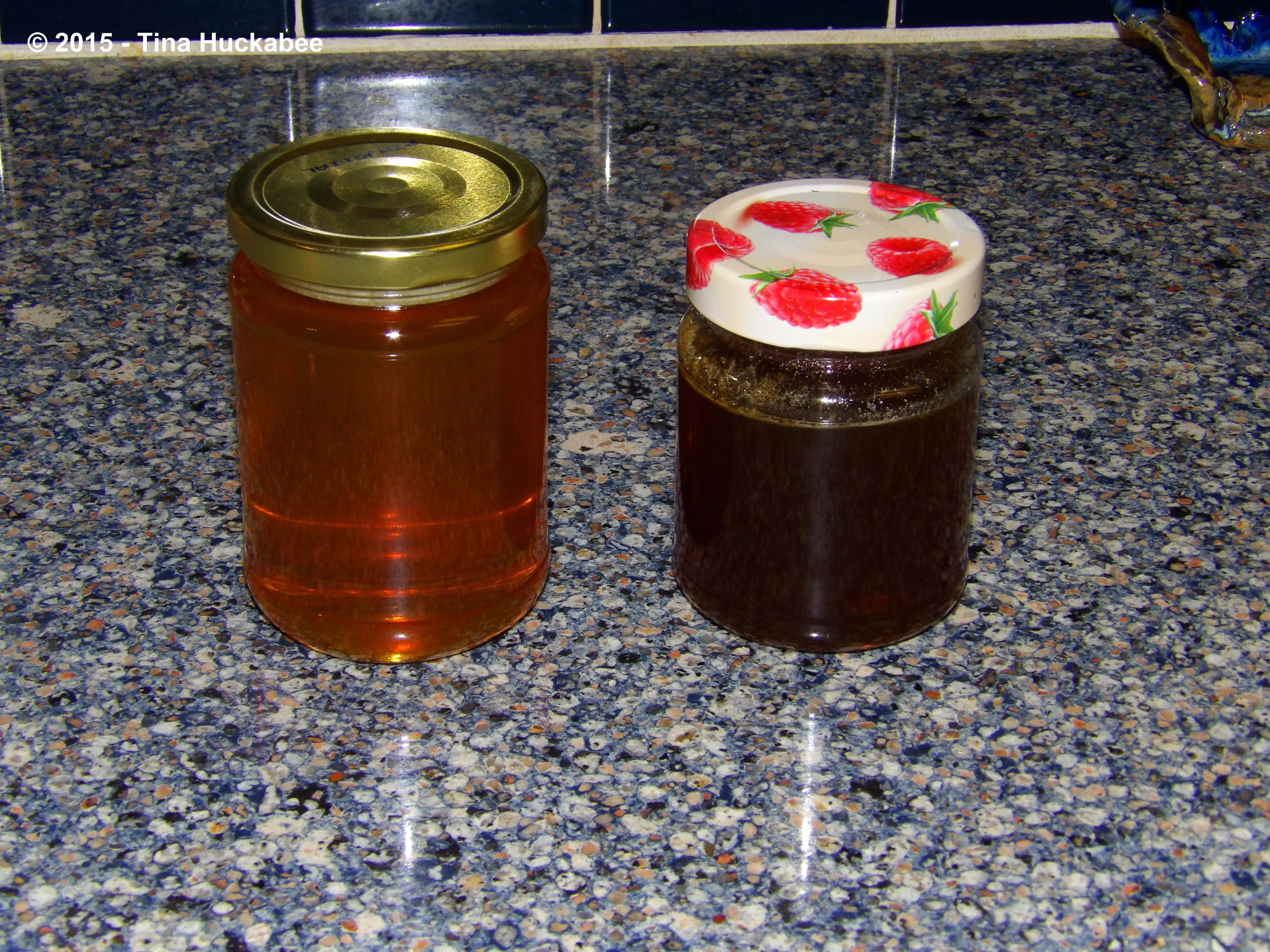
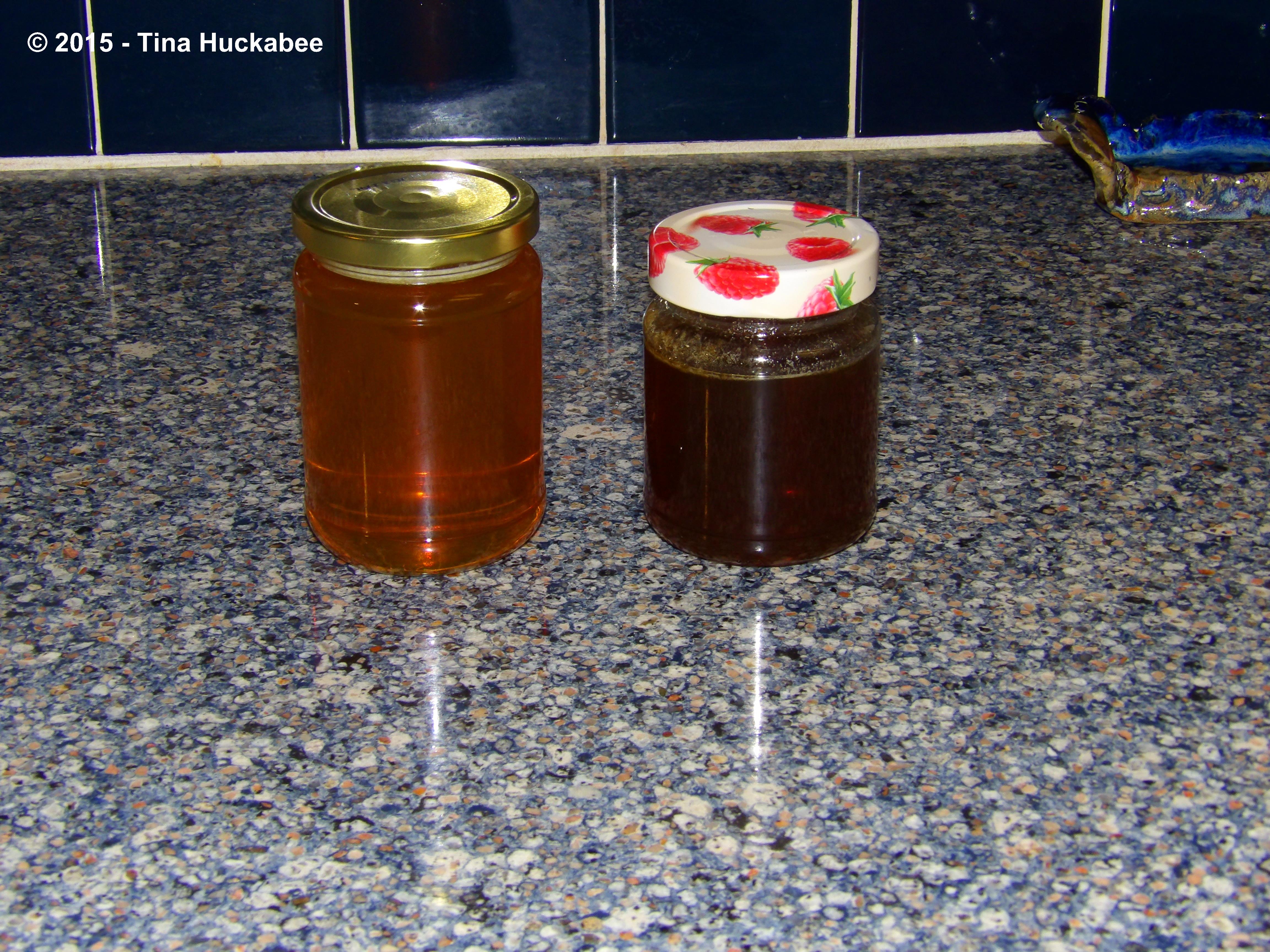
Can you guess which is the spring honey? If you shouted The left one!! The left one!! (and your family members are now looking at you with concern), you’d be right. Other than bees take honey from different flowers at different times of the year, I haven’t quite nailed down the reason why our spring honey is lighter and more liquid than the fall honey. The jar on the right is the last of the fall honey, which we’ve almost finished, and it’s remarkable how different the two kinds are. Of course, I know what the bees are foraging from my gardens, but they travel upwards to three miles, so I have no idea of the entirety of what makes up the honey product Funny story: at one of the first beekeeping meetings we attended, another beekeeper mentioned that a local university will test for nectar sources of honey samples. A friend sent honey to this university and the top nectar source was a non-native plant (I don’t recall what) and the second source was cannabis. A woman raised her hand and asked where she could buy that honey.
Honey does taste different–depending upon nectar sources and time of year. Both the fall and spring honey from my darling bees is exquisite–it tastes nothing like what’s sold at stores. The fall is richer and thicker and the spring is lighter, more fluid. I’m guessing that there’s some evolutionary reason behind the thicker fall honey. After all, the bees create it to sustain themselves during the long winter and it makes sense that fall blooming flowers might have a richer nectar component than at other times of the year. But truthfully, I have no idea. I’m just going to enjoy both spring and fall honey, weight gain notwithstanding.
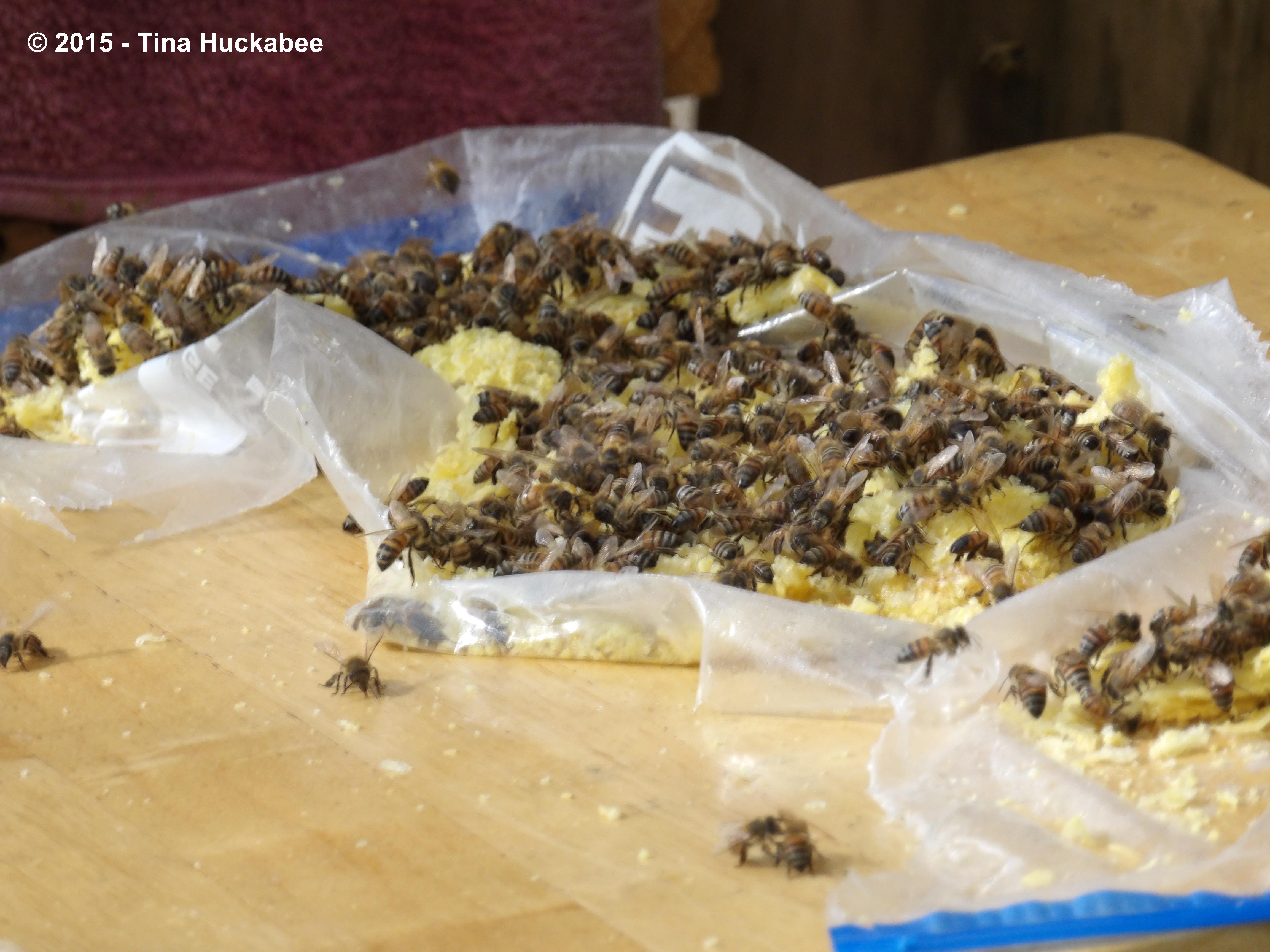
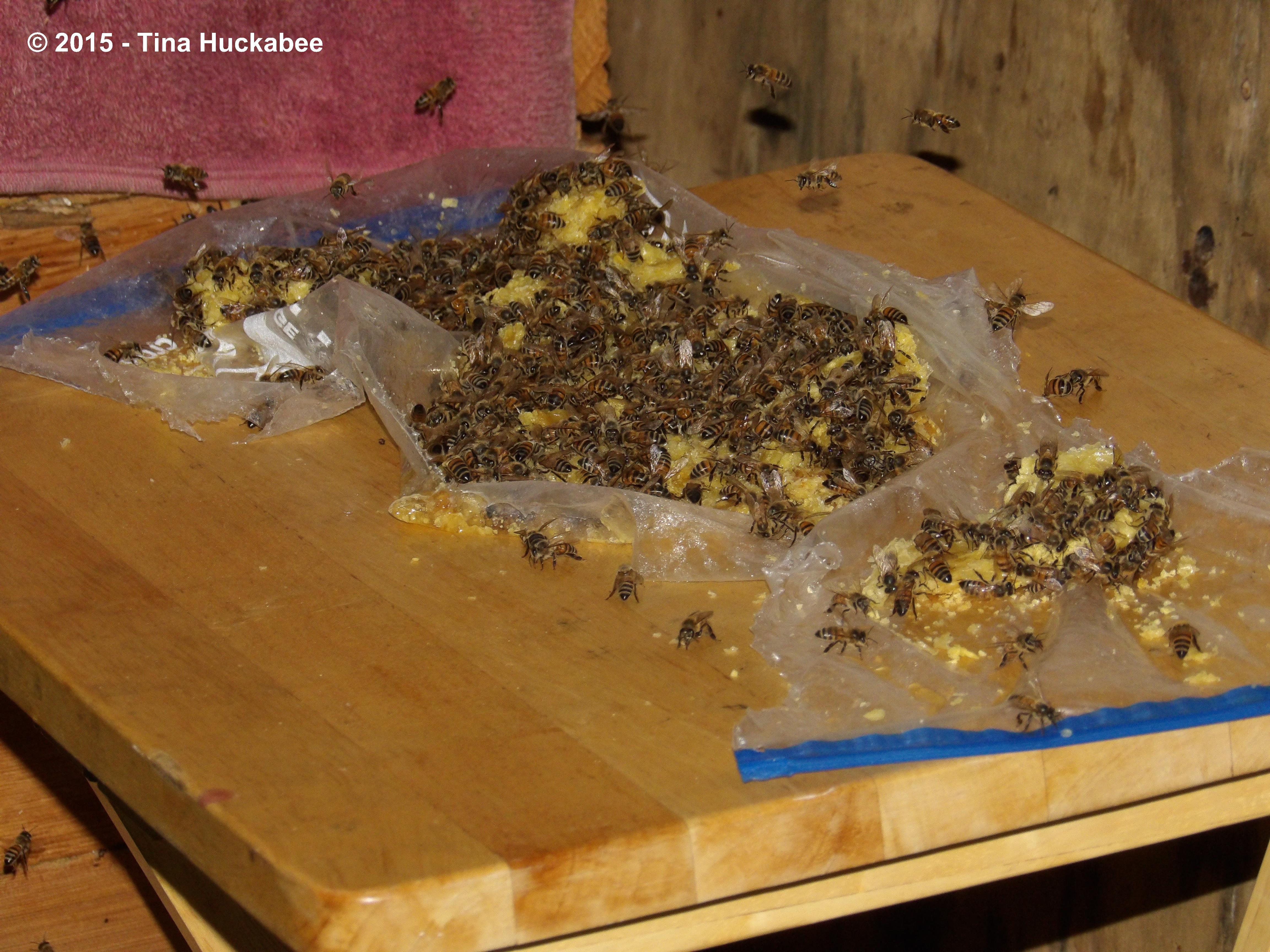
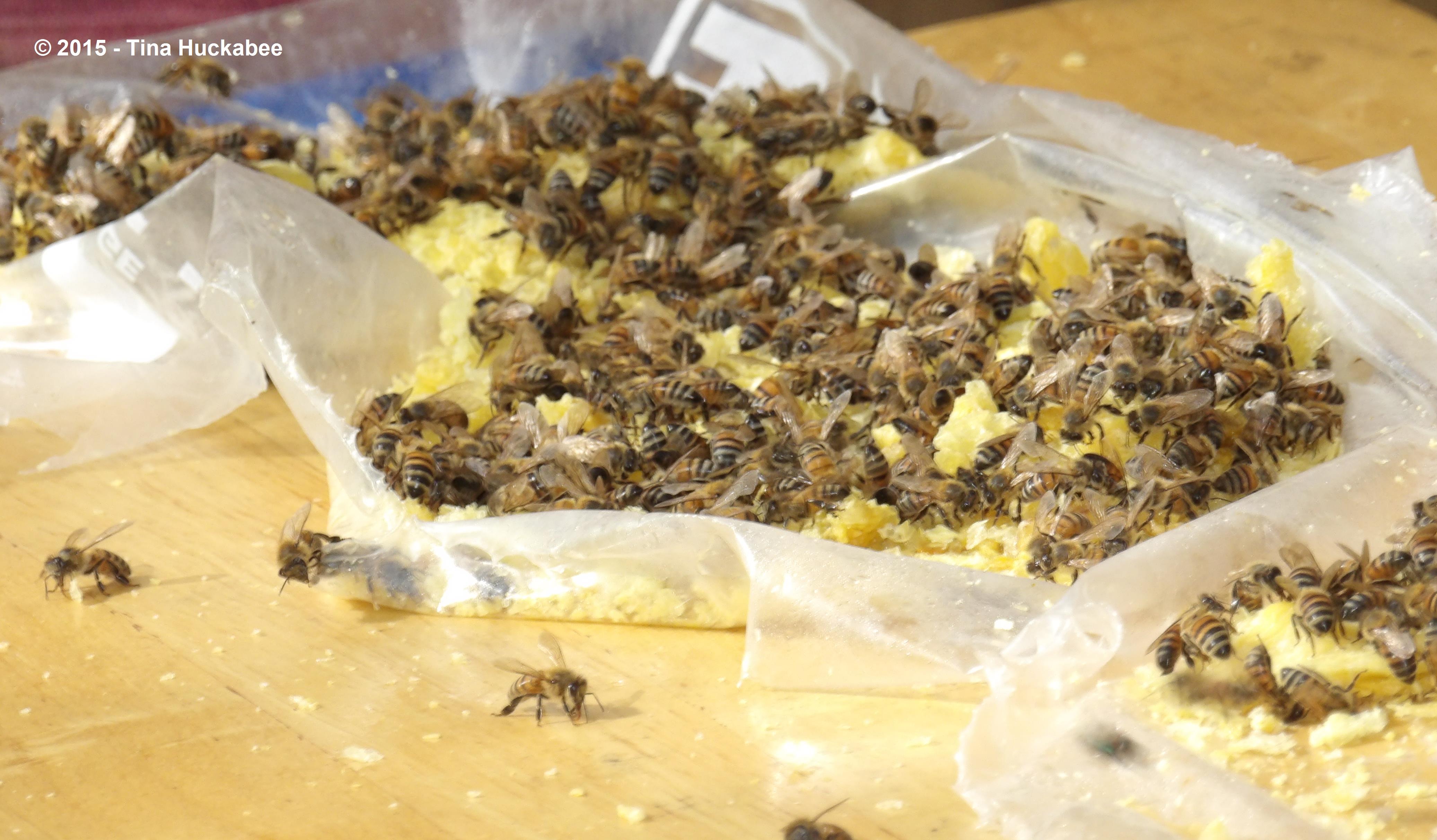
After I crush the comb and extract the honey, I always leave it out for the bees to clean up. They’re quite efficient and gobble every last drop of honey I missed.
To quote from a favorite movie of mine, said by the character played by James Stewart in The Philadelphia Story: The queen will have bread and honey at the usual time.