Peeps, chirps, squeaks and squawks.
The late summer garden is active with the residents and visitors who define our gardens as living, diverse communities. It’s the first Wednesday of the month–happy September!–and time to appreciate the wildlife which benefit from and contribute to the beauty and value of garden space. Autumn is just around the corner and for those in the Northern Hemisphere, that means cooler, shorter days and longer, colder nights. Here in Central Texas, summer is still in full swing. It’s not been quite as hot as during full-on summer and it was also a wet August and we don’t get to say that very often. We’ll still have warm days for quite a while, but our nights will begin cooling off soon. I hope.
During the rainy days, birds and pollinators were scarce, no doubt dodging raindrops and lying low. But once the rain ended and the sun reappeared, the Northern Cardinal, Cardinalis cardinalis, family, including dad,
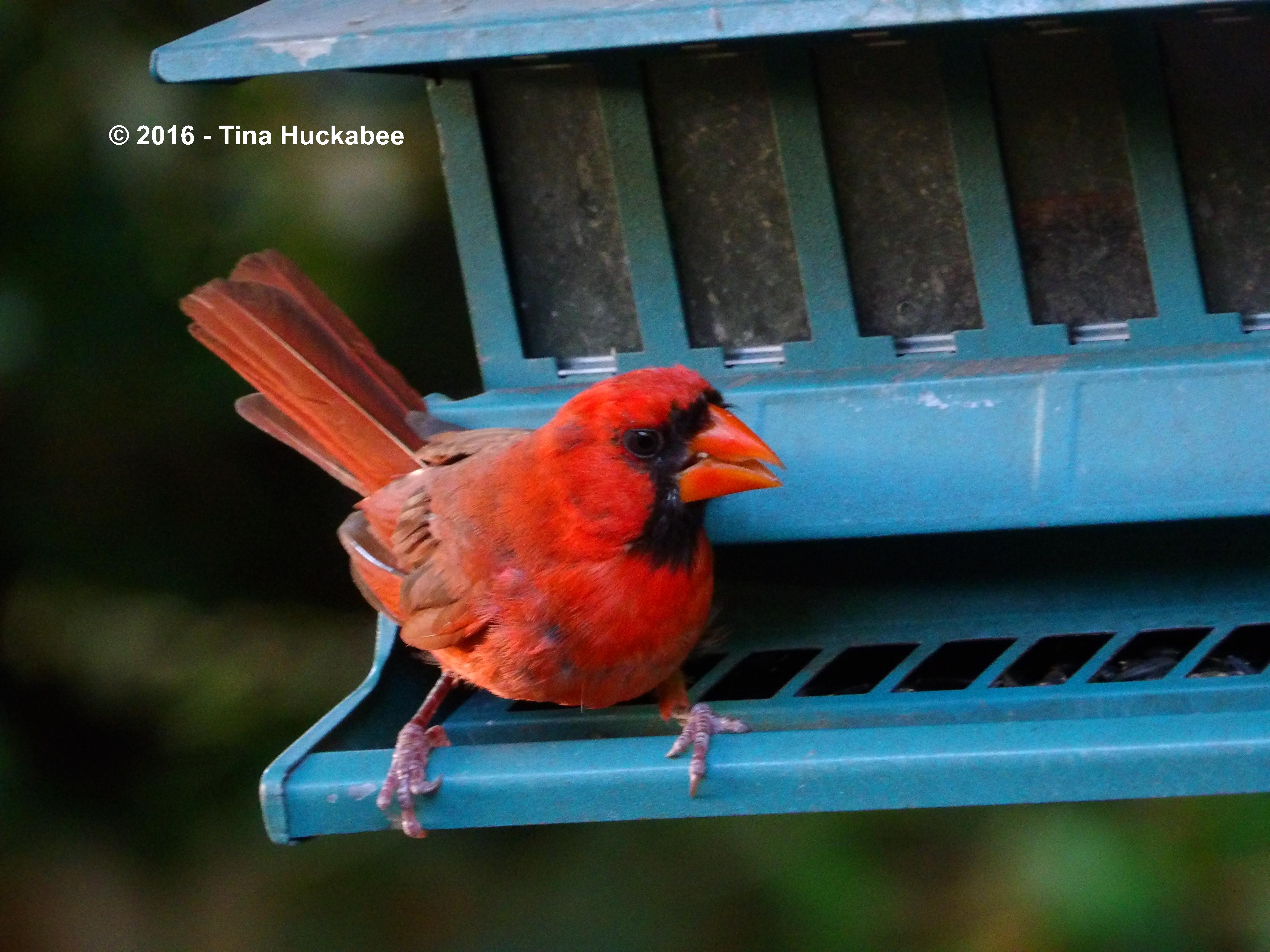
…daughter,
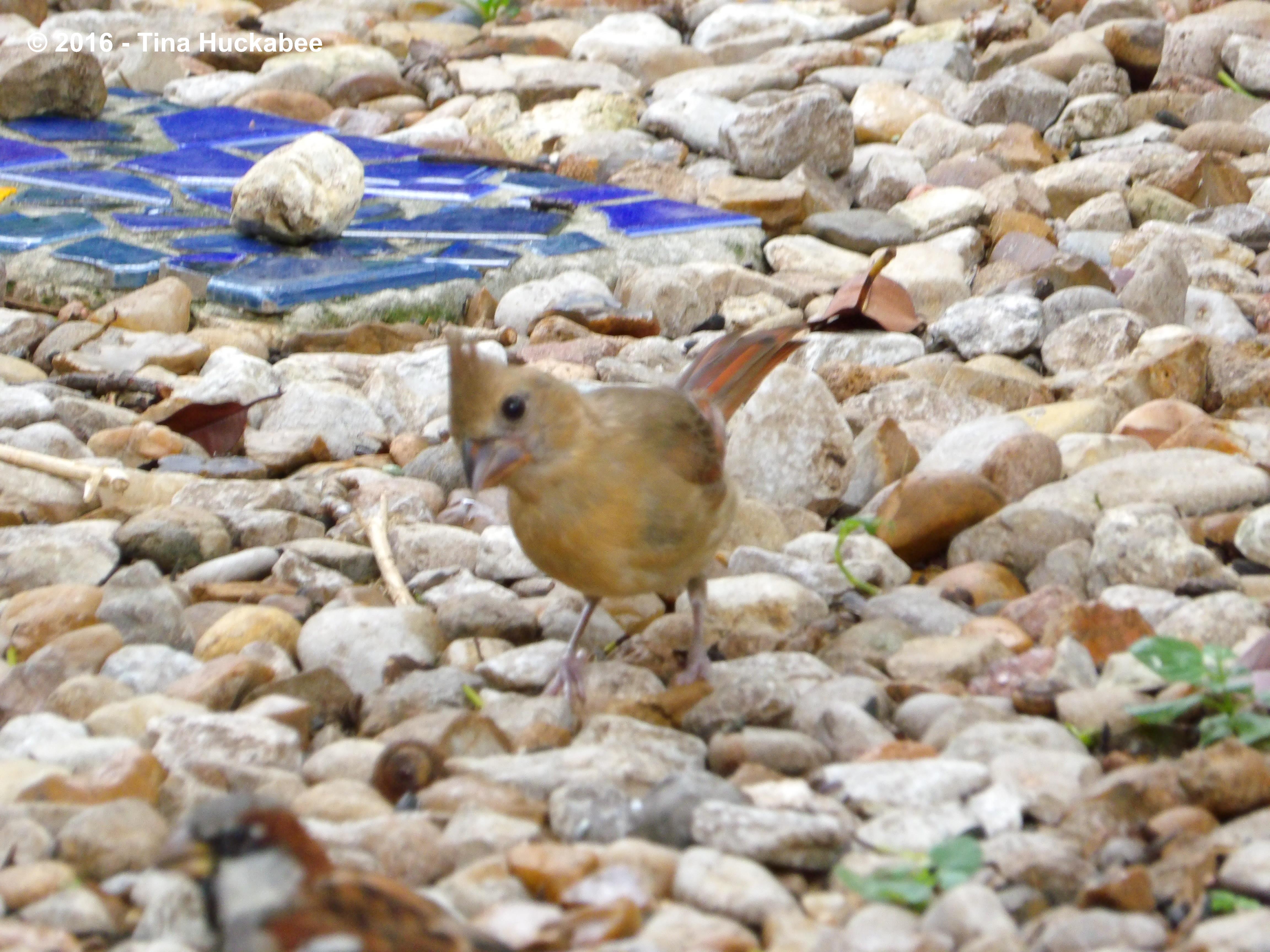
…son,
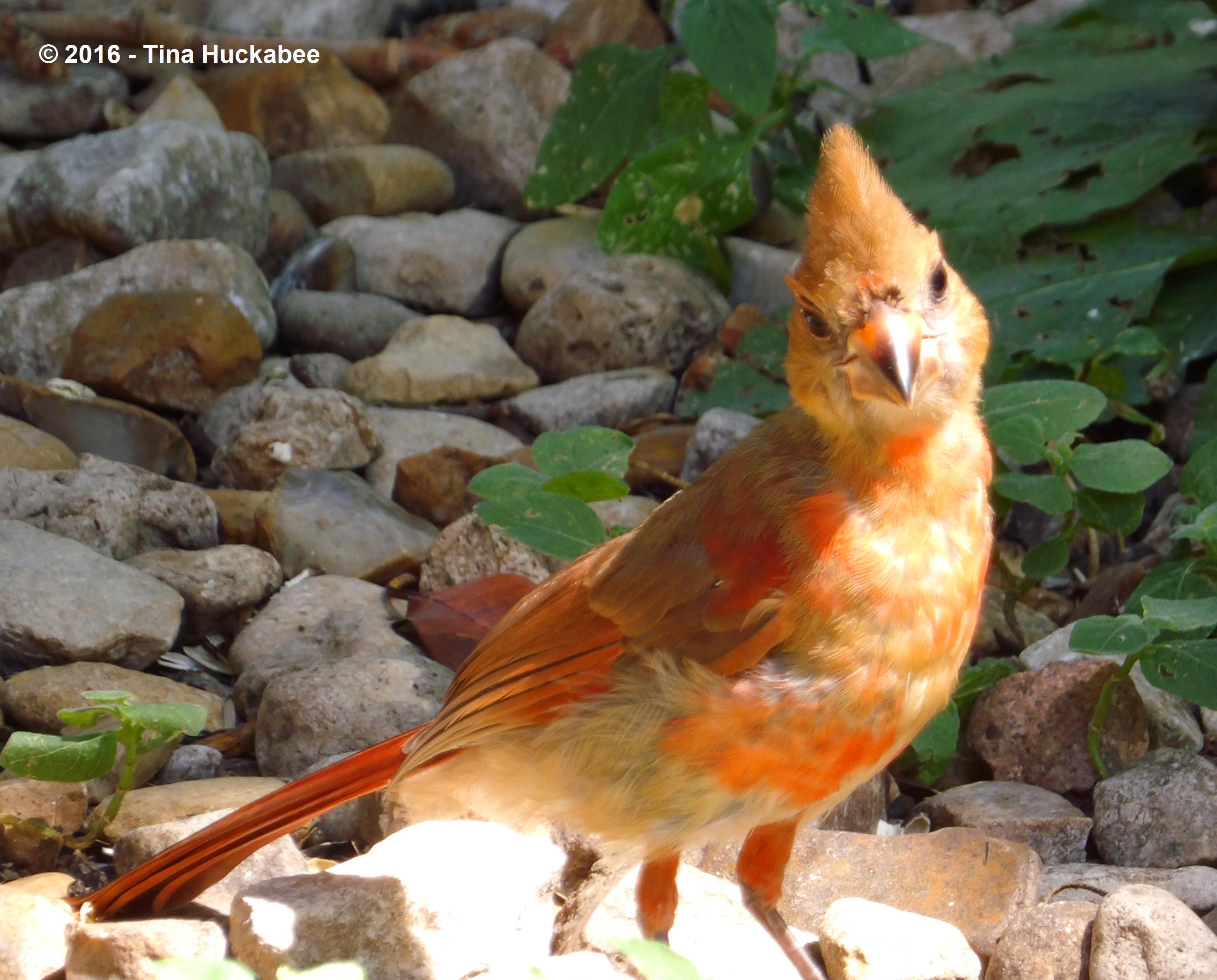
…all enjoyed noshing at the human-provided seed bar. Interesting, I’ve seen an adult female Cardinal feeding at the seeds of the spent sunflower blooms, but rarely this summer, has she been at the feeder. No doubt she’s enjoying some “me” time away from the Man and the Kids.
It’s been a fun summer watching the fledglings,

…as they learn the seed-ropes and become regular visitors to the garden. Soon they’ll look just like other grown-up Cardinals, but observing their transformation to adulthood was interesting.
I’ve spotted Lesser Goldfinches, Spinus psaltria, working the branches of a White mistflower, Ageratina havanensis.

Two adult males, working side-by-side in the shrub.

An adult female a few branches over.
I assume that they were snacking on insects, as the mistflower doesn’t bloom its beautiful white flowers until late September and won’t be ready for seed pickings until sometime in October or November. Goldfinches also visit the sunflower stalks.
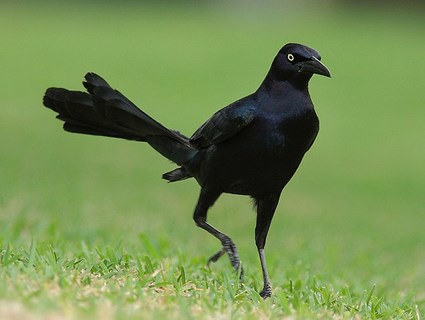
This juvenile male Great-tailed Grackle, Quiscalus mexicanus, is getting his colors too, in his sedate black and brown, though he looks a splotchy at the moment.
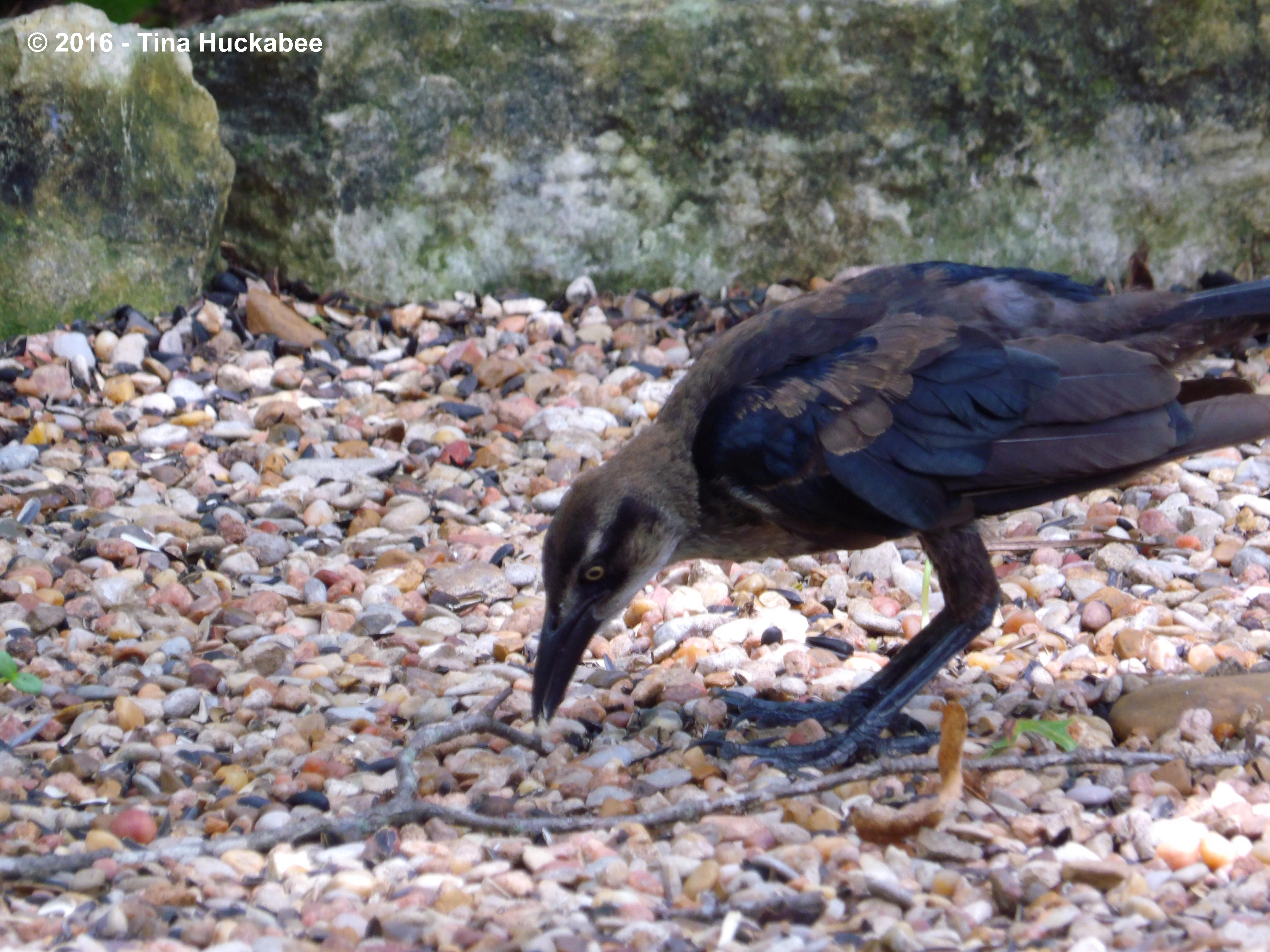
I guess birds go through their “awkward stage” just like people.
A male House Finch, Haemorhous mexicanus, was shy of the camera,

And then, not so shy.

I like House Finches; they’re common bird companions in my garden. Chatty and gregarious, they’re regular visitors to the feeders, but also enjoy many of my native plants once seeds develop.
I’ve observed plenty of hummingbird action, but only have this one, lame and blurry shot of a (probably) female or hatch-year male Black-chinned, Archilochus alexandri.
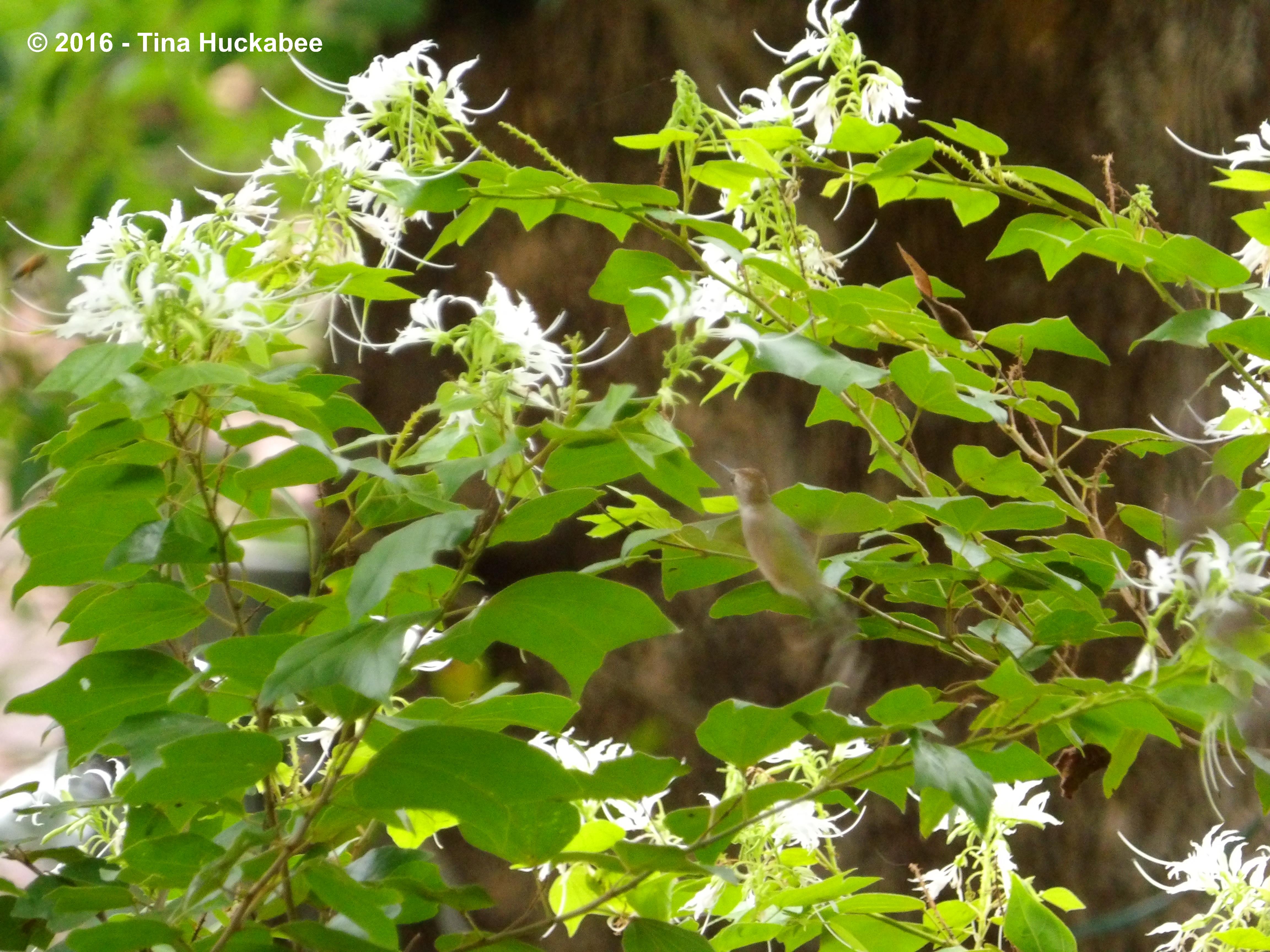
Hummer enjoying nectar from flowers of Mexican orchid tree (Bauhinia mexicana).
Hummingbirds are migrating south now–I hope to see more zooming through the garden. Common gardening wisdom always suggests that they like red flowers–and they do–but I also see them at all other colored blooms too.
No peeping or squawking, but with wings a’buzzing is this bumblebee. I’ve seen her, or maybe several “hers” in the past month, but failed in getting a decent capture. This busy bee is working a Tropical sage, Salvia coccinea, a favorite with several bee species.
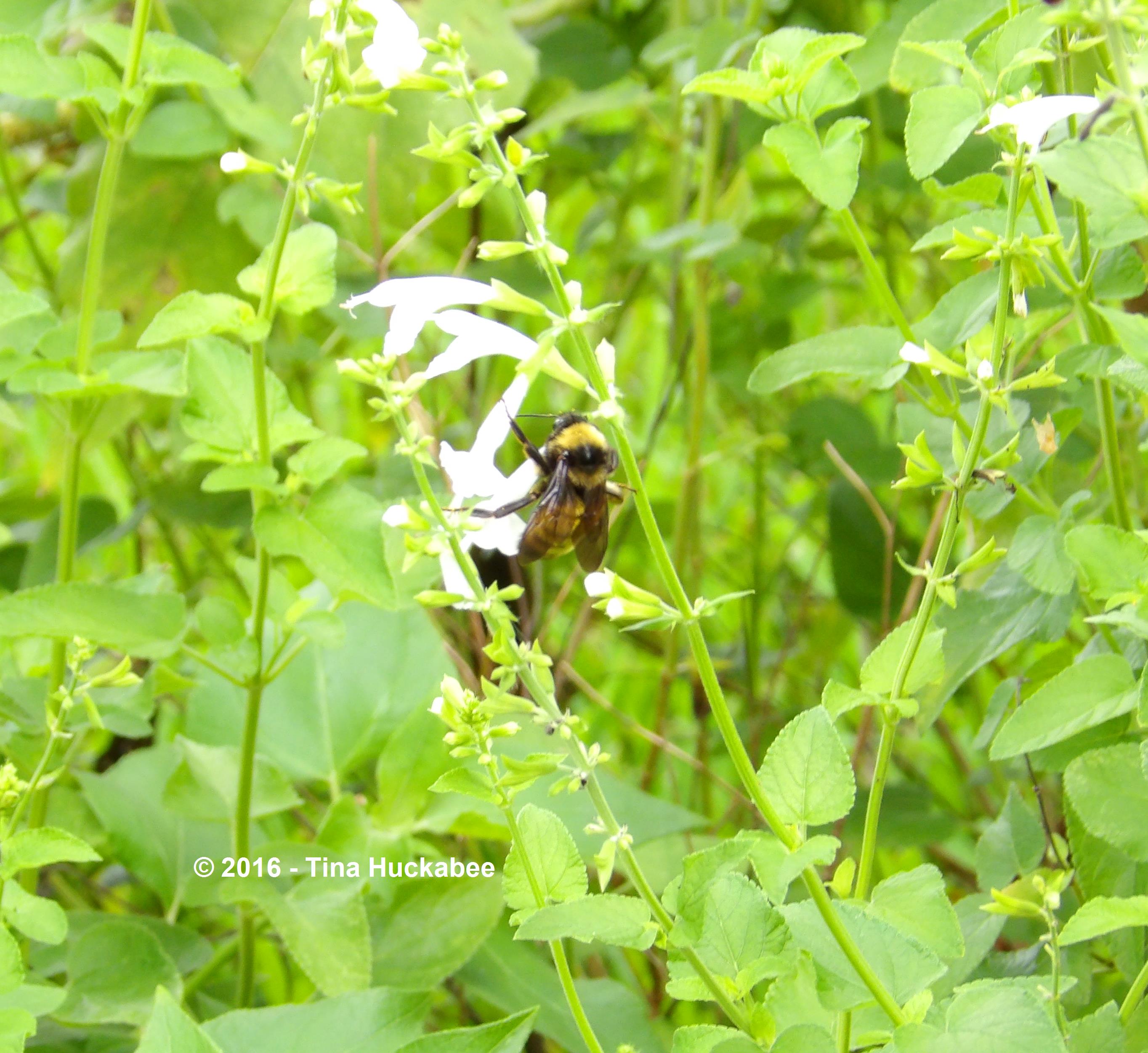
A week or so ago, I spent time observing this downed American bumblebee, Bombus pensylvanicus.
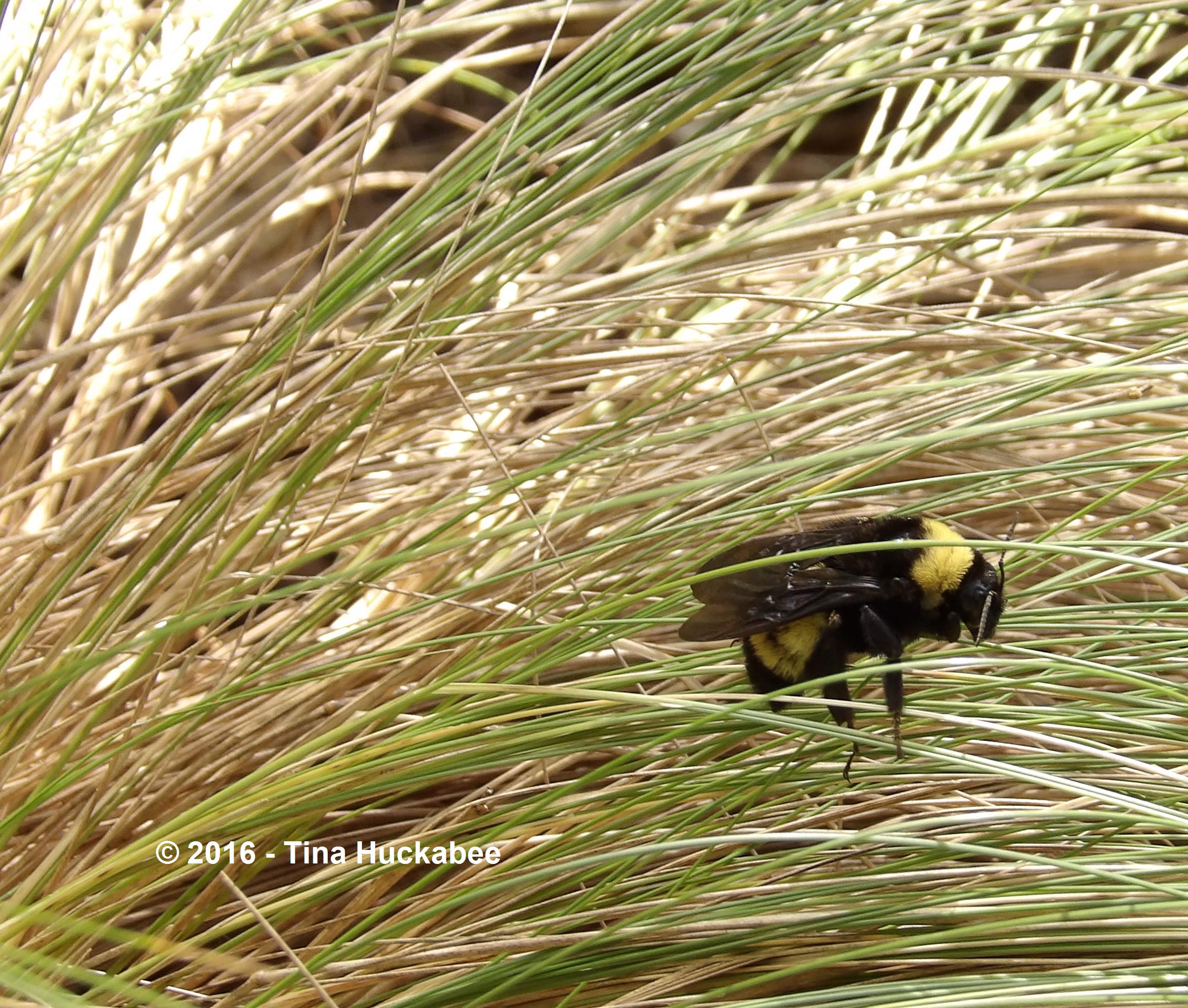
I watched him or her for several hours, on and off. It could be a cast off male or a dying female. My honeybees will crawl around the ground when they’ve reached the end of their days, and I guess that might be what’s going on with this one. I appreciated the intimate view, even letting the lovely critter crawl along my hand.
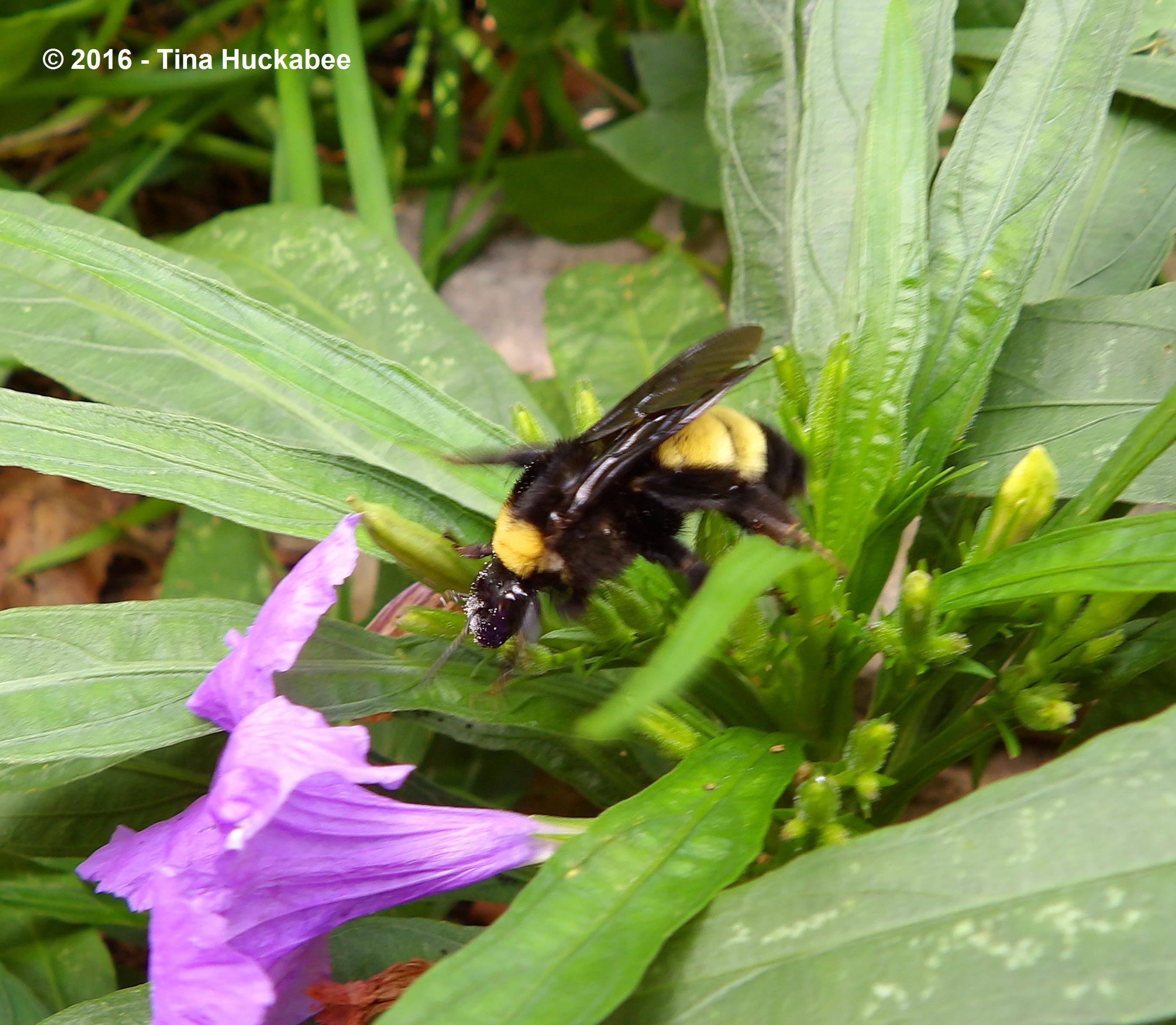
Mr./Ms. Bombus is a big, big bee, indeed!


It seemed interested in pollen and later in the day, I saw another working some blooms. Is there a nest nearby? I really hope so. Bumble bees are ground nesters and prefer bare soil in which to raise their young. While I’ve counted 12 species of native bees in my gardens this year (the bumble makes 13), I hadn’t seen a bumble bee in my garden for many years. I count myself a lucky gardener to have bumbles in the garden again and I certainly hope they continue visiting.
I was sorry to see two different dead Horsefly-like carpenter bees, Xylocopa tabaniformis on the ledge of one of my native bee houses.
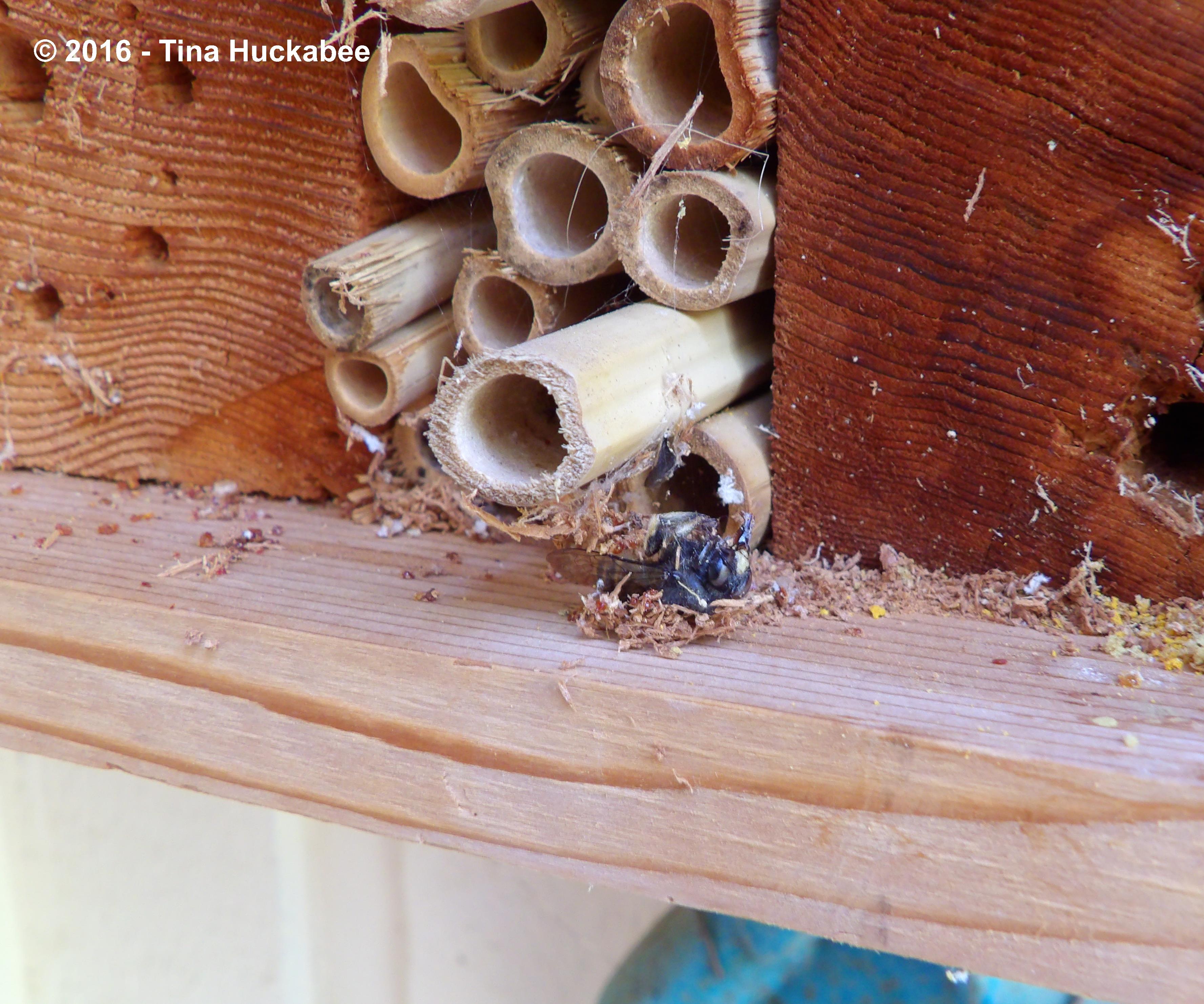
There are still plenty of carpenter bees in the garden and I suspect it was simply the end for these two. This species of bee seems to have a long season of life: mating, drilling holes in wood for their offspring, laying eggs, nectaring and pollen-gathering, they live busy lives well lived.
While these carpenter bees probably died a natural death, that’s not true for the millions of honeybees and untold multiple millions of wild bees, butterflies, moths, dragonflies and other pollinators and insects that were recently killed by aerial spraying in South Carolina. In a poorly executed attempt at controlling mosquitoes which might carry the Zika virus, county officials in Dorchester County have laid waste to an entire 15 square mile area. The collateral damage to the natural balance of insects, prey, and predator to that local environment is unknown and probably devastating, certainly in the short-term. It could take a long time for the area to recover. In our fear of the Zika virus–which is frightening–many have resorted to dangerous and inappropriately implemented chemical controls based on ignorance, short-sightedness, and a desire for a quick fix to a complicated problem.
I don’t live in a particularly gardening-centric neighborhood. There are far too many homes whose “landscaping” only includes sterile turf and a few foundation plants. I am grateful, however, that in my entire neighborhood, only two homeowners have chosen to hire mosquito “control” companies to spray their yards, whereas I see (and smell) other neighborhoods where there is more of this activity. Since the Zika scare, these companies have proliferated here in Austin (where there have been no reports of Zika), as well as in other parts the South. There is little regulation of these businesses here in Texas, though I can’t speak to regulations in other states. Mosquito control companies are required to pay for licenses and I assume that their employees must undergo some sort of training, but no one is supervising choice of chemicals, whether spraying occurs on windy days, or whether spraying occurs in creeks–which is illegal, but I know through neighborhood discussion forums (like Nextdoor) that it happens. While the spraying of an individual property certainly doesn’t have the catastrophic effects that aerial spaying does on the macro scale, it is naive and foolish to assume that it doesn’t have a negative impact on the micro/local environment. Pesticides sprayed for adult mosquitoes don’t discriminate–they’ll kill all insects and also critically impact other species which feed on insects. A scorched earth policy of pesticide management only leads to new and difficult problems and is detrimental to a healthy, diverse ecosystem.
Like so many environmental issues, urban mosquito problems are really a people problem. Most biting mosquitoes in urban areas breed in containers of water and the dirtier, the better. In my own situation, I have one particular neighbor who refuses to regularly change out her birdbaths or properly maintain any other items which might hold water. And yes, I’ve discussed this issue with her for YEARS–to no avail. Her response to me has been oh, the mosquitoes don’t bother me. With time and patience, I’ve solved that particular problem, but there are plenty of folks around who won’t maintain pools properly, or who drape tarps over “stuff” which then holds water after rain, or who don’t clean out their roof gutters, or who leave water in plant containers, buckets and the like and all of those scenarios (and more) are rife for mosquito development. Preventing mosquitoes from developing into the flying, biting adult stage by eliminating standing water is the real solution for this problem and one that should be at the forefront of any measures against Zika, as well as other mosquito borne diseases.
If everyone in a neighborhood would routinely refresh and/or dump the standing water sources on their property at least once/week, mosquito development would certainly slow and probably end in many cases. For water fountains, water tanks, holes in trees, and other places where water isn’t easily dumped, there is an excellent biological control product, Bacillus thuringiensis israelensis, (BT or BTI), which is a larvicide and therefore, toxic only to the larval stage of an insect. Commercially, this control can be found in products like Mosquito Dunks and Mosquito Bits and are commonly found at home improvement stores or plant nurseries. Dunks are solid doughnut-shaped tablets (10/package) which are crumbled into stagnant water. One doughnut covers several hundred square feet of water surface. The pieces distribute the bacterium which paralyzes the digestive system of the mosquito larvae–they die and never develop into adults. I buy a package of Mosquito Dunks at the beginning of “mosquito season” (April or May) and distribute bits of dunks in a variety of places, roughly once-per-month, through November. It costs me about $10.
For more information about where mosquitoes are typically found in Austin (and I’m sure this information could be extrapolated for most cities), as well as common sense remedies for the problem, check out this excellent article published by the City of Austin on research done on urban mosquitoes.
On a brighter note, the emerged adult of a leaf-cutter bee exited its green nursery recently.
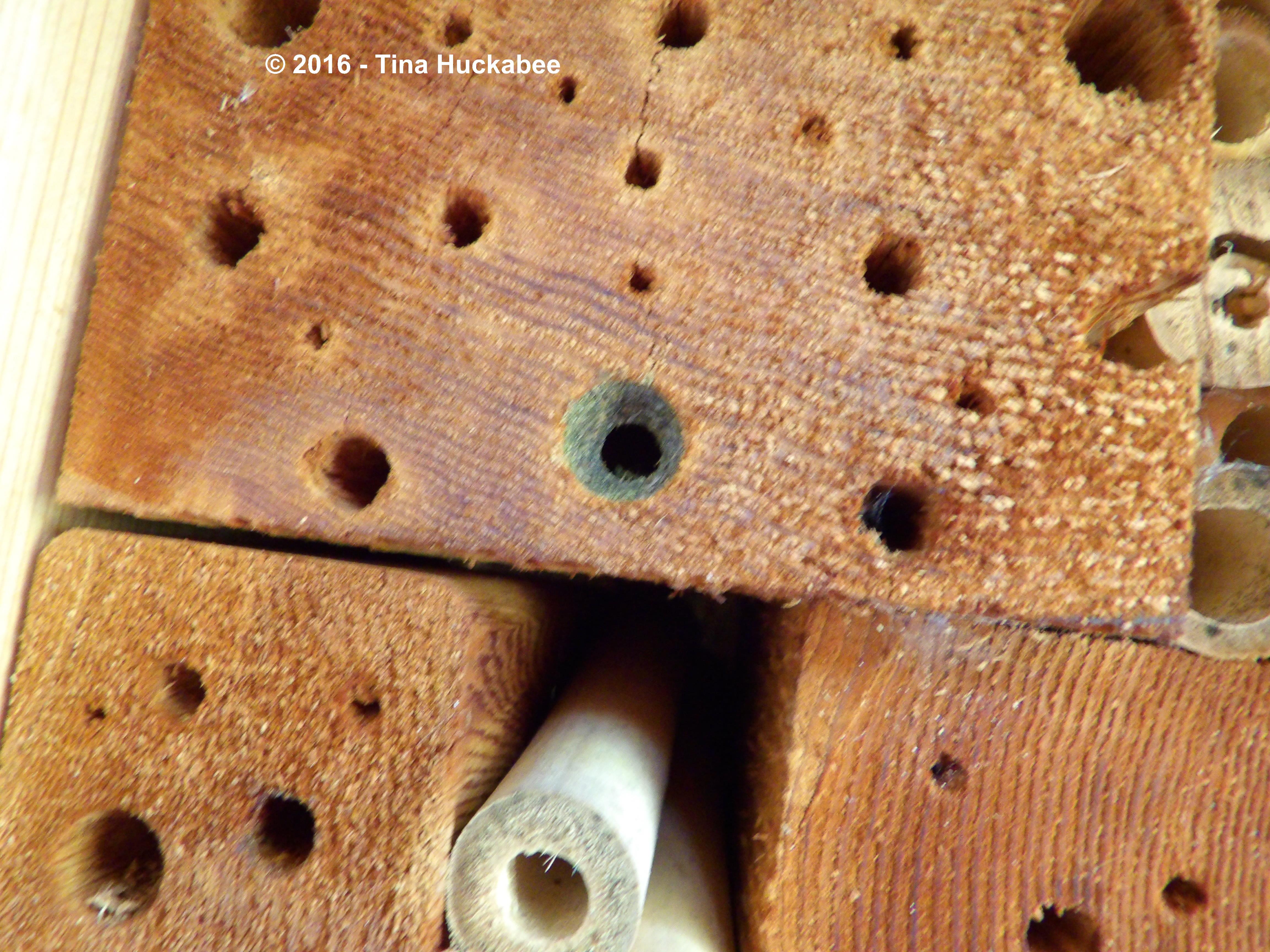
I believe it was in May or June that I watched mama building the nest.
It’s not Wildlife Wednesday without a photo of a Neon Skimmer, Libellula croceipennis, this one posing prettily on the Ruby Red Runner plant in the pond,

…or a Green Anole, Anolis carolinensis.
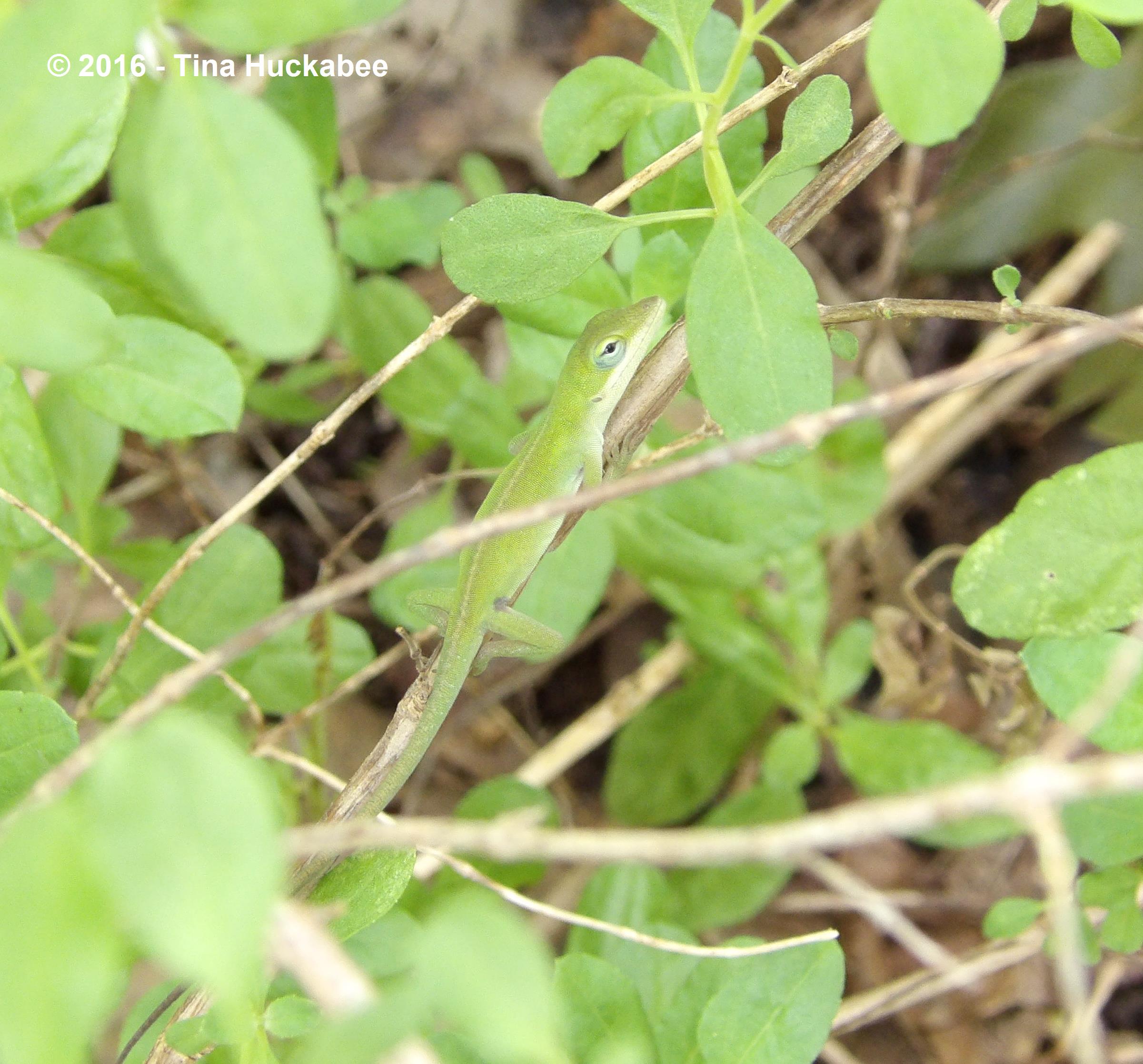 This little one is a baby–only about three inches from the tip of its green nose to the end of its equally green tail. I’ve seen several recently and they’re just about the cutest things in the garden at the moment.
Heavy rain encouraged a few snails to emerge and explore, like this one:
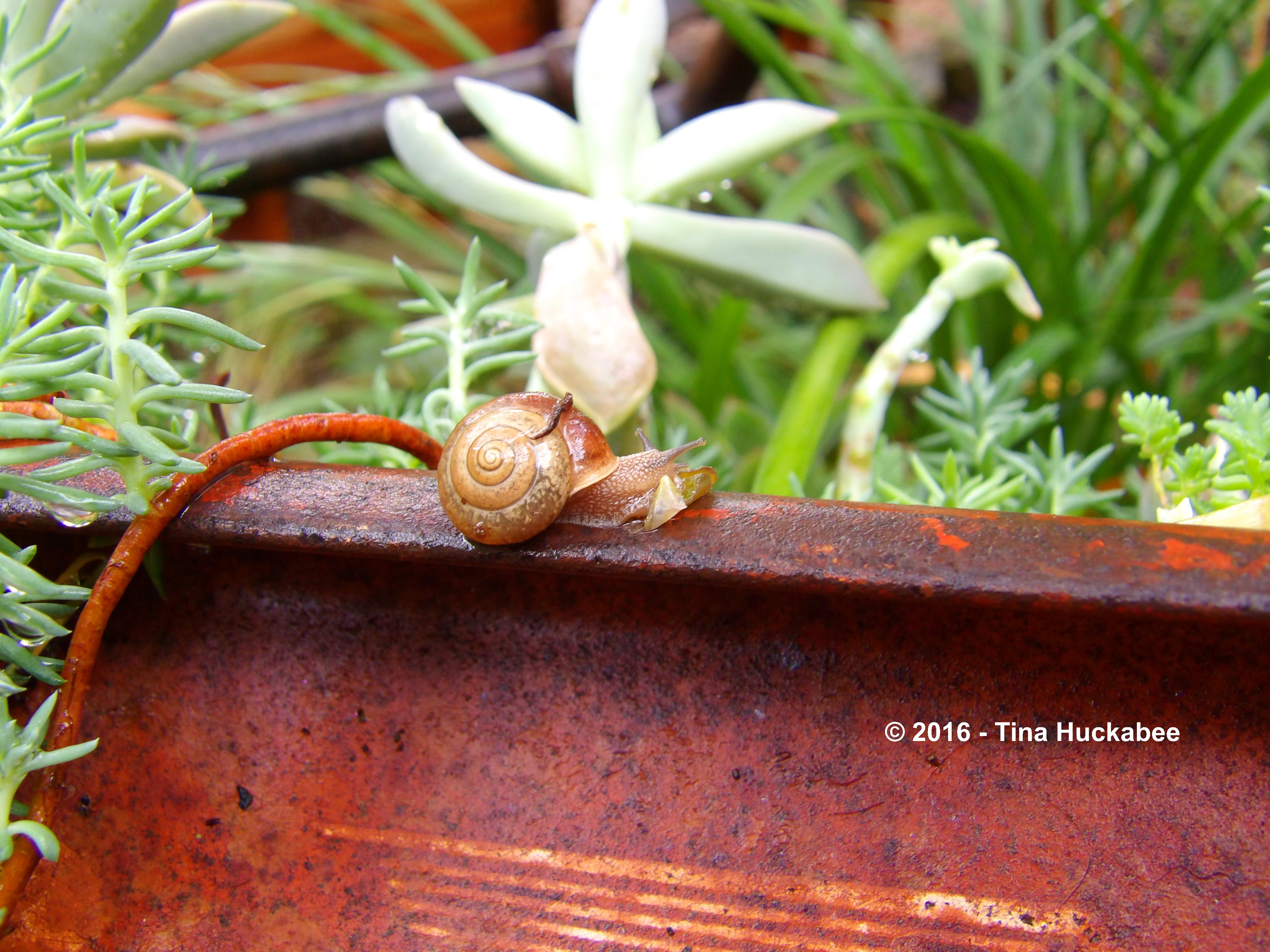
I’ve never incurred much garden damage from snails, but they are the bane of many-a-gardener.
A Monarch butterfly, Danaus plexippus, caterpillar feasted on some milkweed and that’s odd for this time of year.
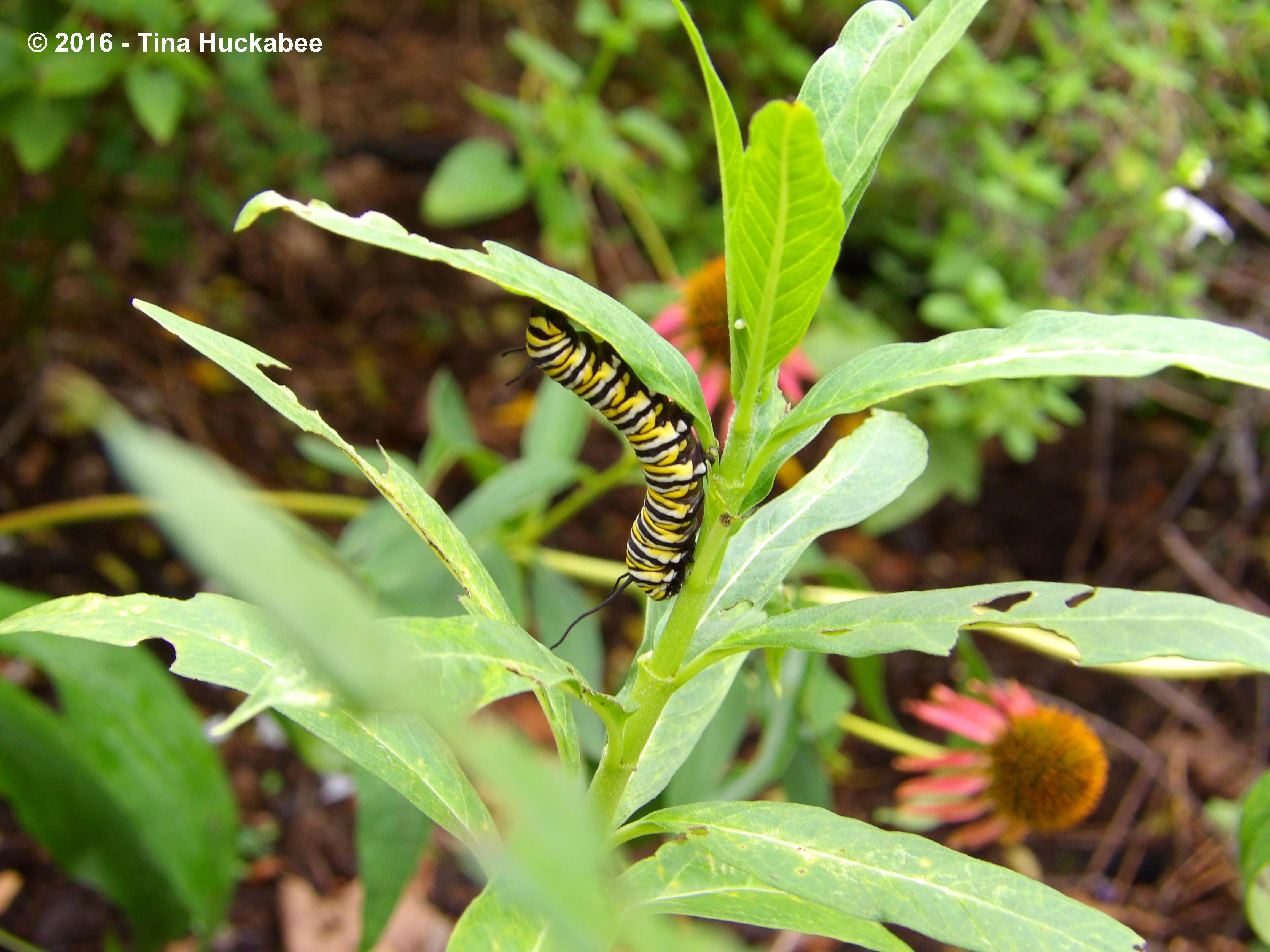
I haven’t found the chrysalis, but I’ll keep looking. Observing the emergence of an adult butterfly is must-see for anyone interested in wildlife gardening. The Monarch migration from Canada southward to Mexico has begun and I’ve seen a couple of individuals in the garden this past week, though it seems too early. The routes of the migrating insects converge through Texas, so usually there are plenty to appreciate throughout September and into October. Sadly, their numbers are down again after rebounding last year. Fingers-crossed for a nectar-plentiful migration to Mexico, a safe winter’s roosting, freedom from killing pesticides, and NO LATE SPRING ICE STORMS!!
Several Clouded Skippers, Lerema accius, have cruised and worked blooms in the past month, though these are common throughout the growing season. A subtly colored little thing, I welcome the less-ballyhooed butterflies in my garden.

Finally, this Tawny Emperor, Asterocampa clyton, wanted in on the honeybees’ sugar-water action.
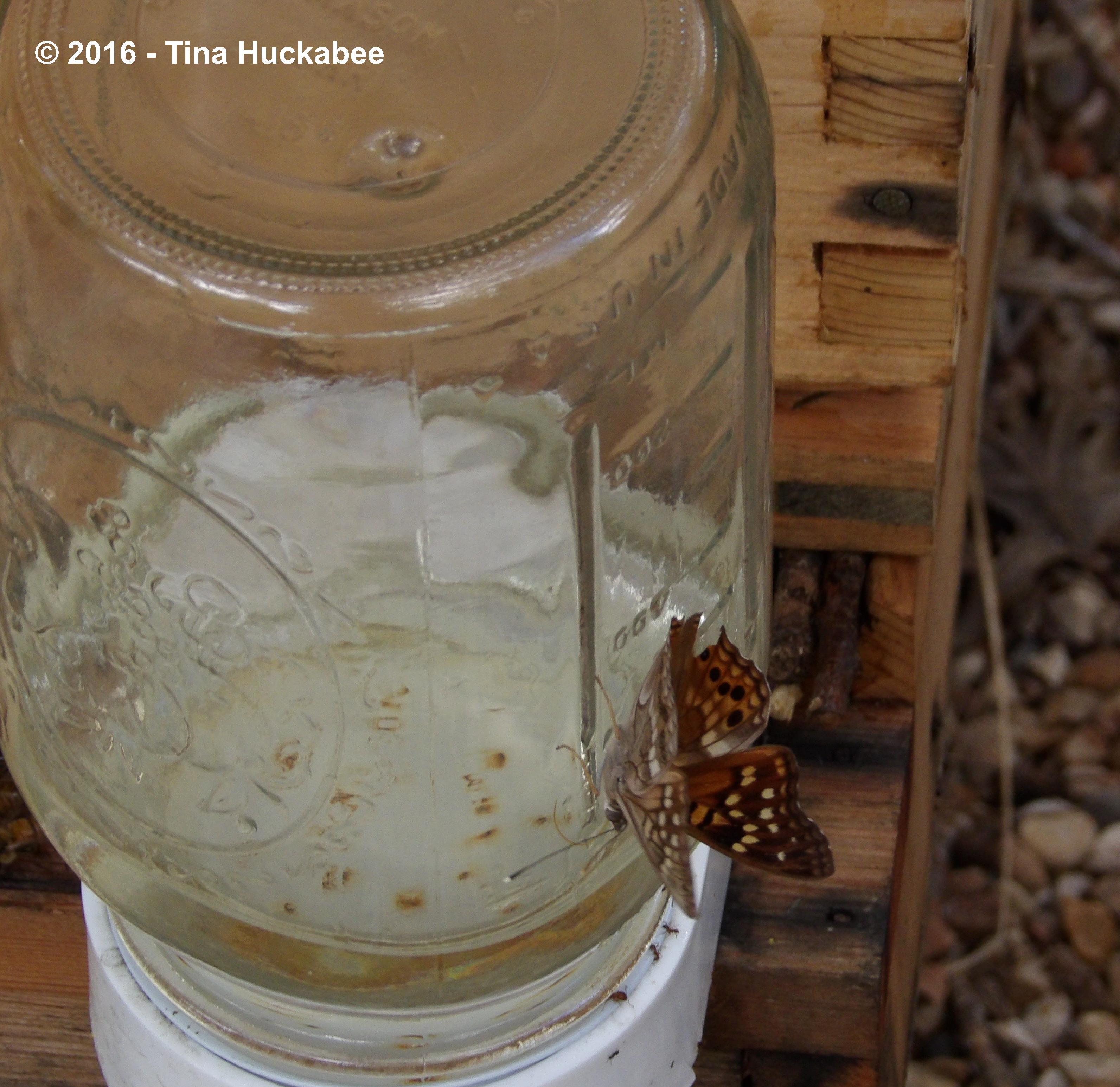

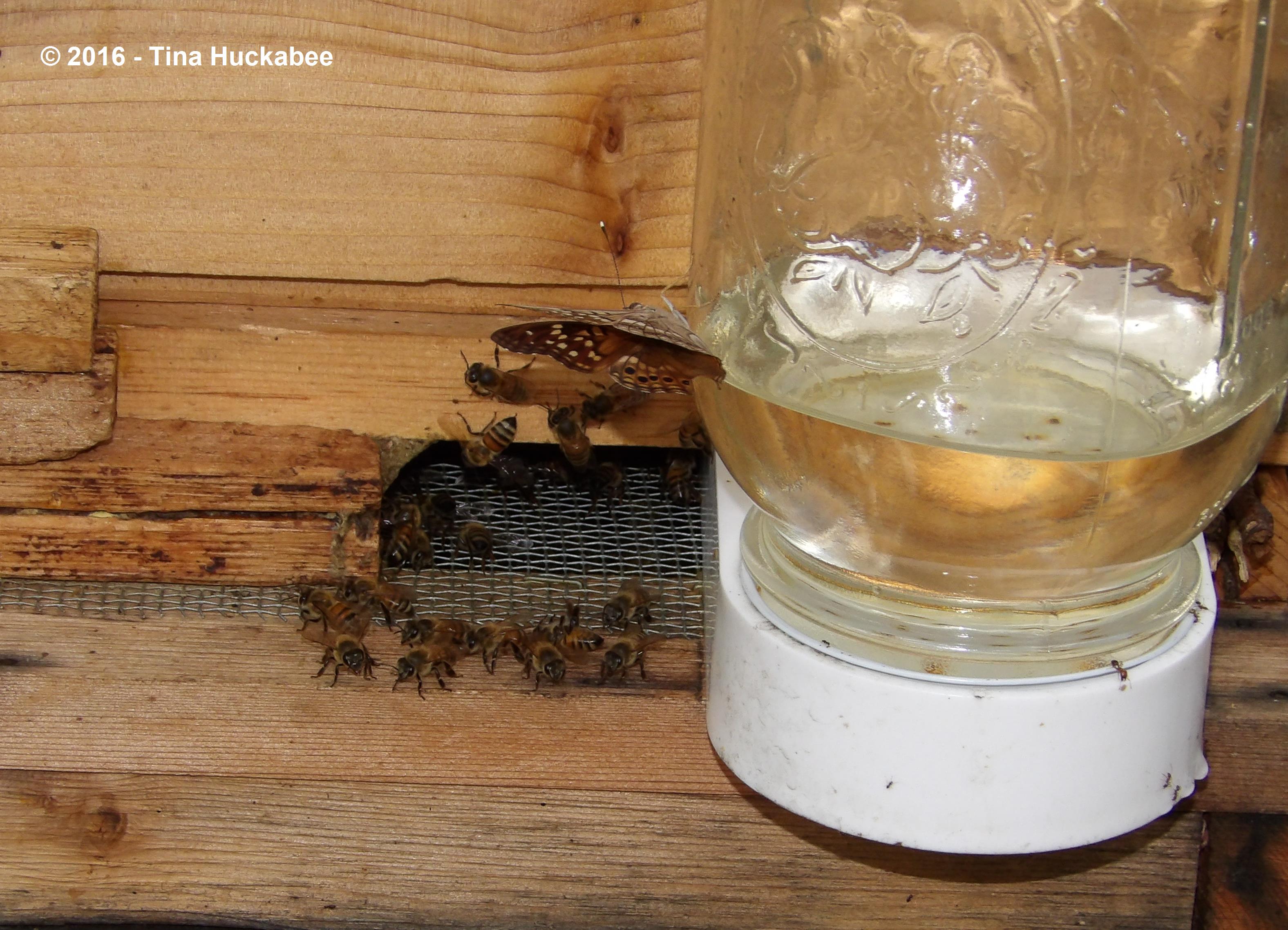
But with the hovering human in close proximity, it decided that maybe a far-away bloom was a better bet. I’ve never seen other insects (except ants, of course) show any interest in the bottles of the sweet stuff. Maybe the butterfly simply thought that it was a groovy place to land and doff its antennae at the bees to say a cheery “howdy-do!”
Singing or not, did wildlife visit your garden this past month? Please post for September Wildlife Wednesday. Share the rare or mundane, funny or fascinating, beneficial or harmful critters you encounter. When you comment on my post, please remember to leave a link to your Wildlife Wednesday post so readers can enjoy a variety of garden wildlife observations.