Forwards,
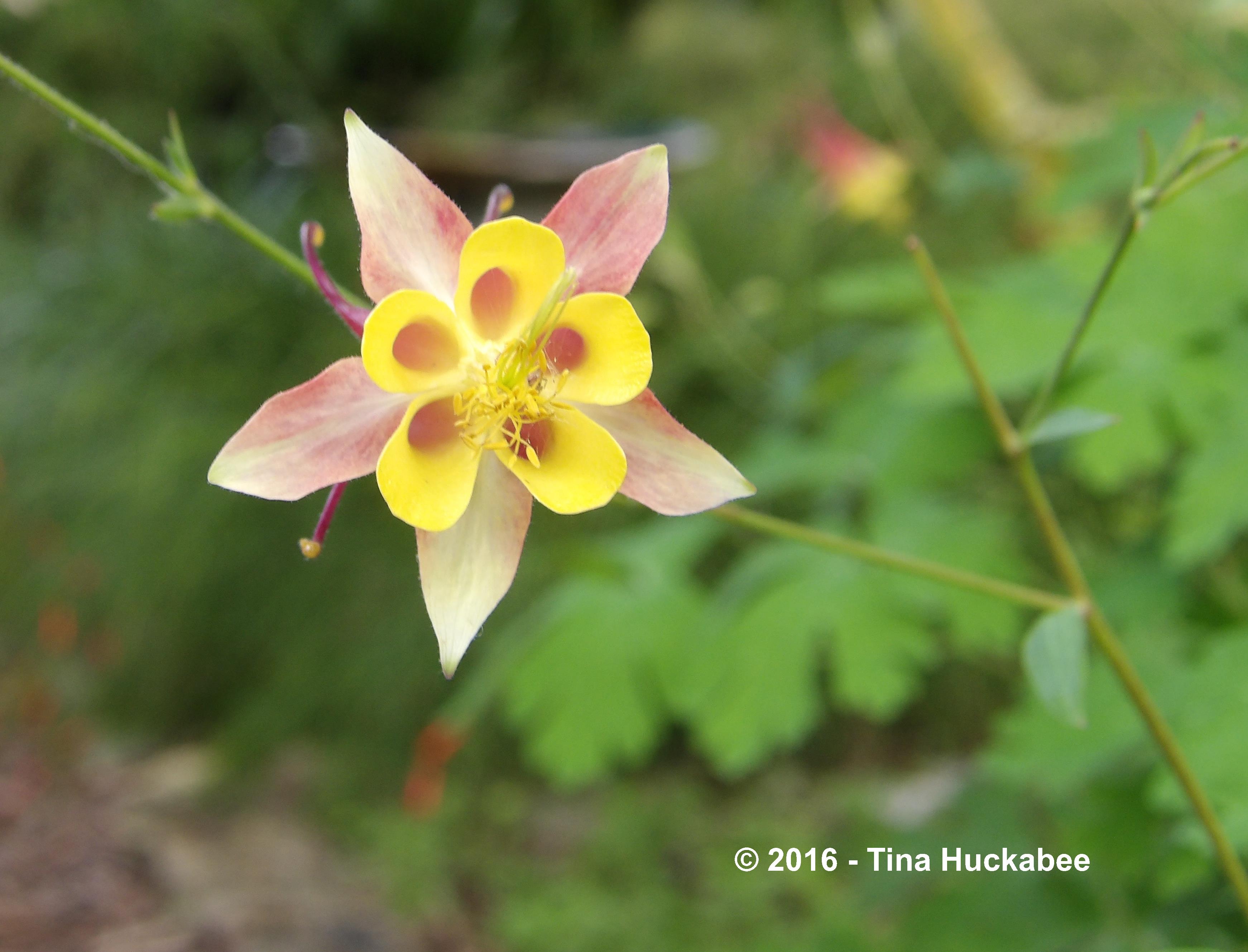
…backwards,
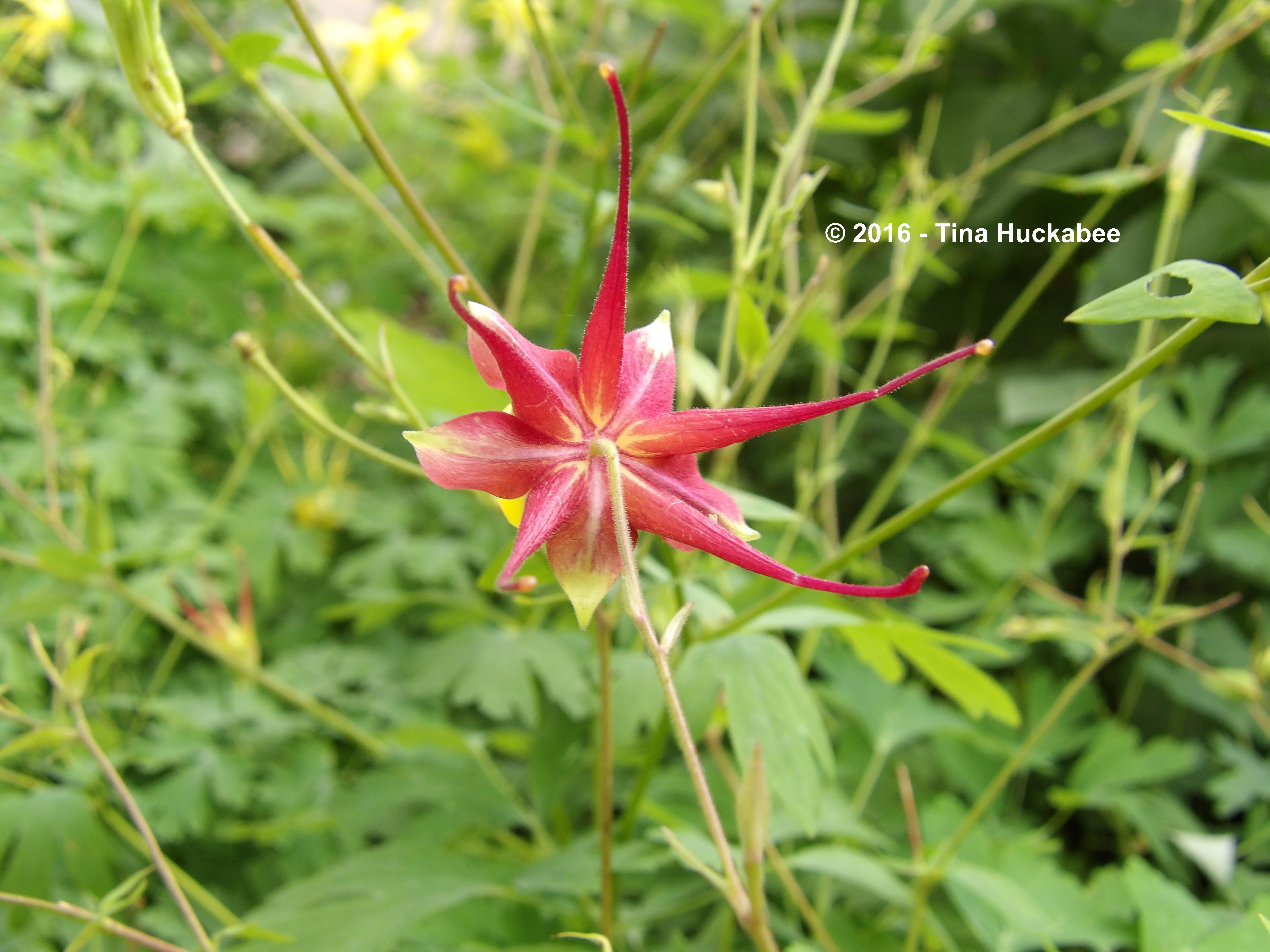
…and sideways.

Life.
Columbines.
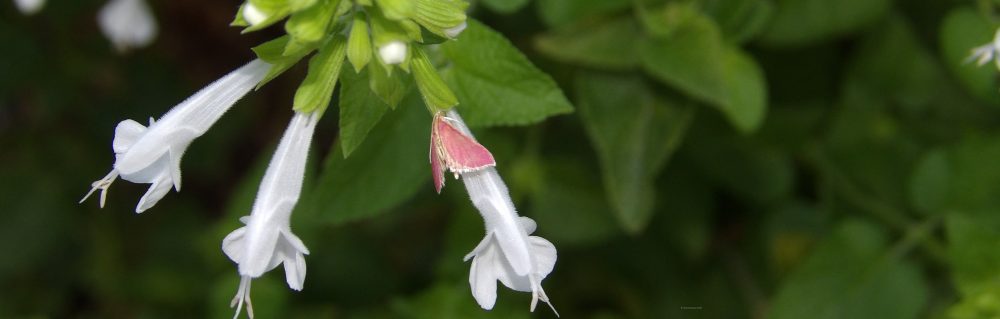
Forwards,
…backwards,
…and sideways.
Life.
Columbines.
May flowers–it’s such a cliché–but one that I’m going to embrace on this balmy May bloom day. The pinks in my garden seem to be front and center at the moment. Dusty pink blooms of this Red yucca, Hesperaloe parviflora, pop against a backdrop of Soft-leaf yucca foliage.

While the blooms adorning a different Red yucca bloom stalk flash a bit of yellow–just enough to keep things interesting.

With abundant rain, the Rock rose, Pavonia lasiopetala, is flushed full of foliage growth, but the few first blooms are opening up,

…and many more will follow during the long growing season. In truth, this is a plant that is floriferous in moderate drought; lots of rain produces lots of leaves, but fewer blooms. No matter, our summers are reliably dry and the multitudes of Barbie-pink blooms will turn heads as they open early in the morning, close by mid-day, throughout the long summer.

The pollinators and the gardener will enjoy the on-n-off bloom cycles of this hardy, small shrub well into October.
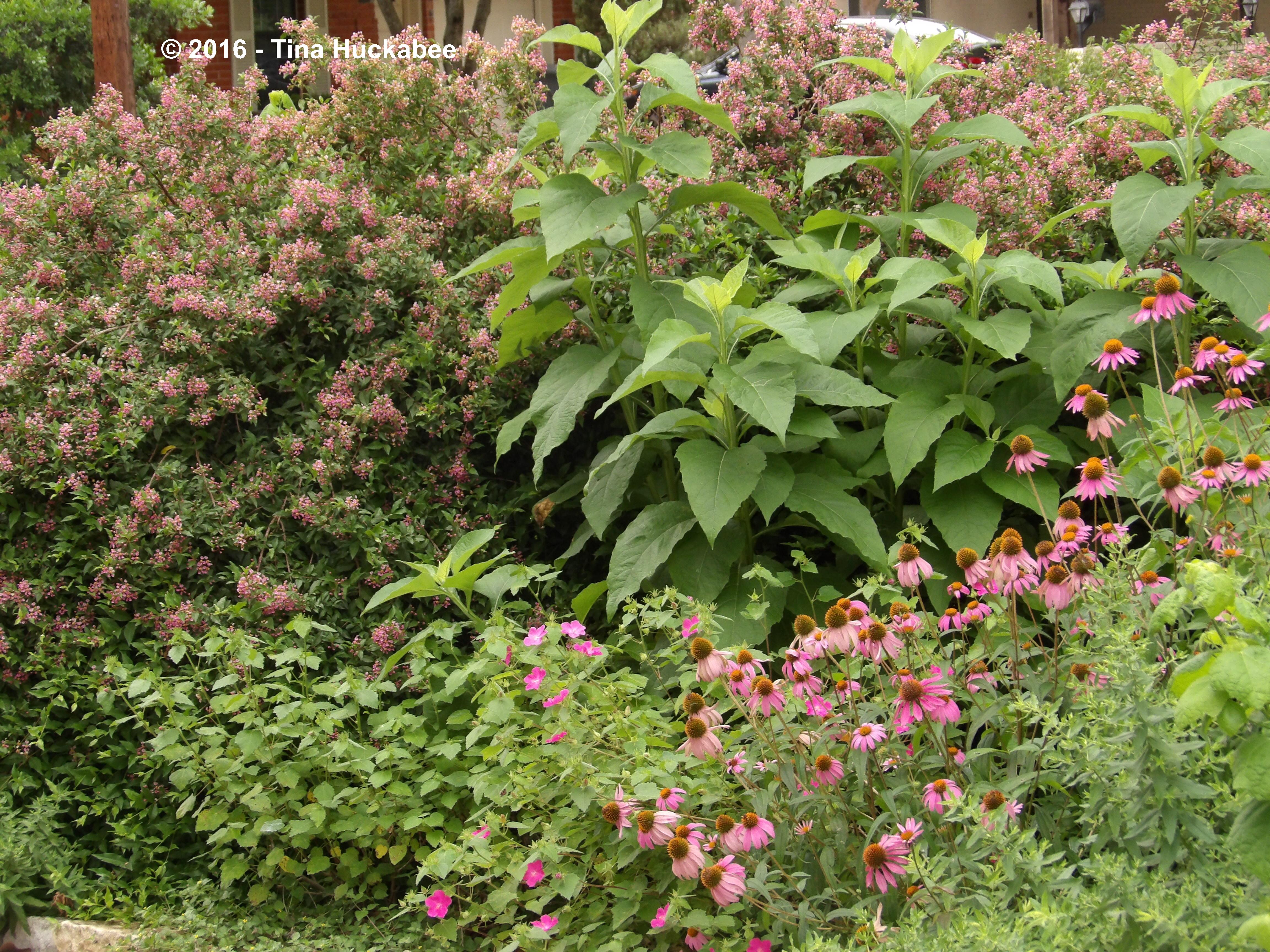
Purple coneflower, Echinacea purpurea (which look pink to me) are in full spring show.
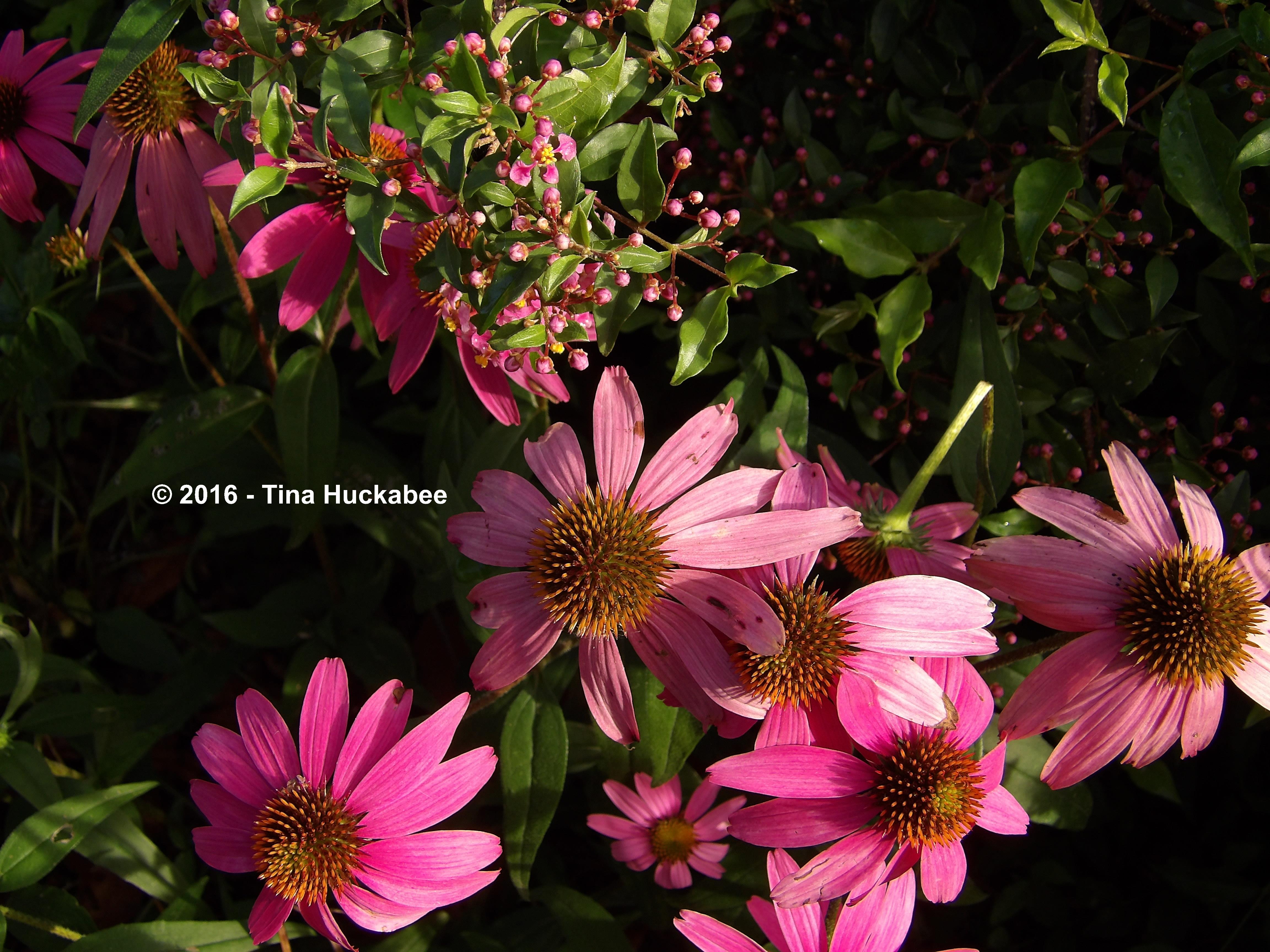
And the large shrub, Barbados Cherry, Malpighia glabra, is blasting the garden with its clustered version of the pink and yellow combo.
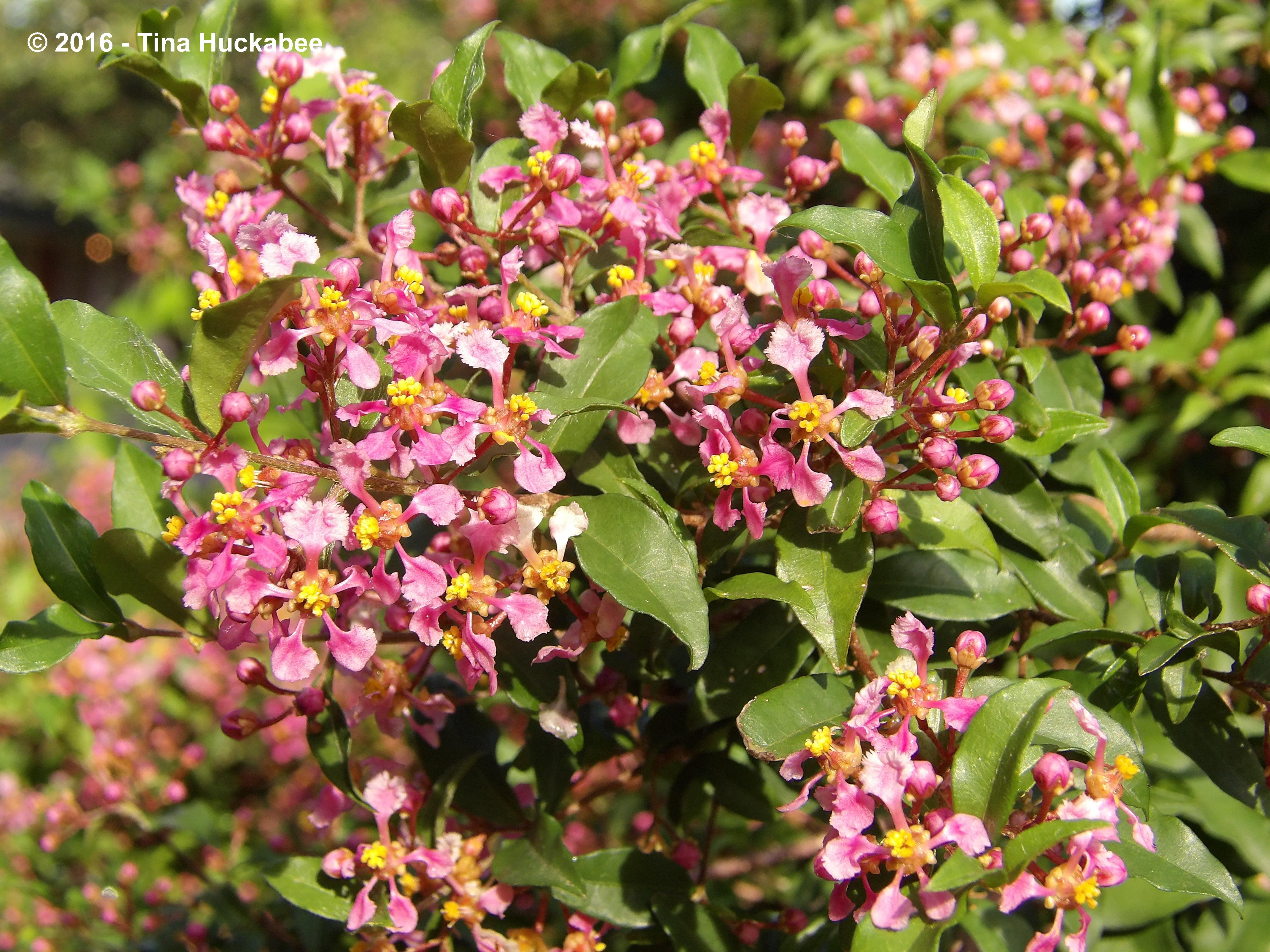
Additionally, the Barbados Cherry blooms fill the air with a lovely fragrance. You can’t smell the blooms while reading this post, but the fragrance is special–a May garden delight.
Barbados Cherry and Purple coneflower are pink pals in the garden.
Pink does not rule all of my garden though. The yellow (Aquilegia chrysantha) and yellow-red (Aquilegia canadensis) Columbines are on their way out, having bloomed since late February. However, they’re still producing for the pollinators, with some energy set aside for future seed production.

Columbines soldier on as spring wanes and the temperatures warm. A cool season plant here in zone 8b, I miss Columbines when they’re done, but always enjoy their fairy-like, shooting-star charm in the cool spring garden.
Heartleaf Skullcap, Scutellaria ovata, is filling the back garden with drifts of grey and blue.


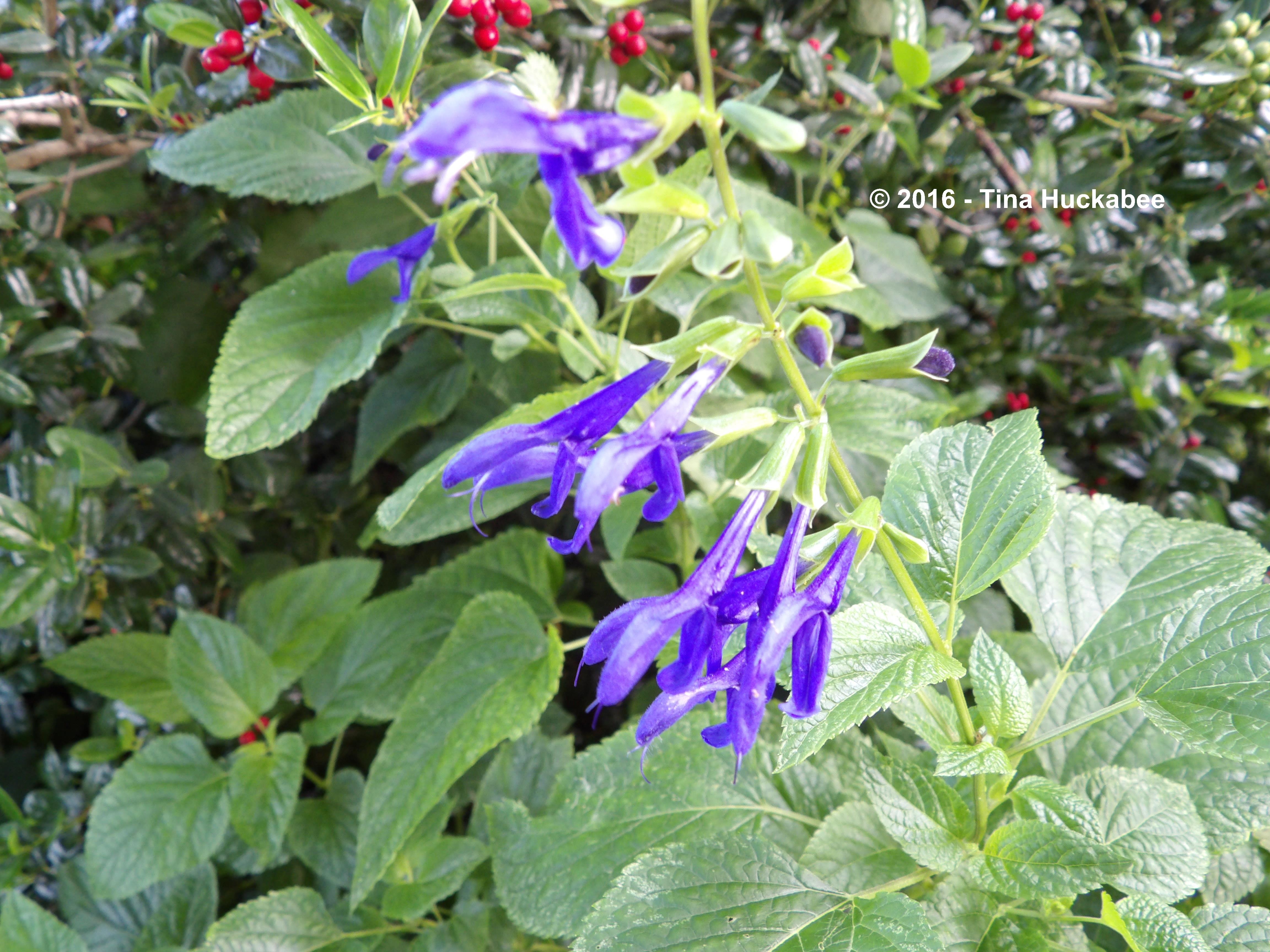
While Majestic Sage, Salvia guaranitica, is truly grand in the royal blue it wears.
Finally, the creamy blooms of Twistleaf yucca, Yucca rupicola, have made their once-per-year appearance in the front garden. Poised atop the tall (5 foot) stalk, they beckon to native and honeybees to sip and gather from their floral bounty.

Once the blooms are done, I’ll trim the stalk–maybe drying it for further use as a stake for some wayward plant later in the year. The foliage is handsome, year-round, lending structure and evergreen sturdiness to the garden.

Somehow, I managed to choose photos of all these blooms with not a single pollinator in sight. Pollinators are in the garden and in abundance–nectaring and pollinating, even if I didn’t capture that particular beauty in this round of photos!
Fortunate to live where May blooms are plentiful, I thank Carol at May Dreams Garden for hosting this monthly bloom frenzy known as Garden Bloggers’ Bloom Day. Join in, share your garden pretties, then click over to her lovely blog to see and learn about blooms from many places.
Spring has sprung, rain has fallen, temperatures have climbed and here in Austin, Texas, we’re mostly through our beautiful and glorious spring weather and headed into the lovely–though admittedly somewhat less pleasant–summer season. Summers in Texas are hot and humid and that’s one reason why Texans have historically liked trees; trees provide respite from the sun and cool our souls. The American Sycamore, Platanus occidentalis is a tree that the Native Americans and later, European and American pioneers, scouted for when they wanted to find water and shade in Texas.
Stately and tall, the American Sycamore is springtime resplendent in its lush, green foliage, all leafed out and ready to provide protection for critters–large and small, furred and feathered, two-legged and four-legged.

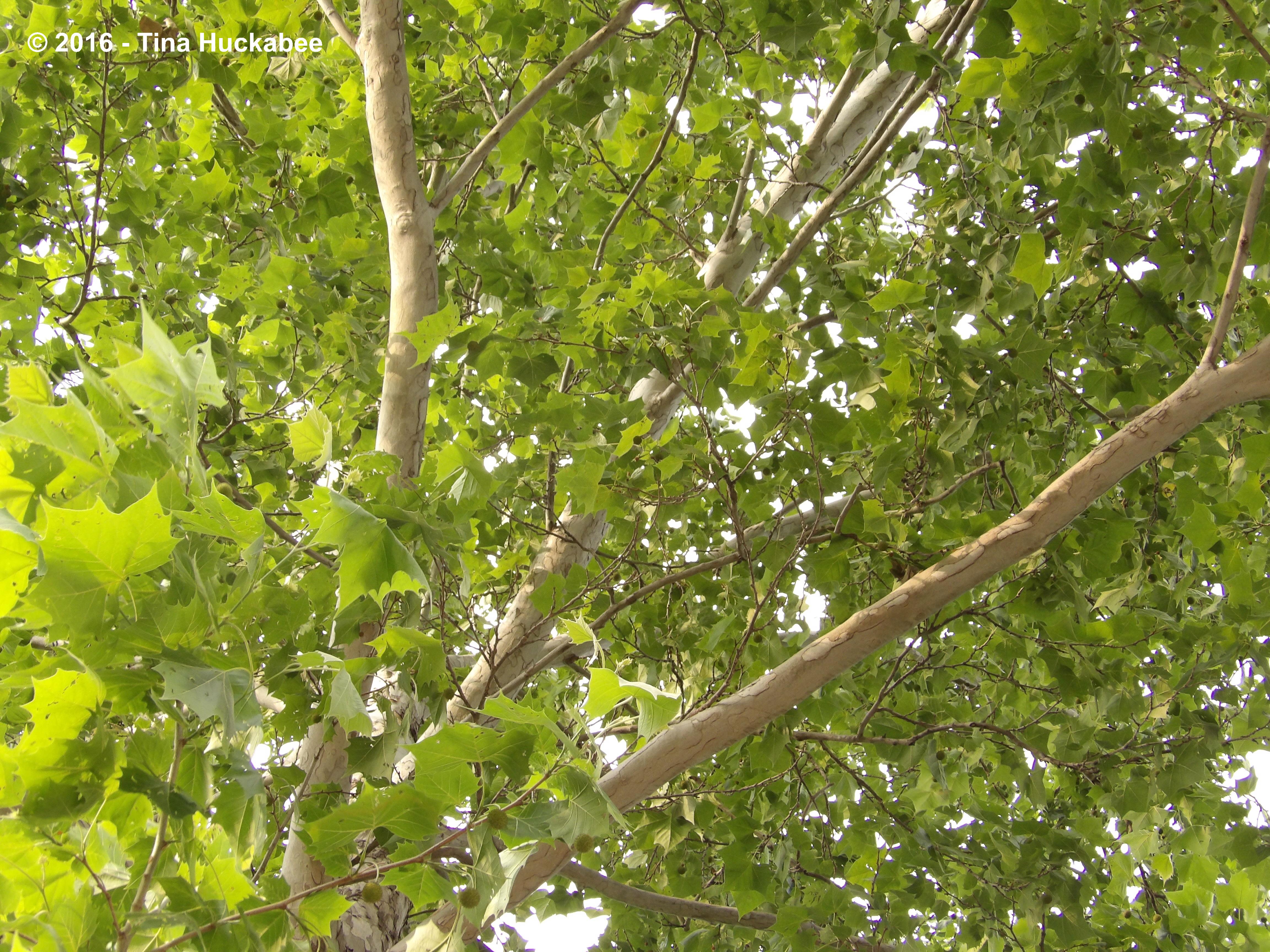
The limbs are graceful as they reach into and support the canopy.
This month, the leaves have been munched upon and are a bit holey.

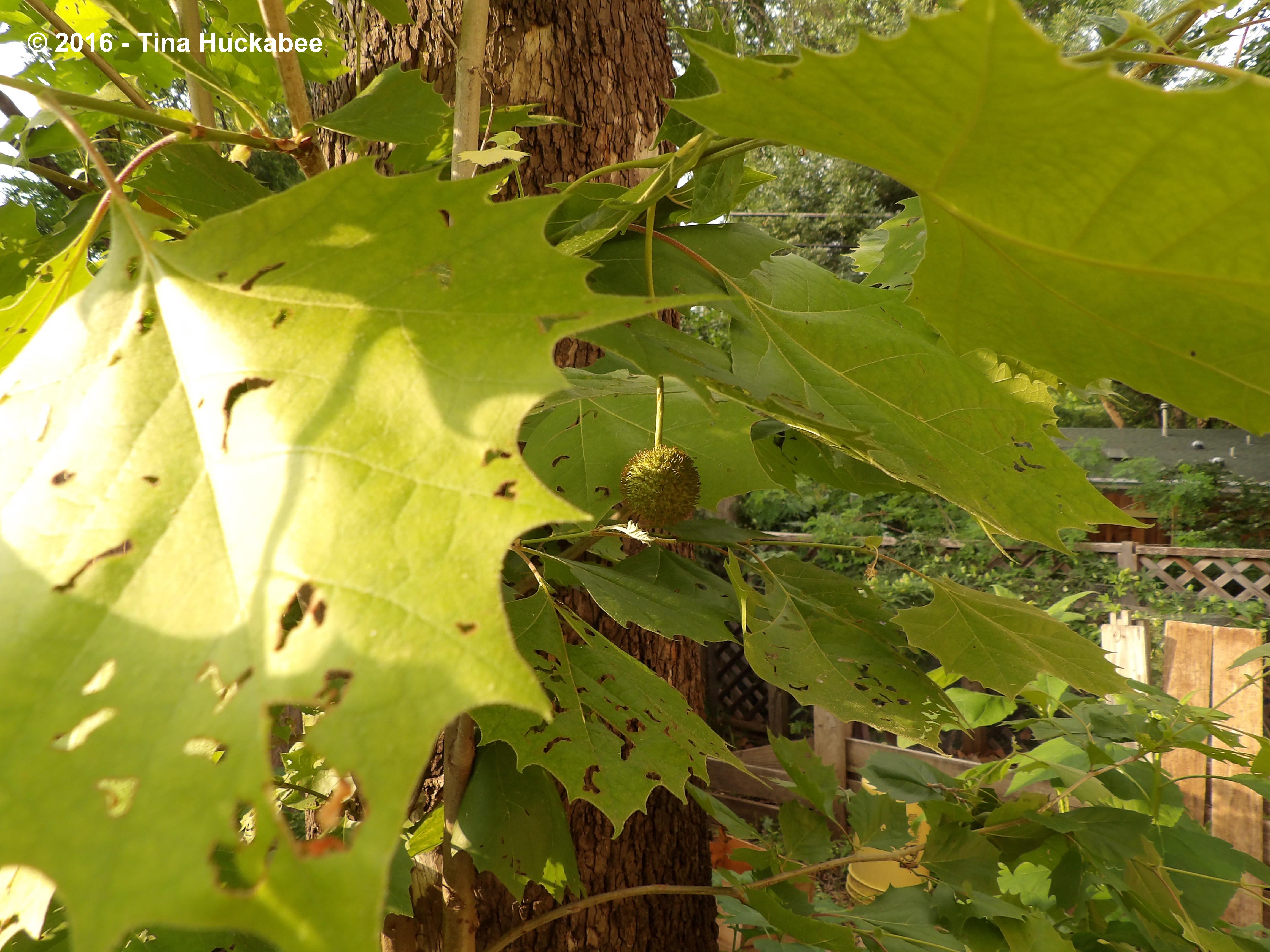
I’m not sure exactly who’s been eating the leafy greens, though I know I’ve seen this sort of damage in previous years on the Sycamore’s leaves.

The mature leaves have some damage, but there are new leaves, too.
I did see this fella, a Glassy Winged Sharpshooter, Homalodisca vitripennis, on one of the leaves.
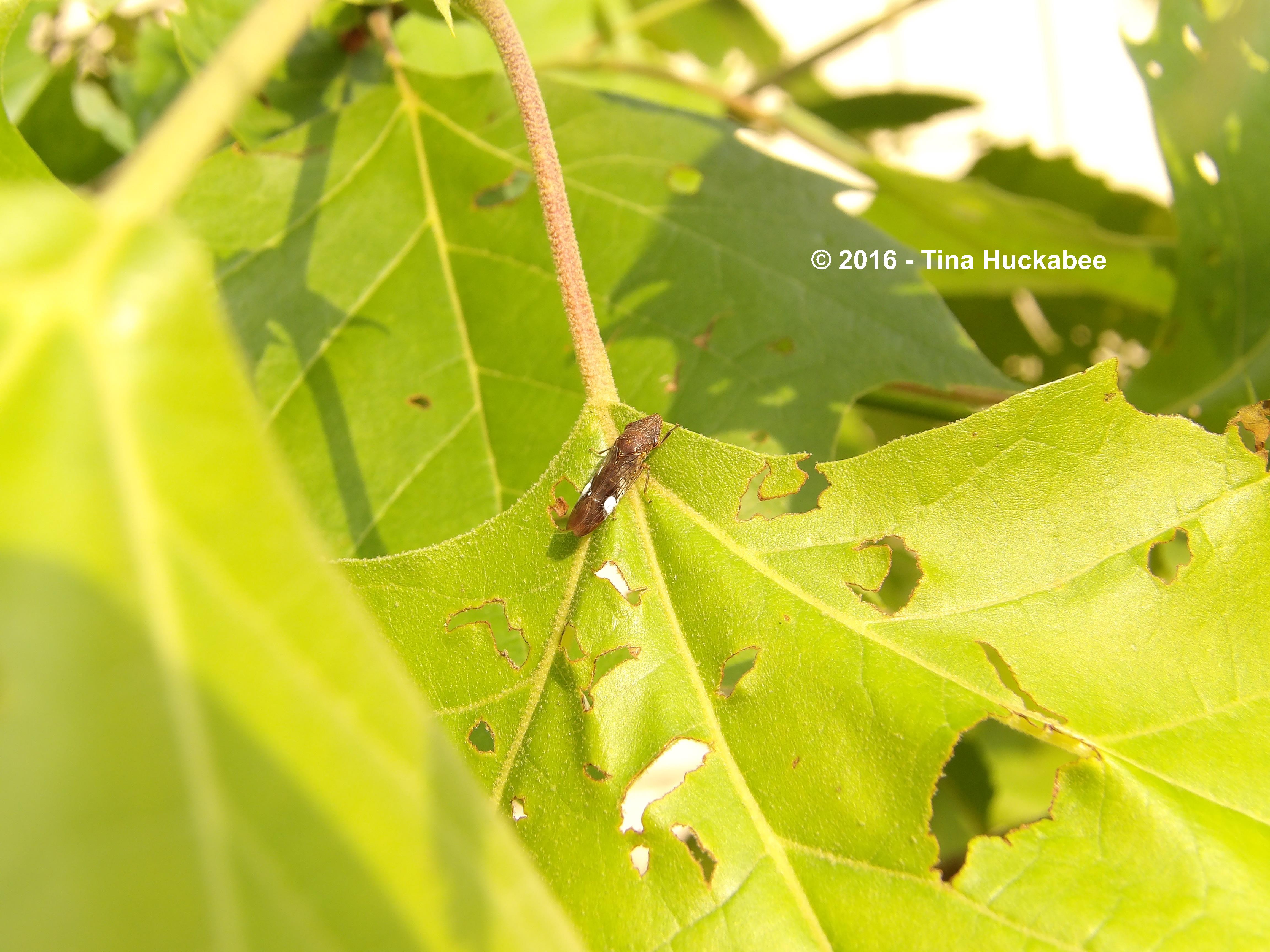
Now, I’m not suggesting that this particular one is responsible for all the holes, but apparently, the Sharpshooter undergoes several molts in its trip toward adulthood and it had to eat something, so I think the leaves are a good bet. Since I caught the Sharpshooter near the holes, he gets the blame for making the holes.
The Glassy Winged Sharpshooter is a type of leafhopper insect, of which there are a bunch who munch on shrub and tree foliage here in Central Texas. I’m not one to fret about a few holes in leaves–everyone has to eat and one function of foliage is to feed insects. The Glassy Winged is common here in Central Texas and according to literature, they do little long-term or serious damage to trees and shrubs.
This one–the one I referred to earlier as a “fella” and “he”–is actually a female. The white patches on her wings are call egg brochosomes.
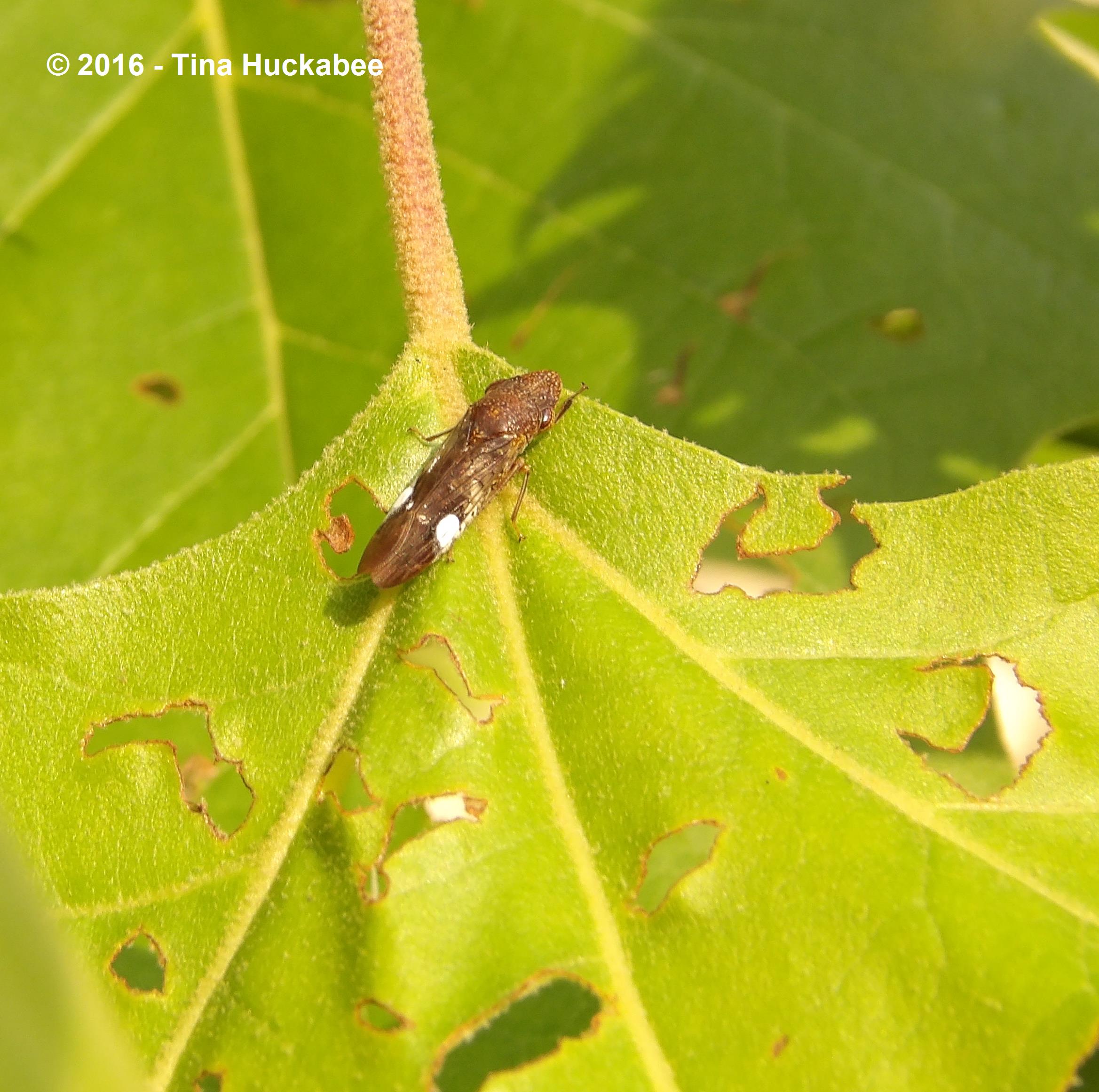
Most leafhopper species have brochosomes, which produce a sticky substance used to coat their bodies for waterproofing. Additionally, the female stores and then uses the substance she holds in the brochosomes to cover her eggs once she lays them.
Also, if you stand under the Sycamore (and my oak trees, too) right now, you might feel a few “drops” from the trees, sort of like rain drops, but with a clear, blue sky above. No, the drops aren’t rogue precipitation, but, more than likely, are leafhopper excrement.
Well, that’s nice. Just don’t host your next picnic underneath a tree with “drops” coming out of it.
The Sycamore in May is in full leaf, foliage, and life.

Not all the leaves have been insect damaged.

It will be a harbinger of safety, food, and protection for many and for months to come.
Thanking Pat of The Squirrelbasket for graciously hosting this fun meme about trees. Check out her blog for interesting information about trees from all over the world.
 My Gardener Says...