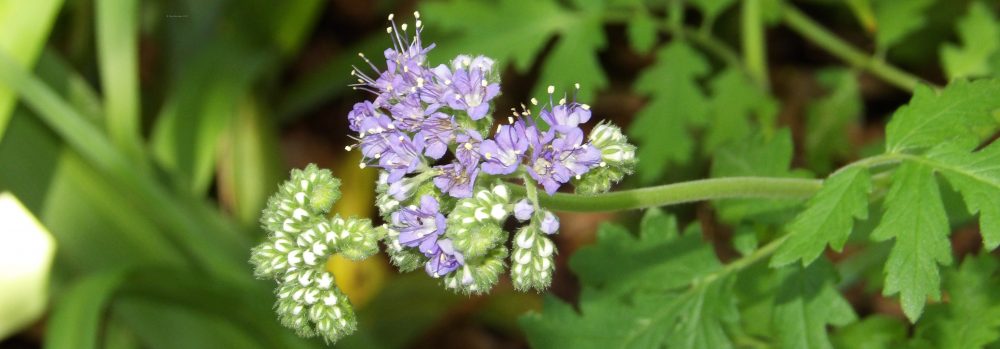
Today is the first Wednesday of February and time to appreciate wildlife in our gardens–happy Wildlife Wednesday to you all! In this fraught time, experiencing nature can be a balm for frayed nerves, as well as a respite for contemplating resistance to the specter of autocracy. To be a part of the natural world doesn’t require travel outside of your town or city if you make time to visit a municipal park or greenbelt, volunteer as a wildlife gardener at a school or religious institution garden, or set aside your own personal garden as a refuge for wildlife–and yourself. None of these are difficult to achieve and the benefits are enormous: for you, your community, and the wildlife you share the world with.
Though the few blasts of winter’s chill has rendered my garden the muted beige and grey palette that is the Texas winter landscape, there are pops of color in the form of the resident native birds, like the Blue Jay, Cyanocitta cristata,

…and the Northern Cardinal, Cardinalis cardinalis.

I’ve never successfully identified Blue Jays by gender–male and females look alike to me, though I assume they see differences among themselves. Cardinals however are easily distinguishable, the female Northern Cardinal softer in coloring than her stunning male counterpart.

Not quite as dazzling as her fella, she’s certainly pretty enough for this human to enjoy observing.
Typical of the drab girl-coloring common in the avian world, this female House Finch, Haemorhous mexicanus, doesn’t share the splash of red that her partner enjoys.

Female House Finch

Male House Finch
Though not as flushed and blushed as her mate, Ms. HF is pretty cute. House Finches are numerous in my garden and chatty to boot. In late spring and early summer, their song is almost non-stop.
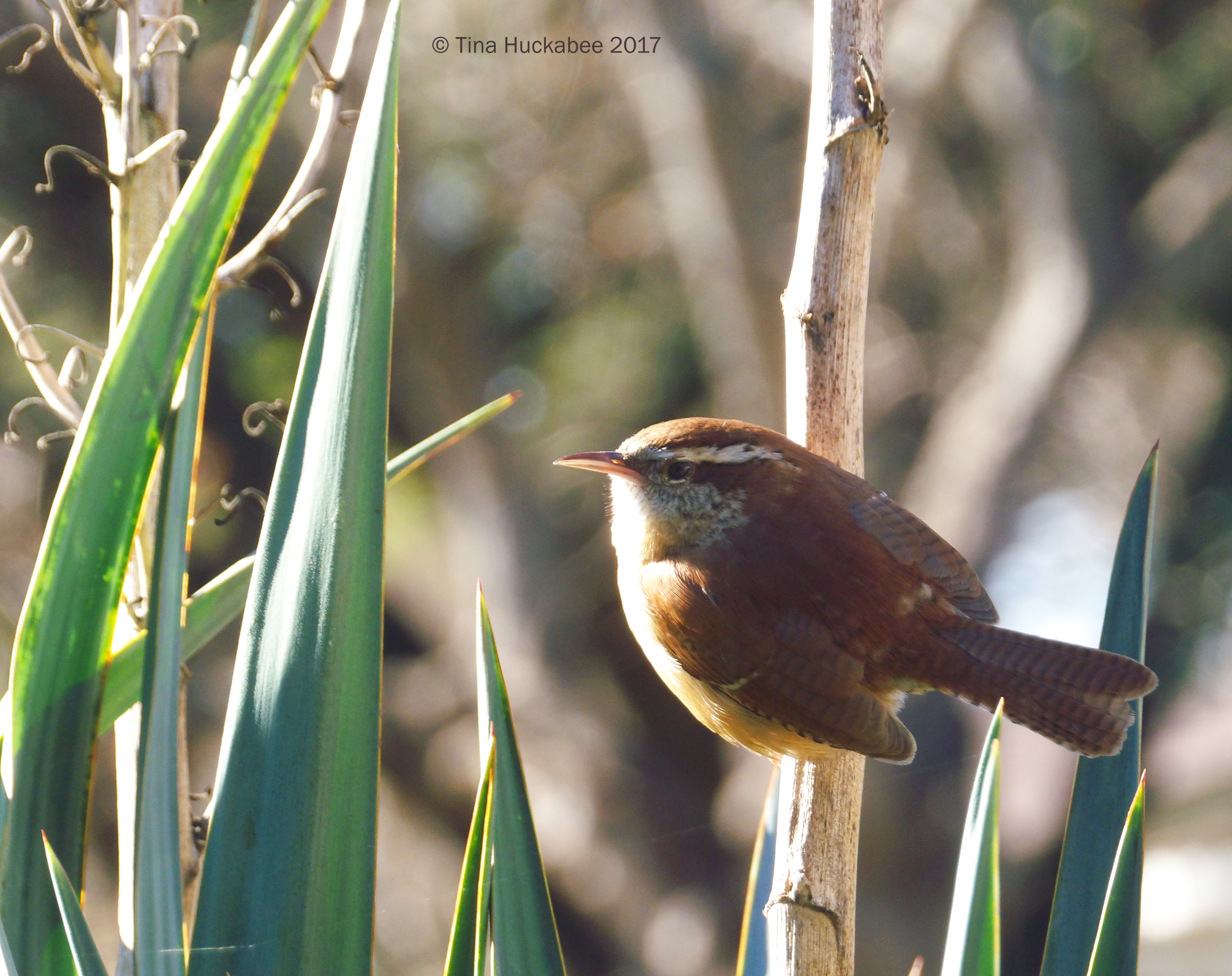
Another vocalist in my garden–and a species where the males and females are indistinguishable to me–is the Carolina Wren, Thryothorus ludovicianus.
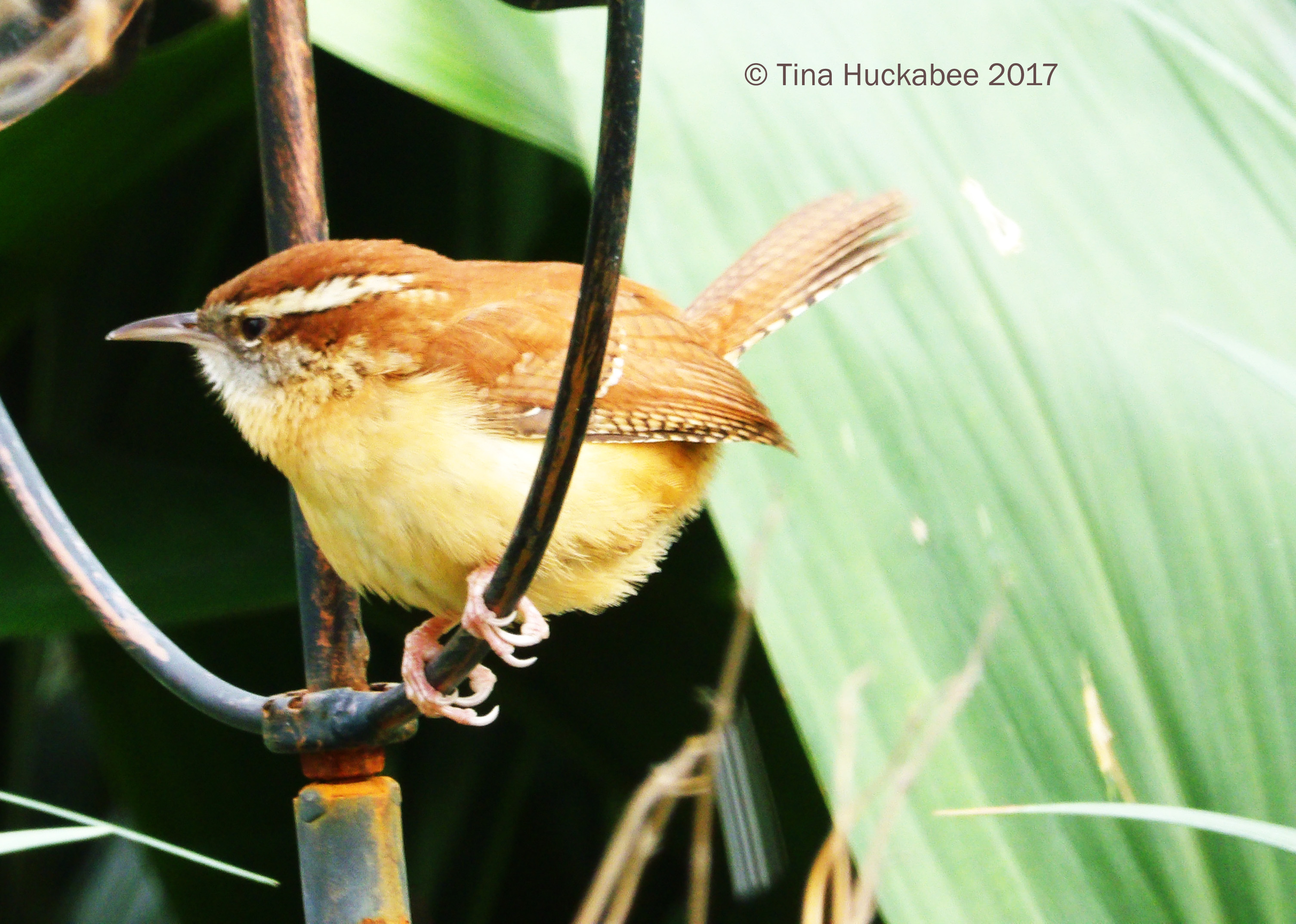
These little guys and gals are real charmers. Males sing beautifully, often, LOUD, and with a variety of song. The adults scold with a tchtch, tchtch, tchtch when nestlings are threatened or feeding is interrupted and that is a frequent backdrop of my garden’s bird song symphony.
The White-winged Dove, Zenaida asiatica, wins the award for birds a-plenty. These are birds that I rarely photograph because my familiarity with them breeds a certain level of…yawning boredom. White-winged Doves are everywhere, every day, all the time. According to Cornell Lab of Ornithology, this species was originally a bird of desert thickets, feeding on the seeds of grasses and berries in trees. Year-round residents in Texas, White-winged Doves are one species that most non-gardeners and non-birders recognize because they’re generously represented in cities and suburbs. While I’m not a huge fan, I tolerate them, even when they land along the edge of the bird baths–backwards with tail in, or over, the water–and immediately poop in it. Yuck!
Typical for doves though, they have a rather sweet appearance, as this one demonstrates while resting on a bed of fallen leaves during a chilly day.
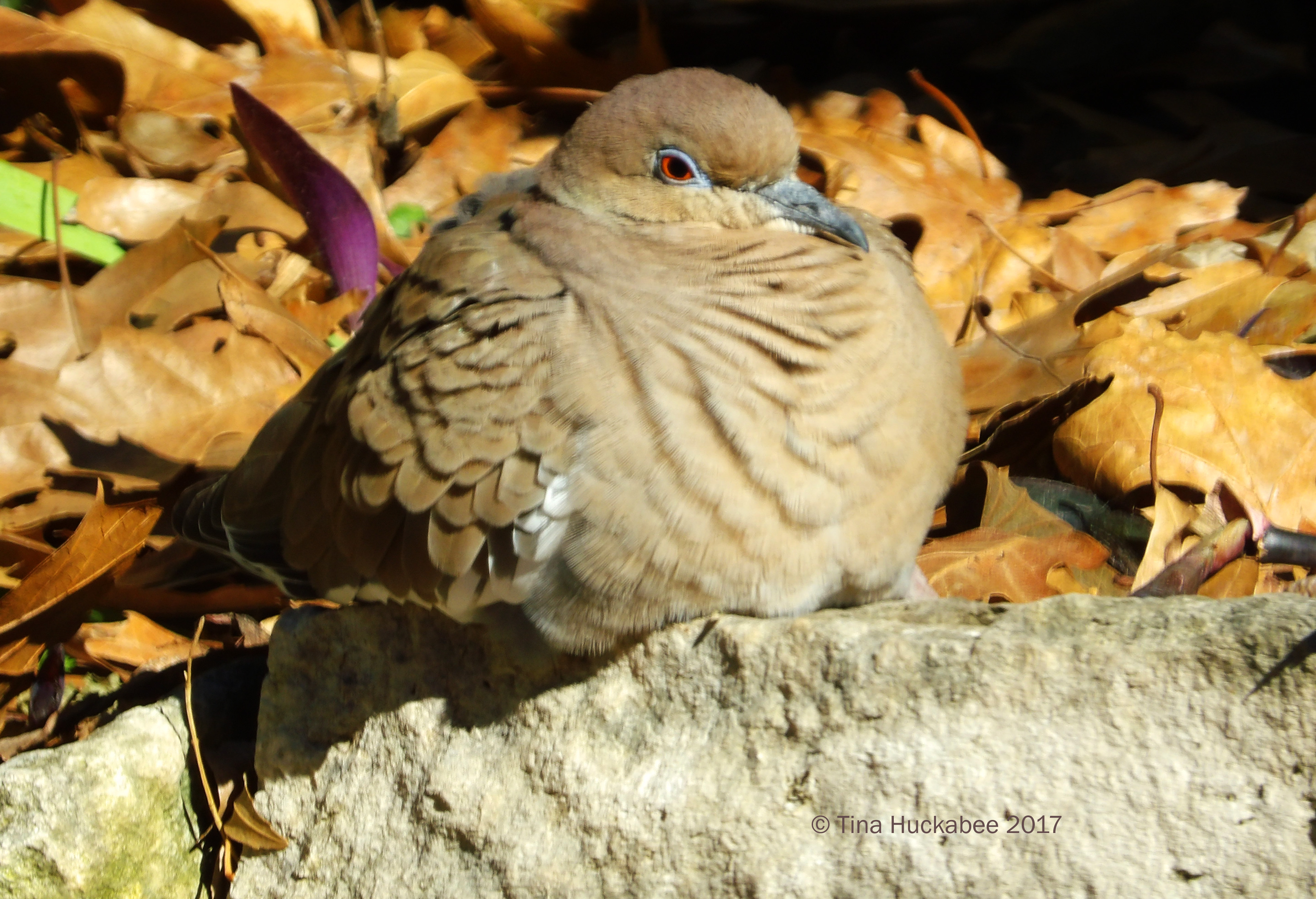
White-wing Doves are known for their “blue eye-shadow.”
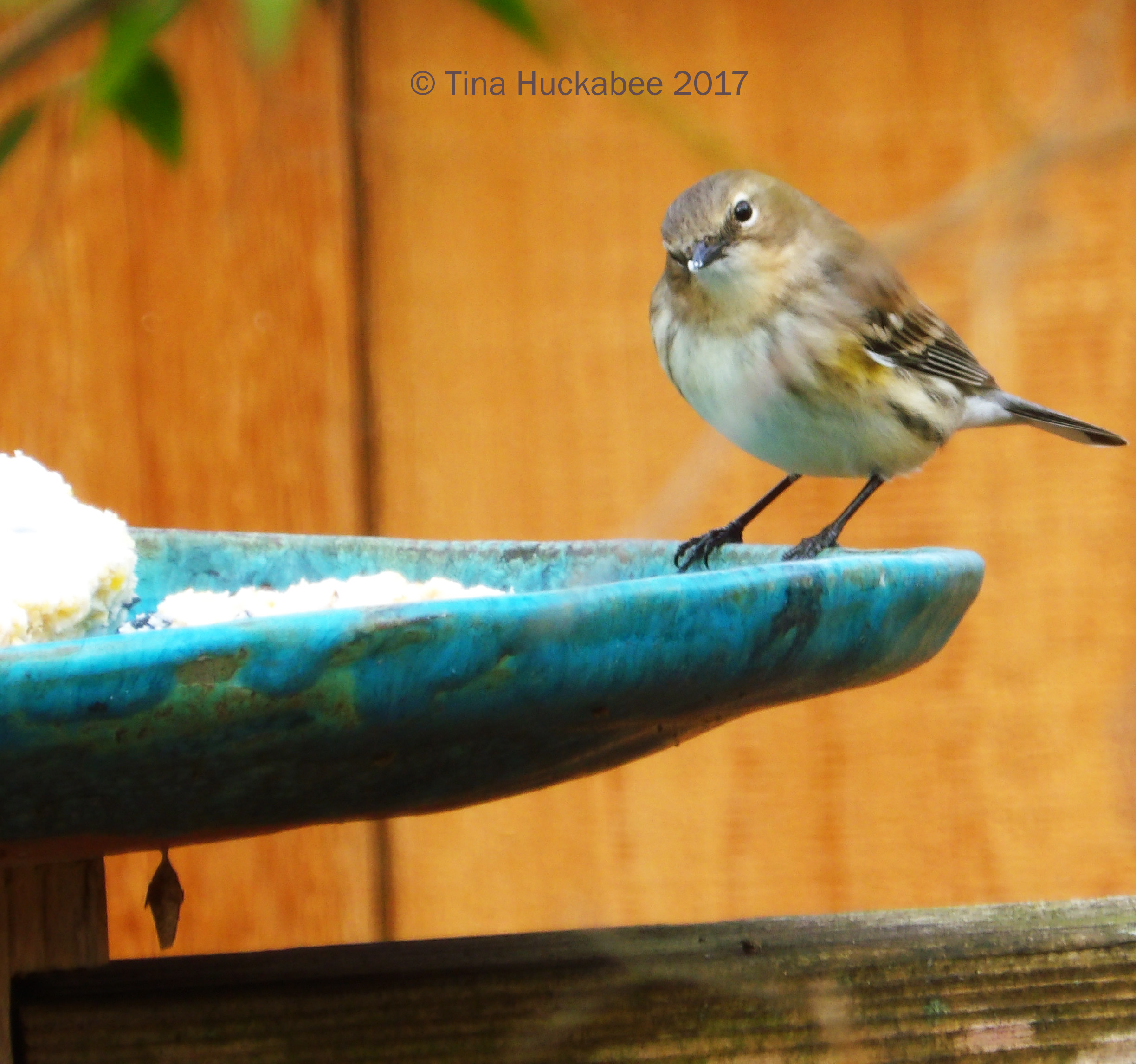
Butter Butts are back! Yellow-rumped Warblers, Setophaga coronata, are winter Texans and very welcome in my garden.

They hop along the ground, looking for seeds, but they also enjoy the suet I’ve placed in a couple of spots.

I think this one is voicing opposition to my taking this photo.
I think the two that I’m seeing regularly are females, but last year there was a male in the mix. These seasonal warblers will hang around until March or early April. I hope that I can identify individuals by the time they leave for their summer breeding grounds much farther north in Canada and the northern states of the U.S.
My newest favorite bird species and one I think has visited my garden before, though I’ve only definitively identified it this year is the Ruby-crowned Kinglet, Regulus calendula. A rapid-fire flyer, itty-bitty, and oh-so-darling, these song birds are fond of insects and suet. They flick their tails as they flit from branch to branch and are stationary only for very brief periods of time. I’ve seen both a male and female in my garden and though they look similar, there is one striking difference. Okay, probably more than one, but one that I can readily see.
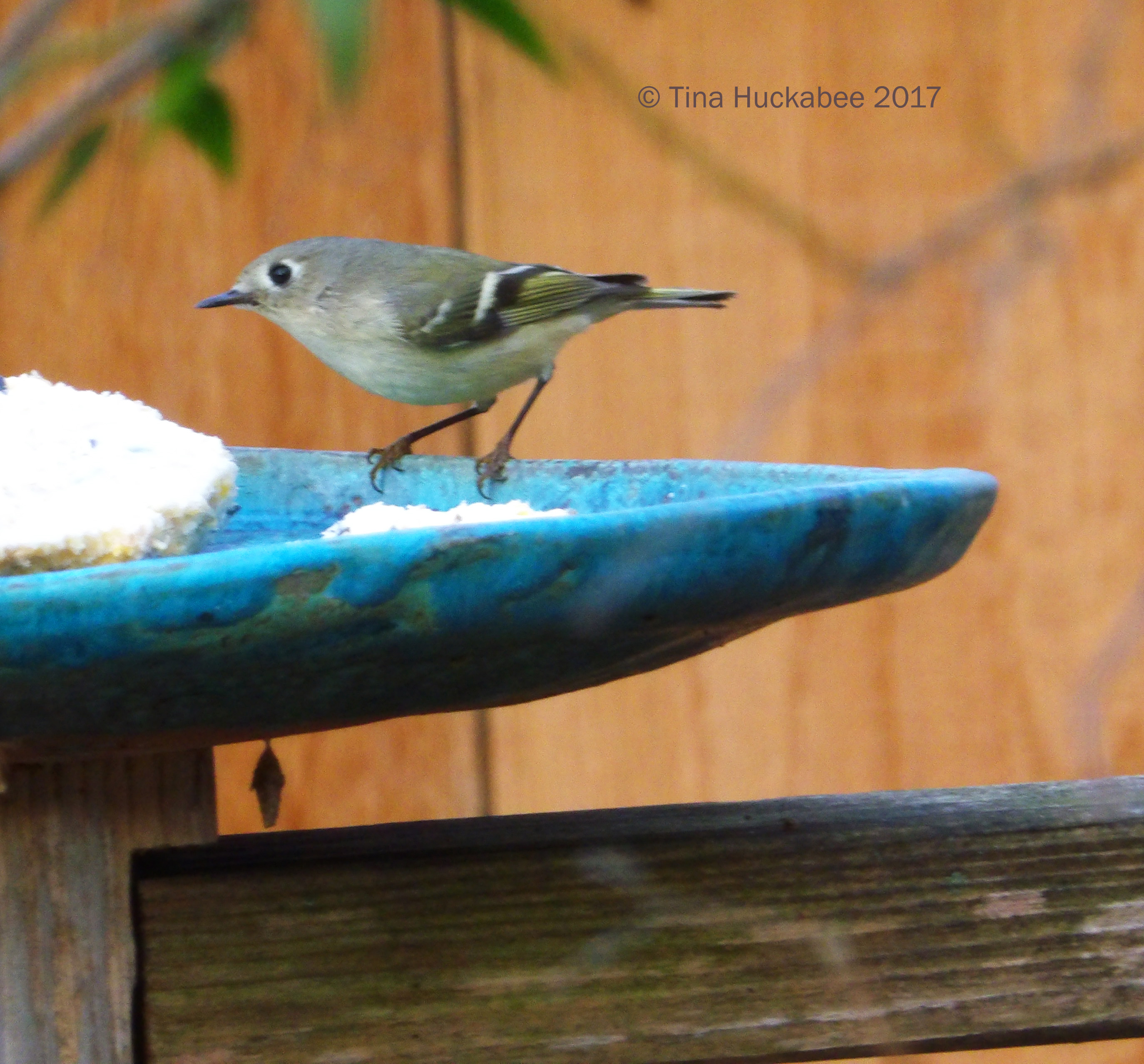
This Ruby-crowned is diving into the suet.
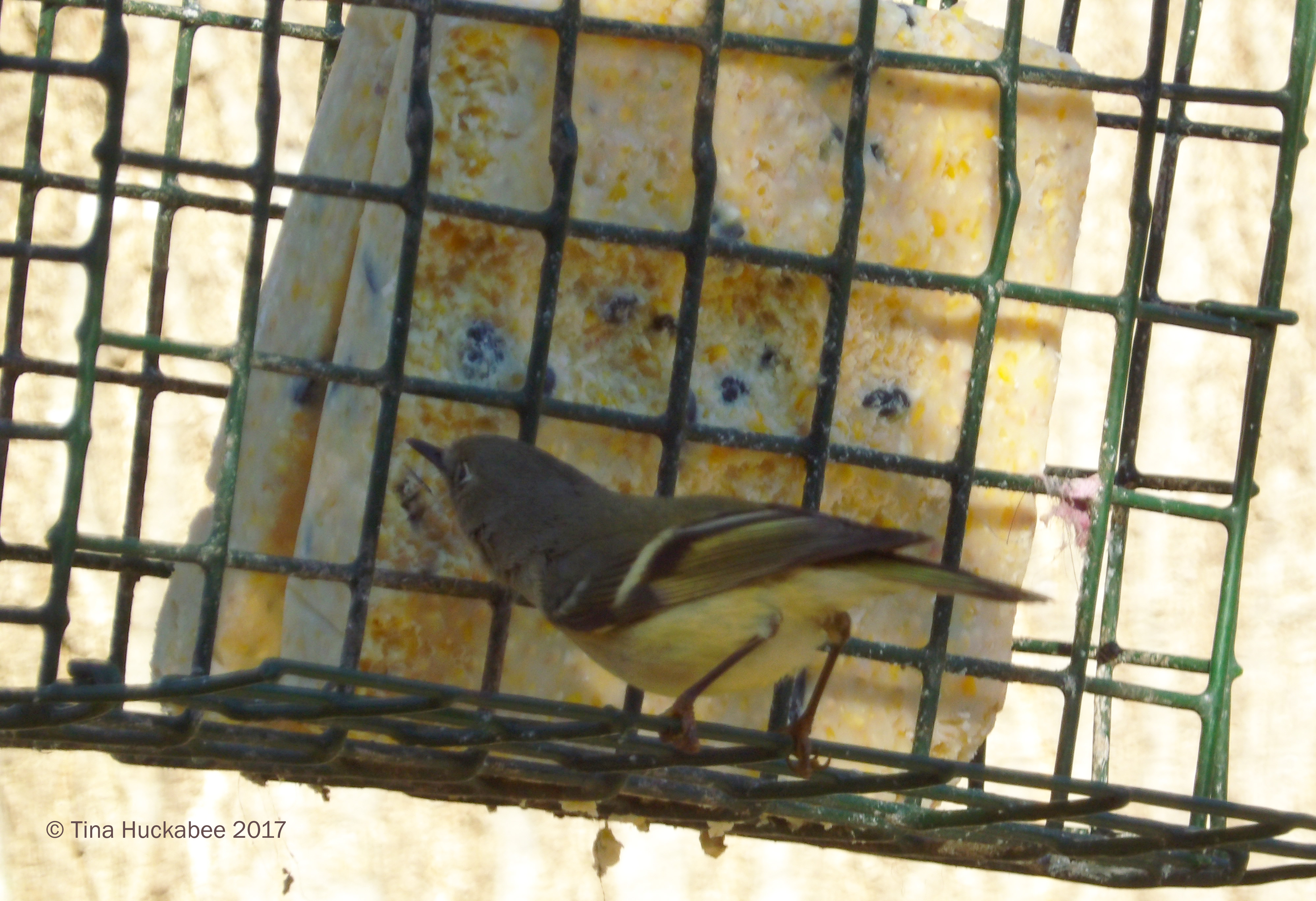
The two in my garden take turns snitching suet from the feeder.
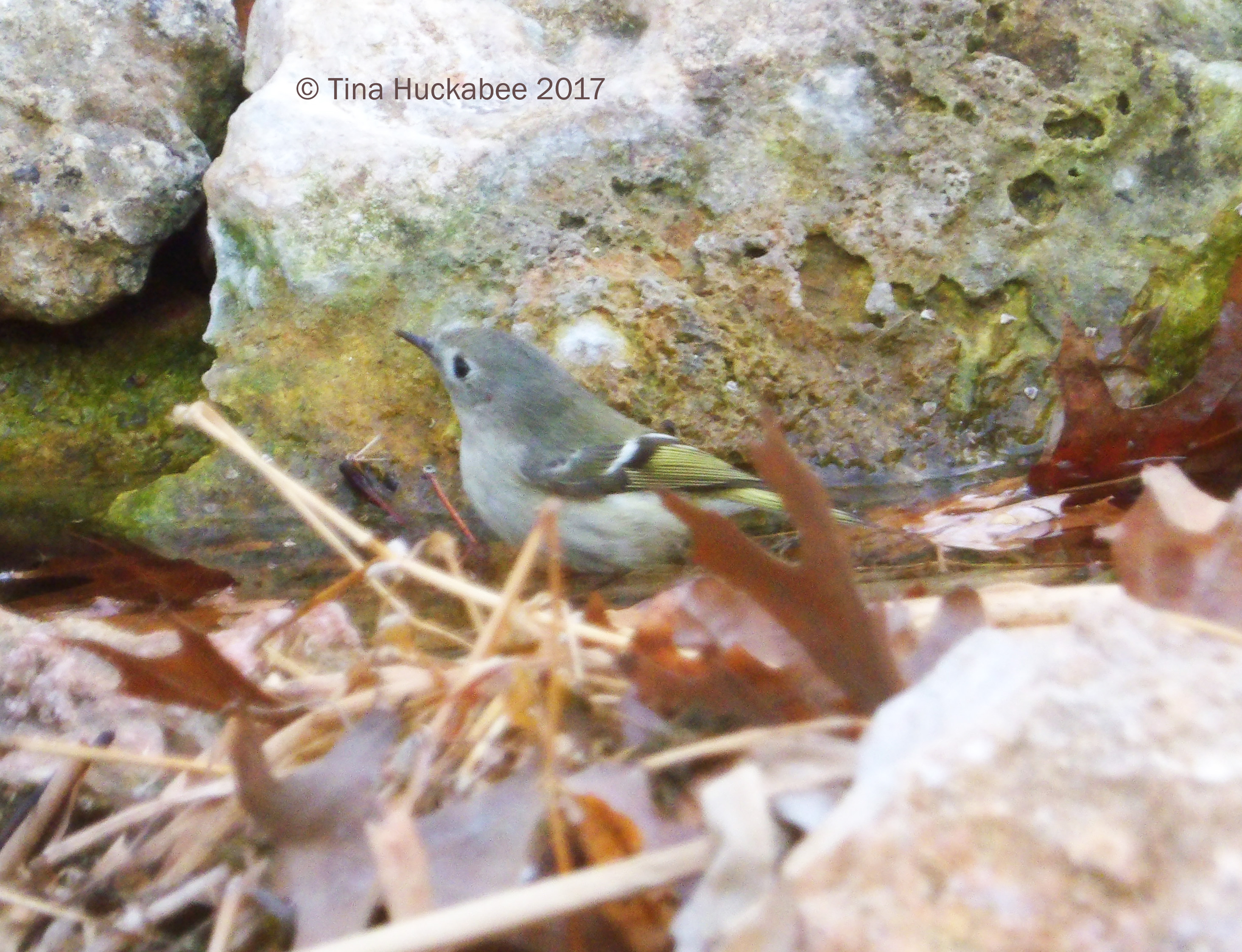
After feeding comes a bath in the bog area of the pond.
The male is identifiable because of the startling red feathers on top of his head that he fluffs up when he’s issuing a warning or flirting with a girl. In this photo, it’s a barely visible suggestion of a red stripe.
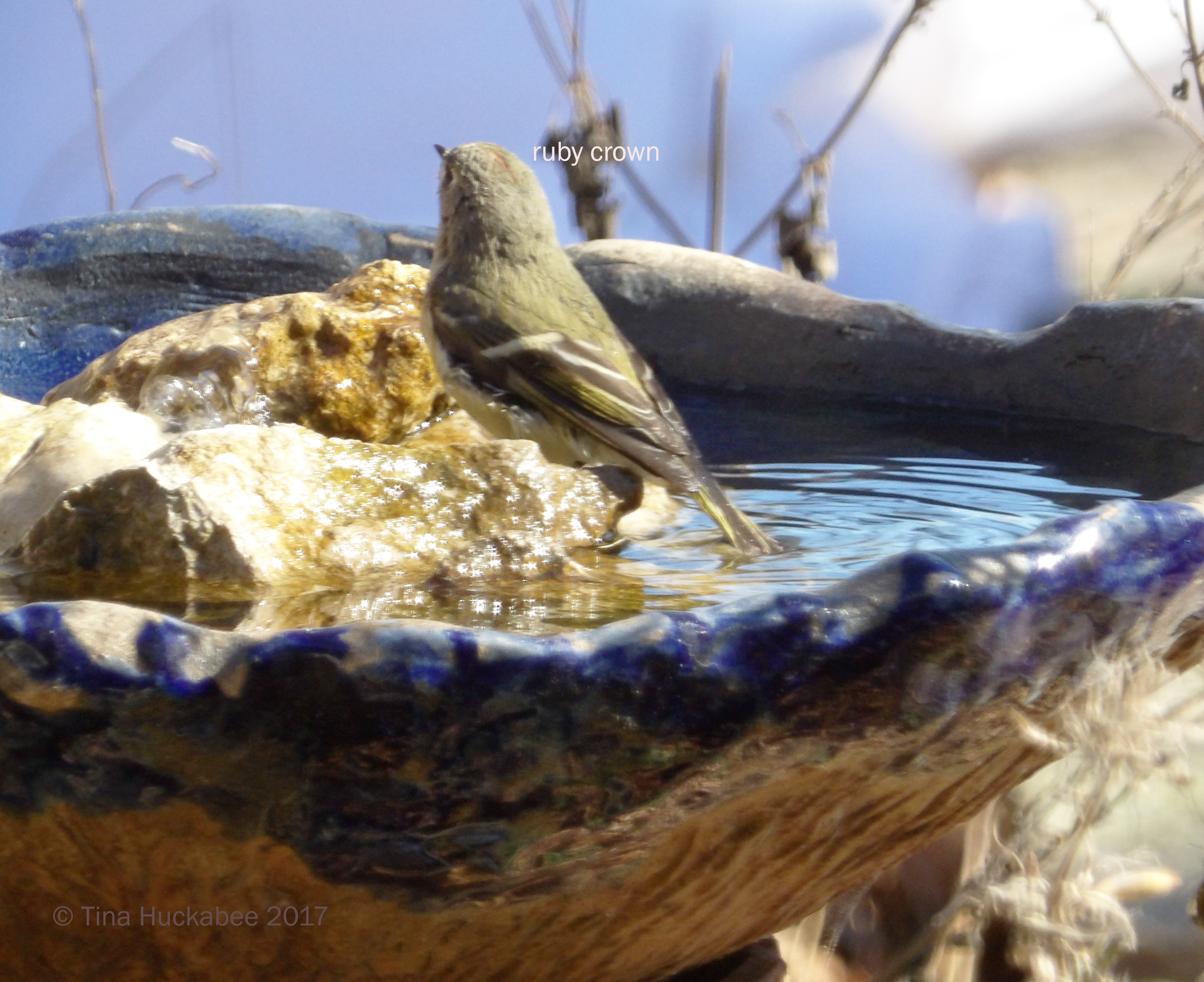
Along with flirting and blustering, bathing is included in the list of what elicits the ruby-crowned flash,

…and after-bath fluffing revs up the red feather action, too.


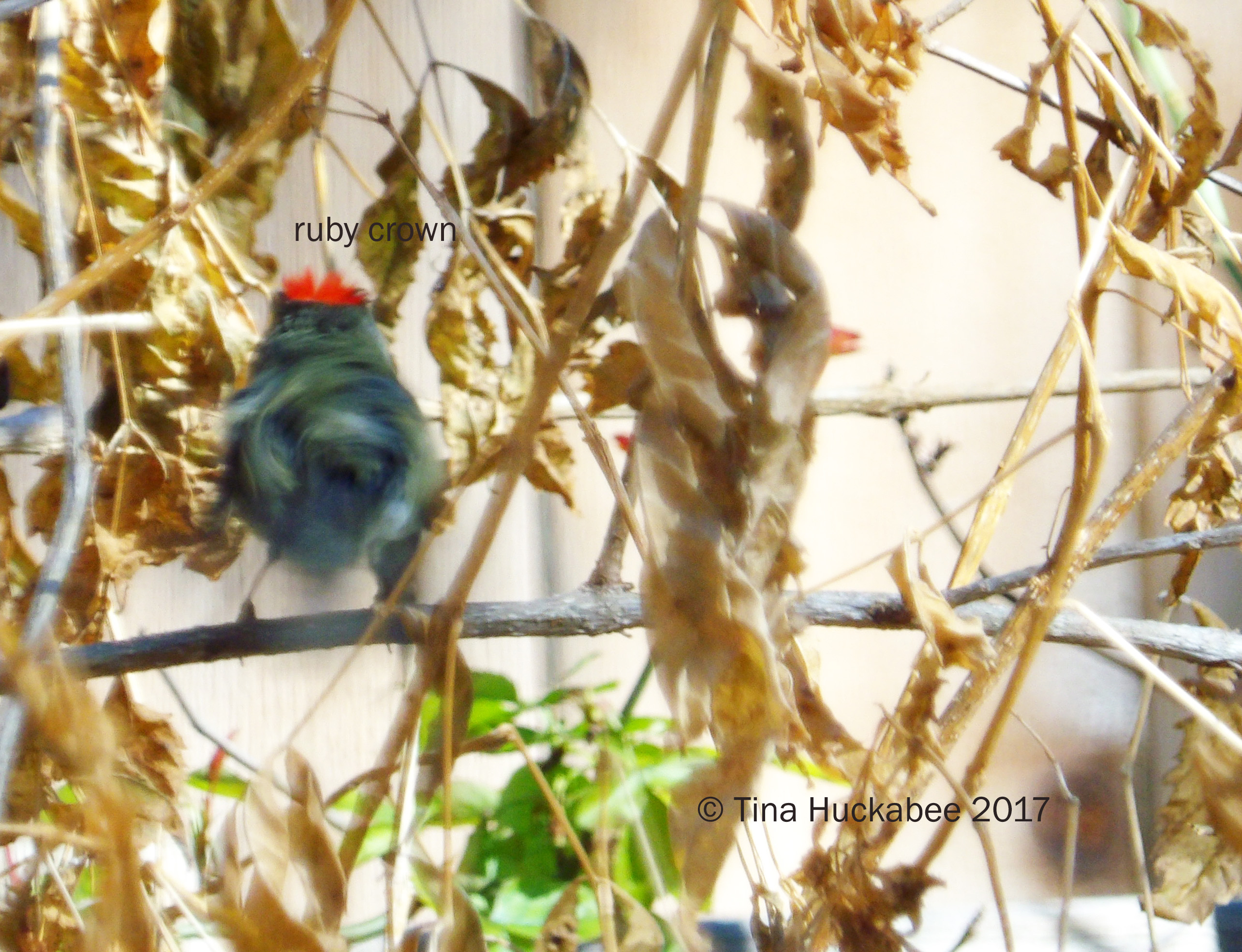
The ruby crown looks like he’s sporting a little campfire on his head.
It’s remarkable just how RED that crown is when it’s up and flashing. When it appears, it’s truly a ruby jewel in the garden; when the sun spotlights the ruby crown, it positively glows.
Those aren’t great photos and I’m working for better during his winter stay. The Ruby-crowned Kinglets are so fast that competent captures of these little birds has been a challenge.
Another winter warbler who visits daily is (at least) one Orange-crowned Warbler, Oreothlypis celata. He/she/they (there might be more than two) are shy and are often chased around the garden by the larger Yellow-crowned Warblers. I’m not sure why, but I observed that behavior of Yellow-rumps toward Orange-crowneds last winter too.
Birds are bullies sometimes, just like people are bullies sometimes.
Orange-crowned Warblers sing a sweet cheep cheep and that’s usually how I find them in the oak trees. They favor flitting through the shrubbery, snipping off insects and are more reticent at the feeders than either the Butter Butts or the Ruby-crowned Kinglets.

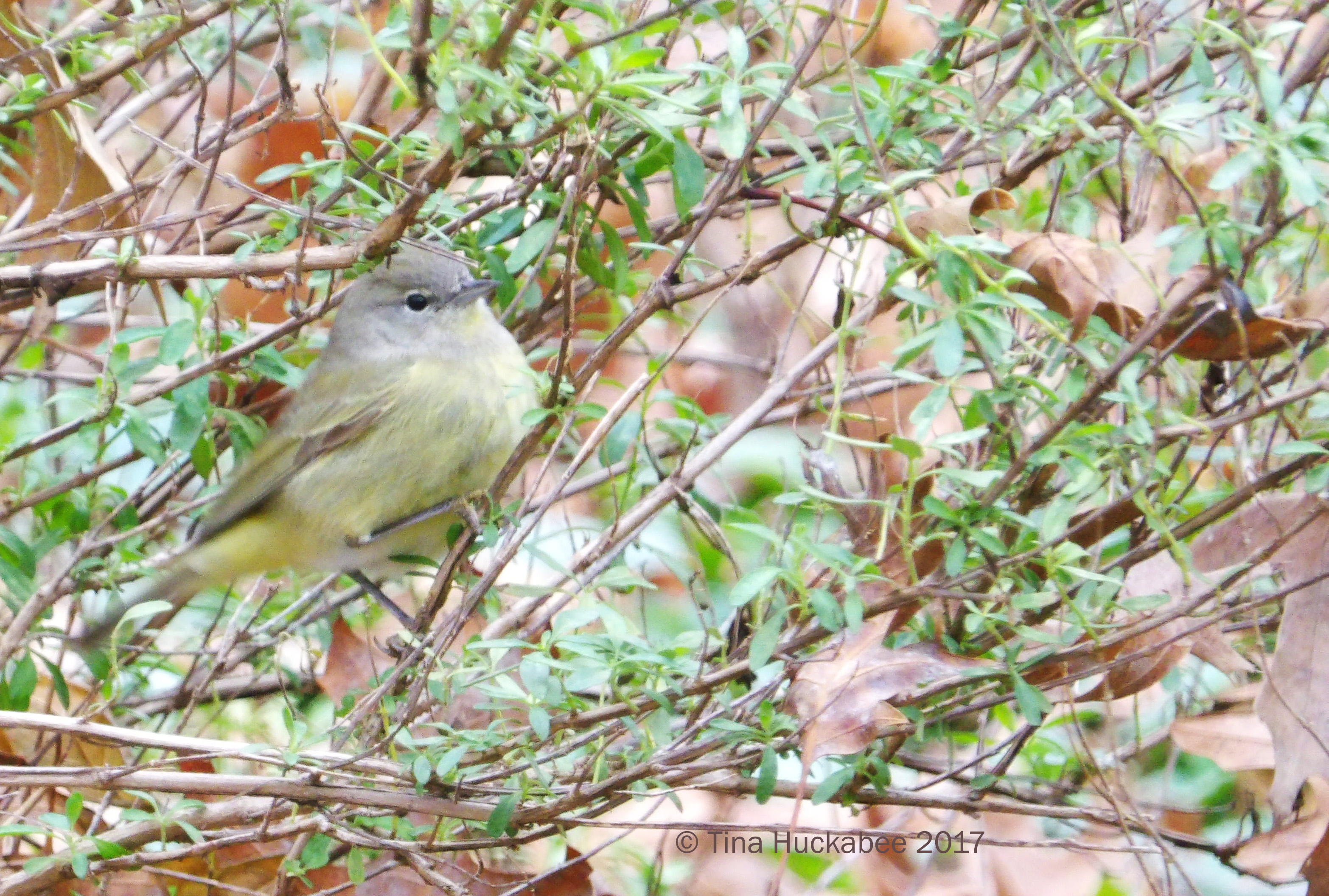
Such a sweet face!
Toward the end of the month, the Cedar Waxwings, Bombycilla cedrorum, appeared in their usual flocks of many. This beauty is an anomaly as he sits quietly and alone, proudly perched in the Red Oak.

There should be ample opportunity to see and hear these beautiful birds before they leave in late spring for their summer breeding grounds.
I hope your garden is full of wildlife and that you observe, learn, and appreciate their place in the world. Let your garden be a place of renewal and strength.
Did wildlife visit your garden this past month? Please post for February Wildlife Wednesday. Share photos and stories of your garden wildlife to promote and appreciate your region’s natural habitat and diversity. When you comment on my post, please remember to leave a link to your Wildlife Wednesday post so readers can enjoy a variety of garden wildlife observations.
Happy wildlife gardening!





 My Gardener Says...