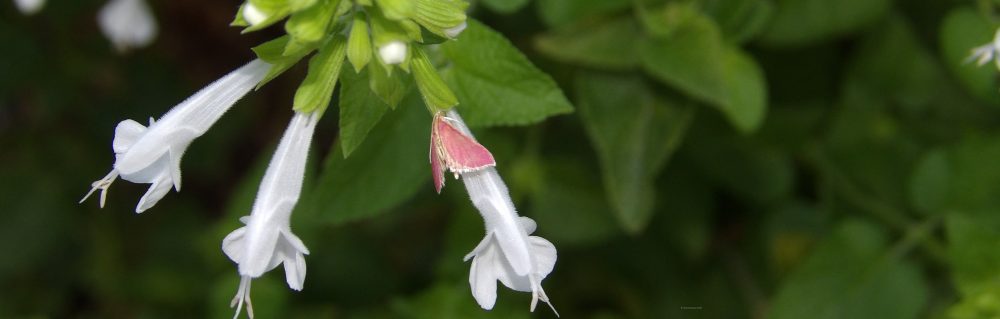
Despite summer’s heat as daily fixture of life, the garden and its critters go about their business of growing and blooming, nectaring and seed-eating. I swelter in the garden, but revel in observing the abundance of wild activity. Welcome to Wildlife Wednesday, marked on the first Wednesday of each month and celebrating the wild things in our gardens and wherever we meet them.
The garden currently enjoys no shortage of Horsefly-like Carpenter bees, Xylocopa tabaniformis. They are the most numerous, and active, of the native bees that I see; they are earliest at work in the morning and the last to clock-out in the evening.

This one demonstrates nectar-stealing, so no pollination here, but she’s slurping up the good stuff for her larvae and herself.

While taking my elderly dog for his outdoor breaks, I’ve noticed the popularity for blooming oregano among pollinators. The petite, clustered blooms attract a variety of pollinators–huge and tiny, colorful and plain. I was especially pleased to witness visits from both a male and female Eastern Carpenter Bee, Xylocopa virginica, a relative of X. tabaniformis.

The white face indicates a male bee.
Considered common here in Central Texas, I haven’t seen this species often and am happy to welcome this new-to-my-garden visitor.
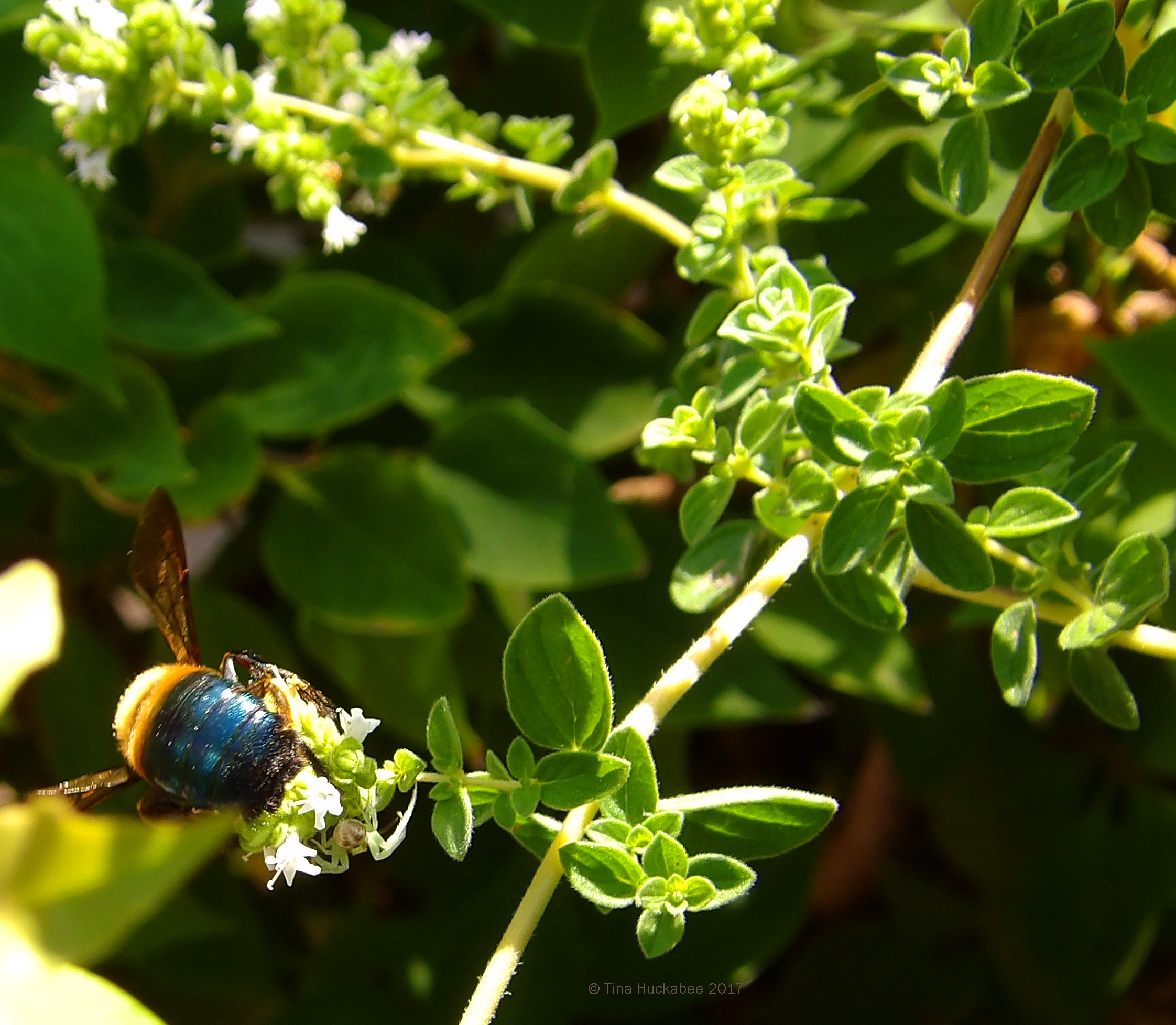
His lovely back side, wings aloft.
The sun was spot-on as I photographed mid-afternoon–normally a problematic time of day for photos–but I think the bright light beautifully illuminates his subtle coloring.
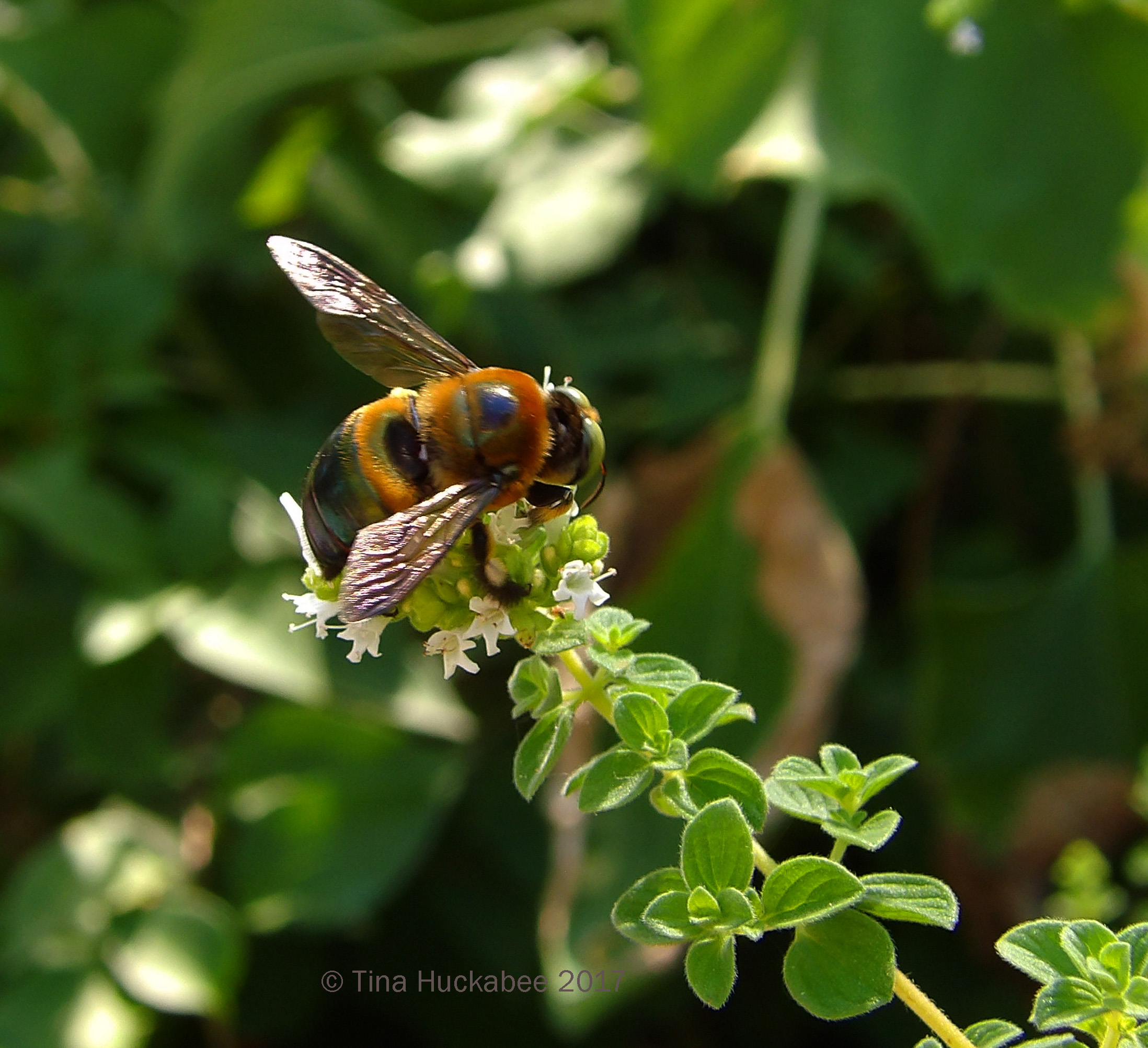

He and his female friend also visited Turk’s cap and Shrubby Blue sage blooms as well, but both favored the oregano flowers.

I grow two oregano plants (and also, two basil plants) in my herb garden: one of each for me to snip from and not allowed to flower, the others left to bloom for the bees and butterflies.
Another spectacular pollinator who works the oregano blooms is this stunning green metallic bee, which I believe is a Sweat bee, Augochloropsis metallica.
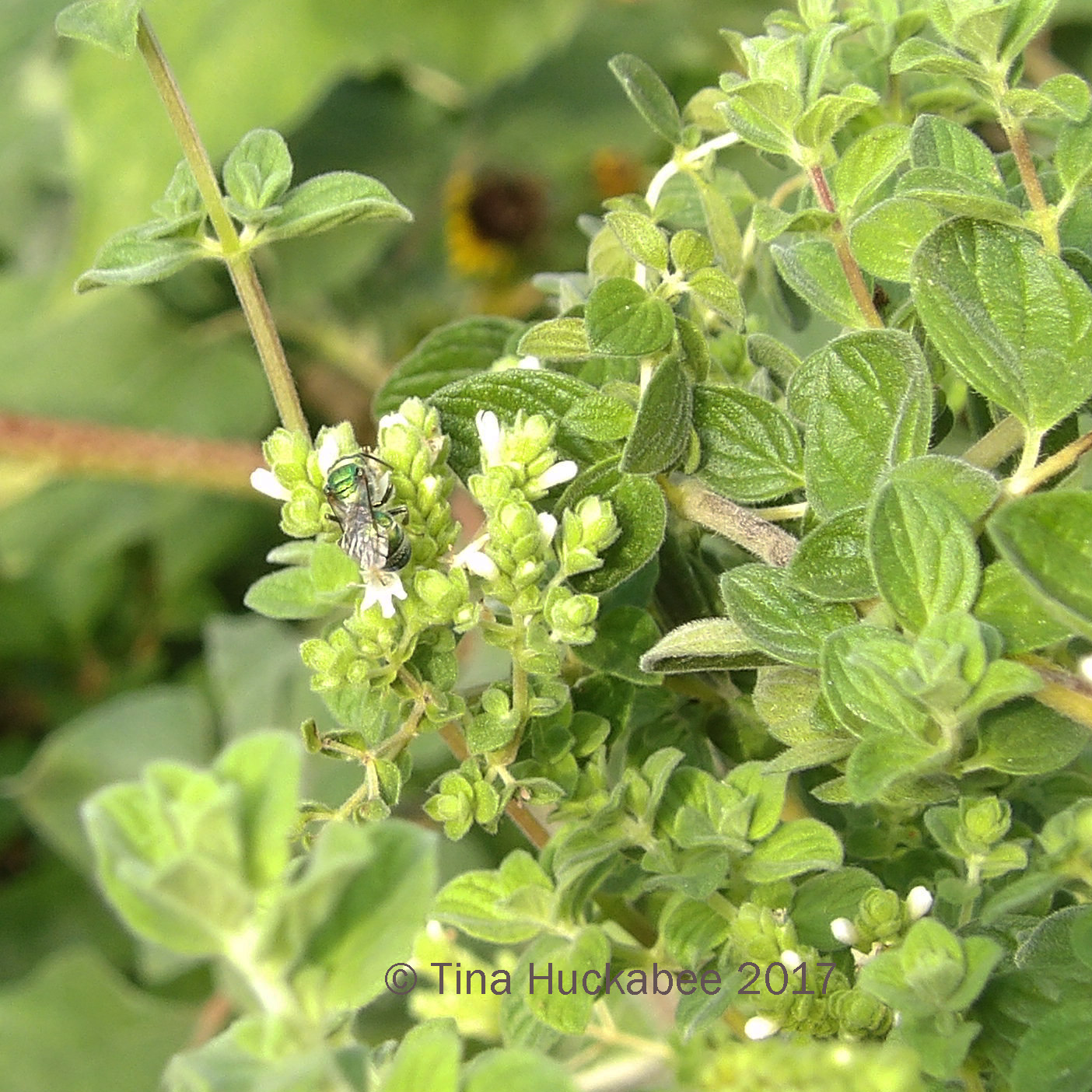
I saw this bee (these bees?) several different times, and like the Eastern Carpenter, she nectars at several plants. But her favorite meal is found at the little oregano flowers.

The Texas July sunshine highlights her stunning coloring and glittery presence.

A two-fer in this shot with the sweat bee sharing space and food with a honeybee. The honeybees are regular customers of the oregano flower buffet and are always buzzing around the oregano.

Ms. Metallica plays peek-a-boo, while Ms. Honeybee gets to it!
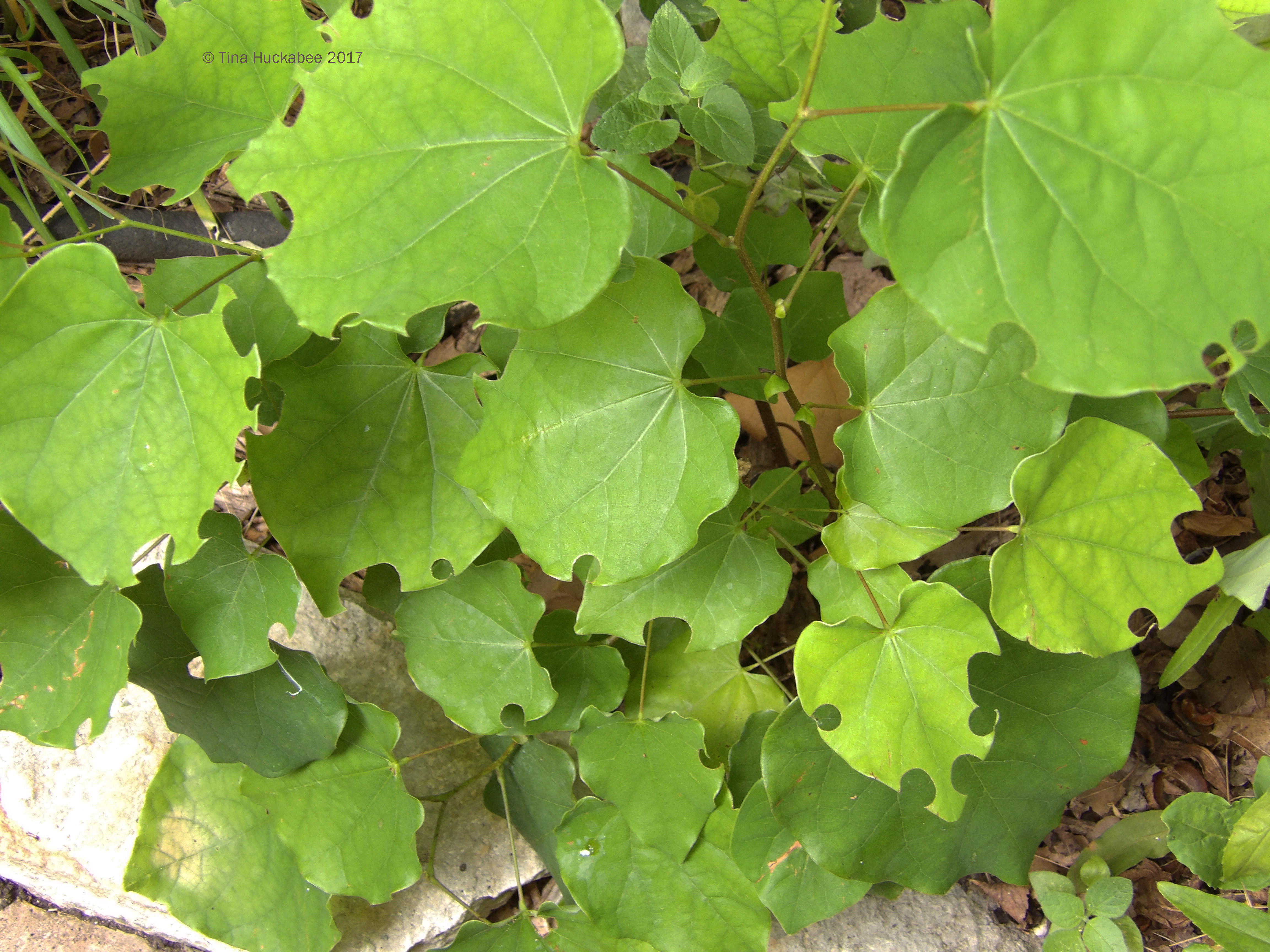
These scalloped leaves show cutter bee activity, though I haven’t actually seen them munching away. The females carve round holes, or partial holes, in leaves, then mix the leaf component with pollen and mud. The bees use the mixture in their nurseries as a stuffing to protect eggs and feed larvae.
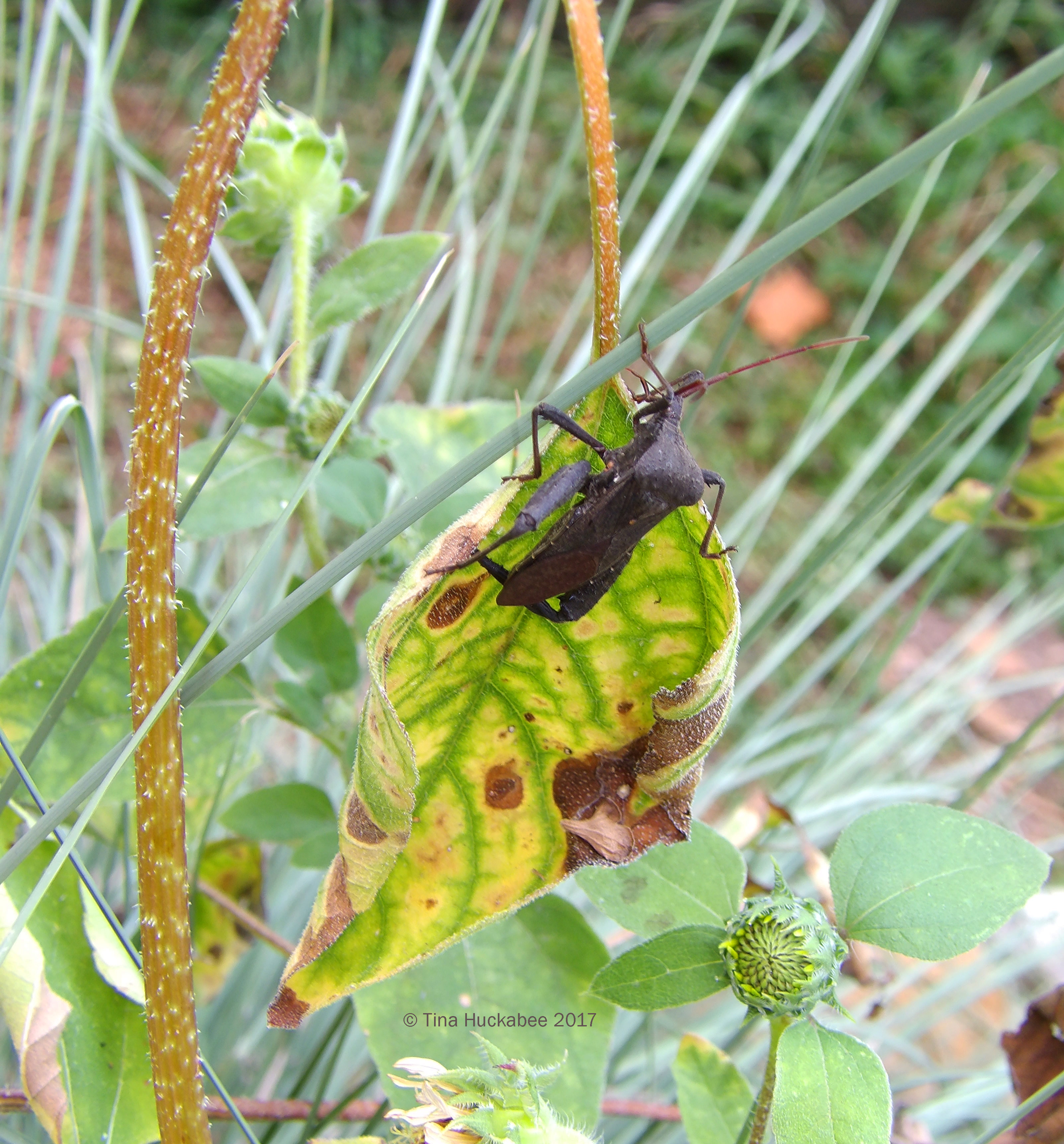
I spied this Leaf-footed bug, Acanthocephala terminalis, along the beam of a blackberry vine-enveloped trellis. I thought he might strike a manly pose for me; instead, he skittered behind a leaf, glancing once to check if I was still there.
I was.

Later, he flopped down onto a sunflower leaf, which looks worse for wear, either from the doings of a sucking insect (maybe our leaf-footed friend?), or perhaps, just the heat. I like to watch these insects. They’re shy and avoid confrontation, but can apparently deliver a wallop of a sting if need-be. I maintain a respectful distance and hope they don’t damage too many leaves.
They don’t.
Dragons and damsels are back and it’s murder and mayhem in the garden, carried out with swift efficiency by these predatory beauties. This sparkly jewel of a Neon Skimmer, Libellula croceipennis, is a fixture in the garden when resting and an aerial acrobat as he hunts mosquitoes. And I’m just fine with that.

His bright coloring indicates a male. His mate wears a muted orange, not quite as dazzling.
Resident birds while away the summer months, munching seeds and insects, and cooling off in bird baths and at the pond. This female (or juvenile?) Great-tailed Grackle, Quiscalus mexicanus, contemplates a dip in the waterfall. Grackles and Blue Jays are consummate bird bathers.
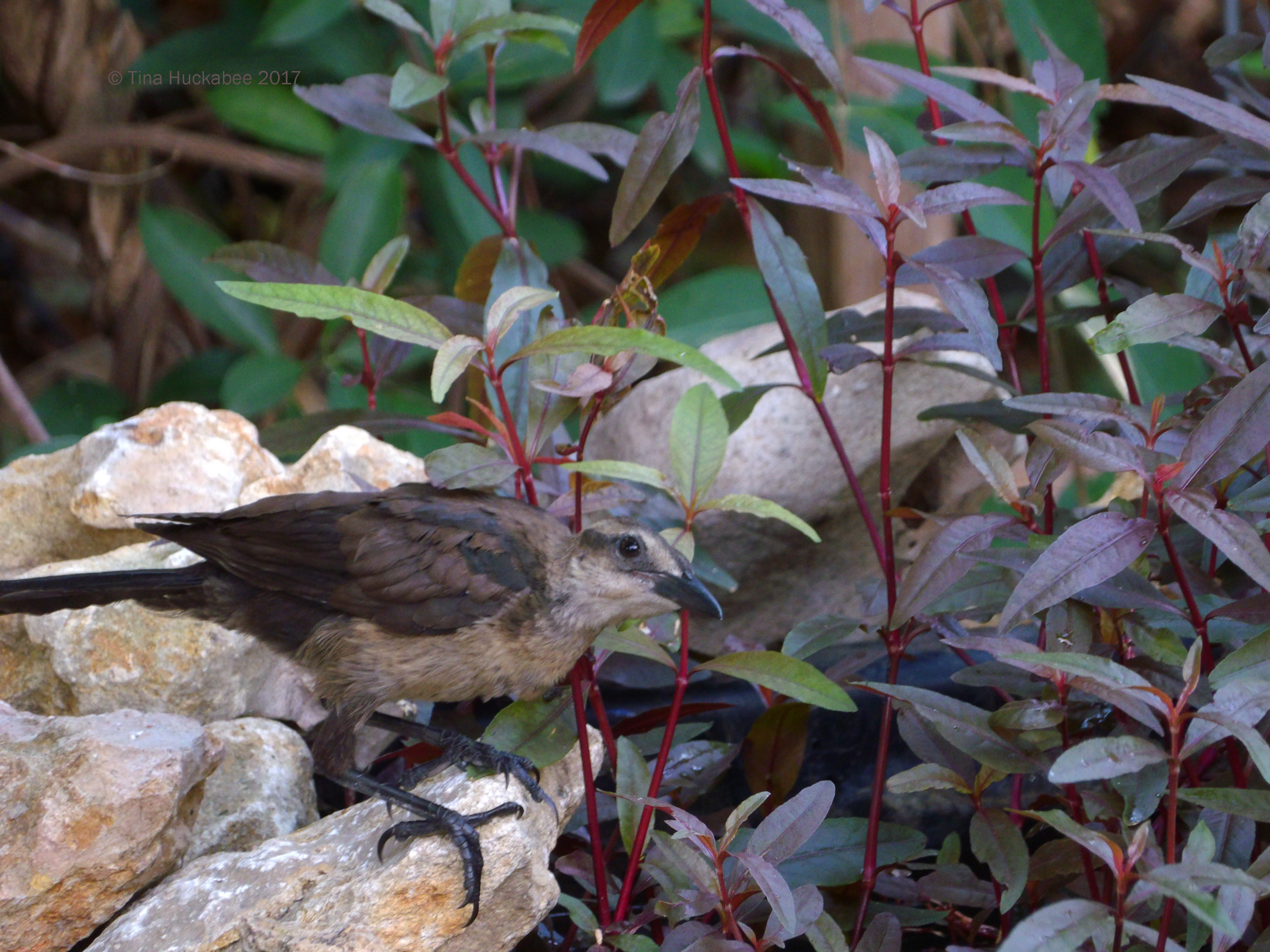
Before they plop into the water to bathe or sip from its flow, many birds perch on the rocks and take advantage of the cover provided by the Ruby Red-runner plant which accompanies the flowing water into the pond.
This Carolina Chickadee, Poecile carolinensis, steadfastly refused to look my way as it perched just above the waterfall.
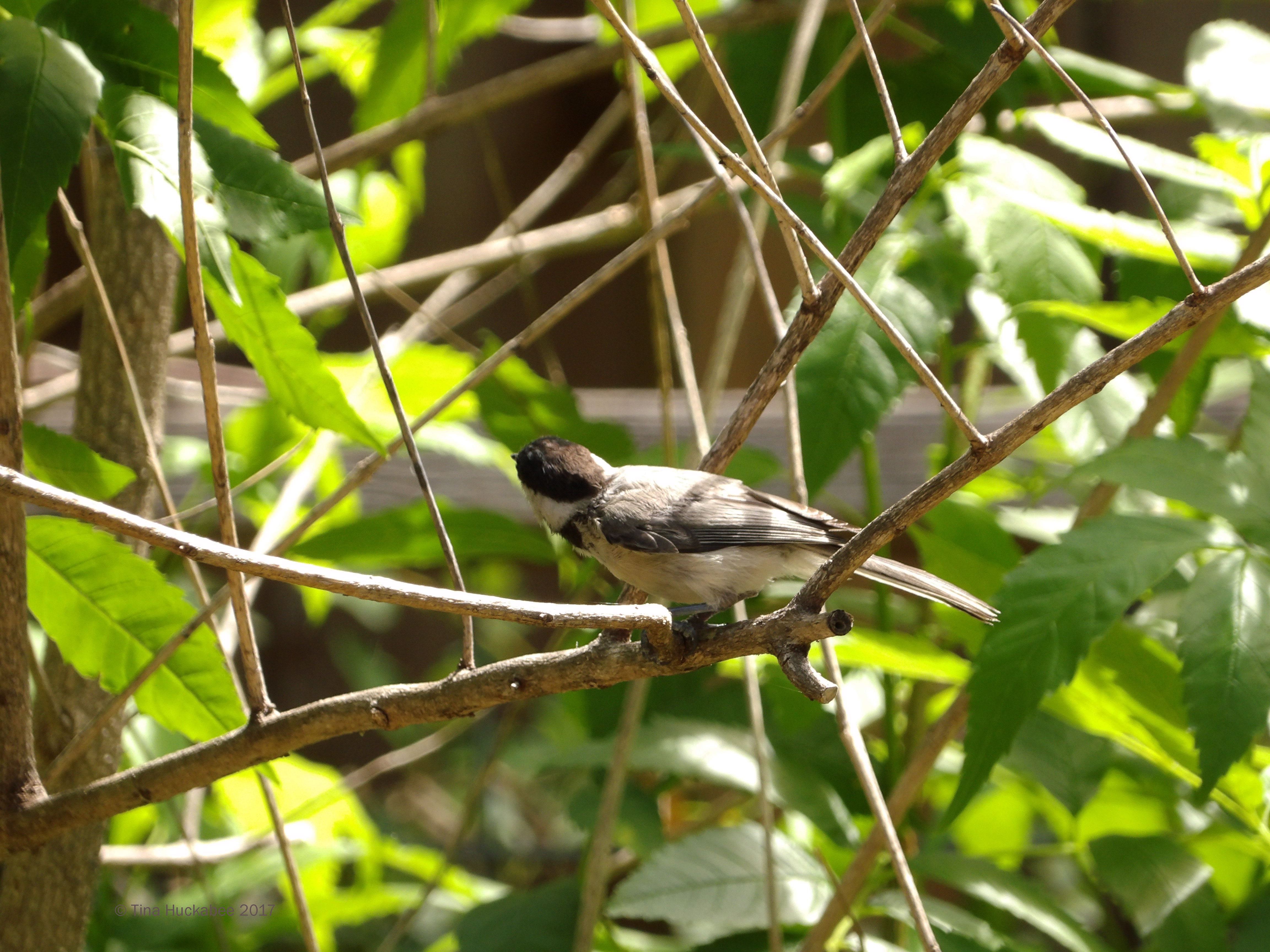
After winter, I didn’t prune the Yellow Bells, Tacoma stans entirely so that the birds could enjoy a safe place in which to perch and watch their surroundings.
Still, he could have given me a thrill and glanced my way. I was able to catch a slightly better look at his cute face only after he flew to a different location.
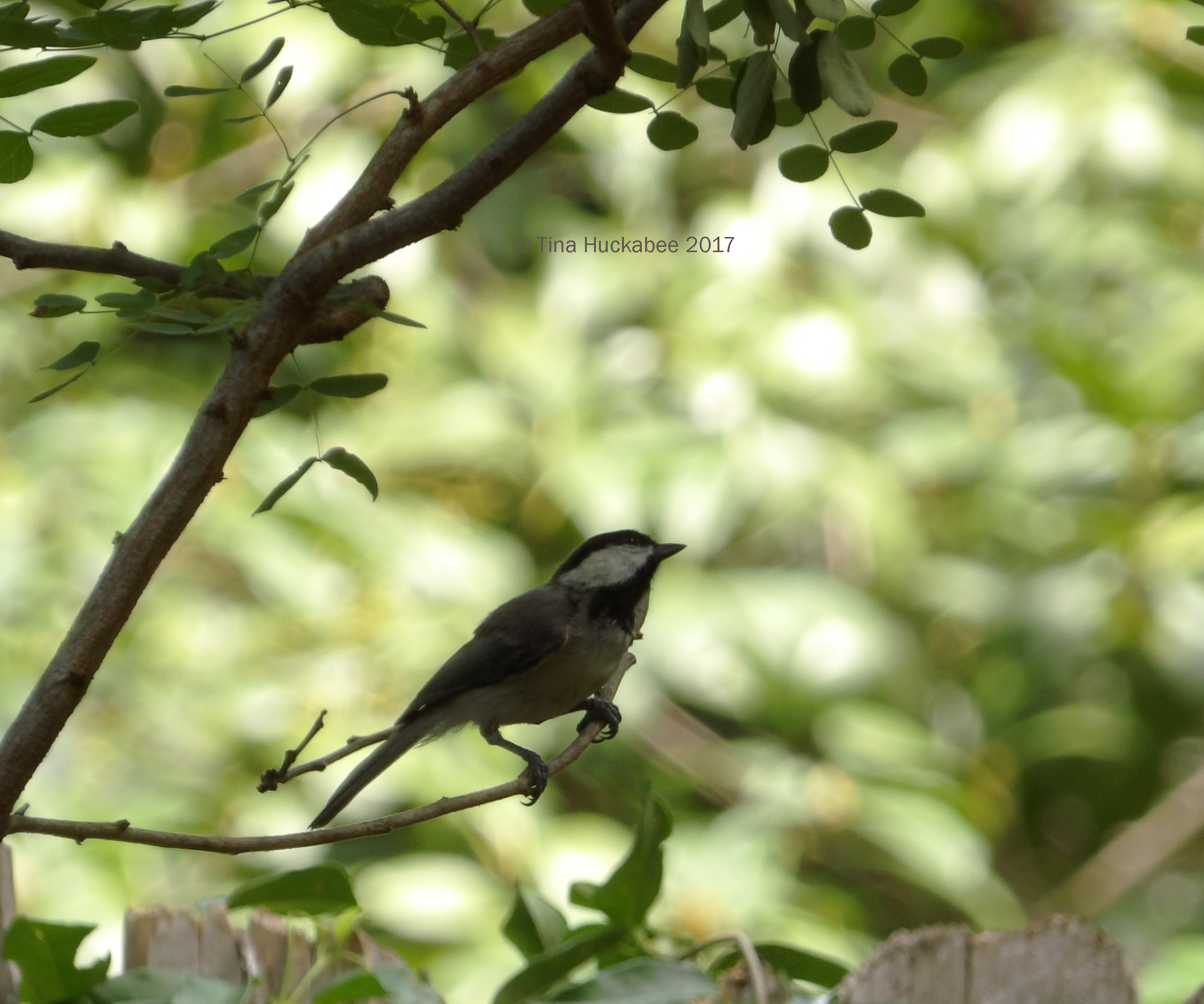
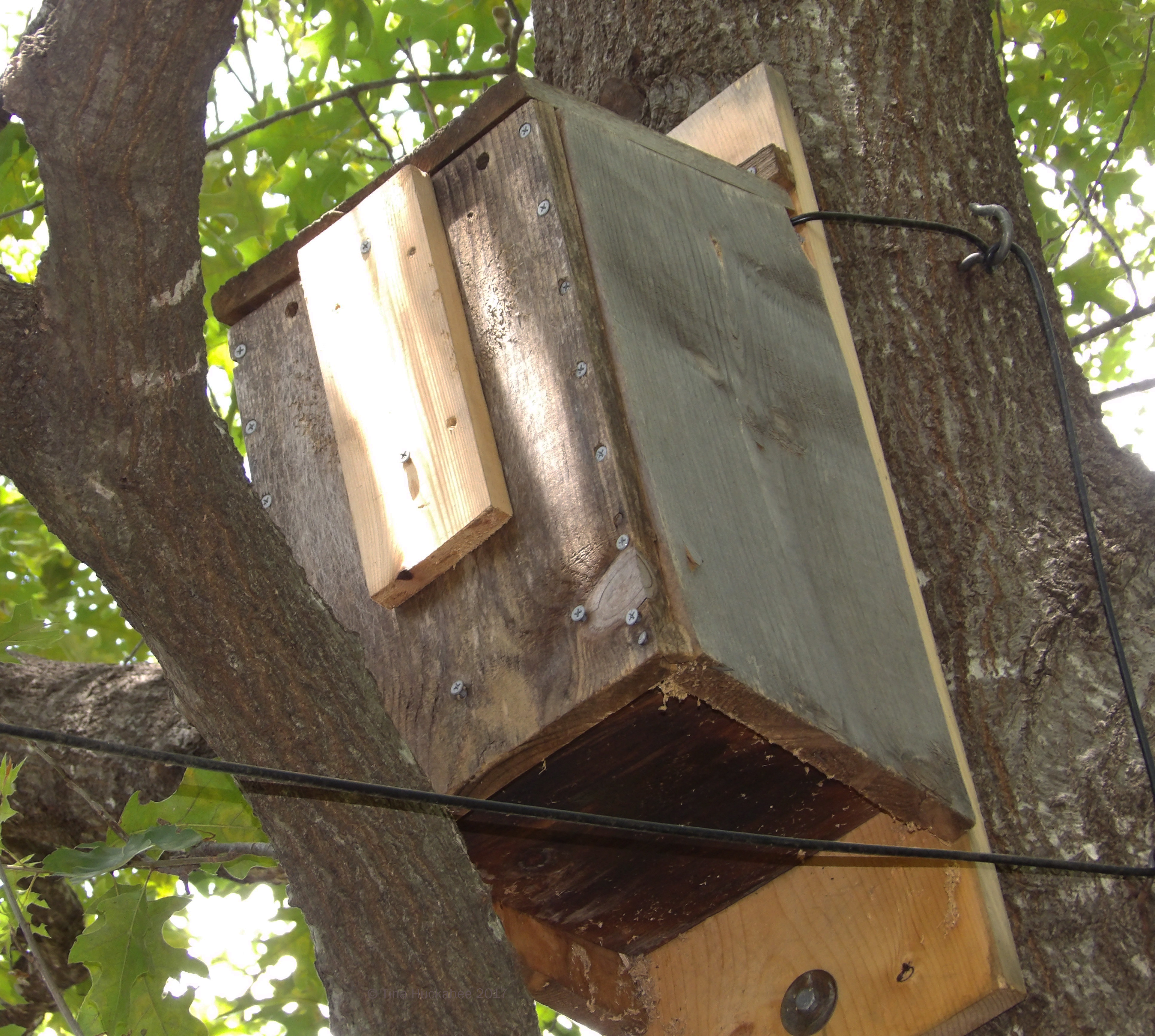
The Chickadees are year-round residents in Central Texas and regular visitors in my garden. We placed nest boxes for them, the Carolina Wrens, and the Black-crested Titmice, but had no takers–the nest boxes sit abject and empty. All summer I’ve watched as each of these parents showed their offspring the avian ropes: sipping from the baths and pond, noshing from the feeder and plants, and teaching the how-tos of safely traversing the trees. They’re content to visit my garden, but not move in. I have no idea where they nest, I just know it’s not in my garden.
While pruning early one morning, I spied this resting moth, a Melipotis perpendicularis.

I know that I’ve seen this kind of moth before, though Austin Bug Collection says that this moth is not common. Perhaps I grow its host plant, though I didn’t find information about that.
Whatever you grow and whomever visits or resides in your garden, please post your wildlife happenings for this past month. If you don’t have wildlife in your garden, it’s easy to plant for them and provide a welcoming home: they’re entertaining, beautiful, and necessary for a well-rounded garden. When you comment on my post, please remember to leave a link to your Wildlife Wednesday post so readers can enjoy a variety of garden wildlife observations.
Happy wildlife gardening!




 My Gardener Says...