A Harvey Harmed Garden

The damage my garden received from the rains generated by Hurricane Harvey was nothing–really nothing–compared to the destruction wrought throughout southeast Texas and into Louisiana.  What Rockport, Port Aransas, Houston, Beaumont and other areas endured was catastrophic.  While harm inflicted to my garden was annoying, it will allow for a transformation of an heretofore shady situation to one where sun lovers will  flourish.

So what was the damage?

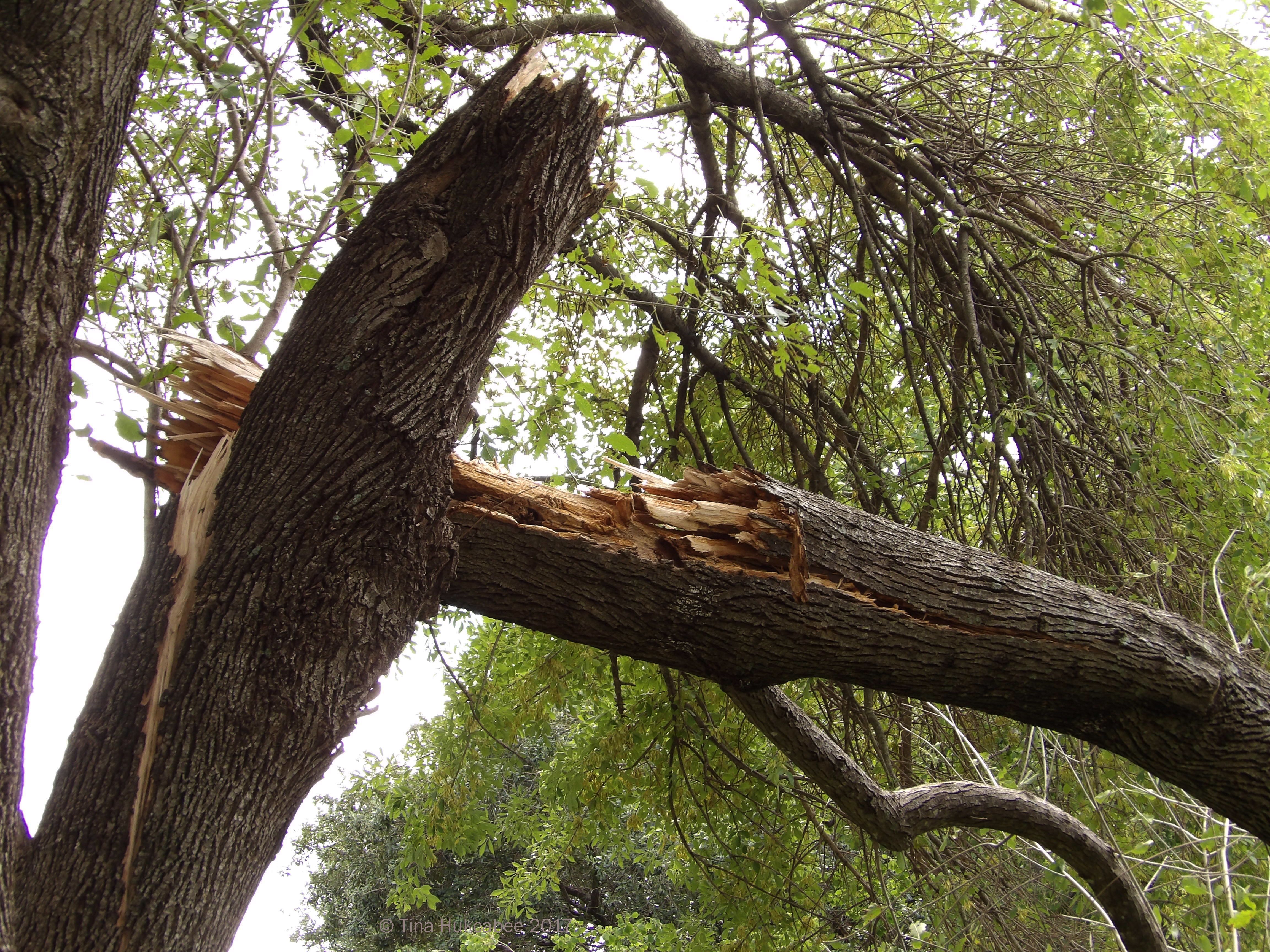
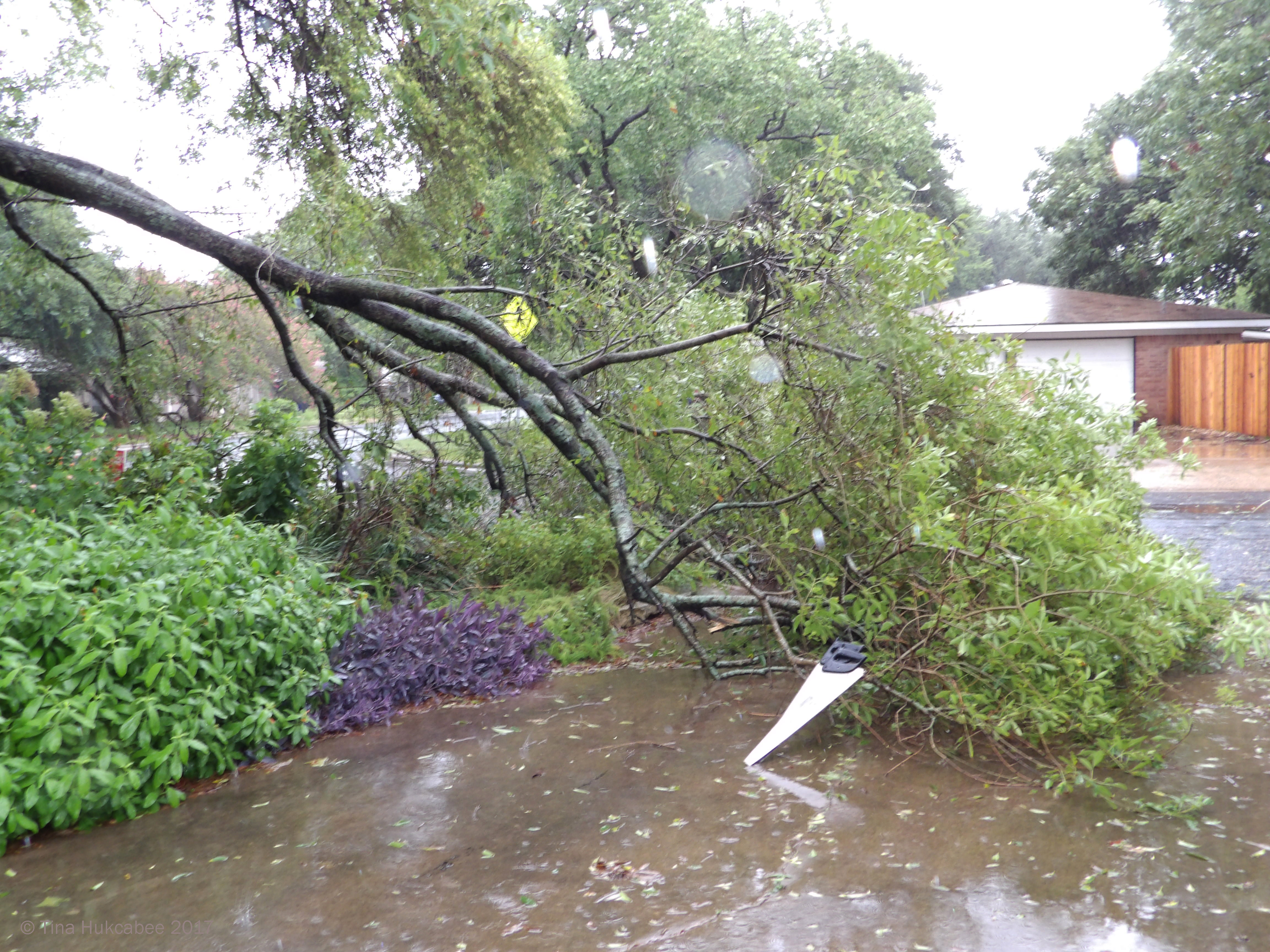
Yeah, that’s a problem. This mangled mess was caused by the 10-plus inches received that weekend and occurred in the form of a half-downed tree.

This mature Arizona Ash split at one of its two main trunks, not at the crotch (which might be expected), instead, a bit higher up.

Splayed foliaged and branches decorated the front garden, street, and driveway.

I called my arborist that morning, but he wasn’t able to take this job.  I made several other calls, securing a promise from a neighbor’s arborist–I was 7th on his list.  Because it was unclear how long it would be before the arborist could work some pruning magic on the tree (it ended up being 10 days), we gathered various saws and pruning utensils and got to work on the smaller branches in the street and along the driveway to tidy the tangle of tree.
A week after we pruned, some lovely guys from the city of Austin’s waste crew came by and removed most of the tree detritus.  Eventually, the arborist crew arrived, took out the rest of the large branches, and all was cleaned up.

The garden was ready for an assessment and possible re-do.

The fallen branch injured the Giant liriope and Inland sea oats that dominated the center part of this formerly shady garden.  With less overhead foliage, allowing for dappled morning and early afternoon light, and a now-clear western exposure, which means that the bright Texas sun will blast on the front of this garden, a reconsideration of plants is definitely in order.
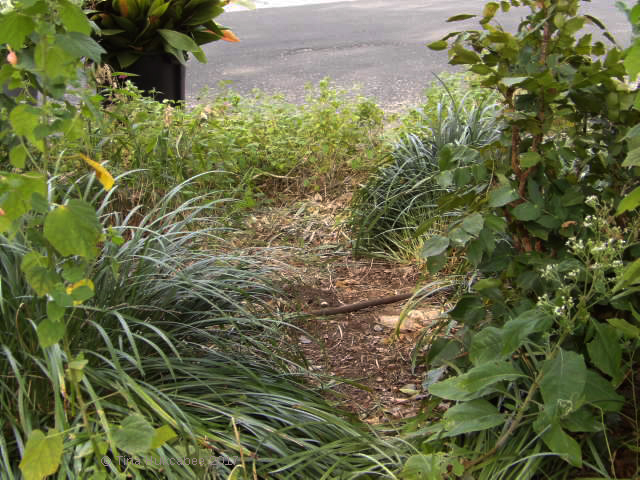
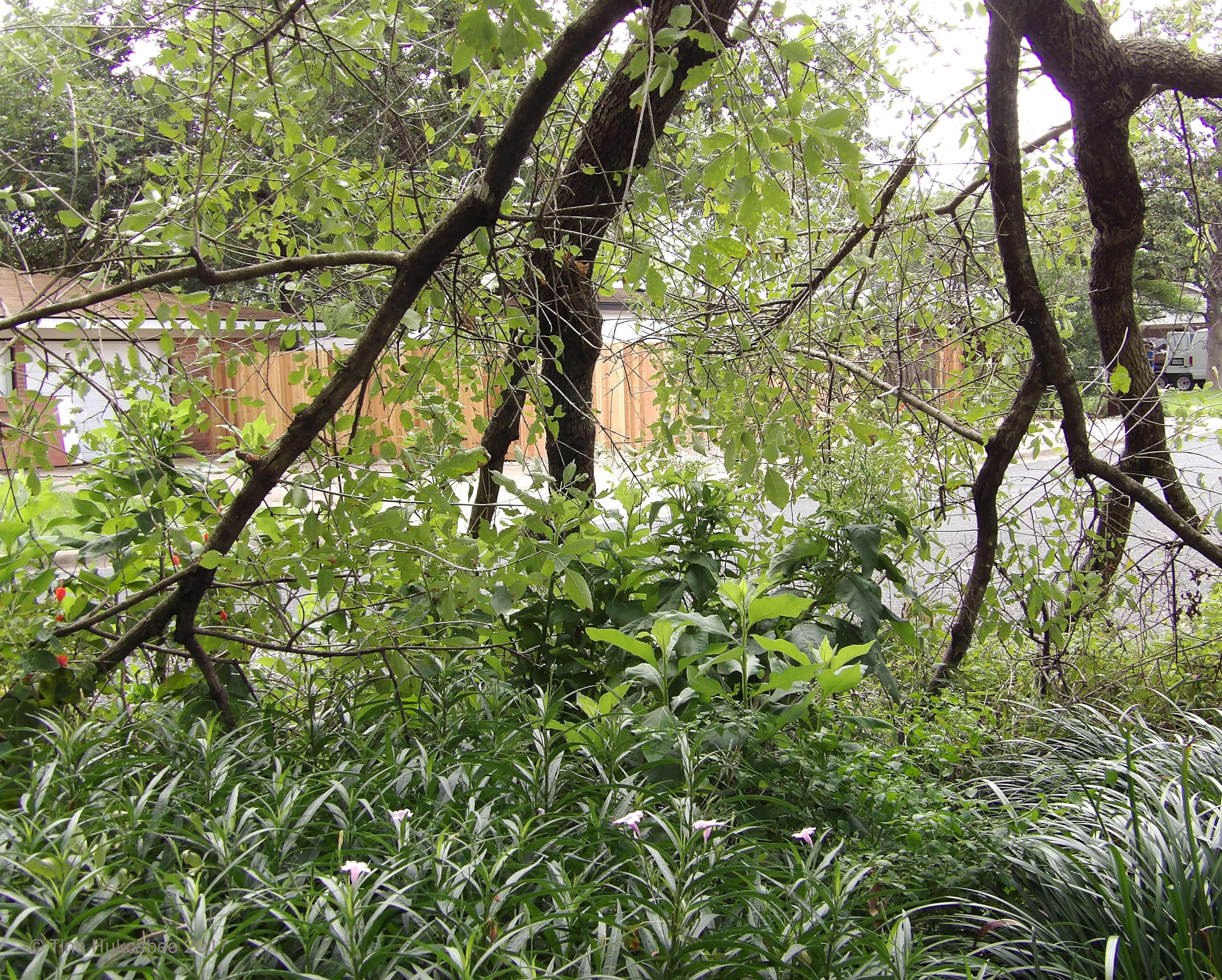
In this shot, some liriope has been removed, leaving a space for…?  Prior to the tree-fall, only the outer edge of this garden (at the street) received direct sun; after the tree-fall, all of this is in full sun.

This shot is taken from the street, looking toward the center part of the garden. The plants at the front of this photo are Rock rose (Pavonia lasiopetala) and thrive in full sun. The grassy Giant liriope can handle sun, but I’ve pulled them in favor of other perennials.


The dry-shade loving Cast iron plantsAspidistra elatior, must go–they will fry in the sun’s rays.

The deep green Cast iron is at the top of the shot, to the right of the silvery agave.

I’ve enjoyed the Cast iron plants in the front garden–there were three groups, only one remains for now.  They’ve provided evergreen structure in winter and a lushness that soothes in our hot summers.  But go these must and in fact, I’d already planned to remove one large section (opposite from this photo) this autumn because it’s receiving more sun, due to a neighbor’s declining trees.

I’ve removed the Liriope, Cast iron plants, and the Inland sea oats, finding homes for some, transplanting some, and ditching the rest.

Three of many bins of plants from this project.  The plants won’t go to the landfill, but will end up as part of  a sewage-sludge product called “DilloDirt,” an excellent garden amendment.


I’m in the process of transplanting some sun-starved shrubs and perennials from my increasingly shady back garden, looking forward to their thriving in a new, sun-doused home.  The fallen tree was a win-win for both gardens and for friends who were wanting shady plants for their gardens.

Lemonade from lemons.

A couple of nice gifts that Harvey’s rains left include these Red spider liliesLycoris radiata,

Blooming along with some happy Drummond’s ruellia (Ruellia drummondiana).

…and a clump or two of Oxblood liliesRhodophiala bifida.  

That said, neither of these beauties showed off much in my garden this past month.  Typically during September, there are several clumps of each that pop up and POP in the garden, responding to early fall rains.  This year though, they’re sulking and hiding for some reason.

Perhaps 10 inches over one weekend was too much rain?


Nighttime O’clock

As we drift decidedly toward the end of summer, with shorter days and longer nights, my garden remains enveloped–in what I hope will be–the last warm, humid breath of summer.  Prior to the formal advent of autumn, Harvey rains prompted a flowering boon throughout the garden. Blossoms abound for gardener appreciation and insect pollination, including flowers and their pollinators rarely seen.

Four O’clocksMirabilis jalapa,  are passalong plants common in southern gardens. Not native to Texas, they’re believed to have been cultivated by the Aztecs in Mexico before the Europeans arrived in the New World.  Linnaeus recognized this plant by 1753 and over the centuries, these pretty and hardy bloomers have become popular garden additions everywhere.

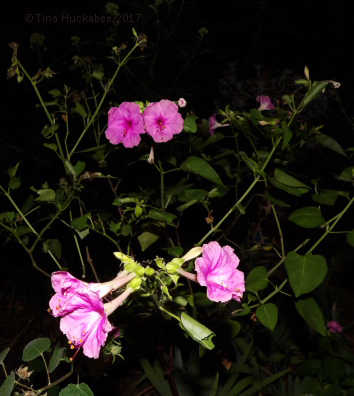
Mine were gifted to me by a gardening friend and as with so many gardeners and their beloved passalong plants, she didn’t know the exact name of either the pink,

The pinks appear to enjoy being paired with a blooming buddy,


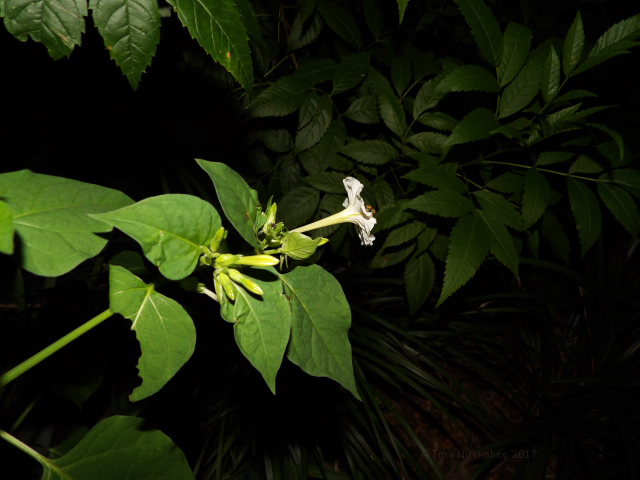
…or white individuals that now call my garden home.

…while the whites demonstrate their individualistic streak.


No matter, as I gratefully accepted the gifts and value their blooming beauty briefly each spring and then again, in greater glory, during late summer and fall.

While I didn’t observe any moths proboscises-deep in the blooms as I shot these photos, these nighttime lovelies are open for those who prefer the cover of darkness for feeding pleasure and pollinating duty.

Not to be outdone in the dark, this preparing-to-blossom Yellow bellsTacoma stans, begged for attention while overhanging a Four O-clock.

These clusters of sunshine will have to wait for morning’s light to provide for bees, hummingbirds, and butterflies.

What A Month!: Wildlife Wednesday

Welcome to Wildlife Wednesday, a monthly appreciation of wildlife in the garden, in the neighborhood, or in the wider world that you inhabit   For me, this was a busy and distracted month, but not necessarily an engaged month of chronicling wildlife goings-on.  I enjoyed observing the critters in my midst, but somehow, didn’t catch photos of wildlife doings. Some eclipse-viewing (it was truly awesome!), some time-spending with my traveling son (that was awesome, too!), and some helping said son prepare for settling half-way around the world, all took precedence  over any full-throated wildlife watching.

Oh yeah, there was also an unwelcome and destructive guest:  Harvey.

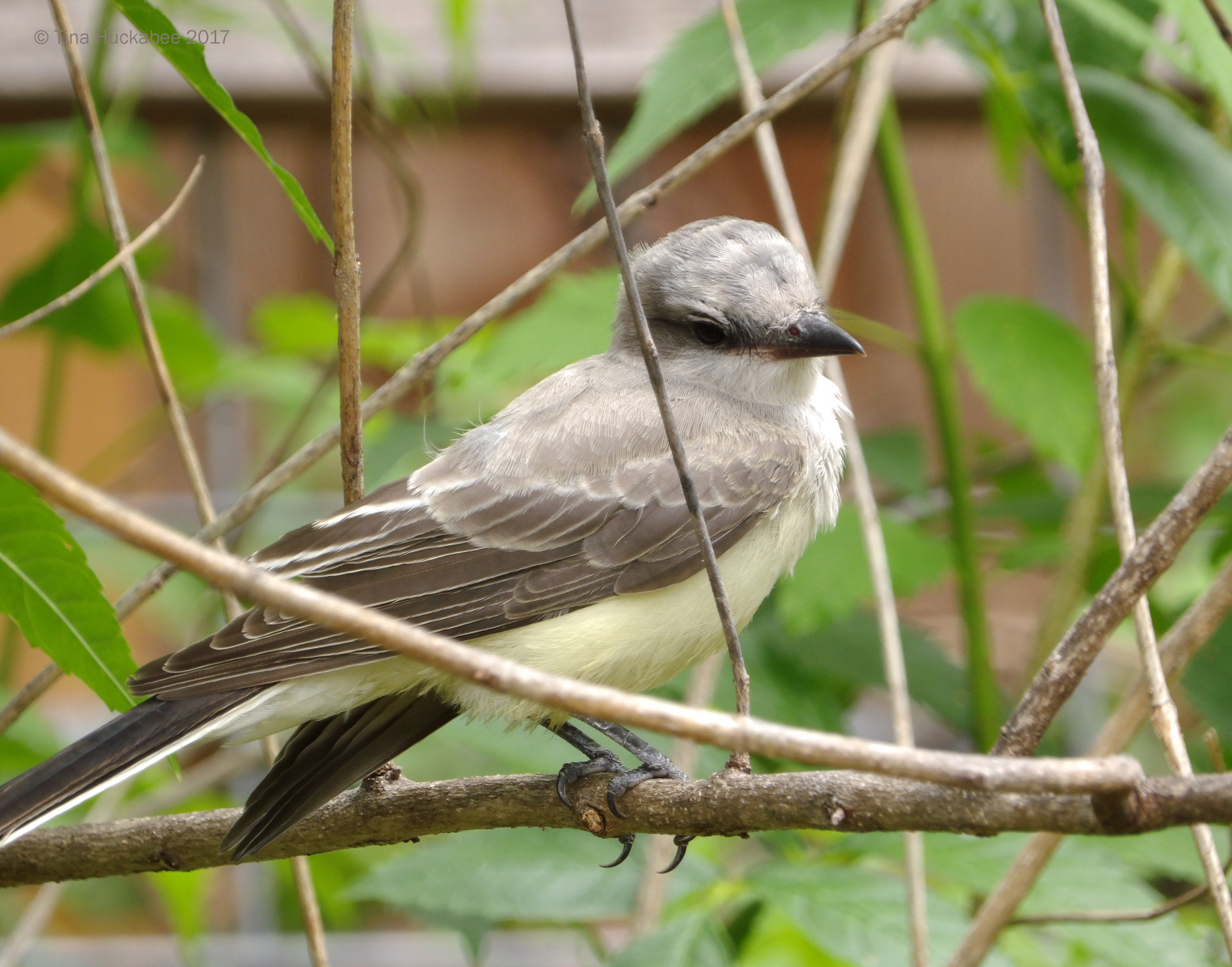
Mid-summer mornings were graced with a birdsong that I didn’t recognize.  Cheery, chirpy and with some variation, I rarely saw the bird–except when high in a tree or winging away from my sight in a flutter of feathers, I couldn’t quite match the bird with the daily serenade. Eventually though, I spotted this pretty visiting the pond.

A new bird to my garden, once I identified it, I also identified its song.  This is a Western Kingbird, Tyrannus verticalis.   I’ve seen these birds in other parts of Austin, notably at the parking lot trees of the HEB grocery store where I usually shop, but don’t recall ever having one visit my garden or neighborhood.  It seems that a pair nested in the neighbor’s tree for the summer and that they popped over to my garden to enjoy the water sources.

I’d typically hear their song in the mornings.  After identifying the bird, I learned that song I heard most often was the Kingbird’s morning song.  I also realized that I didn’t hear that song later in the day, even when the birds were around.   I witnessed their acrobatic flight, swooping through the tree tops, as they dined on insects in the late day summer sun. Western Kingbirds are large flycatchers who breed here in Central Texas and throughout much of western North America and winter in Mexico.

I don’t know if it was only the male, or female, or both, who visited–they share similar coloring and markings. The Western Kingbird is a darned cute bird!

By mid-August, the birds had apparently left the area, migrating to Mexico and the Pacific Coast side of Central America for their winter digs. I enjoyed their visits and have missed their morning calls; I hope they return next summer.

Hummingbirds have been active all summer.  In fact, I think I’ve seen more hummers in my garden this year than in the past decade or so.  That said, this is the only decent shot that I’ve managed:

I believe this is a female Black-chinned Hummingbird, Archilochus alexandri, and she represents a common hummingbird species in this area.  I think it’s a Black-chinned because the beak is fairly long and straight and this one is a little larger than the other common hummer, the Ruby-throated.  I’ve had no luck this summer with hummingbird action photos, though they are very much a part of the garden landscape, especially now as they prepare to migrate south.  I’m glad that I grow many plants that they like (Turk’s cap, Flame acanthus, Tropical sage, Autumn sage, Yellow bells, naming just a few) because much of their habitat along the coast of Texas–a major part of their migration route–was severely damaged during hurricane Harvey.  Rockport-Fulton, Texas has hosted the wildly popular Hummingbird Celebration each September for decades, but is devastated due to Harvey. Because Rockport-Fulton is decimated, the Hummingbird Celebration has been cancelled for this year, which is bad for both the people and the birds. Rockport-Fulton relies on the influx of tourist money generated from the annual celebration of these winged wonders, and the tiny birds fuel up for their long migration to Mexico, Central and South America by feeding from the abundance of hummingbird-friendly plants in that area and the multitudes of sugar-water feeders that residents and festival supporters place for the diminutive pollinators.  I fear that many hummers won’t survive migration this year as their needed nectar sources were stripped during the floods and high winds, and the good folks who hang sugar-water feeders for the hummers to feed from can’t do that now. There are few trees to hang the feeders from and most people along the coast are assessing damage, desperately cleaning up their properties, and attempting to return to some sense of normalcy.  It may seem trifling to fret about birds in the wake of a human and property disaster, but hummingbirds are important pollinators of trees, native plants, and commercial crops.

When their population plummets, the environmental impact is broad, and grave.

Wild Birds Unlimited (WBU) of Kerrville, Texas is taking donations of water and sugar, as well as providing feeder poles so that hummingbirds have some food available as they migrate through Rockport. Here’s an excerpt from their Facebook page about the plans:

Our Donation Plan;
I wanted to let everyone in on what your donations are doing, and how we will be moving forward.
1) For now we will NOT be accepting any more donations other than sugar and water and monetary . We have secured over 200 brand new feeders and poles from our great vendors that are heading to Rockport as we speak. And we have another volunteer from King Ranch bringing over another 100 feeders this week.
2) We will continue to use all of the donated money for hummingbird supplies as we make multiple trips to Rockport in the upcoming weeks.
3) If you would like to donate sugar and water please look for multi packs of 5 lb sugar or gallon jugs of water from the baby section in HEB packed in 3 count boxes. We can get so much more of this stacked in trucks. These can be dropped off at the store.
4) We are not taking any more plants down right now. Many of you helped educate me as to the soil conditions and the lack of fresh water for plants not to mention the lack of residents to care for them if we put them in pots. We have many folks wanting to donate native plants and we will be doing this when the human conditions improve before the hummingbirds return in the spring. I will keep you posted on this project.
We are setting up a free feeder adoption plan on our next trip for Rockport residents that would like to help and we will continue to bring them nectar supplies when we travel down. This way we will get all of these much-needed supplies spread around that area and not overload a small number of residents who are trying to pick up the pieces of their own lives.

Last but not least-THANK YOU!!!!!!!!! WBU customers and bird people are the very best, we are so fortunate to have you in our lives.

And further from WBU’s FB page:

Donations can be made to: Wild Birds Unlimited at 855 Junction Highway Kerrville Texas 78028. All of the funds collected will be used over the next few weeks to bring in sugar, water and any unforeseen items that will help the birds. If you are not comfortable doing that we are recommending donating via paypal to any of the wonderful pet organizations that are feeding and housing displaced and injured animals, they are really doing a fantastic job in Rockport.

There are many in need after the catastrophic winds and floods generated by Harvey. Monetary donations are the most practical way to assist people, pets, and wildlife who are negatively impacted by this storm.  Check out these links for more information:

http://www.npr.org/sections/thetwo-way/2017/08/28/546745827/looking-to-help-those-affected-by-harvey-here-s-a-list

UPDATE: List Of Charities And Steps To Donate As Harvey Relief Grows

Hummingbird Celebration

So, there it is.  An odd month, a busy month.  A month of joy, wonder, and fear.  That’s life and we’ll roll with it, because we don’t have much choice.  Please share your wildlife stories for this past month and remember to leave your link when you comment.  Good wildlife gardening to you!