June Pollinator Blooms

Here in Austin, Texas, the weather has settled into the summer pattern of boringly bright days, warm-to-hot-temperatures, and plenty of humidity;  the solstice is now a memory.  There’s just no way around it–it’s summer, and as writer Al Bernstein said: Spring being a tough act to follow, God created June.

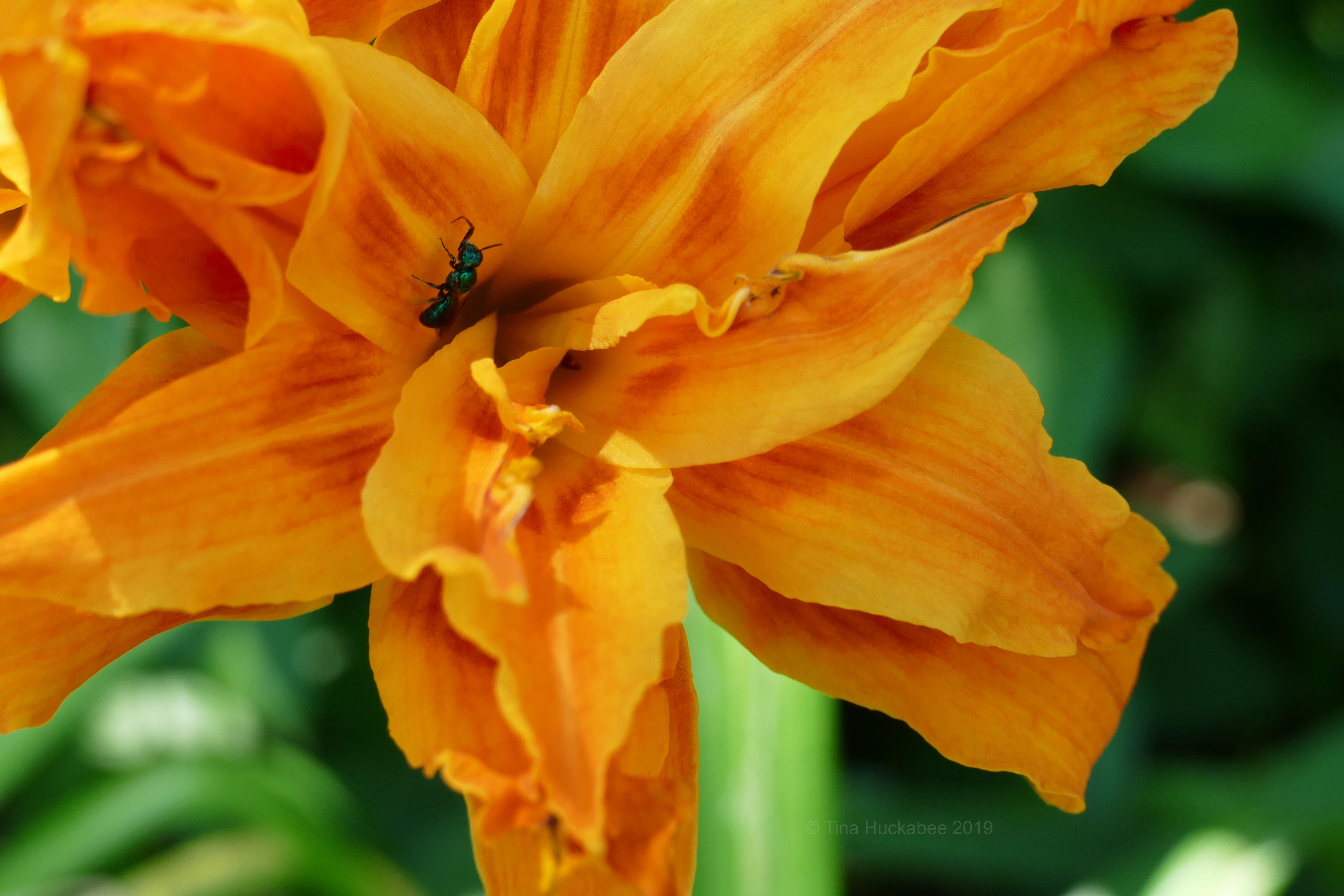
So what’s in the garden reflecting the shimmering June days?  In a word: Daylilies.  I say that, though I have only one type of daylily, planted in only one spot.  Their cheery orange is, for me, a June thing every summer.

My mother-in-law gave to me a couple of daylily leaves with attached root 20 some-odd years ago.  She wasn’t a gardener and I have no idea where she got hers, but they hadn’t bloomed alongside her driveway in many years.  She insisted that they were lovely.

And she was correct.

Full and ruffly, I look forward to the blooms every June, though sometimes they appear as early as May or as late as July.  I believe they’re a form of the Asian variety Hermerocallis fulva.

For years, I didn’t notice any pollinators at these blooms, but as I have paid more attention, I see a species of native bee who visits when these flowers open.  A small, iridescent blue-green bee, it’s probably a Sweat bee, Genus Halictidae.  The bees dive deep into the flower and it’s usually several minutes before they emerge;  I have to be quick with the camera button!
 

The Purple coneflowersEchinacea purpurea, opened for business in May, but have achieved their zenith of beauty in June.

An excellent pollinator plant, there’s always something working these happy flowers, like this Pipevine Swallowtail, Battus philenor.  I wonder if Ms. White flower spider is sizing up the butterfly for a meal?


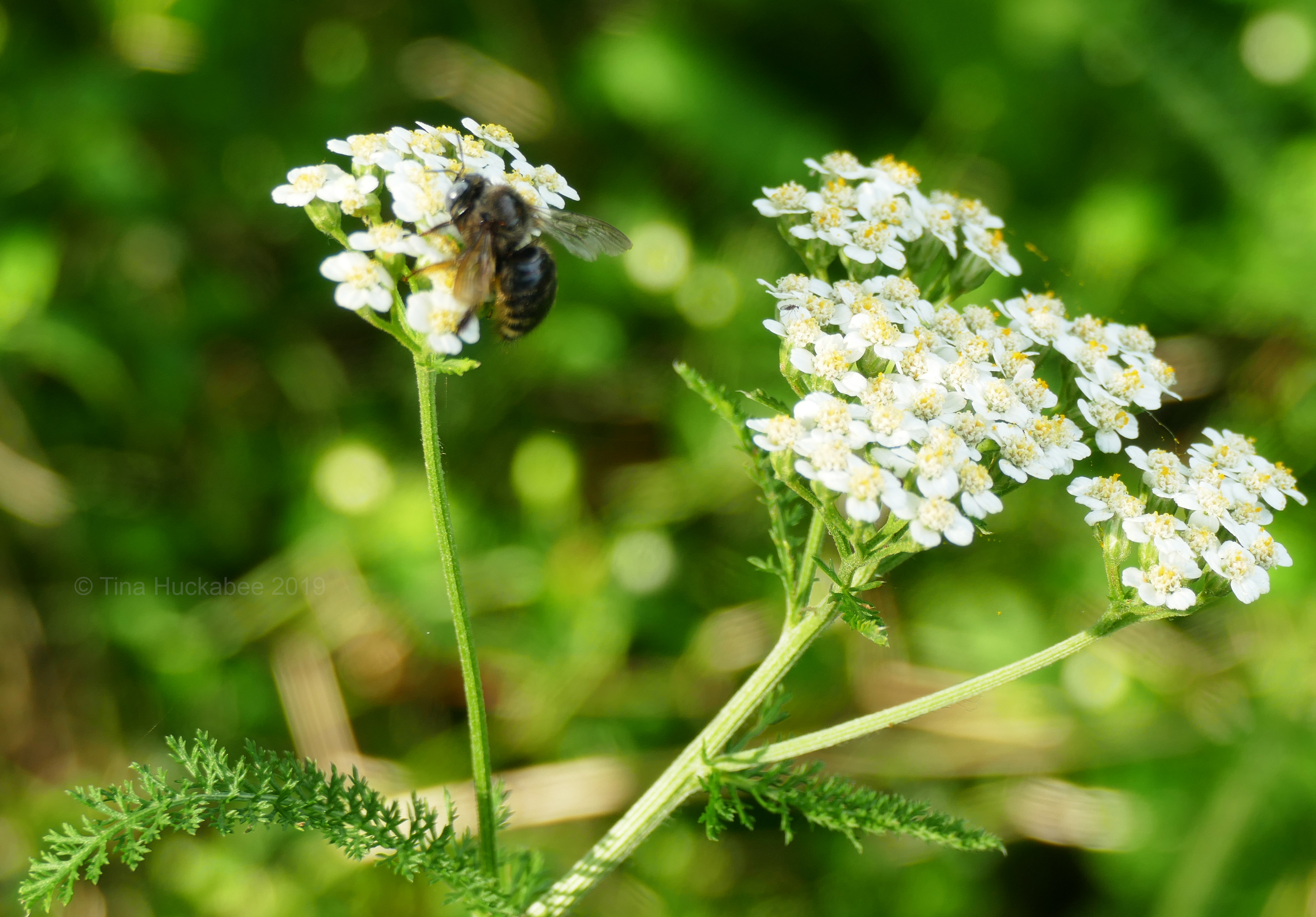
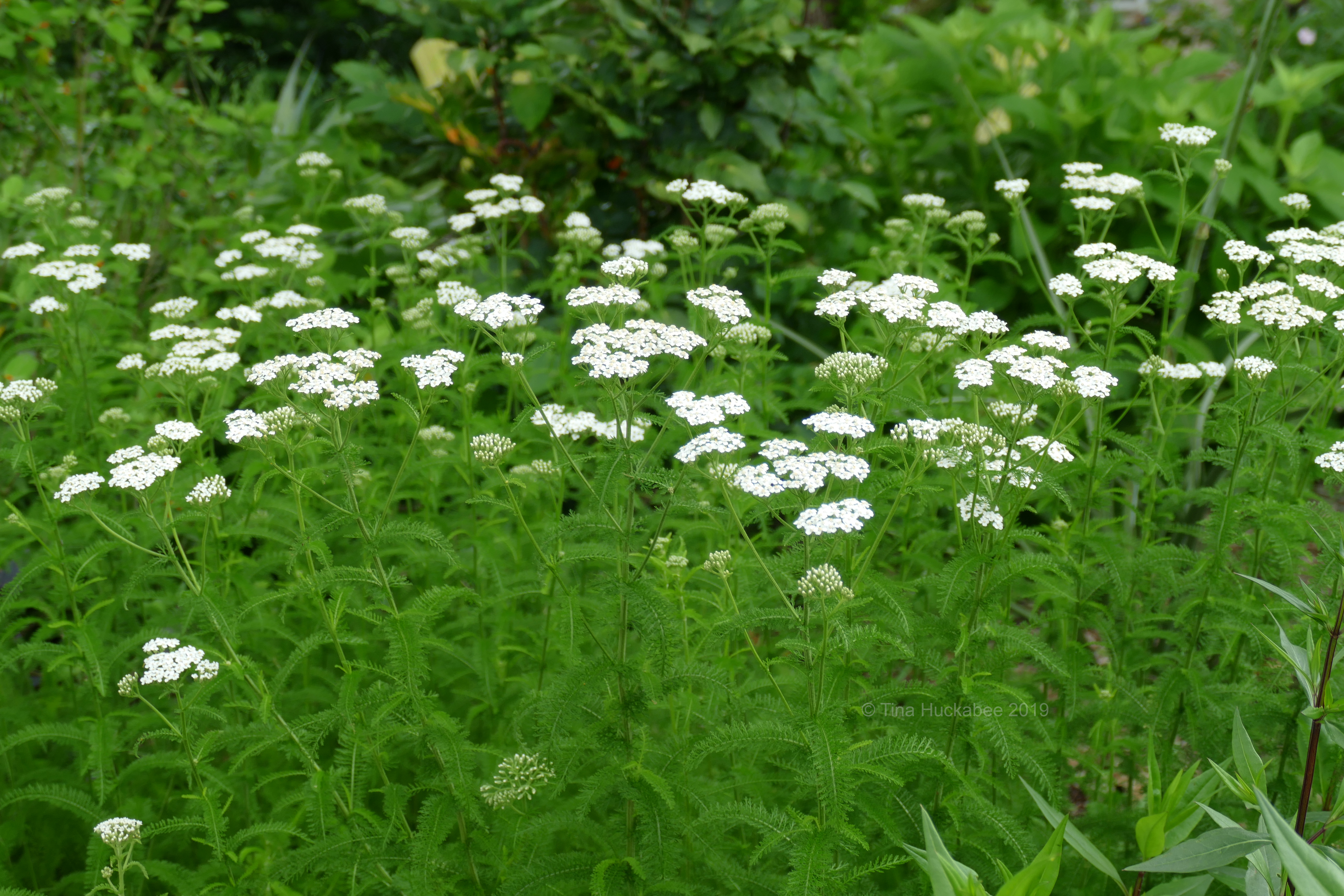
YarrowAchillea millefolium, is a pretty plant year-round, mostly due to its foliage.  But in May, it sends up flower stalks and by June, those stalks are topped off with white flower clusters, adding their particular charm to bright June days.
I’ve seen all sorts of pollinators at Yarrow, from common, everyday flies, (great pollinators!),

…to large, dramatic bees, like this Horsefly-like Carpenter bee, Xylocopa tabaniformis.
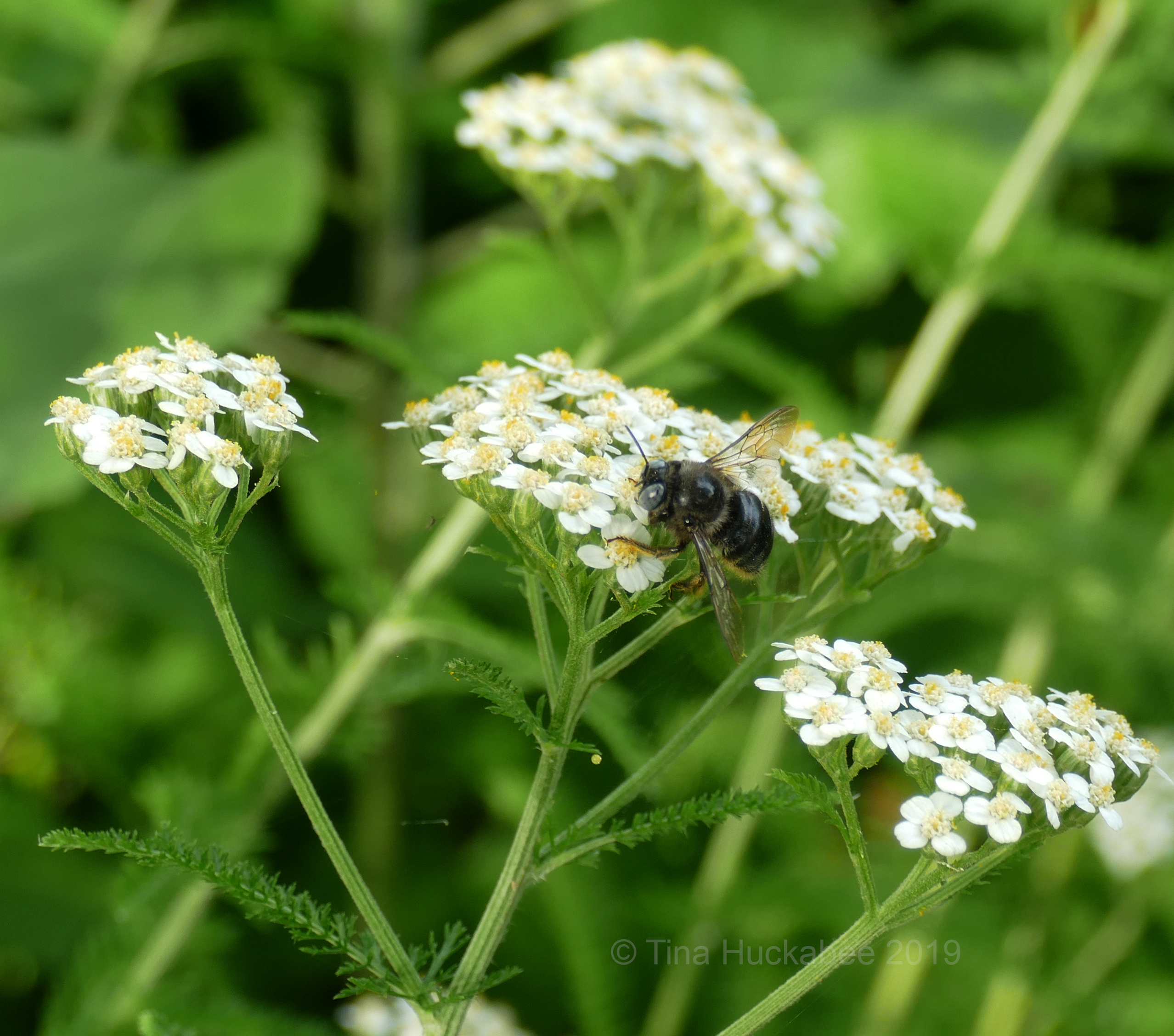
By mid-July, the snowy blooms will turn toasty, and will then attract little finches and sparrows who flit through the garden.


Barbados cherryMalpighia glabra, a hardy Texas native, serves as a privacy screen in my front garden.  It’s a large shrub which may be hedged, though I prefer its natural shape of arching branches.  After rains, the plant bursts full of sweet pink flowers, eventually producing, juicy, red fruits favored by birds and mammals.  The fruits are called acerola cherries and are used to make juice.  I’ve tasted the fruits and they are sweet, though it would take quite a few to squeeze into juice.
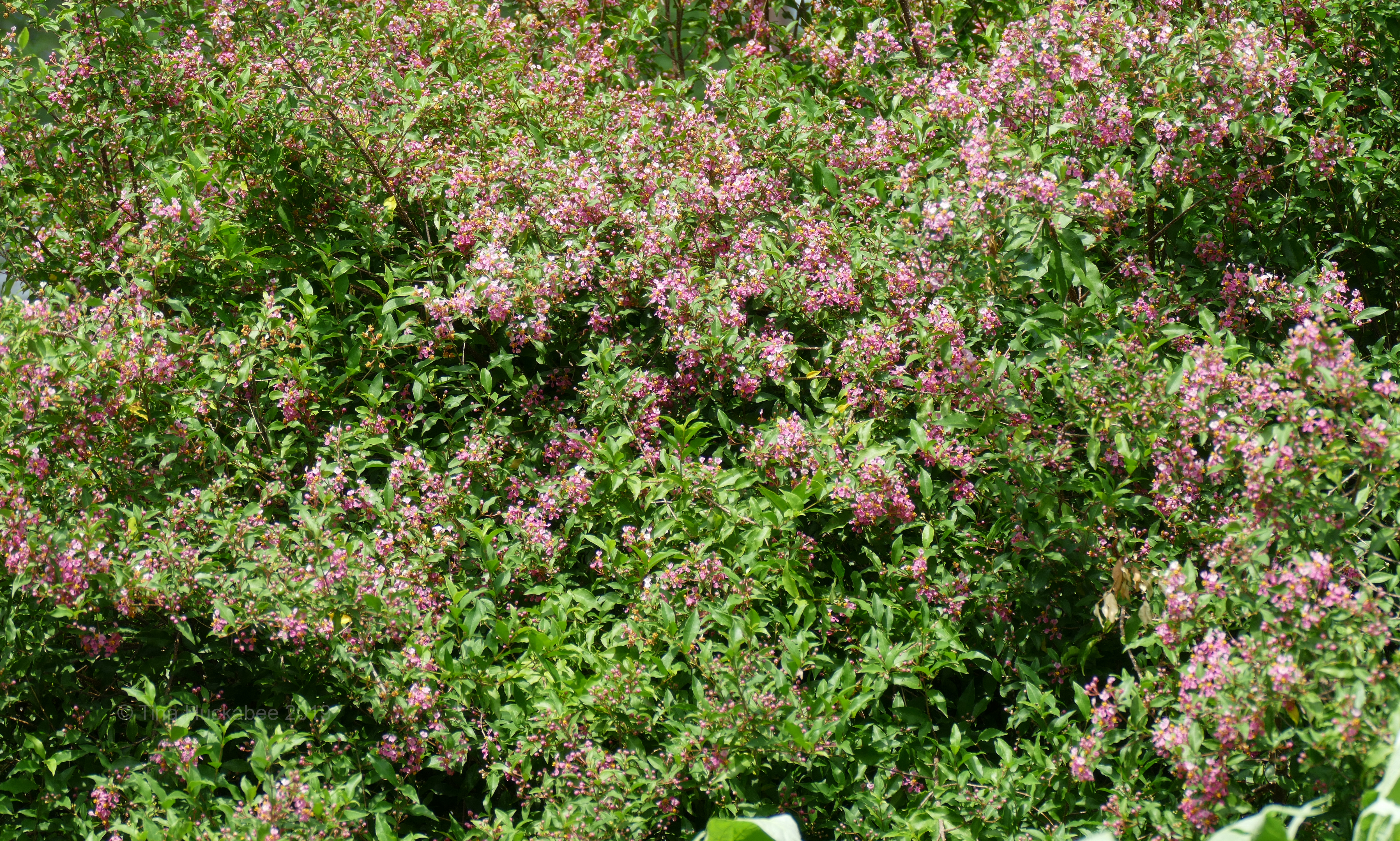
The pink flowers are small and dainty, borne in clusters along the branches.

Eastern Carpenter bees, Xylocopa virginica, visit whenever the blooms appear.  These bees are fast fliers–I was lucky to get this shot!


Zexmenia, Wedelia acapulcensis var. hispida, provides a sparkle of yellow in my garden.  A low growing, deciduous shrub, Zexmenia loves abusive heat and blooms best in the heat.  In fact, with our wet late spring, mine haven’t bloomed quite as well as usual, though the yellow still sparkles-up the garden.  The yellow flowers are companionable with many plants.

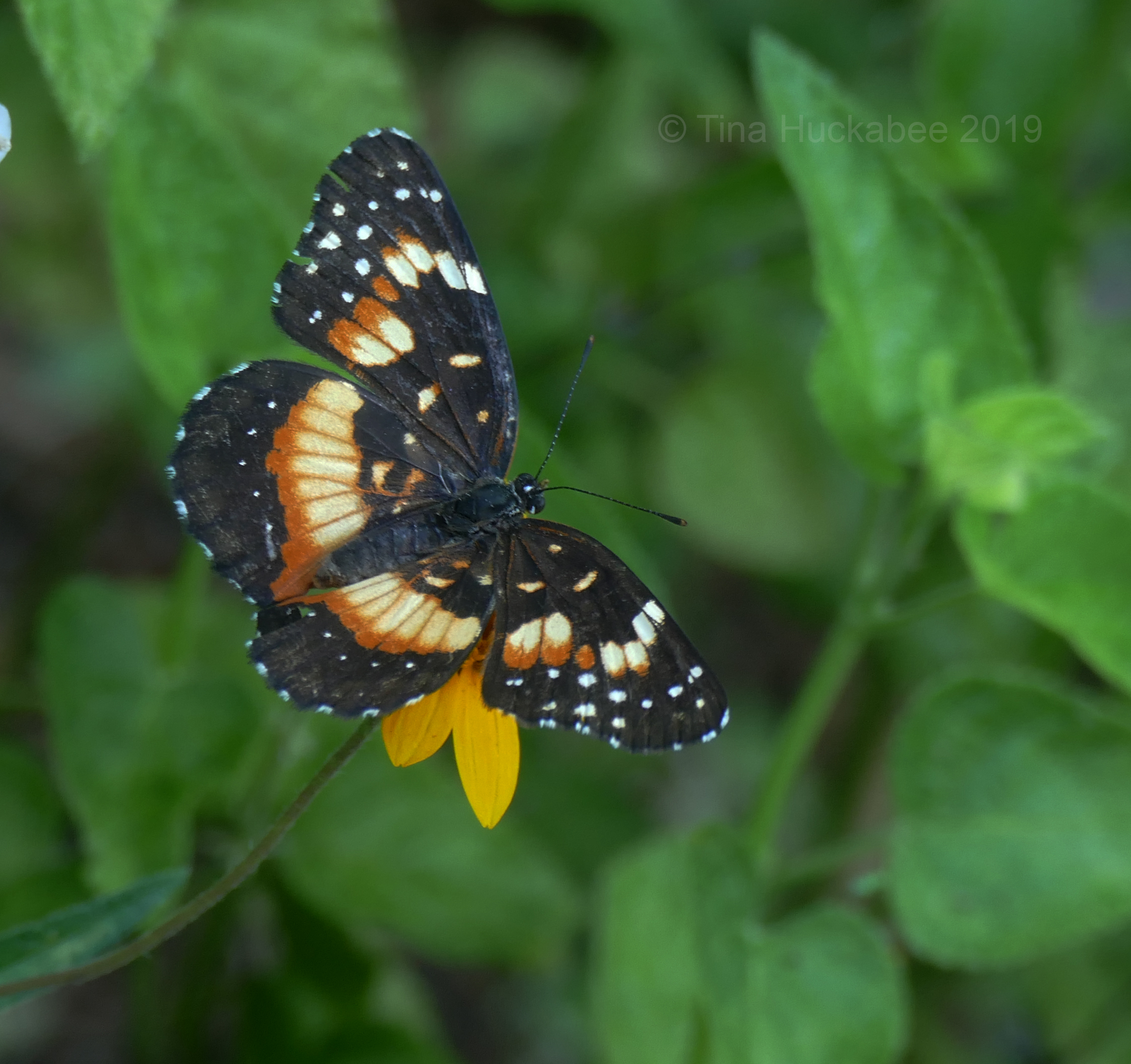
Another flower which attracts many types of pollinators, it’s also a host plant for three different butterfly species:  Bordered Patch, Sierran Metalmark, and Lacinia Patch.

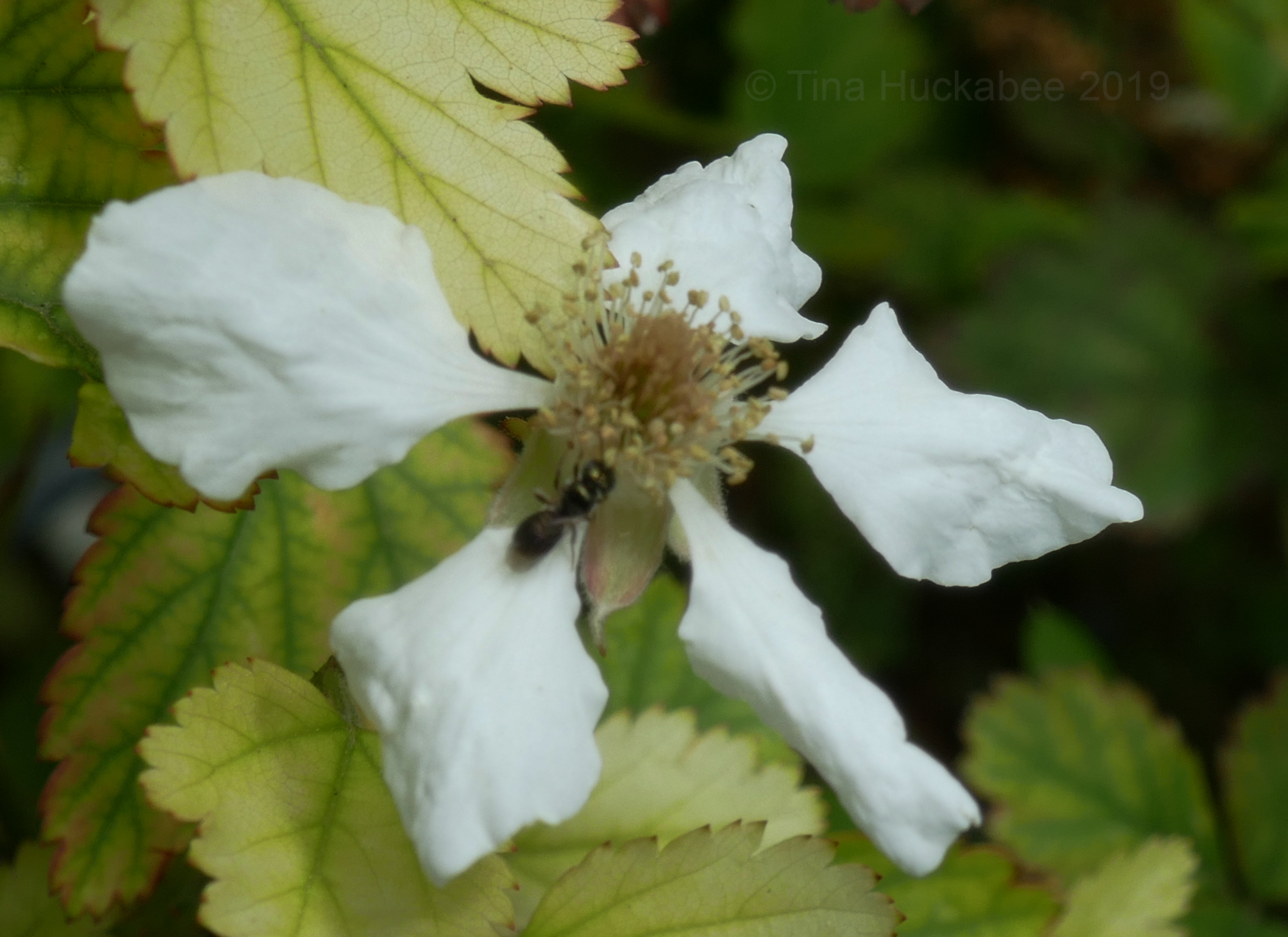
Here a Ceratina bee sips nectar.  It looks like others before it have nibbled at the petals.


Pretty in pink are Rock rosePavonia lasiopetala.  Another shrub with twinkly flowers, I utilize Rock rose as a staple plant in my garden.  It grows and blooms in shade or sun (better in sun), and is a tough customer in our long, hot summers.  I prune it back a few times during the growing season as it blooms best on new wood and will seed out prolifically if allowed.  I like this little shrub planted in a mass to amplify the its pink power!
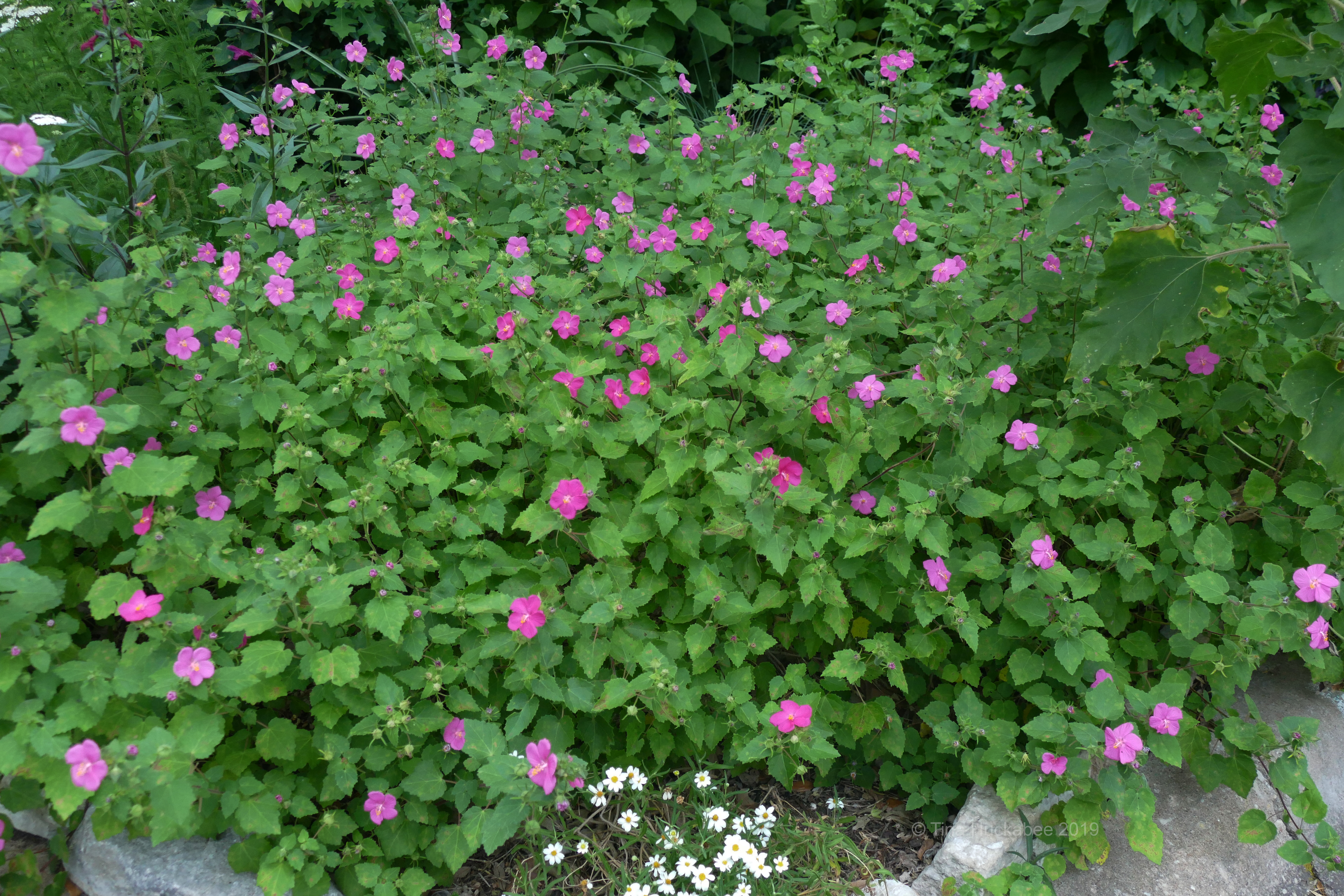
Small, hibiscus-like blooms are favored by pollinators like this Grey Hairstreak, Strymon melinus.  


Red yuccaHesperaloe parviflora, is no yucca, but in fact a gorgeous plant in the Agavaceae family.  From late April until late October, Salmon-pink, tubular flowers with creamy yellow interiors, adorn tall, arching bloom stalks.

The base of the plant is fleshy, dark foliage and a nice structural element, especially in winter; the showy blooms are a cherry on top.   Typically, I can’t look at these flower stalks without seeing some pollinator going about its business:  bees of several varieties, some smaller butterflies, and hummingbirds are all are drawn to Red yucca.  Alas, I seem to have missed catching any pollinator in my recent photos. Drat!


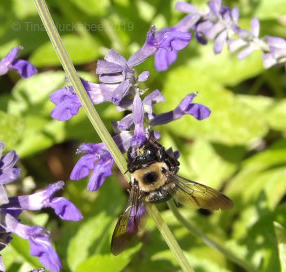
Late spring blues segue–just for a bit–into June with Heartleaf skullcap, Scutellaria ovata ssp. bracteata.   A perennial groundcover, which is low to the ground during late autumn and winter, the plant rockets upwards in spring, developing beautiful lavender-blue flowers, which make gardeners swoon,

…and bees work.
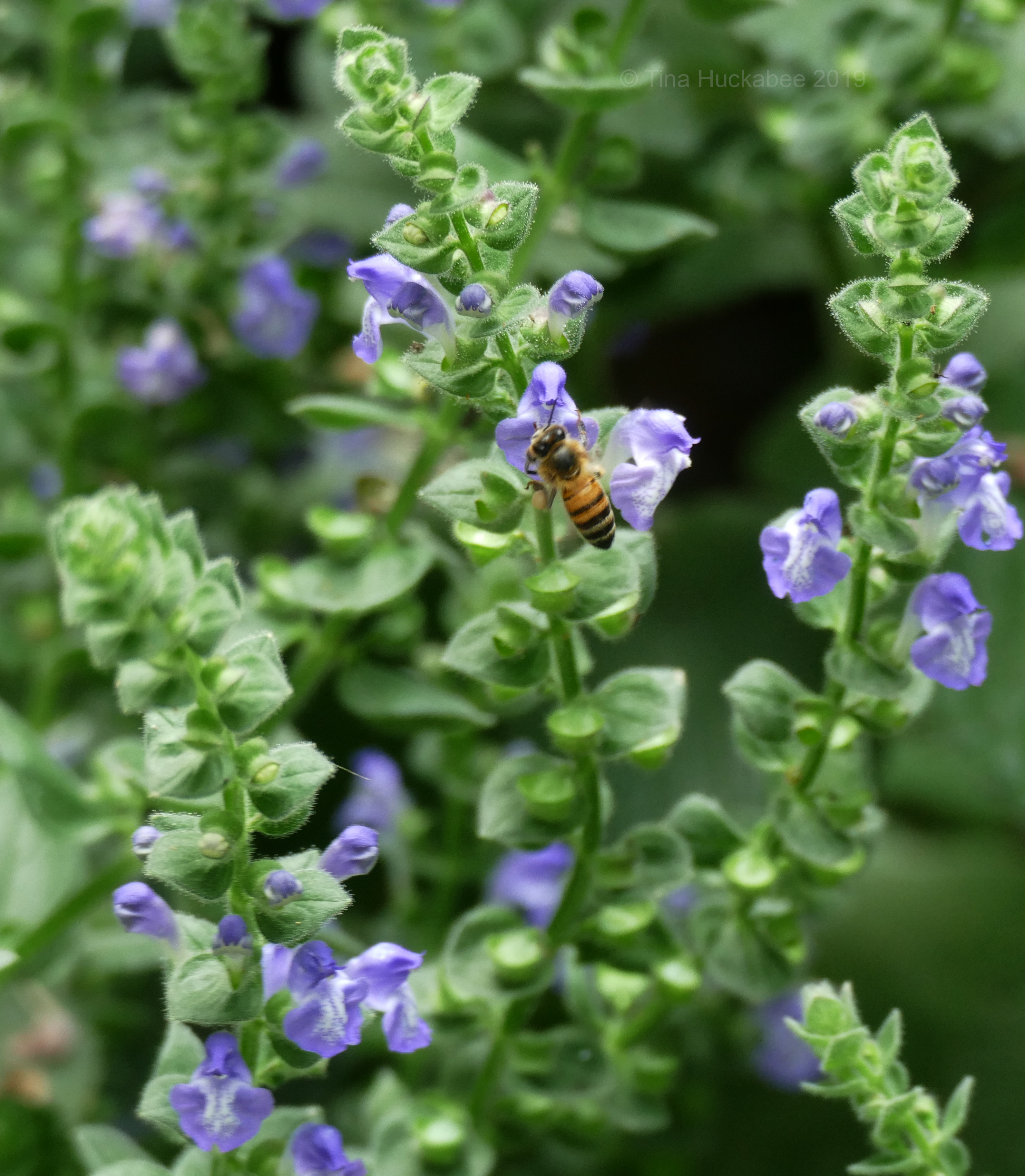
The foliage is a lovely blue-grey, soft and slightly sticky, but a perfect partner for the salvia blooms.


I like oregano–a lot.  Pollinators like oregano (and other herbs) blooms–a lot.  The teeny-tiny, frothy white flowers of oregano are in full bloom mode right now and pollinators are all over them.
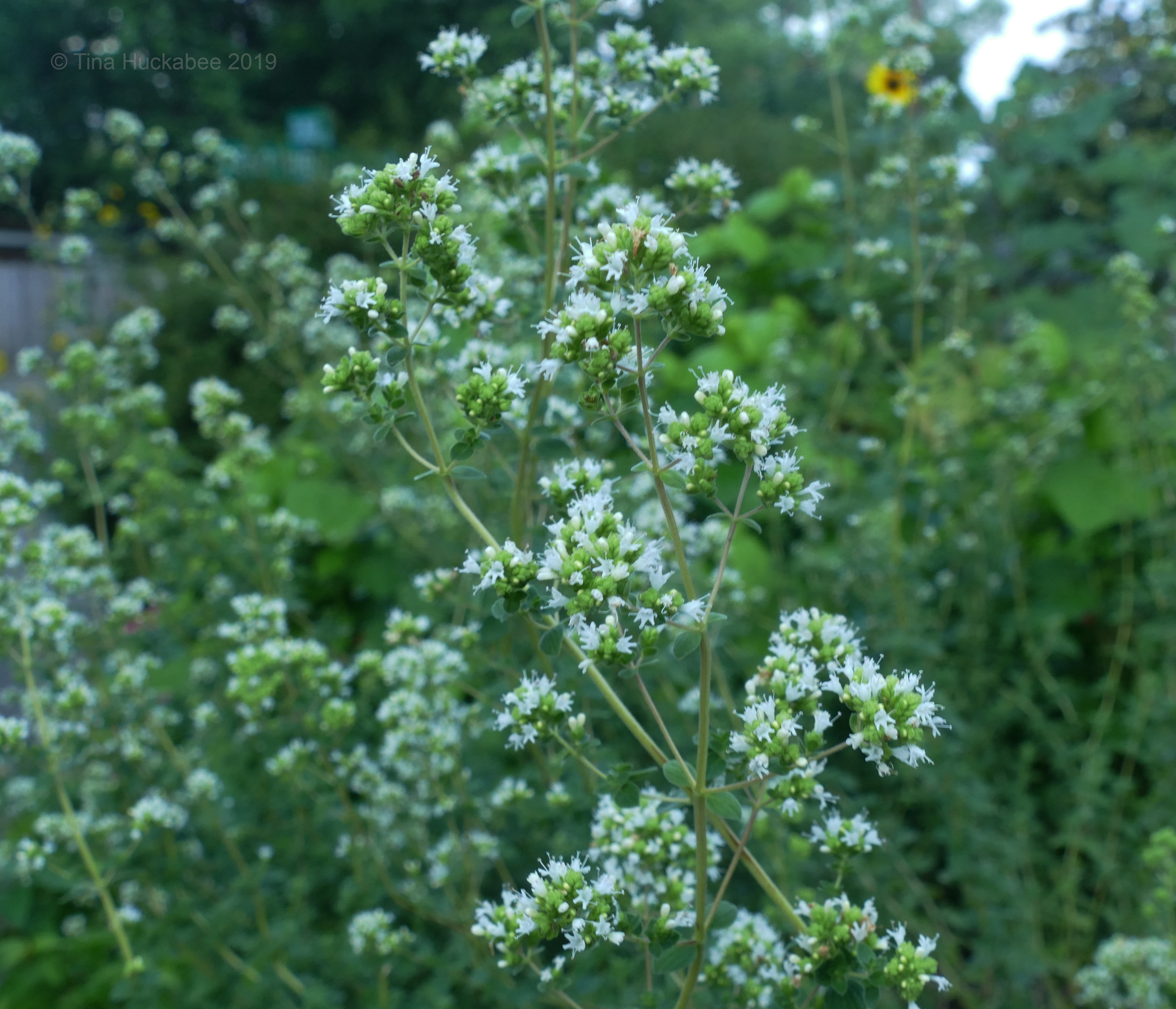
My honeybees are especially fond of oregano flowers.   I wonder if their oregano-derived honey can be used on pizza?


Big red sageSalvia penstemonoides, started blooming this month and will bloom throughout summer.   My camera doesn’t quite catch the beauty of the magenta coloring of this salvia flower, but it’s a show-stopper.    Native only to the Edward Plateau of Central Texas, this plant was thought to be extinct, but was then discovered blooming in south Austin in the 1980s.  Fortunately for Austin gardeners, it’s easy to grow from seed and some local nurseries have made plants available.

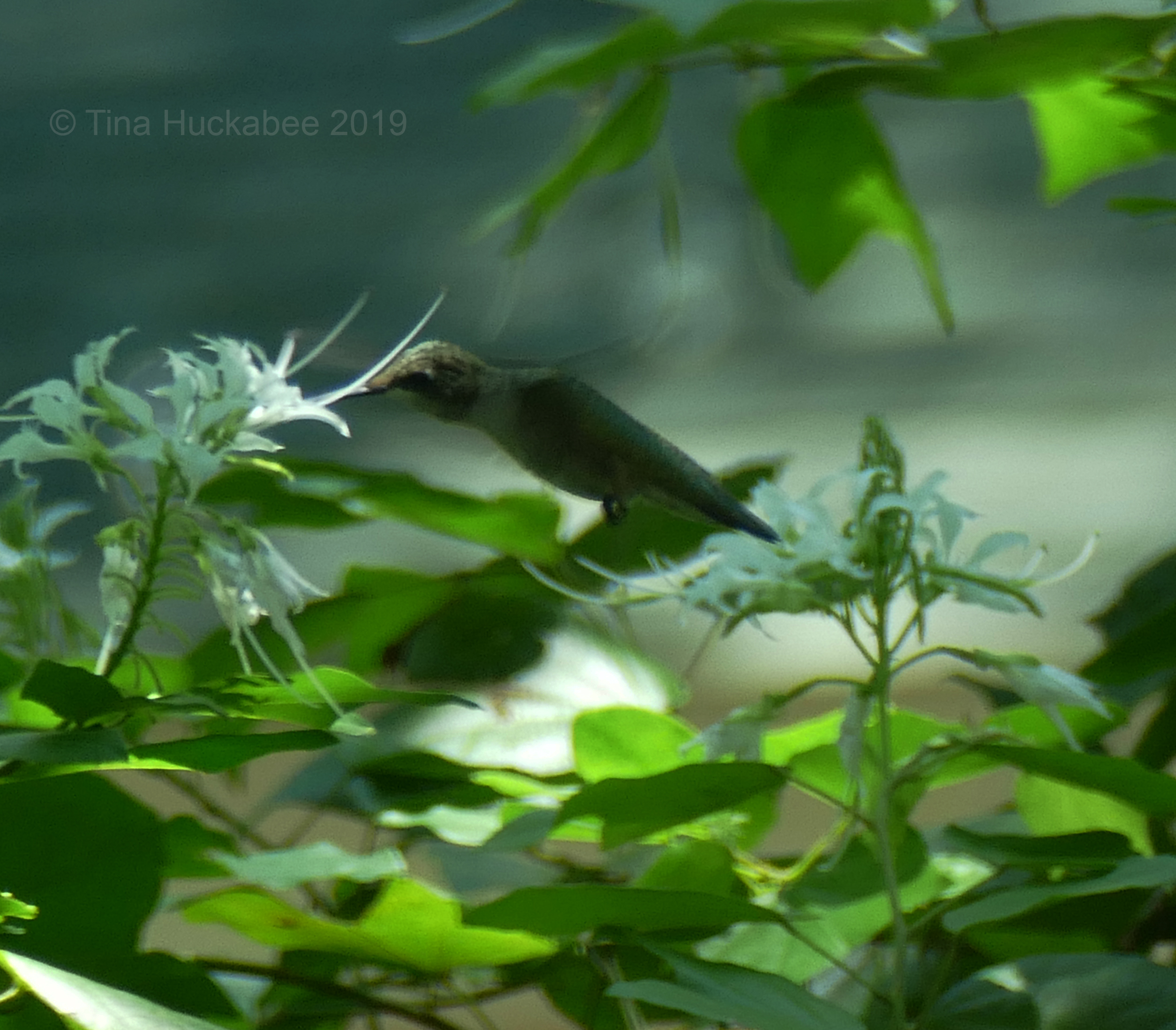
During its summer blooming period, hummingbirds, mostly female Black-chinned and Ruby-throated, visit mine.


Happy June blooms and many thanks to Chloris of The Blooming Garden and her celebration of monthly blooms.  This ends National Pollinator Week  here in the United States.  Readers from elsewhere–you were probably wondering why I was beating the pollinator drum! Gardeners are usually close to and aware of their  environment, so I’m probably preaching to the choir, but if you don’t plant for pollinators–do!  You’ll be amazed at who shows up and pleased at how pollinators and all wildlife bring life to your garden.

From left to right: Red Yucca, Yarrow, Rock Rose, Big Red Sage.

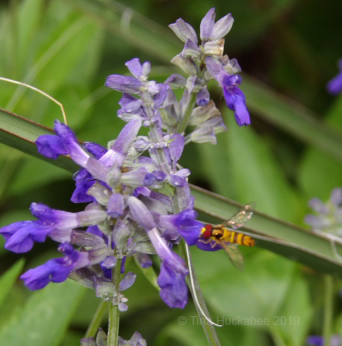
 

Ooops!

Excuse me ma’am, I think you dropped something!

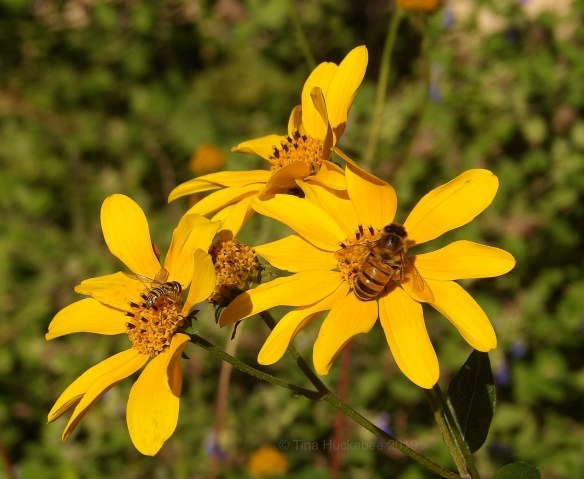
Following this busy honeybee as she buzzed from sunflower to sunflower, I caught her in mid-air.  Her pollen pantaloons (corbiculae) were full-up with a nice load, but it appears some of her precious cargo slipped loose in flight.  I’m betting she had enough packed away by the time she arrived back home at the end of her foraging run, and she and her hive mates will make good use of the stuff.  Certainly during  our periodic hive checks, we’ve seen plenty of comb cells packed with the yellow gold.

Celebrating National Pollination Week, I’m also delighted to join with Anna and her Wednesday Vignette.   Buzz on over  to Flutter and Hum and check out garden and other musings.

A Place for Pollinators

This week is National Pollinator Week, a week to celebrate and appreciate the vital role that pollinators play in healthy ecosystems.  Pollinator Week is sponsored by Pollinator Partnership whose mission it is to support pollinators through research, conservation efforts and education.

Syrphid fly

Nurturing environmental conditions conducive for pollinators, and allowing for pollinators to be–to exist, to procreate, to pollinate, are worthy gardener goals in establishing and maintaining biodiversity in urban and suburban areas.

Queen Butterfly (Danaus gilippus)

Eastern Carpenter Bee (Xylocopa virginica)

There are many reasons for the deeply concerning and potentially catastrophic decline of pollinators.  The average person doesn’t have much sway over the varied and complicated issues involved with this decline.  But gardeners, whether in their own personal space or at a school or community garden, can certainly contribute to the creation and implementation of lovely and living pollinator and wildlife habitats and with that, affect their local environmental paradigm by gardening for pollinators.

Monarch Butterfly (Danaus plexippus)

Mosquito? Fly?

What does it mean to plant or garden for pollinators? Several practices are key to a successful pollinator gardening.

Even if you’re new to the gardening world, you’ve probably heard it:  limit chemical use.  Insecticides and “gardening” chemicals don’t produce balanced systems where wildlife flourishes, and pollinators are especially impacted by home and agricultural chemical use. In fact, the use (and over use) of chemicals typically causes more problems than it solves.  Additionally, if you plant native and well adapted annuals, perennials, shrubs, and trees, most, if not all, chemical use is unnecessary.

Honeybee and Syrphid Fly

Fiery Skipper (Hylephila phyleus)

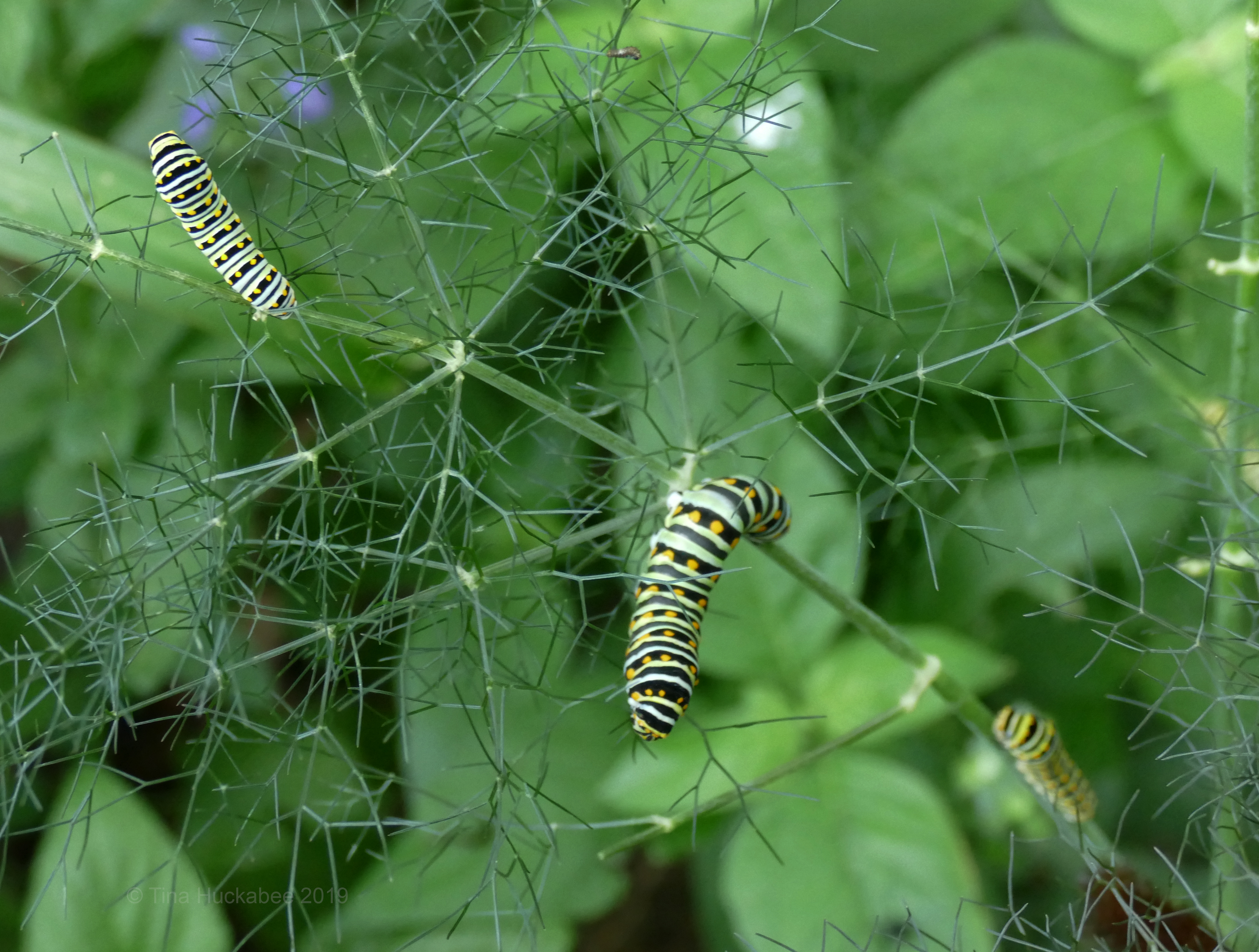
Accept that nature is sometimes messy!  Have a few holes in your leaves?  Don’t grab the bottle of insecticide and spray, willy-nilly, everything in sight.  Instead, observe who’s munching.  It’s probably a moth or butterfly–in childhood form (caterpillars!)–munching away contentedly before building strong exoskeletons, wings, and antennae, on their way to morphing to responsible, pollinating adults.  When you’re invested in butterfly gardening, you must be willing to tolerate some foliage damage in the garden.  Yes, adults butterflies and moths sip nectar and therefore pollinate, but their offspring–the very hungry caterpillars eat the leaves of host plants; if you want a butterfly garden, you’ll must plant for their larvae.  Clearly, spraying insecticide does not produce a good outcome for butterflies and moths, or any other beneficial insects.

Small Carpenter Bee (Ceratina sp.)

To encourage all wildlife–pollinators included–minimal or no chemical interference is a a given.  Avoiding chemicals is also less expensive than constantly purchasing on the chemical treadmill.

Commit to ridding your property of at least some of the sterile, water-guzzling turf.  Americans’ love-of-the-lawn is a direct contributor to declining insect populations, especially pollinators. Carving out areas for wildflowers, shrubs, and perennials will allow habitat for all sorts of wildlife, including pollinators.

If you plant them, they will come.  The them are flowering plants:  native plants are always best because they’re easier to grow and have fewer disease problems.  The they are the pollinators: butterflies, honeybees, native bees, flies of an astonishing variety, moths, and hummingbirds.  Truthfully, planting perennial gardens is less work than a lawn.  I’ve experiencd both and my full-on urban wildlife/pollinator garden is less trouble, less work, and more interesting than a swath of grass.

Honeybee

Female Black-chinned Hummingbird (Archilochus alexandri)

There are a few simple practices that every gardener can employ to help our beleaguered bees, both native and honey. The easiest is to simply leave some untended spots in your property.  Maybe it’s where you keep your gardening shed or garbage bins, or perhaps, where you store firewood.  Allow bare soil–no mulch, no plants, no cement–just a solid plot of open dirt left untouched for ground nesting bees. Unless you’re very lucky, you probably won’t even know they’re there, raising their little pollinators to help the Earth–and your garden.   One reason that the American Bumblebee is declining is that they nest in the ground and there’s little uncultivated ground left. The sterile, neat yard is not a normal, healthy yard.

Set out some older wood in a protected spot for wood nesting bees.  Their babies will thank you and it’s fun to watch the adults drill into the wood. The downside? You might have to sweep after they’ve drilled baby drilled.

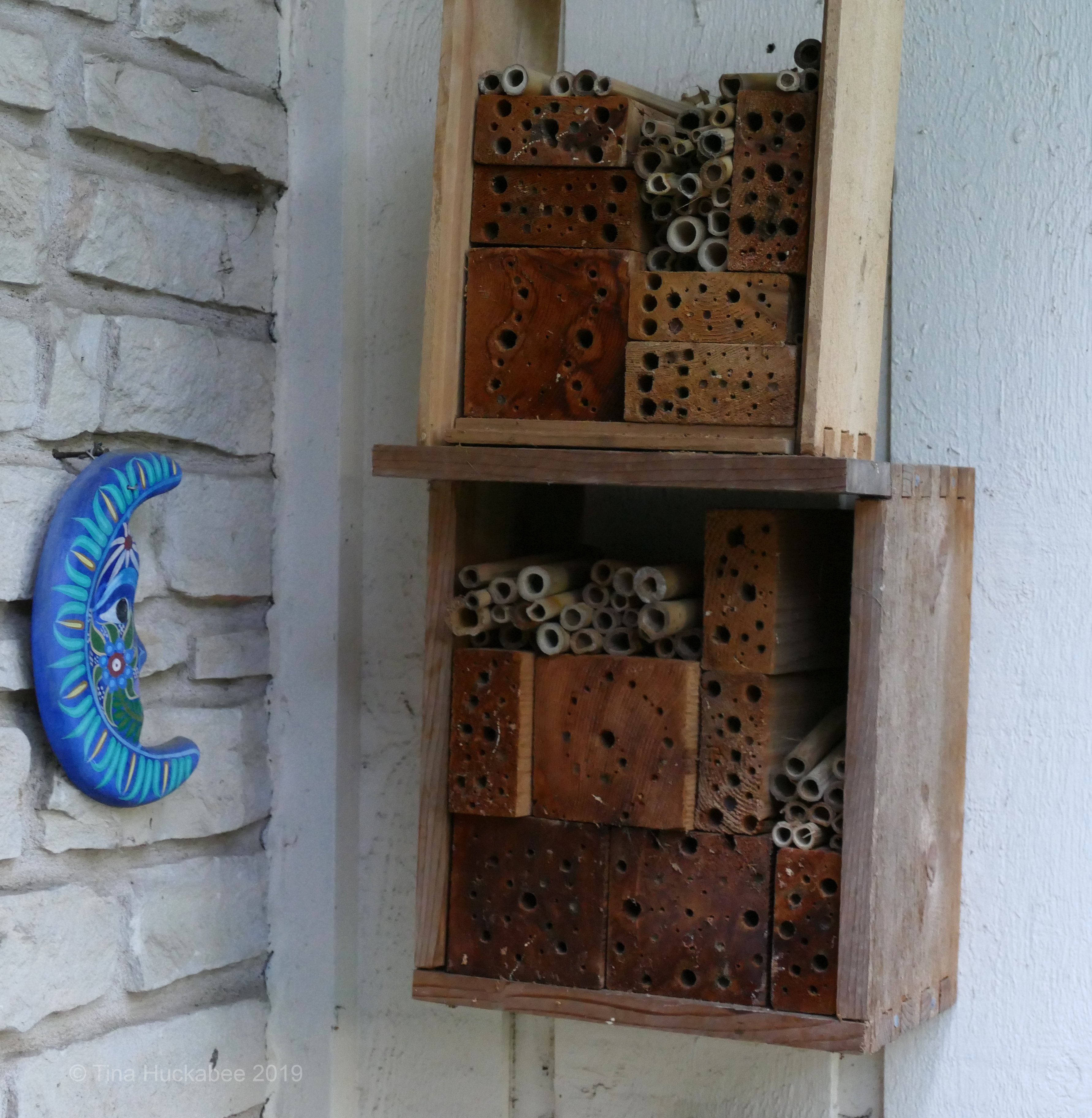
Build an insect hotel–there are many easy DIY plans available–and see who moves in.  For excellent information on building and maintaining insect hotels, please read this article from The Entomologist Lounge.   Insect hotels have become a cool garden thing to do, but they require effort to safeguard the insects who utilize them.   My own insect hotels are small and easy to keep and clean.  Thanks Bee Daddy!  (aka, The Hub)

As well, you can go all-out, bee-crazy and get into honeybee keeping.  It’s fun!  It’s fascinating!  It’s also work, especially at the beginning.  The learning curve is steep and everyone you know will think you’re weird, but will want some of your honey. That said, our beekeeping efforts have been rewarding, especially with the best honey (according to everyone who’s ever tried it) and we congratulate ourselves as gardening do-gooders with our backyard beehives.

I adore the honeys, but for what it’s worth–native bees are actually better pollinators (in general) than honeybees. The suggestions I’ve mentioned are easy ways to develop the right environment in which native bees will thrive.  Most homeowners and community gardeners can easily afford the time and funds required for hosting pollinators in their garden spaces, directly benefiting their personal gardens and the greater ecosystem.

Planting the lovely flowers that pollinators need,

Pipevine Swallowtail (Battus philenor)

Green Sweat Bee (Agapostemon texanus)

…and the host plants that butterfly and moth caterpillars eat,

…means that you’re part of the solution.

For all the good reasons to convert your space into a pollinator garden, I’ll add one more:  they’re beautiful.

Bordered Patch (Chlosyne lacinia)

Horsefly-like Carpenter Bee (Xylocopa tabaniformis)

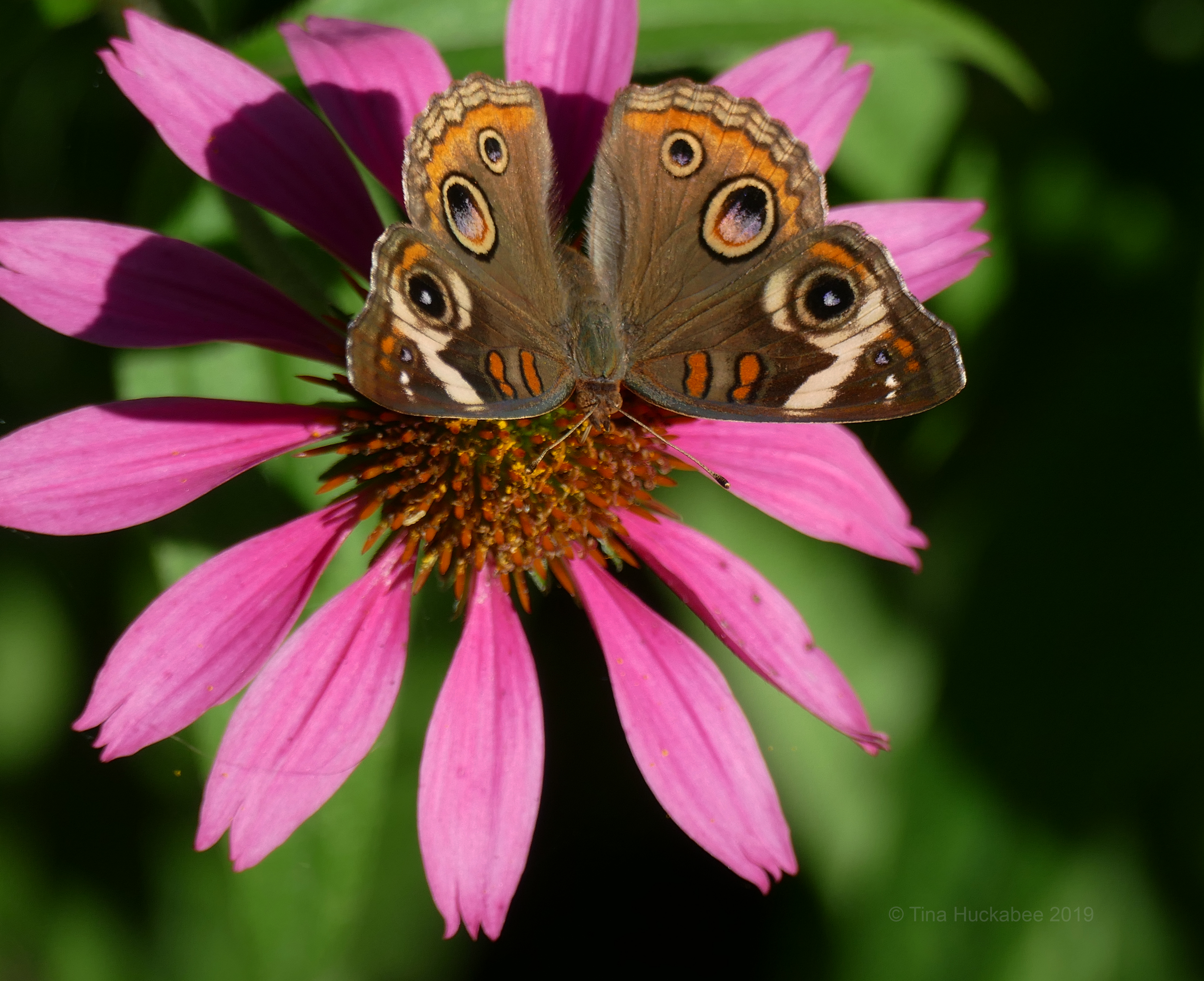
Common Buckeye (Junonia coenia)