So, Can I Make Cookies From These?

Oats

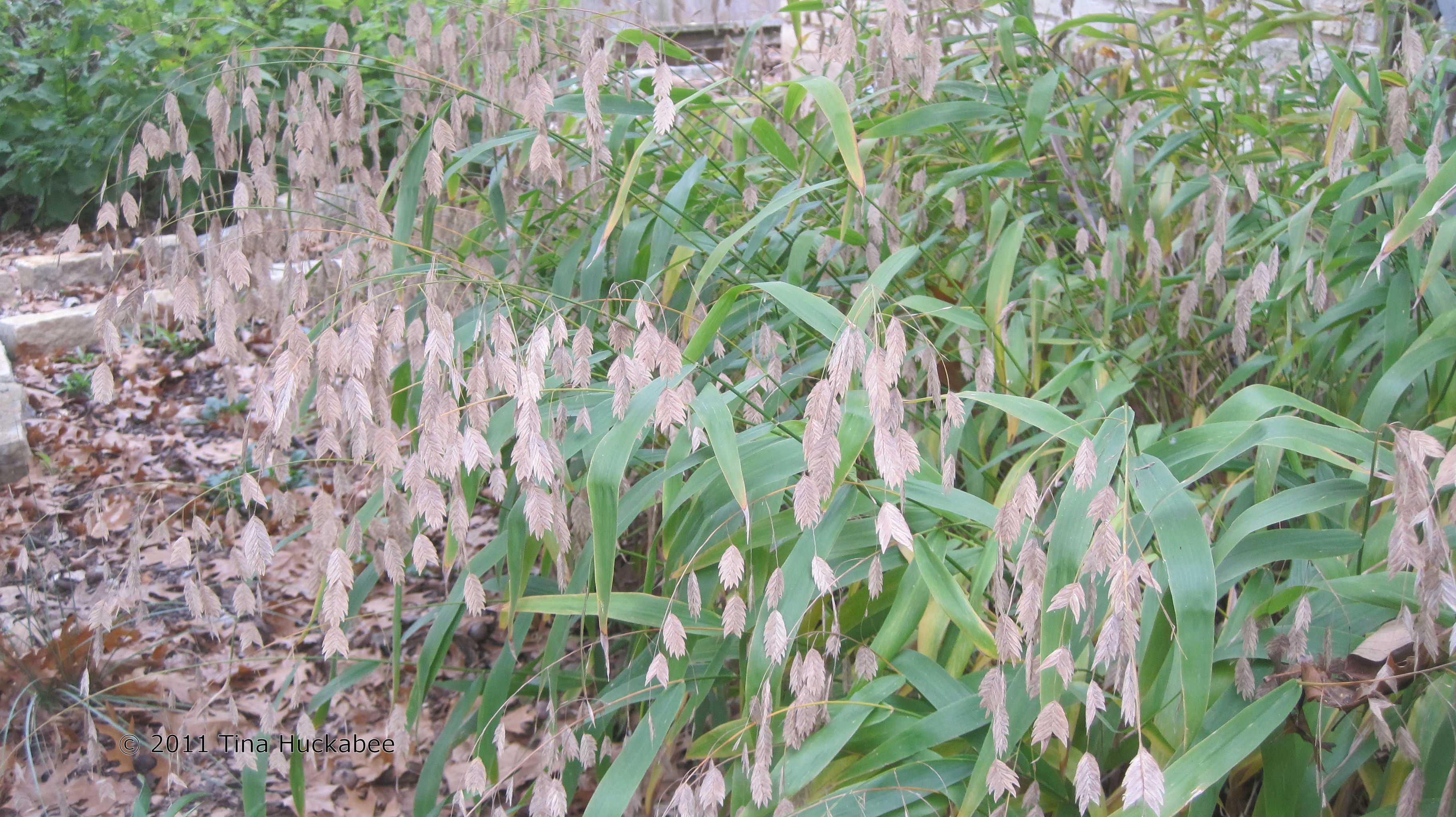
Lots of oats.

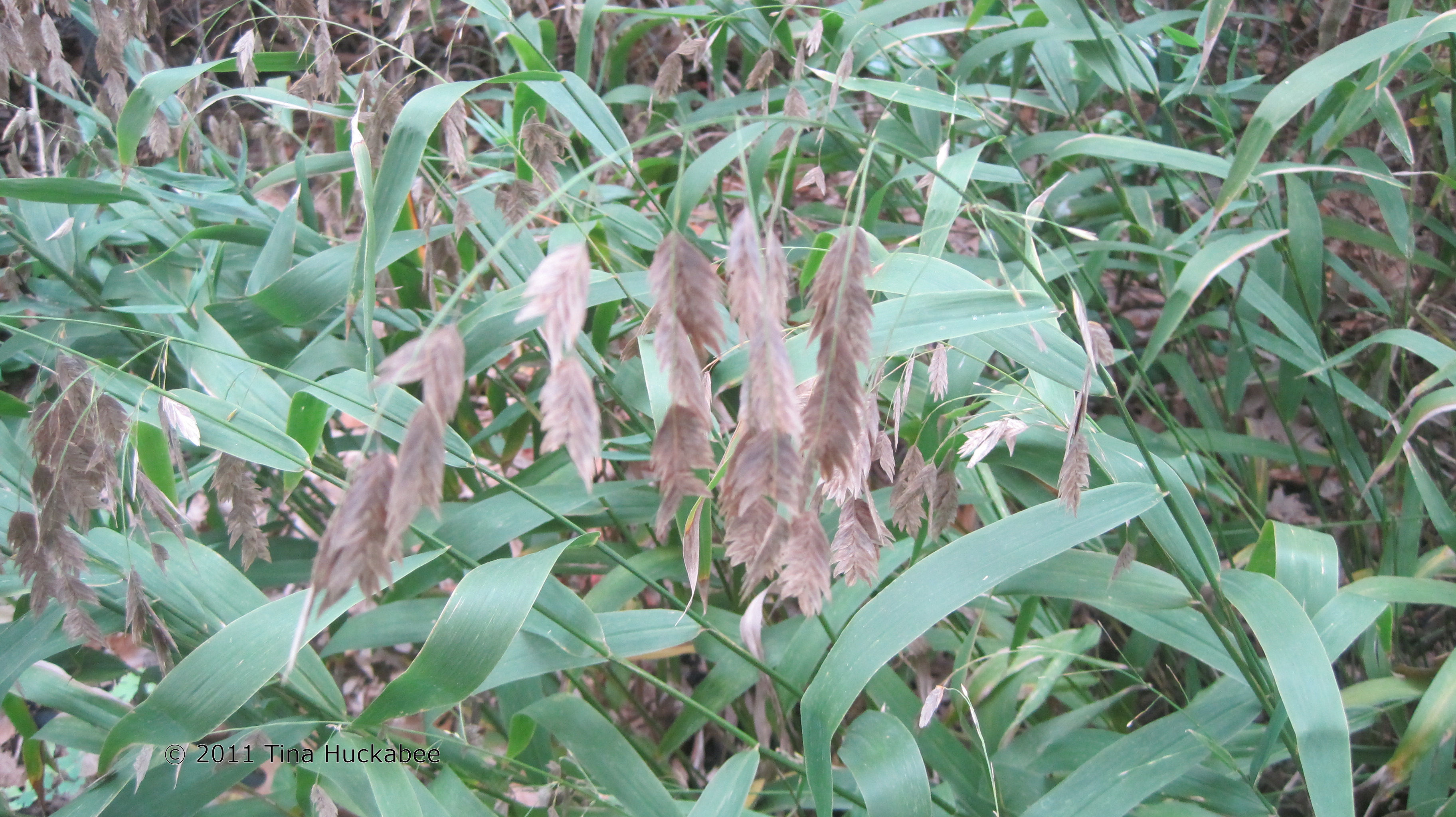
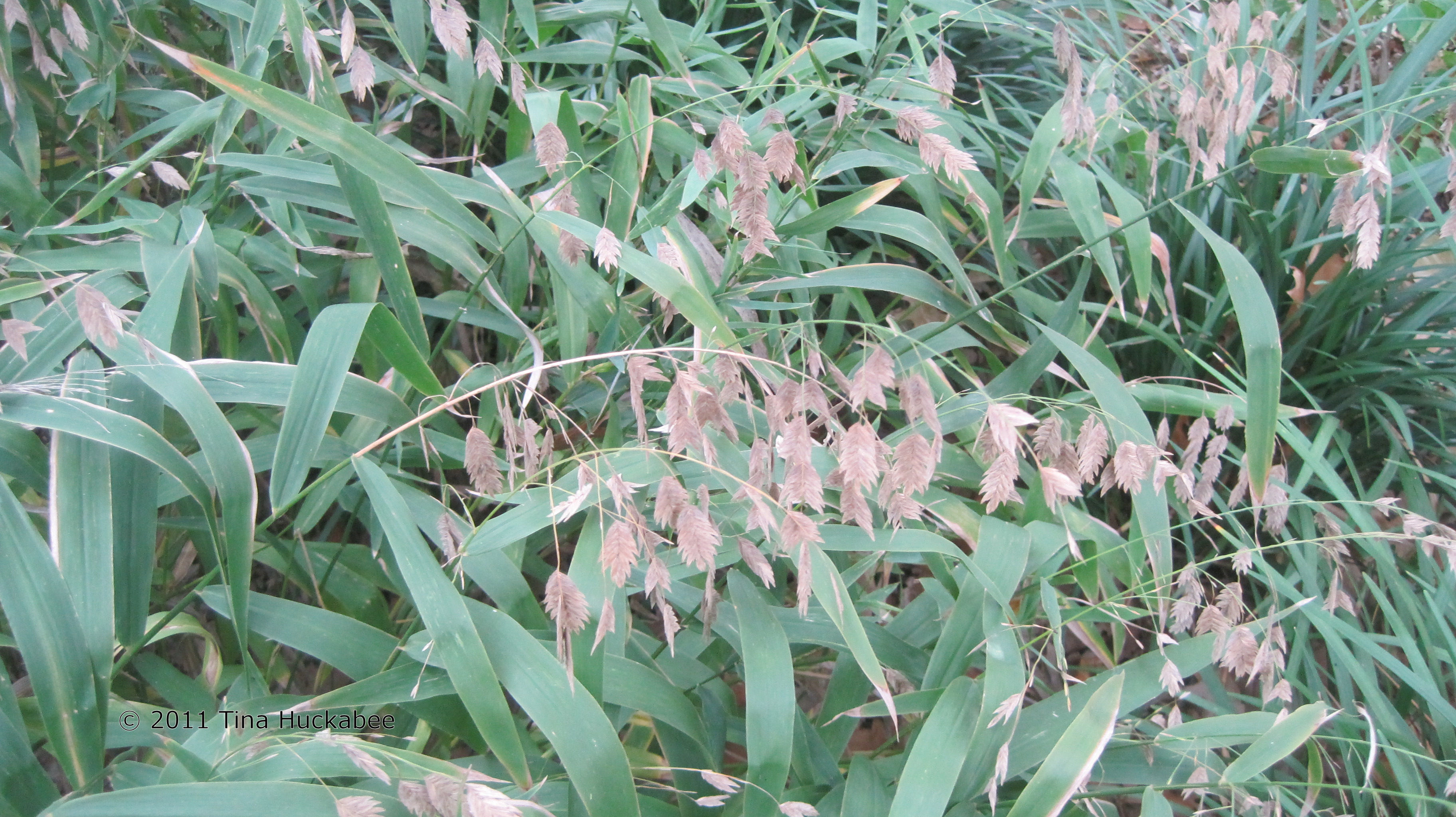
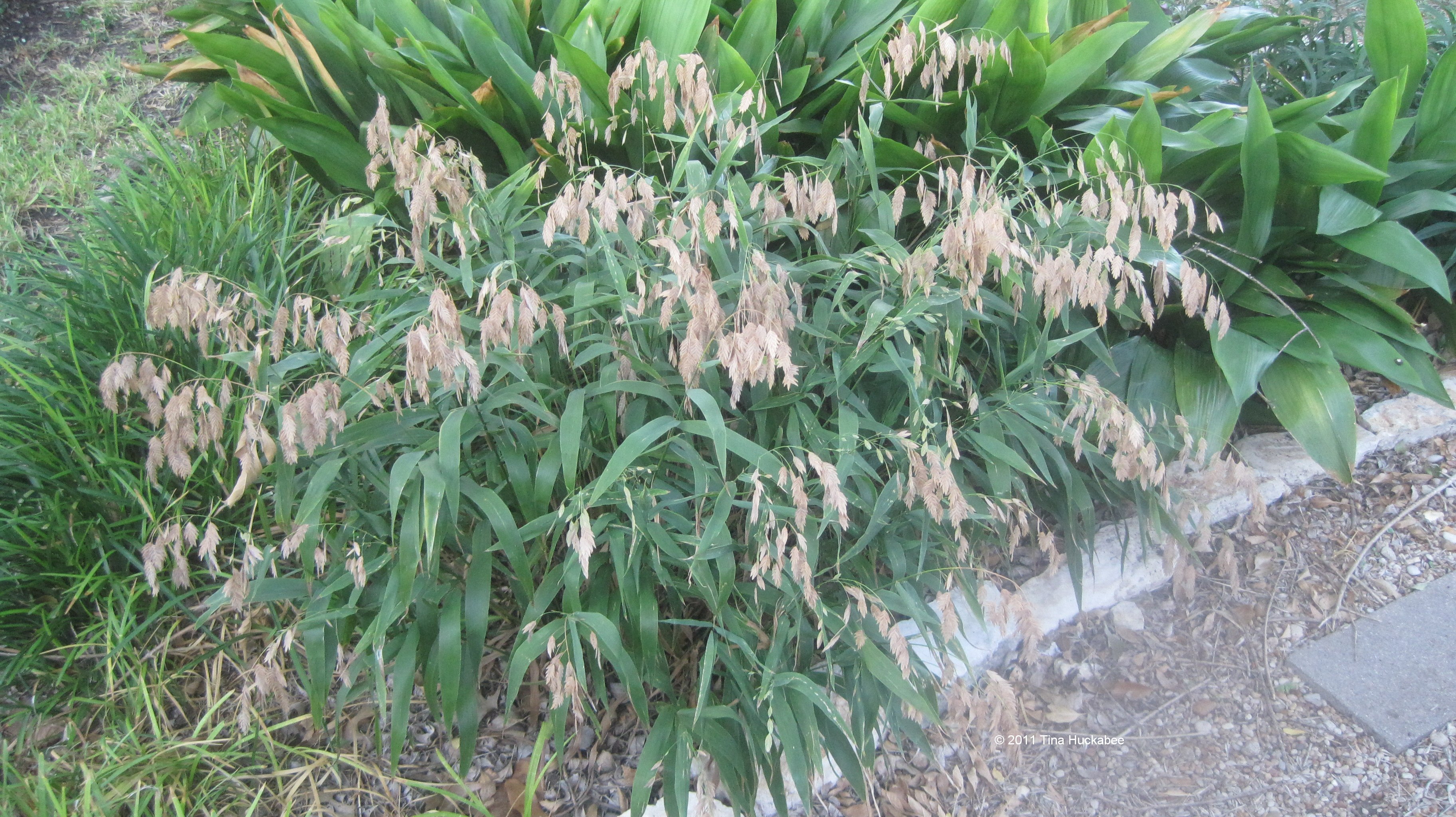
Inland Sea Oats  (Chasmanthium latifolium), to be precise. When you have one plant, you eventually will have many Inland Sea Oat plants. That said, I like this plant–it’s one of my favorites. I like the bright green shoots that appear in spring and I love the beautiful green seeds that develop in early summer atop the stems that give this plant its name.
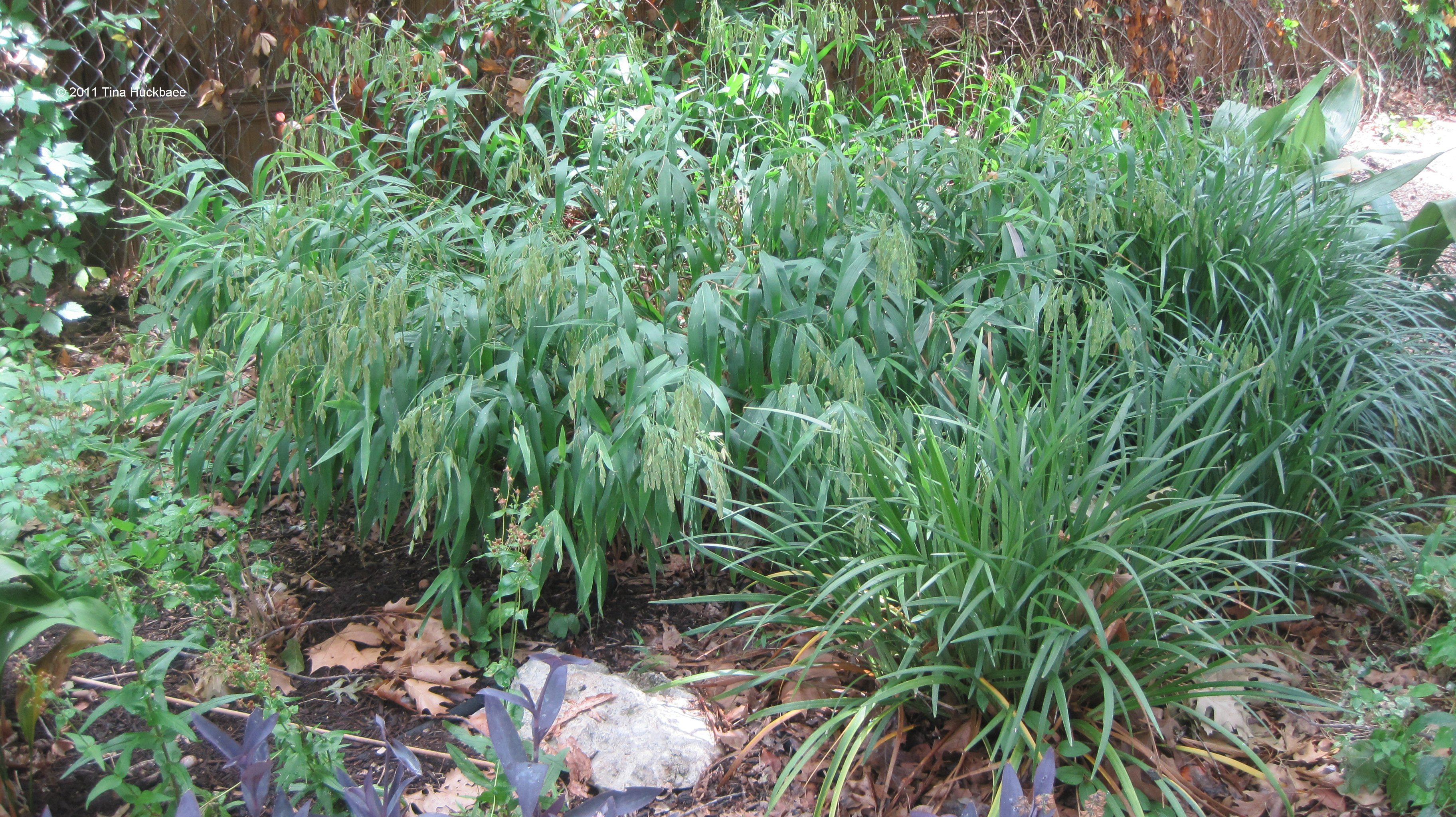
I anticipate the change of the seeds from bright green to a warm, toasty brown in late summer and fall.
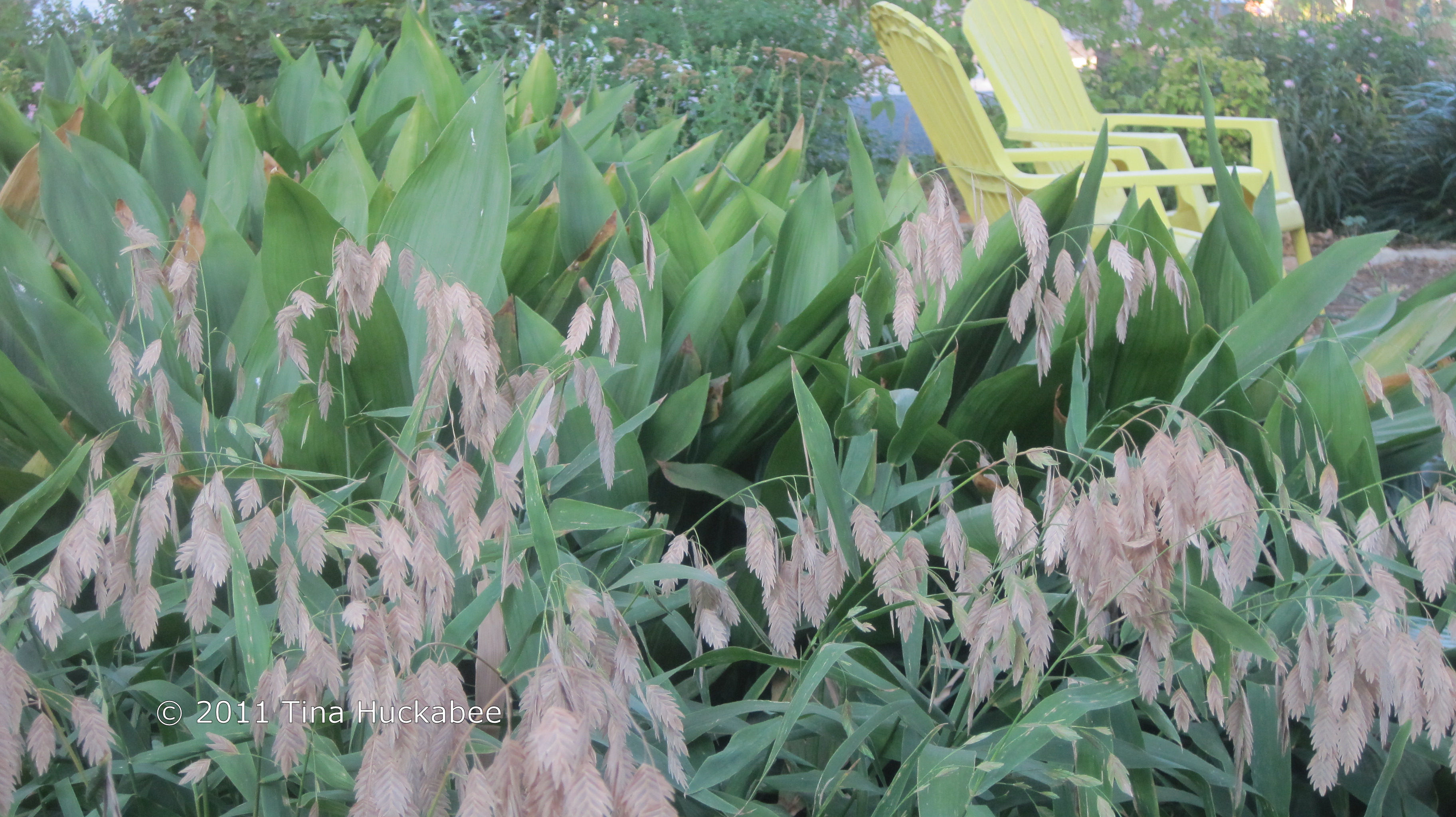
Inland Sea Oats is a graceful and elegant addition to any garden.
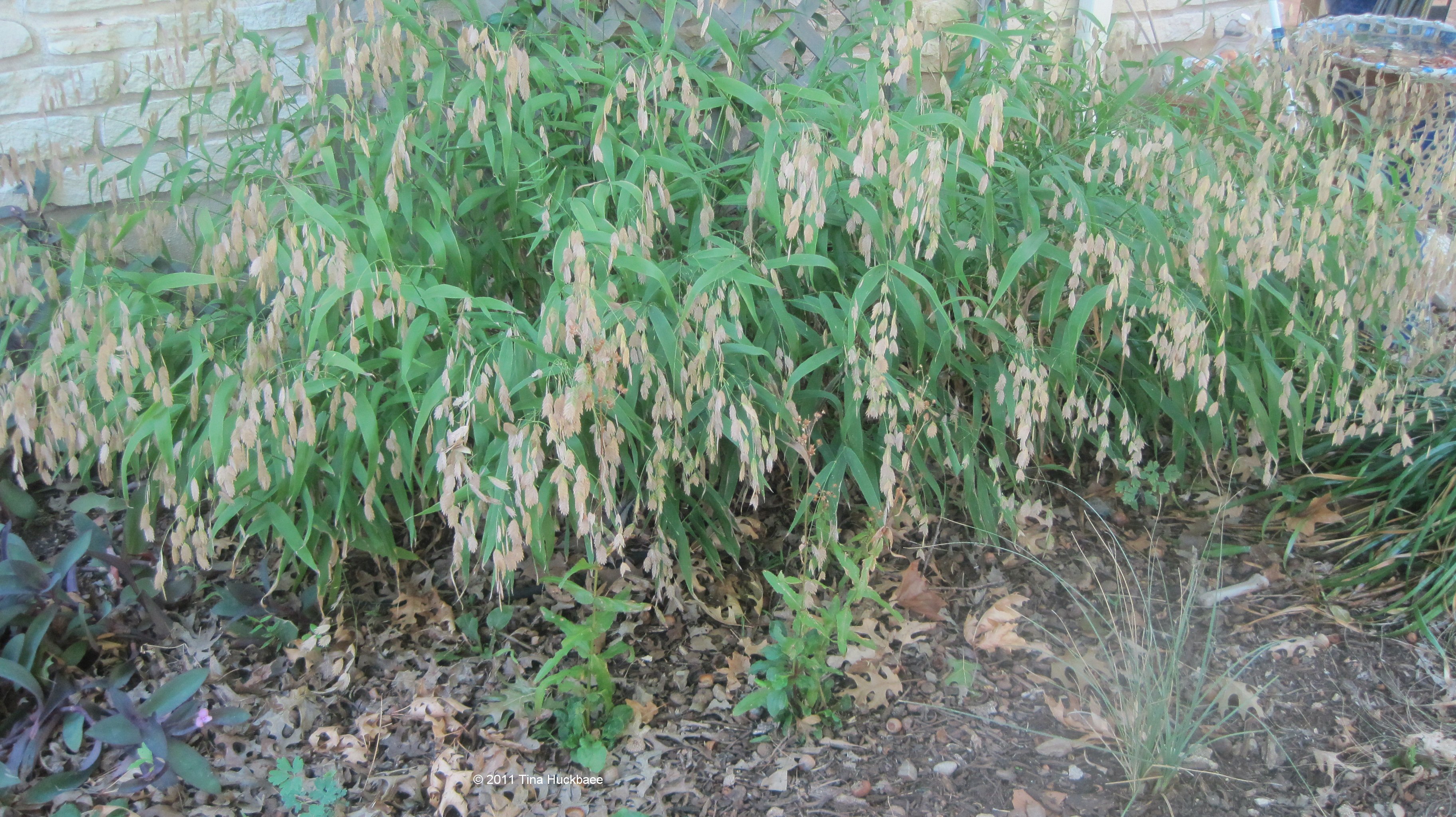
This plant is a native perennial grass, especially useful in dry, shady gardens.  It grows from a base rosette to about two feet in height.   It’s not particular about its soil requirements. It has no disease or insects problems and is deer resistant.  Inland Sea Oats is often used as an erosion control measure because of its ability to spread and its beauty when planted in masses.  Usually considered a shade appropriate plant, I’ve often seen it in full sun.  In one of my gardens, this  group gets the late afternoon west sun,
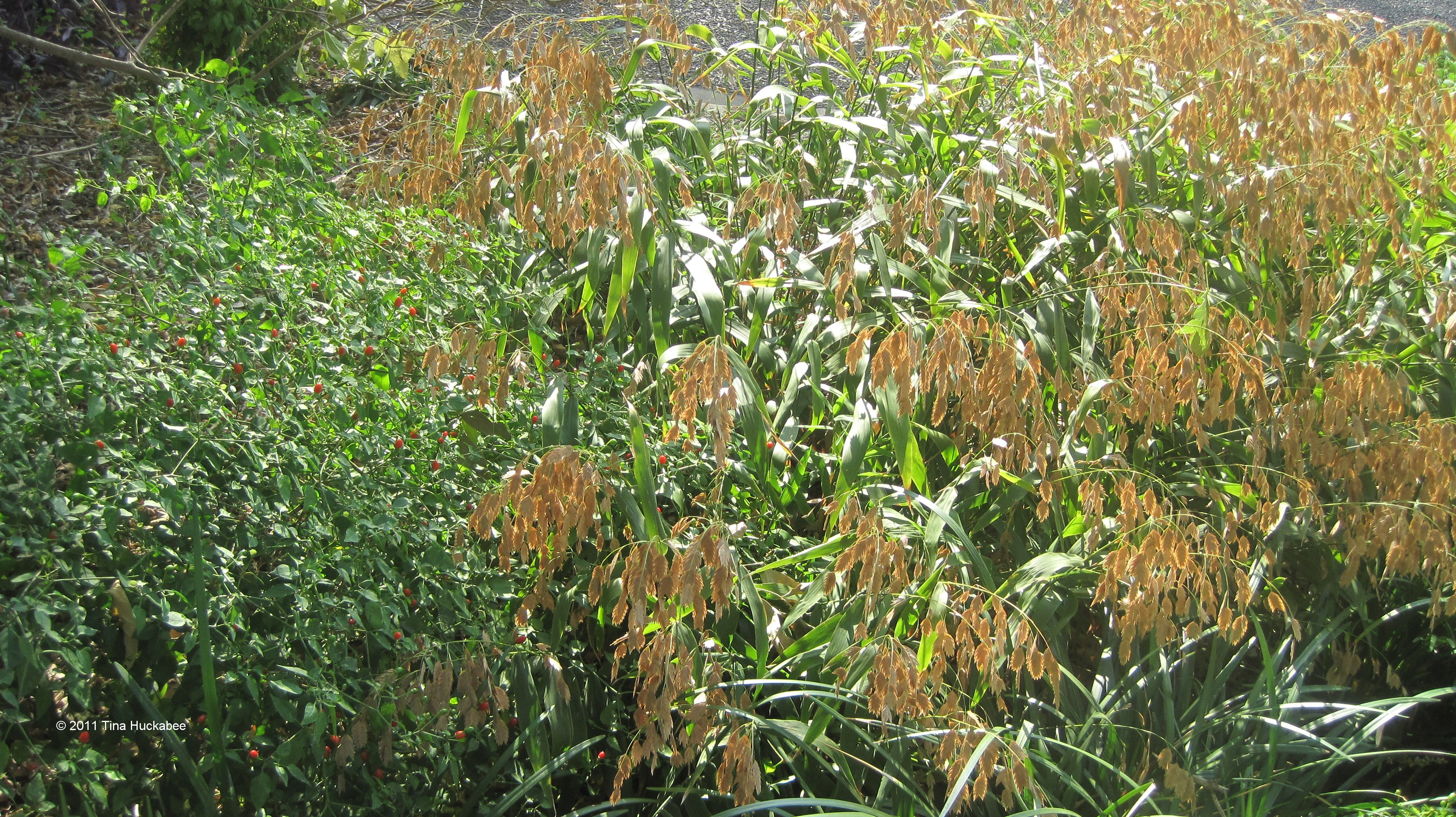
and these handle the shade-for-most-of-the-day, then blast of hot, west sun, beautifully.
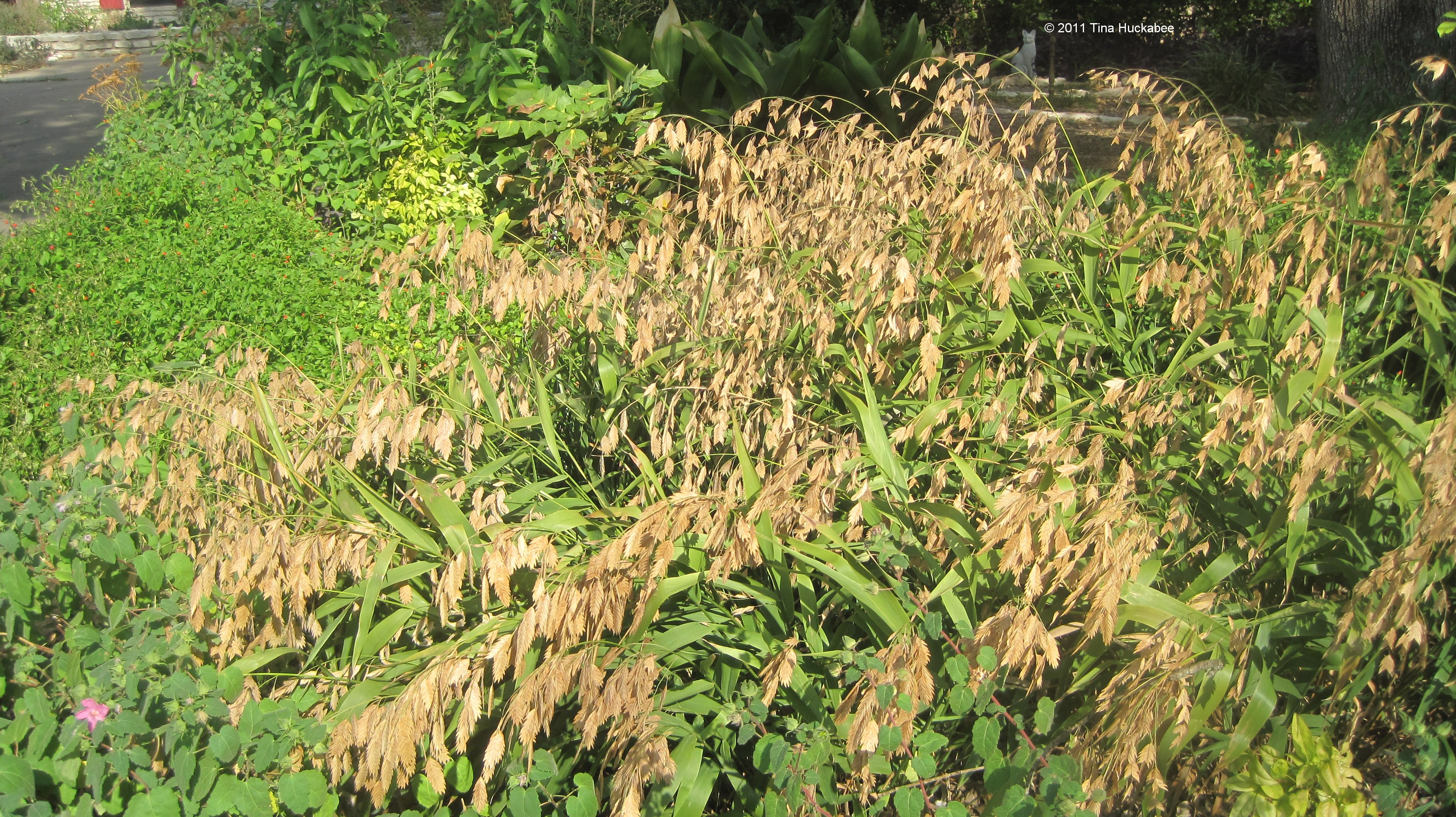
I think they’re especially lovely in the autumn, late-day sun.
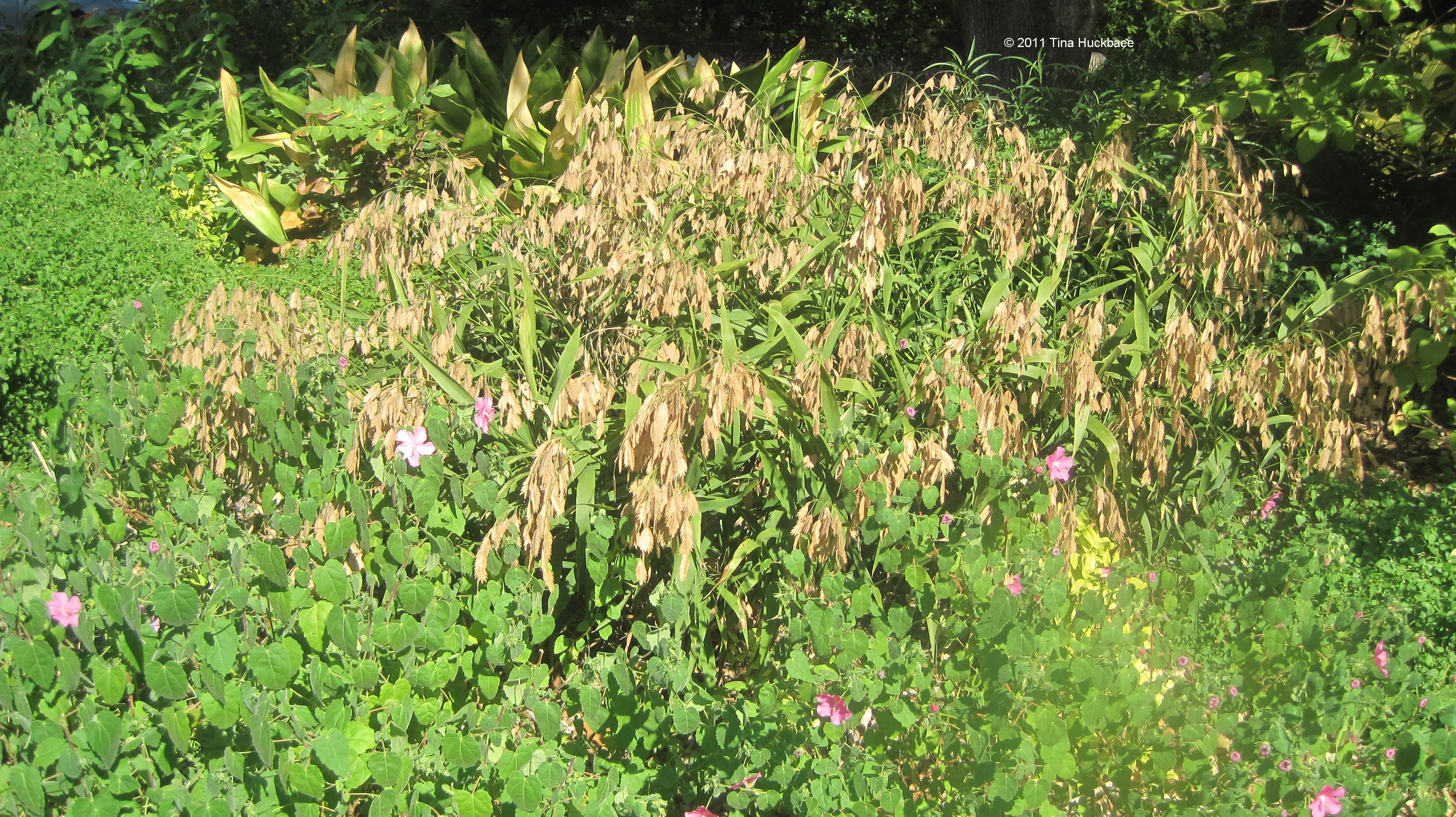
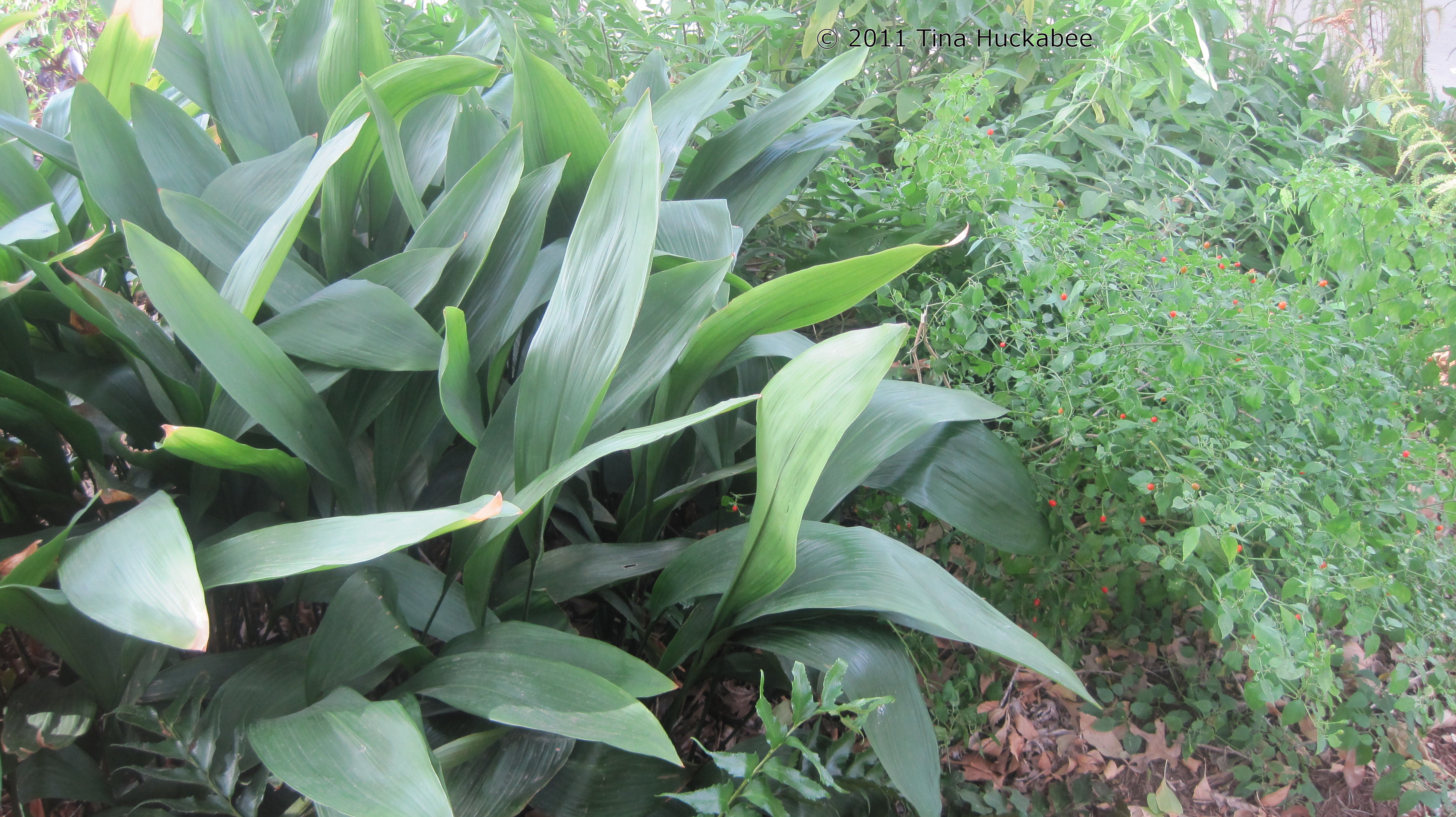
Inland Sea Oats pairs nicely with Cast Iron Plant (Aspidistra elatior),

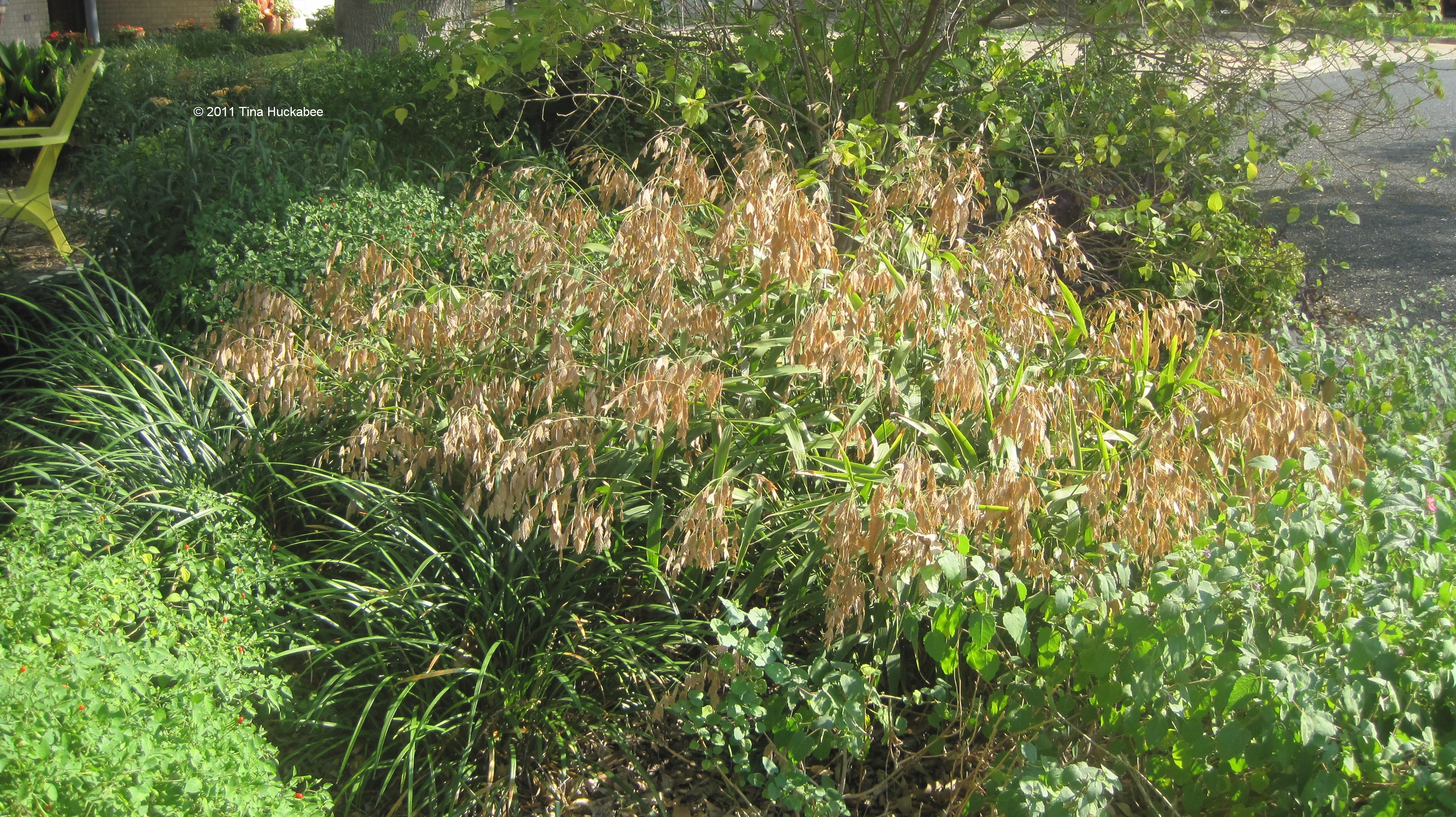
and with Giant Lirope (Lirope muscari ‘Evergreen Giant’).
A word of caution though for this lovely, tough grass:  It can spread.  Profusely.  Especially if you have a sprinkler system and/or a moist climate.  I maintain a tight leash on the Inland Sea Oats in my gardens by yanking errant seedlings out of the ground when I see them.  Because I don’t over-water, I’ve not found this plant to be too troublesome for me to control–if you don’t let them reseed, they are manageable.  However, without management, Inland Sea Oats can be aggressive and invasive.  When I first started working as the gardener at Shay’s Green Garden at Zilker Botanical Garden, one the first goals I had for the gardens was to reduce the number of Inland Sea Oats plants.  This plant hadn’t been well-controlled for quite some time, so it was everywhere.   There are still many groups of Inland Sea Oats in the Green Garden, but fewer than before and by ridding the garden of the excess, it gave me the opportunity to plant other perennials that were not showcased in that garden.  I’m not sure I’d recommend this plant to someone who isn’t committed to weeding it thoroughly at the beginning of the growing season. 
Inland Sea Oats can be a marvelous addition to the urban landscape.  It’s a xeric, beautiful and mostly low-maintenance native grass.  It complements many plants, especially evergreens.  Its one drawback is a tendency towards aggressiveness over time and that can be remedied with good garden maintenance.
 

Who Names Their Kid ‘Chi Chi’?

It’s pretty, isn’t it?

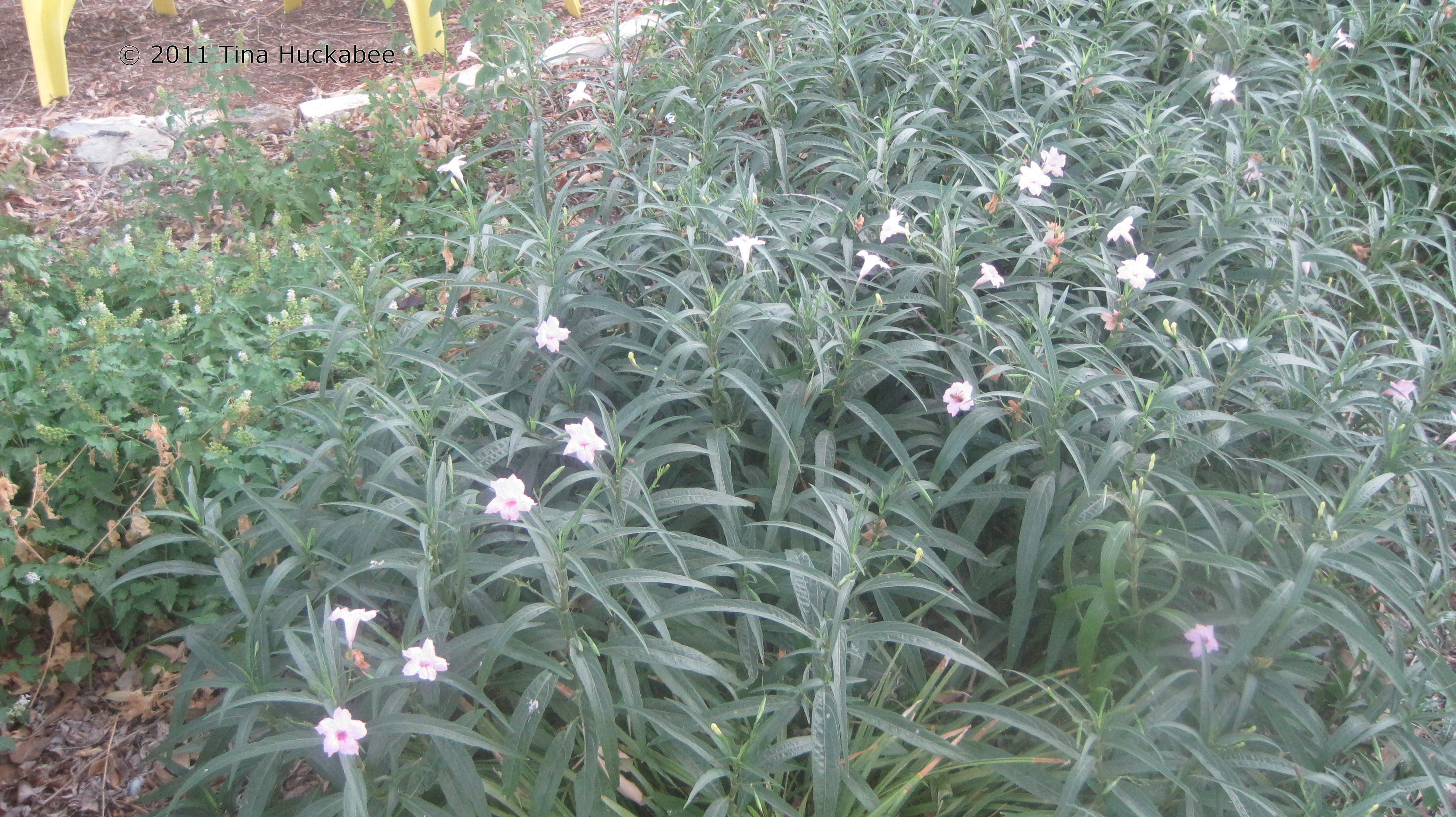
I call it Pink Ruellia, but it’s also known as Hardy Pink Petunia. The official name is Ruellia brittoniana ‘Chi Chi’.  I don’t know why the ‘Chi Chi’, and I wish whomever thought of that name would think of another.  But, there it is.

I like this plant.  Someone gave me a couple of starts many years ago– I don’t even know how long ago. One source that I read said that it’s a great plant to grow except in more tropical climates because it can grow “too well.”  No kidding!

‘Chi Chi’ Ruellia can be grown in full to part sun, blooming best in full sun. I have several colonies of this plant and I’ve especially liked them in my front garden, which is shady.  The plant grows as individual stalks and this adds vertical structure to the garden.  The sprinkling of flowers at the upper portion of the stalks is an added bonus.

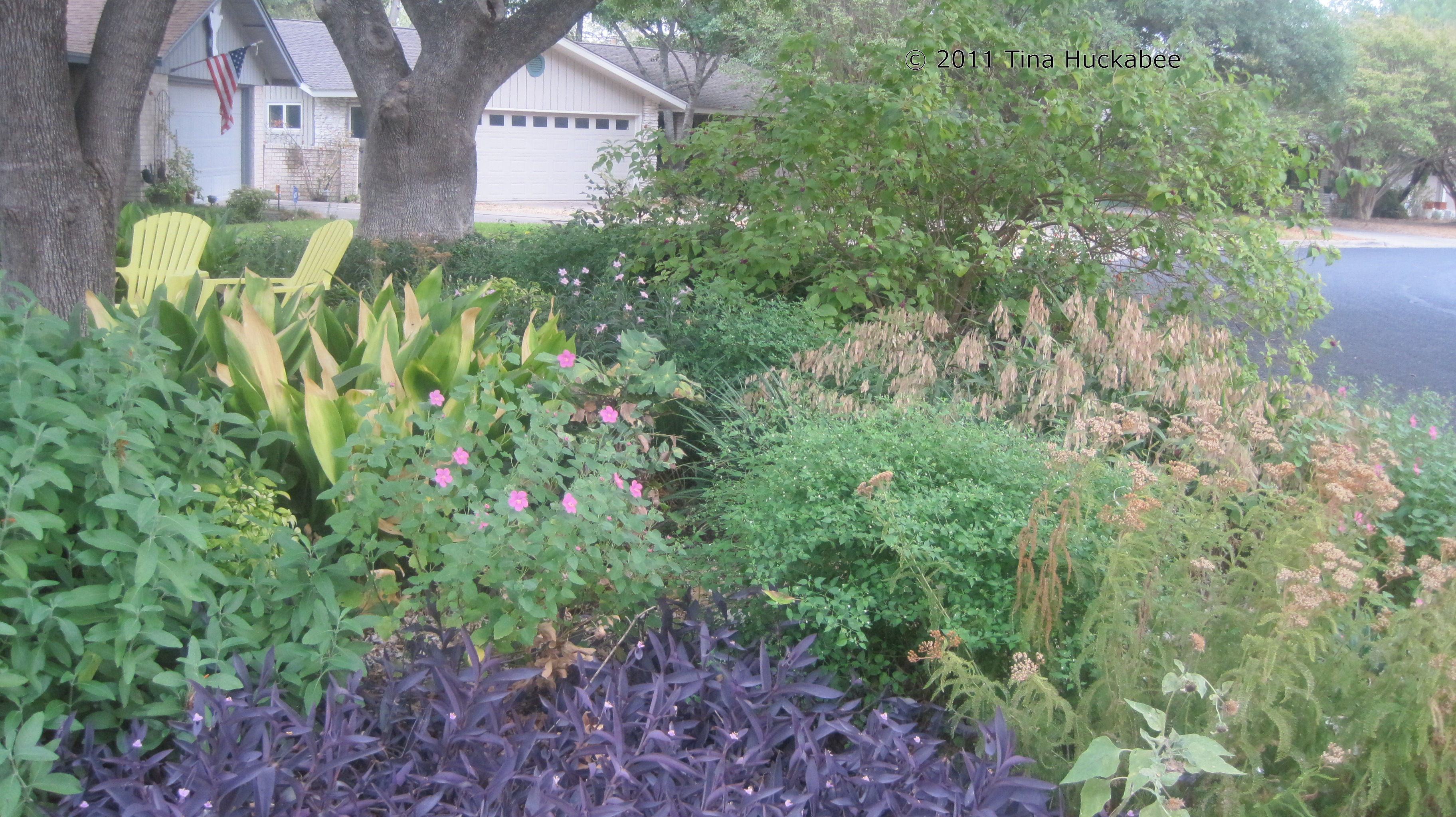
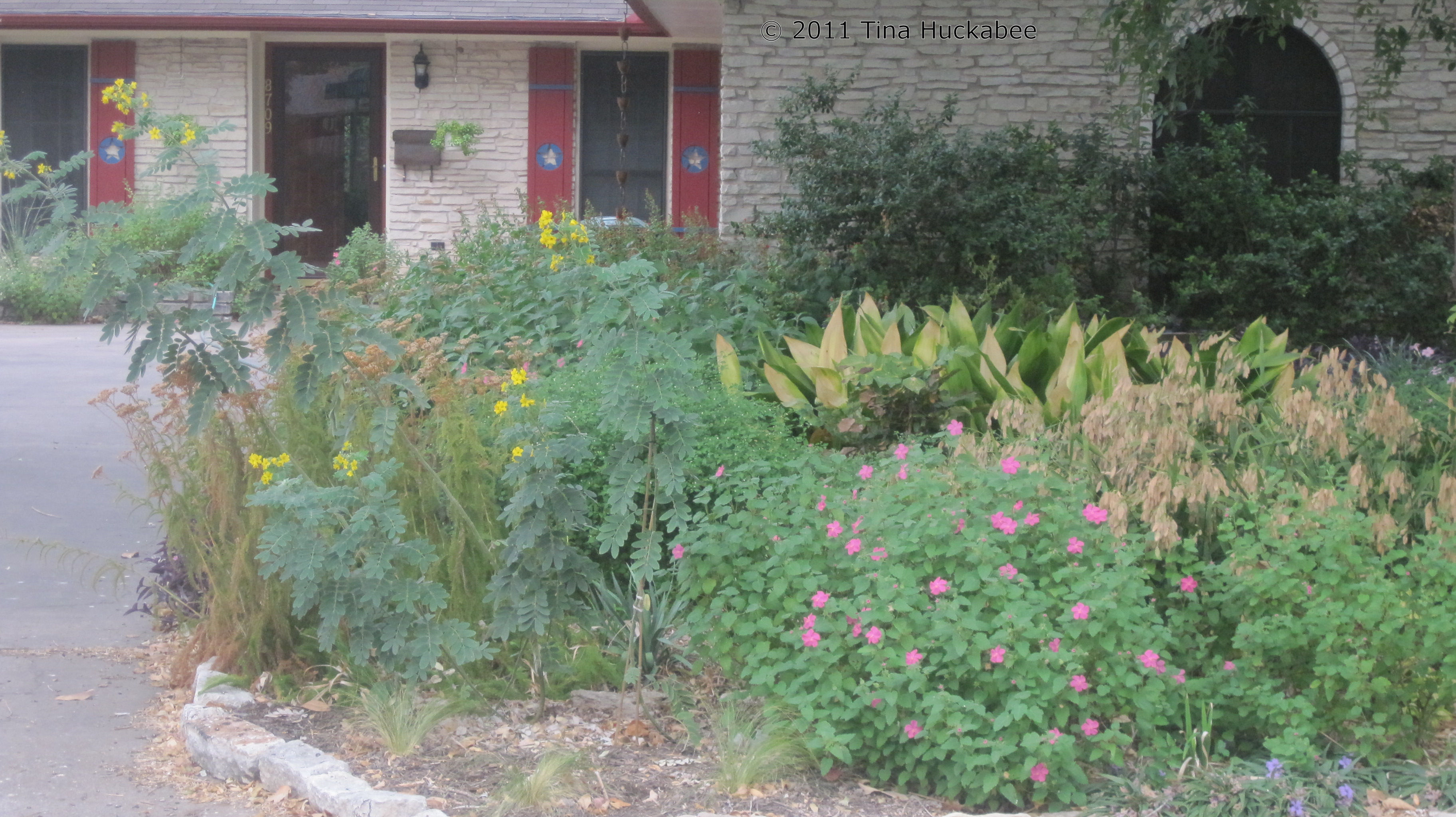
Chi Chi Ruellia Cast Iron Plant Inland Sea Oats all

Giant Lirope Columbine all

Even though they don’t bloom quite as much in shade, the flowers are soft and light and the foliage is attractive: dark green and slender.  The leaves are opposite and grow the length of the stalk.

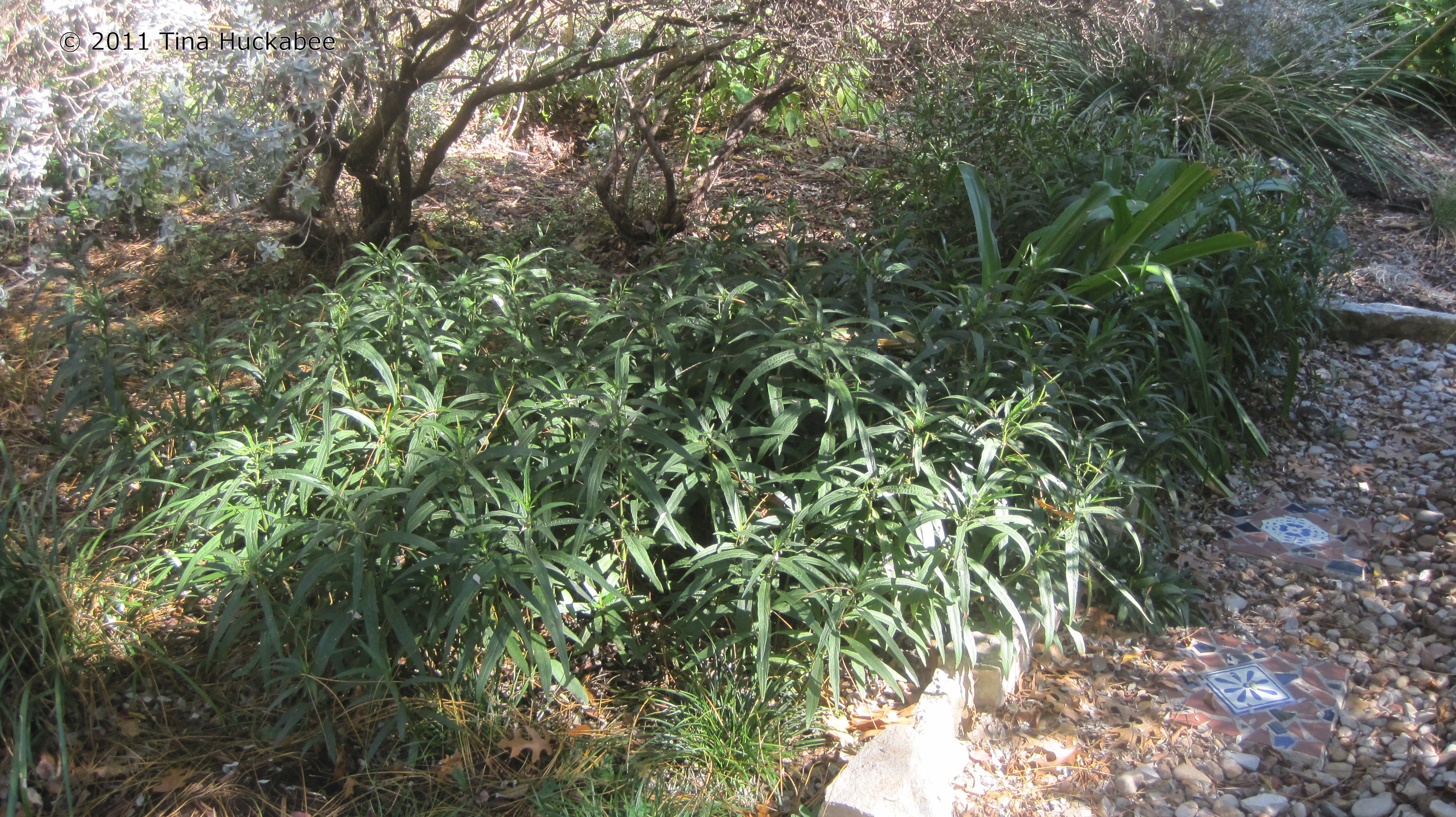
I especially like the ‘Chi Chi’ foliage after the first light freeze because the leaves develop a deep burgundy tinge and this adds richness to the fall/winter color palette.  ‘Chi Chi’ is a herbaceous perennial so after a hard freeze, the plant dies to the ground.  However, it is root-hardy in Austin and can be evergreen in mild winters.

I love it mixed with a pass-along Crinum Lily (unknown name) from my parents’ garden.  When these two plants bloom (both are light pink summer bloomers), it’s a lovely combination.  The foliage of the two plants work well together, too.

‘Chi Chi’ Ruellia blooms throughout summer and into fall.  In hot August,  the flowers are soft, fresh and pretty pink as they greet me sweetly early in the mornings.  The individual flowers  drop off by mid-afternoon and new flowers open early the next day, so there is a long succession of blooms.  If we have rain, ‘Chi Chi’ will bloom into October. This plant is  xeric and requires  little care once established.  It’s a tough plant that adapts to a variety of growing conditions.

‘Chi Chi’ has a rhizome-like root and spreads by root colonization and by seedlings.  It can be invasive (especially with regular irrigation) and that’s something the gardener should consider when planting any ruellia, especially a non-native like the Mexican or the ‘Chi Chi’. If you live near a green belt, I would hesitate to recommend the ‘Chi Chi’ for your gardens because of its propensity to propagate.  As with most flowering perennials, it’s very happy to have more irrigation, but it becomes troublesome with that extra water. In my personal gardens,  it primarily spreads in the immediate vicinity of where the original was planted.

In this spot, the stalks have insinuated themselves into the rock walkway.  Now that we’re  getting some rain in Austin (finally!), I’ll take a shovel and dig them out to tidy the area.  When the soil is dry, ‘Chi Chi’ can be hard to remove.

About four years ago,  in order to diversify the plantings of one of my gardens, I removed a large colony of well-established ‘Chi Chi’.  Or at least I thought I did.

I inadvertently left some root when I re-worked this bed, so stalks have developed in a colony of Yarrow.  I could let the Yarrow and ‘Chi Chi’ duke it out, but I think I’ll excise the ‘Chi Chi’ myself.

In this drought year (gosh, that’s getting tiresome to say), the ‘Chi Chi’ didn’t bloom as much as usual, nor did they grow quite as tall as is typical. Normally, ‘Chi Chi’ grows over two feet tall.  This year, this group in particular only grew to about fifteen inches.

It survived though and with very little care.

‘Chi Chi’ Ruellia is a hardy, tough plant for Central Texas gardeners.  I’ve seen it in shade, sun, containers and as an indoor plant. It isn’t picky about soil-type and bees and butterflies will visit the flowers.  ‘Chi Chi’ blooms in the hottest time of the year–always a gift in Central Texas.

However, it’s a plant that can be a bit of a bully, so take that into consideration before inviting ‘Chi Chi’ to your garden party.

I Couldn’t Wait

In my post, Cast Iron Crisp, I discussed how one stand of Cast Iron Plant (Aspidistra elatior), in my gardens, suffered leaf burn this past summer.

The plants have been in that spot for more than a decade and have never had this sort of damage.

The garden receives dappled shade most of the day, until the late afternoon blast of hot, west sun.  The plants that are in front and to the side  of the Cast Iron are all sun lovers and thrived with no ill effects from the exceptional drought and heat.

My assumption about the damage this year is that it was caused by the extremely hot (more than 70 days above 100 degrees) temperatures that Austin experienced during summer 2011.  Originally, I planned to prune the Cast Iron in winter and observe what happens next year and if it is as hot again and similar damage occurs, I would replace the plants.

Yeah, right.

I can’t wait that long.

So, once I’ve dug out the sun-burned plants, what do I replace the Cast Iron Plant with?

I wanted something that I don’t already have, that can take mostly shade, but won’t burn up with the death rays of the west sun and something that won’t need much water, given the very real possibility of Stage 3 water restrictions in the foreseeable future.

I love the native red Turk’s Cap (Malvaviscus arboreus) and have many of those shrubs in my gardens. I used to have a White Turk’s Cap and enjoyed it as well, but  moved it and it didn’t survive its transplantation.   I’ve never been quite as enthralled with the Pam’s Pink Turk’s Cap (Malvaviscus drummondii ‘Pam Puryear’), although I’ve grown to like it more after observing it at Zilker Botanical Gardens (in the Butterfly Garden) and in private gardens around Austin.  According to those who grow it, it’s as hardy and xeric as the red Turk’s Cap. So, I decided to try two Pink Turk’s Cap as the replacements for the fried Cast Iron Plant.

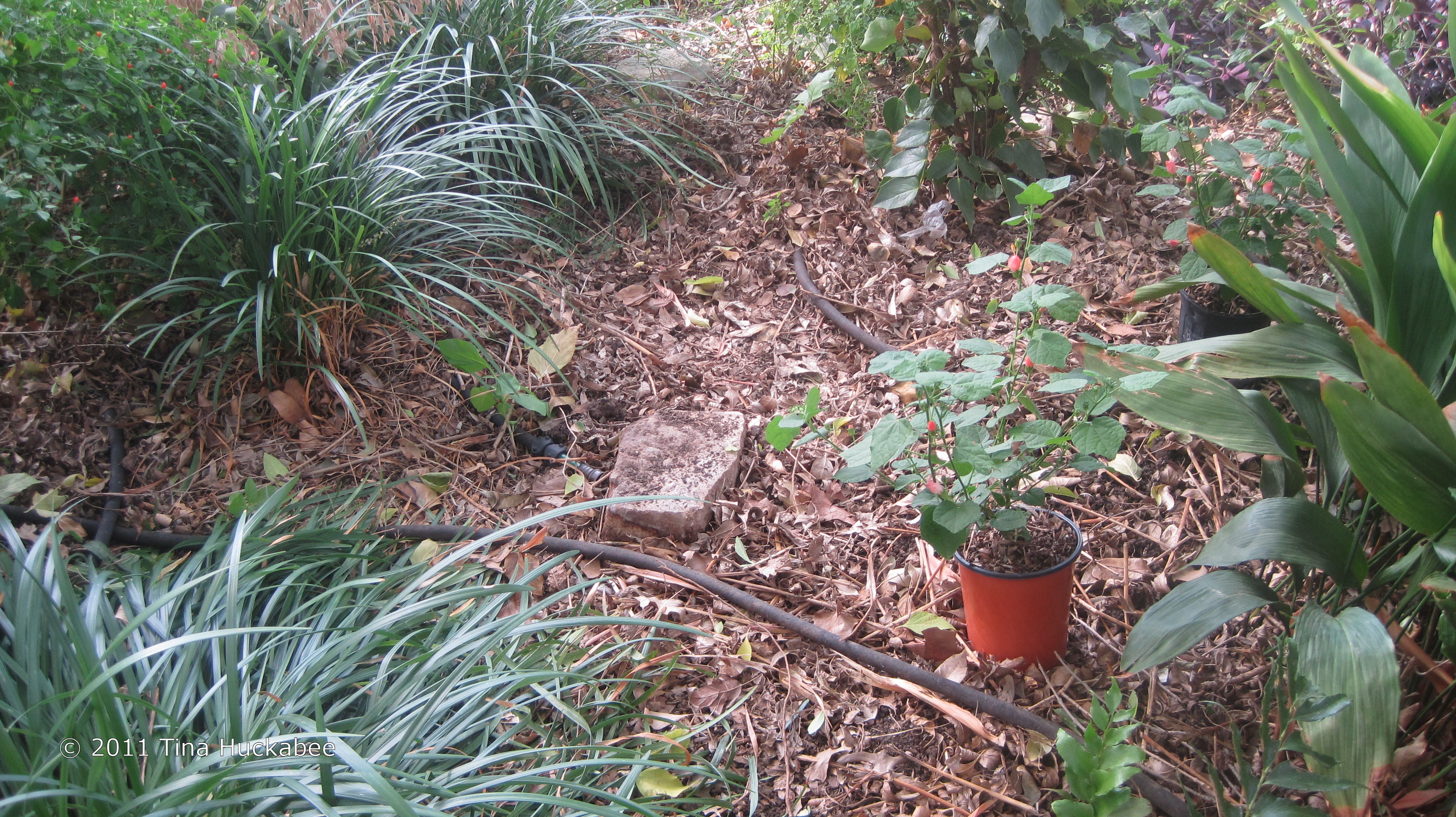
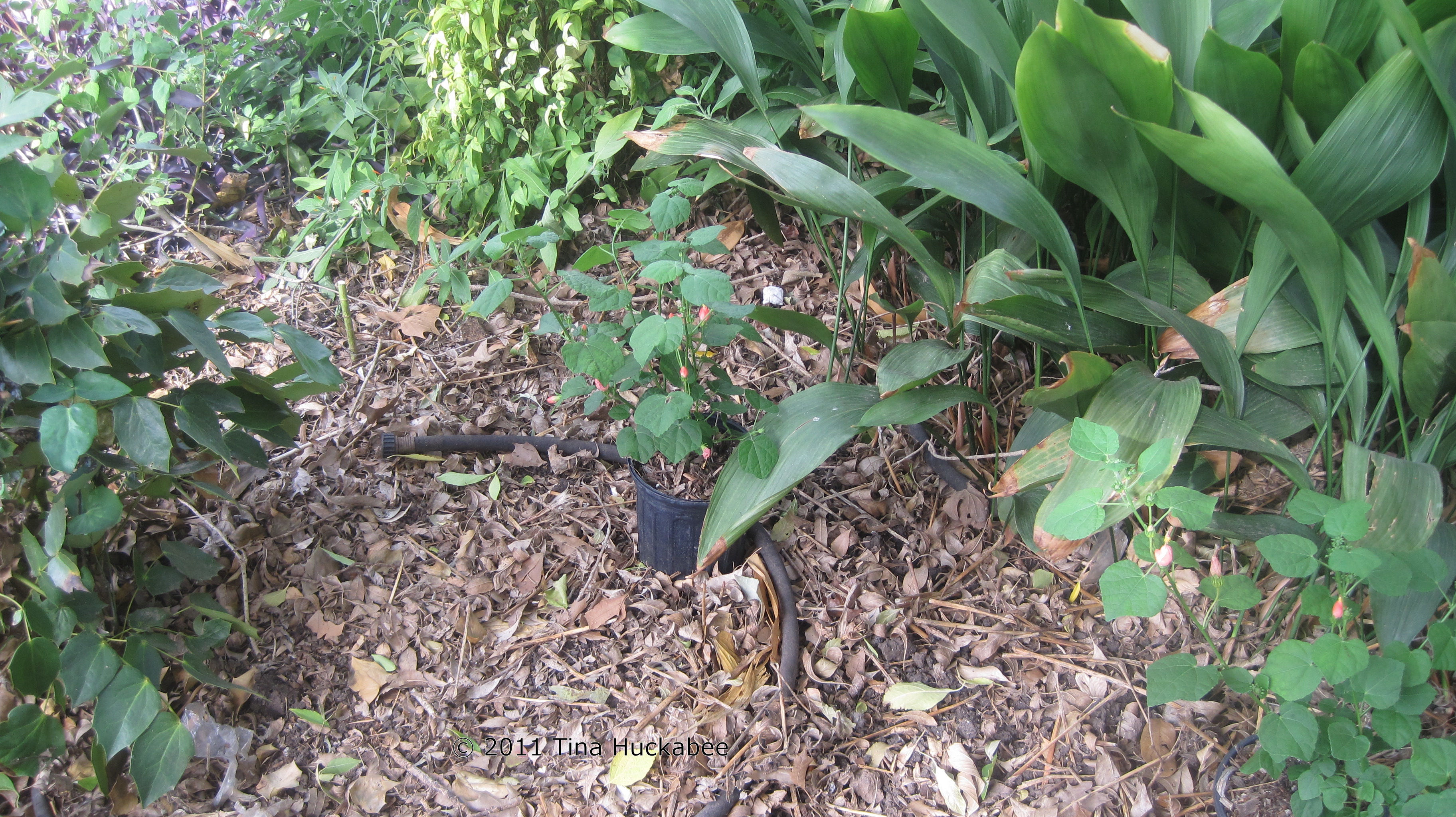
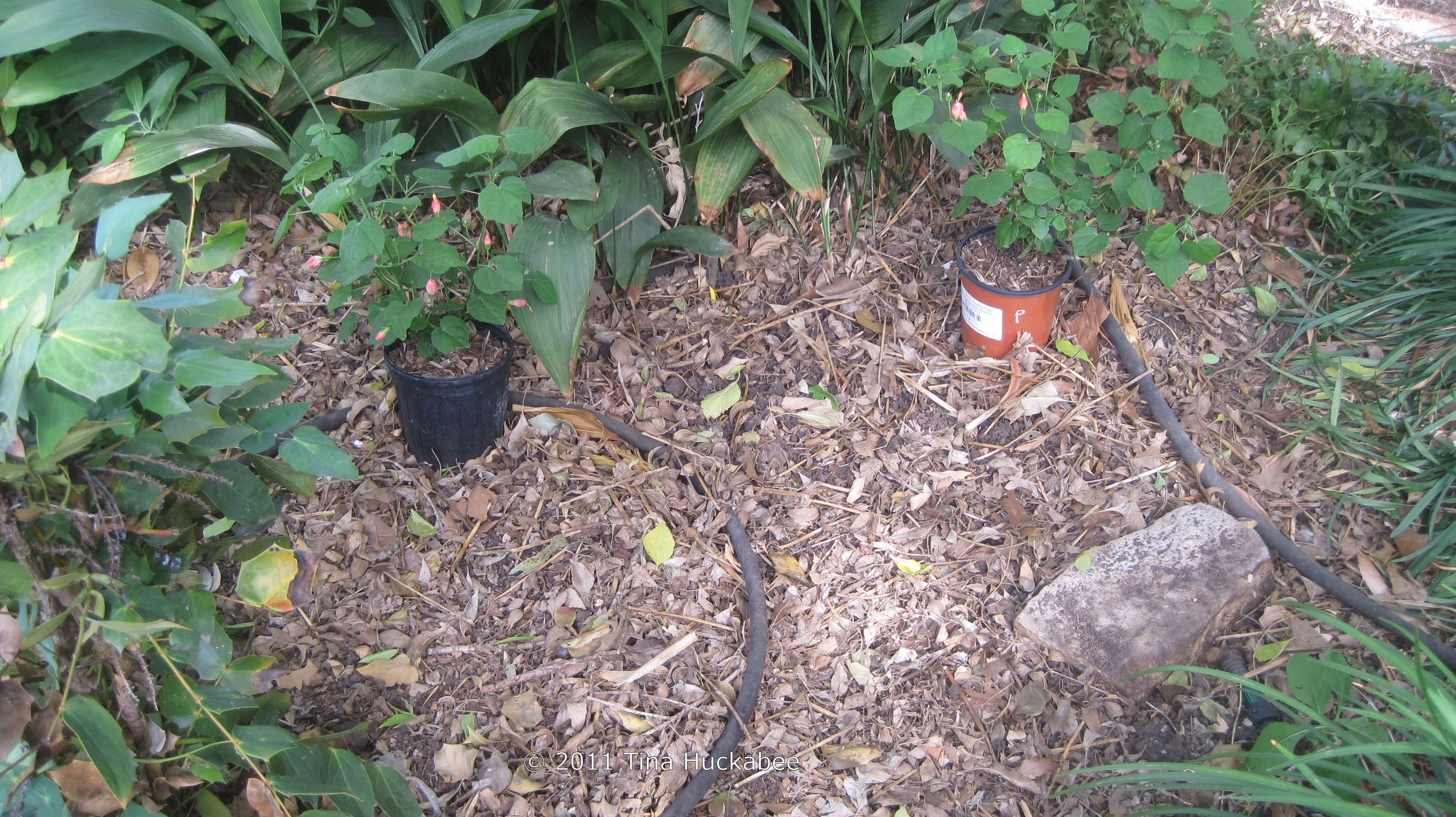
I laid out the exact spot where I want the Turk’s Cap  and adjusted the soaker hose to pass over the root zone of each plant.

I dug ’em in, watered ’em and mulched ’em.

Because it’s late in the growing season, I opted for gallon pots each with a large root base  to better ensure survival odds through winter.  At maturity, these two plants should be four to five feet tall.

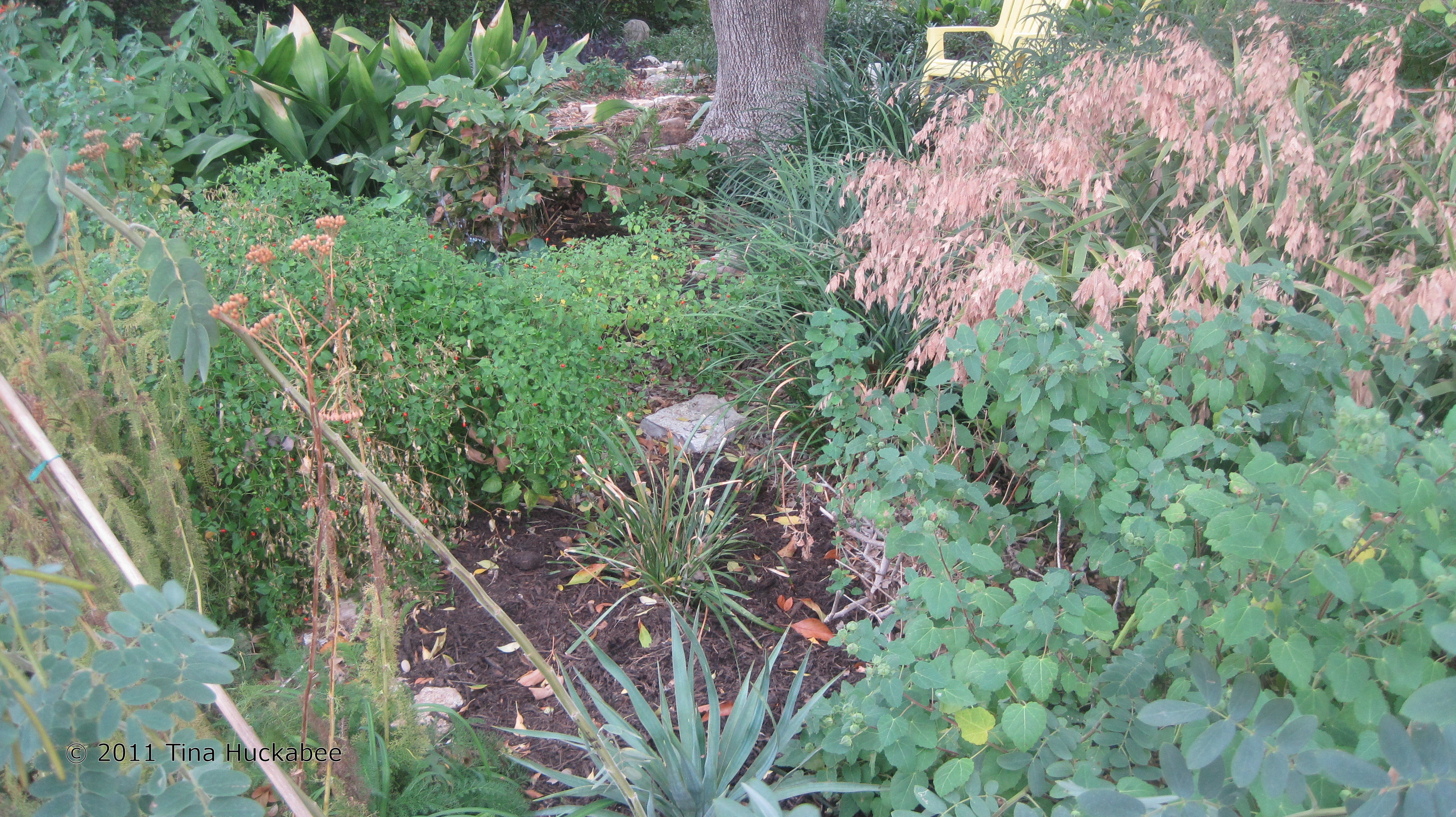
Viewing from the street (toward the tree), the Turk’s Cap will fill in the space behind  the Mahonia (Mahnonia repens) and in front and to the right  of the Cast Iron, thus shading the remaining Cast Iron Plant from the sun during the hellish summer months.  The small Giant Lirope (Lirope muscari) in the front/center of the photo, is a transplant from another part of my garden and will eventually be about three times its current size.

Viewing from the tree side of the garden (toward the street), a seedling Chile Pequin (Capsicum annuum var. glabriusculum), is to the right of the Giant Liriope and left of the Mahonia and will fill in the area in front of where the Turk’s Cap is planted.

I opted to leave the section of Cast Iron Plant which was not sun-damaged.

I think this is a good solution to the Cast Iron sun-burn problem.  My greatest concern  is planting during the  continuing drought.  My hope is that I’m ahead of possible severe water restrictions with enough time for the xeric Pam’s Turk’s Cap to establish itself.

Wish them (and me), good luck.  And, think about what you can do to replace drought/sun damaged plants, inappropriately placed, with better suited options.