Another month, another slew of wildlife happenings in my gardens. Thanks to for-the-most-part regular rains this year, there are more butterflies, moths and birds in my gardens. Central Texas is still in drought, but it’s eased a tiny bit within Austin’s city limits.
Around my pond there is almost always a dragonfly or two–weaving, diving, hovering, then resting on the tips of nearby foliage after their flying frenzy. I often see this handsome fellow, a Neon Skimmer (Libellula croceipennis) and his relatives.

This particular species is the most common of the order Odonata around these parts.
Another common dude cruising, landing and generally being gorgeous is the Blue Dasher (Pachydiplax longipennis).
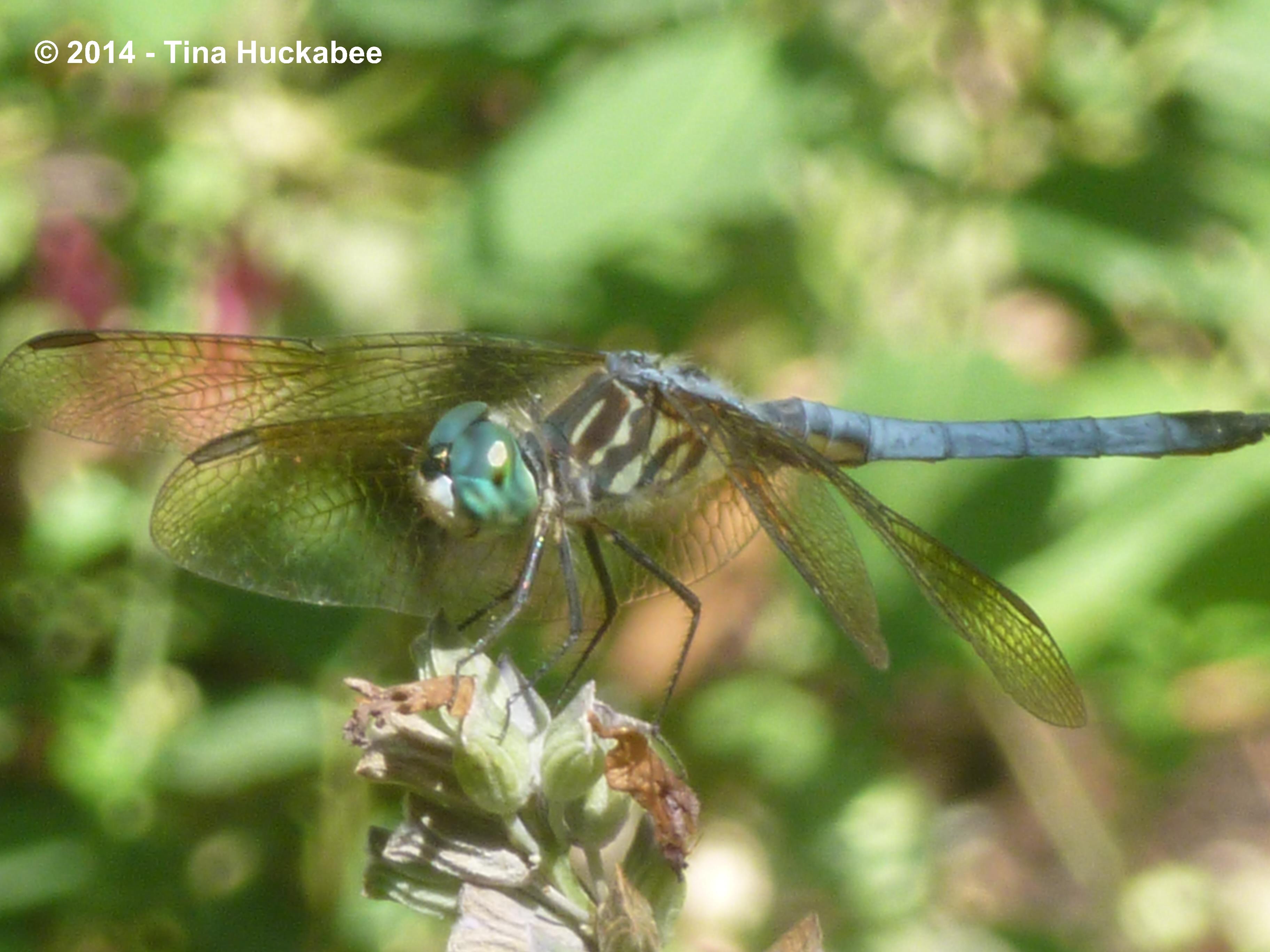
He posed nicely for me one hot, sunny afternoon while I was in the pond, feeding my lilies and having my toes nibbled by the fish. For the last two summers, I didn’t see as many dragon and damselflies in my gardens owing to the ongoing drought. I’m happy to say that this summer they’re back in full force; I’ve enjoyed the show.

Just what the world needs, more “stink” bugs.

These two love-bugs are commonly called Leaf-footed bugs (Leptoglossus phyllopus).
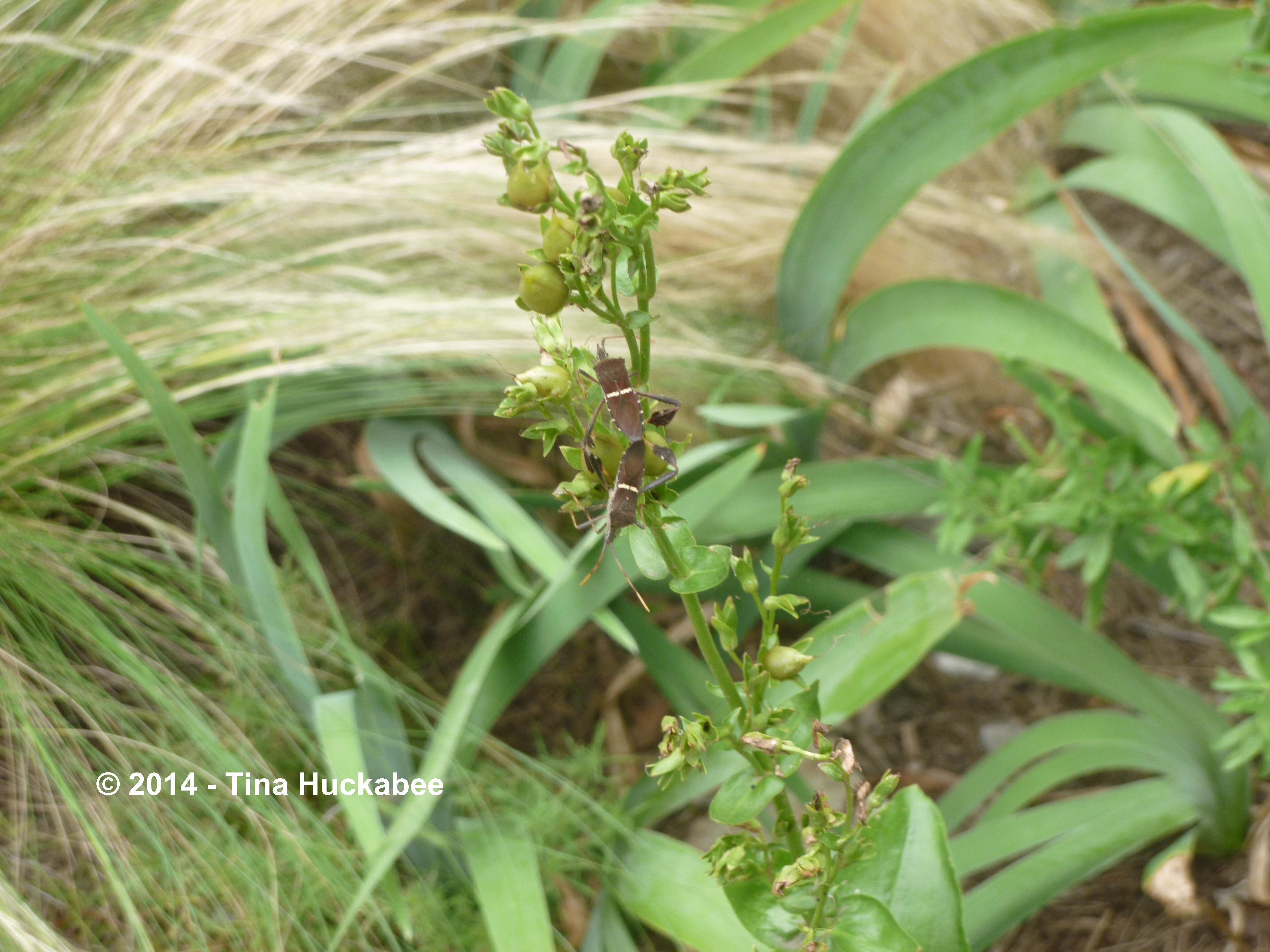
They are happily ensconced in my gardens, I’m somewhat sorry to say, though I admire their resourcefulness. Leaf-footed bugs are in the general category of “sucking” insects–meaning that they suck juices from plants. They puncture their plant victims with their mouths and suck the juices out, leaving the fruits or berries hard and discolored. They menace commercial and home crops, like tomatoes (my tomatoes, to be specific). I didn’t bother these two (I am after all, a romantic), but I’ve been known to squish’m. Yeah.
On to something prettier and more welcome in my gardens, this Red Admiral butterfly (Vanessa atalanta) was sunning herself poolside. She’s easily identified by the top part of her wings as she held them open.

The undersides of her hind-wings and fore-wings are also colorful.
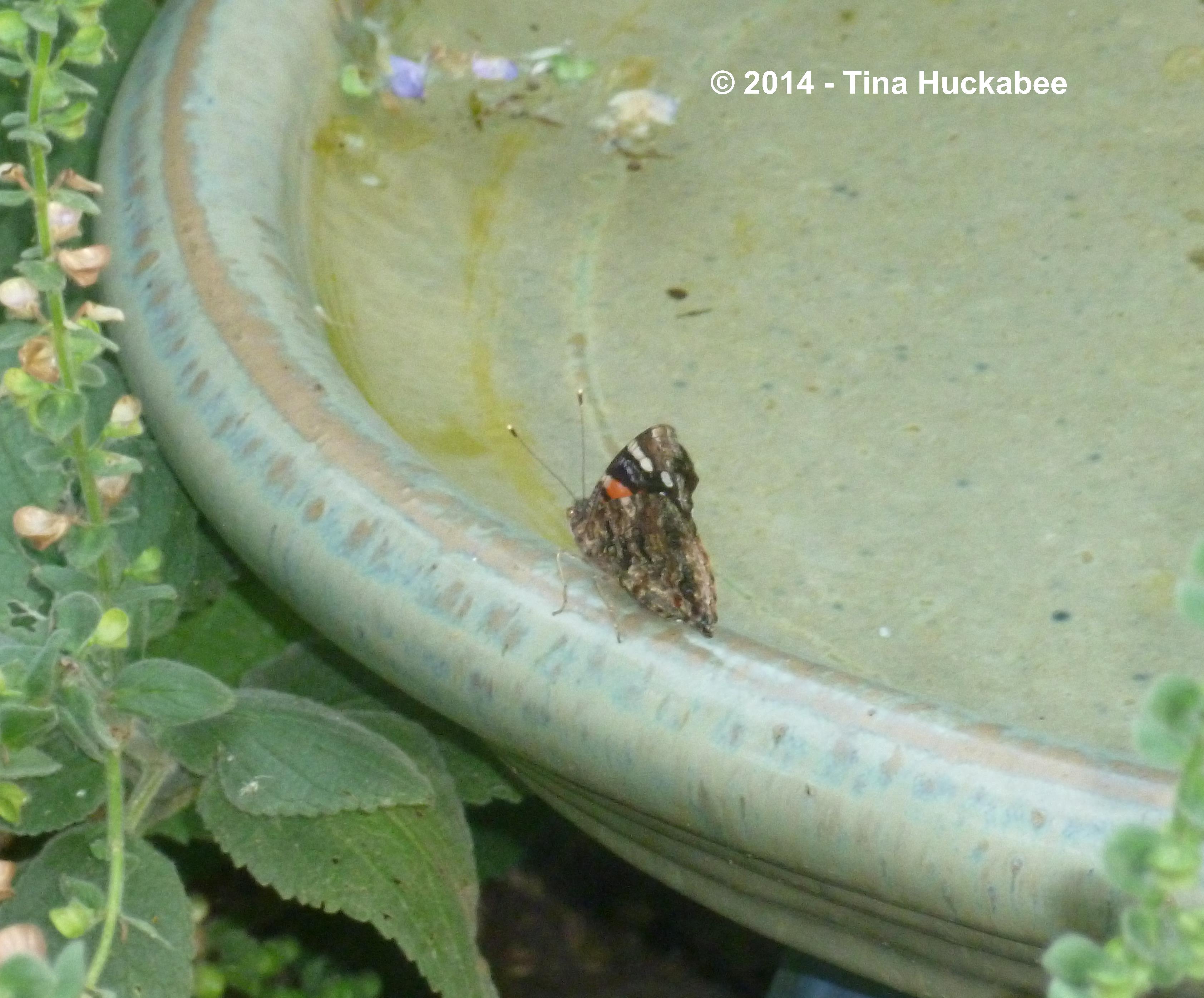
Her wings are held in a vertical position, like a soldier at attention, though she’s actually at rest.


I’m fairly sure this is the adult version of the caterpillar that I profiled last month, the Yellow-striped Armyworm Moth, Spodoptera ornithogalli.

When I was identifying that caterpillar, I noticed in photographs of the adult moth that the pattern on the wing varies, though all share the muted, mottled gray/brown coloration.
I spied this lovely orb-weaver in her netting between Iris straps a few weeks ago.
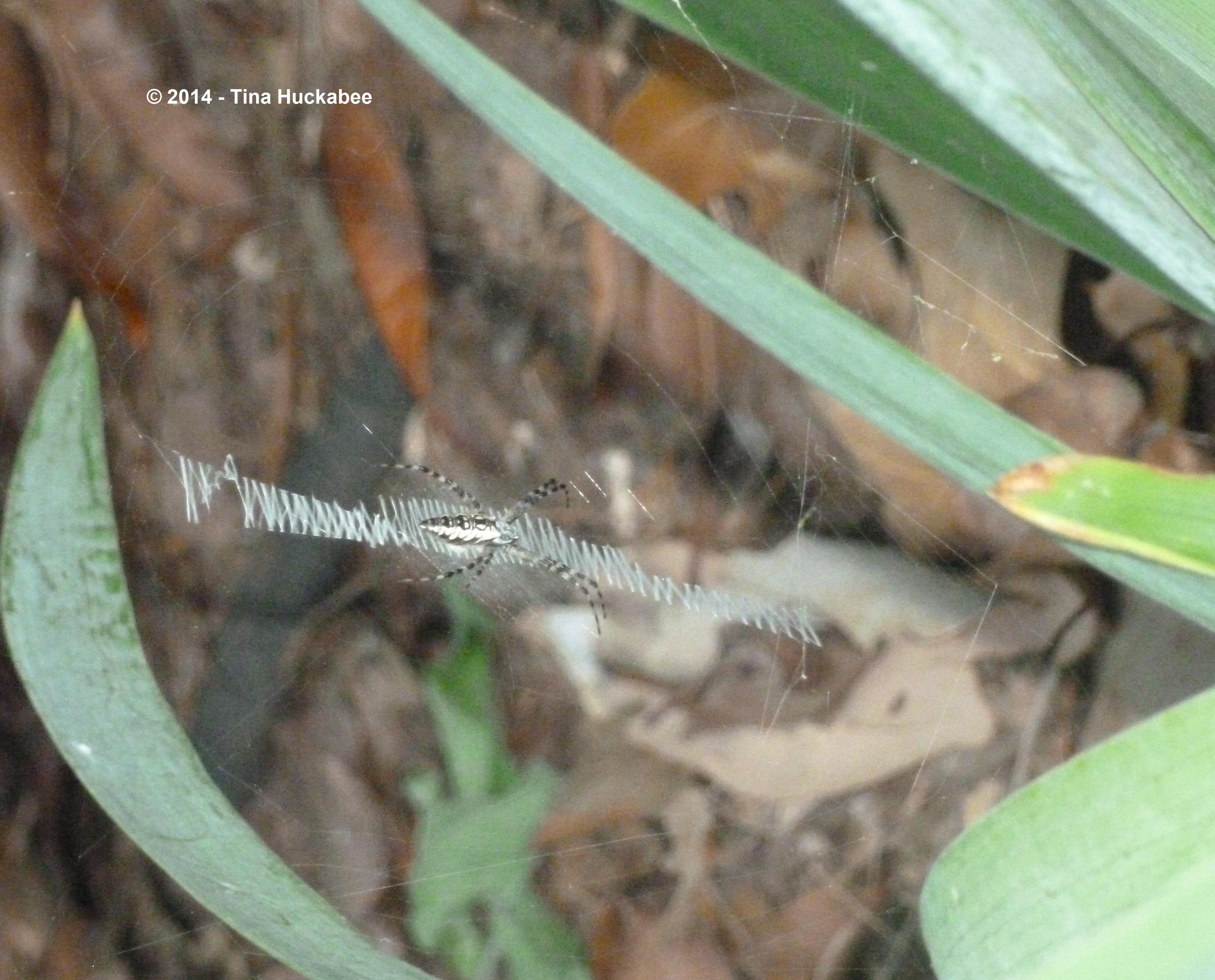
I couldn’t identify her and I hoped to observe her for a few days. Alas, she disappeared the next day. I’ll just call her a garden spider.
This female hummingbird was sipping her breakfast when I rudely approached to take some photos of her plant choice of nectar.
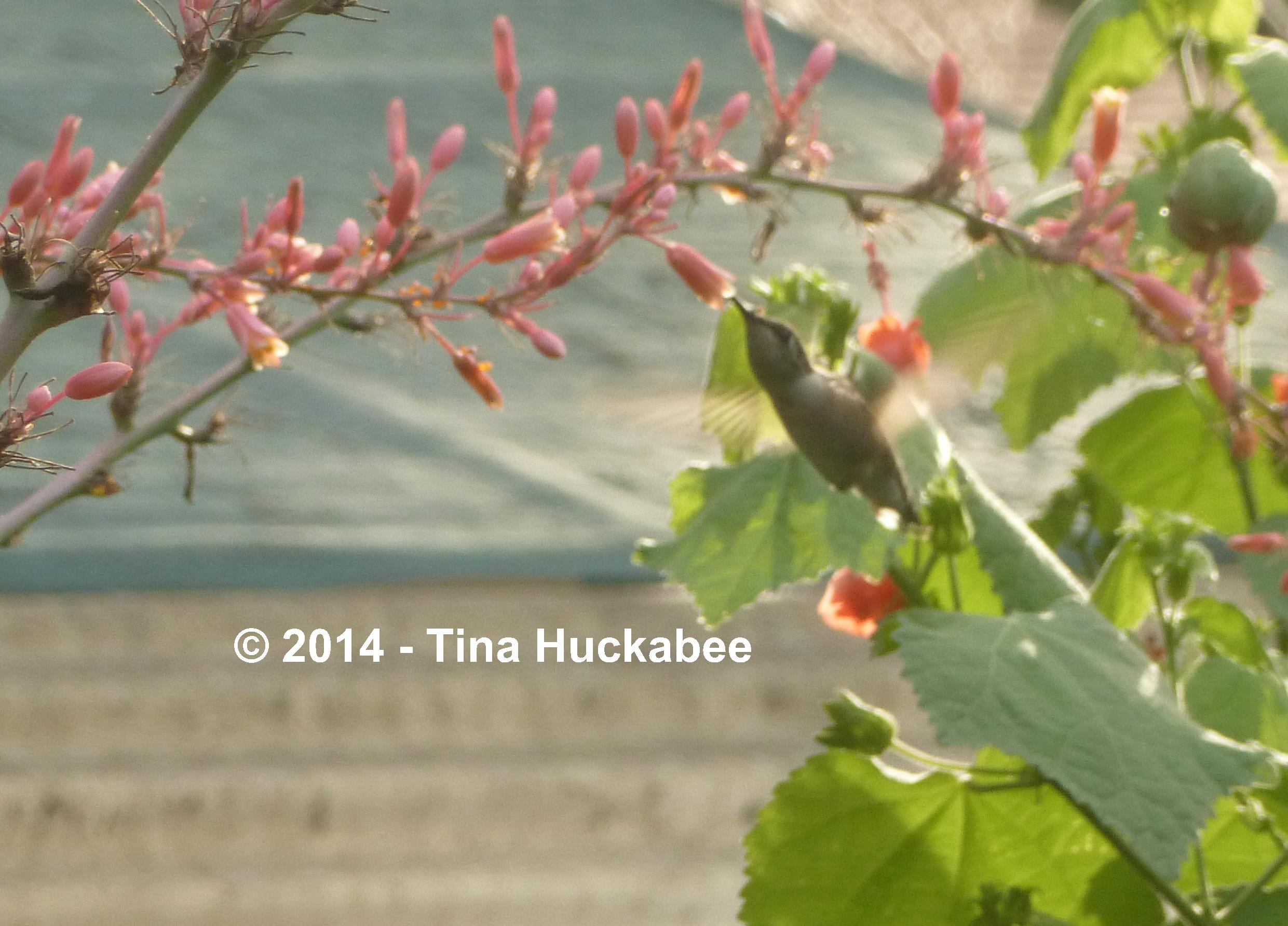
I don’t know what species of hummer she is
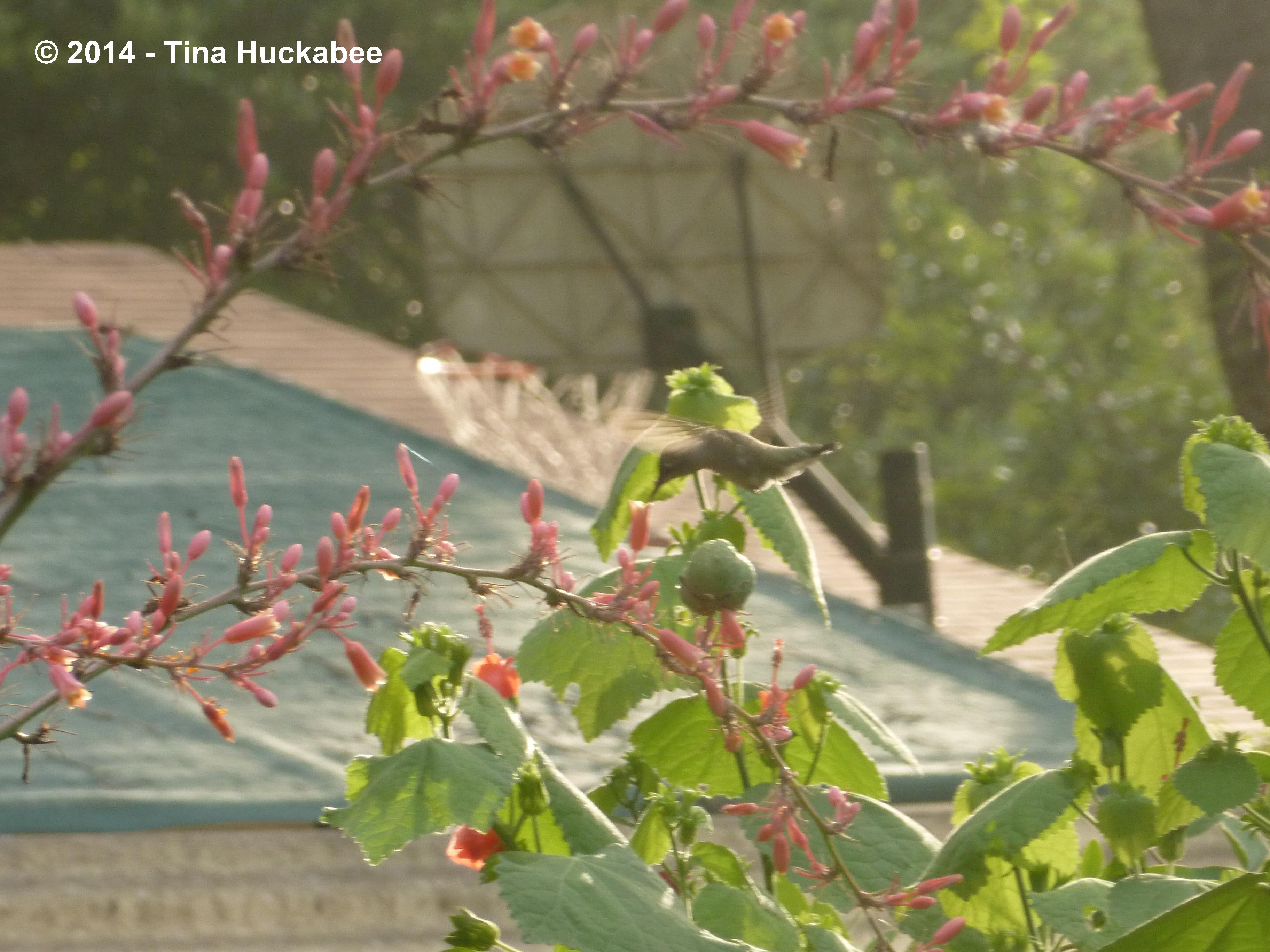
…I can only confirm she’s a she and not a he.
We surprised each other. About the same time I realized there was a tiny bird in my camera lens, she realized there was a person photographing her dining experience. I was enthralled and she was annoyed. She promptly flew off–maybe to shoot some hoops?
While gabbing on the phone to a friend one Sunday afternoon, I found this enchanting butterfly working the blooms on delicious oregano.

This Gray Hairstreak (Strymon melinus) crawled from branches to blooms and back again.
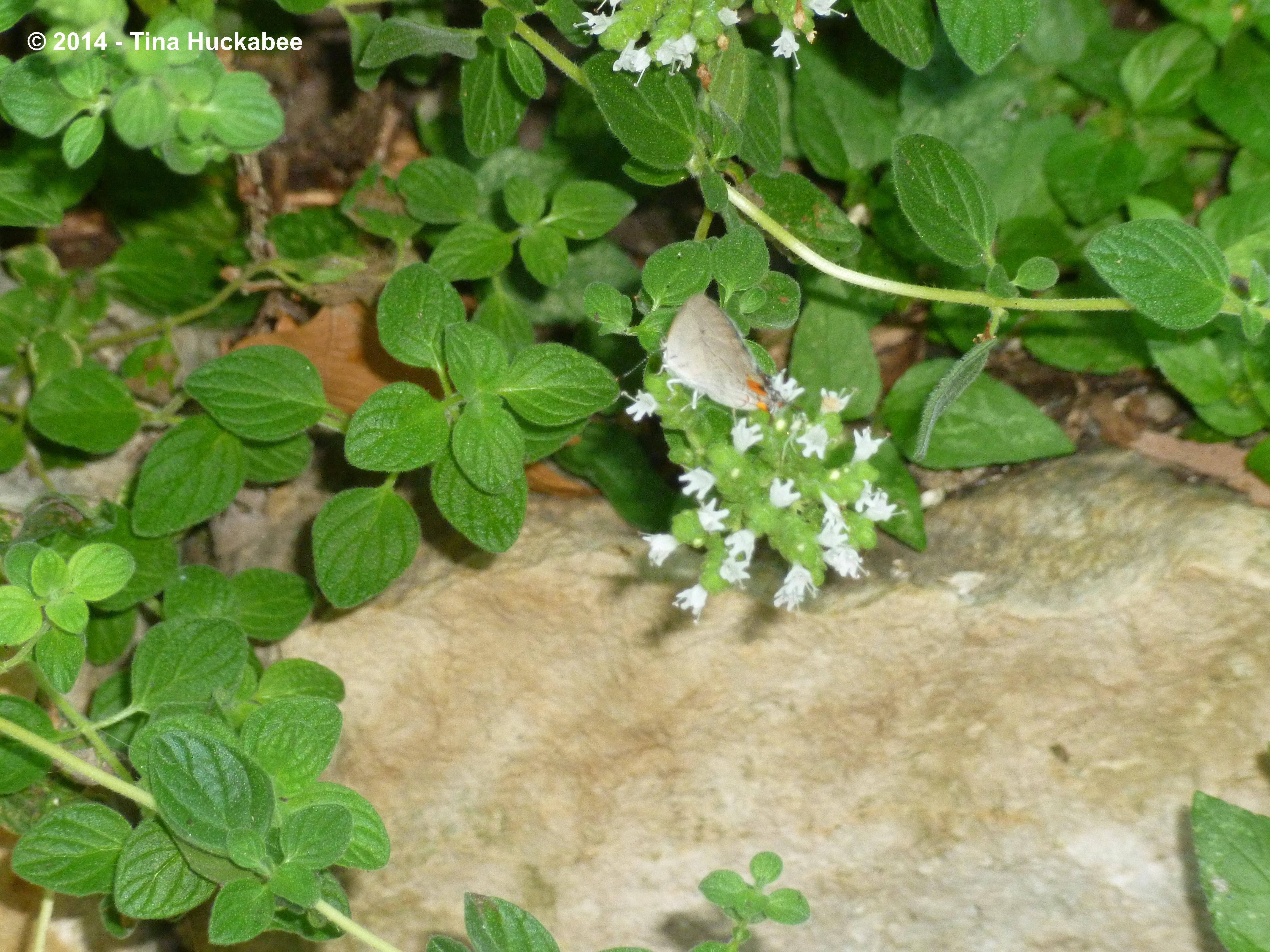
Such a pretty little thing.

He never opened his wings, so I couldn’t see the top side of the hind and fore wings, but you can see those here and read further about this member of the Lycaenidae sub-family of butterflies. The Lycaenidae are members of the Superfamily Papilionoidea, apparently considered “true butterflies”.
I enjoy lots of wildness in my gardens and I bet you do too. Please join in posting about the wild visitors to your gardens for August Wildlife Wednesday. Share the rare or mundane, funny or fascinating, beneficial or harmful critters you encounter. When you comment on my post, leave a link to your post for Wildlife Wednesday.
Happy Wildlife Wednesday and good wildlife gardening!



 My Gardener Says...