Wondering Wings

I often use Butterflies and Moths of North America (BAMONA) as a resource when identifying butterflies in my garden or learning about what particular butterflies might require by way of food sources, but I’ve never utilized the  site’s submission process to ID an unknown butterfly or moth.  Instead, I comb through lists of photos from various sites, comparing whatever photo I took with shots from these sites.  While not efficient, there’s something gratifying about this process.  For me, it’s much like strolling through a bookstore or library, perhaps with one book in mind, but gloriously distracted by volumes just begging to be read. Or, visiting a nursery for a specific plant and lusting after the many I might  choose for that one special spot in the garden.

While Butterflies and Moths of North America is a go-to site for me in learning about these insects, I’ve never submitted a photo for identification. Recently though, my enterprising husband did, and we learned about a new (to us) insect in our midst.  Ambling around our street to give our sweet, old dog some exercise, we spied a black and fast-flitting insect working a neighbor’s Wooly Butterfly BushBuddleja marrubiifolia, (which is a plant I would LOVE to grow, but, alas, don’t quite have the full sun required).  The winged thing was swift and jittery in its flight pattern, moving rapidly from bloom to leaf and back to bloom again.  It was tough to get a clear photo with The Hub’s cell phone.
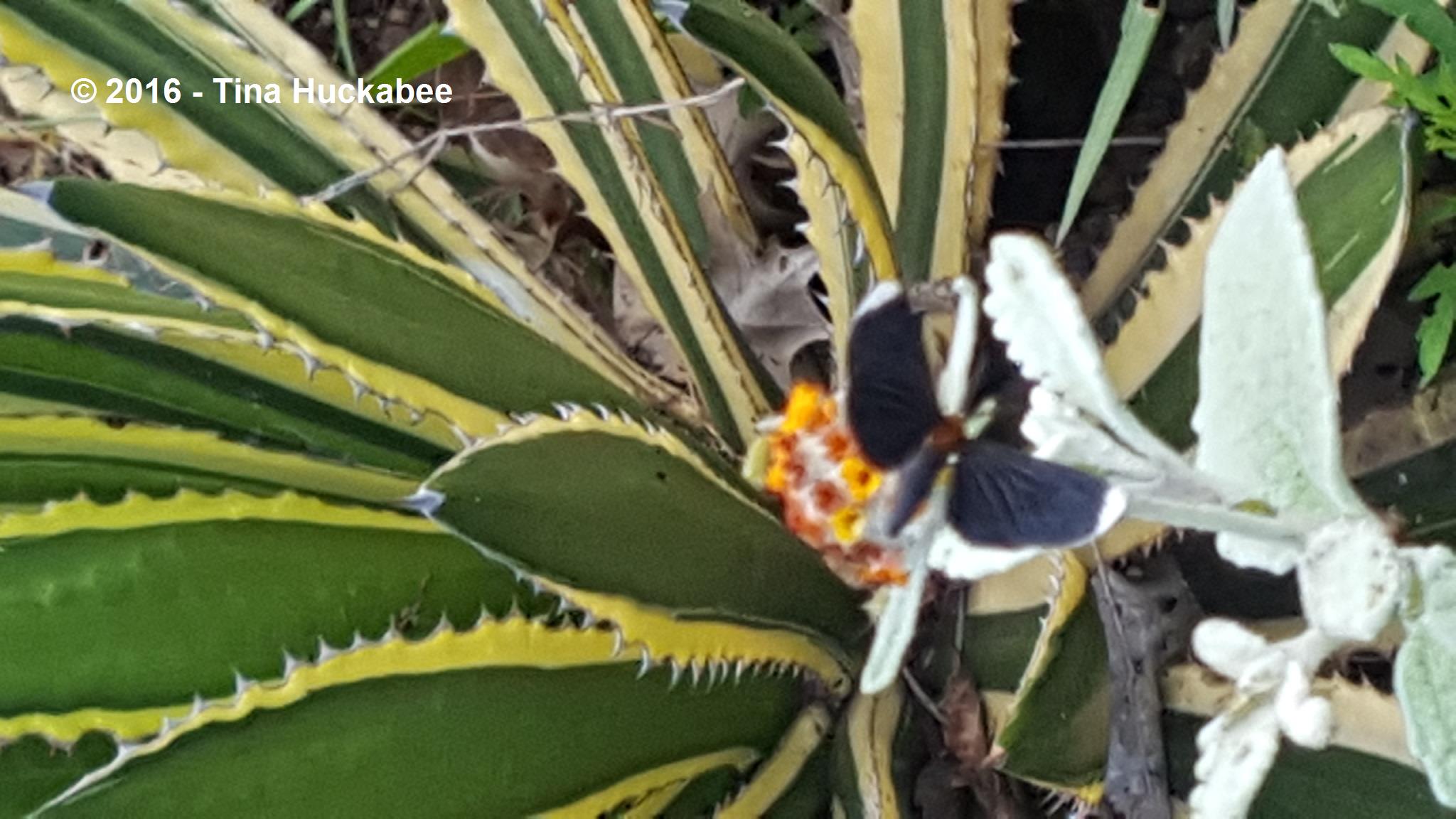
20161112_153356-new

This is not a great shot, but is enough to decipher markings and color.

Once home, The Husband was single-minded in his pursuit of butterfly truth, perusing photos from various sites, eventually landing on the BAMONA site for identifying this mystery critter.  He noticed that BAMONA allows for submission of photos for butterfly/moth identification, so he got right to that task.  To  submit a photo for identification, the site requires a free account, but that’s super easy–Hub signed up for an account and you can too!  In the ‘Get Involved’ section of the menu bar, the drop down menu lists ‘Submit a Photo’ and in that section are general instructions for creating a sighting record, with further information about photo downloads to the BAMONA staff.  Almost immediately after his submission, The Husband received a confirmation email that his submission was accepted, with assurances that he would get a follow-up email.  The next morning, he received that email confirmation of what we observed: our mystery critter was a moth, a White-tipped Black, Melanchroia chephise. The regional coordinator offered a link to BAMONA’s information on this moth, as well as a link to The Hub’s submission, Sighting Record 1108573.   Woot!  It’s cool to be part of the scientific process!

Not long afterward during  an early morning walk with my furry, four-legged friend, I picked up from the street a (probably) dying White-tipped Black.
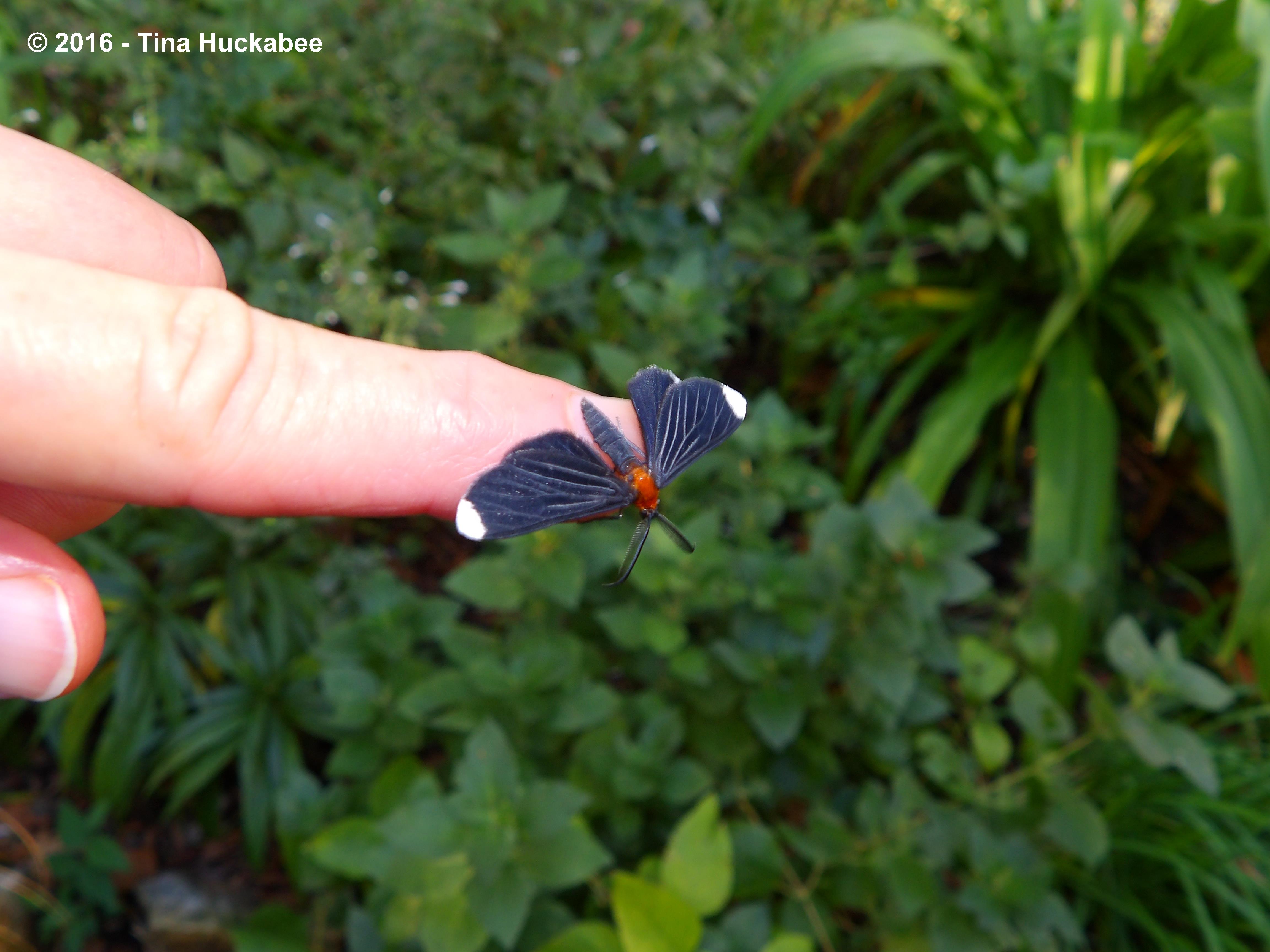
imgp0946-new

Beautiful!

imgp0947-new

I brought it home and placed it on a Wild ruellia leaf.  It remained there for much of that day, but  eventually disappeared to unknown parts.
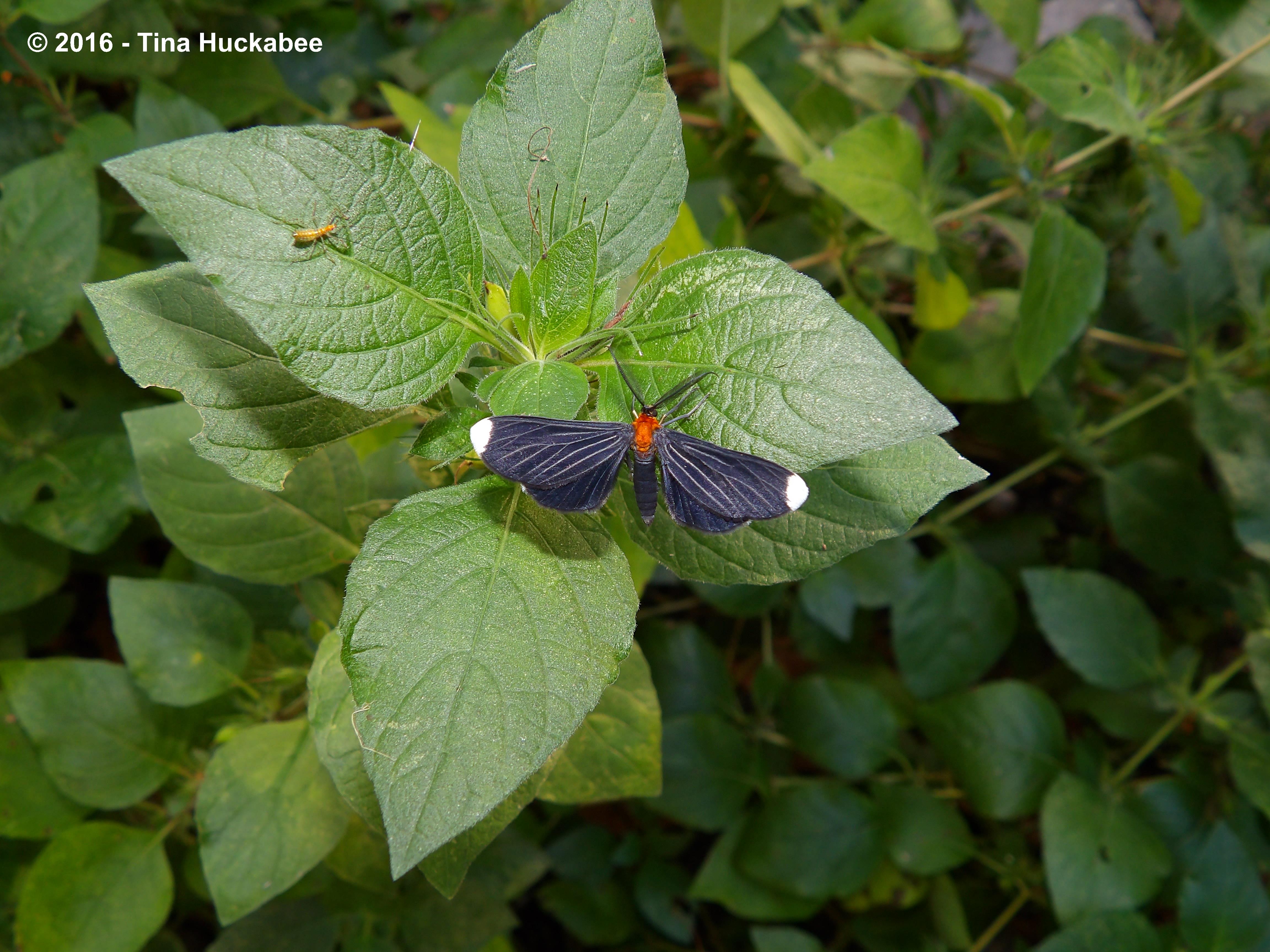
imgp0953-new

When we first saw this species on the neighbor’s plant, I congratulated myself because I thought that it might be a moth. I’m reasonably familiar with butterflies in this area and didn’t recognize it, but I’m not so familiar with moths, as they’re more elusive and not necessarily out when I’m out.

One moth characteristic is of fuzzy, feathery antennae, rather than the slender antennae typical of butterflies, and you can clearly see that here:

imgp0951_cropped_1728x1498-new

I was pleased that The Hub’s initiative provided a correct identification of this lovely moth. Many scientific organizations encourage and rely on so-called “citizen scientists” as scientific eyes on the ground,  helping these organizations ascertain wildlife migration patterns and changing demographics. After all, wildlife biologists and related professionals can’t be everywhere!  They welcome avid gardeners and regular folk to assist in research, education and conservation of wildlife and native habitats through controlled observations and recordings.  My own volunteer work with Cornell Lab of Ornithology is another example of a scientific educational and research organization which enjoys plenty of citizen input.

Another butterfly resource is the National Butterfly Center, located in Mission, Texas.   Part of the North American Butterfly Association, the organization’s mission is research and conservation of butterflies and their required habitats.  Along with the other great work this organization does, they sponsor an annual photo contest, the North American Butterfly Photo Contest.  (I’ll bet they also include moths, too!)  This past week, Julie Shaw of Austin was announced as the winner with her ‘Juniper Hairstreak on Milkweed’ photo. Congratulations, Julie, and wow–what a photo!

Fact-based, non-profit organizations like the three mentioned in this post are always in need of support and volunteers;  please consider monetary donations (end of tax year!) to the myriad scientific (and social) organizations whose dedicated professional staff and volunteers work tirelessly to achieve education and/or conservation goals.  In post-truth America, where cynical, dangerous assaults on science, nature, and personal freedoms abound, it is increasingly important to counter falsehoods and misrepresentations with facts, reason, funds, and boots-on-the-ground activity.
 

Wildlife Wednesday, April 2016: Spring Things

My garden and its inhabitants are in full swing, reveling in abundant sunshine, pleasant temperatures, and rain at the right times.  I hope your garden is thriving with similar conditions, fully awake and alive not only with flowers and foliage, but the things that the flowers and foliage are intended for:  birds, pollinators, amphibians and all other wildlife that requires what nature provides.

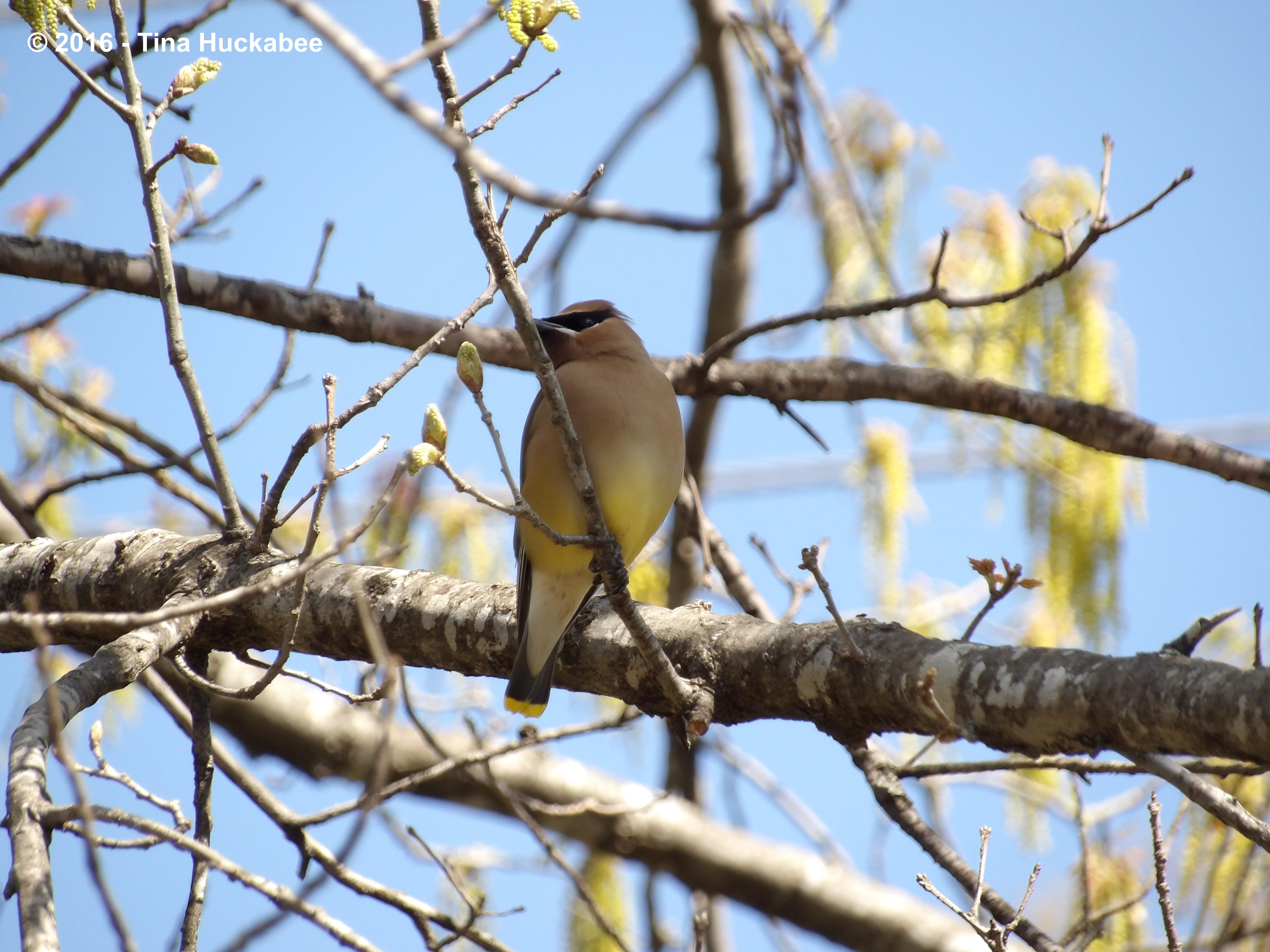
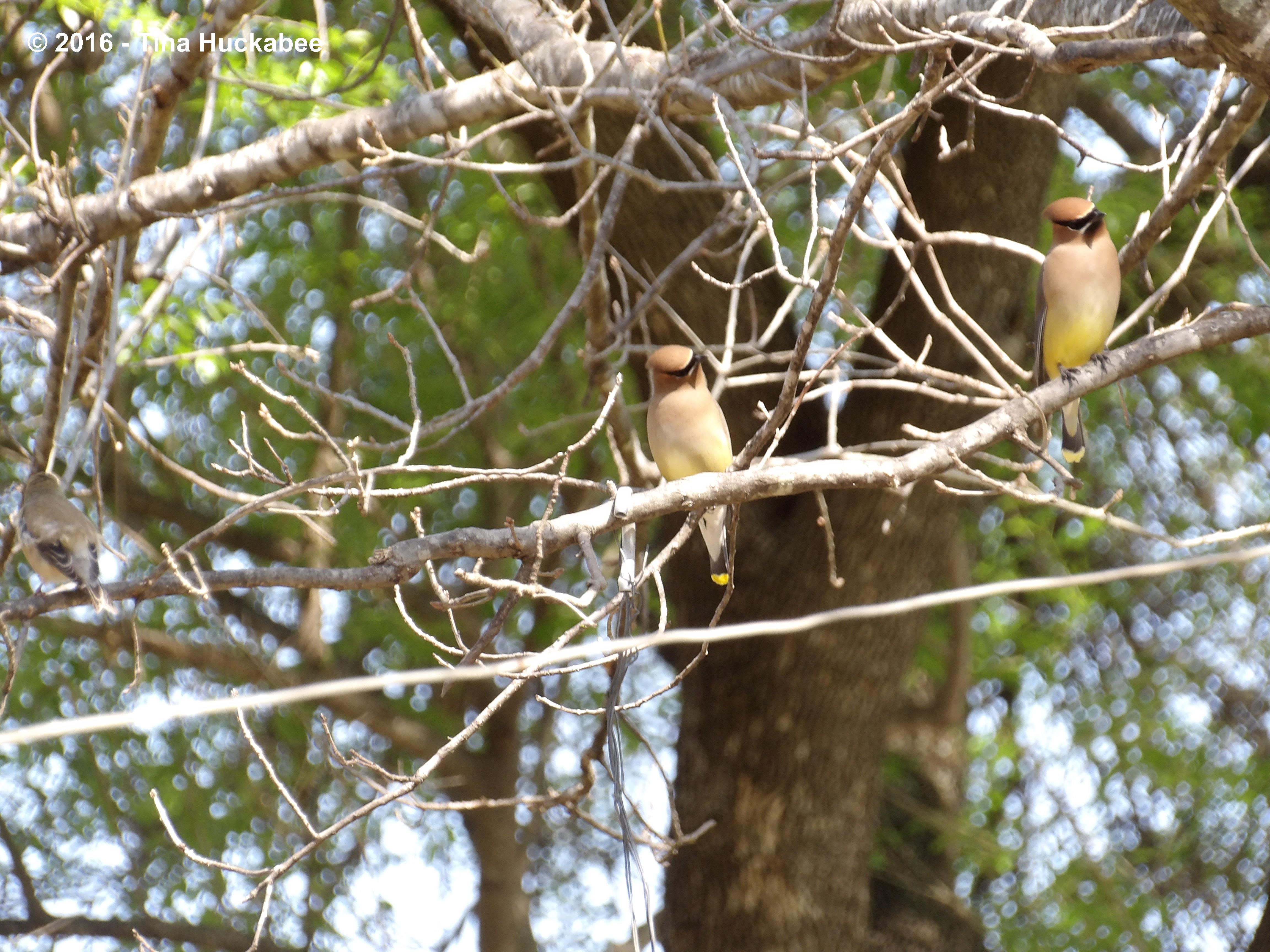
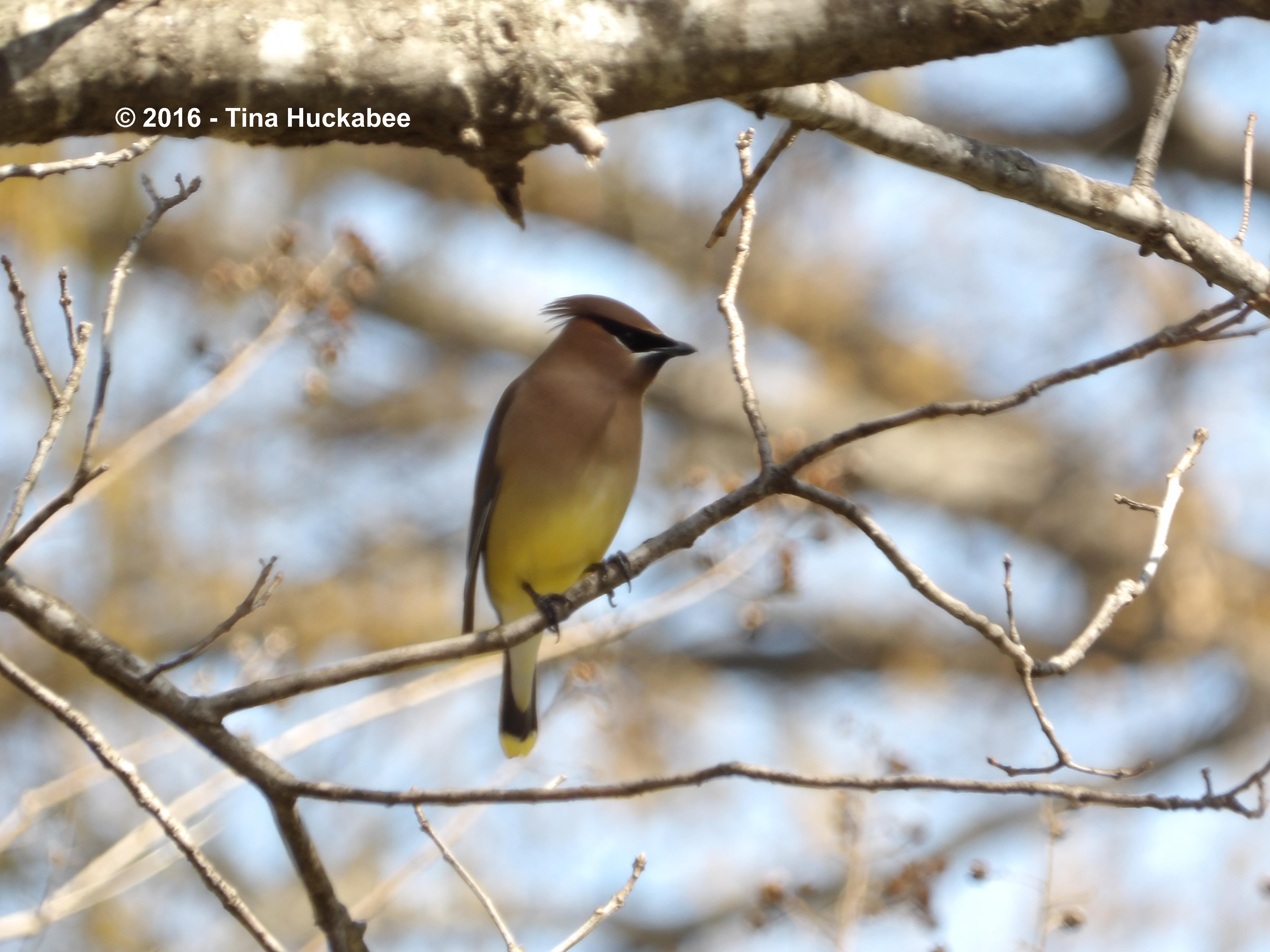
Because I think they’re mostly gone now, I’m starting the wildlife musings with some of the birds who visited my gardens and are now probably on their way northwards for the summer breeding season.  I still hear Cedar Waxwings, Bombycilla cedrorum, from time-to-time and a flock swooped over me one evening last week, but I haven’t seen any in my trees for a couple of weeks.  Cedar Waxwings usually perch high atop my trees, but the last time any dropped by the garden, each bird was within easy eye and camera shot.

This guy looks like he wants to make sure I get a really good look at him before he heads north.

IMGP4786.new

Such a gorgeously color-coordinated bird.

IMGP4787.new

With the splash of yellow on the tummy, echoed by the yellow strip at the tail’s end, plus the jaunty mask across the eyes, he’s lovely as he watches me, watching him.

IMGP4793.new

And, another view of this pretty bird.

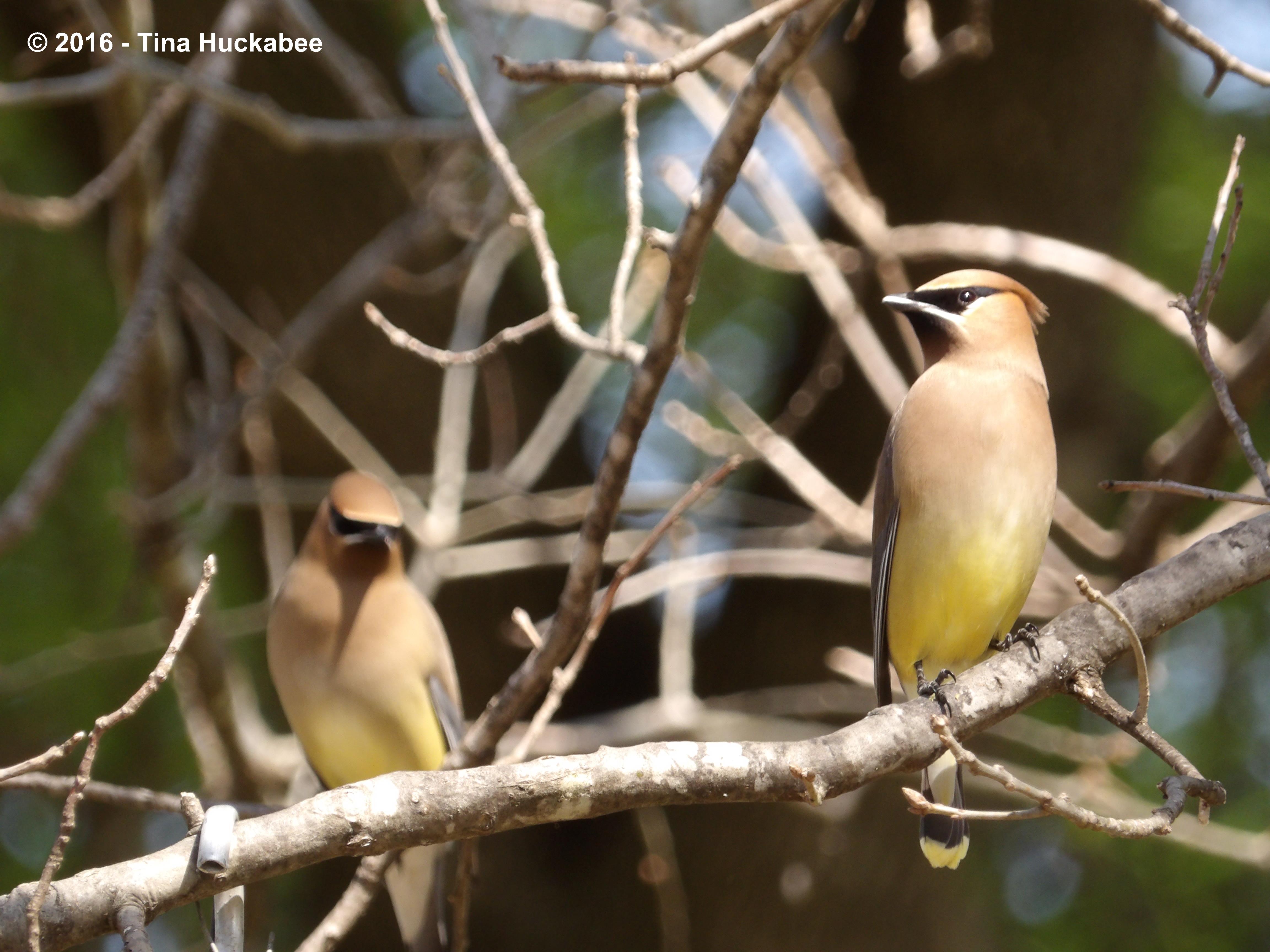
These two,

IMGP4803.new

IMGP4798.new

…pose agreeably, keeping one another company as I ooh and aah at their handsomeness one last time this season.  I admit that I’m a little jealous of northern wildlife gardeners who enjoy these birds year-round in some places and for the whole of summer, further north.

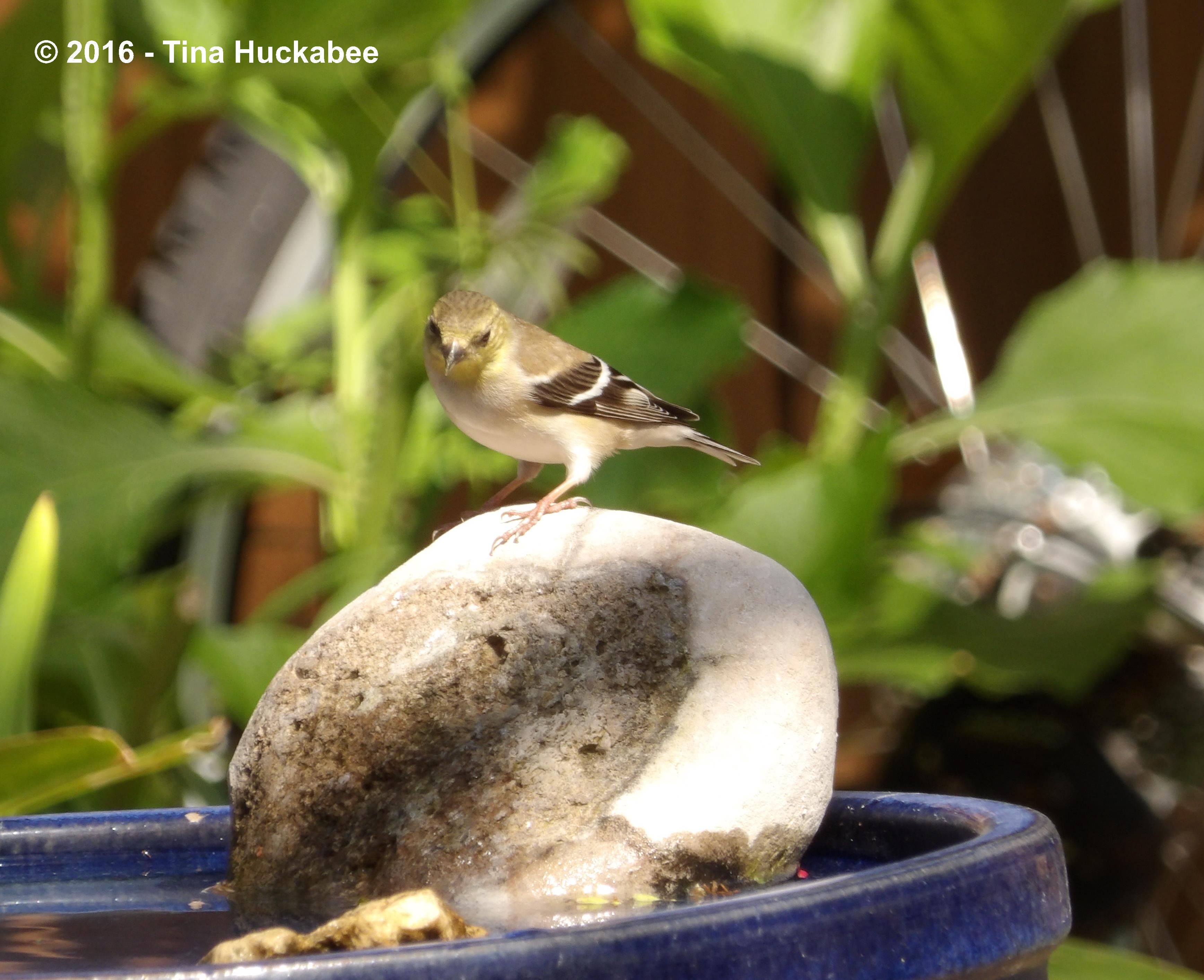
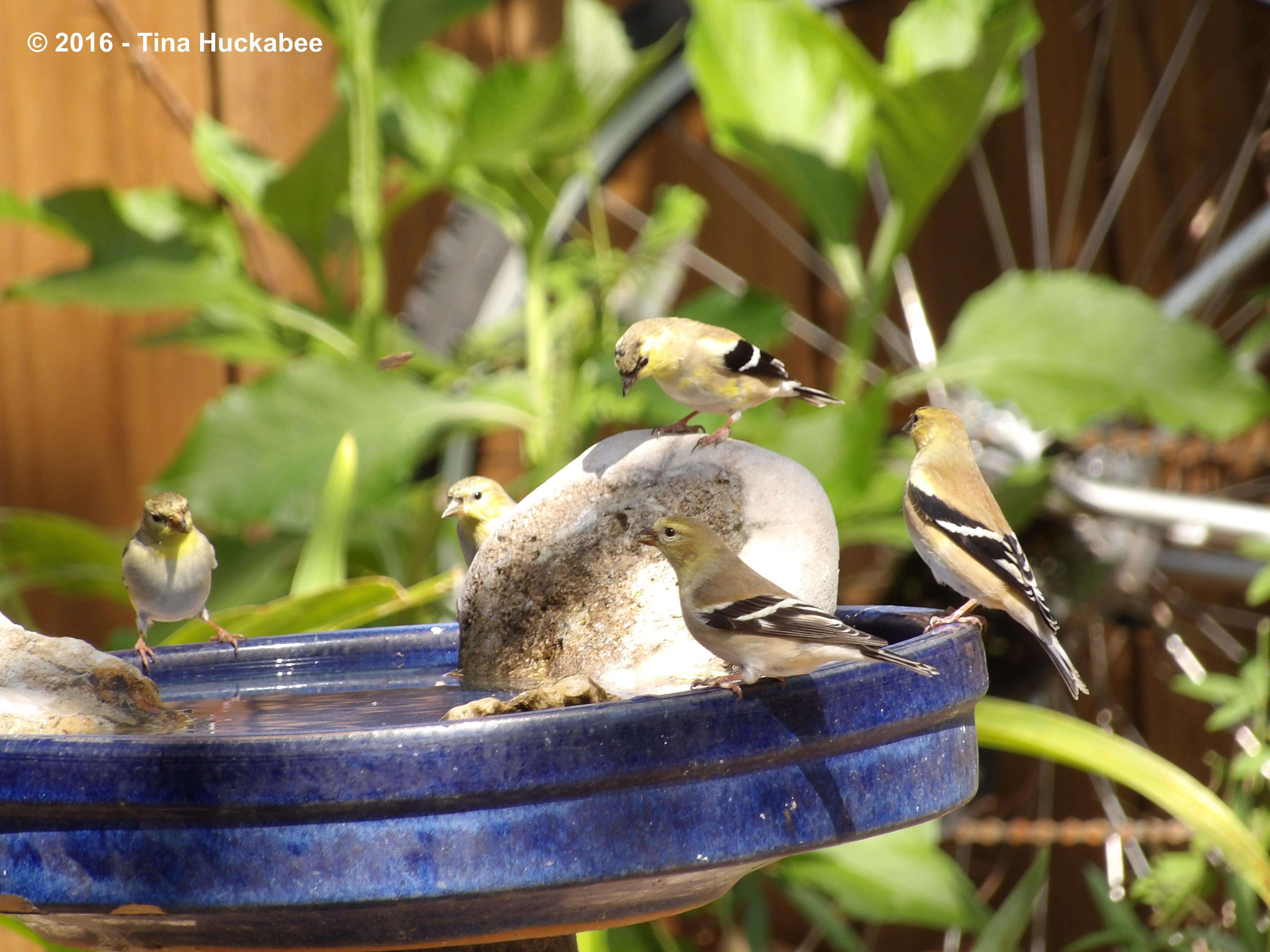
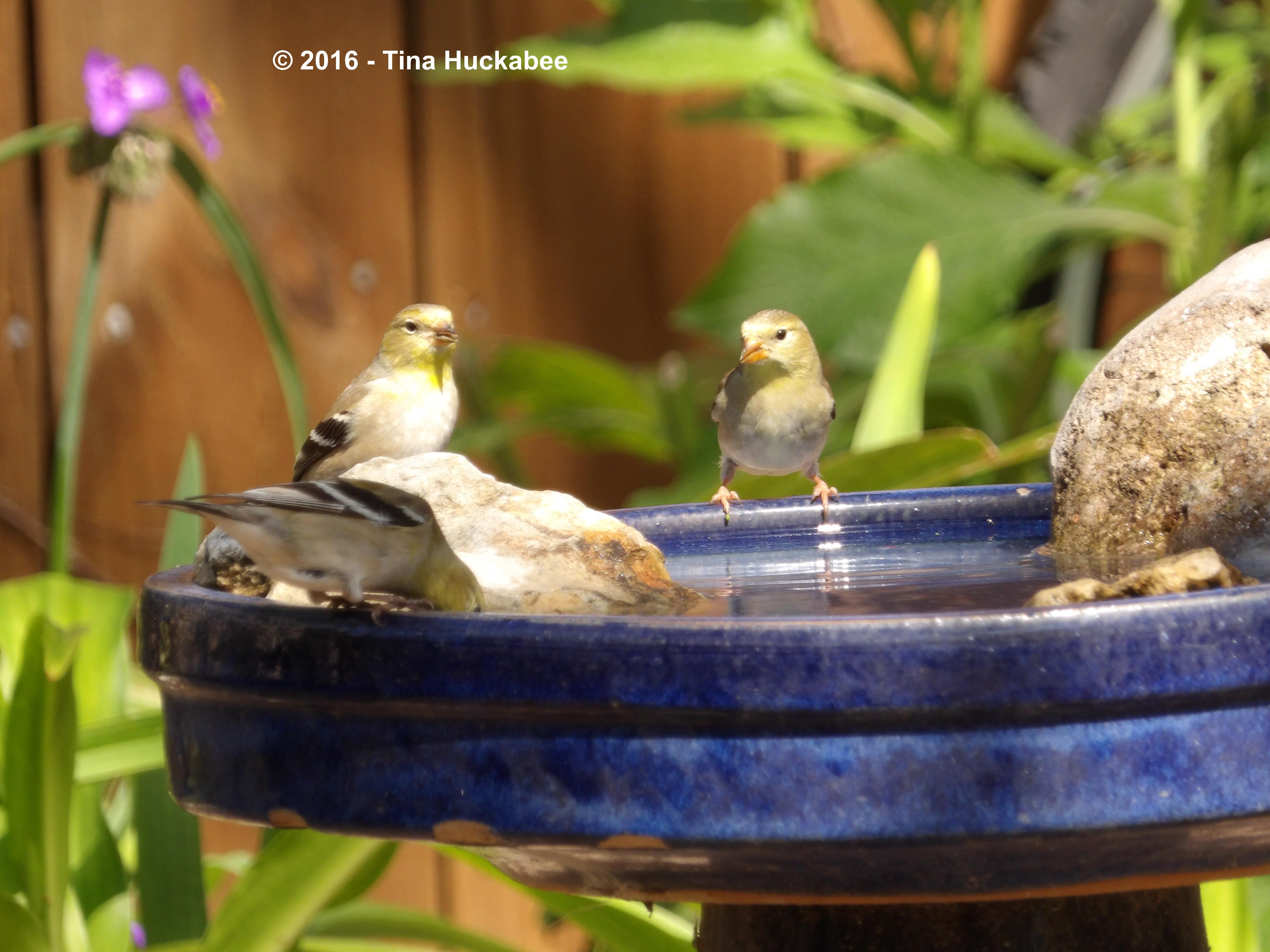
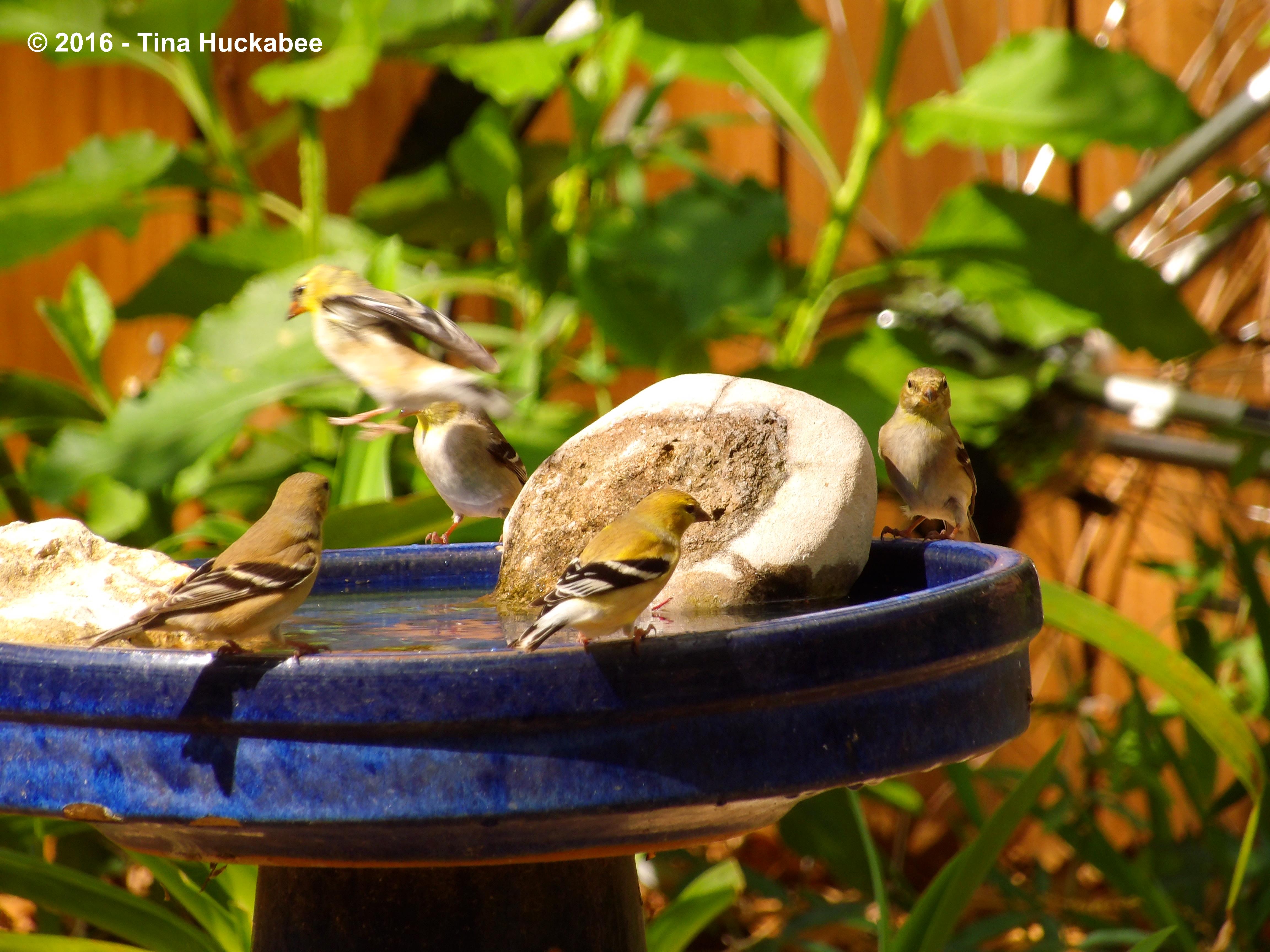
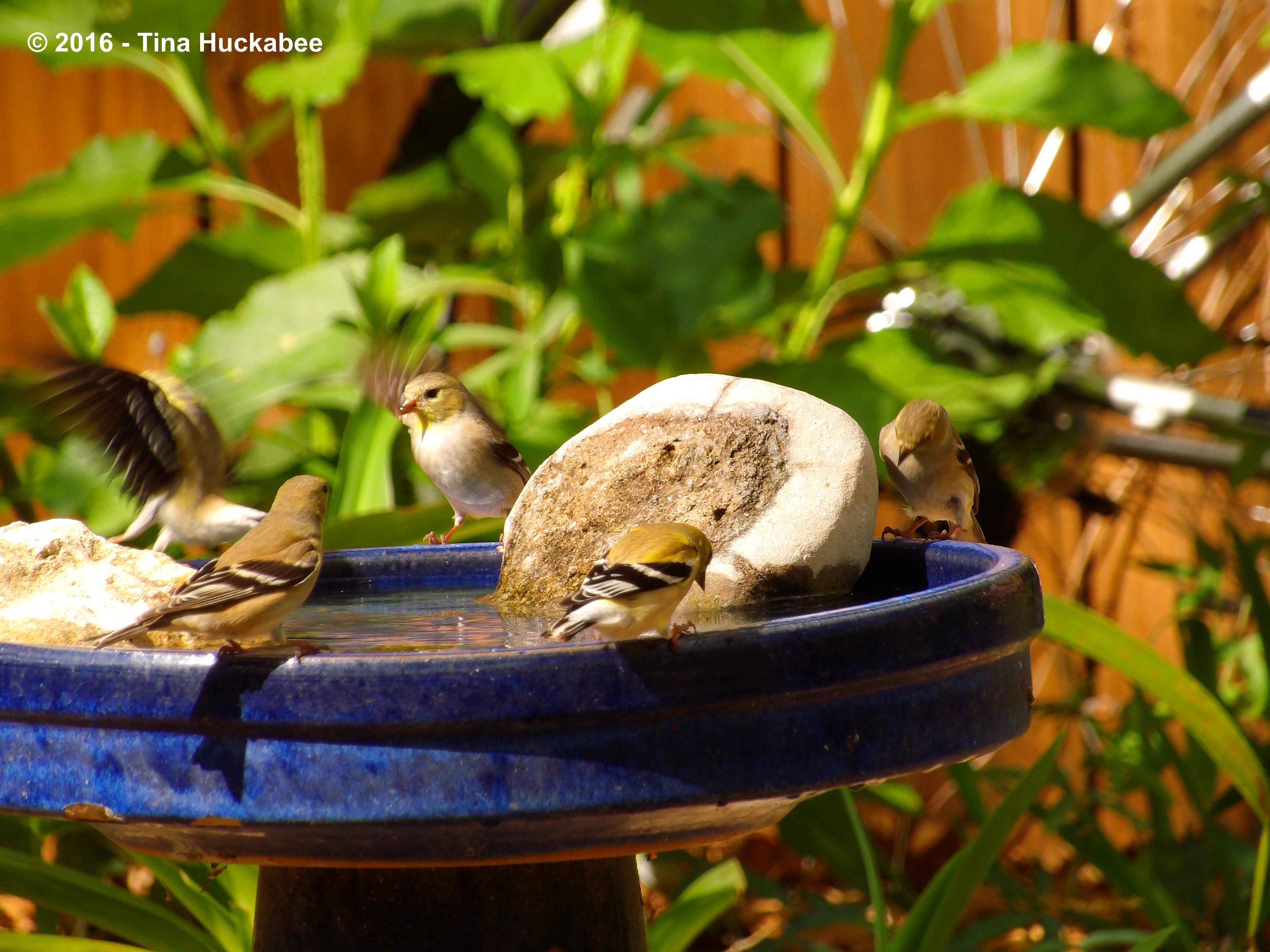
American Goldfinches, Spinus tristus, were late arrivals to my garden this year. They were daily callers throughout February and March and their presence was a cheery gift.  Their song is sweet and like Cedar Waxwings, they’re humorously chatty, congenial birds. They love to hang out at the pool, either alone,

IMGP4791_cropped_3474x2829..new

Is the rock a bird-version of a diving board?

…or with friends,

IMGP4789.new

IMGP4796.new

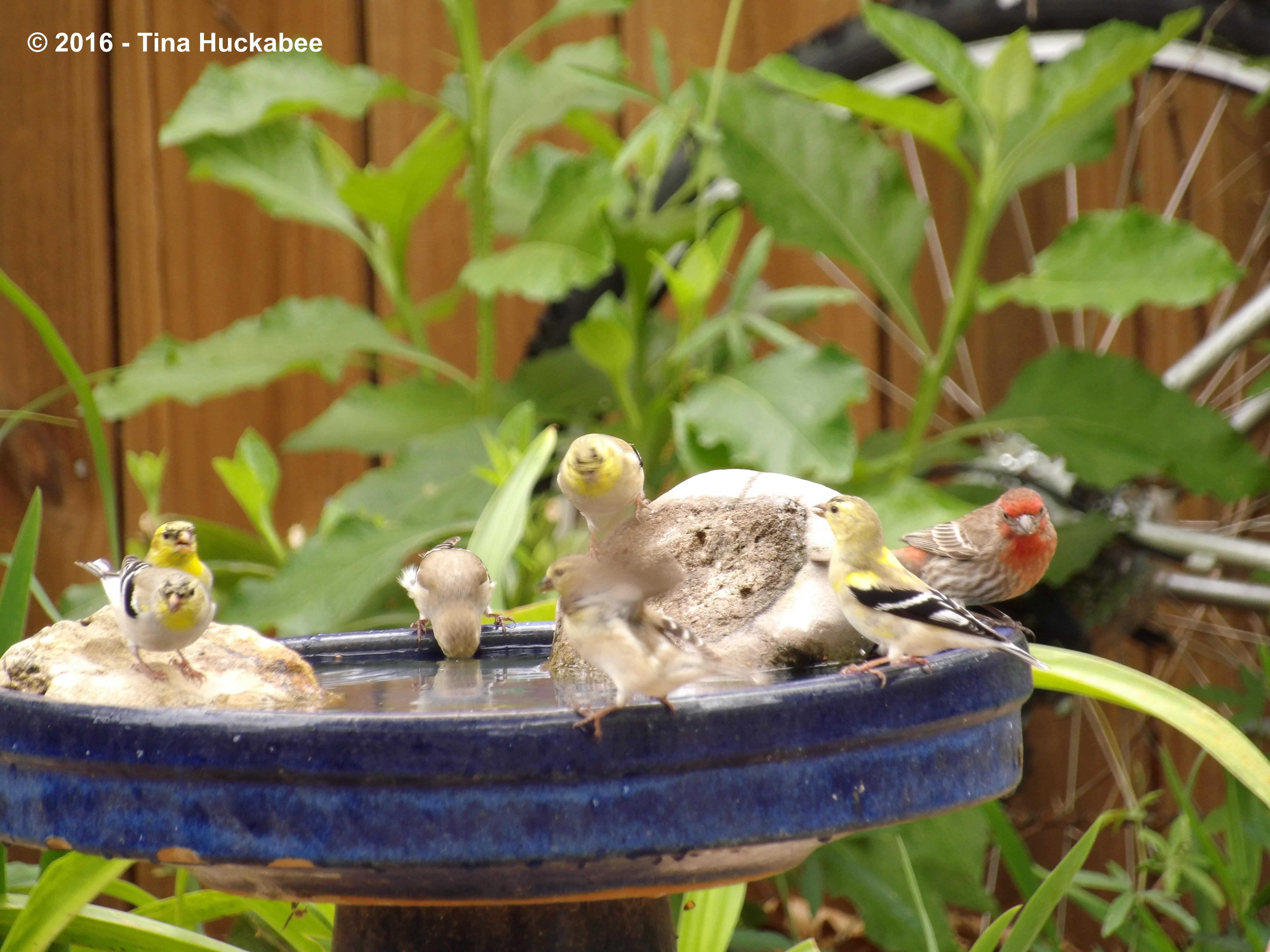
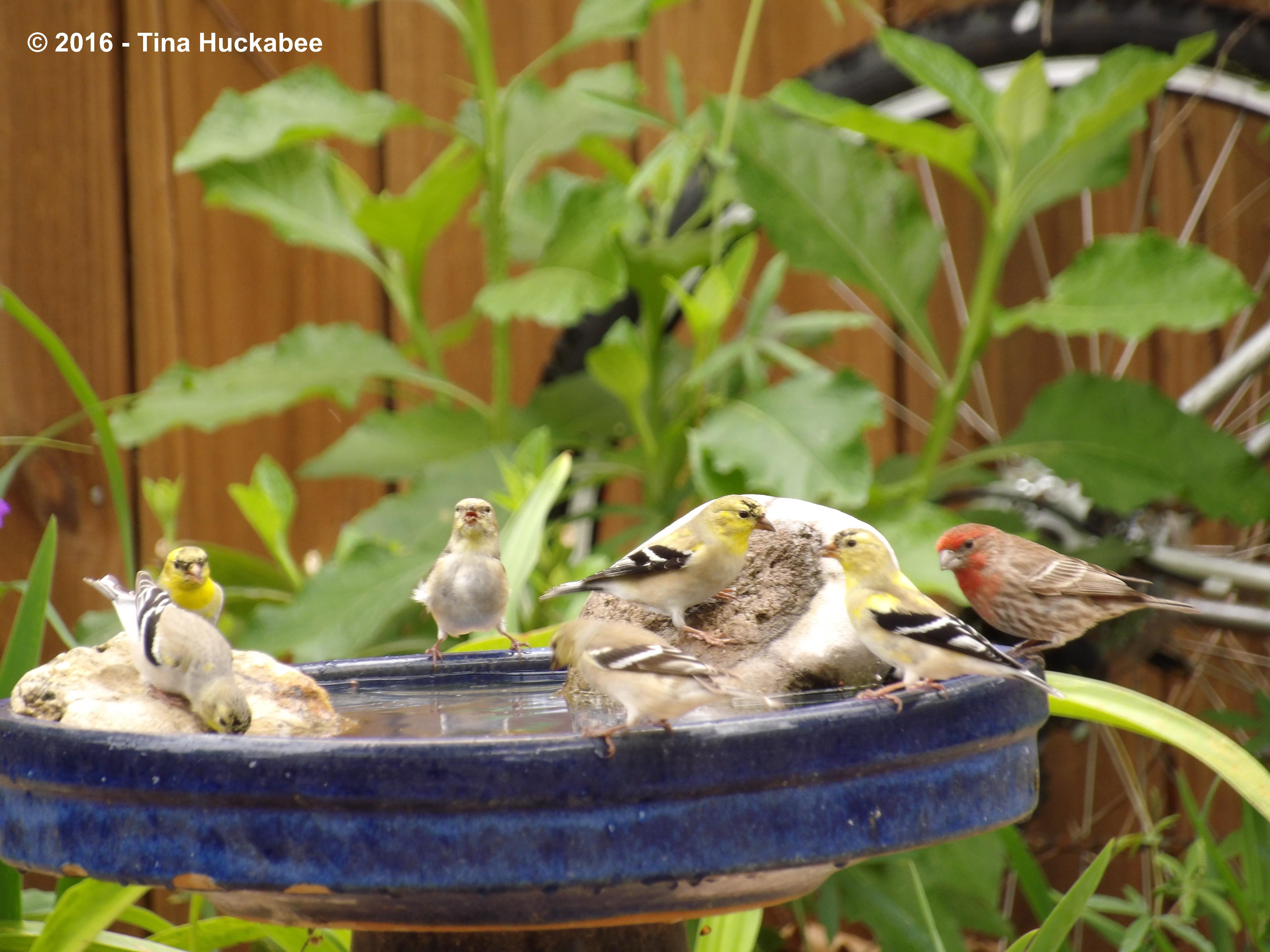
American Goldfinches are pleased to share their bath with others, not of their ilk–like the rather confused looking House Finch, Haemorhous mexicanus.

IMGP4871.new   IMGP4875.new               .

The show with this group begins with the one on the left, with  landing gear at the ready,

IMGP4914.new

Feet flat…

IMGP4915.new

Wings up for the landing…

IMGP4916.new

Good stop!

IMGP4917.new

Oops! The rock is slippery.

IMGP4921.new

Ready for a nice, long cool one.

The Goldfinch on the far right, beside the rock, is attempting to take a sip, though not quite sure if he can maintain his balance. Whoopsie!  Good thing those wings provide some leverage.  Like the Cedar Waxwings, American Goldfinch breed much further north than Texas (into Canada).  I haven’t seen the Goldfinch gang in about a week–I assume “my” group is on their way.  I’ll miss them.

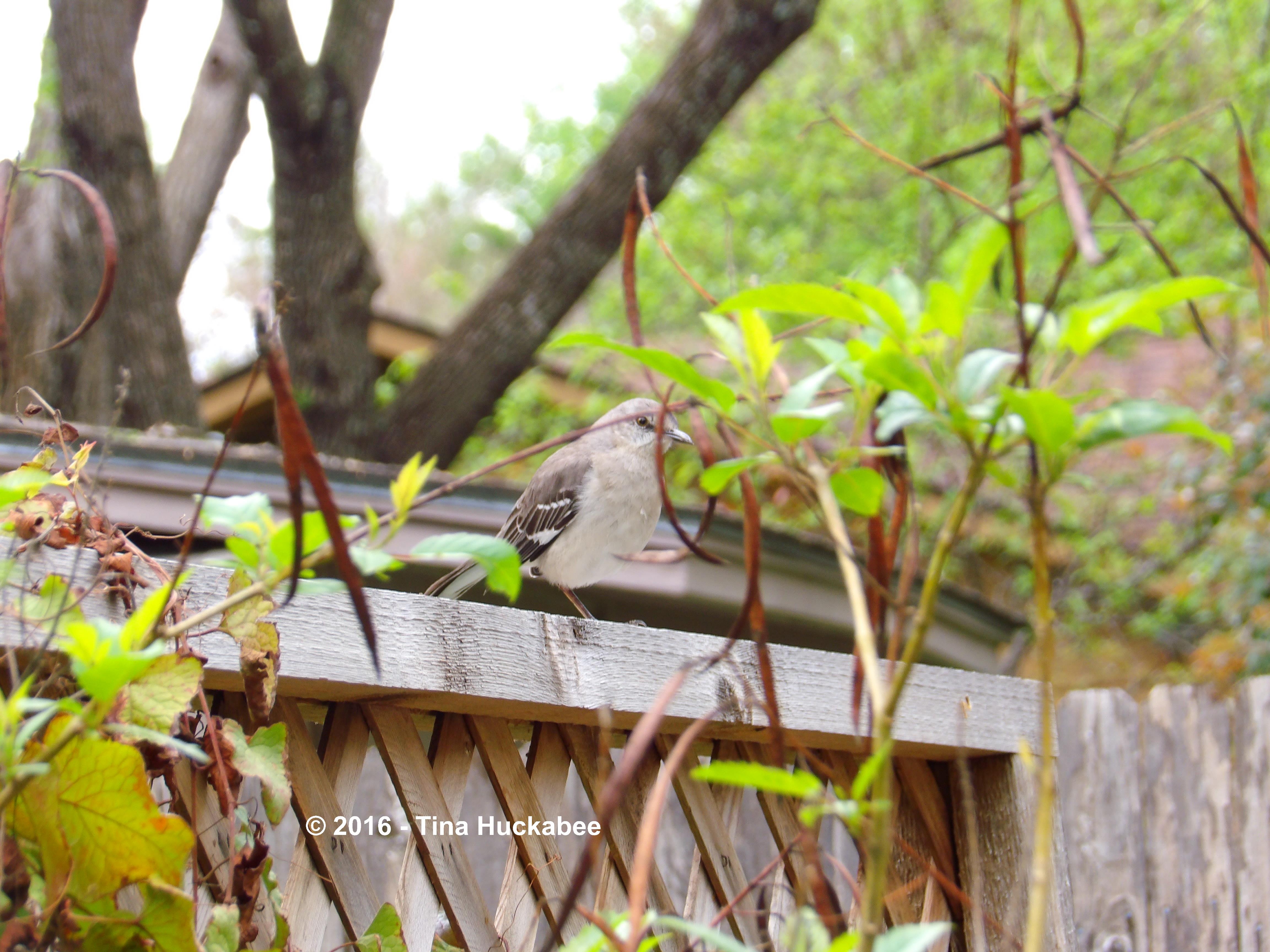
A Northern Mockingbird, Mimus polyglottos, serenaded me one morning.

IMGP5052.new

He let me sidle up close before he flew to the neighbor’s house.  Mockingbirds are the official state bird of Texas and frequently provide melodic company when I’m working in the garden.

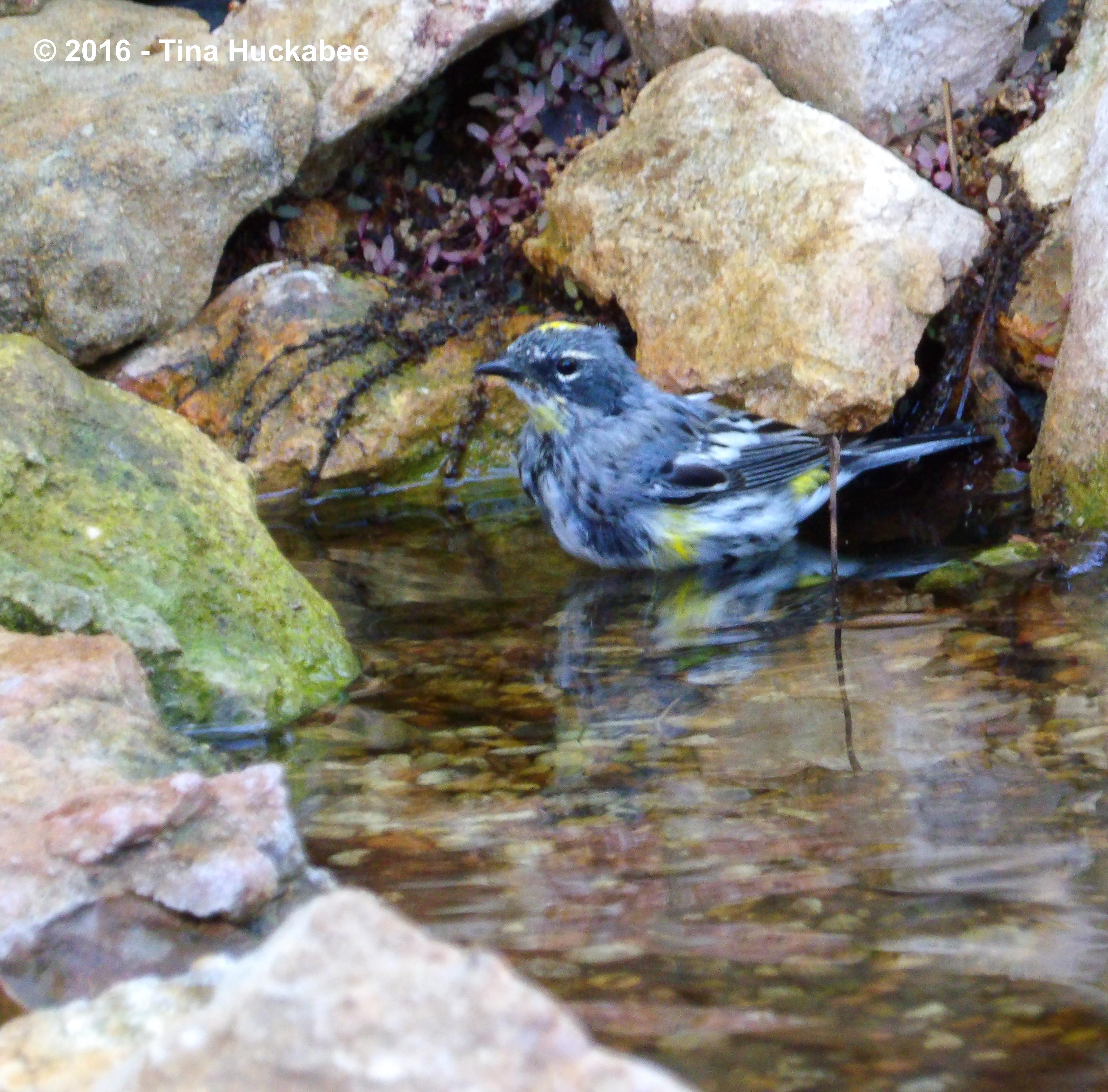
I hadn’t seen a Yellow-rumped Warbler, Setophaga coronata, in a week or so, when I spotted this one bathing in the bog of my pond.

IMGP6467_cropped_3282x3236..new

IMGP6472_cropped_3019x3254..new

A bathing bird always makes me smile.  Butter-butts, as Yellow-rumps are affectionately known by birders, breed in the the Pacific Northwest and in Canada during summer.  Since spotting this one I’m observing 3 or 4 early most mornings, but I’m sure they’ll be heading  out for migration soon enough.

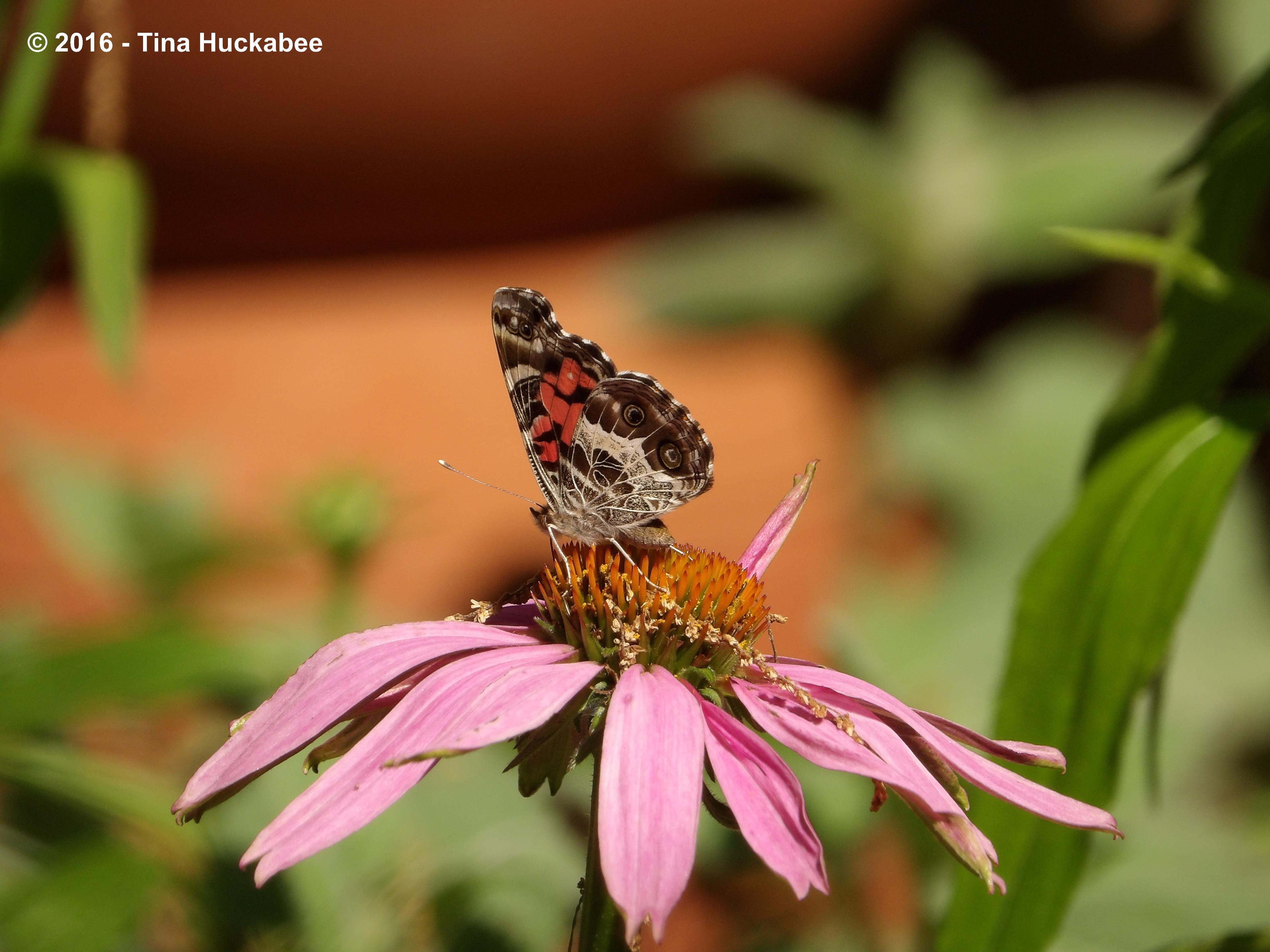
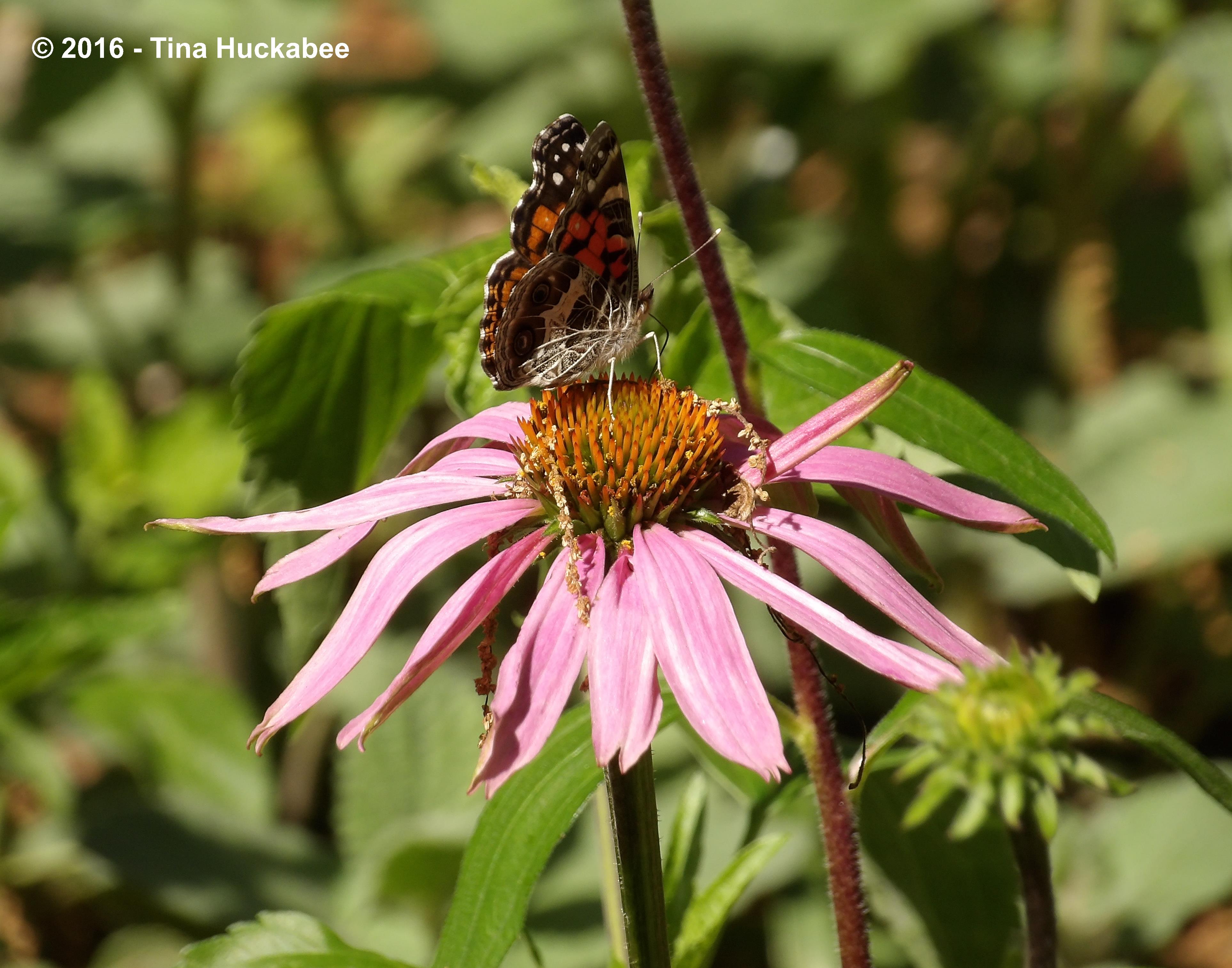
Quite a few butterflies have flitted through the garden, but I never have my camera ready when they land–which they don’t do all that often.  This American LadyVanessa virginiensis  enjoyed the bounty of several individual Purple Coneflower, Echinacea purpurea.  Plants in the aster family are listed as both larval and nectar sources for this species.

IMGP5184.new

IMGP5187_cropped_3852x3028..new

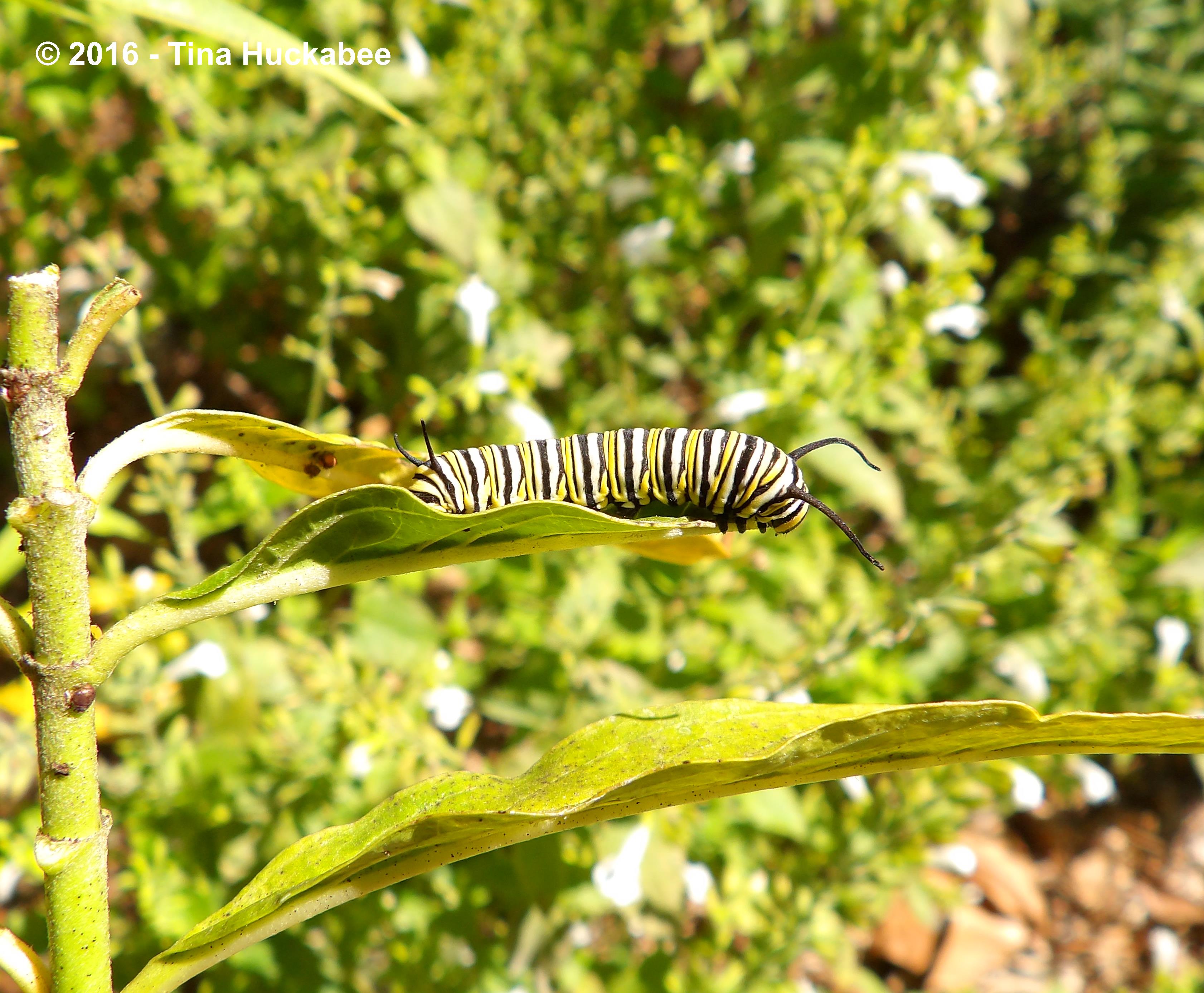
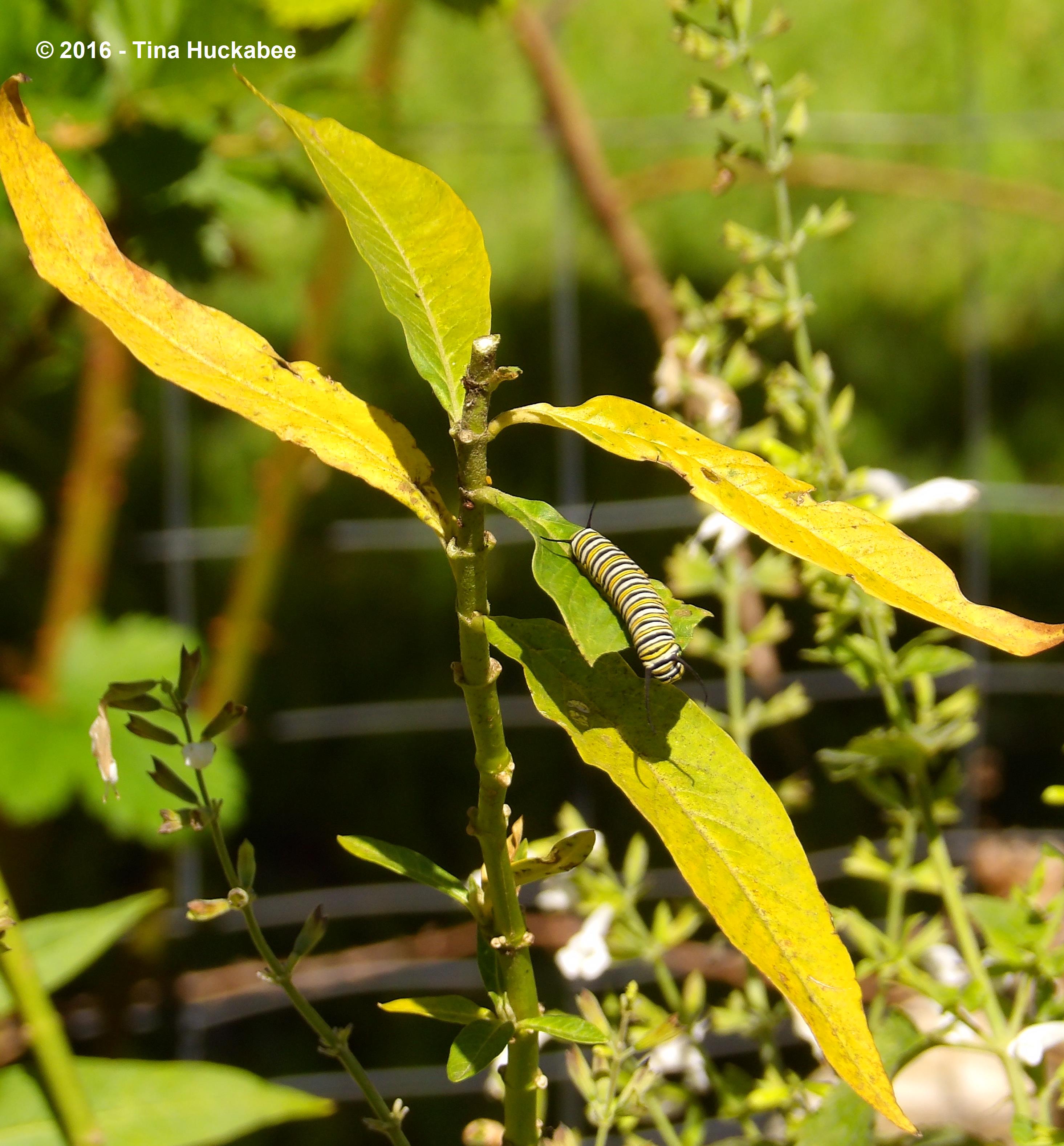
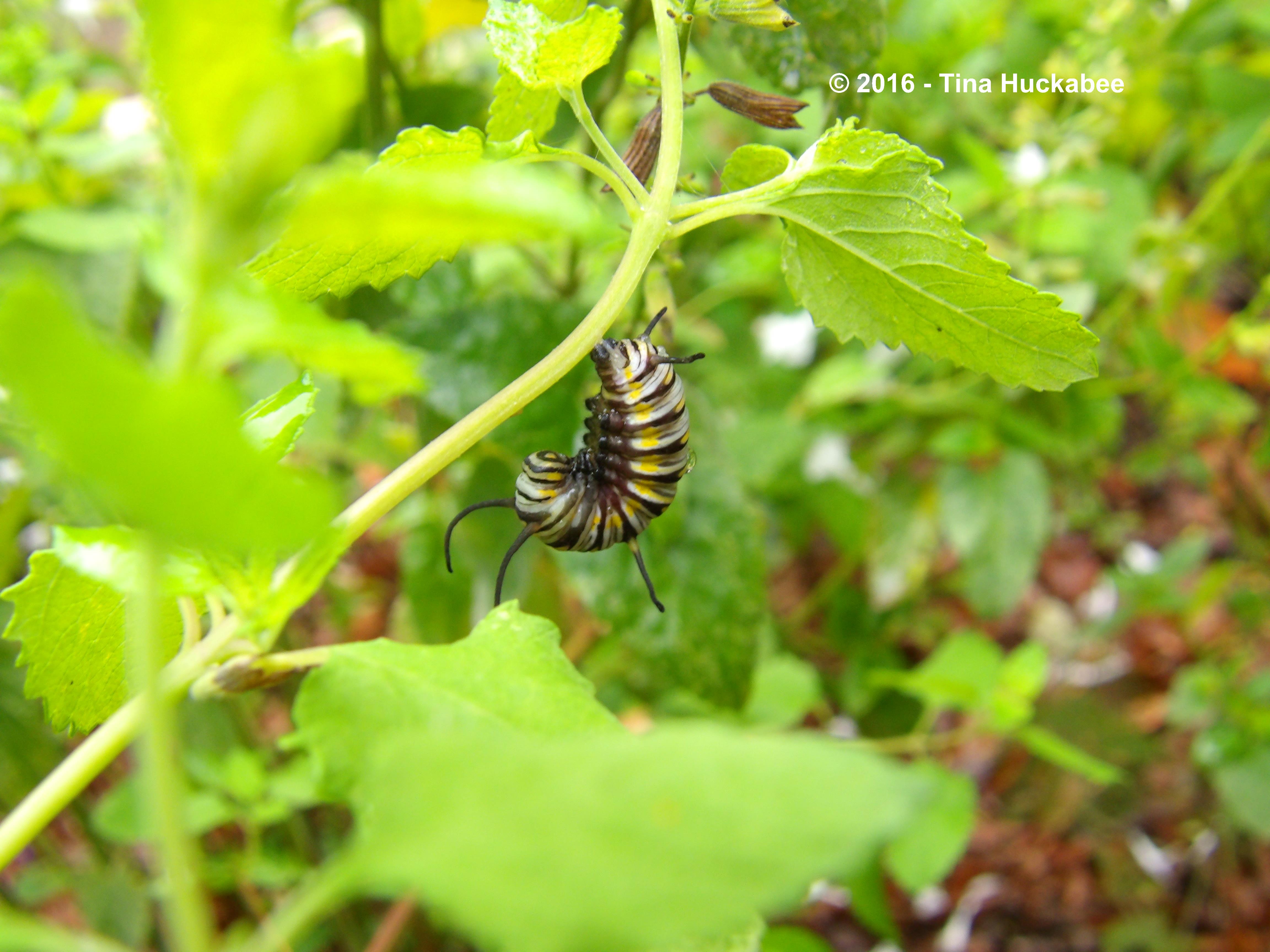
Other butterflies I’ve enjoyed seeing include several Queens, Danaus gilippus, and  a couple of Monarchs, Danaus plexippus.  The adult butterflies were too fast for me to photograph, but thankfully, caterpillars are slow.  I witnessed a Monarch laying an egg and must assume this guy is the result.

IMGP6477_cropped_3364x2774..new

IMGP6478_cropped_2930x3156..new

I haven’t found the chrysalis, but hope it’s attached to a safe spot for its metamorphosis.  I assume the parent left Mexico before the snow and ice storm hit.  It’s still unclear how many Monarchs died in the storm, but suffice to say it was too many.

Poor Monarchs, they can’t seem to catch a damn break.  Monarch lovers throughout the Americas cheered a few weeks ago with the news that Monarch numbers were up in the winter roosting areas and then the ice storm blasted them as they left the roosts and began migration.   I sincerely hope the survivors and their descendants find plenty of milkweed and nectar plants here in Texas and northward, and that the journey to Canada and back again next autumn will be free from harm.

Fingers crossed.

The Queen larva is in ‘J’ ,

IMGP6800.new

…and next month, I’ll have a photo of its gorgeous chrysalis.  With good timing and luck, I’ll witness the emergence of the adult.

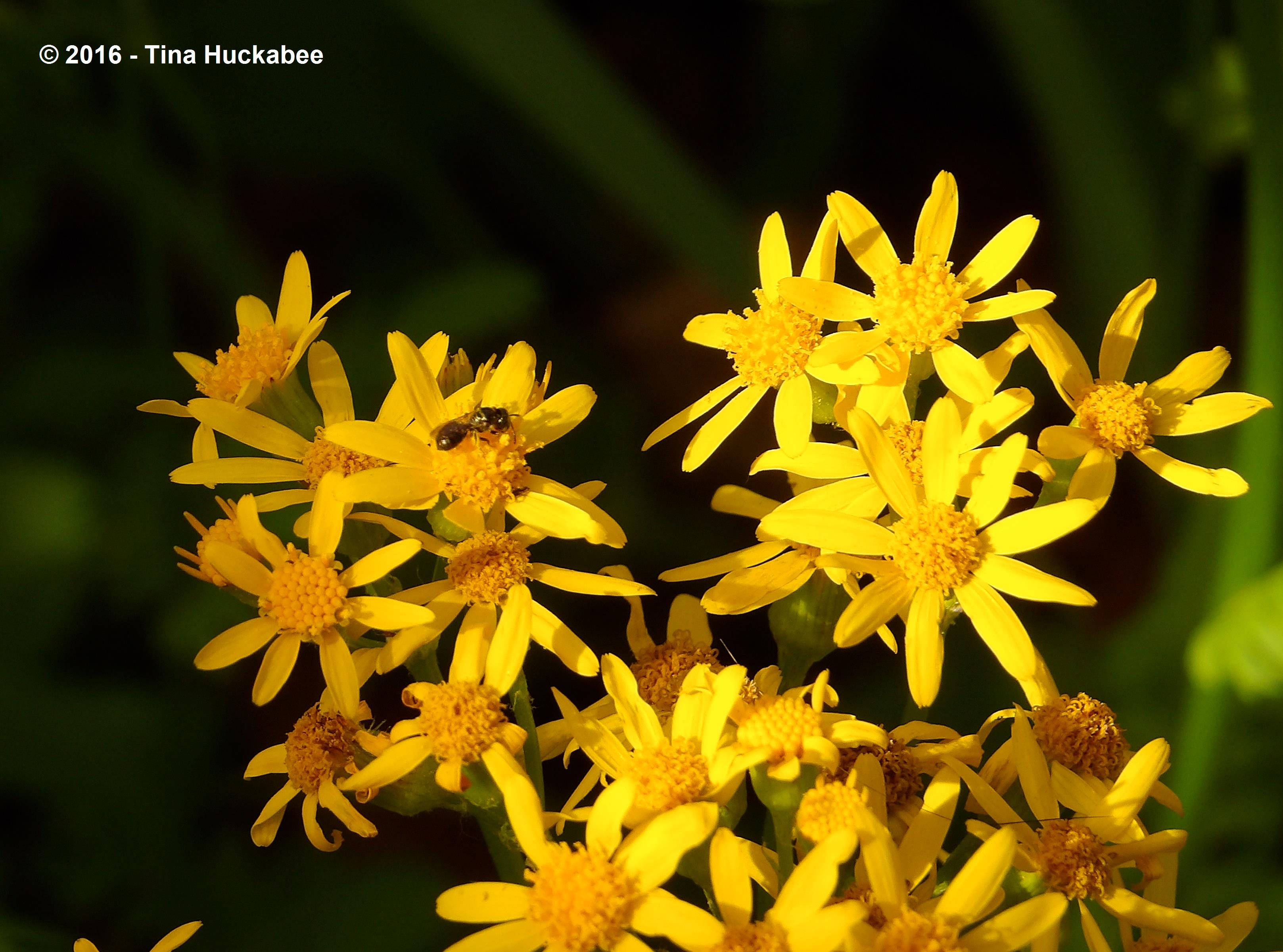
I wrote about some of the native bees in my garden recently, but more photos of those lovely pollinators are always in order.  I’m fairly certain that the identification of his little bee is Perdita ignotaa type of Minor bee.

IMGP5419_cropped_3235x2401..new

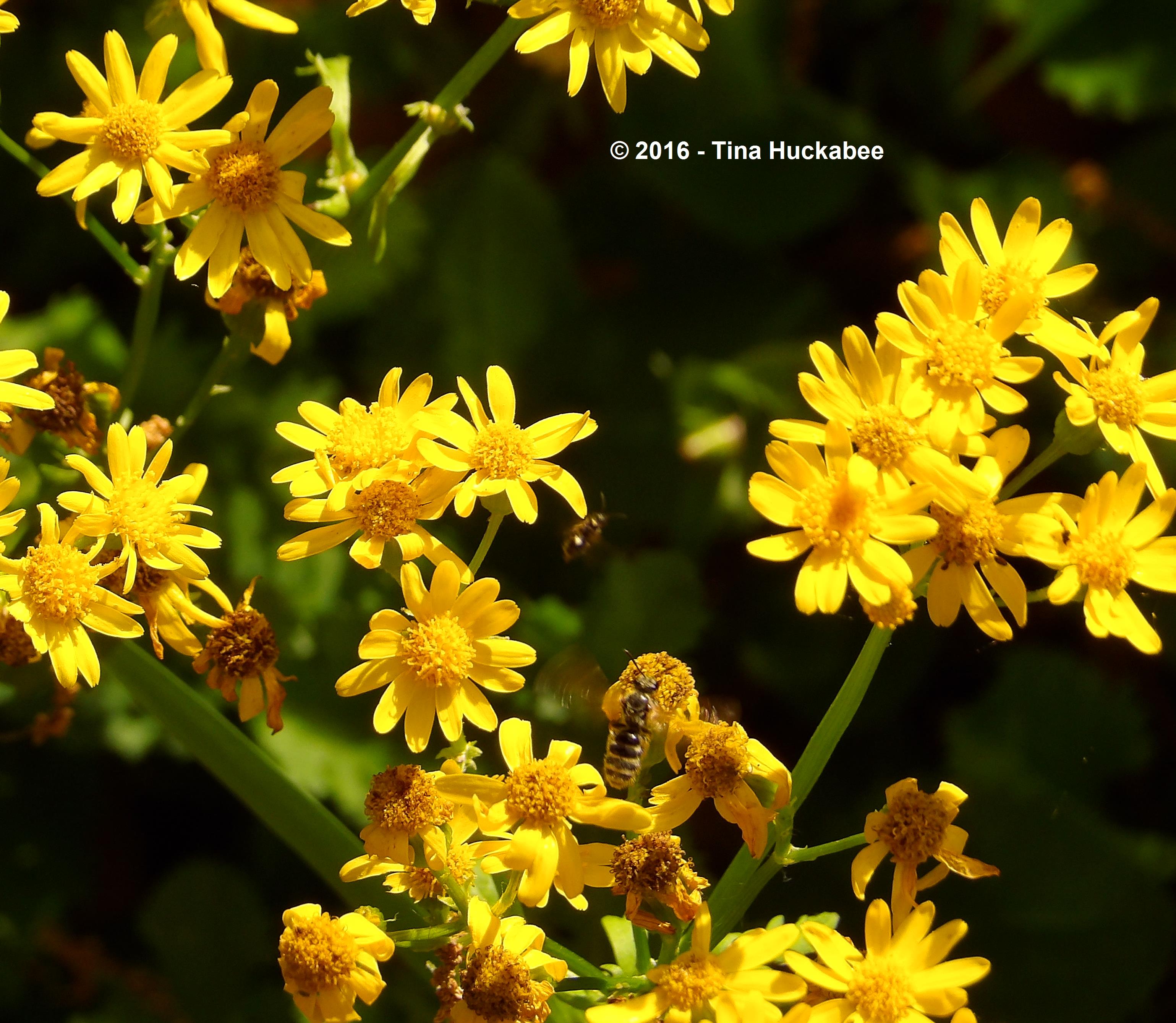
And this one,

IMGP5372_cropped_3078x2677..new

The photo shows two native bees. Can you spot the other, in blurry flight?

IMGP5379_cropped_3115x2608..new

IMGP5427_cropped_3250x3226..new

…is a maybe(?) a Halictus tripartitusa type of Sweat bee.

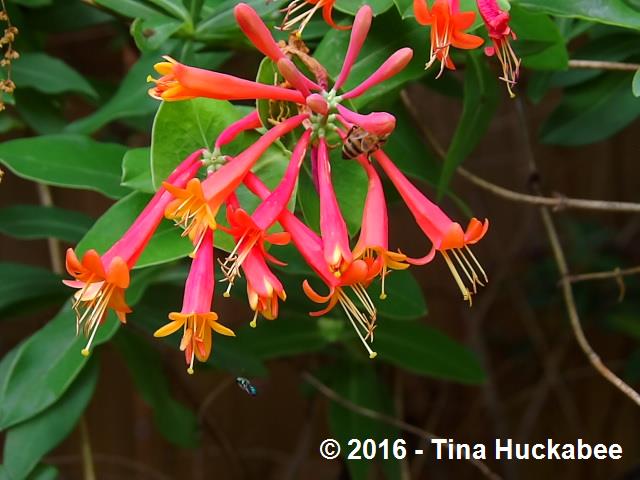
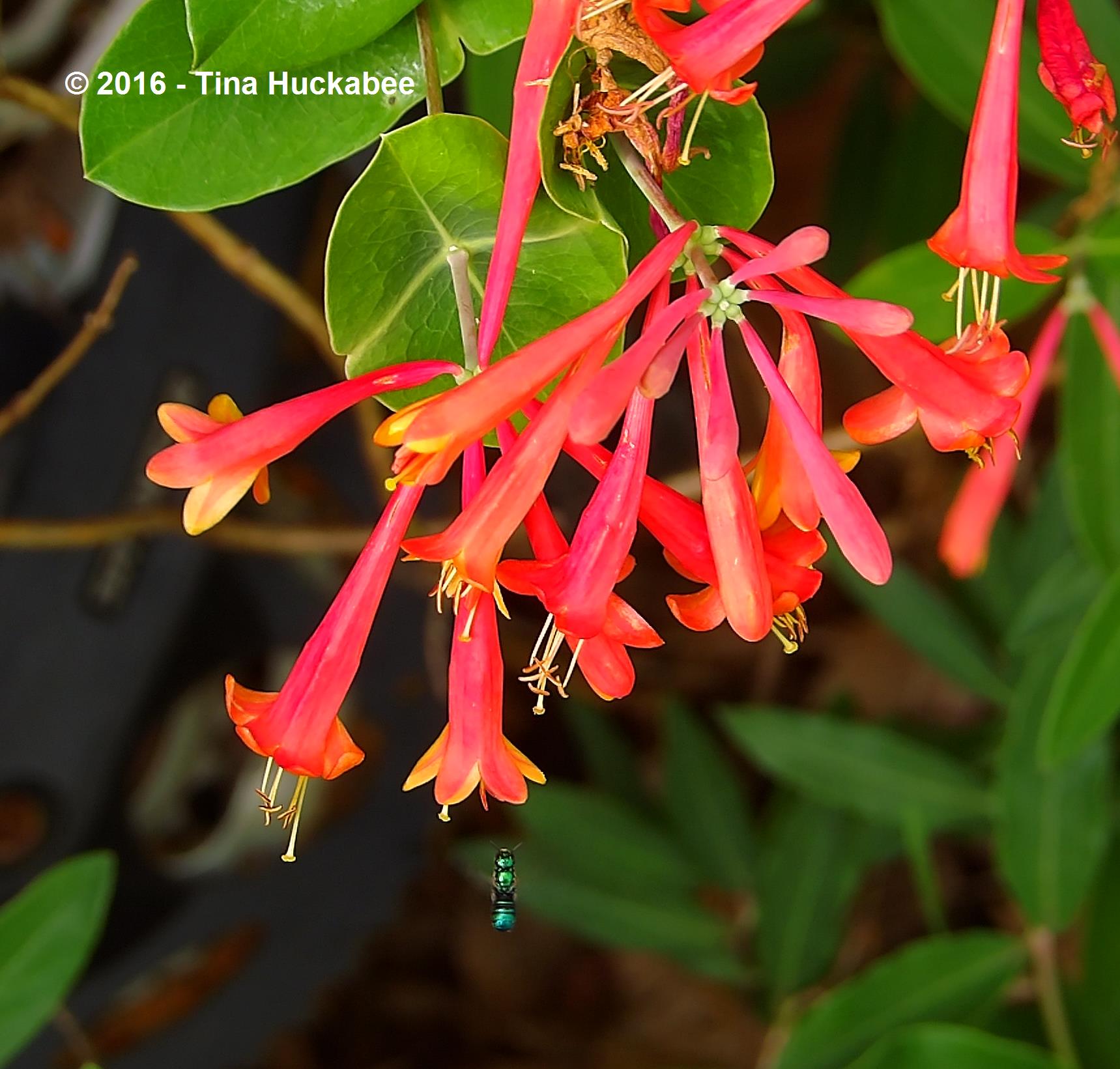
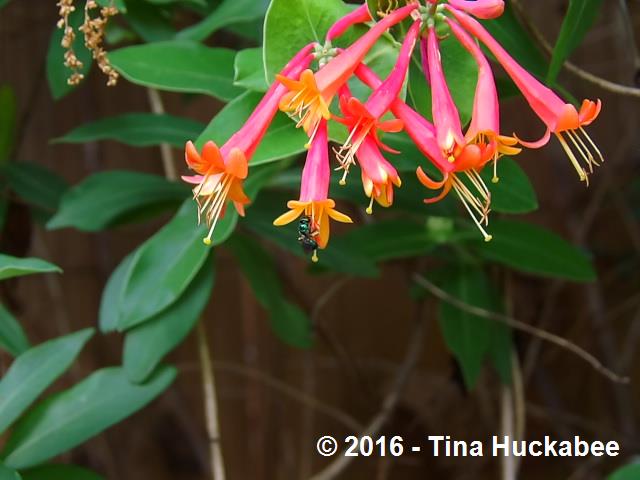
I’ve snagged some reasonable photos of the tiny and stunning metallic blue/green bees, which are probably some sort of Sweat bee. As there are apparently a couple of species of metallic Sweat bees residing in Central Texas, I won’t guess which these might be. I’ll just enjoy their beauty and appreciate their work.

M0055896.new

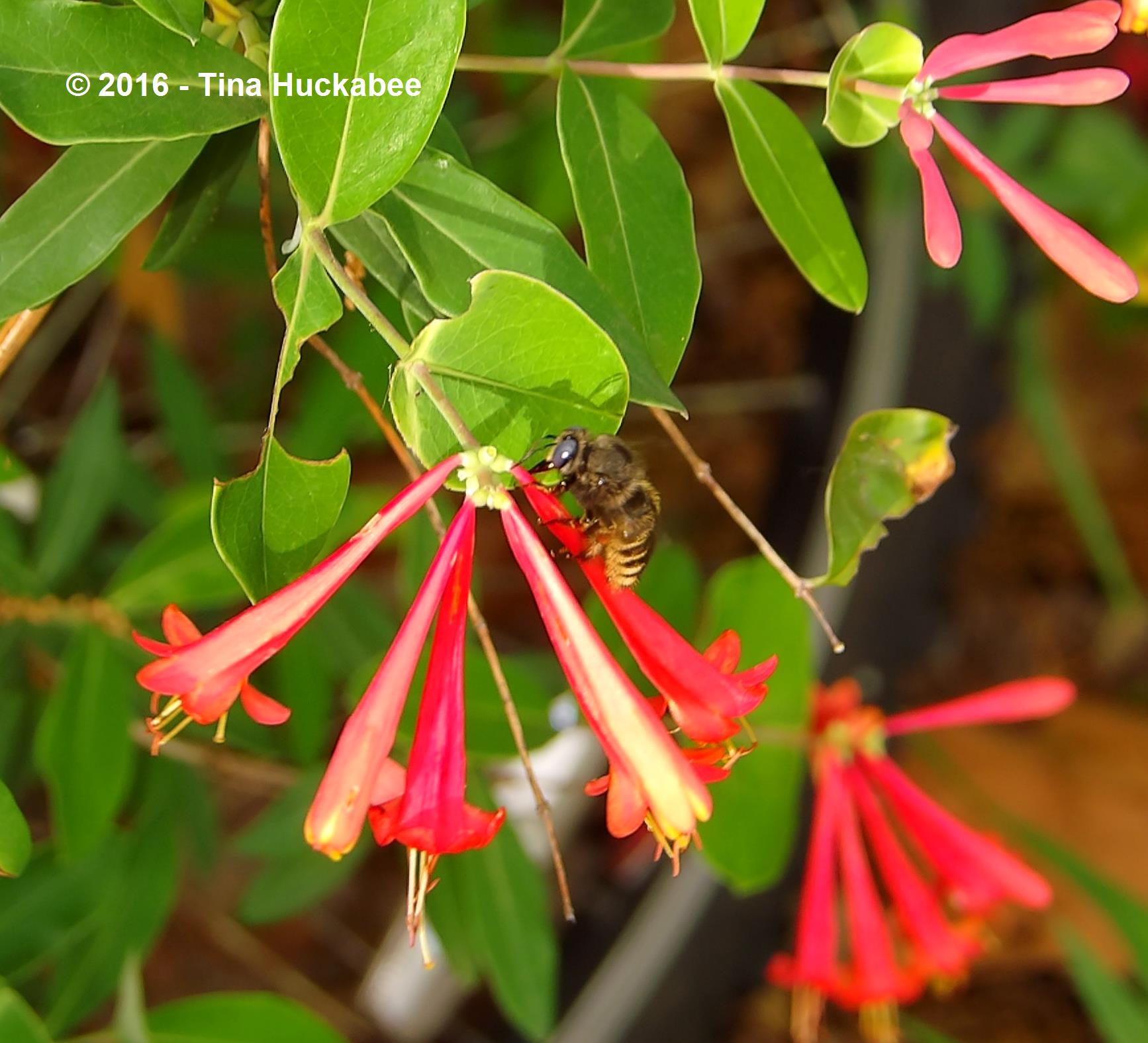
Native metallic bee AND honeybee working the blooms of a Coral Honeysuckle vine.

M0035619_cropped_1719x1641..new

Native bee flying in for the nectar.

M0066013.new

Native bee resting on the stamens of a Coral Honeysuckle bloom.

The site that I utilize when researching native bees in my garden is the The Jha Lab, which is the research website for The University of Texas Austin’s Section of Integrative Biology. The photos on the site are taken from various area wildlife preserves. What trips me up in wild bee identification is that professional photos are phenomenal–incredible close-ups of teeny, tiny bees in gorgeous detail.  My photos are okay, but not of scientific quality.  My photos don’t have the detail required for definitive identification, so my id’s are approximate.

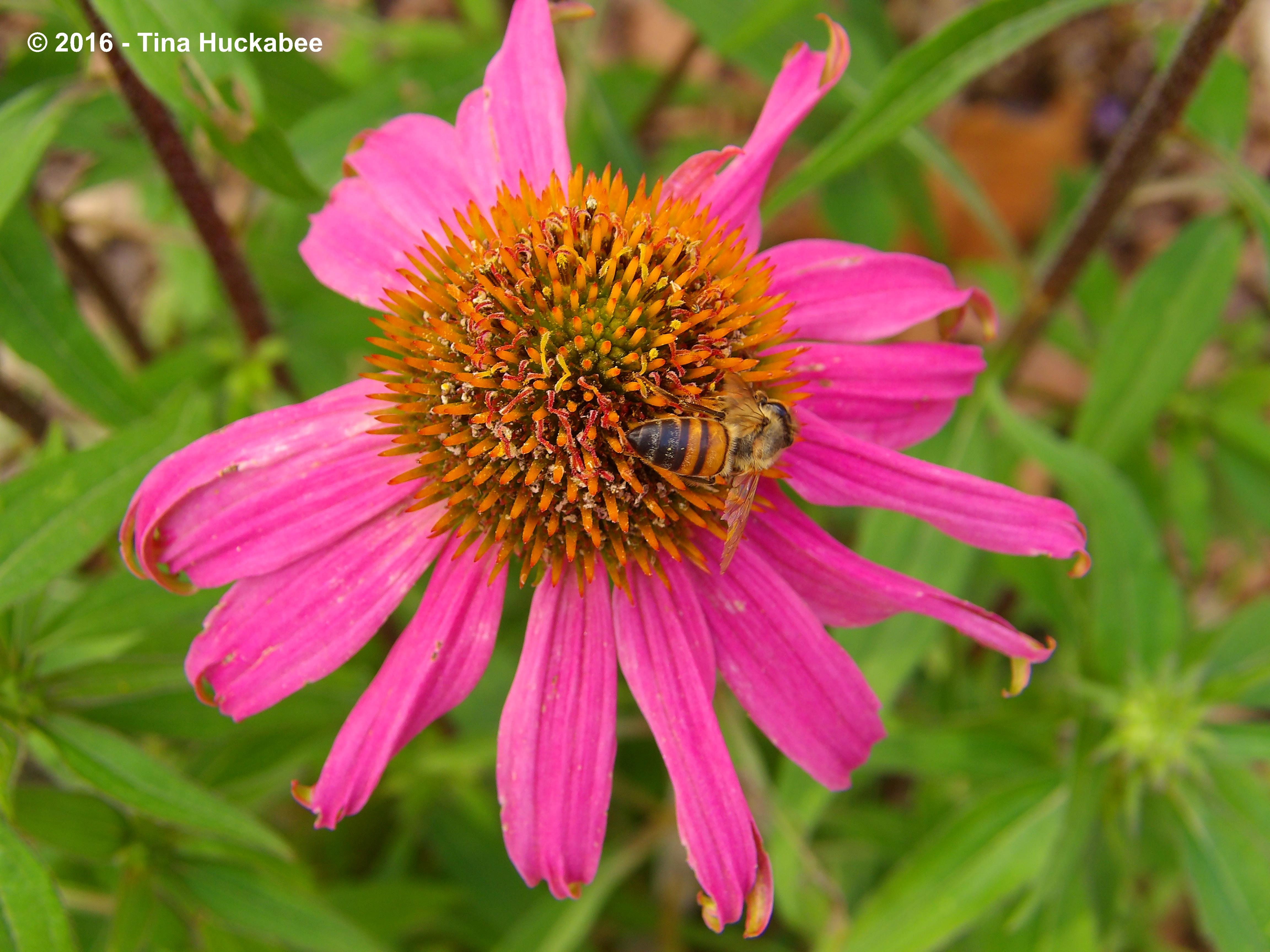
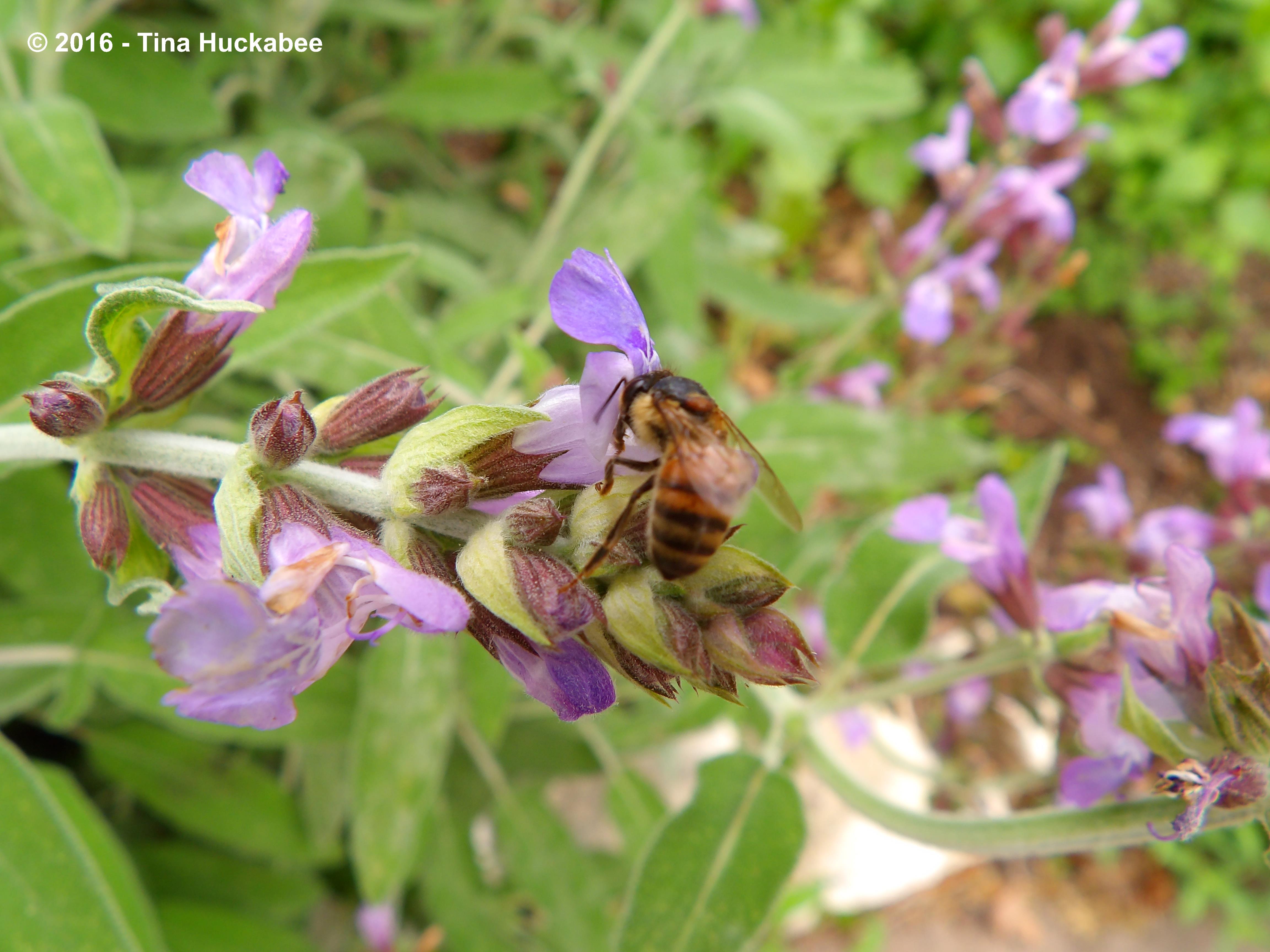
These bees I can definitely identify!  They’re MY honeybees.  Aren’t they cute?

IMGP6301.new

Honeybee on Purple coneflower.

IMGP6297.new

Honeybee working sage bloom.

These belong to our remaining honeybee hive, Scar.  They are the gentlest bees we’ve had the privilege of “keeping.”  Scar, by the way, is doing just fine–full of busy, working bees and a queen who is laying eggs out the wazoo.  I don’t think wazoo is the technical term.

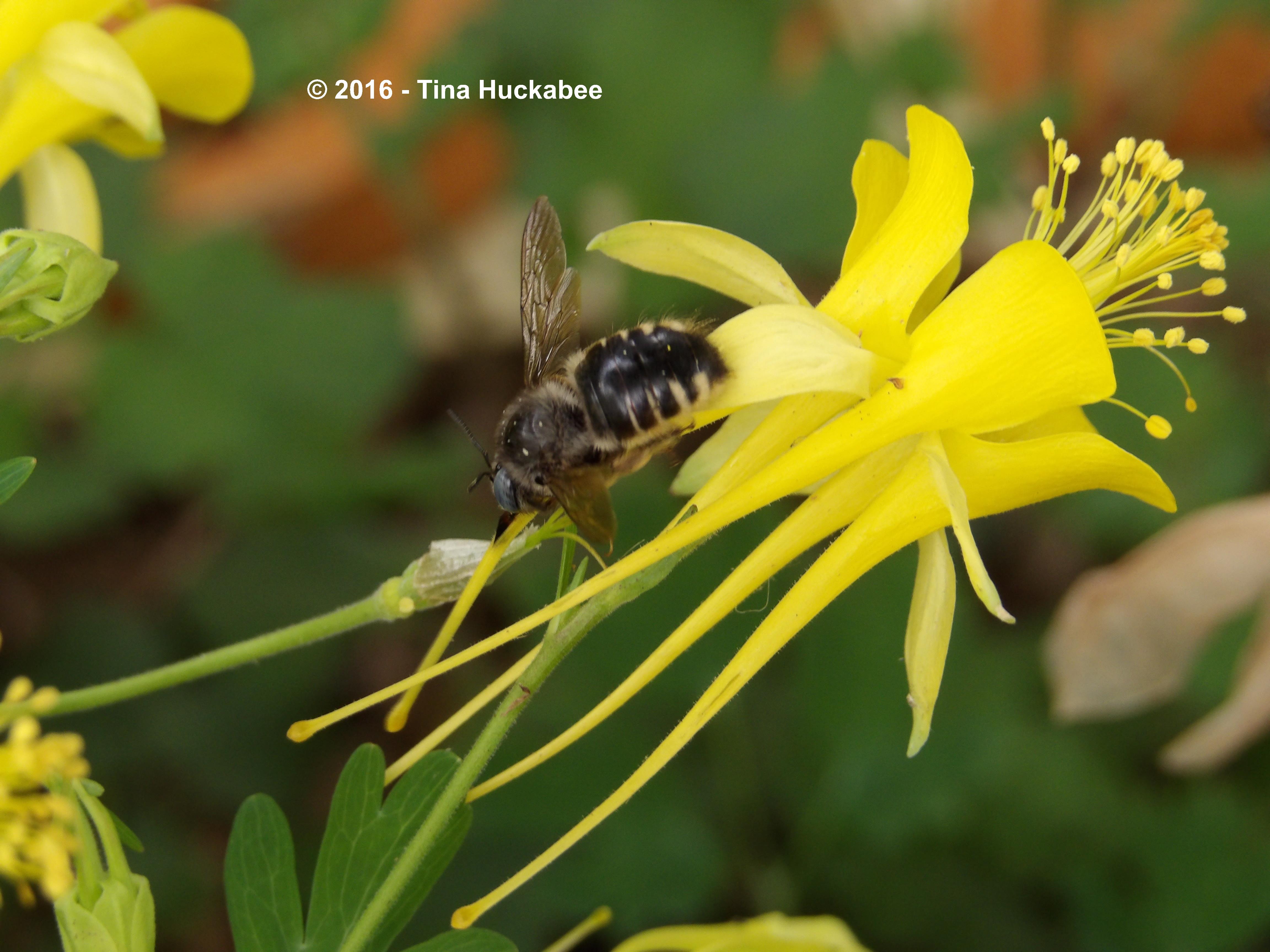
My all-time favorite native bee species is the Horsefly-like Carpenter bee, Xylocopa tabaniformis.   With lovely blue peepers and snazzy abdominal racing stripes, these gals are all over my gardens, buzzing from bloom to bloom.

M0025565_cropped_1734x1575..new

Carpenter bee on Coral Honeysuckle bloom.

IMGP6837.new

Carpenter bee “stealing” nectar from Yellow columbine.

IMGP6840.new

Go girls!

This Paper waspPolistes exclamans,  is the first of its kind that I’ve seen this year and was resting for a moment on daylily foliage–just long enough for a photo.

IMGP5148_cropped_2885x2364..new

Clad in autumn-like colors, paper wasps are beautiful insects.

I like these insects, though many people do not.  Wasps of most sorts are good pollinators and I’ve never experienced any aggression from this species or others. Wasps are aggressive if nests are disturbed–and  who among us isn’t aggressive (or at least annoyed) when someone is disturbing our homes?

And Wildlife Wednesday wouldn’t be the same without  a Green Anole lizard, Anolis carolinensis, saying a cheery Hi!.

IMGP6272.new

His look suggests that perhaps it’s more of a wary Go away! . 

Did wildlife visit your garden this past month? Please post for April Wildlife Wednesday–share the rare or mundane, funny or fascinating, beneficial or harmful critters you encounter. When you comment on my post, please remember to leave a link to your Wildlife Wednesday post so readers can enjoy a variety of garden wildlife observations.

IMGP4783_cropped_3926x2742..new

Happy wildlife gardening!


Wildlife Wednesday, April 2015

It’s been an amazing month in my garden for wildlife–nothing rare or unusual, but lots of action from resident and visiting avian and arthropod critters.  As spring unfurls its blooms, days lengthen, and temperatures warm, everyone is more active–and ready to breed.  Ah, love is in the air.  Let’s get twitterpated!

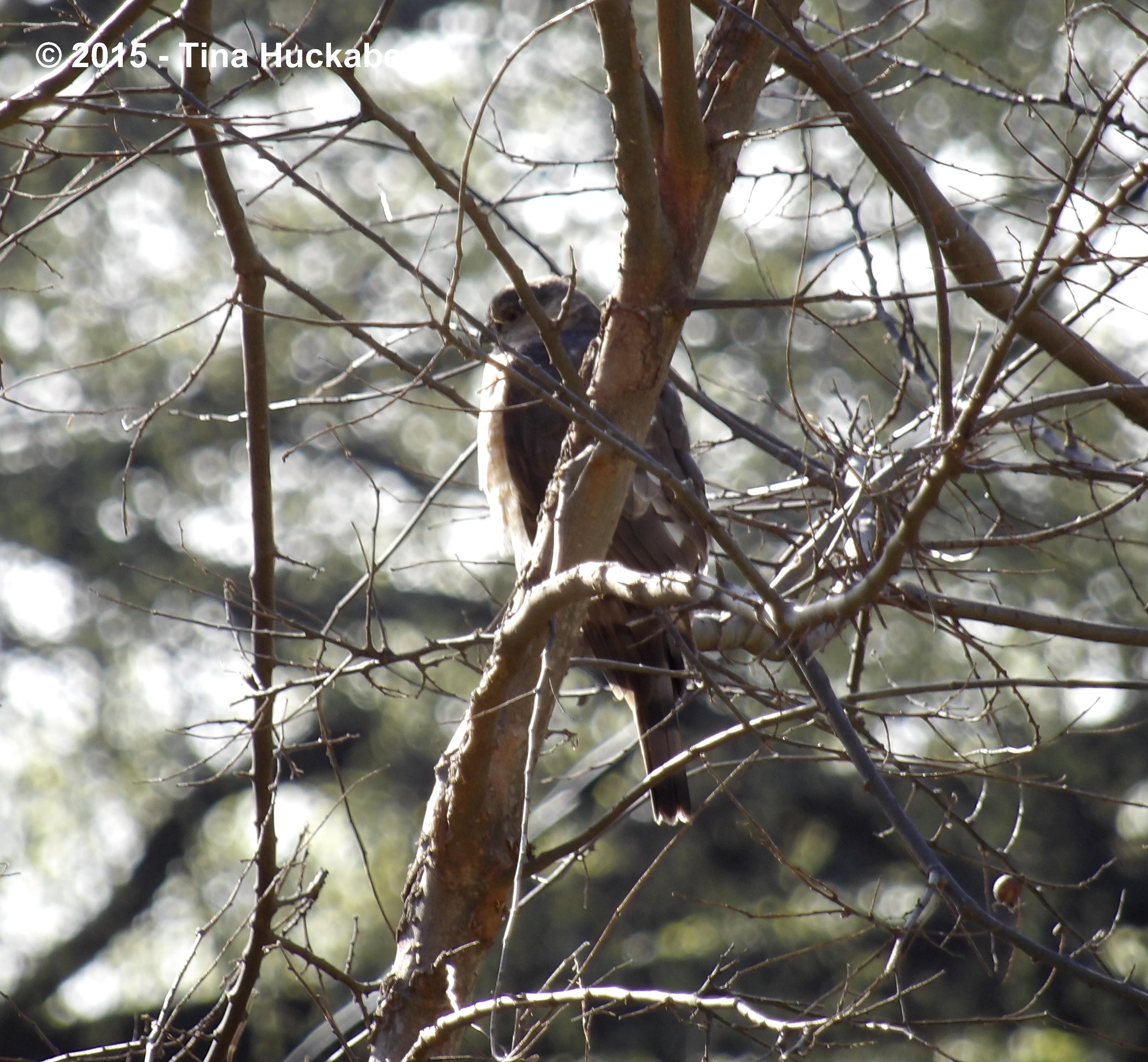
Last month I wrote about a single lady of the Buteo kind, this gorgeous Red-tailed HawkButeo jamaicensis.

IMGP5902_cropped_3198x2958..new IMGP5904.new

Those two photos were taken earlier in the month as she rested after scattering the birds with no meal to show for it. These two photos,IMGP6696_cropped_2972x3069..new

IMGP6697_cropped_3520x3369..new

…I shot early Monday morning as I was alerted to her presence by the noisily squawking  Blue Jays and Grackles.  She doesn’t look all that impressed with their noise-making, but she flew off shortly afterward to a more distant tree.  I think she’s a juvenile and I hope she finds a mate in the next year.

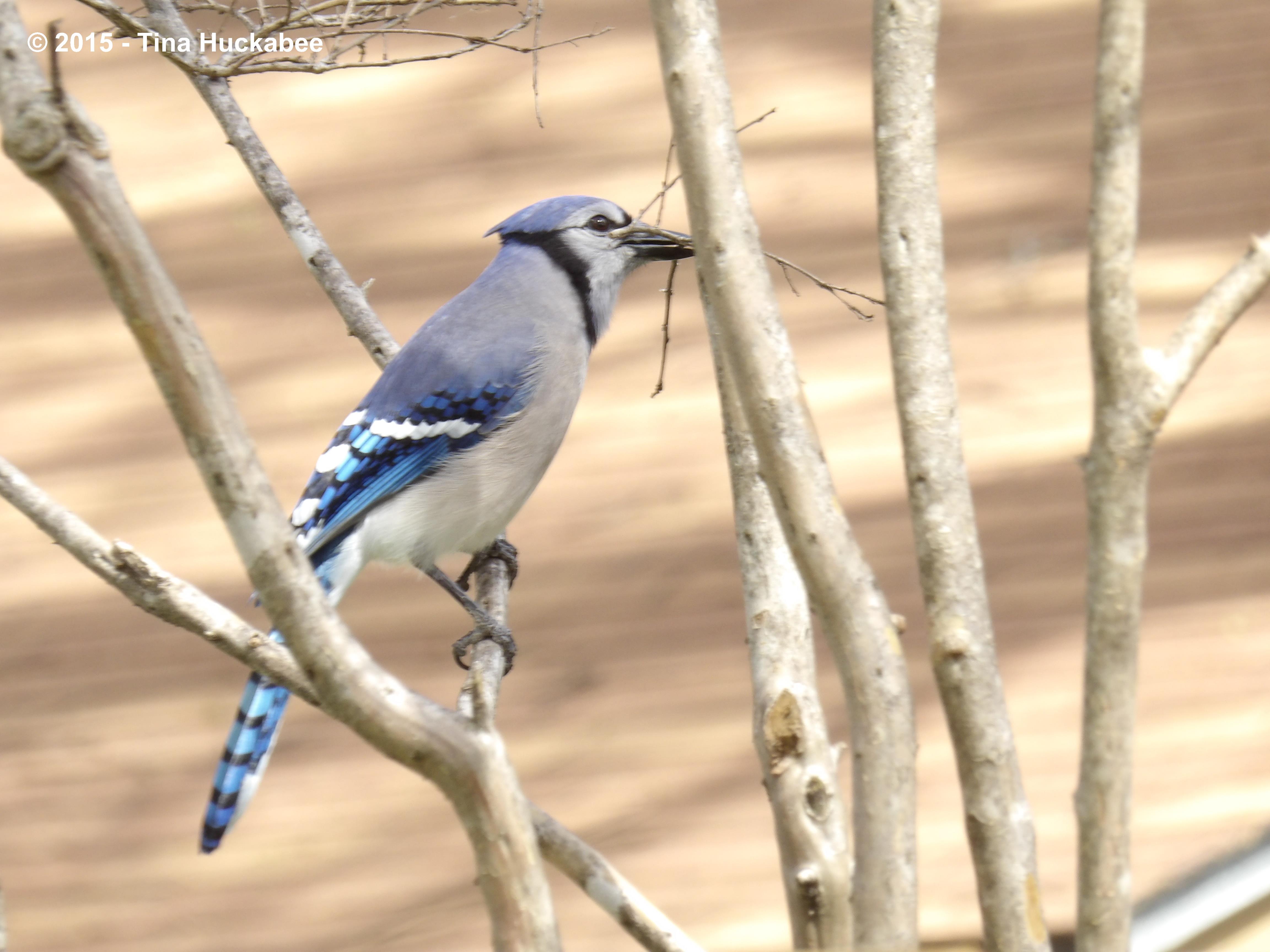
The Blue JayCyanocitta cristata,  (of course it’s ‘Cyan’ in the scientific name) are common birds in Texas and I see them every day, but rarely take photos of them.  This one with a twig in the beak, is probably a female preparing for her nest.

IMGP6244.new Blue Jays are loud, dramatic birds, but so gorgeous–and I think they know it.

IMGP6245.new

I enjoy their antics–and beauty.

This Northern MockingbirdMimus polyglottos, sang beautifully one morning.

IMGP6021.new I love the songs of the Mockingbird–melodic, versatile, and constant. I’d like to think he was serenading me, but I imagine he was trying to impress a lady more fitting to his taste. His coloring looks buttery, not the grays than Mockingbirds really are.  Obviously, the early morning light highlighted him in an unusual, though compelling, way.

IMGP6022.new

Or I was off-kilter with the camera.

This Mockingbird shows truer colors,

IMGP6183.new …as he rests in my Retama tree and surveys his territory.

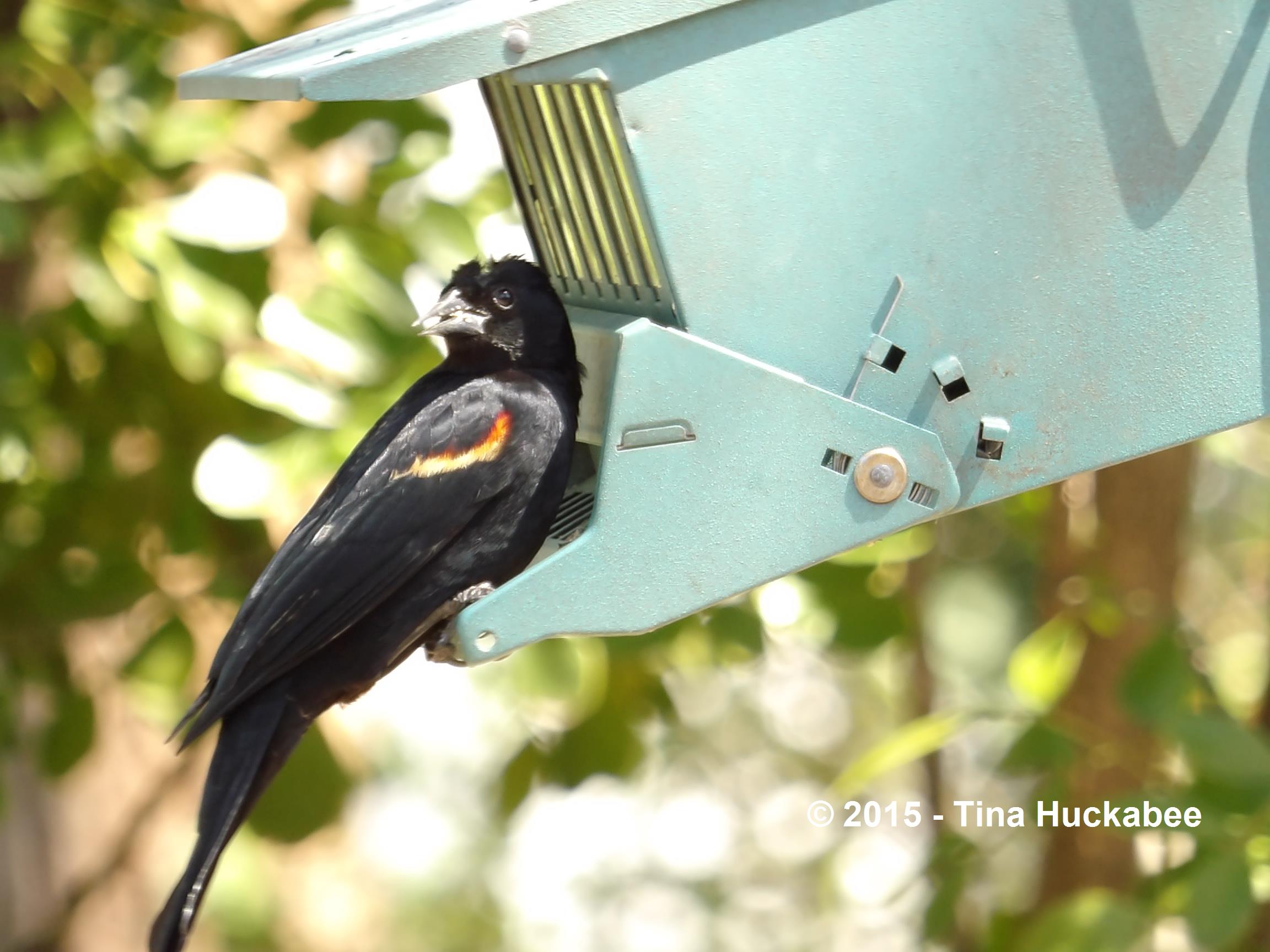
I used to enjoy the sight of many Red-winged BlackbirdAgelaius phoeniceus, species migrating through my gardens in spring, but this year, there is only one shy male.

M0026120.new He visits the feeder from time-to-time, hesitant to land, but once he perches, he remains  quite a long time enjoying sunflower seeds.

M0036142.new

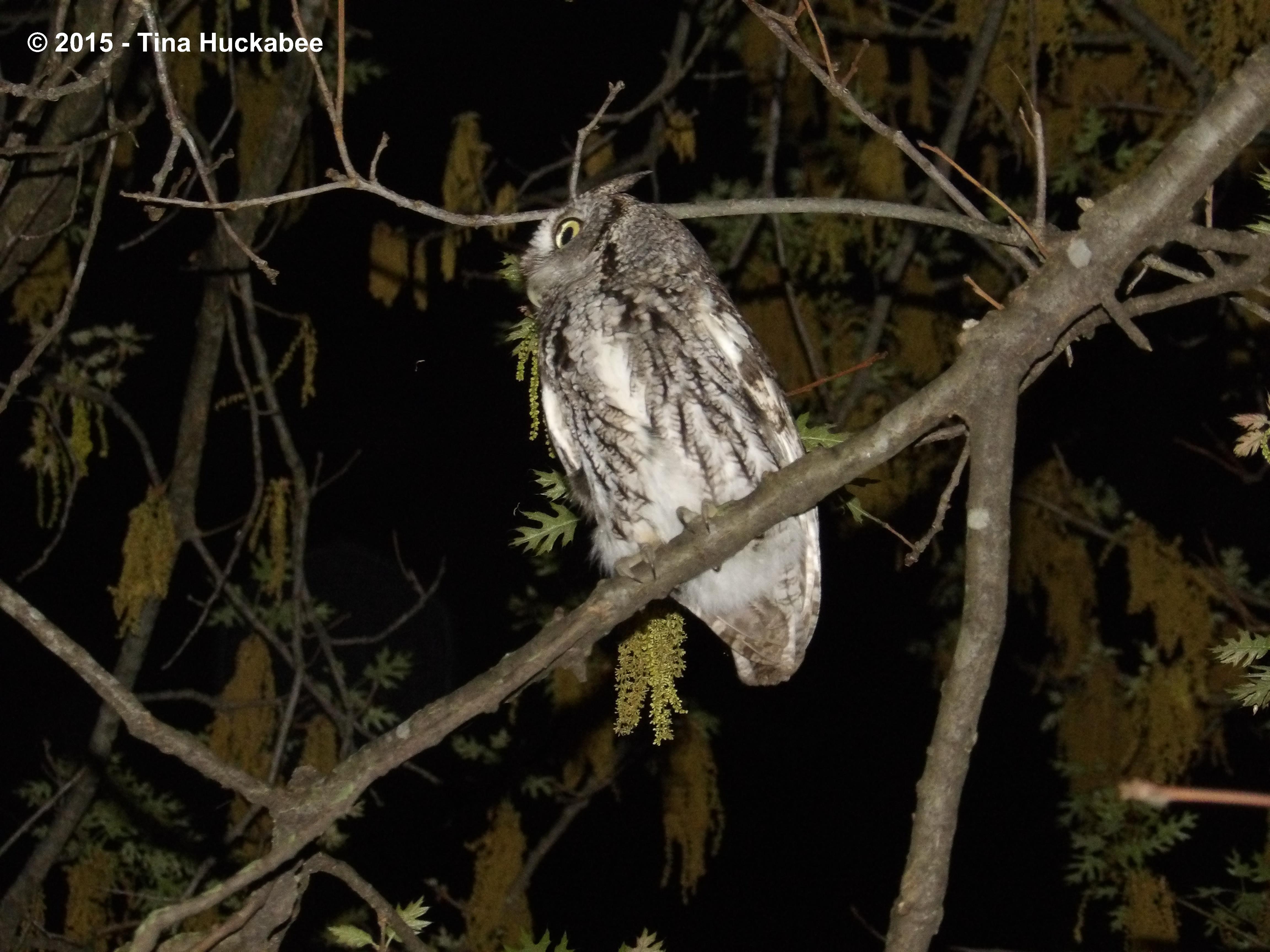
I’ve written about my resident Eastern Screech OwlMegascops asio, couple in the past month and what a charming pair they are. These two are real love-match.  I’ve observed Mamma,

IMGP6318.new IMGP6326.new

…sitting in the tree, waiting patiently for her partner to bring her a treat at night or to pick her up from the house at sundown for a rat and a movie.  Well, maybe not a movie.

Every time I see these two lovebirds meet each other, they touch beaks.  At first I thought they were exchanging some morsel of food and it might be happening, but I don’t see any “stuff” pass between them.  I think they’re beak-kissing.

Kissing is so much nicer than exchanging lizard gizzard.

Early some mornings, just before sunrise, I’ve spotted Dad,

IMGP6337.new IMGP6339.new

…hanging around the brood house.  Mamma is nestled inside by then; sometimes she pokes her head out, sometimes not.  He’ll trill a couple of times, then silently swoops off to the neighbor’s shrubs for his daily rest.  What a treat and privilege it is watching these two court.

Take a look his talons.

IMGP6336.new I wouldn’t want to be at the snatching end of those.

A Great Blue HeronArdea herodias, visited my pond several times early in the month, relieving it of a couple of fish.  I like my fish and I’m very sorry for their end, but everyone has to eat.I never got a good photo of the heron because with any slight movement the heron spread his huge wings and loped off.   I did get this one rather lame photo after  he took flight from my back garden and banked around and upwards from the house.IMGP6179_cropped_2967x2755..new

He’s probably headed off to a nearby creek.  I haven’t seen him since, but that doesn’t mean he doesn’t still visit the fishies.

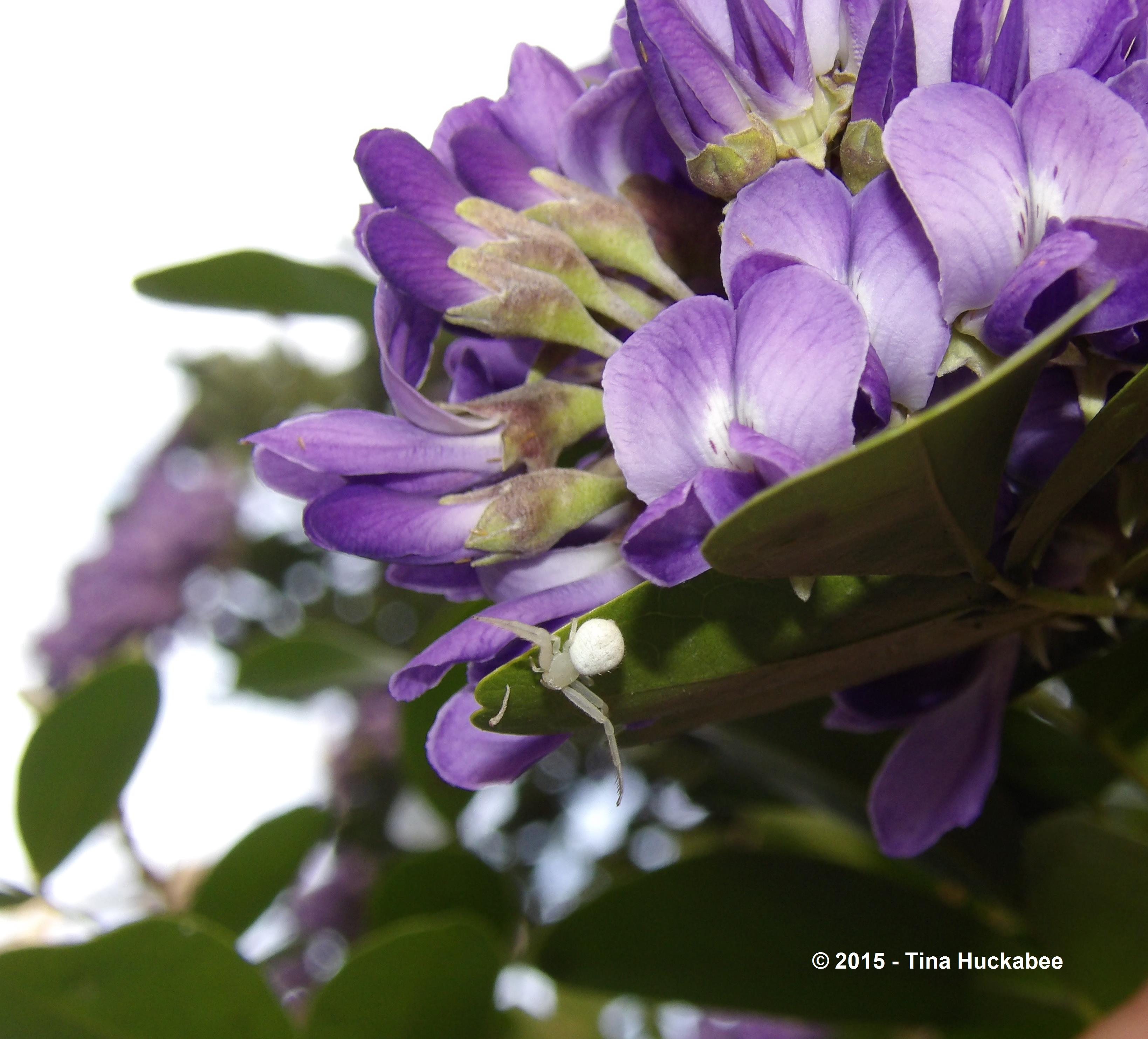
Texas Mountain Laurel, Sophora secundiflora, is blooming magnificently this spring. Beautiful trees year round, the Laurels are dripping with purple clustered blooms, to the delight of this gardener, as well as this White Crab SpiderMecaphesa. 

IMGP6559_cropped_3277x2967..new

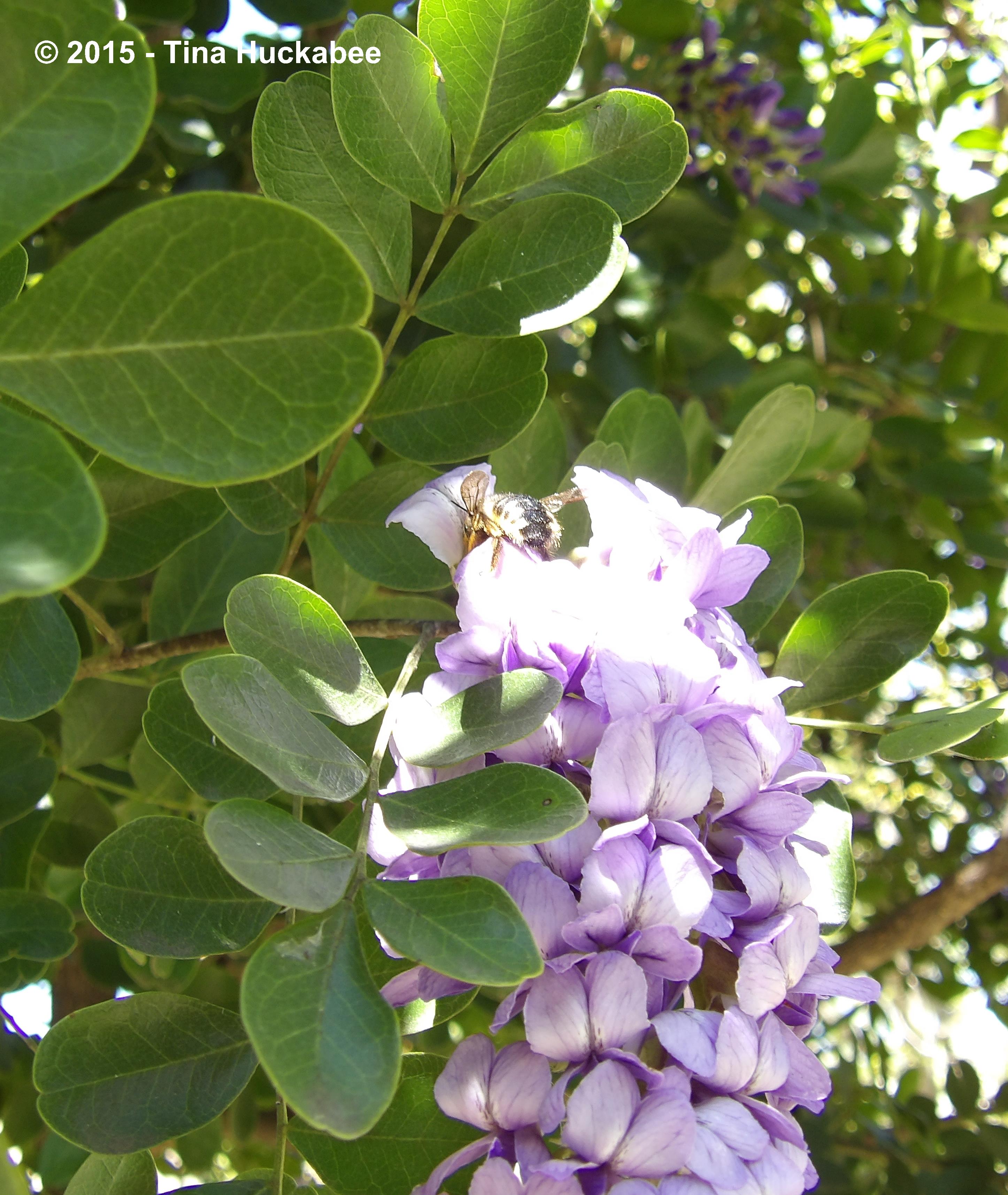
Hopefully, the spider isn’t hunting the honeybee as she harvests pollen and nectar.IMGP6467.new

Similarly, this native bee, Horsefly-like Carpenter BeeXylocopa tabaniformis, enjoys the Mountain Laurel blooms.

IMGP6459_cropped_3318x3105..new Just below the bee is another insect, but I only see it in profile.  Any ideas about what it is?

I have a hard time photographing this bee species because they’re always on the move, except when entranced by blossoms full of pollen and nectar, like those of the Mountain Laurel.

IMGP6657_cropped_3014x2724..new IMGP6658_cropped_2893x3428..new

IMGP6659.new

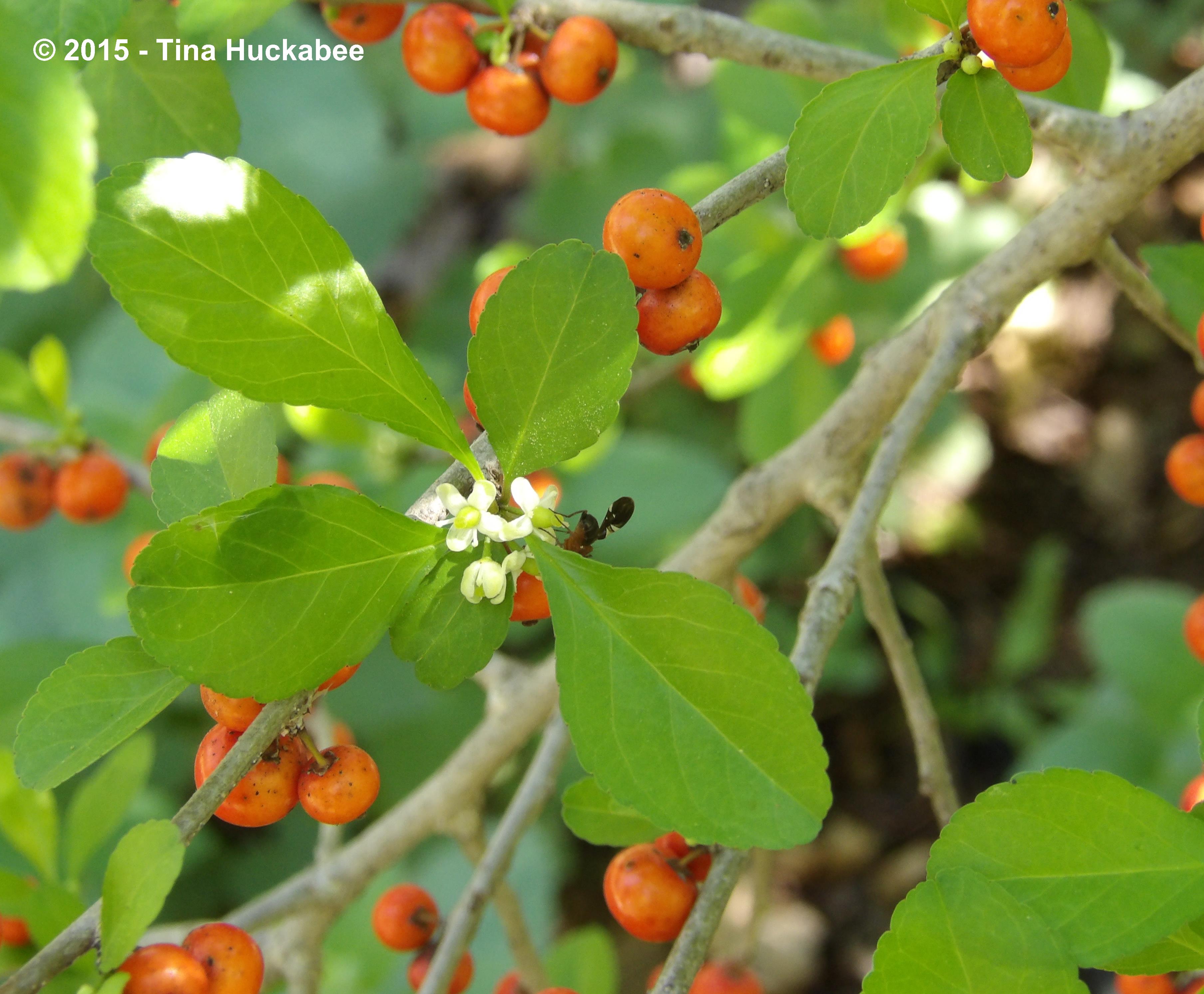
As beautiful as the Texas Mountain Laurel is, my wildlife plant-of-the-month award goes to the  Possumhaw Holly, Ilex decidua.  

IMGP6558.new This tree leafed out in late February, still holding its winter berries (why haven’t the Cedar Waxwings gobbled up the berries??), while blooming the tiny, sweet spring flowers.

IMGP6656.new

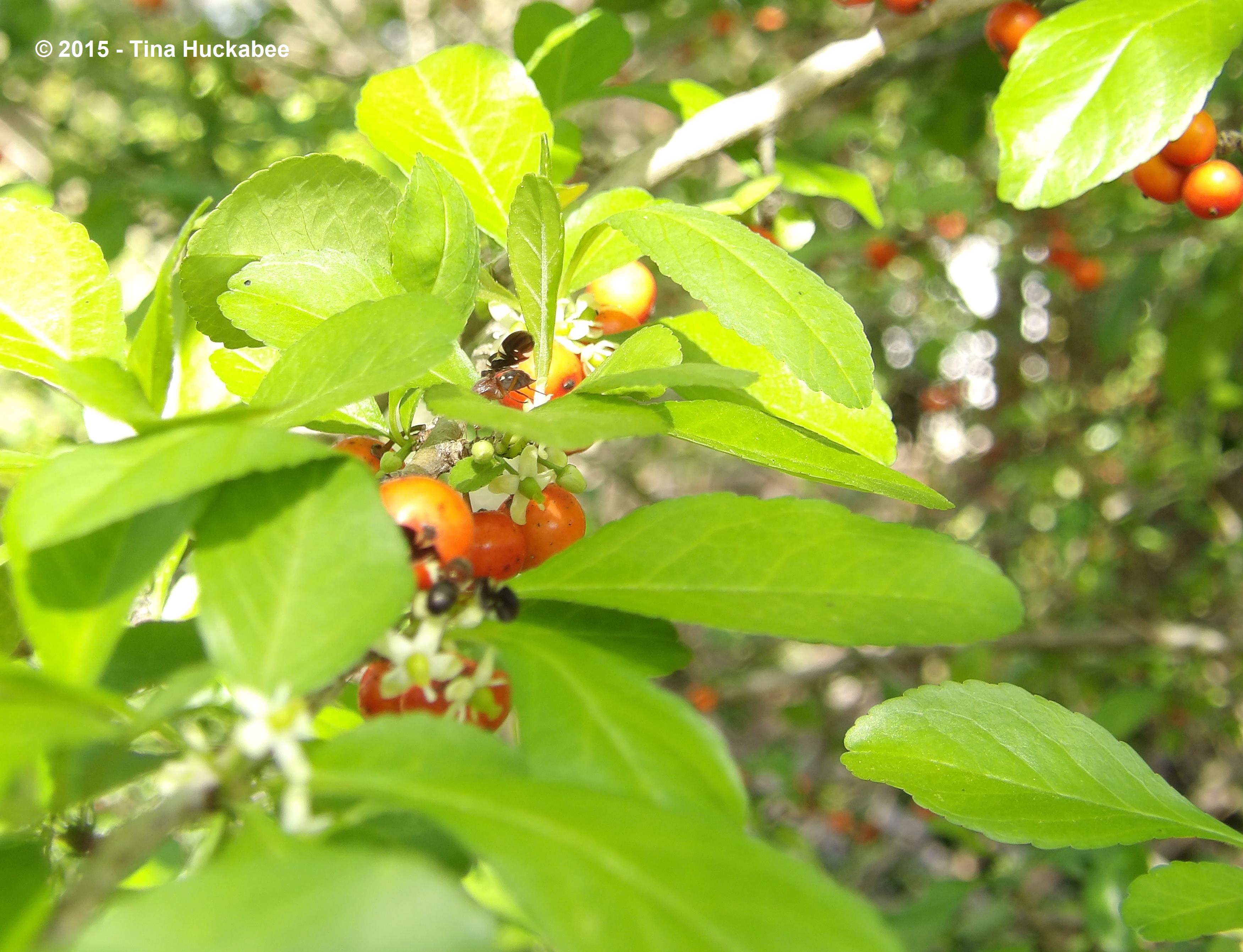
The tree was and is alive with bird and insect activity.  Most of the activity I’ve observed is so tiny and/or moves so rapidly that I opted to simply put down the camera to watch and marvel.  I’ve observed a number of fly species, various native bees and honeybees, and a butterfly that I’ve never seen before, visiting those teensy flowersIMGP6546_cropped_3617x2986..new
The Possumhaw flowers are quite the favorites of very small pollinators–and small is the operative word.

One insect moved slowly enough that I was able to capture some shots.  Picture-winged Flies,  Delphinia picta, are common in my gardens–I’ve rescued them from the shallow bird bath near the Possumhaw and see them all over the garden.IMGP6549_cropped_4101x2936..new

The fly lays its eggs on the decaying fruits so the larvae can feed on rotting berries.

IMGP6550_cropped_3502x2682..new IMGP6551_cropped_3299x2728..new

Adults sip nectar from the little flowers.IMGP6552.new

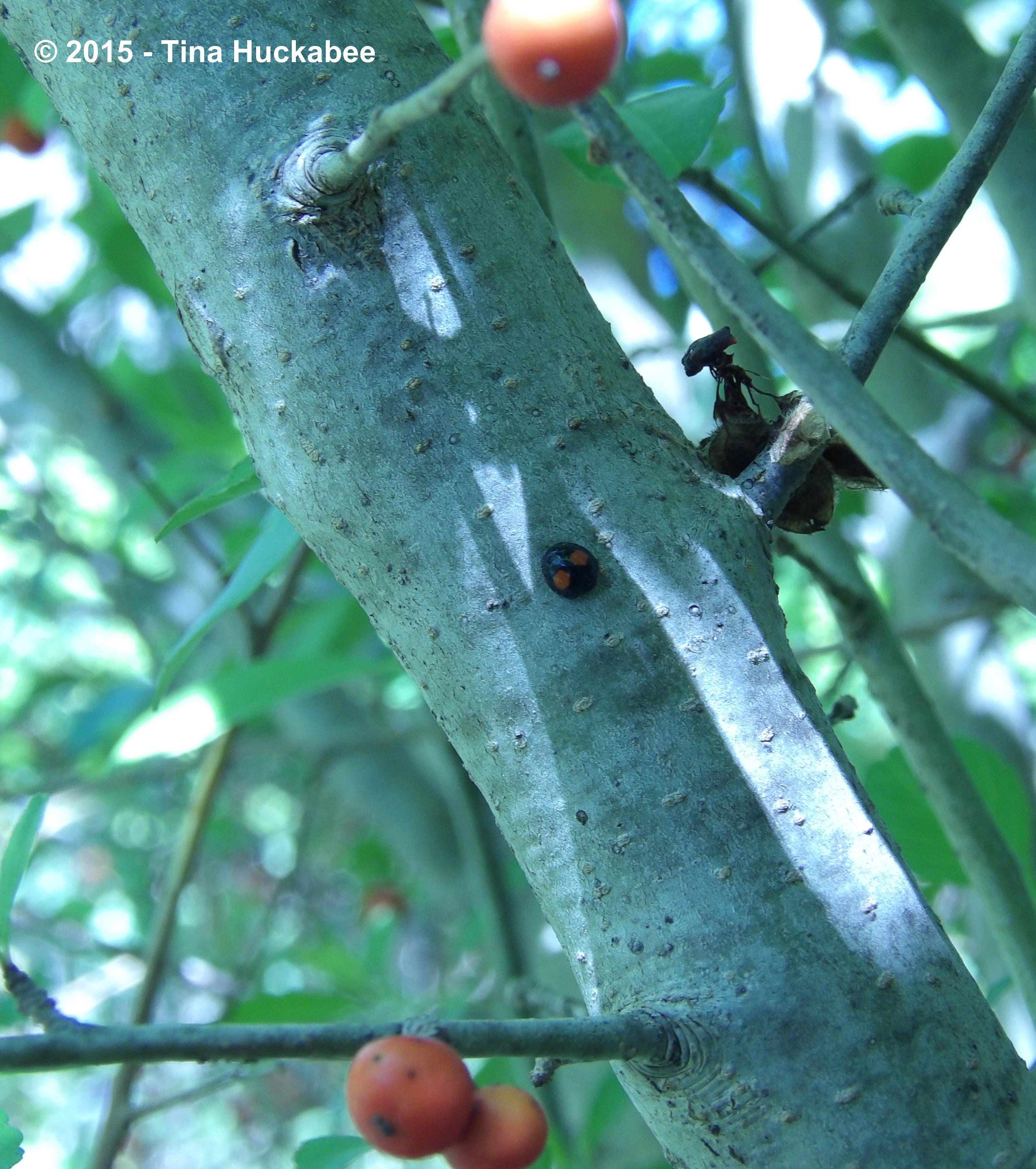
On the limbs and trunk of the Possumhaw, I’ve seen several of the Twice-stabbed Lady BeetleChilocorus stigma.

IMGP6601_cropped_3018x3406..new

I find the name rather gruesome,  but what a pretty little insect and beneficial too.    Lady Beetles, no matter how many dots, enjoy eating aphids and other sucking insects; they are good friends to gardeners. 

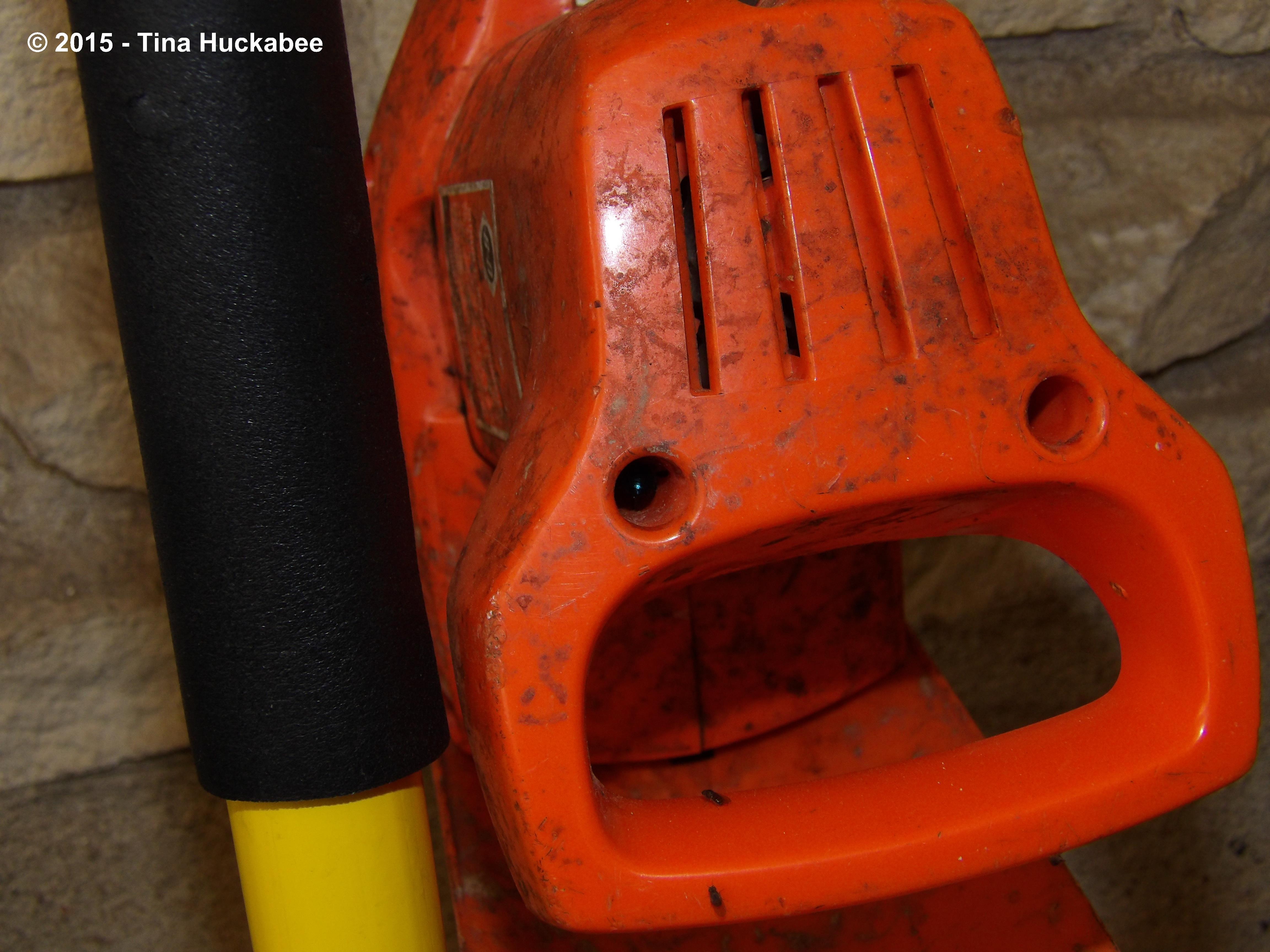
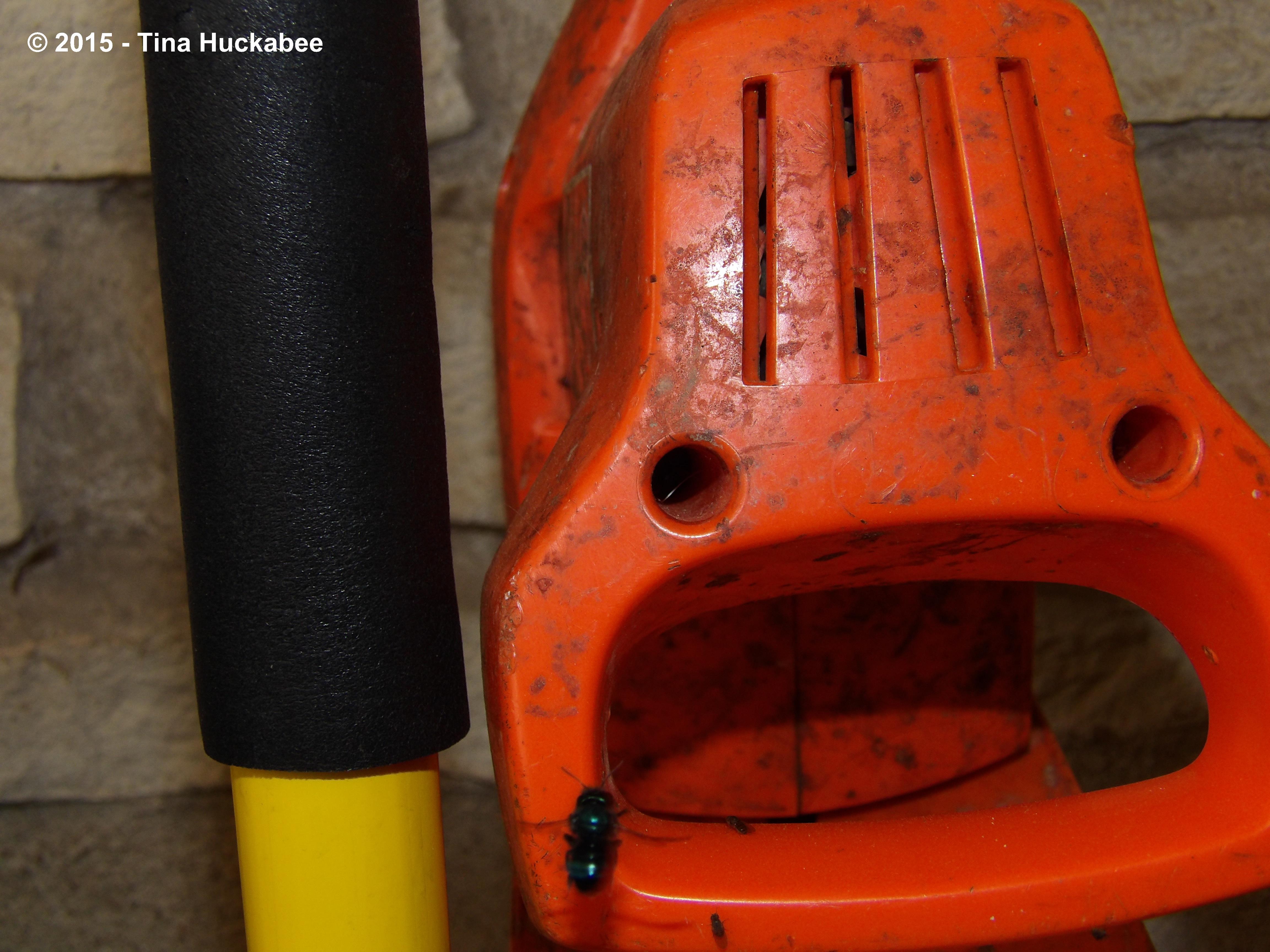
And finally, this  Mason BeeOsmia lignaria, wasn’t immune to the drive for spring romance, or at least, the drive for reproduction of the species.  I watched two of these buzzing around my back patio walls in  search of the right holes in which to form nests and lay eggs.  This one chose a hole in my old (REALLY old) electric pruner.  She entered several times,

IMGP6289.new  IMGP6290.new

IMGP6291.new

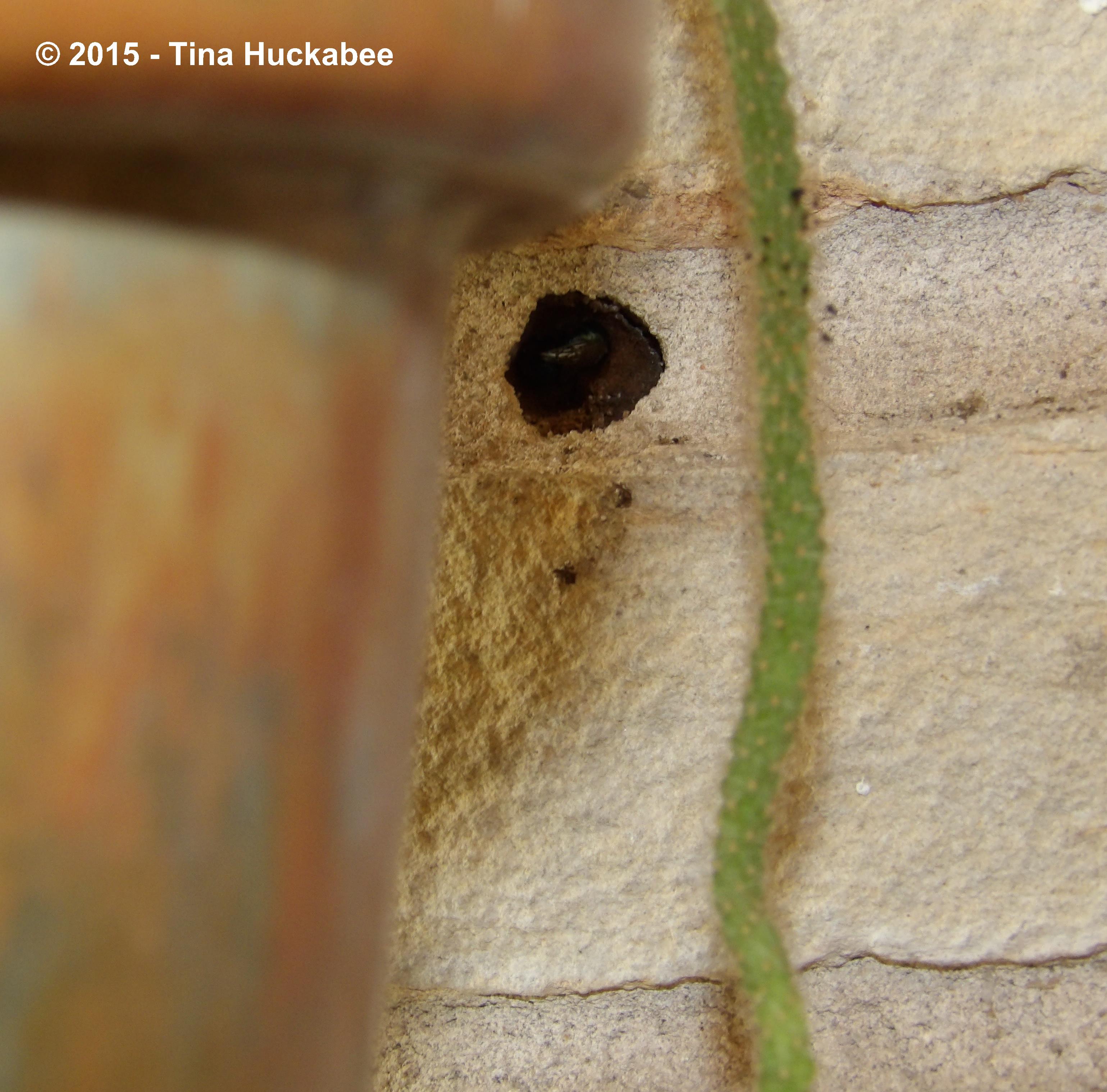
…and packed the hole with pollen and probably a little mud for whatever eggs she laid.  Here are other holes in the mortar of my house walls were she and other native bees have done the same.

IMGP6294_cropped_2986x3014..new

IMGP6298_cropped_3078x3036..new

Many of these holes have existed in the mortar  for years, some well before we bought our home, like these two.

IMGP6292.new

IMGP6293.new IMGP6304_cropped_3327x2907..new

At some point, these holes were filled with glue or caulk (maybe for shelves?).  I’ve recognized for a number of years that bees and wasps use these holes as nests, so I have not cleaned or filled them in.  I guess some would find holes in the walls a bit unsightly, but I love that the bees use them year after year to create homes for their larvae ensuring more bees in the future.  To me, that is real home beauty.

I hope your gardens benefitted from wildlife visitors this month and that you will join in posting about it for April Wildlife Wednesday. Share the rare or mundane, funny or fascinating, beneficial or harmful critters you encounter. When you comment on my post, please remember to leave a link to your Wildlife Wednesday post so we can enjoy a variety of garden wildlife observations.
Good wildlife gardening!