Evicted!

Winter’s bare trees allow for good bird watching, especially when it comes to the local raptors.  It’s also the time of year when we prepare to host Eastern Screech Owls, Megascops asio, as they court, breed and fledge their young in the Red Oak tree in our back garden. We’ve been privileged to observe these shy beauties for the last 8 years and certainly hope that they once again choose our back garden for their home territory in these next few months.  I haven’t seen an owl yet this season and I’ve missed them this winter.   Once in early October and then once more in early November, I heard a Screech Owl whinny  announcing to others this is MY territory!, but I haven’t  heard the common owl trill as the owls are living their lives: hunting, flirting with a potential mate, and then working with that mate to raise a family.

Since late November, I’ve spotted a young Virginia opossum, Didelphis virginianus sitting in the owls’ oak tree at night,

Not a great shot, but you get the idea.

…as well as occasionally scuttling through my garden early in the morning.

I also suspect the same opossum as the thief who had stolen a small board at the entrance to one of my honeybee hives–I found it in a corner of my garden, weeks after it went missing, dropped nowhere near the hives.  Because I’d noticed bits of non-oak leaves and Mexican feathergrass shards caught in the branches just below the owl nest box, I thought the opossum might be squatting in the box, but I  never actually saw her enter or exit. Squirrels have moved in to the nest box in the past and I hoped that a rogue opossum would be too large.

I hoped, but I was wrong.

As Screech Owl breeding season is nigh, we’re placing a new camera in the owl house this year because we enjoyed watching Mama Owl in her box last year–until the camera pooped out just after she laid her 5th egg.

This past weekend, the ladder out and up and tools at the ready, The Hub was up in the owls’ tree.

Steady there!

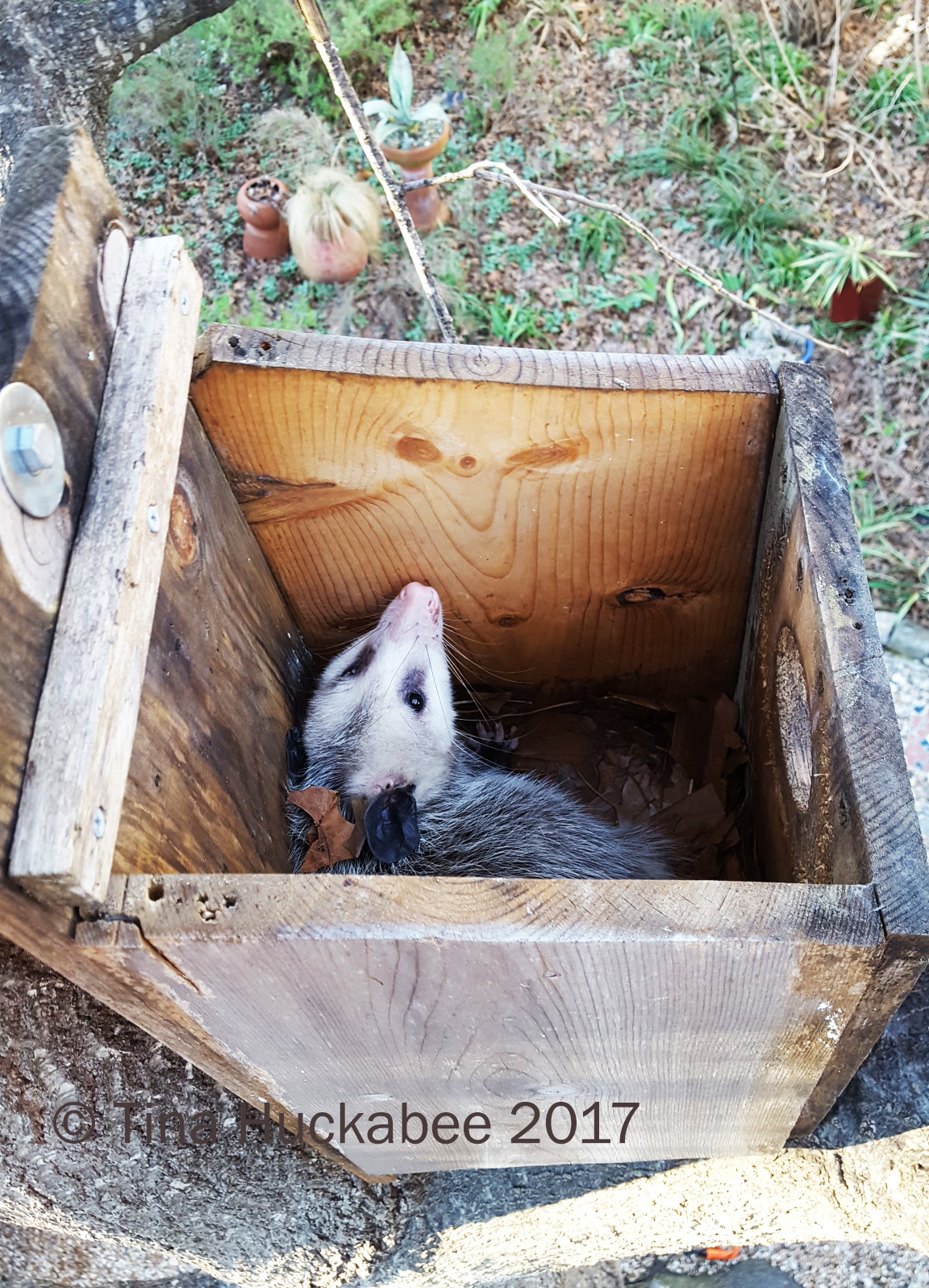
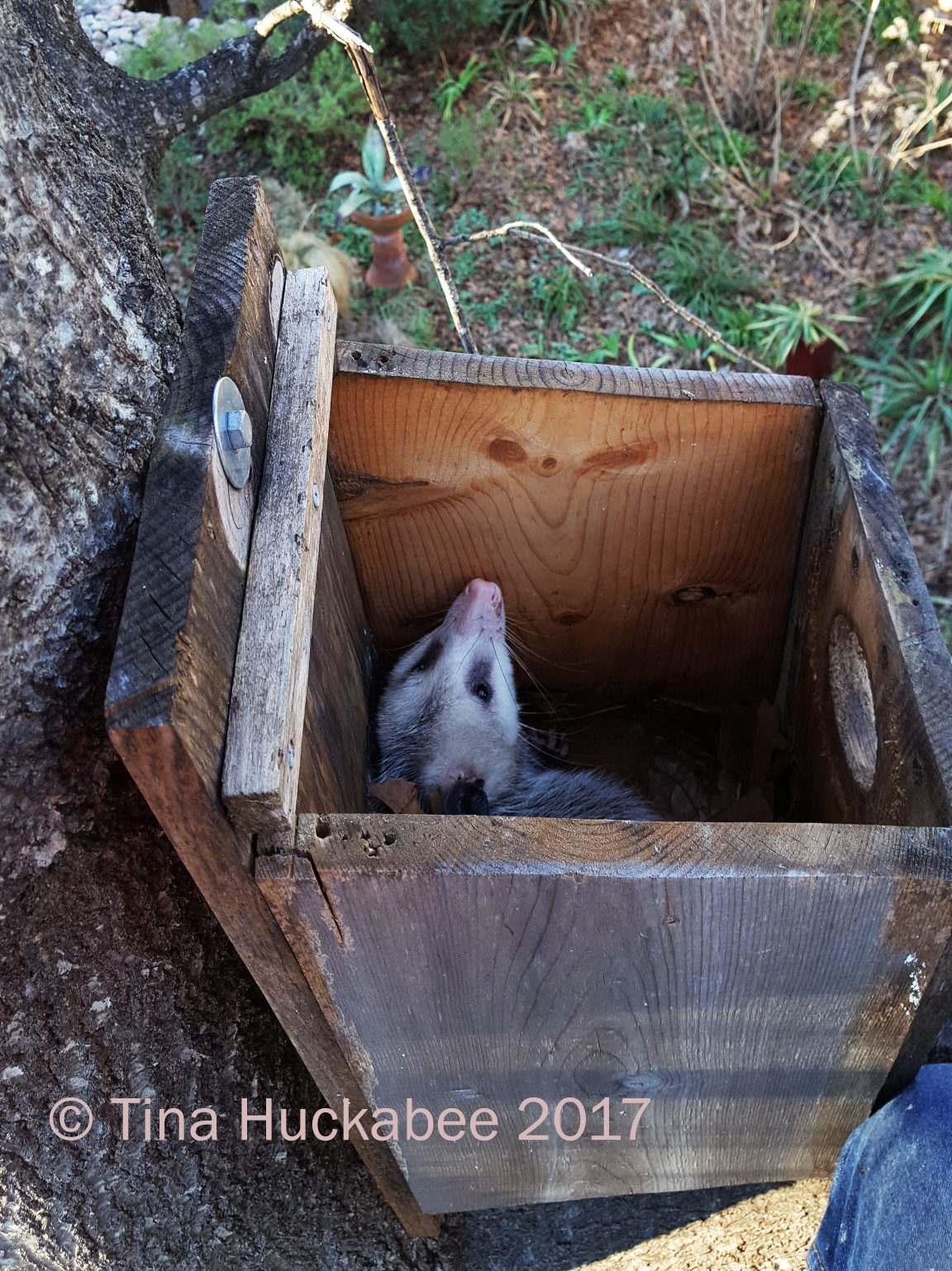
I remained terra firma and sollicita because 2016 wasn’t a great year for his bones–all 20 that he broke due to a bike accident and related glitches. That’s all we need: for him to tumble off the ladder in the service of wildlife watching. Thankfully, he didn’t tumble, but he did find an owl box interloper in the guise of this fella:
20170122_164932copy

20170122_164940copy

Actually, I suspect she’s a young, possibly pregnant, female opossum. What to do with a malingering marsupial snuggled in an owl nest box?

I have no objection to opossums. I don’t mind them sipping at the pond and bird baths, eating from the compost bar, or even rummaging through my garden, but I do mind, very much, that this one has decided she needs the owls’ house for her own.

Once the top of the box was removed, the opossum didn’t comply readily with our wishes for her to vacate the premises, nor did she cooperate when The Hub attempted to scoop her out onto a branch with a long stick. She peeked over the top of the nest box once or twice,

Too high up to jump!

Is there an opossum-sized ladder I can use?

…but decided that staying put and hissing was her best bet. With The Hub remaining up in the tree, we contemplated our options:  leave the opossum in the house or scoot her out, forthwith? We decided that the best thing to do–for us, the opossum, and the nest box, would be to carefully lower the nest box to the ground,

Going down…
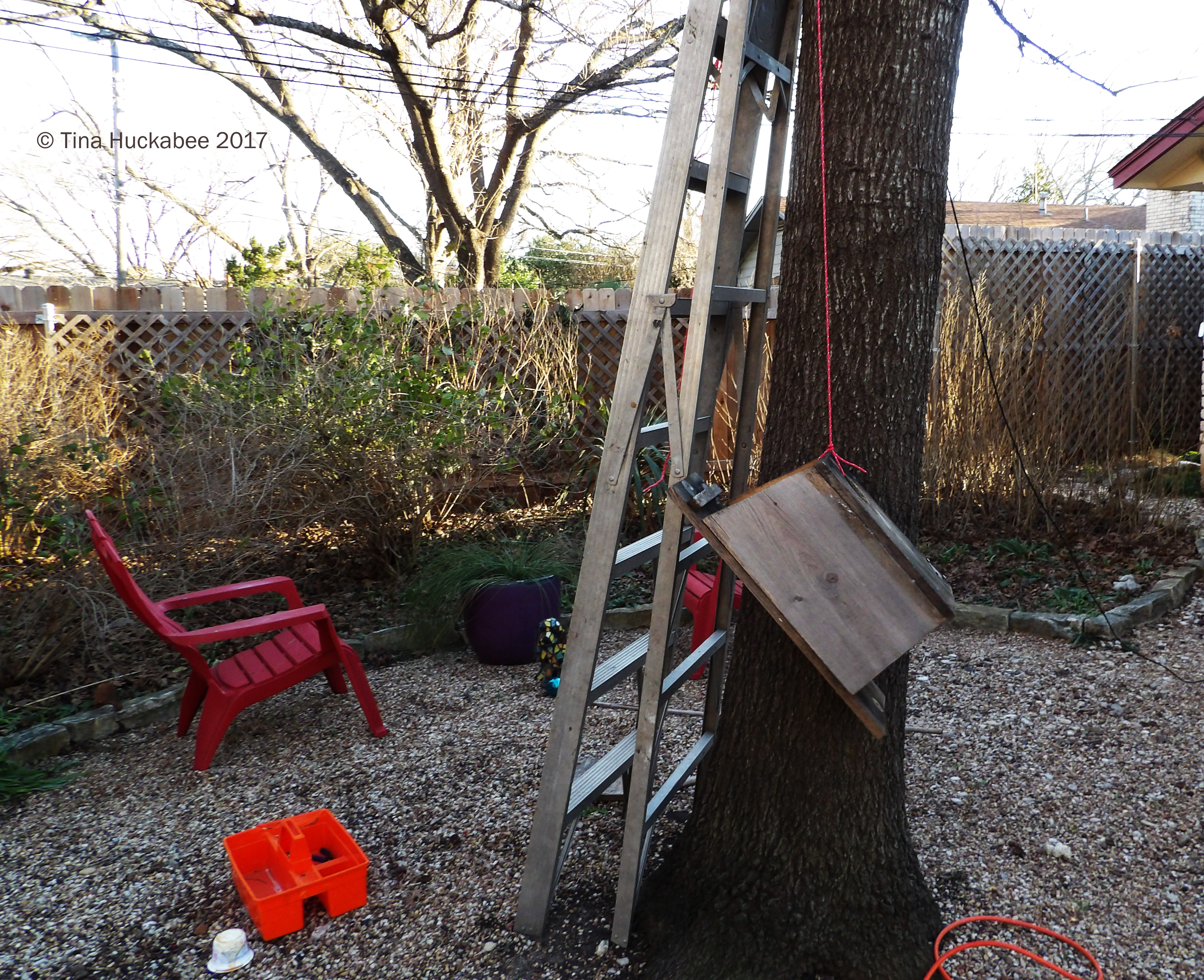
Almost there!
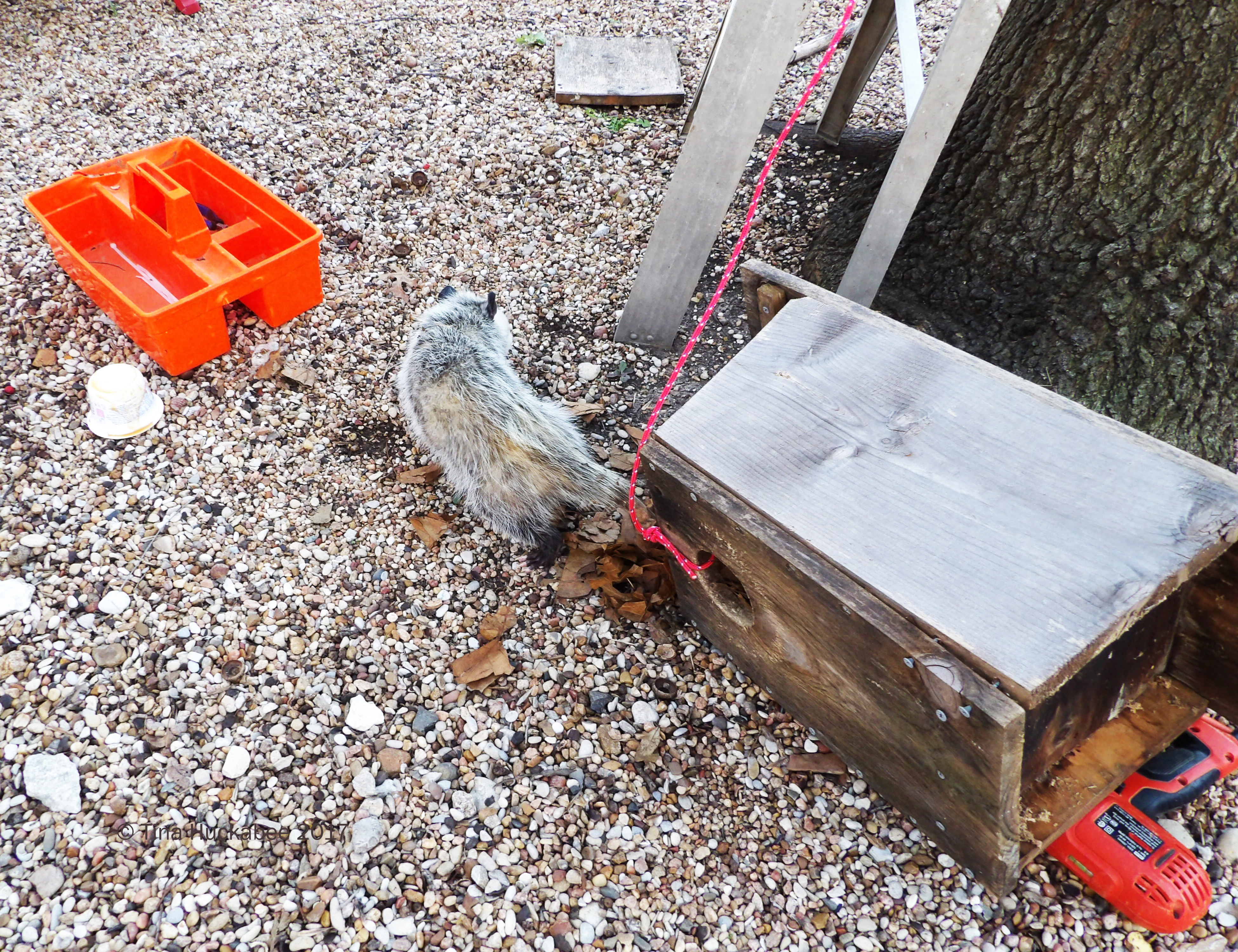
Thwarted–no more owl nest box squatting for you, missy!
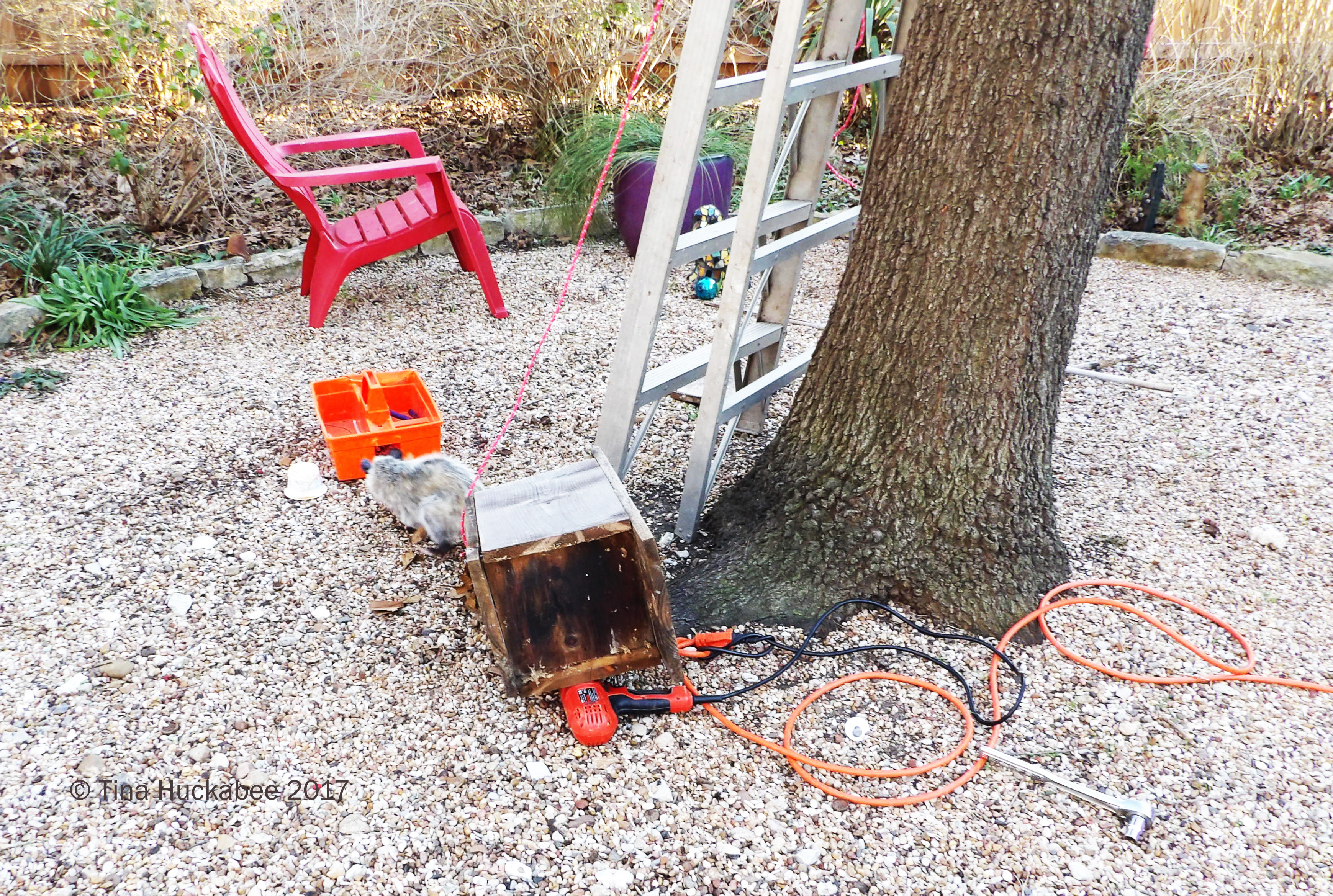
…allowing her to safely waddle off,
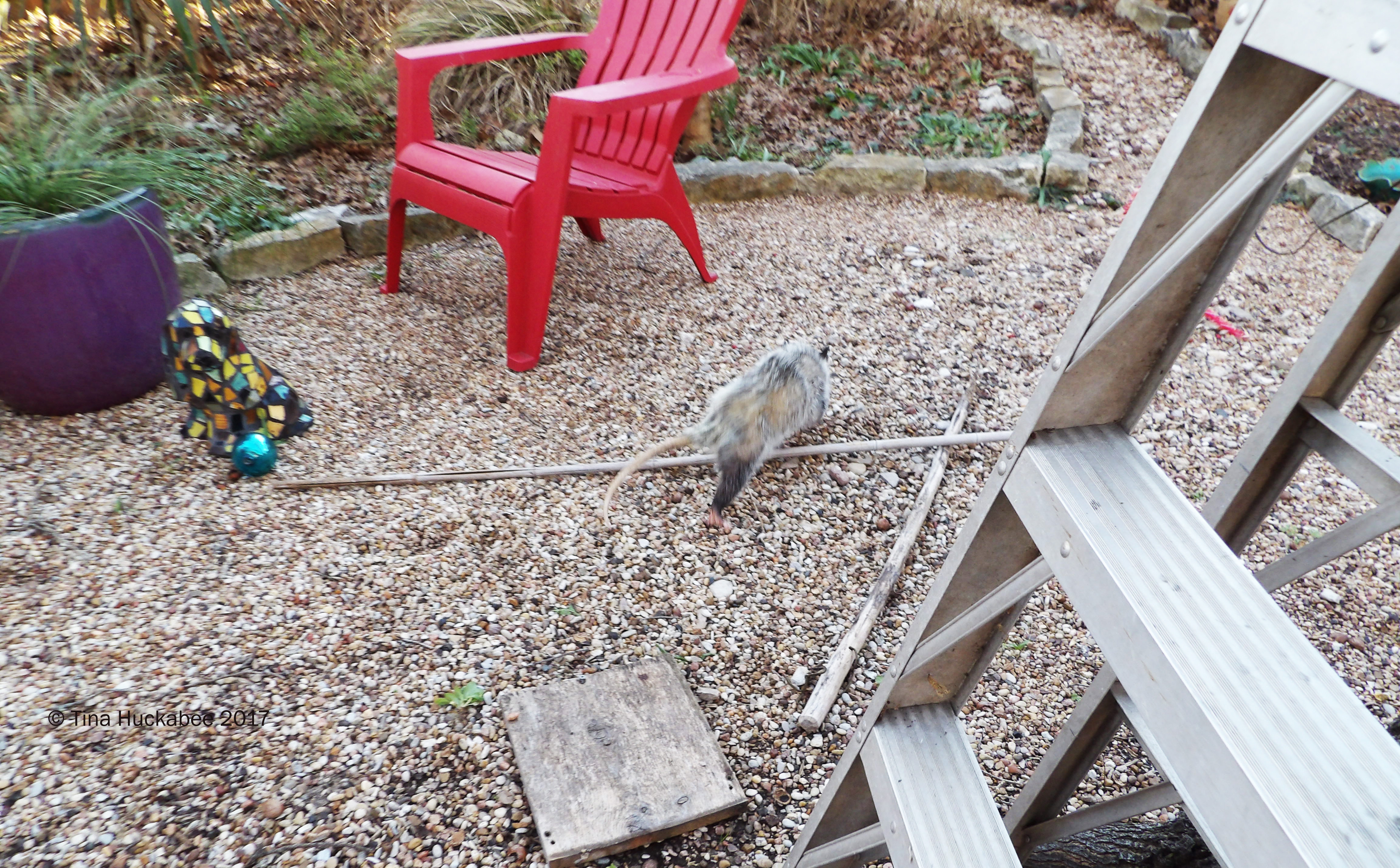
…which she did, in a huff.

I admire her steadfastness at claiming the box and for the obvious efforts at collecting leaves and grass for her nest and I do feel badly that we evicted her from such prime real estate.  But we didn’t build the box for her and I’m sure she’ll soon find another cozy spot in which to nest.  Opossums are not the brightest of critters, but they are remarkably adaptable–they eat almost anything and can nest almost anywhere.

Opossums thrive in urban environments–like my back garden.

We’re leaving the nest box down for the week and plan to put it back up into the tree, camera affixed and ready to go, by next weekend.  Learning about and enjoying the life cycle of the Eastern Screech Owls has been a great pleasure for us.  I hope that we can continue with that this spring.

2016 Mama Owl
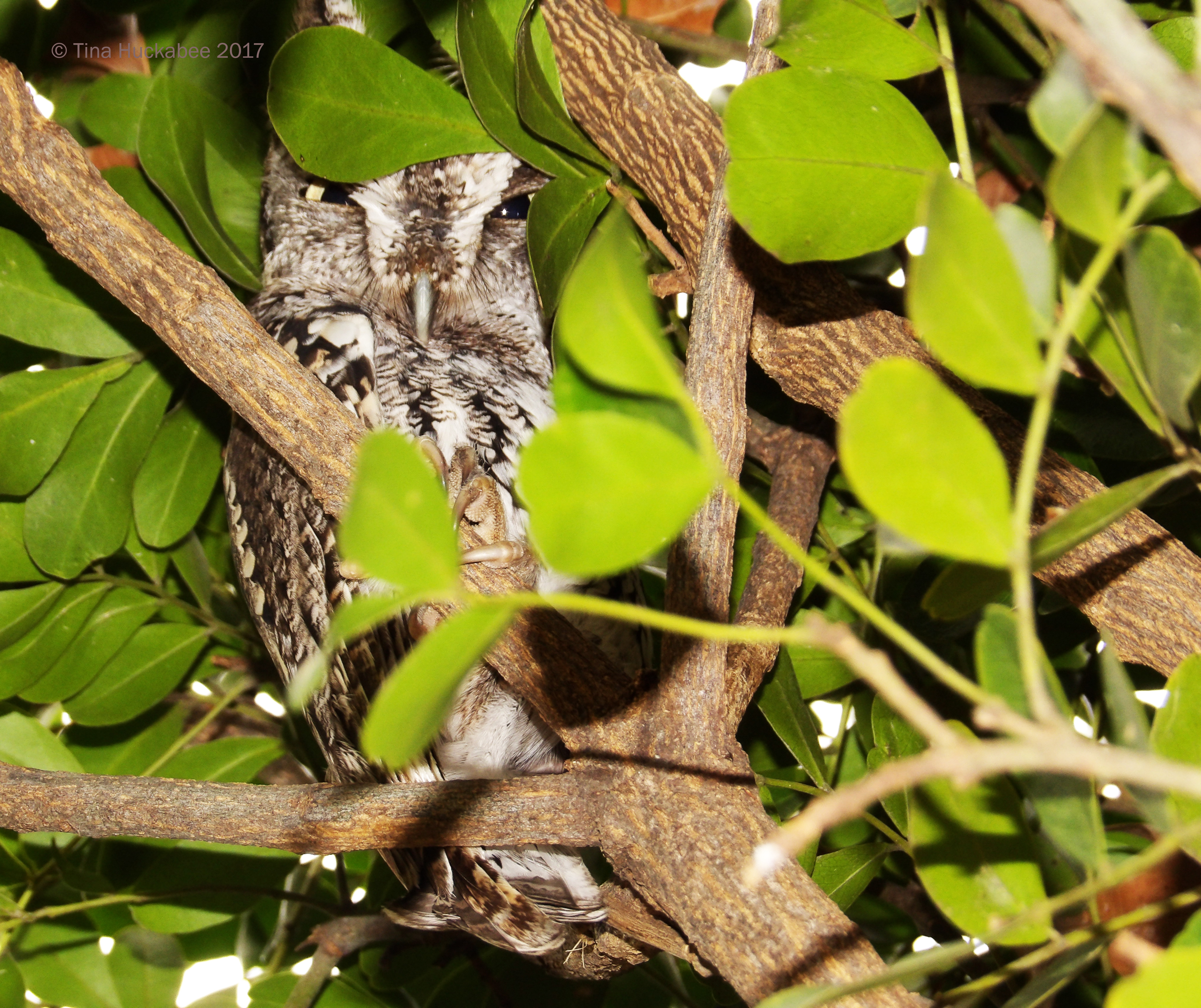
2016 Daddy Owl

As for Ms Opossum, I have no doubt that we’ll cross paths again.
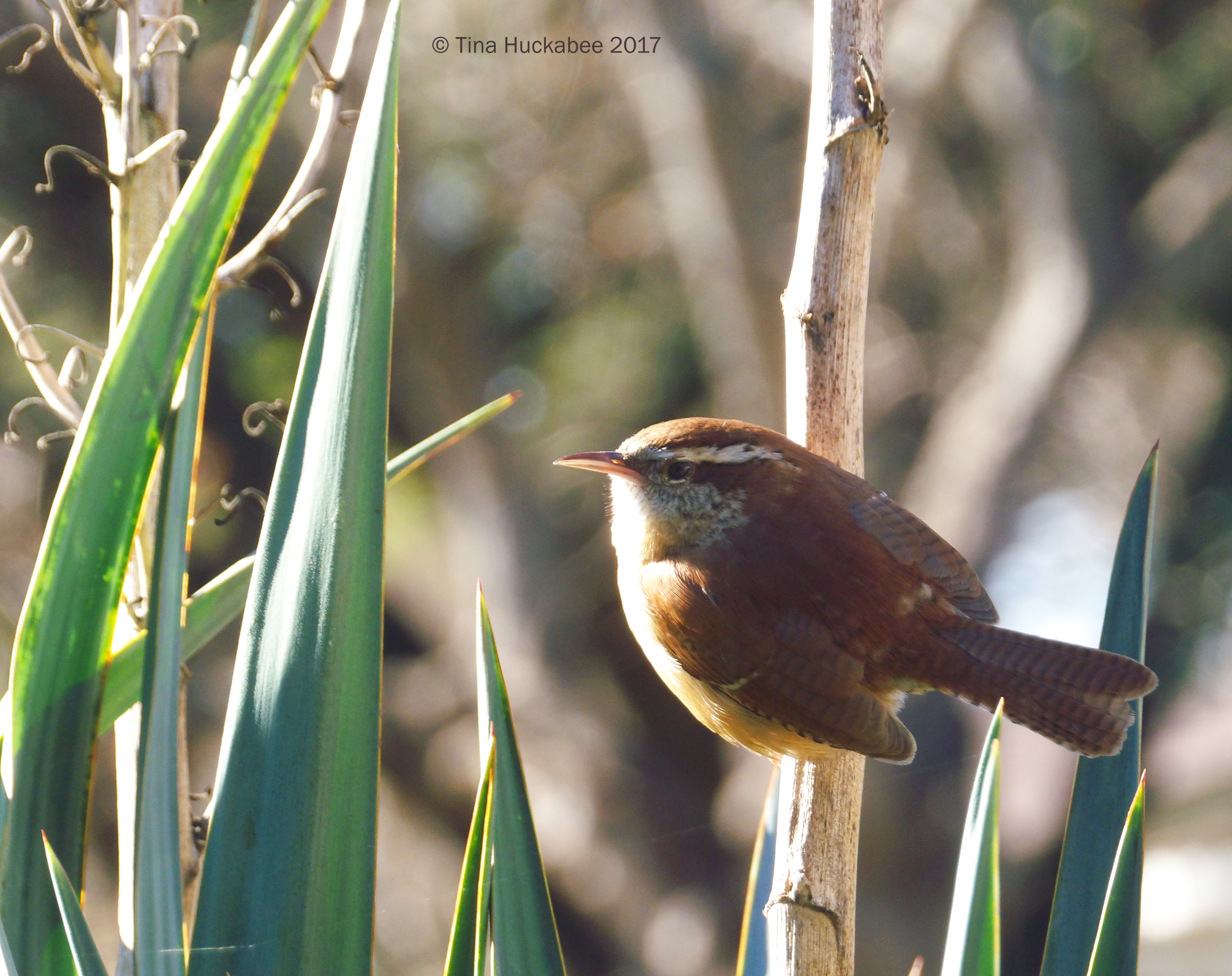
A Reason Not to Prune

I discovered a good reason to postpone pruning.  This Caroline Wren, Thryothorus ludovicianus, perched contentedly on the spent bloom stalk of a Soft Leaf yucca, Yucca recurvifolia.

These little songbirds are rarely still.  They flit constantly in the underbrush, looking for insects, flicking their tail feathers, and hopping from limb to branch to ground. This one, quiet and tranquil for a time, rested safely on the unpruned stalk, a testament to the gardener’s commitment to an unkempt, wildlife friendly garden and  a certain level of laziness.


Birds of Winter: Wildlife Wednesday, January 2017

Greeting the new year with my first 2017 post, I’m glad to kick 2016 to the curb–good riddance, what a difficult year–but I am glad that the birds in my garden are busy with their winter work of eating, singing, bathing, gearing up for spring flirting, defending territory and providing interest in the garden and entertainment for the gardener. It’s the first Wildlife Wednesday installment for 2017, where critters are wild, occasionally woolly, and always welcome.

Central Texas enjoyed a couple of nights of sub-freezing temperatures a few weeks ago, just enough to leave  the garden crinkled and wrinkled, foliage-deprived and bloom-less. On the up-side though, it’s easier to see the birds as they forage  in the undergrowth for winter sustenance and prepare their game-on for spring migration, spring wooing and summer chick-rearing.

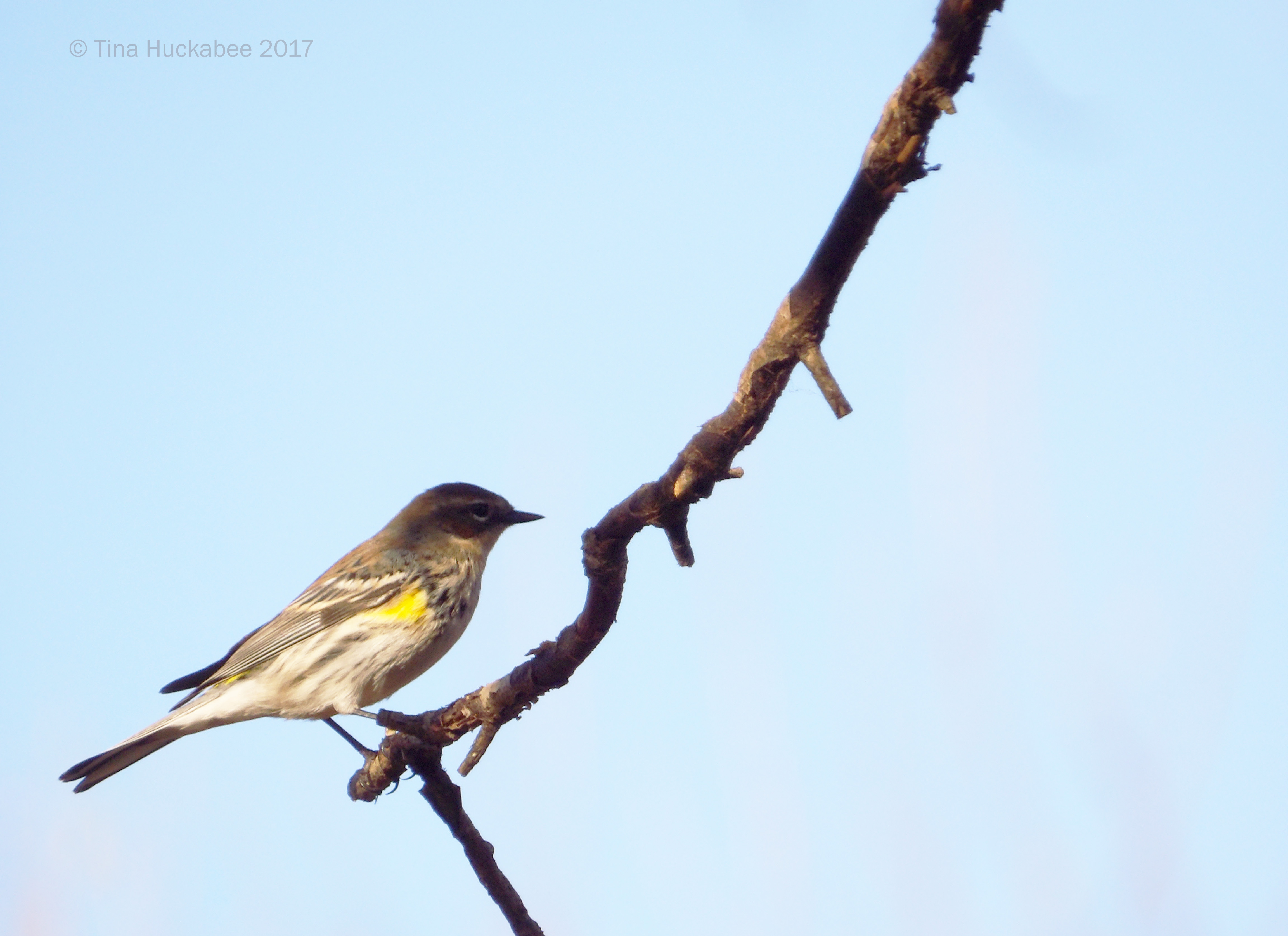
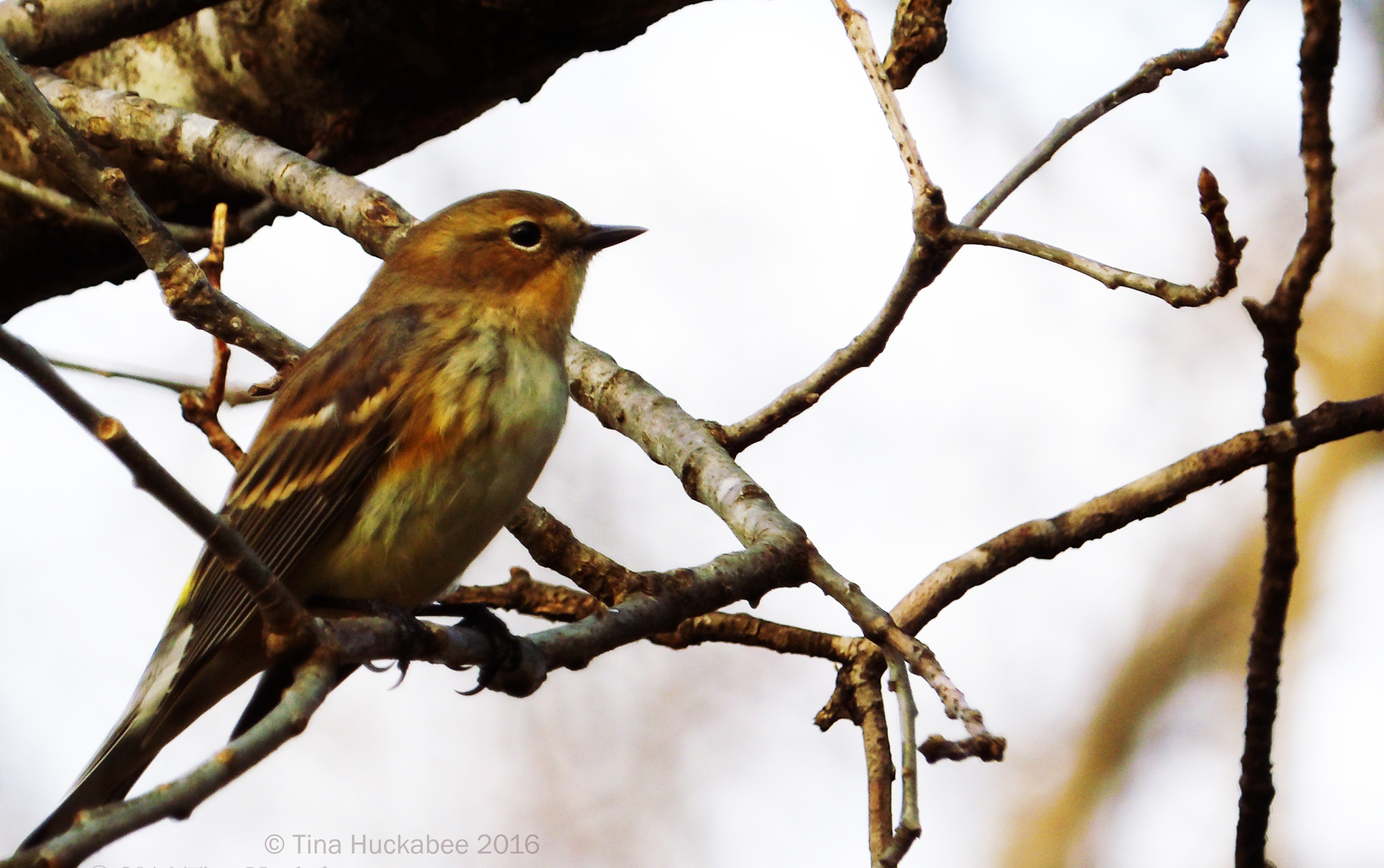
I’m observing and listening to winter Texan warblers again this winter–and pleased that I’ve learned a bit about their habits and vocalizations.  This past month, my garden has hosted several of the Yellow-rumped Warblers, Setophaga coronata.  So far, it’s mostly males in their winter plumage that I’m spying.  Flashes of sunny yellow and soft cheeps  in the trees are my clues in identifying these cuties as they fly between trees or perch on bare limbs.


I’ve no idea if this is the same fella, but he rested in the glow of the late afternoon light, which rendered  his colors a golden hue.

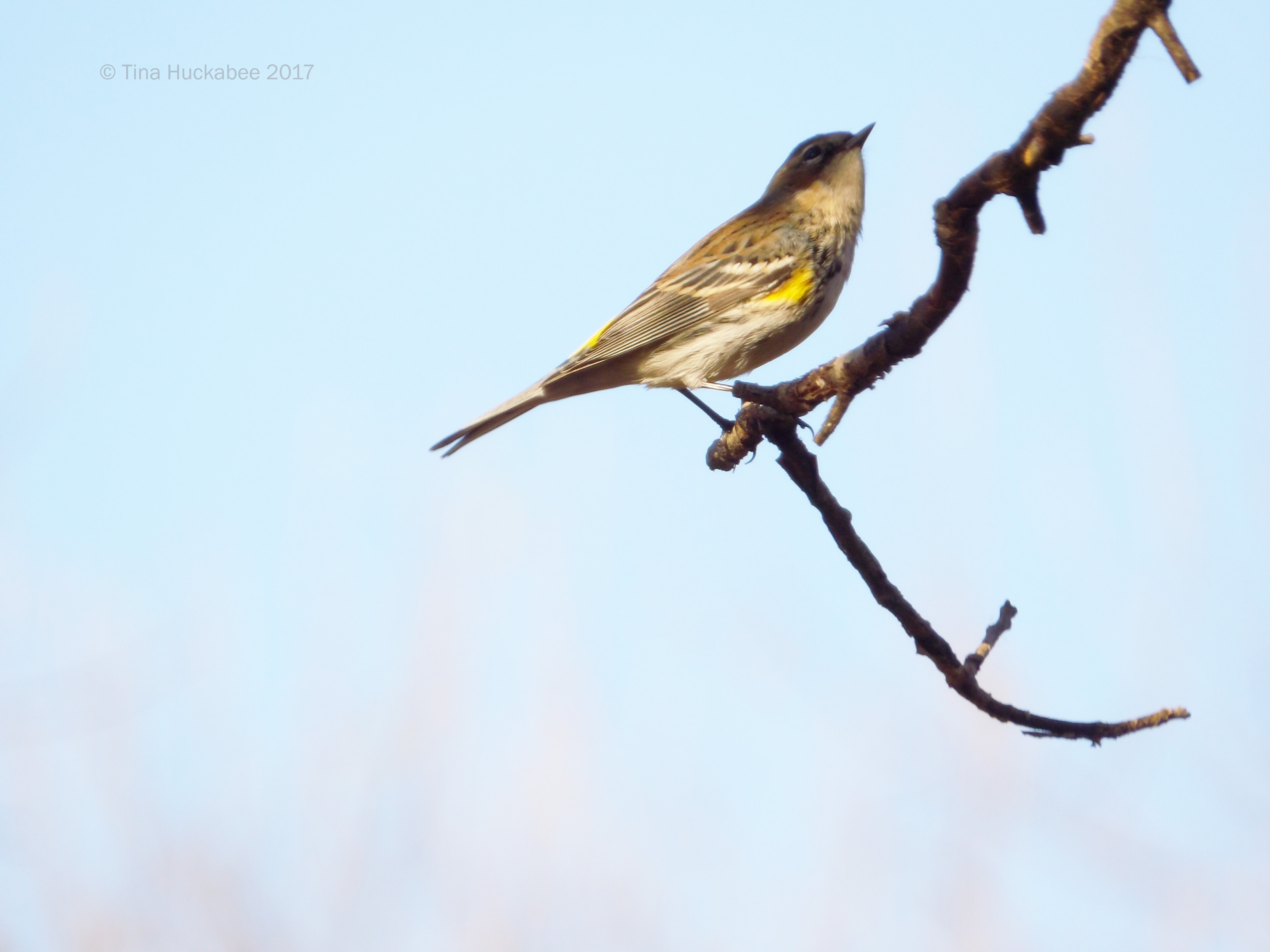
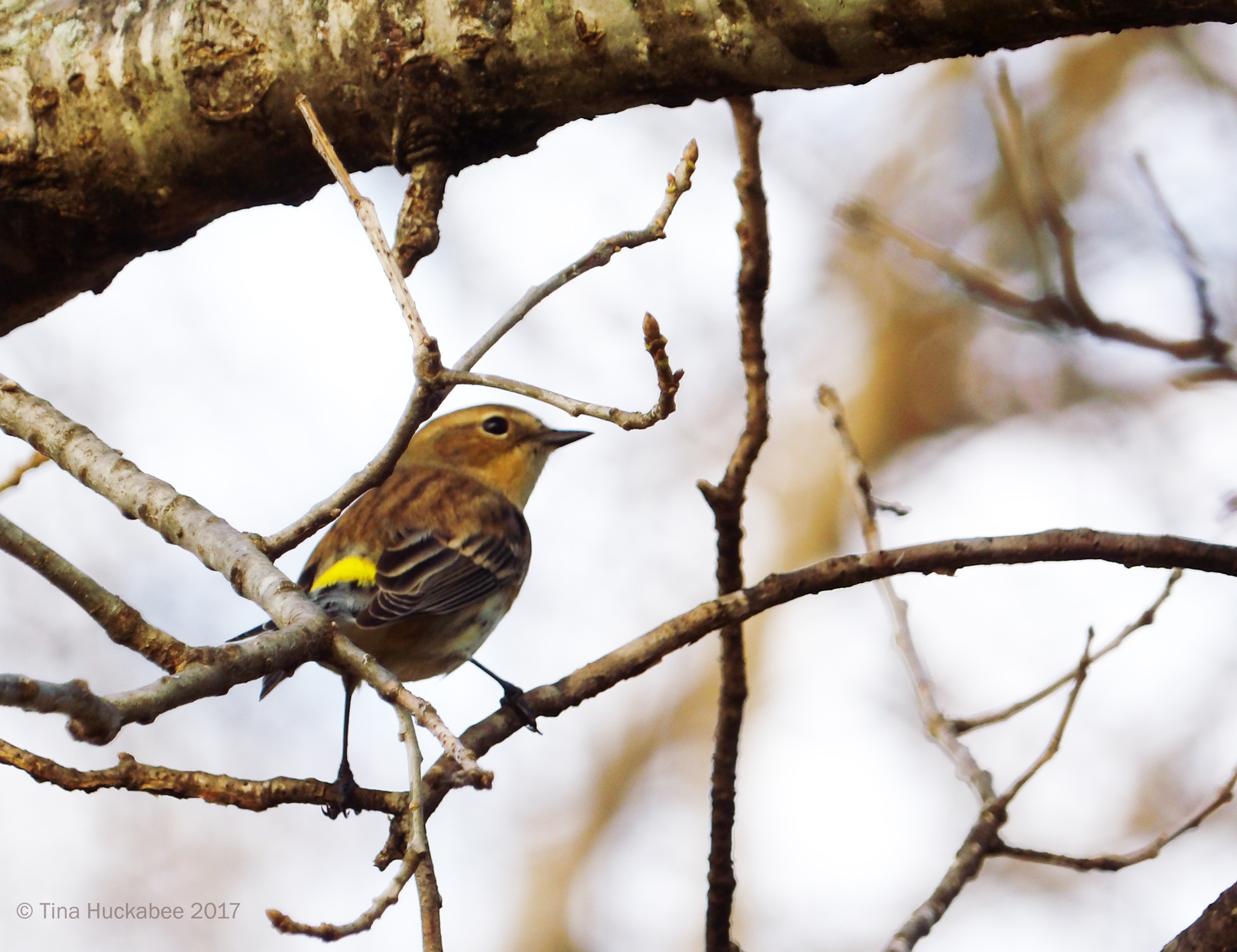
I especially like this shot,  as he points his yellow rump at me.  Avid birders call these North American songbirds Butter butts.  A silly and apt name, I think.

I believe that the Butter butts in my garden are the “Myrtle” subspecies common to the eastern part of the United States because my Butter butts have a white or cream-colored throat.  The “Audubon” subspecies common further west sports a yellow throat.


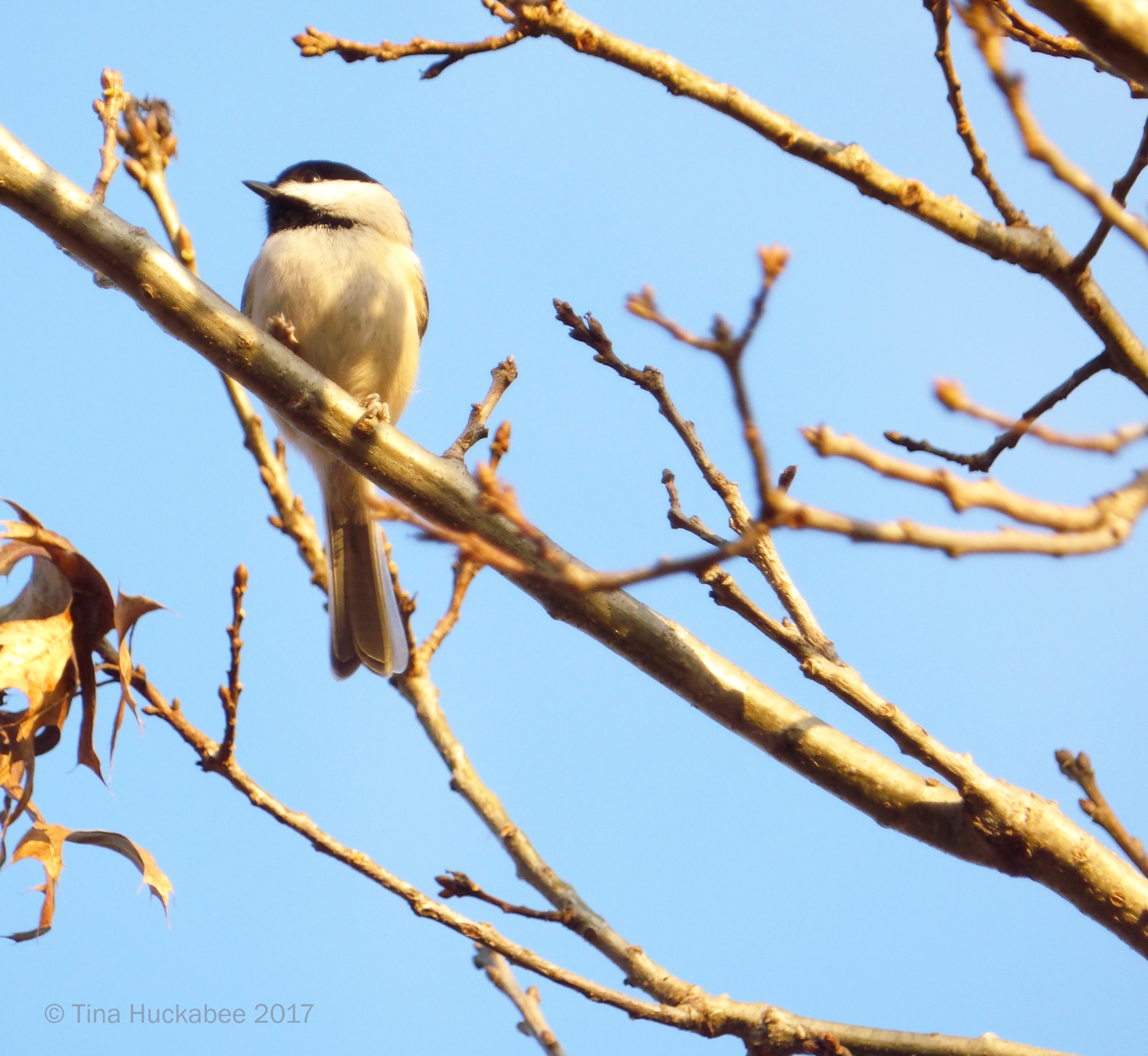
Many are my “favorite” birds, but the Carolina ChickadeePoecile carolinensis, really holds a soft spot in my heart.  From their pretty songs, to their decorative popping presence in trees, to their break-neck snatches of sunflower seeds from the feeder, these year-round residents are fun to watch because of their antics with one another and curiosity about their surroundings.


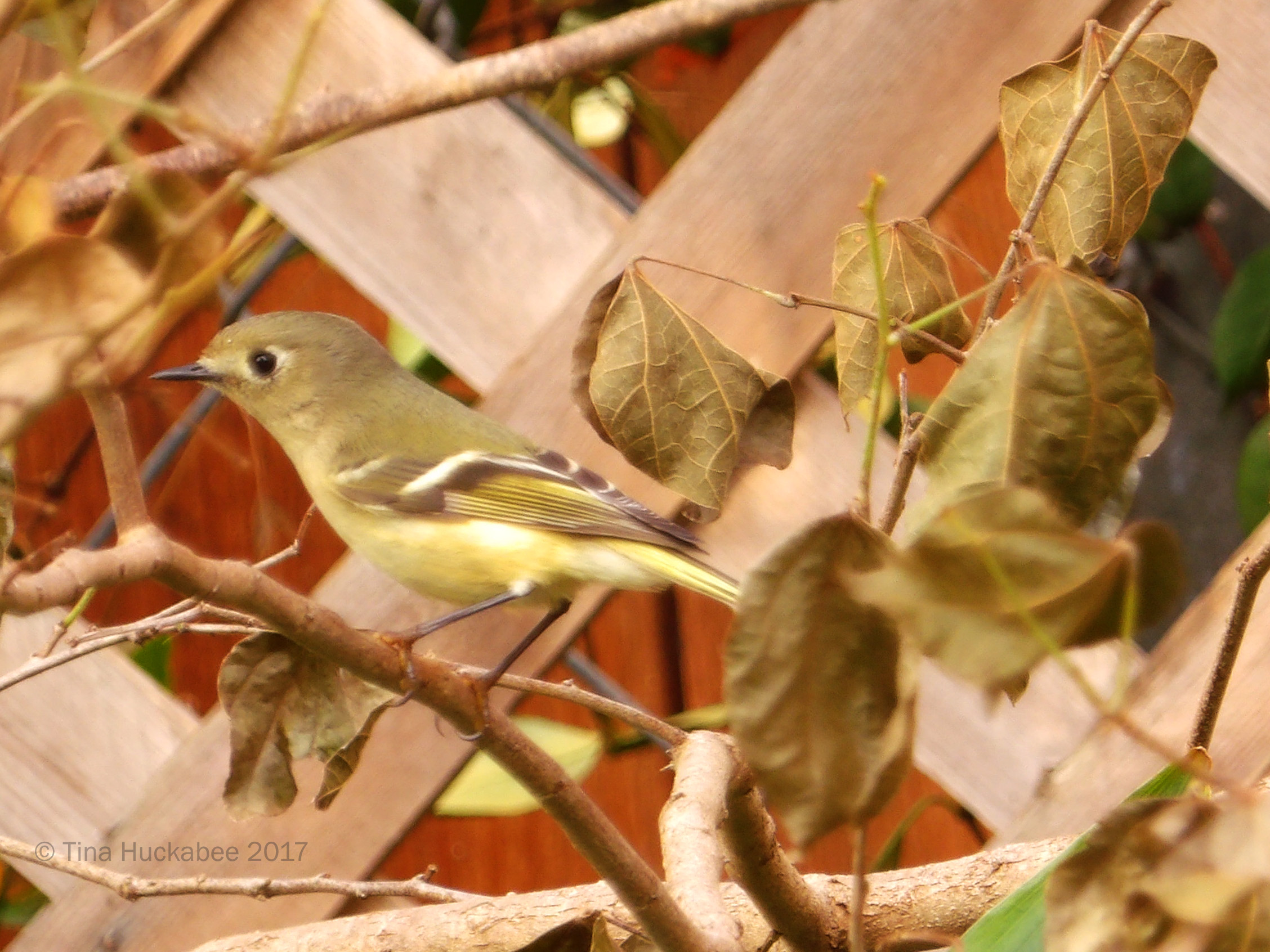
Thrilled this winter to have at least one Ruby-crowned Kinglet, Regulus calendula, in the gardenhe’s challenging my photography skills because he’s super quick flitting in the brush and shy after any movement I make.  He’s hard to shoot–that is if I’m aiming for a clear photo.  If you click on the name link (which takes you to the Cornell Lab of Ornithology page on this bird), you can see the red “ruby” crown in a photo.  For now,  I can only dream of getting that splash of crown color which is this species’ namesake. However, I can gleefully report that I’ve seen the red stripe atop his darling head through my binoculars.  My goal this winter is at least one shot of the ruby crown on the Ruby-crowned.

I think there might be a female coming in for visits too, but for now, it’s all about the guy and his red crown.


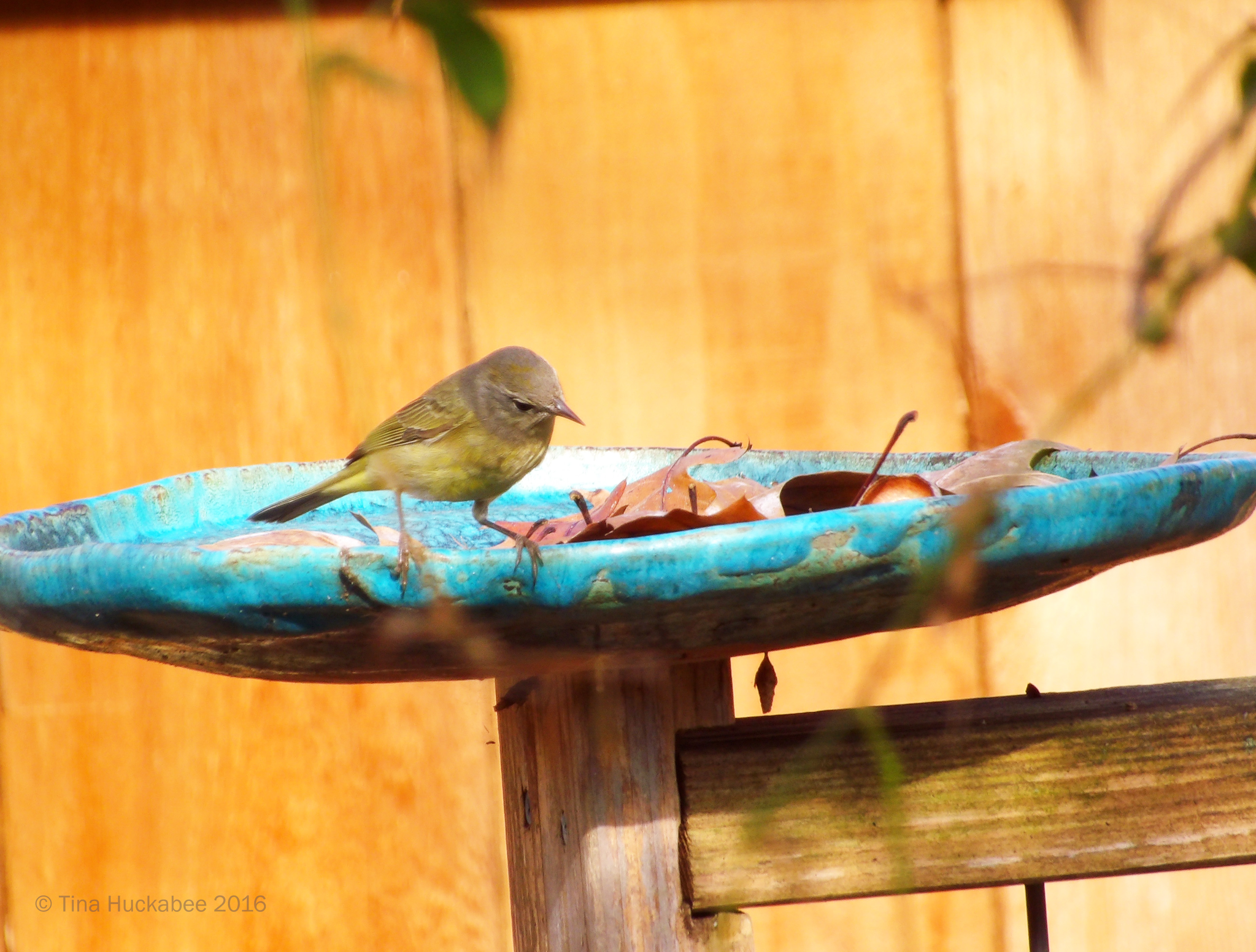
Several Orange-crowned Warblers, Oreothlypis celata, are currently hanging around, much as they did last winter. I’ve observed two males and a female.  Like most other warblers, their movements are fast and their body language–all head tilts and swishy tail flicks–charming.

A butterfly chrysalis hangs below the blue bowl, just to the right of the vertical wood post. I didn’t see it until I downloaded the photos.

The Orange-crown males have an orange crown (similar to the red crown of the Ruby-crowned), which appears as a little bird mohawk when a girl bird, or rival guy bird, needs impressing. I haven’t seen the orange crown so far this winter, but did on a regular basis last year with those who visited.


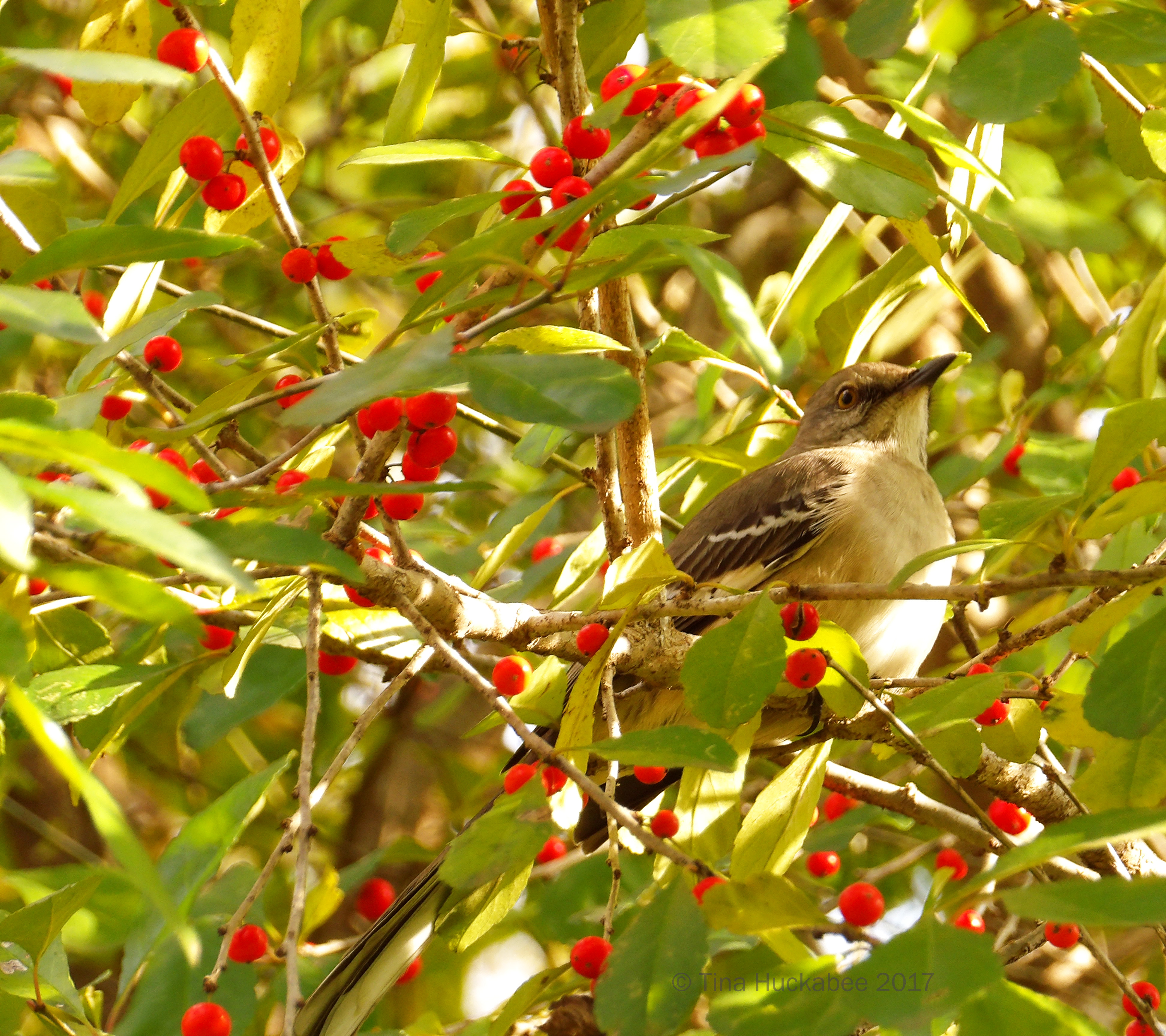
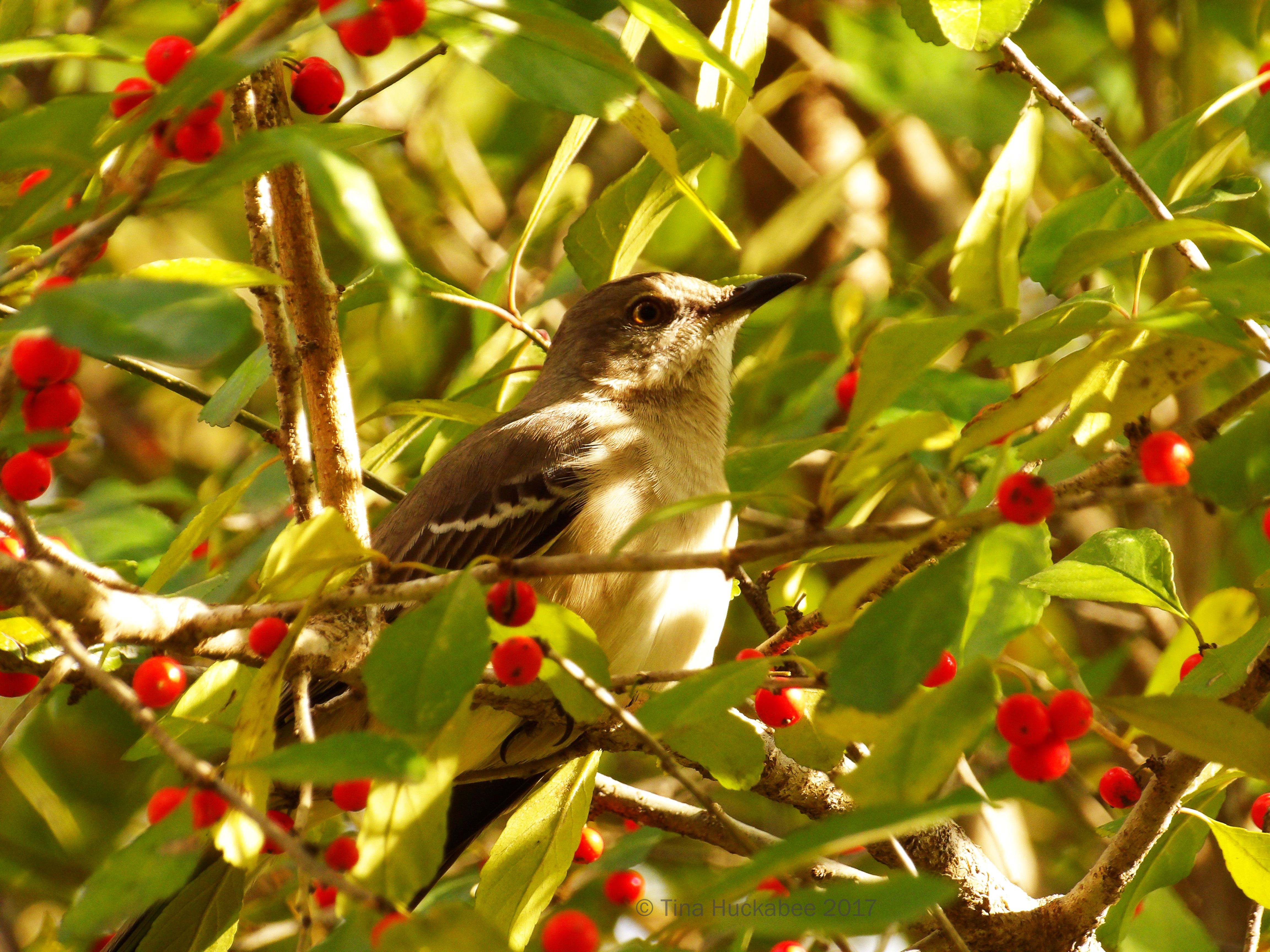
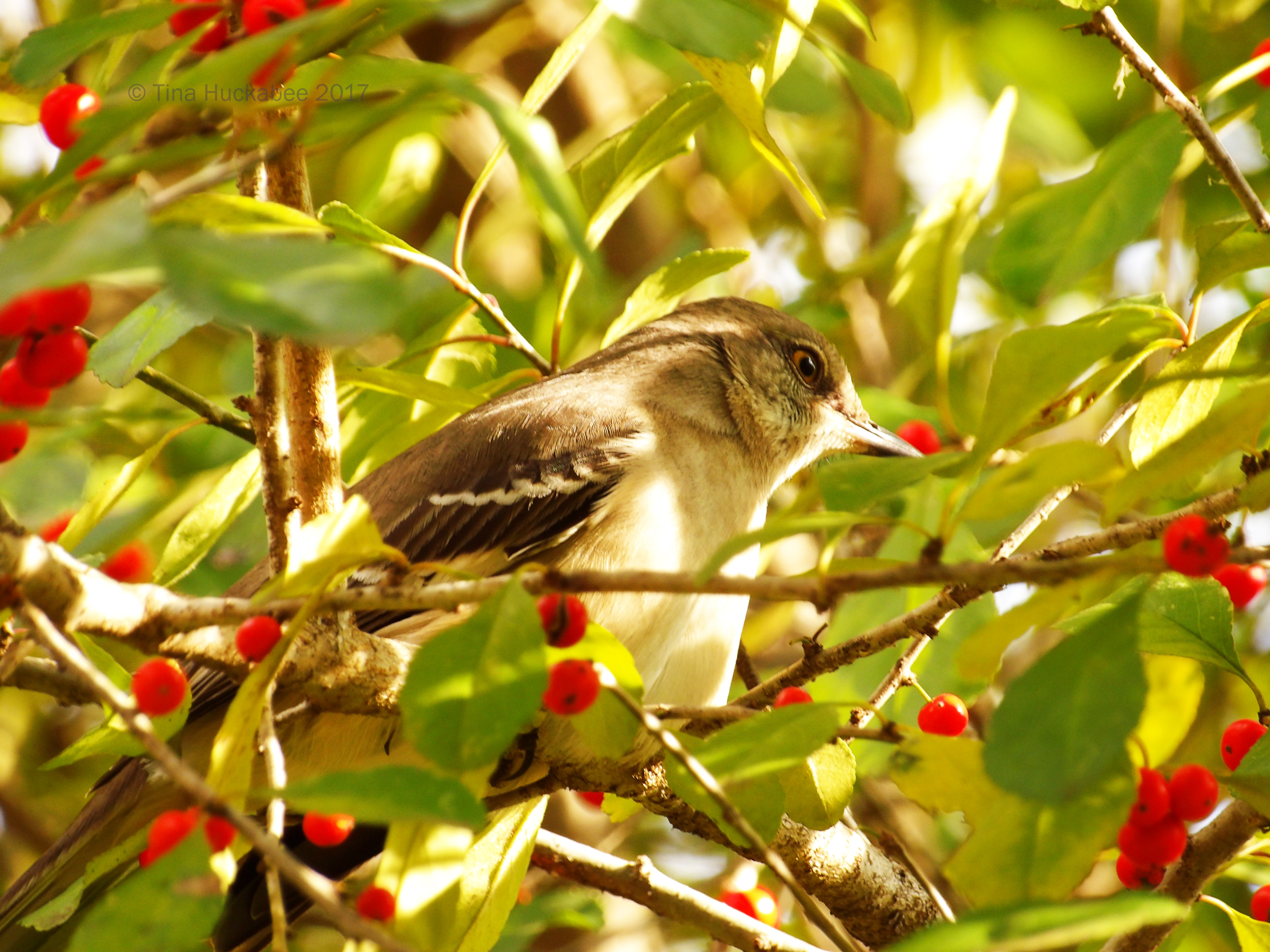
I was chasing the male Ruby-crowned Kinglet one afternoon for a photo, when a contentedly berry-munching Northern MockingbirdMimus polyglottos stopped me in my tracks.  Nestled in the branches of a native Possumhaw tree, Ilex decidua, the Mock gobbled berries within easy reach.  The Possumhaw is a small tree which produces beautiful (to gardeners) berries during winter and is a favorite of a variety of wildlife, including my friend, The Mock.

The Mockingbird is the state bird of Texas and known for its vocalization mimicry and beautiful songs.

This Mock was comfortable as I stood close, probably because I told him how pretty he is.


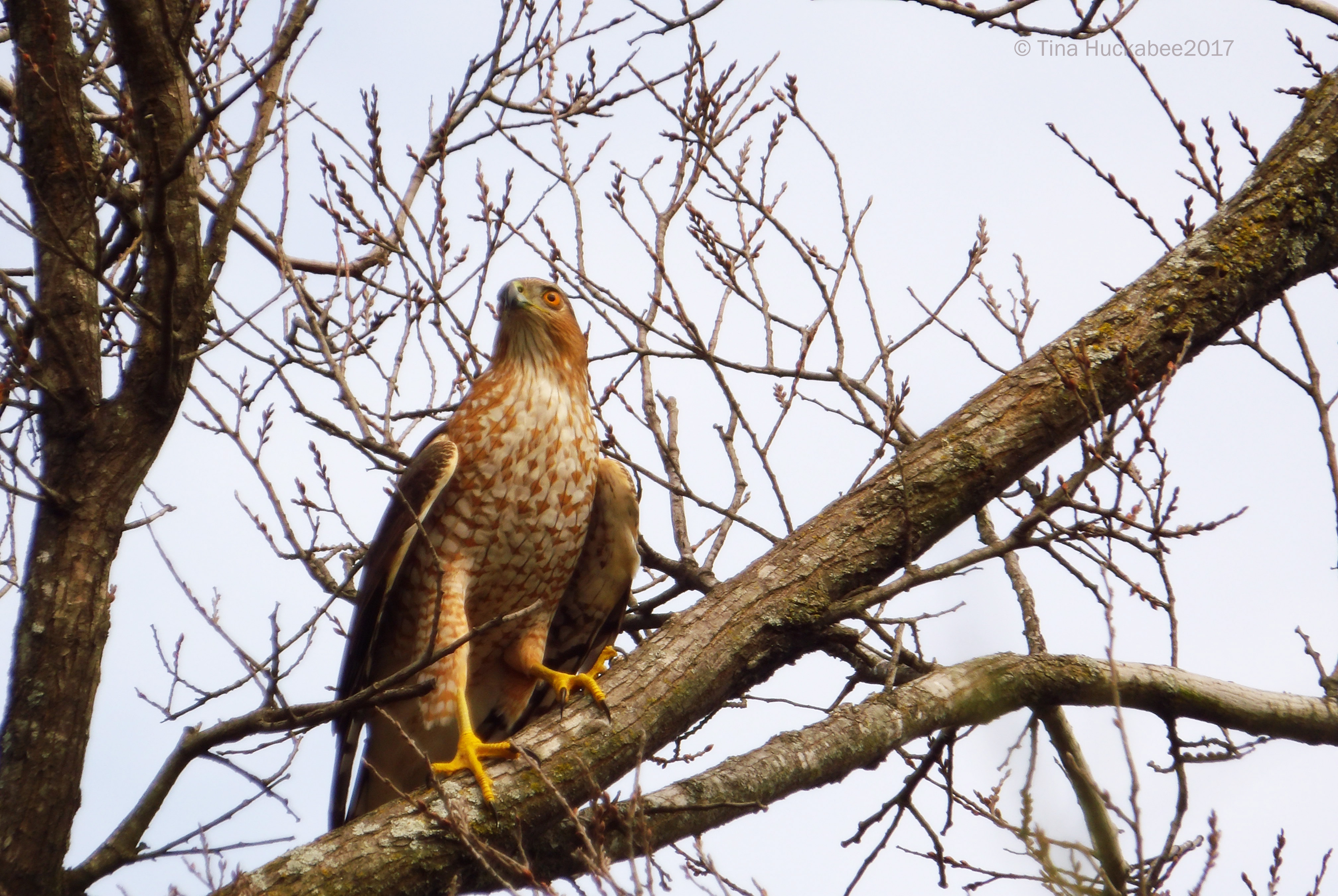
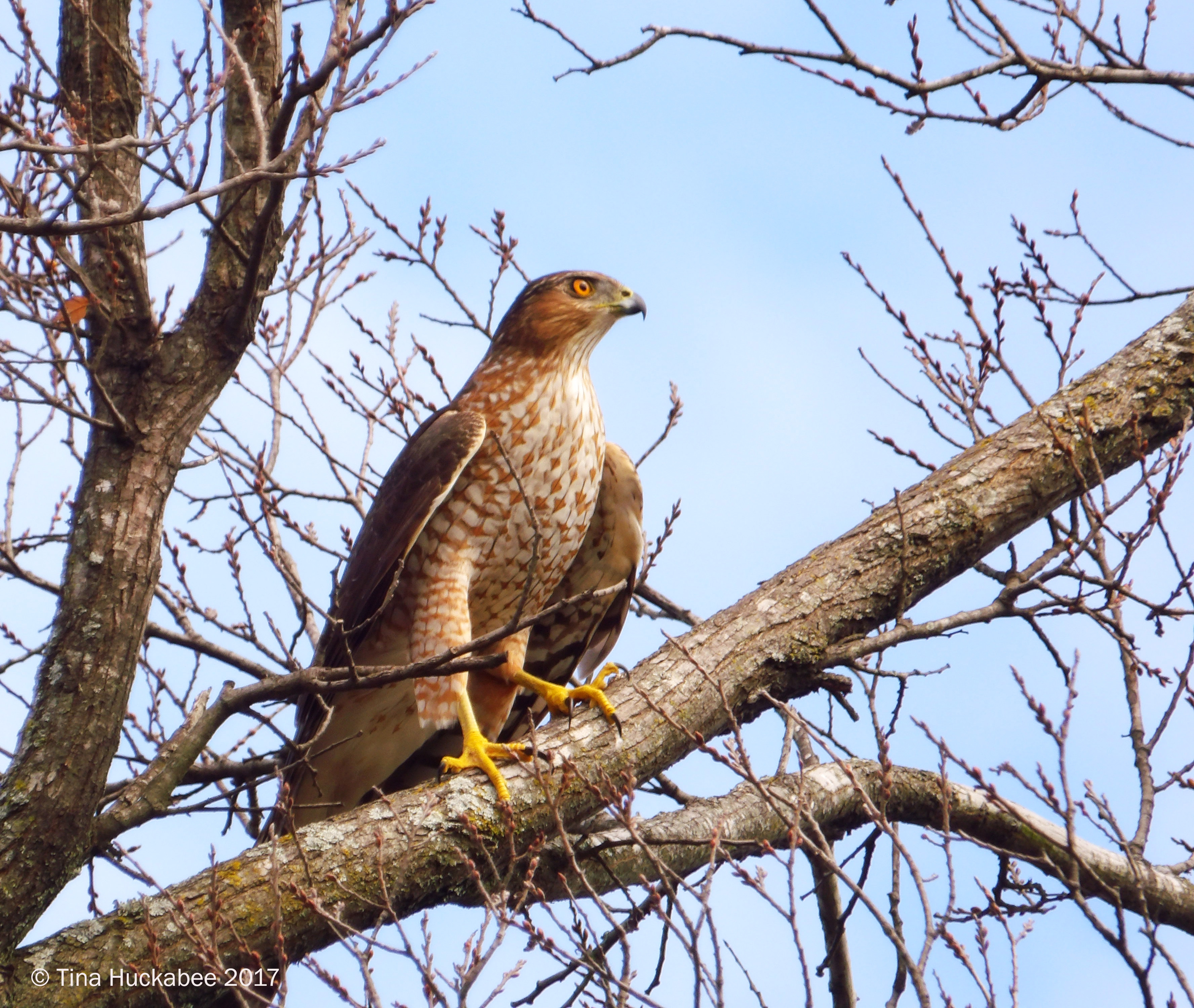
And hoping to catch and devour any, or all, of the above was this handsome Cooper’s HawkAccipiter cooperii.

Another year-round resident in urban Austin, Texas, I see these and other raptors regularly in the neighborhood, flying from tree to tree, scaring the prey birds witless.

This gorgeous one perched in my back neighbor’s tall tree, remaining for several minutes, surveying its realm and allowing me to get some clear shots. The birds in my back garden remained very quiet for a time….

Wishing you a happy new year, full of wildlife in your gardens and peaceful interactions everywhere. Did wildlife visit your garden this past month? Please post for January Wildlife Wednesday. Share photos and stories of your garden wildlife to promote and appreciate your region’s natural habitat and diversity. When you comment on my post, please remember to leave a link to your Wildlife Wednesday post so readers can enjoy a variety of garden wildlife observations.

Happy wildlife gardening!