Wildlife Wednesday, January 2015

The gloom and doom of winter has set in.

I’m such a spoiled gardener.  In Austin there are endless sunny skies, balmy temperatures most of the year, rain off and on in good years and yet, when it’s a little bit chilly, I whine.  I get cold, then lazy about gardening chores that I know require doing, like raking/mulching/composting leaves.  I positively detest that particular gardening job and this year, the oak trees are hanging on to their leaves with all arboreal might, so that task is dragging on.  I’ve  transplanted a couple of perennials, but haven’t made any progress on that walkway which wants remulching or moving those rocks, which need transport to a different place in the garden.

In spite of my laziness in the garden, I have spent time observing and admiring visiting critters–they never fret about the damp and chill and they never cease to fascinate me. They roll with whatever weather presents and thank goodness for that.  Welcome to the first Wildlife Wednesday for 2015.  There are no fireworks today, just some nice insect happenings and a little bird action to report.

Firstly, let’s take a gander at some in the Insecta class: a handsome member of the order Orthoptera and some lovely Lepidoptera.

I’ve seen several large grasshoppers in the past few months, but none so beautiful as this Leather-colored Bird Grasshopper Schistocerca alutacea.

IMGP3075.new IMGP3076.new

He hung out one day, mostly on the window screen, though he flew away into the adjacent garden when I annoyed him with my hovering.  The information I read about this species suggests that this is a male–the females tend to duller colors. I spied several of those blander sorts earlier in the fall.

This Queen ButterflyDanaus gilippus, is one of the Queens that I brought into my house as caterpillars and nannied until they emerged as adults.

IMGP2992_cropped_2999x2949..new

I observed one or two Queens around my gardens in the week after I release the the adults–and saw them no more.

There are a number of yellow butterflies common in Central Texas in summer/fall/winter. They usually fly so fast, I’m unable to catch them in photo form.   I love to watch them careening through the gardens, flying swiftly–first low, then high– in rapid succession.

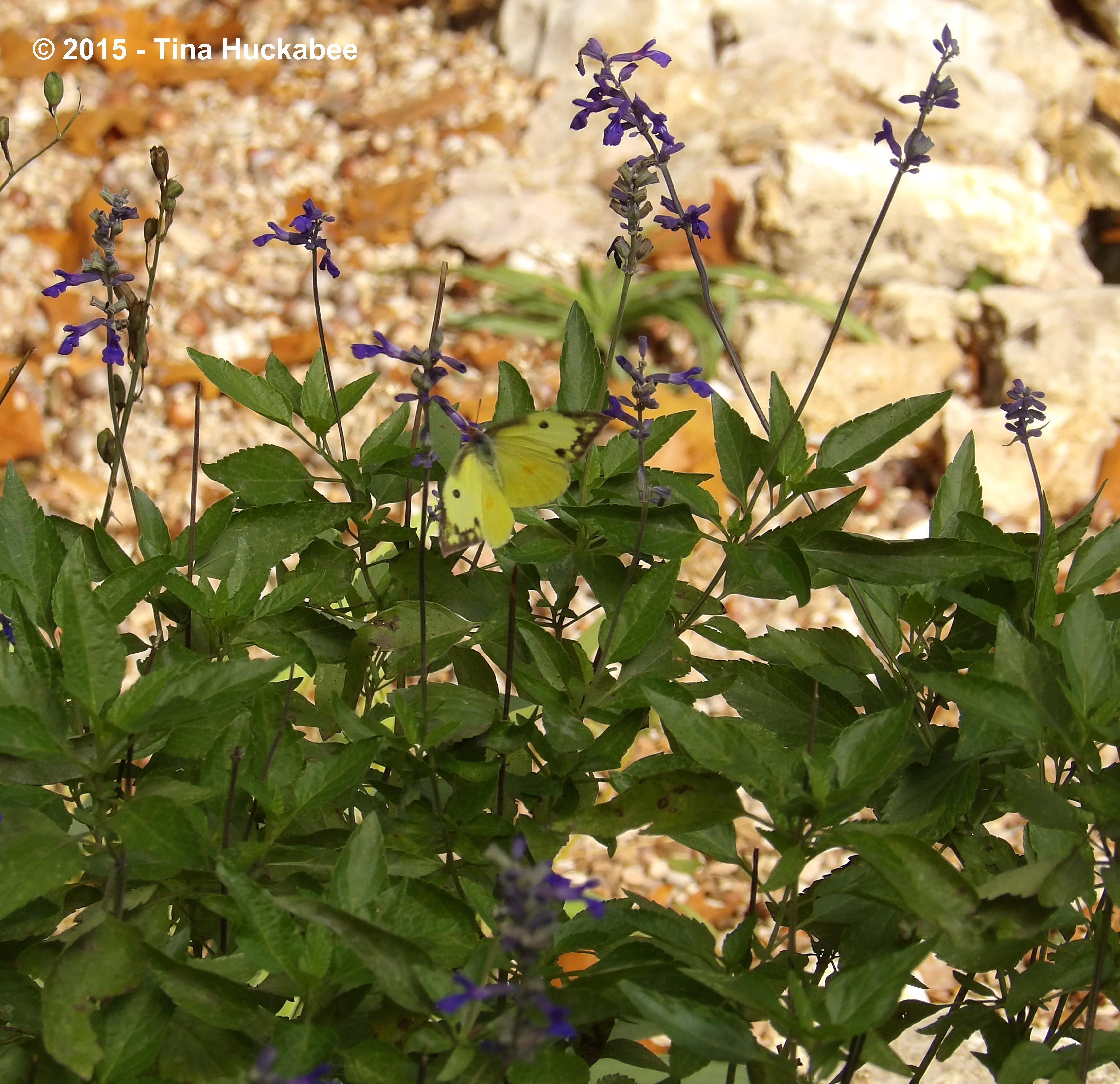
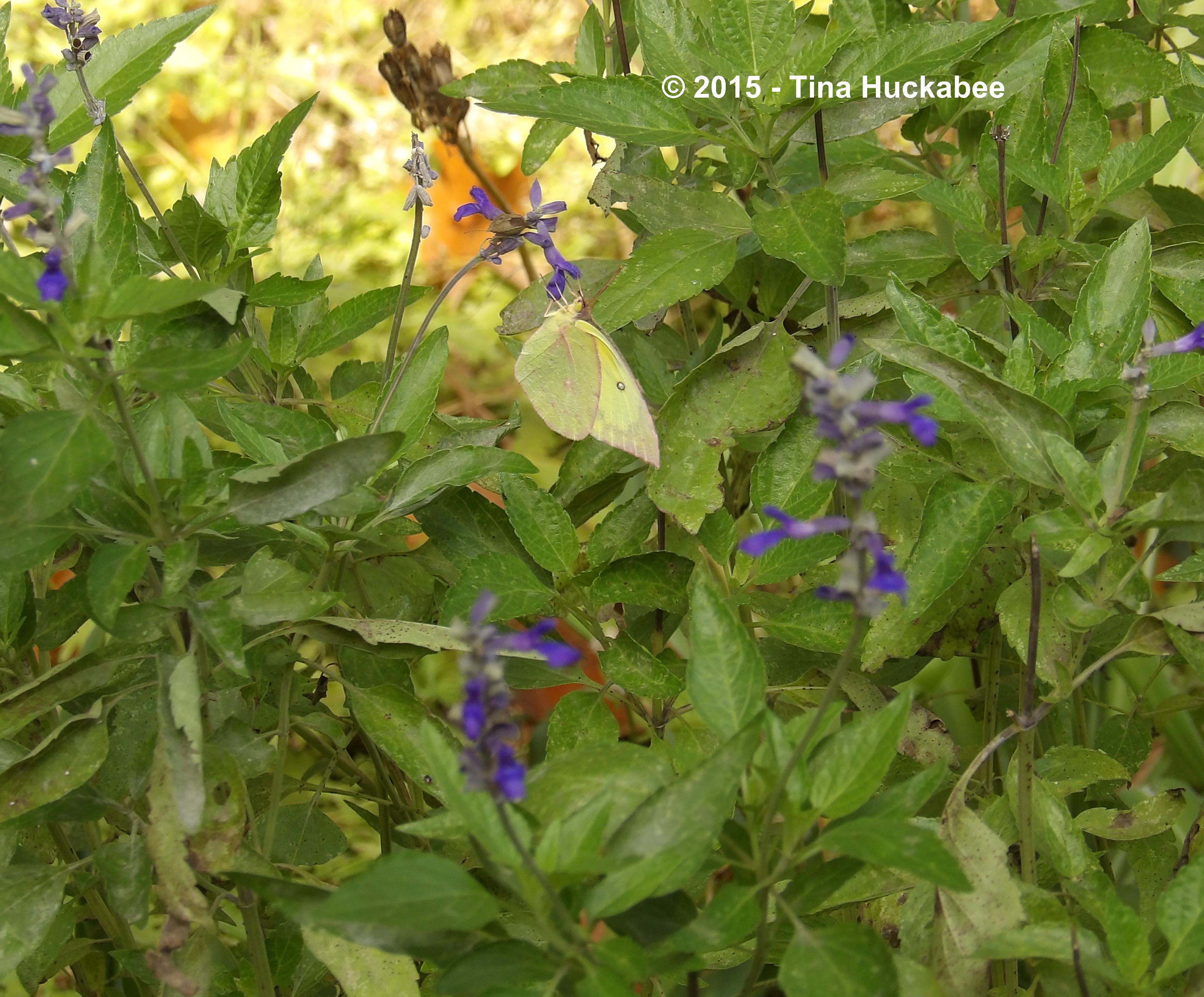
This Southern DogfaceColias cesonia, 

IMGP2993_cropped_3424x3314..new

…was a lucky set of shots for me as it flew low to the ground at the Henry Duelberg Sage. According to austinbug.com the name “dogface” comes from the way the butterfly looks when viewed from the side.  Supposedly, the butterfly looks like a cartoon dog face facing to the rear, with a strong black dot for the eye.  I like the next comment, Because of variability, the resemblance to a dog profile is sometimes left up to one’s imagination.

IMGP2994.new

I must be full of lack of imagination because I don’t see the dog face thing at all.
IMGP2996_cropped_3489x2890..new

Then again, I also have trouble with constellations. Really? That’s a hunter?  And those are his dogs?

I was thrilled though to get several good photos and I’ll call it a day vis-a-vis the dogface.

Red AdmiralVanessa atalanta, often appear during cool fall and winter days.

IMGP3028.new

Mostly they land and pose, sunning themselves.  That’s just fine with me.


I have mixed feelings about bird feeders.  For a while  I didn’t feed the birds, subscribing to the idea that there are plenty of seeds and berries available in my gardens. Birds relying on what’s available to them in their natural habitat is a gardening paradigm that I truly believe in.  But,

IMGP3162.new …it’s fun to have a feeder and see who shows up for a nibble; in this case, a male House Finch, Haemorhous mexicanus, is at the snack bar.

One cold snap a couple of years ago, I got all soft and tender and felt sorry for the birds. I bought a basket feeder and commenced to regularly supplying seed-infused suet, primarily during our cool season. (I shudder when imagining how the suet would turn to goo in our hot summers.  Gross.)  I also refilled two feeders I’d left empty for some time and continue to do so.  I really enjoy the variety of birds, mostly winter/year-long residents of Central Texas this time of year,  who swoop in and out of the garden, munching away on sunflower seeds  I live in a dense urban area and my feeders shouldn’t negatively impact native birds by the feeding of more aggressive species.  At least, I hope that’s the case.  There are still plenty of avian visitors who feed on the seeds from spent blooms, like this female Lesser Goldfinch,  Spinus psaltria,M0013592.new

…who’s gorging on Goldeneye seeds.  Earlier in the fall, the Lessers were all over the spent Goldeneye daisies as they seeded out. I guess the Lessers flitted off to better feeding grounds because they disappeared for a while. But they’ve returned to my gardens recently and I’m glad to welcome them.  Along with stops at the sunflower feeders and the Goldeneye daisies, I caught this little male Lesser bathing.

IMGP4163.new

IMGP4159.new

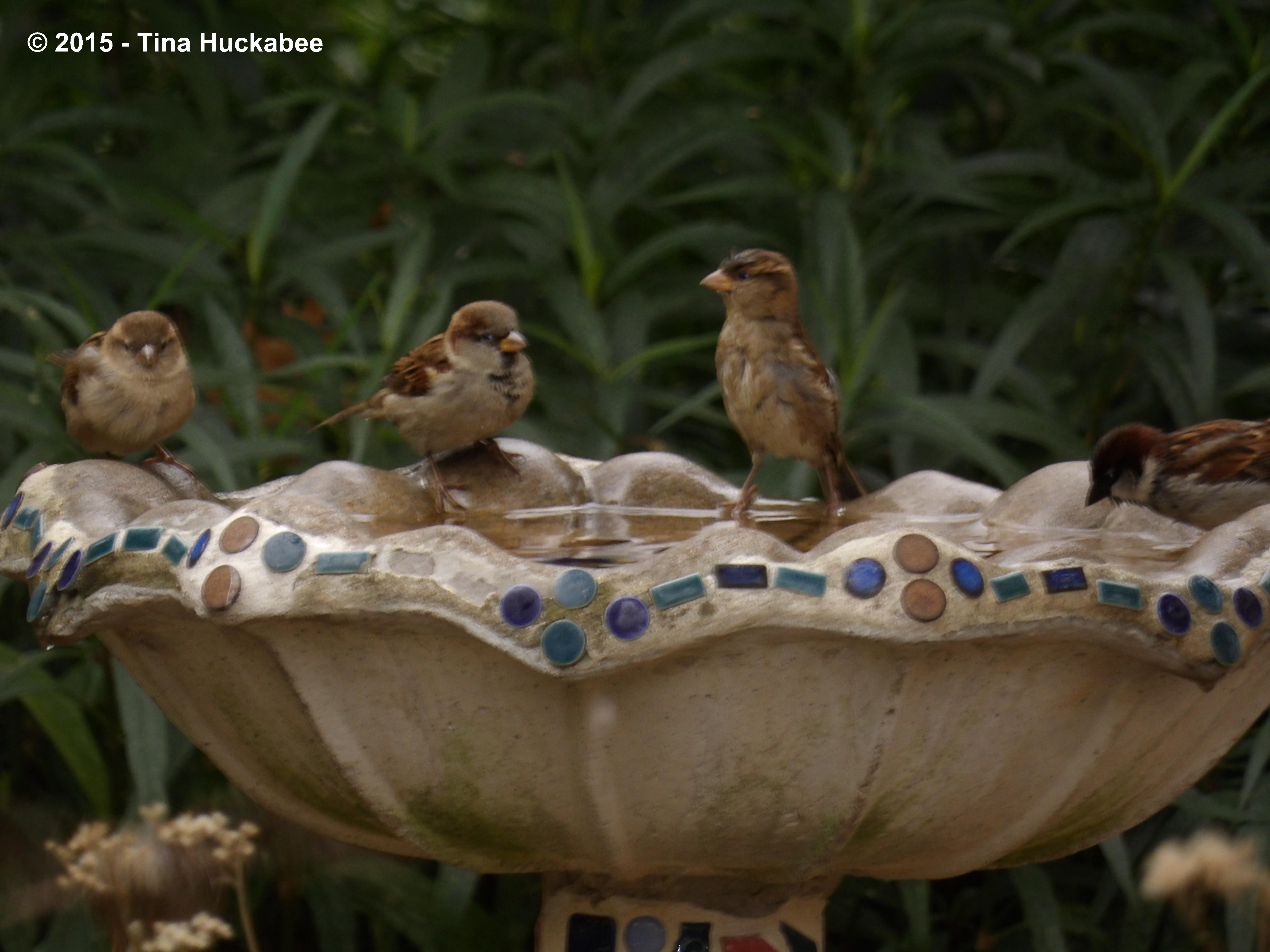
Can you see him?  He’s that little smidge of yellow at the left side of the bird bath, sharing his bath with a group of House Sparrows.  House Sparrows, Passer domesticus, are not my favorite bird, though ubiquitous in urban gardens. An introduced species, they out-compete native birds, who tend to shyness and often have more specific feeding and nesting requirements. Proliferation of House Sparrows is why I originally stopped supplying seeds to the local birds.  I grew tired of feeding them–House Sparrows are rats with wings–is my general opinion of these birds. However, they haven’t been too obnoxious recently.  One day, I caught them in a veritable bird bath orgy.
IMGP3213.new

IMGP3214.new

IMGP3215.new

 I couldn’t help but capture their fun.  Confession:  I love the chatter of House Sparrows; it’s noisy, fun, and playful.  There.  I said it.

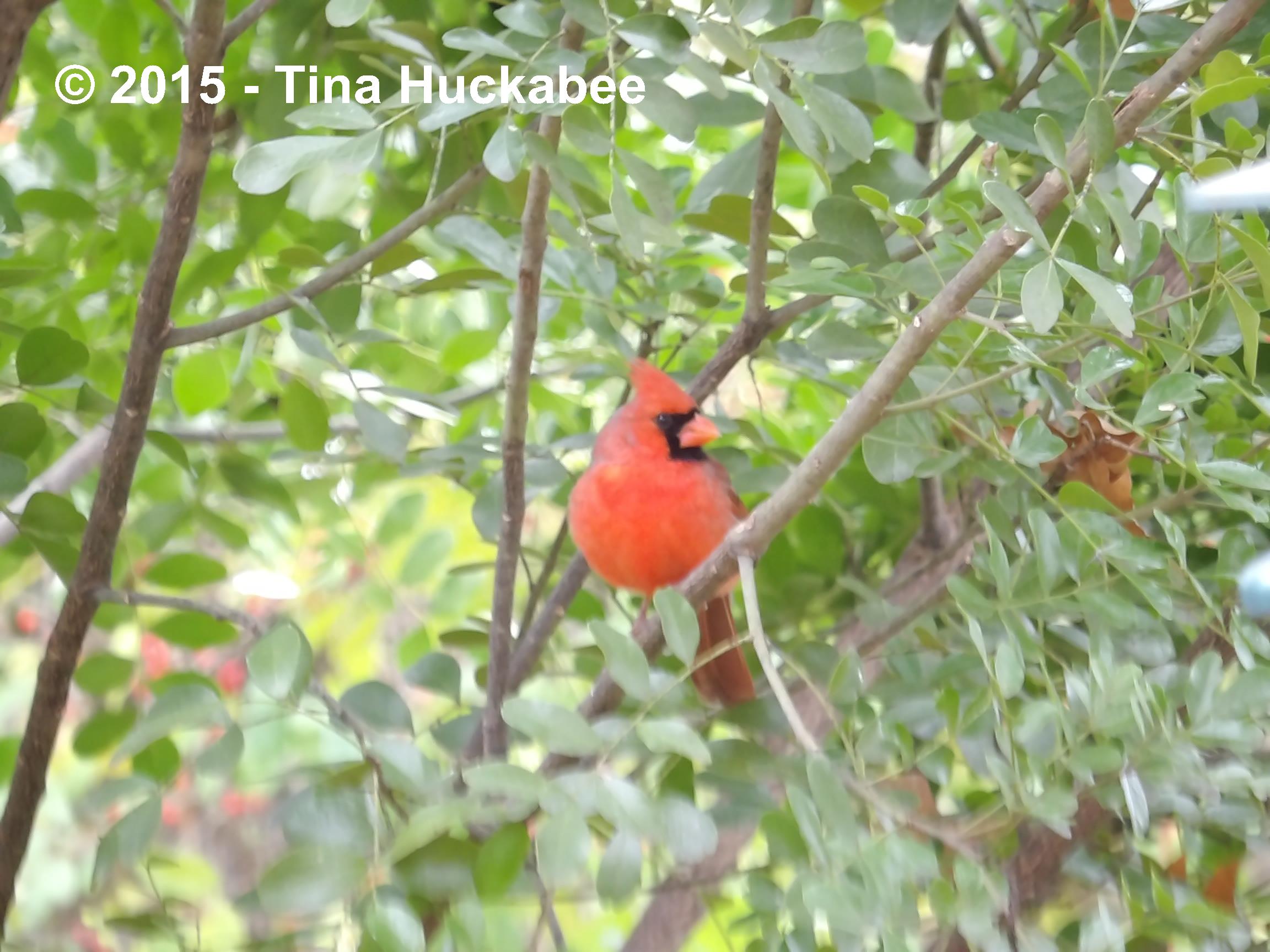
A Northern Cardinal, Cardinalis cardinalis, graces the gardens this early part of winter. Visiting the gardens regularly, this handsome male in various situations and activities, IMGP3160.new

M0013493.new M0013980.new


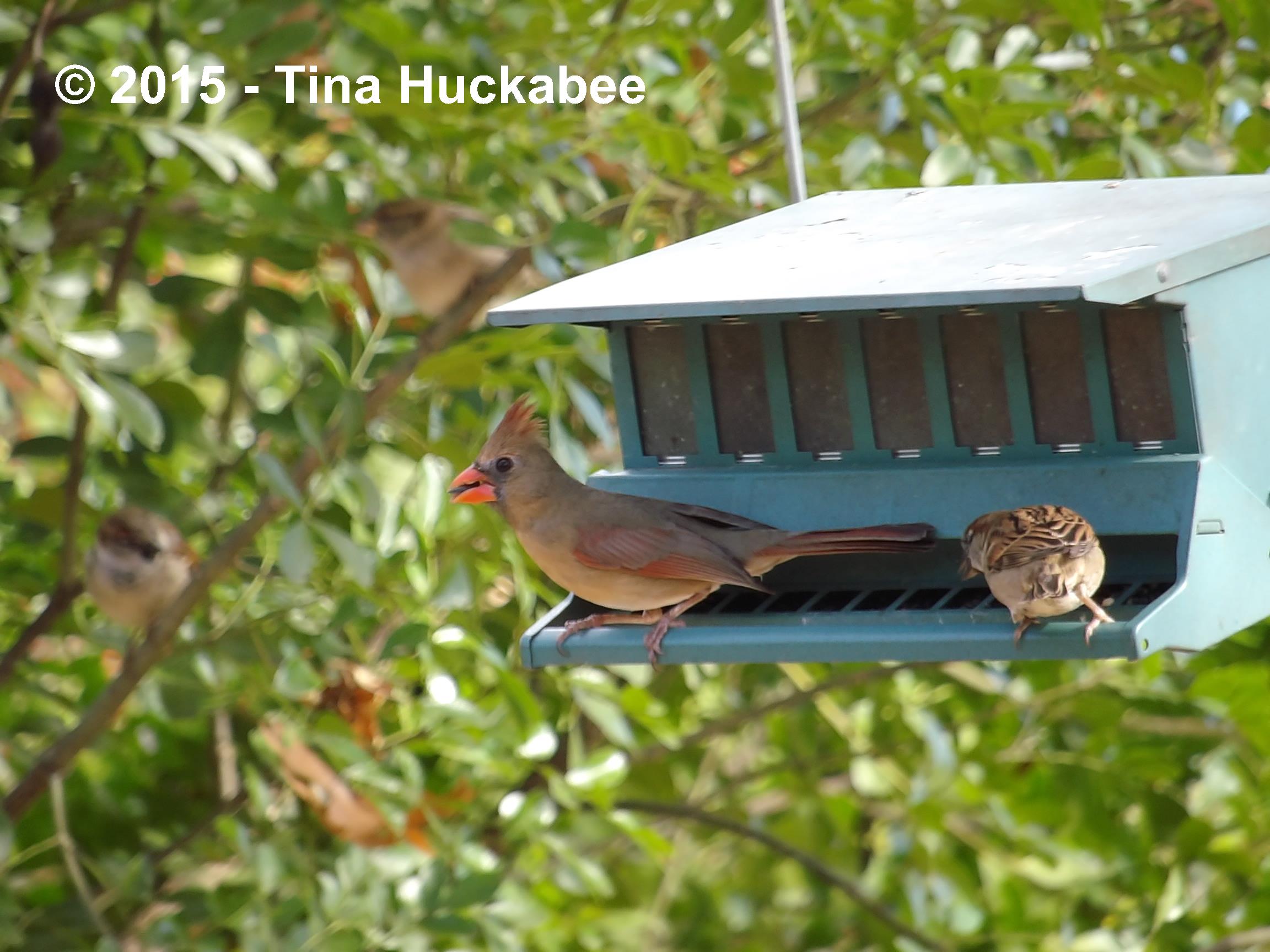
…and his Lady, who shares the feeder with a sparrow.
 

M0014111.new

M0014128.new

I’m not 100% positive that these two beauties are a mated pair, but I’m fairly sure.   In this less colorful time of year, both birds certainly add a dash of color to the landscape.

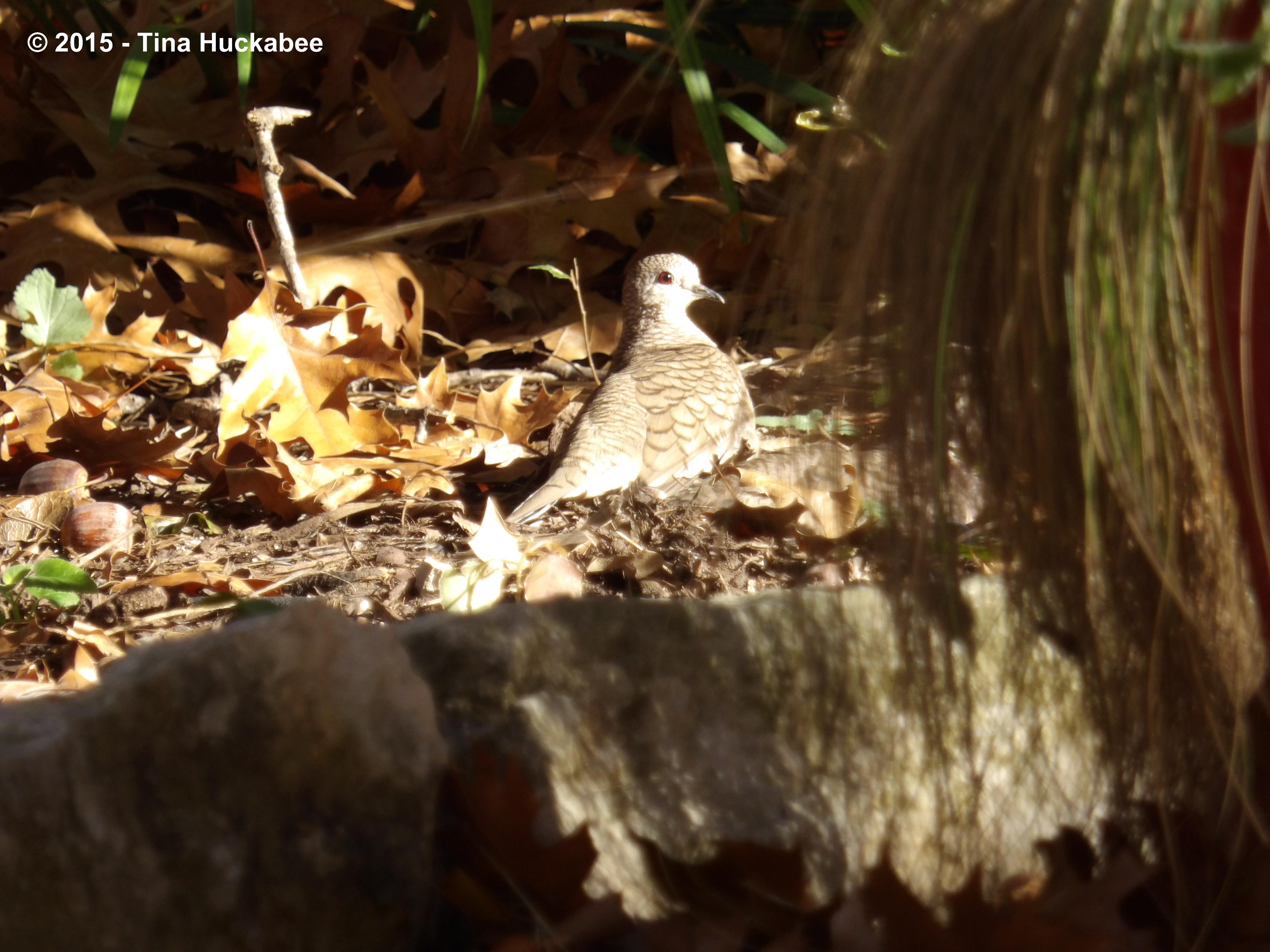
I’ve always had a soft spot for the Inca Dove, Columbina inca, but don’t see them in my gardens often. They’ve been hanging around in recent weeks and favor resting the Retama tree,

IMGP4155.new

…but I also see them on the ground, sifting through the garden detritus,

M0034214.new

IMGP4228.new …and warming in the sun.

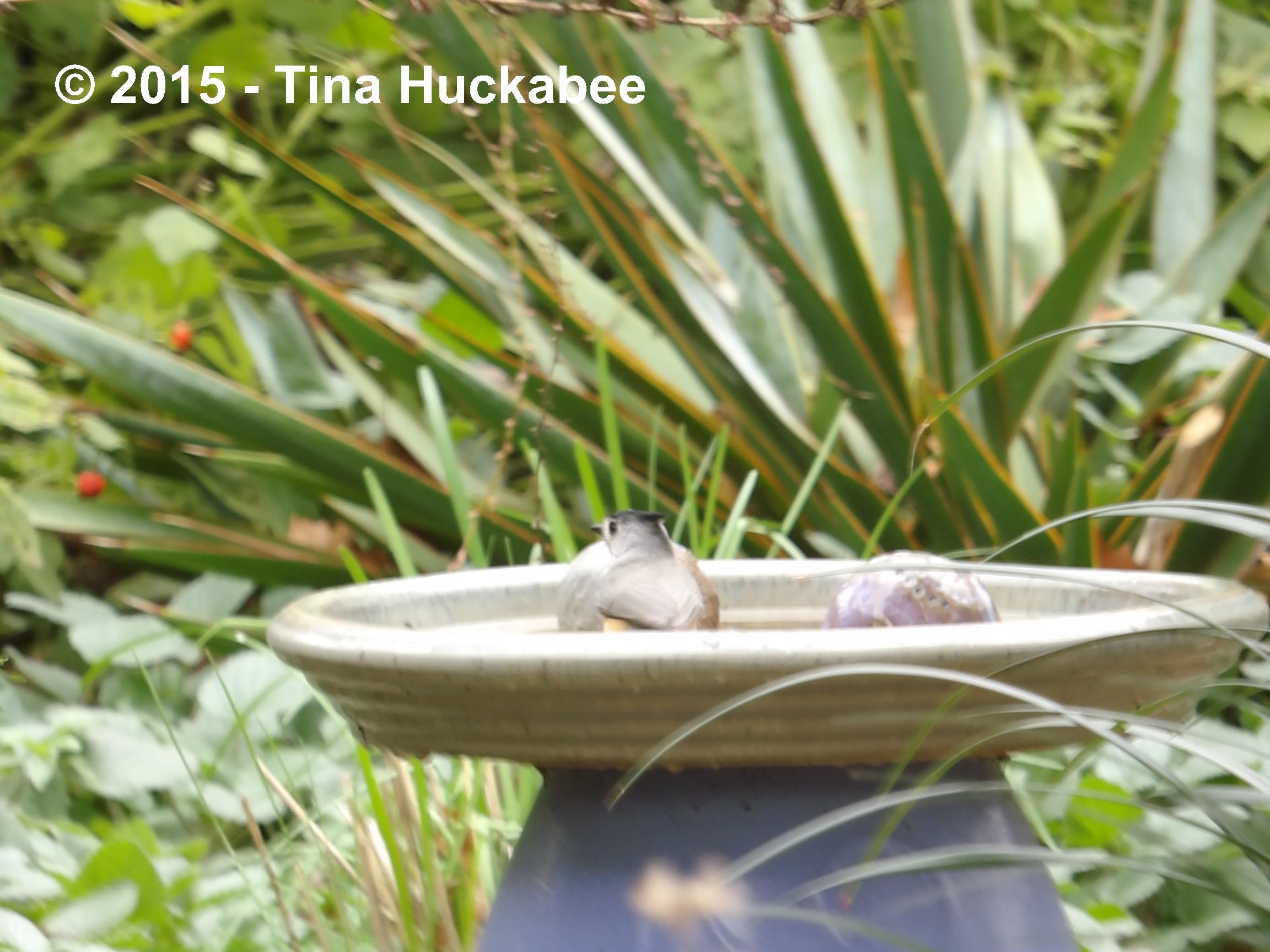
I adore the Tufted Titmouse, Baeolophus bicolor.    This charmer is at or near the top of my list of favorite birds.

IMGP2965.new

A North American songbird, it’s a common visitor to urban gardens in the Southeastern and Eastern part of the United States.  Quick and with such a lovely little chirp, the Tufted Titmouse is so fun to watch in the garden, whether at the feeders,
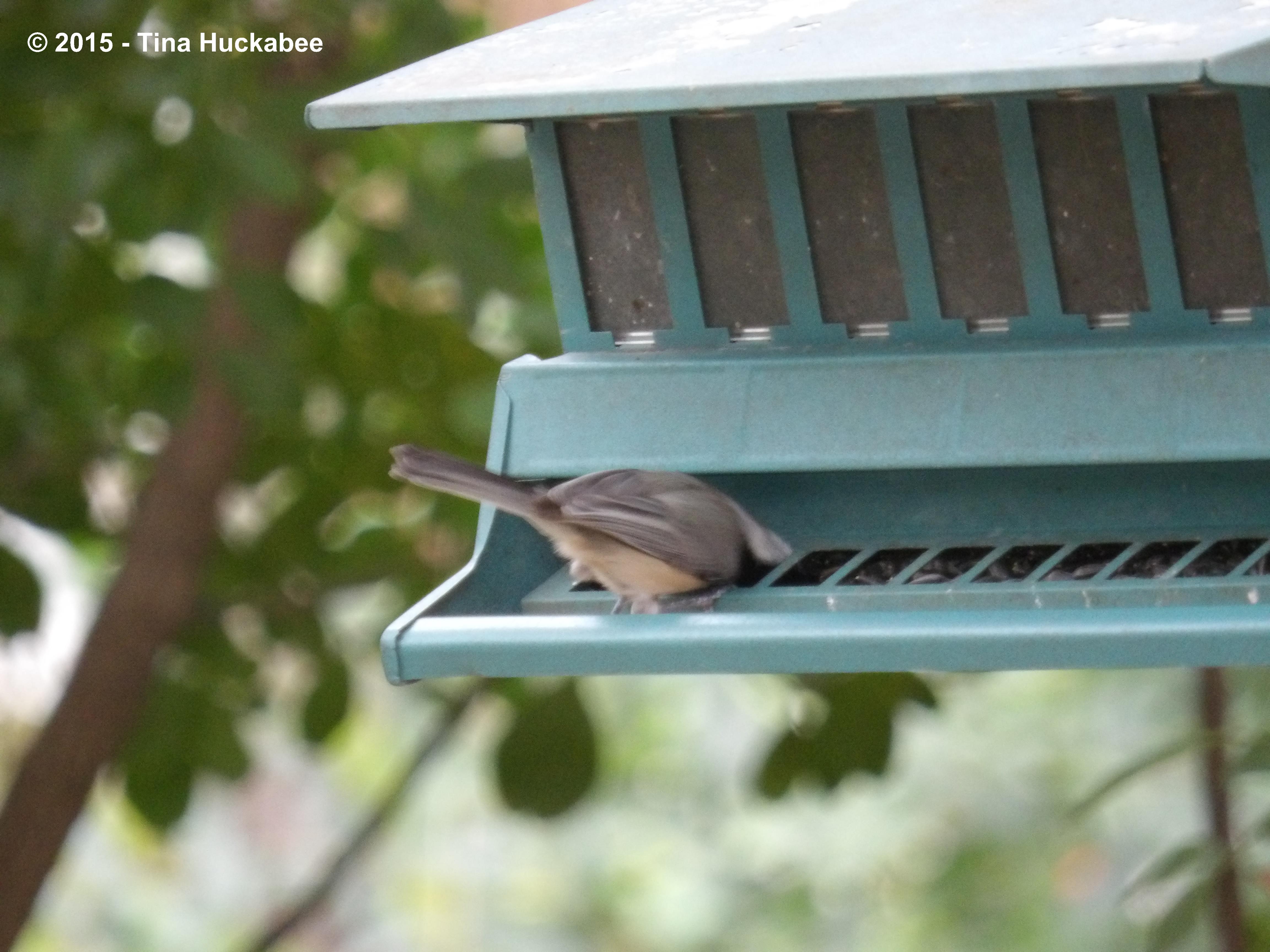
IMGP3166.new


….or in the trees,


M0093853.newM0093885.new


….or at a bath.  Isn’t his mohawk darling?  Punk bird.
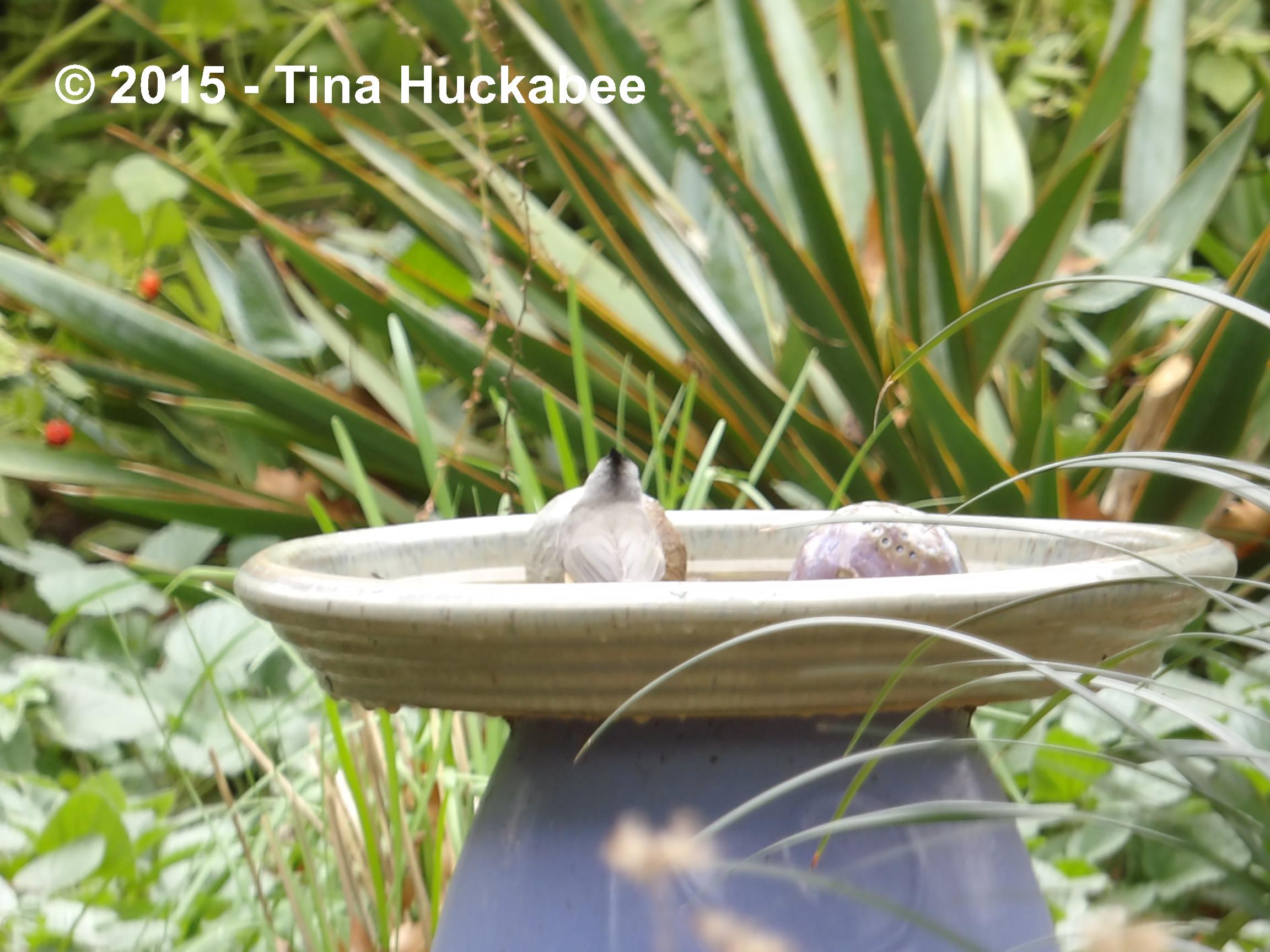
M0033707.new

M0033720.new

I’m tickled that I’m learning the camera, to better catch these and other timid and elusive birds.  I do remind myself regularly though, to put down the camera and just observe, appreciate, and marvel.  I think that’s what makes wildlife gardening so satisfying.

My garden enjoyed a variety of wild visitors this past month and I’m sure yours did too. Please join in posting about the wildlife in your gardens for January Wildlife Wednesday. Share the rare or mundane, funny or fascinating, beneficial or harmful critters you encounter. When you comment on my post, please remember to leave a link to your Wildlife Wednesday post so we can enjoy a variety of garden wildlife observations.

Good wildlife gardening!
 

Wildlife Wednesday, October 2014

I breathe a sigh of relief and with a So long! Don’t let the door hit you on the way out! farewell to the long hot of summer and a cheery, Well, hello there! Where have you been these past months? welcome to cooler nights, softer days, and more frequent rainfall.  I know I’m not the only one looking forward to the bounty of autumn.  Birds and butterflies are migrating, squirrels are gathering acorns–their silly, obnoxious behavior replete with more immediate purpose, and perennials and trees, formerly hunkered down for summer’s blasting sun and relentless heat, are re-engaging in life as they blossom and berry for winter provisions and the next generation.

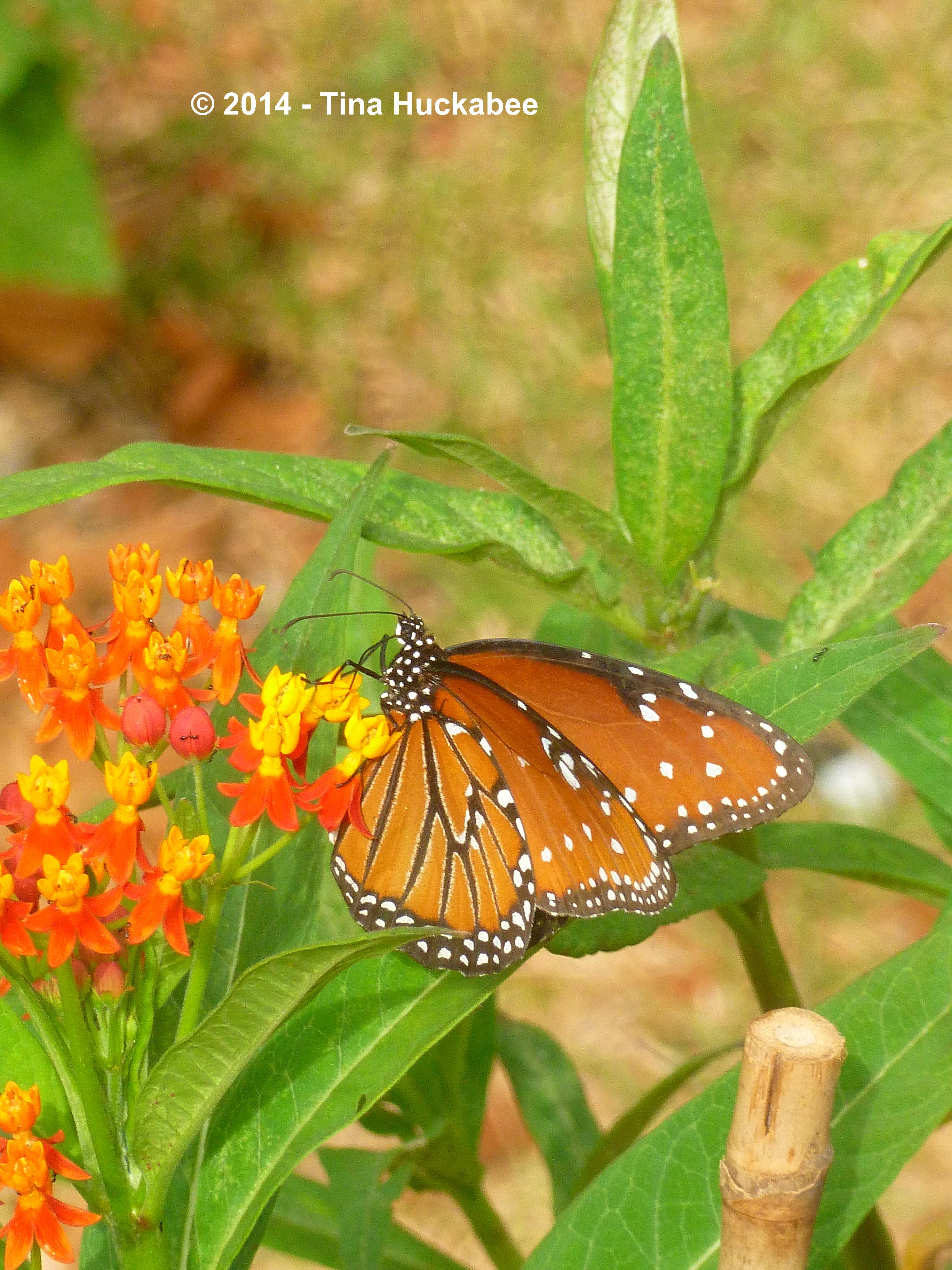
Ever hopeful of seeing Monarchs wafting through my gardens, I sometimes ignore their kin, the Queen butterfly, Danaus gilippus,

P1060922.new

…and I shouldn’t.  The Queen is smaller, sports more dots than lines in its wing patterning, and also favors the Milkweed, Asclepias curassavica, for nectaring.  It is equal in beauty to the Monarch.

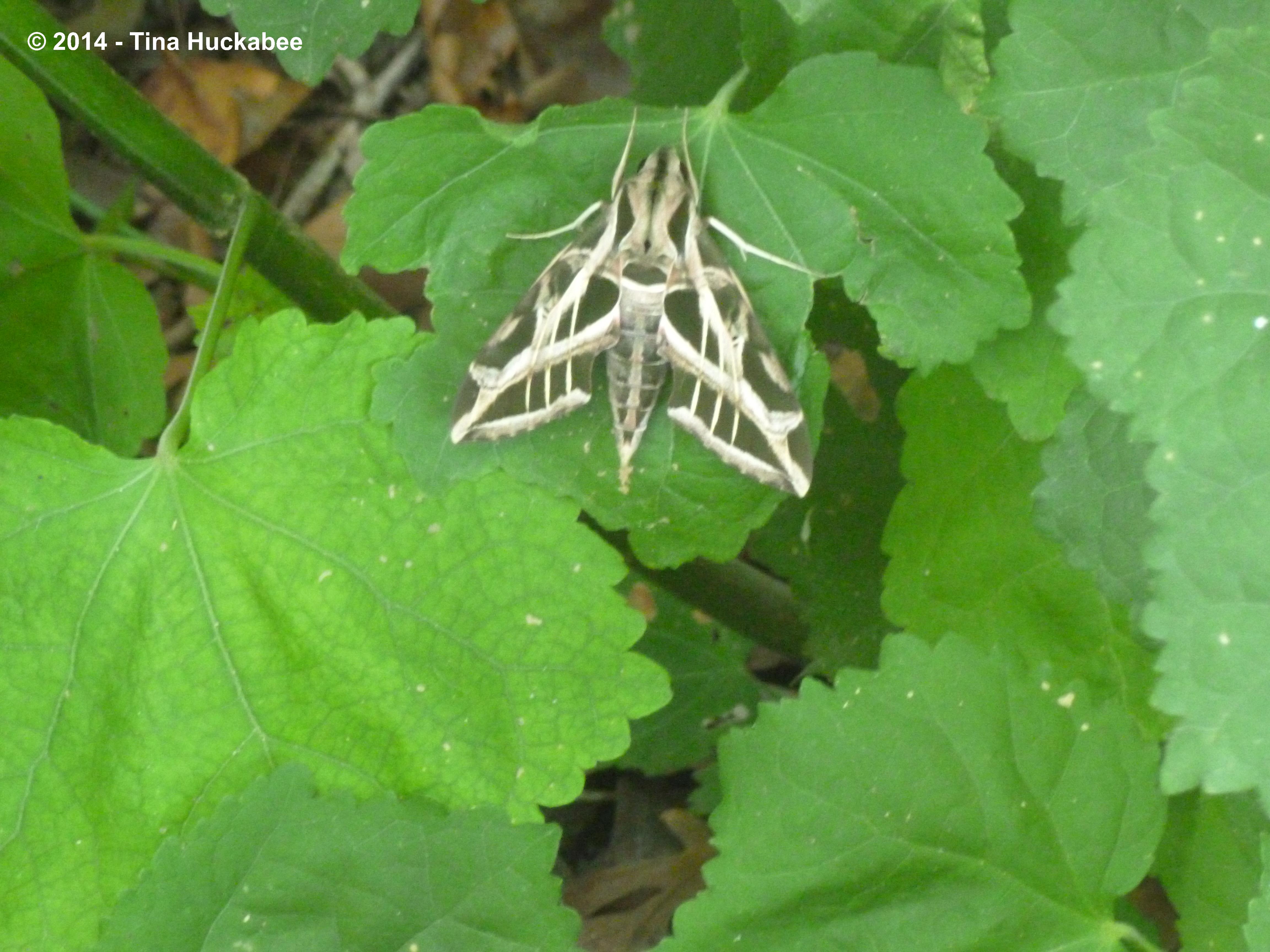
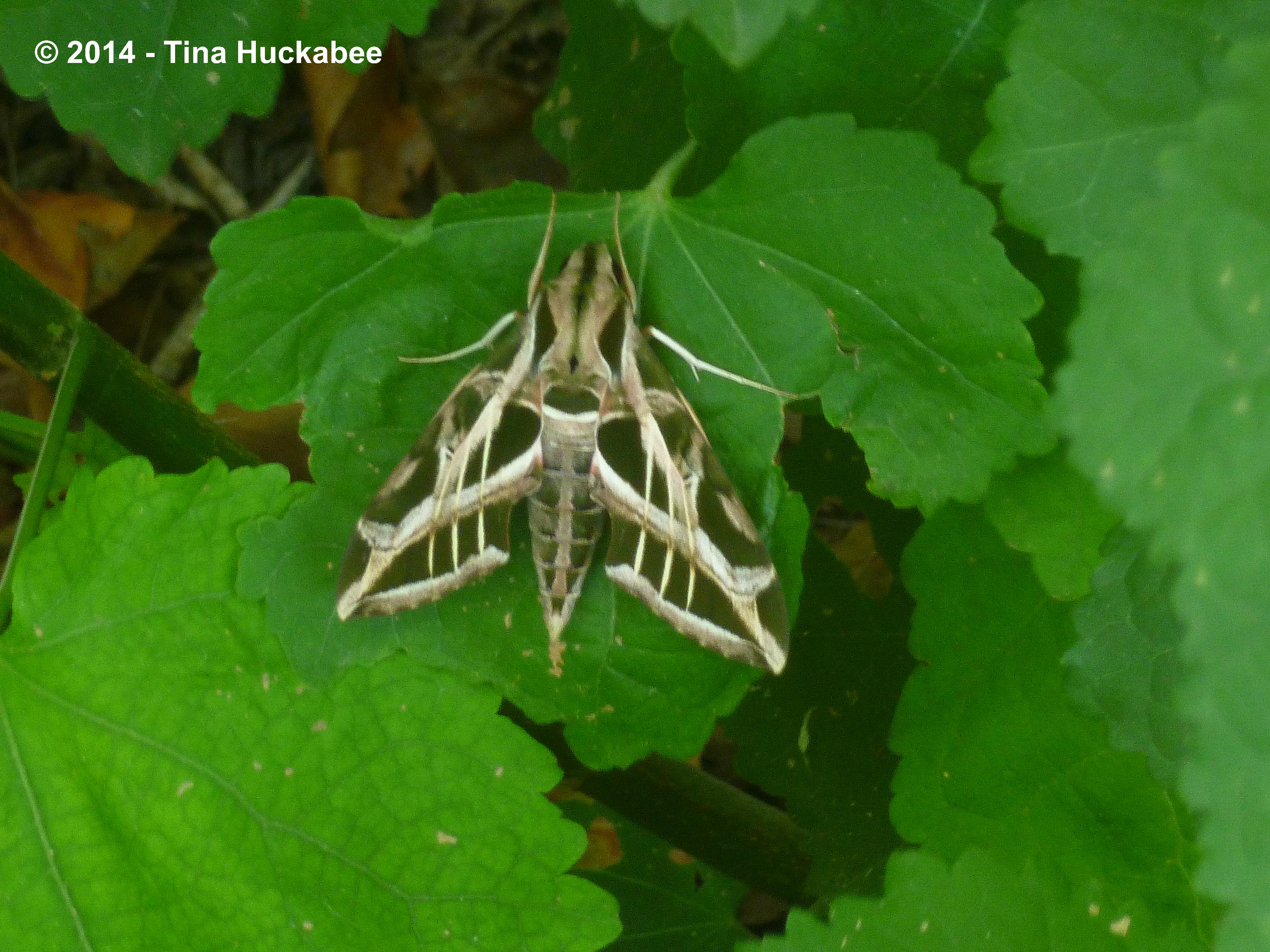
If butterflies are the sparkly, showy theater kids of the Lepidoptera world, their moth relatives are the quieter, more reserved geeky kids. Early one morning, I spied this muted beauty,

P1060827.new

…resting on a Turk’s Cap leaf.  I almost missed him and had to double-back on my stroll, so unobtrusive was this Vine Sphinx mothEumorpha vitis.  

P1060833.new

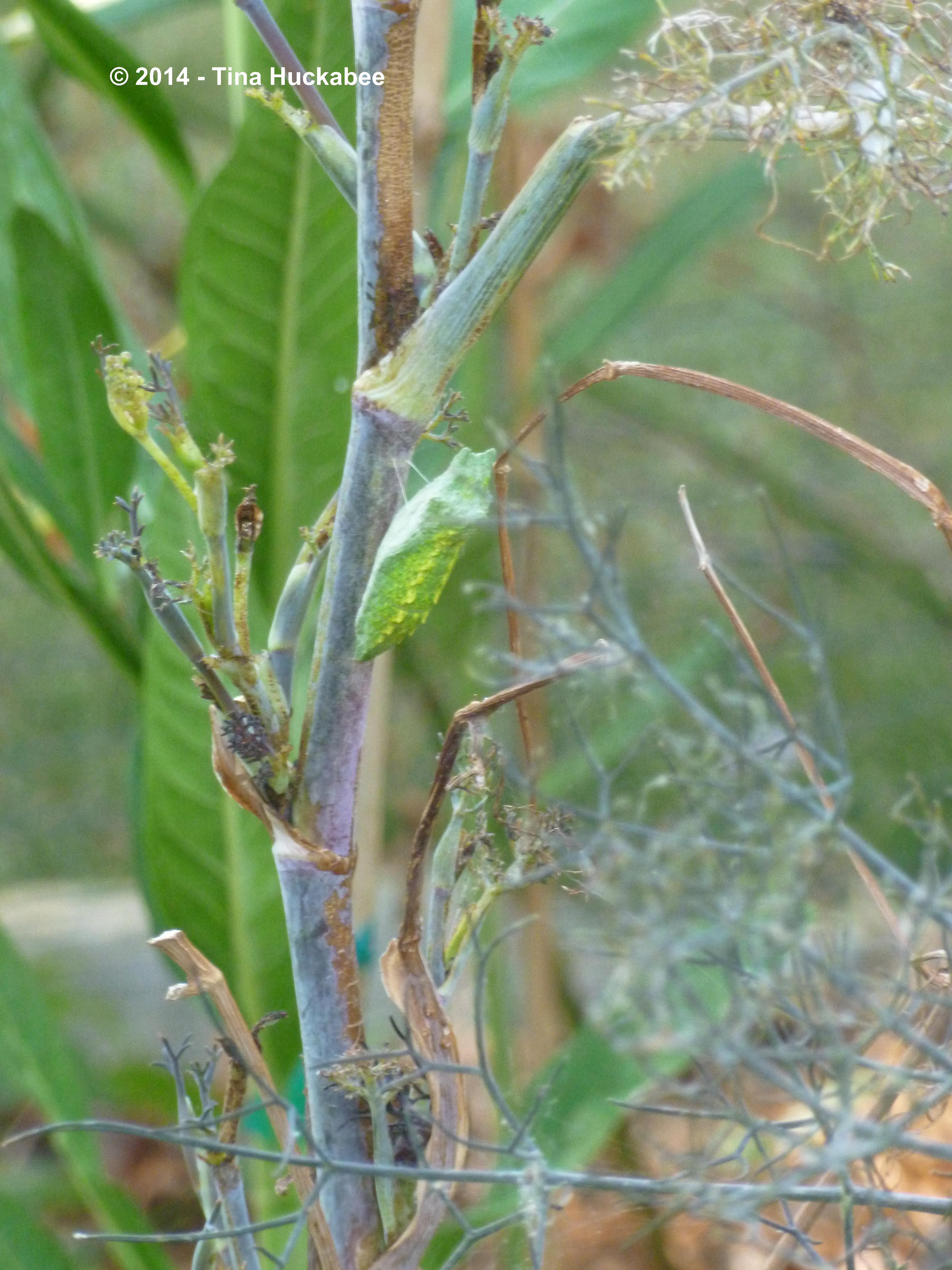
On the stem of fennel, I observed a Black Swallowtail butterfly larva, Papilio polyxenes, as it was metamorphosing into its adult self.  I didn’t photograph the immobile J-shaped caterpillar until it was established in full, chrysalis mode.  The play of light on the chrysalis renders its colors iridescent.

P1060870.new

I observed this chrysalis for several days, but on the fourth morning, it was gone.  The strings that attached the chrysalis to the stem were severed and there was no empty chrysalis and no adult butterfly nearby, drying her wings. I suspect the chrysalis became someone’s meal during the night or at sunrise.  I know whatever breakfasted on the developing butterfly probably needed it, but I was sorry for the end of this winged jewel.

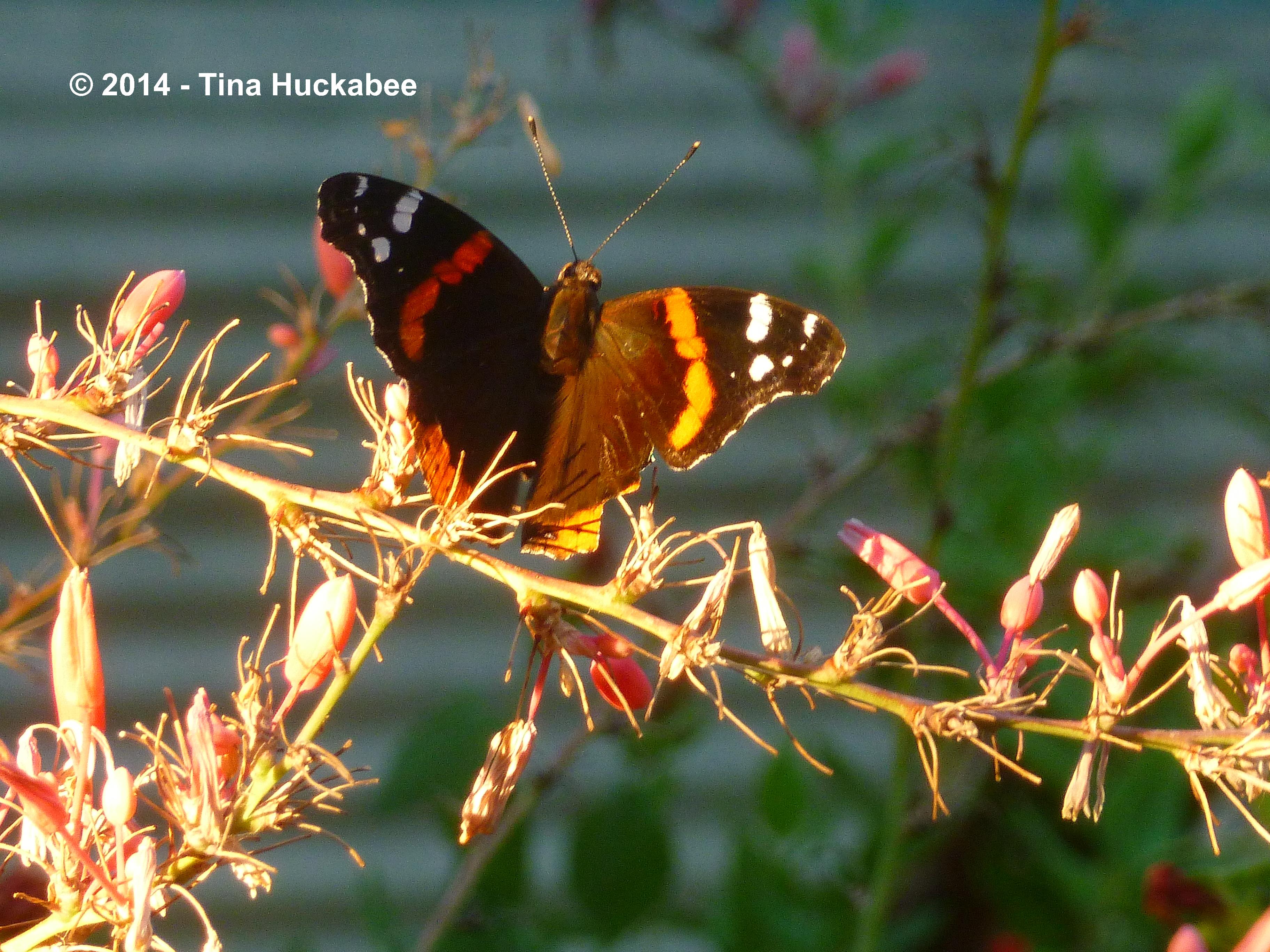
Strictly speaking, this photo of a Red Admiral butterfly, Vanessa atalanta, is not that great, but I love the glow of a late afternoon Texas sun on the colors and the shadows cast by the Red Yucca bloom on the wings.

P1060877.new

I saw this guy out of the corner of my eye, one evening.

P1060928_cropped_2919x2262..new

With his ephemeral movements, it took several minutes for me to find him again.

P1060940.new

He is a Great PondhawkErythemis vesiculosa, and I’m not sure I’ve ever seen one before.  He was hard to spot, flitting, flying, and landing in rapid succession.P1060929.new

Camera shy, this chap didn’t remain in one place long enough for many good photographs. But he is oh-so-pretty when motionless for a moment or two.

Of course, my honeybees are active, as always.

P1070152.new

P1070153.new

P1070155.new

It feels like a cheat for me to consider my little bees as “wildlife” since building two hives for them in my garden.  However, they are essential threads in the pollination fabric of my gardens and the surrounding areas, so indeed they’re part of October’s Wildlife Wednesday!

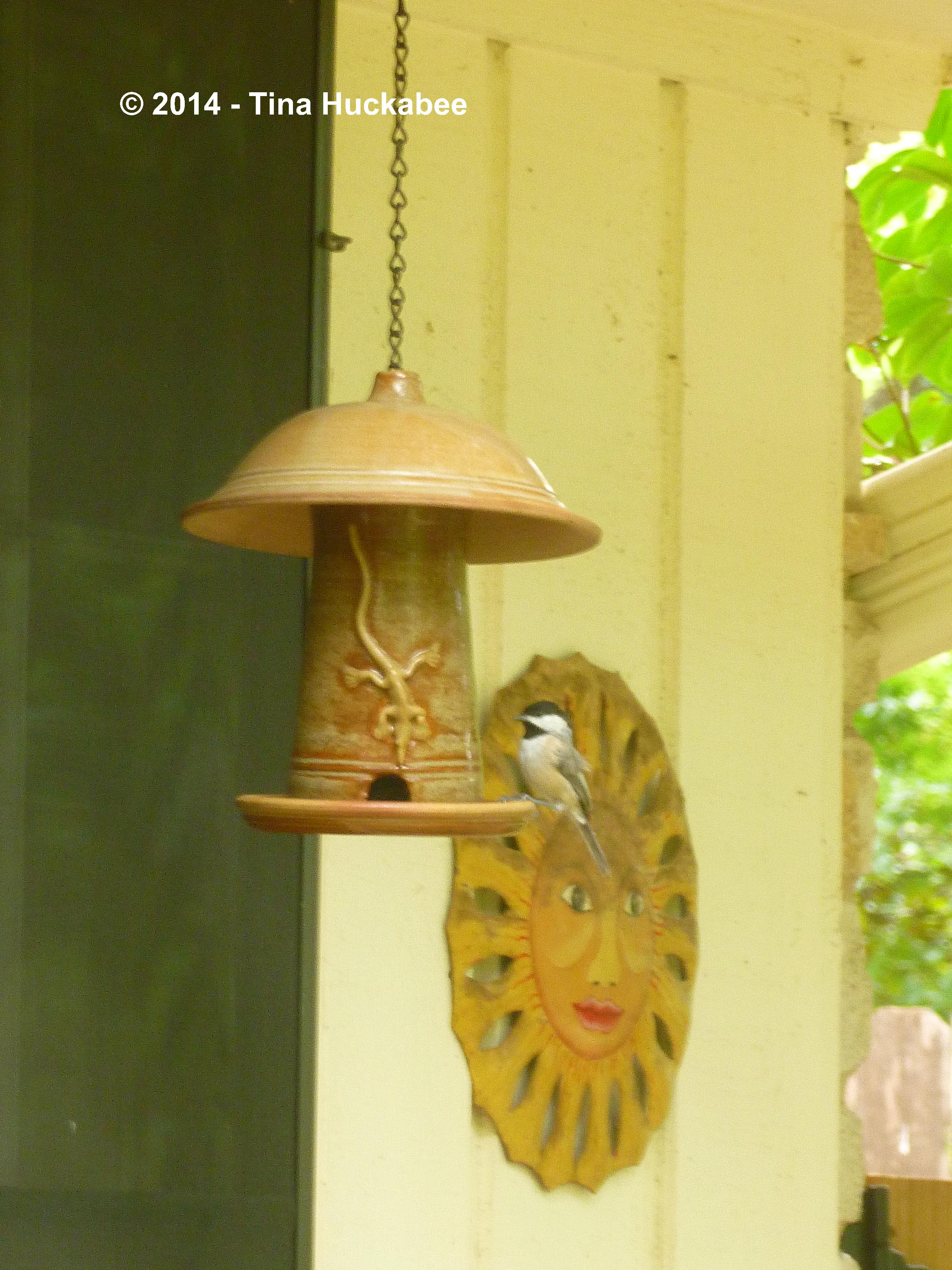
This Carolina ChickadeePoecile carolinensis, darted to and fro as it nibbled on the sunflower seed I sometimes provide for birds.

P1070146.new

P1070157.new

I confess to mixed feelings and some inconsistencies about using backyard bird feeders.  When I fill those feeders, I attract many White-winged Doves and various Sparrows, both of which I consider nuisance birds.  But during spring and fall migrations, or when lovely little songbirds visit, or someone out-of-the ordinary noshes, I’m glad those feeders are full.

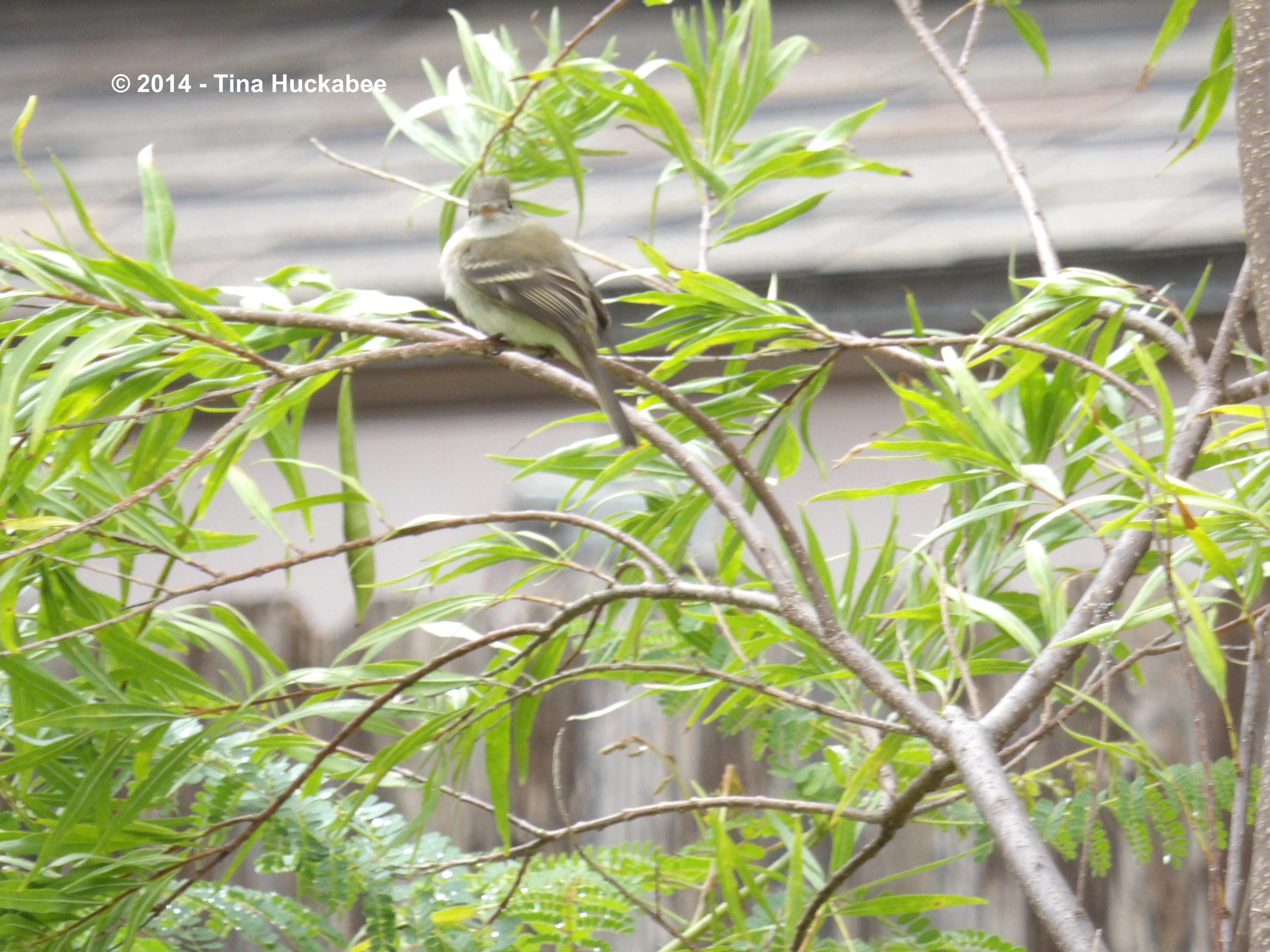
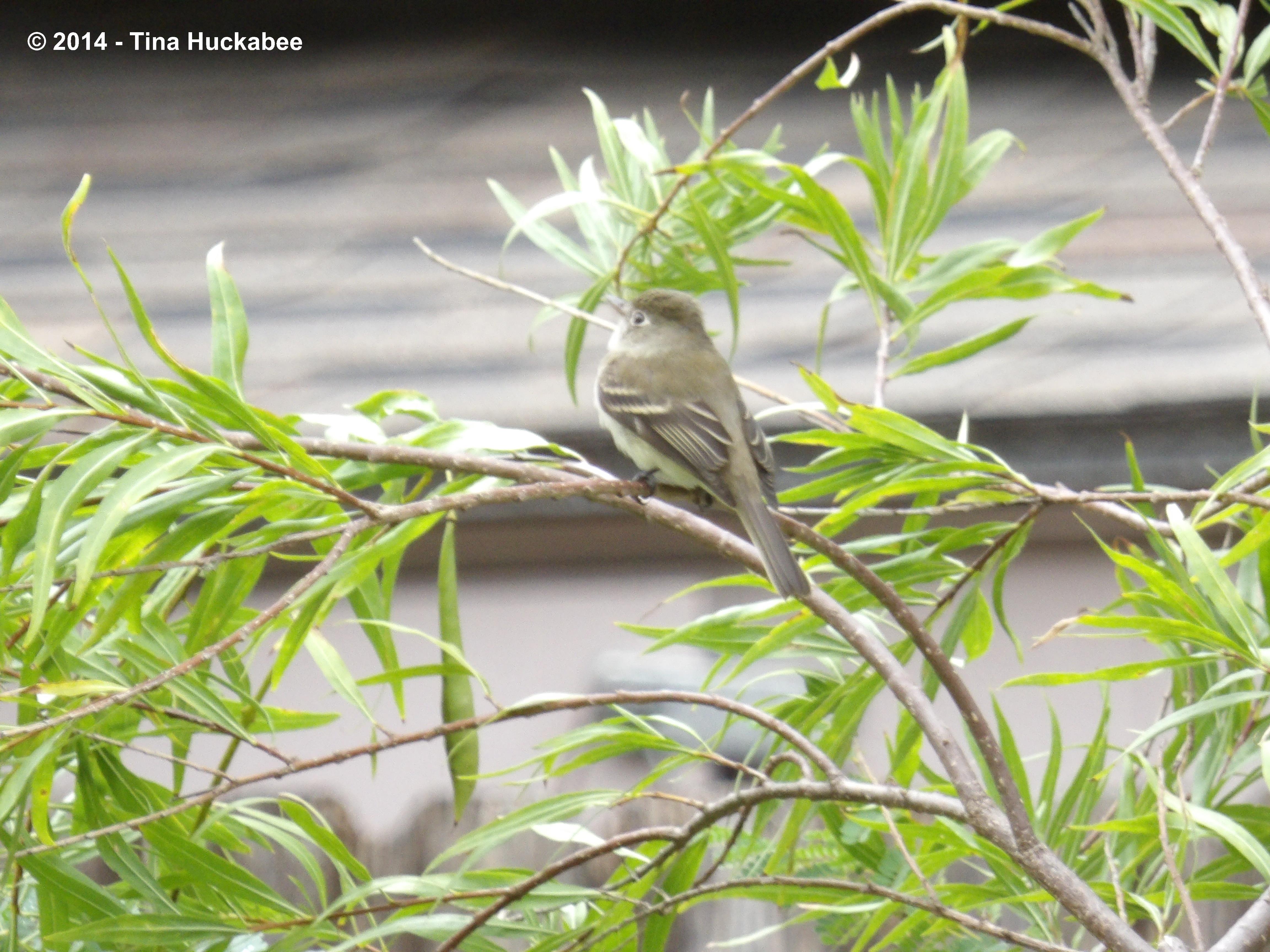
Speaking of migration and out-of-the-ordinary, this Least FlycatcherEmpidonax minimus, perched prettily on limbs of my Desert Willow.

IMGP0242.new

IMGP0244.new

Migratory through Texas, this cutie was a brief visitor that I at first mistakenly identified as a female Lesser Goldfinch.  It was only when researching the identity of a hummingbird that my Cornell Ornithology Lab Merlin Bird ID phone app spit out a photo of the Least Flycatcher that looked just like this:

IMGP0246.new

I realized my original guess at the bird was way off base.  The truth is that I’m lousy at bird identification.  Oh, I can catch the obvious ones–Blue Jays and Cardinals and the like, but ones with the more subtle coloring and markings?  Those that are skittish, shy and hard to monitor?  I’m not so great with the required skills in observation and the patience in learning names and families.  That’s one of the reasons why I’m hosting this meme–it’ll help me to better learn about my garden visitors.

That’s the plan anyway.

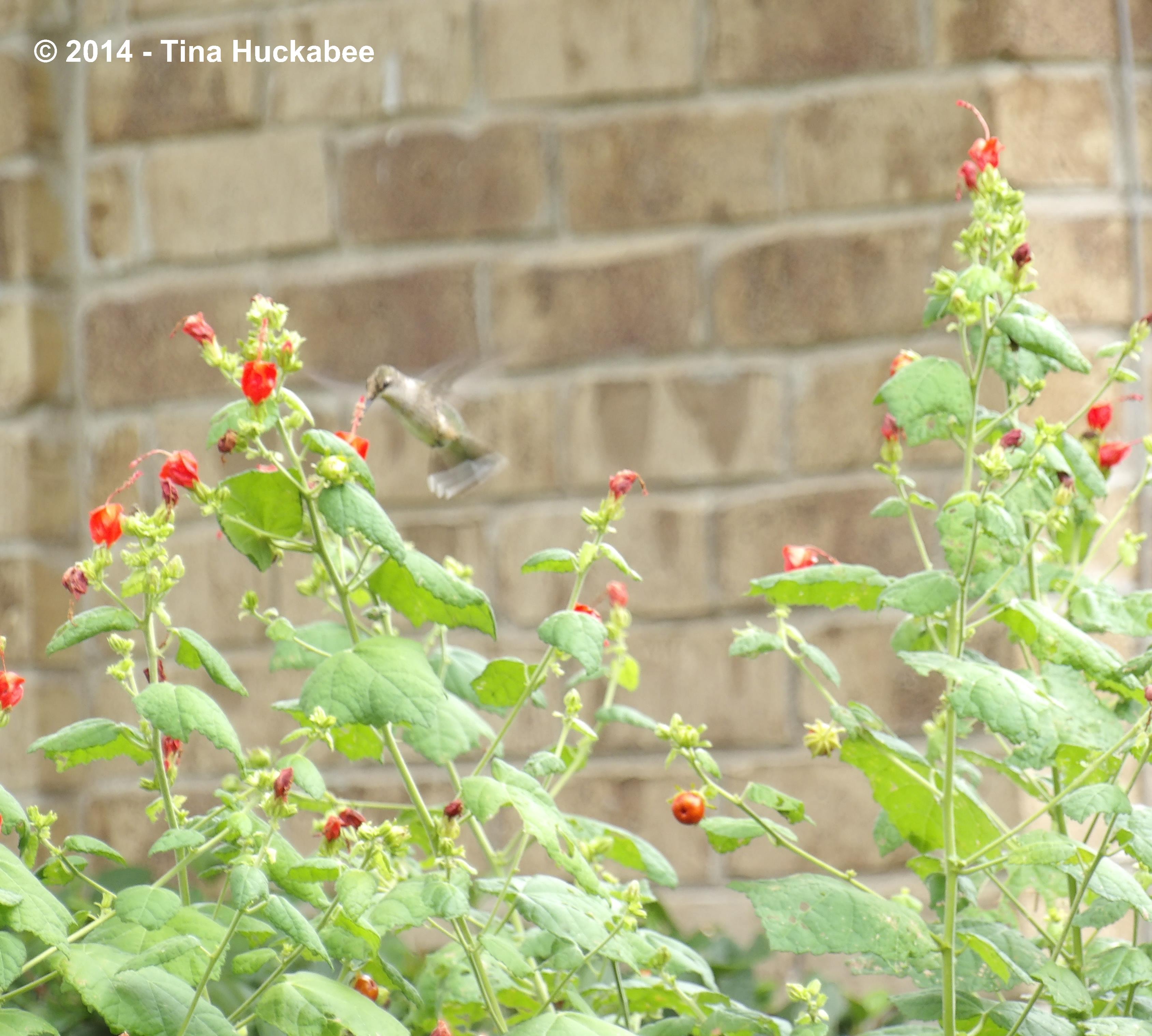
Late summer has always been the best time of year for hummingbird viewing in Austin. There aren’t as many hummers as there once were (sadly, that is a common refrain in gardening and wildlife circles), but there were more hummingbirds in my gardens this past month than in several years.   For a few days there was quite the hummingbird rumble occurring in my front gardens. Primarily between this one,

IMGP0306_cropped_3535x2876..new

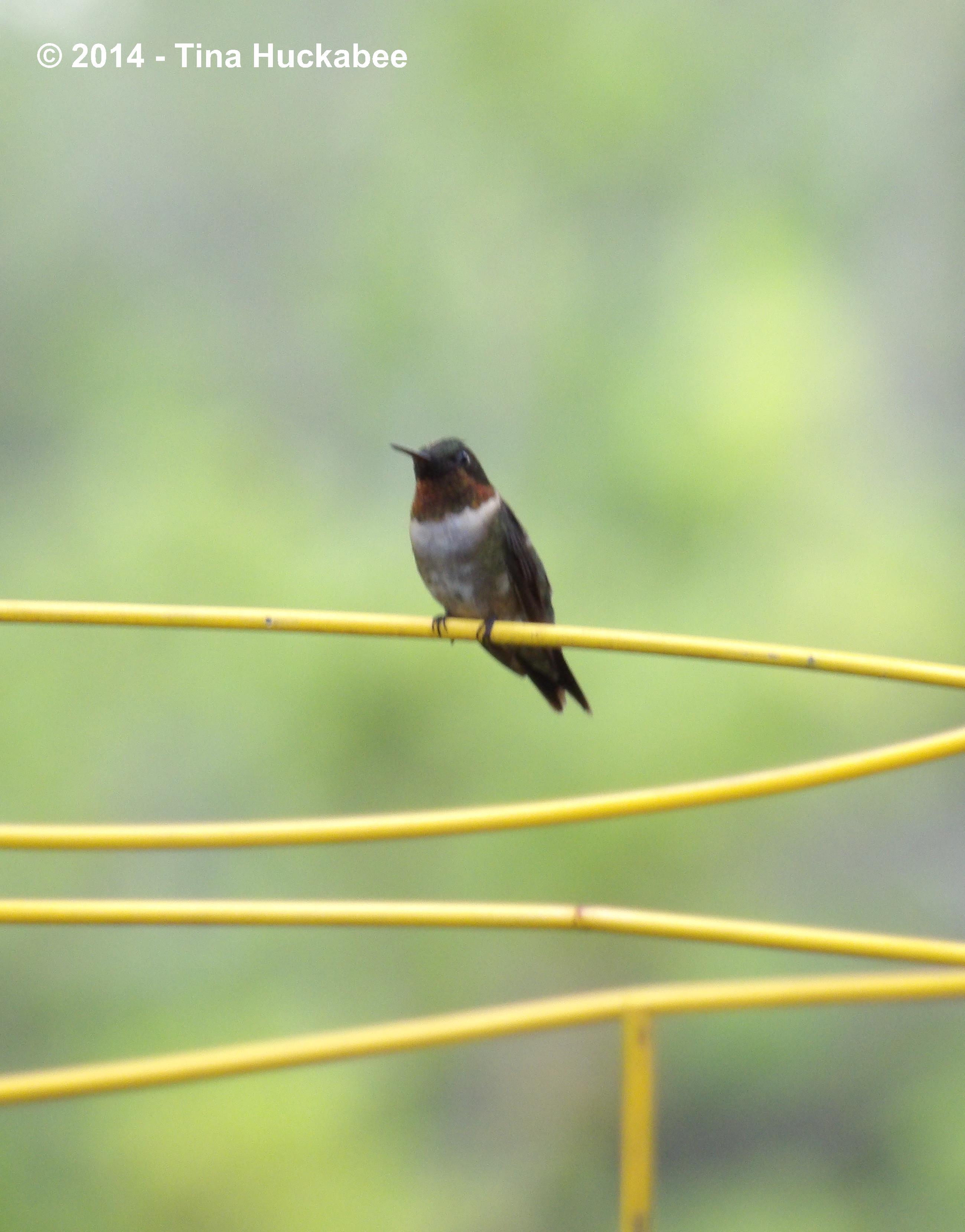
and this male Ruby-throated HummingbirdArchilochus colubris.

IMGP0603_cropped_2599x3318..new

These two and several others that I couldn’t get photos of, dive-bombed and chased each other–all between sips from the blooms of Turk’s Cap, salvias of all sorts, Barbados Cherry and numerous other quick-stop nectar sources.  The adversaries took turns landing on the top of the tomato cage on the Green Tower, presumably to survey their territory and harass competitors as needed.

IMGP0604.new

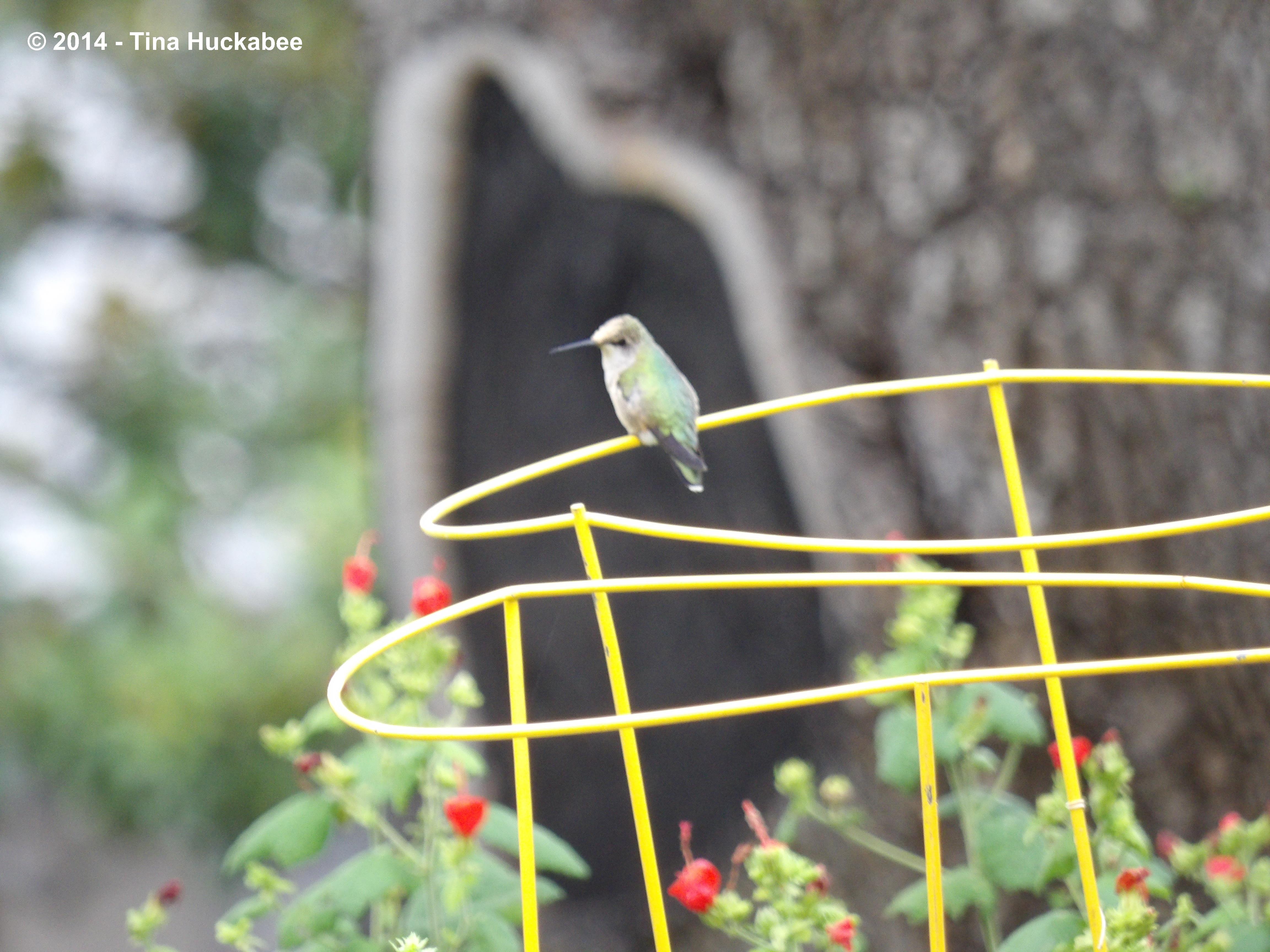
The Ruby-throated Hummingbird was an easy identification, but not so this other hummer.

IMGP0320.new

At first, I thought it was an Anna Hummingbird, but once I read they neither live nor migrate anywhere near Central Texas, I discounted that identification. Duh.

IMGP0318.new

IMGP0311_cropped_2903x3152..new

I’ve decided that this hummer is either at female Ruby-throated or a female Broad-tailed HummingbirdSelasphorus platycercus. I’m leaning toward the Broad-tailed as the correct identification only because of the slight orange tint toward the bottom of her belly.

The Hummingbird Wars were entertaining, with the hummers zooming and buzzing by me a they waged their territorial turf war.  I tried to talk sense to them, to convince them that there is plenty for everyone and that they need to work and play well together. Alas, they continued aggressively protecting their temporary food bar.  I left town, a cold front or two has blown through, and I haven’t seen any hummers since because they ride the southward-bound winds to Mexico and Central America.  I wish them well as they make their way, each migrating alone, to more southern latitudes and tropical growth–where there should be plenty of nectar for all to share. Play nice, little hummers.

IMGP0291_cropped_3377x3037..new

I enjoy lots of wildness in my gardens and I’m sure you do too. Please join in posting about the wild visitors to your gardens for October Wildlife Wednesday. Share the rare or mundane, funny or fascinating, beneficial or harmful critters you encounter. When you comment on my post, please remember to leave a link to your post for Wildlife Wednesday so we can all enjoy a variety of garden wildlife observations.

Happy Wildlife Wednesday and good wildlife gardening!


Wildlife Wednesday, August 2014

Another month, another slew of wildlife happenings in my gardens. Thanks to for-the-most-part regular rains this year, there are more butterflies, moths and birds in my gardens. Central Texas is still in drought, but it’s eased a tiny bit within Austin’s city limits.

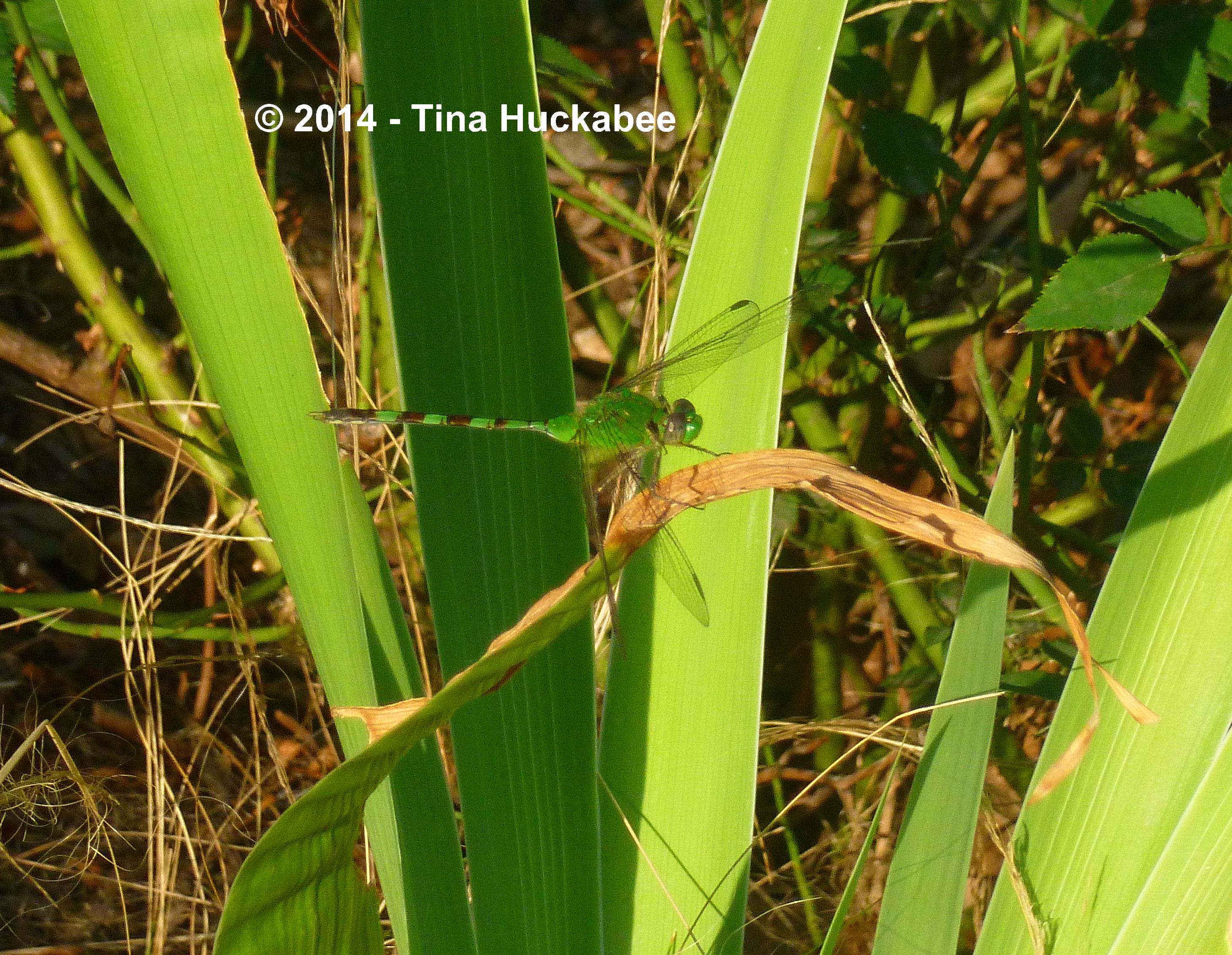
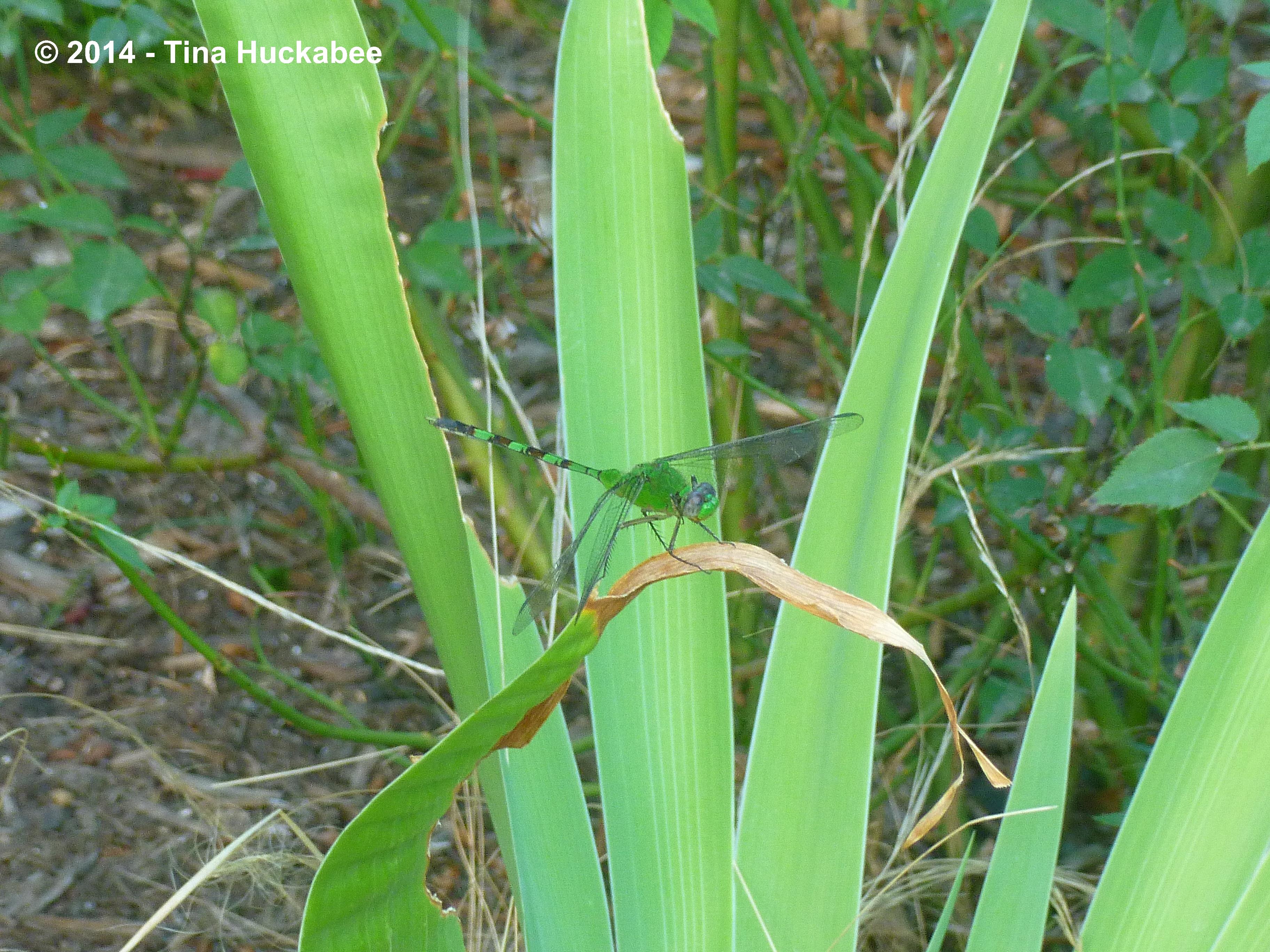
Around my pond there is almost always a dragonfly or two–weaving, diving, hovering, then resting on the tips of nearby foliage after their flying frenzy. I often see this handsome fellow, a Neon Skimmer (Libellula croceipennis)  and his relatives.

P1050360.new

This particular species is the most common of the order Odonata around these parts.

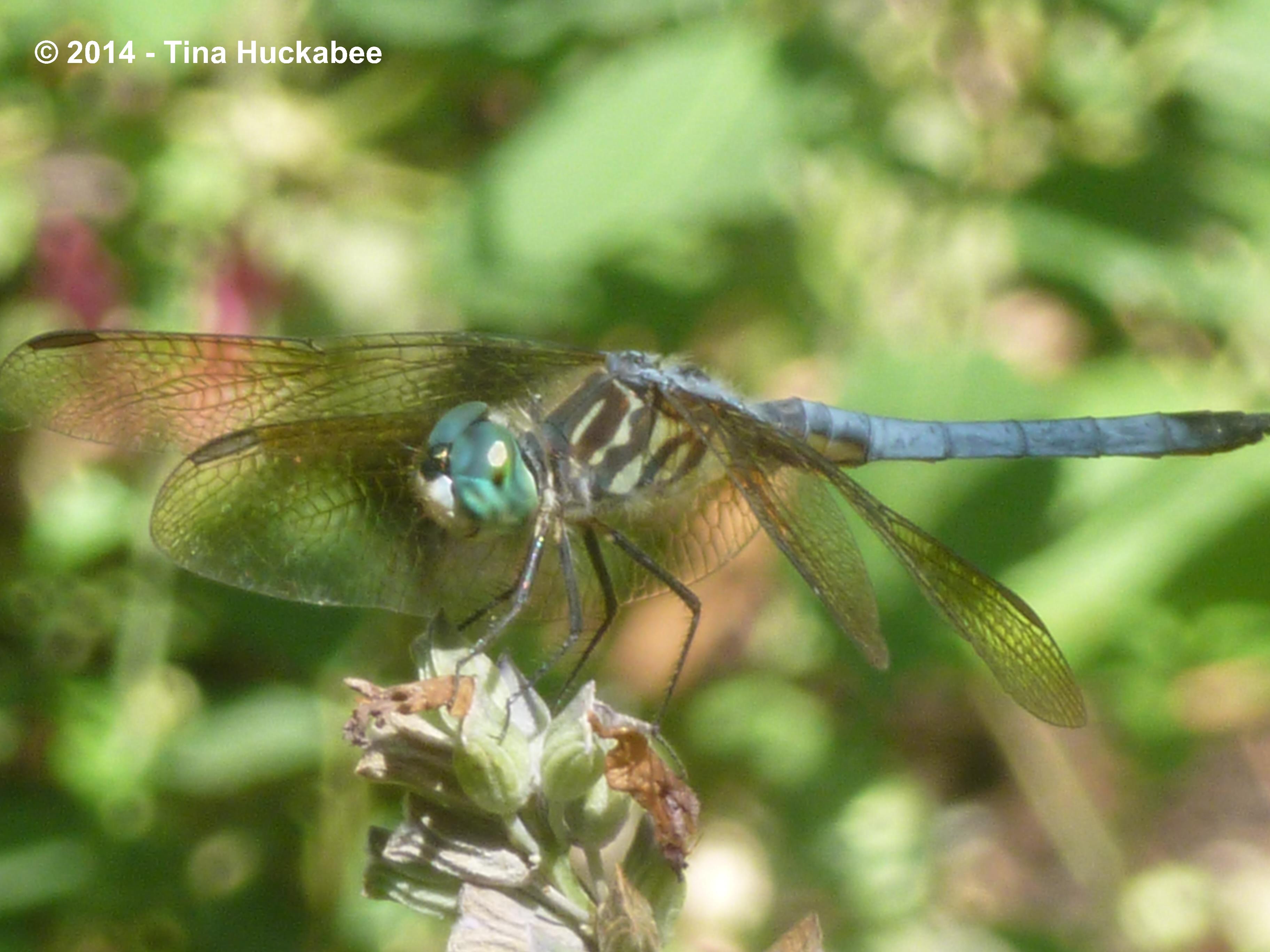
Another common dude cruising, landing and generally being gorgeous is the Blue Dasher (Pachydiplax longipennis).

P1050368.new

He posed nicely for me one hot, sunny afternoon while I was in the pond, feeding my lilies and having my toes nibbled by the fish.  For the last two summers, I didn’t see as many dragon and damselflies in my gardens owing to the ongoing drought.  I’m happy to say that this summer they’re back in full force; I’ve enjoyed the show.

P1050366_cropped_2539x1857..new


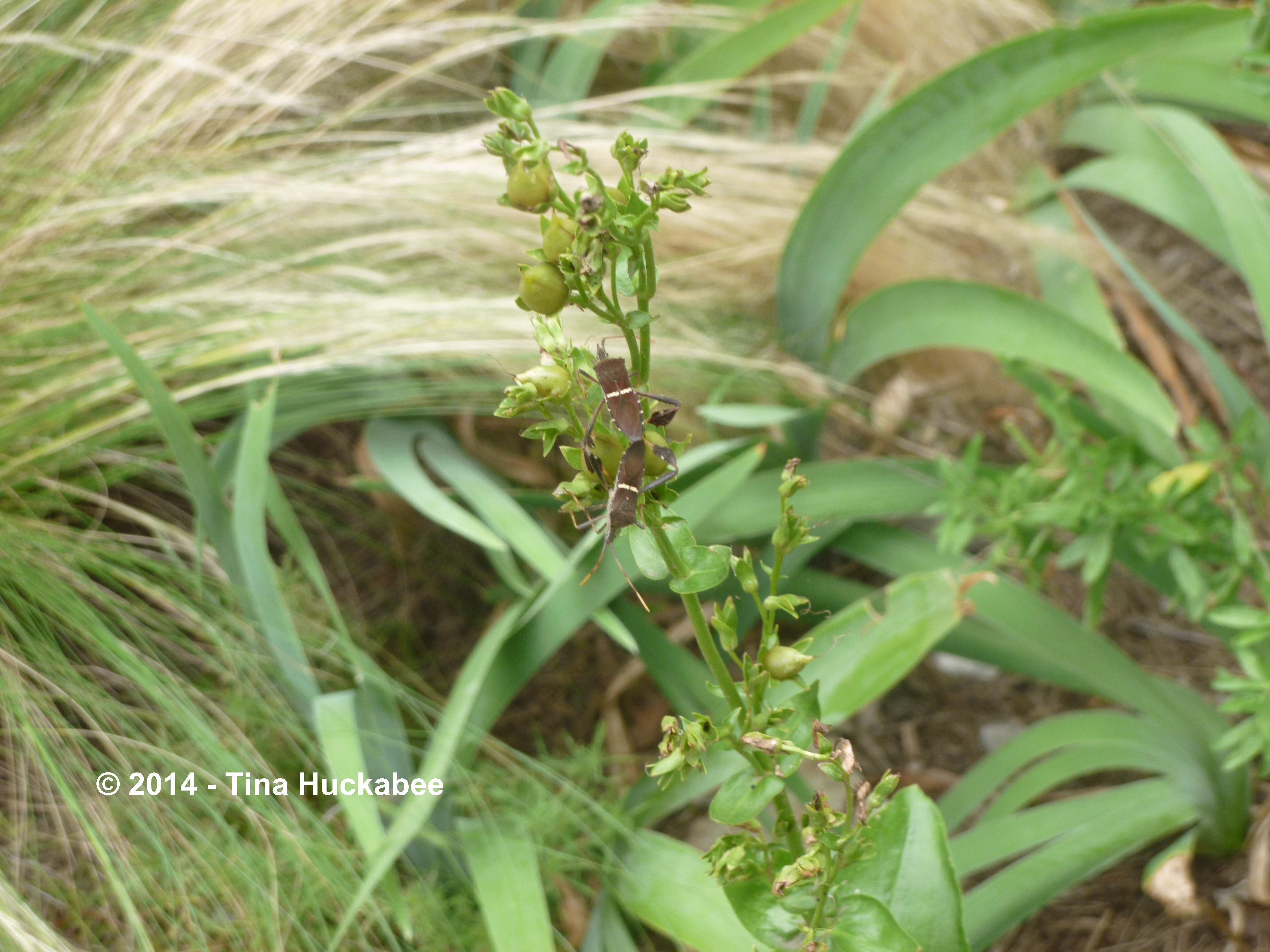
Just what the world needs, more “stink” bugs.

P1050411.new

These two love-bugs are commonly called Leaf-footed bugs (Leptoglossus phyllopus).

P1050412.new

They are happily ensconced in my gardens, I’m somewhat sorry to say, though I admire their resourcefulness. Leaf-footed bugs are in the general category of “sucking” insects–meaning that they suck juices from plants.  They puncture their plant victims with their mouths and suck the juices out, leaving the fruits or berries hard and discolored.  They menace commercial and home crops, like tomatoes (my tomatoes, to be specific).  I didn’t bother these two (I am after all, a romantic), but I’ve been known to squish’m.  Yeah.

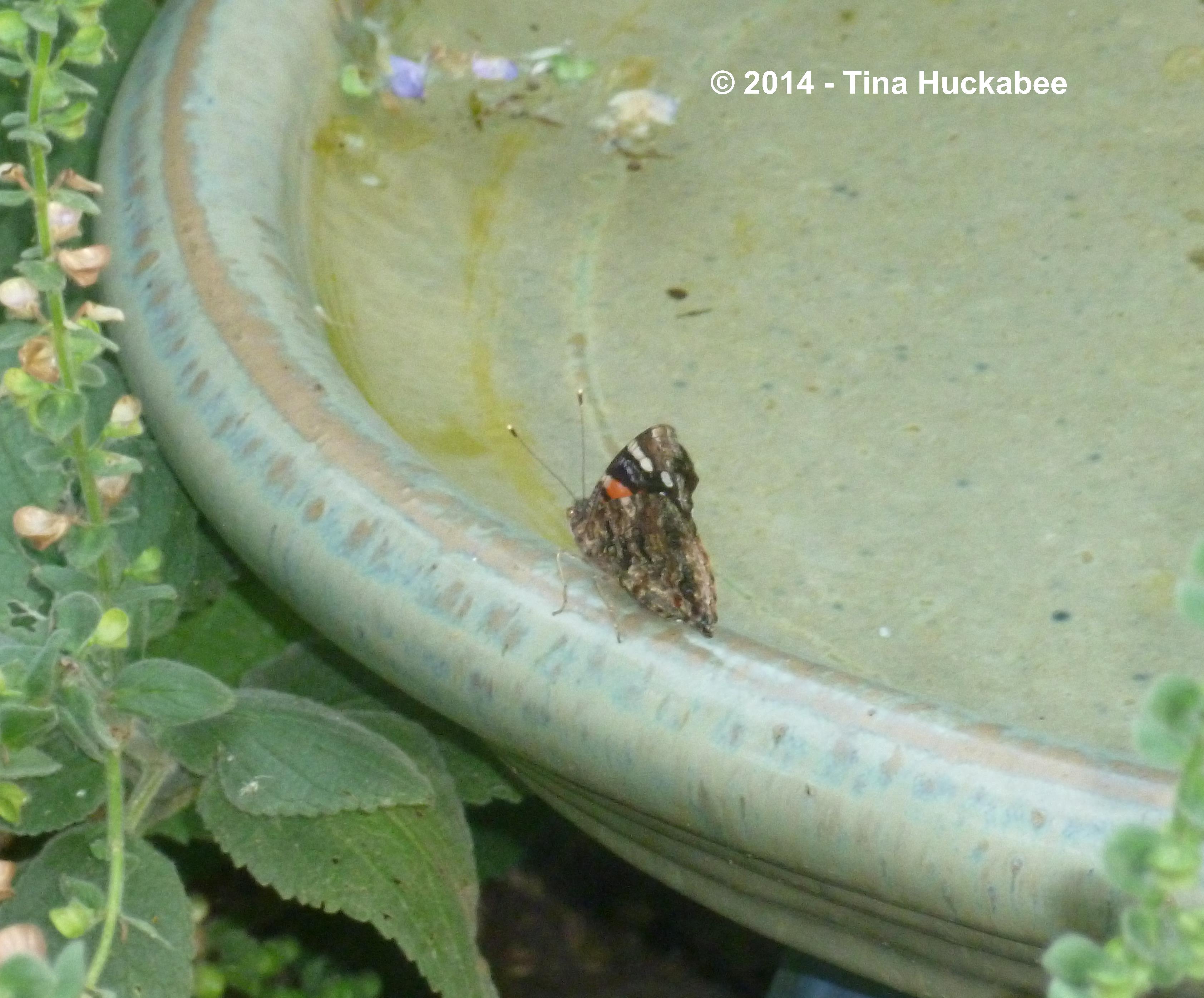
On to something prettier and more welcome in my gardens, this Red Admiral butterfly (Vanessa atalanta) was sunning herself poolside.  She’s easily identified by the top part of her wings as she held them open.

P1050568.new

The undersides of her hind-wings and fore-wings are also colorful.

P1050570_cropped_3368x2793..new

Her wings are held in a vertical position, like a soldier at attention, though she’s actually at rest.

P1050571.new

P1050572_cropped_2695x2884..new


I’m fairly sure this is the adult version of the caterpillar that I profiled last month, the  Yellow-striped Armyworm Moth, Spodoptera ornithogalli.

P1050646_cropped_2433x2346..new

When  I was identifying that caterpillar, I noticed in photographs of the adult moth that the pattern on the wing varies, though all share the muted, mottled gray/brown coloration.


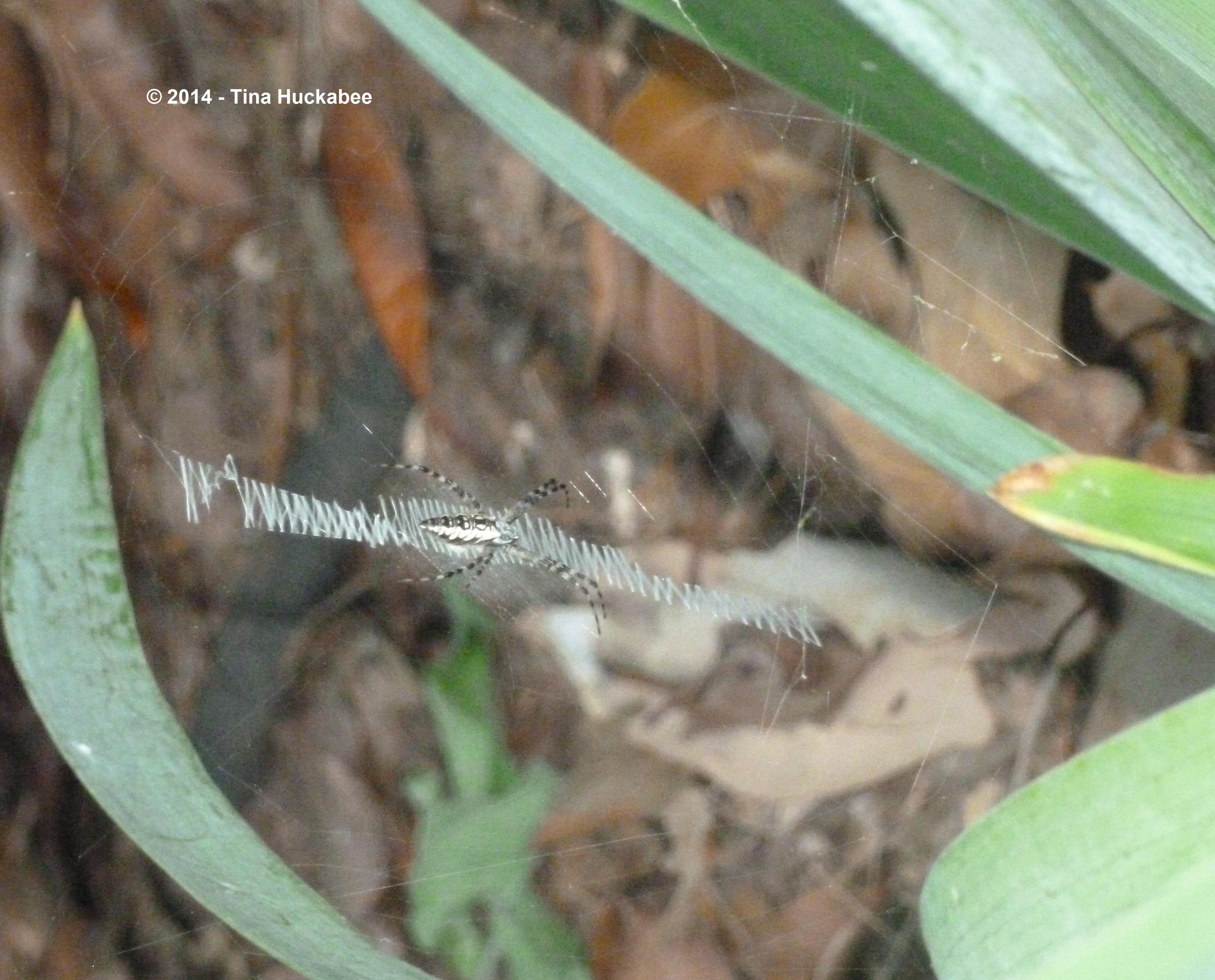
I spied this lovely orb-weaver in her netting between Iris straps a few weeks ago.

P1050726_cropped_3857x3111..new

I couldn’t identify her and I hoped to observe her for a few days.   Alas, she disappeared the next day.  I’ll just call her a garden spider.

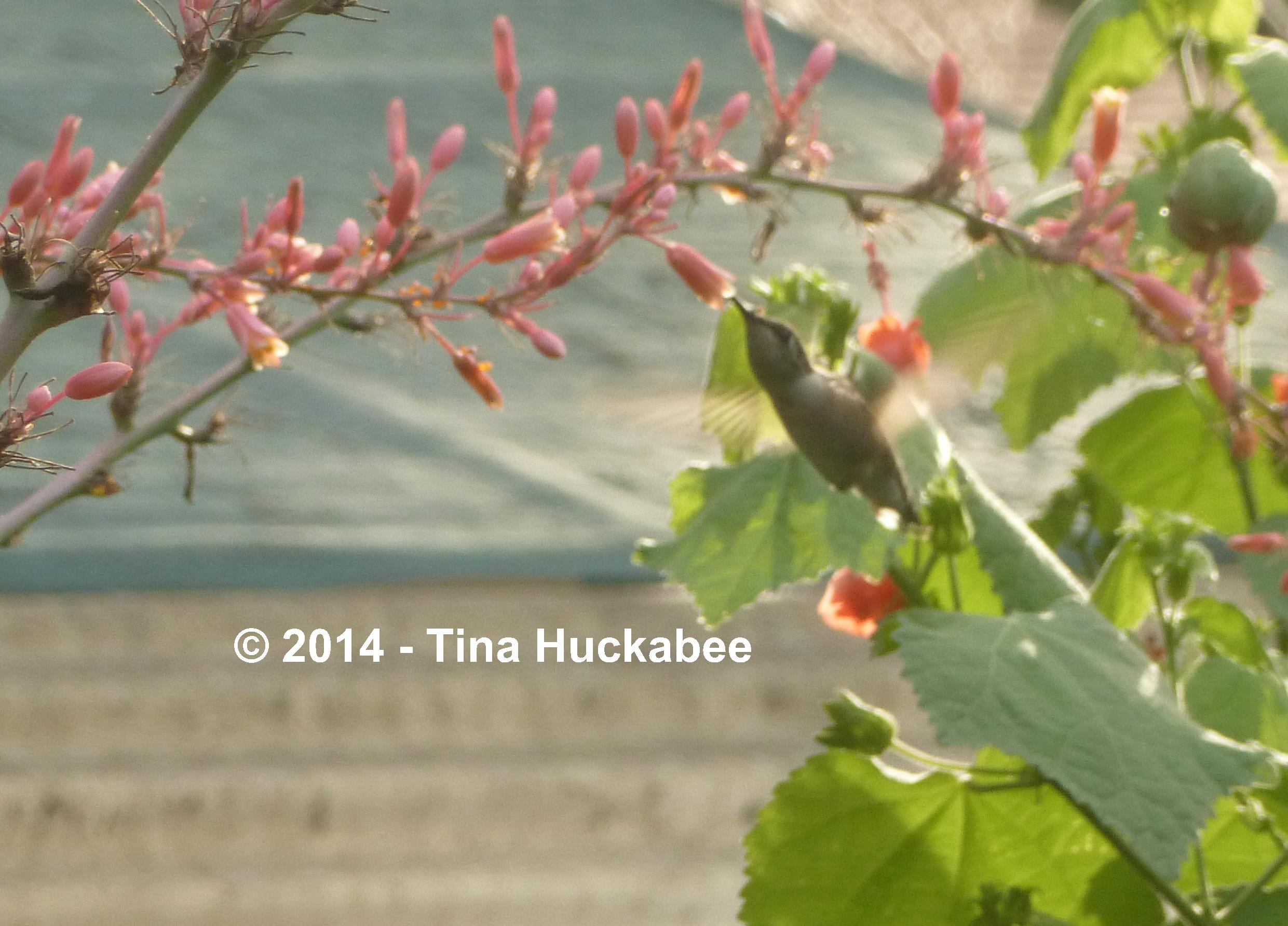
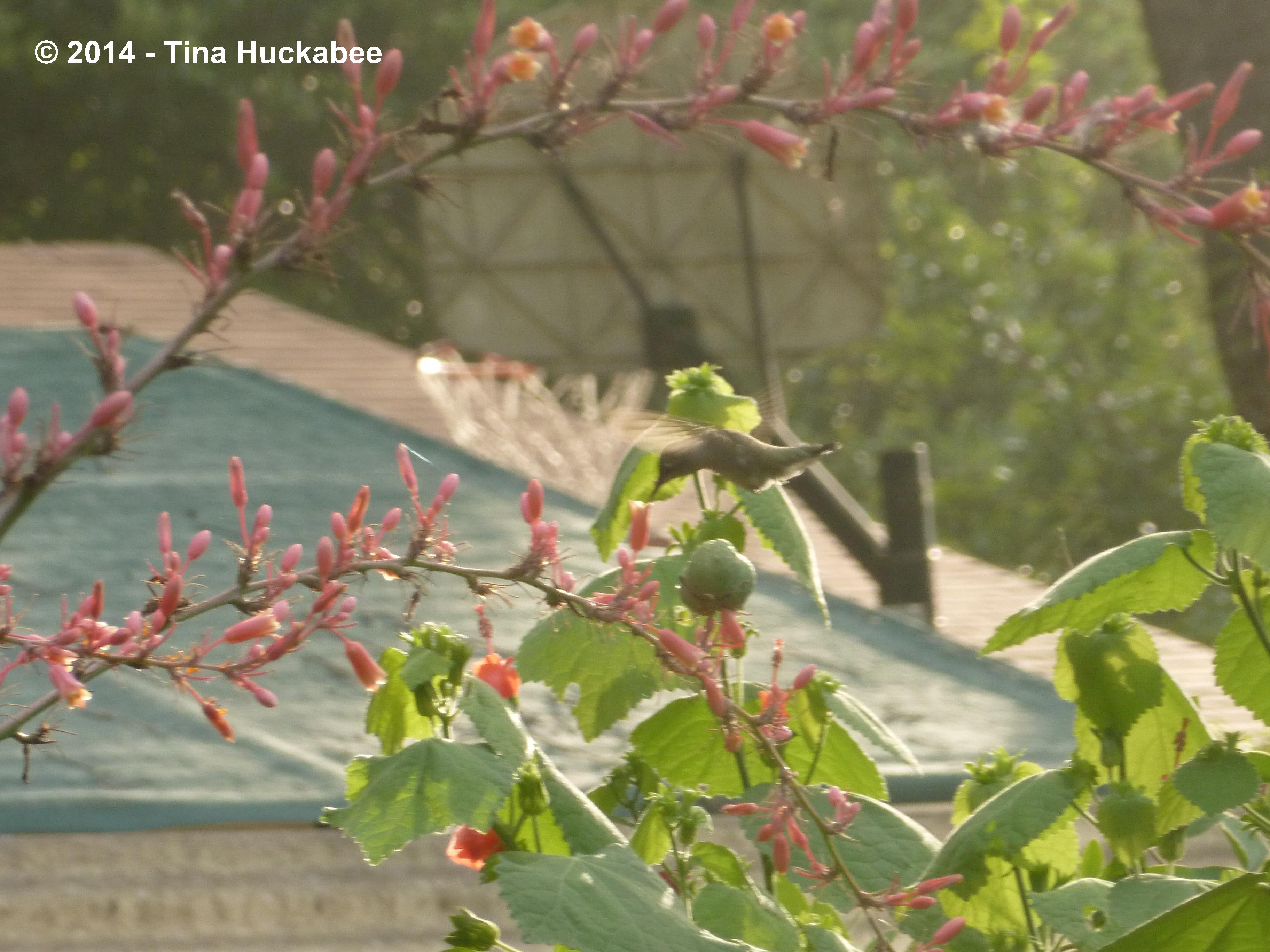
This female hummingbird was sipping her breakfast when I rudely approached to take some photos of her plant choice of nectar.

P1050915_cropped_2481x1784..new

I don’t know what species of hummer she is

P1050916.new

…I can only confirm she’s a she and not a he.

We surprised each other.  About the same time I realized there was a tiny bird in my camera lens, she realized there was a person photographing her dining experience.  I was enthralled and she was annoyed.  She promptly flew off–maybe to shoot some hoops?

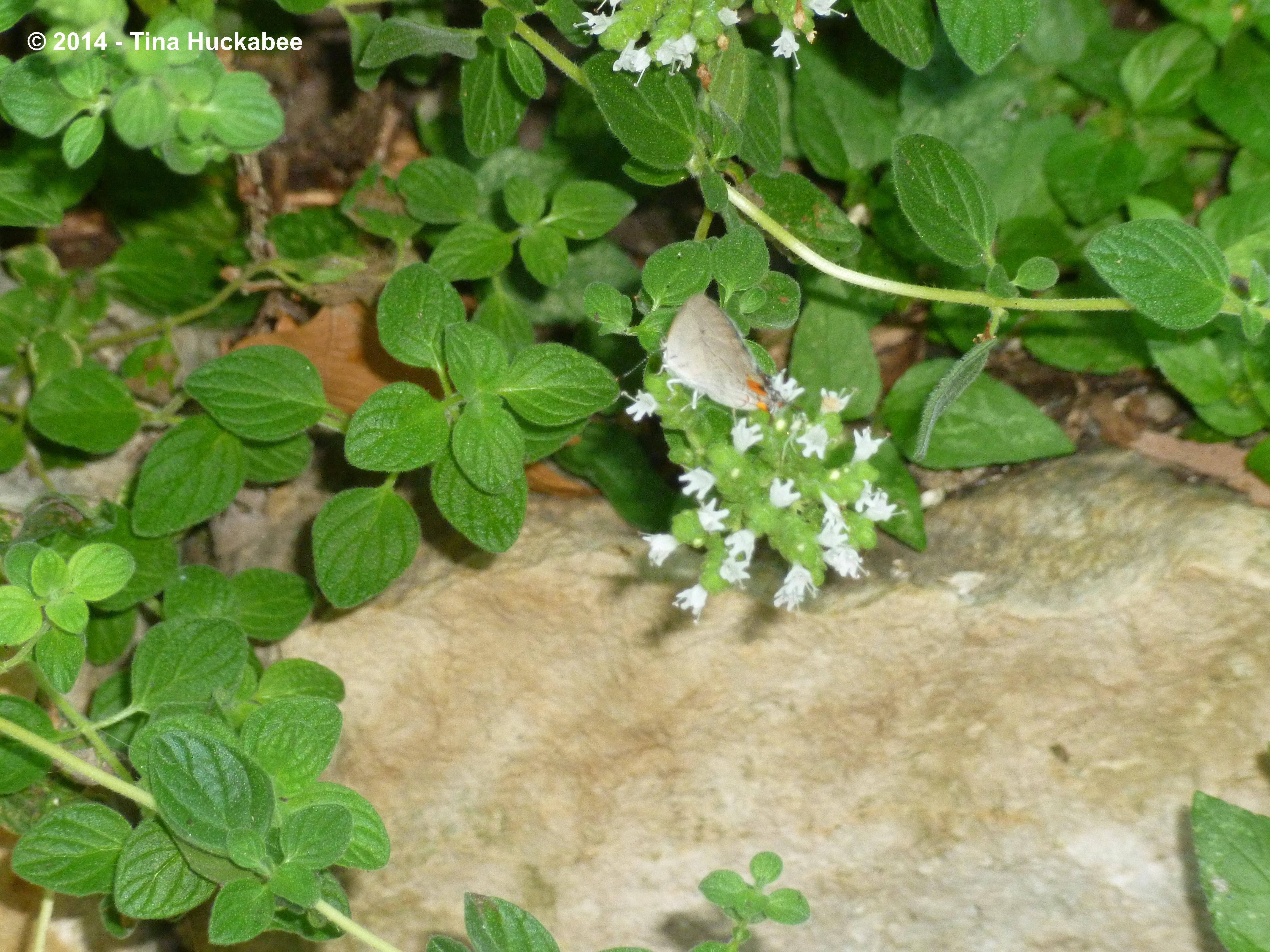
While gabbing on the phone to a friend one Sunday afternoon, I found this enchanting butterfly working the blooms on delicious oregano.

P1060048.new

This Gray Hairstreak (Strymon melinus) crawled from branches to blooms and back again.

P1060051.new

Such a pretty little thing.

P1060058_cropped_2848x3074..new

He never opened his wings, so I couldn’t see the top side of the hind and fore wings, but you can see those here and read further about this member of the Lycaenidae sub-family of butterflies. The Lycaenidae are members of the Superfamily Papilionoidea, apparently considered  “true butterflies”.

I enjoy lots of wildness in my gardens and I bet you do too.  Please join in posting about the wild visitors to your gardens for August Wildlife Wednesday.  Share the rare or mundane, funny or fascinating, beneficial or harmful critters you encounter.   When you comment on my post, leave a link to your post for Wildlife Wednesday.

Happy Wildlife Wednesday and good wildlife gardening!