Pressed “Resume”

In December, I took this photo,

IMGP3001.new

…of a newly pupated Eastern Black Swallowtail butterfly, Papilio polyxenes.  I lamented that this insect hatched, developed through its instar stages as a voraciously eating caterpillar, and then pupated so late in the season. The winters here in Central Texas are mild, certainly compared to some, but would this lovely creature overwinter and emerge in spring?  All I could do was to wait, watch and hope.  Diapause is the mechanism that many in the animal kingdom use to survive changing environmental conditions, like those occurring in winter, including heavy rains and hard freezes.  Diapause includes hibernation and physiological slowing down (the swallowtail actually produces a kind of antifreeze against frigid temperatures) in order to survive until more favorable conditions arise, like warmer temperatures, longer daylight hours and increased food supplies.

Those conditions arrived earlier this week for my swallowtail.
IMGP6386_cropped_3147x2958..new IMGP6394.new

Beautiful.

IMGP6390.new IMGP6392.new

IMGP6393.new

I kept a close eye on the chrysalis all winter, checking it once a week or so, as I managed to remember, and taking care not to damage it as leaves were raked and perennials pruned. The chrysalis remained a healthy iridescent green all winter.  At some point, I took the twig that the chrysalis attached to and placed it upright in the soil,

IMGP6400.new …so that I could find it easily, but other than that, I did nothing but await changes.  Last week the chrysalis darkened, which is a sign of impending butterfly emergence.  Or, death of the pupa. 
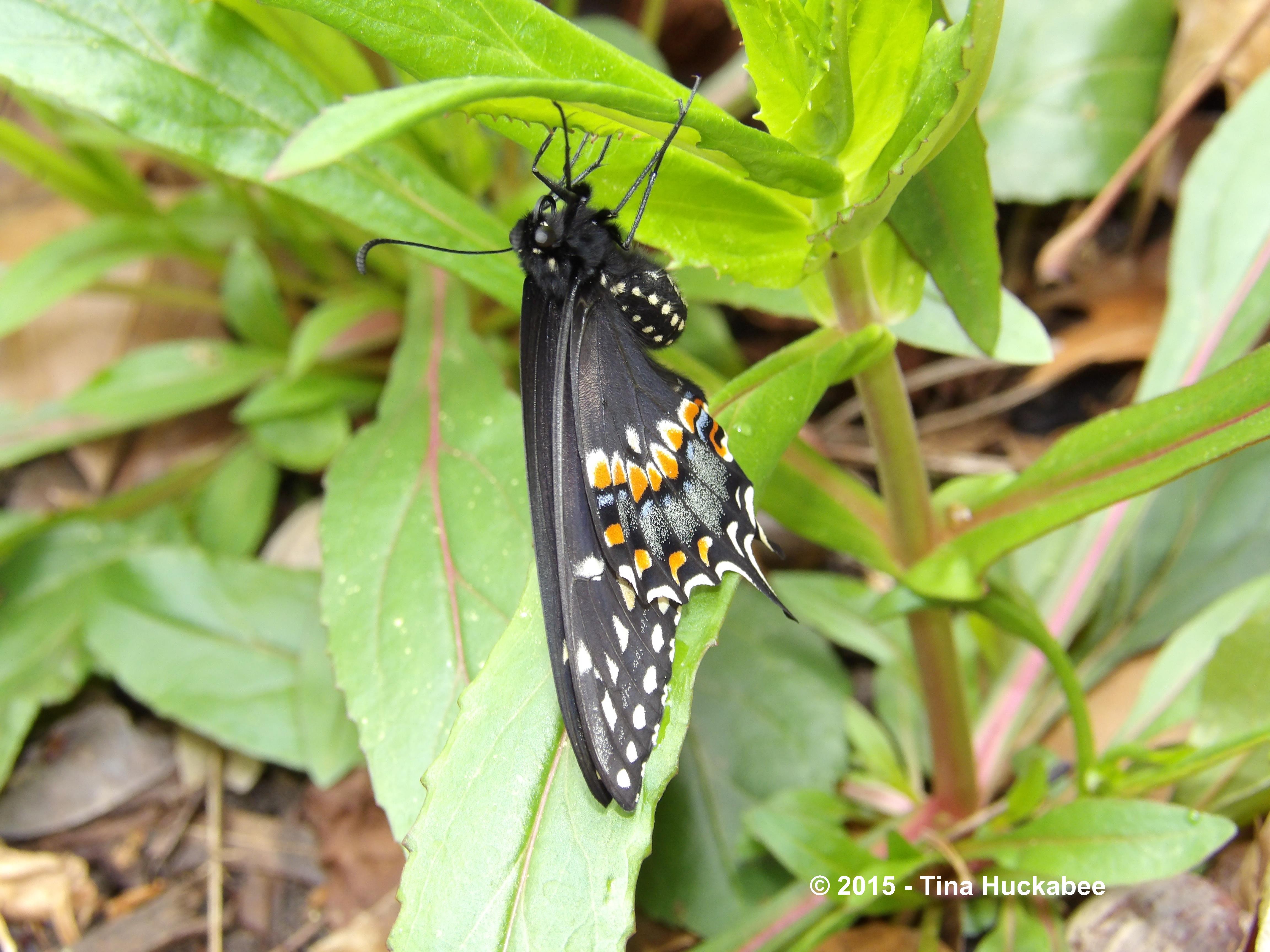
IMGP6396.new Thankfully, it was the former that happened–emergence of the adult butterfly.
IMGP6397.new

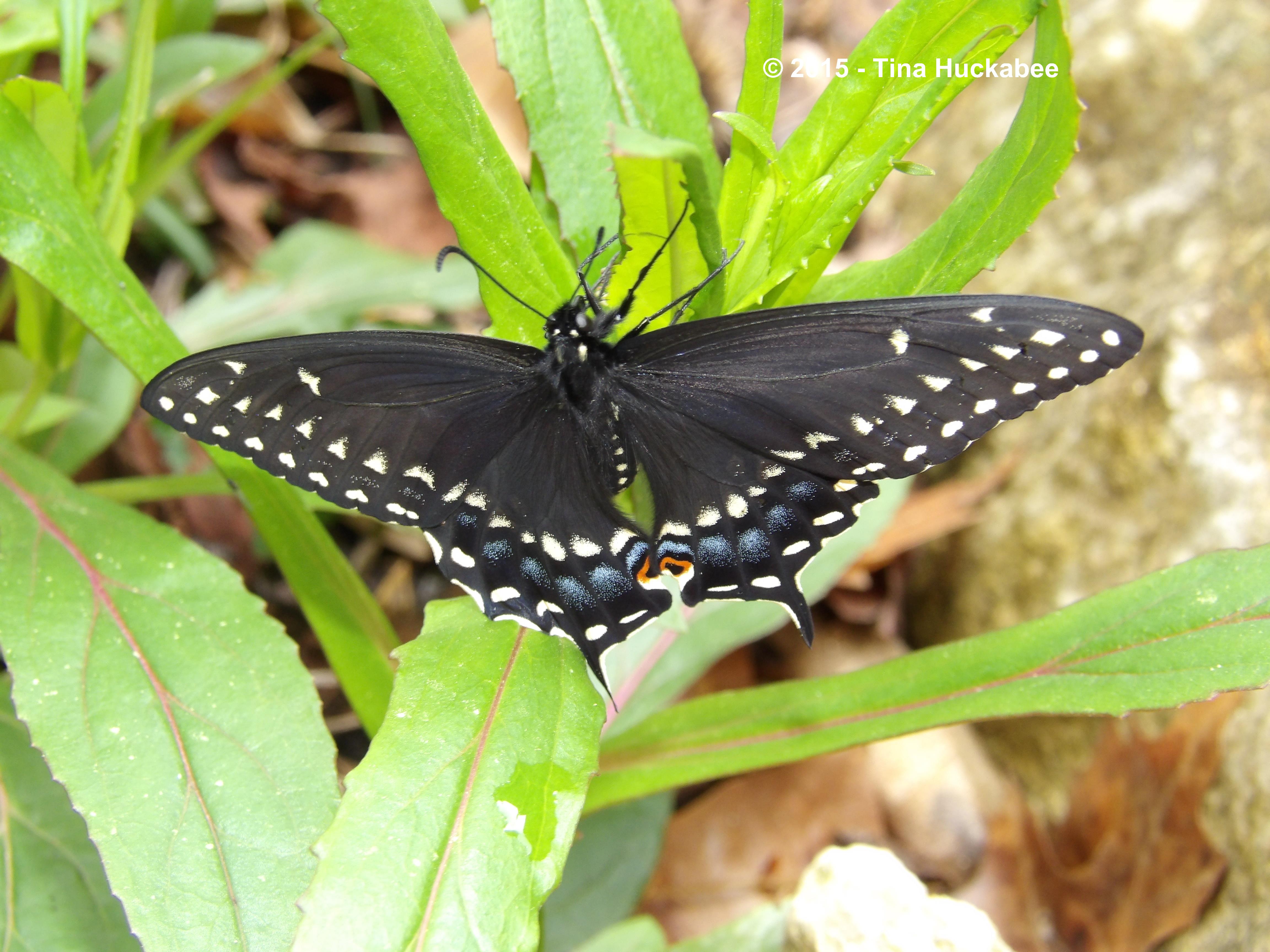
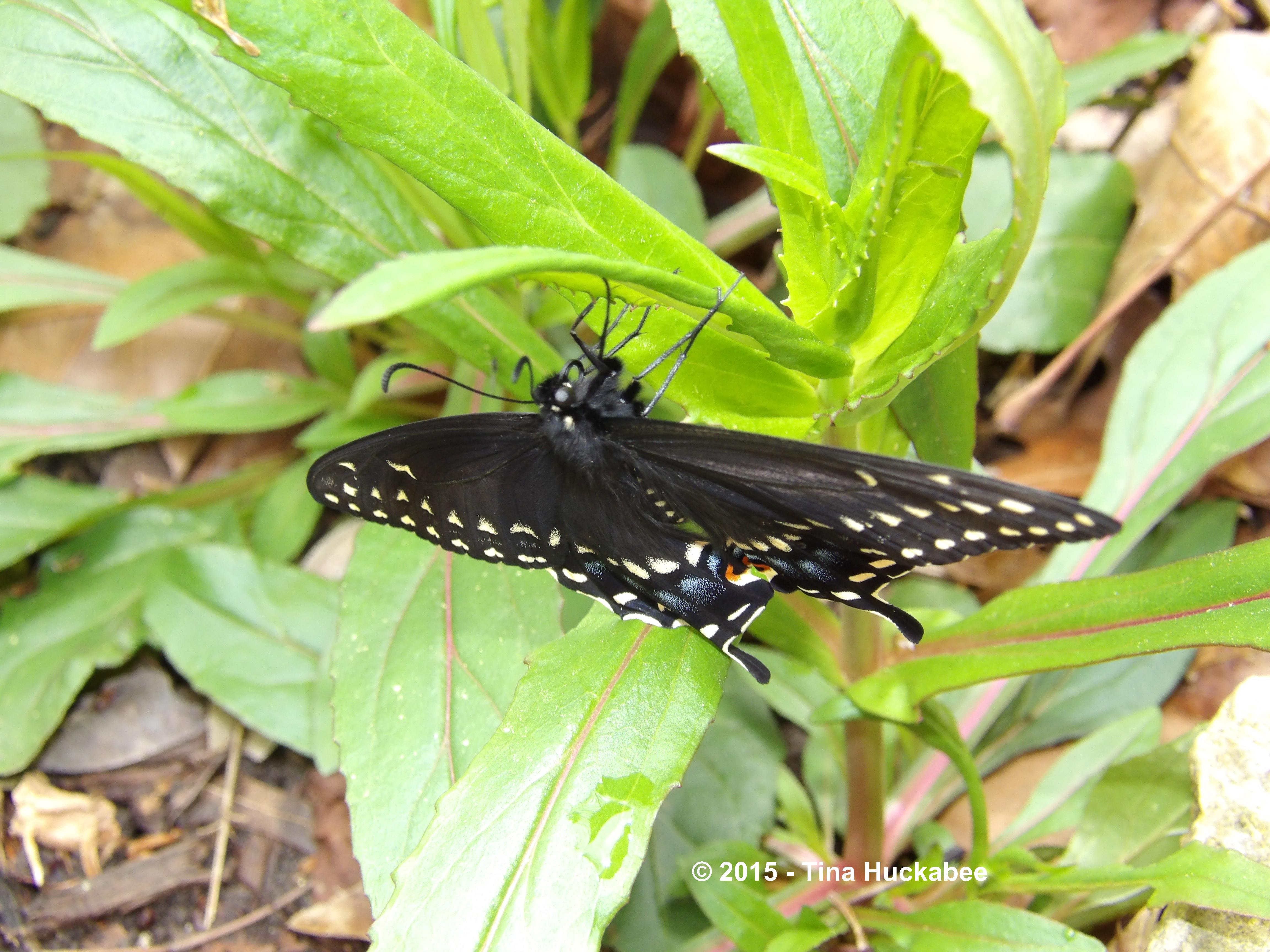
Butterflies dry their wings by alternately closing and opening them in those first hours.
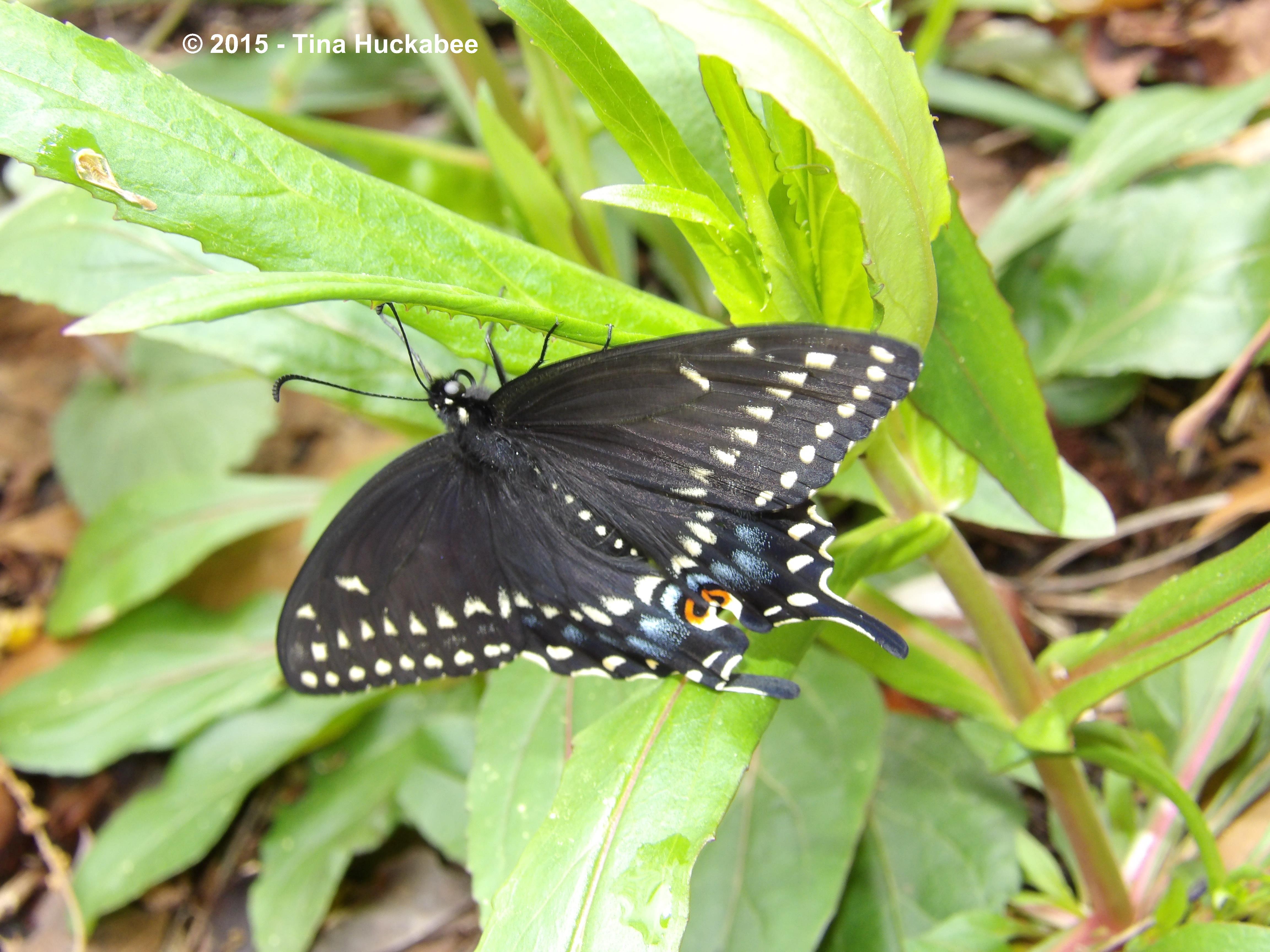
IMGP6398.new

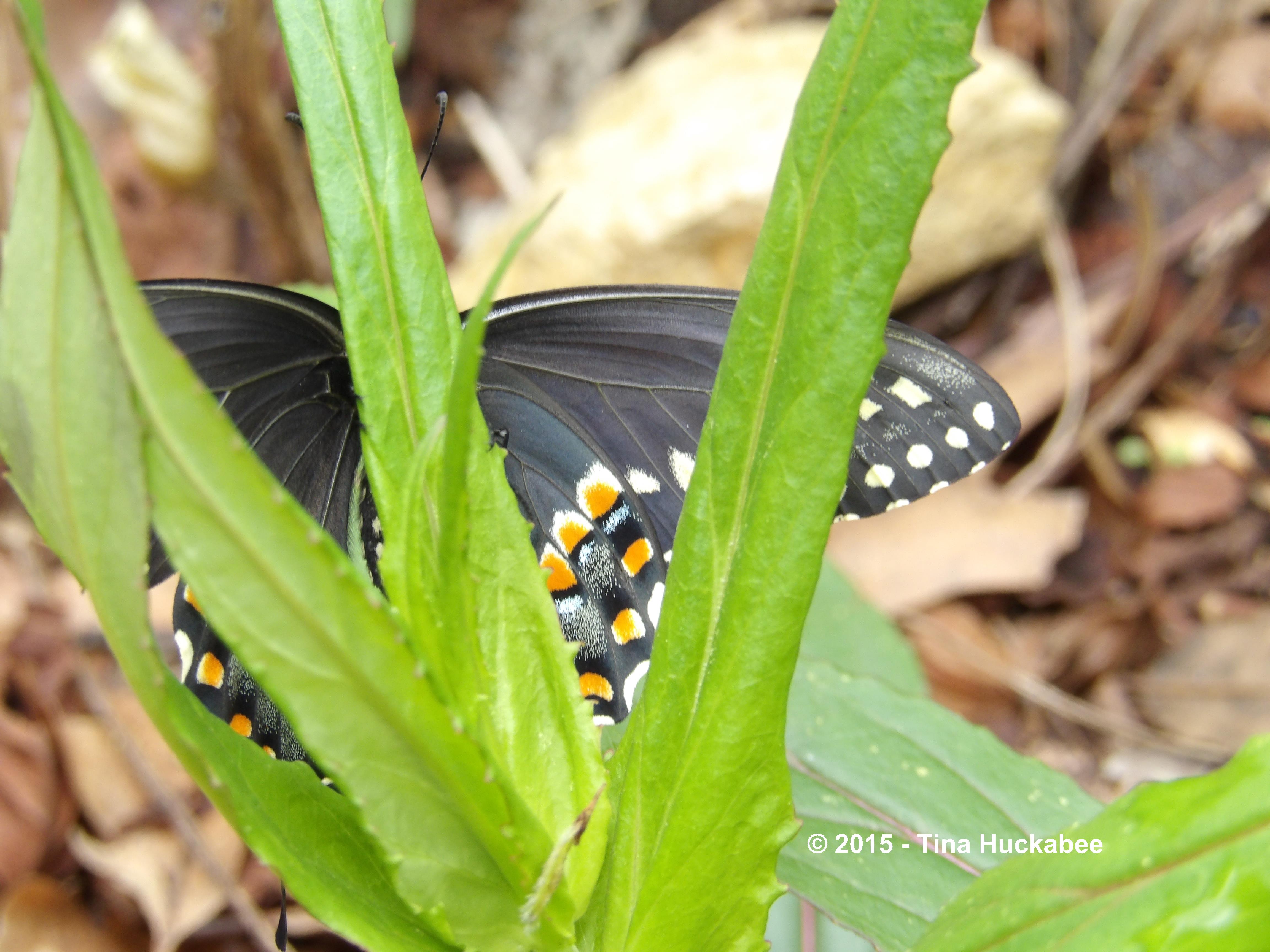
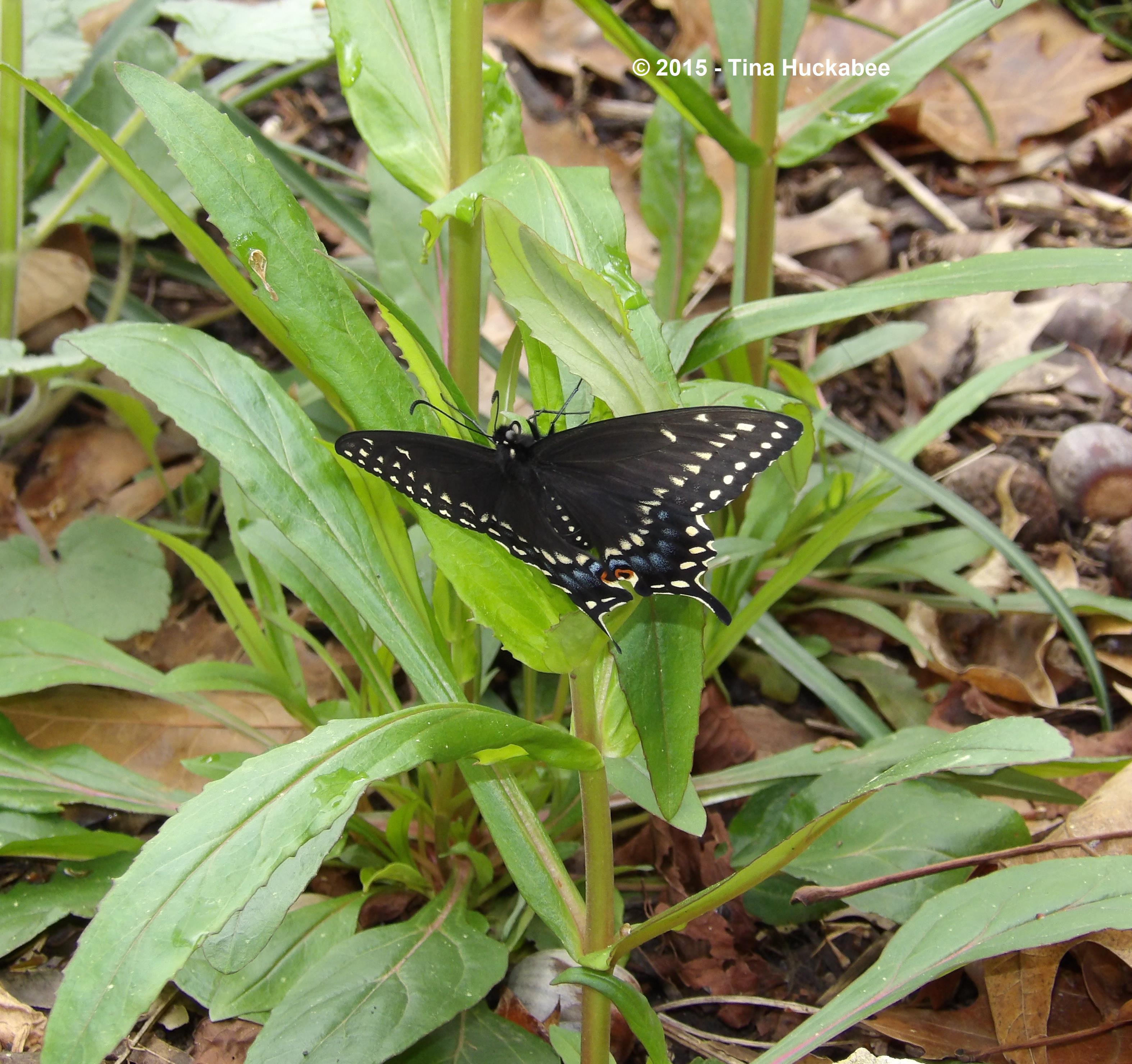
Look at that adorable face, looking maybe just a little nervous that it can’t hold onto the leaf of a Gulf Coast Penstemon, Penstemon tenuis.  I believe this is a female, because she has yellow dots above the blue band on the hind wings;  the males have more yellow topping the blue band.

IMGP6402_cropped_3401x2415..new

She rests, wings open, near her former food source and future offspring grazing grounds of Fennel (right top) and also her winter digs, to left side of her left wing.
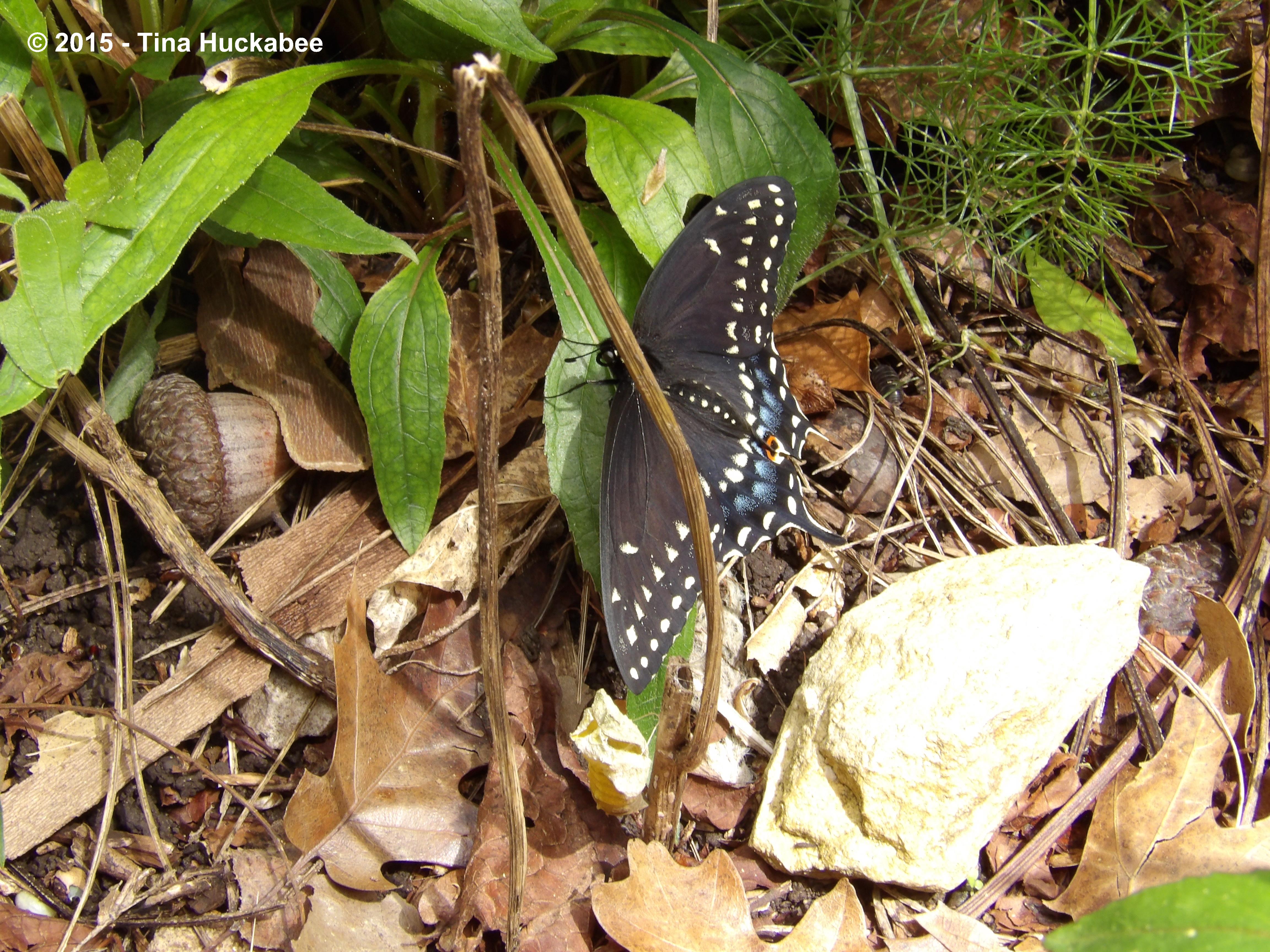
IMGP6404.new

I’ve seen a Black Swallowtail all this week flying fast through the garden.  Is it the same one?

IMGP6387.new

I don’t know and it doesn’t really matter.  The blossoms are opening and pollinators awakening in response. Or is it the other way around?

The obvious ones, because of their beauty, IMGP6395.new
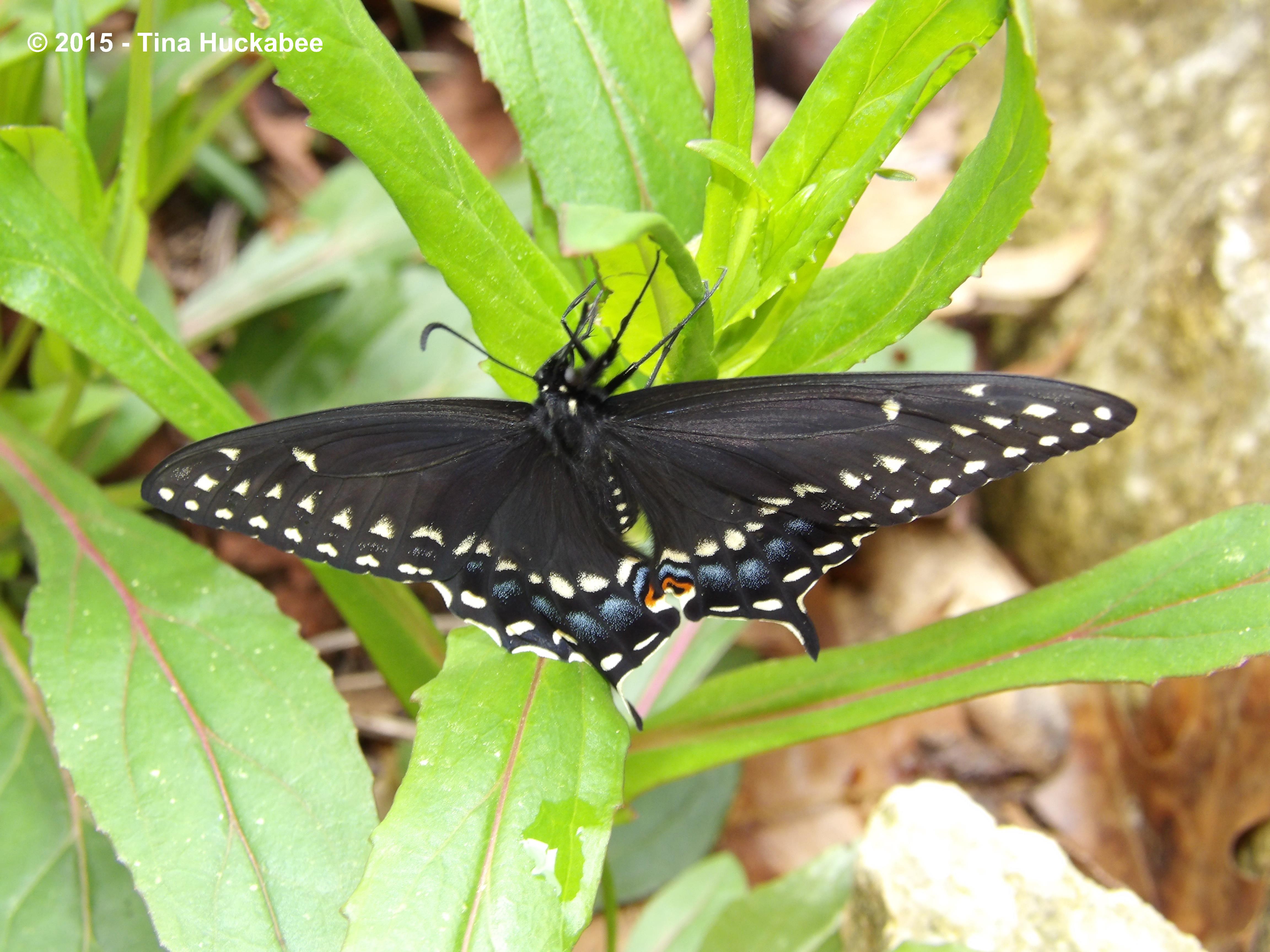
…get the most attention and photo/blog play.  But their oft ignored and unappreciated, but no less important plainer cousins such as flies, skipper butterflies, moths, and other insect species are the foundation for a healthy, abundant garden and overall diverse environment.

Good nectaring, pollinating, and breeding to all of them!
A Quirky Owl

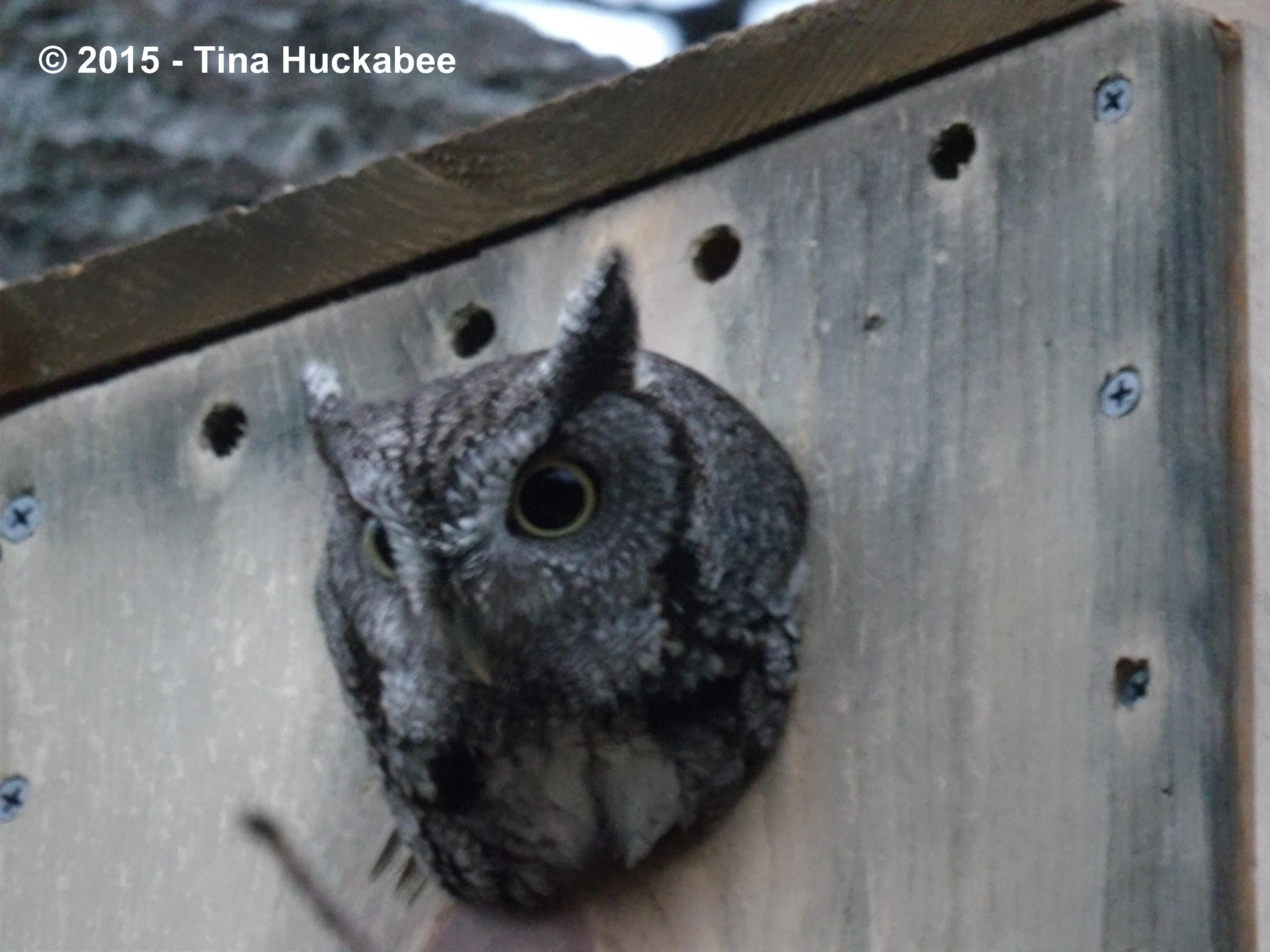
Since Mama Screech vanquished the squirrel-squatter, she appears to be settling in for brooding quite nicely.   In the past 7 years of hosting these beautiful birds in my gardens, observance of the parent owls has been limited to early mornings (REALLY early) and evenings as one or the other parent quits the box for the nightly hunting forays.  Typically, I can observe one, or both, owls only for a few minutes, mostly as flashes and ghostly quiet movements between trees.

The mama owls that I’ve had in my gardens stay inside the brood house during the day for some of the time once eggs are laid, but I have rarely seen the mammas peering out during the day, except for early evening as the sleepy heads are awakening from the daily snoozing and before they’re “on” as nocturnal critters.  As the time approaches for the owlets to hatch, the mammas tend to spend more time in the brood box and once the owlets hatch (April-ish), mammas are in the box full-time, with dads posted in  nearby trees, attending fatherly duties and keeping a close watch on their little owl families.  It’s during this time that I have regularly seen the mammas, their little Screech Owl faces positioned in the hole of the box, for longer periods during the day.  If birds are squawking, squirrels are curious, or there’s any action in the garden, the mammas appear and are alert and visible to ward off possible dangers facing their owlets.

Each year that owls have settled in and raised a family has proven different from the last.  The first year, the owls were all over–I saw that couple and their offspring almost daily.  Last year, the owls were shy and discreet and I barely knew they were in residence and that was true for both the parents and their owlets.  Other years, I’ve regularly seen owls in nearby trees, sometimes not at all.

This year there is a different dynamic unfolding.

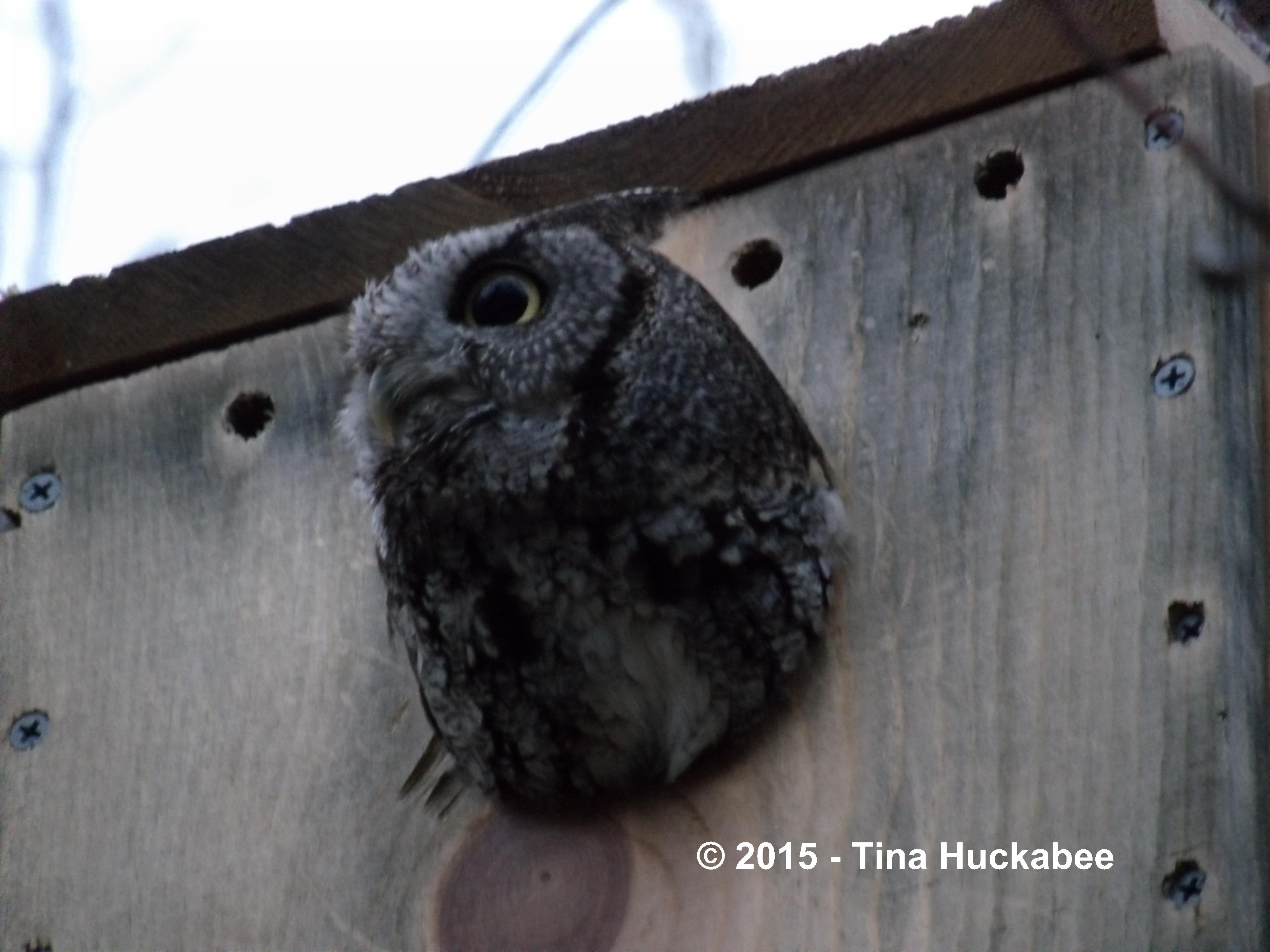
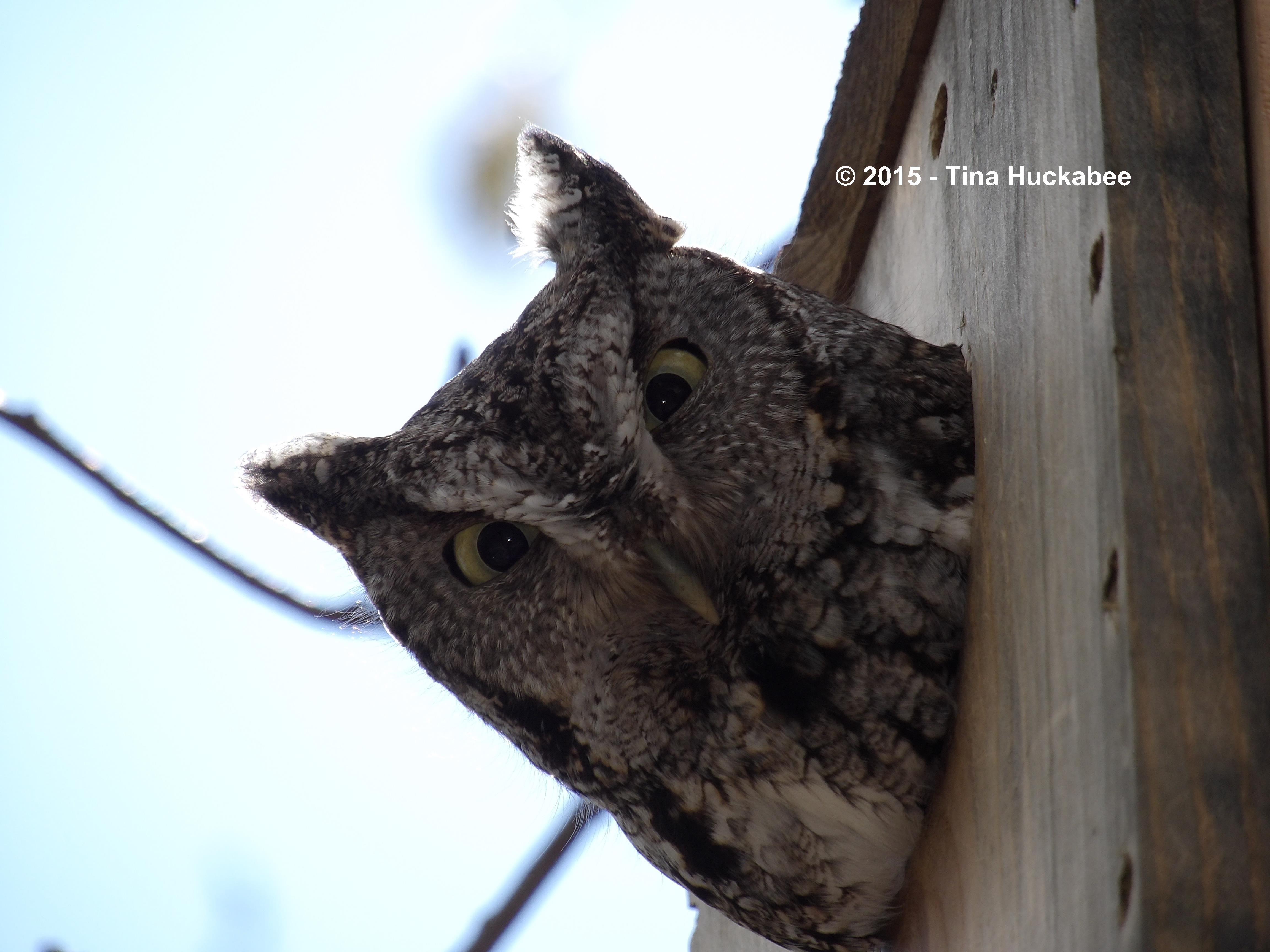
I fretted that Squirrel Nut-twerp would inhabit the box before the owls could lay their claim, but that’s no longer of much concern.  Now I’m anxious that Mama isn’t getting a good day’s sleep as she prepares for motherhood.  She’s awake and semi-awake,  her little face perched in the hole throughout daylight hours.  Here’s a brief pictorial of Mama Owl in her various moods these past few days:

pensive,

IMGP6006.new


…curious,

IMGP6009.new


…concerned,

IMGP6010.new


…annoyed,

IMGP6012.new


…and really annoyed.

IMGP6013.new

My theory on her diurnal awake state  is that she’s a new mama and is keeping close tabs on her surroundings–but I could be totally off-base. She’s not bothered by anything in particular–she watches the cats and dog when they stroll into her line of sight and pokes her head out when the birds are especially noisy, but seems nonplussed. One morning, I saw a squirrel (Nut-twerp?)  scramble along the branch and stand on the top of the brood box. Mama Owl clicked her beak in warning and retreated into the box. The squirrel skittered off.

Mama Owl isn’t unduly upset with us humans, either.  I had friends over Saturday evening, (for pi/pie day, what else??) and they all trooped out to look at the bees and the owl–she wasn’t fazed at all by being the center of attention and their oohing and ahhing at her darlingness.  She just looked at us, unimpressed, and blinked her big sage-green eyes.

She’s retired into her box more in the last 24 hours, so I’m hoping she’s getting some much-needed rest.  Mama work is hard–especially when you work the night-shift.

IMGP6015.new

Took Care of THAT Squirrel!

Every winter, we clean out the Eastern Screech-Owl house in preparation for the upcoming brood season. This year, when The Husband took down the owl house for its yearly cleaning, he decided to quickly cobble together another because the one used for a couple of years was worse for wear. Screech Owl houses are easy to build.

We installed the newly constructed house and waited to hear the tell-tale trill of a male Eastern Screech-Owl, Megascops asio, letting his partner know that he has, indeed, found a lovely home in which to raise a family.

I heard him trill one evening in December, just after sundown, but only a few times since.  I also haven’t spotted an owl head poking out of the hole at sundown–which typically happens once the couple settles in for breeding and brooding and it’s a pretty cute thing to see.  No observable owl isn’t  that unusual–Screech Owls, while comfortable in and adapted to urban settings, are shy and elusive, although I usually see and hear more activity than has been the casethis year.

I wasn’t particularly concerned, until I saw this:

IMGP4500.new

He or she moved in and has been quite comfy squatting in another’s home this winter.  I forgot this might happen–usually it’s a young squirrel and I’ve engaged in this battle of wills before: a fuzzy-tailed rodent moves into the house, cranky gardener chases him off and round it goes until the squirrel moves out and the owls move in. This year though, Squirrel Nut-twerp (SN) has been quite the recalcitrant squatter.  On and off throughout January and February, SN has outsmarted me.   I placed an old pillowcase early in the mornings,

IMGP4655.new

…that I’d remove at night.  I didn’t do this everyday, but as often as I felt like I needed to in my quest to dissuade SN from his desired digs.

I’d think to myself: Ah ha, e’s gone!  Victory is mine!!  Then he’d be back in the house, looking cute and if I might suggest, just a little smug, at besting me.

IMGP4501.new

Last Thursday, as the sun sank to the west and as the coldest night of the year commenced, SN was in the brood box, looking askance at me, clearly wondering what I was going to do.  You gonna chase me out again, lady? The forecast predicted rain, freezing temperatures and ice.  He looked at me, I looked at him. I capitulated. OK, Bub. You can stay there for the night.  I didn’t have the heart to chase him off. Truthfully, I’d given up on hosting an owl family this year.  I’ve seen and heard so little from the neighborhood owls, that I assumed the couple moved on to a less squirrelly location. My adored owls and I were vanquished. Squirrel Nut-twerp was the victor in the annual maneuvering for desirable tree trunk real estate.

Just after sundown on Saturday evening, I stood outside, looked up in disappointment once again at the hole being devoid of  a fuzzy owl face and I turned away.  Feeling quite disconsolate and sorry for myself, believing with full conviction of my abject failure as a wildlife gardener, I morosely stared off into the opposite distance from the brood box, appreciating the form of budding trees against a darkening sky.  After a minute (probably less), I turned around and saw two perched owls in the tree–the female (the larger of the two), whinnied in the way of Eastern Screech-Owls and her mate, who sat just beyond her, on a different branch, quiet and probably annoyed at me.  We regarded each other, though I’m sure they saw me more clearly than I saw them.  One swooped off, the other followed, both in complete silence.

Happy, happy wildlife gardener am I!

Sunday morning, I noticed Squirrel Nut-twerp nosing around the brood box.  First, he climbed on top, timorously looking in from above.  Then he scampered to the limb in front of the box, poking his nose close to, but not into, the hole–then withdrawing in a hurry.

Hmmm, that’s a good sign that something scary resides in the box.

Further circumstantial evidence of inhabiting owls presented when I stepped outside a little later to the raucous  kerfuffle from 10 birds, perched in the tree, pointedly cawing at the brood box. Wrens, a mockingbird, blue jays all in noisy chorus,  protesting…something. New neighbors? That’s one of the sure signs of Screech-Owl inhabitants:  other birds, as well as their offspring,  are potential meals of the owls and once owls move in to the brood house or tree hole, those prey make known their displeasure about the predators. As a friend of mine said:  there’s nothing like some killers moving in to galvanize the neighbors into action.  I understand the birds’ trepidation. While I cheer about the rats and mice hunted by the Screech and Great Horned Owls, as well as the various hawks in the neighborhood, I lament the loss of fledglings and migrating songbirds who will, undoubtedly also be prey.

Such is nature.

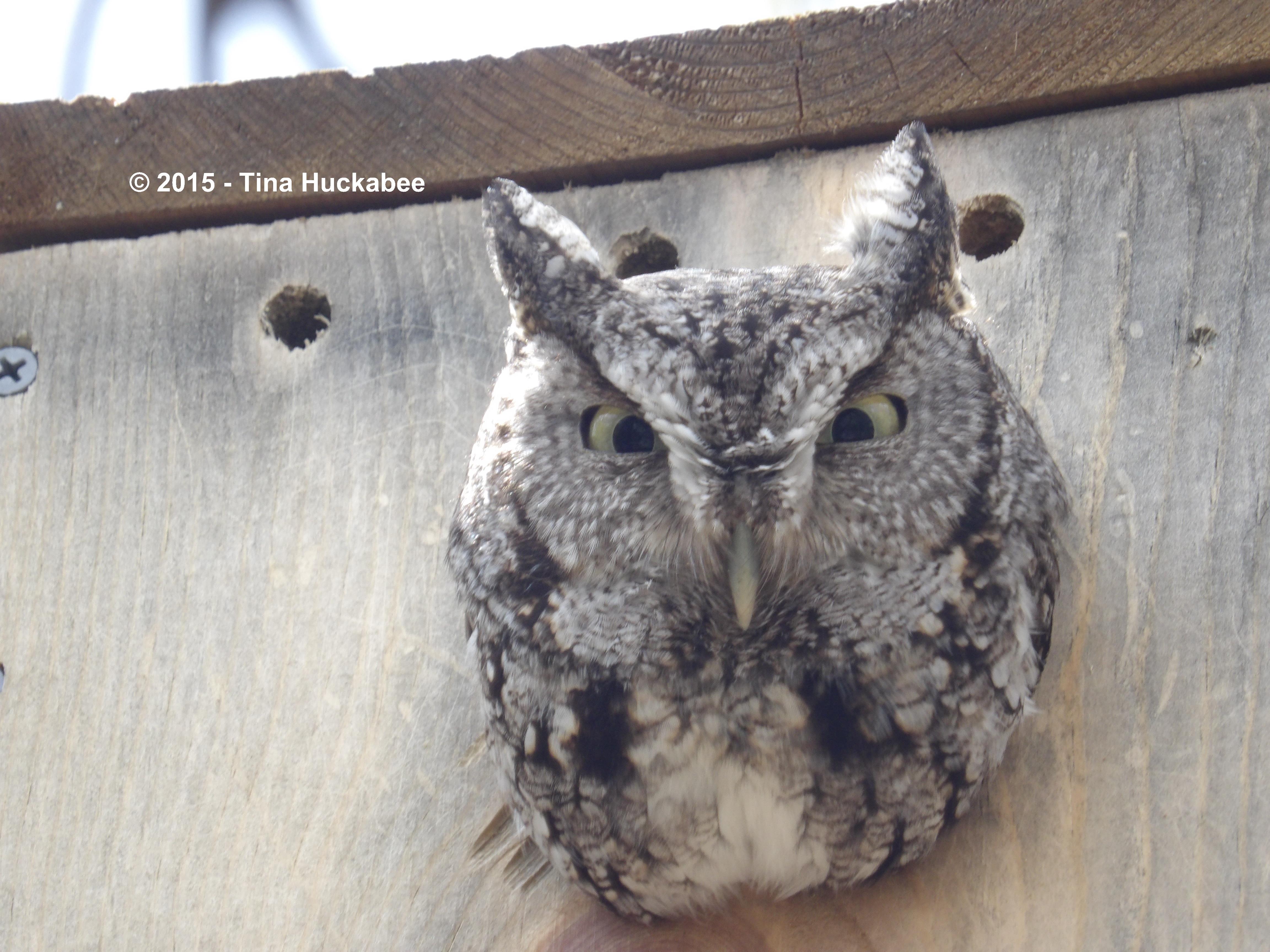
Sunday afternoon, absolute proof of the Screech couple and their choice of house.

IMGP5915.new

Isn’t she adorable, even if she looks a little grumpy?    I don’t know where Dad Owl is, close by more than likely, but I haven’t spotted him yet.

I’d like to think that I helped my owl buddies by annoying Squirrel Nut-twerp to the point that she moved on, but I suspect it was all the owls’ doing.

IMGP5918.new