Early spring blooms are a thing of the past, and summer, with its accompanying hot-tempered blooms, is knocking at the door. May brings rains–typically our wettest month here in Central Texas, zone 8b–but also the warm breath of summer breezes. With added humidity, summer’s sauna is about to begin. Even so, the days are pleasant and blooms that love the heat will soon be stars of the garden.
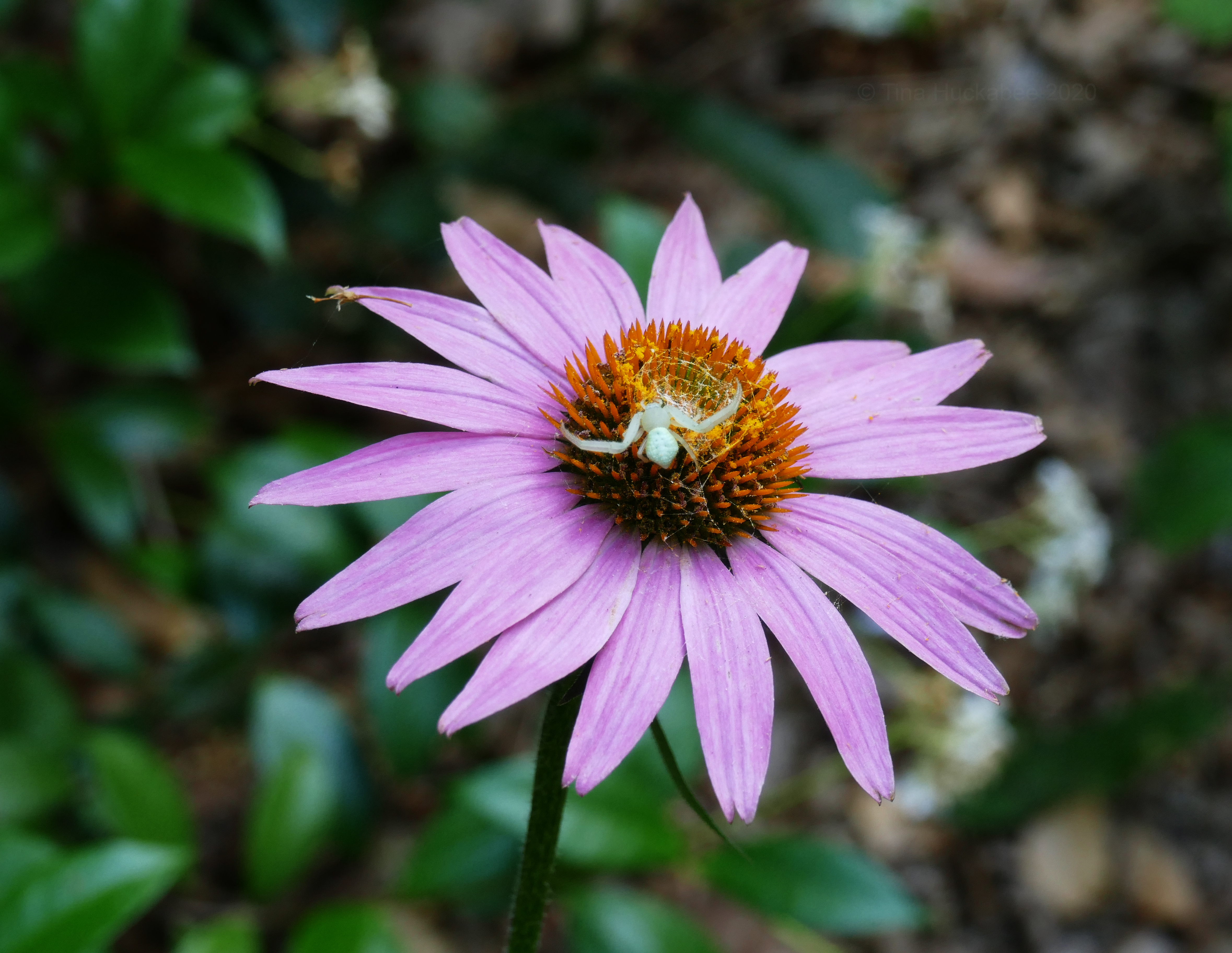
Purple coneflower, Echinacea purpurea, are in their prime and open for pollinators to sip from and gardeners to delight in. I spotted this Crab Spider waiting for a meal on an open coneflower bloom. The honeybees are fond of coneflowers, but I imagine it was a fly, syrphid fly, or small native bee that the crab was hoping for. Honeybees are a tad big for this little thing, though crab spiders are successful predators.
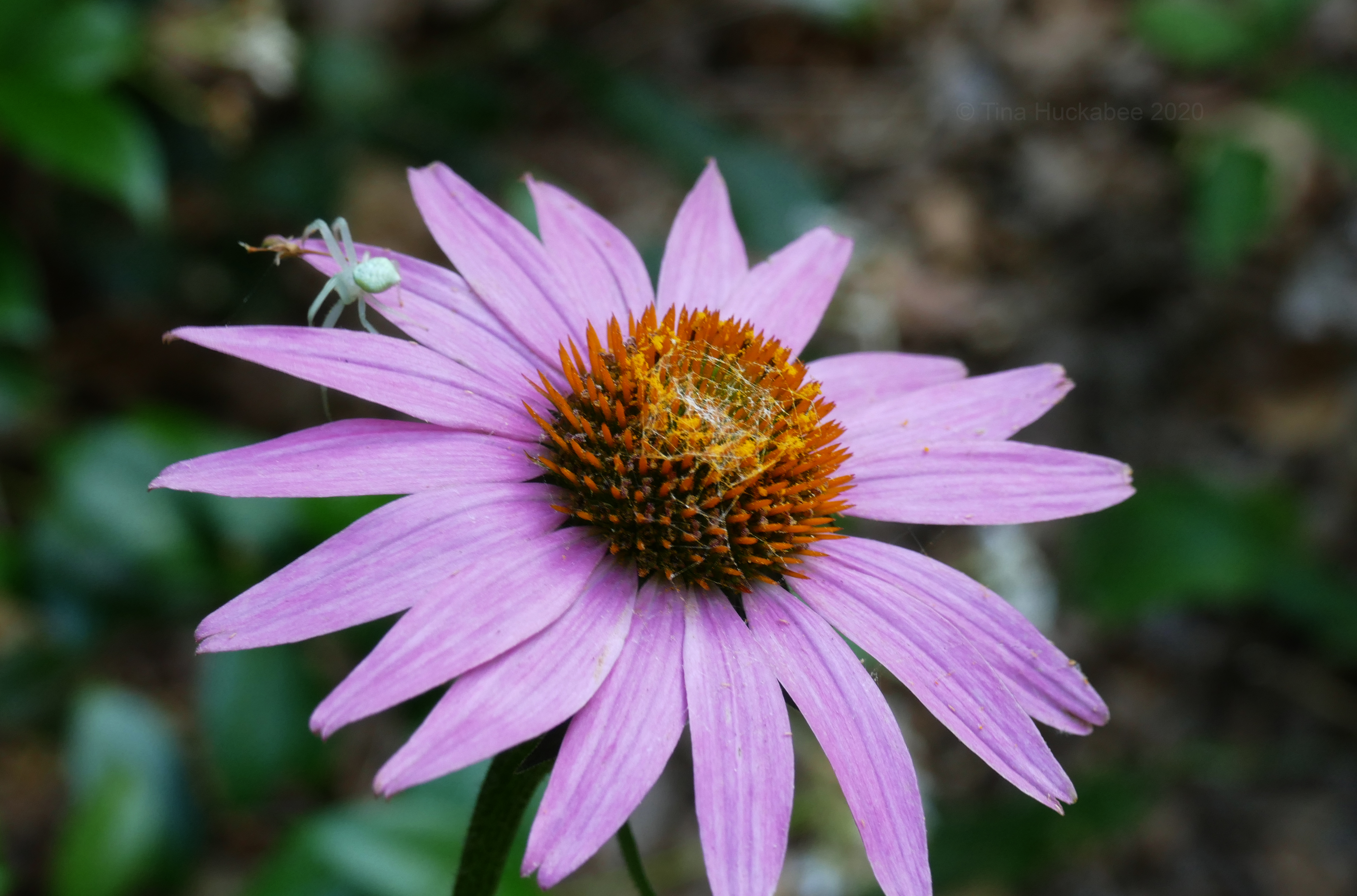
It skedaddled as I was shooting the photo. Notice the bit of webbing attached to the central disk of the flower: no doubt, some meal will become ensnared in that.
Sun shines in the sky, coneflowers sparkle in the garden.
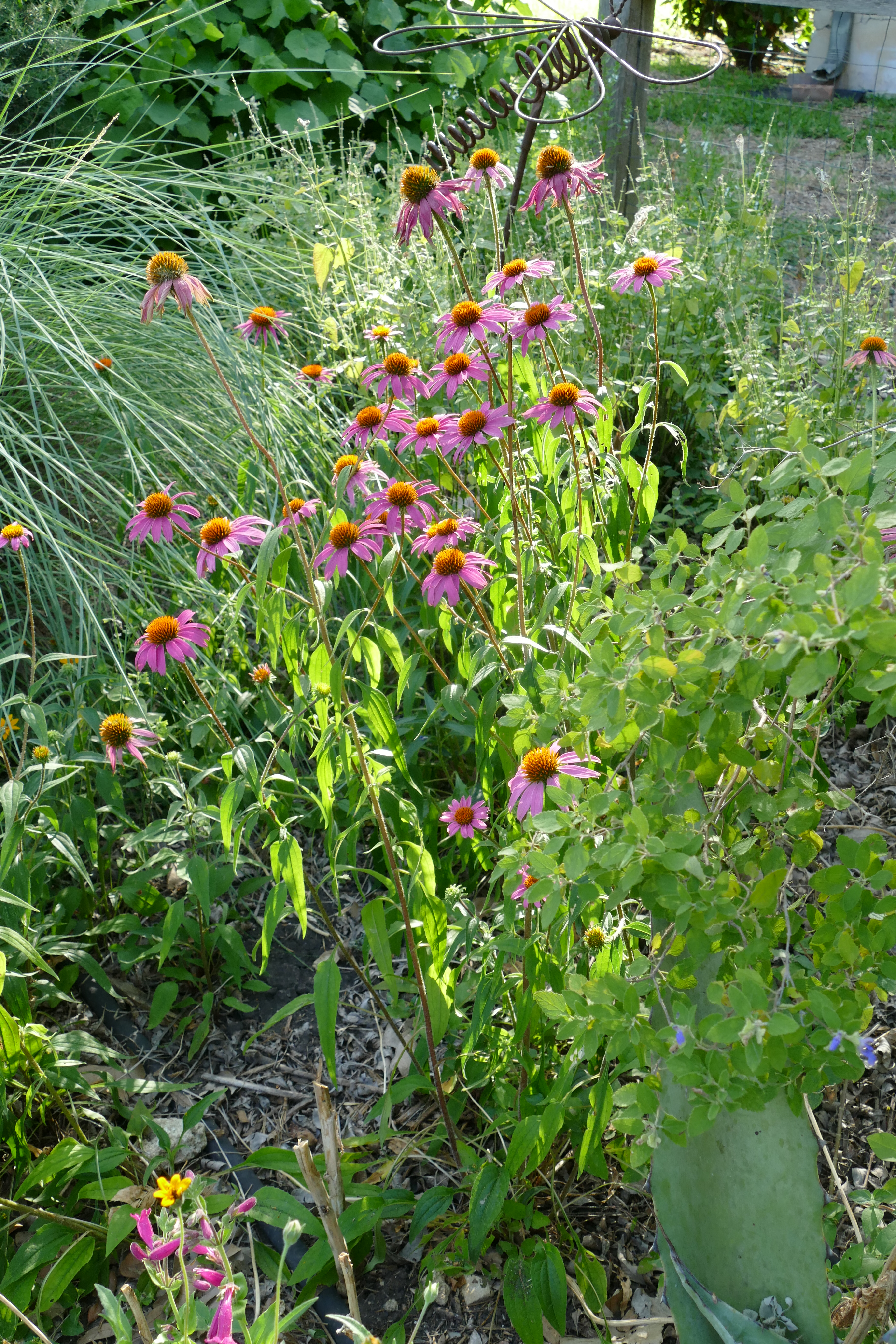
Little coneflowers, all in a row, though it’s not the straightest of rows.

Another late spring/early summer native that has hit its stride, is the perennial Heartleaf skullcap, Scuttelaria ovata. The small, violet blue blooms are borne along flower spikes. They complement the grey-green, fuzzy foliage.
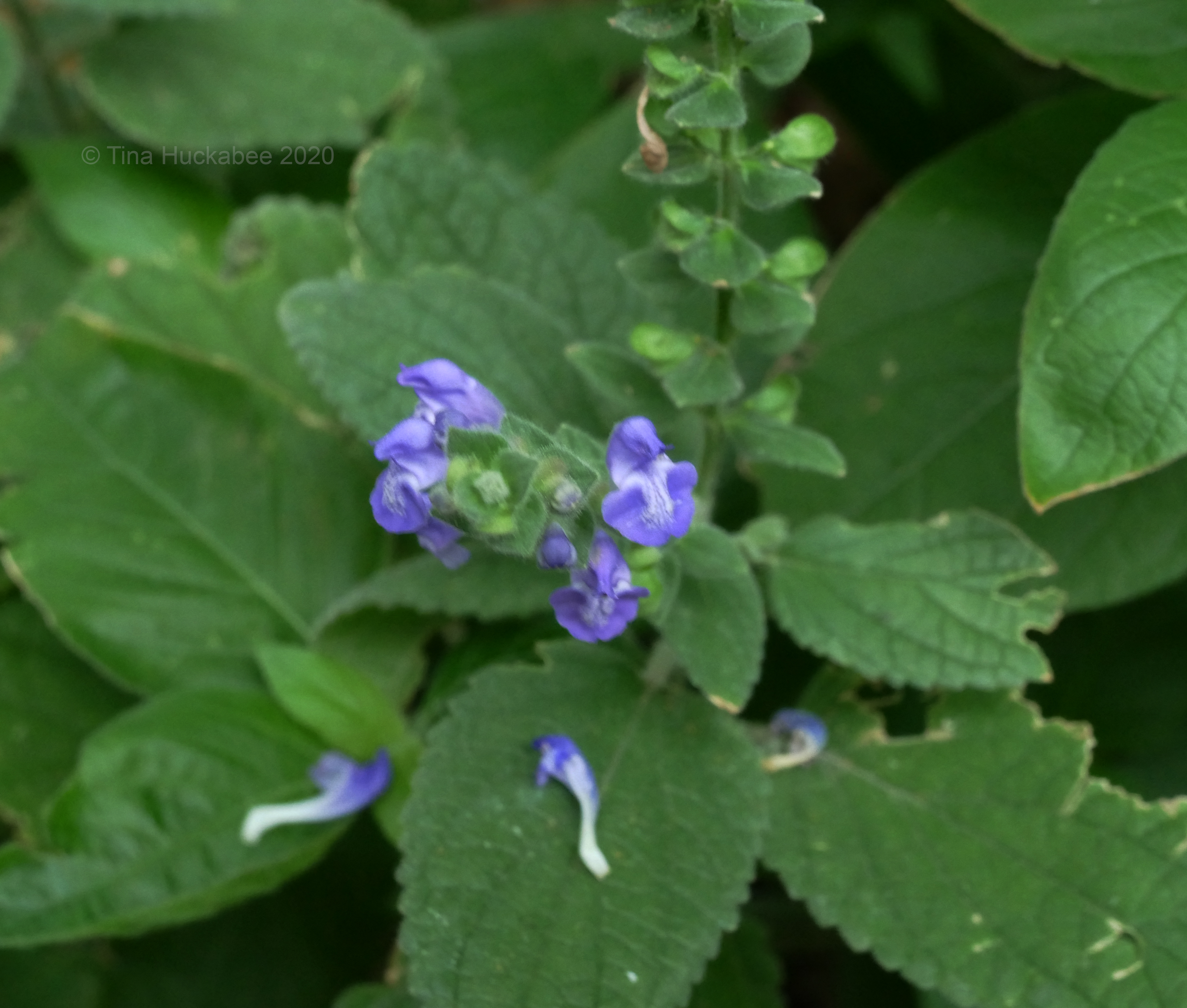
A step back reveals a contrast between the bright green foliage of a neighbor plant, Drummond’s ruellia, Ruellia drummondiana, and the subdued tinge of the Heartleaf’s foliage. The tiny blooms are charming accents.
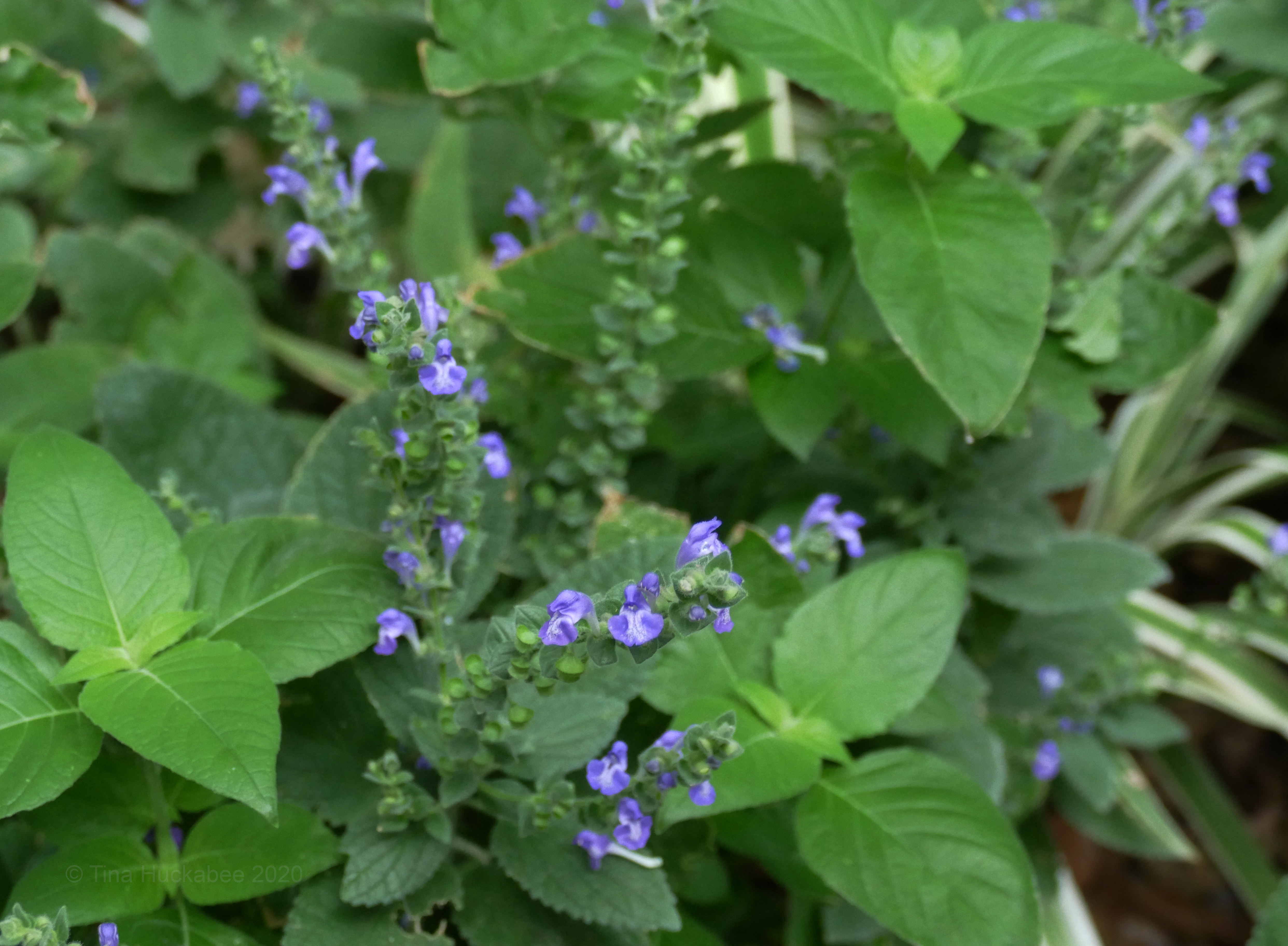
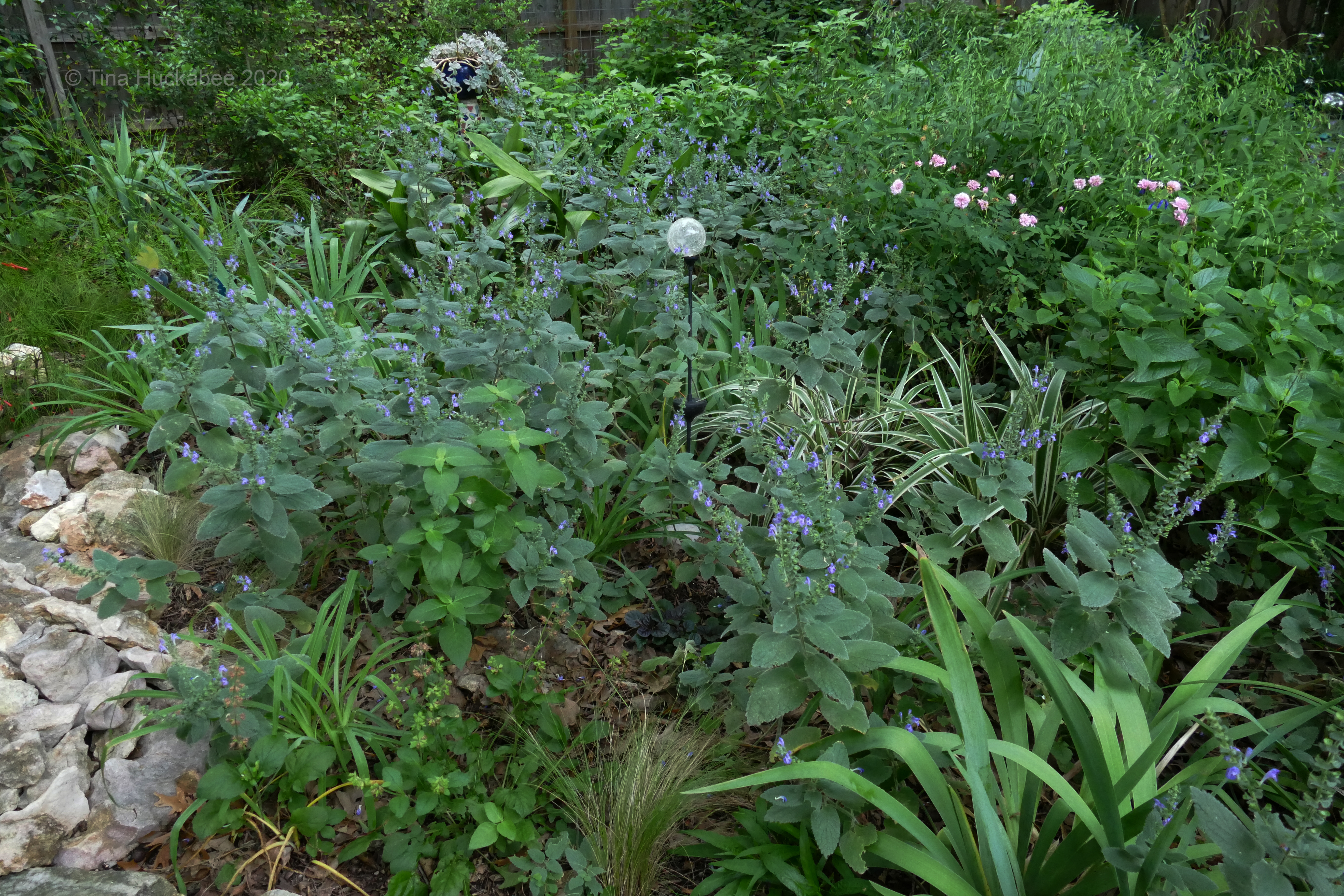
In late autumn, Heartleaf skullcap emerges in drifts in my garden, filling spaces and buddying up to other perennials and evergreen plants. It acts as an evergreen during winter, keeping the garden full and lush. Once blooming commences in April, the summer perennials are up and running, preparing to take over the garden show. Heartleaf skullcap pairs well with all the plants in my garden.
Heartleaf foliage is fetching and in a wide shot of the garden, they’re the primary attraction of the plant. But the flowers are visible–dots of lavender blue setting off the foliage–and the bees, native and honey, take notice. The blooms are popular among that crowd.
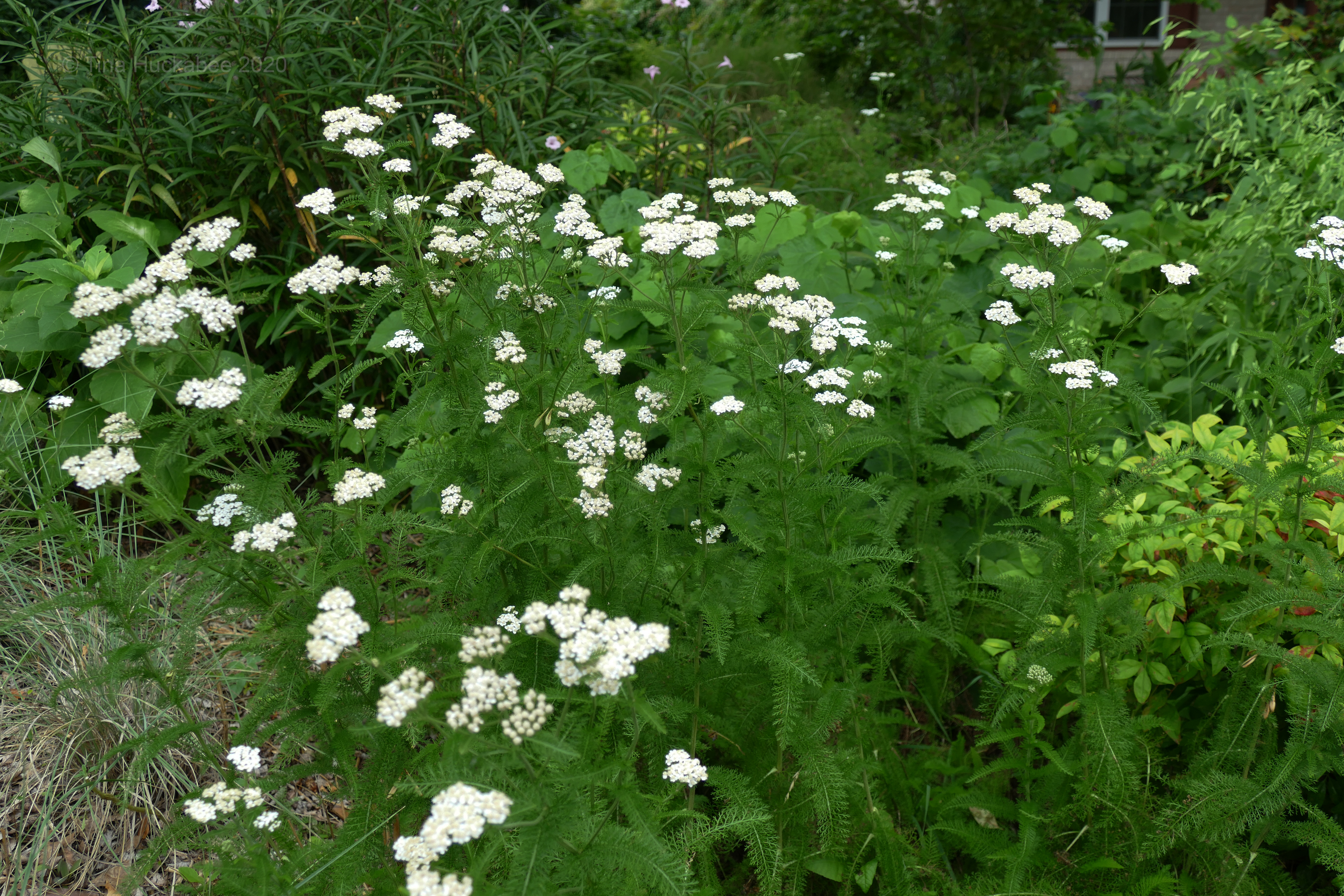
White flowers are refreshing and none more than those of Yarrow, Achillea millefolium. Feathery foliage pairs with these flat-topped clusters of tiny florets, just right for the smaller pollinators to work around. On this day, at this time, a fly works the blooms.

I transplanted this group of yarrow last autumn from a different part of my garden. They adjusted well and haven’t missed a beat in their blooming!
Red yucca, Hesperaloe parviflora, a member of the Agave family, sends up graceful stalks in spring, loaded with salmon-n-butter blooms, to the delight of of hummingbirds, native bees, and butterflies.
Oh yeah, this gardener loves Red yuccas, too!
The stalks grow 4-5 feet tall, seemingly overnight, emerging in March/early April from an evergreen base of succulent-like leaves. The flowers that blossom along the stalk strut their blooming stuff all summer and through autumn, making this plant a must-have for gardeners, especially those who plant for pollinators.
Do you see the webbing toward the top of this bloom stalk? Looks like our friend the crab spider (or one of its friends) set up shop for a go-to meal. I prefer not to witness an entangle bee or butterfly, but that’s part of a balanced garden life.
On another, shorter bloom stalk of a different individual Red yucca, the stalk divided itself into three distinct sections, each allowing for the open blooms to face a different direction.
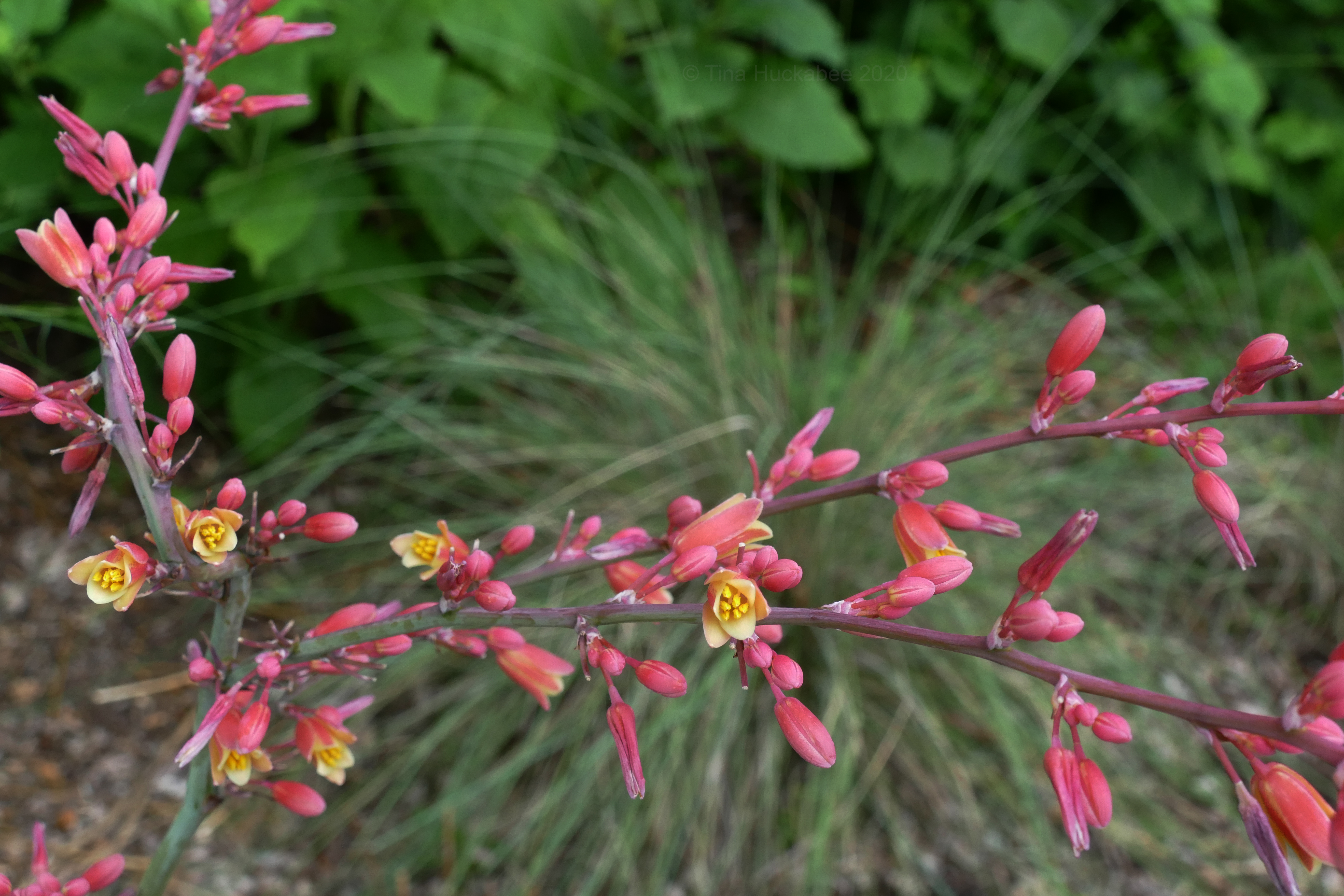
Soon, I expect that the hummingbirds will find these luscious blooms. I’ll enjoy observing their meals and the territorial battles that will ensue.
May blooms: no longer quite spring, but also, not yet summer. May is a nice bridge of blooming from cool season flowers to hot Texas summer blooms.

Joining with Carol in celebration of all things blooming, please pop over to her May Dreams Garden to see blooms from many places for Garden Bloggers’ Bloom Day.

 My Gardener Says...