The Big Move

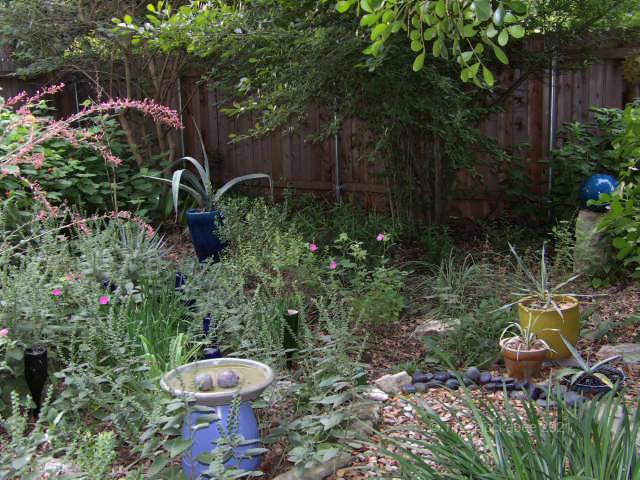
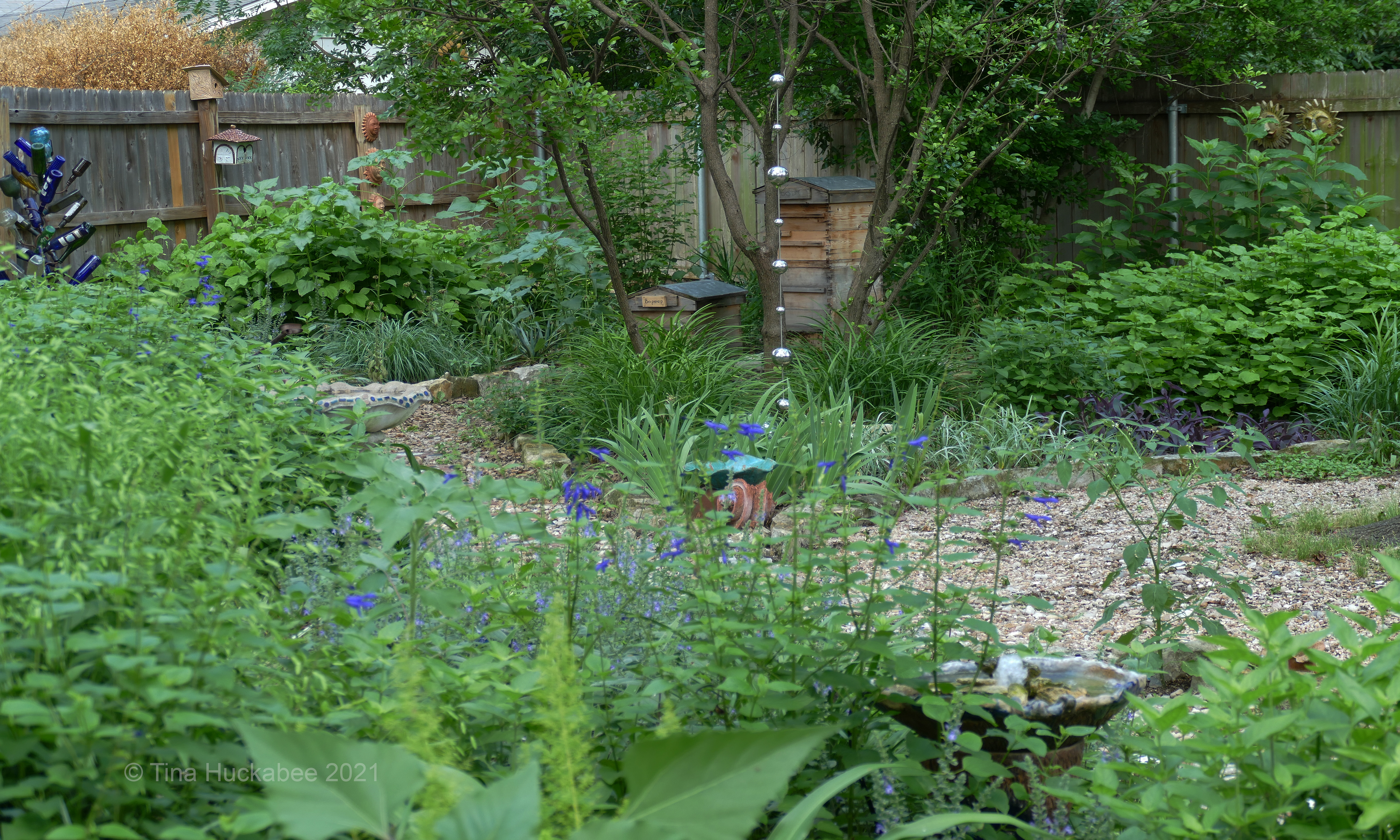
My back garden forms an odd, pie-shaped situation and for the past decade, has become increasingly shady, especially in the back corner section of the garden.

These two photos are several years old and most of what is blooming in the shots either no longer exists or doesn’t bloom due to the shady conditions. Some bloomers here include Turk’s caps, with their summer tiny, twirled flowers, a Mexican Honeysuckle bush, whose orange flowers appear when the mood strikes, a leaning Frostweed which blossoms as it reaches for autumn sun, and a few small, shade-tolerant perennials and grasses. This darkened corner is best suited for foliage and, as of March, the beehives.

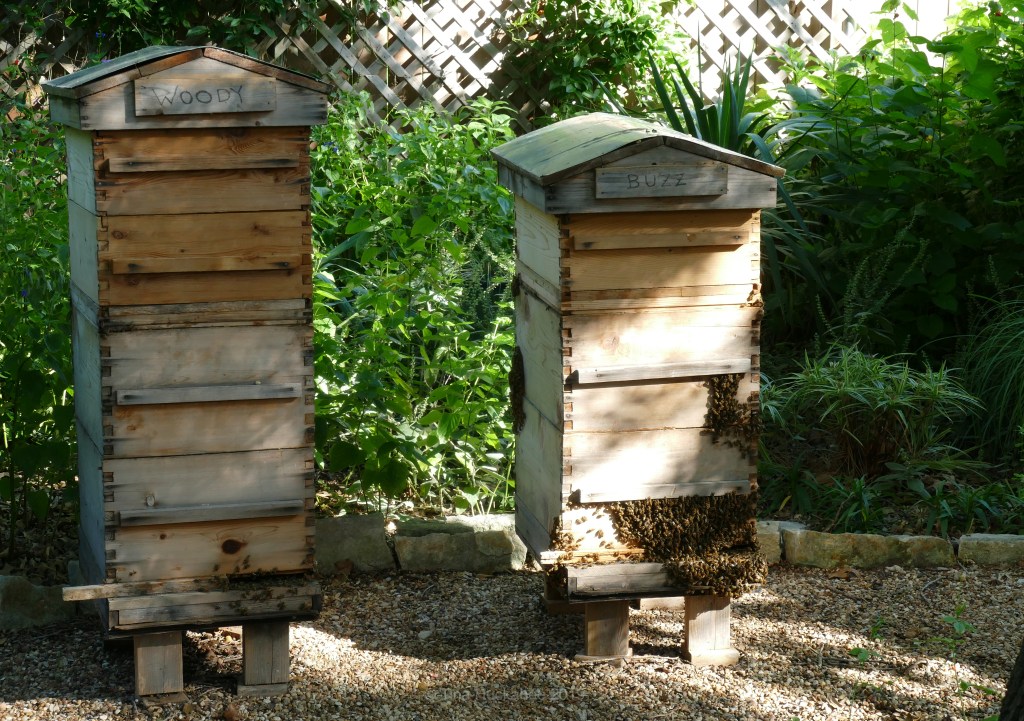
When Bee Daddy built the Langstroth hives five years ago, I see-sawed about which would be a better spot for the two hives: in the back, shady corner, a generally out-of-the-way spot, or in one of the opened graveled sections of the main part of my back garden.

.

I opted for the main area of the garden, and while that wasn’t a mistake–it was easy to work around the hives and they received some nice bits of sun–I’ve come to accept that it’s better to have the bees tucked in a part of the garden where no one but yours truly ventures.

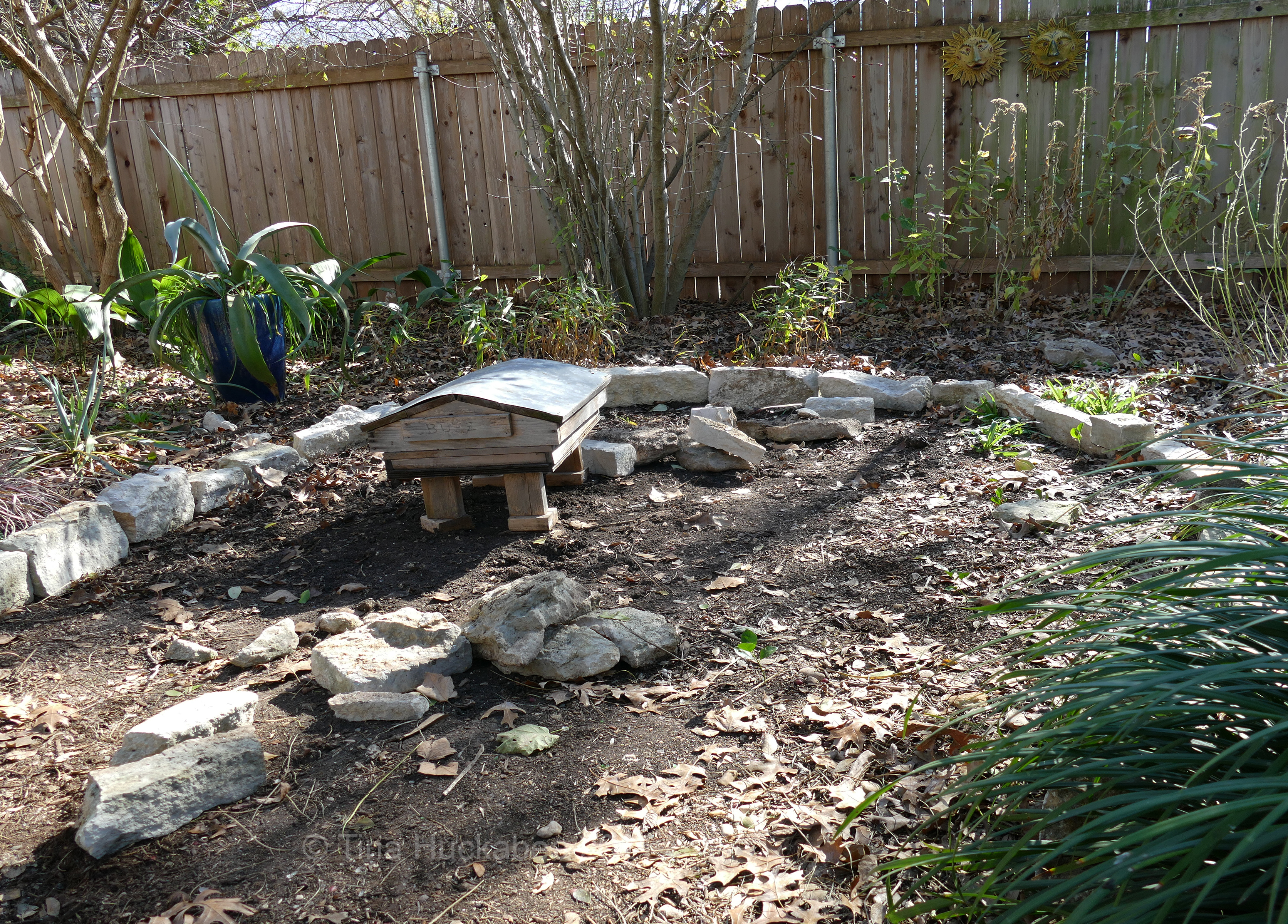
In autumn, I decided to move the hives to the back section of my garden. Really, it was only one hive that needed moving, because Buzz absconded last spring, the hive sitting empty for the year. Picking up and transporting Buzz’s truncated hive–base and roof–was a snap. In the new beehive spot, I also expanded the limestone border between the negative space and the garden, enlarging the beehive area a bit. I intended to mulch or gravel, but February’s snow storm and the months-long cleanup which followed, plus a bum back to boot, rendered that segment of the project incomplete before the two colonies of bees moved in, Woody in March, the new one in April. I added a few more shade-tolerant grasses to the garden itself.

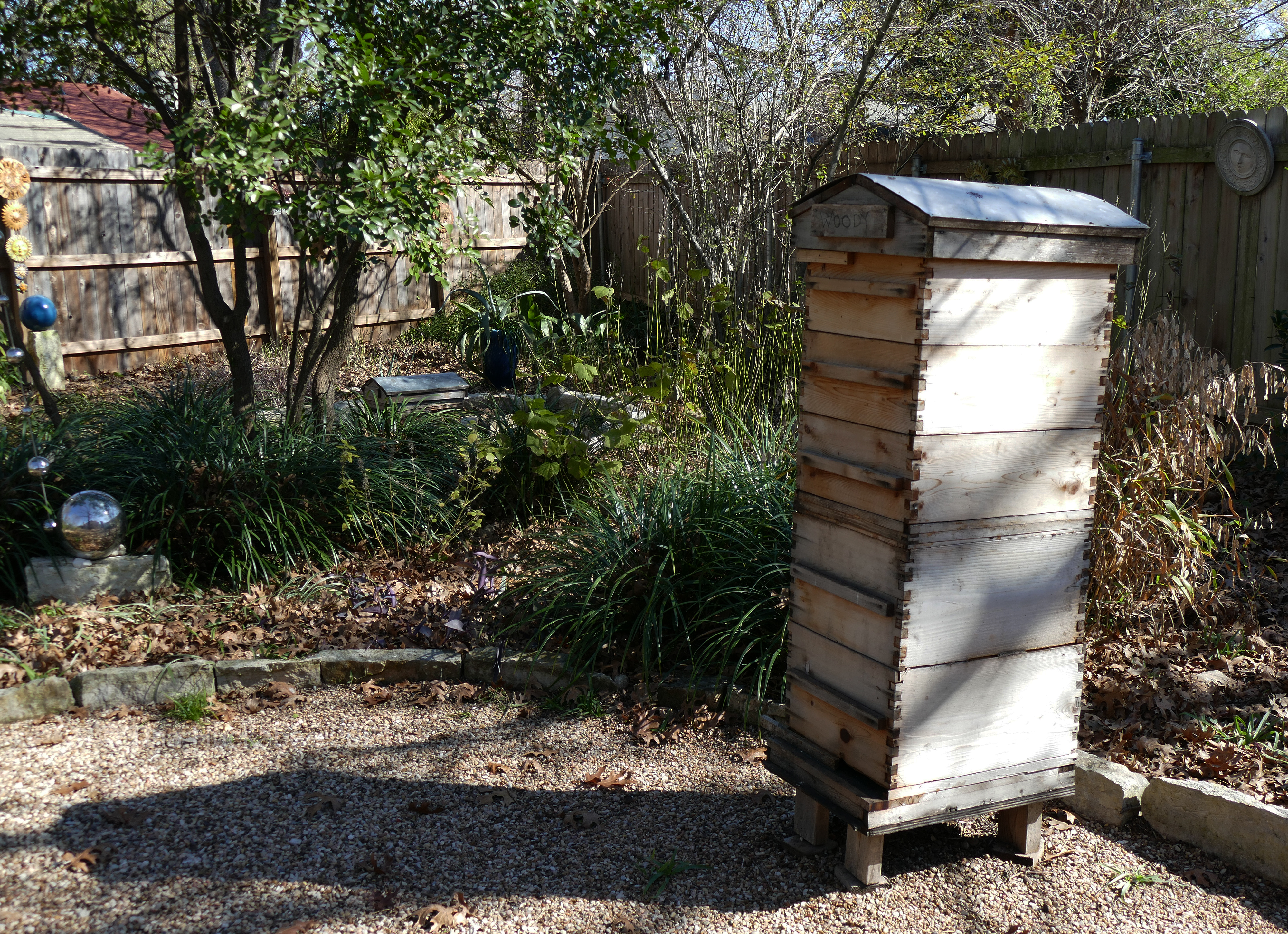
In this photo, taken in January, you can see short little Buzz sitting all alone in its new cul-de-sac of the neighborhood, while tall, stout Woody, remains in the original spot.

There are about 17 feet between the two hives. Our plan was to suit up and smoke Woody sometime after the first couple of winter freezes, then move Woody 2 to 3 feet a day for 5 to 6 days. It’s best not to move bee colonies more than a few feet at a time because bees use visual clues and pheromone signals to exit the hive and return. If hives are moved too far, too quickly, bees are lost.

After the move, the two hives would then sit side-by-side in their shady, corner garden. I knew that as we moved Woody, we’d need to traipse across some plants, but accepted that the few evergreen plants bothered wouldn’t be particularly damaged. The awful February storm made one thing easier: all my perennials, even the so-called “evergreens” were knocked back completely. So after I pruned all the plants to the ground that were in the hive’s pathway, it was time to move Woody.

What fun.

The big move progressed reasonably well for the first 4 or 5 days. The hive is ponderous and awkwardly tall with its two brood boxes and two honey boxes. Bee Daddy did most of the “heavy lifting” while I skootched the hive along, keeping it vertical. The last day was, for whatever reason, the worst. It was chilly, which should have made it easier because the bees are slower in cold weather, but it took us longer to get the hive set and leveled in its new place. When working the hives, I wear a full bee suite, with veil, and Bee Daddy wears jeans, boots, and a jacket with a veil. As we were finishing up, Bee Daddy’s bum fired up in pain; he realized that he’d forgotten to put a belt on his jeans and, well, you can guess what happens when the jacket rides up, the jeans slip down, and bees find a way into clothes and onto bare skin.

Poor Bee Daddy.

Ouch! Itch!

In April, we hived a new colony and renamed the hive Bo-Peep. If you’re familiar with Pixar’s ‘Toy Story’ franchise, you’ll know who Bo-Peep and Woody are–a great pair!

Drat! I wish I’d had the time to mulch before we moved the hives. The weeds are going to drive me nuts this growing season!

Both hives are thriving. We continue to feed sugar water to Bo-Peep, as she’s still combing out the frames, but she’s almost done so the supplemental feeding will end soon. Bo’s queen is laying eggs and she appears to be off to a good start in colony life. Soon (we should have already done it!), we’ll remove one of the two full honey boxes from Woody and add an empty one for them to fill during the course of the blooming season. Then we’ll have another gallon or more of honey to process; we already have an embarrassment of riches in that category.

From both a garden aesthetic and a practical positioning, I’m glad the hives are in the back of the garden. The bees don’t care where their hives sit as long as there is plenty of nectar and pollen available, and honey to make and hoard.

In our subsequent hive checks, Bee Daddy hasn’t once forgotten to put on a belt! Lesson learned!

Spring Greening, Birds Winging

My garden has greened-up and color-wowed during these sumptuous spring days, but adding to that beauty are the migratory birds who are daily visitors. Their stop overs in my garden are unpredictable: some visits last more than a day, the migrants fitting in well with the native birds at the pond or baths. Other visits are ephemeral, with a merest flash of bright color or unusual flight pattern. Migratory birds are fleeting in the garden as they hurry northward to meet summer’s breeding season. Both spring and fall migration have become a fun and instructive time of year for me as a backyard birder. I’ve become (somewhat) adept at recognizing that rarer movement–different from the my familiar year-round avian buddies–which means an unusual visitor has landed in the garden.

I’ve seen the odd Western Kingbird, Tyrannus verticalis, around Austin, but never in my own garden. This lovely, sunshiny bird was hunting insects, probably honeybees, but it could have been eating any kind of flying insect. This bird is a flycatcher sort and dines mostly on insects, though will eat some fruit. Many birds require insects in their diets, which is yet another reason to limit or eschew the use of insecticides. Insects are beneficial for all sorts of reasons, there’s usually no need to kill.

The western half of the US, including Texas, is the breeding ground for Kingbirds and they winter in the southern part of Mexico and Central America. While this was my first garden Kingbird, I certainly hope it won’t be the last.

Each spring I’m fortunate to enjoy short visits from America’s most colorful native bird, the Painted Bunting, Passerina ciris. This week, three showed up, two males and a female, all flitting around the pond. This guy enjoyed his bath and posed for his admirers!

Pretty front view:

Pretty back view:

I haven’t yet snapped a photo of the female, lime-popsicle in feathers and skittish in personality. She hung out in the mostly-defoliated trees and noshed at the peanut feeder. In past years, I’ve seen buntings nibbling at Mexican Feathergrass, Nassella tenuissima and munching seeds of Lyreleaf Sage, Salvia lyrata. Buntings are mostly seed eaters, as the strong, slightly curved bill suggests.

Austin lies within their breeding range, but I’ve only ever seen Painted Buntings during breeding season. I know that bird lovers north of Central Texas enjoy observing these beauties throughout summer. Alas, they are strictly a spring treat for me.

I missed the bathing of the second male, but caught him fluffing and sunning and being generally gorgeous in the tree just above the pond.

It’s been several years since I’ve seen a male Rose-breasted Grosbeak, Pheucticus ludovicianus in my garden, but this fella was a charmer, looking here and there, curious about the feeders and alert to other bird activity. Grosbeaks fly long distances, wintering in southern Mexico and South America and breeding in the northern part of the Midwest and into Canada. No wonder this guy needed a rest!

I’ve seen the less colorful, but still attractive female Grosbeaks in my garden for the last two years, but I was thrilled to see the stunning male. He stood out when he landed at the top of a swing beam, then decorated the Red Oak tree with scarlet, black and white. Grosbeaks eat a variety of foods: insects of all sorts, berries and fruits, and plant matter. The males are equals in nest building and parent partners to their mates. They guard their territory aggressively.

What a cute face!

This male looks northward; he has a long way to go before he chooses a mate and creates a family with her.

Birds-n-blooms are garden delights–check out Anna’s Wednesday Vignette for more garden musings.

Feeling Spring

This spring of constant garden clean-up and daily prioritizing of critical garden tasks has proved almost overwhelming these past two months. Typically, my busiest time in the garden is winter into early spring, but with the devastating mid-February ice and snow storm, assessing damage and preparing for the onslaught of our long growing season has been non-stop. Impatient spring growth and nature’s penchant for always moving forward has compounded the immediacy of completing various spring tasks. Add to the process of pruning and removing masses of once-verdant growth, I’ve experienced a lower back injury back in January–not serious, but chronic–which has slowed me down. (I am currently in physical therapy and doing quite well Yay for physical therapists!) Bee Daddy has graciously served undergardener, and I must admit, I’ve enjoyed being in a supervisory position. Bossing is boss! That said, while I hate what the storm did to our beloved Central Texas plants, I love the process that occurs after a deep freeze: the revelation of problem areas that might otherwise be ignored and the re-evaluation that follows of where and what plants or garden accessories might be better suited for different areas in the post-freeze paradigm.

I like this shot, as it’s how I felt for the last couple of months.

Spiderworts seed into pathways (and everywhere else) and I usually avoid them while I stroll and toil, but sometimes, my foot steps and stems break. What to do? Turns out, the broken stems they fit nicely in a bubbling bird bath, blooms still available for pollinators. So while I never contributed any blooms-in-the-birdbath photos for the fun garden meme In a vase on Monday, I was able to allow the broken flowers to achieve their pollinator potential. Lesson learned: from broken plants come renewal of life, and flexibility is a must.

Yesterday I attempted a photo of a nectar-stealing Horsefly-like carpenter bee, Xylocopa tabaniformis, but with no success. He became annoyed with me and buzzed away. The luscious belled blooms of the Hill Country penstemon, Penstemon triflorus, stand tall and await another to benefit from its pollen or nectar. The penstemon’s sunny garden companions are the daisy-like Zexmenia, Wedelia acapulcensis var. hispida and seed pods of European red poppies.

Spring is in full swing as my Goldenball leadtree, Leucaena retusa, attests. It’s quite chilly this morning, so no bees were attending theses fuzzy globes, but I suspect that will change as the day warms.

The freeze damage to my trees is obvious, even on the “evergreen” Mountain Laurel. I’ve never seen Mountain Laurels succumb to freezing temperatures, but the week-long freeze, and temperatures down to single digits was more than enough to challenge the little trees.

Do you see the squirrel in the tree, enjoying his breakfast?

Though it was challenged, this tree, and my other Mountain laurel, are leafing out with new growth!

In my garden, trees have shown the most damage from February’s snowpocalypse. The Red oaks are leafing out, albeit slowly and weirdly, and the non-native Arizona ash are even pokier in their spring growth. I’ve probably lost an old Retama tree, Parkinsonia aculeata. I’m sad about that, but it was 20-plus years old and generally happier in warmer regions south of here. As well, two potted American agave plants, way too big to bring into the house during the freeze, were reduced to frozen mush, and one of my four Lemon rose mallows, Hibiscus calyphyllus–neither the oldest nor the youngest–has yet to emerge from the soil. Other than those casualties, everything else I grow is returning with vim and vigor. I’m especially pleased that the Mexican honeysuckle, Justicia spicigera, and Mexican orchid tree, Bauhinia mexicana, are returning from the Earth. It will be a while before flowers appear on those plants, but they will appear!

Spring has been a mixed bag: our Langstroth hive (Woody) entered spring busting at its seems and full of honey, but we lost the other hive (Scar), who froze to death in the storm. An Eastern screech owl couple settled in our garden and nested in our box. I checked on Mama daily through our owl camera, finally observing 4 eggs when she moved off of the eggs to stretch. Dad was always nearby, bringing snacks to her in the early evening, poor little rats hanging from the sharp owl talons. One morning in March, the camera revealed no Mama owl or eggs. I ran outside and found bits of eggshell, one of which was broken in half with some blood. We suspect a raccoon raided the nest box the night before. The owls are still around and I’ve even observed them mating, but I doubt they’ll choose our box again this year.

Pruning is done (well, mostly), transplanting of seedlings (there are scads this spring!) is ongoing, and mulching for summer’s heat is commencing (my ‘core’ and Bee Daddy are fully engaged).

Garden stories are ongoing and never ending. Check out Anna’s Wednesday Vignette for some garden goodness.